classic rock

REVIEW: Rainbow – Down To Earth Tour 1979 (2015 box set)

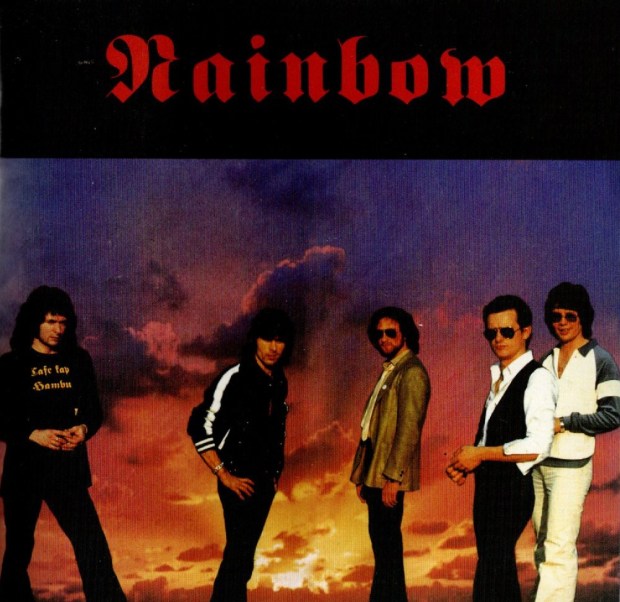
RAINBOW – Down To Earth Tour 1979 (2015 Purple Pyramid box set)

On the surface, this is quite a deluxe box set.  It’s larger than than a typical CD case by an inch on either side, and it’s almost an inch deep.  It has a beautiful hologram-style finish, shining and shimmery.  There are three discs inside, one from each of three shows on the 1979 Rainbow tour:  Denver, Long Island, and Chicago.  Each CD comes in its own full colour sleeve, and there are other goodies packed inside, such as the obligatory booklet.  It’s a loaded booklet, with loads of photos and text.

You might look at the track listing on the back and ask why there are only seven tracks per show (five for Chicago).  Rainbow were only an opening act (for Blue Oyster Cult) on this tour, a source of frustration for the band.  Also, the track listing is deceiving because “Lost In Hollywood” is a long bomber, over 20 minutes long on each disc, and contains lengthy solos and detours.

There are issues.  First and foremost:  the audio.    It’s not great.  None of the discs are particularly outstanding.  They’re all different sounding; just a different variety of bad!  People who buy bootlegs won’t mind so much, but when you look at a set this deluxe on the store shelves, you might be expecting more sonically.  A lot more.  That’s just the nature of these kinds of releases.  They’re fine to play, but some people will dismiss them.

The other issue with the music would be that the tracks are repeated from show to show.  The variety comes from the playing, not the setlist.

Speaking of playing, even though the band were tired of the opening slot, they don’t show it.  The lineup was one of Rainbow’s best:  Graham Bonnet on lead vocals, Don Airey on keyboards, Deep Purple alumnus Roger Glover on bass, the legendary Cozy Powell on drums, and of course the man in black Ritchie Blackmore on guitar.  Everyone knows what to expect from a Blackmore guitar solo, but a Don Airey keyboard solo is less familiar territory.  It’s part Doctor Who and part rock and roll.  And Cozy, of course, slams.  You only wish he were better recorded.

Rainbow were playing loads of new material on this tour, with only a handful of Dio-era classics.  “Eyes of the World” is an interesting choice for opener, not an obvious selection.  It causes the show to open with an electronic pulse, all atmospheric and sci-fi.  It’s a change from the usual hit-em-hard kind of opener.  Of course, the song does rock, but the intro is over a minute long.  A second new song, the slower blues “Love’s No Friend” follows, another interesting choice.  It’s rife with brilliant guitar work from Blackmore, and Airey compliments him perfectly.  Continuing with new material, “Since You Been Gone” was the familiar single written by Russ Ballard, which closes with a load of solos from Blackmore and Airey, and the “Over the Rainbow” segment as well.  “All Night Long” (which opened the Down to Earth album) works well to regain focus after all that meandering.  I like how Graham changes the lyrics.  He clearly sings “I need a girl who can give me head, all night long,” instead of “keep her head”!  Unsubtle.  The fifth and last of the new songs is the aforementioned scorcher “Lost In Hollywood”, bloated to 22 to 26 minutes from show to show.  This is the track for the musicians in the audience, and for everyone else to take a pee.  Fortunately for those who love great drum solos, Cozy has a spotlight moment.  Unfortunately, not everyone loves drum solos.

The set closes with two Dio classics:  “Man on the Silver Mountain” (long solo opening, and a bit of “Lazy”), and “Long Live Rock and Roll”.  It’s hard for any singer to do Dio and here they sound like a Graham songs.  I prefer Graham’s version of “Silver Mountain” to Joe Lynn Turner’s.  Really, these are pretty good interpretations, as long as you can forget the mighty elf’s versions for a few moments.  Graham had no issue with the range or power, just that he’s a completely different vocalist from Ronnie James Dio.

The Chicago set is missing “Since You’ve Been Gone” and “Silver Mountain”, which were not played that night.

The liner notes are excellent, except when printed in black ink over a blue background, rendering them extremely hard to read.  It’s 28 pages with rare photos and ads.  The set also includes a heavy metal bottle opener that you’ll never use, a Richie Blackmore guitar pick that you’ll never use, and a Rainbow button & patch that you won’t put on any jacket that you own.

This set is for diehards only; those that need as many Rainbow shows from as many lineups as they can get.  For everyone else, it’s pure overkill.

I’m a diehard.  This is my score.

3/5 stars


Tim’s Vinyl Confessions: Tim and John the Music Nut get Mike on the Y&T train!

Today Tim’s dropping a special episode of Tim’s Vinyl Confessions:  Getting me into Y&T!  We were joined by John the Music Nut, and they did some gentle arm twisting.  Check out that episode on TVC today.

On my channel, you can watch the unboxing. These are some sweet discs! Have a look for yourself.

REVIEW: Rod Stewart – The Definitive Rod Stewart (2008)

ROD STEWART – The Definitive Rod Stewart (2008 Warner)

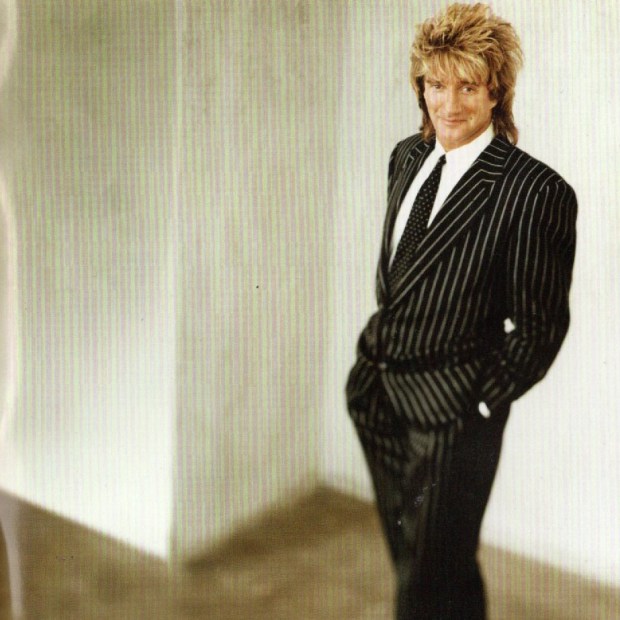
Compilations, eh?  You get one, and it’s great, but…it doesn’t have all the songs that you like, does it?  In this case, I was craving some Rod (now now!) and I really wanted to hear one from my youth:  “Infatuation”!  I was craving that hook!  “Oh no, not again!  It hurts so good, I don’t understand!”  Jeff Beck:  lead guitar!  I searched my library and I was missing that track.  What to do about it?

Rod Stewart has numerous compilations to choose from, going back to 1973’s Sing It Again Rod.  (That one’s interesting for the inclusion of “Pinball Wizard” from the London Sympony version of Tommy.)  You could go any number of ways.  1989’s Downtown Train had “Infatuation” on it, as well as “People Get Ready”.

I could have sought out the original album it was on, Camouflage, but I don’t recall liking the album much.  I decided instead to augment my collection with another 2 CD compilation:  2008’s Definitive.  It’s extremely similar to the 2001 set, The Story So Far, but with a slightly better track list.  This time we get “Passion”, “Infatuation”, “My Heart Can’t Tell You No”, and “Stay With Me” (The Faces) among the rest of the 70s, 80s, and 90s hits.  We lose “Don’t Come Around Here” which is a good thing.  Unfortunately we also lose the Stones cover “Ruby Tuesday” and “All For Love” with Sting and Bryan Adams.  There’s no such thing as a perfect compilation.  You’re always going to have to get a couple, and even then, you’re still missing the amazing Robbie Robertson cover, “Broken Arrow”.

This set goes all the way up to MTV Unplugged.   Rod made great music after that, but a lot of the albums were his American Songbooks of standards, that not everybody needs.  The cool thing is, there’s also a bonus track from 1998.  “Two Shades of Blue” is an outtake from his excellent rock album, When We Were the New Boys (the one with the Oasis cover “Cigarettes and Alcohol”).  This ballad might not have been necessary on that record, but it’s actually quite good if a bit generic.  Interestingly it features a sample from a Russian opera, so it’s not exactly ordinary either.  The actual cool thing is that it is a Rod sole-written original, not a cover or something written for him.  Rod’s a great songwriter when he wants to do it!

This album won’t tick all of your Rod Stewart boxes, but it’ll cover most.

4/5 stars

REVIEW: Night Ranger – High Road (2014)

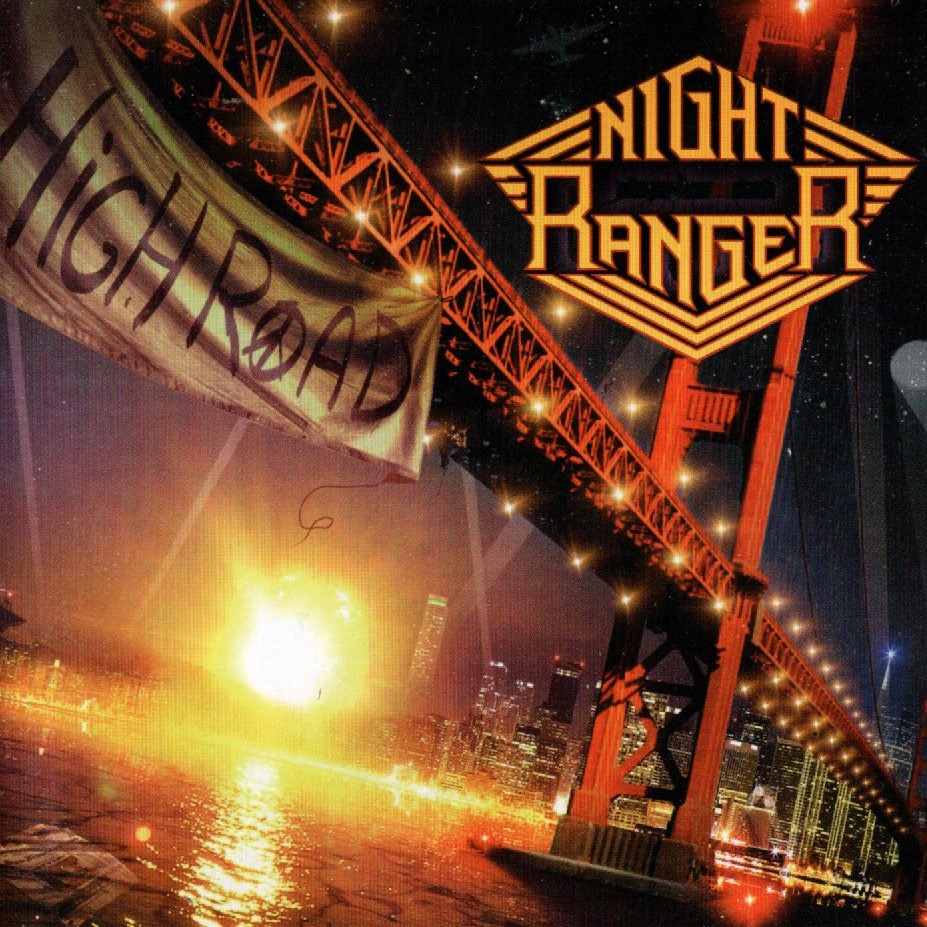
NIGHT RANGER – High Road (2014 Icarus Music)

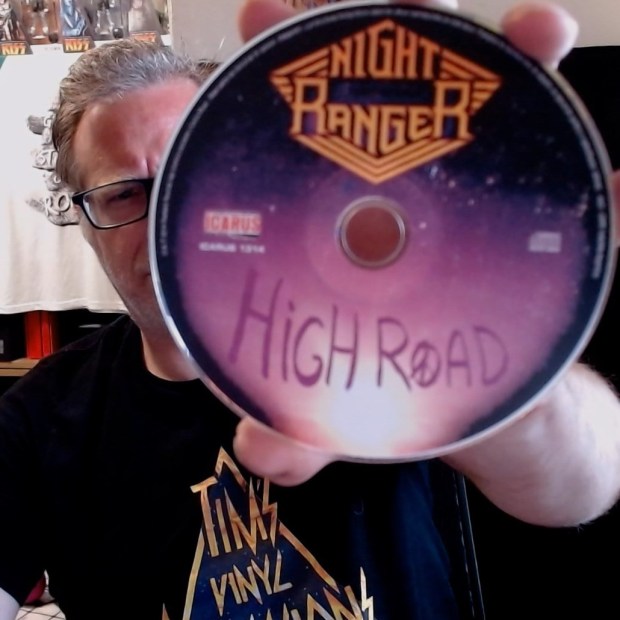
This is the second of three Night Ranger albums given to me by Tim Durling, and the second I have reviewed “live” with him. It is also the second, and last album to feature Joel Hoekstra on guitar who was soon off to join Whitesnake, where he remains today.

The title track “High Road” opens with some highbrow keyboards and an immediate melody. There’s a nu-country vibe to the chorus, but Jack Blades keeps it in rock territory. Tim Durling says he hears Damn Yankees, and I get that too, but I do hear that twang. “No the **** you don’t,” says Tim. The Gillis guitar solo is absolutely mental, tickling all my fancies. Great song…even if I’m hearing something that isn’t there. Sounds like summer to me.

Per Tim: “Here’s the problem with “new country” – most of it is just 80s rock with a slight twang – therefore, when a band like Night Ranger that legit came from the 80s makes new music, and it’s not super heavy, it could easily slide into that…and I HATE THIS!” Me too buddy, and that’s probably what I’m hearing.

The opening guitar of “Knock Knock Never Stop” recalls “Poundcake”, but this track could have worked on a certain 1983 by a British band from Sheffield…perhaps it already did! That’s the ballpark we’re in. It’s a popular place. Heavier guitars roll in on the groover “Rollin’ On” which sounds like a Morse/Airey-era Deep Purple classic. Not a sound you hear often, so bring it on.

“Don’t Live Here Anymore” is the first slower tune, but it’s got blues in the vocal and passion in the soul. Amazing vocal, just right in the pocket with grit and heart. Perhaps there’s a Whitesnake vibe here. Coverdale could easily “coverversion” this song. Then suddenly it picks up, and we’re in a Rainbow riff, kicking asses and scorching minds. This wouldn’t be a ballad, but an epic — because suddenly here are the angelic Night Ranger harmonies. If that wasn’t enough…it’s solo time! Epic, just epic, in arrangement, performance, production, mix…head to toe epic. The centerpiece.

A fun guitar riff opens “I’m Coming Home”, and I’m getting light progressive vibes overall. This track rocks in an 80s way, but not simple or straightforward. There’s tension, release, and pounding melodies. Midway, Jack throws down a neat bassline, right before a ripping solo tears your head off.

“X Generation” continues the hammering vibes, but in a modern context. It’s the first song that is failing to connect. Nothing bad about it, just didn’t have the same impact as the previous five tunes. Sounds like a number of bands from the Night Ranger era, making it work in the 2000s. Skid Row with Sollinger on lead vocals, perhaps.

“Only For You Only” is a lovely piano ballad with Jack singing, something akin to what some people expect from Night Ranger. These guys can really sing and that’s what sells it. For some steam, check “Hang On”! Slow and grooving with keyboard accents and a chugging bass, this song is boiling hot. Killer tune, delivering the heaviness without having to go full bore. Solos that burn. Awesome sauce.

Then, the spirit of Eddie Van Halen comes to the house on the intro to “St. Bartholomew”, an absolutely scorching song, at Fahrenheit 451. Once again, the vocals make it uniquely Night Ranger. Other bands may attempt songs of this nature, but few have the combination of chops and vocals that Night Ranger has. Unique dual solo here too with Brad and Joel Hoekstra trading licks.

The “standard” track list shows 10 songs, with “Brothers” being an acoustic closer. Definite Shaw-Blades vibes here. Hippies singing in a field, with a guy playing an electric guitar with the sun blazing behind him…that’s what I see. As per Tim, “and anyone stepping within twenty feet of any of them gets a huge contact high.” They were definitely spinning “Hey Jude” before they wrote this ending.

Then we have the two “bonus tracks”, though we don’t know why! They do sound separate from the album because “Brothers” is an ideal closer. “L.A. No Name” is an acoustic workout, with the two guitarists playing a beautiful classical and Spanish influenced number that could have been a textbook workout for expert students! This is not lightweight, not by any stretch.

The last song is bonus track “Mountain Song” which really shows off Jack’s creativity as a writer of basslines. It has an “Eye of the Tiger” vibe, but far heavier and punchier. Tim: “It’s similar to “Halfway to the Sun” from 1988’s overlooked Man in Motion album.”

A solid 4/5 stars. The first “side” is stronger, but there’s nothing to skip.

REVIEW: Journey – In The Beginning (1979 CBS cassette)

JOURNEY – In The Beginning (1979 CBS cassette)

Journey began scoring hits when they acquired powerhouse vocalist Steve Perry on Infinity (1978) and Evolution (1979).  Why not issue a compilation sourced from the band’s first three Perry-less records, with new cover art that ties into their present?  Seems like a no-brainer.  And so we have Journey’s first compilation album (and a double length at that) called In The Beginning.  Thank you Tim Durling for gifting this copy for the collection and for review.

In The Beginning contains five of the seven tracks from Journey’s self-titled debut.  It begins with three.  As on the original LP, “Of A Lifetime” opens.  The long organ and guitar-drenched opening gives way to a slow and passionate Gregg Rolie lead vocal.  Were Iron Maiden influenced by this song when they wrote “Strange World” for their own debut?  Probably just coincidence, but it can be heard.  The main hook in “Of A Lifetime” was the unmistakable guitar hook.  At this early stage, Journey boasted two guitar players:  Neal Schon and the late George Tickner.  They have to share the spotlight with an absolutely raging Aynsley Dunbar on drums and Rolie tearing it up on the synth.  Undervalued bassist Ross Valory also must be mentioned, playing concrete but melodic foundations under the feature players.

George Tickner’s instrumental “Topaz” goes second, starting slow and then taking on a jamming, progressive jazz rock fusion vibe.  This complex track is not to be taken lightly.  Just absorb every different section as they hit you.  Once again, Dunbar is a monster.  Third is “Kohoutek”, the memorable Schon/Rolie instrumental that was also track three on the debut album.  On vinyl, in both cases, it closed Side One.  It’s another challenging track with a cool galloping section.  (There’s a reason I’ve heard Dunbar referred to as an octopus – he sounds like he’s playing with eight arms!)

Rolie’s “On A Saturday Night” from album #2, Look Into the Future is a completely different style from the first three progressive sprawls.  Under four minutes with a bopping piano, this is just great rock and roll!  Tickner was out and the band was reduced to a quartet with Schon as the sole six-stringer.  Shades here of where the band would head once they figured out their future direction.  Schon’s solo is an example of melodic composition.  The Beatles cover “It’s All Too Much” from Look Into the Future follows.  It fits this new concise straightforward Journey sound, and it is quite excellent.  Rolie was the perfect guy to sing a George Harrison song, and the backwards ending is suitably trippy.  The blues “In My Lonely Feeling/Conversations” takes us back to the debut album.  This Rolie/Valory composition scorches with passionate fretwork.  Not surprisingly, the bass is the foundation.  Also from the debut, “Mystery Mountain” closes side one.  A short, but jamming track with subtle use of the wah-wah pedal.

Opening (cassette) Side Two, “Spaceman” from Next (album #3) was a melodic single.  Journey were honing in on that simple pop rock ballad.  “Spaceman” is one of their first.  As it did on album, “People” follows “Spaceman”, featuring synth and acoustics.  Very psychedelic for Journey.  The back to album #2, “Anyway” rocks hard and slow, like a monumental Whitesnake track from the 70s.  (Dunbar later joined Coverdale & Co. for 1987.)  From the same record, “You’re On Your Own” switches from slow and bluesy verses to a pounding chorus, enabled by Aynsley.  There’s a Beatles influence here in “I Want You (She’s So Heavy”).

We’re into the last tracks here, as vinyl listeners would have been flipping to side four for “Look Into the Future”, a brilliant ballad and one of the band’s early best.  “Nickel and Dime”, a legendary jam from Next feels like a throwback to the first album and for good reason:  it’s a leftover Tickner co-write!  And finally, In The Beginning closes with the epic “I’m Gonna Leave You”, the same song that closed the debut Journey.  Coupling some killer organ with with a heavy riff, this bluesy rocker also boasts some of Rolie’s best vocalizin’.  Legendary!

For those who only know Journey as a lovin’, touchin’, squeezin’ band of crooners and balladeers, this compilation would come as a shock to the system.  But a shock can be a good thing.  In The Beginning is a great way to get many of the key tracks from the first phase of Journey in one purchase.  This stuff doesn’t usually make it onto regular Journey compilations.  It’s a good set to own.

4/5 stars

REVIEW: Extreme – Six (2023 Japanese import)

A special joint post today with Jex Russell – Pop Culture Nut.  Read his review by clicking here!


EXTREME – Six (2023 Victor Japan)

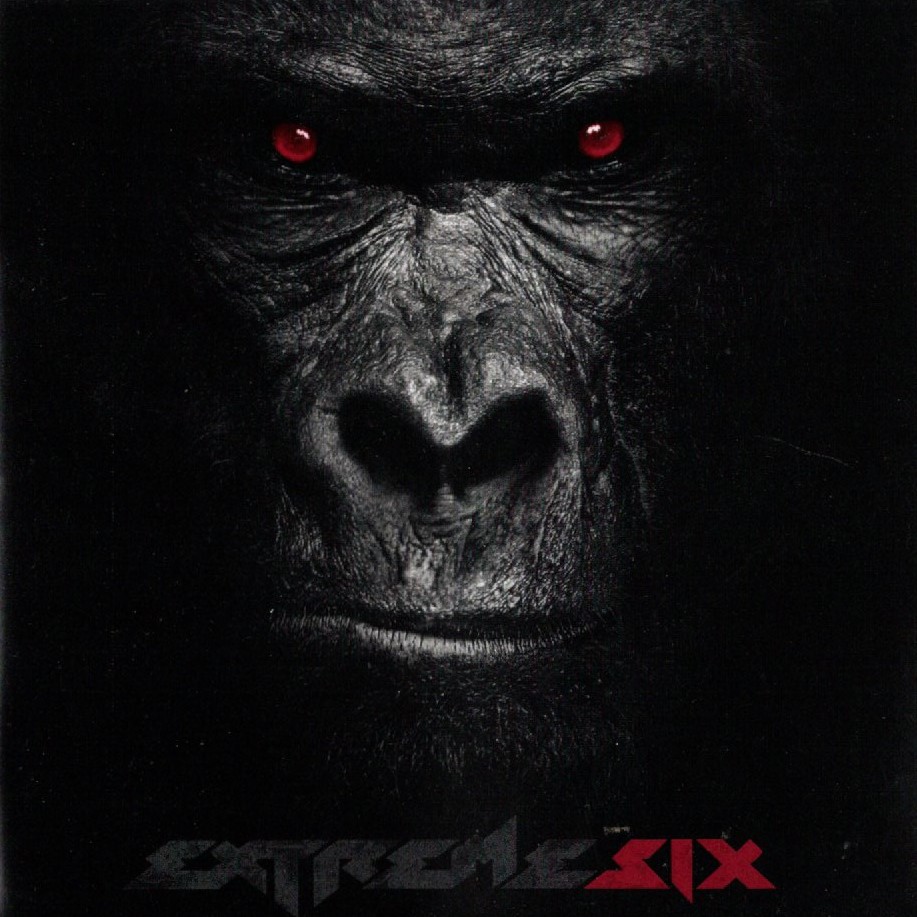
Extreme fans never stopped believin’.  We’re delighted that people dig the new album Six, but we always knew.  Saudades was great.  Punchline was great.  We have always boasted about what Nuno was capable of, and it’s hard not to love Gary Cherone.  This is a band you just want to kick ass, and they do on their sixth (studio) album, shockingly titled Six.  There’s no dip in quality – there hasn’t been a dip in quality since their embryonic debut back in 1988.  It’s been nothing but peaks since then, though always different from one another.  Reviewing Six is less about praising it (which is easy) and more about seeing what Extreme are doing differently this time.

We talk a lot about riffs here, but rarely have Extreme riffs been as direct and heavy as the one on “Rise”.  This, by the way, is the song with the solo that seems to have taken the world by storm.  The spirit of Van Halen was definitely in the room when Nuno laid it down, and it’s an undeniable highlight of the song.  The solo is as impressive and hooky as a song unto itself.  Another figure that people are starting to notice is drummer Kevin Figueiredo.  It’s hard to stand out when you’re Mike Mangini’s replacement in Extreme, but Kevin kicks it!  (Joke intentional – die hard Extreme fans know.)  “Rise” could be the heaviest Extreme song to date.

Riffing continues on “#Rebel” (pronounced “hashtag rebel”), another contender for heaviest to date.  The riff is definitely a monster, and Nuno augments it with those tasty licks he’s known for.  Gary Cherone, meanwhile, sounds to be in better voice than he was back in the 1990s when he joined Van Halen.  He doesn’t seem to have to push as hard, no longer going overly gritty when he’s givin’ ‘er.  The solo is another marathon workout, and just a pleasure to bang along to from start to finish.  Like most great solos, this is a fully composed piece of musical performance.

Third standout riff in a row, “Banshee” is yet another butt-kickin’ banger.  It’s not fully pedal to the metal this time, with the verses being a little less loud, allowing Gary to get slinky.  Bassist Pat Badger forms a formidable groove with Kevin here, which gives Nuno room to play around.  The solo, once again, is thought out like a miniature song within a song.

Finally on track four, we get a breather!  A brilliant acoustic song called “Other Side of the Rainbow” is just a thing of beauty.  The vocal harmonies of Gary and Nuno gel better here than anywhere else on Six.  This is pure pop, as Extreme have occasionally done (and done so well) on albums past.  There are elements of Extreme II and Waiting for the Punchline here.  It somehow sounds like a lost remnant from the decade of the 90s.  One of the best Extreme songs in the entire canon, and a brilliant Queen-like performance from Gary.

Continuing down the acoustic road, the ballad “Small Town Beautiful” definitely recalls the softer moments on Punchline.  The blend of vocals here is really special; those trademark harmonies.  Things shake up once again on the bass heavy “The Mask”, with co-lead vocals by Nuno Bettencourt, a rare treat.  Gary takes over on the choruses, while Nuno takes the verses in an affected voice.  “Rip off the mask, I’ll show you who I am!” howls Gary on the menacing chorus.

The unusual “Thicker Than Blood” has an industrial tint, but actually is closer to a reflection of Nuno’s 1997 solo album Schizophonic.  It absolutely could have come from that album, but it would have been one of the better tracks if it had.  The solo here is a wicked little number.  They take it down to a heavy grind on “Save Me”, another song with a downtuned 90s flavour, but a searing chorus.  It’s two completely different moods, verse and chorus.  Quality remains high.  Variety continues.

Another soft acoustic number called “Hurricane” sounds like Simon and Garfunkel, and there’s nothing wrong with that.  Extreme could do Simon and Garfunkel a hell of a lot better than Disturbed.  Nuno takes a rare acoustic solo here.  A very special song.  Extreme throw another curveball on the effects-heavy “X Out”.  We’re reminded, perhaps, of “Evilangelist” from Punchline, but with more of that industrial synthy vibe.  There’s an undeniable Stranger Things vibe to the synth line.

A complete 180° will spin your head on “Beautiful Girls”, a light tropical summery number about…shockingly…beautiful girls.  It’s just pop, pure and simple, and there’s nothing to feel guilty or shameful about.  (There’s only one line I dislike – “California Girls, I wish they all could be” – gimme Canadian girls any time!)  Bottom line, Extreme have never been shy about going way outside the box.  “Beautiful Girls” represents the furthest they’ve gone since Extreme II back in 1990.  The guitar solo is pure Brian May, 100%.  There’s no denial, except for that wicked burnout at the end!  Some might say, “This sounds like Sugar Ray!”  I say, “Sugar Ray could never sing nor play like Extreme do.”  Interesting that on an album with Extreme’s heaviest rockers, we also find their their most pop song.

The acoustic guitars remain out for album closer “Here’s To the Losers”, another brilliant tune that goes in another different direction.  It has an anthemic shout-along of “Get up!  Chin up!  Drink up!”  (Your beverage of choice, of course!)  It’s like a rallying cry and it’s a terrific closer.  The key change at the end is really nice.

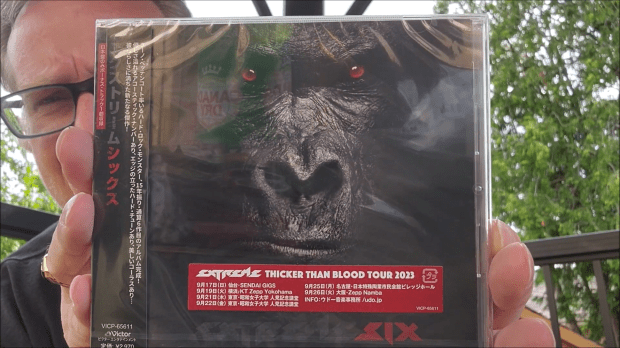
The sequencing of this album is really interesting.  Though the first three songs sell it as a heavy monster, the diversity soon comes into play, and then we run into multiple acoustic songs in a row.  It’s unexpected but it works.  The Japanese CD has its bonus track of course, and it’s a simple radio edit version of “Rise” that allows the CD to end heavy, if you prefer it that way.  The edit version of “Rise” is a full minute shorter, but wasn’t really necessary except to satisfy radio formats.  Fortunately the solo is still a main feature of the song.

Extreme Six was expertly produced by Nuno Bettencourt.  The man’s talent knows no bounds.  In fact Extreme are one of the most talented bands to come from the 80s, end sentence.  Six is among their very best albums, which is to say, all of them but the debut.  The streak continues.  Extreme are the champions.

5/5 stars

CONCERT REVIEW: Glass Tiger – Private Concert: Greystone Racquet Club Waterloo, Ontario July 13, 2023 by Dr. Kathryn Ladano

GLASS TIGER – Private Concert: Greystone Racquet Club Waterloo, Ontario July 13, 2023

Photos and review by Dr. Kathryn Ladano

About a month ago, I saw a social media post on Glass Tiger’s Instagram page that was announcing a very special private, acoustic concert, with only 50 tickets available to the public. I immediately thought, “well that sure is cool, but I’m sure it won’t be happening anywhere near me”. To my surprise, that event was happening in Waterloo, 15 minutes from my home. The ticket price was steep – $199 plus tax for one ticket. However, I knew that this was a once in a lifetime experience to see the band that was my absolute favourite growing up. I hesitated at the price for about 2 minutes and then reserved a ticket to ensure I got one before they sold out. I only bought one because I didn’t think I’d be able to convince anyone to pay that price. So, I opted to go to the show alone. This would be my third time seeing Glass Tiger live. The first time was when they opened for Roxette in 2012 at the Budweiser Stage in Toronto. The second time was five days before this concert – at the Kincardine Scottish Festival (a very large, outdoor event with thousands of people in attendance). I’d like to say that I saw them in their heyday in the 80’s and early 90’s, but I was a child living at home then, and my mom wouldn’t let me go!

I received an email two days before show advising us that for general admission ticket holders (me), the doors would open at 6:30pm, we could enjoy a cash bar and free appetizers, and the show would start at 8:30pm. The email mentioned there were also VIP tickets, and those people got to come earlier, receive several free drinks, and were able to access a private reception after the concert. I honestly have no idea how one could get those tickets. They were not advertised on any posting I saw. Because I was going alone and had no one to talk to, I decided to leave my house around 7:30pm, arriving around 7:45pm. As soon as I got there, I bought a beer (Waterloo Amber) and then claimed my spot at the very front of the stage right in the centre. To my surprise no one had staked out their spots to the concert! Everyone else was socializing and hanging out farther away from the stage. I’m sure I looked like a bit of an idiot, standing in front of the stage all by myself for so long. However, I wanted the best possible experience, and I didn’t want a little bit of social discomfort to ruin that. People could think whatever they wanted!

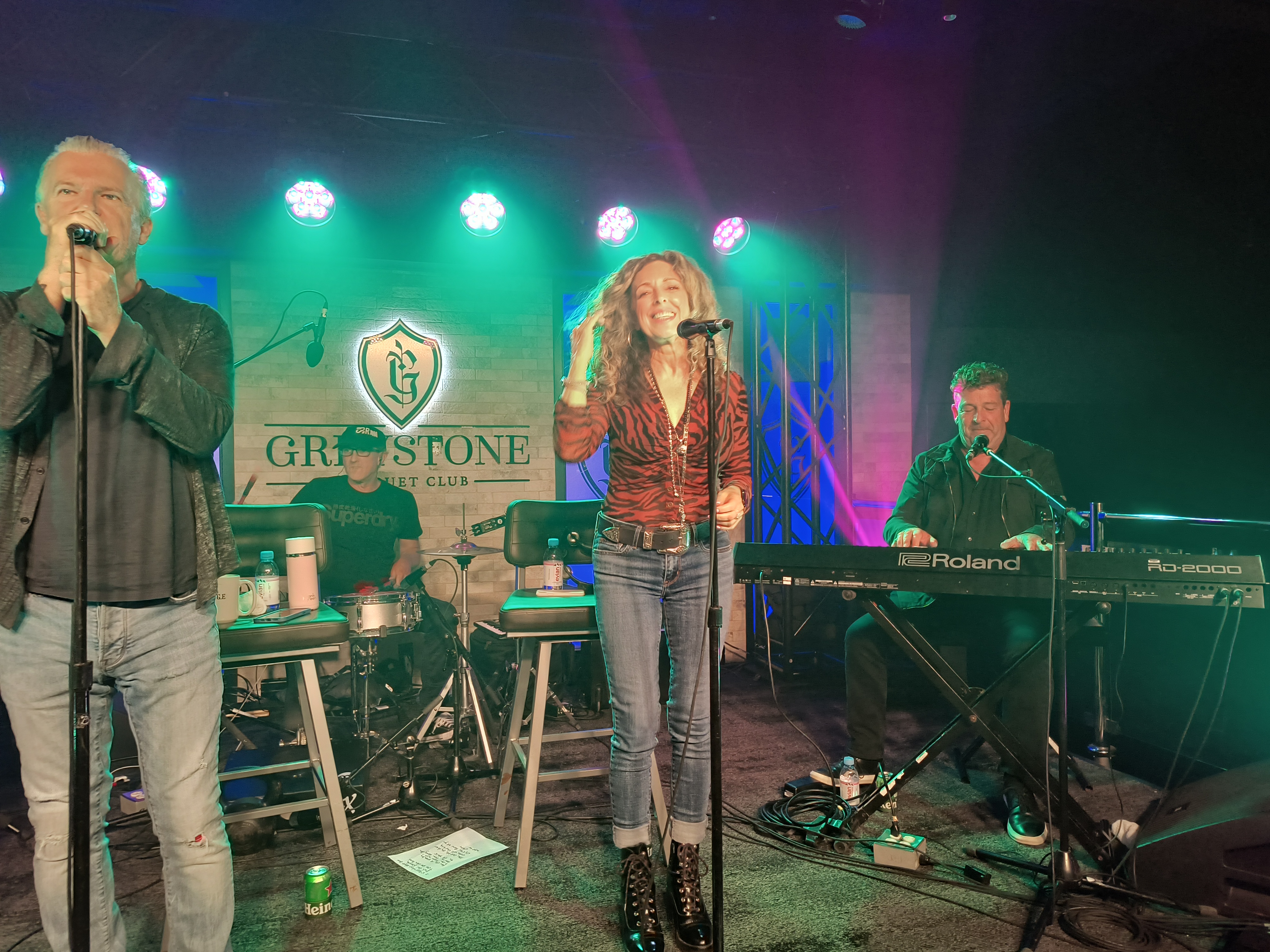
To my surprise, Glass Tiger emerged and came on stage at 8:15pm (not the 8:30pm that we were told). The entire band had to walk right beside and in front of me to get on stage. I was inches away from all of them! Glass Tiger still has three original members that perform in all of the live shows: singer Alan Frew, keyboardist Sam Reid, and guitarist Al Connelly. Their bassist, Wayne Parker, is still a member of the band but he no longer performs live with them due to his wife contracting Lyme disease several years ago. He’s opted to stay at home and care for her, which he can’t do when he’s on the road with the band. Alan Frew has a really great recurring Insagram live show called “Frew the Looking Glass”, where he talks to fans and often has special guests. I tuned in when Wayne was the special guest two years ago, which is where I learned all about this. Glass Tiger now has a different bassist when they perform live. Last week, at the Kincardine Scottish Festival, Tom Lewis filled that role. Last night though, because it was an acoustic show, they had a second acoustic guitar player and I unfortunately do not remember his name. The band was also joined by back-up singer Carmela Long and long-time drummer Chris McNeill.

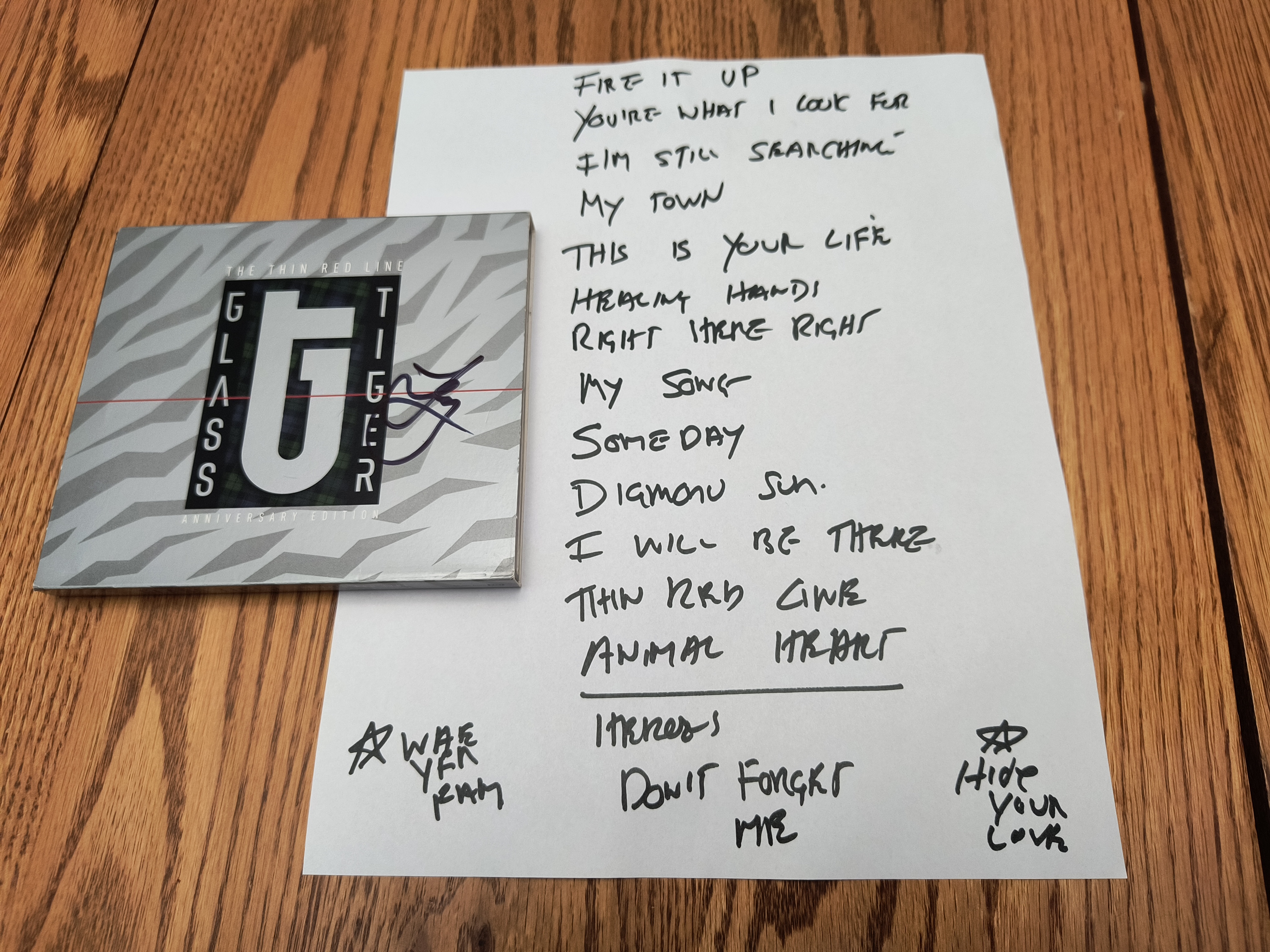
Every other time I’ve seen Glass Tiger live I’ve been nowhere near the front – always pretty far away from the stage. This concert was the exact opposite. At various points in the show, I was able to make eye contact with every member of the band and I was always met with a big smile (probably because I had a huge smile on my face the entire night). Right from the start of the show, Alan Frew informed us that he was sick, and I noticed that he was sipping tea (rather than beer) during the show. Despite this, you couldn’t tell by hearing his voice. Where you could tell was in his energy – he was definitely lower energy than the previous week. However, it was clear that he still wanted to put on a great show, and he did. The show began with the relatively new song, “Fire it Up”, which absolutely fired up the audience. They played 13 songs in total for the main set, and then two more songs in their encore. The show lasted about an hour and a half in total. I could see the setlist from where I was watching the show, so I was never surprised about what was coming next. For some reason though, they switched up the last song and the second last song. On the setlist, the final song was supposed to be “Animal Heart”, but they went with “Thin Red Line” instead (which ultimately, I think was a better choice). The setlist (as played in the concert) was as follows:

  1.             “Fire it Up
  2.             “You’re What I Look For”
  3.             “I’m Still Searching”
  4.             “My Town” (Alan Frew told us Rod Stewart was invited to sing, but just hadn’t shown up to the venue yet!)
  5.             “This is Your Life”
  6.             “Healing Hands” (from Alan Frew’s first solo album)
  7.             “Right Here Right Now” (a cover of the Jesus Jones hit)
  8.             “My Song”
  9.             “Someday”
  10.             “Diamond Sun”
  11.             “I Will Be There”
  12.             “Animal Heart”
  13.             “Thin Red Line”

Encore:

  1.             “Heroes” (cover of the David Bowie song)
  2.             “Don’t Forget Me When I’m Gone”


The setlist was almost identical to the one I heard in Kincardine. There were only two differences: Instead of “Healing Hands” and “This is Your Life”, they played “Rhythm of Your Love” and “Ecstasy”.

While most of the audience was pretty dressed up, I opted to wear my Glass Tiger t-shirt that my mom got me for Christmas in 1988. For some reason, she got me an XXXL shirt – and I’m still swimming in it. The shirt (pictured) is from the album/song “Diamond Sun” and includes the song lyrics, “Love Gives Live” (which in the song is followed by the words, “and life is love”). When the band started playing Diamond Sun, and those lyrics came up, keyboardist Sam Reid looked at Alan Frew and pointed at my t-shirt. Alan then knowingly nodded his head. At another point in the song, Alan Frew also pointed to my shirt when singing those lyrics. The song has a new memory associated with it for me, and I’ll never forget that! Much to my surprise, I only saw one other person wearing a Glass Tiger shirt that night, and it was a significantly newer one. There were literally people of all ages at the show. The youngest was a child – maybe around 10 years old (I have a very hard time knowing what age children are, so I could be way off on that). There were also several seniors there – and many of them were right out front dancing beside me!

When the concert ended, I stuck around for a while on the off chance that I could get an autograph (I brought my CD copy of the “Thin Red Line” special edition, released in 2012). Because there was a VIP ticket option, the staff were clearly trying to ensure that only the people with those tickets had access to the band. I thought I’d wait anyway, just to see. To my surprise, guitarist Al Connelly came out by himself to grab some of his gear on the stage. A security guard was standing right in front of the stage, so I asked him if it would be okay if I asked Al for an autograph. He said absolutely, as long as I didn’t go onto the stage myself. I got Al’s attention and he said he’d come right back to sign my CD because his hands were full. True to his word, Al grabbed a beer and then came right back to where I was waiting and signed my album. Shortly after that, the security crew were telling us “regular” ticket holders that we had to move out of the space to make room for the VIP reception. I figured I would have no other opportunities to get more signatures, so I left the concert.

All in all, a fantastic show. It was a night I’ll never forget and I’m glad that I went ahead and got a ticket even with the higher price tag. While there were some songs I would have loved to hear live and didn’t (such as “Watching World’s Crumble”, “Far Away From Here”, “After the Dance”, and “Stand or Fall”), I still immensely enjoyed the experience and I would do it again in a heartbeat if such an opportunity ever came up again (and I’d have to figure out how to get a VIP ticket!). It was just announced that Glass Tiger will be inducted into Canada’s Walk of Fame – the crowd gave them a lot of cheers to recognize that accomplishment.

5/5 stars

REVIEW: Deep Purple – Bombay Calling – Live in ’95 (2022 CD/DVD reissue)

DEEP PURPLE – Bombay Calling – Live in ’95  (2022 – Edel CD/DVD reissue)

Years ago, I begged for a CD issue of Deep Purple’s live DVD Bombay Calling.  You could download the audio on iTunes and burn your own double live, which I did, but that just doesn’t do it for a physical product collector.   I’ve made my case for physical product here over the years manymany times.  Unfortunately, this physical release was pooched by Edel by excluding one song.  Like similar CD bootlegs of this 1995 concert, the new Edel CD is missing the opening track “Fireball”!  It’s still there on DVD, and it was always there on the iTunes edition, but it’s missing from CD 1.  That’s a real shame since it’s a good version of “Fireball” and it’s the damn opener!  (The original DVD of Bombay Calling was issued in 2000.  iTunes got it in 2003.)

When originally released on iTunes, this was promoted as an “official bootleg”.  Now it seems to be marketed as some kind of deluxe live album, limited and numbered to 10,000 CD/DVD sets.  The hype sticker calls it “the best rock show ever staged in India.”

This concert was recorded on April 18 1995, which eagle-eyed fans will realize is well before the Purpendicular album.  Bombay Calling was recorded not long after “the banjo player took a hike” and Purple ultimately carried on with Steve Morse for the next few decades.  Joe Satriani stepped in for a short while, but it was Dixie Dregs guitar maestro Morse that took the Man in Black’s place permanently.  This concert was recorded at the very start of Morse’s tenure, and features a few songs they would drop from the set a year or two later.  It also features a brand new tune they were working on called “Perpendicular Waltz”, later spelled “The Purpendicular Waltz” on the album.  The lineup was fresh, feeling each other out, but full of energy and the excitement of a band creatively reborn, both in the studio and on stage.

There is one earlier concert available from this period, which is Purple Sunshine in Ft. Lauderdale Florida, exactly two weeks prior.  That one is truly is an official bootleg, taken from audience sources and released on the 12 CD box set Collector’s Edition: The Bootleg Series 1984-2000.  The setlists are slightly different.  When they hit India for this concert, a new song called “Ken the Mechanic” (retitled “Ted the Mechanic”) was dropped, as was “Anyone’s Daughter”.  They were replaced by long time favourites “Maybe I’m a Leo” and “Space Truckin’” from Machine Head.

Special treats for the ears on Bombay Calling include Steve Morse’s incendiary soloing on “Anya” (which would be dropped from the set in 1996).  His feature solo leading into “Lazy” is also excellent, and of course very different from what Ritchie used to do.  Jon Lord’s keyboard solo is among the best I’ve heard, and even features a segue into “Soldier of Fortune” from Stormbringer.  The solo segments that Deep Purple did often allowed them to play snippets from songs from the David Coverdale period of the band, and this one was unexpected and brilliant.

Highlights:  “Fireball” (boo for excluding from the CD), “The Battle Rages On”, and “Anya”.

I love a good, raw live performance captured on tape, and Deep Purple don’t muck around.  This is special, coming from that transitional period when Steve Morse was just getting his feet wet.  Considering how different he is from Ritchie Blackmore, this smooth switcheroo is quite remarkable.

3/5 stars (subtracting half a star from iTunes edition, for losing a song)


REVIEW: Keel – The Right to Rock (Remaster/bonus track)

KEEL – The Right to Rock (1985, 2000 Metal Mayhem Music/bonus track)

From the Gene Simmons Song Factory, heeeeere’s Keel!

Let’s talk about the bonus track first.  Anybody could tell you that “Easier Said Than Done” was a Simmons song, just from one listen.  Surely enough, scan the liner notes, and it’s Gene and Mitch Weissman, whom fans know from 1984’s Animalize album.  Like many Gene Simmons productions, The Right to Rock bears his name on a few writing credits.  “Easier Said Than Done” is right down mid-80s Kiss alley.  What about the remix?  Structurally, it is unchanged.  The drums sound different, and on a whole the track sounds a little brighter.

That’s it for extras.  The booket is only a single fold-out, with no lyrics.  It has a note from Ron Keel, indicating that this is the first CD issue of the album outside Japan.


(The rest of this review was previously published in 2015)


The rest of the non-Simmons songs are basically reworkings of tracks from Keel’s first album Lay Down the Law. That album, like Ron Keel’s debut with Steeler (featuring one Yngwie J. Malmsteen) were on Shrapnel. For the A&M Records debut, they pulled out the big guns. They got Gene Simmons in all his wig-ness, and put out a very corny but tremendously fun music video.

It is “America 1989”, and rock and roll is outlawed. “Those who are apprehended suffer severe consequences.” Can our young teenage Keel lookalike get away from the rock police? Quiet Riot did something similar with their “The Wild and the Young” video a year later. It’s corny fun.

The song too is corny fun. I guess it’s a classic now. It has that stock heavy metal riff that you need: something Motley Crue or the Scorpions would be comfortable with. It has that rebellious rock theme that was so prominent in the 80’s. It has a shout-along chorus. “You got it! The Right to Rock!” Hey, I grew up in a Catholic school. I know what this is about. “Don’t let anyone tell you how to live your life!” I had a teacher call me out on the first day of school for wearing a Judas Priest T-shirt. I could relate to this song in a big way when I was 13.

It should be noted that Gene Simmons, as a producer, is not known for his sonics. The Right to Rock sounds pretty good for the period, but the drums ring shallow and weak. There’s not much presence for the bass guitar, and the backing vocals are the typical rock mush. That’s what you get with Gene behind the console.

“Back to the City” has a good Priest-like chug to it. I think Keel were going for something middle of the road with their music, like Priest-meets-Scorps-meets-Crue-meets-Kiss. If so, this hit the mark. Ron’s vocals are overwrought but that’s his style. If you don’t like that kind of vocal, you won’t like Keel.

Kinda stinky is “Let’s Spend the Night Together”. You know, I still gotta give the guys credit. They have made this into a pretty fine pop metal song. If you didn’t know the song, you’d assume it’s an original, in the pop metal genre. So from that perspective, I think it’s kinda cool. Stinky and cool — like good gorgonzola.

“Easier Said Than Done” was written by Simmons/Weissman, the same team responsible for much of the Animalize album. The lyrics even reference “Russian Roulette”, a song title Gene had been toying with for years. (A song called “Russian Roulette” was finally released on Sonic Boom.) So, guess who “Easier Said Than Done” sounds like? That’s right — it is a dead ringer for Simmons-style Kiss. And it’s actually a pretty good song. The problem is Ron’s Gene impression. I can’t help but chuckle at his dead-on Gene vocals. I dare you to refrain from a giggle yourself. Same deal with “So Many Girls, So Little Time”. Kiss fans will recognize that’s a line recycled from the Kiss song “Burn Bitch Burn”.

Onto side two, “Electric Love” is a Keel original, but you immediately notice that the song isn’t as immediate as the two previous Simmons tunes. “Speed Demon”, another original, sounds exactly as the title implies. Quality-wise, it’s only at “Priest outtake” level (Defenders of the Faith era). Then it’s back to Simmons outtakes, with “Get Down”, the weakest of the Simmons songs by a long shot. “You’re the Victim (I’m the Crime)” is a Gene-like title, but this too is a Keel tune. It’s in the same vein as “Speed Demon”, and the same level of quality.

It’s fun to revisit The Right To Rock periodically…but sparingly.

3/5 stars

REVIEW: Talas – If We Only Knew Then What We Know Now… (1998 Japanese/bonus track)

TALAS – If We Only Knew Then What We Know Now… (1998 Warner Music Japan)

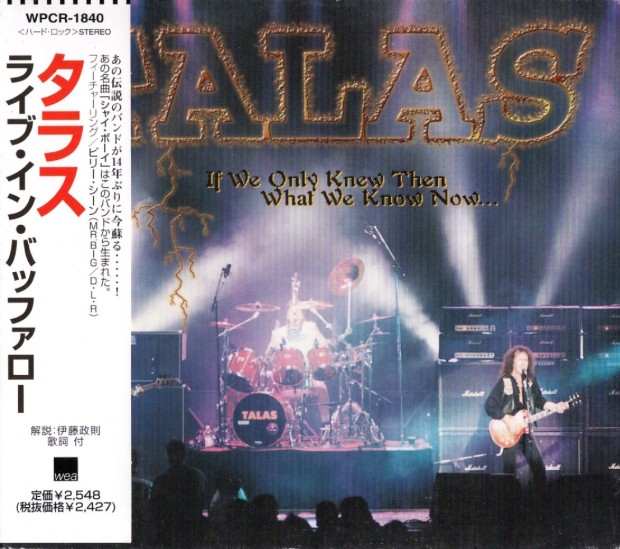
The Japanese edition of this Talas live album is something to behold.  It comes with lots of extras:

  • Beefy cardboard slipcase to house the jewel case beneath, plus…
  • A beautiful bonus 22 page photo booklet,
  • Japanese lyric sheet,
  • Two bonus tracks!

The first bonus track is just a shorty, a message from Billy Sheehan.  He briefly explains the history of the band, as much as one can in 34 seconds anyway.  The second bonus track is more interesting and valuable.  It is a vintage studio track called “Doin’ It Right”.  Very pop, but also paradoxically pounding.  It’s not available anywhere else, and it’s not bad at all!  It recalls other early poppy rock tunes by metal bands, such as Quiet Riot and Kick Axe’s obscurities.  One of those Japanese bonus tracks that is worth shelling out for.  But that’s just Common Knowledge!


(The rest of this review was previously publish in 2016)

The Talas story did not end with the breakup of the band.  Of course not; bands both famous and obscure like to reunite for nostalgia shows.  Talas did that in 1997 with the original power trio lineup:  Billy Sheehan on bass, Paul Varga on drums, and Dave Constantino on electric guitar.  With classic material (from the first two Talas albums) and a few unreleased songs, they memorialized their reunion with a brand new live CD.  Billy even pulled his old platform boots out of the closet for this one.

As usual the set opens with “Sink Your Teeth Into That” and an enthusiastic home town crowd.  Talas only sounded better with age.  The original voices are there and just as strong as they were in 1982.  It actually sounds like everyone has improved over the years.  A speedy “High Speed on Ice” is in the second spot ensuring no loss of momentum.  Material from the first self-titled Talas album is included too (unlike the last live album Live Speed on Ice).  “Expert on Me” is very pop in construction, but clearly not as great as the songs from album #2, Sink Your Teeth Into That.  Speaking of which, the slow rumbler “Never See Me Cry” is brilliantly adapted to the stage.

“Power to Break Away” is one of the previously unrecorded songs, and it kicks it just as hot as anything from Sink Your Teeth Into That.  It’s taut with hooks and the prerequisite bass workouts.  “Tell Me True” is the second unreleased song, a slow non-descript dirge ballad that takes a while to get going.

Imagine Billy Sheehan plowing his bass right through a funky Led Zeppelin riff.  That’s “Thick Head”, an awesome track from Talas (1979).  “You” has a cool vibe, almost like an unheard Aerosmith demo from the Done With Mirrors era.  A few other tunes from the first Talas (“Most People”, “Any Other Day” and “See Saw”) are adequately entertaining.  Back to Sink Your Teeth Into That, “King of the World” is still one of the best Talas tunes, overshadowed by only a few like “Shy Boy”.  Here, “Shy Boy” is preceded by a Paul Varga drum solo.  The sheer velocity of “Shy Boy” itself makes me wonder how Varga did it.  It’s just pedal to the metal, blurring the lines and smoking the minds.

Nothing like a good cover to help draw a live album to a close.  Talas did two:  “21st Century Schizoid Man” and “Battle Scar”.  The King Crimson cover is a daring one to attempt.  They somehow manage to strip it down and pull it off with integrity.  As for “Battle Scar”?  Total surprise there!  Max Webster were just across the border from Buffalo, and Billy Sheehan nearly joined Max at one point late in their career.  Introduced by a Billy Sheehan bass solo, this Max/Rush cover is the set closer.  As a final addition, “Battle Scar” surely makes this one hell of an album for the history books.

Since this is a more recent release on a well known label (Metal Blade), it turns out that If We Knew Then What We Know Now is an easy CD to find in the shops.  Fortunately this is a good first Talas album to add to any collection.

4/5 battle scars