guitar

REVIEW: Joe Satriani – Dreaming #11 (1988 EP)

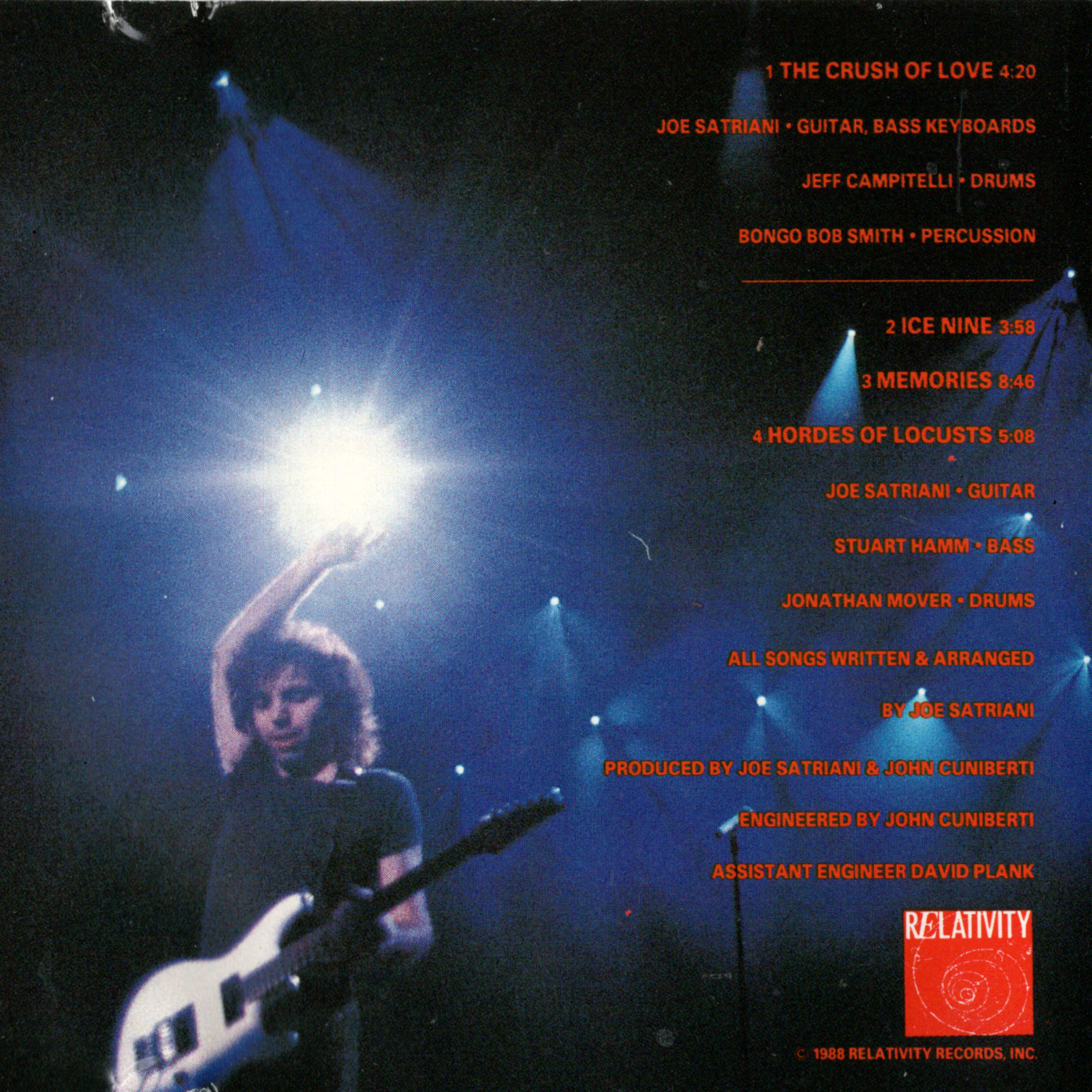
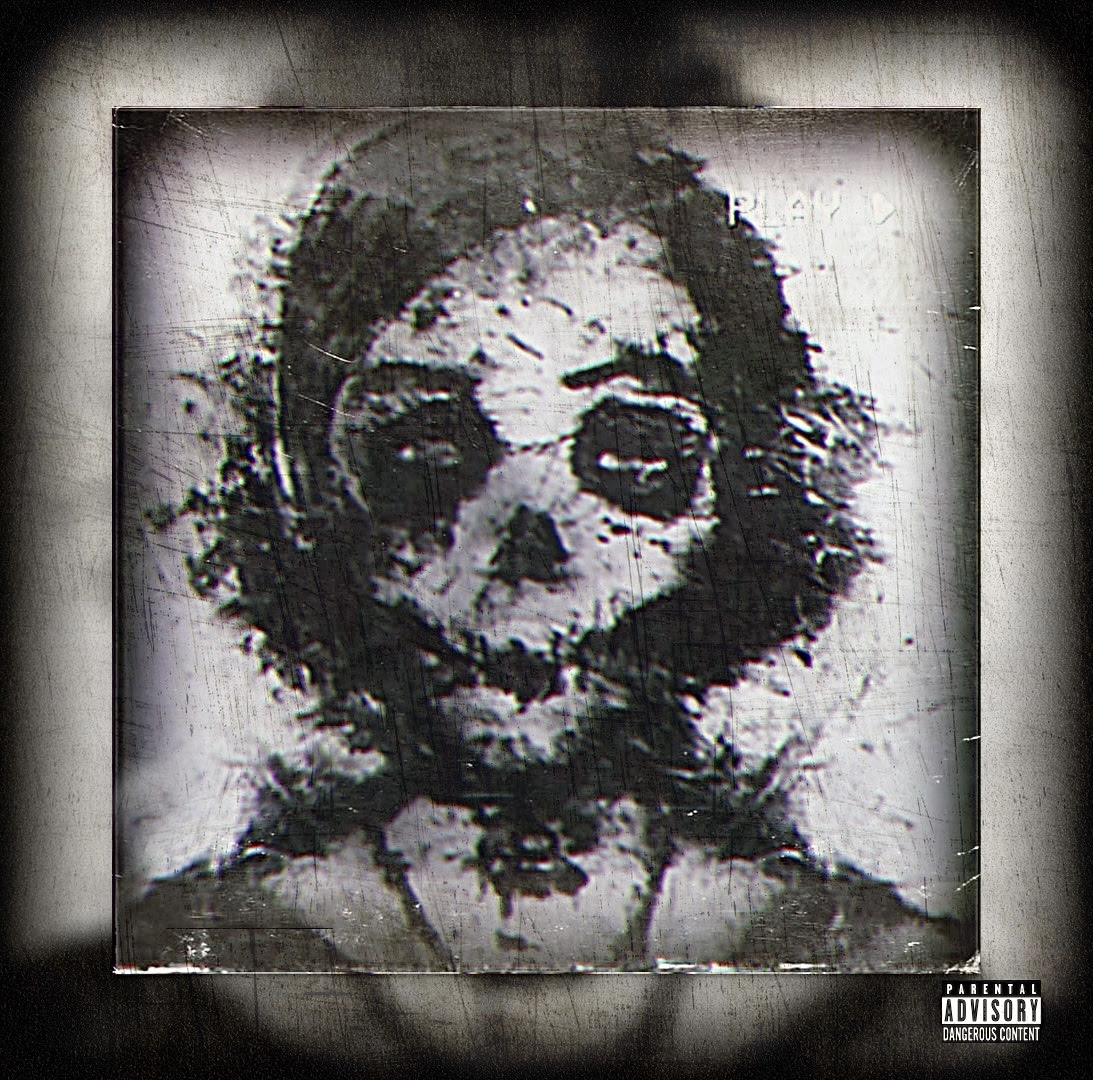
JOE SATRIANI – Dreaming #11 (1988 Relativity EP)

Don’t we all just miss the days when a major artist would just casually toss out a new EP between albums like this?  Following the Surfing With the Alien tour, Joe released a brand new song called “The Crush of Love” with three recent live tracks.  It went gold and hit the top 50 on Billboard.  You didn’t have to worry about pre-ordering it, and there was no “late tax” if you missed buying it right away.  That’s the way an EP by a major artist should be.

“The Crush of Love” is a magnificent track, with a overarching wah-wah hook that makes up the body of the song.  The rhythm section is Stu Hamm and Jonathan Mover on all tracks.  Hamm’s chunky bass is like that moment when you hit a big chunk of fudge in the middle of your ice cream.  Mover is the punctuation, while Joe indulges his melodic side with some wonderful lead.  In a Satriani composition, the lead guitar often takes the place of where the singer would normally deliver the hooks.  That’s “The Crush of Love” in a nutshell.  It’s more like Surfing material, rather than the Flying In A Blue Dream sound that Joe would explore 18 months later.

Onto the live tracks, all recorded by the King Biscuit Flower Hour in San Diego, June 11 1988.

“Ice Nine” from Surfing begins with Joe introducing his band, a symbol of their importance.  Then humbly he adds, “Thank you all for coming.  My name’s Joe.”  Onto the thumping “Ice Nine”, which Stu Hamm turns into a bass showcase for impressive fingerwork without overplaying.  Mover perfectly complements him, nailing the moments the drums need to add some explosions, without being too showy.  Meanwhile, Satriani’s causing explosions of his own, but it always comes back to song’s main melody.  Yes, Joe plays the crap out of this song, but it is indeed a song.

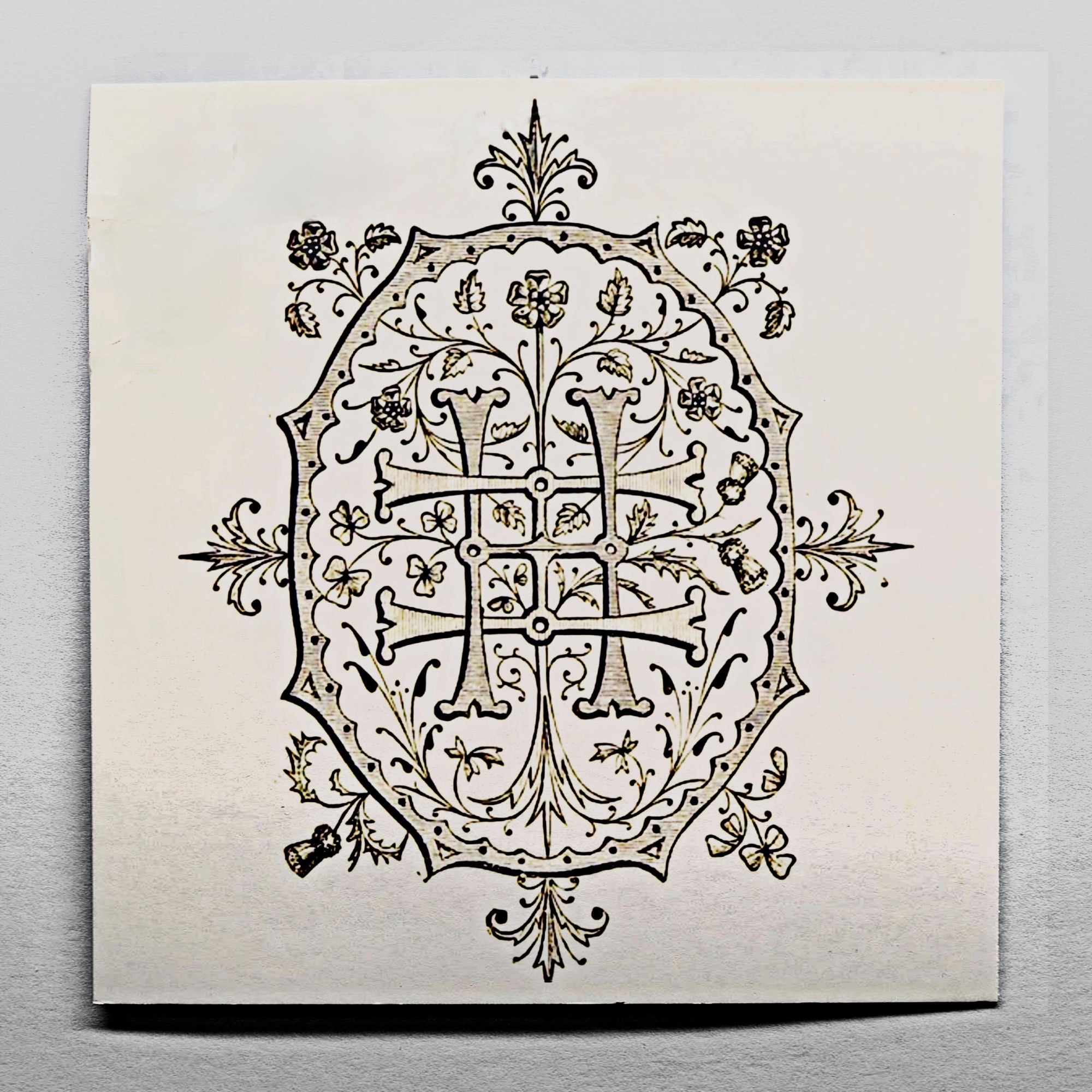
Joe takes us back to his debut album Not Of This Earth (which was reissued in 1988 with similar cover art to Dreaming #11) for the last two tracks.  The lengthy “Memories” opens with a guitar exploration, but quickly turns into a catchy little running guitar melody.  It’s an aggressive number and one of Joe’s more challenging to the uninitiated.  As always, Hamm’s playing his mindblowing and catchy.

Finally, “Hordes of Locusts” has a slower grinding groove that ends the EP on an ominous musical note.  Mover and Hamm largely stick to the groove while Joe shreds and strafes.

At over 23 minutes of exclusive music, this EP was well worth the value.  No wonder it went gold.

4/5 stars

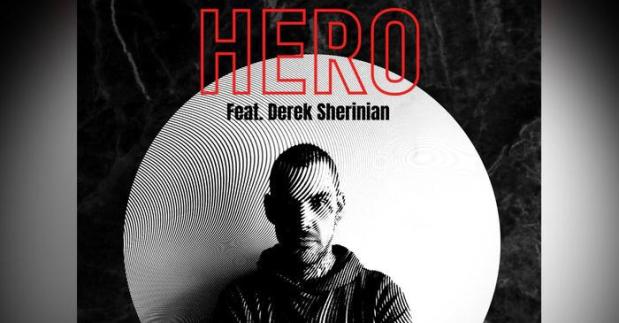
REVIEW: Polychuck – “Hero” feat. Derek Sherinian (2022 single)

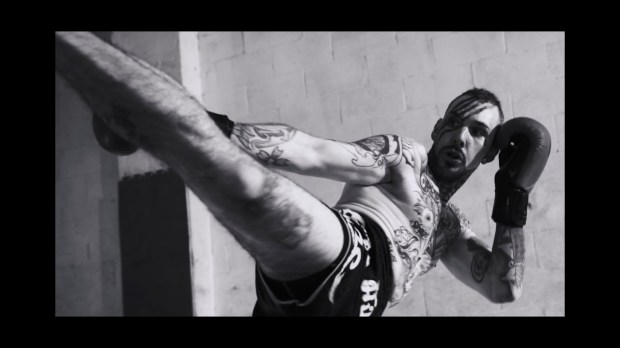
Montreal’s Polychuck is a heck of a prodigy.  He’s a megatalented singer / songwriter / shredder / teacher / mixed martial artist (!!) who does it all, and now he’s expanding his palette and progressing.  Far beyond his first two EPs.  When we spoke to Polychuck on the LeBrain Train last year, he expressed his desire to get more progressive on his upcoming recordings.  By collaborating with former Dream Theater/Kiss/Alice Cooper keyboardist Derek Sherinian, he’s made a huge leap.  Also playing on this track are drummer Philipe Landry and bassist Frédérick Filiatrault.  With the added firepower, “Hero” has a fuller sound than previous Polychuck songs.  It’s like the playing field just got a whole lot bigger.

So let’s get to it.  Cut to the chase.  Polychuck, who is of Ukrainian descent, says “Hero” is a cry for peace, directly about current events.  In times of crisis, music helps sooth.  In turn, crises often inspire great music.

“Hero” commences with steely rhythm guitar with a wicked tone.  It bounces from heavy rocking to acoustic picking and an instrumental outro.  When Sherinian comes in near the start, he’s instantly recognizable.  His solo work here is lyrical, and the perfect compliment to the song.  Not to mention Polychuck’s own lead work, which is both impressive and melodic.  All the playing here is just awesome, period.

“Hero” is an impressive construction.  It’s complex, with several different sections including one at the end that reminds me of the keyboard part in “No More Tears” by Ozzy.  Importantly, all the sections work together like chapters in a story, and the flow is natural.  Best of all, “Hero” never stops being great through its 3:26 length.

Support up and coming talent like Polychuck and buy “Hero”.  If you love that Dream Theater vibe, you will absolutely dig it.

5/5 stars

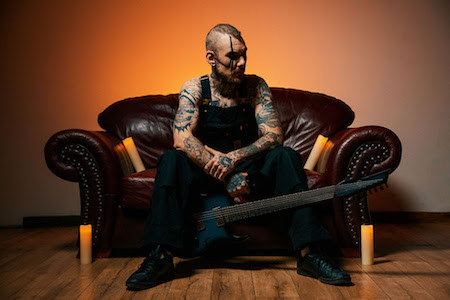
REVIEW: Polychuck – Part II: Shadows Remain (2021)

POLYCHUCK – Part II: Shadows Remain (2021 EP)

Polychuck’s back.  The diverse Montreal musician / singer / songwriter / shredder has returned to cap off 2021 with a followup EP to this year’s Shadows Exposed, and it’s a step into a larger world.  Everything seems bigger and bolder.  According to the man himself, these two new songs are a closing of the Shadows chapter, as he moves on to prepare his full length album debut — a concept album.

Of this new release, Polychuck explains:  “Those were the two songs that originally didn’t make the cut because of their darker, more aggressive sound. These are the heavier tracks that were written and recorded at the same time as the other ones on the EP.”

The progressive “Scarred” has elements that harken back to classic Alice Cooper.  Haunting keyboard touches, cinematic dialogue in the backdrop.  The song soon evolves into a chugging metallic stomp, with double bass setting an aggressive tone.  The icing on the cake is the second solo, a guest guitar spot by 17 year old Justus Hajas.  Wait until you hear this one!

The second track, “Lay a Claim”, stirs more ingredients together, including 80s pop and record scratching.  This classic-to-be brings us out of the Shadows with positive lyrics and outstanding melodies.  “I’m here to fuckin’ stay,” sings Polychuck with intent.

With talent like this, he’s sticking around!

Indeed, Polychuck has a vision, and it’s going to be cool to watch him unfold it.  As his sound grows we can assume his forthcoming album will be even bigger in scope.

4.5/5 stars

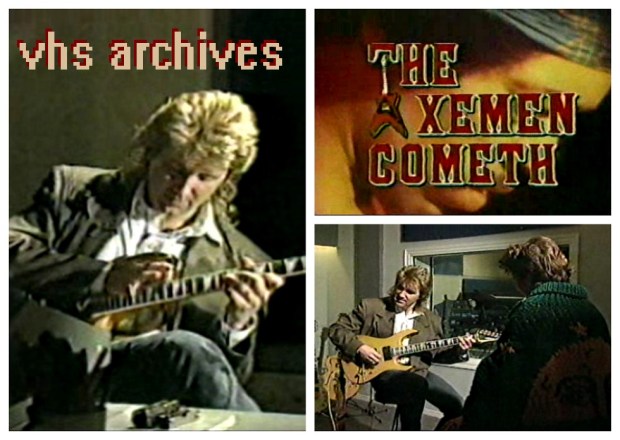
VHS Archives #109: Rik Emmett – The Axemen Cometh (1988)

Another true treasure from the VHS Archives.  When the Pepsi Power Hour ran this guitar-centric special in early 1988, my best friend Bob and I watched it religiously.  We drank up, though didn’t fully understand, every word from Rik Emmett.  The former Triumph guitarist was (and is) one of our favourites.  His knowledge is encyclopedic.  Laurie quizzes Rik on a number of the top rated electric guitar players of the time.

Rik demonstrates his favourite passages, and discusses with host Laurie Brown the following axemen in order:

  • Tony Iommi
  • Jimmy Page
  • Joe Satriani
  • Steve Vai
  • Kirk Hammett
  • Jimi Hendrix
  • Angus Young
  • Eddie Van Halen
  • Yngwie J. Malmsteen
  • and, of course, Rik Emmett

Other topics to stay tuned for in this wide-ranging discussion:

  • Lefties (like Rik)
  • The 1988 Zeppelin reunion (Atlantic 40th Anniversary)
  • Two-handed tapping
  • A bold and accurate prediction about Steve Vai
  • The brown sound
  • Dwiddly-dwiddly
  • His “signatures”
  • Good “hair production”

REVIEW: Polychuck – Shadows Exposed (2021 EP)

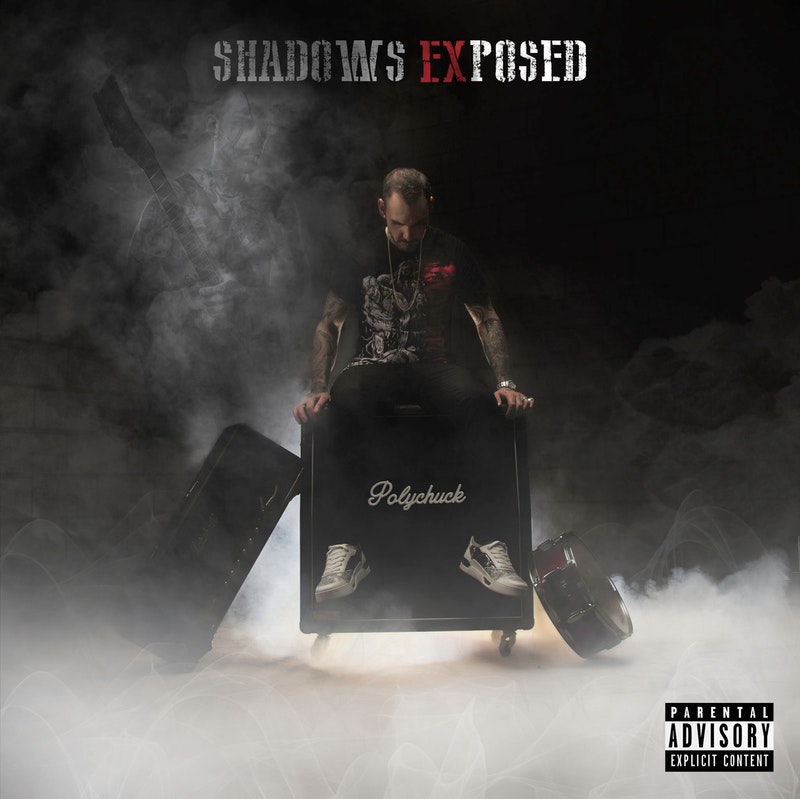
POLYCHUCK – Shadows Exposed (2021 EP)

Who’s Polychuck?  He’s just getting started.

From Montreal, with a do-it-yourself attitude and all the know-how, Polychuck is ready to be heard.  His new EP Shadows Exposed has something for everyone, and that’s not just a cliche this time.  Five deeply personal songs, from the wellspring of modern popular music, heavy metal, progressive rock, and all the classics.  Polychuck is a musically intelligent individual who pulls no punches on guitar, lyrically, or in the ring.  He’s also an MMA fighter!

Lead track “Beating Myself Down” has the vintage piano bop vibe, complete with scratchy vinyl playback.  Before you mistake it for a Billy Joel record, Polychuck brings in the modern influences and blunt lyrics.  Synth horns give you an idea of where Polychuck is coming from.  Performed on keyboards this time, he wants to use a real horn section on his next album.  Creative use of vocoder, and a smoking guitar solo with some insane sounds are the icing on a very sweet cake.

“Exposure” has a modern urban feel, before the heavy metal drum beats kick in.  This is augmented by some pretty awesome record scratching.  The Styx-like keyboard solo reveals Polychuck’s progressive side, which he also wishes to explore further next time out.

Another strong tune, “In the Dark”, binds the heavy beats, some creative keyboard construction, and a solid guitar riff.  This riff transforms into a wailing solo.  Fans of Linkin Park will find something to love here.

Light beach-ready guitar plucks away on “Driving Me Mad”, a song for the summer that sounds like a holdover hit from ages past.  What sets it apart is, again, the guitar.  At one point Polychuck hits upon a melody something like “Rough Boy” by ZZ Top, and it’s the perfect fixture for the song.

The last song “Lights Out” tackles a number of subjects:  the inner critic, nostalgia, old friendships,  and more.  Light 80s keyboard is paired with heavy drums and guitar, ending the EP on a positive note.

When Deke and I talked to Polychuck, he told us he was very much looking forward to making everything bigger next time out, with more real instruments and much more prog.  We look forward to what he has in store, but check out the EP for a taste.  It’s available on iTunes and all the usual streaming platforms.  Shadows Exposed makes a splash but it’s just the inception.  More to come from this gifted artist.

4/5 stars

#912: My First Guitar

RECORD STORE TALES #912: My First Guitar

Bob had a blue and yellow BMX bike, so I had to have a blue and yellow BMX bike.

Bob had a leather jacket, and so I had to have a leather jacket.

Bob had an electric guitar…so I had to have an electric guitar.

Early in 1988, Bob bought his first and only guitar.  It was a jagged, black Stinger with a whammy bar.   It had two double coil pickups.  He had strap locks so he could twirl his guitar over his shoulder if he wanted.  And I had to have all these things too.

Bob bought his guitar second-hand from a guy who said “it used to belong to the guy from Helix”.  Of course there was no way to verify this so we never treated it as fact.   The first weekend he had it, he invited me over to check it out.  How hard could a guitar be to play?  They used to teach sheet music in grade school, so I thought “piece of cake, I can play guitar”.

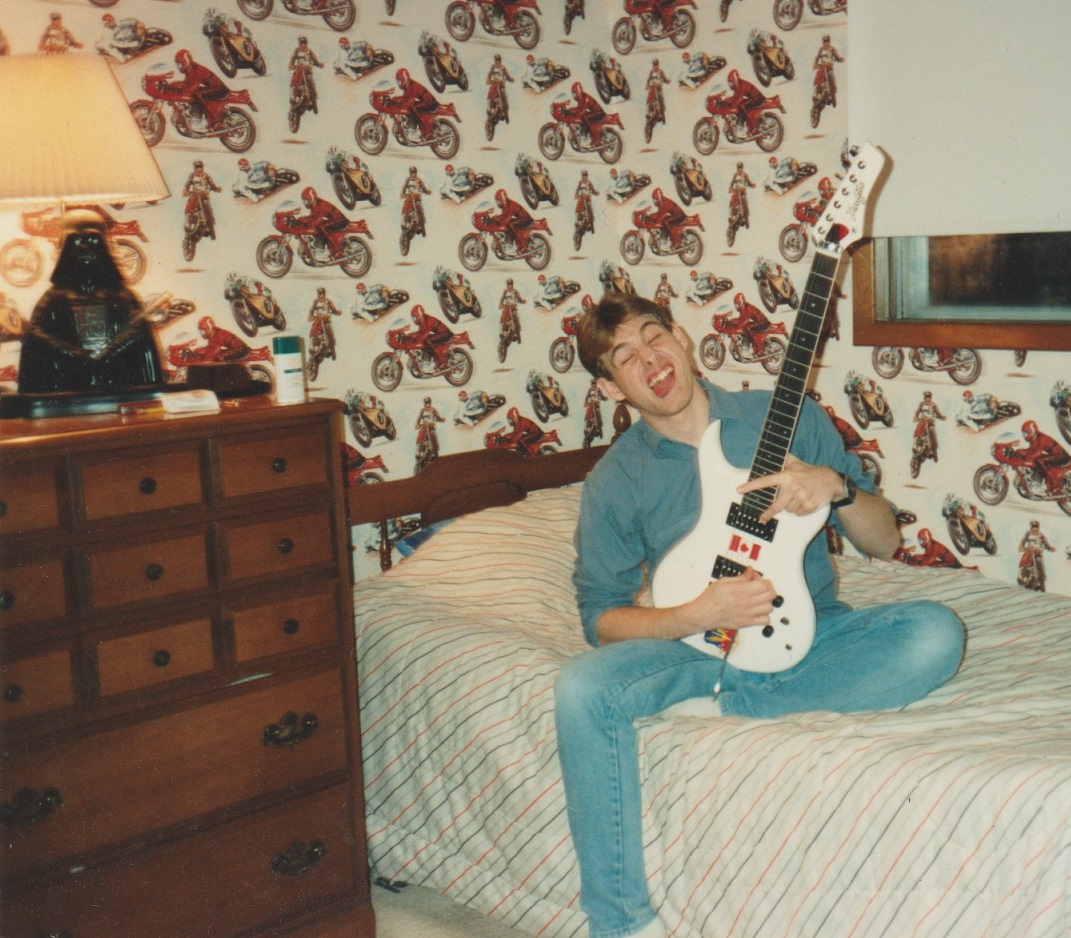
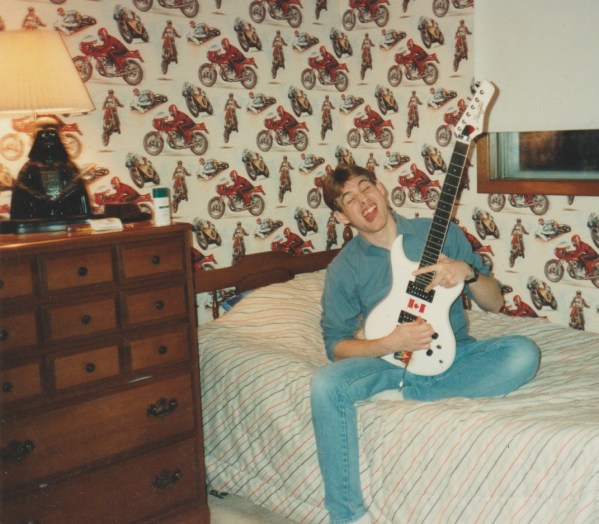
I told my parents that I was getting a guitar, and to them it was just another thing that Bob had, that I had to have too.  And since Bob was two years older and had a part-time job, they’d be paying for this guitar that I insisted I was getting.  Bob and I went out on our own one afternoon, to East End Music in downtown Kitchener.  We browsed, got the help of the man working (probably the owner) and I picked out a generic white guitar.  It had what I needed — the humbucking pickups and whammy bar like Bob had.

“The black and white guitars will be a cool contrast,” we both thought.

I really wanted that guitar.  I thought it was just meant to be.  Bob and I were going to form a band.  This was the first step.  We already had a few band names picked out.

“We’ll be back,” I told the guy as we left.  I was really excited.  Upon arriving at home, I proceeded with begging my parents for the guitar.  My dad wasn’t happy, especially when I explained to him that we already told the guy that I was coming back for it.

“Oh no,” he moaned.  But they agreed, as long as I took music lessons.  That seemed like a pretty sweet deal!  My dad got out his cheque book, asked the man, “What can you do for me here?” and bought me the white generic instrument that I couldn’t live without, at a slightly reduced price!  I was the only one who was happy with the outcome.

It was at this point that I discovered that guitar was really hard.
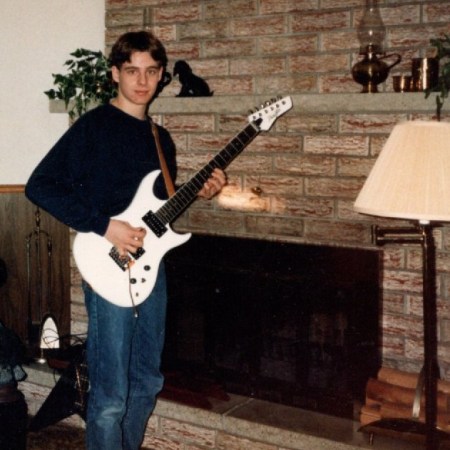
Look closely in this picture and you can see the black cardboard “air guitar” that I made, and our old Atari 2600 console.  

Sure, I could pick out the first six or seven notes of the “Detroit Rock City” solo, but not in time.  Bob and I figured out how to do a simple version of the “Wasted Years” intro, but couldn’t play the song any further than that.  I saw a kid at school playing acoustic guitar, and he did something with his fingers that I couldn’t.  He laid his index finger on the fretboard, and played multiple strings at once — the skill of chording that I had yet to learn.

My mom found a teacher that did housecalls.  It was perfect — my sister was learning keyboards from him.  Gary Mertz was his name, a keyboard player by nature but also able to teach guitar.  Bob would come over on Saturday mornings, and take his lesson after Kathryn and I had finished.  Gary could teach three lessons in one stop, and I believe there was a fourth kid in the neighborhood that he taught as well.  After lessons, sometimes Bob and I would hang out and listen to music, or go to the mall.

The first lesson I really learned about guitar is why you don’t want a whammy bar.  I spent most of my time tuning that thing, and replacing a set of strings was a nightmare.  “I’ll never buy another guitar with a whammy bar,” I said after buying a second guitar with a whammy bar.

The reason I bought that second guitar was due to an accident with the first.  I left it lying upright, leaning on a bench.  It got tangled in a cable, and when my sister got her keyboard out to practice, the cable yanked on the whammy bar.  The guitar hit the bench and the headstock broke in two.  It was made clear to me by both Gary and my parents that this accident was my fault.  But Gary found a guy who would fix it.

A broken guitar is never as good as it was brand new.  A couple years later I bought my Kramer flying V, which became my preferred instrument.  It too was a white guitar, and so I said to Bob:  “My gimmick is that every guitar I own will be a white guitar.”  He thought that was cool, because two of my favourite players, Adrian Smith and Phil Collen, frequently played white guitars.

The fact of the matter is, some people can play instruments, and some people can’t.  I went the full distance before admitting that I can’t.   I modified my first axe with some cool stickers. Bob and I both bought “super slinky” guitar strings thinking it would help us play fast.   For my guitar strap, I chose a cool faux-snakeskin thing.  (I didn’t want animal print — too 1984.)  I had an electronic tuner, a suitably heavy ancient tube amp with a reverb pedal, and a collection of different picks.  Gary tried to make my mom feel better about my difficulty.  “It’s not as easy as the keyboard,” he explained.  “If I dropped an ashtray on this key, it’s still going to make the right note.  A guitar won’t.”  But eventually, I called it quits.  It turns out that my sister got all the talent.

Bob didn’t think he was learning anything from Gary, and he quit several months before I did.  He had a new interest now:  sailboarding.

“Oh I suppose you’re going to want a sailboard now!” said my mom with a warning tone in her voice.

But I didn’t follow Bob this time.  Sailboarding was the first thing Bob was into, that I had no interest in.  I toiled away at guitar a little longer, thinking now I could be a solo artist.  I wrote some lyrics and recorded some ideas on cassette.  Half of my ideas were played on the keyboard using the “guitar” voice, because I just couldn’t play guitar.

My first guitar, the one bought in February 1988 at East End Music in downtown Kitchener, with the repaired headstock, was sold to an older lady that Gary was teaching.  I’m sure she was able to get more music out of it than I did.
 

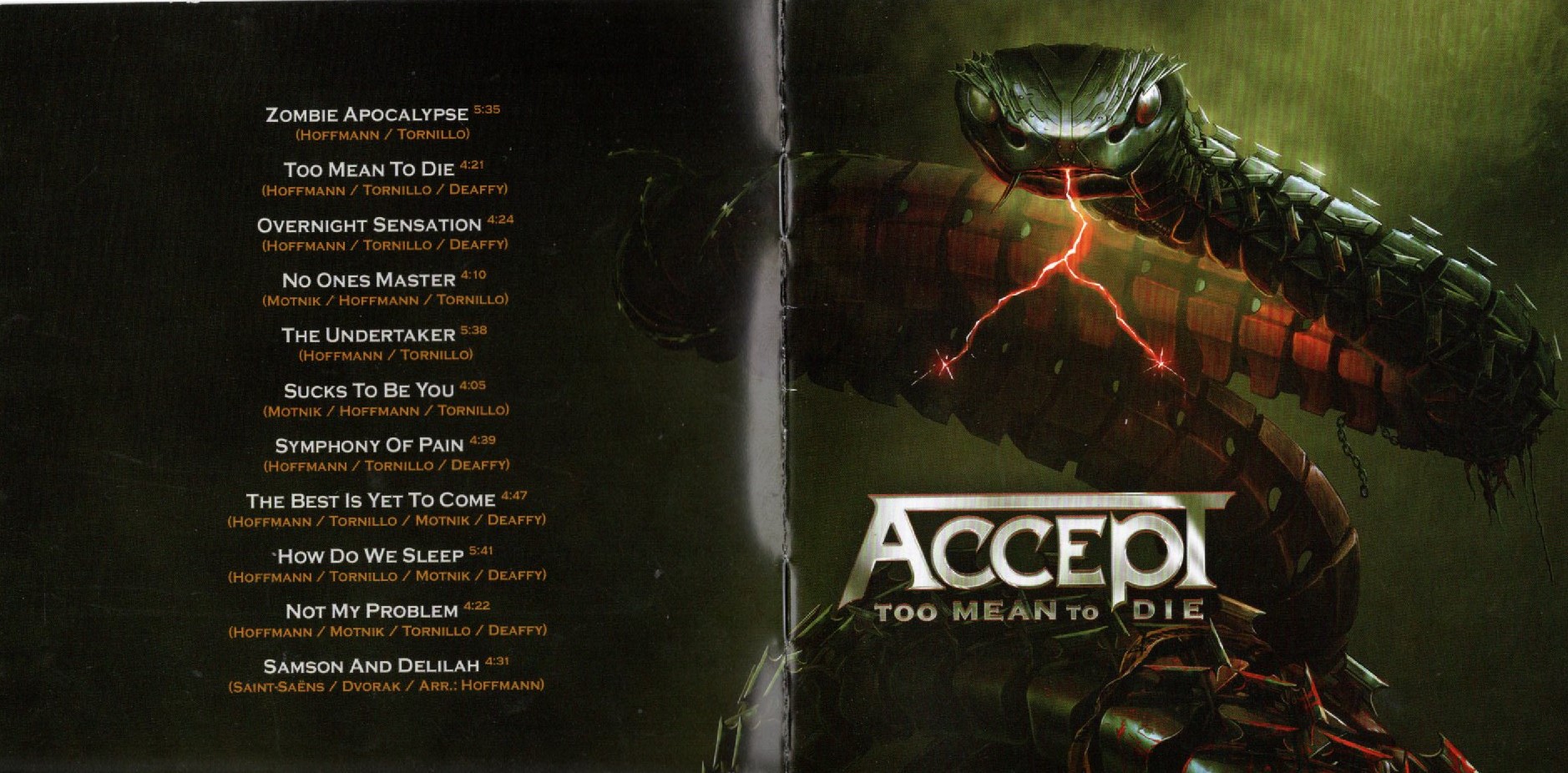
REVIEW: Accept – Too Mean to Die (2021)

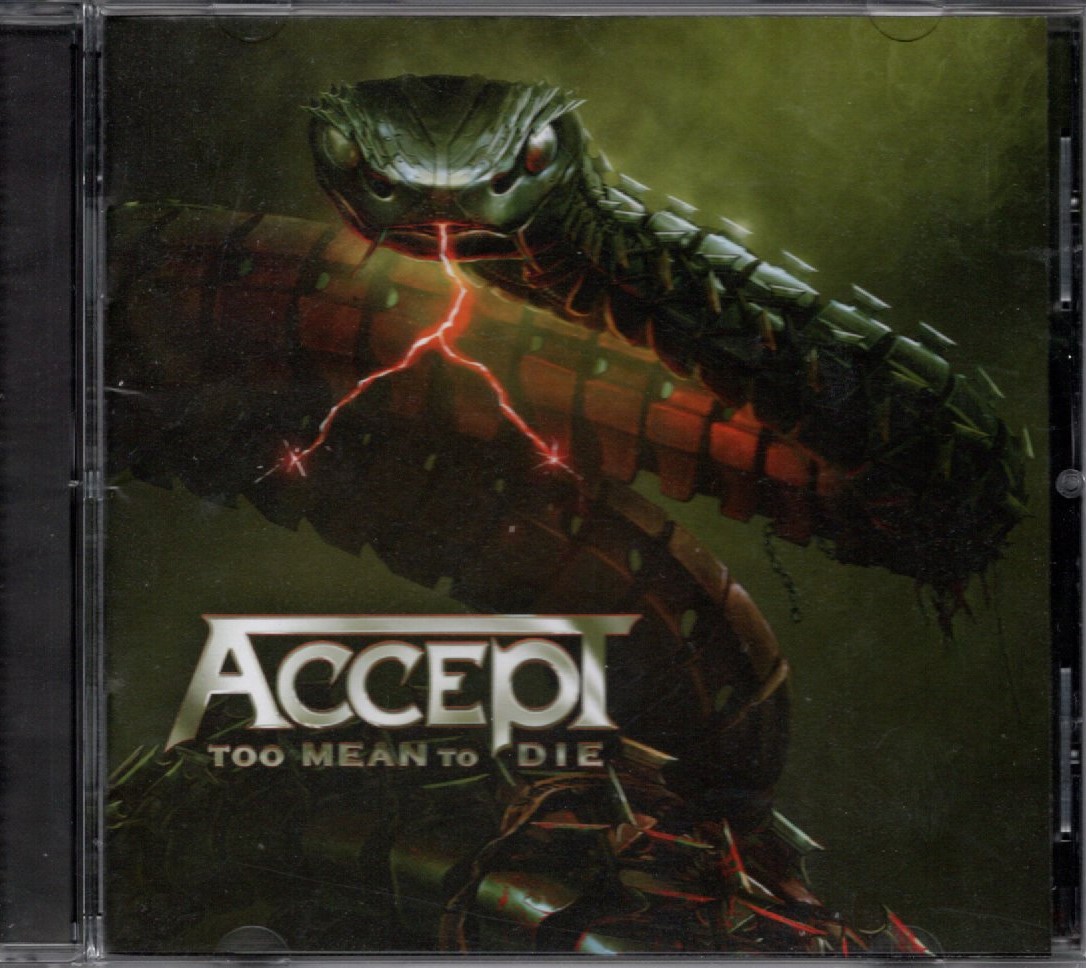
ACCEPT – Too Mean to Die (2021 Nuclear Blast)

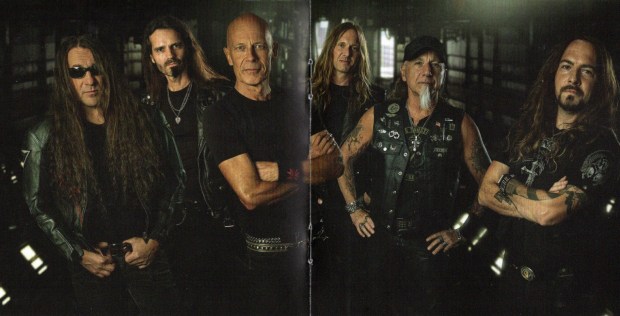
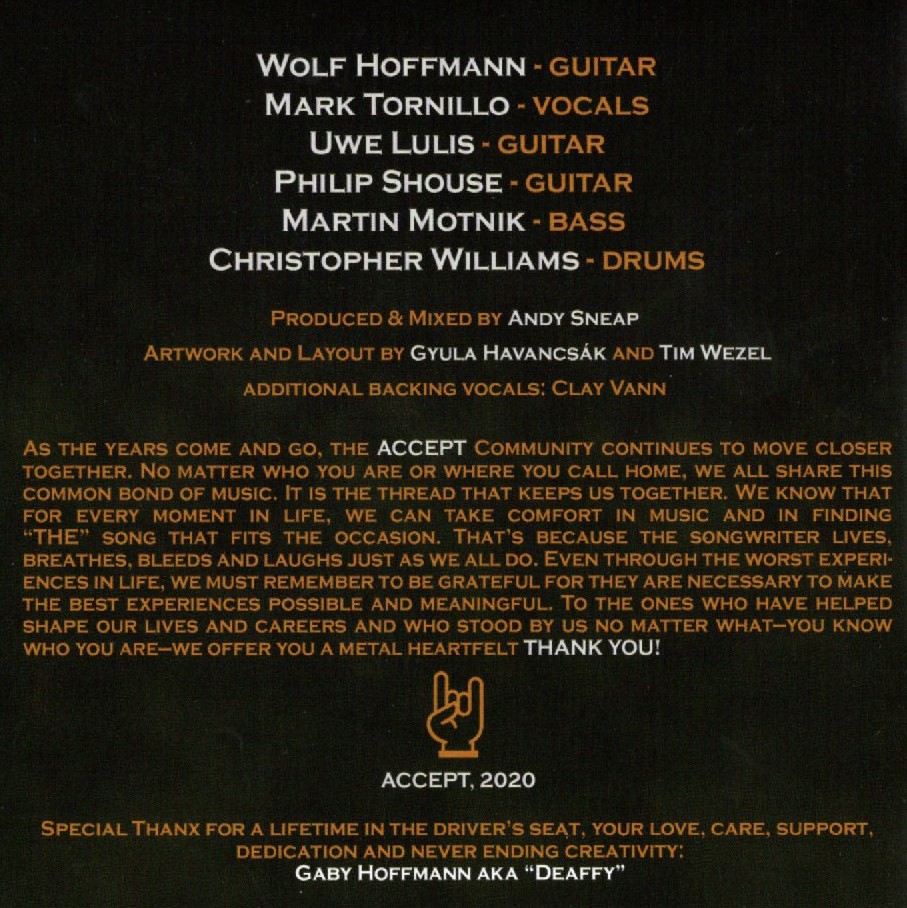
Tornillo-era Accept has been a pretty even field; a level grid of Sneap-sharp production and Hoffmann’s razor-riffs.  If you expected change just because there’s a new bass player for the first time ever, you’d be wrong.  Accept may be down to just one original member (Wolf Hoffmann himself) but it doesn’t matter much.  What Accept deliver on Too Mean to Die is the same as they have done for every album since 2010’s Blood of the Nations.  Reliable, like AC/DC…or a comfortable leather jacket.

Nothing wrong with this.  Accept found a formula that works in their post-Udo world and it works well.  It’s difficult to remember what songs are from what albums, but Accept haven’t stopped putting out solid quality metal.

There’s the song about zombies (“Zombie Apocalypse”), one about never giving up (“Too Mean To Die”), the mid-tempo one (“Overnight Sensation”), the one about the media (“No Ones Master”), the single* (“The Undertaker”), the one with the funny title (“Sucks to be You”), the classical influence (“Symphony of Pain”), the ballad (“The Best is Yet to Come”), the one about the state of the world (“How Do We Sleep”), the angry one (“Not My Problem”), and the instrumental (“Samsom and Delilah”).

The riffs keep hammering in the capable hands of Wolf, and Mr. Tornillo on lead vocals never stops givin’ ‘er.  Hooks on every track.  The energy is no less than their first together.  Wolf’s guitar tone remains as tasty as it has been for over four decades.  One more album to add to your collection, as the Tornillo era blends together like a monolithic five-CD box set.  Too Mean To Die could have been titled Disc Five, so if you need to complete your set, do it now.

4/5 stars

* The single for “The Undertaker” features a non-album live track on its B-side, of a non-album single called “Life’s a Bitch”!


REVIEW: Nita Strauss – Controlled Chaos (2018)

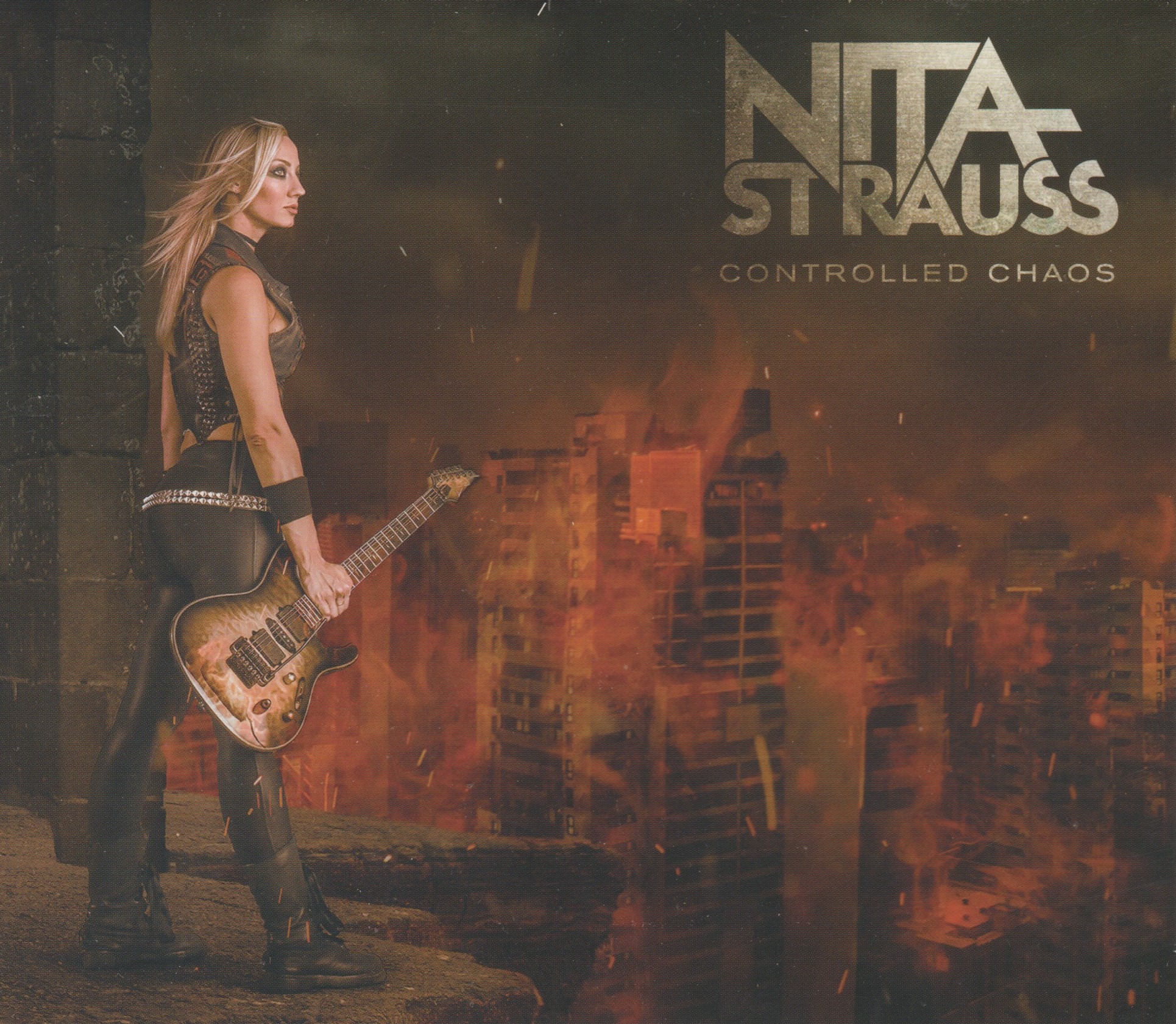
NITA STRAUSS – Controlled Chaos (2018 Sumerian Records)

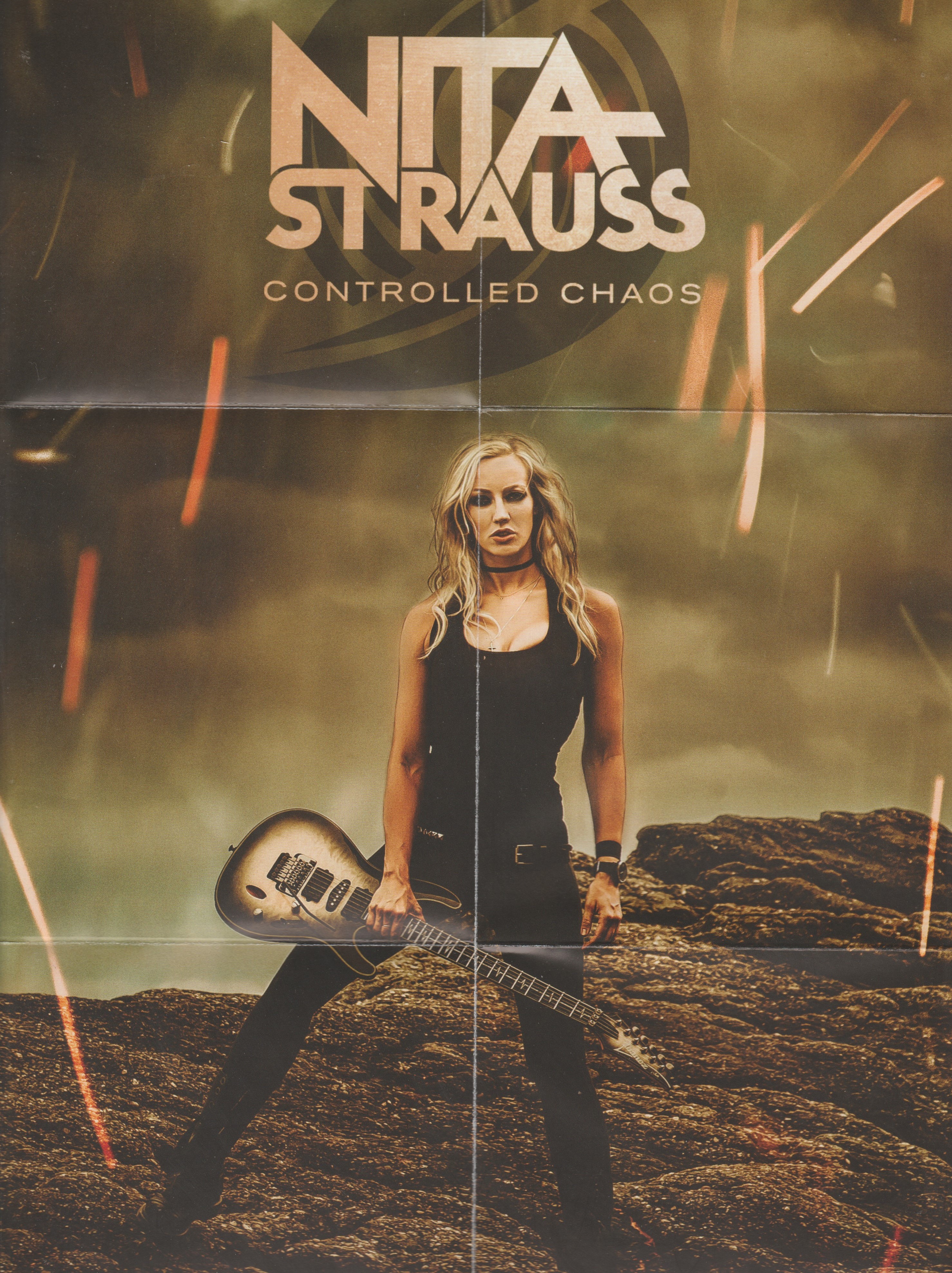
Nita Strauss became a household name touring the world and playing lead guitar with Alice Cooper.  Her natural ability and charisma ensured that the next question would be “when is she putting out a solo album?”  In 2018 Strauss released her entirely instrumental debut Controlled Chaos, playing everything except drums and keyboards.

Her choppy rhythm on “Alegria” soon gives way to extremely melodic (and fast) lead work.  Strauss’ talent seems to be taking a melody and making it as exciting as possible with only six strings.  There are shades of Yngwie, Joe and other assorted big-namer instrumentalists without sounding like any specific one.  The weakness is unfortunately the drums (by Josh Villalta) which are robotic and flat.  “Our Most Desperate Hour” sports blurry fast drum blitzes that should be exciting but instead sound artificial.  Worst track:  “Mariana Trench” due to long stretches of bland double bass.  Fortunately this album is more about the guitar.  Lots and lots of guitar.

Track after track, Nita blazes a tapestry of technique.  Her guitar creates moods — tension is in the air.  But she also does excellent ballads.  “Here With You” is the first.  Guitar instrumental ballads are a thing unto themselves.  She creates a powerful presence on “Here With You” with layers of guitars working together.

“The Stillness at the End” is a an examination of one of Nita’s techniques: densely layered guitars in harmony.  Here she mostly forgoes speed in favour of building up the melodies.  Keyboards are used sparingly, such as the intro to “The Quest” which goes full Yngwie in dragon-hunting mode.  But ballads like “Hope Grows” might give us a better look at Nita’s inner workings.  The sparse arrangement lets you really hear the feeling in her playing.  She has an excellent sense of composition, knowing exactly when to throw on some emphasis.  Indeed, I’ll go out on a limb and say that the ballads are the best tracks.

“Lion Among Wolves”, “Pandemonium 2.0” and “The Show Must Go On” all have their own guitar thrills to enjoy.  “Pandemonium” stands out due to an excellent outro guitar melody.  And if you’re wondering, “Hey, is ‘The Show Must Go On'” the old Queen song?  Indeed it is, featuring Nita sharing the stage with a cello (Tina Guo).  Great choice on which to end the album.  The cello solo is freaky.

Controlled Chaos is a good debut.  The drums are a sonic stumbling block.  As far as playing, composition and entertainment, Nita delivers the goods.  The songs could use a little more variety to give them album some texture, but there is plenty of room for Strauss to grow as her career is just going to get bigger.

3/5 stars


#794: “Hockey Sticks”

GETTING MORE TALE #794:  “Hockey Sticks”

Though Jimi Hendrix is responsible for the invention of the “hockey stick” guitar, it was my old guitar instructor Gary Mertz who coined the phrase.

In the 1960s, it was difficult for Hendrix to find good guitars for a lefty like him.  Ned Flanders’ Leftorium store was still decades in the future, so what was a young Jimi to do?  Like many things in his life, he got inventive.  He simply flipped a right-handed Fender Stratocaster over, restrung it for a lefty, and played it.

Flipping the guitar not only enabled Jimi to play a Strat, but also gave him some unique advantages in his quest for new sounds.  In this new orientation, the strings were now over the pickups in unusual locations, and had different tension than intended.  The long strings — the highest — were now the shortest strings.  Since the high E was shorter it didn’t have to be as tight, and this made it easier to bend.

This arrangement also had the effect of making Jimi look even cooler.  The iconic image of Jimi playing the upside down Strat became world famous.  With tuning pegs facing down, young righties were envious of this cool new look.

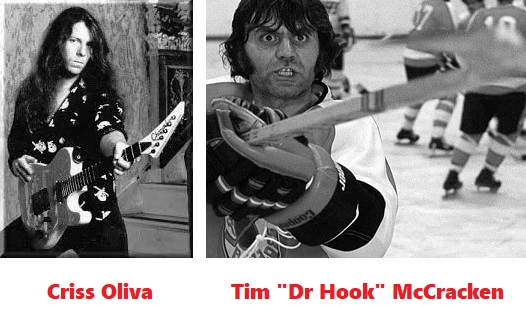
When those young righties grew up and signed to big labels themselves, they popularized the flipped headstock for righties — the “hockey stick” neck!  You can see it, can’t you?  Look at this photo below, of Criss Oliva from the band Savatage, and Tim “Dr. Hook” McCracken from the movie Slap Shot.

That’s a high sticking penalty.  Incidentally, the character of McCracken inspired Marvel’s Wolverine.  You see that too, don’t you?

It wasn’t always players with the calibre of Oliva playing these hockey sticks.  For every Criss Oliva there was a C.C. DeVille.  You knew C.C. wasn’t doing it to gain any string-bending advantage.  He was doing it strictly for image, and that’s one thing my old guitar teacher hated about it.  I think he also hated the sharp jagged headstocks on those Charvels, Jacksons and B.C. Rich’s.  Turning them upside town made them to look even more ridiculous to him.  Like you were about to hit the street for a little two on two ball hockey.  Utterly ridiculous.


I always had rock magazines and videos playing in the basement, so when Gary came for lessons he would often comment on what I was listening to at the time.

“Oh no, you don’t like those hockey sticks, do you?”

Sheepishly I said that I did.  I thought they looked cool, like a weapon.
But a guitar is a musical instrument.  The subtle curves on a Fender Strat echo those of a classic violin, not a melee weapon or a piece of sports equipment.  Regardless, by 1989 both Criss Oliva and Christopher Caffery were playing hockey sticks in Savatage!  They looked lethal in the video for “Gutter Ballet”, wielding those implements of both rock and high-sticking.

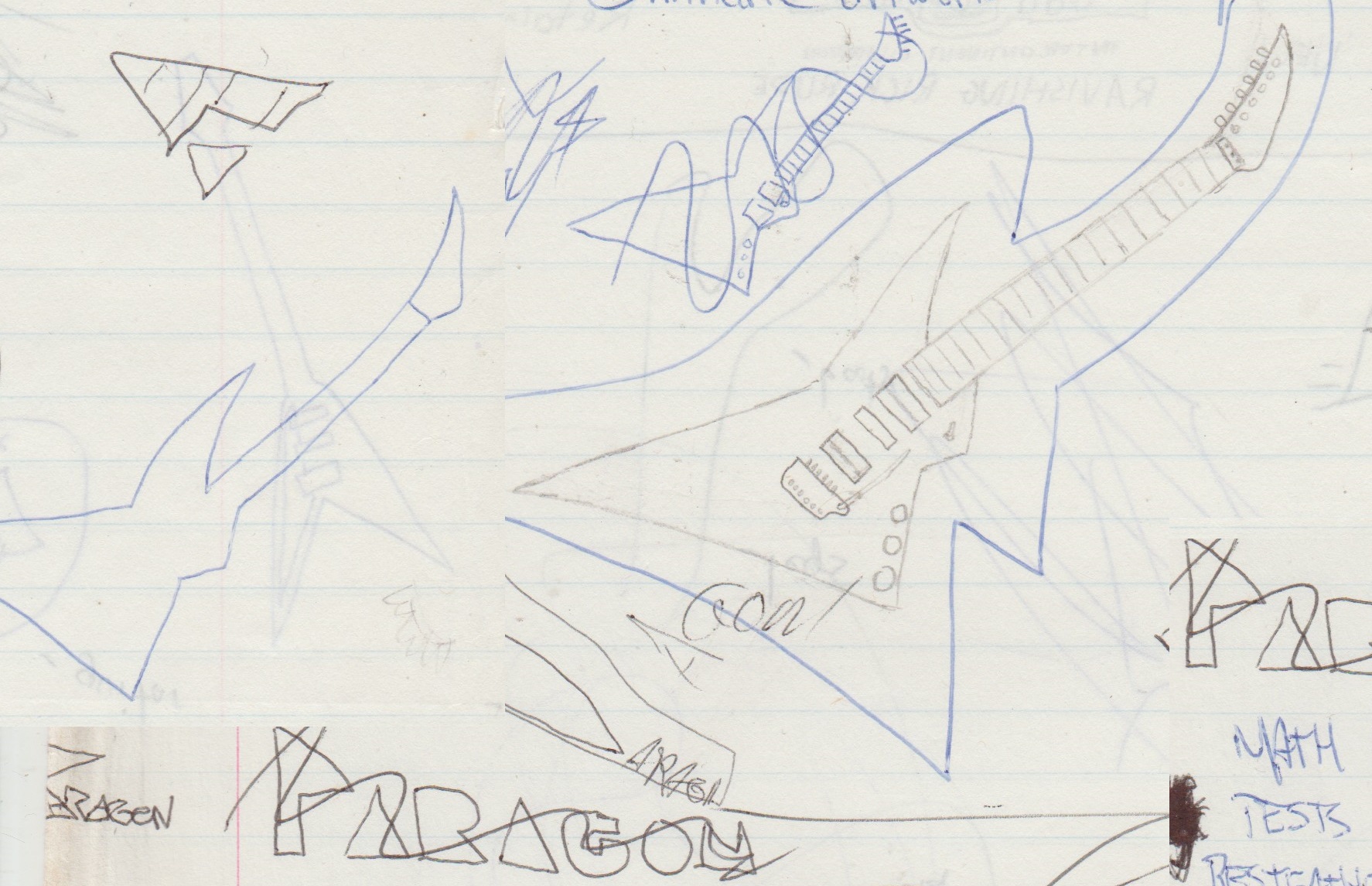
Although I wouldn’t fully confess my deep love of hockey stick guitars to Gary, I found drawings in my old school books that prove it beyond a shadow of doubt.  See below, this page removed from a grade 11 history note book.  I found three hockey sticks on one page alone!

I clearly liked the shape.  The proof is in the puddin’, or in this case, the 30 year old notebooks that I kept for occasions such as this.

Whammy bar, too.  Floyd Rose, no doubt.  Two open-coil humbucker pickups and a single coil in the middle.  Not a very common arrangement.  Was I trying to combine the best properties of a Fender and a Gibson?  Or was I just doodling?  The latter, most likely.  I screwed up the tuning pegs.  For all I remember, that mysterious top pickup might have just been for flash bombs like Ace Frehley’s.

The guitars do look a little silly today, but the 80s were a different time.  Every band had a shredder and you had to do whatever you could to look different.  Savatage’s dual hockey sticks complemented their jagged logo and looked damn cool being foisted in the “Gutter Ballet” video.

Raise a goblet of whatever you’re drinking, and let’s salute the hockey stick.  With all due respect to Gary Mertz, looking cool, young and lethal on stage used to mean something.  We all wanted to stand out, and a hockey stick was one way to add to an image.  I always wanted one!  Just watch your bandmates’ eyes when you’re swinging it around.  Taking an eye out is a lot worse than high sticking!

#791 GUEST SHOT – The True Story of Thuss’s Vince Neil “Dragon Guitar” (by Thuss)

I get a lot of hits from people hoping to buy my stuff.  This one popped up recently in my search terms:
“vince neil dragon guitar for sale”

Several years ago, the Vince Neil “dragon guitar” by Washburn was on sale so I picked one up.  So did my buddy Thuss — except he did sell his.  This is his story of how it (eventually) went down.


GETTING MORE TALE #791:  The True Story of Thuss’s Vince Neil “Dragon Guitar”

BY THUSS

Lebrain and I had matching guitars for a while, that we both bought at the now defunct Future Shop.   They were on clearance and we got them for a really good price ($70 plus tax, originally $300 each, limited to 2500 pieces).  They were Washburn dragon guitars which were “autographed” by Vince Neil.  The only real autograph in the package was Vince Neil’s actual signature on the certificate of authenticity.  After a couple years I decided to sell mine as I never really played it anymore and had moved onto different hobbies.  

So I did what everyone else did, and put it up on Kijiji.  I wasn’t in a hurry to sell it so I put it up for more than double what I paid for it.  I had a few bites, but nothing serious until one guy from Toronto wanted it.  He was desperate for it!  But there was only one problem:  he didn’t drive.  First he came to me with an offer of triple what I paid for it if I delivered it to his house.  As I said I wasn’t in a hurry to sell it, so I answered no. 

I didn’t hear from him for a week or so.  Then he emailed back, and asked if I would meet him at the bus station downtown for what I was asking for it.  Again I said no, because I hate driving downtown and I didn’t want to pay for parking just to make a sale.

Again a week passed, and he emailed me back.  He said “OK”.  He’d take about six buses and meet me at my house and he will give me what I’m asking for it.  I said sure, and not surprisingly he never showed up. 

At this point I had another offer from a dad wanting to buy it for his son.  His offer was below what I was asking, but still well above what I paid for it.  I accepted, and when they came to pick it up, the son was so happy to have a guitar.  He was really excited to start playing, so I’m glad I sold it to someone who would appreciate it.  

I thought this was the end of the story but come a month later, the original guy emailed me and said one of his friends was going to drive out to my house so he could pick it up.  “Sorry,” I told him, “but I sold it to someone else.”

Guitar-guy immediately emailed me back, and he was pissed!  He told me he said he wanted it, and was going to pick it up, so why did I sell it to someone else?  I said it was almost two months since he first contacted me and I moved on and sold it to someone else.  Finally that got rid of him and I never heard from him again.  You meet some “interesting” people on Kijiji.  At least I didn’t tell him LeBrain had one too!