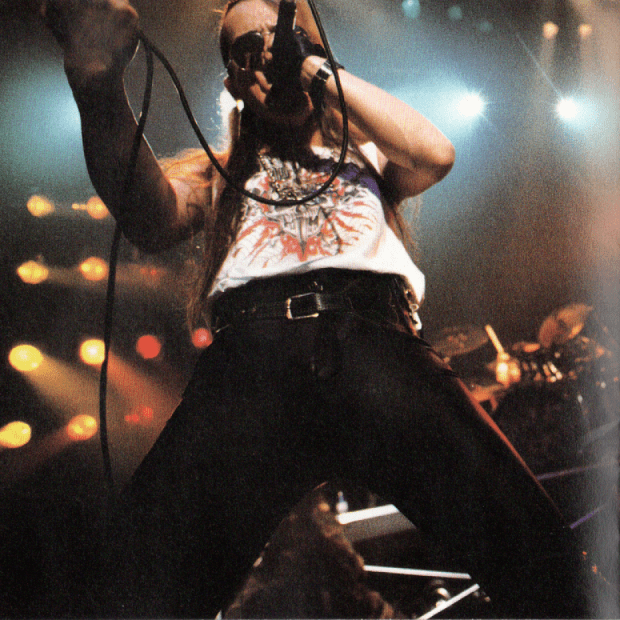
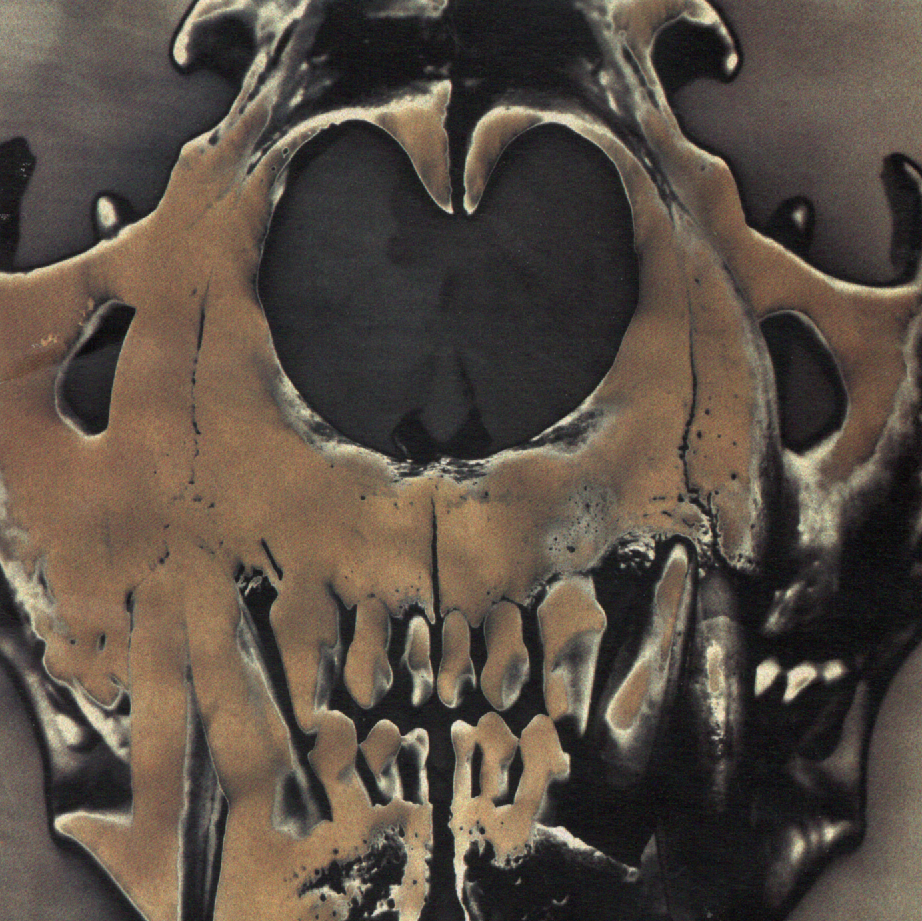
When Loudness released their first live album with new singer Masaki Yamada Once And For All, they took the oft-misguided step that many bands with replacement singers make. Much like Van Halen, they dropped the majority of their earlier material from the set and focused on the new album. Unlike Van Halen, this wasn’t done due to ego, but because of changing styles of the 90s.
You hate when bands do that, don’t you? Well allow Loudness to open your mind on the concept.
In 1992, Loudness released their self-titled new album with Masaki on vocals. It is excellent. Like many late-period self-titles, it sounds like a new start. Masaki was a very different kind of singer from either Minoru Niihara or Mike Vescera. Truthfully his voice was not well suited to the old material (shades of Blaze Bayley). Focusing on the fine, new songs for their first live album together was a wise move.
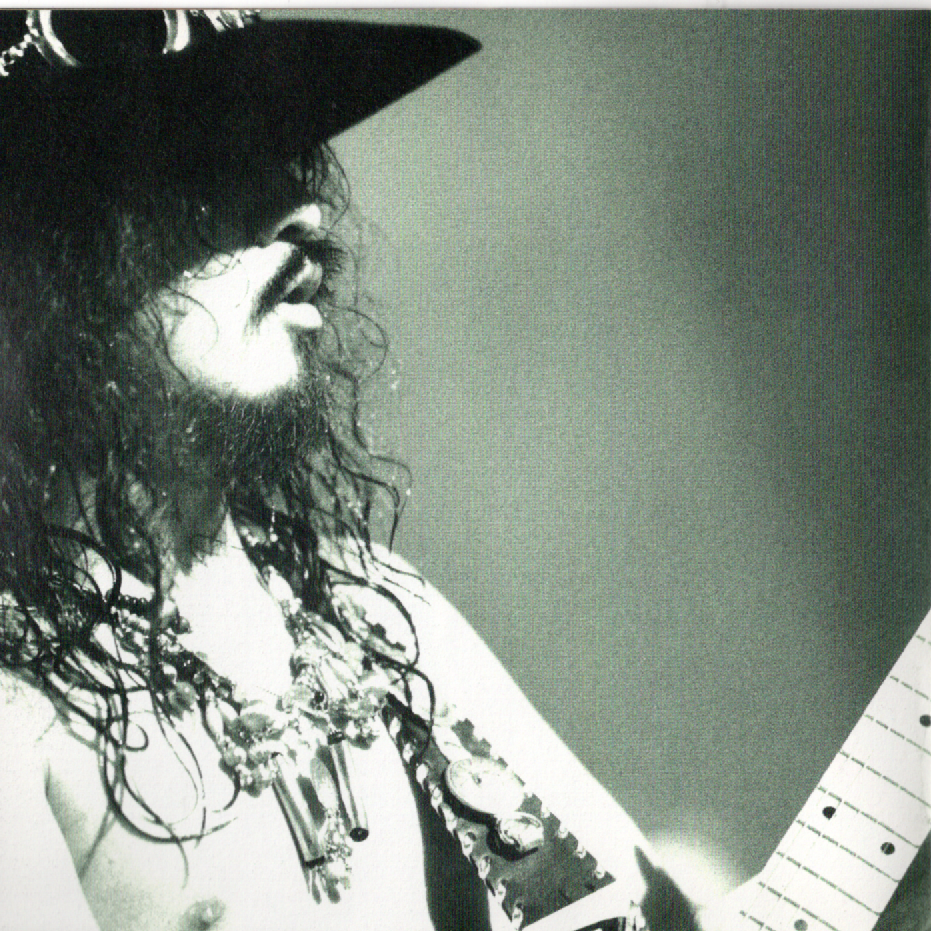
Loudness opened this live set with some smokin’ guitar licks and the first two tracks from the new album: “Pray For the Dead” and “Slaughterhouse”. Masaki was in great vocal shape, able to hold it steady and belt. The slow, exotic groove of “Pray For the Dead” screams “early 90s” but in a good way. “Slaughterhouse” has a faster tempo and more “metal” vibe. Drummer Munetaka Higuchi (R.I.P.) has this song by the balls. He gets a wicked solo at the end, too.
The sole Mike Vescera song that lingered in the setlist is “Down N’ Dirty” from 1991’s On The Prowl. A little dated-sounding, its persistence in sets over the years is surprising. New bassist Taiji Sawada (R.I.P.) has the opportunity to shine on the slinky opening. The Masaki-era version is heavied-up, but that chorus can’t be saved. Never cared for it. But personal favourite “Everyone Lies” comes next in the set, a punchy fast groove with an angry vocal.
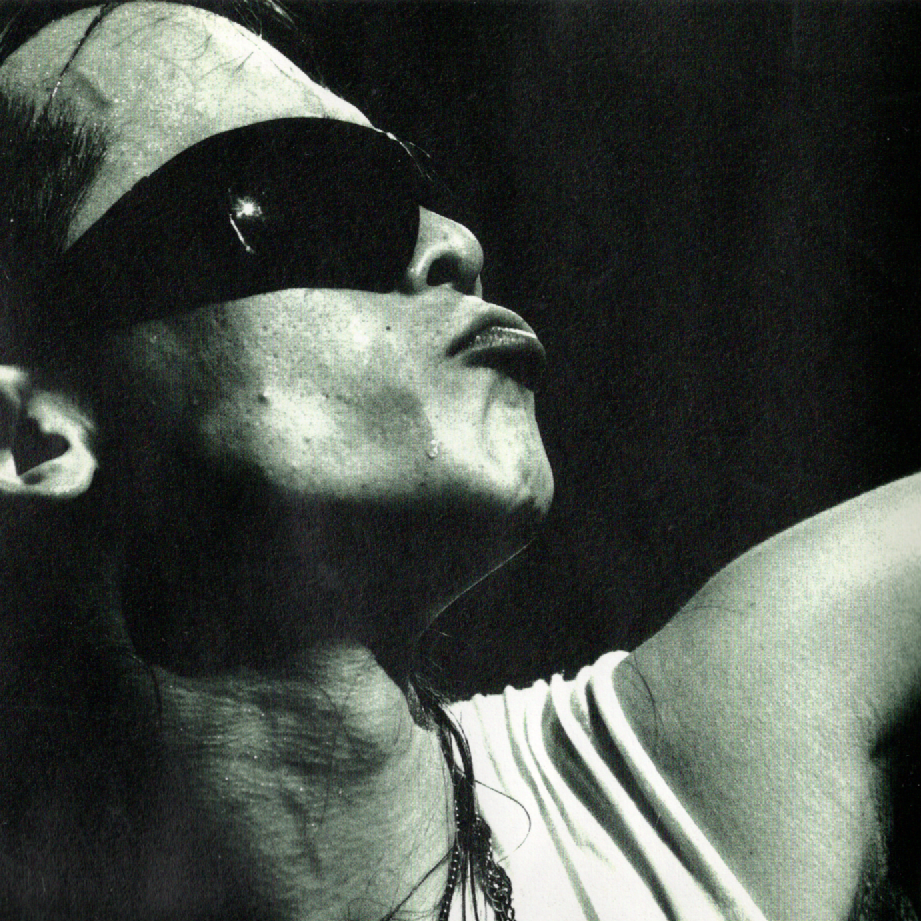
Masaki’s old group E-Z-O were not unknowns; they put two albums out on Geffen and are something of a cult band. Their “House of 1,000 Pleasures” is deservedly visited for track five. Akira Takasaki takes a wicked solo here, in a song that definitely owns its place on the album. It’s also nice to get tracks that are not on regular Loudness studio albums when you pick up a live disc.
Track six would fall where “side two” should begin — the single “Black Widow”. This menacing groove is performed to perfection. All the tracks are. Album accuracy is not an issue, but the live versions do have more energy. “Black Widow” kills, as it should.
Two more of the newer songs follow before they finally dip into classics: “Twisted” and “Waking the Dead”. Akira blazes for a bit before “Twisted”, just a prelude to the extended jam in the middle of this funky rocker. The three instrumentalists Akira, Taiji and Higuchi really get a chance to show off their chops as the song goes on for 10 minutes. After that workout, the straight-ahead riffing of “Waking the Dead” is almost a relief.
The two classics from the Minoru Niihara days are the two most obvious songs: “Crazy Night” and “S.D.I.”. Masaki’s style transforms “Crazy Night” into something more 90s. He simply isn’t the kind of singer to belt out a melody. Masaki tortures the melody and bends it to his range and growl. It is not a bad version of “Crazy Night”, but it is a different take than Minoru’s. “S.D.I.” is the encore, a blitzkrieg of metal that fares well with Masaki leading the charge. It was always a bit of a screamer.
Once And For All isn’t easy to find, and is often prohibitively expensive. This isn’t the kind of album you’re likely to just find sitting on the shelf at your favourite used CD store. It’s the kind of thing that must be sought. If it were a 5/5 star live album, I’d say “seek it”. But very few live albums are an 5/5.
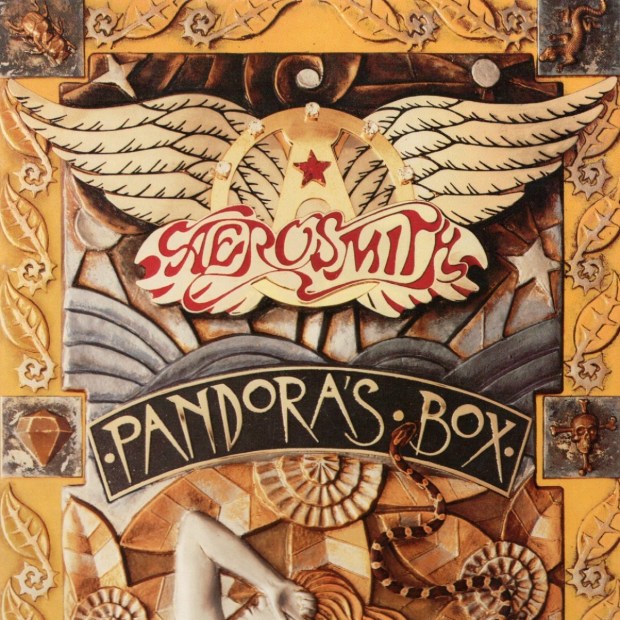
Aerosmith were out of the gates fairly early into their career when their first anthology style box set was released in 1991. They were still going strong, at the peak of their popularity. Their career had two distinct eras marked by the record labels they were signed to: first Columbia, and then a resurgence with Geffen.
There was also a long gap between Aerosmith studio albums. Pump was released in ’89 but it took them four years to come up with Get A Grip. While Geffen waited for Aerosmith to complete Get A Grip, their old label Columbia was allowed to release compilations. In late 1991 they put out a brand new video for a remixed “Sweet Emotion”, although ironically the remixed version wasn’t included in the forthcoming Pandora’s Box set. Regardless, there was a stop-gap. November saw the release of Pandora’s Box just in time for Christmas, with three CDs of music, including a whopping 25 rare, unreleased, or remixed tracks.
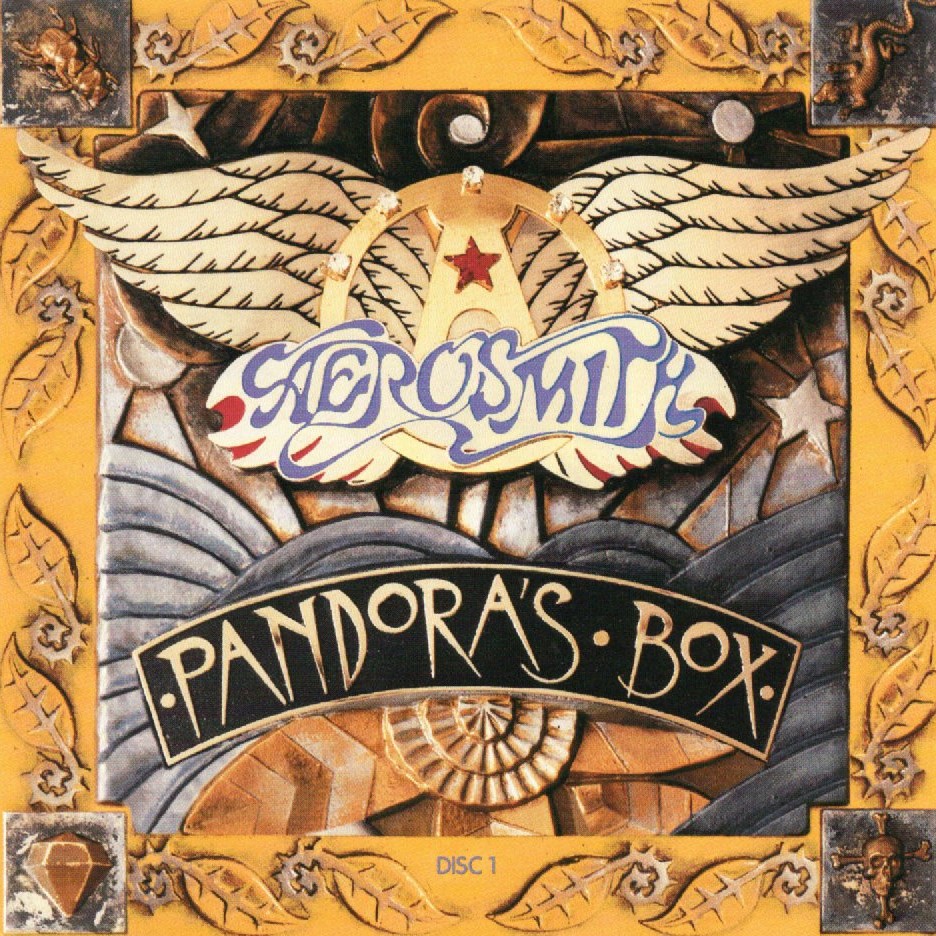
Disc 1
They hit you right from the start with a rarity: Steven Tyler’s “When I Needed You” from 1966 and his band Chain Reaction. You can barely tell it’s the same singer, but this quaint number is a great opener for a box set with this kind of scope. Basic 60s rock with a hint of psychedelia. Onto the first album, it’s “Make It” with an unlisted false start — another cool touch. “Movin’ Out” is a completely different take than the one from the debut. It’s superior because it’s harder and more raw. (Did Pearl Jam rip off part of the guitar lick for “Alive”?) “One Way Street” is the album version, but an unreleased “On the Road Again” is a fun laid back jam. Clearly B-side material, but it’s Aerosmith and light and loose.
A sax-laden “Mama Kin” from the first album is the first bonafide hit presented, and like most of the hits in the set, it’s the original version. It is immediately obvious from the upbeat groove just why it was a hit. Up next, it’s the slick “Same Old Song and Dance”, the heavy “Train Kept A Rollin'” and haunting “Seasons of Wither”, all from Get Your Wings. Major props for including the underappreciated “Seasons of Wither” in this box as the song has never had the exposure it deserves. According to the liner notes, it was written by Steven Tyler on a guitar found by Joey Kramer in a dumpster. The fretting on the guitar was “fucked” but it had a special tone. The tuning of that guitar “forced” the song right out of Tyler.
An unreleased live version of “Write Me a Letter” from 1976 is overshadowed by the song that follows it. It’s the “big one”, the ballad “Dream On”, and usually the centerpiece of any side that it’s on. The random placement on the second half of CD 1 is a little puzzling. The title track “Pandora’s Box” follows, a dirty slow funk.
The first disc closes on a trio of rarities. A 1971 radio jam on Fleetwood Mac’s “Rattlesnake Shake” goes on for 10 awesome minutes and dominates the disc. They swiftly follow that with “Walkin’ the Dog” from the same radio broadcast. Finally, a slinky “Lord of the Thighs” from the Texxas Jam closes CD 1. Two more Texxas Jam tracks can be found midway through CD 2, which is mildly annoying.
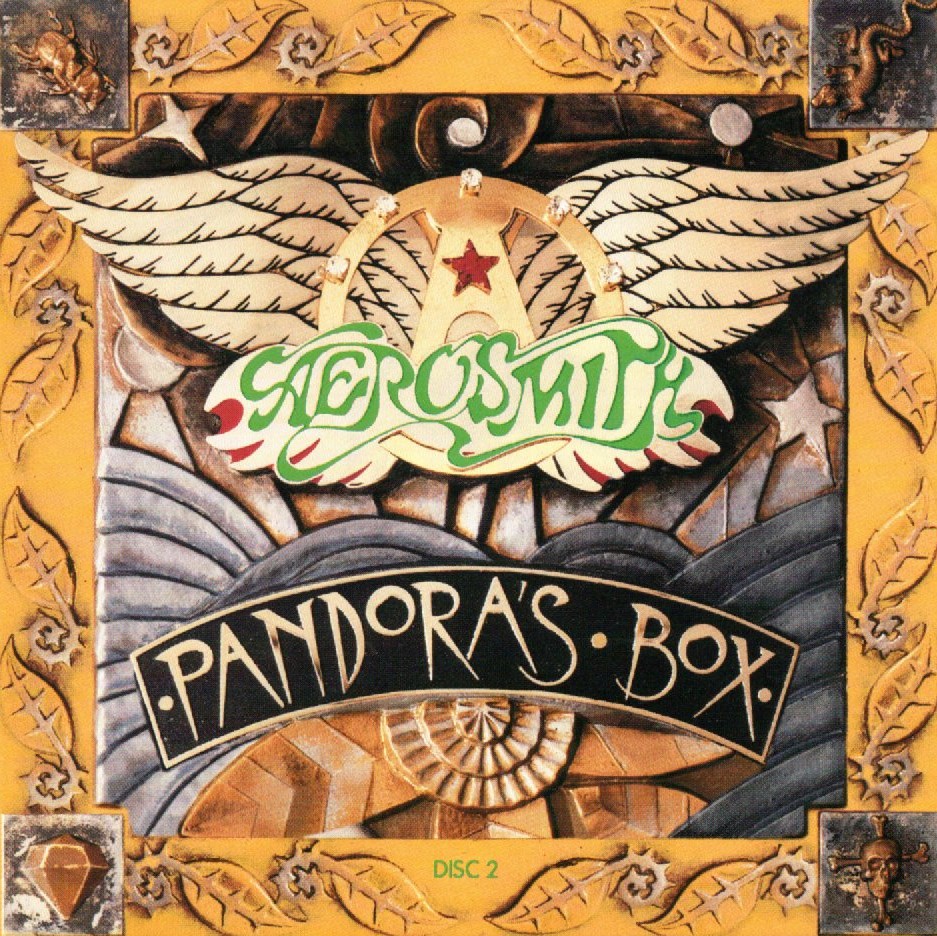
Disc 2
The second disc represents the musical growth of Aerosmith. A massive “Toys in the Attic” builds on the past: more energy, better production, more speed. “Round and Round” is Sabbath-heavy, a sound the band rarely explored. Only “Nobody’s Fault” (which comes later on this disc) stands as a heavier Aerosmith monolith.
Behind the scenes Aerosmith were suffering from drug-induced absences in the studio. One day when Joe Perry and Steven Tyler were late, the core trio of Joey Kramer, Brad Whitford, and Tom Hamilton just jammed. The result is “Krawhitham”, a menacing unheard jam. It’s a testament to the “other three” guys in the band and features some stunning playing even if the riff is a bit lacking. This rough and ready track is followed by four slick Toys in the Attic hits in a row: “You See Me Crying”, “Sweet Emotion” (the original mix), “No More No More” and “Walk This Way”. Each song different, each song perfect. “You See Me Crying” may be the most underrated Aerosmith ballad ever released.
Two more Texxas Jam tracks occupy the middle of disc two: “I Wanna Know Why” and “Big Ten Inch Record”. These jams are a blast, but why not bunch all the Texxas tracks together? Next, “Rats in the Cellar” from Rocks has the same energy as “Toys in the Attic” but with a nastier bite. “Last Child” is a remix, a slight one at that. The bass sounds deeper. An unreleased Otis Rush cover follows called “All Your Love”. This electric blues is fully formed with a satisfying mix and could easily have made an album. Why didn’t it make Draw the Line? That album already had a cover, “Milk Cow Blues” (included here on disc 3) so it is unlikely they wanted two. Did they choose the right song?
The aforementioned “Nobody’s Fault” is preceded with a snippet of the demo, called “Soul Saver”. It truly is a monster of a track and one of the band’s few true heavy metal songs. Nuclear holocaust is a perfect theme for metal, but Tyler’s lyrics are more thoughtful than many of his competitors. His tormented vocal is one of his career best. “Sorry, you’re so sorry, don’t be sorry. Man has known, and now he’s blown it upside down, and hell’s the only sound. We did an awful job, and now they say it’s nobody’s fault.”
“Lick and a Promise” is a necessary speedy shot in the arm. Though “Adam’s Apple” is replaced by a live version from 1977, it is the sonic blueprint for a million bands that tried to copy Tyler’s sleazy antics. Two Draw the Line tracks close the CD: the title track itself (remixed), and “Critical Mass” . Again the remix is slight.
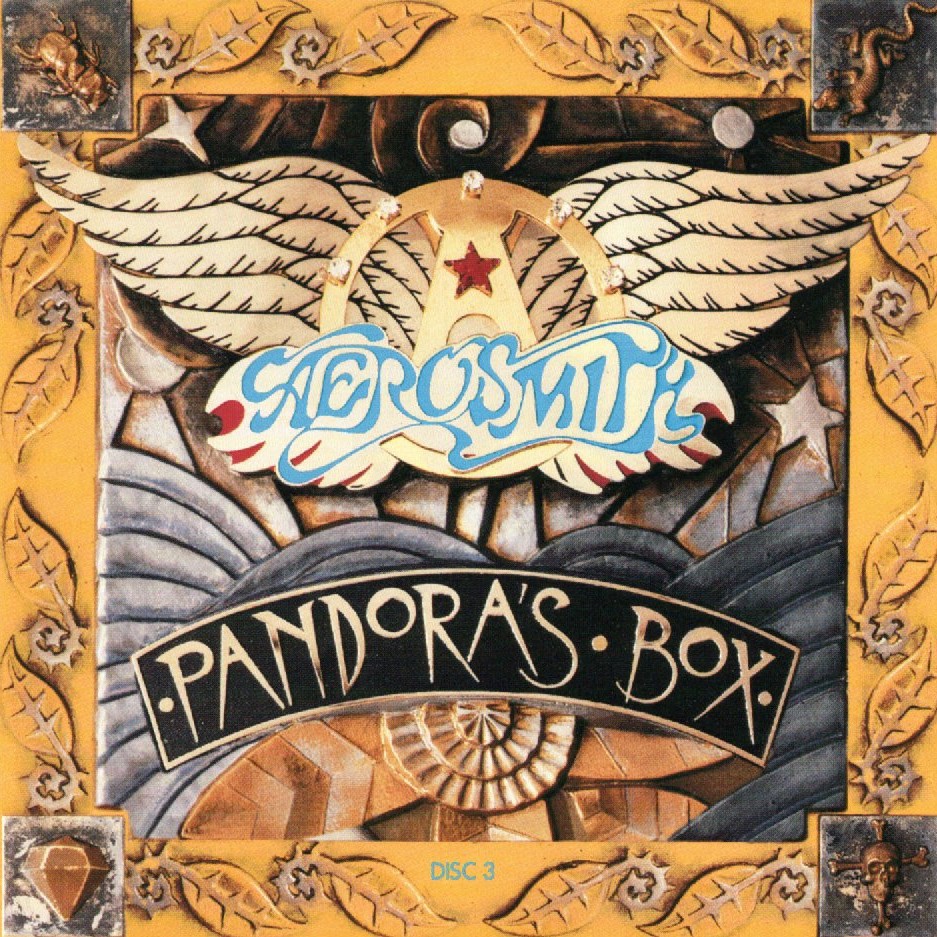
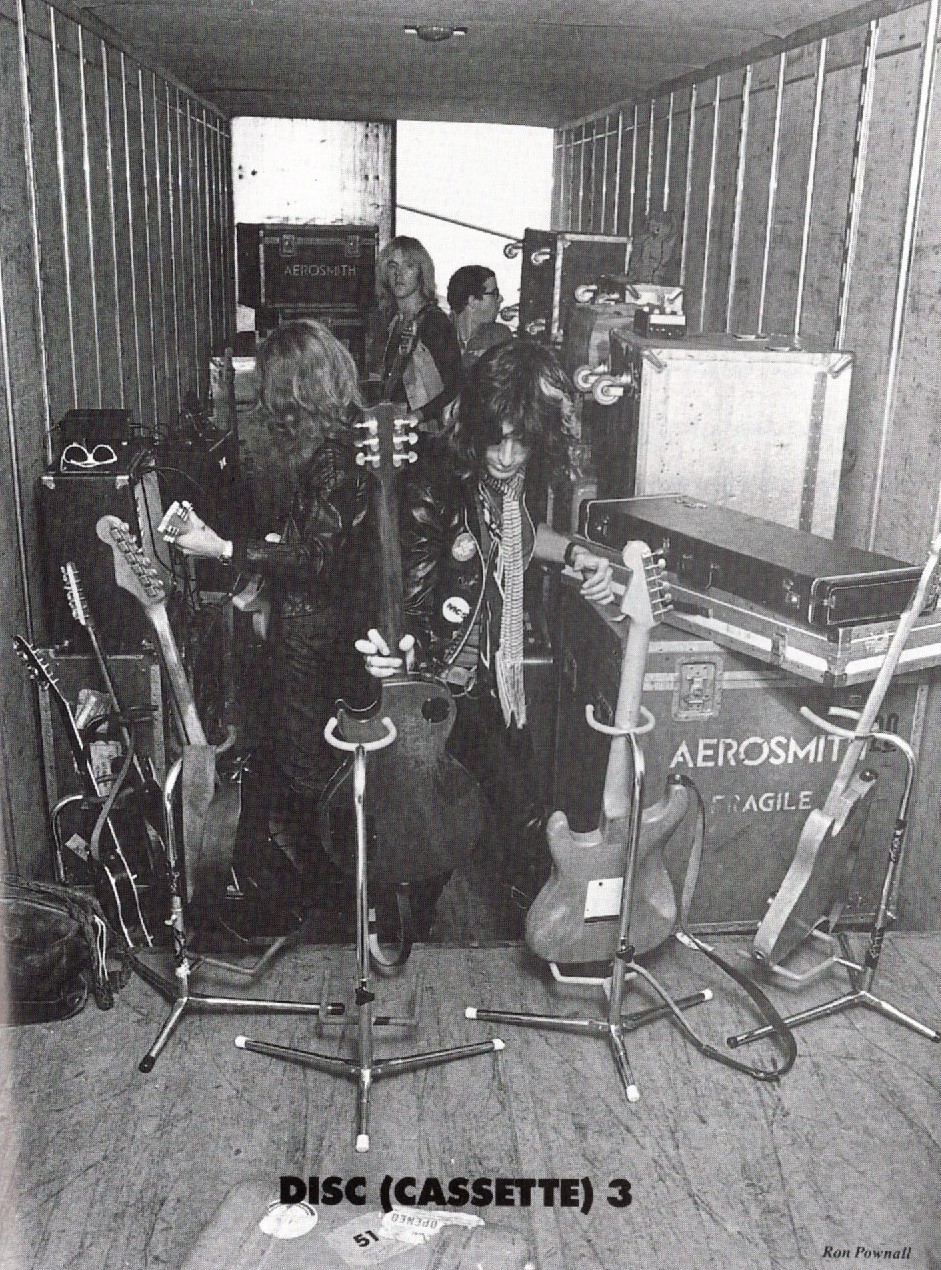
Disc 3
The final CD is the decline, but not without plenty of high points. (“High” points, get it?) The first high point is a 1978 live version of “Kings and Queens”. “Good evenin’ boss. Been a long time coming,” greets Tyler to the hometown Boston crowd. Live versions don’t usually surpass their studio counterparts, but this one might for its seasoned, raw vibe.” Joe Perry’s backing vocals make it.
The previously mentioned “Milk Cow Blues” from Draw the Line is an upbeat shuffle, getting the blood pumping once more. A snippet of a demo called “I Live in Connecticut” leads directly into “Three Mile Smile” from Night in the Ruts. It allows you to hear how a tune evolves from an idea into a complete song. You get to hear that again on “Let it Slide” and “Cheese Cake”. If you love when Joe Perry pulls out his slide guitar, then you will love this pairing. We’re well into the Aerosmith stuff that doesn’t get enough credit when it’s good. “Bone To Bone (Coney Island White Fish Boy)” is another unsung gem…and the liner notes will tell you exactly what a “Coney Island white fish” is. The autobiographical “No Surprize” is pretty fine too.
The Beatles cover “Come Together” was one of the very few worthwhile tracks on the awful movie soundtrack Sgt. Pepper’s Lonely Hearts Club Band. Fortunately for Aerosmith fans, it has long been available on their 1980 Greatest Hits. And it’s not the last Beatles cover on this box set. But it’s the last real hit before the disc takes a serious detour.
“Downtown Charlie” is really ragged; punk rock energy with nobody at home in quality control. It sounds like one of their “drunken jams” according to Joe Perry in the liner notes. Wicked playing but no cohesion. And then they split — Brad Whitford with Whitford/St. Holmes, and Joe Perry with the Joe Perry Project. Even this is documented. “Sharpshooter” by Whitford/St. Holmes is a box set highlight, even though it sticks out like a sore thumb by sounding nothing like Aerosmith at all. This is straight hard rock, with Derek St. Holmes on lead vocals. Though an astounding vocalist, he is the Antityler and the song does not fit in any way on the tracklist. Too bad since it’s such a great track. More at home is Joe Perry’s “South Station Blues” from I’ve Got the Rock N’ Rolls Again. It’s preceded by an Aerosmith demo called “Shit House Shuffle”. Aerosmith didn’t use the riff, so Joe did on his solo album. It totally works with his lead vocal, though it’s a shame Aerosmith never used the idea themselves. Another wasted jam, “Riff and Roll”, had potential as the kernal of a song, but Tyler’s voice is completely shot. You can hear what they were going for. It could have worked on Done With Mirrors had they finished it.
Aerosmith carried on in 1982 with Jimmy Crespo and Rick Dufay replacing Perry and Whitford. The resulting album Rock In a Hard Place was inconsistent but not without some gems. “Jailbait” doesn’t indicate anything was out of place, a worthy followup to frantic manic blasts like “Rats in the Cellar”. But they only lasted one album before cooler heads prevailed and the classic lineup reunited.
With Perry and Whitford back again, Aerosmith began recording new albums for Geffen. Columbia still released Aerosmith albums regularly, like Classics Live and Classics Live II. A previously unreleased oldie from the Get Your Wings days called “Major Barbra” was included as a bonus on Classics Live. Pandora’s Box includes a second version of “Major Barbra”, a rougher alternate take. It’s a full minute longer than the version of Classics Live, including harmonica solo. Another track Columbia released was the classic “Chip Away the Stone” (written by Richie Supa), on 1988’s Gems. This obscure single never had a proper album release until then, despite its awesome nature. The Pandora’s Box version is an alternate version, with noticeably less piano in the mix.
The penultimate track is the unreleased Beatles cover “Helter Skelter”, dating back to 1975. This one got a bit of airplay in 1991 when the box set was released. It is undoubtedly rough but with suitably aggressive and heavy hitting groove. The box set is then closed by “Back in the Saddle”, an apt way to describe Aerosmith’s career since.
But wait, what’s this? “There now, ain’t you glad you stayed?” asks Steven Tyler after a few seconds of silence. Why, it’s the hidden bonus track! The unlisted instrumental was written by Brad Whitford and actually titled “Circle Jerk”. It is very similar to the previous “Krawhitham” instrumental on disc two, but heavier.
Now, what about that remixed “Sweet Emotion” that was released to promote the box set, but wasn’t actually on the box set? The remix was done by David Thoener and featured some structural changes. The music video was a smash hit. You could buy it as a standalone single, with “Circle Jerk” and another unreleased instrumental bonus track called “Subway”. All three were re-released again as bonus tracks in 1994 on the massive Box of Fire. The Thoener remix has been issued many times over the years on compilations and movie soundtracks.
There’s little doubt that Pandora’s Box was good value for the money. For the fans who didn’t have the albums, most of the hits are included in studio versions. The remixes are minor enough for them not to notice. For the rest, the wealth of unreleased bonus material justified buying three CDs. Unlike other box sets like Led Zeppelin’s four disc airship, Pandora’s Box is not designed to be an ecstatic listening experience from start to finish. It is a study in early Aerosmith from the roots to just before the reunion. It is the rise and fall, and still fighting to get back up. It is uneven with mountainous peaks of spontaneous rock and roll chemistry, and also the tired struggle to keep producing music. Much like its subject, Aerosmith, Pandora’s Box is a flawed portrait.
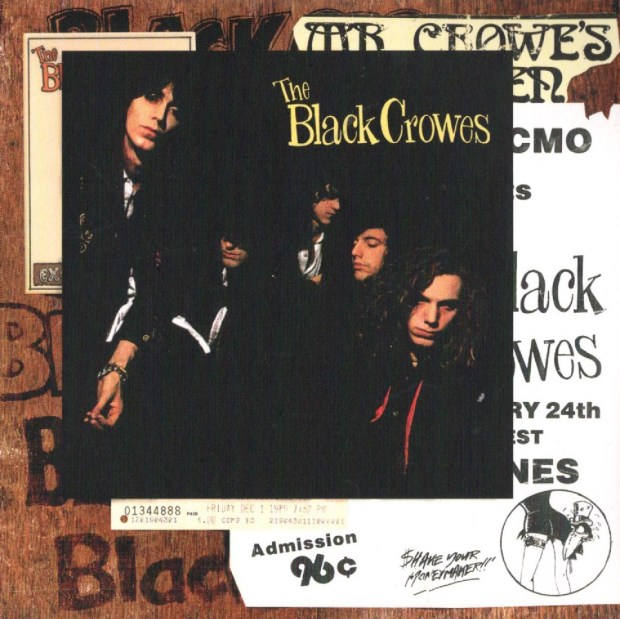
THE BLACK CROWES – Shake Your Money Maker (Originally 1990, 2021 Universal deluxe edition)
How many times have you bought Shake Your Money Maker (31 years old but not a day over 20)? This time the Crowes did it (mostly) right. The last time they reissued this album in 1998, they added only two bonus tracks. Now there are 25. These include a whole disc of rarities called More Money Maker, and a homecoming live set from December 1990 with the original lineup and a sneak peak at new, work-in-progress songs. All of this is worth your money to buy one more time. Especially for the songs they were already road-testing.
Disc 1: Shake Your Money Maker
Freshly remastered and sounding good. Opening up with a rip of slide guitar, the Crowes made their southern bluesy roots known from the get go. It was nothing like Bon Jovi, Def Leppard, or anybody else on the radio at the time, except maybe the London Quireboys. They drew influence from the 70s: Bands like the Stones and Skynyrd, as well as the old Mississippi Delta bluesmen. Listen to Rich Robinson’s slide and dig in. Chris Robinson’s bluesy drawl delivers a hell of a chorus. “Twice As Hard” is perfect in every measure, and producer George Drakoulias captured it without messing with it.
Second in line is the debut single “Jealous Again”. It sounds like the offspring of the Stones at their boogie-woogie best. The noticable difference is the big drum sound wielded by Steve Gorman, the Crowes’ secret weapon.
Shake Your Money Maker is a well rounded album with a few piano based slow tracks. The first ballad is “Sister Luck”, sort of prototype for the kind of things the Crowes would do in the future. You want authenticity? That’s Chuck Leavell on keys.
Back to the rock, “Could I’ve Been So Blind” kicks it with a shot in the arm and a great chorus. Thing go slow again on the organ-based blues “Seeing Things”. The wild thing is, the Crowes were just kids, but it sounds like they have years and years of pain to pour into these songs.
One of the most well known singles from Shake Your Money Maker was the old Otis Redding cover “Hard to Handle”. A bit of a surprise to hear an Otis song on the radio, but we gladly took it. The Robinson swagger on this one is enormous. Back to rock, “Thick N’ Thin” begins with a car crash. Fast paced rock and roll with boogie woogie piano gets the feet moving, like the Faces on adrenaline.
One of the fastest songs gives way to the slowest one. “She Talks to Angels” is the only one that technially deserves the tag “ballad”. Acoustics guitars, organ, and Chris’ plaintive voice took it to #1 on the US “album rock” charts. It’s still just as stunning today, with the feel still coming through.
Moving in for the close, “Struttin’ Blues” is relatively nondescript compared to some of the prior ass-kickers. They save the most kick-ass for last: “Stare It Cold”. It starts as a standard Stones-y rocker, but then it picks up speed right to the end, brilliantly ending the debut album on a hell of a good impression.
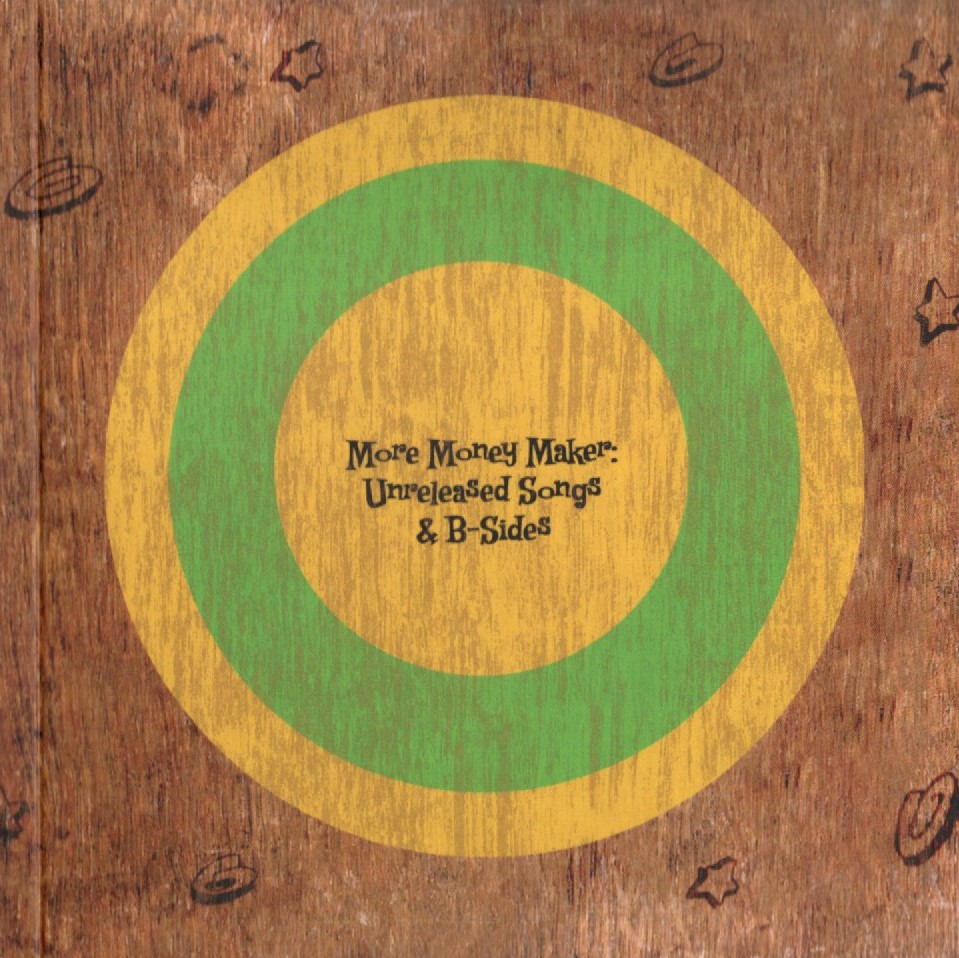
Disc 2: More Money Maker: Unreleased Songs & B-Sides
This isn’t all the B-sides of course; the Crowes issued plenty of live tracks that you will have to track down the singles for. This does collect the studio music that made it onto B-sides and bonus tracks, as well as far more serious rarities. One of those is “Charming Mess”, a slamming unreleased track that easily could have been a hit. Slippery guitars, bouncing piano, and a wicked chorus. Early Crowes tended to keep things simple, and this a great example of their early charm, cranked up to 10.
The Humble Pie cover “30 Days in the Hole” is tight and clean. Johnny Colt was an underrated bass player and you can hear it on this decent but underwhelming cover. The original “Don’t Wake Me” is an also-ran, in the fast-paced category. Great guitar work as always though, so always something to listen for. The Lennon cover “Jealous Guy” always lacked something that the original had, but by turning it into a lamenting blues, the Crowes made it their own more than the other covers. The original “Waitin’ Guilty” is a real treat. Happier with twang, it was rarely played live, perhaps because it’s a bit of a departure. A sweet, tasty, twangy departure.
The “Horn Mix” of “Hard To Handle” has been difficult to track down for years. Here it finally is! One thing not apparent when listening to it on a shitty radio — the bass really thumps on this remix. With this version now finally widely available, it is the definitive mix. Two acoustic versions of big hits are next: “Jealous Again” and “She Talks to Angels”. Stripped down to the very basics with no drums. “She Talks to Angels” benefits very much from the bare arrangement, becoming something truly special.
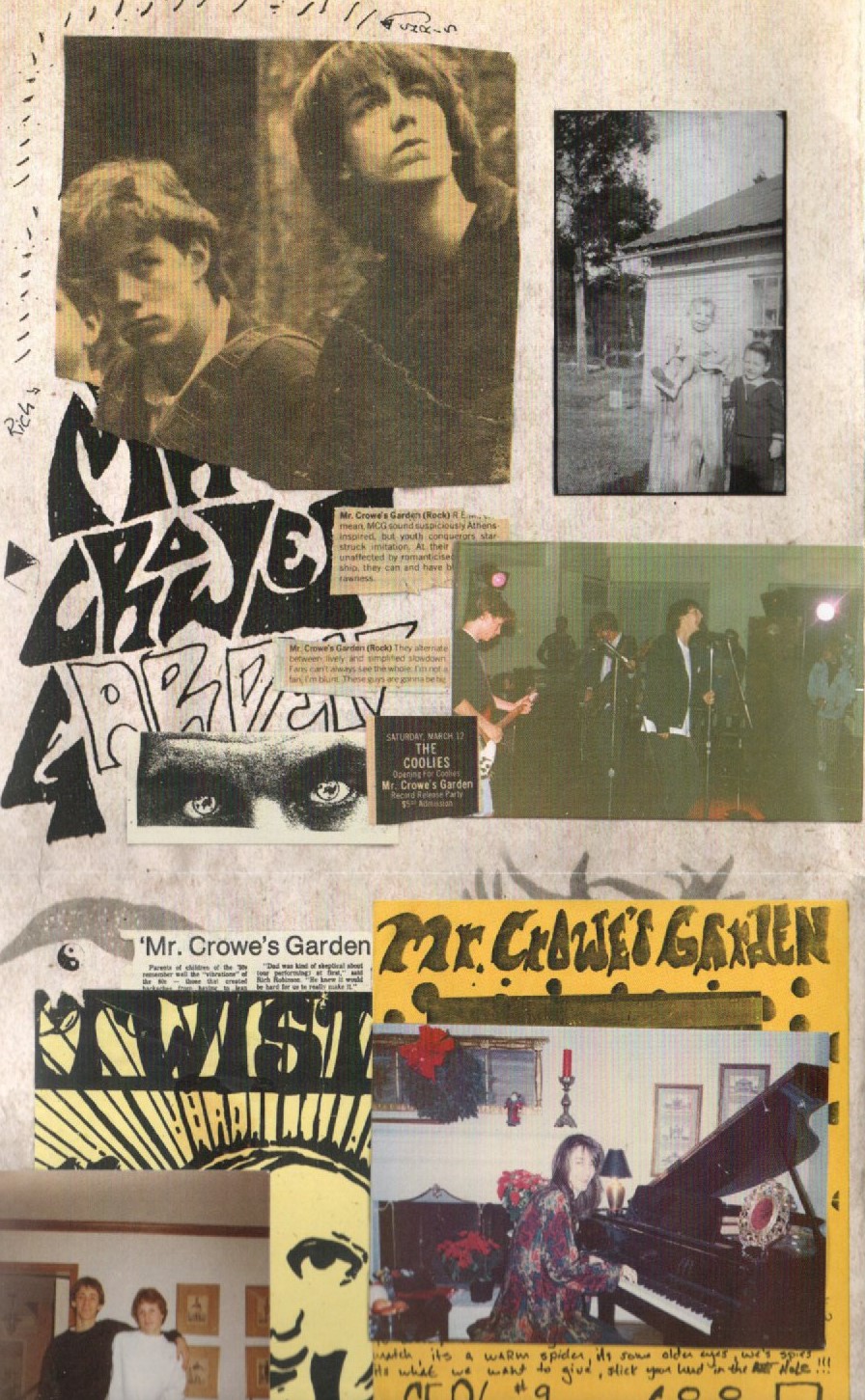
This disc ends on a double treat: Two early demos by Mr. Crowe’s Garden, the incarnation that preceded the Black Crowes. “She Talks to Angels” is fully written but with a higher lead vocal melody. “Front Porch Sermon” is more folksy than what we usually expect from the Crowes, at least until the later years. Banjo is the dominant instrument. The chorus is a dead ringer for Blue Rodeo. Great stuff; let’s hope we get more Mr. Crowe’s Garden demos in the future.
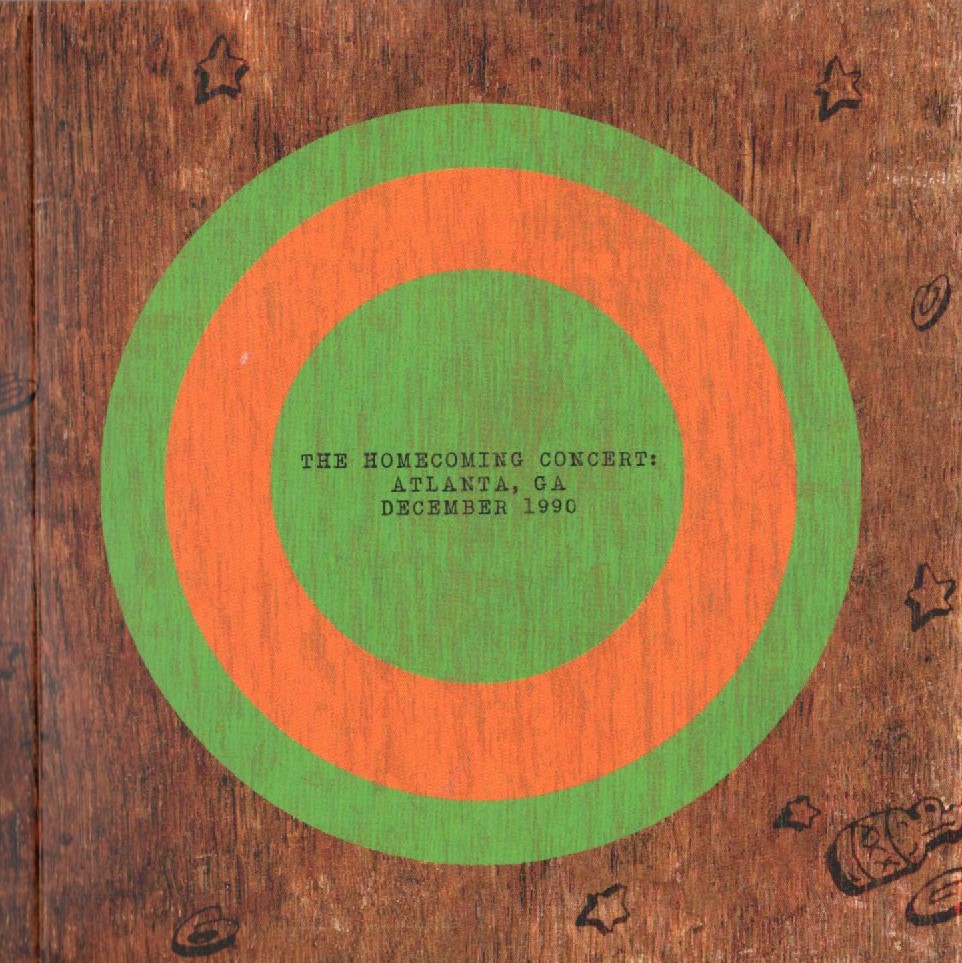
Disc 3: The Homecoming Concert: Atlanta, GA December 1990
For many, this is the main feature of the set, and for good reason. This era of the Crowes only lasted a short time and change is already evident. The new material they were working on, and were already playing live, was different. The band was also changing and soon guitarist Jeff Cease would be out of the lineup, replaced by Marc Ford. This concert CD is one of our few chances to hear what Jeff Cease brought to the band. They couldn’t have grown where they did with Cease, but as the lead guitarist on these rock and roll tracks, he’s perfect.
Chris Robinson is on fire, as evident on the stormin’ first song, “Thick N’ Thin”. It’s an energetic version and that energy carries over into a new song called “You’re Wrong”. It would later evolve into “Sting Me”. The sound of Southern Harmony was starting to creep in and you get a lot more a bit later into the set. Although nobody sounds bored, the Crowes roll out the hit “Twice as Hard” next. It could be one of the best versions out there, for Chris’ impassioned overblown vocal.
Favourites from the album are played one after the other: “Could I’ve Been So Blind”, “Seeing Things”, “She Talks to Angels”, “Sister Luck”, and “Hard to Handle”. Particularly powerful is “Seeing Things” though highlights are plenty through these tunes. The Crowes also peppered their sets with non-album covers. “Shake ‘Em On Down” (Bukka White) is unexpectedly followed by “Get Back” (The Beatles). But really it’s just one extended jam on some familiar themes.
The real treat is a full 13 minute version of “Words You Throw Away”, the long jam that would one day evolve into a little hit called “Remedy”. You can hear certain chords and rhythmic ideas that ended up in “Remedy”, and maybe also “Thorn in My Pride”. It is however its own song, with some unbelievable hooks of its own that never made it into anything else. Just lay back and enjoy all 13 minutes of musical nirvana.
Closing the set with “Stare It Cold” and “Jealous Again” can only be anticlimax after that workout. What else could they do?
It’s very fortunate this live set was so well recorded, mixed and mastered for release.
In Conclusion
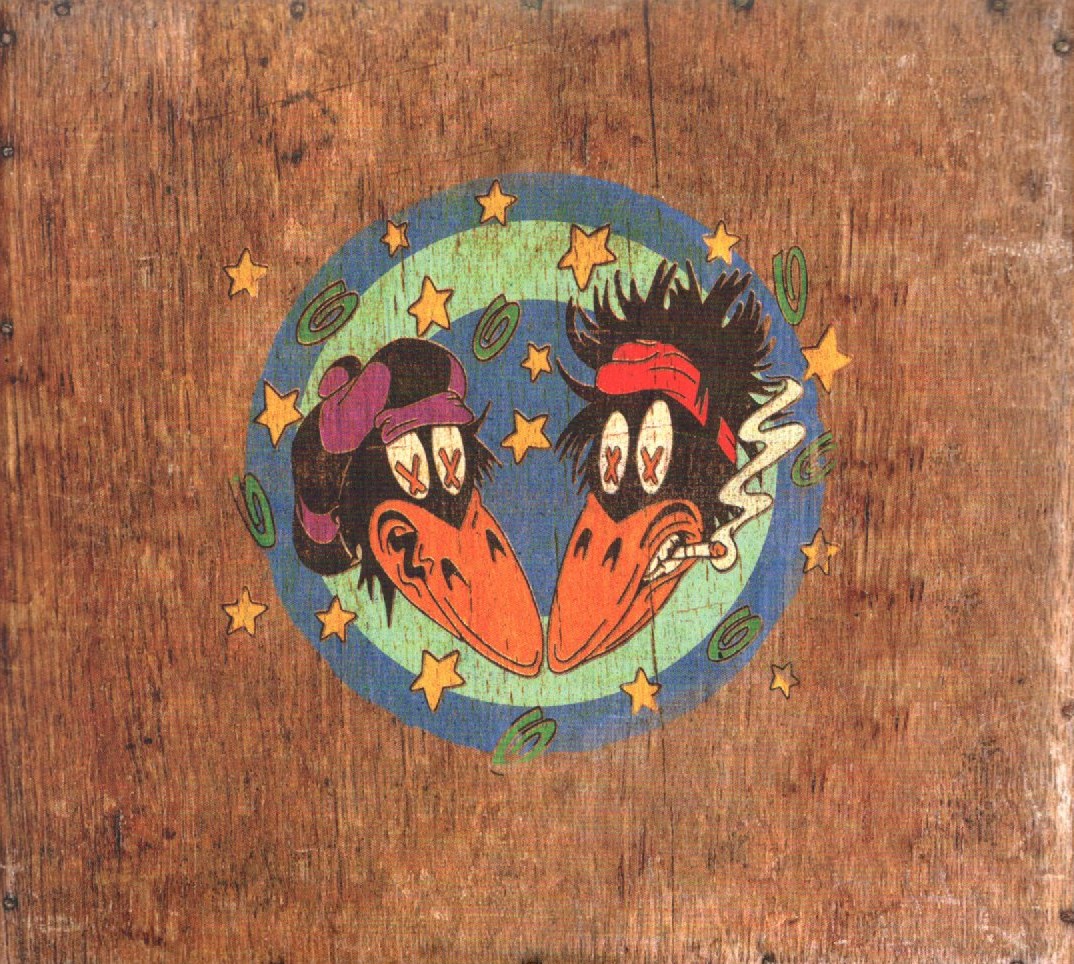
Though affordable, the 3 CD edition has skimpy packaging. There is a small foldout with rare photos (and some really cool ones of Mr. Crowe’s Garden) but no real liner notes or other details. It would just be nice to know more about where the rare tracks originated, or even the original studio album itself. The album used to come with lyrics, but this comes with nothing.
Still the music more than makes up for up for the lack of packaging. The top-notch live set is a revelation, and the bonus rarities are valuable and high quality. You can’t say no to the music.
Allan Runstedtler was looking at my tape collection. This was something kids did. Every kid had a few tapes. Maybe they even had a nice tape case to put them in. I started the year 1985 with only one tape case. It held 30.
Allan reached for my Quiet Riot.
“Condition Critical? What’s that? I only know ‘Situation Critical’ by Platinum Blonde.” said Al.
I was never one of the cool ones.
There was this kid from school named Kevin Kirby. One day I was in his neighbourhood and he introduced me to a friend of his. Kevin asked me to tell him what my favourite band was. I answered “Quiet Riot” and they both laughed. I still liked Quiet Riot? They were so 1983.
Not much time had passed, but Quiet Riot were already toast. I felt cool for all of 3 months when Quiet Riot were big. Metal Health was my first hard rock album. I loved that album. I still love that album. I was the anomaly. All my classmates (the few that liked Quiet Riot in the first place) had moved on. Platinum Blonde were huge. And rightfully so. Standing in the Dark was a great album. Their followup Alien Shores was also successful, going to #3 in Canada. Platinum Blonde, however, were not for me. They were not a hard rock band. I didn’t even consider them to be a rock band. I labelled Platinum Blonde with the same label I used on everything I didn’t like. These loathsome artists were all dubbed “wavers”. There was no greater insult to me than “waver”. You were either a rocker or a waver. There was nothing else in my eyes more wretched than “New Wave” music.
Quiet Riot were not wavers, they were rockers. They had songs like “Party All Night” and “Mama Weer All Crazee Now”. But they had made a “Critical” blunder. They followed Metal Health with an inferior carbon copy in Condition Critical. It was a collection of leftovers and it was obvious. It even included a Slade cover like the prior album. It still went platinum. But Metal Health sold six times that. It was seen as a critical and commercial failure. Dubrow earned Quiet Riot no favours when he decided to trash other bands in the press. That stunt misfired, gloriously so.
No wonder Allan had never heard of Condition Critical. I tried to get him into some of my music. I showed him the video for “Death Valley Driver” by Rainbow, which I thought was really cool. He wasn’t as impressed as I was.
Going back a bit, I received Condition Critical for Easter of 1985. Almost a year after its release. I can remember a conversation with my mom about what kind of gifts I would like, and I answered “the new Quiet Riot, because I want to have all the albums by a band.” Hah! I had no idea, none whatsoever, that Metal Health was their third, not first. In Japan, Quiet Riot and Quiet Riot II were released in the late 70s. These featured the late Ozzy Osbourne guitar wizard Randy Rhoads on lead guitar, but I had yet to learn all these important details. I wanted to have Condition Critical so I could have a “complete” Quiet Riot collection. Something I’m still attempting to have.
Easter of ’85 was spent in Ottawa with my mom’s Uncle Gar and Aunt Miriam. We all stayed in their house. They were amazing people. Uncle Gar was injured in the war, but always had a smile on his face. He didn’t like my growing hair or my rock music, but I think he was happy that I turned out OK in the end. I stayed in a little spare bedroom. I brought my Sanyo ghetto blaster and my parent’s old Lloyds headphones.
I hit “play” on Quiet Riot not expecting to like every song, and I didn’t. I enjoyed the two singles, “Party All Night” and “Mama Weer All Crazee Now”. I thought the lead track, “Sign of the Times”, as as strong as the first album. But I didn’t think much of “Scream and Shout”, “Bad Boy” or “(We Were) Born to Rock”. And the ballad? I was not a ballad kid, and I thought “Winners Take All” was even worse than “Thunderbird”!
I’ve softened on the ballads since (pun intended), but it’s true that this is just an album of soundalikes. It’s not outstanding. I knew I’d have to give it a bunch more listens, but even then I knew a “sequel” when I saw one. Similar. More of the same of what you like. But not as good.
I kept giving them chances, though. I had to. They were the first band I wanted “all” the albums from. When my buddy George told me that Quiet Riot were back with an awesome new song called “The Wild and the Young”, my excitement was restored. “Kevin Dubrow even looks like Paul Stanley in the music video,” he told me. Cool!
There are bands I have given up on and never looked back. Yet I keep buying Quiet Riot, loyally, album after album. If they release another, I’ll buy that too. And it’s all because of what I told my mom when she asked me what I wanted for Easter. “The new Quiet Riot,” I answered, “because I want to have all the albums by a band.”
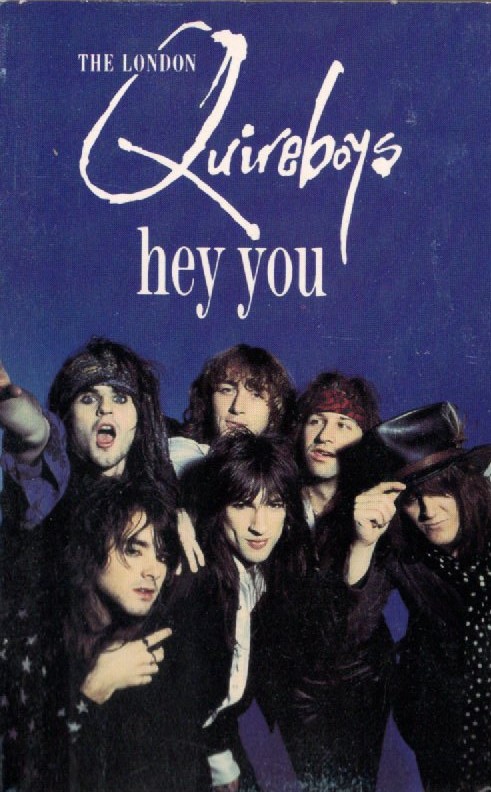
THE LONDON QUIREBOYS – “Hey You” (1990 Capitol cassette single)
A curiosity unique to cassette. The UK 12″ single for “Hey You” included a live “Hoochie Coochie Man” on the B-side. It and the 7″ single also contained the album track “Sex Party”. You could get these same tracks on the CD single, but the cassette went with a different route.
The A-side common to all is of course “Hey You” from the hit debut album A Bit Of What You Fancy. It sounds classic from first crash of guitar. The Stones-y Faces vibe is immediately apparent, and fondly recalls the summer of 1990 when the need for such a sound heralded in the Quireboys and Black Crowes. It was completely unlike everything out by Motley Crue, Bon Jovi, and Warrant. Its refreshing reliance on slide guitar still sounds great in the speakers, but the rasp of singer Spike is its most defining trait.
The first B-side is the roudy “Sex Party” from the album. The boogie piano keeps it kickin’ hard. But then the cassette goes its own way with two additional tracks. They are severely edited versions of hit singles “I Don’t Love You Anymore” and “7 O’Clock”. Both fade out prematurely just as the songs are getting awesome!
The whole thing repeats on both sides. The idea is to give the kids incentive to go out and buy the album next time. Save your allowances and buy the album to get the full songs. Such teases! Just as Spike is telling us what time it is, adding that it’s also “time for the party”, the song fades and the side ends!
Can’t realistically rate something like this very high. While the two full tracks are both awesome, it’s hard to justify buying this tape today as anything other than a curiosity. The cassette still sounds good after 31 years though!
I’ve always had trouble letting go. Even though rock music was my true obsession, there was some overlap. Even into grade nine, I still bought GI Joe comics and figures. It was always hard letting go of an obsession. My “favourite things”, in order of discovery were:
Star Wars until its natural end in 1983-84.
GI Joe/Transformers from 1984 to 1986-87.
Rock music from 1984 to present.
WWF Wrestling from 1985 to 1990.
You can see how the evolution of this worked. A GI Joe figure was in the same scale as Star Wars, but with far more articulation well suited to an older kid. The first wave of figures even featured real-world accurate weapons. They were a natural step for a kid still wanting that action figure experience, but geared for someone older. Transformers went hand in hand, since Marvel were producing a comic line to go for each. Transformers resembled the die-cast cars that older kids (and adults) collected and displayed.
I discovered heavy metal music on December 26, 1984. A few months later, wrestling appeared on my radar with the very first Wrestlemania. A lot of those guys looked like rock stars, with crazy costumes, long hair and male bravado.
As my interests shifted and evolved, so did my collections. The Star Wars toys were put into storage in the crawl space. I was given tape boxes, Christmas after Christmas, to store my growing music collection. A typical Christmas would see me receiving some new tapes and action figures. I’d sit in my bedroom reading GI Joe comics while rocking out to Long Way to Heaven by Helix. I was a weird kid but I liked what I liked and didn’t much care.
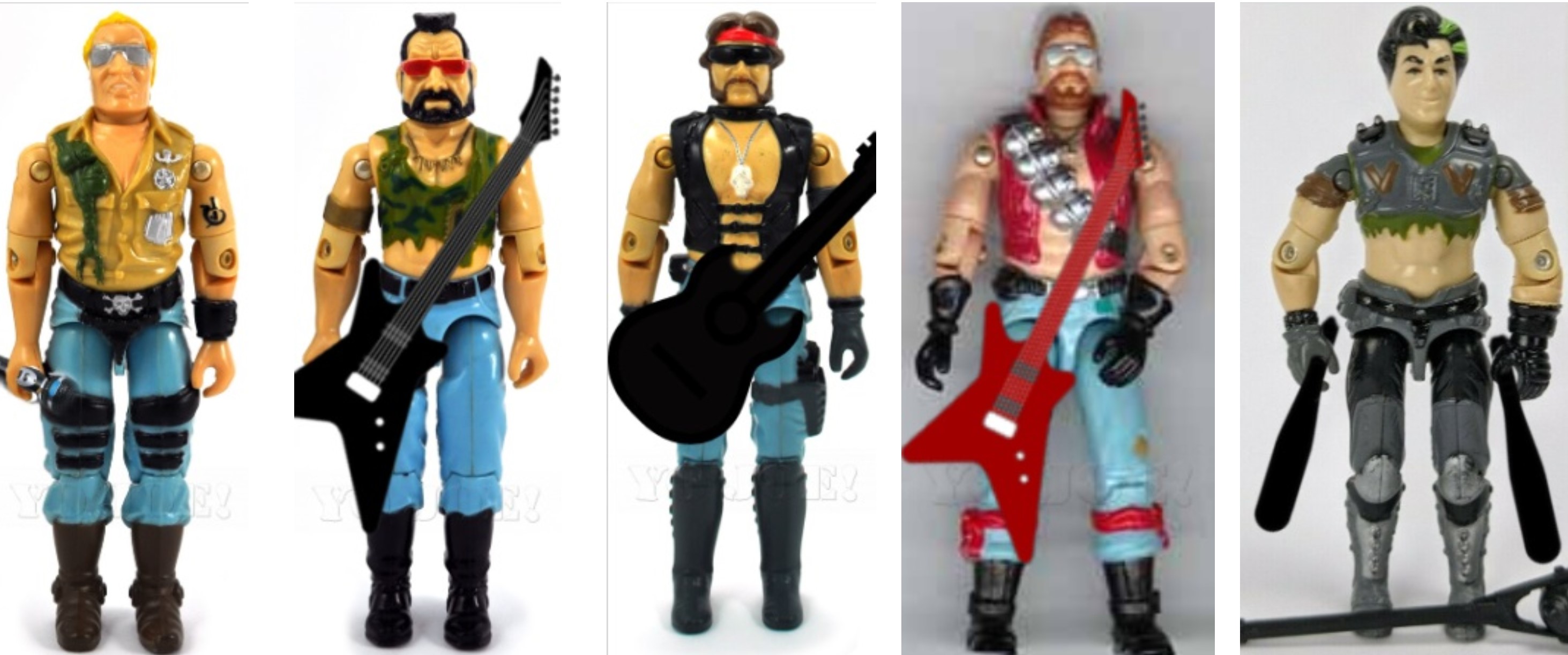
The Joe characters diversified along with me. In 1984 they got a little more outlandish with the introduction of Zartan and the Dreadnoks. Zartan, the master of disguise, was a deluxe action figure whose skin colour turned blue in direct sunlight. This gimmick only worked outdoors, which meant we played with Zartan outside in the summer while giving him a rest in the winter. His backup didn’t arrive on toy shelves until 1985. They were three bikers named the Dreadnoks: Buzzer, the Brit with a ponytail and a chainsaw, the mohawked Ripper, and the flamethrower Torch who had a bit of a Lemmy beard going on. Their Mad Max inspired outfits would have allowed them to fit into a rock band quite easily, if only they came with musical instruments instead of weapons. They’d make a cool punk trio.
The Dreadnoks expanded their lineup the following year. On explosives came Monkeywrench, bearded and obsessed with Guy Fawkes. Then in a deluxe set came the vehicle driver Thrasher, and his definitely Mad Max inspired Thunder Machine car. Made of bits and pieces of scrap, it hit the same post-apocalyptic notes as the other Dreadnoks, as well as rock bands like Motley Crue, Kiss, and Armored Saint. Thrasher had a punk rock streak of green in his hair. And now they were a quintet. They were literally begging for me to make them custom musical instruments.
There were always wooden match sticks in the house, so I used them for guitar necks, drum stands, drumsticks, and a microphone. Cardboard boxes were cut up to make the bodies of guitars and a few drums and cymbals. Black electrical tape held them all together. And so the Dreadnoks became a five piece band, and I put them on display in my bedroom on a shelf with my Kiss cassettes.
If only I had a picture of my Dreadnok band. Not everybody had a camera back then. Even if you did, it seemed film was always out! You can imagine what they looked like!
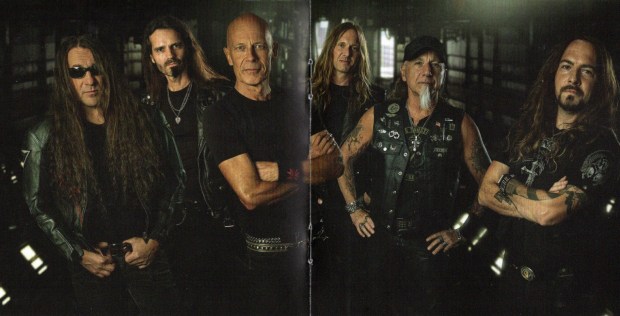
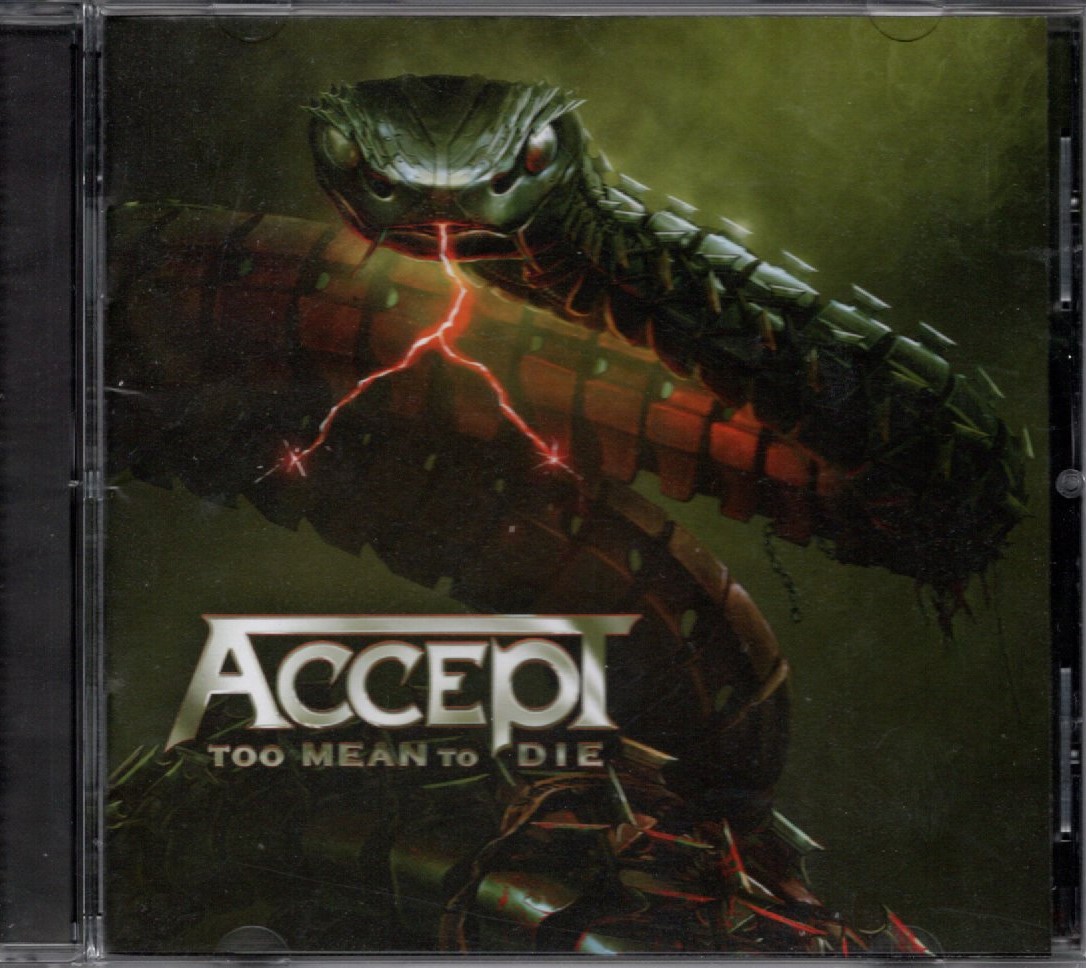
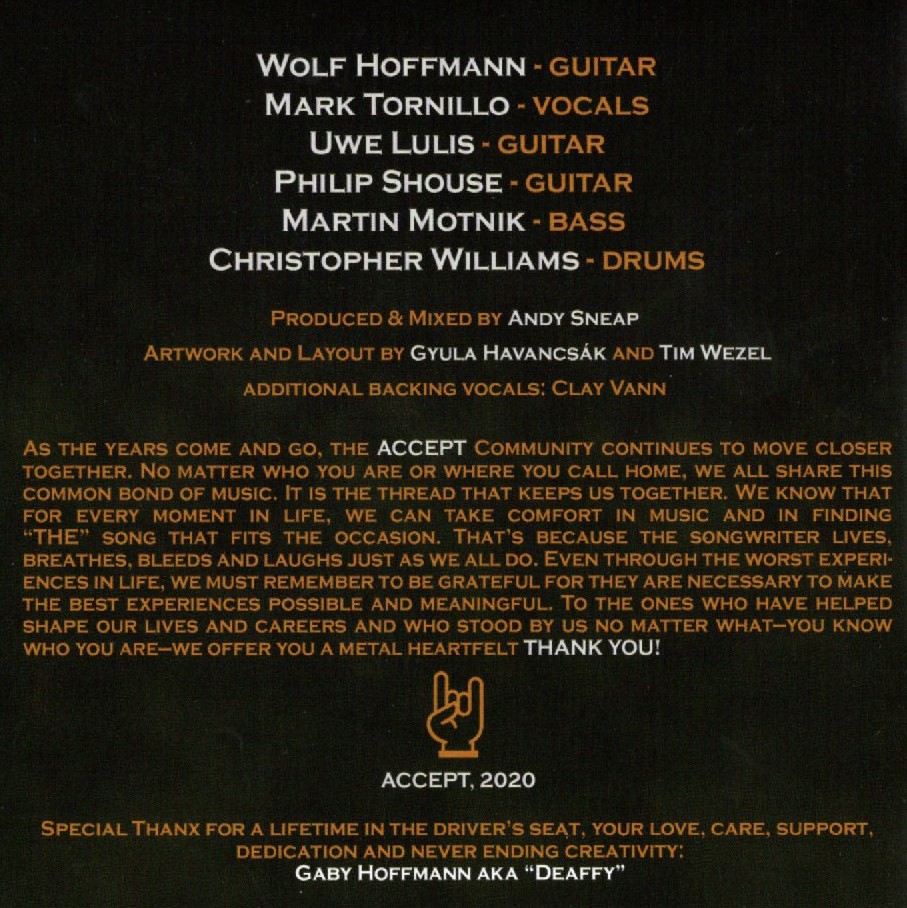
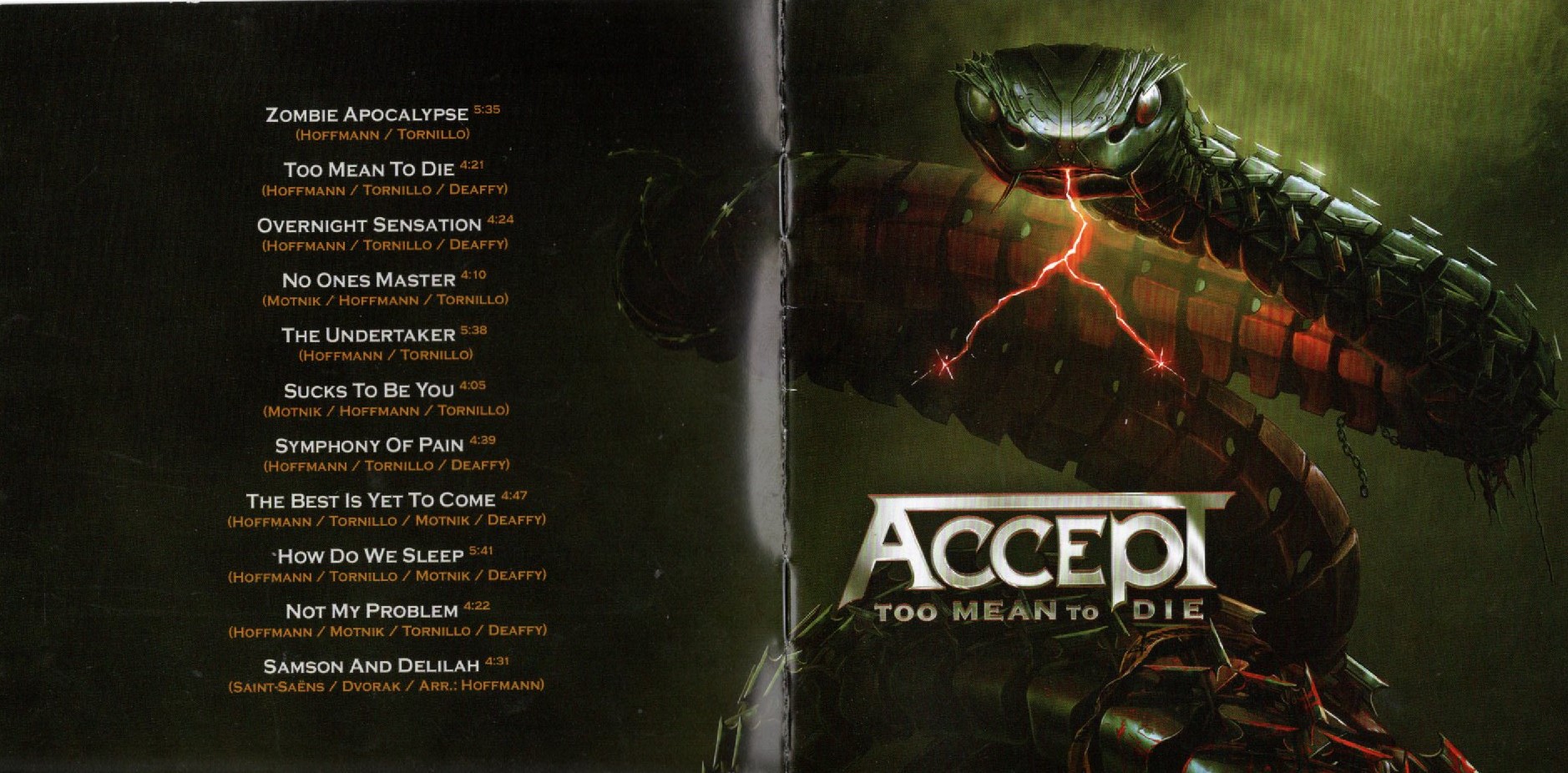
Tornillo-era Accept has been a pretty even field; a level grid of Sneap-sharp production and Hoffmann’s razor-riffs. If you expected change just because there’s a new bass player for the first time ever, you’d be wrong. Accept may be down to just one original member (Wolf Hoffmann himself) but it doesn’t matter much. What Accept deliver on Too Mean to Die is the same as they have done for every album since 2010’s Blood of the Nations. Reliable, like AC/DC…or a comfortable leather jacket.
Nothing wrong with this. Accept found a formula that works in their post-Udo world and it works well. It’s difficult to remember what songs are from what albums, but Accept haven’t stopped putting out solid quality metal.
There’s the song about zombies (“Zombie Apocalypse”), one about never giving up (“Too Mean To Die”), the mid-tempo one (“Overnight Sensation”), the one about the media (“No Ones Master”), the single* (“The Undertaker”), the one with the funny title (“Sucks to be You”), the classical influence (“Symphony of Pain”), the ballad (“The Best is Yet to Come”), the one about the state of the world (“How Do We Sleep”), the angry one (“Not My Problem”), and the instrumental (“Samsom and Delilah”).
The riffs keep hammering in the capable hands of Wolf, and Mr. Tornillo on lead vocals never stops givin’ ‘er. Hooks on every track. The energy is no less than their first together. Wolf’s guitar tone remains as tasty as it has been for over four decades. One more album to add to your collection, as the Tornillo era blends together like a monolithic five-CD box set. Too Mean To Die could have been titled Disc Five, so if you need to complete your set, do it now.
4/5 stars
* The single for “The Undertaker” features a non-album live track on its B-side, of a non-album single called “Life’s a Bitch”!
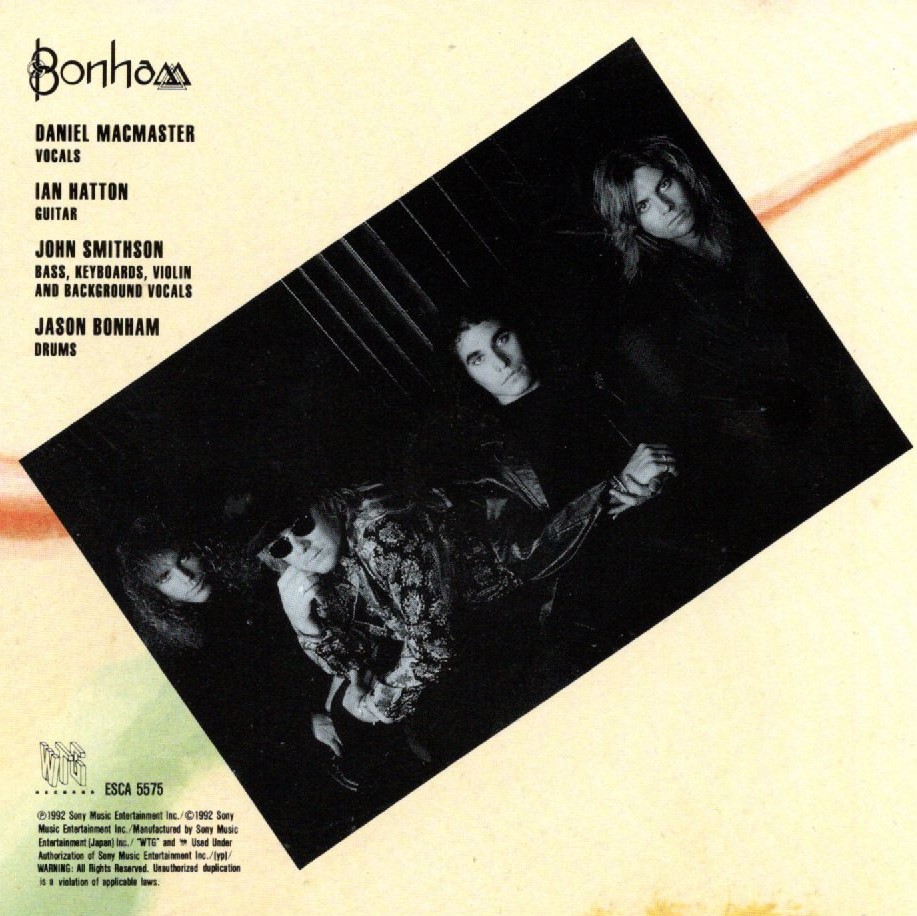
The first Bonham album in 1989 was a critic’s darling. Produced by Bob Ezrin, it sold well enough and made plenty of year-end lists. For the year 1989, it was a breath of fresh air compared to the Motley Crue, Bon Jovi and Def Leppard tracks dominating the airwaves. Those who thirsted for the rarified air of Led Zeppelin got some of that with Jason on drums and the incredible Canadian Daniel MacMaster on lead vocals. It was easy to imagine that “Wait For You” was a new Zeppelin single built for that year. But every band has to grow, and where would Bonham take it? Further down the Zeppelin road, or try and find their own identity?
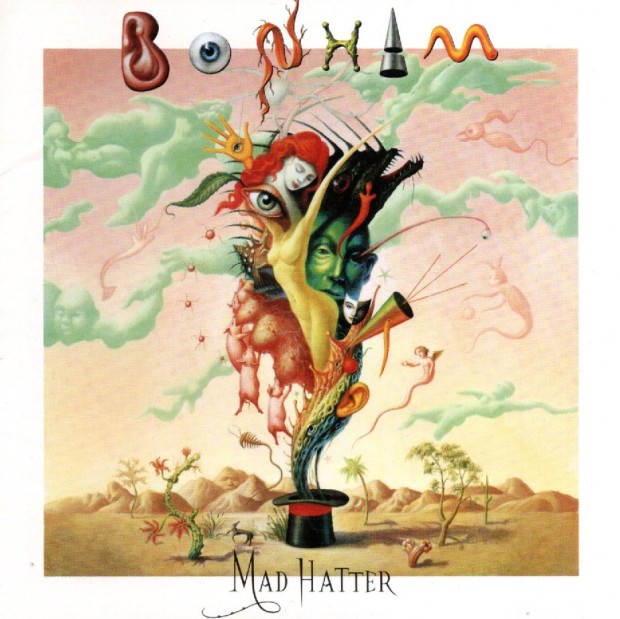
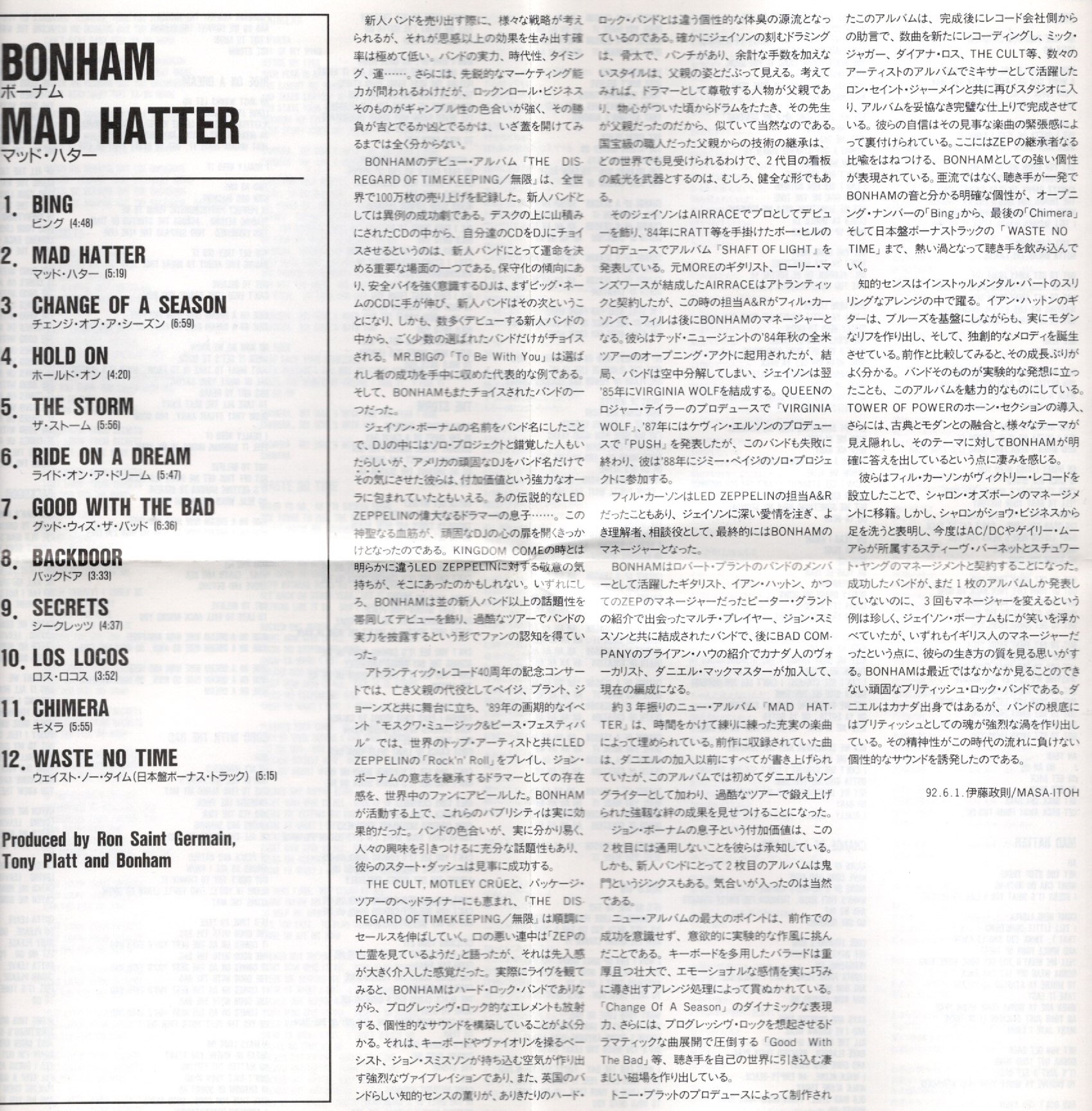
Bob Ezrin did not return, and most of the followup album Mad Hatter was produced by Tony Platt, with the rest produced by Ron Saint Germain. The band grew from the debut, establishing more of their own groove. It was a more diverse and challenging platter. Unfortunately, the album arrived in 1992, amidst the Pearl Jams, Soundgardens, Nirvanas and the rising tide of grunge. Despite the strong single “Change of a Season”, the album tanked.
What an opener “Bing” is, a word that doesn’t seem to be in any of the lyrics. At first, it has a very old school Zeppelin groove, akin to “Candy Store Rock” meets “Black Dog”. But then it goes to a completely different place on the chorus. The sonics are clearer and sharper than the debut. Jason’s drums are huge as the should be.
Yet it’s the title track that really shocks the system. Opening with a blast of horns, “Mad Hatter” goes one of the few places Zeppelin never went: full-on funk with horns. This would be the Tower of Power horn section. It would be lazy to compare “Mad Hatter” to “Get the Funk Out” from a couple years past, as it has its own vibe. Ian Hatton on guitar proves himself to be diverse talent with licks-o-plenty.
Another direction is explored on “Change of a Season”, the shoulda-woulda-coulda single that would have been huge a year or two prior. The melancholy ballad was simply the wrong temperature for 1992. The gothic tone of the video was cool, but the video got zip for airplay. It’s the backing strings (synth) and epic chorus that make this song. It sounds less like Zeppelin and perhaps more like something from David Coverdale’s Reptile Emporium.
Another cool direction is explored on “Hold On”, a unique song with elements from multiple genres. Funk, soul, progressive, blues, and even bluegrass. This is followed by another song with epic overtones, “The Storm”, a six minute track that takes the Zeppelin influences to the craggy progressive peaks of another land.
Although there’s no side break on a CD, there are a natural place for it as you can pause for a breath before plunging into “Ride on a Dream”. A breaknace pace and metallic riff make it unlike anything else on the album. Perhaps a band like the Scorpions could do “Ride on a Dream”, but even Klaus would be challenged by the outstanding MacMaster lead vocal. This plutonium-fuelled track would give anyone a run for their money.
But after all that drama, you need something a little more laid back. That would be “Good With the Bad”, a jazzy piano ballad and the longest song on the album. It doesn’t remain in ballad territory forever, going to the swamps of Florida where Savatage reside halfway through. The comparisons are easy to hear. Next, we go to a bluesy, funky blast of Zeppelin-flavoured ale on “Backdoor”. Another cool tune with a different vibe from the others. Things drag a bit on “Secrets”, which tries to marry the funky side with a “Kashmir”-scale chorus but doesn’t really follow through.
Moving on to the end, it’s “Los Locos” in second to last position. This is a tender blues guitar/violin instrumental with dark piano accents. That would be bassist John Smithson handling those wicked violin licks and a lot of the keyboards. Perfect track for this spot, setting up for the closer. It’s up to “Chimera” to take you out, and it does with a shiny upbeat vibe. Although it’s probably sheer coincidence, it sounds a bit like Marillion circa the same period.
Lo and behold, that is not all! The Japanese fans got a little bonus on their CDs called “Waste No Time”. It’s definitely not an also-ran. It has a heavy bass groove that isn’t like the other tracks on the album. MacMaster really lets it blast on the chorus too. Definitely Zeppelin vibes come solo time.
This album was available with two covers. The majority of copies have the surreal Dali-esque landscape that you see here. The alternate cover was plain white with just the new Bonham logo. Which looks rather silly without the proper cover art for context. That’s the cover that retailers such as Columbia House sold in the 1990s.
In 1994, Jason Bonham reconvened with Ian Hatton and John Smithson, but not Daniel MacMaster. The new singer was Marti Frederiksen — yes, that Marti Frederiksen, the one that writes massive hits for everyone today. The band took on a new modern grunge sound, and renamed themselves Motherland. ☮︎ For Me was the pretentious name of that album. As a sad final coda, Daniel MacMaster died too young at age 39 from a strep infection that he thought was a cold.
At least we can say that Bonham with MacMaster really did outgrow the Zeppelin tag by the second album. Still a part of the DNA, but expressing itself more rarely. It’s a shame about the timing of the album, because had it sold like the first one did, maybe we wouldn’t have had the Motherland debocle. Mad Hatter is a pretty fine second album that does all the things that second albums should do. Shame it was the last.
What a strange time the dawn of the compact disc was. Even at the end of the 1980s, vast catalogues of music had yet to be released on CD. It was a hit and miss affair, with some early discs sounding wonderful and others sounding like a thin, tinny facsimile of the original vinyl. The longer running time of CD was a bonus that many bands took advantage of, while other heritage groups were considering the ways they could re-release their music on this new format.
Before Jimmy Page took his first crack at remastering the Led Zeppelin catalogue for CD, ZZ Top took a different route.
Now, granted, ZZ Top’s music spans a longer time period than that of many of their rivals. They’re also notable for starting the 1970s as a dirty raw blues and ending the 80s as clean space-age rock. While this took them from one success to an even more massive one, it unfortunately meant that the ZZ Top camp felt it necessary to “update” their music for the CD age. Make the catalogue sound more on an even keel with Eliminator and Afterburner.
And so the six ZZ Top albums that were so-far unreleased on CD were remixed: First Album, Rio GrandeMud, Tres Hombres, Fandango!, Tejas, and El Loco. Only Degüello was spared, having been released on CD earlier.
Apparently, updating the ZZ Top catalogue for CD was of “overriding concern” for all parties involved. ZZ Top were aware that there were complaints about early CD transfers for classic albums. The goal was “return to the original analog tapes and consider what steps were needed to render the music appropriate to contemporary digital playback equipment without compromising integrity.”
The answer was none. No steps were necessary. The remixes were not what the old fans wanted to hear on their brand new CD players. Rhythm tracks were updated with sequencers, drums treated digitally, and the whole thing came out sterile and flat. Adding echo didn’t add depth. Doing an A/B test with a remix vs. an original track makes you wonder why you even own the ZZ Top Six Pack.* It just…doesn’t sound right. Like a disorienting time displacement.
As of 2013, you can get all the original ZZ Top albums on remastered CD as they should have always sounded.
While it is nice to have six ZZ Top albums on just three CDs, and there is no denying the booklet is hot, you do not need the ZZ Top Six Pack anymore. The charm of the originals is that they are a document of those hot Memphis studios where ZZ Top laid down the original tracks fast and dirty. The remixes sound like a digital mixing board trying to tame a wild animal. Wrong, and unnecessary. “Francine” is actually awful.
The booklet is truly valuable (nonsense justifying the remix aside) and worth a point on its own. The ZZ Top songs in and of themselves are always incredible, so they too are worth a point.
2/5 stars
* It was a gift from Kevin. He also rates it 2/5 stars. I asked him for a quote for this review. All he had to say about the ZZ Top Six Pack was: “I’m glad Mike took this crap off my hands.”
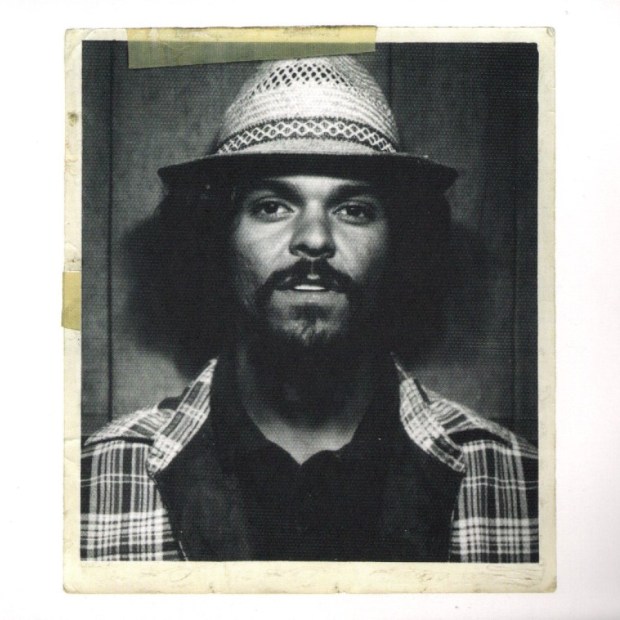
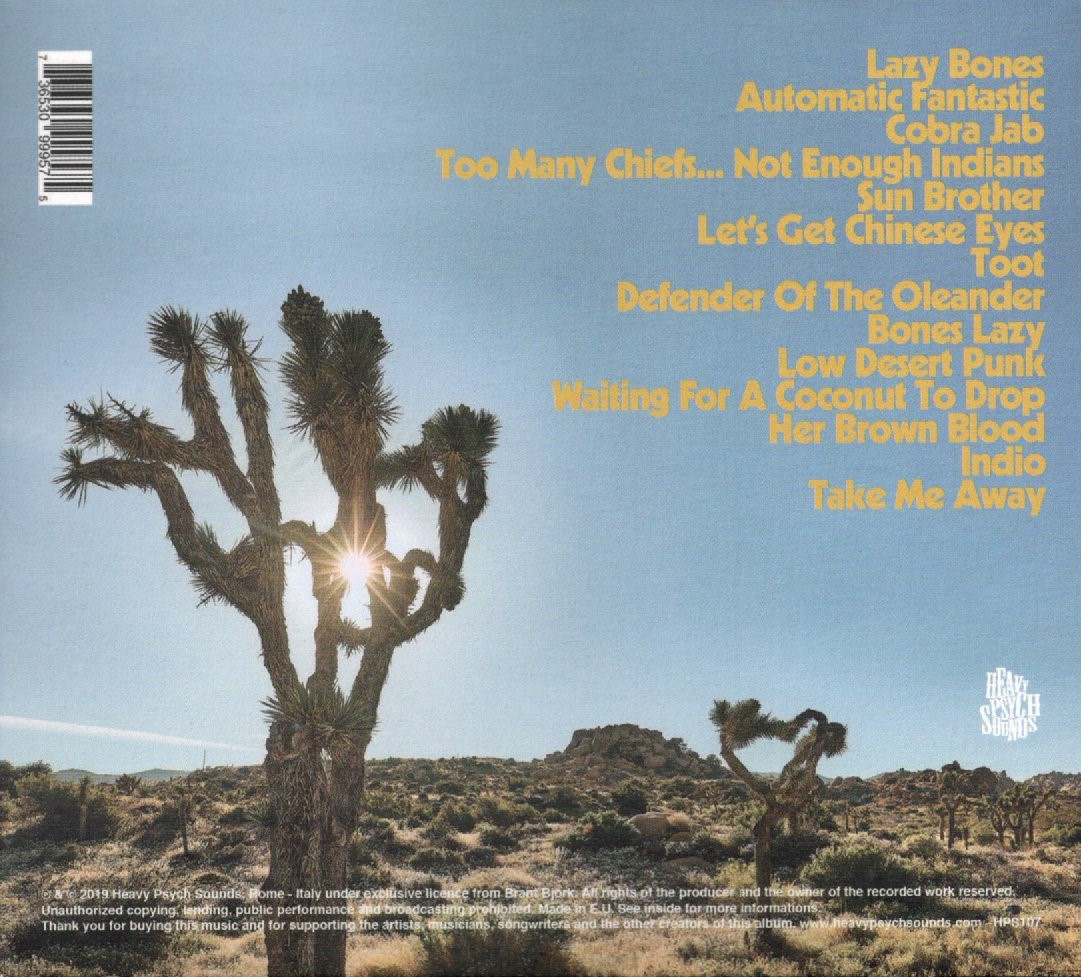
BRANT BJORK – Jalamanta (Originally 1999, Remixed and Remastered 2019 Heavy Psych Sounds)
When the needle hits wax it won’t be long, You got your radio tuned but it won’t play this song.
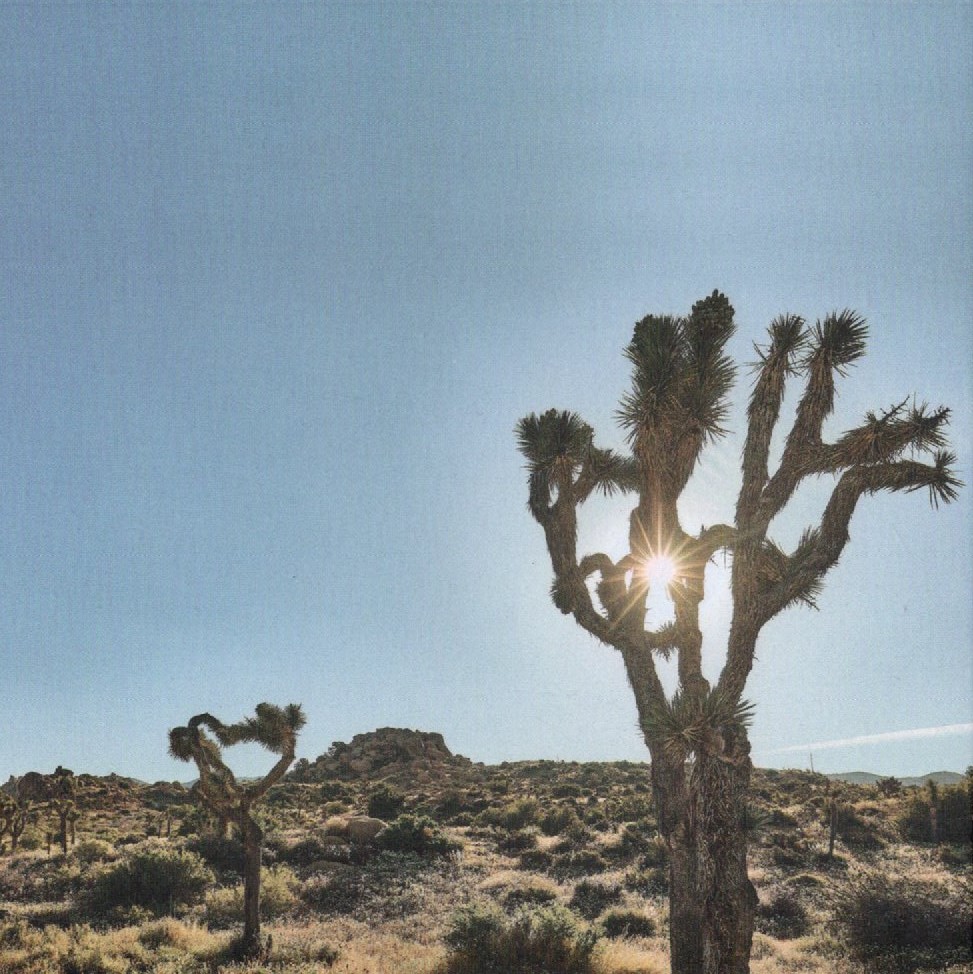
20 years ago, Jalamanta was one of my favourite albums in the world. This is my third copy. Partly instrumental, partly vocal, but 100% Brant Bjork. It was his first solo album, and he played virtually everything himself. The laid-back desert vibes are perfect for a summer evening chill-out. Humid, sparse, exotic, varied compositions take you across a hazy landscape.
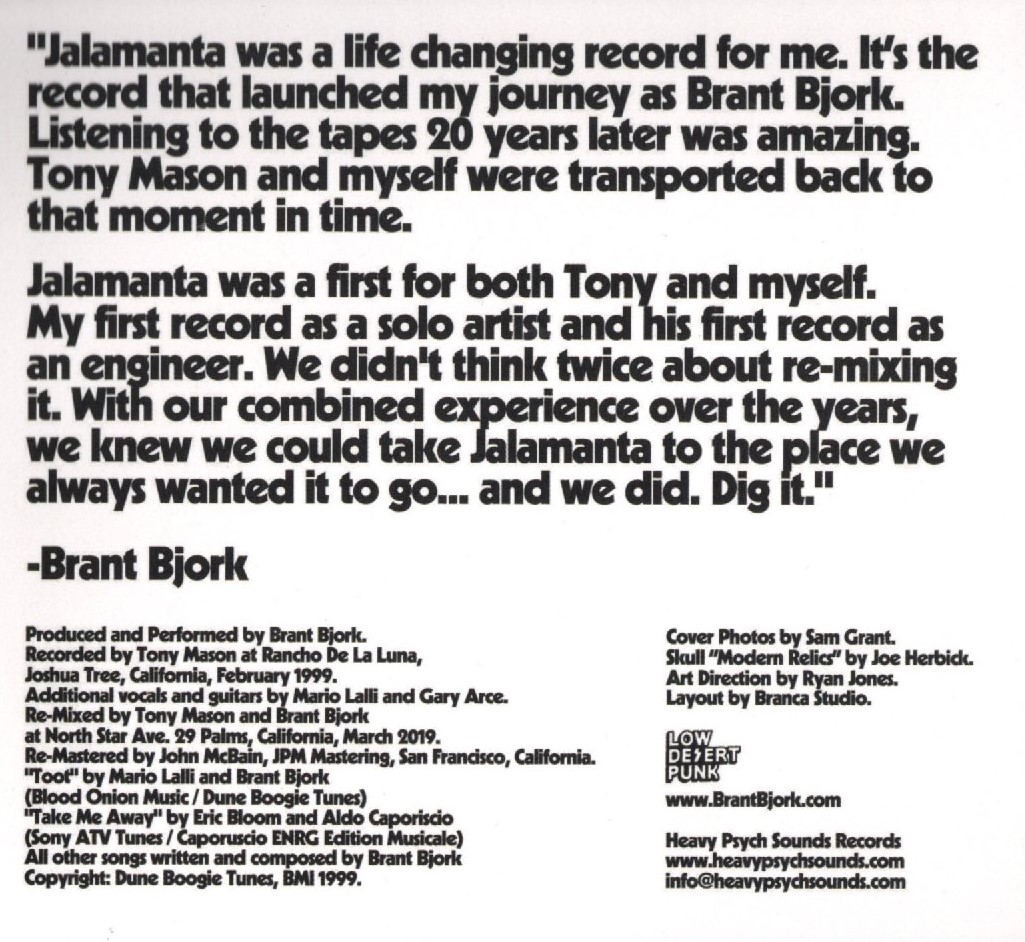
In 2019, Brant and engineer Tony Mason remixed Jalamanta, to take it the place they “always wanted it to go”. The remixes are largely subtle, just making the album sound bigger in your ears. The vocals might be a little less buried. It’s still raw, and sparse, and all the things you always liked about Jalamanta. Some songs have more noticeable differences. More guitar on “Toot”. Tracks tend to run longer than their previous fade-outs. But there are things I enjoyed about the original that aren’t here. The echoey lead vocal on “Toot” — “Cat scan, cat scan…” That echo is gone, maybe so the sonic field wouldn’t be too crowded with that louder backing guitar?
This remix will never replace an original, especially when it was one of my favourites 20 years ago. What is “Jalamanta” made of that makes it so tasty? Only the most basic of ingredients. Rolling bass and drums, simple unaffected guitar parts, and Brant’s laid back singing style.
Yeah, the man shakes me down and that’s why I’m broke. The rich man’s got all the green but it ain’t the kind you smoke.
So we turn up the rock, and we roll it slow.
We’re always flying high, and the ride is always low.
Snakey guitars jab in and out of the speakers — one song is even called “Cobra Jab”. Other tunes are more aggressive. “Too Many Chiefs… Not Enough Indians” has a relentless and simple riff, with the snakey guitars carrying the melody over it like a wave. Brant’s quiet vocal is hypnotic. By contrast, “Defender of the Oleander” has a barely-there main riff while the snakey licks do all the brilliant melodic work. Brant goes for hypnotic again on “Her Brown Blood”, a speedy run through the desert, with a cool monotone vocal right in the middle of your head.
Whichever version of Jalamanta you happen upon, you are guaranteed an incredible listening experience. The new remix is certainly more three-dimensional, and will sound better on your big system. But you will lose some of the charm of the original. The 2009 vinyl used to be the way to go, with a beautiful full-colour booklet and Blue Oyster Cult cover “Take Me Away”. But now you can get “Take Me Away” here on CD, albeit remixed. Another bonus is exclusive to this CD — “Bones Lazy”, which segues out of “Defender of the Oleander” into the brilliant rocker “Low Desert Punk”. And with the title “Bones Lazy”, you won’t be surprised that it is “Lazy Bones” backwards! Like you’re watching Tenet. Cool though. Even though I knew what was likely coming, I felt like it fit right in.
Get a load of this, man.
Well I’m gettin’ up when the sun goes down, And I shine ’em up and I hit the town. Well I trim it clean and I roll it up, And then I take it nice and slow…so what the fuck, man.
Jalamanta makes me feel that California sun way more than any Desert Sessions CD ever has. You can taste it. Let it sink into your lazy bones. And as great as this new CD is sonically, it also makes me want to hear the original. Nothing can truly upgrade a 20 years love affair with Jalamanta. As a complimentary piece, I don’t regret owning or listening to it at all. Hearing guitar parts that used to be beyond the fade is the kind of bait that we nerds line up for. The 2009 vinyl, with the gorgeous embossed cover and all that delicious photography inside, will remain my preferred way to experience Jalamanta. The 2019 remix will be the one to play when you want to examine it in more thorough detail.
 LOUDNESS – Once And For All (1994 WEA Japan)
 Loudness opened this live set with some smokin’ guitar licks and the first two tracks from the new album: “Pray For the Dead” and “Slaughterhouse”. Masaki was in great vocal shape, able to hold it steady and belt. The slow, exotic groove of “Pray For the Dead” screams “early 90s” but in a good way. “Slaughterhouse” has a faster tempo and more “metal” vibe. Drummer Munetaka Higuchi (R.I.P.) has this song by the balls. He gets a wicked solo at the end, too.
 Masaki’s old group E-Z-O were not unknowns; they put two albums out on Geffen and are something of a cult band. Their “House of 1,000 Pleasures” is deservedly visited for track five. Akira Takasaki takes a wicked solo here, in a song that definitely owns its place on the album. It’s also nice to get tracks that are not on regular Loudness studio albums when you pick up a live disc.

















 mikeladano.com