“The Sound of A” is in the air…but it took 50 years to get there!
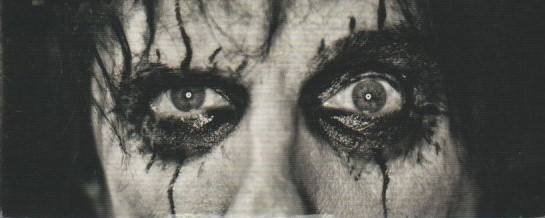
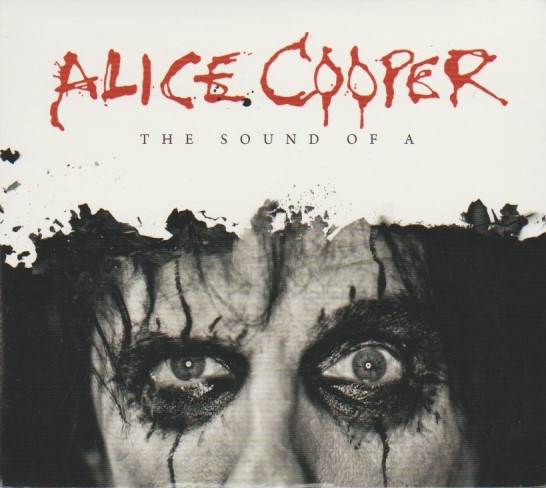
Alice Cooper’s Paranormal was one of the most delightful rock releases of 2017, which really came as no surprise. Alice has been consistently awesome for several albums in a row. Any time he works with producer Bob Ezrin, you can count on quality. The new five track Sound of A EP is quality.
The song “The Sound of A” was written in 1967 by Alice and bassist Dennis Dunaway. When Cooper reunited with members of the original band for some songs on Paranormal, Dunaway suggested revisiting “The Sound of A”. With Bob Ezrin’s help, “The Sound of A” has become another in a long line of understated Cooper classics. It has the sound of Welcome to My Nightmare with a hint of the present. Another apt (but coincidental) comparison would be “Journey of 1,000 Years” by Kiss.
“The Sound of A” is packaged with four unreleased live songs: “The Black Widow”, “Public Animal #9”, “Is It My Body” and “Cold Ethyl”. Of these, the real treat is “Public Animal #9”, an old School’s Out favourite that has never seen release on any Alice live album. This is from Columbus Ohio in May 2017. As is often the case, “The Black Widow” is shortened live, but “Public Animal” is damn fine. Can you believe it took this long to get a live version? It’s one of the best on School’s Out, albeit in the shadow of a big hit. Even “Cold Ethyl” is hard to find live. You can locate it on 2011’s No More Mr. Nice Guy via Concert Live, and the semi-official Extended Versions and Alone in His Nightmare.
Don’t miss The Sound of A. Consider it a live EP with some stuff you’ll be glad to have.
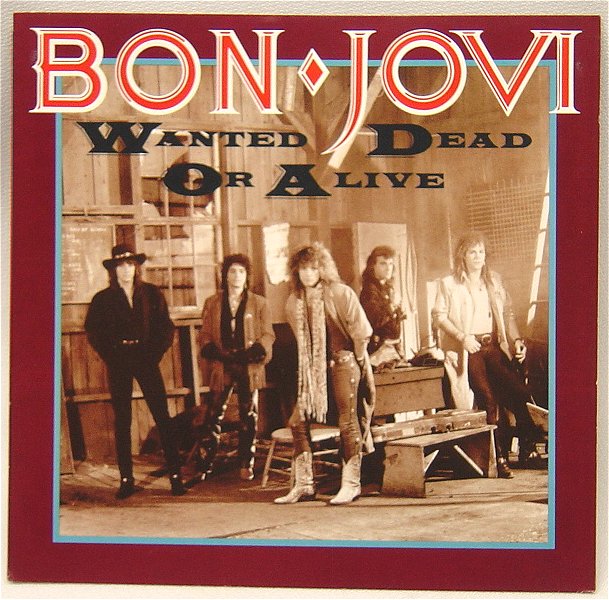
Happy belated birthday to this single, released March 3 1987!
GETTING MORE TALE #658: Wanted Dead or Alive
I didn’t care for Bon Jovi. They seemed like a “girls’ band”. It seemed to be all about the screaming ladies. I did like Europe. “The Final Countdown” was a pretty cool anthemic track, with a sci-fi lyric. The rock press were pitting one band against the other: “Who’s better, Bon Jovi or Europe?” I took Europe every time.
Besides, what the hell was a “Bon Jovi” anyway?* Bon means “good”. “Good Jovi to you, sir!”
I continued to ignore Bon Jovi, while receiving Europe’s The Final Countdown as a gift for Easter 1987. The album took a couple listens to get into, but once I did, “Rock the Night”, “Ninja” and especially “Cherokee” blew me away. Europe weren’t a “girls’ band” to me, with songs about Ninjas and Cherokees.
My sister and her friends loved Bon Jovi. One of them had a crush on keyboardist David Bryan. I thought he looked weird, like he had gummy worms in his hair. I remember they were writing “BON JOVI” and “DAVID BRYAN” in the sand at the beach. I erased it and changed it to “BON SCOTT” and “BRIAN JOHNSON”. Take that, eh? No wonder I thought Bon Jovi were a “girl’s band”. Anyone who had a younger sister at the time probably thought so too.
Considering that I own an extensive Bon Jovi collection now (Richie Sambora era only), something must have changed. What was it?
Jon Bon Jovi and Richie Sambora wrote a song together in Richie’s mom’s basement. It was an acoustic song called “Wanted: Dead or Alive”. When I saw the music video in July of 1987, it changed all my impressions.
That 12 string acoustic rang true, on a song that deserves all the awards, video play and accolades. Something about the song was very real. Writing in that New Jersey basement about the road life was about as honest as Bon Jovi get, and you can hear it in the recording. “Wanted: Dead or Alive” turned me around rather quickly. I taped the video, and from there put “Wanted” on a cassette tape. The cassette tape had a lot of new songs from the summer of ’87: Ace Frehley’s “Into the Night”, and Ozzy’s live “Crazy Train” were among those tracks. Eventually I had to get all those albums.
I received the Frehley and the Ozzy for my birthday. I bought Bon Jovi later on in September. By then, I was familiar with all the singles and a track called “Raise Your Hands” from the movie Spaceballs. I just had to digest the album tracks.
Slippery When Wet was…OK, I guess. Not as good as The Final Countdown was. Not all it was hyped to be, but good enough. “Social Disease” was pretty bad. Slippery struck me as a couple songs short of a great album. Good enough, though, to hang on ‘til the next one.
1988’s New Jersey was the next one. It seems they ditched 80% of the schlock and really tried to get back to their roots. I loved New Jersey and it was my first Bon Jovi CD once I had a player. Whatever authenticity they had on “Wanted: Dead Or Alive” spilled all over New Jersey.
“Wild is the Wind”, “Blood on Blood”, “Ride Cowboy Ride”, “Stick to Your Guns”, and “Homebound Train” had the magic. There is something real and close to perfect about those songs. Bon Jovi put out an album soaked in passion, as opposed to the sterile and clean Slippery When Wet. It didn’t match the 12 million copies sold of Slippery, but New Jersey was so slouch at 7 million.
It’s funny to be using words like “integrity” when speaking of Bon Jovi today. They’ve become an adult contemporary project; no longer a rock band. “Wanted” was their first acoustic hit and it’s often considered one of the landmark ballads of the era. In many respects, the lite-rock Bon Jovi of today was forged by “Wanted”. But that doesn’t tarnish the song itself. “Wanted: Dead or Alive” is still fantastic. Even better is the 1987 acoustic version, only available on cassette single (or Japanese CD single).
You can go ahead and scoff at Bon Jovi, in light of the last 10 or even 20 years. They’re a mere fraction of the group they used to be. Yet “Wanted: Dead or Alive” still stands as a high water mark that any band would be jealous to have.
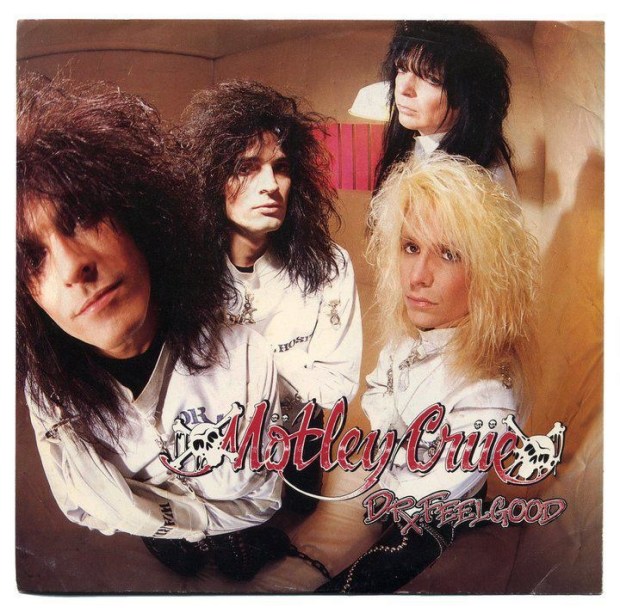
GETTING MORE TALE #656: The One They Call Dr. Feelgood
Hard rock peaked in the summer of 1989 with Dr. Feelgood. The charts were already filled with hard rock acts. Warrant were picking up steam. White Lion and Winger were getting airplay. Bon Jovi and Def Leppard were still raking it in with their last albums, New Jersey and Hysteria. Aerosmith were back. All we needed was the return of Motley Crue.
The Crue were not exactly laying low, but they did have problems to resolve. Nikki Sixx “died” of a heroin overdose on December 23 1987, but was revived with a shot of adrenaline right to the heart. Then he had to deal with a lawsuit from an imposter named Matthew Trippe, who claimed he took over the role of “Nikki Sixx” in 1983 and was owed royalties. Both these incidents inspired new songs. “Kickstart My Heart” was about by the overdose and subsequent recovery. “Say Yeah” took a shot at Matthew Trippe and that whole strange situation.
Fearing the band would end up dead if he did nothing, manager Doc McGhee sent the band into rehab (except for Mick Mars who quit drinking on his own accord). Then, a clean Motley Crue headed up to Little Mountain Sound in Vancouver to work with Bob Rock for the first time.
Bob Rock was on a roll. He finished up the soon-to-be-mega-successful Sonic Temple for The Cult and was recognized for the sound he was able to capture, particularly on the drums. He was also excellent at playing babysitter with musicians who were notoriously hard to work with. To minimize infighting, Rock split Motley up and had them all record separately. And because Aerosmith were in town recording Pump, Steven Tyler dropped by. He offered support for the newly clean band, and vocals on a new track called “Slice of Your Pie”.
The Crue’s first gig clean and sober was the Moscow Music Peace Festival in August of 1989. Although they had finished a new album, they played no new songs, saving them for proper release and promotion. Instead they played oldies from Girls, Girls, Girls, Theater of Pain, Shout at the Devil and Too Fast For Love. It was anything but peaceful. The gig, organized by McGhee, had been pitched to the bands involved as an equal opportunity. Bon Jovi, who McGhee also managed, were arguably the best known in Russia, as they were the only one with an official release there. They were booked to play last, but McGhee stressed there was no “headliner”. There was already friction between bands, because Ozzy Osbourne felt he should have been the headliner. Black Sabbath were massively popular with Russian rock fans, although they had to scour bootleg markets to find any.
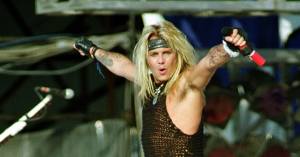
Vince Neil live at the Moscow Music Peace Festival 08/12/1989 – Robert D. Tonsing/AP
Things came to a head when Bon Jovi featured pyro in their set, which none of the other bands had. Motley Crue interpreted this as favouritism towards Bon Jovi. Tommy Lee responded by ripping the shirt off Doc McGhee’s back. Motley Crue fired him and headed home on their own.
This drama did nothing to defuse Motley Crue’s momentum. Their new album Dr. Feelgood was released on September 1 1989, eventually going #1 and spawning five hit singles.
Meanwhile back in Canada, I was following all the Motley news with great anticipation. A Hit Parader magazine interview implied that Dr. Feelgood was so ambitious, it might even turn into a concept album. In fact the band had so many new songs that a second album, called Motley Crue: The Ballads was considered for 1990 release. The concept at that point was to do a new Motley Crue studio album that was all-heavy, no ballads. The softer songs would be saved for the second LP. Ultimately they got cold feet and realised putting out an album with no ballads in 1989 was commercially stupid, and so Dr. Feelgood was released with a mixture of tracks – the best 10 songs and one intro.
“Dr. Feelgood” was the first single, and it dominated airwaves just as summer holidays were ending. It, and “Love in an Elevator” by Aerosmith were absolutely everywhere. “Feelgood” had the edge with me, due to its massive drum sound and serious vibe. Bob Rock captured what might have been the biggest drum sound since Zeppelin, or Creatures of the Night by Kiss. Either way, Motley and Aerosmith really put Little Mountain Sound on the map as the studio to beat.
I tried to catch “Feelgood” on the radio and record it, but failed. Instead I bought the cassette single at the local Zellers store. Considering how many tracks the band worked up for Feelgood, I hoped they would be releasing non-album B-sides. They did not. Instead, “Feelgood” was backed by “Sticky Sweet”, probably the weakest album track.
I wondered what happened to all those unreleased songs that Hit Parader mentioned. “Say Yeah” was not on the album or singles. Neither were “Get It For Free” or “Rodeo”. (We’d have to wait another 10 years for them to be issued on the “Crucial Crue” remastered series.) A CD could hold almost 80 minutes of music, but Dr. Feelgood was the standard 45 minutes long. Since CDs were so expensive at the time, some fans argued “You have room, so put all the tracks on there and give us the value for our money.” Of course, this attitude changed later on, when listeners realised that albums with lots of extra filler were not as much fun to listen to. And, sadly, the unreleased Motley songs were pretty much filler. The stuff that went on Dr. Feelgood was as good as they had.
Dr. Feelgood was one of the first CDs I ever got, on Christmas Day 1989, along with my first CD player. The sonics of the album were everything they were hyped to be, but what really impressed me were the silences of compact disc. I was used to tape hiss. As “Time For Change” slowly faded out to nothing, I cranked the volume to 10. It was amazing to hear the fadeout clearly, without the tape hiss that had become part and parcel of music listening.
The album earned some great reviews for its sound, songs and even some of the lyrics. “Time For Change” revealed a new more mature direction. “Kickstart My Heart” took a serious subject and made it inspiring without wimping out. “When I get high, I get high on speed, top fuel funnycar’s a drug for me.” Some called it Motley’s best album, and still hold it as such.
As the album rocketed up the charts, Motley embarked on an 11 month tour. Most of the new album received live attention, with five songs being part of the regular set. One person who was paying attention to this was Metallica drummer Lars Ulrich. Lars fell hard for the Motley drum sound, and sought out Bob Rock to produce their next album too. The rest is history. Like Motley before them, Bob Rock helped push Metallica into the upper echelons.
On Monday June 18 1990, Motley Crue headlined at the SkyDome in Toronto. The following day, June 19, the highschool halls were flooded with Motley Crue T-shirts. Where were all these “fans” last year when I seemed to be about one of two people in school who liked Motley Crue? It was always so bizarre to see concert shirts on people who never expressed interest in the band. All those girls who always seemed to say, “I hate Montley Crue”!
What goes up, must come down. Motley relapsed after partying too hard with the Skid Row guys. Infighting ramped up. As the band were set and poised to top Dr. Feelgood with something truly special, they fired Vince Neil. It was as if they were handed the keys to the kingdom, to promptly throw them off the mountain. Although their 1994 album with John Corabi is a monster (and possibly their all-time best), as a commercial entity, Dr. Feelgood was never surpassed. It eventually sold over six million copies.
We’ll have to see how Motley portray it in their movie The Dirt, but the truth is that Dr. Feelgood was a one-off mega-success story they’d never repeat.
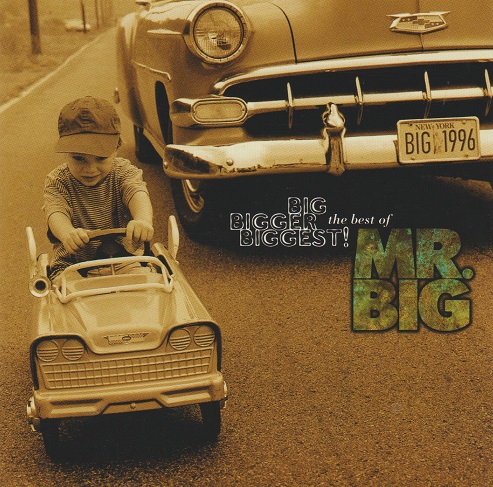
MR. BIG – Big, Bigger, Biggest! The Best Of(1996 Atlantic)
The mid-90s were the time that every hard rock band in the world released a greatest hits. Why? Most of them either split, got dropped by the label, or both. Tesla, King’s X, Slaughter, Extreme, and Mr. Big are among the sidelined bands whose labels released a greatest hits mid-decade.
Big’s at least had four unreleased tracks, topping off 12 familiar cuts from their first four albums. Three of the songs were newly recorded. Unfortunately, the label stacked a bunch of ballads and made this disc really hard to finish in one sitting. The running order and track selection is a little wonky.
“Addicted to that Rush” is the jet-speed opener, as it should be. Big’s 1989 debut was instrumentally thrilling but light on hits. A so-so album track, “Rock & Roll Over” should probably have been left off. Lean Into It (1991) was the big one. “To Be With You” sits at track 4, because the CD is chronological, but the song has always worked better in the closing position. Placing it at track 4 is anticlimactic. Lean Into It spawned three more singles, all present: “Green Tinted Sixties Mind“, “Just Take My Heart”, and “Daddy, Brother, Lover, Little Boy”. This spurt of songs is a bit too soft. Two are ballads, one a pop track, leaving only one to instrumentally smoke you. That’s unfortunate because their cover of Cat Stevens’ “Wild World” is next in the pack. Though it is a fabulous and underappreciated cover, it’s too much mush at the start of the CD.
A buyer who picks this CD up as their first and only Mr. Big purchase will assume they are just another pop rock band. Another Bon Jovi, another Warrant. Though there are some serious moments of instrumental shreddery, that side of the band is too overlooked. “Colorado Bulldog” from 1993’s Bump Ahead is about the only remaining song with that kind of force. This is why suits shouldn’t compile CDs. Their studio albums are more balanced.
Unfortunately, none of the four unreleased songs are spectacular. The acoustic ballad “Seven Impossible Days” is from a Japanese EP called Japandemonium. The other three are new recordings. “Not One Night” is another acoustic ballad. Sonically beautiful, but it’s too much saccharine. “Unnatural” isn’t a ballad per se, but it is mostly acoustic (and features the lead vocals of guitarist Paul Gilbert). “Stay Together”, which is a dead ringer for vintage Van Hagar, is probably the best of these four songs.
Big, Bigger, Biggest! The Best Of Mr. Big does not represent the Mr. Big that fans have known all these years. Their favourite songs are rarely the ballads. Too many killer deep cuts are missing, and, I hate to sound like a broken record, there are too many ballads!
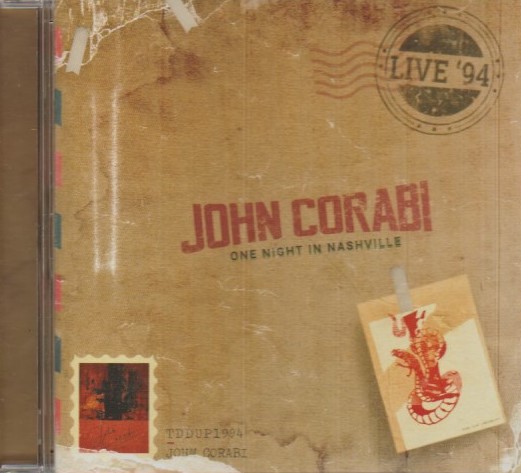
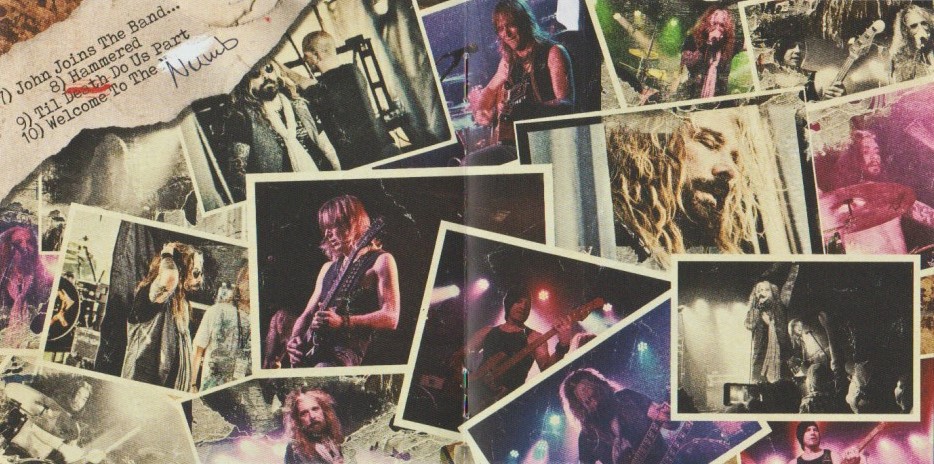
One Night in Nashville is John’s live run-through of the entire Motley Crue album with his ace band, including his son Ian on drums. Many of these songs have never been played live, and never in sequence like this. Veteran producer Michael Wagener ensured a kickass sound.
Ian Corabi has no problem duplicating Tommy Lee’s hard hitting style on opener “Power to the Music”. John’s voice is still more than capable of shredding these songs two decades later. His rasp and power have barely ebbed. Compare this to Motley Crue’s final live album The End and…actually, no don’t compare. Corabi buries The End.
“Uncle Jack” is one of the most pounding tracks on this CD. It was a departure for Motley Crue, a deadly serious track, and John nails every scream. The guitarist also duplicates Mick Mars’ underrated solo, note for note. Yes, underrated. Mars is rarely given the credit he deserves for creating his own style, and thereby defining the sound of the Crue.
If you know the album then you know these songs; if you don’t then buckle the fuck up.
Through the single “Hooligan’s Holiday”, Corabi and Co. breath life into songs we only know from the album. “Everybody wants a piece of the pie” — at least in this Nashville crowd they do, soaking up every riff and blistering scream. Even the complicated “Misunderstood” burns it down. Guitars instead of keyboards, backing band instead of Glenn Hughes, and it’s full speed ahead. Once again the solo is note for note, but there’s a brand new outro where it once faded.
“Loveshine” is a bit of a respite, a nice little acoustic jam a-la Zeppelin III. These last two songs are so far above and beyond what Motley Crue were capable of when Vince Neil was in the band. Corabi opened up entire new soundscapes for them to explore, and “Loveshine” is cool on the psychedelic side. Back to the rock, “Poison Apples” is a tribute to glam rock and what Motley Crue are about. “Took a Greyhound bus down to Heartattack and Vine, with a fist full o’ dreams n’ dimes…” Of all the tracks on Motley Crue, “Poison Apples” was the closest to the original Motley sound, and John owns it.
This is where you’d flip sides on the original album, so it’s the perfect spot for telling a story: track 7, “John Joins the Band”. He got the call before it was even announced that Vince had left the band, and he couldn’t say a word to anybody. One of the first songs they wrote together was “Hammered”, an old riff that John brought to the band. Even darker is “Til Death Do Us Part” which was actually supposed to be the title of the album at one point. It’s one of many long bombers, but things lighten up a bit on “Welcome to the Numb”. Dig that slide guitar riff, another very Zep aspect to this batch of songs. By John’s intro, it sounds like a ball-baster of a song to play live. He says they didn’t think they were going to be able to do it! But they killed it, and John says that’s due to the hard work of guitarist Jeremy Asbrock.
Your head receives a good solid smack with “Smoke the Sky”, a waste-laying blitzkrieg of a smokeshow. Corabi touts the health benefits of rolling a joint. “Home grown version complements the senses, opens up my mind.” Perhaps Peter Tosh put it better, when he sang “Birds eat it,” and “It’s good for the flu, it’s good for the asthma.” Regardless of who said it best, “Smoke the Sky” is a flat-out mosh.
“Droppin’ Like Flies” continues the ass-kicking, but at a more sensible pace, trading speed for mass. And although in theory it shouldn’t work, after this fairly relentless assault, the album always closes on a ballad called “Driftaway”. After a sentimental version for the Nashville crowd, there’s a bonus track. This is another ballad, “10,000 Miles Away” from the Japanese Quaternary EP, live for the first time. Icing, meet cake.
This Corabi live album is far stronger than any of the three Motley Crue live albums. In terms of performance, John’s band just kills Motley Crue. Of course, they had a brilliant set to work with. Finally hearing these songs live, and in album context, is a long fulfilled wish. John Corabi has long been respected by the rock community and this CD is a testament to why.
Living up to Lean Into It was never going to be an easy thing to do. By the time 1993 rolled around, it didn’t even matter. Mr. Big were going to be ignored no matter what they did.
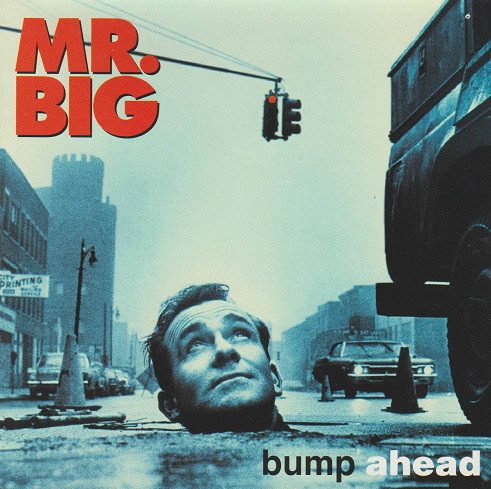
There are no giant leaps and bounds on Bump Ahead, but there are enough decent rock thrills and ballads to call it a good album. A lot of the heavy artillery is expended right on the first track, “Colorado Bulldog”. An amped-up Van Halen shuffle is cranked to the max with the one and only Billy Sheehan pushing the whole thing on the bass. It’s an insane affair of accelerated playing and a stomping riff.
“The Price You Gotta Pay” keeps it heavy, anchored by a patented Sheehan groove. Eric Martin’s bluesy soul rasp gives the music accessibility, but there is plenty going on instrumentally too. Fans of sheer playing will find plenty of challenging licks within. Likewise, “The Whole World’s Gonna Know”. It sounds like a redo of an old Talas song called “Smart Lady”, with a new improved chorus. They lay down a granite groove on “Temperamental”. Plenty of solid rock is to be heard here.
That said, let’s not kid ourselves. Mr. Big made their money with ballads like “To Be With You”, and so they loaded the deck here with a few more. “Promise Her the Moon” is sentimental, understated and classy. The big one is Cat Stevens’ “Wild World”. Mr. Big were not likely to blow it on a song this magnificent. Their version is more lush than Stevens’, but is actually quite great. They miss the mark on “Nothing But Love”; too syrupy with its guitar synth orchestra. In a case of ballad overdose, there is a fourth: “Ain’t Seen Love Like That”. It’s one of those basic campfire ballads. Good song, but not essential.
Bump Ahead has a bit more filler than preferred. “What’s It Gonna Be” is fine funky rock, but the chorus is pedestrian. They go a different direction on the psychedelic “Mr. Gone”. Don’t forget this is the band that gave us “Green-Tinted Sixties Mind“, though “Mr. Gone” isn’t as perfect as that.
They close the album on the free cover “Mr. Big”, the song that gave them their name. The grind of “Mr. Big” ends the album on an upstanding note, but damn, they should have cut one of those ballads doncha think? The fact is, Mr. Big were simply not going to have a hit with a ballad in 1993. Wasn’t gonna happen. The Japanese edition had a bonus track called “Long Way Down”, which wasn’t that outstanding but perhaps should have been included in the main tracklist at the expense of a ballad.
With the recent passing of Pat Torpey, it’s definitely time for some fresh listens to classic Mr. Big. Their most underrated album might be their fourth, Hey Man, on which Torpey had three writing credits. 1991’s Lean Into It is generally considered the highwater mark, but Hey Man boasted songs just as strong and many just as memorable. If only MTV wasn’t avoiding Mr. Big and bands of their era like the bubonic plague.
Mr. Big were always ferocious musicians, and formed as a “supergroup” of such. The point of Mr. Big was for these mega-instrumentalists to write some commercial rock, and that has been their modus operandi on every album. When Mr. Big formed, Torpey already boasted two albums: Ted Nugent’s If You Can’t Lick ‘Em…Lick ‘Em, and the supergroup Impelliteri. Billy Sheehan was already worshipped for his work with David Lee Roth and before that, Talas. Guitarist Paul Gilbert had established himself as a wunderkind with the Shrapnel band, Racer X. The key ingredient to Mr. Big is the blue-eyed soul of singer Eric Martin. He had a two album solo career before he made the unlikely jump to supergroup.
It’s the rocking side of Mr. Big that hits the ground running on first track “Trapped in Toyland”. Heavier and grooving more than usual, Mr. Big poured the gas on the fire right off the bat. It’s a huge impression. Gilbert wrote this smoker with his old Racer X singer Jeff Martin, and Russ Parish of Fight (and now Steel Panther). That would explain the heavy! What really nails the heavy sound is the combination of Billy Sheehan’s bass rumble in conjunction with Torpey’s smashing beat.
The most stunning of all the songs is the second, a bonafide Mr. Big classic called “Take Cover”. It simmers under an infrared pulse of drum beats and understated chords, and then bursts wide open on the choruses. It’s triumphant songwriting and a fine example of how musicianship and songcraft can work together. It is one of their career best.
“Jane Doe” goes funky a-la “The Crunge”. Eric Martin pushes it into soul on the choruses. A couple ballads follow, one acoustic and one darker. “Goin’ Where the Wind Blows” fills the slot of past Mr. Big acoustic ballads, something that had become compulsory after the success of “To Be With You”. The more interesting song is “The Chain” which has a sombre edge.
There is an undeniable twang to “Where Do I Fit In?”, so much that it could easily be mistaken for Tesla. It’s a solid side closer, though “sides” were becoming meaningless in 1996. Hey Man has never seen a vinyl release, and the dying cassette version was the only one with “sides”.
Eric Martin makes it soulful on “If That’s What it Takes”, which doesn’t deserve to be called a ballad so we won’t. It serves as a reminder of how these musicians can adapt to any situation. The Paul Gilbert who plucks these earthy chords is the same guy who shred all over Lean Into It. Pat Torpey turns into a human steamroller on “Out of the Underground”. It’s as heavy metal as Mr. Big have been. Then they go “Dancin’ Right Into the Flame” on a pretty cool ballad. It has a bit more finesse than the usual.
You can tell immediately that “Mama D.” was written by Paul Gilbert, because it has one of those squirrly Gilbert guitar licks that only he writes. To close the album, they return to a heavy soul-funk on “Fool Us Today”. Pat Torpey is rock solid and a key ingredient to a fun closer.
Track for track, Hey Man can go up against most other Mr. Big albums. They had a temporary breakup after this CD, a result of it being criminally ignored.
RITCHIE BLACKMORE’S RAINBOW – Black Masquerade(2013 Eagle Rock from a 1995 TV broadcast)
It’s a damn shame it took so long for this recording to get a release. Recorded in 1995, this CD release was a German TV broadcast, and is the only live Rainbow album to feature singer Doogie White. The only difference from the recent Stranger In Us All album lineup is the drum seat. John O’Reilly was jettisoned in favour of Chuck Burgi who was with Rainbow from 1983 to 1984.
There are some clear mixing problems on some tracks, notably the opener “Spotlight Kid”. The backing vocals sound as if they are from another song, or audio leakage from another broadcast. There’s little else wrong, aside from those things that happen in a real live setting.
In some respects this lineup of Rainbow was rather faceless, but Doogie White was an entertaining and versatile frontman. He’s comfortable in all eras of Rainbow, and he does them all, plus two eras of Deep Purple. That means Doogie White not only sings his own material (seven tracks from Stranger In Us All) but also must sing the songs of Ian Gillan (“Black Night “, “Smoke on the Water” and “Perfect Strangers”), David Coverdale (“Burn”), Ronnie James Dio (“Man on the Silver Mountain”, “Long Live Rock ‘N’ Roll”, “Temple of the King”), Graham Bonnet (“Since You’ve Been Gone”) and Joe Lynn Turner (“Spotlight Kid”). White even does a classic Ian Gillian singalong in “Black Night”, imitating Ian’s “Doo doo doo doo doop!”, before breaking into a traditional drinking song with improvised lyrics.
What about Ritchie? Brilliant as ever, and even though he is notorious for…not enjoying…being filmed, it doesn’t seem to inhibit his performance here. Extended solo sections sound like joy. Perhaps having his true love on stage with him, Candice Night on backing vocals, soothed the savage Man in Black. Regardless he sounds as flawlessly and quintessentially “Ritchie Blackmore” as ever. There’s only one.
Live albums from obscure, buried periods like this often yield solid hardened gems. “Hunting Humans” and “Ariel” are better live than they were on album. Things are looser and livelier. “Wolf to the Moon” has guitar and keyboard interplay that takes it further than it went on album.
The most intriguing track is the Dio-era classic “Temple of the King”. As Doogie tells it, when the band were recording in America, they’d often pop out for a drink. Sometimes they’d play music in bars and “Temple of the King” came from those times.
Given that there is so much bloody live Rainbow out there (with another brand new live album just announced!), Black Masquerade can understandably go fairly low on your want lists. If you see it though, don’t hesitate.
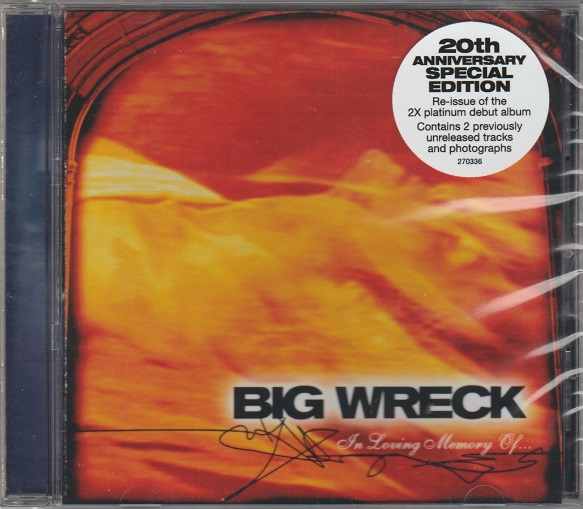
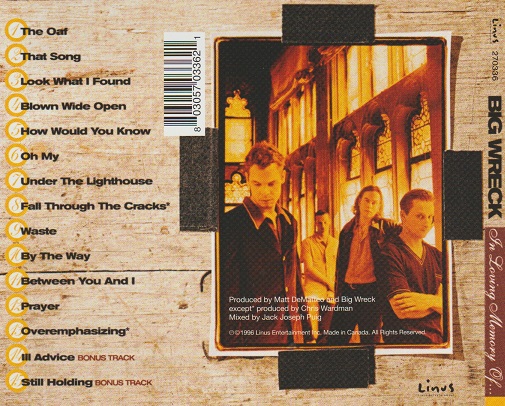
BIG WRECK – In Loving Memory Of… (Originally 1997, 2017 Linus Entertainment anniversary edition)
“You need to get into some new bands, man,” said my buddy T-Rev.
Trevor had a point. Most of my collection was rooted in the 70s and 80s. New bands weren’t appealing to me, one or two excepted. But I did hear this new band on the radio (Q107) called Big Wreck that I didn’t mind. “Like a bluesy Soundgarden with a hint of Rush” said the DJ. Their first single “The Oaf” was pretty awesome.
“I found a new band I liked,” I told Trevor. “Big Wreck.”
“Hahaha, oh man. You found a new band and they suck!” he retorted. Trevor was really into Brit-pop and probably hoped I would have discovered the Bluetones or Supergrass. Alas, it wasn’t to be this time. I bought the Big Wreck album In Loving Memory Of…, and I liked it enough to get the 20th Anniversary Special Edition two decades later.
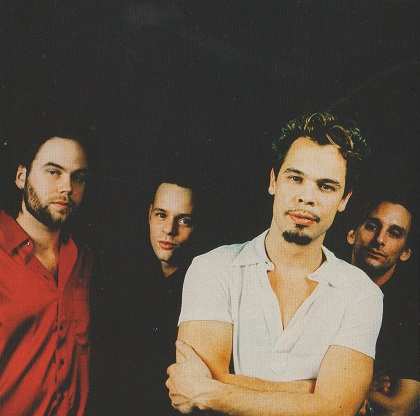
Big Wreck were a little bit of a throwback. Their use of blues was different from the post-grunge bands they were competing with, and that’s what initially appealed to me. And yes, Ian Thornley could be compared to Chris Cornell in terms of singing power.
The album boasted a number of immediate standouts. “The Oaf” was the tough introduction, but “That Song” followed it with something immediately accessible. “Look What I Found” takes a trip to the levee, emulating a Zeppelin stomp through the production of 1997.
There’s a balance of heavy/light here, that skews too much on the light side. Fortunately the two CD bonus tracks put the scales back on the heavy side. The only real weakness to In Loving Memory Of… is a reliance on slow songs within the bulk of the album. Some of the quiet songs are incredible. “Under the Lighthouse” (a single in Canada only) has atmosphere out the wazoo. Echoes of heartbreak are smeared through “Blown Wide Open”, another single.
If I had to put my money on it, I’d say “Under the Lighthouse” is the best song on the disc, ballad or not.
In Loving Memory Of… is most enjoyable when jaunting through bluesy rock guitars. The musicianship is always exceptional. “How Would You Know”, “Fall Through the Cracks”, “Overemphasising” and “Between You and I” are comfortably in rocky framework, with outstanding lead work. The album does run a bit long, though. In 1997, the full length value of a CD was being utilised more than today, now that bands realise less is often more. The original 13 tracks ran an hour long, which is probably 15 minutes too long.
Yet the two additional bonus tracks are excellent. Both speed along at a good clip. The bright “Ill Advice” is more upbeat than most of the album, save “That Song”. “Still Holding” has punch. The album would have been stronger for their inclusion if they had been there all along, despite its length!
Fixin’ for a shot of 90s nostalgia? The Big Wreck anniversary edition might be what you needed. The band are playing the whole album in sequence on their current tour, so you may as well become re-acquainted.
GETTING MORE TALE #620: The Retired Jedi Master (of Rock)
It is always sad when one of my old Jedi Masters of Rock loses their passion for it.
I think for Bob, that began when he entered college. While Bob taught me the ins and outs of Iron Maiden, Ozzy Osbourne, Dio, and Motley Crue, he was drifting away from heavy metal. There is nothing wrong with diversifying, but his passion for the heavier side of things was waning.
I remember in the summer of ’91 when Motley Crue released their awesome new groove-laden single, “Primal Scream”. I asked Bob if he liked it, and his response was that the new Motley was “too heavy”. My heart broke in two pieces that day. I was so excited about that track. Motley were doing exactly what I wanted them to do: turning it up and giving no fucks. Bob just wasn’t into that.
His tastes were changing. I think a big part of it was that the girls he liked at college weren’t into heavy metal. Bob was checking out more commercial sounds and ballads. One of his favourite groups was Frozen Ghost. I also remember he was very much into Bad Company’s Holy Water. Meanwhile I was digging into the roots of metal and the bands of the future as well: from Deep Purple to I Mother Earth. Our paths diverged. I couldn’t be less interested in new Bad Company, but I was intent on collecting the entire Black Sabbath back catalogue. It made me a little sad, but I’m not regretful about where my explorations took me over the years.
I think it can be summed up as below:
1.The girls we liked didn’t listen to metal. 2. Bob’s tastes diversified while he outgrew metal. 3. I doubled down on metal, going all in. The girls might not like metal, but maybe they’d appreciate my don’t-give-a-fuck attitude?
Bob’s method got him dates. My method did not! But my musical journey took me far and wide. From the deep neon coloured oceans of Frank Zappa, to the craggy peaks of Mount Marillion, and back to the Valley of Judas Priest. As real life took over – job, wife, kids – Bob was no longer the music head that I was. He has always been a hard worker, and a family guy. My passion only grew deeper. The longer, heavier and more complex the tunes, the more interested I was in the band. I loved musicianship. Ballads were starting to sound the same to me, and there were some cool new sounds coming out of the woodwork.
Life took Bob and I in different directions. He met a lovely lady named Trish and now has four kids. I have none. If I had four kids, would I still have time to invest in my passion, music? Bob’s kids keep him very busy, believe me!
Bob sold off his collection many years ago. He had some amazing Iron Maiden 12” singles and picture discs. I bought a few of his singles, but there was one tie-dyed bootleg picture disc EP that I would have loved to get my hands on. I couldn’t tell you anything about it today, except that it was Iron Maiden. He had to do what he had to do. It’s gone now and he has little recollection at all about it. That information is sadly lost to me now.
Not every Jedi Master of Rock stays in the trenches forever. Some do, and end up writing about it on the internet. Bob may have retired his rock and roll shoes, but his influence lives on right here in these pages. Thank you for your wisdom and friendship.
 ALICE COOPER – The Sound of A (2018 Ear Music EP)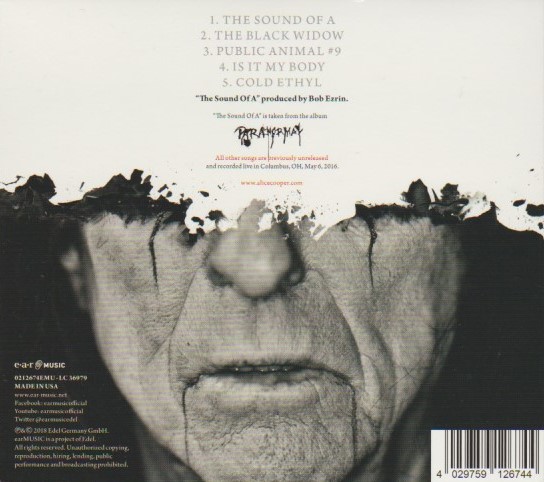

















You must be logged in to post a comment.