hard rock

REVIEW: T.M. Stevens – Black Night: Deep Purple Tribute According to New York (1997)

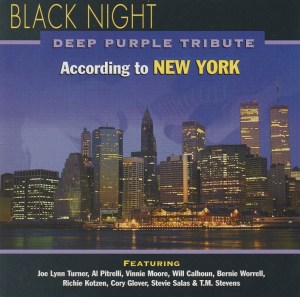
Black Night: Β Deep Purple Tribute According to New York (1997 DeRock)
Produced and arranged by T.M. Stevens

This is one of the coolest and most different Deep Purple tributes you are likely to find. Β It’s also by far the funkiest.

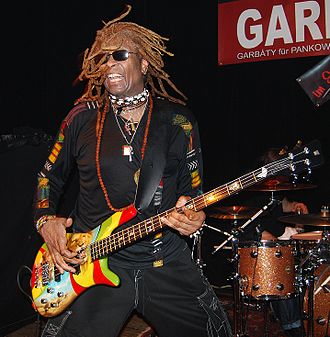
Bassist T.M. Stevens (aka Shocka Zooloo) might be best known for his work with Joe Cocker, James Brown, Billy Joel and many others…but he first came to the attention of hard rockers via Steve Vai. Β He was a member of Vai’sΒ Sex & Religion band, and immediately stood out on CD and on stage. Β Although his name doesn’t appear prominently on the front cover for Black Night: Deep Purple Tribute According to New York, it’s clearly his project. Β He produced it, arranged it, and is the only musician who appears on every track. Β He has a pocket full of well known friends to fill out the instruments including: Β Will Calhoun (Living Color, drums), Cory Glover (Living Color, vocals), Joe Lynn Turner (Deep Purple/Rainbow, vocals), Richie Kotzen (guitar, vocals), Al Pitrelli (Savatage, guitars), Vinnie Moore (UFO, guitars), Stevie Salas (guitars), Bernie Worrell (Parliament/Funkadelic, keys), Cindy Blackman (Lenny Kravitz, drums), and Tony Harnell (TNT, vocals). Β What a team!

Black Night is not for everyone. Β Each and every song is drastically changed. Β “Black Night” itself is slowed down and turned into a metallic bluesy grind. Β Dual lead guitars by Pitrelli and Moore ensure its metal credentials, and Joe Lynn Turner comes down with his raspy soul. Β Another raspy soul singer, Richie Kotzen, handles “Strange Kind of Woman” on guitar and vocals. Β This one turns the funk right up! Β The rhythm section of Calhoun and Stevens generates a punchy funk that can’t be stopped. Β A standout. Β Living Color’s Cory Glover takes over on the even funkier “Fireball”. Β The creative arrangement deconstructs the song. Β “Fireball” was one of the few Purple songs to feature a bass solo, so Stevens takes the opportunity to slap some bass. Β A Purple tribute without “Smoke on the Water” wouldn’t be a real Deep Purple tribute. Β It’s a hard track to funk up,Β so it’s more of a steamroller with funky verses. Β Kotzen turns in a hell of a soulful vocal, proving how versatile any music can be. Β An original and refreshing slant on a tired classic.

The most interesting arrangement is by far “Child in Time”. Β The epic soft/loud dynamic of Purple’s beloved classic has been replaced by reggae, and why not? Β Bernie Worrell does his best with Jon Lord’s original outline to create his own organ parts. Β T.M. and Tony Harnell share lead vocals: Tony singing the clean and high parts (with absolutely no difficulty!), while T.M. does his Rasta take on the rest. Β Sacrilege? Β Keep an open mind.

Keeping an open mind is the key for this entire album. Β If you cannot do that, you will probably hate Deep Purple According to New York. Β That title says it all. Β This is Purple according to Stevens and friends, and they do their own thing. Β The rest of the material — “Woman From Tokyo”, “Stormbringer”, “Speed King”, “Burn”, and “Space Truckin'” — are as different as the first five tunes. Β “Woman From Tokyo” is funky soul vocal nirvana, featuring four lead singers (Kotzen, Stevens, Harnell and Turner)!

In case you’re wondering what the closing track “Deep Purple NY” is, it’s just a funky shout-out to all the players on the CD. Β “New York is in the house, New Jersey, Bernie Worrell!” Β That kind of thing.

I’ve heard a number of Deep Purple tribute albums over the years. Β Yngwie did four Purple songs on his mediocre Inspiration album. Β Thin Lizzy did a Purple tribute under the name Funky Junction. Β There was the star-studded Re-Machined CD. Β There was even a 1994 tribute album called Smoke on the Water that featured three of the same guys on this album! Β (Joe Lynn Turner, Tony Harnell, Richie Kotzen, as well as another ex-Purple member, Glenn Hughes). Β None of those albums, even with all that star power, are nearly as interesting as Black Night. Β I chose that word “interesting” on purpose. Β It’s a very neutral word. Β Your reaction to this album could be wildly positive, violently negative, or simply passively unmoved. Β The listening experience will be anything but dull. Β Whether you like it or not, if you pick up this CD you’re going to hear some of the greatest rock and funk players on the planet, so get your dancing shoes on.

4/5 stars


RE-REVIEW: KISS – Dynasty (1979)

The KISS RE-REVIEW SERIES Part 17: Β 


 – DynastyΒ (1979 Casablanca, 1997 Polygram Japan remaster)

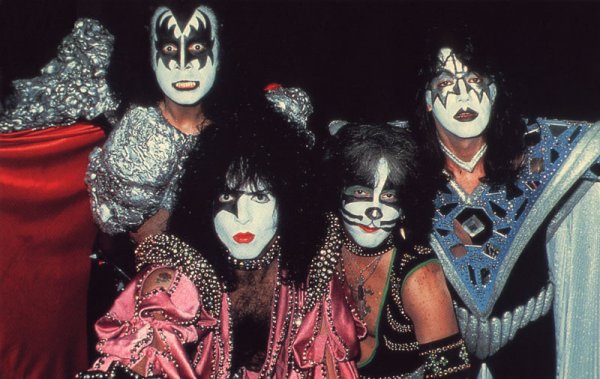
β€œThe Return of Kiss”.Β  It sounds quaint today, that after a two year absence they called it β€œThe Return of Kiss”.Β  Two years today means nothing.Β  But for Kiss, who were doing two releases a year, it did actually mean something.Β  Their last project was their series of four solo albums, one for each member, and unified by cover art.Β  This project only reinforced the idea that the whole is greater than the sum of its parts.

The truth is, the original Kiss were already over.Β  Peter Criss returned from his solo album and a car accident as a changed man, and not in a good way.Β  Upon walking in the door he insisted upon seeing sheet music for the new tunes.Β  That was a first.Β  It was quickly apparent that Peter was not in a condition to perform.Β  The band had even hired his solo album producer, Vini Poncia, to helm the new Kiss.Β  Poncia deemed Criss’ current abilitiesΒ inadequate and he was replaced for the album by Anton Fig.Β  Anton was Ace’s solo drummer, and more than capable of filling in.Β  Previously, when Bob Kulick was hired to replace Ace on side four of Alive II, he was instructed to β€œplay like Ace”.Β  Anton Fig was given no such instruction and was free to drum as he pleased.Β  Some Kiss fans were able to pick up on that.Β  Ultimately Peter Criss played drums on only one song, his own called β€œDirty Livin’”.Β  And that would be Peter’s final appearance on a Kiss studio album until 1998’s Psycho-Circus, on which he also played drums on only one track.Β  Kiss was indeed broken, but few on the outside knew it.Β  Peter would never play on a whole Kiss album again.

A lot had changed.Β  Kiss’ massive marketing campaigns paid off, but was that a good thing?Β  Little kids were now coming to Kiss concerts.Β  Paul Stanley was actively seeking hits.Β  Together with new songwriting friend Desmond Child, Paul wanted to write a dance single.Β  Inspired by the clubs of New York, the pair produced β€œI Was Made For Lovin’ You”, the song that gave Kiss the β€œdisco” tag.Β  The single sold a million copies.Β  Needless to say, it was not the last Kiss single written with Desmond Child.

The album went platinum and became the hit it was designed to be.Β  Inside the sleeve, the music was streamlined and more commercial than before.Β  β€œI Was Made For Lovin’ You” led the way, demolishing the walls between dance and rock.Β  Frehley had a hot solo in the mix, and the bouncy bass was performed by Paul Stanley.Β  The song had all the right ingredients and though thin soundingΒ by today’s standards, it’s still a great little dance rock number.

The real revelation about Dynasty wasn’t the turn towards slicker, highly compressed recordings.Β  It was Ace Frehley coming out of his shell.Β  Newly confident after his hit solo experience, Frehley had three songs to sing on Dynasty.Β  Ace covered the Stones on β€œ2000 Man”, a version that may be more beloved than the original.Β  It certainly sounds at home.Β  Ace rocks it up significantly.Β  Ace also had lead vocals on β€œHard Times”, a track about growing up as an aimless youth in New York.Β  β€œWe’d go to school, then we’d cut out, go to the park, and space our heads out.”  β€œHard Times” is not an exceptional song, but it’s interesting since it’s so autobiographical.Β  Ace’s last song was the more aggressive β€œSave Your Love”.Β  This track closes Dynasty with the kind of rock that people often forget is on the album. Β Ace’s tracks are the only ones that can be classified purely as “rock”. Β He has more guitar riffage on “Save Your Love” than the other songs combined. Β Without the Space Ace, Dynasty would have been a much weaker album.

The increase in Ace’s participation was balanced by a decrease in that of Gene Simmons.Β  Gene only had two songs on the album, neither of which were singles.Β  β€œX-Ray Eyes” and β€œCharisma” inhabit the same kind of compressed audio landscape as the rest.Β  β€œCharisma” is the best, due to its unusual echoey vocals, fitting for the demon persona.Β  Gene’s prime interest was still the opposite sex, and both songs have the demon’s stamp.Β  The main hooks on both are delivered by the backing vocals during the choruses.

The dominant force on Dynasty — and as it turns out, for the coming decade – was Paul Stanley.Β  Not only was β€œI Was Made for Loving You” a massive hit, but the second single β€œSure Know Something” was also one of his.Β  Paul wrote this dancey ballad with producer Vini Poncia.Β  It’s not all simply dance floor moves though, as the chorus has the power chords and lung power that Kiss fans expected.Β  Stanley also wrote β€œMagic Touch”, a lesser known album classic.Β  β€œMagic Touch” burns slow, but hot.Β  Paul’s falsetto was a sign of the times, but the power chords explode on the chorus.

And that leaves poor Peter.Β  β€œDirty Livin’” was written with Stan Penridge and Vini Poncia, and it was written as something more R&B in direction.Β  It was Kiss-afied and included on the album as Peter’s only appearance.Β  You can hear that it’s not the same drummer and that it’s a very different vibe.

For all outside appearances, Kiss maintained an image of solidarity.Β  There was no mention of a session drummer, and Peter was there on tour for all 82 shows.Β  However there were some cracks visible.Β  Several shows had to be cancelled for poor ticket sales, in areas such as New York City and Pontiac Michigan.Β  With the toys, comics and merchandise, Kiss were beginning to be seen as a kids’ band.Β  Dynasty was the hit it needed to be, but the situation was not sustainable.

Today’s rating:

4/5 stars


Uncle Meat’s rating:

4/5 steaksΒ 

Meat’s slice: Β The first of the two supposed β€œDisco Era” Kiss records LeBrain referred to in the introduction of this series, Dynasty really just is a pretty solid rock and roll record other than the mega-hit, “I Was Made For Lovin’ You”.Β  There really is not another song on the record that could be classified as Disco.Β  But more on that when I talk about Unmasked.

This album sees the beginning of a couple new eras in Kisstory. The first being the band’s writing collaboration with Desmond Child. Β “I Was Made For Lovin’ You” was the first hit of many for Desmond Child.Β  He has “songwriter” credits (and yes I am using that term loosely) on such deplorable pap as “Livin’ La Vida Loca”, “She Bangs”, and upcoming Kiss dung like “Let’s Put the X in Sex” and “Uh! All Night”.Β  Basically when a band gets shittier, they go to Desmond Child.Β  When Ratt got shittier, in came Desmond.Β  When the Scorpions got shittier, he pops up again.Β  When Aerosmith started becoming a glossy joke, here comes Desmond Child and “Dude (Looks Like a Lady)”. Yes, as good as this album is, Kiss was starting to get shittier.

As George Costanza would say, worlds collide for me on this album.Β  For years I had no idea Peter Criss only played drums on his own song on Dynasty.Β  His phantom replacement turned out to be Mr. Anton Fig, who played drums in one of my favorite bands ever, Paul Shaffer and the World’s Most Dangerous Band.Β  Even Anton’s dry humor on the show was a high point in Late Night with David Letterman for me.Β  I am a true Letterman head and always will be.Β  Anton Fig went on to be Ace’s drummer in Frehley’s Comet, so maybe Fig’s presence somehow inspired the Space man, since he is a high point of Dynasty.Β  The Rolling Stones cover “2000 Man” is a fucking great tune. Β “Hard Times” is just as good and a personal favorite of many Kiss fans.

There are a few weaker-ish songs on the album but nothing egregious here.Β  Very good rock album with ONE disco song.Β  Thank you Desmond Child for injecting Kiss with your “Bad Medicine”.Β  (Yes, he wrote that too.Β  As well as writing songs for such wonderful artists like Hanson, The Jonas Brothers, Lindsay Lohan and Clay Aiken.)Β  Hey Desmond…in the words of Ricky…you are truly a FuckGoof.

Favorite Tracks: Β “Sure Know Something”, “Hard Times”, “2000 Man”, “Save Your Love”, “Magic Touch”

Forgettable Tracks: Β “Dirty Livin'”


To be continued…

Original mikeladano.com review: Β 2012/07/24

RE-REVIEW: KISS – Paul Stanley (1978 solo album)

The KISS RE-REVIEW SERIES Part 16: Β 

 – Paul StanleyΒ (1978 Casablanca solo album, 1997 Mercury remaster)

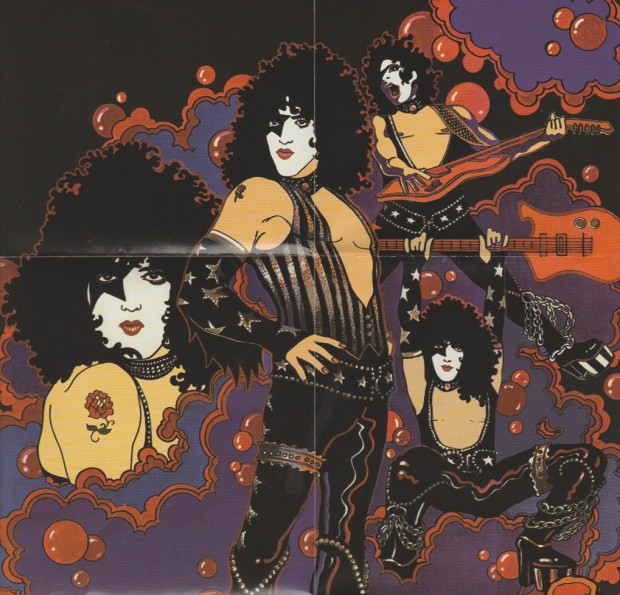
With the benefit of 20/20 hindsight, we know that Paul Stanley was capable of pretty muchΒ running Kiss by himself.Β  During much of the 1980s, Gene Simmons’ participation in Kiss had a severe drop.Β  Paul took the reins and the band more or less sounded like Kiss.Β  With that in mind, it’s no surprise that Paul’s 1978 solo album was also very Kiss-like.Β  Of the four, Paul’s album had an β€œif it ain’t broke, don’t fix it” attitude.Β  His solo songs sound very much like his Kiss songs.Β  Co-producing with Paul was Kansas producer Jeff Glixman.

Paul had an β€œace” in his pocket, so to speak.Β  On lead guitar was shredder Bob Kulick.Β  Previously, Bob auditioned for Kiss but was squeezed out at the last minute by Ace Frehley.Β  He also played ghost guitar on the studio tracks of Alive II.Β  Now he was out of the shadows on Paul’s album, and his work here absolutely stuns.Β  It’s a feedback-laden monster of rock.

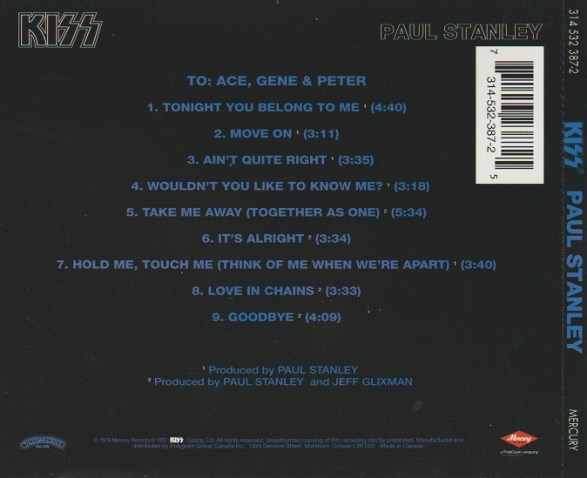
Paul’s songs are often overblown, and usually loud.Β  β€œTonight You Belong to Me” is one such track:Β  melodramatic, riffy and loud.Β  It rocks hard.Β  It has loads of hooks, killer playing, and lead vocals that slay.Β  Few singers could touch Paul Stanley in his prime. Β If that riff sounds familiar, the Hellacopters ripped it off for the intro to a song appropriately titled “Paul Stanley” (from 1999’s Grande Rock).

β€œMove On” is upbeat, Kiss-like rock and roll augmented with female backing vocals.Β  It’s the only song that Kiss played live on their 1979 tour.Β  It probably fits that standard Kiss mold better than any other tune on the album.Β  β€œAin’t Quite Right” brings things down with a dark acoustic ballad, quite different from past songs Paul has written.Β  Its sad sound was fairly new territory for an upbeat rocker.

Hold on tight for β€œWouldn’t You Like to Know Me”.Β  If this song was covered by a pop-punk band (pick one:Β  Sum 41, Blink 182, any of that ilk) it could be huge today.Β  It’s loud, brash and incredibly rocking, but Paul outsings any punk-pop upstart.Β  When Paul released his solo One Live Kiss album/video in 2008, β€œWouldn’t You Like to Know Me” was one of its highlights.Β  Kudos must be given to drummer Richie Fontana for kicking it in the nuts.

One of rock’s most legendary (and hardest hitting) timekeepers plays drums on the massive β€œTake Me Away (Together As One)”. Β You don’t associate Carmine Appice with Kiss, but there he is one of Paul’s songs. Β It’s a bombastic arrangement of electrics and acoustics, and one of Paul’s most devastating tracks. Β Carmine turnsΒ it from “stun” to “kill” with his dominating presence. Β At 5:26 this is the longest song on the album and as close as Paul gets to epic.

Side two is just as vigorous as side one.Β  β€œIt’s Alright” has a bright shimmer, plenty of hooks and guitars.Β  It easily could have been a Kiss classic.Β  β€œGirl if you want me to stay satisfied, girl if you want me to stay for the night, it’s alright.”  Sure sounds like Kiss to me. Β The guitars have a very “rock and roll” vibe, a classic progression. Β Paul has a knack for riffs like this, and “It’s Alright” is one of the best.

Paul’s single was the schlocky piano ballad β€œHold Me, Touch Me (Think of Me When We’re Apart)”.Β  Fans will either love it or hate it.Β  It’s a song that could have been an AM radio hit on a 70s light rock station. Β Lionel Richie could have recorded it. Β The guitar solo cooks, and that is all Paul. Β He handled all the guitars on this song.Β  Love it or hate it, it was the second most successful solo Kiss single after Ace’s β€œNew York Groove”.

As the album draws to a close, β€œLove in Chains” hits hard with punchy drums and choppy guitars.Β  But it’s just a jab, compared to the closer β€œGoodbye”, which finishes things off with a flourish and hot riffing. Β There is a cool descending guitar part, a superior chorus, and some seriously cool and busy bass by Eric Nelson. Β “Goodbye” is a brilliant closer, and it held that slot on Paul’s 2006 solo tour.

Paul’s was the second shortest of the solo albums (only Peter’s being shorter), but it packed more punch than any except Ace Frehley’s.Β  Everybody has their favourites, and Ace’s album is always held in high esteem.Β  Ace stepped out of his box and delivered.Β  Meanwhile, Paul stuck to what he does best, and nailed it.Β  It’s a β€œsafe” solo album, but lethal when it clicks with you.

5/5 stars

To be continued…

Original mikeladano.com review: Β 2012/07/22

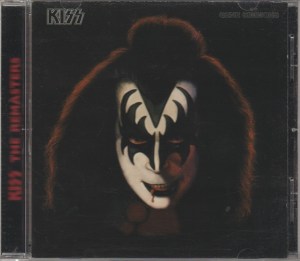
RE-REVIEW: KISS – Gene Simmons (1978 solo album)

The KISS RE-REVIEW SERIES Part 15: Β 

 – Gene SimmonsΒ (1978 Casablanca solo album, 1997 Mercury remaster)

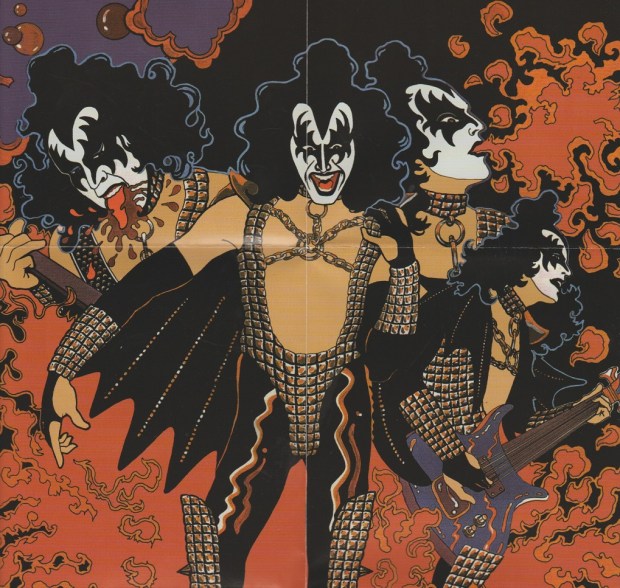
Given Gene’s demon persona, certainly some fans would have expected his solo album to be the heaviest and darkest.Β  Imagine their shock upon finally hearing the finished disc!Β  Musical flights of fancy and whimsical songs dominate Gene’s record, as the demon was determined to do something very different.Β  His album has the most guest stars, the most diverse songs, and the most split of personalities.

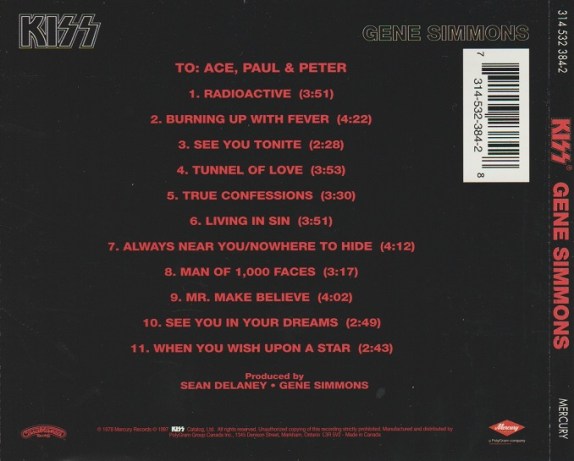
Even the β€œevil” sounding choirs that open the album are more whimsical than demonic.Β  This soon gives wayΒ to a guitar riff, and the first song β€œRadioactive”.Β  The audio compression gives it a disco-like beat, but β€œRadioactive” is a rock and roll track.Β  It is one of the songs featuring guests Joe Perry and Bob Seger, not to mention a slew of backing vocalists. Β It’s also the one track that Kiss played live on tour in 1979.

The demon sounds like he’s prowling for ladies on β€œBurning Up With Fever”.Β  If you’re wondering about that funky bass line, it was played by Neil Jason.Β  In a surprise move, Gene didn’t play bass on his solo album, only guitar.Β  This lends the whole LP a funkier-than-expected sound.Β  This plus the ample backing vocals almost makes Gene Simmons sound like an R&B/rock hybrid from time to time. β€œBurning Up With Fever” is a bad tune for a sexed-up demon, but not one of his finest either.

Some of Gene’s solo songs were oldies that predated Kiss.Β  Others were of more recent vintage.Β  The folksy ballad β€œSee You Tonite” sounds like one of the older tunes.Β  It’s a good one; good enough that Kiss recorded it live in 1995 for their MTV Unplugged appearance.Β  In a strange twist, some of the best tunes on Gene’s solo platter are the ballads.Β  Jeff β€œSkunk” Baxter played on this one and β€œBurning Up With Fever” as the cavalcade of guest stars continues.Β  Even Katey Sagal (Married With Children) sings on the LP.

β€œTunnel of Love” and β€œTrue Confessions” are two of Gene’s non-descript exploits, fairly ordinary songs given a huge boost by the larger than life production (by Gene and Sean Delaney). Β The backing vocals are immaculately arranged. Β β€œTunnel” features Joe Perry and Donna Summer.Β  Helen Reddy sings on β€œTrue Confessions”.Β  Unfortunately these two songs are more notable by who appears on them rather than how good they are.

Gene was dating Cher at that time, so it’s not really a surprise that Cher appears on β€œLiving in Sin” (as the groupieΒ on the phone).Β  This side two opener has a bit of that rock and roll spirit missing on other songs, though very corny.Β  The ballads on side two are better.Β  β€œAlways Near You/Nowhere to Hide” has some of Gene’s best singing, showing off that high falsetto.Β  Gene couldn’t get the Beatles to appear on his album, so he did the next best thing and had Mitch Weissman and Joe Pecorino from Beatlemania sing on β€œAlways Near You/Nowhere to Hide”.Β  This melancholy song is one of Gene’s most ambitious.

β€œMan of 1000 Faces” is big and bombastic, orchestrated for maximum impact.Β  It has more in common with Destroyer than anything else Kiss has done, but even more overblown and bombastic.Β  It also suits Gene’s persona perfectly.Β  β€œI can put on any face, you won’t know me but it’s no disgrace.Β  The king of night, he understands!”  Then β€œMr. Make Believe” is laid back and acoustic, and also another fantastic song.Β Β  Gene’s ability with ballads should not be understated. Β “Mr. Make Believe” is the most Beatles-esque of Gene’s solo tracks.

β€œSee You In Your Dreams” is a remake of the Kiss song from Rock and Roll Over.Β  Apparently Gene thought it could have been recorded better, but the more basic Kiss version is much more appealing.Β  Rick Neilson from Cheap Trick plays guitar on it, but Michael Des Barres’ backing vocals are obtrusive and irritating.

And that leaves only the final track.Β  Some stop playing the album before track 11, others consider it an indispensable part of Gene’s solo statement.Β  But there it is:Β  β€œWhen You Wish Upon a Star”, the song whose lyrics meant so much to Gene that he recorded it for the last track of his album.Β  It was not intended as a joke, but many see it as such.

Gene’s solo album can’t be dismissed as garbage, not with theΒ great tunes it has (especially the ballads).Β  However it’s so scattershot and just plain strange that it’s hard to really just enjoy.Β  It’s interesting to study and dissect.Β  Not so much fun to play in the car.

2.5/5 stars

To be continued…

Original mikeladano.com review: Β 2012/07/20

REVIEW: Trailer Park Boys – Season 10 (2016)

TRAILER PARK BOYS – Season 10Β (2016 Netflix)

There is a reason we missed reviewing Season 10 of Trailer Park Boys when it came out last year. Β A dark cloud hung over the season. Β Mike Smith (Bubbles) was incorrectly arrested on domestic violence charges; charges that were swiftly dropped. Β The damage was done, and this causedΒ Lucy Decoutere to leave the show. Β Even though Season 10 was quite great, we just couldn’t produce the gumption to write it up. Β Better late than never. Β With this long over and resolved, let’s take a fresh look at Season 10.

As usual, much has changed between seasons at Sunnyvale. Β Julian now owns the park and is happy with his two girlfriends (Bambi and Dakota — shades of Charlie Sheen here), and his own casino/bar. Β The house band: Β Bubbles and the Shitrockers. Β Ricky runs his Drugs Store, with all the weed and edibles you can imagine. Β His daughter Trinity has been raising baby Mo with Jacob Collins, proud parents now ready to get married and make it official. Β All this baby stuff has made Lucy itch for another one, so she’s been getting Ricky to bang her non-stop. Β J-Roc is raising his son M.C. Flurry, and has brought back a new girlfriend from Mexico. Β Randy’s supervising the park, and Lahey has left. Β He’s living in a camper in a park next door, and “pacing” his drinking. Β He’s using a breathalyzer to keep himself at a steady 0.120 blood alcohol level…but does he have the discipline to maintain that?

There’s a new three-headed nemesis in town. Β Fresh out of jail is former park owner Barb Lahey, and she has backup. Β Donna/Don (Leigh MacInness) has also been hardened by jail time. Β And they’ve brought the tough-as-nails Candy (Candy Palmater), with her bright pink baseball bat to make sure they get their way. Β They are determined to get the park back, and it looks like they have the legal means to do so. Β So now the boys need lawyer money.

It’s illegal schemes again, one involving ripping off a former caveman, now “Denture King”. Β This side-splitting sequence will leave you wondering how far they’re willing to go to save the park. Β They need money bad. Β Julian’s been letting everyone drink for free at his bar, and nobody’s paying the lot fees. Β Finally Julian decides to turn Sunnyvale into a “all-inclusive” vacation resort. Β Bubbles puts together an online ad, which goes viral and catches the attention of Jimmy Kimmel himself.

The first half of Season 10 is actually a little dull. Β It’s a bit of the same old, same old. Β Breaking the law, almost getting caught. Β Bad luck and dumb fuck-ups. Β Once the special guests arrive, the season takes on a whole new life.


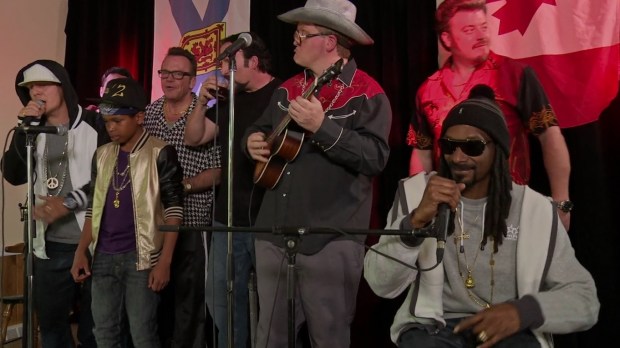
A fleet of gangsta cars pulls into the park. Β It’s Snoop Dogg, Doug Benson, and Tom fucking Arnold! Β Snoop and Doug are there for the “all you can smoke” weed, but Tom has comeΒ for the superfan experience. Β Turns out he’s a huge fan of the show (remember, Trailer Park Boys is a “documentary” on Julian!) and has a bucket list of things he wants to do at Sunnyvale: Β driving the Shitmobile, sleeping in Bubbles’ shed, and banging Lucy! Β “I can’t believe it! Β We’re in Sunnyvale fucking Trailer Park! Β I’ve seen every episode of your show, man! Β It’s even shittier in real life! Β I love it!”

As for Ricky, he’s happy just to “get high as fuck with Snoopy Doggy Dogg Dogg”!

As you can imagine, the presence of Snoop and his posse leads to many hilarious scenes and encounters. Β Will J-Roc lose his shit completely upon meeting his idol? Β Will Ricky be able to say Snoop’s name right? Β The one thing fans would have expected out of a Snoop Dogg guest shot is seeing him rap with J-Roc or Bubbles, and you won’t be disappointed. Β Episode 8 “The Super Bling Cowboy” has the musical scene you’ve been hoping for. Β In fact it’s safe to say that Season 10 changes completely upon meeting Snoop. Β The arc of the season takes a back seat to the guest stars, and some of that big star millionaire money might resolve a few plots. Β However, at the same time, there is some ambitious writing going on. Β Early on, we learn that Jim Lahey has a secret that he’s been hiding all along, that only Barb knows about. Β This secret provides Barb some blackmail leverage, but it’s also setting up a storyline that will run for at least three seasons including this one. Β Jim’s secret was explored in Season 11, but not fully resolved, presumably leaving it to also impact Season 12, coming in 2018. Β (Post your fan theories in the comments!) Β This kind of multi-season story arc has never been attempted on Trailer Park Boys before.

Keeping a show like the highly formulaic Trailer Park Boys fresh can’t be easy after 10 years. Β Snoop, Doug Benson and Tom Arnold helped distinguish Season 10 as one of the most fun. Β You can always count on Ricky, Julian and Bubbles to put themselves in some pretty ridiculous situations, and usually drag everybody else into their web of shit. Β The guest stars offer a temporary pause to that, and allow our characters to have a bit more fun than usual. Β And when they have fun, so does the audience. Β However the ending has a sad note, accompanied by a familiar melancholy song. Β It’s a strangely emotional denouement. Β “There’s a voice, that keeps on calling me. Β Down the road, where I always seem to be. Β Every stop I make, I see my old friend…”

Maybe tomorrow, they’ll want toΒ settle down…in the end, it’s about the characters, who are just a big family we’ve now known for 10 seasons. Β Randy said it best:

“I love you Ricky! Β I love you like a brother. I don’t like you at all, but I love you!”

4/5 stars


RE-REVIEW: KISS – Ace Frehley (1978 solo album)

The KISS RE-REVIEW SERIES Part 14: Β 

 – Ace FrehleyΒ (1978 Casablanca solo album, 1997 Mercury remaster)

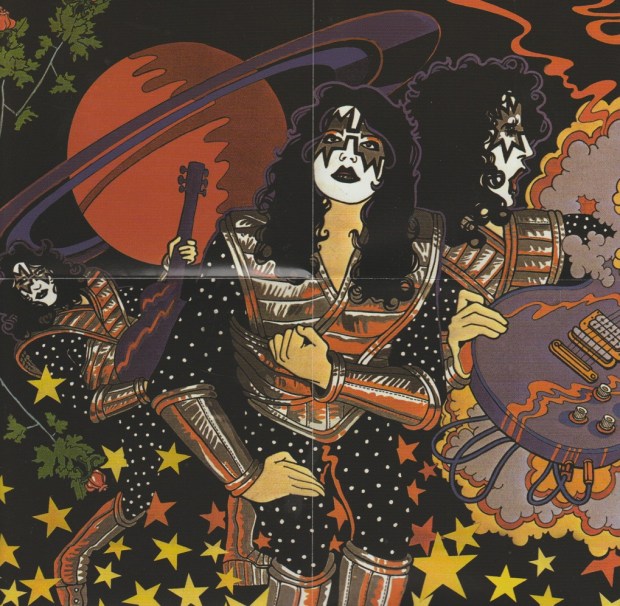
Of the four members of Kiss, Ace Frehley felt he had the most to prove on his solo album.Β  He’d only had two lead vocals with Kiss, and usually only contributed a couple songs to each album.Β  Could he write and sing an entire solo album?Β  Some in the Kiss camp had their doubts.

Ace regrouped with his favourite Kiss producer, Eddie Kramer, and crucially got a newcomer named Anton Fig to play drums. Β Anton, from South Africa, has a long and fruitful career but a huge chunk of it was with Ace, and it started right here. Β Ace Frehley played almost everything else himself.Β  Will Lee (Anton’s future bandmate on the Late Night with David Letterman show) played bass on three tracks. Β Ace also wrote the majority of the songs by himself, proving he wasn’t reliant on Gene and Paul.

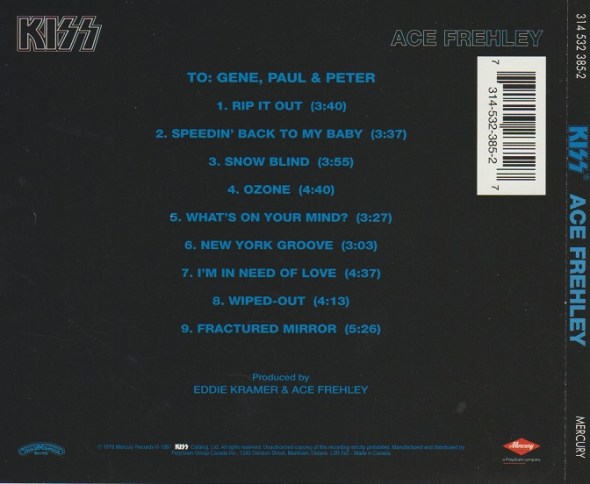
β€œRip It Out” is one of the great Ace album openers.Β  He used it to open his Frehley’s Comet shows in the 1980s, and on album, it really sets the right scene.Β  Ace was singing great, but more importantly, he had a chance to really let his guitars shine. Β Β Listen to the main riff — you can clearly hear an acoustic guitar mixed in with the electrics. Β In Kiss, Ace’s job was to solo and complement the rhythm guitars.Β  Now Ace could play with multi-layered guitars and effects. Β β€œRip It Out” really sounds like a statement of intent. Β Listen very carefully to the number of guitar parts happening in the mix, from slides and squeals to solos.

Ace has a knack for a pop melody, and β€œSpeeding Back to My Baby” has that side to it.Β  It’s pop rock complete with female backing vocals, but with serious crunch.Β  Frehley is the master of guitar crunch, so even when we call a song β€œpop”, it really rocks.Β  Check out Frehley’s partly backwards stoppy-starty guitar solo too.

The heavy side of Ace is explored on β€œSnow Blind”, a mean rocker with a nasty riff.Β  The solo section is to die for.Β  β€œOzone” too is heavy, and possibly better known as a cover by the Foo Fighters.Β  There weren’t any questions about the subject matter:Β  β€œI’m the kind of guy who likes feelin’ high,” sings Ace in the opening line.Β  Gene would not have approved, but note the combined use of electrics and acoustics once again.

Ace ended the first side with another triumphant pop rocker:Β  β€œWhat’s On Your Mind”.Β  It is tracks like this that helped Ace’s solo album become a clear fan favourite. Β The guitar riff has punch, but when doubled with acoustics, it rings like a bell. Β From brilliant guitar licks to the unforgettable melody, Ace nailed it with β€œWhat’s On Your Mind”. It also bookends the first side very well with β€œRip It Out”.

The big hit, still getting radio play today, was the Russ Ballard cover β€œNew York Groove”.Β  Ballard originally gave his demo to the band Hello, but it was Ace that made it an important song.Β  Ace took the words (written by an Englishman!) and adapted his persona to them.Β  His lovable rough and tumble New York personality fit the song to a β€œT”.Β  It’s a bit cheesy, but Ace can take cheesy and make it cool. Β The stompy beat was created using studio experimentation, Eddie Kramer the mad genius who would record anything and everything to get just the right sound.

A pair of rock tracks, β€œI’m In Need of Love” and β€œWiped Out”, fill the middle of side two.Β  Ace’s echoey guitar slides on β€œI’m In Need of Love” deliver the prime hooks.Β  It’s an excellent example of what Ace can do with an electric guitar.Β  Meanwhile, β€œWiped Out” is like a sequel to the surf rock classic β€œWipe Out”, and not Ace’s last foray into surf rock either.Β  His intricate picking here would cause a lesser player’s fingers to fall off. Β Check out that wacka-ja-wacka stuff too, funky and cool.

Ace saved the most impressive track for the last, and the first in his so-called Fractured Quadrilogy:Β  β€œFractured Mirror”.Β  This instrumental features shimmering sixΒ and twelve stringsΒ working in tandem. Β Ace and producer Eddie Kramer went to great lengths to get the guitar sounds on this song.Β  One technique included playing the figure on a doubleneck guitar, but only using the pickups on the open-tuned second neck. Β The pickups to the neck that Ace was actually playing on were turned off. Β Once overdubbed, this gave the guitars a bell-like chime, and fans spent years trying to figure out just how Ace did it. Β Now you know.

This album was a turning point for Ace.Β  It gave him confidence.Β  It ushered in a slew of Ace Frehley lead vocals in Kiss.Β  And eventually, it set him up for his departure, as nothing he did in Kiss was as artistically freeing as his first solo album.

Today’s rating:

5/5 stars

To be continued…

Original mikeladano.com review: Β 2012/07/19


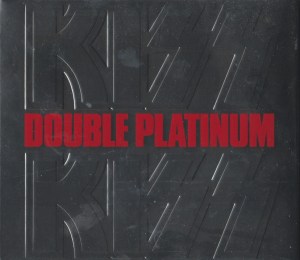
RE-REVIEW: KISS – Double Platinum (1978)

The KISS RE-REVIEW SERIES Part 12: Β 

kiss-logo – Double PlatinumΒ (1978 Casablanca, 1997 Mercury remastered edition)

As 1977 turned into 1978, Kiss were buying mansions, and buying time.

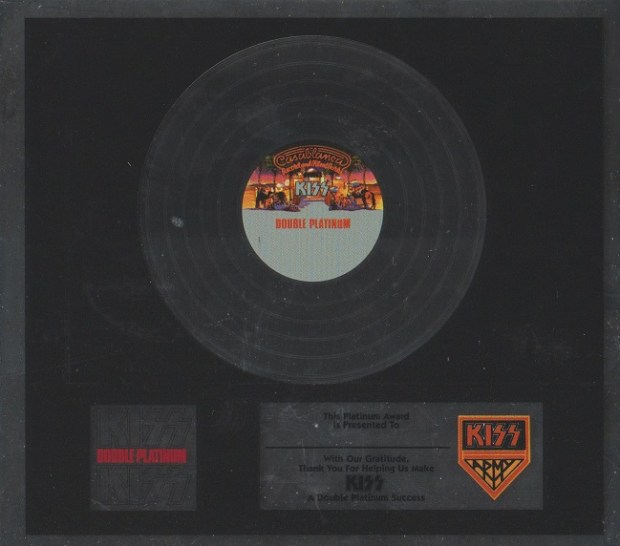
Their next big project was a rock and roll first.Β  Four solo albums, all under the Kiss banner, simultaneously.Β  It had never been done before.Β  As each of the four members toiled separately on their albums, Casablanca Records and Sean Delaney put together the next Kiss package: Β Double Platinum was intended to keep the band on the charts in the meantime.

The first Kiss β€œgreatest hits” album is the most legendary.Β  Sparing no expense, the two records were housed in a brilliant gatefold sleeve, embossed in shiny silver foil.Β  Kiss made their hits package really look like one, and the 20 included songs meant fans would get a cross section of hit material from all six Kiss studio albums.

Therein lay the challenge.Β  Kiss studio albums were, at best, uneven sounding.Β  Their early work was marred by studio inadequacies.Β  Producer Delaney chose to remix (with Mike Stone) a number of the old Kiss tracks, in an attempt to bring everything up to the level of Destroyer.Β  Destroyer was considered the benchmark, the best sounding Kiss album.Β  Using it as the high water mark, Delaney and Stone attempted to bring the rest of the material to that level.Β  Remixed were β€œFirehouse”, β€œDeuce”, β€œ100,000 Years”, β€œDetroit Rock City”, β€œShe”, β€œC’mon And Love Me”, β€œHard Luck Woman”, β€œCalling Dr. Love”, β€œLet Me Go, Rock and Roll” and β€œBlack Diamond.”

Most casual buyers don’t want remixes when they buy a hits package, but many won’t even be able to tell the difference.Β  Some are more obvious.Β  β€œHard Luck Woman” has a longer acoustic section.Β  β€œShe” now has the β€œRock Bottom” intro.Β  β€œBlack Diamond” is rearranged so that it ends where it begins and repeats to fade.Β  By and large, these remixes are not obtrusive.Β  They enable a great song flow.

And what songs!Β  β€œDetroit”, β€œBeth”, β€œDeuce”, β€œHotter Than Hell”, β€œCold Gin”, β€œFirehouse”, β€œMakin’ Love” and more, with very few important exclusions.Β  The only track that earns scorn from many is β€œStrutter β€˜78”, a re-recording done especially for Double Platinum.Β  It was done up with a late-70s production featuring compression and shakers.Β  The β€œdisco era” was on the horizon.Β  Today, Gene Simmons questions why the re-recording was made.Β  To sell records, is the answer.

Double Platinum is the album to buy instead of Alive! if you would like to start your Kiss collection with a broad sampling of studio classics.Β  It’s still an enjoyable front to back listen for anyone.

Today’s rating:

5/5 stars

Original mikeladano.com review: Β 2012/07/14
Review of foil embossed CD reissue: Β 2012/11/22

Official apology to Robert V Conte

In my November 2012 review I called the CD liner notes by Conte β€œshitty” and then added a snarky β€œWho?”  I knew who he was (I own lots of books with his name inside) and I didn’t need to be bitchy.Β  His liner notes to the 1997 remastered editions are what they are, and what he was paid to do.Β  Robert, I hope you accept this apology for what was a dumb comment on my part.

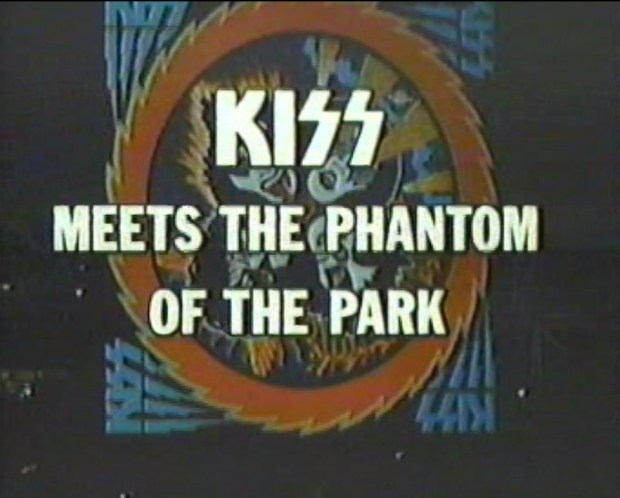
MOVIE RE-REVIEW: KISS Meets the Phantom of the Park (1978)

A huge thanks to old buddy Scott who hooked me up with a DVD rip of this movie, taken from the original VHS release.

The KISS RE-REVIEW SERIES Part 11: Β 
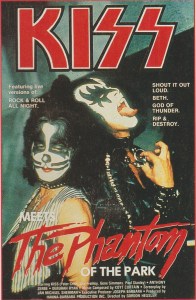
Meets the Phantom of the Park (1978 Hanna-Barbera TV movie)

A monster-sized, semi-transparent Gene Simmons prowls above a rollercoaster. Β Ace Frehley and Peter Criss fly about on a floating amusement park ride, and Gene says “hello ladies” from the top of the rollercoaster. Β Paul Stanley dances up a storm, all to the tune of the original “Rock and Roll all Nite” from Dressed to Kill. Β This is how it all happened on October 28, 1978 when NBC broadcast the TV movie Kiss Meets the Phantom of the Park.

The sheer hubris of Kiss and their enablers in 1978 was out of control. Β The band had always intended to conquer TV screens, and silver ones too. Β When Gene hyped the proposed Kiss movie as the best thing since either Jaws or Star Wars, skepticism would be justified. Β  Kiss had a ready-made image for spinoffs, and Marvel comics had first dibs on illustrated Kiss. Β But their ambition caught up with their abilities withΒ Kiss Meets the Phantom of the Park. Β Nobody in the band could act. Β The script was being changed on a daily basis. Β The special effects were a joke. Β Stunt doubles looked nothing like the real Kiss. Β Jokey fight scenes are accompanied by cartoony music from the Hanna-Barbera archives.
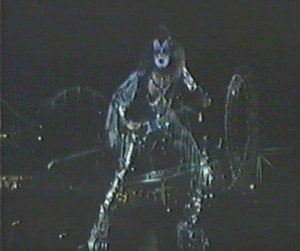
There is a superior European cut of this film called Attack of the Phantoms. Β The cartoon fight music is replaced by actual Kiss songs, and it is generally just a better version. Β It can be found in the Kissology II DVD set. Β The cut that most of us saw on television has been issued on VHS, but never DVD. Β For a complete breakdown of every difference between every version of Kiss Meets the Phantom, be sure to get Dale Sherman’s thoroughly incredible reference book, Black Diamond 2.

It is summer in sunny California at Magic Mountain amusement park. Β Over the loudspeakers, an announcement is made: Β “Kiss is in concert, starting tonight, for three great nights!” Β The security guy, Sneed, Β is worried about a riot. Β Park owner Calvin Richards only sees dollar signs. Β And there is a third party too: Β Abner Deveroux (the acclaimed actor Anthony Zerbe in his most embarrassing role ever). Β Deveroux built the rides and all the park’s robotic animatronics, but things are starting to break down. Β  Devereux fancies himself a scientist and can’t deal with his budget cuts while money is being spent promoting the Kiss concert. Β Throw in a group of thugs (Chopper, Slime and Dee) and you have a potentially dangerous situation. Β When Devereux’s assistant Sam goes missing, his girlfriend Melissa goes looking for him. Β And, for some reason, she needs Kiss’ help.

Minute after agonizing minute, we sit through clumsy dialogue and wooden lines, as we wait and wait for Kiss to finally show up. Β A creepy tour of Devereux’s underground robot-filled laboratory reveals he’s completely nuts, always a good thing to have in the designer of a kids’ amusement park. Β He has the will and the means to exact his revenge on those who cross him…and he also has the missing Sam! Β But when will Kiss show up? Β Not for an incredibly slow moving 30 minutes…and that’s not including commercials.

Kiss’ grand entrance (to the tune of “Rocket Ride” from Alive II) is the first time the audience is given one vital piece of information. Β Kiss, apparently, have superpowers. Β They can shoot laser beams from their eyes, breath fire, teleport and more. Β Why they have chosen to use their powers for rock and roll is never revealed Β beyond “you got to have a party”.

The concert continues with “Shout it Out Loud” and “Black Diamond”. Β Peter Criss’ drum kit elevates and fireworks explode. Β When the movie first aired, it was the first time kids could could see what a Kiss concert was like from the comfort of home. Β The concert footage is far too short, butΒ all is not well with the park. Β Abner Devereux is fired from his job (yet he’s not removed from the premises, and continues to work in his underground lab)! Β He sets into motion a plan to get his revenge…on Kiss! Β  Fortunately, Paul can shoot a star thing out of his eye that lets him read minds.
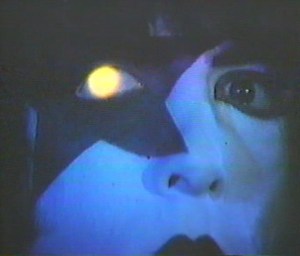
“You’re looking for someone. Β But it’s not Kiss.”

When Gene seemingly attacks two security guards at night, Kiss is questioned in the classic “pool scene”. Β  There used to be an urban legend that Peter Criss did voices for cartoons such as Superfriends. Β The origin of this is Kiss Meets the Phantom. Β Supposedly Peter Criss refused to overdub his lines (as is standard procedure for any show due to the flawed nature of on-location audio) so voice actor Michael Bell was called in. Β Many fans never knew Peter Criss’ real speaking voice for years, since Bell’s was the only one we heard. Β Worse, Ace Frehley barely had any dialogue at all, beyond yelping “Ack”. Β The writers who were hired to follow Kiss around to get a feel for their personalities didn’t pick up much from Ace beyond odd noises. Β Lines has to be added for Ace at the last minute when he flipped out over his lack of verbiage in the film. Β Therefore, he also got “Hi, Curly!” Β Most of Gene’s lines are just lion-like roars.

The plot thickens:

Calvin Richards: Β “Look, someone vandalized our park last night, smashed some of our buildings, and injured a few of our guards. Β Well Gene, they think it was you.”

Guard #1: Β “Think!? Β It was him!”

Guard #2: Β “Or his twin!”

Peter Criss: Β “Gene’s brother was an only child.”

Paul Stanley: Β “Easy, Catman, they are serious.”

The best part is that Guard #1 is played by the then-unknown Brion James of Blade Runner and Fifth Element fame.

When Melissa returns (still looking for the missing Sam), Kiss reveals to her the truth behind their powers: Β They possess talismans that grant them superhuman abilities…and now an eavesdropping Devereux knows, too! Β The second Kiss concert goes off without a hitch. Β  An exciting “I Stole Your Love” features the band descending from elevating side stage platforms. Β The song is edited for length, but Gene blows fire at the end. Β What Kiss don’t know is that Devereux has sent Sam, who he now controls, to steal their talismans!

After the concert, Gene, Paul, Peter and Ace are joined by Melissa, heartbroken over Sam. Β Neither Gene, nor Paul, nor Ace and Peter attempt to sleep with her. Β No, instead, they serenade her to a very special version of “Beth”. Β Some in fandom feel that this version is the best ever version of “Beth”. Β It has Peter Criss’ vocal from the album, and a single acoustic guitar. Β (Paul mimed this guitar part for the movie, though Peter felt it should have been Ace.) Β Meanwhile, Sam is thwarted from stealing the talismans by a force field, but Kiss can sense that something is up. Β They decide to check out the park and look for Devereux.

Cue that funky fight scene music, white cat! Β Four white cat-like people get the drop on Kiss! Β “They’re not real, they’re robots!” says Paul. Β “It’s all unreal!” Β The cats are followed by samurai, wielding lightsaber-like swords. But Devereux is not so easily beaten. Β Sam, now equipped with a ray gun from Devereux, has stolen the talismans! Β Kiss follow him into the spooky Chamber of Thrills, where they are attacked and captured by even more robots. Β These campy fight scenes are either intolerably awful, or the highlight of the movie, depending on your point of view and level of intoxication.

The climax is an epic battle between Kiss and their evil robotic alter-egos, built by Devereux! Β Devereux sends the phony Kiss-bots on stage to use music to incite the crowd to riot and destroy the park. Β Changing the words to “Hotter Than Hell”, the Kiss-bots almost succeed.

It’s time for everyone to listen good,
We’re taking all we can stand,
You’ve got the power to rip down these walls,
It’s in the palm of your hand!

Rip, rip, rip and destroy!
You know the hour’s getting late.
Rip, rip, rip and destroy!
Break it down and seal your fate.

Can theΒ real Kiss recover the talismans, beat the bots and retake the stage?

Other Kiss tracks heard in the movie include “Christine Sixteen” and “God of Thunder”, but let’s face it, Kiss Meets the Phantom is a shit-show. Β It was an opportunity for fans to see Kiss on TV, but it did little toΒ convert anyone to the Kiss cause. Β  The concert footage is fantastic, although songs are severely edited. Β Its greatest value today is as a camp classic, but without a beverage of some kind, it is a lethargic undertaking. Β The fact that Anthony Zerbe has this movie on his resume is astonishing; the fact that Kiss have yet to release this version on DVD is not.

1978 was a rocky year for the Kiss army. Β Though the Alive II tour started the year on a high, and the Marvel comic was a pretty cool thing, fans were now being fed more product. Β Double PlatinumΒ (up next) left some feeling exploited for their dollars, and Kiss Meets the Phantom could be considered a complete write-off.

Today’s rating: Β 1/5 stars

To be continued…

Original mikeladano.com review: Β 2012/08/09

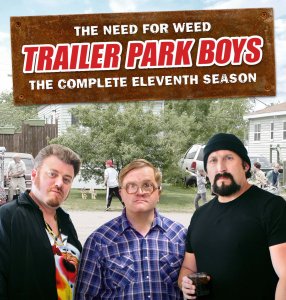
REVIEW: Trailer Park Boys – Season 11 (2017)

TRAILER PARK BOYS – Season 11 (2017 Netflix)

Thank you Netflix for saving the Trailer Park Boys. Β It hasn’t been smooth sailing, but ever since the Boys returned to Sunnyvale with the excellent Season 8 (remember Orangie?), the show has continuedΒ unhindered by cast defections. Β Season 11 is the first without Lucy Decoutere (Lucy) and Jonathan Torrens (J-Roc). Β After already losing such favourites as Trevor (Mike Jackson) and Ray (Barrie Dunn), I can understand why some fans may have said enough’s enough. Β Every show has its peak. Β For some that would be the first three seasons of Trailer Park Boys. Β For others, we have rolled with the changes. Β Not all fans were unanimous in the acceptance of newer characters such as Col. Dancer, Don/Donna, and Candy. Β For this season, those characters have been dropped. Β The core park residentsΒ are now Ricky, Julian and Bubbles accompanied by Randy, Lahey, Sarah, Cory, Jacob and Trinity. Β Little baby Motel is around, as is Barb Lahey.

Continuing a storyline from Season 10, Julian has vanished. Β Bubbles is doing well now, having gone legit selling his own brand of organic pizza sauce. Β It’s a hit, and a restaurant owner is willing to pay wholesale. Β He has the whole park working together growing vegetables, contributing to the well-being of Sunnyvale and its residents. Β All is well, but Bubbles does miss Julian. Β Jim Lahey is sober and supervising, having truly changed this time. Β He and Randy are planning to get married, while Randy is vying to get on the police force. Β The absence of Lucy and J-Roc is explained satisfactorily.

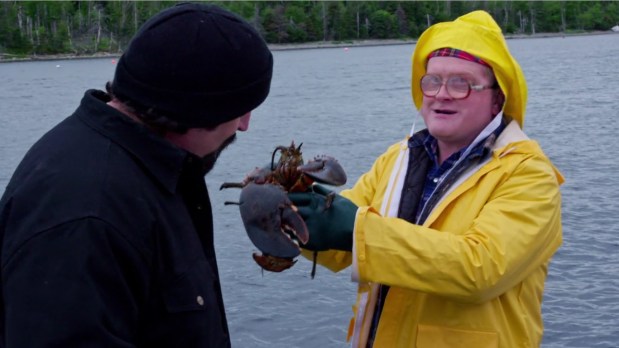
When Ricky and Bubbles (now mobile with his own little truck) discover that Julian is now a lobster fisherman (or is he?) living in a shipping container, they go to confront him. Β Ultimately, Julian’s return brings what it always does: Β crime back into the park. Β Snoop Dogg calls and wants weed, and lots of it. Β Julian decides to hijack Bubbles’ pizza sauce business and convert it to a grow op. Β As usual, Bubbles is driven near to the breaking point as the stress builds.

In Season 10, there was a revelation that Lahey may in fact be Ricky’s real father. Β This is fully addressed in Season 11, via a lightsaber dual (hockey sticks and brooms subbing in for laser swords) and dialogue taken directly from The Empire Strikes Back. Β Director Bobby Farrelly (Bobby fucking Farrelly!) must be given credit for the perfect Star Wars homage in Episode 4, “Darth Lahey”, right down to the action beats. Β Brilliant stuff — a highpoint episode for this show.

There are cameos by celebrities and past characters. Look for Susan Kent from 22 Minutes, and NHLer Nathan MacKinnon, first overall draft pick and rookie of the year. Β A few old adversaries have returned as well, to cause problems for our three lovable idiots. Β Speaking of idiots, Ricky and Julian manage to bring the stupidly to new levels, but simultaneously, Ricky has a Yoda-like ability to trick cops. Β  Β Meanwhile, they have also managed to keep up with modern technology. Β Cell phones, cameras and GPS now figure into the plots. Β There are references to the Walking Dead and changing times. Β This manages to keep the series feeling fresh.

After 11 seasons, it is understood that a show rarely hits the highs it once did. Β Season 11 is a worthy effort; not in the Top Five, but certainly good enough at this point.

4/5 stars


RE-REVIEW: KISS – Alive II (1977)

The KISS RE-REVIEW SERIES Part 10: Β 

kiss-logo – Alive IIΒ (1977 Casablanca, 2006 remastered edition from Alive! 1975-2000)

Kiss in 1977 were a band of four different personalities, and those personalities were beginning to drift apart. There was talk of allowing members some time to do solo albums and blow off some steam. There was a Kiss movie happening (Kiss Meets the Phantom of the Park), not to mention Love Gun and its accompanying tour. Β Kiss Alive! was the album that made them a household name, so why not try to buy some time with another live release? Β The band had amassed three more studio albums in the interim.

Eddie Kramer was hiredΒ once again to recapture the magic. Β Shows (and soundchecks) in L.A. were recorded, and older tapes from a pre-Love Gun Japanese tour were dusted off. Β They had lots of material to work with, and so it was decided that Alive II would have no crossover with tracks from Alive!, a value-conscious move that Β fans appreciated. Β They were still short enough songs to make a full double live, so studio time was booked at Electric Lady to record new songs too. Β As with the previous Alive, much fixing and re-recording was done to the live tracks. Β Some of the soundchecks were used with audience noise overdubbed. Β Two songs (“Hard Luck Woman” and “Tomorrow and Tonight”) were actuallyΒ re-recorded completely. Β Knowing now what we didn’t know then, this certainly explains why Alive II sounds more sterile than the first, and why you can hear Paul Stanley singing backup vocals to his own lead vocals.

Alive II has always been viewed as sort of a poorer cousin to Alive! Β It’s hard to blame the studio tampering, because Alive! was done the same. Β For whatever reasons, it’s a lot more noticeable on Alive II, although notΒ to the point of distraction. Β Alive II simply does not have the same oomph, the same fire bleeding through. Β Even with tracks like “Detroit Rock City”, “Shout it Out Loud”, “God of Thunder” and “I Stole Your Love”, it’s hard to compete with Alive! for sheer ferocity.

As is their penchant, some songs like “God of Thunder” are much faster live. Β “God of Thunder” could be the heaviest version of that track on tape. Β “Ladies Room” and “Dr. Love” are also faster and harder. Β “Makin’ Love” blows away the album version, and “I Want You” comes close. Β Ace Frehley’s vocal slot on “Shock Me” is a welcome treat and obvious highlight, featuring Ace’s big solo spot. Β As for Peter Criss, “Hard Luck Woman” is a nice electric version, but “Beth” underwhelms. Β Singing “Beth” to backing tapes is a “who cares” moment anyway, but Peter doesn’t nail it either.

The real point of interest on Alive II is side four, the studio side, for two reasons. Β One is that it’s a surprisingly strong side even though only one of these songs has gone on to be a classic today. Β Paul Stanley has dismissed these tracks as schlock, but fans don’t always agree. Β The second is that Kiss’ internal problems had come to a head, and once again members were secretly replaced on recordings by outsiders.

Ace Frehley wasn’t around, except to record his own song (“Rocket Ride”), which has become a second-tier Kiss classic. Β Maybe to spite Kiss, he played all the bass and guitars on it. Β Ace’s track is immediate, Kiss-like and perfect for his persona. Β With Peter Criss in the pocket, Ace lays down some seriously wild effects-laden six-string magic. Β But that was it. Β Ace was focussed on his forthcoming solo album. Β The wheels were already in motion and songs were being written. Β  To keep things from falling apart and maintain a facade of unity, Kiss decided that all four of them would release solo albums, unified, under the Kiss banner.

Meanwhile, Paul and Gene came up with a few tracks for side four. Β  Replacing Ace Frehley on lead guitar was the man who he nudged out of the job in the first place — Bob Kulick. Β Paul and Bob had maintained a friendship in New York ever since his 1973 Kiss audition. Β Bob was asked to come in on the sly and record uncredited. Β His task was to play like Ace would have done it, a difficult task. Β “Ace wouldn’t play that note”, someone would say from the control booth as Bob struggled to come up with the enigmatic “right” vibe. Β But he did it, and now that we know the truth, fans hold Bob’s work in high esteem.

Paul Stanley’s “All American Man” (Stanley/Sean Delaney) has the goods: Β a signature guitar hook, a memorable chorus and a killer solo that we only know now was actually Bob. Β “All American Man” is a natural extension of where Kiss were headed with Love Gun. Β Gene had the next two tracks, “Rockin’ in the U.S.A.” and “Larger Than Life”. Β “Rockin’ in the U.S.A.” sounds like Gene writing his own “Ballad of John and Yoko”, but a hard rock version. Β As for “Larger Than Life”, you can guess what body part Gene’s talking about. Β “Larger Than Life” works because of the combination of Gene’sΒ “monster plod” riff with Bob’s sweet guitar lightning. Β Finally a cover of the Dave Clark Five hit “Any Way You Want It” closes Alive II, quick and catchy. Β Kiss have a way of adapting their blocky rock style to covers and making it work. Β Suddenly the Dave Clark Five sound like Kiss, rather than vice-versa.

Alive II arrived in stores on October 14 1977, exactly two weeks ahead of the much-hyped movie Kiss Meets the Phantom of the Park. Β There are some who would consider this the end of the beginning. Β But Kiss weren’t done releasing albums before the big solo projects came to fruition. Β We know today that making Alive II was a financial move rather than an artistic one, but the reality is it was conceived as a product. Β At least it was a quality product. Β As usual, Kiss and Casablanca rewarded fans with goodies inside the original LP. Β It had a gatefold cover, a booklet entitled “The Evolution of Kiss”, and temporary tattoos. Β Good luck finding those intact. Β Our recommended edition:Β  The four disc 2006 box set Alive! 1975-2000.Β  The set contains four volumes of Kiss Alive, deliciously remastered, with each album fit onto a single CD without losing any songs. Β There’s even a bonus track: Β the single edit of “Rock and Roll all Nite”, from the original Kiss Alive!Β Β This 3:23 version is from the 7″ single, edited down from the 3:59 Alive!Β album version. Β It was the first CD release of that version.

Today’s rating:

4.5/5 stars


Uncle Meat’s rating:

4/5 steaksΒ 

Meat’s slice: Β Alive II is an album that for me, gets kinda lost in the shuffle amidst the Kiss discography.Β  Not because it’s not a good live album, but more that it’s very much Alive-lite.Β  There are definite highlights on this record of course, but it doesn’t pack the consistent hit-parade punch as the first β€œlive” record.Β  I also have never really understood why side four was all studio tracks. Β Β Kiss did get a minor hit out of “Rocket Ride” though, a pretty good Ace tune here, and a sign of things to come with an Ace song on the charts.Β  The other studio tracks feature some good guitar work, but not memorable overall.Β  If Kiss has played any of these songs live at all I would be surprised, but I’m sure LeBrain will have some Turkish B-side thingy that will prove me wrong. Β [I don’t. – LeBrain]

I was wond’ring aloud (purposeful and cheap Tull shout-out there) earlier about the whereabouts of a good “God of Thunder” cover in an earlier review, but perhaps that cover is right here.Β  Kiss plays it live here in double time and I like the feel of it. Β “Shock Me” shines on this album.Β  So do a few other Kiss classics.Β  I just see a few unnecessary garnishes on this plate.

Favorite Tracks: Β “Shock Me”, “Detroit Rock City”, “Shout it Out Loud”, “God of Thunder”, “I Stole Your Love”

Β Forgettable Tracks: Β Β Β Side four


To be continued…

Original mikeladano.com review: Β 2012/07/12