DREAM THEATER – “Hollow Years” (1997 Warner Music Germany)
I always found something about 1997’s Falling Into Infinity to be underwhelming. Yes, we had the stunning Doug Pinnick cameo in “Lines in the Sand” and a wickedly heavy “Burning My Soul”, but the album didn’t have the same impact or longevity as Awake or Scenes From a Memory. It wasn’t for lack of effort. They recruited Desmond Child and Kevin Shirley, and released singles. The album never broke the top 50 in Canada and received mixed reviews. A later-released demo version of the album revealed what the band would done if not influenced by Shirley and Child. One of those demos was first released on the 1997 “Hollow Years” single.
First track on this single is a 4:15 edit of “Hollow Years”, with more than a minute and a half edited out. The shame is that it didn’t become an instant hit. With the Spanish guitar melody and subtle keyboard accents, it could have and should have done better for the band. There is a very pretty piano melody after the chorus by Derek Sherinian, in his last of two outings with Dream Theater. Yet it’s still Dream Theater, not some ballad band. John Myung’s fretless bass sets it apart, and Mike Portnoy is always Mike Portnoy no matter the style of music. The premature fade on the edit version, however, is extremely annoying. Even if you don’t already know the song, it sounds like a premature fade. The ending is so good; a song highlight! The full length version, uncut and as intended, is really the only version to listen to.
“You Or Me” is a version of “You Not Me” from the album, before Desmond Child helped them tweak it. It opens with the sound of a radio changing stations, and then a cool synth rhythm. John Petrucci’s riff soon kicks in, and it’s clear Dream Theater were trying new things that might be perceived as more appealing. Ultimately, the version that ended up on the album is probably the better of the two. It’s definitely catchier.
The final track is “The Way It Used To Be”, a long non-album song with a Marillion-like guitar melody. It could have been lifted directly from Seasons End. Petrucci is the star on this one, as he also employs cool harmonics. Definitely a cool and valuable bonus track. If it wasn’t almost eight minutes long with plenty of musical prowess, it might have been a worthy hard rock hit on its own.
Great little CD single, but those edit versions are never as cool as they are collectible.
Now that Ratt has ceased to exist as a band, we seem to be getting better and better reissues. There was that Atlantic Albums CD set that came out recently with cool bonus tracks, and a forthcoming LP reissue with that set with an additional recently-discovered unreleased track. Too bad Stephen Pearcy didn’t dig that one up in time to issue on 2024’s Rarities album, a nine track compilation of unreleased versions spanning 1982 to 1989. These include the classic lineup of Peacy, Robbin Crosby, Warren DeMartini, Bobby Blotzer and Juan Crocier. There is also one previously unheard song written by Pearcy and Crosby to add some extra value.
We open with a 1983 version of “Tell the World” from the 1984 Ratt EP. It is a less polished version of the same, complete with shouted backing vocals and echo effects. The most notable differences are the prominent busy Blotzer drum fills. This is followed by a 1982 rehearsal tape of the hit-to-be, “Round and Round”. Of course the sound quality is what should expect for a 1982 rehearsal tape. It’s garage quality and probably recorded by a boom box in a really loud room. That said, it’s still a fun listen since the band is so tight and the song was years away from the charts. It’s actually unfinished; about 90% there.
Do you know how many songs Ratt have about wanting something? We already have “I Want A Woman” and “I Want To Love You Tonight”, which might be why “I Want It All” didn’t make an album. “I Want It All” is an undated demo from the 80s that was later finished up with new bassist Robbie Crane on 1997’s Collage. This older version is rougher but otherwise the same arrangement. It’s a little different for Ratt, opening with acoustic guitars. It’s a good sassy mid-tempo Ratt track that would have fit on any number of albums post-Out of the Cellar.
The next batch of tunes are live. “In Your Direction” from Cellar is from 1987, as is “Round and Round”, “Body Talk” and “Drive Me Crazy”, though “Body Talk” is also noted as being live in Germany. “In Your Direction” is bootleggy, most likely an audience recording. “Round and Round” is clearer but a little by rote. You can hear Juan’s backing vocals clearly, and Stephen even drops an F-bomb that would have been edited out had it been released in the 80s.
“Body Talk” and “Drive Me Crazy are a pair from Dancing Undercover. The intensity of “Body Talk” is impressive, though some of it gets washed out in the thrashy tempo. The greatest sin, however, is the premature fadeout during the guitar solo. There is no such fade on “Drive Me Crazy” which fares well live. The backing vocals are a bit ragged, but it all holds together in a stampeding Ratt romp.
Back to a 1985, “Wanted Man” from Cellar is the last of the live songs. The bass drum is a bit thuddy, and nothing’s particularly clear (especially Robbin), but the performance is spot on. Listen, we all like buying bootlegs, don’t we? You should have no issue with the sound quality so long as you understand in advance, none of these recordings were intended for release.
The final song is the previously unheard “Love on the Rocks” from 1989, which did not make the Detonator record. Written by Stephen and Robbin, it’s a pretty damn solid Ratt song and one of the best sounding tracks on the album. The chorus is decent and a properly produced version would have been polished-up album worthy. As it is, it’s a good B-side or bonus track.
While not essential, this Ratt compilation is a solid addition to any collection. It’s for the fan that has everything but wants a little (back for) more. But that cover artwork? Surely they could have done better than that.
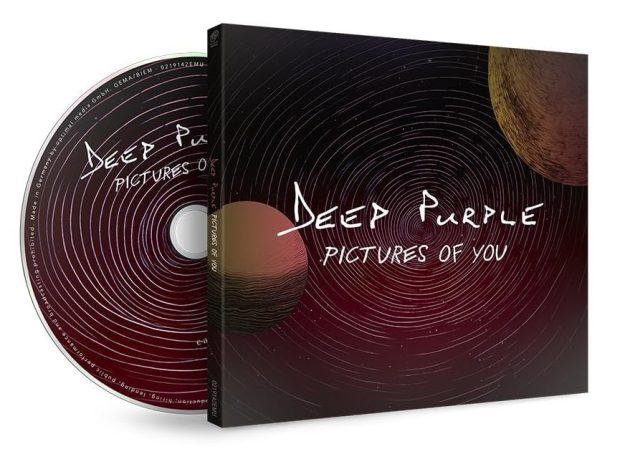
Deep Purple’s first new album with Simon McBride on guitar will be out July 19. Called =1 (“equals one”), the music seems to heading into a riffy direction. The band have just released a new CD single, something of a tradition for them during the Bob Ezrin era in this late part of their career. This single includes two tracks from the album, including the recently released “Portable Door”, and two live tracks with Simon recorded in 2022. Let’s have a listen and hear what the Purples have in store.
Track one, “Pictures of You” has a pretty cool and weighty riff. Backed by Don Airey’s organ, it’s one of Purple’s catchiest riffs in recent years. The chorus follows the riff melody. “These pictures of you are too good to be true,” sings Ian Gillan. Ian’s voice is pushed to its current limits, which is often the thing you hear people moaning about the most, but it’s really no issue. Simon comes in with a wicked catchy solo, before the whole song detours into a dainty Don Airey piano part with Simon doing volume swells overtop. Though only 3:50 long, “Pictures of You” packs a lot into a short time.
Without a gap, the band breaks into something completely different, ominous and heavy: “Portable Door”. Ian Paice is the backbone, always smooth, always identifiable, infallible. With Ian Paice on drums, Deep Purple will always sound like Deep Purple. Don Airey’s organ really dominates the solo section, as it should, and Simon’s guitar work is sublime. As for the tune itself? Top notch.
The live tracks were recorded October 17 2022 in Milan, Italy. These tracks will not be on the deluxe box set version of =1, and are exclusive to the single. First up is the classic blues “When A Blind Man Cries”, and we get to hear Simon do what Simon does. Perhaps more interesting though, the arrangement includes a new lounge-y into with piano. “Blind Man” feels slower than usual, but Ian Gillan is in fine voice. Simon takes center stage on the guitar solo, and it’s so phenomenal that you can hear the audience break into applause at its conclusion. It’s slow and passionate until he lets rip. Having Don Airey follow is almost anti-climax. Welcome to Deep Purple, Simon McBride!
The more recent “Uncommon Man” closes the disc, with a beautiful guitar solo backed by heavenly keyboards. As one of Purple’s more regal songs, it sounds great on stage. Roger Glover gets a little bit of the spotlight just before Simon’s solo, but this is a pretty faithful version. Most importantly, it is good to see that Deep Purple do not drop songs from the latter part of their career out of the setlist. (There are three other live versions of this song with Steve Morse available on other releases: Celebrating Jon Lord the Rock Legend, To the Rising Sun in Tokyo, and the Now What?! Live Tapes Vol. 2)
With only 5000 copies worldwide, this is sure to be a collector’s item.
I’ve never hid my disappointment that Skid Row have been unable to hang into a lead singer for long since Sebastian Bach’s 1996 ouster. Johnny Solinger was their best shot at a permanent lead singer, since replaced by a dizzying array of vocalists. Erik Grönwall, from Swedish Idol and H.E.A.T., was probably the biggest hope. Sadly, as a cancer survivor, Erik was forced to resign and focus on his health. The one album he made with Skid Row, The Gang’s All Here, received critical acclaim in 2022 and was called Album of the Year by several outlets.
Erik Grönwall brings the necessary range and power, more so than Solinger. Unfortunately, both Solinger and Bach had a lot of character in their voices. Grönwall has a more generic sound, and this robs Skid Row of some of what made them special. He almost sounds too good, too professional.
A lot of people will disagree and that’s fine. We’re all entitled to our opinions.
Only two songs here, “Time Bomb” (sort of a punky rewrite of “Piece of Me”) and “The Gang’s All Here”, made it onto the tour setlist. 80% of the album was not played live. There are shout-along choruses, Kiss-like guitar licks, and Bolan’s bass bounce…but do the songs stick to the brain like albums of yore? Some do. The best moments are the ones that recall the past, such as “Resurrected” which has a “Monkey Business” familiarity. Unfortunately, the trite lyrics are another one of those “we’re back where we belong” kind of songs.
The strongest song is the ballad “October’s Song”, which comes closest to nailing the timeless Skid Row level of quality. Grönwall’s schooled approach to singing is opposed to Bach’s desperate passion to blow down the biggest of buildings, but that was a long time ago, and Bach is never coming back. “October’s Song” has some great riffage and should have been made a permanent part of the setlist. You’ll not find a better song among the new ones. We’ll say it right here: this song stands up against the back catalogue, even the intense Slave to the Grind ballads.
Credit due: Skid Row almost go activist on the environmental message song “World On Fire”.
Much of the album was written with previous singer Z.P. Theart, of Dragonforce. Core Skid Row members “Snake” Sabo, Scotty Hill, and Rachel Bolan handle the majority of songwriting, retaining Rob Hammersmith on drums.
If you want a new Skid Row album that you can pump your fist to, stomp your feet, or bang your head, then The Gang’s All Here is a must-buy. If you were hoping for a Skid Row album that you’ll remember for years like Slave to the Grind, Subhuman Race, or even Thickskin, then the jury is still out. Thickskin had way better songs – there, I said it!
I love admitting to my past musical sins. Perhaps others will learn from my mistakes.
I was in grade 11, a mere 16 years old, when the music video for “Youth Gone Wild” hit the airwaves. Skid Row were the latest thing, a band promoted by Jon Bon Jovi himself, from his home state of New Jersey. We didn’t know yet that the lead singer, Sebastian Bach, identified as a Canadian. He grew up in Peterborough Ontario, just on the other side of Toronto. In fact, I didn’t know that I already had something of Bach in my music video collection. I had a brief clip of him, with teased up hair, in a prior band called Madame X. This band was led by Maxine Petrucci, sister of Roxy Petrucci from Vixen. They featured a young Sebastian Bach and Mark “Bam Bam” McConnell whom Bach would play with in VO5. I wasn’t into any of those bands. I was pretty hard-headed about what I liked and disliked.
In Spring 1989, I first encountered “Youth Gone Wild” on the Pepsi Power Hour. It could have been Michael Williams hosting, but whoever it was, they hyped up this new band called Skid Row. I liked getting in on new bands from the ground floor. Made them easier to collect when you started at the start. At that point, I wasn’t even sure how many albums Judas Priest actually had. I was intrigued enough to hit “record” on my VCR as the music video began. I caught the opening “Ba-boom!” of drums, and sat back to watch.
While I wasn’t blown away, I kept recording. The key was the singer. If the singer sucked, I’d usually hit “stop” and rewind back to where I was. The singer passed the test: he didn’t suck. I kept recording.
After about a minute, I pressed the “stop” button, and lamented that this new band wasn’t for me. What happened? What did Skid Row do to turn me off so quickly?
I can admit this. I’ve always been open about the fact that I was very image-driven as a teenager. We all were! With the exception of maybe George Balazs, all the neighborhood kids were into image to some degree or another. I was probably driven by image more than the average kid, consuming magazines and music videos by the metric tonne. So, what exactly was wrong with Skid Row?
I’ll tell ya, folks. It was serious.
The bass player had a chain going from his nose to his ear.
I just could not. I couldn’t put a poster on my wall with some band that had a bass player with a chain that went from his nose to his ear! No way, no f’n way.
I pressed rewind, and prepared to record the next video over Skid Row.
That summer, the glorious, legendary summer of ’89, I went with Warrant. I bought their debut album sight-unseen, based on a blurb in the Columbia House catalogue. Warrant were the selection of the month. “What the hell,” I thought, and checked the box to order it immediately.
Meanwhile, Bob Schipper and the girl I liked, named Tammy, were really into Skid Row. They knew all about my issues with the nose chain. They got under my skin about it a bit, but I wouldn’t bend on Skid Row.
“18 and Life” was the next single, a dark power ballad that was easy for me to ignore. “I Remember You” was harder to pass on. It was the perfect acoustic ballad for 1989. You had the nostalgic lyrics, which Bob and I both connected with. Somehow, we knew that 1989 was the absolute pinnacle. We knew this would be the summer to beat! Bon Jovi and Def Leppard were still on the charts. Aerosmith and Motley Crue had new singles out with albums incoming. We walked around singing “Summer of ’69” by Bryan Adams, except we changed the words to “Summer of ’89”. We just knew. “Got my first real six string…” we sang. And we both had our own fairly new guitars that we could barely play.
“I Remember You” was a massive hit, and still I resisted.
“Because of the nose chain?” Bob Schipper questioned me.
Absolutely because of the nose chain!
I stood firm for two years. Bob Schipper went to college, and Tammy was long distance and not meant to last. I felt a bit like an island by the time 1991 rolled around. I felt alone. My best friend was gone, I had no girlfriend, and most of my school friends went their own ways. I was a loner like I’d never been in my life before. Music was my companion, and my beloved rock magazines were my library.
That’s how Skid Row eventually got me. Sebastian Bach had a good friend in Drew Masters, who published the excellent M.E.A.T Magazine out of Toronto. Drew’s praise for the forthcoming second Skid Row album, Slave to the Grind, was unrelenting. He caught my ear. I was looking for heavier music in my life, not satisfied with Priest’s Painkiller as one of the heaviest albums I owned. I wanted more rock, and I wanted it heavy.
The other thing that got me was the collector’s itch. When I found out that Slave to the Grind was released in two versions with different exclusive songs, I was triggered. I had to have both.
“I’ll make a tape, and put both songs on my version!” It was a pretty cool idea.
Costco had Slave to the Grind in stock. They had the full-on version with “Get the Fuck Out”, the song that was excluded from the more store-friendly version. Columbia House stocked the tame version, which had a completely different song called “Beggars Day”. I bought the CD from Costco, the vinyl from Columbia House, and suddenly I was the only guy in town who had the full set. I made my cassette with joy, recreating the Skid Row logo on the spine, and writing the song titles in with red ink.
“Get the Fuck Out” was track 6, side one. “Beggars Day” was track 7, side one. I still have them in that order in my mp3 files today.
Sure, there was an audible change in sound when the tape source went from CD to vinyl, but I couldn’t afford two CD copies. Little did I know how cool it would be later on to have an original vinyl copy of Slave to the Grind.
I loved the album. I loved all three of the ballads. The production was sharp. There were excellent deep cuts: “The Threat”, “Livin’ on a Chain Gang”, and “Riot Act” were all as great as any of the singles. Furthermore, the singer had taken it to new heights of intensity and excellence.
I let Skid Row into my heart that day. It was a good decision. Skid Row accompanied me through times good and bad, lonely and angry. They were my companion through it all, and they’re still pretty good. It was meant to be!
TWISTED SISTER – The Best of the Atlantic Years (2016 Atlantic)
Nobody likes buying the same thing twice, so Twisted Sister have ensured this “greatest hits” album is vastly different from their other stand-by, 1992’s Big Cuts & Nasty Cuts. That album boasted a side of live B-sides, now collected as Live at the Marquee. As such, it only had 10 studio tracks, whereas this new compilation has 17 plus a previously unreleased bonus.
The repeated songs are the obvious ones:
“I’ll Never Grow Up, Now!”
“You Can’t Stop Rock ‘N’ Roll”
“I Am (I’m Me)”
“The Kids Are Back”
“I Wanna Rock”
“We’re Not Gonna Take It”
“The Price”
That leaves a whole lotta songs, including a few singles, that you’ll find here but not on Big Hits. Notably though, that means this compilation doesn’t have “Shoot ‘Em Down”, “Under the Blade”, or “Bad Boys of Rock ‘N’ Roll”.
What makes this compilation a little more special is that the tracks go almost chronologically, and don’t skimp out on songs from Come Out and Play, or Love Is for Suckers. Founding guitarist Jay Jay French mentioned in the liner notes that Suckers was supposed to be a Snider solo album, but we do get two songs.
Opening with Twisted’s first Atlantic album Under the Blade, we are treated to the 1985 remixes of “What You Don’t Know (Sure Can Hurt You)”, “I’ll Never Grow Up, Now!” and “Sin After Sin”. It’s a nice one-two-three punch, with “I’ll Never Grow Up, Now!” being a bubble gum punk sandwich, stuck between two heavy metal hard hitters. It’s actually a nice change of pace, getting the echo-laden remixes this time.
The heavy metal assault continues with what might be my favourite Twisted song of all time: “You Can’t Stop Rock ‘N’ Roll”.
“Like a charging bull, it’s a juggernaut, With steam at full, never to be caught, Incarnate power, roaring from the sky, While others cower, rock ain’t gonna die.”
The slow intro, the chugging riff, the pounding drums of the late great A.J. Pero (my favourite member as a kid) and the roar of Dee Snider made this the perfect heavy metal song to entice a young teenager back in the 80s. “You Can’t Stop Rock ‘N’ Roll” is part of a trio included from the same-titled album, joined by melodic metal masterpieces “I Am (I’m Me)” and “The Kids Are Back”. When Twisted went all melodic, they drew upon classic influences, but combined with the heavy guitars, they almost sound like precursors to pop-punk. In many regards, Twisted Sister were ahead of their time. It’s a simple recipe: Guitars chug, bass joins them, drums throw in some catchy fills, and Dee Snider delivers the hooks with the band on backing vocals. Simple, but difficult to master.
The largest clutch of songs obviously comes from Stay Hungry, with six. The three big singles are the obvious ones, but also thrown in are the classic deep cuts “Burn In Hell”, “The Beast” and “S.M.F.” In these songs, you get the heavier side of “Stay Hungry”, minus the title track itself. People who don’t actually know Twisted Sister might be surprised how heavy Stay Hungry could get once you ventured outside the safe singles. “Burn in Hell” is an exersize in intensity that deserves every listen you can give it. Perhaps the oft-forgotten “The Beast” is the most welcome here, as a true red-blooded slow burner metal monster.
Despite the quality of the lesser-heard Stay Hungry songs, one remains the pinnacle of Twisted Sister’s finest moments: “The Price”. Twisted probably took guff from the press and the doubters for attempting a ballad, but “The Price” puts the “power” in power ballad. Notably, A.J.’s drums are far busier and heavier that you expect from the average paltry power ballad. Dee Snider demonstrates his expert-level versatility here on the high notes, rendering this song very hard to sing note for note today.
This album wastes no opportunity. Come Out and Play is finally given a fair shake. The dark ugly duckling of the Twisted discography is represented by the title track, “Leader of the Pack”, “The Fire Still Burns” and the forgotten sing-along “You Want What We Got”. They didn’t skimp out here, and you get the full length version of “Come Out and Play”, including the Warriors homage of “Twisted Sister, come out and play!” Pero’s final album, and his drumming on this track is as blazing fast as it got for Twisted Sister. “Leader of the Pack” is campy fun, but it really had to be included, being an integral part of Twisted’s early history and eventual failure (at least according to Jay Jay in the liner notes). “The Fire Still Burns” has an intense flame indeed, though did Dieter Dierks’ production do it any favours? Of note: “You Want What We Got” is not the album version. It is longer at 4:21, and contains an outro with Dee Snider talking, and dropping a deleted expletive! This version is not credited as being unique, and it’s currently unknown where it originated.
Love Is For Suckers is often neglected. The Beau Hill-produced album was written to be Dee’s solo debut, and included members of other bands from the Hill camp, such as Fiona, Winger and Kix. Reb Beach played lead guitar, which led to a sudden change in sound, away from the heavy metal of Twisted Sister’s roots, and more towards what was popular at the time: the subgenre they call “hair metal” today. Joey “Seven” Franco replaced A.J., and was so nicknamed as he was the band’s seventh drummer. Franco also followed Dee into his solo band the following year. “Hot Love” was the single, which should have been a hit, while “Love Is For Suckers” was the only cover the band ever recorded without playing live first.
The final song is the bonus track, “Born to be Wild”, the Steppenwolf cover that they have indeed played live (going back to 1976, but more recently on Live At Wacken: The Reunion). This new studio version was recorded in 2005 and produced by Mark “The Animal” Mendoza. It was used prior to this release in a reality TV series called Knievel’s Wild Ride. It’s tremendous fun, with Twisted Sister ripping into it with their usual reckless abandon. Mendoza’s bass is delightfully bass, but Dee Snider really lets loose at the end.
This set, being limited to the Atlantic years, gratefully doesn’t include anything from Still Hungry or Twisted Christmas. That’s fine and dandy; they would unbalance this release. The Best of the Atlantic Years is the best single Twisted Sister compilation on the market.
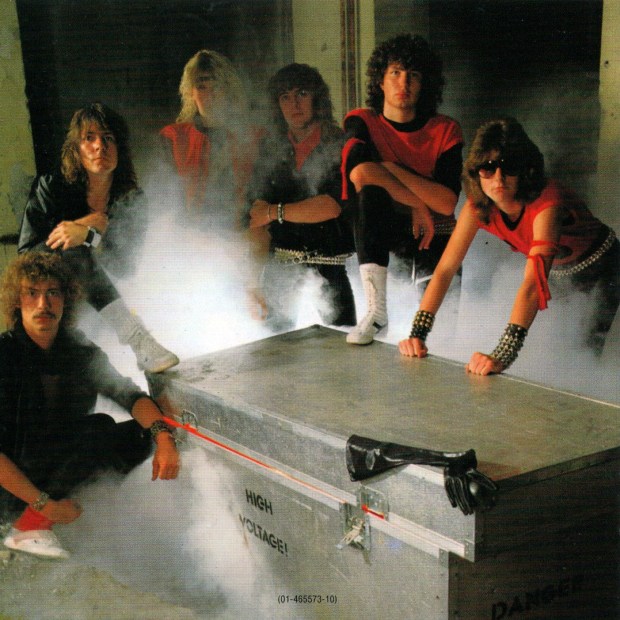
I ignored Pretty Maids when I first heard of the band. “Pretty Maids? What kind of name is that?” Shallow kid stuff, but impactful, because now in 2024 this is my first real listen to Pretty Maids with intent. Red, Hot and Heavy was the debut album for the Danish hard rock band, after a self-titled EP in ’83. The six-piece band had some moderate success with the album, so let’s have a listen.
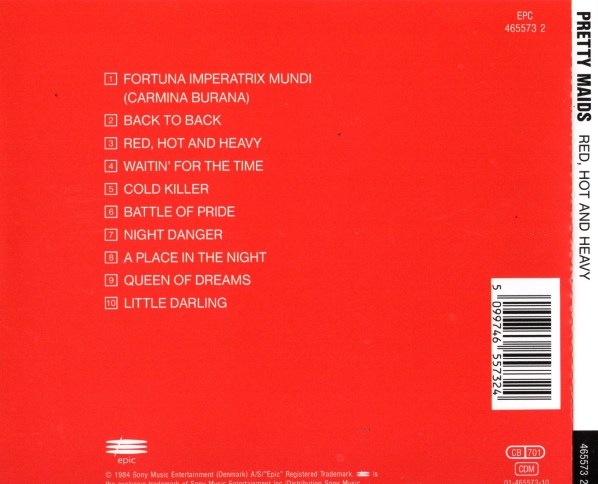
Opener “Fortuna Imperatrix Mundi” is actually an excerpt from Carl Orf’s “Carmina Burana”, and is credited as such on the back. It’s just a few seconds. The real opener is “Back to Black”, a scorching metal number with tempo and riffs sharpened and at the ready. The raspy vocals of Ronnie Atkins differentiate the song from the works of other metal groups such as Iron Maiden and Judas Priest. The keyboards give a highbrow neo-classical vibe. It’s heavier and fuller than Dio, but with all the drama and guitar solo shenanigans.
The title track is slower and nastier. A rallying cry for metal heads, “Red, Hot and Heavy” doesn’t pretend at being anything more than it is. A slow metal banger, perfect for fist-pounding and shouting along with at the concert hall. The shout chorus is custom made for the stage. The duel guitar solo is pretty cool. A stock metal chugger, but there is a need for a drum-bashing, stompy riff-rocking concoction such as this.
The highbrow keyboards return on “Waitin’ for the Time”, a very European sounding song which builds from a ballady opening to an upbeat pounder. Sounds a bit like the Swedish band Europe during their Wings of Tomorrow era, with a hint of Def Leppard in the riff. It’s an excellent song with light and shade, and a complete musical journey without exceeding five minutes.
“Cold Killer” begins with news broadcast dialogue, and then goes in a fast and ominous music unlike the other songs. The rather clunky lyrics are about the weaponization of space, a hot topic in 1984 with Reagan’s “Star Wars” program in the nightly news. But…clunky. “There should have been a paradise, instead there’s a killer out in space.” We’ll give them credit for trying at least, which is more than could be said for many bands of the 80s. Musically it’s a terrifically fun ride through sweet guitar riff and solo action. The keyboards add a progressive vibe, though some might say pretentious.
The anti-war theme flips over onto side two, with “Battle of Pride”. Again, it’s not poetry, but the lyrical theme was very popular in metal at the time. Musically it’s a fast Dio-like rocker with the keyboard accents giving it a different flavour. Ronnie Atkins’ rasp continues to separate Pretty Maids from other bands, but by the time we hit side two, the ear is craving more variety in the voice.
“Night Danger” is a pure blitzkrieg, now more in the wheelhouse of a band like Accept. These guys are not slouches when it comes to riffs over 80 mph in speed. The irony is that, even at that speed, the song doesn’t really go anywhere. It’s speed for its own sake, and that’s actually fine, because it’s plenty fun and doesn’t need to be anything else.
Acoustics join the electric guitars on “A Place in the Night”, one of the most impressive songs on the album. Mid-tempo melodic rock, and dialing down on the vocal growls, is exactly what the album needed at this point. The chorus explodes with passion and power at the right moment. The keyboards add to the mixture by thickening up the melodic accents. Brilliant deep cut late in the album.
“Queen of Dreams” has an Yngwie vibe again, though Malmsteen wouldn’t put as much emphasis on the other instruments. The keyboards add a regal synth-trumpet sound over the guitars, but when the drums kick in, there’s no nonsense. It’s that kind of metal that is obviously influenced by Deep Purple and Blackmore’s Rainbow, but amped up for the 80s.
The surprise is the closer: a cover of Thin Lizzy’s single “Little Darling”. Formerly a horn-laden rock classic, Pretty Maids heavy it up a bit and increase the tempo. Though “Little Darling” will always be a personal favourite, I don’t think Pretty Maids did it any favours. Their backing vocals are too shrill for the chorus, and without the horns, it loses that something special. A swing and a miss for Pretty Maids, which is terribly unfortunate.
Red, Hot and Heavy is a strong debut. Obviously the band grew and expanded their sound, and still continue today. This is the foundation.
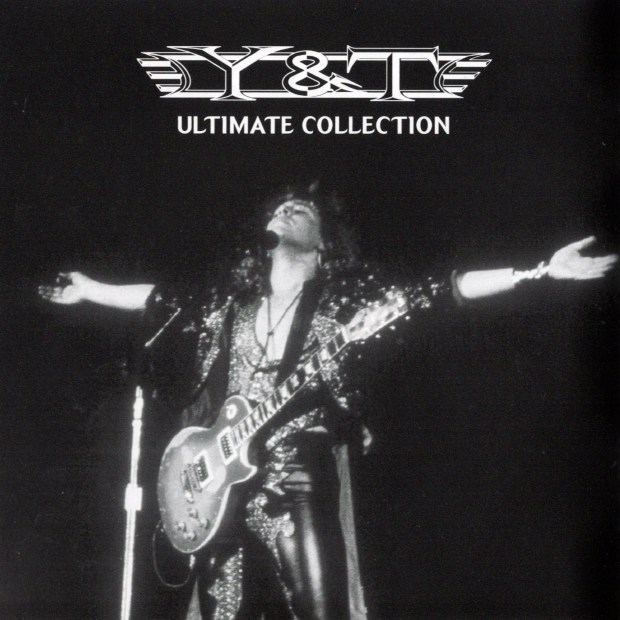
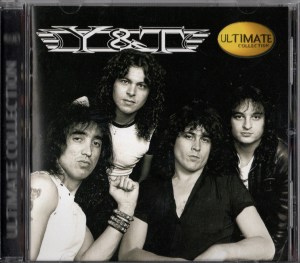
When Tim Durling, author of Down For the Count: The Y&T Album Review, found out I didn’t own any Y&T, he sought to rectify the situation. As a passionate and knowledgeable fan, he knew that I wanted to start with a good compilation that covered all the songs I liked, and as many albums as possible. The Ultimate Collection was the CD he vouched for, and he did not steer me wrong. This is an amazing compilation.
The disc opens with four songs from Earthshaker, their first album as Y&T after two records as Yesterday & Today. “Dirty Girl” is an unusual if brilliant opener. It’s both slow and heavy, with a couple genius guitar solos, one different from the other, and each telling a story. This track plods in the best possible way, with a cool signature riff and a stomping beat. The chunky “Hurricane” and an epic “Rescue Me” follow, but “I Believe In You” is a real standout from Earthshaker. This is a powerful metal ballad, like something the Scopions used to score hits with. Dave Meniketti has expert control of his voice, with a vibrato to die for.
A clutch of songs from Black Tiger (produced by Max Norman) follows. The title track from that album fades in from ominous jungle sounds (because tigers usually live in the jungle). “Cat eyes! She draws you in!” Dave is singing about a different kind of jungle here. The black tiger he’s singing about is of the feminine variety, and Dave wants you to heed his warning. “She’s playing for keeps, so you better get away!” Just a smoking metal track with stinging guitars. “Open Fire” is just as heavy, if a bit faster. These two songs boast hooks, both on guitar and vocals. Y&T are experts at this high-velocity rock, but “Forever” could fool you into thinking it’s another ballad…until it storms off, bordering on thrash metal. “Forever” definitely competes with the kind of heavy rock bands that were starting to make a name for themselves in the early 80s. Leonard Haze pushes it over the top with his adrenalized drumming.
Chris Tsangarides took over production duties on Mean Streak. We only get two heavy hitters, including the title track “Mean Streach”. (That’s a joke – listen to the chorus.) “Midnight In Tokyo” is the other, and by contrast, this song isn’t as simple or straight ahead. Complex, jazzy verses collide with melodically heavy choruses. Phil Kennemore must be credited for some really incredible, gallopy and melodic bass playing.
In Rock We Trust was produced by Tom Allom of Judas Priest fame. We only get one track from this record, the big hit “Don’t Stop Runnin'”. This one is especially notable for the backing vocals. The band probably don’t get enough credit for that, and the thick and sweet chorus is all band. Though I did see this music video on Toronto Rocks and the Pepsi Power Hour once or twice, it should have been a lot bigger. This band had a number of circumstances against then, as discussed in Tim Durling’s book, available on Amazon.
The next couple studio albums were produced by Kevin Beamish. Some may love, and some may hate, the direction this band evolved on Down for the Count and Contagious. If the songs chosen here are any indication, the band were going for a more radio-oriented mid-80s mainstream sound. They still managed to pack punch into the songs, but “Summertime Girls” and “Contagious” are notable more streamlined and polished. The melodies and backing vocals take more prominent positions, and keyboards enter the fray. I think these tracks are great. They are among my childhood favourites. I love the backwards-recorded drum parts on “Summertime Girls”.
A live track from Open Fire provides some much-needed music from the first Yesterday & Today album, which was on London Records and unavailable for this compilation. Wicked riff from Joey Alves on “25 Hours A Day”! Note the backing vocals once again. Whether they were polished in the studio, it doesn’t matter. The band can sing. This fun rock groove has a little more power than the studio version. Nice bass solo from Phil!
The end, temporarily, was 1990’s album Ten produced by Mike Stone. The ballad “Don’t Be Afraid of the Dark” turned me off back in the day. It was too soft for the direction I was headed. Judas Priest was dropping “Painkiller” while Y&T released a ballad. It just wasn’t what I wanted. I should have given Ten a chance. I love this song now. Though the lineup had changed, and Journey’s Steve Smith was playing drums in the studio, it still sounds like Y&T. Those melodies and backing vocals! That “touch by touch, little by little!” hook just knocks me out, not to mention Meniketti’s voice and delivery.
Y&T came back in 1995, retaining Stef Burns and Jimmy DeGrasso from the last incarnation. Musically Incorrect was the name of the album, and “I’m Lost” is an absolute smoker! You’d think it came from one of the earlier albums…because it does. It was originally on Struck Down and re-recorded here. It’s one of the fastest songs on the compilation, and the raw 9o’s production gives it a vintage sound. It’s challenging stuff. DeGrasso absolutely smokes on the drums. No wonder he ended up in Megadeth a bit later on. The same lineup remained on Endangered Species in 1997. A heavy ballad called “God Only Knows” represents that album. It’s passionate metal, with the kind of wrought-iron arrangement you expect from a power ballad. Absolutely killer lead solo work.
The final track takes us back to the beginning. A live version of “Beautiful Dreamer” from 1991 is originally from the debut Yesterday & Today. Again, it’s a little more complex, but still boasting the kind of melodies, riffs and singing that we expect from Y&T. That is, high quality heavy rock.
This is easily the best first-purchase Y&T you can make. It’s a great sampling of as much music as you can reasonably expect. Solid listen front to back, and then back to front. Liner notes are by the late Gerri Miller of Metal Edge magazine.
Part Six-point-five of a series on KICK AXE!
Thank you to JEX RUSSELL for donating this to the collection.
KICK AXE – “Piece of the Rock” (from Rock the World – 2005 remaster) (2005 Amber Interactive)
The Kick Axe discography, though small, is difficult to complete! There are the first two albums released on Pasha in the US, and the third album on Roadrunner in the US. Rock Candy reissued the first two albums with bonus tracks, and the third without, so they’re fairly easy to get. Then we also have a fourth independent album, an early independent single, a live track released by Playboy, and two songs on the original 1986 Transformers soundtrack (under a different name). That’s about it, right?
Nope!
One important song almost slipped through the cracks. When Kick Axe were working on Vices with Spencer Proffer, the producer was considering using the band to help write the next Black Sabbath album. Additionally, Ian Gillan was out of the band, and they needed a singer. Kick Axe’s George Criston was one of the singers considered, though Kick Axe didn’t want to lose their main man. “Piece of the Rock” was one of the songs written for the Sabbath project. Though Sabbath didn’t use it, like “Hunger”, it was recorded and released by King Kobra on their debut Ready to Strike. As a result, the Kick Axe version went unheard for almost two decades.
That version, harder than King Kobra’s, is actually available on an obscure Kick Axe remaster that pre-dates the Rock Candy versions. Strangely enough, it ended up on a reissue of Rock the World, an album it had nothing to do with.
The plot thickens. Rock the World was remastered by Kick Axe’s Ray Harvey…who was not in the band when it was recorded, and is not on the album aside from the bonus track!
Kick Axe Career Retrospective
Things get crazier still – and this is something that isn’t documented anywhere, even on Discogs. Upon listening, some songs are actually longer! “Rock the World”, for example, opens with two seconds of pick-handling that is not on the original album. The Fleetwood Mac cover “The Chain” has a much longer intro (almost double its original length), with a short section restored. “Red Line” is also significantly longer. Considering the Rock Candy release has no bonus tracks, this version might reign superior. Ray Harvey clearly decided to re-edit some of these tunes as well as remaster. There does not seem to be a remix. The remastering isn’t as loud as the Rock Candy version, though it still sounds fabulous.
Where Rock Candy exceeds is in liner notes and packaging. The Amber Interactive version doesn’t have the original artwork, and actually looks really cringe! The back cover is a computer generated sword handle with a metal “X”. Need I remind you, an axe is not a sword! The front cover artwork is atrocious, even compared to the low budget looking original. It does have the lyrics to “We Still Remember”, which is interesting in itself. See how many references to other bands you can find. “In the days of the haze, the colour was deep purple.” “We ride the killing machine.” “And the wind it cries Mary.” “We won’t get fooled by helter skelter.” References within references.
“Piece of the Rock” should have been released by Kick Axe back in the day, but here it stands on an album! It sounds completely finished for release, with the lush backing vocals fully overdubbed and ready for radio. The other nice thing is that it gives you an old school Kick Axe song on an album that was largely more complex and less instantly accessible. That’s not to say that Rock the World is weak album. Our review will attest to that (links at bottom).
This version of Rock the World deserves an extra half-point for the bonus track and lengthier versions of existing songs. Extra unadvertised value is always good. Shame they couldn’t use the original art (licensing issues), but small gripe.
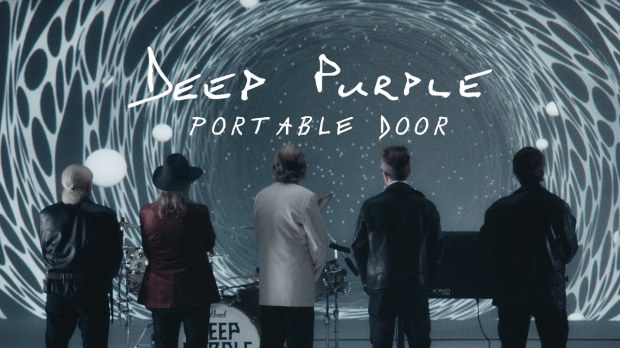
Deep Purple’s first new album with Simon McBride on guitar will be out July 19. Called =1 (“equals one”), it is largely a mystery what the album will sound like. Many predicted a return to “hard rock” after the last three more progressive albums. The first single “Portable Door” is not all that different from the Steve Morse era. Don Airey’s organ really dominates the solo section, as it should be. Simon’s guitar work is sublime but not showcased as some had hoped. He has this one cool lick in the riff that is really electrifying, but we want more Simon!
Ian Gillan? Reliable as ever, his voice has worn in like suede. He can still sing the hooks. Haters call him “over and done” – fans don’t care. Ian Paice is the backbone, always smooth, always identifiable, infallible. With Ian Paice on drums, Deep Purple will always sound like Deep Purple. His work here is busier than the we’ve become used to…which is just fine!
How does “Portable Door” stack up against recent Purple singles? It doesn’t have that instant “wham!” of “Vincent Price”, and it doesn’t have the hooks of “Johnny’s Band”. It’s a strong, workmanlike latter day Deep Purple single that will grow with increasing listens.

 DREAM THEATER – “Hollow Years” (1997 Warner Music Germany)








 Part Six-point-five of a series on KICK AXE!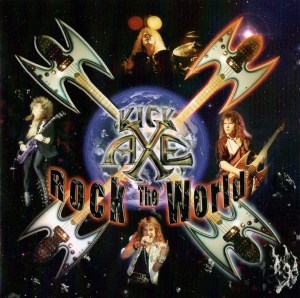



 mikeladano.com