It’s a late start, but welcome to Purple Week! It’s going to be all Deep Purple and Deep Purple alumni all week to Saturday, with at least two Epic Reviews lined up. Let’s go!
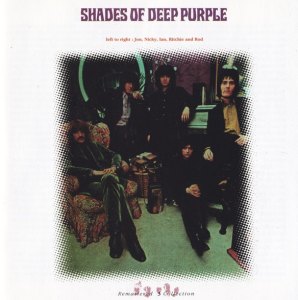
DEEP PURPLE – Shades of (1968 EMI, 2000 remaster)
I’m not a big fan of Shades of Deep Purple, and that’s not because I don’t like Deep Purple Mk I. I do like Deep Purple Mk I, or at least some of it. I think the third Purple album from ’69 is one of the band’s all-time best, and an underrated classic. Shades of only scratches the surface. In 1968, these five guys didn’t have the road experience together yet to really gel as a unit. They had just formed and almost immediately began recording demos that landed them a record deal. Ritchie Blackmore, a session player, had yet to emerge as the confident axeman that he is, still shyly putting together his solos while Jon Lord takes the forefront more often than not.
Deep Purple opened their very first vinyl with an instrumental. “And the Address” is remarkably recognizable as Deep Purple, particularly because of Ian Paice and Jon Lord.
“Hush” was and is still an extraordinary version, and my preferred take over the 1988 Ian Gillan version. “I’m So Glad” isn’t bad, but “Mandrake Root” is not what it would later become live. “Help” has been slowed down to a crawl (reportedly, the way the Beatles wanted to do it) but it doesn’t rock. “Love Help Me” is 60’s pop rock goodness, as is “One More Rainy Day”, but “Hey Joe” is another one that would come across better live. It doesn’t help that Shades of Deep Purple doesn’t really sound that great.
The five bonus tracks are all valuable, as these are some of Purple’s earliest live performances. Something like “Hey Joe” live (from the BBC) begins to show what the band would make of it. There’s also the rare track “Shadows” which is better than some of the tracks on the album itself. This outtake probably could have used a little additional polishing, but it is what it is, and it’s worth checking out if only for Ritchie’s solo. The audio fidelity on these tracks is sketchy, be forewarned. That shouldn’t be unexpected for demos of this age.
2/5 stars. Hold tight, rock fans — a year later, the best of Mk I was yet to come!
RECORD STORE TALES Mk II: Getting More Tale #357: “Dream Bands” (1990 version)
I’m sure you and your friends have made these lists many times: put together a lineup of your dream band! Any living players can qualify.
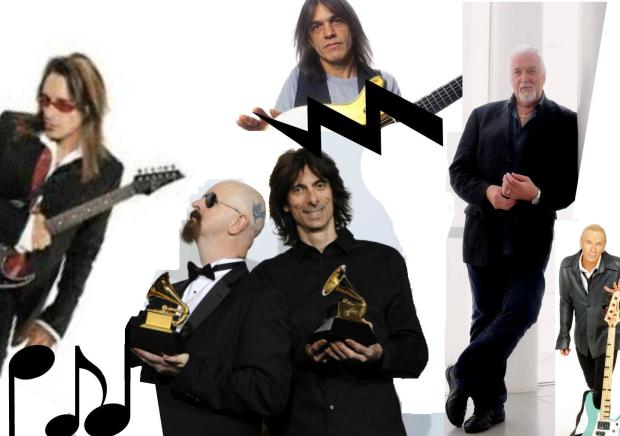
I had deep, long conversations about this with my friends in highschool. One of them simply listed the four members of Led Zeppelin (Jason subbing in for John) as his dream band. You could certainly make an argument for that. My highschool dream band (1990-91 year) was instead made up of the players that I thought were the absolute best in their fields. Can you guess who I was listening to that year? Lineup:
Lead vocals – Rob Halford
Lead guitar – Steve Vai
Rhythm guitar – Malcolm Young
Bass – Billy Sheehan
Drums – Scott Travis
Keyboards – Jon Lord
As a joke, I also added a seventh bonus member, Walter Ostanek on accordion! That was for my buddy Andy, who also played accordion. Upon submitting my official list for consideration, I removed Ostanek. But I figured that Walter could show up for a guest appearance on a track or two, because everyone loves accordion.
An interesting band lineup to be sure, but as my highschool friends pointed out, they would probably implode after only one rehearsal. Steve Vai and Malcolm Young in the same band? I can’t see how that would work. Sorry, LeBrain circa 1990. Fail! I’m glad I kept this stuff though, because it’s so funny to look back on it now. 25 freakin’ years ago!
Who would you place in your “dream band” lineup today? One stipulation: the artist must be alive and able to play. For example I couldn’t put Malcolm on my list today, nor could I put Phil Collins on drums, since he can no longer play them due to injury.
When Blackmore quit Purple for the second time, I had written the band off. I wasn’t too keen on the previous studio record The Battle Rages On, and what is Purple without the man in black? I didn’t want to hear a hack Deep Purple, struggling on to pay the bills with some sub-Blackmore player. The first time he left, it shattered the band and they were unable to continue past one record with Tommy Bolin. Then I started reading reviews of live shows with Steve Morse on guitar. Steve Morse? What the hell was that going to sound like? Morse and Ritchie Blackmore — it is hard to imagine two electric guitar players who sound less alike. (Joe Satriani was also briefly in the band to help them finish up touring commitments. Bootlegs of shows with Satriani are well worth checking out.)
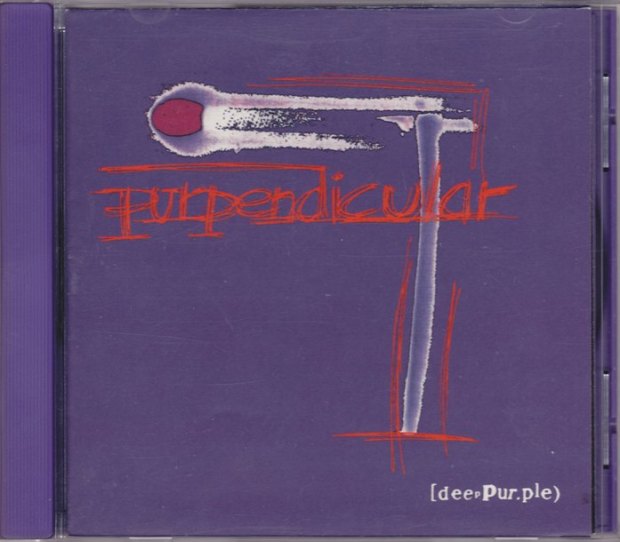
When Purple finally released their new studio album Purpendicular, I had to buy it on import. It didn’t even have a North American release. When it was released officially in the US, an extra bonus track was added, so I tracked that down and bought it too. That is how much I really love this record. It had a huge impact on me musically in the mid to late 90’s, and when I saw Purple on this tour, they were smoking!
Kicking off with some of that patented Morse shredding, the oddly titled “Vavoom: Ted The Mechanic” kicks you in the teeth and won’t let go. This was, according to Gillan, done on purpose. It was a statement: “Here is our new guitar player, bitches.” Ian’s lyrics, ranging from bizarre to absurd and back again, are at their absolute peak on this album. (Check out “Somebody Stole My Guitar”.) Clearly, when the man had been freed of Blackmore’s shackles, he had been creatively revitalized. That probably followed in turn for each of the members.
The second track is the melancholy, bass-driven “Loosen My Strings”, a song which wouldn’t sound out of place on Slaves and Masters. From there, the album goes from strength to strength: The powerful progressive epic “Sometimes I Feel Like Screaming” (probably the best track on the album) to the bright and positive “A Touch Away”. Every song is backed by Morse’s unmistakable picking, miles away from Blackmore’s style of riffing, or medieval tendencies. That is not an attack against Blackmore, but sometimes a quality change can be refreshing. Morse utilizes pinch harmonics frequently on this album, which is a new sound for Deep Purple. He also utilizes long sustained notes with wide vibrato, a classic Steve Morse sound.
There are very few weak songs on Purpendicular. The plodding “Soon Forgotten” can be skipped. Not all the songs are immediate. Some of them are complex arrangements designed to take a little effort to penetrate. This album must be played a couple times for it to sink in. But when it does, stand back and prepare to be blown away. I wouldn’t want to miss “The Aviator”, a rare acoustic Purple tune. Morse lends it a celtic feel. For folks who prefer the 70’s jamming Deep Purple, check into “Rosa’s Cantina” and give a shout-out to “Hey Cisco”. And if you like it a little more straightforward and rocking, you may prefer catchy rockers like “Somebody Stole My Guitar” and “I’m Not Your Lover Now”.
I mentioned that I re-bought this album for a US bonus track. “Don’t Hold Your Breath” is a bright upbeat rock song, and worth tracking down. It’s not necessarily an album highlight, but why do without? Jon Lord’s organ sounds on this one are particularly enticing.
There was also one outtake from this album, a silly little jam/band intro called “Dick Pimple”. This was put out on a fanclub-only release, and later reissued on Ian Gillan & Tony Iommi’s compilation CD WhoCares. It’s a 10 minute track, giving the fans a rare chance to hear Purple with Morse jam just for shits & giggles. Because it’s Deep Purple, it is a quality jam, and completely unlike anything on Purpendicular.
Purpendicular was a vital record for Deep Purple. If they had blown it, that would have been it. They couldn’t have continued with any credibility if it didn’t kill. Fortunately it did. I am pleased to report that despite the tragic death of Jon Lord, Deep Purple has managed four more great records since, all with Steve Morse on guitar.
Any time there is an official Deep Purple archival release coming out, diehards have to pay attention. The current library of vintage live CDs is the Official Deep Purple (Overseas) Live Series. A mouthful. Live in Paris was the first in the series, followed by Copenhagen 1972 (which I missed but have to catch up on). Graz 1975 is the third, and it has a long history of incomplete releases going all the way back to 1976! Some songs were used on the single LP Made in Europe in that year. In 1996, five songs were remixed and included on Mk III: The Final Concerts. Now the entire April 3 show in Graz, Austria has been remixed again and released in its completion.
As a guy who owns virtually every single official Deep Purple release and catching up on the rest, I’m amazed at how crisp and fucking essential this new mix of “Burn” is. The liner notes call it “surely the best version of this song, ever.” Paice and Blackmore both play with an excitement and energy that is even above their standards. Lord too, but my God are Ian and Ritchie fueled up, laying down fill after fill that were of that moment. Ritchie was on the verge of leaving — he was gone after only two more shows. Even if you’ve heard this exact same recording of “Burn” from Mk III: The Final Concerts before, you haven’t heard it like this. This new mix kills the prior ones, rendering them almost obsolete. Ditto with “Stormbringer”, which captures all the energy that that was missing from Made in Europe.
I’m always pleased to hear “The Gypsy” from Stormbringer, an underrated track from an underrated album. Glenn Hughes’ young pipes are achingly powerful, drowning out David Coverdale. An unreleased “Lady Double Dealer” is the last short song before the show progresses on to long 10 minute or more jams. Ritchie’s manic pick scrapes are deliciously perfect. This usually isn’t one of my go-to Deep Purple songs, but this absolutely smokes any version I’ve heard before.
The first long bomber is Ritchie’s blues centerpiece, “Mistreated”. I confess I usually snooze through this one. This version will be familiar as one of the “bonus tracks” on Mk III: The Final Concerts. Ritchie is the main focus of “Mistreated”, and he stretches out far and wide, using bits from “Lazy”, “Sail Away” and classical melodies. Coverdale is much stronger vocally than he tends to be on this song. A ramshackle “Smoke on the Water” is also dull by comparison with the first part of the set. Its highlight is a long, building and breaking Jon Lord organ solo, which leads into “With a Little Help from my Friends”. “You Fool No One” is over 10 minutes, and it gives Ian Paice a chance to strut his stuff. Paice is one of those drummers that it pays off to focus on and really listen to, because he is always doing something interesting. All of this is outshined by a 20 minute “Space Truckin'”. Richard Strauss’ “Thus Spake Zarathustra” is a suitably bombastic segue, for a band of Deep Purple’s stature. They also detour into “Child in Time”. If you’re not wiped out by now, you will be by the end.
Gotta say that those responsible do a great job with these Deep Purple products. Absolutely no qualms about this release at all. Not essential to anyone but fans of Deep Purple Mk III.
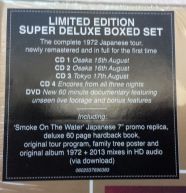
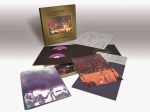
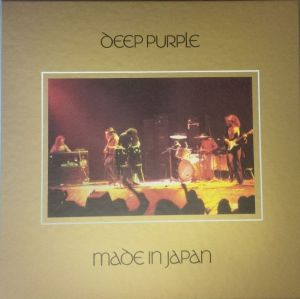
DEEP PURPLE – Made In Japan (2014 limited edition Super Deluxe box set)
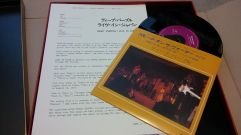
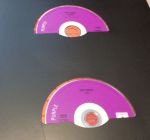
“Smoke on the Water” Japanese 7″ promo. This is a reproduction of a rare Japanese promo single from 1972, sleeve and all. It is pressed on heavy 70 gram vinyl, a treat indeed. It features the promotional single edit of the studio version, and an edit of the Made In Japan version on the other side. The studio edit is available on plenty of releases, such as Singles A’s and B’s. The live edit is one that I don’t think I owned prior to this. I actually enjoy something like this; it’s interesting to see where and how they did the edits, from a technical point of view.
Including a 7″ single in a box set of this size is something I wholeheartedly support. Not only do I love the vinyl format, but when you spend this much money ($115 Canadian) in one place, you deserve something extra. A lot of the stuff included in box sets these days, even in this box set, amounts to nothing more than paper. Music trumps packaging, so I’ll always take something like a bonus vinyl, especially when it has an exclusive track on it.
Interestingly, on this printing, the times for the two tracks are reversed. The live version is the longer, not the shorter as the label suggests.
DVD: Made In Japan: The Rise of Deep Purple MKII and more.
This hour-long documentary consists of new and archival footage and interviews, assembled into a narrative. Old footage of Deep Purple MKI begins our story. The shortcomings of this lineup led the core members of Ian Paice, Jon Lord, and Ritchie Blackmore to seek new bandmates. They had gone as far as they could musically with Nick Simper (bass) and Rod Evans (vocals). In stepped Roger Glover and rock’s greatest screamer, Ian Gillan. Then, the big albums: In Rock, Fireball, and Machine Head.
Strangely, it was a tax loophole that led to Machine Head. It was expected that the fortunes of the band would only rise, but British tax laws would keep them all paupers. If they became tax exiles, and wrote and recorded in mainland Europe, they would not be taxed. This led them to Montreux, Switzerland. According to Claude Nobs, they were planning on recording an album called Made In Switzerland. Nobs invited them to record at the local casino, and the circumstances of this have been well documented. A Frank Zappa concert that night was attended by Deep Purple and Nobs. Someone fired a flare gun into the bamboo ceiling, and the place went up in smoke. This DVD has the audio of Zappa asking the audience to leave!
The place did indeed burn to the ground. Luckily Deep Purple had not yet moved in their gear, or it too would be gone. Next they tried recording in a small theater, but noise complaints caused them to move again. It took almost a week to find the Grand Hotel, which was closed for the winter. Perfect. The results speak for themselves. Machine Head is the classic Deep Purple album. But according to Blackmore, it was Made In Japan that made them a phenomenon. It was a live album that they didn’t want to do, but could not have regretted doing.
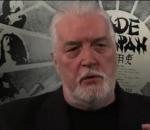
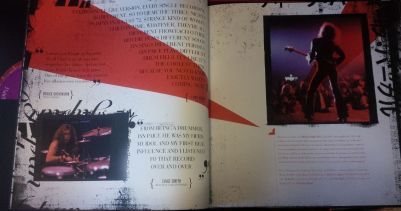
Bruce Dickinson, James Hetfield, Lars Ulrich, and more show up to discuss the impact of Made In Japan on themselves. Dickinson points out that the remarkable thing is that Made In Japan is 100% live. There are no overdubs. Martin Birch managed to capture it raw. There’s a lot of great footage here; live footage, showing the interplay of the band.
Next, the band headed to Rome to record the difficult Who Do We Think We Are.Made In Japan had not even been released in America yet, only Japan, until mass importing of the record forced the label to release it. Unfortunately at the height of their powers, Ian Gillan and Ritchie Blackmore had a massive falling out. Ian resigned. Blackmore and Paice almost formed a trio with Phil Lynott. Glover was fired, which was a condition Blackmore set to stay in Deep Purple. A final Japanese tour was the last commitment of the band. Glover describes a cold atmosphere, and the tension in the air.
Glenn Hughes appears next, remembering a Trapeze gig attended by members of Deep Purple. He sussed out the reason for their attendance. Still, he did not expect to be asked to join. It was an emotional time for Glover. He saw his Deep Purple albums on top of the charts, yet with magazines printing pictures of their new lineup featuring David Coverdale and Glenn Hughes. Hughes reveals he was mistakenly sent awards for albums like Who Do We Think We Are. Glover felt deeply hurt but strove to be a professional.
As a Deep Purple fan who owns a lot of Deep Purple on video, I enjoyed this documentary. Although it has some footage that I had before, it also had a lot that I didn’t, such as interviews that were new to me. Footage from Japan is a highlight. “Smoke on the Water” is presented almost in full (from the 17th), though it is very lo-fi.
Extras include a music video for “Smoke on the Water”, made up of footage from the documentary. “The Revolution” is a short film about rock music and counter-culture, focusing on Deep Purple while at Montreux in 1971. Much of this footage is in the main documentary. A bearded Gillan rips his way through “Speed King”, and the band are interviewed. There’s also a short German documentary from 1972, subtitled of course. I enjoyed the description of their stage attire: “intentionally scruffy hippie uniforms”. Finally, there is a 1973 performance of “Smoke”, but now I’ve really heard the song too many times. It’s the best footage though: full colour, pro-shot. Roger is wearing bright red platform shoes.
This DVD was adequate. The main documentary feature was re-watchable. “The Revolution” and the German doc, not so much. It’s too bad that the video content is only tangendentally related to Made In Japan. The DVD is really not much more than a supplement to the main feature.
Final words: The box set is rounded out by an excellent booklet, a reproduction of the Japanese tour program, a family tree, and a reproduction press release. Ultimately these things are just pieces of paper. Nobody would go out of their way to buy a reproduction of a press release.
As a boxed set of music, Made In Japan is a home run. This is the way they should have released it back in ’93, instead of the incomplete Live In Japan. I’ll hang onto my old 2 CD anniversary edition of Made In Japan, because I believe in keeping the original mix of something. It’s an historic piece, not to be discarded. When I want a briefer Deep Purple live experience, I’ll play that version of Made In Japan. When I want the full Monty, I’m listening to this box set. Not only is it the best release sonically, but it is the only complete release of all three Japanese shows.
As a celebratory boxed edition of a classic, I’m less satisfied. The DVD and the papers inside are things I will get less enjoyment from. If the DVD had included a feature on the making and remixing of this edition, I would have been more interested.
DEEP PURPLE – Made In Japan (2014 limited edition Super Deluxe box set)
Disc 3: Tokyo, August 17 1972. Finally we arrive at the third night. The band were comfortable by the time they hit Tokyo, but the sound from the venue wasn’t as desirable as the two nights in Osaka. That’s the main reason that most of the Tokyo show was not used on Made in Japan originally. Yes, sonically this is not as crisp nor clear. It seems like a noisier mix, with Gillan’s voice more difficult to make out. However, we have heard plenty of Deep Purple recordings worse than this, and this is still Deep Purple MkII at the top of their game.
The band tune up and say hello before “Highway Star”, a quaint reminder of the way concerts used to be compared to today. Like the other two renditions of “Highway Star”, this is an electric performance. Jon’s organ solo was the highlight for me, Ritchie’s blistering frets notwithstanding. Gillan tells the crowd that the song is about somebody named “Fat Larry” and his automobile.
“Smoke on the Water” begins with Ritchie teasing a bit of “God Save the Queen”. Jon and Ritchie fall out of sync a bit in the beginning of the song, but they quickly lock back into place. Of the three, this is my favourite version of “Smoke on the Water”, just because it is different. The band are looser and willing to play around a bit more. Blackmore’s solo is a highlight as he travels all over the musical landscape.
Always epic, “Child in Time” is greeted by polite applause, a true show of Japanese appreciation. While the August 16 Osaka version may well be Uncle Meat’s favourite because of the guitar solo, I think this one is pretty special due to Jon’s keys. Either way, we’re splitting hairs here. It’s “Child in Time” performed live in Japan in 1972! To talk about favourites at this point is to be speaking in nanometers.
“The Mule” has an entertaining intro; Ian Gillan tells the monitor guy, “Can we have everything louder than everything else?” This is the version from the original Made In Japan. The intro was so legendary that Lemmy paid homage on the live Motorhead album, Everything Louder Than Everyone Else. The song goes absolutely mental at the 2:20 point, before Ian Paice breaks into his drum solo. Not a lot of drummers are interesting to listen to soloing for five minutes. Paicey is.
“Strange Kind of Woman” is another track that is never exactly the same twice. Gillan and Ritchie improvise together, a reminder of a day and age when they (mostly) got along. It’s hard not to smile. According to Ian, this song is about “Terrible Ted” and his “awful lady”.
Diving into newer material from Machine Head comes “Lazy”; always interesting since it too relies on a lot of improvisation. This is the version used on Made in Japan originally, and Jon’s solo (dipping into “Louie Louie”) is familiar and fun. That Hammond howls, and then Blackmore enters. This is one more Deep Purple long bomber. The vocal doesn’t even start until six minutes in!
Finally, “Space Truckin'”. One more amusing song intro: Ian says that this song is about what would happen if space travel and rock and roll ever met, which has not happened. Therefore, this song does not exist. But it sure does slam! The crowd clap along, obviously into it. I love every pick scrape, every drum roll, and every scream. Deep Purple can simply do no wrong at this point. The only flaw is distracting audience (or perhaps crew) noise. You can hear people speaking Japanese around the 13:00 mark.
Disc 4: Encores. This CD comprises all the encores from all three shows. “Black Night” was played first, at all three shows. “Speed King” was played twice, on the 1st and 3rd nights. On the 2nd night the band played Little Richard’s “Lucille” at absolutely breakneck pace. For many years, these encores were largely unavailable. “Black Night” from the 3rd night in Tokyo was released (edited) as a B-side, and then re-released on many compilations such as Power House (1977). The other encores didn’t receive release until the 90’s or later. Now, finally, all the tracks from Japan are collected in one set. I could barely keep track of where to find all the songs from the Japan shows, spread as they were over multiple releases. Now it’s all in one place, as it should be.
After tuning up, Blackmore noodles for a bit. Then “Black Night” crashes to a start. This song is almost a respite for the audience, after a track like “Space Truckin'”. If you remember from Part 1 of this review, Gillan had a case of bronchitis that he was recovering from. He couldn’t stand his performance on the 15th, but you’ll be hard pressed to tell on “Black Night”.
Ian says “good luck, good night,” but it’s just a clever ruse. Much applause results in a return and a noisy take of “Speed King”. There’s quite a bit of feedback, sour notes and noise coming from the guitar. Blackmore was either struggling with it, or abusing it. A knackered Ian Gillan is out of breath at times.
The second version of “Black Night”, from the 16th, is quite different. It’s quite ragged and feedback-laden, and this version reveals human errors that, to me, only add to the live experience. Deep Purple were taking things over the top at these concerts, and sometimes things fall apart. It’s rock and roll.
Once again, the applause of the audience brings Deep Purple back to the stage. Their insane cover of “Lucille” was a pleasant surprise. Deep Purple had been playing this for ages, since Gillan first joined the band. Another version (from London) can be heard on In Concert ’72. That is probably the superior version, though this is no slouch. Almost half of it is just intro! It is stretched over eight minutes. It keeps getting faster and faster, until they’re playing at Ludicrous Speed.
The final show in Tokyo is sonically different, as mentioned at the start of this review. That’s most obvious on this CD when you go straight from Osaka to Tokyo. This time, Deep Purple are introduced in Japanese, before Ian asks for the monitors to be turned down. This is the version used on B-sides and compilations numerous times before, and it is my favourite, probably due to familiarity. This mix allows Jon’s organ to shine a lot better. It is also unedited, which of course is a bonus.
And finally the journey ends with “Speed King”. The band tune up for the last time in Japan, and dive in. Once again, they’re off the rails. I don’t know where Gillan got the energy. Even though he’s tired, he’s still wailing. Jon Lord’s solo is especially enjoyable. I’m exhausted by the end of it. This has been a lot of Deep Purple to digest. But we’re not done yet.
DEEP PURPLE – Made In Japan (2014 limited edition Super Deluxe box set)
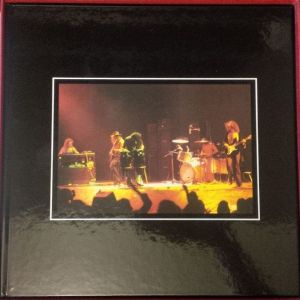
Giving you the kind of detailed review that you have come to expect from me is no mean feat when it comes to a massive set like this. This 5 disc (plus 7″ single) Made In Japan reissue was an epic undertaking to absorb. Just as much as reviewing Machine Head‘s 5 disc deluxe edition last year was a huge task, Made In Japan was its equal!
Because of this, I’ve decided to split the review into three: Today we’ll look at the first two CDs. Then the third and fourth CDs, the DVD, the 45, and everything else. Enjoy this first installment.
Disc 1: Osaka, August 15 1972. “Good morning!” jokes Ian Gillan as the band arrive on stage. A few moments of quiet as the band plug in and strum, and then…the opening drum beat to “Highway Star”. The first of three shows has begun!
Gillan says he was suffering from bronchitis on this first night, and you can indeed hear a bit of extra rasp in the man’s voice. Gillan says he hates these performances, but I think the extra rasp only adds to the furious “Highway Star”. Both Ritchie Blackmore and Jon Lord are on fire, ripping through their parts with great aggression. Blackmore makes a few mistakes during the solo, but who cares? Right from this opening salvo, you can hear the nuances and details of this new remix. Reading the liner notes, you realize that the biggest difficulty in remixing this album was that everything was bleeding through Gillan’s vocal mike. I’ll be damned if it tarnishes the listening experience though.
Before you can catch a breath, “Highway Star” has ended and they’re into “Smoke on the Water”, which had yet to become the classic concert favourite that it is today. Ritchie plays around a bit on the intro, as the crowd claps along. Clearly, they know the song. “Smoke” lacks the furious energy of “Highway Star”, but it is still an incredible performance. Once again, Ian Gillan’s raw voice only adds to the experience (but it’s not even that bad). “Smoke” is the only track from this show that was used on the final album Made In Japan.
Ian introduces “Child in Time” as a “sad story”, but nobody was mourning that night in Osaka. One thing I enjoy about “Child in Time” is that it is never played the same twice. Jon in particular changes up his opening melodies all the time, and this version is quite different from the one they debuted a mere three years prior at the Albert Hall. Somehow, bronchitis and all, Gillan still manages to scream his way through this monster. At times, Ritchie’s solo sounds like it’s drifting into “Lazy”.
According to Ian’s intro, “The Mule” is a song about Lucifer. This track from Fireball is essentially an excuse for Ian Paice to do a five minute drum solo. Nothing wrong with that; it’s Ian Paice after all. Gillan’s voice is a bit shaky at times, but I think that only adds to it. I enjoy that Allmusic refers to “The Mule” as an instrumental, proving once and for all that they don’t know what they’re talking about.
It’s all long-bombers from there. “Strange Kind of Woman” is extended with Ian and Ritchie’s usual interplay, and a gonzo guitar solo. “Lazy” is never short, nor is “Space Truckin'” which exceeds 20 minutes (complete with flubbed lyrics). They are all stellar. I found the intro to “Lazy” quite enjoyable, because after a brief noisy organ bit, Jon teases the crowd by stopping. It becomes dead silent for long enough that you’ll wonder if the CD stopped. That’s something you never hear on a live album these days; a silent crowd. Before “Strange Kind of Woman”, Ian begs the audience for a few moments to tune up. It pays off in the end, he says! All this talk is preserved on the box set version of Made In Japan.
I found the remix on this disc to be great. I love that I can hear every conga on “Space Truckin'”. I haven’t played my old 3 CD remixed Live In Japan (1993) set in a few years, so I haven’t compared the two mixes, but this is so good, I don’t really have a reason to play Live In Japan anymore.
Disc 2: Osaka, August 16 1972. Once again, “Highway Star” gets the proceedings off to a bang. Gillan’s voice is still raspy, but a new day has given it strength. The band sound more confident, as if they lacked any in the first place. It is, after all, the second Osaka show that made up the bulk of the original Made In Japan album. Once again, the remix is a joy. I believe in hanging on to an original mix of an album, that’s just the way I am. The original Made In Japan might not sound “better”, but it is an historical document of the circumstances of its making. It has its own sonic charm, and I think both can co-exist happily in my collection. (The ’93 mix, I’m afraid, will be retired in favour of this new 2014 mix. Interesting how they remix this album every 21 years.)
Not actually Made in Japan
Once again, “Highway Star” is followed by “Smoke on the Water”. Ritchie plays with the opening riff, but in a completely different way from the first concert. Later on, there’s a couple bum notes, and perhaps that’s the reason they used the version from the day before on the original album. The solo is a little loose too.
“Child in Time” is the adventure that it always is, and this version is familiar because it’s the one from the original Made in Japan. The song is truly a rollercoaster; that word applies here as well as any other. There are times it feels like it’s coming off the rails, but Glover and Paice keep it locked. Uncle Meat tells me that the original Made in Japan is his favourite live album “of all time.” (Perhaps it is also one of Dream Theater’s, since they did a song-for-song cover of the album.) Meat also says this is the “greatest guitar solo of all time,” right here on “Child in Time”.
“The Mule” was not used on the album; instead the version from the next night (in Tokyo) was selected. Same with “Lazy”. “Strange Kind of Woman” and “Space Truckin'” from this concert were used on Made in Japan. I couldn’t tell you why “The Mule” wasn’t used, it sounds great to me.
I very much enjoyed Ian’s “Strange Kind of Woman” intro. After explaining the song’s inspirations Ian says, “Why I’m talking such a lot is ’cause, like, we gotta tune up again…’Cause there’s a big time change from England you see, and the guitars are still not recovered from it.” After they are all tuned, Ian drops his famous line, “I have to announce that next week, we’re turning professional.” Through to his ungodly ending scream, “Strange Kind of Woman” is a corker.
Lord’s organ intro to “Lazy” is different from the first night, but just as interesting. “Space Truckin'” is the familiar version we know and love from the original Made In Japan, and it’s still astounding how this band could jam! Who cares that Gillan’s “Yeah, yeah yeah yeah!” is flat. That’s part of the action!
We’ll stop here for now, and pick up the rest tomorrow. Already, it’s apparent why a comprehensive set like this one was necessary. It’s because even if the setlist is the same, Deep Purple never play the exact same concert twice. Some of Ian’s song intros are by rote, but that’s where the similarities end. Deep Purple weren’t content to crank out the same jams and solos night after night, and that’s why a box set like Made In Japan is an important document of this band in their prime.
Thanks to Amazon, this arrived today. Only a week late, but for free shipping I won’t complain too much. When a parcel comes packaged inside not one but two boxes, you know it’s big. And this sucker is heavy. 5 discs, with two huge books inside. I can’t wait to dig in.
DEEP PURPLE – “Knocking at Your Back Door” / “Perfect Strangers” (1984 Polydor 12″ single)
What a find this was. While Simon Robinson has kept Deep Purple’s catalogue largely available on CD in lavish packages, here’s an oddity that has slipped through the cracks. Granted, interviews are fairly low on my collecting priority list. When something like this falls in your lap, you still gotta bite.
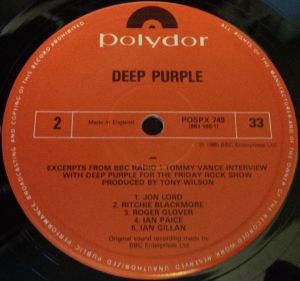
I got this limited edition (#9240/????) at an old used music store in Uptown Waterloo. I cannot remember the name; perhaps a kind reader will remind me. They were technically a “Christian” store but still carried music of all varieties. This 12″ was sitting on their shelves (price long lost) and I snagged it. The A-side contains not one but two hits, and the B-side, in depth interviews with all five Deep Purple members. All was harmonious in Deep Purple, coming off the high of making the album Perfect Strangers and embarking on a successful tour. The dischord did not return until The House of Blue Light. Therefore these interviews reflected a rare time of excitement and positivity for the short-lived Deep Purple MkIIb.
First, the music: To get both awesome singles from Perfect Strangers on one 12″ is handy! These are two of MkIIb’s best tracks, if not the two best tracks, period. By the end of the A-side, my mind is already blown by the grandiose, intelligent, classic sound of Deep Purple. Of note, these are the full length tracks, not single edits.
The interview side is helmed by Tommy Vance for the Friday Rock Show. Each member is interviewed separately, which is how it should be for Deep Purple. The amiable Jon speaks for 10 minutes, recalling Deep Purple history, particularly the very early years. They also discuss Jon’s few writing credits on the new album, a potential pot-stirring question. Ritchie Blackmore then reveals he doesn’t mind giving up being “the” leader of a band (Rainbow). Ritchie claims the hardest part of being the leader of a band was “trying to find the perfect member”. He sounds excited when discussing Deep Purple’s on-stage chemistry. Meanwhile, Roger Glover sounds like he’s eating a bag of crisps. He also sheds light on the early stages of the reunion, and the things they discussed to make it work. I enjoyed Ian Paice’s interview most; he dismisses what was going on in 80’s pop music as “a fashion show”. He proclaims that his goal for the reunited Deep Purple was to bring back a little bit of class to rock and roll. In my mind there is no question that they succeeded. Finally, the singer: Ian Gillian is soft-spoken and optimistic. He too is glad to have shed the responsibilities of being the leader of a solo band.
If you’re a Deep Purple collector and you find this record sitting on a shelf for a reasonable price, do not hesitate. Tommy Vance asks probing, intelligent questions and the result is an interview disc that will enjoy listening to more than once.
DEEP PURPLE – Perfect Strangers Live (2013 Eagle Vision 2LP/2CD/1DVD deluxe edition)
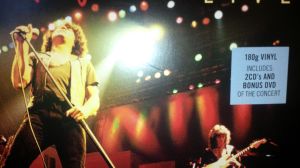
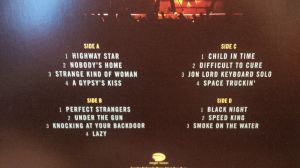
Perfect Strangers Live, a new 2013 release of a 1984 recording in Sydney, proves many things but one of them is this: The proverbial “vaults” must be an endless place where this band is concerned. Year after year newly released archival recordings hit the shelves, all worthy of your hard-earned music budget dollars. Perfect Strangers Live is available in multiple formats, but I chose to go with the deluxe 180 gram vinyl set, complete with 2 CD and single DVD versions included. I bought this via the Deep Purple Appreciation Society, who I especially appreciated this time. I ordered the set and it got lost in the mail. After contacting Ann directly she posted another one right off to me which arrived safely to my delight.
It’s a beautiful beast of a package. The heavy vinyl gives the set real heft, but it’s also a triple gatefold sleeve as well. If you loved the reunion era of Deep Purple Mk II then some version of this set will be an obvious must for you. You can buy it separately as a 2 CD set, a DVD, a 3 disc set, or go hogwild like I did with the vinyl deluxe set. Hell if you’re really nuts for the band there’s a 3 LP, 2 CD Japanese version with extra goodies. As to the version I own, the only disappointment comes in the way the CDs and DVD are housed in the set. I hate spending a lot of money on a package that will absolutely scratch your CDs. No matter how careful you are, something will get scratched and that’s a bummer. So I ripped the CDs and put them away for good.
The music contained within is 100% worth your money and probably the best documentation of this era of Deep Purple. There are other collections out there, most notably the 1985 recording In the Absence of Pink (Knebworth). There was also the Highway Stars bootleg contained within the Bootleg Series box set. This one tops the rest sonically. The recording and mix are excellent. You could easily mistake it sonically for a modern recording. Everything is audible, including Gillan’s oft-buried congas.
Speaking of Gillan, the man was in absolutely stunning shape. I don’t know why the band used backing tapes (quite obviously) during the screams on “Child In Time”. Gillan’s live screams didn’t need the boost. Somehow he keeps it going all the way to the 12 minute closer “Smoke on the Water”. Gillan had just finished his stint with Black Sabbath, but he sounds infinitely better here than on any live recording I’ve heard with Black Sabbath.
It’s hard to pick a single MVP on Perfect Strangers Live, such is the dynamic of Deep Purple when firing on all five cylinders. Certainly Ritchie Blackmore is a delight, projecting intensity and playfulness at every turn. During “Strange Kind of Woman”, Blackmore treats the Australians to “Waltzing Matilda”. On “Under the Gun”, he’s mesmerizing as he tortures his Fender. Ritchie’s solo that closes a 15 minute “Space Truckin'” is among the most electrifying moments you will hear. Jon Lord is as wonderful as ever on that same song, and of course “Child In Time”. Not to go without mention are Glover and Paice. Ian Paice is the little engine that would not quit; Roger Glover the anchor.
Also important to mention are the “new” songs. Deep Purple played more than half of their new LP including both singles: “Knockin’ On Your Back Door”, “Perfect Strangers”, “Nobody’s Home”, “Under the Gun” and “A Gypsy’s Kiss” (preceded by a bluesy Blackmore jam). Purple rarely played so much off Perfect Strangers at one time, and some of these versions are just scorching! “Nobody’s Home”, possibly “Under the Gun” too, are superior to the album versions…even when Gillan forgets the words. (That’s kind of my favourite part.)
As for the DVD, it too looks and sounds amazing. I don’t know what else is out there video-wise from this period but I haven’t seen anything better than this. You know Blackmore and cameras, he’s often got his side to the camera, or he turns away just as they turn to him. That’s the man in black, that’s the enigma. It’s a great DVD, although Lord and Paice are often buried behind their instruments. Lord goes from keyboard to keyboard, extracting different sounds.
The cherry on top is a 20+ minute tour documentary. It’s a rare look at a time when Deep Purple was more or less getting along as well as they ever would!
I haven’t played the vinyl. I haven’t decided if I will. Let me know if you care enough for me to review the vinyl, and I’ll consider it as a possibility. I’ll be honest, after struggling to get the records back in the sleeve after taking the photos for this review, I’m not eager to take them out again.


 Deep Purple opened their very first vinyl with an instrumental. “And the Address” is remarkably recognizable as Deep Purple, particularly because of Ian Paice and Jon Lord.

















 mikeladano.com