QUEENSRYCHE – Operation: Mindcrime II (2006 Rhino)
10 years ago, when this project finally saw the light of day, a lot of fans were expecting it to be 1988 all over again. However, there were many reasons why they shouldn’t have.
1. Longtime guitarist/songwriter Chris DeGarmo, such an integral part of the original Mindcrime, had been out of the band for quite some time. 2. Geoff Tate’s voice didn’t have that high-note power it once had. 3. The band never intended to pretend it was still 1988. This album is a continuation, 18 years later, and as such the music has changed somewhat as well. The albums are meant to complement each other, not duplicate each other.
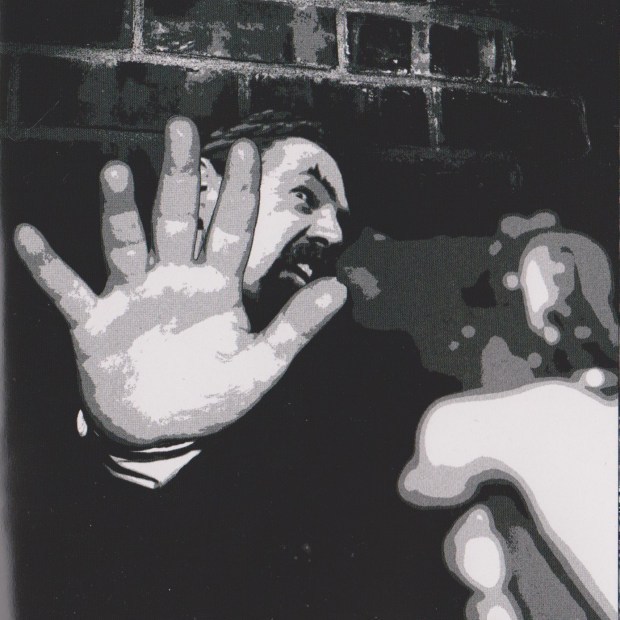
The story picks up with Nikki, the anti-hero from the original Mindcrime, finally being released from prison, 18 years after the events of the first album. He begins to piece together his memories of what happened. He decides to pay Dr. X a visit (“X marks the spot”, goes the lyric), who is deliciously played by the late Ronnie James Dio. For die-hard Dio followers, this was a real treat. Dio sings as if in a stage production, which I’ve never heard him do before. Pamela Moore reprises her role of Sister Mary, playing a larger role and appearing on more songs. She’s a great complement to Geoff Tate, who clearly revels in the chance to do something dramatic like this.
New second guitar player Mike Stone (ex-Criss) gels very nicely with Michael Wilton, playing dual guitar leads that Queensryche of old would have been proud of. At the same time, modern technology has creeped into the production in the form of sequencers and samples, to remind us that this was 2006. Still, Eddie Jackson’s bass had never been recorded this well before; he should be very proud of his rumble. Scott Rockenfield’s back to playing some serious metallic drumming as well, leaving behind some of his tribal influences for the moment.
So, the actual sound of Mindcrime II is amazing. The songs however are not up to the very high standards that Mindcrime I set. There is no “I Don’t Believe In Love” or “Eyes Of A Stranger”, although some songs like “The Hands” come pretty close, with an amazing metallic riff and great chorus. (Did anyone else notice a few bars of music from “I Don’t Believe In Love” within “The Hands”? Listen again.) “I’m American” is lyrically fantastic, and angrier than anything Queensryche has done since Q2K. “Chase” is the one featuring Dio, and the one I keep coming back to.
The thing about Queensryche albums is, they do tend to get better with time. Maybe they were always slightly ahead of the curve, or more likely they just take a few listens to absorb. It’s been a decade now, and few of the Mindcrime II songs remain lodged in the my brain. Meanwhile, I could hum any song from the first one. In particular, the second side of Mindcrime II really takes a drop. Tracks like “Fear City Slide” do not have the impact of “I Don’t Believe in Love”, and the closer “All the Promises” fails to deliver. It’s a concept album after all, and the last song is like the last scene in a movie. It should be memorable.
Will Mindcrime II ever become classic like the original? Doubtful. As soon as you name something with a “II” behind it, you’re painting yourself into a corner, but Queensryche have done about as good a job as the fans could have expected. It seems many fans have warmed up to it over the years, though it certainly cannot be considered equal with the original.
TheDeep Purple Projectcontinues! Here is one big solid chunk of rock majesty.
DEEP PURPLE – The Soundboard Series – Australasian Tour 2001 (2001 Thames 12 CD box set)
One day in spring of 2002, I wandered into Encore Records in Kitchener. I spied this lovely box o’ rock up front in their glass case, where they stored similarly awesome boxes of rock.
“What’s that?!” I asked, and was promptly handed 12 CDs of live Purple. A quick glance, and “I’ll take it.” Only a short while before, I bought yet another 12 CD live Deep Purple box set. When I first noticed this box under the glass, I was hoping it was just a reissue of the same thing; something I already had that I could safely pass on. It only took one close look to realize that this was a whole other animal completely. Rather than a collection of bootlegs from the 80’s and up, like the one I had, this box chronicled Deep Purple’s 2001 tour of Australia, Hong Kong and Japan. What special concerts those must have been. Read on and you’ll discover why.
Each concert presented in this box is complete, and mixed from the 8-track soundboard DAT tapes. No audience recordings in this bad boy, which is a good thing, since Purple were touring with numerous extra musicians and accoutrements that require sonic clarity. Of the six concerts included, four are largely the same. A lot of Ian Gillan’s song intros are the same from night to night, and the setlists are by and large the same. Of course where Deep Purple are concerned, that means very little. Their solos are never the same, and each performance is its own experience. Steve Morse has never really repeated himself night after night, nor did Jon Lord.
There are some cool surprises in the sets. One of the best tracks, and one of the most rarely played, is “Mary Long” from Who Do We Think We Are. This rhythmic monster goes down smashingly well, and it’s a wonder that Purple never tried it any earlier. There are some true buried gems on those early Purple albums, especially Fireball and Who Do We Think We Are, that were never given a fair shake in their day. Deep Purple today are able to have more fun with their setlists than they were in the 70’s. Another such track is “No One Came”, one of the strangest songs in the catalogue. It benefits greatly from a three piece horn section (the Side Door Johnny’s). There are versions with horns on some other live albums as well, such as Live at the Olympia ’96, so while horns are not unheard of in Deep Purple, they are rare. “No One Came” and “Fools” (both from Fireball) are quite a treat any time you get to hear them live, which you didn’t get to do in the 70’s. They also play the classic B-side “When a Blind Man Cries”, a blues that deserves the spotlight.
Of course Deep Purple always play new material, but what’s really surprising is that they only played one song from their last studio album (1998’s Abandon), and only one time, during the first four concerts! At the first show, in Melbourne, they played “’69”. Then it was dropped and the set slightly shuffled. “Smoke on the Water” was moved from the middle to the second half of the set. Speaking of “Smoke”, fans familiar with the Steve Morse version of Deep Purple are aware that he really likes to have fun with the intro. He teases out several classic rock riffs, all instantly recognizable, as he tries to remember which riff is the one he’s supposed to be playing (or so it seems). AC/DC’s “Back in Black” is the one that really stands out, and it’s remarkable how well it works with Deep Purple. There are lots more, including “Whole Lotta Love”, “Heartbreaker” and “Stairway to Heaven”, that one normally does not associate with Deep Purple! Other favourite riffs include “Sweet Home Alabama”, “Little Wing”, and even a Van Halen inspired version of “You Really Got Me”, but the one that surprised me the most was “To Be With You”, by Mr. Big. Don’t forget, Mr. Big are absolutely huge in Japan, so when they played that little bit in Tokyo, I’m sure everybody knew it.
Also of note, Jimmy Barnes came out for “Highway Star” and “Smoke on the Water” for a couple Australian shows. Sharp-minded readers will remember that Barnes was one of many singers who auditioned for Deep Purple in the late 80’s before they hired on Joe Lynn Turner. He seems to have a blast screaming his way through “Highway Star”! Must be like a dream come true. Gillan’s in great voice too, by the way!
For more thrills with special guests, we must go to the last two shows, in Japan. Australia surely had a treat with the Side Door Johnny’s and Jimmy Barnes, but what Japan got was even better. Fresh off their well-received Live at the Royal Albert Hall album from 2000, conductor Paul Mann joined Purple for two nights in Tokyo. That meant a full performance of the legendary and almost never performed Concerto for Group and Orchestra, all three movements. Mann and the New Japan Select Orchestra joined Purple on a number of their songs as well, including “Watching the Sky” from Abandon, but it was only played on the first night. All that said, there was no greater thrill than the presence of Ronnie James Dio. As he did on the Albert Hall album, Ronnie sang lead on two songs from the Purple solo catalogue. He performs Roger Glover’s “Sitting in a Dream” and the delightfully bouncy hippy anthem “Love is All”. Ian Gillan, meanwhile takes the lead on Jon Lord’s “Pictured Within”. Dio also returns for “Smoke on the Water”, trading with Gillan, but what’s really special is that Purple actually performed two Dio songs at these shows. Though Dio and Purple are two very different bands, Purple adapt and do great versions of “Fever Dreams” and “Rainbow in the Dark”. The drum and keyboard parts are the most different, but nobody’s complaining! It’s great that they did “Fever Dreams” from Dio’s Magica, a great album that deserved the recognition. “Fever Dreams” is one of Dio’s best tunes from the latter period.
“Wring that Neck” and “Pictures of Home” were brought out of mothballs for the Tokyo concerts. “Wring that Neck” is a jazzy version with the horns coming in strong, just like it was on the Albert Hall CD. Undoubtedly though, the centerpiece is the Concerto itself. Even though it put Purple on the map in 1969, it wasn’t particularly well liked by the members of the band (Jon Lord aside, obviously, since it was his creation.) With Steve Morse in the band instead of Ritchie Blackmore, feelings softened and ideas like resurrecting the Concerto were possible. The music however was lost. It took Dutch composer Marco de Goeij years to re-create it, but once Lord helped him finish, it could be performed once again. It’s incredible to think that they were able to take it to Japan and play it for those lucky fans, both nights. You can absolutely tell the difference from the London version. It’s fortunate that it was recorded so well (not perfect but damn well good enough!), and released for you to be able to own forever.
There is no point in breaking this down for a disc-by-disc rating. If the box set could be faulted for anything, it is that there is so much repeat between the first four concerts. For me, box sets tend to work best in the car. I put this on a flash drive and took about three weeks to listen to the whole thing in sequence. In that environment, I don’t bore of the songs. Instead I enjoyed the slight differences. “Oh, this is a little different than the way they introduced it, when I heard it a couple days ago.” Obviously, only a true Deep Purple lover needs to own this. But every Deep Purple lover should own it.
Thanks for joining me this week for my Deep Purple Project. I admit that this review is a bit of a cop-out. I got dreadfully sick with the flu a week ago and was not able to finish any more Purple reviews for this week. I pulled an old one out of the hopper instead. This is close to Purple, — the Man in Black himself, and Blackmore’s Rainbow. This review is for music writerVictim of the Fury!
RAINBOW – Live in Munich 1977(2013 Eagle Rock 180 gram 2 LP set)
Something about listening to classic rock with that rich, warm sound of pristine vinyl played on nice big speakers for the first time…is there anything better? Dropping the needle on side A, let us begin the ritual of properly listening to a double live album.
This 180 gram was a birthday gift from my sis, knowing my love of all things Ronnie James Dio. Not to be confused with the double CD Live in Germany 1976, this freshly mastered concert was recorded in 1977 for German television. Dio was one hell of a powerhouse, especially in 1977. Live in Munich contains what must stand as one of the best Dio performances caught on tape. This was caught just before the album release for Long Live Rock ‘n’ Roll. “Kill the King” was a storming opening and the live recording is all but flawless. If Rainbow could be faulted for anything at this point in their brief life, perhaps they played too many long jams on stage. “Mistreated”, the Deep Purple concert favourite, is the first of these. As usual for the Man in Black, Ritchie Blackmore himself, the song is almost 12 minutes in length when stretched out live.
Lets not get into comparing Ronnie James Dio to David Coverdale. There’s no point to that. As with Black Sabbath, you either like Ronnie’s interpretation or you don’t. Regardless is it drummer Cozy Powell who detours most noticeable from the Deep Purple original, doing a busier blast than Ian Paice did. As for Blackmore, his solo spans the entire spectrum delightfully. He fluffs it for a moment, only to immediately take control and keep going. This is a brilliant version of a song we have heard many times. Ritchie then takes center stage for a delicate workout to “Greensleeves”, before blasting into the Rainbow barnstormer. Once again, this is probably the best live version on tape.
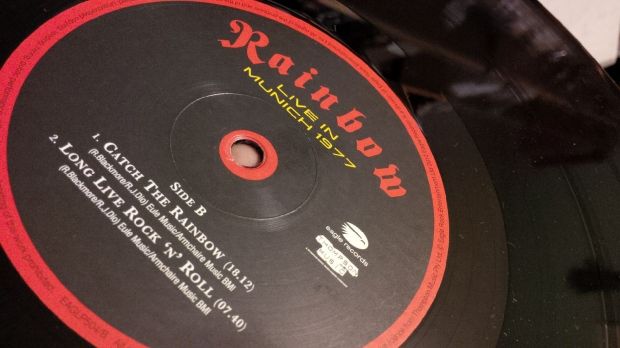
Flipping the record to side B, we are treated to Ritchie seemingly tuning his guitar…melodically…working his way into a lengthy “Catch the Rainbow” including classical interludes. There’s more than a little “Little Wing” within “Catch the Rainbow”, which Ritchie plays into. Bassist Bob Daisley sings the angelic backing vocals, proving why he has been such an integral member to so many bands over the years. In fact this would have to be one of the strongest Rainbow lineups, period. Keyboardist David Stone rounded out the quintet, and he is kept busy on “Catch the Rainbow”. The brand new song “Long Live Rock ‘N’ Roll” is next, and a few people in the crowd indicate they may already know the song! It is presented more Deep Purple in style (hints of “Black Night”), perhaps a bit more laid back with nice flashes of organ here and there.
The second LP has to shuffle the track order out of necessity. “Still I’m Sad” is 25 minutes, so it must occupy all of side C, even though it was played after “Man on the Silver Mountain” in concert. There is something about a side of vinyl that contains one monolithic slab of music in only one track. It feels like a challenge, a solo-laden endurance challenge. Once it starts rolling, it becomes one of the most intense versions of the song yet recorded by Rainbow. Then it goes all over the place as pretty much every member has moments to shine. It’s way too much and it’s way over the top and taxing even to the staunching rock fans. It was 1977 and this is the way it went down!
Settling in for the final slab o’rock, side D is also daunting with two tracks of 15 minutes apiece. Purple’s “Lazy” is teased out, as part of “Man on the Silver Mountain”. Lots of soloing and noodling abound, and the big weakness with this period of Rainbow is that they thought we needed this much of it. The segue into “Starstruck” is way more fun. More solos and a frantic “Do You Close Your Eyes” ends the concert. Stone’s keyboard solo is cheesy fun, but overall this is another great over the top performance from Rainbow. You can hear a guitar destroyed at the end of it all.
Double lives are best experienced on vinyl, and pristine 180 gram records fit the bill perfectly. If you’re going to go double live for Rainbow, do it with Live in Munich.
4/5 stars
A
1. “Kill the King”
2. “Mistreated”
3. “Sixteenth Century Greensleeves”
B
1. “Catch the Rainbow”
2. “Long Live Rock ‘n’ Roll”
C
1. “Still I’m Sad”
D
1. “Man on the Silver Mountain”
2. “Do You Close Your Eyes”
GETTING MORE TALE #453: What is Your Front-Person Style?
There are two types of people in this world: those that can make music, and those that cannot.
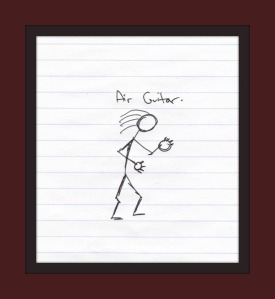
After many years of trying, I have to admit it, that I fall into the latter category. I can’t make music. I tried. I can make some noise and scream, but you wouldn’t pay money to see me in concert. Instead I’ve focused my energy on two things: writing about music, and playing air-music.
Air guitar (and to a lesser degree, air bass) is timeless, and I’ll wager that anyone with arms has done it.
Harder to fake, but much more rewarding due to the physical exertion, is a good air drum session. It’s easy to fake an air guitar mistake, but it’s harder to cover up when you’re on air drums.
It’s arguable that even more popular than these activities is lip-syncing to your tunes. But why stop there? After all, singing the song is only part of a vocalist’s job. The other part is entertaining the crowd, otherwise known as fronting the band. Think about it: Is Ozzy Osbourne successful because of his singing, or is it the fact that he is generally listed as one of the top most entertaining frontmen in rock? Same with W. Axl Rose. Part of the allure of Guns N’ Roses is seeing what kind of mood Axl will be in that night. What will he say? What will he do?
I’ll admit that when I’m alone in the house, blasting the tunes, it’s fun to play frontman and pretend I’m in charge of the best air band of all time. It’s even more fun to do this in the back yard; that’s just an “FYI” for those brave enough. While I’ve never consciously set out to copy a singer, I’ve noticed that my personal style as “air frontman” has been influenced by many of the greats, Mr. Rose included.
Once Guns N’ Roses hit the big time for real, they were touring massive stadiums, indoor and out. Their stage was phenomenally huge, and Axl would run from one side all the way to the other, usually while trying to sing! Duff, he’d just walk it. Not Axl. Many of these stage runs would end with him jumping off a riser. Not to be outdone in this regard is Brian Vollmer from Helix. Starting from their club daze, he used to somersault from the stage onto tables. When I saw him in Kitchener in ’87, during one song he climbed up onto the mezzanines, ran across the entire balcony, and then climbed back down the other side of the stage. I’ve seen Helix a hella-lot, and Vollmer still has no problem jumping on tables. He’s an awesome machine of a frontman, and he taught me that there are no boundaries between audience and band. Looking up to guys like these, when I have the space, as air frontman I like to run and jump too! I can’t do it like I used to in my teens, but I still do it.
Another frontman that heavily influenced my personal style was Paul Stanley of Kiss. Sometimes, depending on the song, it just feels right to play air rhythm guitar too. When performing to a song that felt this way, Paul Stanley became my model. Nobody can dance with a guitar like Paul. Much like Axl, Paul (especially in the 80’s when he wasn’t wearing platforms) was known to run and jump all over the stage. I will sometimes catch myself doing a specific spin that I saw Paul do in the “Thrills in the Night” video.
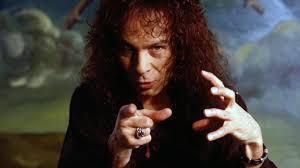
When not wielding my air-axe, I tend to need something to do with my hands! Who was the master of fronting a band with his hands and voice alone? Why, that would have to be Ronnie James Dio himself. I don’t tend to go for clichés like the devil horns; I make up my own gestures. However there is no denying that Ronnie James Dio is my number one air frontman inspiration when it comes to my hands. There are none better than Dio. There never will be.
These four guys undoubtedly had the most impact on me as an air frontman, but there is one more who cannot be ignored, and that is Mike Patton. My buddy Peter recorded a Faith No More performance from Saturday Night Live, and Patton was climbing up the scaffolding. I’d never seen a weirder performer in a rock band. What a bizarre, yet cool, image. So, if the song called for it, I’d throw in some Patton weirdness. Lurching across the stage, or flailing wildly, or even just standing stock-still, Mike Patton taught me a few extra bonus moves for my bag of tricks.
I don’t know how to dance. I have no dance moves whatsoever. I’m the Seth Rogen of dancing. All I have is the “dice thing”; that’s all I got. But when it comes to rocking the house as the best damn air singer around, I’ll take on all comers!
DIO – Holy Diver (2012 Universal deluxe edition, originally 1983)
Ronnie James Dio often said that the best Dio album was the first. Fans will always have their own favourites, but there is no denying that Ronnie was right about Holy Diver being a special album. Dio had always had a knack for rallying talented people around him. Just look at that lineup: Ronnie and Vinny Appice had recently fled Black Sabbath. Jimmy Bain had worked with Dio in Blackmore’s Rainbow, an integral part of that band’s lineup in the Rainbow Rising period. On guitar – Vivian Campbell, from little known New Wave of British Heavy Metal band Sweet Savage. A shredder he was, able to compete with the hot flashy players of the 80’s.
Very few people do speedy metal songs better than Ronnie James Dio. “Stand Up and Shout” is the prototype of such Dio songs. Youthful and rebellious, “Stand Up and Shout” was exactly what fans in 1983 were craving. The band got to show off their chops a bit, with Vinny Appice leading the way via a hell of a drum performance. Then it’s Vivian’s turn to shine on one of the speediest solos laid to tape. “You are the strongest chain and not just some reflection,” sings Ronnie, inspiring the masses with his positive message of self-belief.
For the first four albums, Dio always put the title track second. If this holds some special meaning, I do not know. “Holy Diver”, with its ominous opening, still remains upon the lofty peak of the best songs Ronnie has ever written. The riff, written solely by Ronnie, is iconic. Perhaps it is not recognized on the level of immortal riffs such as “Whole Lotta Love”, but among metal fans, it is held in high regard. “Holy Diver” is the shiniest jewel in the crown, a massive track that just has everything. Bain and Appice formed a tight rhythm section with the exact right amount of heft. The song is flawless…shiny diamonds indeed.
Like the eyes of a cat in the black and blue, something is coming for you.
“Gypsy” is a knockout. Ronnie belting in full voice with a solid mid-tempo song behind him is always a pleasure. This is Vivian’s first writing credit on a Dio album. The guitar solo could use some focus, but I think the directive here was “just shred”. One of Dio’s most pop moments (in terms of melody only) is “Caught in the Middle”, one of his catchiest, most concise and direct songs. Even Vivian sticks to point on the solo. But “Caught in the Middle” is soon eclipsed by an even more exciting song: “Don’t Talk to Strangers”. The acoustic fake-out intro is a trick Dio pulled again later on “The Last in Line”, but when the song really starts, it’s friggin’ frantic. It’s like the wind. These guys had so much energy, it is remarkable. “Straight Through the Heart” has balls to it, it’s a groovy tune. I loved Halestorm’s cover of it immensely. I think they really caught and emphasized what is great about the song. Lzzy Hale is one of very few people who can do Dio justice vocally.
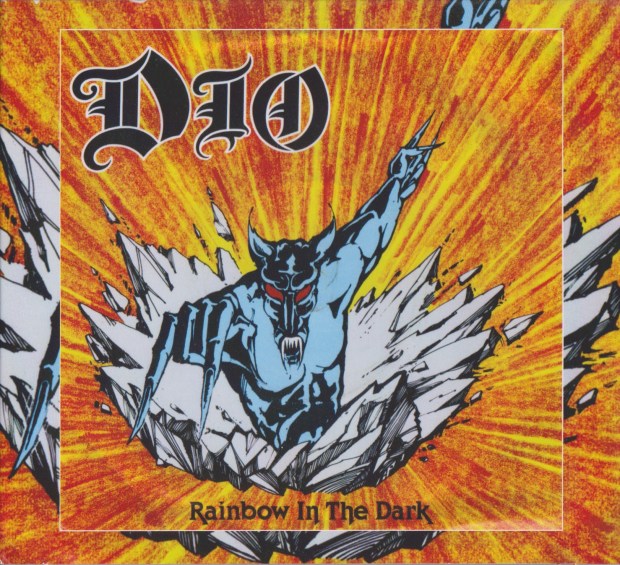
The slow intro to “Invisible” reminds me of a 1987-era Whitesnake ballad. This is another trick! It stops and abruptly turns into another Dio stomper of high quality. There is very little letup on this Dio album. The momentum is maintained by the stunning single “Rainbow in the Dark”. That’s Ronnie on keyboards, by the way. I have a story about this song.
Our local rock station, 107.5 Dave Rocks, has a 3:00 contest called the Tedious Tiresome Trivia in the Tri-Cities, or the TTT in the TC. What makes it so tedious and tiresome are the callers. Craig seems to attract the…how should I say this? The most “interesting” callers. The most notorious of these is “Bore-linda” who has a legion of haters who can’t stand her perky tone. (She’s actually a very nice lady in real life.) Craig Fee would receive emails from annoyed listeners saying, “Hang up on Bore-linda! Play some Dio!” So that’s exactly what Craig did, and he chose “Rainbow in the Dark” as the song. And Bore-linda calls in a lot. And Craig hangs up a lot. For a while, “Rainbow in the Dark” was played almost daily between 3 and 4 o’clock. And you know what? It never got tiring. Every single time it came on was a fist-pumper.
Holy Diver deserves a dramatic ending, and that would be “Shame on the Night”. Copying the template of a song like Sabbath’s “Lonely is the Word”, it occupies the same kind of slow-paced dark metal space. Vivian’s guitar intro is very cool, but the song just pounds.
The bonus CD is chock full of Dio goodness. Deluxe editions should always present a complete set of B-sides. This has the three from this era, including the studio cut “Evil Eyes”. This excellent, cruisin’ tune was re-recorded for The Last in Line, and the B-side version has remained obscure until now. Vivian has a lot of different solos on this version, and they are all cool. Then, essential cuts “Stand Up and Shout” and “Straight Through the Heart” are both live B-sides, every bit as electrifying as the originals. They are simply more raw, probably a little faster, and there is nothing more powerful than Ronnie James Dio’s voice live in the raw.
The balance of the disc is fleshed out by six live songs recorded for radio by the King Biscuit Flower Hour. They sound excellent, thanks to King Biscuit. You get “Stand Up and Shout” a second time, but the rest of the live songs are not repeats. In the mix are some Sabbath (“Children of the Sea”) and some Rainbow (“Man on the Silver Mountain/Starstruck”). Of the two, “Children of the Sea” fares better from the Dio band’s interpretation. To be fair, I think Tony Iommi and Ritchie Blackmore both have so much personality, that it is daunting to cover them no matter who you are. I think Vivian’s style works less well on the Rainbow song than it does with Sabbath’s material. The rest of the songs (“Holy Diver”, “Rainbow in the Dark”, “Shame on the Night”) are all quality Dio tracks. Although the market is now inundated with live Dio packages, it is still a delight to have these early recordings on CD.
I needn’t divulge that this deluxe edition is loaded with cool liner notes and pictures. You have come to expect that from a good deluxe edition. And Holy Diver is quite good indeed.
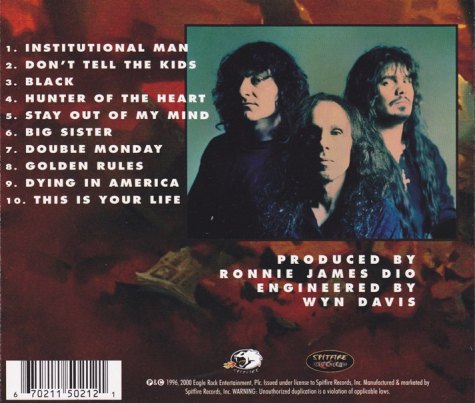
I have never liked Angry Machines. Right from the moment it came out, to today, I do not like Angry Machines. It’s not because I don’t like this Dio lineup. I’m quite fond of the Strange Highways record, which features the same band (Jeff Pillson – bass, Vinny Appice – drums, Tracy G – guitars). Given my fondness for that previous record, and the awesome cover art emblazoned upon Angry Machines, I was looking forward to this album. Now, all these years later, even cranked to max volume it has failed to grow on me and remains my least favourite Dio album by a fair margin.
When Dio gets his hands on a treacherously slow heavy metal song, he can sometimes wring great things from it. Angry Machines, however, is bogged down with many agonizingly slow, soundalike trudgy songs. The opener “Institutional Man” almost resembles Born Again-era Sabbath at times for sheer slow chug, but it lacks any sort of hooks. Ronnie is bellowing as incredibly as he always has, but he’s grasping for a melody to hang his powerful voice on. The saving grace is a razor sharp guitar solo by Tracy G.
Thankfully “Don’t Tell the Kids” is a speed metal rocker. I didn’t expect Ronnie to take it to Motorhead tempo, and that’s cool. Lack of hooks is the problem again, so you’re left with little but the smoking instruments to carry you through. MVP: Vinny Appice who has never sounded so lively!
The disc gets stuck in the mud after “Don’t Tell the Kids”. The atonal “Black” doesn’t do anything for me, although I do admire the stripped-back production (by Ronnie and engineer Wyn Davis). I dig Jeff Pilson’s bass hook on “Hunter of the Heart”, and the chorus is pretty good, but the song is mostly forgettable. Then is the slow and boring “Stay Out of My Mind”, a real snooze. A 7-minute snooze with an extended keyboard segue! Continuing with the mind control theme, “Big Sister” isn’t much to write home about either, except in terms of Vinny’s relentless sticks.
“Double Monday” has cool acoustic segment, very unlike typical Dio. Unfortunately this one section does not save the song which is otherwise dreary and grating. Up next, I enjoy the vintage groove of “Golden Rules” but again there’s not much of a song here. Same goes for the penultimate track “Dying in America”.
You may already be familiar with the best song on Angry Machines, a piano ballad called “This is Your Life”, that was re-released on the 2014 tribute album of the same title. When I reviewed that excellent CD, I had this to say of “This is Your Life”:
Fittingly, the album ends on a ballad: Dio’s own somber “This Is Your Life”, performed by the man himself in 1996. I did not like the Angry Machines album, but if there was one song I would have picked as a highlight it would be “This Is Your Life”. Performed only by Dio and Scott Warren on piano, it is unlike anything else in Dio’s canon. The lyrics speak of mortality: “This is your life, This is your time, What if the flame won’t last forever? This is your here, This is your now, Let it be magical.”
The always lucky Japanese fans received a bonus track with the cool title of “God Hates Heavy Metal”. Although I am intrigued I have not been motivated enough to search it out.
Thanks for joining me this week for Purple Week at mikeladano.com. Today is Part 5 and the last album for now. But don’t worry, I don’t think we’ve seen the last of Deep Purple around these parts…
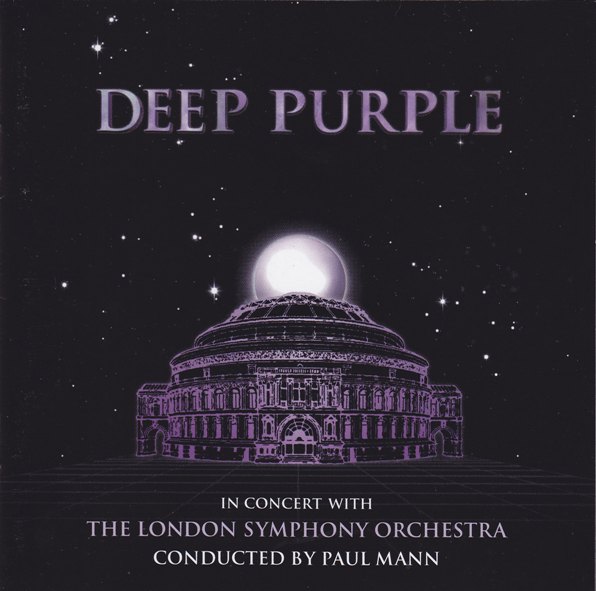
DEEP PURPLE – In Concert with the London Symphony Orchestra conducted by Paul Mann (1999 Eagle Records)
The original Concerto for Group and Orchestra (1969) was Jon Lord’s baby. The rest of the band didn’t care too much for it, and it had only ever been performed twice. The Albert Hall recording became a successful live album, and it was performed once more in Los Angeles. Soon after, the original score was lost, permanently. Even if Deep Purple wanted to (and let’s face it, if Blackmore were in the band he’d probably say no), it could never be performed again without the sheet music.
I’ll let Jon Lord take it from here. From the liner notes to the CD:
“Marco de Goeij, a young Dutch composer…had decided to re-create it by listening to the recording and watching the video. Over and over and over again. A task of mind-bending complexity, dexterity and musicality, which then only left me the far simpler job of filling in what he had been unable to decipher, re-creating what I could remember of my original orchestration, and in part, as those who know the work will hear, re-composing where I felt it needed it.”
Conductor Paul Mann had independently been searching for the original lost manuscript. When Jon informed him of the re-created one, Mann was on board with the London Symphony to do it once more. Deep Purple now had a new guitar player, Steve Morse, who undoubtedly would have to bring his own slant to the guitar solos. For Jon and the fans, it’s the stuff of wishes come true.
Since the Concerto was really Lord’s project, it seems like a fair compromise for each of the members of Deep Purple to also get a moment or two to showcase their solo work. In fact many musicians from those solo works are welcomed to the stage, including the Steve Morse Band, Ronnie James Dio, Mickey Lee Soule (ex-Rainbow and ex-Gillan), Sam Brown, and more. Deep Purple fans are generally open to different styles of music, and this album showcases those styles in a professional, classy format.
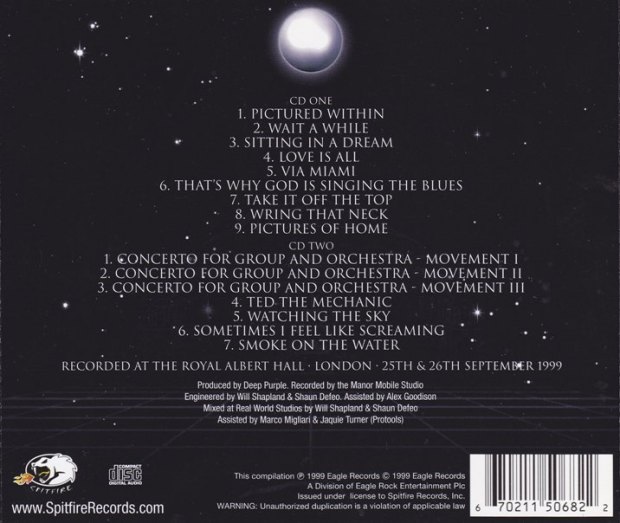
Once again at the Albert Hall, the set commences with a disc highlighting the solo careers. Lord’s “Pictured Within” (with Miller Anderson) and “Wait a While” (with Sam Brown) begin the proceedings with a quiet, powerful pair of songs backed by Jon’s piano and dramatic strings. These versions are, dare-I-say-it, superior to the original studio versions.
From there, Roger Glover’s solo career gets a looksee, with “Sitting in a Dream” and the irresistibly bouncy “Love is All”, my favourite. Ronnie James Dio reprises his vocals from the original Butterfly Ball versions, sounding as great as he did nearly 30 years prior! It really is impossible not to like “Love is All”, which of the two is especially fun.
In 1988, Ian Gillan and Roger Glover did a project together called Accidentally on Purpose, a quirky tropical pop rock album. “Via Miami” is one of the more upbeat tracks from that album. Ian’s “That’s Why God is Singing the Blues” features his solo band’s guitarist Steve Morris (not Morse!) Both it and “Via Miami” spark and roll along joyfully.
Steve Morse (not Morris!) is up next with the Dixie Dregs’ “Take it Off The Top”. It’s the Steve Morse Band and the Kick Horns. It’s always a pleasure to listen to Dave LaRue, Van Romaine, and Steve Morse playing together, but to hear them at the Albert Hall? That’s a venue suitable to the genius they wrench from strings and wood. Graham Preskett joins on violin to dual Morse with string acrobatics.
Ian Paice’s spotlight song is a horn-laden jazz version of Purple’s “Wring That Neck”. This is my kinda jazz, the kind with a rock beat you can swing to! The violin solo lends it a bluegrass feel, too. The first CD ends with a powerfully heavy “Pictures From Home”, originally from the immortal Machine Head record, performed by Deep Purple with the London Symphony. It’s a powerful, dramatic song on which for the full Deep Purple to enter.
Disc two features the entire Concerto from start to finish, all three movements, roughly 50 minutes in length. This truly was Lord’s baby, the piece that kept him up nights in 1968 and 1969 writing little black notes on white paper. It made Deep Purple a unique property when it was released on LP 1969, but had not been heard live in 30 years. Purple fans will be in seventh heaven with this de-extinction. Indeed, Morse’s guitar is different, but he hits the right notes at the right time while still playing within his style. Otherwise, I’ll be damned but I can’t tell the difference.
What can I say of the Concerto itself? I think it’s pretty cool, and I’ve always geeked out to stuff like this. Jon envisioned it as “rock band meets orchestra” — at first they say hello, and play around, then they start shouting at each other, and before long it’s all-out war! Speaking of shouting, my favourite is probably Movement II, which has Gillan’s all-too-brief but oh-so-perfect vocal.
The disc concludes with three more (three Morse?) of recent vintage. “Ted The Mechanic” and “Sometimes I Feel Like Screaming” are two of the best songs from Purpendicular, and “Watching The Sky” is probably the heaviest song from Abandon. I personally feel that all the Abandon material was better live than on album, and “Watching The Sky” maintains that. Unfortunately none of the Abandon songs were really that great.
Of course, “Smoke On The Water” ends the album with guests returning, including Ronnie James Dio who takes a verse. “What do you think Ronnie!” Then the Elf himself is up at the microphone singing “Smoke on the Water” with Blackmore’s old band Deep Purple. I shouldn’t need to tell you that this is one of my all-time favourite live versions of “Smoke”.
This album, which ended up being one of Lord’s last with Purple, was really a special gift to the fans. It is a beautifully crafted live performance containing some of the rarest of the rare gems in the extended Purple canon. An event like this will never happen again. There is a DVD of this show, but beware, it is only about 2/3 of the set. What a disappointment that DVD version was. You want every moment, but you won’t get it.
If you do hunger for more after this, then you can binge on The Soundboard Series 12 CD boxed set. It consists of 6 shows, two of which featured full live performances of the Concerto, with guests such as (yup!) Ronnie James Dio. There is also Live at the Rotterdam Ahoy which lacks the Concerto portion, but makes up for it with a more extensive set of classic rockers, including Dio’s own “Rainbow In The Dark” and “Fever Dreams”!…But that’s another review.
5/5 stars. For the true fan, and anybody who’s not afraid to expand their listening territory.
NOTE: This is basically a review of the Deluxe edition of Live Evil. I own The Rules of Hell (2008) box set of Dio-era Sabbath, so I did not need to buy the later Deluxe of Live Evil. The 2 CD edition inside The Rules of Hell is sonically the same.
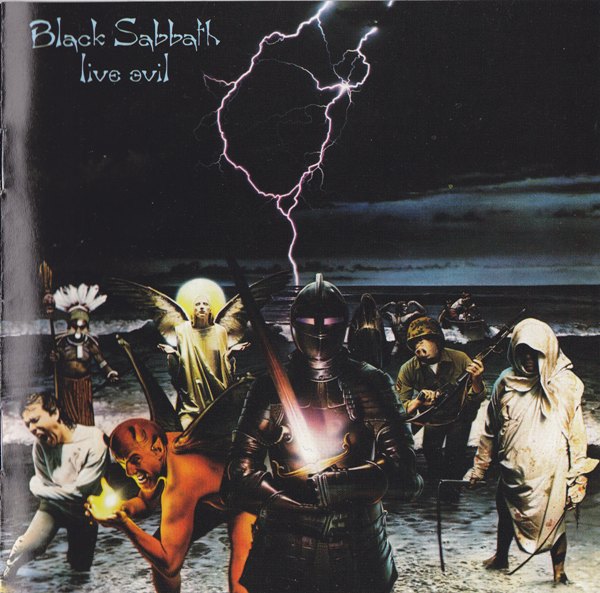
BLACK SABBATH – Live Evil (1982 Warner, 2008 Rhino)
Live Evil: Not only a palindrome, but also the last gasp of the Dio/Appice/Iommi/Butler lineup of Black Sabbath. Hard to believe that their first “official” live release was with Ronnie James Dio at the mic and not Ozzy Osbourne! This infamous live album was the last thing Sabbath did before Dio left (the first time) and it’s actually a lot better than people generally give it credit for.
Some folks may not enjoy that live, there’s only one guitar. When Iommi takes a guitar solo, the gap is filled by bassist Geezer Butler and keyboardist Geoff Nicholls. The audible keyboards in the middle of a heavy metal song like “Neon Nights” do take a little getting used to, admittedly. In the end though, it’s part of the scenery. Black Sabbath didn’t do much with live keyboards in the original Ozzy era, but they were a part of every Sabbath lineup since. There was also apparently a lot of behind the scenes bitching about instrument levels and whatnot that supposedly lead to the disintegration of the band. This remastered edition of the CD leaves me with few qualms about the sound.
Back in the 80’s and 90’s, you used to see a lot of fan rivalry. “Dio sucks!” or “Dio rules!” Today we all have the perspective to know that you can have both Ozzy and Dio, like having your cake and eating it too. Well, until Dio’s heartbreaking 2010 death, that is. It is true most singers that Sabbath have had couldn’t do the Ozzy material convincingly. Ozzy sounded genuinely disturbed and terrified on “Black Sabbath”. (“What is this that stands before me? Figure in black which points at me. Turn round quick and start to run. Find out I’m the chosen one…oh no, please God help me!”) Dio camps it up quite a bit, which is not my personal preference. The same goes for “War Pigs”. I also find that Vinny Appice just can’t cop the vibe that Bill Ward got on the drums. Ward played it very subtle, almost tribal, and Vinny plays it straight ahead. But I’ve yet to hear any lineup that can do that song as well as the original album version, including the reunited (1997-2012) Sabbath with Ozzy and Bill. (Appice also gets a drum solo on “War Pigs”; thunderous but not necessary.)
The set list for this album was pretty cool, including Mob Rules favourites “Voodoo” and an absolutely killer “Sign of the Southern Cross”. This version, melded with a long extended “Heaven and Hell”, is among the very best moments in Dio’s career. Basically, all the Dio-era material here is excellent, while the Ozzy-era stuff leaves you feeling just a little bit underwhelmed. Not to say they’re bad, they’re just…different. Two completely different singers with their own personalities. The fact is that Dio made it work live as best he could, and that’s commendable.
MVP: The super slinky Geezer Butler. The remastered edition allows us to hear with real clarity every massive note, and his bass is like a jolt of caffeine to the brain!
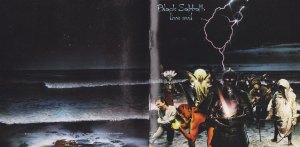
Since this is a 2CD set, all the between-song banter that was deleted on single disc versions has been restored. That’s important. Dio talks a lot between songs and that’s part of the album. Otherwise there is no bonus material. There are ample and interesting liner notes, and the front cover looks absolutely stunning. This is one of Sabbath’s all-time best covers (perhaps second only to their first album) and it definitely shines in this edition. (But don’t let that stop you from tracking down a vinyl copy so you can see it in its 12×12 glory!)
Shame that this was the last album of the original Dio era, but of course Dio and the band felt there needed to be additional chapters later on. And so there were. Live Evil remained a controversial album for a decade after its releasing, dividing fan and band opinions. I asked two of my esteemed Sausagefest rock scholar friends for their opinion on it, to make sure we’ve covered all the bases. This is why they had to add:
Uncle Meat: “As good as Dio was as a singer, I never really liked some of his takes on Ozzy Sabbath songs. He kinda over-sings them. It’s like he is bored with them and he appeases the singer in himself. Also the mix is pretty horrible as well. The truth is, the only great Sabbath live album isnt even a Sabbath album. Ozzy’s Speak of the Devil still sounds great today.”
Dr. Dave: “I don’t love or hate it. I like it. The most interesting thing for me, besides Dio, is the Vinny Appice take on the whole thing. More of a groove, less of a swing than Bill Ward. Not saying better, just neatly different.”
Final note: The liner notes correct Dio’s name to Ronnie James Dio. The original LP and CD had his name printed as simply “Ronnie Dio”, as a bit of a “fuck you” to the singer. They do not, however, reinstate Vinny Appice as an “official” member, having his name under “special thanks”!
3.5/5 stars. The most historic of the Sabbath live albums.
For the Top Whatever of No Pre-Determined Amount from two of Canada’s most knowledgeable rock gods, stay tuned right here. From Meaford Ontario, weighing in at XXX lbs, it’s Iron Tom Sharpe, who turns it up to 11.
Tom’s Top Eleven of 2014
11. Various Artists – RONNIE JAMES DIO: This Is Your Life
10. JUSTIN TOWNES EARLE – Single Mothers
9. MASTODON – Once More ‘Round the Sun
8. EARLY MAN – Thank God You’ve Got the Answers For Us All
7. OPETH – Pale Communion
6. JOHN GARCIA – John Garcia
5. ST. PAUL & the BROKEN BONES – Half the City
4. sHEAVY – The Best Of sHeavy – A Misleading Collection
3. DRIVE-BY TRUCKERS – English Oceans
2. BRANT BJORK and the LOW DESERT PUNK BAND – Black Power Flower 1.ORANGE GOBLIN – Back From The Abyss
Saving the best for last, here’s Uncle Meat. For added rocket sauce he’s also given me his top movies of 2014.
Meat’s Top Eight of 2014
8. MASTODON – Once More ‘Round the Sun
7. ECHO AND THE BUNNYMEN – Meteorites
6. FOO FIGHTERS – Sonic Highways
5. “WEIRD AL” YANKOVIC – Mandatory Fun
4. FLYING COLORS – Second Nature
3. BRANT BJORK and the LOW DESERT PUNK BAND – Black Power Flower
2. DRIVE-BY TRUCKERS – English Oceans 1.ORANGE GOBLIN – Back From the Abyss
Meat’s Top Twelve Movies of 2014
12. Lucy
11. X Men : Days of Future Past
10. St. Vincent
9. Interstellar
8. The Lego Movie
7. The Grand Budapest Hotel
6. Captain America: The Winter Soldier
5. The Hobbit: The Battle of the Five Armies
4. Guardians of the Galaxy
3. Get On Up
2. Birdman 1.Whiplash
Compilations are always fun to quibble about. Fans like to complain about which songs are missing, and which songs they’d replace. I won’t spend too much time talking about that. Most reviewers have already pointed out that “Sign Of The Southern Cross” and “Time Machine” are missing from the 2007 Dio-era Black Sabbath compilation, The Dio Years.
It’s very important to remember two things. One, this album contained the first new Black Sabbath music released in nine years. Nine years! This is a band that used to release an album every year, up until the point that Ozzy Osbourne rejoined the band. Since then (and before the new album 13), the band released exactly two new songs (both with the Ozzman singing) and started to stagnate. Since The Dio Years represented the first new Sabbath material in almost a decade, it bears a listen.
The second point of note: this set was originally supposed to be a 2-CD boxed set. As such I’m sure a lot of songs were dropped along the way, Yes, “Southern Cross” is missing. However, this reviewer’s only real quibble is “Southern Cross”. I mean, hey — “Lonely is the Word” is on here! I would have replaced “Lady Evil” with “Southern Cross” myself (I never liked “Lady Evil” much), but perhaps the fine folks at Rhino felt that one 7+ minute epic was enough for a single disc. I can understand that logic. Besides, I, like every Sabbath fan worth his or her own salt, already own Mob Rules.
This disc was freshly remastered. I should point out that this remastering session was not the same one that produced the series of Sabbath Castle remasters in the late 90’s, but one that occurred in 2006/7. As such the sound is even heavier (louder). I found that I had to roll down the bass a bit, as my normal settings made the bass just too heavy. This was also the first time that the material from Dehumanizer (15 years young!) had been remastered. The running order is a little weird, though. “Heaven and Hell” as the third song on an album? A live “Children of the Sea” following “I”? The flow is lacking in cohesion.
The liner notes are excellent, very detailed, with lots of facts that casual Sabbath fans didn’t know (like the fact that Craig Gruber from Rainbow, and Sabbath keyboard man Geoff Nicholls were brought in to play some bass when Geezer briefly left the band in 1980). There are a bunch of cool pictures and artwork as well, which fit in nicely with the Sabbath vibe.
Every Dio-era album get a look-in, even the controversial Live Evil via a great version of “Children Of The Sea”, almost as memorable as its studio counterpart. No rarities. What you get instead are the aforementioned three new songs. That’s one more than Ozzy gave you on the Sabbath Reunion CD, by the way!
When Dio was with Sabbath he tended to talk about his songs in terms of tempo. As such, you get one “fast one” (“Ear In The Wall”), one “slow one” (“Shadow Of The Wind”) and one mid-tempo song (the single “The Devil Cried”). I almost always prefer the fast Sabbath stuff, so obviously “Ear In The Wall” is my favourite. Sound-wise, these three new songs pick up where Dehumanizer left off, and foreshadow The Devil You Know.
Geezer, unfortunately, was not involved in the writing. Iommi and Dio also did the production themselves. This might have something to do with the fact that I can’t hear nearly enough of Geezer’s trademark slinky bass lines–something I identify with the Sabbath sound more than any singer they’ve ever had. Iommi’s playing some good riffs and some scorching solos here, although I have found his guitar tone over the last decade to be too modern and distorted. I much prefer it when he gets a nice amp-driven sound rather than something so processed. However, bottom line is, these three new songs are good, albeit not essential, parts of the Sabbath catalogue.
Thankfully these three new songs were not the last gasp of Black Sabbath. Before his untimely death, Ronnie James Dio recorded The Devil You Know, under the name Heaven & Hell. And of course after that, the original Black Sabbath finally delivered the unforgettable 13.


 The story picks up with Nikki, the anti-hero from the original Mindcrime, finally being released from prison, 18 years after the events of the first album. He begins to piece together his memories of what happened. He decides to pay Dr. X a visit (“X marks the spot”, goes the lyric), who is deliciously played by the late Ronnie James Dio. For die-hard Dio followers, this was a real treat. Dio sings as if in a stage production, which I’ve never heard him do before. Pamela Moore reprises her role of Sister Mary, playing a larger role and appearing on more songs. She’s a great complement to Geoff Tate, who clearly revels in the chance to do something dramatic like this.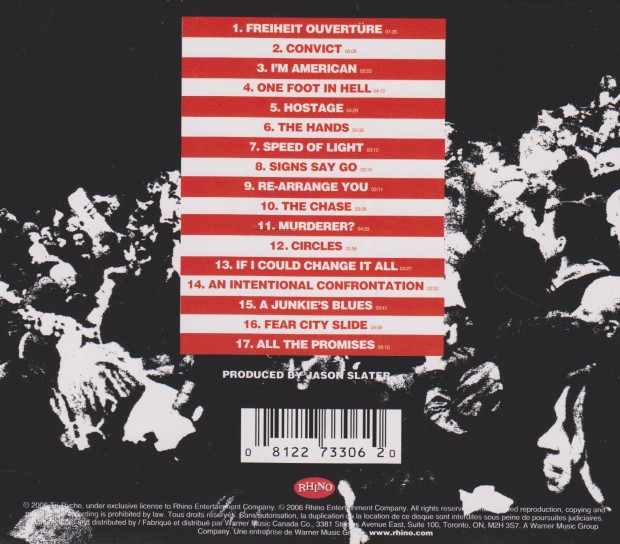




















 mikeladano.com