soft rock

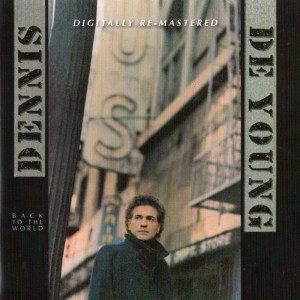
REVIEW: Dennis DeYoung – Back to the World (1986)

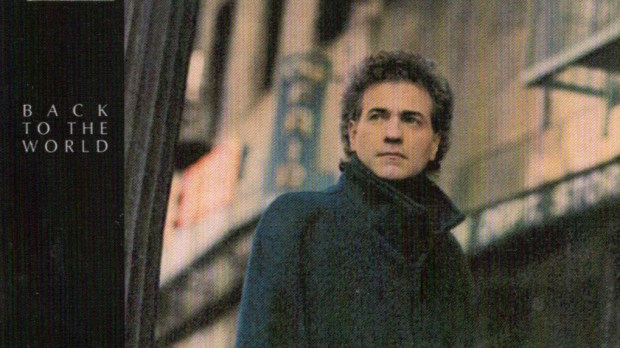
DENNIS DeYOUNG – Back to the World (1986 A&M, 2013 BGO reissue)

Though his solo debut Desert Moon was a moderate hit, Dennis DeYoung took no time off and was back with a second album two years later.  Still using Tom Dziallo on guitar, Dennis also added C.J. Vanston on keyboards.  With Dennis being an acclaimed keyboardist himself, was this too much of the instrument?  Once again, DeYoung wrote everything himself, with no cover tunes this time.

Opening the album is the theme from The Karate Kid II, “This Is the Time”.  Fortunately the song is a lot better than the film.  With emphasis on saxophone and keyboards, this is a pleasant, anthemic light rock theme.  With some exposure, it could have been a minor hit, but fortune was not with Dennis this time.  The track only made it to #93, while the album peaked at #108.

“Warning Shot” has a bombastic Styx-like opening, though with less emphasis on guitar.  Dennis’ singing here is top notch, employing a lovely falsetto when necessary.  When the chorus hits, it feels like this is the Dennis we have been waiting for.  A spectacular guitar solo brings it into a classic rock realm, but really “Warning Shot” is all chorus.  A host of backing singers join in and the song launches into the stratosphere.  It should have been a single.

The biggest hit, the ballad “Call Me”, was the single, which hit #5 on the Adult Contemporary charts, where no Styx fans were likely to hear it.  It has some nice saxophone textures, but it’s unremarkable and will always live in the shadow of Dennis’ better known ballads.  It’s just too light.  “Unanswered Prayers” is better, with some lyrical guitar work in the intro and solo.  This slow number feels like a nice one for a slow dance, but the album needs a jolt of energy and this isn’t it.

Opening side two, “Black Wall” is darker and harder edged.  It’s a slow burner with focus returning to the guitar.  It is not exactly the energy injection we need, but at least it is a change of direction.  The “Black Wall” in the title refers to the Vietnam Veterans Memorial, in Washington D.C.  The powerful music is suitably dramatic and deliberate, with the soulful backing vocalists dominating the chorus.

A bluesy harmonica solo introduces “Southbound Ryan”…but the electronic tom tom drums just jar you when they come in.  Fortunately once that’s out of the way, we’re onto one of the best tracks on the album and the shot of energy we so desperately needed.  A smoking horn section blasts forth, and the tempo is finally hot!  That horn section is like the jelly in a PB&J!  So sweet, so good, just the perfect punch for a song that deserved it.

Fortunately, the tempos and horns remain on the next song, “I’ll Get Lucky”.  We’re definitely in the 80s now, with more keyboards and programming at the forefront.  Notably, C.J. Vanston contributed a rocking instrumental section in the middle.  The song is a bit jerky, going from dense sections to sparse ones, and it feels bumpy compared to the prior one.  Would it have been better had Dennis just played it simple instead of trying to get so clever with the production?  Once again, Dennis produced the album himself.

The final song, “Person to Person” has a Styx-like vocal and might have worked on one of the later albums.  It’s a little too savvy for a pop record, which is a good thing.  Had Styx done it, hopefully it would have less synth and corny toms, but it was 1986 and that was the sound to have.  At least Dennis closed the album on an uptempo note, and a song with a memorable chorus.

Had Dennis employed an outside producer, perhaps his first two studio albums would be more even.  Back to the World and Desert Moon share this problem.  Both albums sag in spots, and despite some awesome songs throughout, there are not enough of them.

3/5 stars


REVIEW: Dennis DeYoung – Desert Moon (1984)

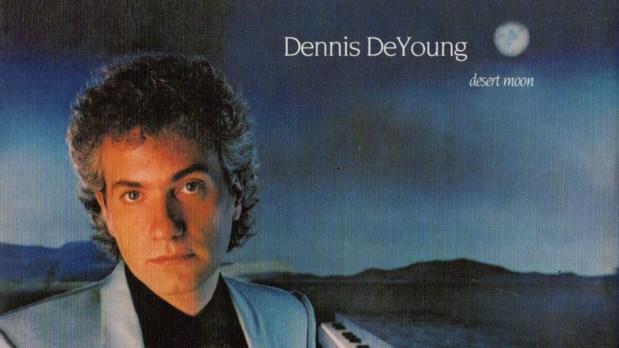
DENNIS DeYOUNG – Desert Moon (1984 A&M, 2013 BGO reissue)

Alas for me in ’83, Styx were coming very close to an end.  Tommy Shaw didn’t want to sing songs about robots (or something) but what it really came down to was Dennis DeYoung’s vision vs. his.  Dennis was the theatrical one, and Tommy was the rocker.  That’s putting it in simplistic terms, but by the end of the tour, Tommy was out.  The other three members of Styx wanted to replace him and carry on, but Dennis was not interested.  In 1984, Styx issued their live album Caught in the Act, and said goodbye.  Less than six months later, Dennis DeYoung was out of the gates with his debut solo album.

Desert Moon demonstrated that Dennis was full of new ideas.  He wrote seven of the eight songs, with a Hendrix cover in the mix, and no co-writers.  Not that Dennis needed co-writers before, but he did often share credits on early Styx tracks with his bandmates.  Guitars on Desert Moon were handled by Tom Dziallo, who also programmed drums when necessary.  Dennis takes care of all keyboard duties, augmented by saxophone on some tracks.

I can distinctly remember watching MuchMusic in 1984, when a new Dennis DeYoung video came on, called “Desert Moon”.   It was a top 10 hit, and a ballad.  I was quite clear in my youth that I did not like Styx for their ballads.  I dismissed Dennis as a solo artist immediately.  I am sure he was broken-hearted that a 12 year old Canadian kid didn’t like his new direction.

I should not have dismissed Dennis so easily.  If I had bought his new album, I would have loved the opening rocker “Don’t Wait For Heroes”.  It could have been a Styx song, the upbeat triumphant kind of single that they were known for pre-“Roboto”.  Styx fans might have considered it a return to form for the singer.  While not as guitar-heavy as the two-guitar band, it does rock, with the drums (by Tom Radtke) in particular driving the song.  The melodies evoke “Don’t Let It End (Reprise)” on Kilroy Was Here, but with more edge.  The end refrain of “get up, get up, get up!” should indeed make you get up.

Guitars come to the forefront on “Please”, with a riff and a chug.  Then on the pre-chorus, Dennis lets the keyboards come out.  “Please” is a duet with Rosemary Butler, a singer with dozens of albums on her resumé.  A tasty guitar solo continues to keep things accessible to Styx fans, but the duet is really impressive.  Butler goes head to head with DeYoung, and blows him away by the end with some incredible high notes.

New wave sounds inflect “Boys Will Be Boys”, which Dennis delivers with spoken-word verses.  The fast beats and bouncing synth recall Devo and bands of a similar nature, not to mention that Alice Cooper ’80 sound.  There is also a clear 1950s influence on the chorus, with that “dip dip dip dip dow!”  The production recalls “Music Time” from the final Styx record Caught in the Act.

You don’t know that you’re listening to a Hendrix cover at first.  It sounds more like a slowed down “Peter Gunn”, but then Dennis sings those lines.  “You don’t care for me, I don’t care about that…”  Only then do you realize you are grooving to “Fire”.  Unlike every other cover of it, Dennis all but rewrites it as a slow rock groove.  While “Fire” is not an album highlight (think about that a moment), it is one of the most interesting versions you’ll ever hear.  It takes guts to reimagine a song like “Fire”, and it takes talent to pull it off so well.

The aforementioned title track “Desert Moon” opens side two.  It was the top ten ballad, and it’s easy to hear why.  It’s a slow, romantic sounding song with a resounding nostalgic chorus about summer nights, innocence and dreams.  The formula worked.  In the liner notes of the BGO edition CD release, Dennis credits the arrangement which emphasizes his voice, and therefore the lyrics.  The guitar solo is also a thing of beauty, with one sustained note that just sings.  A magnificent solo.

Dennis digs into his classic rock and broadway roots for “Suspicious”.  It’s a DeYoung trademark, but in light of exceptional material preceding it, it tends to go unremembered.  It might be a case of too much synth.  “Gravity” uses such electronics as well, but in more upbeat setting.  “I wanna climb Mt. Everest, and find my Shangri-La,” sings Dennis.  The fast New Wave beats during the chorus are fun but the song struggles to find an identity, and the listener has trouble hanging on.

Desert Moon ends on “Dear Darling (I’ll Be There)”, a final ballad, and just not enough to recover the album from a dip in memorability at the end.  It’s simply too much saccharine at the end of the day.  Another upbeat track should have ended the album, though at least there is a fine sax solo to dig into.

Dennis suffered an injury while making a music video and never got to tour Desert Moon properly.  Would it have made a difference?  Unlikely.  While Dennis was more than capable of delivering a good album on his own, left to his own devices, it didn’t have the consistency we were used to with Styx.  Perhaps a co-producer would have made a difference, since Dennis produced this album by himself.  The performances are all excellent, particularly lead vocals, but there needed to be more spark within some of the songs.

3/5 stars

REVIEW: Arkells – Laundry Pile (2023)

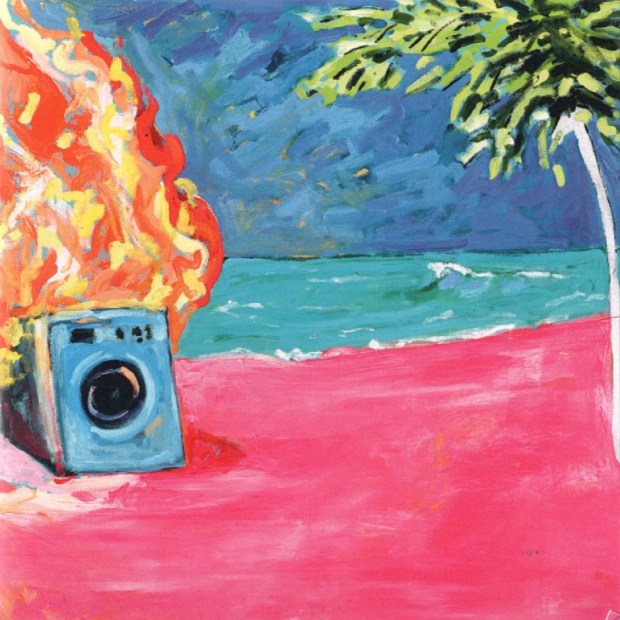
ARKELLS – Laundry Pile (2023 Universal)

Arkells didn’t set out to make a record.  They’d been pretty prolific, with Campfire Chords, Blink Once, and Blink Twice coming out in rapid succession during the pandemic.  As they sat down to rehearse some acoustic arrangements of the Blink material, they found themselves jamming on new ideas.  Singer Max Kerman had already been writing demos, which the band jumped on.  The result is a softer, more contemplative album without the Arkells usual bombastic rally cries.  10 songs, 36 minutes.

Max compared this album to a journal that “documents some of the messy parts that end up teaching you a lot: love, regret, desire, shame, and the longing to get it right.” With that in mind, let’s have a listen.

A simple acoustic number, “Life Is” is a beautiful, quiet and contemplative number.  The sweet and subtle backing vocals recall the greatest folk albums of Canadian tradition.  “Life is short sometimes,” sings Kerman.  “You make mistakes along the way, and I love you ’til my dying day.”  A classic to be, “Life Is” might be one of the prettiest songs I’ve ever heard.

The single “Skin” is a fuller arrangement, with piano, bass and drums.  While it starts fairly ordinarily, the chorus really kicks.  “I thought I knew, I thought I knew what I wanted when I started,” sings Max, while pianist Anthony Carone punctuates his words magnificently.  A soft synth kicks in with the bass and drums, and the song becomes softly electric.  Mike DeAngelis lays down one of his best, most emotive guitar solos while drummer Tim Oxford plays with expert subtlety.  This is the brightest, most upbeat song on the album, and the only one of its kind.

The title track “Laundry Pile” relies of a soft piano backing, as Max muses on spending time with his true love.  “It’s OK if you’re not always at your best.”  Most poignantly, “I already love the parts that you don’t like in yourself.”  It reads like a personal letter.  The minimal accompaniment is perfect.  “Wash Away” also has minimal accompaniment, with percussion and light drums.  “I’m still in love with you,” proclaims Max.  “I’m not ready to let go.”

“Your Name” features organ, and dreamy keyboards.  “My whole world is inside your name,” declares Kerman.  Light strumming guitars and laid-back drums make for the perfect arrangement.  At the end of the song you can hear someone say “I’ll be back in an hour,” right before you’d flip the LP side.

“Beginner’s Mind” has a sad melody, with dark piano accompaniment.  When a strange keyboard sound kicks in, Marillion comes to mind.  The progressive rock band from Aylesbury often do songs like this, and the keyboards do add a progressive edge to this dusky pop song.  It has a vibe like a cold rainy day, especially when the full band comes in.  Wait for the trumpets!  Though this song is not inviting at first, by second or third listen it starts to hook you in.

The music picks up on “Shot In the Dark” (not the Ozzy song!), which is just a nice summery rock song for the countryside.  Electric guitars, punchy drums, thumping bass by Nick Dika…but it’s not a loud song.  It sounds like you’re in the back of someone’s pickup truck, driving up a long dirt road on a bright, blue summer morning.  This is followed by the twangy “Time”, and that’s probably not a coincidence.  There’s also some serious soul/blues roots on “Time”.  What is wild is that sometimes, Anthony Carone’s keyboards sound like they’re ripped from some old 1940s record.

“Tango Waltz” features strings to create a haunting atmosphere.  You’re fooled into thinking it’s an instrumental, but after more than half the song expires, finally Max comes in.  The words are somewhat rapid-fire, and this song comes across as more of an atmospheric interlude before the closer “Quiet Love”.  Tim Oxford ticks away in the back, while Max and the band create a delicate acoustic tapestry of music to wrap the words in.  “Is it too late?  Can you look at me like you used to?”  There’s a certain epic quality to this album closer, though not in a traditional sense.  It’s certainly one of the best tracks of the ten.

At the start of this review, Max was quoted as saying that this album “documents some of the messy parts that end up teaching you a lot: love, regret, desire, shame, and the longing to get it right.”  You can certainly hear that, and see it in the words.  There are no anthems here about politics, class, societal ills, or finance.  There are no soundtracks to going out to the club and meeting a girl.  Laundry Pile is a very different album for the Arkells.  Yet it somehow sounds like them and only them, and fits right in with everything else in their catalogue.  The shout-along anthems will return one day, but this album is unique.  It deserves intense listening over this coming winter.

4.5/5 stars

REVIEW: Steve Perry – Traces (2018 deluxe edition)

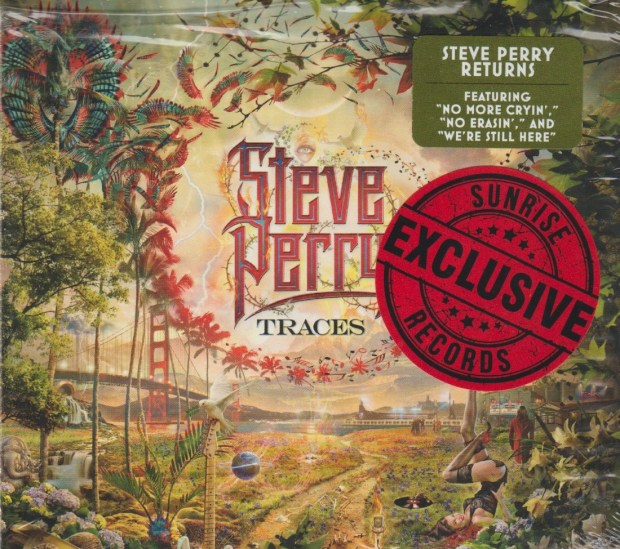
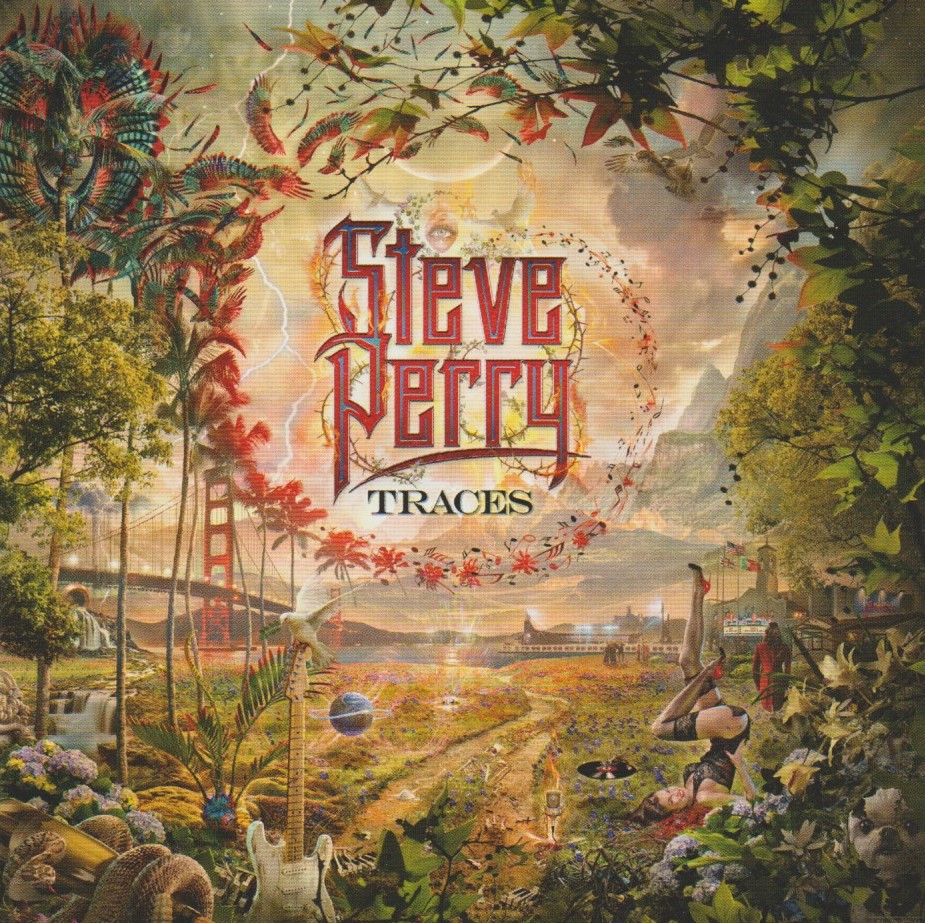
STEVE PERRY – Traces (2018 Fantasy Records deluxe edition)

So what’s the story?  Does Steve Perry still “got it”?

He does.  We just might not agree on what exactly “it” is.

Traces is Perry’s first solo album since 1994’s For the Love of Strange Medicine.  He’s been keeping a low profile since leaving Journey after 1996’s Trial By Fire.  If you were worried that Steve Perry has gone “soft” and his voice has changed in that time…then you were right!

But that’s not a bad thing.  Steve Perry’s voice is one of a kind.  The soul cannot be copied; it’s just raspier now.  If you want the youthful range, go listen to Journey instead.   Or buy Arnel Pineda’s forthcoming solo album.  If you want an older, wiser but still the same Steve Perry, he is here on Traces.  He’s collected 10 slower songs, some more upbeat than others like the lead single “No Erasin'”.  Each one still retains Perry’s ability to compose memorable material.  These songs are honed, short, and to the point.  Even the ballads are pretty basic: quiet and contemplative, but with soft hooks.  All fat has been trimmed.  “We’re Still Here”, “No More Cryin'” and “We Fly” are among the best tracks, but “No Erasin'” is the clear highlight.

The deluxe edition, a Sunrise exclusive in Canada and Target for the US, has five more songs of varying styles.  “October in New York” sounds like a quiet piece from a stage musical.  “Angel Eyes” goes more for soul, while “Call on Me” has the tropical flavours you might remember from Journey’s “Baby I’m Leaving You”.  The fabulous “Could We Be Something Again” has a choir on it.  The good thing about the bonus tracks is you can tell the reason they were cut was not quality.  It was simply that they don’t fit in with the direction of the main album.

Traces is not for Journey fans who wanna rawk.  This is for fans of classy pop rock, soft rock, and the ballads on Trial By Fire.  If that’s you, get Traces (the deluxe of course) and take some time to dig a little deeper.

4/5 stars


#614: Believe It Or Not

GETTING MORE TALE #614: Believe It Or Not

Who doesn’t love lists of musical firsts?  I’ve done my own, but here’s a record that I forgot to include.

It wasn’t my first record.  As a kid, I had read-along story recordsStar Wars, E.T., The Black Hole, and more.  The E.T. record was cool because it was read by Drew Barrymore.  I also had John Williams’ music soundtracks, like Indiana Jones.

My first “metal” album was Quiet Riot’s Metal Health.  I had it on cassette.  It changed my life. Going back even further, Styx’s Kilroy Was Here was the first rock album that I ever bought, but technically it wasn’t my first “rock” record.  Technically.  It all depends on how you define “rock”, but for the purposes of this article we’ll include soft rock under the umbrella.

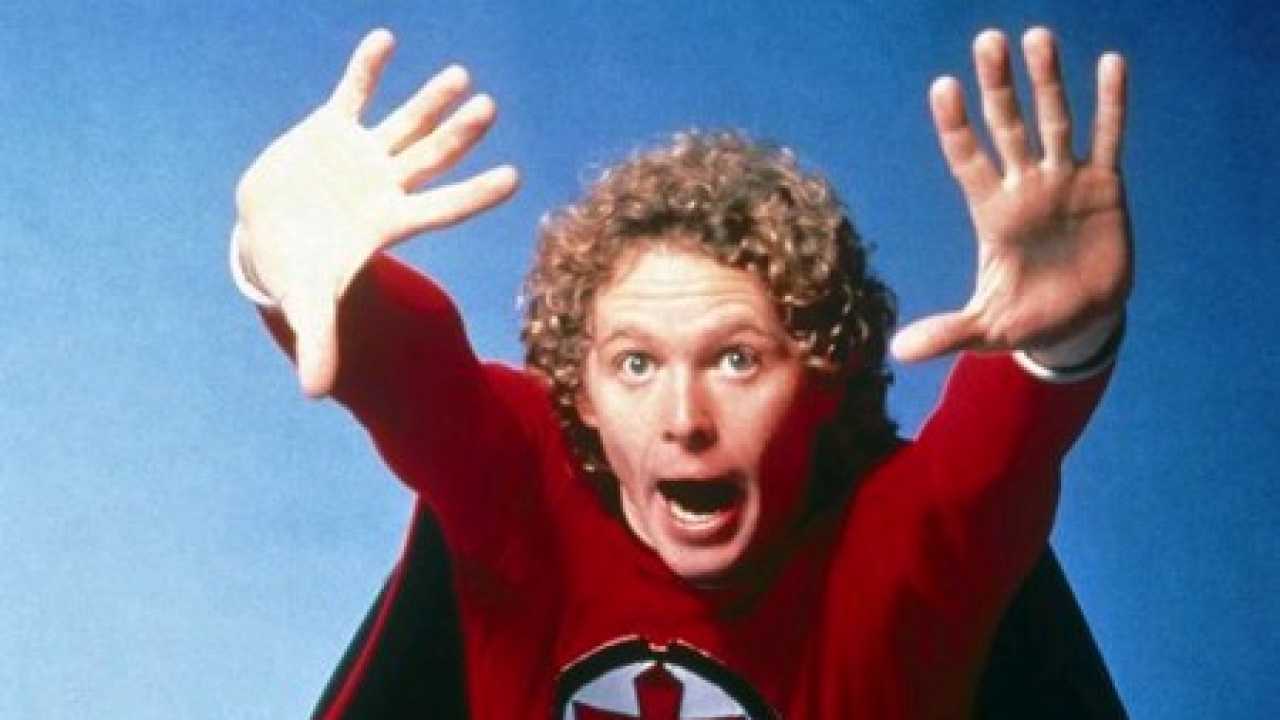
In 1981 there was a new TV show that, by all signs, looked like it was going to be awesome.  It was about a goofy superhero.  He couldn’t fly straight, and he looked silly with his blonde curly hair in a red skintight outfit.  His landings were always crash landings, and what kid doesn’t find a grown man falling down absolutely hilarious?  The premise was that aliens gave the protagonist this super-suit, but he lost the manual and doesn’t know how it’s supposed to work.  Funny, right?

Sadly, the program called The Greatest American Hero never lived up to the premise or the TV ads.  We kids swiftly lost interest in it.  Magnum P.I. occupied our TV time, and The A-Team and Knight Rider were only a couple years away.  The Greatest American Hero was quickly forgotten, except for one minor detail.

The Greatest American Hero had a terrific theme song.  Theme songs are important.  I can hum the themes for the A-Team, Knight Rider and Magnum P.I.  Can you?  The Greatest American Hero had an even more memorable theme song:  “Believe It Or Not”.

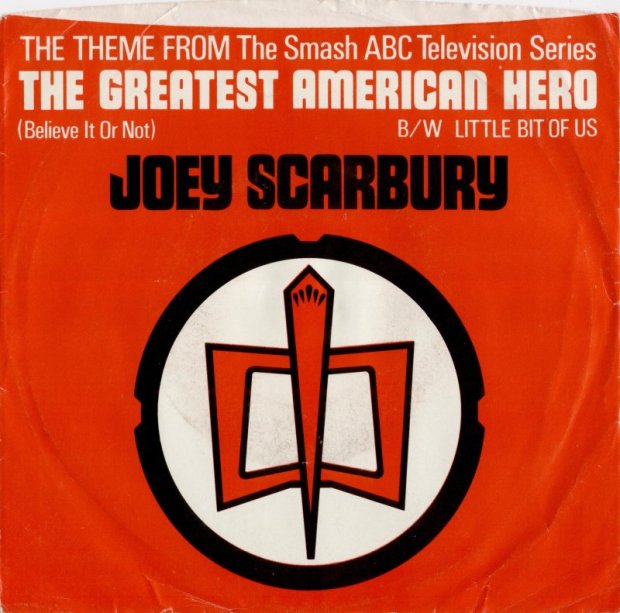
I didn’t know the name of the guy who sang it, I just knew I liked the song.  I told everyone it was my favourite song.  So one day, my Aunt from Calgary came for a visit and gave me a copy of the single. I was elated!  The singer was somebody I never heard of called Joey Scarbury, and now I had the record and I could play it any time I wanted!  I did, over and over.

The names meant nothing to me then, but “Believe It Or Not” was written by Mike Post, who also wrote – surprise surprise! – Magnum P.I. and the A-Team!  Though Mike Post is mostly known as a TV composer (The Who have a song called “Mike Post Theme”), he even produced Van Halen III!  “Believe It Or Not” must be one of his most well remembered songs.  It didn’t hurt when it was spoofed on Seinfeld back in the 90s.  Remember George’s answering machine?  “Believe it or not, George isn’t at home…”  Since then, it’s been used and re-used again in TV shows and commercials.

I remember as a kid, flipping over the record to listen to the B-side, which I immediately hated.  The ballad “Little Bit of Us” was not for me.  I tried playing it at different speeds to see if it would make the song any better.  It didn’t and I never played it again.

I don’t actually know what happened to the record.  I know I lost the sleeve (it wasn’t a picture sleeve, just a plain white one) and filed the record in with another 45.  From there, it disappeared.

I may have outgrown “Believe It Or Not” but playing it today still brings a smile to my face.  Not enough to try and re-watch an episode of the Greatest American Hero, and definitely not enough to track down more Joey Scarbury music. Just enough for some nostalgic rememberings.


#427: I Do Want to Miss This Thing

“Michael Bay is the Nickelback of movies.” — Mrs. LeBrain

Scan_20150819 (3)

RECORD STORE TALES MkII: Getting More Tale
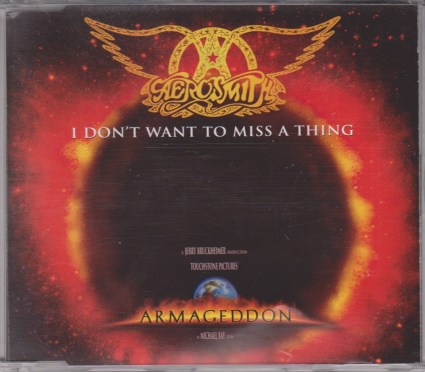
#427: I Do Want to Miss This Thing

Blame Michael Bay.

Quite possibly the worst movie director of all time may be responsible for the downfall of Aerosmith.  I’m not talking about the “Falling in Love (Is Hard on the Knees)” music video, which he directed.  No, that was not the downfall.  In fact quality-wise, Nine Lives was a bit of an up-tick from Get A Grip.  It’s too bad that sales didn’t match (2 million sold U.S. vs. 7 million U.S.), but that’s the fickle finger of fate.  The tastes of the public seldom make a perfect match with hard rock quality.

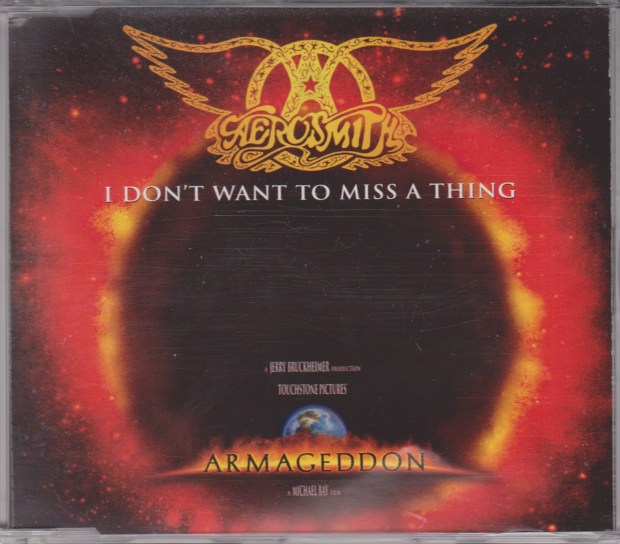
Since Nine Lives would have been considered a bit of a sales disappointment in some camps, it probably didn’t take Steven Tyler much coercing to do a Diane Warren ballad for a movie soundtrack.  Of course, Tyler’s daughter Liv was the headline actress in the flick, so from that standpoint it was a once in a lifetime opportunity for them to work on the same project.  Unfortunately for the world, that project was Armageddon.  Not quite as bad as a real meteor heading to Earth, this Michael Bay stinker made so much money, that some reports suggest that Bay wallpapered his 43 bedroom mansion entirely in Benjamin Franklins.  There’s that problem with the tastes of the masses, again.

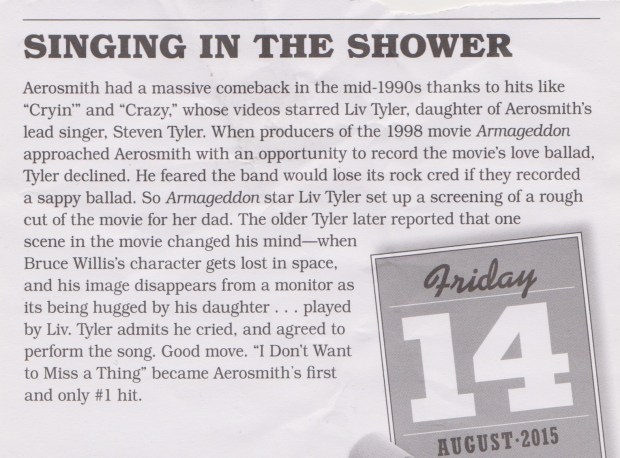
So Bay, aided and abetted by Bruce Willis, Billy Bob Thorton, and Steve fucking Buscemi, laid this turd of a movie and all it needed was a turd soundtrack.  As for what happened next, Uncle John’s Bathroom Reader 2015 desktop calendar* has the answer:

Scan_20150819

For many fans, this was the beginning of the end of Aerosmith.  Some truly dreadful music followed “I Don’t Want to Miss a Thing”, such as Just Push Play and (ewww) “(It) Feels So Good”.  Can Aerosmith be redeemed?  I don’t know the answer to that.

What I do know this is, and it’s quite simple.

If Michael Bay didn’t make this damned movie, Aerosmith wouldn’t have had this damned million selling single!

Message to Michael Bay:  Stay away from things I like!

* These things are brilliant and I recommend them to anyone who does not have a stunted sense of humour!

REVIEW: Bon Jovi – Greatest Hits: The Ultimate Collection (2 CD)

Part 1 of a 2 part Bon Jovi series.

ULTIMATE BJ_0001BON JOVI – Greatest Hits: The Ultimate Collection (2 CD)

I guess Bon Jovi were due for a new “hits” CD. Crossroads, after all, was 16 years old at that time, and Tokyo Road was only made available in Japan. Ultimate Collection isn’t the ultimate collection that I would have put out.  If you’re going to do two CDs, you have room for great also-rans like “Last Cigarette” and “Something For The Pain”.  Still, it’s not a bad Bon Jovi collection. Listening to it front-to-back, I was pleasantly reminded of all these hits, and man, Bon Jovi had a lot of hits. From early stuff like “Runaway” to the New Jersey classics such as “Born To Be My Baby”, to the newbies like “Have A Nice Day”, this has pretty much all the key Bon Jovi radio hits. Unfortunatly, you’re going to miss out on second-rung hits like “Dry County” and “Joey” but for the uninitiated, or those who just want a good sized Bon Jovi collection, this is the place to go.  I think it’s important to explore albums such as New Jersey (the review of which is Part 2 in this series) and Keep the Faith, as well as hits.

Almost every Bon Jovi album has hits included here, right up to The Circle. The song flow is excellent, hitting you with hit after hit after hit, landmark ballads sprinkled in between. And I give credit for the inclusion of “Blood On Blood”, a song that was never a single but has been a huge concert favourite due to its real life story of JBJ’s childhood. Not to mention it’s just a great song.

ULTIMATE BJ_0003The four new songs create feelings of moderate indifference to great dislike. “What Do You Got?” is another trademark Bon Jovi ballad, certainly nothing special, outshined to a great degree by all the other tunes here. It’s easily forgettable and feels tacked-on as an afterthought. But two of these new songs — “No Apologies” and “The More Things Change” are just awful songs. Cheesy, contrived, choose whatever words you like, they’re juvenile and awful and really don’t fit in among the classier hits. To me these are B-sides and perhaps should have been held back as B-sides.  Or just deleted completely.

Packaging is not the greatest. There are full songwriting and production credits, but they are arranged in such a way as to make finding information difficult. Performance credits are even harder to find — I couldn’t find bassists Hugh McDonald or Alec John Such’s names anywhere in the credits, and their pictures are also not included. There are a few more recent photos of the main four guys. No liner notes.

On the whole, despite the fact that I don’t really like the four new songs, I don’t regret this purchase. It’s going to be a great road CD. It is a good way to hear tunes like “We Weren’t Born To Follow” without listening to the album it came from, which I wasn’t too keen on. So, no regrets. I think most fans will like the album, they might even like the new songs.  Mrs. LeBrain’s Mom enjoyed it in the car and commented that she knew many of the songs.  Newcomers would be wise to pick this up as it has a great hit-per disc ratio!

3/5 stars
Part 246: Dancing Steve


RANGERS

RECORD STORE TALES Part 246:  Dancing Steve

One of our best customers at the original store was Dancing Steve.  I’ll get to why he’s named Dancing Steve in a minute, but I first met Steve when I started at the store.  Steve would come in or call looking for various cassettes (never CDs), and put them on hold until he had $150 or $200 worth, and buy them all in one shot.  That’s just how Steve rolled.  Normally we would never stockpile so much inventory for a customer for so long, but Steve spent so much money and was so pleasant that it was a special arrangement just for him.

Steve would call looking for songs.  I can remember putting a Gina Vannelli tape on hold for Steve, and I also remember him looking for Rod Stewart’s then-recent song “This”.  I found that song on Rod’s latest, the excellent A Spanner in the Works.  It was always so nice dealing with him, he was so friendly, and even if we didn’t see him for two months at a time, he was uber-reliable.

I knew Steve was a hockey fan as he would often wear a Kitchener Rangers hat or jacket.  What I did not know was that Steve was legendary among Rangers fans!  Steve often wrote (and I think he occasionally still does) long letters to the editor of the local newspaper, cheering on our Rangers and offering his strategic advice.

T-Rev and I found ourselves at a Rangers game one weekend.  I don’t remember the circumstances.  We may have got the tickets for free, but neither of us were particularly fans of the game back then.   The Rangers scored, the crowd cheered!  Then, T-Rev noticed some commotion in the seats of one corner of the auditorium.  To our left and down was a man in a Rangers jacket and hat, dancing.  It wasn’t a sophisticated dance, it was a bit of an awkward shuffle, in that big warm Rangers jacket.  The crowd loved it, cheering him on!   It was none other than Steve, our Steve.  I found out his actual nickname in town was Dancing Steve, because he had seasons tickets and rarely missed a game.  Steve would get up and dance any time something good happened: a goal, a power play, whatever!

To this day, I feel cool that a local legend like Dancing Steve was one of our earliest, most loyal customers.  In fact we didn’t lose Steve until 1997, when we discontinued carrying cassettes.  Steve didn’t make the transition over to CD.  He was crushed when T-Rev had to tell him we weren’t going to be selling tapes anymore.

I have been to a couple Rangers game since, but not seen Steve.  I know he still goes though, as I’ve heard tell that Dancing Steve dances on at the Aud.  I would like to dedicate this chapter to Steve, an example of a jolly good fellow if there ever was one!

TOMORROW:  Something exciting.

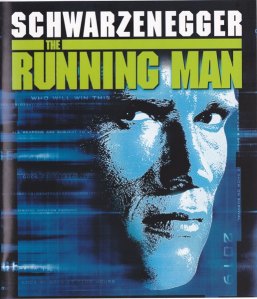
MOVIE REVIEW: The Running Man (1987)

Mick Fleetwood and Dweezil Zappa appear in this cheesey 80’s classic!

RUNNING MAN FRONT

THE RUNNING MAN (1987, starring Arnold Schwarzenegger, directed by Paul Michael Glaser)

It’s hard to believe that, as goofy as The Running Man is, it came so close to predicting what aspects of our society would be like in the future. We still have a few years before we hit 2019, perhaps we are right on track for our 2019 to match this version!

The Running Man is loosely (and I mean, very very very loosely) based on the novella by Richard Bachman, otherwise known to his “dear readers” as Stephing King. Where the King book involved a desperate man who needs money to buy medicine, and a game where he can travel anywhere in the world, the movie scales things back. Ah-nold, at his one-liner best, is Ben Richards, a former pilot who disobeyed orders and refused to fire on an unarmed mob. He is imprisoned but escapes, and is now about to appear on “The Running Man”, a 24 hour a day, 7 day a week television show (hmmm, Big Brother?) and fight for his life. The prize is a full pardon for your crimes, a loss means death.

This story was recently ripped off in a lil’ smash hit movie called The Hunger Games.  Perhaps you’ve seen it, or a 13 year old girl wearing a Peeta shirt?

Society is now a police state (hmmm?) and the people are distracted by endless game shows on television (hmmm?). News is heavily censored and “edited for television” (hmmm?). Ben Richards’ crime of disobeying orders has been spun by the networks — they show a fake video of him firing on the unarmed crowd, earning himself the nickname “The Butcher of Bakersfield”. Now he will have the chance to win his freedom on The Running Man, but the odds are well stacked against him. By his side, also fighting for their lives, are two captured freedom fighters.  These guys are hoping to use their capture to find the source of network transmissions.  Then they could jam it, and broadcast the truth of what the world has become….

The Running Man is not a great film. It’s an 80’s Arnold film.  If you’ve seen one, you know what you’re getting.  Lots of action. Arnold must battle “Stalkers” on The Running Man. Much like the gladiators on American Gladiators, these stalkers will do everything they can to stop Arnold from winning. They include:

* Sub-Zero, as played by Professor Toru Tanaka (weapons include hockey stick blade and exploding pucks)
* Fireball, played by Jim Brown (flamethrower, jet pack)
* the opera-loving Dynamo (who has a punk-rock-looking suit that can fire electricity; sings)
* Buzzsaw (so named for his use of chainsaw and motorcycle)
* the retired Captain Freedom (Arnold’s friend Jesse Ventura)

The show is run by Damien Killian (subtle!), played by former Family Feud host Richard Dawson. Nobody could have played this role better than Dawson. While playing a game show host was not a stretch for him, Dawson was absolutely flawless in the role. Other famous names include Yaphet Kotto (Alien) as another Running Man contestant, Mick Fleetwood as former-musician-turned-freedom-fighter named Mic (I like to think Mick is just playing the future version of himself) and a very young Dweezil Zappa.

The blu-ray disc has enough bonus features to keep you going after the film has ended, including audio commentaries and featurettes. The audio is really nice, mastered in sweet, sweet 7.1 surround. When Arnold is in that little pod heading down to The Running Man’s play area, the sound was awesome. If you have 7.1 at home you need to check this out. I really enjoyed the sound.

If you like other cheesey Arnold Schwarzenegger movies such as Total Recall or Commando, add The Running Man to your collection. If you like movies with a stirring plot and dramatic acting, avoid at all costs. Regardless of your feelings on this film, do try to read the book. I have always felt that a remake of this film, following King’s book, is well overdue.

3/5 stars