Sony

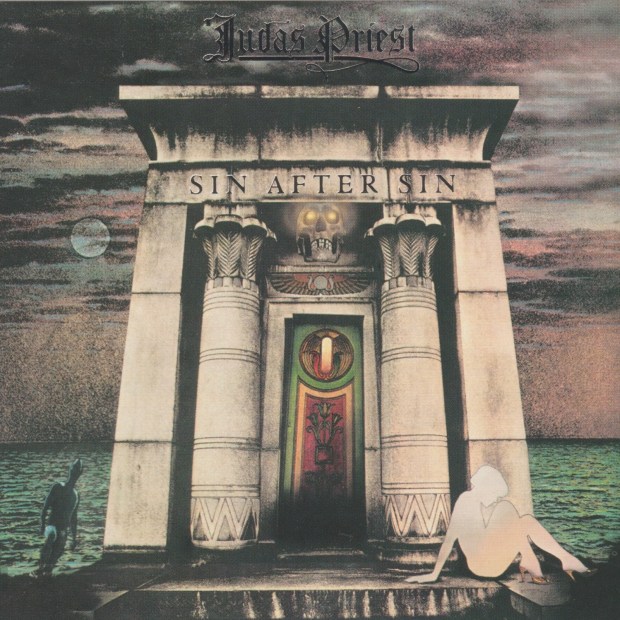
REVIEW: Judas Priest – Sin After Sin (1977)

JUDAS PRIEST – Sin After Sin (Originally 1977, 2001 Sony reissue)

“SIN AFTER SIN, I have endured, but the wounds I bear are the wounds of love.”

This lyric from “Genocide” on 1976’s Sad Wings of Destiny would have been little more than a throwaway, if Priest didn’t recycle the words “sin after sin” for their next album title.  Though the song may have appeared to be the same, much had actually changed.  For the first time, they had a producer that understood that kind of aggressive rock that the young band were trying to create:  Roger Glover, ex-Deep Purple, who had already recorded several albums for Elf, Ian Gillan and Nazareth.  Perhaps even more significantly, for the first time they had a serious drummer creating the beats:  the not-yet-legendary Simon Phillips, who had still already played on a Jack Bruce album.  This was just a session for Phillips, but it enabled Priest to break the shackles of rhythm and really start exploring.

Opener “Sinner” might have been the same kind of tempos that Priest were working with before, but there is a new slickness to the drums; an effortless drive with increasingly interesting accents.  With a solid backing, Priest sound more vicious.  “Demonic vultures stalking, drawn by the smell of war and pain.”  The apocalypse has never sounded cooler.  As Phillips drops sonic bombs left and right, KK Downing goes to town on what would become his live showcase solo.  His growls and trills sound like a beast inflicting wounds on a struggling combatant.  At almost seven minutes, “Sinner” is the album epic, and it’s the opening track!

Priest previously recorded a cover of Joan Baez’ “Diamonds and Rust” for Gull records; that early version can be acquired on The Best of Judas Priest or Hero, Hero.  The Glover-produced track is the more famous and better of the two.  Radio play for “Diamonds and Rust” helped push the album to eventually sell 500,000 copies.  Rob Halford’s high pitched harmonies gleam like polished silver.

Ironic observation:  I hope by now we all know a light year is a measurement of distance, not time.  It is the amount of distance that light can travel in one year (9.46 trillion kilometres).  So, really really far.  Joan Baez playfully used it as a melodramatic measure of time in “Diamonds and Rust”.  (“A couple of light years ago”.)  On the next track “Starbreaker”, Halford refers to “light year miles away”, a crudely worded hyperbole for distance.  So with Sin After Sin, you get it both ways.  Regardless of scientific accuracy (or not) “Starbreaker” is a good track with a slightly flat riff.  Though Phillips is brilliant, it could just use a little more pep.

Like with Sad Wings of Destiny, you gotta have a ballad in there somewhere, and on side one that’s “Last Rose of Summer”.  This softie isn’t bad, though Priest have done and will do better.  Using a ballad to close a side isn’t always wise either, but on CD nobody really notices except us nerds.

“Let Us Prey/Call For the Priest” is a pretty epic side two opener, with harmony guitars playing an opening instrumental anthem.  Then a choir of Halfords joins in, and the band break in to what could be their fastest song yet.  From the wickedly fast dual guitar solos to the powerful rhythm, this song is a blitzkrieg of metal trademarks.  It’s relentless and all over the board, something that 80s Priest rarely was.

Side two keeps getting better with the groove of “Raw Deal”, which was Rob’s real “coming out” to fans in the know.  Today he calls it a “heavy metal gay rights song”.  It’s actually one of Halford’s best lyrics.  Instead of mashing together science fiction words and singing about battlefields, this time Halford paints a hazy picture of what is probably a gay club in Fire Island, New York.  It’s vivid but vague:  “The mirror on the wall was collecting and reflecting, all the heavy bodies ducking, stealing eager for some action.”  It’s also backed by some seriously cool Priest music, almost funky but always heavy.  “The true free expression I demand is human rights – right?”  It was all there in the lyrics all along.

A second ballad, the dirge “Here Comes the Tears” brings a cloudier mood.  An ode to loneliness, “Here Comes the Tears” is the one to play when you just can’t take it anymore.  When Halford starts givin’ ‘er at the end with the wildest screams in history, it sounds like an exorcism.  The guitars howl, a hint of piano can be heard, and there is an underlying choir of Robs singing sadly in unison.  Finally “Dissident Aggressor”, famously covered by Slayer, concludes the album on a violently fast note.  “Stab!  Fall!  Punch!  Crawl!”  This song is not for amateurs and might be the heaviest thing Priest have ever done.  There are plenty of contenders, but “Dissident Aggressor” must be in the Top Five Heaviest Priest Songs Ever.  But that being said, they still have the balls to end the song with another multi-layered harmony of Halfords.

The 2001 Sony remastered CD has two bonus tracks, and the first is the best in the entire series:  “Race With the Devil”, a cover of a track by The Gun.  This version, recorded for the next album Stained Class (Les Binks on drums) could easily have been a B-side all this time.  Why it went unreleased until 2001 is unknown.  Perhaps it was lost, but now that it has gotten a proper mastering job it is available on CD.  This is un-retouched, which cannot be said for other unreleased tracks in the Priest Remasters series.  “Run With the Devil” is raw, riffy, fast, and wicked.  All it really needed to make it album quality is a better guitar solo.  The second bonus track is a live “Jawbreaker” (Dave Holland on drums) from the Defenders of the Faith tour.  Out of place, but an excellent song regardless.

Incidentally, Sin After Sin is the last album before Priest adopted the first version of their current logo design.

4/5 stars

REVIEW: Tenacious D – Post-Apocalypto (2018)

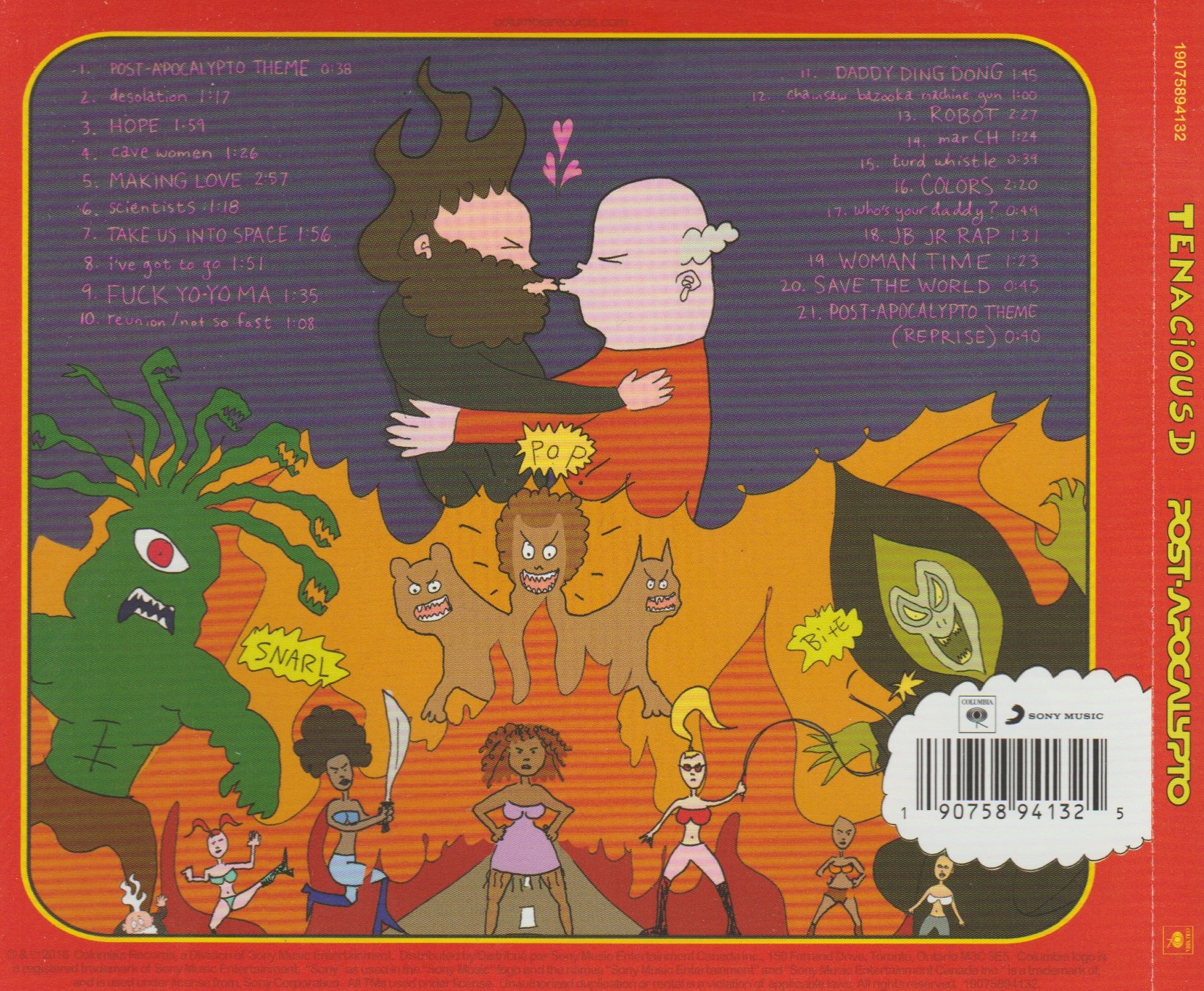
TENACIOUS D – Post-Apocalypto (2018 Sony)

I don’t know how this is supposed to work. Do you have to watch an animated series in order to “get” Post-Apocalypto?  I’m not doing that.  I’m listening to an album; I’m reviewing an album.

21 tracks, half an hour.  Most of the tracks run a minute and a half.  So what’s the concept?  Humanity has destroyed the Earth in a nuclear holocaust.  Tenacious D survived, though their songwriting abilities did not.  Richard Branson, Elon Musk and Yo-Yo Ma have been saved, and now live on a space station.  Kyle Gass wasn’t good enough to make the cut and now has a two-headed dog named Hope to keep him company.  Unfortunately the KKK seems to have taken over security on what’s left of Earth.

Post-Apocalypto is part uninspired sketches, part uninspired songs.  Some are decent, or half-decent, like “Take Us Into Space” and “Woman Time”.  Most are too soft, light and forgettable, and the sketches are tired.  Jack Black’s “Arnold” accent isn’t bad, but the joke wears out.

Bottom line:  as stated by Uncle Meat, “18 minutes of music isn’t an album.”  Iron Tom adds, “Although I’ll listen to some tunes individually, I don’t see myself listening to it again as an entire album.”

1/5 stars

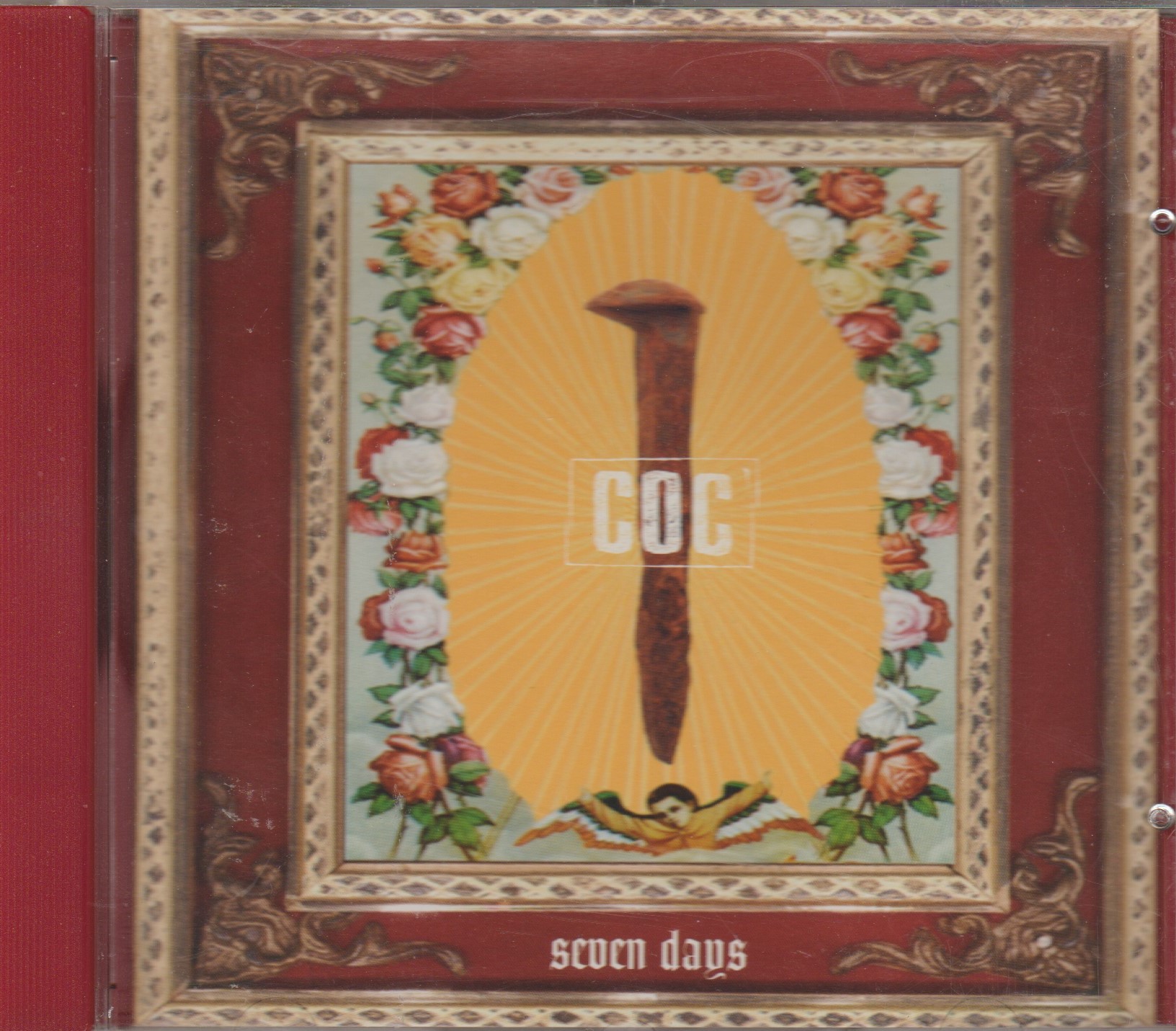
REVIEW: Corrosion of Conformity – “Seven Days” (1995 promo single)

CORROSION OF CONFORMITY – “Seven Days” (1995 Sony promo CD single)

COC’s landmark album Deliverance spawned three singles, the least known of which was “Seven Days”.  The promo CD single contains a rarity that makes it worth tracking down.  It’s not expensive, and thanks to online stores not hard to find.

Deliverance is a heavy album even with a few slower songs on board.  “Seven Days” is one such track.  A slow, heavy dirge can often make for a good single.  This CD has two versions, the full-length album cut and a shorter single edit with a truncated fade-out.

The special track here is a “jam box tape” of “Fuel”, a track that was as yet unreleased.  COC recorded it properly for their next album, Wiseblood.  This early version is an identical arrangement, but way way more ragged.  Pepper sounds like James Hetfield on this one, but it has far more balls than the Metallica song of the same name.  Total smokeshow.  This is the proverbial “song you buy the single for.”

3.5/5 stars

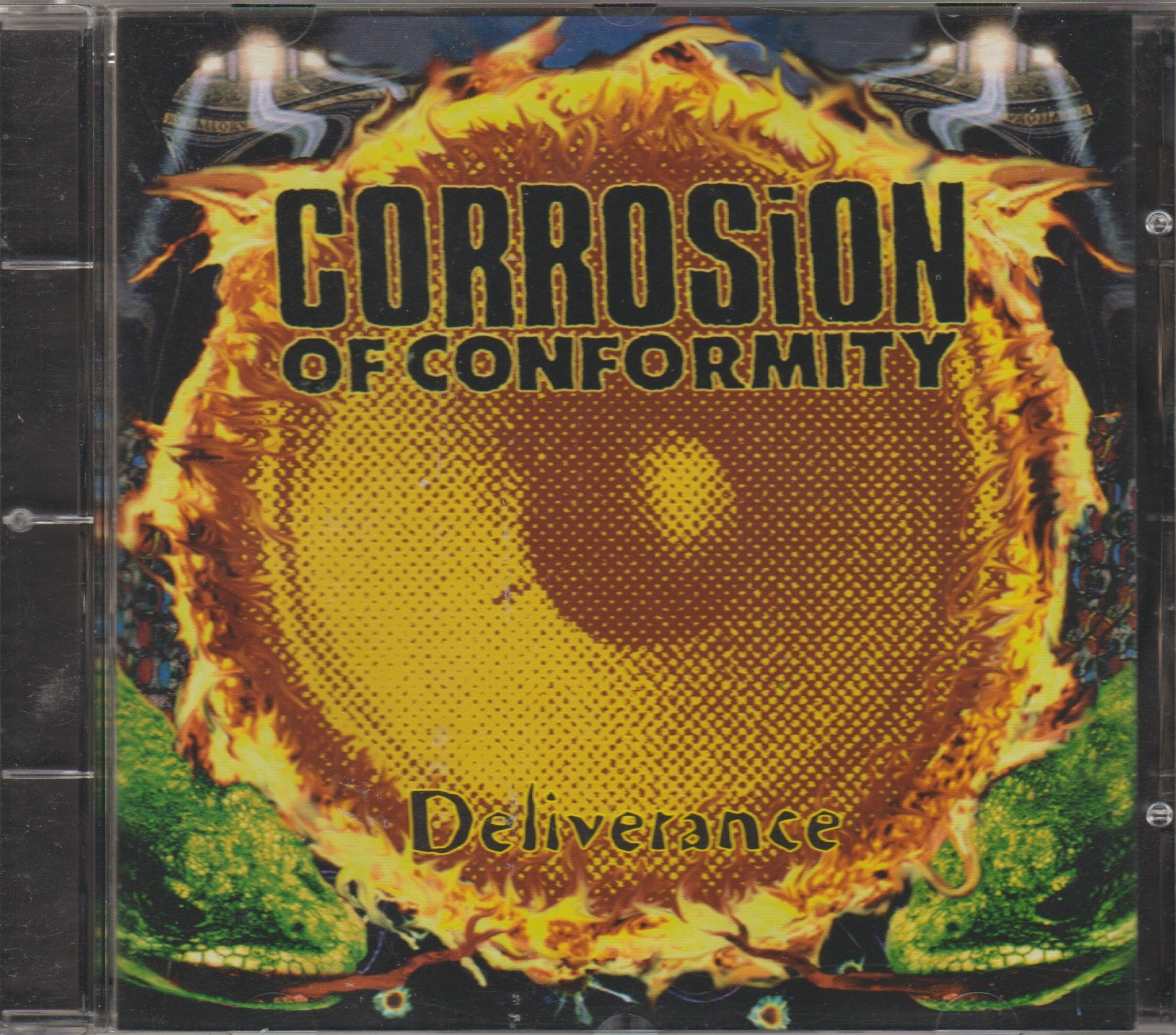
REVIEW: Corrosion of Conformity – Deliverance (1994)

CORROSION OF CONFORMITY – Deliverance (1994 Sony)

Gre-ea-easy!  That’s how the molton hot guitars sound on this landmark album.  Greasy, in the most complimentary way.  Six-stringers Woody Weatherman and Pepper Keenan have a way of making their guitar licks sound slippery and heavy at the same time.

Corrosion of Conformity (“COC”) did something really smart when they set out to record this album.  After the departure of bassist Phil Swisher and singer Karl Agell (who both turned up later in Leadfoot), they promoted Pepper Keenan to lead vocals, and brought back founding member Mike Dean on bass.  Pepper scored a hit for COC last time out with a lead vocal on “Vote With a Bullet”, so it was a logical move.  As for Mike Dean, his punk roots and busy bass are important to the sound of this band.  Dean was also COC’s vocalist from time to time in the past, and gets a lead vocal once again on the title track.

The resulting album Deliverance is 14 tracks (give or take an instrumental or two) of heavy, dirty metal they way they make it in Raleigh, North Carolina.  Pepper’s vocals lent them a southern edge.  Metallica are fans — Pep auditioned for them on bass when Newsted left the band.  (What a sound Metallica could have had, with James Hetfield backed up by Pepper Keenan on vocals!)

Regardless of who’s singing or playing, COC nailed all 14 songs.  None of the proverbial “filler”.  This is one hell of a trip, an album that demands to be listened to from start to finish, no skipping.  John Custer’s crisp and chunky production brought out the metal side more than ever.


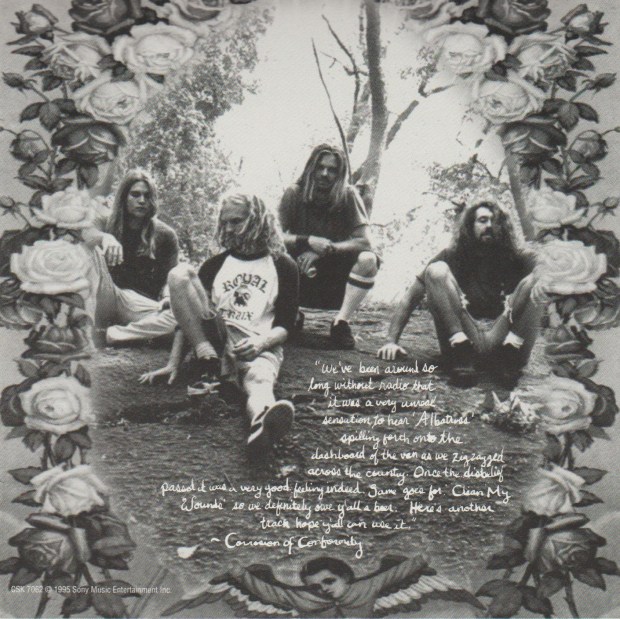
“Help me Jesus, help me clean my wounds. He said he cannot heal that kind.”

Check out the choppy riff on the single “Clean My Wounds”.  The song is a tour-de-force, a textbook example of all the right ingredients.  The riff is outstanding, but the verse and chorus melodies slay.  Drummer Reed Mullin has a spare groove, but he knows exactly when to accent it with some heavy hitting.  The multi-tracked vocal in the chorus (“Knock it down!”) is the perfect fit, but the Lizzy-ish guitar solos are an additional layer of perfection.

Another key track, “Albatross” is too heavy to be a ballad so let’s call it a dirge.  You can hear what Mike Dean brings to the table — a slinky, Geezer style of bass that provides subliminal melody.  “Albatross” flies on the wings of a strong melody and heavy performance.  It has a vibe similar to “Outshined” by Soundgarden but more mournful.

The aforementioned instrumentals are integral parts of the album.  Remember how a Black Sabbath album had key instrumental bits, usually introducing another song?  That’s what COC do here.  “Without Wings”, a dark acoustic guitar figure, leads into the heavy-as-fuck “Broken Man” exactly like a Sabbath song.  Later on, “#2121313”, an electric guitar piece, is joined directly onto “My Grain”.  “Mano de Mono”, another acoustic piece, is basically the front end of “Seven Days”, a mid-paced groove single.

Speaking of “My Grain”, it’s the most punk rock track, but even so it features a kickass bass solo!  Other noteworthy tracks include the wah-wah inflected title track (Mike Dean on vocals).  Jittery, jumpy riffs dominate “Señor Limpio”, another blistering blitz.  Finally there is “Pearls Before Swine”, the slowest and bluesiest of the tracks and a seriously heavy closer.

Corrosion of Conformity have made some good (albeit very different) albums over the years, but like many bands they have a clear peak.  That is Deliverance, the one perfect album they made.

5/5 stars

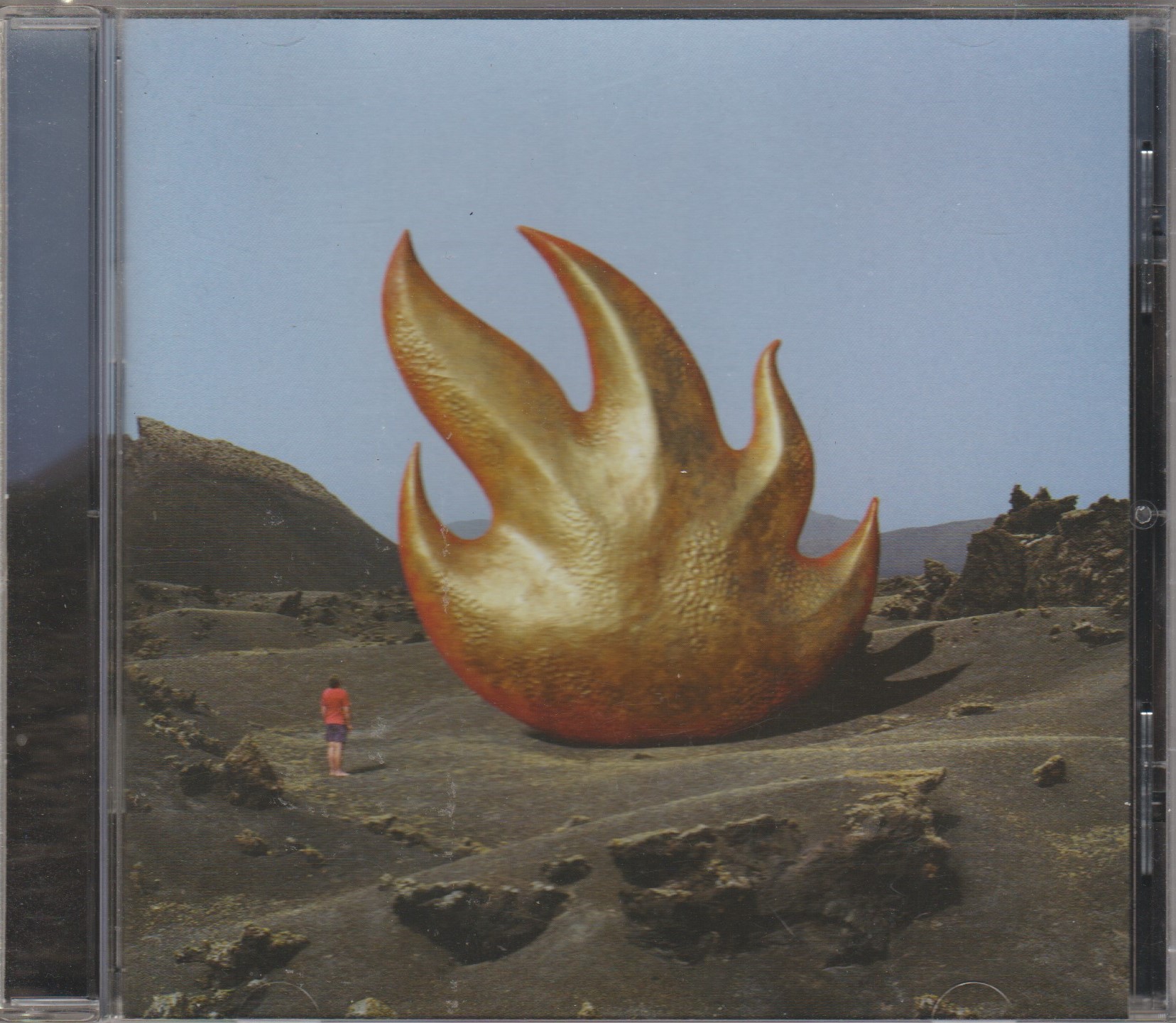
REVIEW: Audioslave – Audioslave (2002)

AUDIOSLAVE – Audioslave (2002 Sony)

The brightest always burn out the quickest.  Audioslave lasted a mere five years but unleashed three albums in the same time most bands can only crank out one or two.  It was a collaboration that bore sweet fruit.  Ronnie James Dio used to say that when it came to collaborations, the first album was usually the best.  That’s true of Audioslave.

Their first, self-titled album checks all the boxes:  monster grooves, soaring vocals and wonky solos.  Since it’s produced by Rick Rubin you know it’s gonna be loud.  You can also count on a clear, big drum sound which Rubin achieves.  At 14 tracks, the album is swollen, but despite its long runtime there is nary a dud.

There are some who, at the time at least, felt that Rage Against The Machine’s style of abnormally funky rap-metal could not be adapted to hard rock.  They felt the fit between Chris Cornell and the Rage guys was forced and resulted in something that would only appeal to Soundgarden’s fans while alienating those of Rage.  While there is a smidgen of truth to that assertion, Rage have proven time and again that they can pretty much do anything.  No boundaries.

No tracks to skip, either, but some you may want to focus extra attention on.  “Cochise” about the revered Indian warrior, has a groove that can crack concrete.  Same with “Show Me How to Live” and “Gasoline”, heavier than the proverbial lead balloon, but infested with melodic vocals.  Audioslave could even pull off slower material, though you’d be hesitant to call them “ballads”.  “Like A Stone” is essential:  precision, smoky rock crooning.  The spare arrangement allows Chris’ vocals to make the impact, though the bass is certainly earth-moving.  As if that wasn’t enough, Tom Morello’s solo combines his trademark noisy note-work with epic composition.

Despite the quality tracks before and after, the best may be the angry “Set It Off”.  It slams. It’s closest to Rage’s anarchist tendencies.  It’s just pissed off.

He was standing at the rock,
Gathering the flock,
And getting there with no directions,
And underneath the arch,
It turned into a march,
And there he found the spark to set this fucker off.

A 14 track album this good could earn a 2000 word analysis, but we’ll save that for an inevitable deluxe edition.  There are lots of B-sides and bonus tracks from this album that need to be properly collected into a set, like the download-only “Give”, a rhythmic little extra.  Suffice to say, Audioslave is an essential album for anybody who ever liked rock music. There is a purity to it.  As the liner notes say, “all sounds made by guitar, bass, drums, and vocals.”  Even the weird squonky shit, so be ready for your mind and soul to be blown.  Sit back and absorb it a while, because there’s a lot here to assimilate into your blood.

5/5 stars


REVIEW: Europe – “The Final Countdown 2000” (Single)

“Oh God!  What did I just listen to?” – J from Resurrection Songs

EUROPE – “The Final Countdown 2000” (1999 Sony single)

As we edge closer to the start of a new decade, it’s the perfect time to look back at the turn of the millennium, 20 whole years ago.   Sony decided that Europe’s “The Final Countdown” would make the ideal anthem for the millennium, and so had it remixed by the guy (Brian Rawling) who did Cher’s “Believe” a year earlier.  Joey Tempest was not amused, and tried to find another mixer without success.  Drummer Ian Haughland called the finished remix a “disaster”.

The full 5:45 remix was released as a single, while a 3:47 edit version was issued on a new version of Europe’s “greatest hits”, with title updated from 1982-1992 to 1982-2000.  At least the millennium led to a performance by a reunited Europe on New Year’s Eve featuring both guitarists John Norum and Kee Marcello.

The full length remix is the antithesis to rock music.  Sped up, with bouncy synth bass and drums, it was obviously calculated for dancing.  There are keyboards, weird sounds, and samples that have nothing to do with the song.  Of the original recording, Joey’s vocals remain, but the rest sounds completely digital.  It goes on, and on.  The edit is tolerably shorter, but barely.  “The Final Countdown 2000” is an affront to rock music and everything its fans enjoy.  It is pure pandering to people who would never have bought a Europe album in the first place.  Is that what Sony felt they had to do in order to make it a hit a second time?  Imagine if Europe recorded a new version with both guitarists instead.  The song was already pop enough to be a hit again on the wave of 80s nostalgia.  It didn’t need to be mutilated to fit into a dance remix.  It surely would have done better than this (#6 in Sweden, #36 in the UK).

As a consolation prize, this CD single includes a single edit of the original song.  All it’s missing is the countdown opening.  After hearing the dance version twice, it sounds strangely sluggish (even though it’s not).  It’s like taking an offramp from the highway into normal traffic.

Possibly the worst single I’ve ever bought.  And I’ve bought Puff Daddy.

0.5/5 stars

REVIEW: KISS – “Venus and Mars / Rock Show” (2014 McCartney tribute)

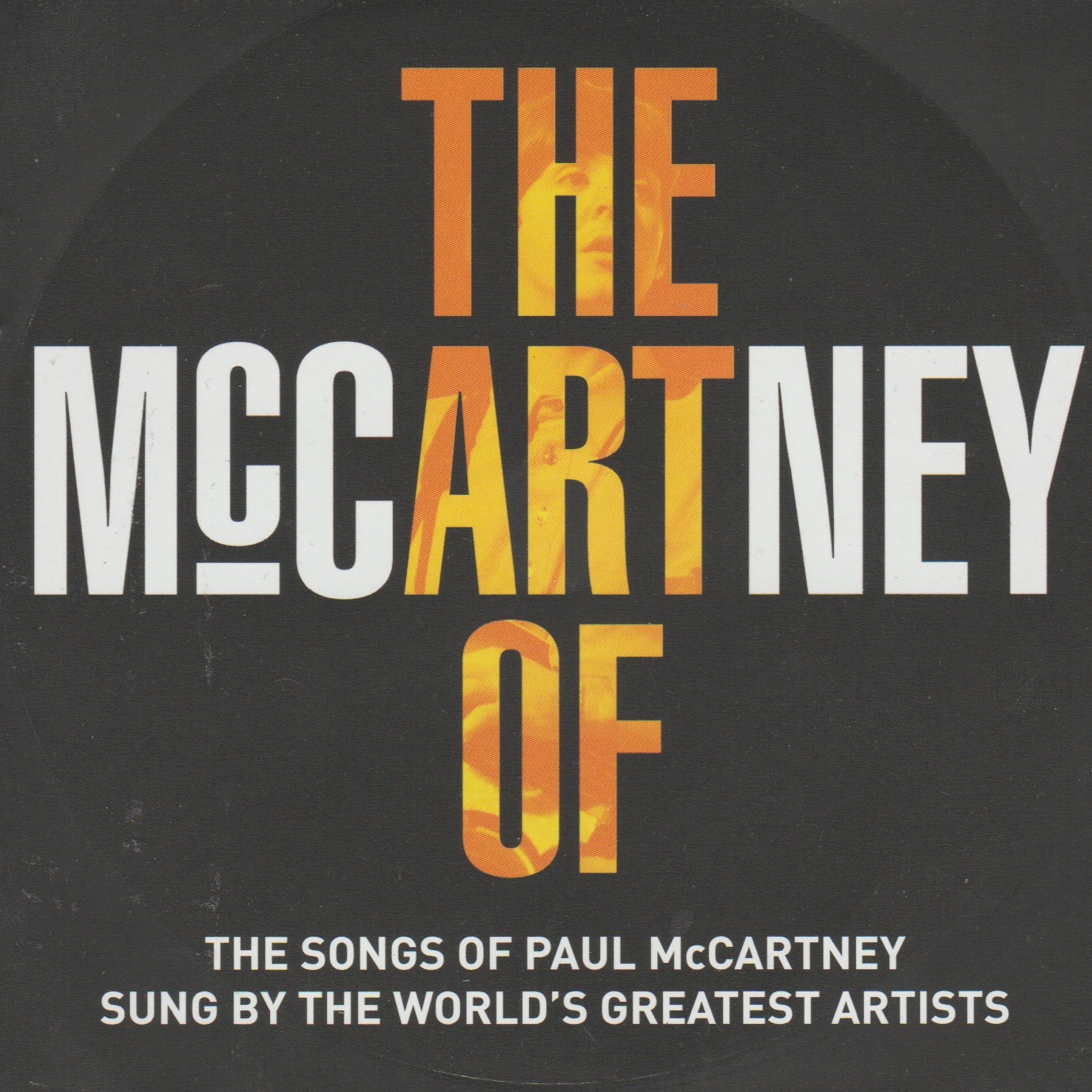
 – “Venus and Mars / Rock Show” (2014 Sony, from The Art of McCartney)
Kiss rarities can be so crushingly disappointing.  Some, like the Ramones cover “Rock and Roll Radio” are catalogue highlights.  Others, like “Don’t Touch My Ascot” are just curiosities.  Unfortunately the Paul McCartney medley of “Rock Show” and “Venus and Mars” fall into the latter category.  But why?

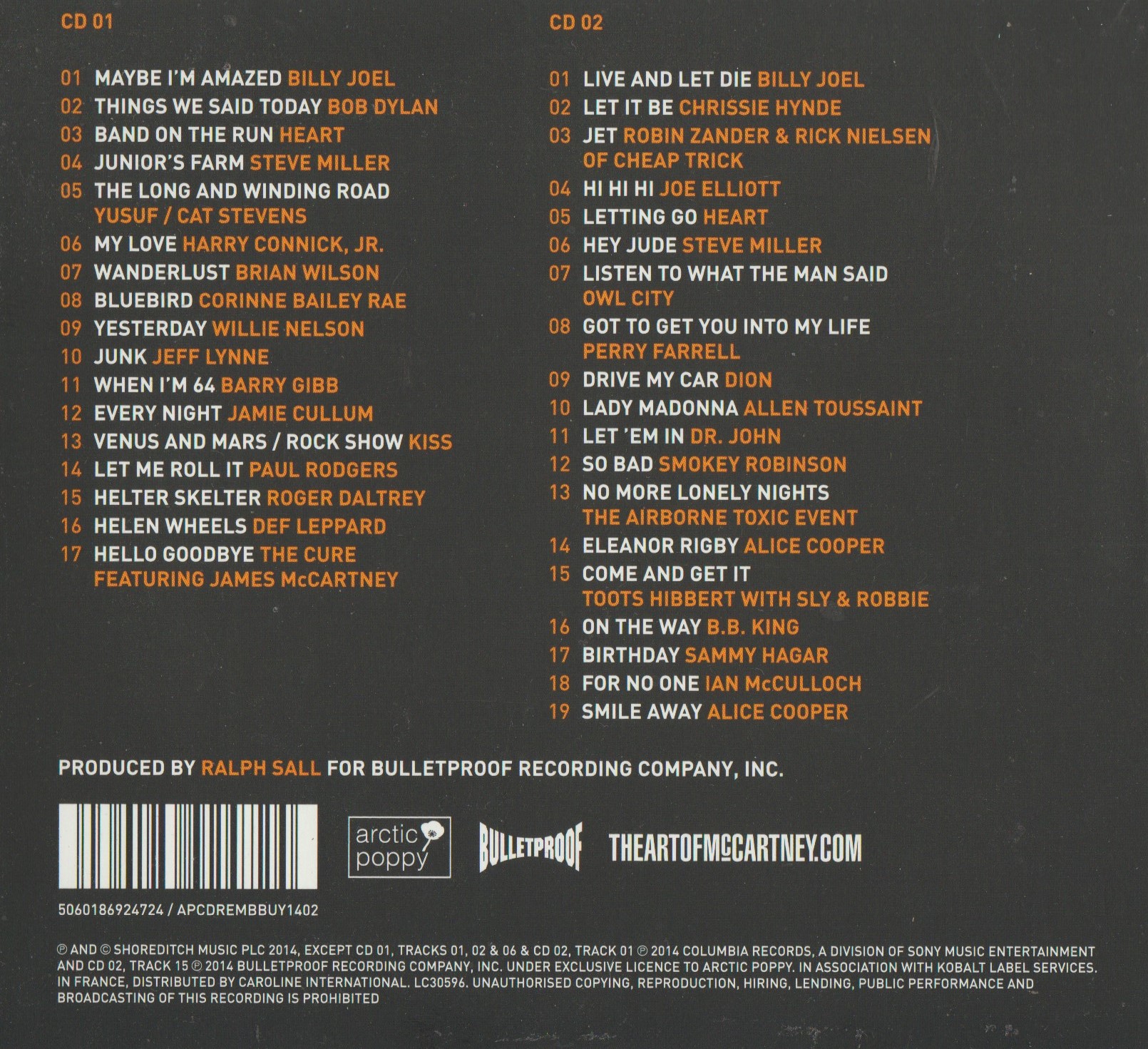
These tracks come from a Paul McCartney tribute album called The Art of McCartney.  On the back cover, the track is clearly listed as Kiss.  But Kiss must have had some lineup changes if that’s the case.  Doug Petty on bass!  Dan Petty on guitar!  Jason Paige on drums!  You’ll be forgiven if you don’t recognize those names as Kiss members last time you checked.  Only Paul Stanley and Gene Simmons from the real Kiss appear, and only in a vocal capacity.  Why the false advertising?  On the same album, Robin Zander and Rick Nielson “of Cheap Trick” are listed, but not Cheap Trick themselves.  Yet Paul and Gene are credited as Kiss, tricking the fans into thinking they were hearing the band, not just two of the singers.

How is it?

Well, it doesn’t sound like Kiss, that’s for sure!  Gene sings the “Venus and Mars” section, in his natural voice.  Then a raspy Paul comes in, bringing a Kiss-like vibe with him.  He gets to sing one of Paul McCartney’s coolest lyrics of all time:

What’s that man movin’ ‘cross the stage?
It looks a lot like the one used by Jimmy Page.

Or Ace Frehley!

At no point do Paul and Gene sing together or harmonize like they used to when covering the Beatles on the streets of New York City.  Doesn’t it seem like a colossal waste, having the two Kiss founding members appearing essentially separately?  Would have been even better with Tommy Thayer and Eric Singer playing, but…hey, nobody asks me ahead of time!

And here is another reason why physical media is important.  If you had just downloaded this from iTunes, you might never know that what you bought wasn’t really Kiss.  Then again, the front cover does say “The songs of Paul McCartney sung by the world’s greatest artists.”  Nothing in there about the playing part.

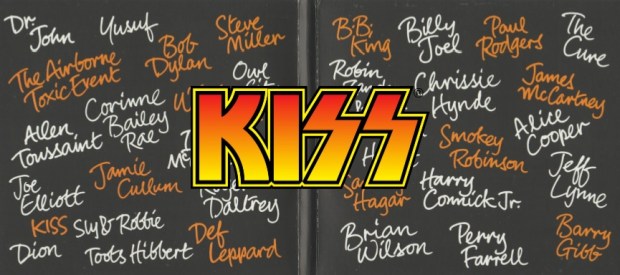
Buying this CD (to be reviewed separately at a later time) would still not be a bad idea.  You’ll get exclusives by Alice Cooper (double shot), Sammy Hagar, Joe Elliott of Def Leppard, actual Def Leppard, Jeff Lynne, Billy Joel, Willie Nelson, The Cure, B.B. King, Dylan, Heart, Dion and tons more.  Cooper’s “Eleanor Rigby” is worth the purchase alone.  This helps negate the soul-squashing disappointing of buying a “Kiss” song that isn’t.

2.5/5 stars

REVIEW: Judas Priest – Angel of Retribution (2004 CD/DVD)

“Sabbath are heavy, but Priest are metal.” – K.K. Downing

JUDAS PRIEST – Angel of Retribution (2004  Sony CD/DVD deluxe set)

Like Iron Maiden before them, Judas Priest pulled off a successful reunion tour before venturing into the studio to record a new album.  When the new music finally came, a deluxe package was made available featuring live videos from the reunion tour.  In this deluxe-sized review, we’ll take a close look at both the CD and DVD content.


The CD

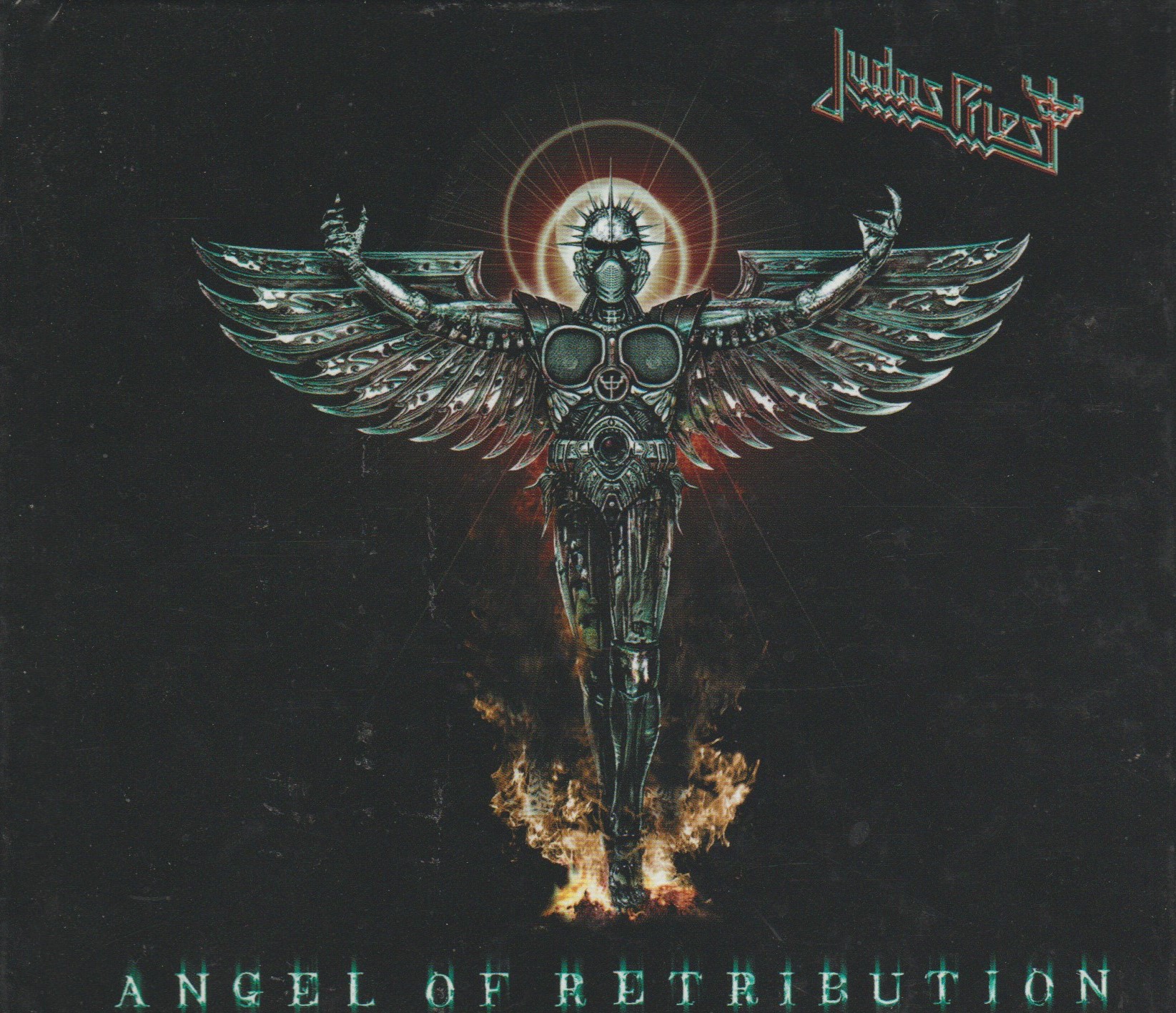
Pure anticipation preceded the arrival of the Angel of Retribution.  Two underwhelming albums with Tim “Ripper” Owens on lead vocals caused Judas Priest’s star to diminish in the 90s and 2000s.  The return of the Metal God, Rob Halford, meant a reunion of the successful 1990-1991 Painkiller lineup.  The new album cover even featured the return of the Painkiller character, now the Angel of Retribution.  But a long time had passed.  Could Priest hope to live up to the hype, and their legacy?

The answer is mixed.  While Angel of Retribution contains enough classic Judas Priest metal to consider it a success, it also has some truly legendary filler, of sub-Ram It Down quality.  Instead of running through the album track by track, let’s break it down in terms of song integrity.

Priest wrote a natural sounding album, with elements from virtually all eras of Priest past.  They say it came about organically, and it does sound that way.  Some of the best material are the songs that sound like variations of classic Priest.

The opening song “Judas Rising” brings it back to 1976’s Sad Wings of Destiny with that fade-in opener inspired by “Victim of Changes”.  Then it transforms right into the Painkiller era, with something that sounds like a far more intense “Hell Patrol”.  Solid 5/5.

The slightly psychedelic first single “Revolution” ranks among the better songs, although perhaps it’s actually most similar to “Little Crazy” by Rob Halford’s Fight.  It has flavours of Rocka Rolla and Killing Machine, and is far from what anyone expected Priest to put out for a first single.  Dig that slide guitar bit in the solo!  Solid 5/5.

Worth Fighting For” isn’t a ballad; it’s a little harder edged than that.  It’s the one song that is unique in the Priest catalogue, and remarkably strong.  The riff has a nice chug to it, while Rob ably carries the melody to a higher place.  A special song, and a 5/5.

Demonizer” is Jugulator meets Painkiller, faster than a hellriding devil dog (whatever that is), but “the Painkiller rises again!”   So testifies Halford.  It’s so ridiculously over the top that it can only be worth a solid 5/5.  Likewise the similar “Hellrider” on side two.  Both feature double bass so fast that it’s almost a parody of itself, but both rock so hard you’ll break your neck keeping up.  “Hellrider” is also notable as the song where Rob Halford inexplicably name drops “Megatron”.  Similar songs, both solid 5/5’s.

The ballad “Angel” is a little soft, unexpectedly so on an album with so much heavy metal.  Yet, Priest can do anything.  The acoustic “Angel” could be the quietest ballad since the early days.  “Put sad wings around me now,” sings Rob to the angel, an appropriate callback.  As his voice aged it acquired more depth.  That helps make “Angel” a respectable 4/5.

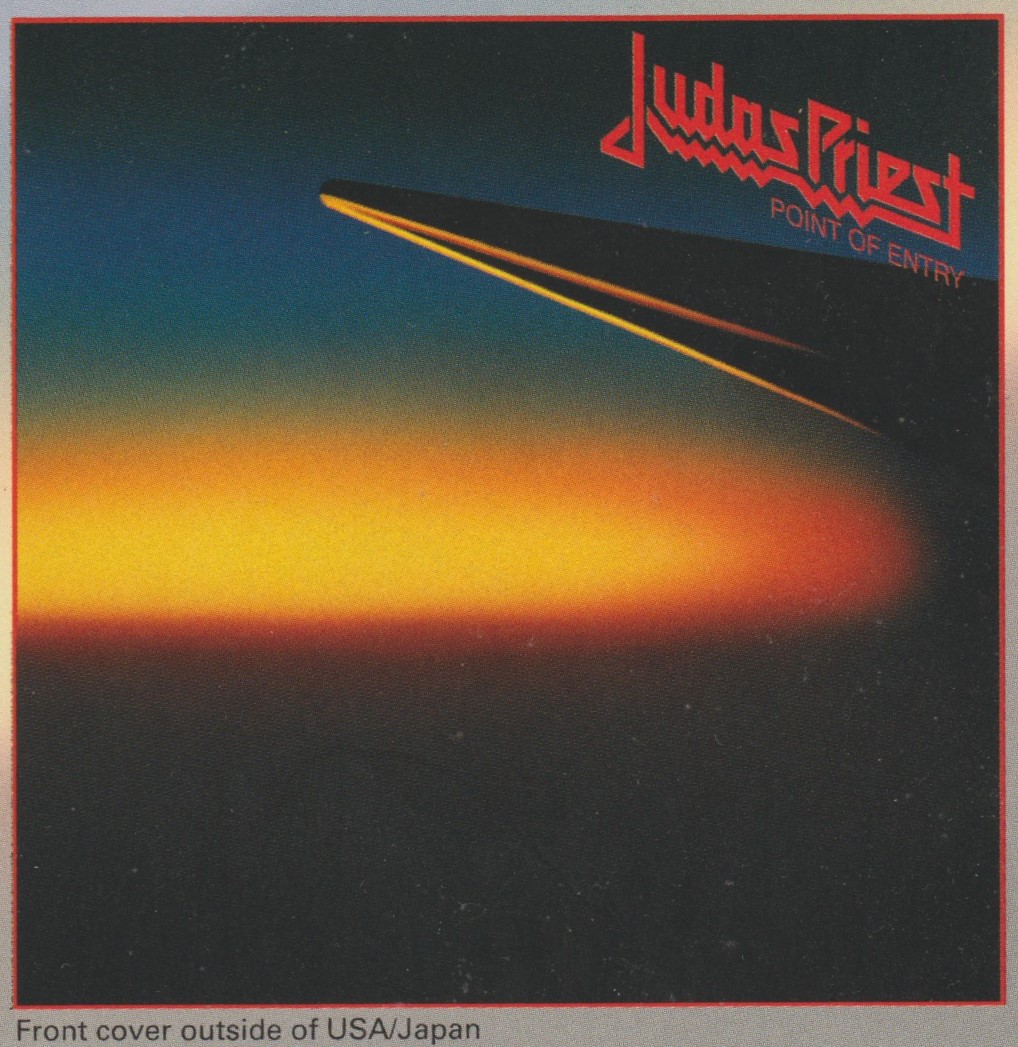
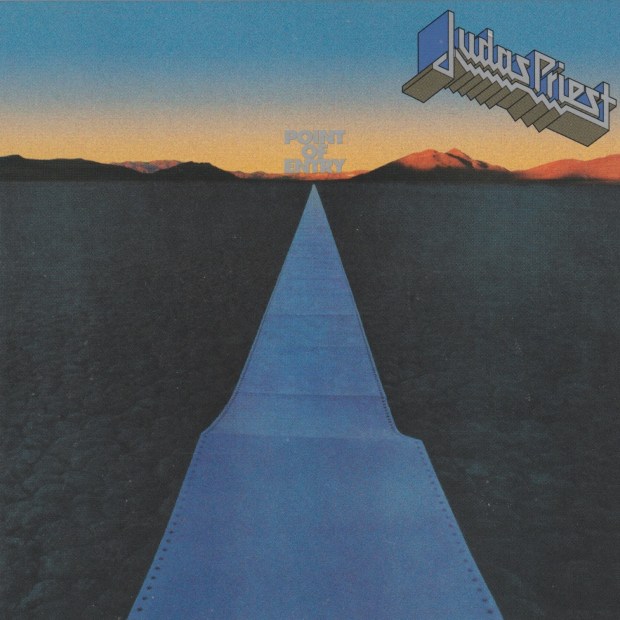
Deal With the Devil” and “Wheels of Fire” fall in a netherworld of pedestrian Priest.  These both feel like filler from Point of Entry or Ram it Down.  Less explosive, less memorable.  The autobiographical “Deal With the Devil” is amusing for its many lyrical callbacks: “Under blood red skies”, “Took on all the world”, references to razor blades.  Likewise the short one, “Eulogy“, which is really an intro for another song that we’ll get to.  “They remain still as stained class”, “Guarded by the Sentinel”, and so on.  3/5 each.

The worst of all songs is “Loch Ness“, a mess so atrocious that we had to devote an entire entry just to that one song.  Combined with its intro “Eulogy”, it’s over 15 minutes of mire that has no reason to exist.  Many people simply stop the album after “Hellrider” and leave this foul turd to rot unheard.  “Loch Ness” could very well be the worst Judas Priest song of all time.  A flaming turd to extinguish all flaming turds.  The worst of all putrid, rancid filler songs ever foisted upon the faithful.  0/5.


“Reunited” DVD

It’s worth getting a copy of this album with the bonus DVD.  For one, there’s a documentary from the Priest Reunited tour.  Secondly, there are seven uncut live songs here for you to enjoy, and it’s the only official video release from the Reunited tour.  The live footage is something to see, especially if you own the robotic Rising in the East DVD.  In that concert, Rob Halford was a stiff mannequin instead of a frontman.  Here, he comfortably in charge and engaged.  The entire lineup is energized.  “Breaking the Law” sees them powered up and working hard.

But how did the seemingly unlikely reunion begin?  According to the documentary, the band and Halford met to discuss the forthcoming Metalogy box set.  Glenn Tipton states that they decided to reunite later the same day.  It was like they’d never been apart.  Terribly British, says Rob.  “Have a cup of tea, see you later.”  Rob does express regret for his actions (reportedly he gave Judas Priest his notice in 1992 by fax), but it seems all was forgiven over time.

Beware which version you buy.  This CD/DVD combo set contains the documentary plus the full live songs:  “Breaking the Law”, “Metal Gods”, “A Touch of Evil”, “Hell Bent for Leather”, “Eletric Eye:”, “Diamonds & Rust”, and “Living After Midnight”.  The DualDisc version does not; it only includes edited fragments of those tracks.  Which is a shame, because the band sounded fantastic and Rob was in full-lunged form.  This is probably the best live version of “A Touch of Evil” available, for example.  Not everyone likes the acoustic version of “Diamonds & Rust”, but it’s certainly different. The only bonus to DualDisc is that you also get the album in “enhanced stereo”.  Avoid that; get this.


Although Angel of Retribution is overall a very strong Judas Priest album, “Loch Ness” is impossible to ignore.  It does serious damage to an album that was otherwise an impressive listen.  In the included DVD, K.K. Downing says they had to pick and choose from an overabundance of songs.  Can you imagine how bad the leftovers are if “Loch Ness” made the album?

3.5/5 stars

REVIEW: Judas Priest – Firepower (2018)

JUDAS PRIEST – Firepower (2018 Sony)

It’s 2018 and the Priest is back.  The excitement for the mighty metal band’s return has been restrained by the knowledge that Glenn Tipton is too ill to tour.  Parkinson’s disease — what a bastard that is.  Co-producer Andy Sneap has stepped up to take over Glenn’s guitar parts on tour.

Meanwhile on album, Glenn’s contributions to Firepower can be heard.  Sneap and classic Priest producer Tom Allom recorded one of the most biting Priest albums to date.  More impressive than the sound they captured are the performances.  Rob Halford in particular is more expressive than he has been in years.

At 14 tracks and almost an hour, Firepower suffers only from too many tracks.  There are a couple that clearly could have been cut and left for B-sides or bonus tracks.  “Flame Thrower” (similar to “Hot For Love” from Turbo), though a cool title, would have been great on a B-side.  On album, I’d rather race ahead to some of the more exciting tracks.

Firepower throws it back to sounds of the past.  Sometimes it’s Painkiller, and sometimes Angel of Retribution.  Rock writer Heavy Metal Overload noticed sonic similarities to Halford’s Resurrection CD.   At other times it’s brand new, because guitarist Richie Faulkner brings new things to the table, such as slide.

There are many highlights among the 14 tracks.  “Evil Never Dies” and “Never the Heroes” both immediately jump out for their melodic mastery.  Rob is sounding better than he has on the last couple, with a few tasty screams to enjoy.  As time goes on, new favourites will replace old.  Perhaps it’ll be “Spectre”, “No Surrender”,  “Children of the Sun”, “Rising From the Ruins” or even “Flame Thrower”!  Another highlight:  mellow album closer “Sea of Red” which bears lyrical similarities to “Blood Red Skies” from 1988’s Ram It Down.  In general, Firepower is about fighting back.

The cover art by Claudio Bergamin is Priest’s new mascot, “Titanicus”.  Silly name aside, this one Priest’s best album cover in decades.  (Mark Wilkinson continues to contribute to the packaging art as well.)  Notice how Bergamin’s lines match up with the style of past Priest albums like Screaming for Vengeance.

It’s hard to imagine a better album this late in their career.  Priest have done it again.  Firepower lives up to its name.

4.5/5 stars


JUDAS PRIEST REVIEWS


REVIEW: The Essential Kinks (2014)

THE KINKS – The Essential (2014 Sony)

A question I often get is “Have you heard ‘x‘ by ‘band y’?”  I’m always eager to offer up opinions, but like any other music collector, there are albums I simply have not heard yet.  Friends and fellow writers continually offer fantastic suggestions, but time and money are always limited.  I like to listen to my old music too, and not just stuff that is new to me all the time.  Getting caught up on bands I may have missed is a time consuming process.

The Kinks are one such band.  Growing up as a rocker, I was aware of their hits and the overall narrative of their career.  As an adult, I wanted to start with a compilation.  When you have a band with a career as long and varied as The Kinks, I very much enjoy getting a snapshot of the whole thing rather than pick off albums one by one.  Sony’s double disc Essential Kinks is 48 tracks of rock from 1964 to 1993.  It’s a rather monolithic slab, but it does tell a story.

The beginning is hard and ragged British invasion rock and roll, and the road is windy.  Whether you know these tunes from movie soundtracks (“Nothin’ in This World Can Stop Me Worryin’ ‘Bout That Girl”) or Van Halen riffs (several), many songs are familiar.  Early on, their pop and rock stylings could be compared with equal respect to that of those Beatles.  The songs are just as unique, memorable and British.  The charismatic vocals of Ray Davies immediately capture the imagination.  His knack for melody is uncanny.  As time goes on, their music becomes more unique and conceptual, but no less captivating.  It is here that I discovered my favourite Kinks song, “Apeman”.

Perhaps I shouldn’t be too surprised that I already knew many of these songs as covers.  Queens of the Stone Age did “Who’ll Be the Next in Line”.  Def Leppard did “Waterloo Sunset”.  The Jam tackled “David Watts”, and made a hit out of him again.  I can also hear a lot of Dave Davies’ guitar in the rock bands that followed.  There is no denying the influence of the Kinks.

The only imperfection with this compilation is that live tracks are substituted for studio ones on “Lola”, “Till the End of the Day” and “Where Have All the Good Times Gone”.  You’ll tell me “just buy the albums, then” and to that I respond, “OK”.  (“Lola” live is a single B-side.)

I’ll be lazing on a “Sunny Afternoon” with the Kinks.

4.5/5 stars