Reviews

REVIEW: Extreme – Saudades de Rock (2008 European & Japanese editions)

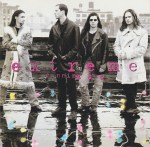
scan_20170115-2EXTREME – Saudades de Rock (2008 Frontiers in Europe, Victor in Japan, with exclusive bonus tracks)

Extreme were one of those bands that always seemed to resist reuniting. Nuno didn’t seem interested, or was too busy with Perry Farrell and Rihanna. When they finally did get the band back together, they did it right with a few tours and a new album to prove they still had the goods. 2008’s Saudades de Rock (Portuguese for “Nostalgic Yearnings of Rock”) earned positive reviews from rock critics.  It did moderate sales but the important thing was that it was good.

Immediately “Star” reminds us why Extreme were special in the first place:  Those harmonies, the good time Halen-inspired riffs, the kick-ass singer and a solid beat. Gary Cherone’s voice has aged well, coming over as a cross between Sammy Hagar, Freddie Mercury and Paul Stanley (good company to be in).  This song best exemplifies the “nostalgic yearnings of rock”, as the arrangement could have come from 1990.  Extensive (jaw-dropping) solos and a big chorus immediately remind us why this band was so critically acclaimed 25 years ago.

It’s not all longing for days gone by.  “Comfortably Dumb” concentrates its focus on the groove, like a bizarre cross between Soundgarden and the Trews.  The space-age guitar work by Nuno Bettencourt separates it from anyone else.  His style has matured nicely but still makes you wonder just how the hell he does it.  His machine-gun guitar riff on “Learn to Love” does the same.  It’s not all trickery:  these are also great compositions, with challenging rock arrangements.  Time changes and flurries of notes keep it interesting.  The middle section gives all the members a little time to shine including new drummer Kevin Figueiredo.

The first knuckleball is thrown on “Take Us Alive”, a genuine electric bluegrass shuffle.  Remember Extreme always prided themselves in their diversity, modeling themselves after Queen who were unafraid to do anything.  “Take Us Alive” is a new step for Extreme who have never gone this twangy.  Unsurprisingly they mastered this direction too.  A saucy funk rocker called “Run” goes in another direction, akin to Queen’s own funky experiments, just heavier.  Like Queen, Extreme topped it with a fine melodic chorus, but stay tuned for a superb outro.

“Last Hour” is not a ballad; more of a heavy dirge.  Nuno takes a quiet solo full of volume swells before going full shred. He then rips a page from the book of his solo album with the punky “Flower Man” (I say “punky” rather than “punk” since few genuine punk songs have a blazing Nuno Bettencourt guitar solo).  “King of the Ladies” is something else entirely, featuring Nuno on lead vocals.  It’s trippy, slinky, drony, modern and sultry with smoking instrumental sections and sounds like nothing else you can think of.  Few bands can take so many directions on one album and have it sound like a cohesive whole.
scan_20170115-3

Every Extreme album has at least one ballad, and “Ghost” is a wonderful continuation of this tradition.  With the focus on the piano, it’s a reprieve in the relentless guitar assault that makes up the majority of Saudades de Rock.  You have heard this sound before on albums like Extreme III.  We then visit the Houses of the Holy with “Slide” which possesses the unmistakable Zeppelin funk.  You’ll be wondering, where’s that confounded bridge?  The riff is a wink and a nod to “Sweet Emotion” and there is definitely some of that Aero-groove mixed with the Zoso Magic.

An acoustic reprieve is offered with “Interface”, a floaty ballad that fits this leg of the running order.  It merges into the funk-Halen of “Sunrise”, a nice heavy track before “Peace (Saudades)” takes us out on a dreamy, Queen-like ballad.  Yes that’s a lot of ballads late in the game and on paper it shouldn’t work.  It does because Extreme are consummate balladeers (each one being different) and successful composers of album-length works with a start, middle and ending.  “Peace” is a triumph and uplifting finale.

There are two bonus tracks available at the end of different versions of Saudades de Rock.  Both are old demos from the vaults, ancient relics of a pre-fame Extreme.  It’s a cool idea to release old unheard songs as bonus tracks, though unorthodox.  “Mr. Bates” (1986) is exclusive to Japan only.  It’s something like seeing old baby photos, or highschool yearbook grad pictures.  You wince and think “Well, they were young.”  Even so young, Nuno obviously had more talent than the average bear.  Europe got the better song “Americocaine” (1985), which shows off that blend of Gary and Nuno’s voices that, one day, would earn them millions.  You could imagine “Americocaine” showing up at the end credits of a minor 80s action movie.

Extreme played to their strengths, didn’t try to repeat anything from the past, while giving fans exactly the kind of album they needed.  The bonus tracks don’t fit, but who says a “bonus track” has to fit?   These are bonuses in the truest sense.  Rare little treats you can’t find anywhere else.  Any fan of the 1989 debut album Extreme will love them, because that is the era they resemble.

4.5/5 stars

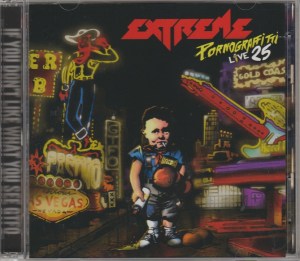
REVIEW: Extreme – Pornograffitti Live 25 (2016 Japanese 2 CD set)

scan_20170114-4EXTREME – Pornograffitti Live 25 (2016 Victor Japan 2 CD set)

When you hear that an album like Pornograffitti (which defined one of our teenage summers) turned 25 last year, don’t it make you feel old?  Maybe you haven’t played it in a while.  (If you haven’t, here is a refresher course.)  It was one of those discs that had appealing songs from start to finish, each different from the last.  All 13 songs (14 if you include the solo “Flight of the Wounded Bumblebee”) are reproduced in sequence on this new live CD release, fresh from a hot show in Vegas in 2015.  You can buy a blu-ray or DVD of the concert too, but CD collectors will want to spring for this Japanese double set.  On a second disc you get “Play With Me” (given more exposure in the movie Air Guitar Nation) and “Cupid’s Dead”, normally exclusive to the video version.  The total package is close to an hour and a half of some of Extreme’s best songs.  The Japanese printing also has its own cover art, though no other exclusives.

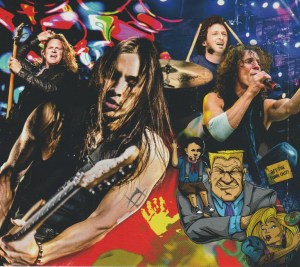
The familiar taped intro of rain and piano inaugurates the “funked-up fairy tail” that is Pornograffitti.  “Trying so hard to keep up with the Joneses!” begins Gary and and the Vegas crowd knows all the words.  With Nuno Bettencourt and Pat Badger helping out, the Extreme vocals are nice and thick live.  The sound is beefy goodness, wound up in electric guitar strings.  Kicking it on drums, Kevin Figueiredo keeps things pretty close to the way original drummer Paul Geary did it.  “Decadence Dance” is sincerely good nostalgia.

Following the vague storyline of the original album, “Lil’ Jack Horny” shows up amidst shimmery guitar harmonics and a funky lil’ riff.  The horn parts (tapes?) jack up the funky little guitar number, which carries over to “When I’m President”.  Nuno squeaks and squonks while Gary waxes poetic.  “So go ask Alice, ah you know what he said?  What did he say — remember, I wanna be elected?”   Maybe one day Gary, because it is indeed true:  just about anyone can be president!  Cherone promises that things’ll be different.  You can even be in his cabinet!

The funk peaks (obviously) on “Get the Funk Out” which remains as silly and fun as it was 15 years ago.  (Listen for a little bit of a lyrical modernization from Nuno!)  It’s pure live smoke only slowed down by the obligatory audience participation section.  This appropriately segues into “More Than Words”, which is slightly more than a singalong.  Stripped naked of the loud guitars, Nuno and Gary can still harmonize as clean and perfect as they always have.

scan_20170114-6

“Money” resumes the rock, as Gary bemoans the modern worship of the almighty dollar.  Nimbly killing it on both guitar and harmonies, Nuno Bettencourt is a super hero.  He does it again on “It (‘s a Monster)”, a stock album track that goes from point A to point B at top speed.  Some real gems start showing up a in steady string from there.  “Pornograffitti” possesses some serious funk metal riffage and guitar tricks, performed at an unbelievable level of rock supremacy.   Then it is time for the slow jazz lounge croon “When I First Kissed You”.  Piano flourishes and Figueiredo on brushes lend it a really pretty dusky sound.

“And now back to our regularly scheduled program!” shouts Gary as Extreme once again puts on their rock and roll shoes.  It’s time for “Suzi (Wants Her All Day What?)”, another funky rock combo.  Nuno plays some of the fastest licks ever attempted, but that is mere warm-up, for next is “Flight of the Wounded Bumblebee”, the legendary guitar instrumental that re-defined the guitar instrumental for a short while.  There is no time to recover because it’s straight into “He-Man Woman Hater”.  This Van Halen-like blast contains some of Nuno’s finest fret abuse.

Pornograffitti was also a little different, and one aspect of that is that it ended with two ballads.  Historically that has been demonstrated as a risky way to end an album, but Extreme pulled it off by using two that were different from any of the others on the CD.  “Song For Love” was a big pompous Queen-like anthem, and you can all but see the lighters and cell phones waving in the air.  “Hole Hearted” was the memorable acoustic closing number, great for campfires and rock concerts alike.  Live is just as solid as the studio original.

Onto to the Japanese bonus CD with its two bonus tracks.  “Play With Me” has always been a bit of a novelty, but notable for its sheer velocity and Mozart-a-go-go guitar dexterity.  Few players have chops like these.  “Cupid’s Dead” is a set highlight – heavy, funky and progressive at times.  Extreme III deserves as much praise as Extreme II: Pornograffitti so it is quite pleasing to have this adventurous track close.

Bravo to Extreme for making this trip back in time a real treat.

4.5/5 stars


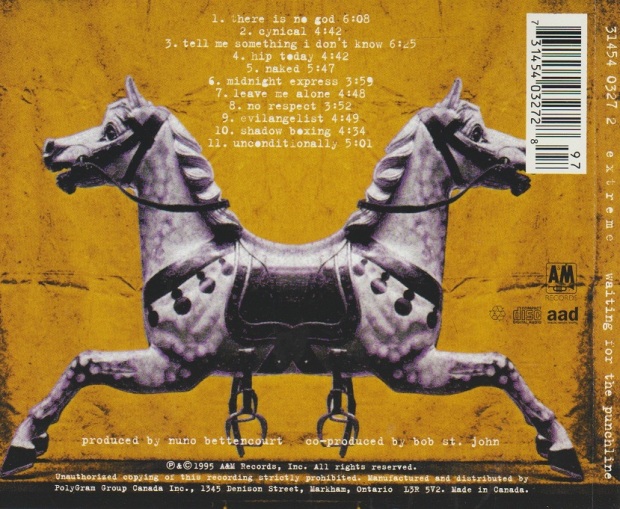
REVIEW: Extreme – Waiting for the Punchline (1995)

scan_20170114EXTREME – Waiting for the Punchline (1995 A&M)

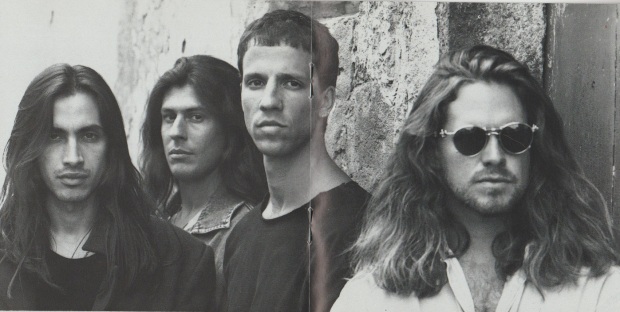
Sometimes you just gotta laugh.  Extreme released two of their finest albums after grunge wiped the slate clean.  Extreme were the punchline, but that didn’t stop them from making a smokin’ fourth album.  In 1992 Nuno envisioned the next album as “really funky”, and there is some funk here.  However Waiting for the Punchline was much more straight ahead: stripped down, no orchestras, no rap, just guitar rock through and through.

“There Is No God” sounds like an odd title from a band as Christian as Extreme were, but Gary Cherone has always been a lyrical champion.  It’s not as simple as it appears, but the groove just lays waste.  The next track “Cynical Fuck” turns it up further.  It is pure smoke, and perfect for the decade it was written in.  “Tell Me Something I Don’t Know” takes the soft/hard approach with a loud droning Nuno riff.  It’s another brilliant song, and harder than what Extreme were doing before.  Much of Waiting for the Punchline is driven by the bass and drums.  The interesting thing about this is that drummer Paul Geary left during the making of this album, and was replaced by Mike Mangini who is now in Dream Theater.  You hear two very distinct drum styles through the CD.  Geary has a straight ahead approach, while Mangini is capable of just about anything.  His first track is the single “Hip Today” and you can hear how his beats are anything but basic.

“Hip Today” is a good tune and a good indicator of what the album sounds like: Bass, drums, guitar. Listen to how the rhythm guitar drops out when Nuno solos. Just like the first classic Van Halen. The lyrics sound bitter as Gary warns the next generation of bands that their time too will end.  Things slow down a little on “Naked”, before the side-ending instrumental “Midnight Express”.  This is a truly brilliant track, proof that Nuno’s stunning plectrum practice has paid off.   When it comes to acoustic guitar work in rock and roll band, Nuno is among the very best.  “Midnight Express” gives me callouses just thinking about it.

Dark moods commence the second side with “Leave Me Alone”, a sentiment many of us understand.  Don’t worry about me — I’m happy alone sometimes.  Nuno uses volume swells a-la Van Halen’s “Cathedral” to create a nifty riff.  Into “No Respect”, Nuno makes his guitar purr, while the rhythm section throws it into overdrive.  “Evilangelist” tackles the religion questions again, with a funky riff and cool digitized chorus.  The dark and heavy vibes give way to light shortly on “Shadow Boxing” and “Unconditionally”.   Both tracks are brilliant but different.  “Shadow Boxing” might be considered the “Hole Hearted” of this album, while “Unconditionally” leans towards “More Than Words”.  Neither are re-writes, but those are the easiest comparisons.

One final surprise is the unlisted bonus track.  It wasn’t on the cassette version, but you will find the title track “Waiting for the Punchline” after “Unconditionally”.  There are two cool things about this.  One: it’s an awesome track, much like the angrier stuff on side one.  Two: it closes the album even better than “Unconditionally”.  Great little surprise so don’t hit “stop”!

The thing about Waiting for the Punchline is that it’s a grower.   The first couple listens, I thought “It’s not as good as their old stuff, but what is these days?”  The new stripped down Extreme didn’t seem as interesting as the lavish one from Extreme III or the flashy one from Extreme II.  After a few listens, different textures began to emerge, add their own colours and depth.  Particular with the guitar work, but also the rhythms, there is much delight to be discovered here.

5/5 stars

scan_20170114-3

REVIEW: Extreme – Running Gag (Japanese EP)

scan_20170112EXTREME – Running Gag (1995 A&M Japan)

You’ve read it here before, and we’ll repeat it again:  Japan gets the best stuff!

While the UK got the regular CD single for the song “Unconditionally” (four tracks), Japan called it the Running Gag EP and added a fifth track.  Due to various chart regulations in the UK, singles had to have four or less tracks to qualify.  Meanwhile, Japan seems to love releasing exclusive EPs and Running Gag is one such exclusive that Extreme fans will want to hunt down.

Extreme’s fourth album, 1995’s Waiting for the Punchline, was as much a treat as the prior albums.  It was as different from them as they are from each other.  This time, they went raw and stripped down.  You can usually hear only one guitar track at a time.  “Unconditionally” was the closing ballad, a fantastic song presented here as an edited remix.  Mike Mangini was added on drums, and you can hear slight differences from the album track.  Had the year been 1991, they would have had another hit on their hands.  Fans who know the song will recognize it for its heart and charm.

Three live songs with Mike Mangini on drums are the real treat of the set.  (He gets a chance or two to really smoke.)  “Am I Ever Gonna Change” from Extreme III is the middle part of their side-long epic “Everything Under the Sun”.  It worked well enough as a standalone song to be released as a promo single, and to be played live.  For the live situation, Nuno souped up his guitar solo.  Without the backing orchestra the album version has, it’s a very different sound.  Such is the danger of recording an album that is difficult to reproduce live.

The two tracks from Waiting for the Punchline sound more at home on stage.  “Tell Me Something I Don’t Know” (the Japanese exclusive) and “Naked” have a mean, catchy vibe.  Extreme were one of very few hard rock bands that adapted their sound well to the grunge onslaught.  These songs are not “grunge”, but they represent a step in that direction.  The songs have more bite, more bass, more groove.  The solos are sparse, though Nuno puts his foot to the gas pedal when required.  Without sounding dated Extreme simply pivoted just so into the 90s, but it sadly didn’t equal sales.

The final song is a studio ballad, “When Will it Rain” which has a vague Wings sound crossed with smooth Extreme balladeering.  It’s actually quite a great little bonus track.  Its quaint 70s qualities might not have fit in well on the original album, but hopefully you will have a chance to hear it in your travels.

Good little EP, just shy of great.

3.5/5 stars


#540: I Can Drive 55

GETTING MORE TALE #540:  I Can Drive 55

In 25 years of driving, I believe I have only had three speeding tickets.  Apparently, I can drive 55. Most of the time.

I took driver training at Canada Driving School, and there is one thing I’ll never forget from one of the in-class sessions.

“Music can have an influence on your driving,” said the instructor.  “Fast and upbeat music can trick your brain into driving faster without realizing it.  Keep an eye on your speedometer and don’t listen to AC/DC if this is a problem!”

A couple months later I had my license and was driving myself to and from school in my dad’s Plymouth Sundance.  There was no graduated licensing in Ontario back then.  I was driving alone on the expressway.  Of course, I loved having a car stereo to myself.  In short order it was proven that listening to AC/DC was not a problem for me.  Instead of weighing down the accelerator pedal, AC/DC kept me calm in traffic.  Silence made me nervous but music soothed.  If I was speeding it had nothing to do with the song on the tape deck.  If anything, I tended to slow myself down a bit so my trip could take a little longer, and I could finish a song.

In fact, recent studies have shown that, generally speaking, if music is an influence on driving it tends to be a positive influence.  I can’t say I’m surprised.

Sure, I’ve admitted to air drumming and so on in the car.  This is usually at red lights though, so I’m letting myself off.

I like to listen to live albums in the car.  They work very well in that noisy environment.  Instead of silence between songs that lets in all that road noise, you hear only the screaming of a crowd.  In addition, the length of a live album works well for highway driving.  If I’m heading to the Toronto area, a typical double live album will easily get a full play on the road.  At home, I don’t always have time to listen to a double live album in one sitting.

IMG_20140914_094438

Facing the roads on a daily basis in this town can be like taking your life in your hands.  I’ve whined and moaned about the drivers here and it has been getting worse.  The 401 is undergoing heavy construction and drivers have a loose grasp on what lanes are lanes and what are not.  It’s treacherous, and more and more drivers are thinking only about their commute time rather than driving like a sane person.  Instead of weaving in and out desperately trying to get a little further ahead in the pack, I tend to stay in one lane as much as possible.  Perhaps this is the calming effect of good music.  I don’t need to race home if there is a good song I want to finish.  Maybe the racing guys should put on a good song, too.

I’ll admit it, driving is far from my favourite activity.  My favourite kind of day off involves no driving anywhere.  There are estimates that we spend about five years of our lives locked in our cars on the road.  I prefer to think of that as five years of road testing some amazing albums.  I would also argue that roughly 50% of the music reviews here are mikeladano.com were brainstormed while listening to the albums in the car.

Quite frankly, I don’t understand the speed demons.  Where are you going in such a hurry?  Maybe you should have left a little earlier.  Some music in the car makes the time fly easier.

han-solo-cameo-in-the-i-cant-drive-55-music-video

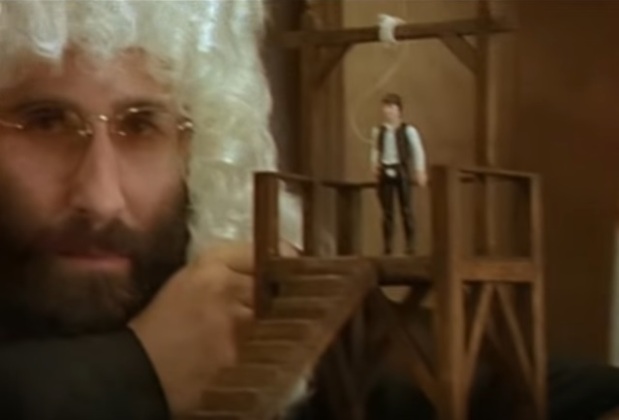
Did you catch Han Solo’s cameo in the “I Can’t Drive 55” music video? Left – John David Kalodner. Right – Han Solo.


REVIEW: Aerosmith – Just Push Play (2001 import version with bonus track)

scan_20170109AEROSMITH – Just Push Play (2001 Sony, includes bonus track “Face”)

“I don’t think we’ve made a decent album in years. Just Push Play is my least favorite.” – Joe Perry

The sad and depressing fact of the matter is, Aerosmith could have retired long before Just Push Play, and we would have lost nothing terribly valuable.  They’ve pandered for hits before, but never as blatantly contrived as Just Push Play.  It’s an embarrassing state of affairs that deserves every inch of scorn we’re about to unload upon it.

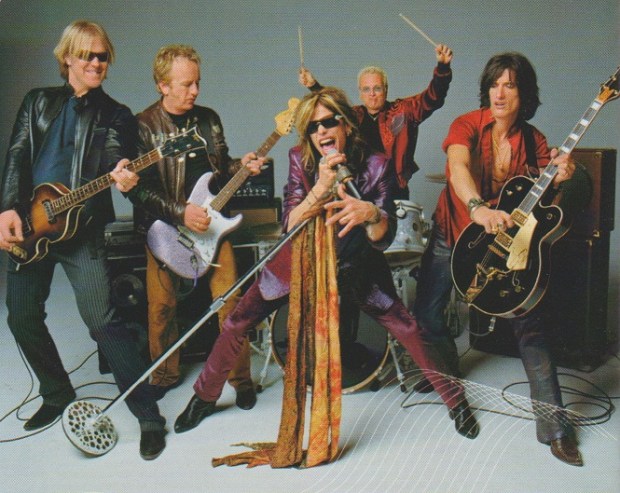
Hi-tech digital tracks written and produced with outsiders make up Just Push Play, a weak attempt to be young hip and cool when Aerosmith were anything but. Look at the sleek haircuts in the band photo. Only Joe Perry appears to know what band he’s in. The album was recorded with sterility. At no time were all five members in the studio together, according to Joe, and that’s exactly how it sounds.

If their heads weren’t in the clouds (coming off their biggest hit single ever) they might have made a rock album.  “Beyond Beautiful” is a close imitation, a robotic and stiff carbon copy.  Ballads like “Fly Away From Here” sound as if faxed in from the office.  These blatant attempts to repeat past glories are among the most offensive on Just Push Play.  It is true that one of Aerosmith’s first hits (“Dream On”) was a ballad.  That was a long time ago and a long way from being flat broke and banging out a song in the middle of the night on a piano.  These new ballads like “Luv Lies” and “Sunshine” are written specifically by hitsmiths in order to appeal to people who would not normally buy an Aerosmith CD.  The result is that they appeal to nobody.

As bland and unappealing as these forgettable ballads are, none are as offensive as the title track “Just Push Play”.  Nobody asked Aerosmith to do a rasta-hip-hop track.  The Run-DMC version of “Walk This Way” is the definitive Aero-rap, a masterpiece of serendipity and cutting edge ambition.  Aerosmith thought it was necessary to revisit that sound 15 years later, and once again the result is a blurry facsimile that pales in comparison.

“Jaded”, the first single, is a great Aero-hit, one of the few from this era of co-writers and collaborators.  Fortunately you don’t have to buy the album to get it, as there was a five track EP you could buy instead.  If you go that way, you can still enjoy a couple different versions of the charismatic single.  “Jaded” had the kind of chorus that Aerosmith used to be able to write in their sleep, but now apparently need help to do.

There were different bonus tracks for different regions.  US and Canada got nil, but Europe got “Face” while Japan received “Won’t Let You Down” and a bunch of other stuff including five live tracks from 1978 (California and Texxas Jams).  That 2 CD Japanese edition might be worth tracking down for the bonus material, but “Face” remained exclusive to Europe.  Is it worth it?  Actually…it might be.  “Face” is an acoustic track that sounds a bit like a B-side.  It’s closest to “Jaded” in sound, and sounds looser than most of the rest of the album.  It’s certainly not going to become a lost favourite, but if you find a copy at the right price, consider it.

Just Push Play deserves the dreaded Flaming Turd.

FLAMING TURDS

1/5 stars

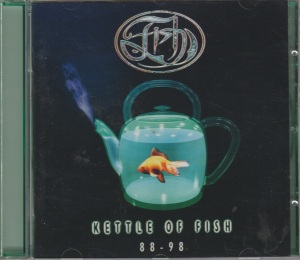
REVIEW: Fish – Kettle of Fish 88-98 (1998)

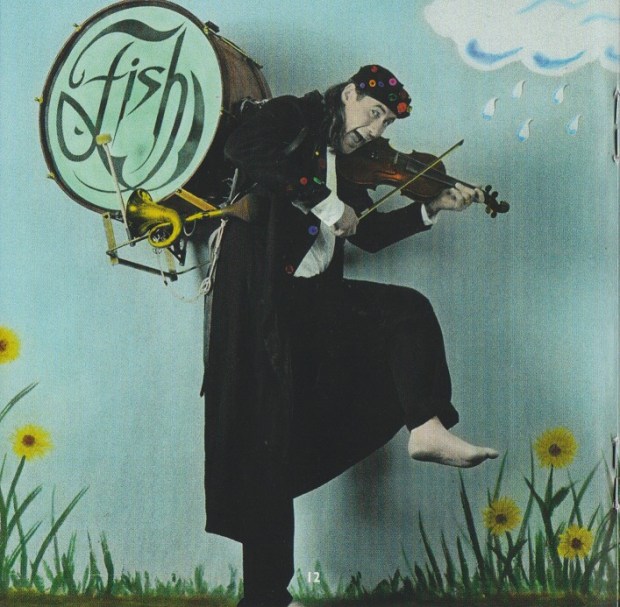
scan_20170105FISH – Kettle of Fish 88-98  (1998 Roadrunner)

Kettle of Fish, the “best of” Derek W. Dick, is the first and only CD I’ve ever had stolen from me.

I got it cheap, something like $7 brand new, from one of our stores.  Then a year later, someone stole the CD player from my car, with the Fish CD inside.  Emotionally distraught, I sought to replace it right away.  The best I could do was $30 for a replacement copy shipped from Fish’s official site.  How crushing.  I wondered with bemusement what the thieves thought of Fish’s progressive rock poetry.  I imagine they tossed the disc into a snowbank.

While Kettle of Fish is no replacement for Fish’s debut solo album Vigil In a Wilderness of Mirrors, it is a fine collection of the man’s first decade as a solo artist and an enjoyable listen through.  It also boasts a nice colourful booklet with all the relevant singles covers, photos, lyrics and liner notes by Derek W. Dick.  Incidentally my original copy was missing pages.  I wonder if that is how it ended up in our store?  A defective run, sent off to a clearance somewhere, that eventually found its way into one of our warehouses.  Missing pages notwithstanding, it’s an excellent packaging job.

Since the album is made up of singles (and two new songs that we’ll get to), you will always find that critical deep album cuts are missing.  “Vigil” was not a single, but it’s one of Fish’s greatest achievements.  There’s no “The Company”.  “I Like to Watch” is missing in action.  Instead the CD is arranged to give roughly equal time to all of Fish’s output to date.  Tracks from Internal Exile, Suits, Yin, Yang and Sunsets On Empire are given fair representation.

Some of the best tracks are the lesser known variety.  “Brother 52” is hip and modern, yet still obviously Fish.  The loopy drums are perfect for the track, lending it a 90’s groove with a rock integrity throughout.  The spoken word parts of “Brother 52” are sometimes distracting, but are by and large incorporated as part of the song.  A vibrant violin solo goes for the kill and that’s all she wrote.  The Celtic jig “Internal Exile” is another immediate favourite.  The lyrics evolved from a song Marillion were working on for their unfinished fifth LP called “Exile on Princess Street”.  It was the kind of stuff Marillion were getting sick of. According to Dick, “The lyrics started to follow a more political lean with a distinctly Scottish nationalist tone. The band weren’t happy.”

I saw a blue umbrella in Princes Street Gardens,
Heading out west for the Lothian Road,
An Evening News stuffed deep in his pocket,
Wrapped up in his problems to keep away the cold.

Grierson’s spirit haunts the dockyards,
Where the only men working are on the documentary crews,
Shooting film as the lines get longer,
As the seams run out, as the oil runs dry.

The finished lyrics make you feel it. Yes the music for “Internal Exile” is bright and chipper, with a tin whistle to take your worry away. It sounds nothing like the morose music Marillion coupled it with. Maybe that’s what made all the difference.

Tracks including “Credo”, “Big Wedge” and “State of Mind” are varied and of very high quality.  You might think you put on an unknown 80s Phil Collins single if you play “Big Wedge” unannounced.  Of the two new songs recorded for the album, “Chasing Miss Pretty” is the most enjoyable.  It’s simple silly light rock for the summer time.  Fish seems to have dropped the ball a little bit on the lyrics, but “Chasing Miss Pretty” is still far more poetic than anything Jon Bon Jovi has ever written.

First of all, I caught her reflection in the window of the pharmacy store,
There I was locked up in my pick-up in the rush hour on the Delaware road.
It must have been the scent of her perfume or the glimpse of that French lingerie,
A product of my imagination, I blame it all on a hot summer’s day.

Unfortunately the other new song “Mr. Buttons” is forgettable musically and lyrically.  A song about hackers and e-crime in 1998 is going to sound quaint in 2017.

The weight of Fish’s early career casts a large shadow on everything the man has done since.  Vigil was a triumph in every way for the singer.  The early songs generally outshine the later songs.  You will find favourites in the later material, but the early stuff will probably keep you coming back for another listen.  The new songs are a nice add-on, and the packaging makes it worth a go, especially if you don’t own any Fish.  Proceed!

4.5/5 stars


Roger doesn't appear happy with his Fish CD.

Roger doesn’t appear happy with his Fish CD.

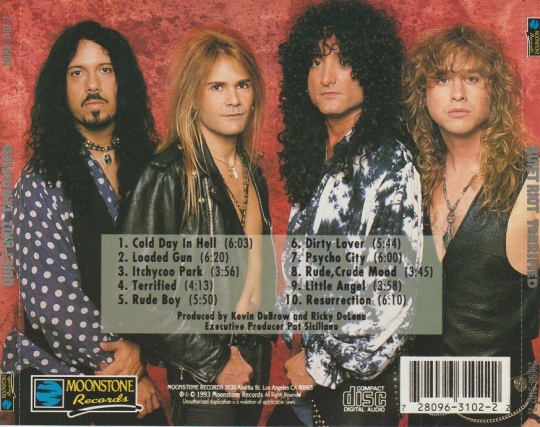
REVIEW: Quiet Riot – Terrified (1993)

scan_20170102QUIET RIOT – Terrified (1993 Moonstone)

Quiet Riot took the unusual step of firing their only original member, lead singer Kevin DuBrow, in 1987.  They soldiered on with new singer Paul Shortino and did a brief tour of Japan before calling it a day for the band.  Meanwhile, Kevin DuBrow was supposed to working on a new band called Little Women.

In 1991, various media were reporting that Kevin DuBrow and Carlos Cavazo had gotten back together in 1991 as a new band called Heat.  It was a quiet reunion for the singer and guitarist who had been estranged since DuBrow’s firing in 1987.  Within two years of forming Heat, the band had morphed into a new version of Quiet Riot, now featuring former drummer Frankie Banali and newcomer Kenny Hillary (RIP).

Terrified features 3/4 of the classic Metal Health lineup with only Rudy Sarzo being absent. (He’d join again later on Alive and Well). Like a mighty ship changing course in heavy waters, Terrified is a monstrous Quiet Riot CD, anchored by Cavazo’s newly heavy guitar playing and Banali’s inimitable thunder. The drum production on this album could be the best on any Quiet Riot disc, and up there with Banali’s sound with bands such as W.A.S.P.

Lots of winners on the Terrified: “Cold Day In Hell” boasts an angry 90s groove, but with the melodic sensibilities of Metal Health-era QR. “Loaded Gun” almost sounds like a Metal Health outtake, because it has a throwback vibe. Their cover of “Itchycoo Park” is the only acoustic song, a much needed respite before re-entering the fray on the storming title track.  Only a few filler tracks (in a row) almost derail the album, but soon we’re back on track with “Rude, Crude Mood”. It may be one of the worst lyrics that DuBrow’s ever written but the music sure rocks. “Little Angel” is fast but forgettable, and before long you’re into “Resurrection”, a six-minute instrumental tour-de-force. Banali and Cavazo take the helm on it with a shuddering riff, and they don’t let go until it’s fade out. An awesome track.

Quiet Riot’s career can be divided up into a number of phases.  In the 1970s, there was the Randy Rhoads era represented by two decent Japanese albums.  This was followed by the the so-called “classic era” of major label releases (Metal Health to QR) from 1983-1988.  Then there is the reunion era which runs from Terrified to Rehab (2006) and finally Kevin Dubrow’s death in 2007.  As a coda, Frankie Banali resurrected the name with a variety of lead singers and continues to tour and record.  Their last album was 2014’s 10 featuring lead singer Jizzy Pearl.  Terrified would stand as the best album of the reunion era, which they sadly struggled to equal on later releases like Down to the Bone.

Worth the investment.

4/5 stars

scan_20170102-3


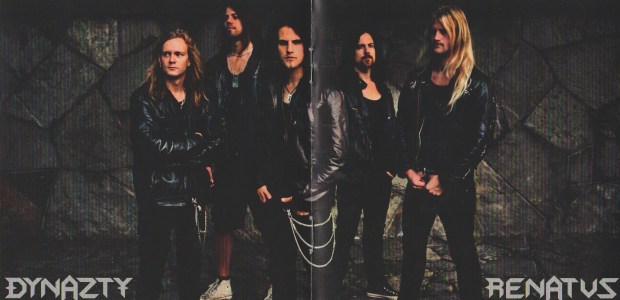
REVIEW: Dynazty – Renatus (2014)

Thanks to Jompa Wilmenius for sending us this CD!

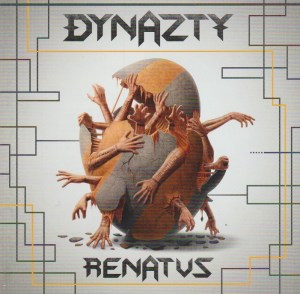
scan_20161218DYNAZTY – Renatus (2014 Spinefarm)

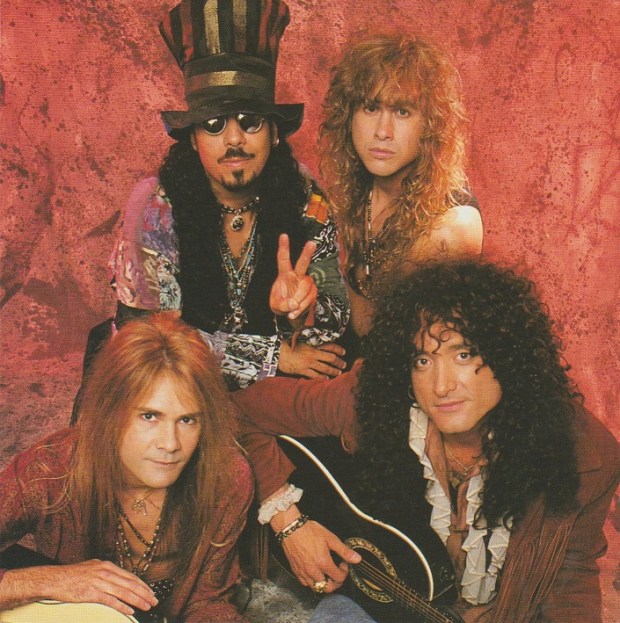
Renatus means “rebirth”, but this is the first Dynazty album to have made its way over to LeBrain HQ.  Being our first exposure to the band from Stockholm, what will their rebirth sound like?  Power metal, heavy on the syncopated beats, accented by keyboards and melody.  Like Savatage cranked up to about 15 without any restraint.  The stuttering bass drum can be tiring after a while, as can the bipping and bopping keyboard accents.  The vocalising and guitar solo breaks are absolutely highlights, bringing their sound back from the edge of overkill.

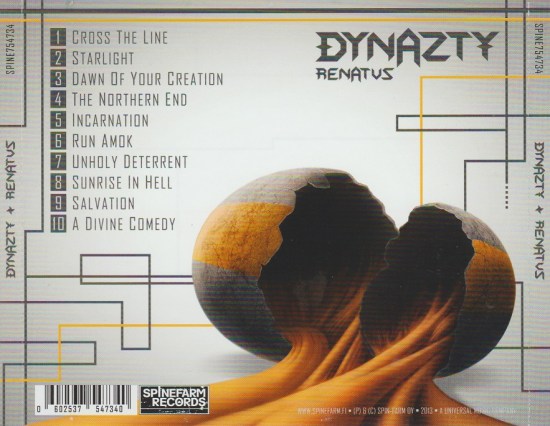
From “Cross the Line” over to “Starlight”, the speed does not let up.  It’s as if you took the fastest songs by Ronnie James Dio, injected them full of caffeine and watched them go.  (Throw in some early Queensryche, too.)  “Dawn of Your Creation” departs slightly from this trajectory but not without a purely-Yngwie lead guitar solo.  “The Northern End” is the first break in the storm, allowing the song to slow down enough for its power to impact.  This defiant anthem is an album highlight.  “Incarnation” too is a little different, bringing back the Savatage on steroids vibe.

There’s a natural spot for a side break right at “Run Amok” which restarts the engines going full speed.  “Unholy Deterrent” might be the most aggressive of the tunes, like the front of the battle lines, stampeding everything in its way and rendering the land burned and scorched behind.  Then, if there is music that backs up an army of Orcs marching out of Mordor, it should be “Sunrise in Hell”.  The lines have formed and the charges are about to begin, and the beats continue to thunder below.  “Salvation” provides the silver lining, a triumphant power rock tune.  Closing on an ominously heavy note, “A Divine Comedy” completes the album without once letting up on the metal assault.

The album sounds technically flawless to the point of sterility, except when it comes to the vocals which have all the edge.  Not a bad album or even a bad sound, just too close to the edge of parody.  There is a very fine line between clever and stupid.  Fortunately Renatus never falls over the edge.  Within its powerful tracks you will find several favourites.  Best of all the album never overstays its welcome.  This is a point more bands need to pay attention to.  Less is often more, especially when you’re as relentlessly heavy as Renatus.

3.5/5 stars
scan_20161218-3

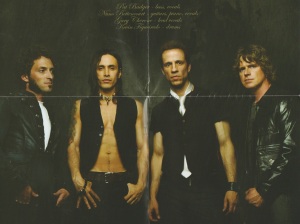
Nils Molin – lead vocals
Rob Love Magnusson – lead guitar
George Egg – drums
Mikael Lavér – lead guitar
Jonathan Olsson – bass

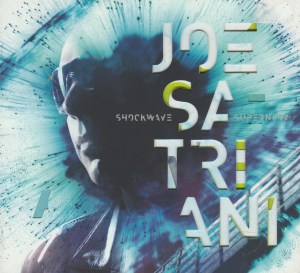
REVIEW: Joe Satriani – Shockwave Supernova (2015)

Purchased at BMV for $7.99 during Toronto Record Store Excursion 2016.

scan_20161217JOE SATRIANI – Shockwave Supernova (2015 Sony)

Like a manic version of “Puttin’ on the Ritz”, the title track from Joe Satriani’s latest Shockwave Supernova will render you mute as you pick your jaw up from the floor.  Syncopated guitars and drums unite before Joe focuses everything on the melody.  Joe’s brand of instrumental rock usually features the lead guitar in a melodic position where a lead singer would normally deliver the hooks.  That’s Joe’s job and he has done it consistently well.

New age-y guitar twinkles highlight the ballad “Lost in a Memory”, which pulses with understated rhythms.  It is only appropriate that this spacey music was recorded at Skywalker Sound.  What atmosphere and what power.  Things take a turn down Weird Street on “Crazy Joey”, a showcase for sounds you didn’t know a guitar could make, but still with a cool melody to remember.  Unbelievable accuracy and dexterity here.  “In My Pocket” brings back Joe’s bluesy harmonica work (often overlooked) with a stripped basic track.  Then we fly “On Peregrine Wings”, but the song itself is heavy as granite.  An unorthodox guitar hook reminds us that Joe isn’t a typical songwriter or player.  Thunder returns on “Cataclysmic” which moves along with the grace of a herd of rhinos.

Joe hops in his Tardis for a trip back in time to the early 60s on “San Francisco Blue”, but of course with his own space age sound.  He just has to “Keep On Movin'”, but it’s still a surprise when the piano shares the spotlight.  There is no shortage of string majesty, but the piano is a nice touch.  Things cool down on “All of My Life”, a gentle song with breezy congas and unexpected twists.  “A Phase I’m Going Through”, track 10, is the point at which the listener begins to get a little bit of ear fatigue.  15 songs might be normal for a Joe album, but 10 songs might be the ideal length for the average listener.

Take a break if you have to because there are still great moments ahead.  “Scarborough Stomp” is an apt title for the snare-heavy 11th track.  It’s all about that uncomplicated beat, but there is a cool baroque section in the middle that sounds as if lifted from Joe’s brief stint in Deep Purple (1994).  A tender ballad (“Butterfly and Zebra”) is a transitional song leading to the ominous backwards guitar intro to “If There is No Heaven”.  This song is reminiscent of past Joe blasters like “One Big Rush”. Then you will see the “Stars Race Across the Sky” on one of Joe’s more atmospheric tracks. A “Goodbye Supernova” sends us off in dramatic fashion with heavy keyboard accents by veteran Mike Keneally.
Very few Satriani albums will let you down.  Though some might argue “if you have one Joe, you have them all”, his fans will appreciate the differences.

3.5/5 stars