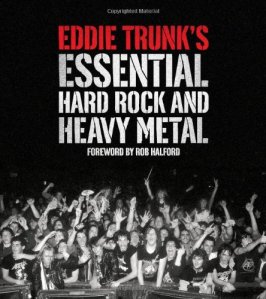
Here is a book that I heartily endorse — for beginners. I bought my best bud Peter a copy of this for his birthday a couple years ago. For a guy like Peter, a general survey book like this is perfect. It’s boiled down to the essentials, by a guy that many trust: Eddie Trunk.
I normally don’t go for this kind of book, because what can Eddie Trunk tell me about Judas Priest in three pages that Martin Popoff didn’t in his excellent book, Heavy Metal Painkillers? So this book is for the people that just want the facts, ma’am. Anybody who’s listened to Eddie Trunk’s show on Sirius XM knows that this guy is the real deal — he knows his stuff, he knows the bands personally, and he doesn’t pander. He has a genuine love for the music, all of it. His personal touch helps make his radio show that much more enjoyable. Same with this book.
After Rob Halford’s forward, Eddie presents his essential hard rock and heavy metal bands, in alphabetical order. AC/DC, Aerosmith, and all the way down the line. You may take exception to some of the bands that he skips over (I read on a message board that Quiet Riot were ticked that they’re not in here) but I think by and large he hit the nail on the head. The bands that he does include…well, it’s hard to argue against them, and you only get so much page space, right? And this is a gorgeous book. Full colour photos, every page. Beautiful. Lots from Eddie’s personal collection, you’ll see a very young Eddie Trunk meeting the bands as a kid!
In addition, Eddie gives you a discography for each band (not perfect, there are a couple errors here, as in inevitable in a book like this). He also lists the members of the bands, and the most important ex-members and sidemen. So when you get to Queen (and yeah, you may argue that Queen is not a hard rock band) you’ll see the four original members, and Paul Rodgers listed beneath them. Finally, Eddie gives you his list of his ideal mix CD for each band. Go ahead and make your own, and see if you agree!
As a gift to Peter who likes the music but doesn’t know the details, he gleaned plenty from this book. Before reading it, he only knew of one Billy Squier song. Eddie Trunk got him up to speed. Thanks Eddie!
5/5 stars
For a guy like me, and quite possibly you as well:
2.5/5 stars
Added note: I know there is a Part II as well, but I have not checked it out.
JETHRO TULL – A / Slipstream (2004 Chrysalis CD/DVD, originally 1980)
Unlike most Jethro Tull remasters, A did not contain any bonus tracks. Rather, it includes the only official DVD release of Slipstream, an old Tull live/music video VHS release.
Cole’s Notes version of the history: A began life as an Ian Anderson solo album, featuring new Tull bassist Dave Pegg and ex-Roxy Music multi-instrumentalist Eddie Jobson. Jobson brought along his drummer friend Mark Craney, and then finally Ian asked his Tull bandmate Martin Barre to come in and play on a couple tracks. Somehow, this turned into Martin playing on the entire album.
Anderson says that the record label, who were pushing for A to be released under the Jethro Tull banner, suddenly announced that Craney and Jobson were replacing current Tull members Barriemore Barlow, John Evan, and David Palmer. This and other factors led to that exact lineup change, but with Jobson listed as a “special guest”.
Regardless of the office politics, A is a solid albeit very different and 80’s sounding Jethro Tull album. I’m not a huge fan of the opener “Crossfire”, but I think that “Flyingdale Flyer” is a great combination of progressive rock Tull with the modern tweaks. “Working Joe, Working Joe” is OK, but I’m not a fan of that funky synthy bass line. I love the spacey sci-fi intro to “Black Sunday”, a precursor of sorts to “The Final Countdown”. Then it changes to something a little more challenging with the flute leading the charge. At 6:39 and with multiple sections and tempos, this is easily the most epic track.
The digital pulse of “Batteries Not Included” is pretty cool, but it’s not really an outstanding track. “Uniform” rolls along solidly. “4.W.D (Low Ratio)” is a guilty pleasure. “The Pine Marten’s Jig” sounds as the title implies, but perhaps just a little more complex than the average jig! The closing song is the dramatic “And Further On”. Its mood is appropriate for a closer, and I dig that cascading piano.
Incidentally, this is one of those CDs that were “Copy Controlled”. Boy, did that piss people off. Some people said you had to take a black magic marker to the outer edge of the disc in order to copy them. I never felt the urge to try this trick, and it doesn’t matter because the obsolete software does nothing to inhibit ripping today.
And that’s the album. The DVD Slipstream opens with a homeless-looking Anderson (sleeping under a Thick As A Brick newspaper) being chased by the balloons from The Prisoner. He then stumbles into a Jethro Tull concert, not a security person in sight! When has this happened to you?
Tull then open with a hard rocking “Black Sunday”. Martin Barre and Ian Anderson are really the only guys that look like they’re in the same band! The excellent “Dun Ringill” is presented music video style. It’s like Anderson playing over the end of 2001: A Space Odyssey, when Bowman’s in the pod. “Flyingdale Flyer” is better, with Tull as some sort of band of interstellar explorers. Anderson’s facial expressions make this one irresistible. The next song is once again live, and it is the classic “Songs From the Wood”. Jobson’s got his hands full with two keyboards! This is paired with “Heavy Horses” sounding unfortunately cumbersome due to the domination by those same keyboards.
“Sweet Dream”, one of my all time favourite Tull songs, ever, cannot be tamed by the keyboards. They are there, but the song is powerful nonetheless, as it should be. In this clip, Anderson plays both the homeless ragged man, and…a vampire! I actually like this clip a lot. My favourite clip is “Too Old To Rock ‘N’ Roll”, the entire band dressed as old men. This is the album version of the song.
Next is the lovely “Skating Away on the Thin Ice of a New Day”. On this track, which is live, Eddie Jobson plays a neat electric mandolin. “Aqualung” is pummeling, Mark Craney keeping busy while also hitting hard. The set closes with “Locomotive Breath” which starts completely awful, as a new-wave-funk-prog song of some kind, before finally picking up steam as it should. The flute solo is as brilliant as ever, and I’ll never get tired of watching Martin Barre shake his skullet wildly.
Rush and The Tragically Hip 2013 postage stamps – Canadian Recording Artists series
Package of 10, $6.30.
I went down to the post office to pick up my latest CD treasure from Discogs, when I noticed these beauties: the new 2013 Rush, and Tragically Hip postage stamps! Had to have ’em. The budget didn’t allow for the Guess Who set (apparently their best seller). I’ve never heard of Beau Dommage, but apparently they are “considered the Beatles of Quebec and French music” (Canada Newswire).
I love the little details. The “Stereo 1” on the Hip package. The “Side A” and Anthem Records serial number on the Rush. It’s the little things like these touches that make these stamps fun to keep in package, safe in my collection!
For your viewing pleasure, please enjoy these cool postage stamps. I’ll try to pick up The Guess Who next week.
TRAILER PARK BOYS – The Movie (2006 Alliance Atlantis)
Directed by Mike Clattenburg
The story goes that Ivan Reitman, who produced Trailer Park Boys: The Movie (aka “The Big Dirty”), wanted to do a movie that would re-introduce the characters and target them to a new audience. He preferred the flavour of the earlier seasons and steered the movie in that direction. This is sort of a good and bad thing.
The movie is out of continuity with the TV series, unfortunately. There are characters and events in the movie that would never be referenced in the series. Lahey loses the roof of his car in both the movie and the TV series, but in different ways. You’ll notice Trinity is played by a different actress (Lydia Lawson-Baird), and her character is slightly different in tone as well.
Remember those movie trailers where the Boys are auditioning actors to play themselves? I think it’s best to think of this movie in that context: It’s the Boys playing themselves, in a movie based on themselves. Even though we’re talking about fictional characters in a mockumentary movie.
The plot: Ricky and Julian go to jail (again) and are about to be released (again). No fair! cries Ricky, who wants to play in the jail hockey tournament against the prison guards, captained by Donny. The rivalry between Ricky (a goalie) and Donny (Gerry Dee) result in a few classic exchanges:
Ricky – “Suck it, Donny.”
Donny – “You suck it. More.”
Ricky – “What kind of comeback was that? I said ‘suck it’ and you just added ‘more’ to it.”
Donny – “Because it’s more, you suck it more.”
Out of jail, Rick goes home to Sunnyvale trailer park, only to find that things have changed. Lucy’s got a new job. “An awesome new job,” according to Sarah. “She workin’ at Horton’s again?” asks Ricky. Nope, it’s not a coffee shop, it’s a “gentlemen’s club”. This “gentlemen’s club” is owned by Sonny (Hugh Dillon, of the Headstones), and he’s banging Lucy.
Julian, also out of jail, has an idea to get rich “without getting caught”: Do small crimes. Steal change! Ricky, on the other hand, has met a lot of really “smart” guys in jail, and they all say “the big dirty” is the way to go: one big crime, and you’re retired. The two ideas are combined and a plan is set in motion. Will Ricky still be able to play in the hockey tournament?
In addition to new characters like Sonny and Donny, look for cameos by Alex Lifeson (Rush) and Gordon Downie (The Tragically Hip). The soundtrack kicks ass, featuring Helix, April Wine, and lots of The Tragically Hip. I always think of this movie now when I hear the songs “Bobcaygeon” and “38 Years Old”. Hell, Julian even goes to see a movie called “The Dark Canuck” in the film.
I really enjoyed Trailer Park Boys: The Movie even if it’s not quite pure Trailer Park Boys. It sort of attempts to recapture what worked in the early seasons (you can tell by casting Trinity as a younger girl) and by and large, it works. Sonny works as a replacement antagonist, a role that Cyrus often filled on the show. All your favourite regulars such as Philadelphia Collins, Jacob Collins, and Officer George Green are here. Lahey is suitably drunk, and Randy as shirtless as ever.
This actually works pretty well as a way for newcomers to get into the show. It distills what worked best in the earlier years, into a two-hour package that stays funny and doesn’t wear out its welcome. Bonus features include the music video for “I Fought The Law” (featuring Geddy Lee and Alex Lifeson!), and lots of alternate takes.
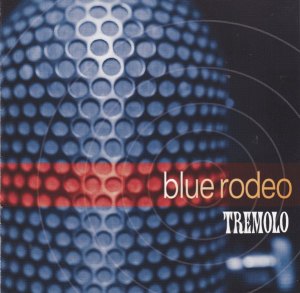
I first saw Blue Rodeo live in July 1991, just after highschool graduation. Instant fan! I saw them again in 1996 and 1998, supporting Nowhere To Here and Tremolo, respectively. Both albums grew on me tremendously after I saw the show. Before that, I struggled with them a bit, not quite liking them, not quite disliking them, and not wanting to give up on them. Funny how that goes. I rate them today in my top 3 Blue Rodeo albums, along with Five Days in July.
Tremolo requires your complete attention, this is not background music, although it will still sound great in the background. This is one of those deeper albums, one that needs multiple listens. I find it reveals different faces when I listen to it in different settings as well. The cottage is better than the car, for example. For me.
Nowhere To Here and Tremelo, albums #6 and #7, both originated at the same time as Five Days. The recent Blue Rodeo box set, 1984-1993 contains early different versions of “Moon & Tree” and “No Miracle No Dazzle”. Tremolo is much like a brother record to Nowhere To Here, an acoustic brother record. They both share the same laid back origins, the same jammy style and meandering arrangements. They also share the same lineup which was my favourite: Jim Cuddy, Greg Keelor, Bazil Donovan, Glenn Milchem, keyboardist James Gray and pedal steel player Kim Dechampes.
Most songs are mellow, laid back, spare in arrangement and very acoustic. At times, this is also the most “country” sounding of Blue Rodeo records. Witness Jim’s “Shed My Skin”, which is beautiful. “No Miracle No Dazzle” is an upbeat one from Greg, another awesome tune, while “Falling Down Blue” is for slow dancing. All of these are loaded with spirit, be it Jim’s melancholy wordplay or Greg’s gleeful guitar playing. All the players shine on this album, not necessarily as solosists (although that is often the case), but how they all mesh together. The blend of instruments is flawless.
I still think of albums as having a side one and a side two. I had to tape Tremolo on a cassette so I could play it in the car back in ’97. It’s “side two” of Tremolo that I really like. “It Could Happen To You” was a popular upbeat Jim single that received a lot of airplay. “Dragging On” is an atmospheric Jim tune, with some beautiful watery keyboards backing it, with fantastic lyrics of heartbreak that only Jim can sing. You left a hole in me, and the rain comes pouring in, sometimes I’m swept away…”
“Brother Andre’s Heart” and “Frogs’ Lullaby” work together as one Greg tune, quite extended and jammy, 12 minutes in total. After a tune like that, they had to end it with a corker! It’s the best song on the album as far as I’m concerned, and conspicuous by being so different: “Graveyard”.
Well I love these nervous breakdowns, And I love these new skins, And I love that you were brave enough, To sleep with all my friends.
Greg was pissed off at someone, lemme tell you, and this sounds like some kind of punk-a-billy song.
This album has 14 songs on it, and I’ve only talked about around half of them. The rest of them are also great, but different songs will appeal to different people. I wanted to talk about the ones that get me almost every time. You might find that you really like a song like “Fallen From Grace” because it reminds you of the early Blue Rodeo country-blues vibe.
If you love Blue Rodeo, I consider this album a must. It’s not an instant pleasure, but it is a very rewarding listen. It continues to reveal new layers of music and lyrical poetry to me today. In my humble personal opinion, I don’t think Blue Rodeo ever attained this lofty standards again.
Aaron says this is the first cassette he ever bought! He picked a good ‘un.
ZZ TOP – Eliminator (2008 CD+DVD Collector’s Edition, Warner)
Consider all earlier CD releases “eliminated”!
Say what you will about ZZ Top’s foray into 80’s music. Using sequencers and compression on the drums wasn’t everybody’s cup ‘o java, but it sure made ZZ Top millionaires. I like this album. Reverend Billy Gibbons’ guitar tone was so sweet on this album. It’s so smooth and creamy, I just love the tone. This might be my favourite album of his, purely for guitar tone. Just listen to that sweet picking on the album version of “Legs”. Man, how does he get that sound?
The original album has been lovingly remastered, with the original album version of “Legs” restored. However, fear not, the single version is still here as a bonus track. Other bonus tracks include live versions, the most exciting of which is a fiery “I Got The Six”. And hey, if you don’t like the techno sounds of the album, the live tunes give you an idea of what they’re like stripped down to the bone…like a juicy rack of ribs, meat falling right off. It’s cool how Frank Beard is just as metronomic on the live versions. He’s not a flamboyant drummer, but he’s definitely solid. Just like the Beatles wouldn’t have sounded the same without Ringo, or the Stones without Charlie, Frank is essential to that whole ZZ “Je ne sais quoi?”
I like the whole album, with only a few songs I call filler, such as “Thug”. I always enjoy hearing “Sharp Dressed Man”. I don’t know how all these years later I’m not sick of it, but I’m not. “TV Dinners” always makes me smile. Really, will these guys write about anything?
“I Need You Tonight” is one of those smooth ZZ Top blues. It’s slick, but unquestionably still blues. “If I Could Only Flag Her Down” is another blues based standout. This one’s a bit more of a boogie. Finally, “Bad Girl” (sung by Dusty Hill) is pure rock and roll.
The DVD is cool. You get the original music videos and some live TV performances. If you’re a ZZ Top fan (and for your own happiness, I hope that you are) I think you will enjoy the video stuff. Liner notes are also ample.
5/5 stars. It’s never too late to pick it up!
Click the pic of the Ford to see yesterday’s gallery of the Monogram ZZ Top Eliminator model kit!
Happy LeBrain Day! It’s my birthday. Sometimes on my birthday, I like to just spend an afternoon watching a favourite movie. This is one.
2001: A Space Odyssey (1968, from the 2011 Stanley Kubrick Visionary Filmmaker Blu Ray Collection, Warner Bros.)
Once upon a time, when the year 2001 seemed aeons away, director Stanley Kubruck (Dr. Strangelove) contacted author Arthur C. Clarke (Childhood’s End) to discuss making “the proverbial good science fiction movie”. Both were sick of films that passed for science fiction, but were actually monster movies set in space, or just replaced science with fantasy.
The result was 2001: A Space Odyssey, the film, and a companion book of the same name which is actually a completely different animal. The film — striking, innovative, visually engrossing, ambiguous, and scientifically solid — is as good today as it was in 1968, even if many of the “predictions” of the film have failed to come to pass.
Separated into four chapters (The Dawn Of Man, TMA-1, & Jupiter and Beyond the Infinite) complete with intermission, 2001 has no dialogue for the first quarter of the film. Beginning with a blank screen (and “Atmospheres”, by Ligeti), this is a film paradoxically anchored by both music and silence. The screen changes to the Earth rising over the moon, and the sun rising over the Earth (an important clue and recurring symbol) accompanied by “Thus Spoke Zarathustra”. We are then introduced to a tribe of pre-human apes (Australopithecus, perhaps), starving and on the verge of extinction. Other tribes are stronger and out-competing them for territory and resources. There is no dialogue, but the barking of the apes, yet that and the scenery speak volumes. Suddenly one morning, the game has changed: a mysterious black monolith has appeared. The apes are drawn to it, and soon find that they are now able to compete with predators thanks to a new discovery: weapons.
The second chapter, TMA-1, begins with what Clarke has called “the longest jump-cut in history”. We see that humanity has evolved into a space-going race. Orbital weapons platforms orbit Earth as a shuttle is making way to an under-construction space station. “The Blue Danube” plays as the spacecraft dance in calculated perfection. Our first main speaking character, Dr. Heywood Floyd, arrives on the station and we are given some tantalizing clues as to why he’s made this trip: Rumours of a plague outbreak on the moon. Yet this is just a cover story. As Floyd makes his way to the moon in another beautifully choreographed sequence, we learn that a magnetic anomoly was discovered in the crater Tycho (named after astronomer Tycho Brahe) — Tycho Magnetic Anomaly 1, or TMA-1. This discovery is potentially so important, that the cover story was created to keep everyone far away from Tycho.
We see that TMA-1 is another black monolith. We see echoes and ripples of past events lead to another jump forward in time. Midway though a mission of discovery to Jupiter, helmed by David Bowman (the perpetually young Keir Dullea) and Frank Poole (Star Trek’s Gary Lockwood). Their ship, the Discovery contains three sleeping astronauts and the most famous computer of all time, H.A.L. 9000. H.A.L. was flawelessly voiced by Stratford Ontario resident Douglas Rain. His eerie voice and Kubrick’s perfect framing shots help create the creepiest computer character ever seen.
The seemingly dull, sleepy daily routine is soon shattered. H.A.L. has detected a flaw in the ship’s main antenna. It will fail, unless one of the astronauts goes outside and repairs it. The antenna is their only link to distant Earth. H.A.L., who controls the life support and every function of Discovery, then begins to show signs of what humans call stress — he makes an error, and acts strangely. Yet no 9000-series computer has ever failed, or found to be in error. The chapter closes with H.A.L. singing the old song, “Daisy Bell (Bicycle Built for Two)”, surely one of the most haunting scenes in cinema.
After an intermission, Discovery finally arrives at Jupiter and its true mission is revealed. This section too has no dialogue, bringing us full circle to the way it began. David Bowman once again must venture outside the ship, and find out how the mysterious discovery on the moon relates to Jupiter. Perhaps even how it related to our millenia-dead ancestors.
What follows is one of the most baffling and strange sequences in movie history, one which will require a few patient viewings to appreciate. The beauty of this final sequence is that there is no right or wrong interpretation. While on the surface it may appear to be a psychedelic kaleidoscope of colour followed by a bizarre dialogue-free encounter with a being that seems to have no bearing on reality, it is Kubrick’s inventive way of showing the audience something that is beyond anyone’s imagination. Like the audience, David Bowman and humanity have come full circle.
Lacking in what modern audiences call “action”, lacking typical space sound effects (there is no sound in space!), lacking dialogue for most of the movie, and lacking any sort of warm human characters (except maybe H.A.L. who is not human), this movie was a challenge to watch in 1968 and is still a challenge today. It is, however, a piece of art that transcends its genre and is a landmark in film making. Kubrick, always a visionary and always breaking through boundaries of what could not be done in film, outdid himself and made a science fiction film that still has not been topped over 40 years later. Nobody has made anything this epic, this beautiful, this deep or this scientifically sound since. The special effects — all practical effects and mostly in-camera, as CG did not yet exist — still stand up today. No movie buff will ever forget the rotating Discovery set that allowed one character to be seated while another seemingly walked on the “ceiling”.
Sure,we don’t have a moon base. We haven’t sent anyone to Jupiter. We do have a space station. We have created computers that can beat the best humans at chess and Jeopardy. This is not that far off. If they had named this film 2031: A Space Odyssey, we might be in the right ballpark. In the end, the year does not matter. You never see modern Earth in the movie anyway.
The blu-ray release is loaded with special features and has a beautiful transfer in 2.20:1, as Kubrick shot it and intended it to be. Both Dullea and Lockwood provide an audio commentary. There are documentaries about Kubrick, about the predictions of the film, and about the effects. The only thing missing is the vintage 1966 Arthur C. Clarke lecture from the first issue of the DVD. I still have that DVD copy because I like that old 1966 footage of Clarke. He’s my favourite author.
2001: A Space Odyssey is, without any doubt or any argument in my mind, the greatest science fiction film of all time. With Kubrick and Clarke now both gone, I doubt we will ever see anything like it again. 5/5 stars is meaningless, since this movie was (for its scale and stature) first, and the best, against everything in its genre.
I’ll rate it 200 billion stars, one for each star in our galaxy.
OZZY OSBOURNE – The Ultimate Sin (1986, 1995 Sony remaster)
I know Ozzy isn’t especially fond of this album (or anything about the whole Jake E. Lee period) but I love it. Hell, Ozzy hasn’t even offered it in any of his reissue programs. It’s out of print, and Ozzy never plays any of these songs anymore outside of “Shot in the Dark”.
I don’t know why I love it so much. I get why some people aren’t fond of it. Ron Nevison butchered the production, for one thing. Randy Castillo was such a powerful drummer, with a recognizable style. Here he sounds plastic with awful sounding cymbals. It’s a shame because the drum parts themselves are great. Ozzy acknowledges being in a real “down” state at this time, and it shows in the tired vocals.
Yet I love it! Maybe it’s Jake E. Lee, who is incredible. He’s flashy in that 80’s way, but with balls. He’s not just fluttery solos, although he certain can do that. His riffs are choppy his fills stunning and classy. I think Jake was a great replacement for the late Randy Rhoads, even though his true self wouldn’t shine through until Badlands.
I like every single song. The title track, “Secret Loser”, “Fool Like You”, “Lightning Strikes”…these are punchy Ozzy rockers. They are well written songs, and longtime contributor Bob Daisley has credits on 8 of the 9 songs. To me, that speaks to a certain level of quality. Verses and choruses are strong and melodic. The guitar riffs, solos and fills are all equally catchy and adroit. Even one of the less interesting songs, like “Never Know Why” is still listenable today due to the catchy melody, and Jake’s flange-y guitar part.
Many of the songs such as “Thank God for the Bomb” and “Killer of Giants” return Ozzy to the anti-war stance that Black Sabbath took in the 1970’s. I remember the 80’s clearly, and it seemed like every other week, there was a TV documentary or movie about the Soviets and the nuclear threat. To me as a kid, Ozzy’s voice of protest eased my mind! Surely, Mr. Reagan and Mr. Gorbachev would listen to Ozzy? “Killer of Giants” is quite an achievement musically, going from electric to acoustic to heavy all with Jake E. Lee at the rudder. It’s an awesome song.
The big hit and first single was the last song, “Shot in the Dark”. This is bassist Phil Soussan’s only writing contribution on his only Ozzy album. Later, he’d go on to co-write the excellent Vince Neil album Exposed, which proved he wasn’t a fluke. It’s a great mid-tempo rock song, although the video used to kinda frighten me as a kid. Frighten and titillate all at once. I was 13.
And on the topic of “Shot in the Dark”, why did bands in the mid-80’s always seem to wear sequined bathrobes? I’m looking at you, Mr. Simmons circa 1986…
I look at The Ultimate Sin as a 5/5 in terms of songs and musical performances. I’ll dock it 1 star for Ron Nevison’s clunky production and Ozzy’s tired lungs.
4/5 stars
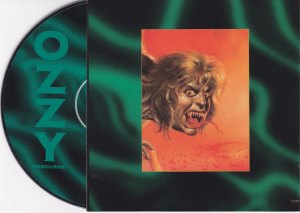
And maybe this is a good time to rant about these fucking 1995 Sony 22 BIt SBM Digital Remasters. Oh, I have no problem with the sound of this CD. It’s the fucking covers! Why did they crop the awesome artwork and put that dumb OZZY along the side? My Lord. I had so many customers (Gord and Glen specifically) who refused to buy these remasters because the cover is dumb. Not to mention putting the tracklist in a circle on the back cover, making it annoying to read.
FAITH NO MORE – Angel Dust (1992/1993, Slash Records 2 LP and 2 CD editions)
This is my favourite Faith No More record. I’m not sure why, but after a couple struggled listens, I suddenly fell for its intricate, bizarre arrangements. The story goes that Faith No More, the ultimate antithesis to a commercial band, were sick of playing The Real Thing‘s songs live for the past 2 years. They were eager to stray as far away from that sound as possible. In addition, Mike Patton had just completed the cult classic debut Mr. Bungle album. I speculate that this helped spark the sometimes unhinged creative moments on this album, particularly the vocals.
Guitarist Jim Martin and the band were butting heads, and most of the songs were written without him. Mike Bordin, Roddy Bottom and Billy Gould would send him virtually complete songs, which he then “grafted” guitar parts onto. In a guitar magazine interview, Martin stated that he thought some of the songs were better before he added the guitar.
Angel Dust commences with double shot of weirdness: “Land of Sunshine” and “Caffeine”. Patton pieced together the lyrics to “Land of Sunshine” from a collection of fortune cookies. Musically it is dramatic, keyboard heavy and foreboding. “Caffeine” is dark and aggressive, but is Patton’s first bonafide knockout vocal on the album. From the ominous, gravelly lows to off the wall screams, Patton delivers. His voice knows no limits on Angel Dust and I consider this the peak album for his vocals.
The first single “MidLife Crisis” was about as close as it gets to a commercial track. You can certainly hear every nu-metal band in the world (Korn! I’m looking at you Jonathan Davis!) ripping off Patton’s gutteral vocal stylings. But he lets it soar in the choruses. The bizarre pseudo-rapped verses, the samples, and the anthemic, layered choruses all pointed to new directions for Faith No More. The ingredients had never really combined like “MidLife Crisis” before.
Then perhaps the most bizarre song, “R.V.” The lullaby-like piano backs a grizzly soliloquy from Patton, via Tom Waits, playing a trailer park trash character. “Somebody taps me on the shoulder every five minutes. Nobody speaks English anymore! Would anybody telll me if I was gettin’…stupider?” Once the novelty value wears off, it’s still a cool tune due to the powerful choruses. Patton nails another awesome lead vocal on the chorus.
“Smaller and Smaller” returns somewhat to more conventional song arrangements. A repetitive piano hook backs a hypnotic Patton vocal. The choruses are a bit on the insane side, and then the song deviates into a sample-laden section of challenging rhythms. Yet somehow the song remains memorable and catchy. This is followed by “Everything’s Ruined”, which also became a single. I’m sure it was chosen because it is a solid mix of aggressive rapping with a memorable soul-influence chorus. While it doesn’t sound like it would have been on The Real Thing, it’s about as close as Angel Dust gets.
“Malpractice” is one of the most messed-up tunes on the album, a mixture of disjointed sections, noisy guitars, smooth keyboards, feedback, all simmered to perfection. By the time Patton’s screaming, “Applause, applause, applause, APPLAAAAAUUUUUUSSSSE!” I’m already clapping. I think I read somewhere that this song was a Patton baby, which might explain it. Certainly, the lullaby after the 2 minute mark is designed to lull you in before they hammer you with more guitars, samples and screams. This closed Side One.
Side Two was introduced by “Kindergarten”, Patton barking thoughts about the schoolyard. There’s no guitar solo, but Mike Patton provides something shouted through a megaphone that amounts to a solo. This is followed by Billy Gould throwing down a bass solo, and into the final verse. The weak-willed will shudder before “Be Aggressive”, a graphic series of metaphors about swallowing. This discourse is accompanied by a cheerleader chorus. Jim Martin turns in a sloppy, Pagey guitar solo, the only one on the album.
After assaulting the listener with a song like that, “A Small Victory” is a welcome respite. Its simple but bountiful melodies are perfect to soothe the ear canal. This is also to prepare you for “Crack Hitler”, another bizarre sensory overload. Funky bass meets distorted rapping, until it swerves into this weird, evil march. Patton’s vocals run the gamut from light, to dark and monstrous. Even so, “Jizzlobber” is the most extreme song of them all. It has those creepy Friday the 13th keyboards, heavy guitar riffs and pounding drums, and Patton’s most aggressive lead vocal yet. I don’t know what the hell he’s singing without the lyric sheet, but it doesn’t sound like I wanna know either. It’s just a pummeling assault, and unprepared listeners may find themselves overwhelmed and perhaps turned off from the album by this point.
The standard album ends with “Midnight Cowboy” supposedly because of some obsession that Billy Gould had with its storyline. It’s a perfectly appropriate ending given the rollercoaster ride that preceded it. It’s you, wandering off into the sunset, too wasted to really know if you’re headed in the right direction.
I stumbled upon an LP in 1993 that came with a bonus 12″. This 12″ contained the exclusive “Scream Mix” of “MidLife Crisis”. On the B-side are “Crack Hitler” and “Midnight Cowboy”, which didn’t fit on the first record. The drum intro on “MidLife” is slightly extended, and the mix sounds possibly a little more bass heavy.
The Australian 2 CD version that I also have contains the Commodores’ “Easy” as its bonus track. This is the same version that came out here domestically on the Songs to Make Love To EP. It’s rendered remarkably straight, and its a performance like this that truly demonstrates Mike Patton’s vocal mastery.
The 2 CD edition comes (obviously) with a second CD! This is a live EP entitled Free Concert in the Park, recorded in Munich. It contains live renditions of three songs from disc 1, and one song from the first Faith No More LP, We Care A Lot. Mike Patton dedicates “Easy” to “everyone with hemorrhoids this evening!” And I am sure they appreciated his dedication, as they are an oft-ignored group at concerts, aren’t they? The guitar solo in “Easy” remains one of my Jim Martin favourites. Even heavier and more chaotic versions of “Be Aggressive” and “Kindergarten” follow, replete with surprises. These live versions really hit the spot, as they are really cranked up. The early obscurity “Mark Bowen” closes the disc. This is the only version of the song that I have with Patton. I like his take on it, which takes advantage of his vocal power.
It was astounding to me that three albums in a row, Faith No More had turned in inventive, new, exciting and potent music that was unlike the previous. Angel Dust is definitely a peak of some kind. 80% of nu-metal bands owe their careers to this album. I consider this to be “my favourite” FNM disc, although to be perfectly honest, I consider Introduce Yourself, The Real Thing, and King For A Day…Fool For A Lifetime to all be worth…
“Part 6 in a miniseries of reviews on Rob Halford’s solo career! If you missed the last part, click here!” That was a rhyme, that ain’t no crime…Breaking the Law! Breaking the Law!
HALFORD – Live Insurrection (2002 Japanese Import)
Having a wealth of solo and Priest material to draw from, this seems like a good place for a double live album to drop. And so it was; Live Insurrection, Rob’s first full-fledged live solo outing. For me personally, this is the peak. This Rob’s home run of solo projects.
Admittedly, there is a certain sense of Rob trying to bury parts of his recent past. There are no songs from Two, and the set is Priest-heavier than prior tours. I found the Halford band to be kind of faceless, a little devoid of personality. They’re absolute pros and there is no question of them cutting it. That’s not the issue, it’s just one of…I can’t hear the different personalities of the players, compared to Fight.
On the other hand, the setlist is so much richer than Fight used to do. The songs are culled from the Halford album Resurrection, the Judas Priest back catologue, and the first Fight album, with a lot of added surprises.
These surprises include three studio tracks, two of which are tracks written by Judas Priest, but never released at the time! You also get Rob’s duet with Bruce Dickinson of Iron Maiden, “live” (recorded during rehearsal I believe), and the two bonus tracks from the Japanese version of the Halford album, once again performed live. Rob even sings his first-ever solo track, “Light Comes Out Of Black” which was originally on the Buffy The Vampire Slayer soundtrack back in 1992. The Priest material is a great mix: old obscure stuff from Sad Wings and Stained Class, as well as more obvious stuff from Hell Bent and Screaming. Rob’s voice is in fine form, doing justice to the Priest and Fight material.
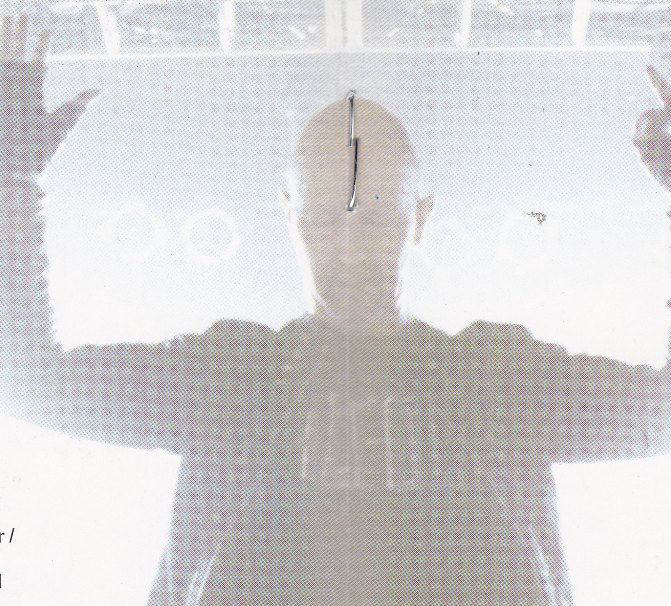
Rob’s so hardcore, he stapled his fuckin’ forehead!
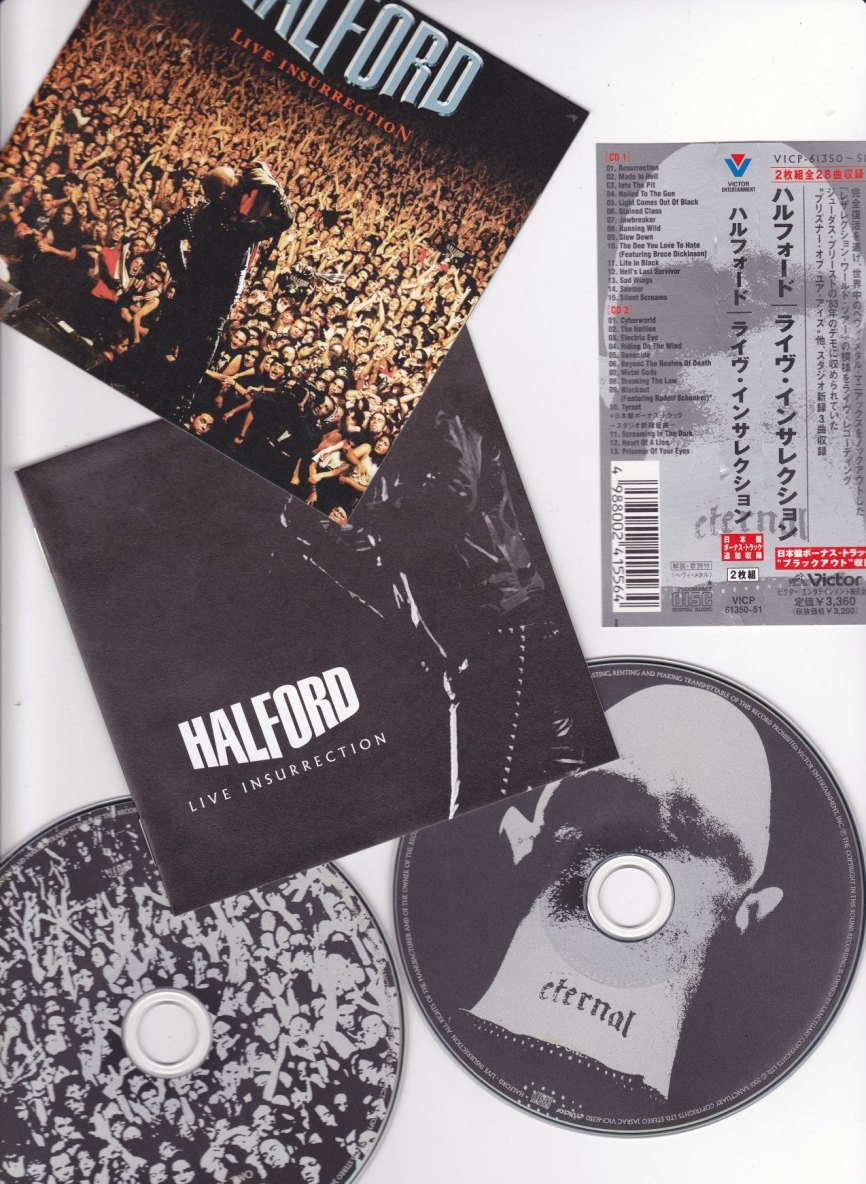
The Japanese bonus track is “Blackout”. Yes, the old Scorpions tune, and recorded here with a Scorpion: Rudolph Schenker! Halford easily handles Klaus Meine’s vocal part. It’s a great bonus track, easily worth the extra cash that I spent on this import version. I got this from Amazon.com in 2002.
They give you lots of great packaging with this live album. Decent liner notes, lots of pictures, plenty to look at while you spend a couple hours listening to this platter of metal perfection. Enjoy the feast.
5/5 stars
I’ll be taking a summer break from this series. I’m a bit burned out on Halford albums now, and there are so many new arrivals to listen to! But fear not. I’ll be following this review with Crucible, another Japanese release, a box set, and more.


 I still think of albums as having a side one and a side two. I had to tape Tremolo on a cassette so I could play it in the car back in ’97. It’s “side two” of Tremolo that I really like. “It Could Happen To You” was a popular upbeat Jim single that received a lot of airplay. “Dragging On” is an atmospheric Jim tune, with some beautiful watery keyboards backing it, with fantastic lyrics of heartbreak that only Jim can sing. You left a hole in me, and the rain comes pouring in, sometimes I’m swept away…”






 Side Two was introduced by “Kindergarten”, Patton barking thoughts about the schoolyard. There’s no guitar solo, but Mike Patton provides something shouted through a megaphone that amounts to a solo. This is followed by Billy Gould throwing down a bass solo, and into the final verse. The weak-willed will shudder before “Be Aggressive”, a graphic series of metaphors about swallowing. This discourse is accompanied by a cheerleader chorus. Jim Martin turns in a sloppy, Pagey guitar solo, the only one on the album.
 The Australian 2 CD version that I also have contains the Commodores’ “Easy” as its bonus track. This is the same version that came out here domestically on the Songs to Make Love To EP. It’s rendered remarkably straight, and its a performance like this that truly demonstrates Mike Patton’s vocal mastery.



 mikeladano.com