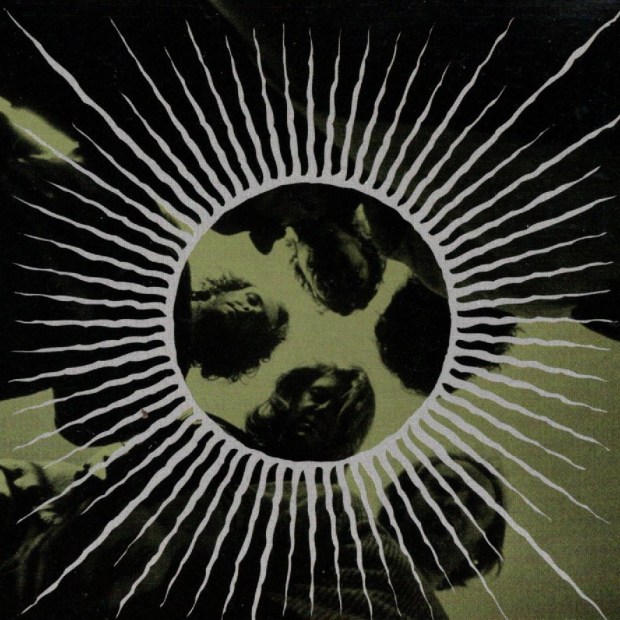
I’ve only helped crowdfund two things in my life. I’m happy to say I picked a winning horse in both cases, the second being Jacob Moon’s new CD called Under A Setting Sun.
Although Moon is certainly a stunningly good musician, and his voice could be described as “angelic”, it’s his songwriting that really sets him apart. Each song on the EP has a different flavour. That being the case, they all share a certain light, an uplifting feeling that just makes you feel better after a listen.
The opening track “Live A Little” feels like a morning sunrise, with gently picked acoustics ringing clear, and a hint of slide shining from the shadows. “Today we’re going to leave all those cares behind, and live a little” sings Moon, asking us to look at the stars above. The message here is simple but necessary. A brilliant song with a bright glow that will sound great in just about any setting. It’ll go great on the porch this summer.
The familiar crunch of an electric guitar is joined by the moan of organ on “Tennessee”, a brilliant slow ride. It has a vaguely southern feel especially when the slide guitar joins in. “And the road has got the best of me, I thought I could be free yeah, like the winds in Tennessee,” sings Jacob as a soulful backing chorus joins in. This one will sound great in the car on a country drive, guaranteed.
A unique acoustic song called “Miles To Go” has a gentle, breezy vibe. A terrific song; you could imagine Jon Bon Jovi clenching his fists in jealousy that he didn’t write it. It sounds in the pocket of mid-90s Bon Jovi when they weren’t afraid of getting a little more laid back on These Days. The track sounds more lush as it goes, building to a nice resolution at the end.
If you’ve got the guts to call a tune the “Song That Won’t Leave You Alone”, it had better be catchy! It’s actually about the creative process, but the title demands an actual song that won’t leave you alone. The lyrics are fascinating but the chorus is really fantastic. Great guitar work on this one as well, an absolute gem of a song.
“A Little More Time” is a quiet ballad, but backed with a strong drum beat. The chorus is perfect. Once again, a certain Mr. Jovi might be gnashing his teeth that he didn’t come up with this one, but that’s just pure speculation. He couldn’t sing it like Moon does anyway.
The title track ends the album with a string-coated song that brings the vibe of the album full circle. If “Live A Little” sounded like morning, then “Under A Setting Sun” brings the day to a close. Whether that’s intentional or not, that’s one interpretation if you like. Regardless, “Under A Setting Sun” wears an understated strength on its sleeve, based on the rhythm of the acoustic guitar. The strings raise it to the clouds, dreamy and powerful.
2022 has been a year for strong releases already. Add the name Jacob Moon to your list of must-hears.
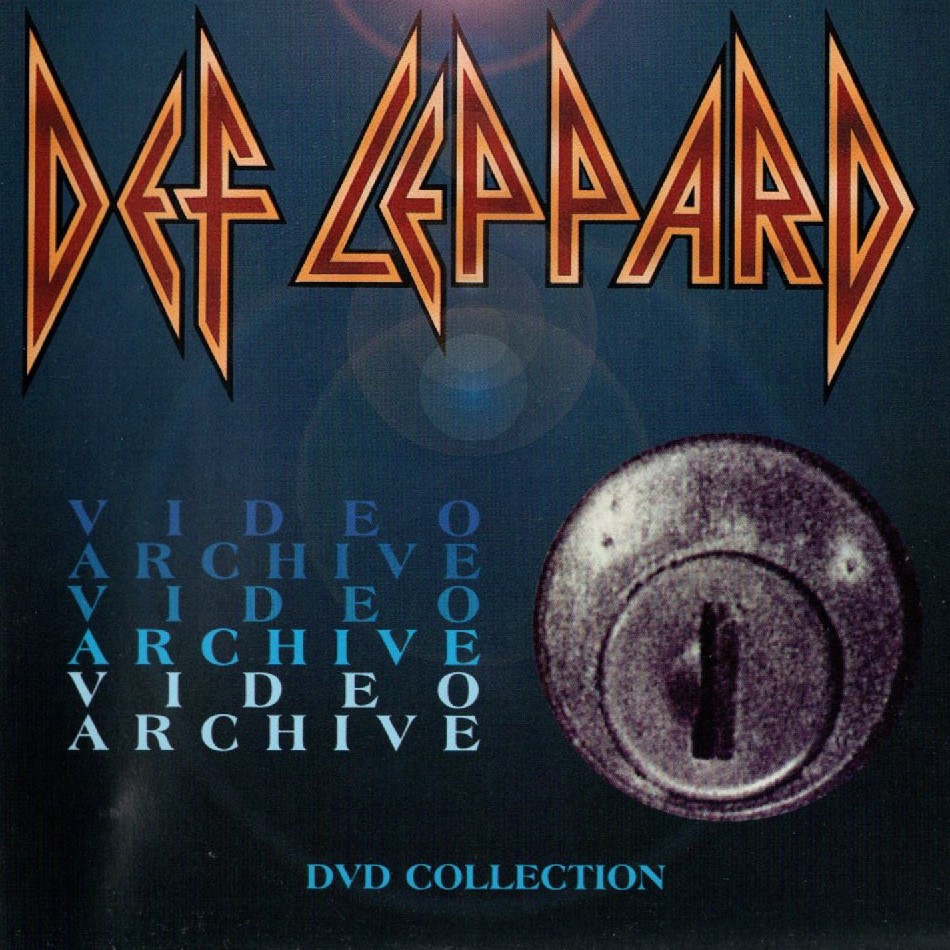
DEF LEPPARD – Video Archive (1995, 2001 Mercury DVD)
Only two years since their last home video, Def Leppard went back in for round three. There were not many new video clips waiting to be released, just the four from Retro-Active and Vault, plus an alternate version. Mostly, this Video Archive focused on live material.
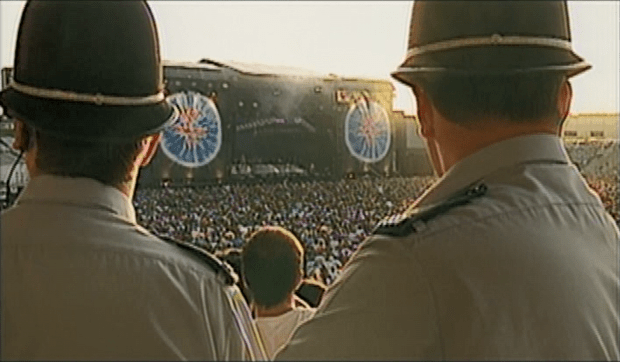
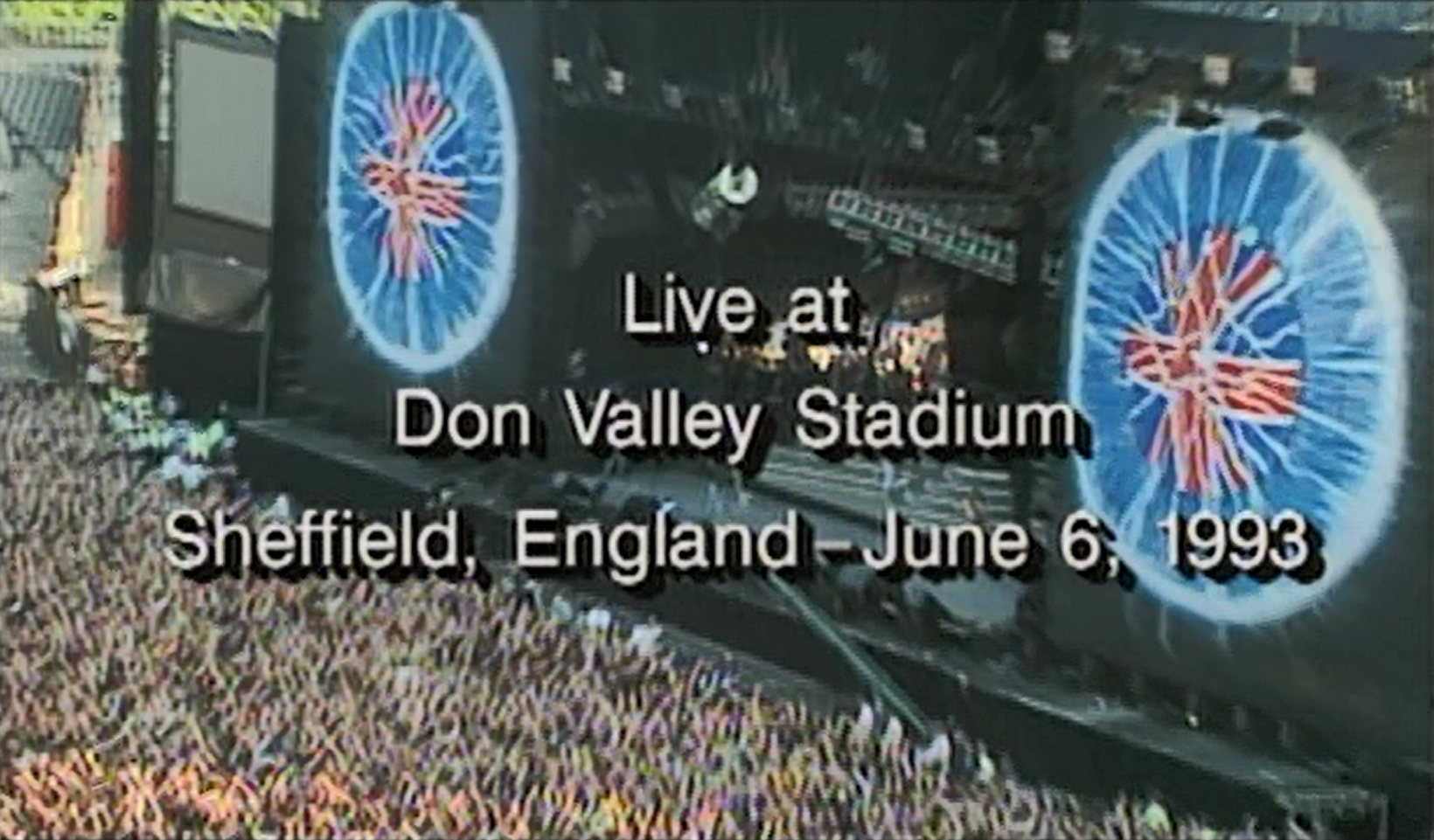
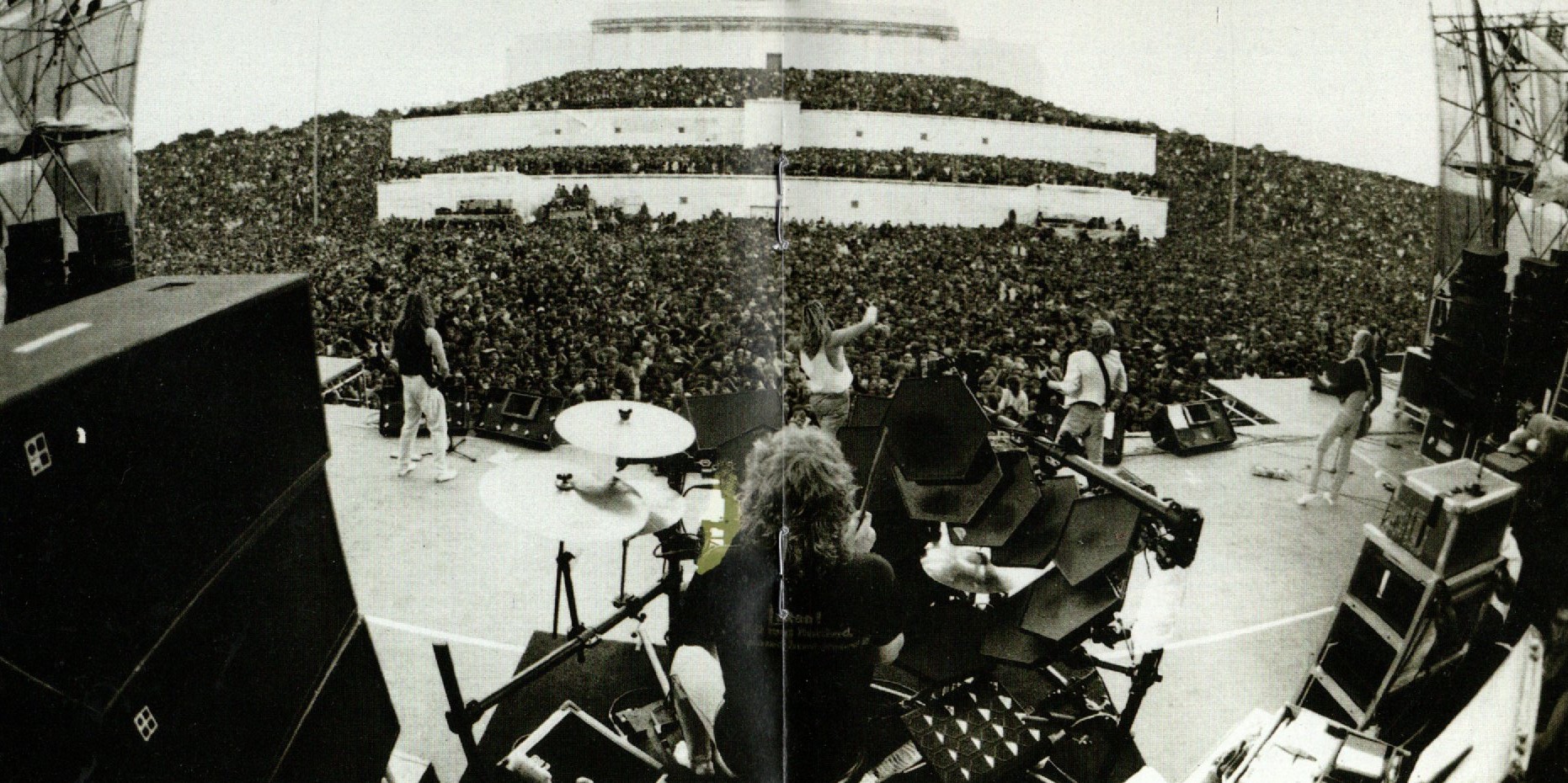
Def Leppard’s big hometown gig in Sheffield was something they were very proud of, and so it appears here and on the previous album’s Vault double disc edition Well, some of it anyway. Nine songs were on Vault; you can watch eight of those on video here. (The ninth, “Photograph” is available on Visualize.) The whole show has never been released (22 songs total) but this small handful can be had. The hometown gig had 40,000 people going nuts for Leppard, something Joe mentions in the opening interview.
No shirts for Phil right from the first song, “Let’s Get Rocked”. The editing in this concert relies on minimal gimmicks, but the choppy slo-mo bits probably were not necessary. It also seems like the songs aren’t in order, because at the outdoor gig it gets dark and then light again.
On CD, “Armageddon It” comes second. Here, it’s “Foolin'”. I like when the camera switches to Phil when Joe sings “take your fill”. Take your “Phil”? Solid version of “Foolin'” and nice to see it with Vivian picking away for the first time on video. “Rocket” features a cool light show, but what’s cool here is seeing Phil Collen and Vivian Campbell taking turns soloing. Getting the chance to appreciate the differences between the two. It’s definitely fun seeing Viv do the ol’ two-handed tapping like it was the 80s again. Then Joe goes into “Whole Lotta Love”, before “Rocket” resumes its course.
The acoustic B-side “Two Steps Behind” is introduced as being from their next album Retro-Active. The crowd already knows it. The atmosphere goes from campfire singalong to party mode in seconds flat as “Armageddon It” begins. Vivian does an admirable job of Steve Clark’s original solo – and then Joe Elliott jumps down to crowd level!
The familiar drum beat to “Pour Some Sugar On Me” is greated with the appropriate “hey! hey! heys!” necessary to start the song. Viv is really having fun on this one, running and sliding across the stage. “Rock of Ages” is a natural song to follow it with. Rick “Sav” Savage doubles on bass and keys. Some good shots here of Rick Allen doing his thing on his specialised drum kit. Finally, “Love Bites” closes this portion of the program dramatically. Fantastically fitting solo work by Viv, and Sav on keys one more time.
The next section of the DVD focuses on the music videos released since “Visualize”, beginning with their latest hit “When Love & Hate Collide”. It’s here in two forms, but the straight performance is better than the “Epic 8 minute version”, which is bogged down by boring story and dialogue. The simple, stripped version of the video suits the 90s even though it doesn’t really fit the string-adorned track. “Two Steps Behind” was a cool grainy clip, featuring a string section this time! The backwards-walking footage is fascinating and trippy. Next is the rarely seen “Action” filmed on tour. Joe’s sportin’ a goatee this time. Toto, I don’t think we’re in the 80s anymore! Also rarely seen, “Miss You In A Heartbeat”. It’s the version with piano & band, and Joe’s tinklin’ the ivories, goatee still intact. It’s like Lifestyles of the Rich and Famous, as each band member is playing in beautiful mansion settings.
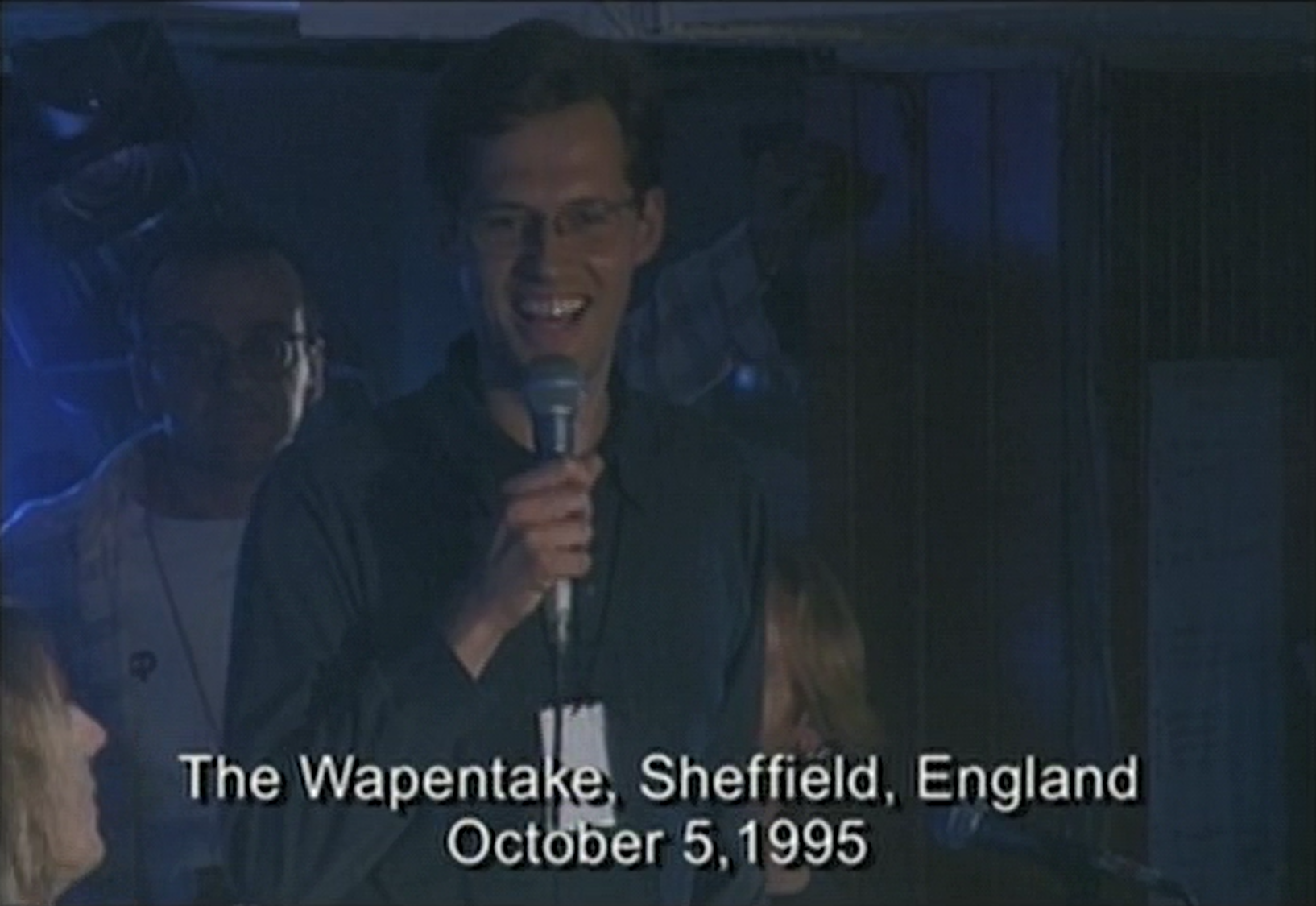
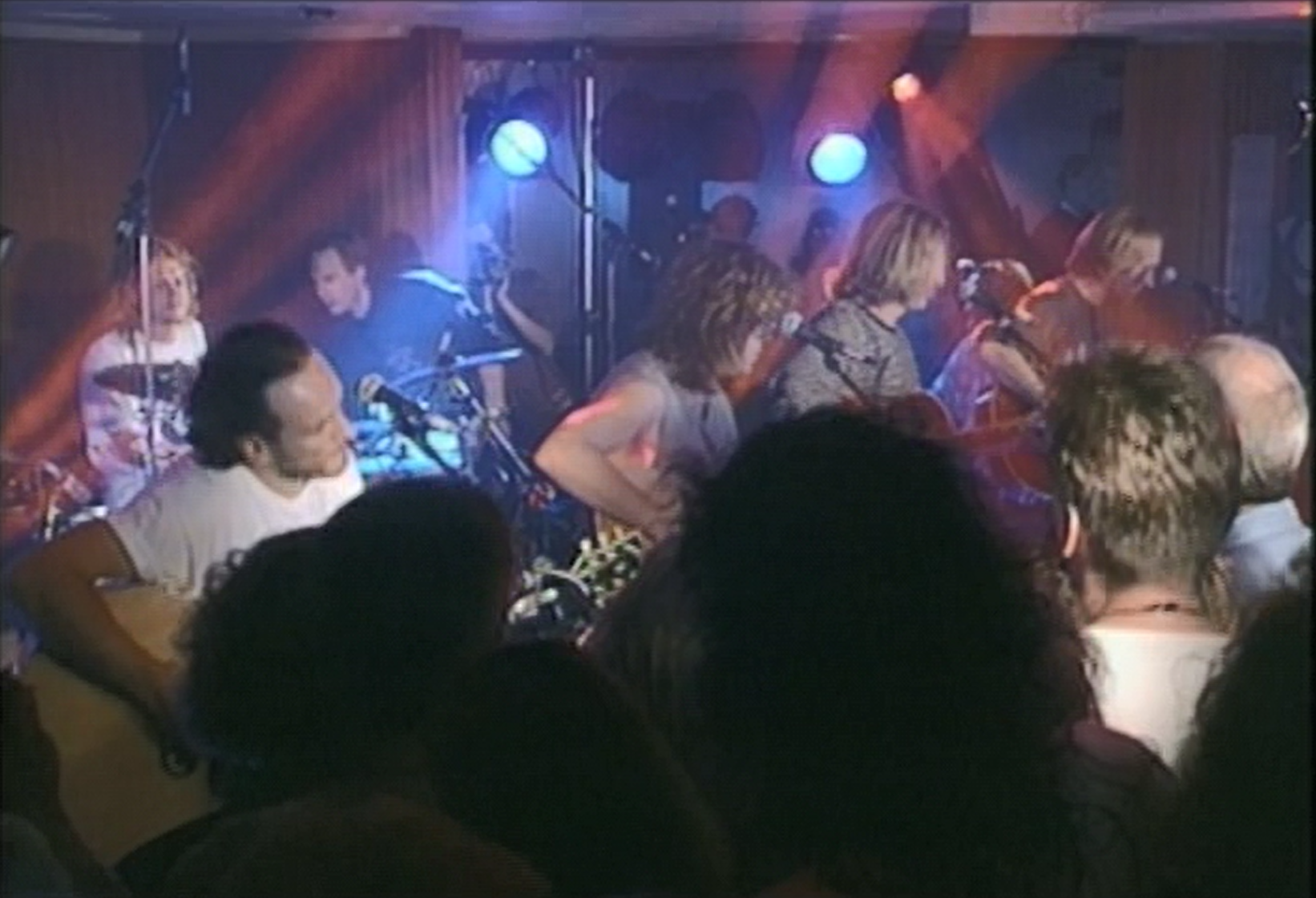
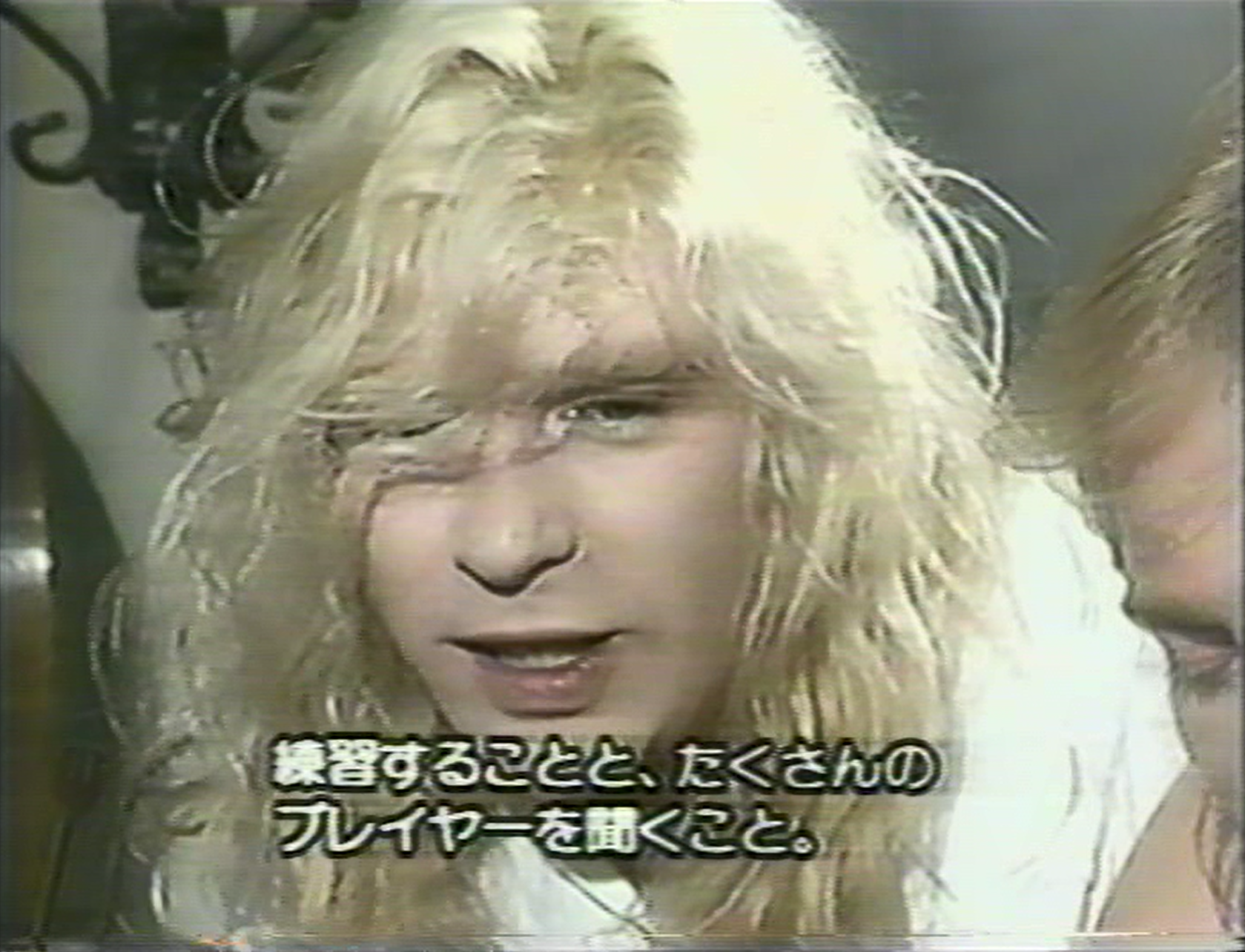
The highlight of the video is the final section: Def Leppard unplugged at the Wapantake Club back in Sheffield, 1995. In the interview footage, Phil says that he enjoys the acoustic setting because it proves that Def Leppard’s famous backing vocals are indeed live. Meanwhile, Rick Allen appreciates the challenge of using an acoustic drum kit again. But what’s really special is that the last time Def Leppard played the Wapantake, it was 1978. Their triumphant return in 1995 is really cool and really should be released in CD form. Fortunately it was filmed!
Once again, it’s “Two Steps Behind” but without a screaming crowd. It’s just Def Leppard in a very packed but respectfully quiet room. “Armageddon It” is bouncy, and the audience responds. This take is one of the best versions of “Armageddon It” out there; just fun and perfectly performed in the right setting. Then the new song: “When Love & Hate Collide” was made available in live form right here mere weeks after its single release. The acoustic setting works, but novelty aside, Def Leppard have better ballads. “Animal” and “Sugar” bring the party atmosphere back to the Wapantake. “Animal” works great acoustically, and “Sugar” takes on a different form. Phil makes a good point about the backing vocals. It’s great to hear them live and bare like this because they’re stellar!
Even though Joe said that was the last song, he lied because for the first time, and “for a laugh”, it’s “Ziggy Stardust”! Joe says it’s the first time they ever played it live as a band in front of a crowd, so that’s special. It’s also a brilliant version which doesn’t hurt. Leppard nailed it with pure love.
But wait, there’s more! The closing interviews discuss the new album Slang: “Up to date”, “stuck in the 90s”, “different direction”, “complete different turn”, “experimental” are a selection of words used…but then there’s a preview. Live at the Wapantake, and only for a few seconds, is the new song “All I Want Is Everything”. One chorus and that’s all we get, though the folks at the gig that night heard the whole song. The viewing audience at home only got a taste. Not enough to judge by. Not enough to get a feeling of what Def Leppard meant when they used words like “experimental”.
We’d find out soon enough.
The end credit music is an instrumental version of “When Love & Hate Collide” with only piano and strings and no band. Now that would be something cool to include in a future box set.
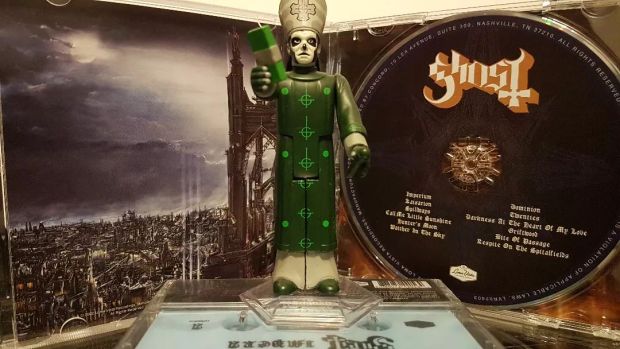
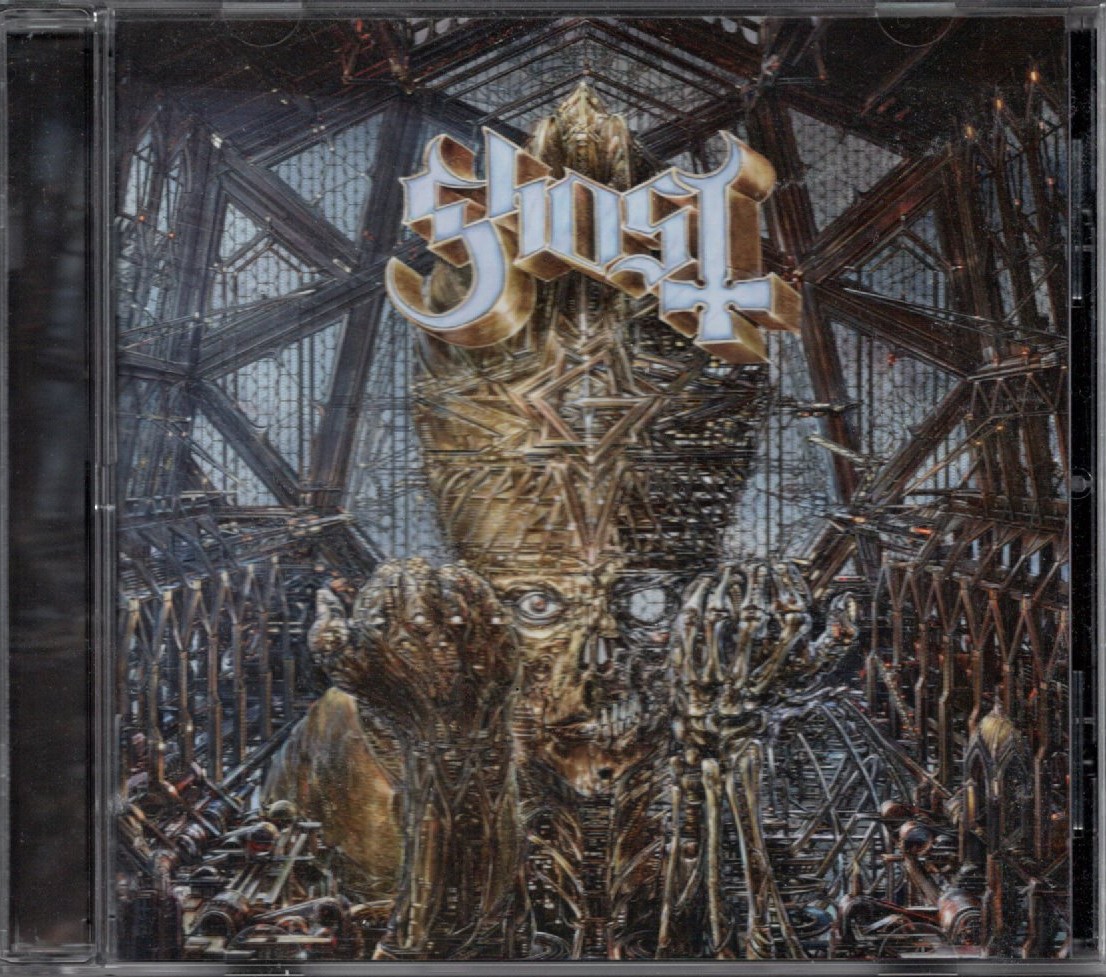
Ghost have been pretty consistent over the years. In all honesty the only album of theirs that I seldom spin is their second Infestissumam. Everything else has been pretty solid to me so hopes were high for the new Impera. Tobias Forge and Ghost have steadily evolved since Opus Eponymous in 2010. From their melodic gothic metal origins, Ghost have gradually shed metal elements and replaced them with pop sensibilities. Impera is most similar to their last album, Prequelle. Let’s take a deep dive and analyse what Forge and his Nameless Ghouls have come up with this time.
Inspired by the real life rise and fall of empires, but through the lens of 2020, Ghost seem less interested in Satan while remaining fascinated by the dark side. The idea had been long-simmering in Forge’s skull: empires, repeating patterns in history, followed by annihilation. The opening instrumental “Imperium” sets the stage with acoustic and electric guitars, layered in a way that recalls classic 80s Leatherwolf but far more lush. Then we are suddenly engulfed not in darkness but in Darkness — the opening guitars sound like the British band, and Forge’s opening scream is a dead ringer for Justin Hawkins! “Kaisarion” could easily have been a Darkness song. High speed and instantly memorable, it’s the only song that will have you singing words like “Far away from the stench of the heavens,” this summer. An immediate triumph, “Kaisarion” has it all from wickedly melodic guitars, deep backing vocals and clever instrumental prowess in all corners. Can’t wait to road test this on a warm day in the car with the windows down.
“Spillways” might recall Trash-era Alice Cooper, with a tremendous amount of attention paid to the incessant melodies. One after the other, the hooks keep coming. Be it the vocals, the guitars or hell even the goddamn drums, “Spillways” is nothing but hard catchy rock they way you remember it from ages past.
The dark single “Call Me Little Sunshine” takes a different turn. A simple spare guitar lick makes up the backbone of the song, with quiet verses and explosive choruses. “Call me little sunshine, call me Mephistopheles,” sings Forge going full-Faust. I’ll call it a song that takes a couple listens but will eventually bore its way into your permanent memory.
The second single, “Hunter’s Moon” follows, an upbeat prowl through dark woods. (This is the single mix, with a more elaborate version included in the film Halloween Kills.) While an impressive enough song on its own, “Hunter’s Moon” is over quickly, and overshadowed by the awesome “Watcher in the Sky”, a possible contender for album highlight. Relentless bass and drums set up the biggest boldest chorus on the album. The lyrics are hard to pin down, speaking of Machiavelli, bloodlines, and the rot of empires. Possibly about looking to God for salvation but getting no reply. Regardless of the dark theme, it’s one of the most party-ready tracks on the album.
The horns that blow on “Dominion”, an instrumental interlude, lead to a shocking transition. “Twenties” is the strangest song on the album and contender for one of Ghost’s most bizarre tunes overall. Beginning with a dark Metallica “Through the Never”-ish riff, “Twenties” soon transforms into something completely different. Indescribable and simultaneously existing in the 1920s and 2020s alike. Not sure if I like ir or not.
“Darkness at the Heart of My Love” is a pretty epic ballad, with suitably epic accompaniment from harpsichord type keys to angelic sonic backdrops. Choirs of vocals join by the end, heaped on top of guitar harmonies in decadent fashion. Brightening the mood, the poppy “Griftwood” returns us to a classic hard rock sound circa 1987. The lyrics offer a critique of organized religion, but in the brightest musical frame. Forge has leaned heavily into a specific kind of 80s hook of late, and “Griftwood” is soaked in them like cold gin.
A brief instrumental called “Bite of Passage” precedes the final song, “Respite on the Spatialfields”. The empire has fallen, and Forge asks “I wonder, did no one hear the distant thunder?” (We did, but we chose to ignore it.) This complex track might be called a metal ballad, but it’s more progressive than that. It has elements of Ozzy, Queensryche, Savatage, Whitesnake and Europe’s “The Final Countdown” all rolled into one. An epic way to close the album. “Nothing ever lasts forever.”
Musically invigorating and lyrically thought-provoking, Forge has created another memorable Ghost album for the masses. While we hope the world doesn’t end too soon, and Forge can continue making albums, Ghost have harnessed the musical and apocalyptic themes of the 80s and brought them forth to the present day. Job well done.
DEF LEPPARD – Vault: Def Leppard’s Greatest Hits / Limited Edition Live CD (1995 Mercury 2 CD edition)
Truth: Vault was a paint-by-numbers compilation that could have been assembled with an algorithm.
Leppard had been largely ignoring their first two albums live in concert. Predictably the only pre-Pyromania track on Vault, their first greatest hits, was “Bringin’ on the Heartbreak”. The disc contains all the key singles from, essentially, three studio albums and the Retro-Active B-sides compilation. According to the liner notes, it was released in order to “clear the decks” before their underrated re-invention to come on Slang.
As such, Vault debuted the last song written during the Steve Clark era that they still wanted to release: “When Love & Hate Collide”. Now including his replacement Vivian Campbell, it indicated Leppard were indeed going in a new direction. As opposed to the smokin’ power-ballady demo, this version is more modern with strings and an organic approach. Not one of Leppard’s most uniqiue ballads in the grand scheme of their discography, it was still a hit nonetheless. The strings were arranged by, of course, Michael Kamen, who previously did the same on “Two Steps Behind”. He has that saccharine touch that powered bands into the top 40, and that’s what you get with “When Love & Hate Collide”. Love it or hate it. It became a hit single in its own right.
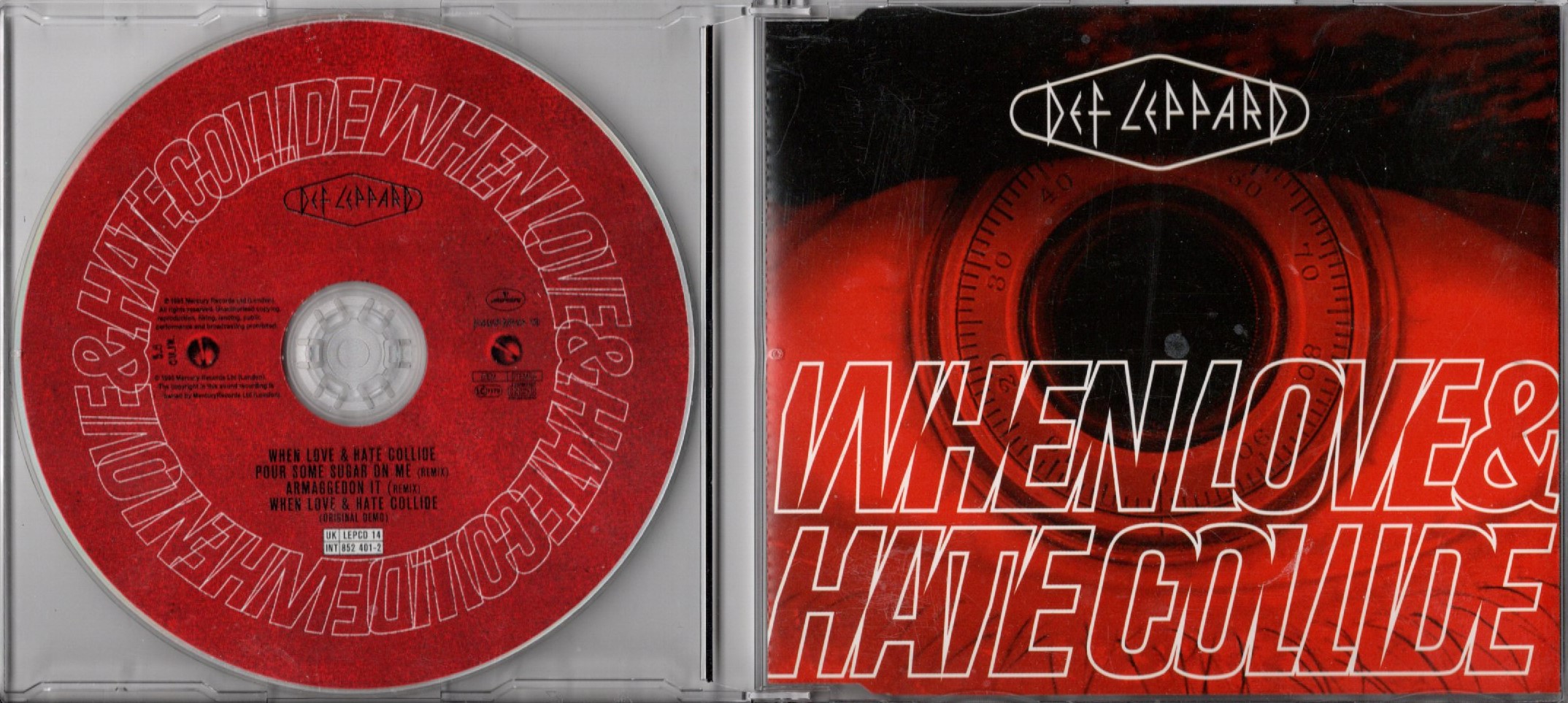
The common two-track single was easy enough to find, but fans were best advised to locate the four track release. It contained the demo version of the ballad, featuring the last recorded Steve Clark guitar solo. (This version will be discussed in greater detail when we get to the appropriate disc in the CD Collection Vol 2 box set.)
Another cool inclusion on Vault was a CD release of the long-sought “Pour Some Sugar On Me” video mix. It is probably more well known than the album version due the massive exposure it got over the summer of ’88. A thoughtful inclusion. (This remix is also on the CD single for “When Love and Hate Collide”, which preceded Vault. Also included on “When Love and Hate Collide” is the “Nuclear Mix” of “Armageddon It”. You can find both of these remixes on the Hysteria deluxe and super deluxe editions.)
Otherwise, you get what you get. The biggest hits but not the best hits. Take out “Have You Ever Needed Someone So Bad” and replace it with “Stand Up (Kick Love Into Motion)”! Ditch “Two Steps Behind” and gimme “Too Late For Love”! (Incidentally, different countries got different tracklists so your experience may vary.)
Vault is still valuable for the cool liner notes by Peter Mensch, and comments on every track by the band members. The booklet revealed the title of the next album for the first time: Slang! An odd title that surprised fans by its left-field simplicity.
It’s also valuable if you can get your hands on the double disc Vault including the Limited Edition Live CD. Yep…that’s the title, and it’s from a hometown Sheffield gig recorded by the BBC in 1993. Leppard were running like a finely oiled machine in ’93 and the songs were performed with consistency. The nine tracks (of 22 total played that night) are all hits, which means they’re all also on disc one!
“Let’s Get Rocked” is a reliable opener, and “Armageddon It” follows it ably. It’s Leppard live doing what they do best, and the songs are performed as immaculately as you’d expect. “Armageddon It” has an extended intro so the audience can clap along. Later in the set, it’s the full nine minutes of “Rocket” with long instrumental break. It seems like a tough song to play live, and the vocals prove this is really live. No messin’ around. Good versions, one and all! At the time of release, there were no Def Leppard live albums, period. A handful of B-sides notwithstanding, this was the first. It has since been supplanted by superior live CDs like In The Round – In Your Face in the Hysteria box set.
Vault was a big deal in 1995, but Leppard have since released Best of Def Leppard (2 CD UK), Rock Of Ages (2 CD US) and the recent Story So Far. These double disc compilations have all the stuff on Vault‘s first disc and plenty more — but we’ll get there in due time. Only the Limited Edition Live CD is exclusive today but since you can buy so many Leppard live albums now, it’s only for collectors.
“Steamrock fever, screaming rock believers.” – Klaus Meine, 1977 “Scream for me screamers, I’m a rock believer.” – Klaus Meine, 2022
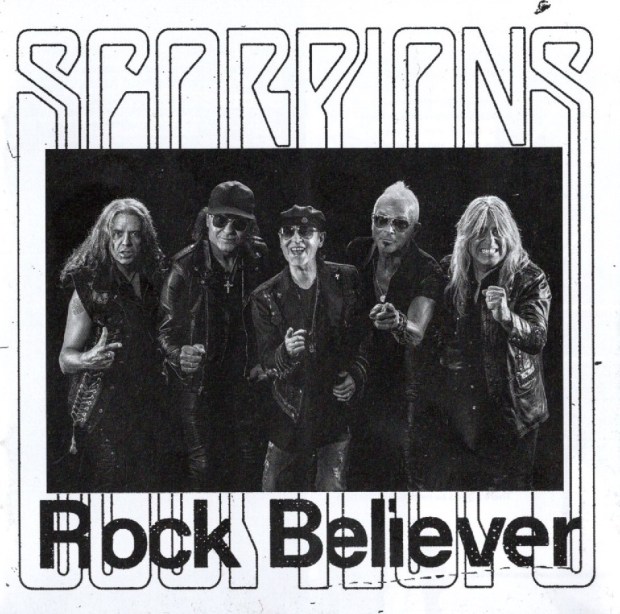
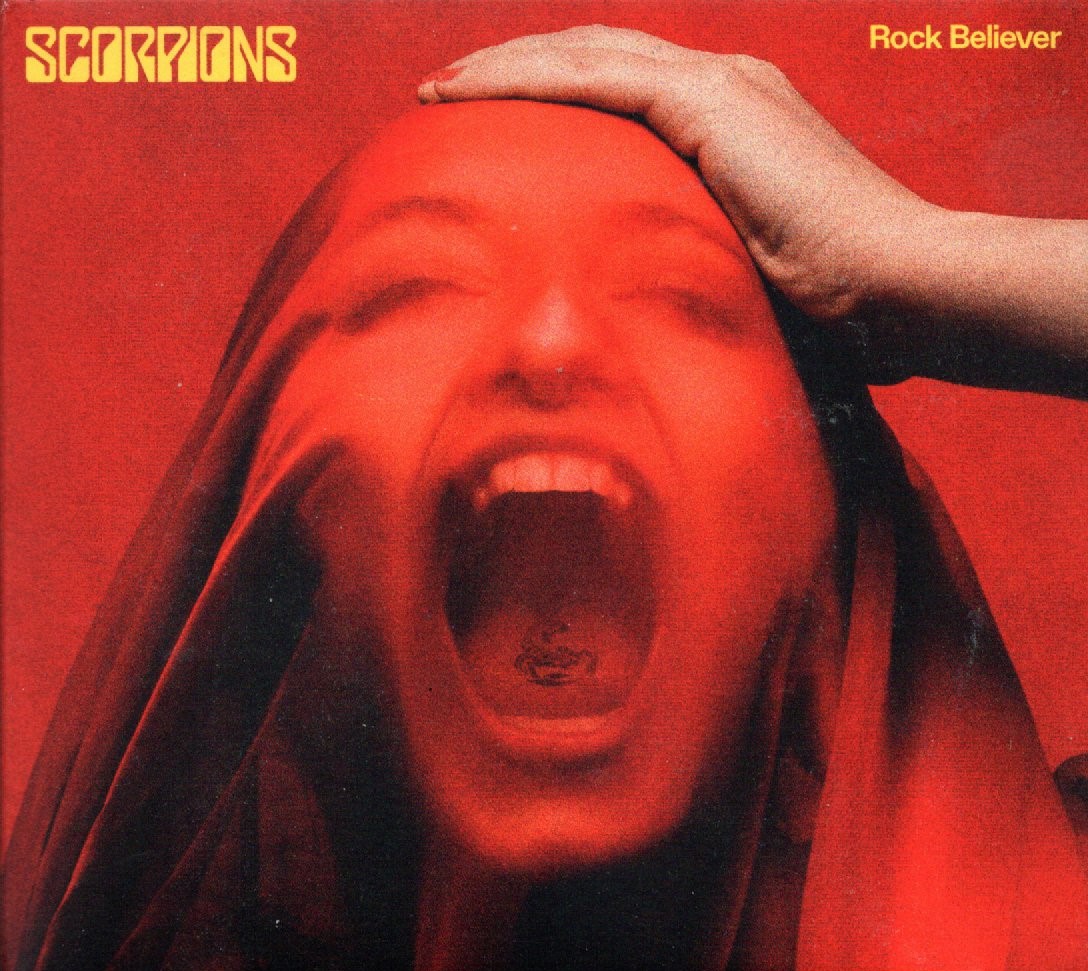
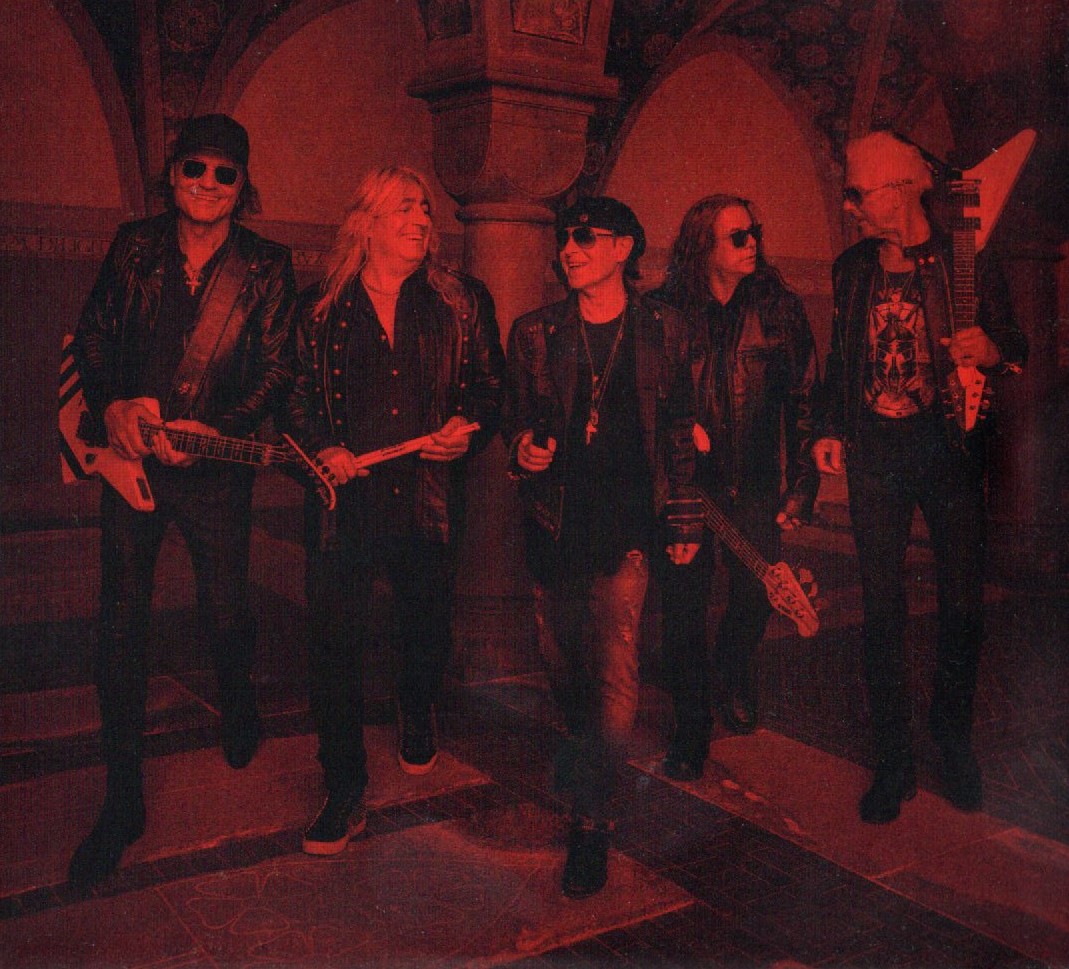
SCORPIONS – Rock Believer (2022 Universal 2 CD edition)
The album of the year could be from a 57 year old band!
Although they’ve been trying hard, off and on, to recreate the past for the last 20 years or so, Scorpions never convinced us it was the 1980s again. Until now.
Whatever happened (be it the intense focus granted by a worldwide pandemic, or just the magic of interpersonal chemistry), Scorpions have issued their best record since Love At First Sting. Even the cover art recalls an earlier time in Scorpions history. With Rock Believer, the band have proven that time is no obstacle.
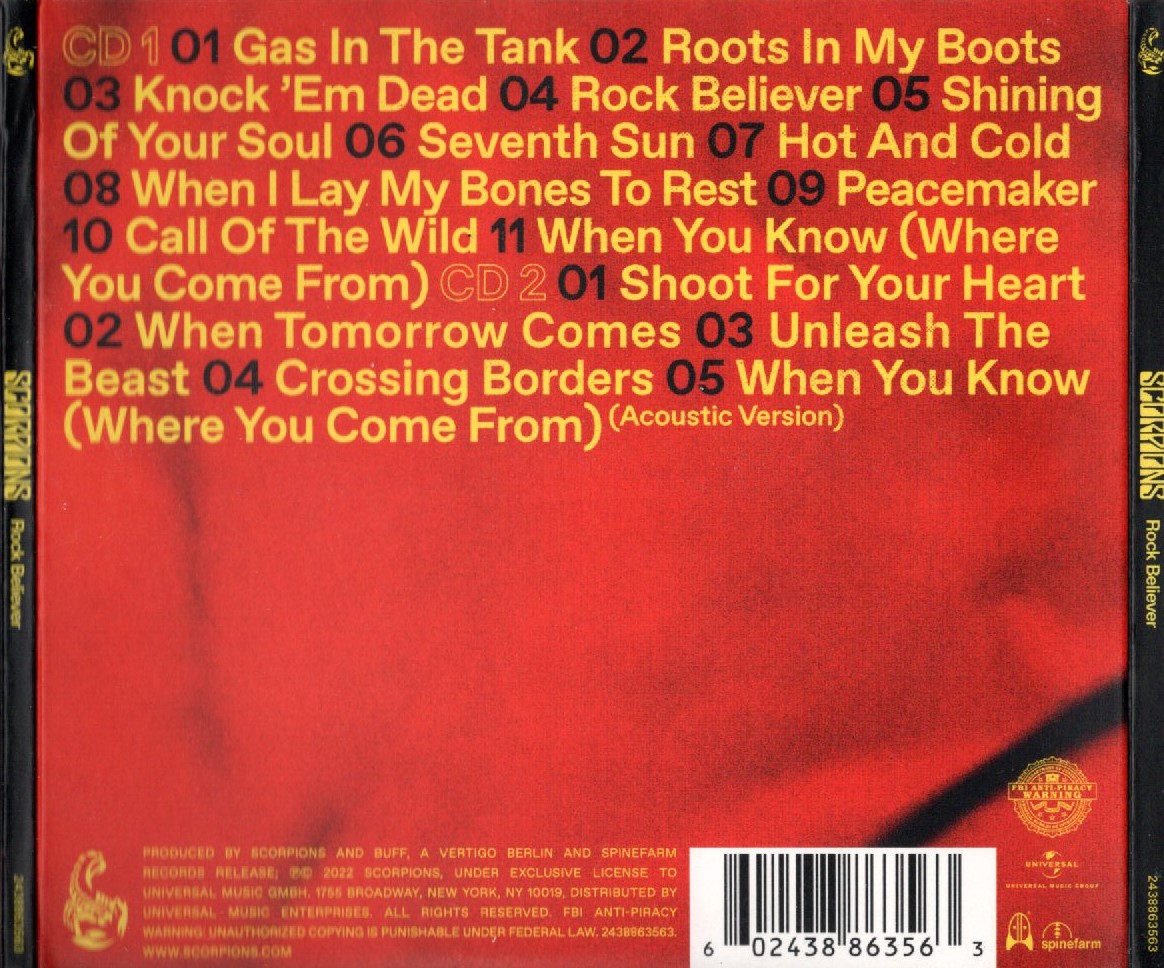
There are a lot of songs here and almost all of them are highlights. Opener “Gas in the Tank” feels like vintage, top-notch Scorpions. While Matthias Jabs emulates the sound of a car chase on his guitar, Rudolph Schenker lays down the first of many fully-leaded riffs. Though vocalist Klaus Meine no longer screams all the time, neither does Ian Gillan or very many other singers his age. The singer is still recognizable as nobody else, hanging onto his power and range. Nowhere on the album do you miss the screaming. Never do you say “all this song needed was a scream.” With the title “Gas in the Tank”, Klaus Meine may have unknowingly come up with a new anthem for 2022.
The only track that comes off as substandard by comparison is the second one, “Roots In My Boots”. On any past album from Crazy World on, it would be a high-speed highlight. On Rock Believer, we headbang along knowing that something better is coming. The chorus fails to land and neither do the lyrics. We are redeemed on third track “Knock ‘Em Dead”, which has the patented mid-80s Scorpions chug. Throw some candy-coated Matthias fills on top and it’s the classic sound. Klaus mentions “The Zoo” in the lyrics but it’s not all Judas Priest-like self-referencing (though there’s plenty of it on this album).
The gem of the album is “Rock Believer“, a truly remarkable ballad/rocker that strikes all the boxes. Klaus’ vocal performance is truly remarkable, going from forceful to tender in a single line. I am a rock believer like you too, Klaus. “Rock Believer” is an example of hard rock songwriting perfection. Every ingredient and aspect of the performance is flawless. Nothing extraneous, although drummer Mikkey Dee gets to go a little nuts at the end, which is a brilliant touch. It is rare to hear a song as immediately catchy as “Rock Believer” these days, but here you go, rock believers! This chorus is the kind that can stick in your head for the whole of a long weekend. (Trust me.)
A loud gothic riff on “Shining Of Your Soul” gives way to a familiar lighter reggae vibe similar to Scorpions classic “In Trance”. It’s a brilliant melding of two styles, and one that reaches back to the glorious 1970s era of the band. Certainly not a re-write of “In Trance”, but possibly a sequel. Jabs’ solo is absolutely brilliant, but don’t ignore underappreciated bassist Paweł Mąciwoda who brings a schooled melodic approach.
“Seventh Sun” stomps like the Scorps of old, recalling “The Zoo”. The bass leads the way while a sharp, sparse riff punctuates the song. It sounds like a huge mammoth of a beast, prowling heavily through the steppe. Scorpions don’t lose sight of melody and so “Seventh Sun” is strong in this regard as well. At 5:30, it is longest song on the album and closest to an epic.
Back to high-octane rockers, “Hot and Cold” really kicks. The riff is heavy and Paweł really goes for those low bass notes. While the chorus on this song is fine and dandy, it could be an example of a tune where the verses are superior. At least in terms of interesting and mind-grabbing guitar work, they are. Soon there’s another stinging riff, on the thrash-paced “When I Lay My Bones to Rest”. If you like your hard rock blasting fast and loud, then you will love “When I Lay My Bones to Rest”. Another heavy tune, “Peacemaker”, has been well received by fans. Scorpions have a long history as a band with a consistent anti-war stance. “Peacemaker” is the latest and possibly heaviest of these tunes. From the guitars to the chorus, “Peacemaker” rocks massive with melody and catchy stabs of guitar.
“Call of the Wild” is a different kind of song for this album. Klaus mentions a “Lovedrive”, but this song is one of their heavy and slow sex romps. It is somewhat unremarkable next to other tunes on the album, but it is different and picks up towards the end. Dig the slight “Sympathy for the Devil” homage. But have you noticed it’s been 10 songs, and not a real ballad among them? Ballads used to be a scourge of Scorpions albums, becoming too numerous especially on 1996’s Pure Instinct. This time there is only one, and it’s a classy one left for the end. “When You Know (Where You Come From)” is a thoughtful song, but it is the rare Scorpions ballad that stands as strong as the classics. It has a late 70s, early 80s construction and an absolutely epic guitar solo section.
11 songs with no instrumentals, interludes or fillers already makes for a hearty album. Scorpions had enough material written to make it a double, and so there’s a bonus CD with six bonus tracks. Seven in Japan, including their exclusive bonus track “Out Go the Lights”, an Accept-like heavy metal warehouse stomp. While “Out Go the Lights” is clearly bonus track material, the other six songs are not. Some of them are among the heaviest songs.
“Shoot For Your Heart” is album-worthy, with a cool unique lick in the riff that leaves you crying for more. This is a high-speed driving tune, the Scorpions bread and butter. “When Tomorrow Comes” has spoken word choruses with a forceful heavy metal riff and more “ahh, ahh, ahhs” than you can shake a scorpion’s stinger at. Good banger, but perhaps a bit too different for the proper album? It would not have weakened the record, but could possibly alienate listeners with weaker stomachs. “Unleash the Beast” is another bangin’ track, and check out Paweł’s deft bassline. “Unleash the Beast” doesn’t have the same kind of melodic might that most of the album has, but its strengths lie elsewhere, such as the creative guitars or Klaus’ talk-sing stylings. The vibe changes on “Crossing Borders”, a laid back rocker with charm and hooks. The guitars have a sleazy rock vibe and the lyrics follow suit. The final bonus track is an acoustic version of the closing ballad “When You Know (Where You Come From)”. The acoustic guitar solo perfectly augments Klaus’ flawless vocals. It’s a lovely coda and an appropriate way to end the extended version of Scorpions’ best album in decades.
Even with the wealth of of material on the deluxe edition of Rock Believer, missing is the ballad “Sign of Hope“, their 2020 standalone download-only lockdown single. Hopefully we’ll get a physical release of that eventually, though with the world now emerging it seems less relevant.
Though there are a couple songs that strive to be as good as the others, there’s nothing here worthy of the skip button. Even with the bonus tracks, Rock Believer is a solid listen from front to back. You cannot go wrong with either version, so just get one. Lockdown sucked and it was good to know Scorpions were using the time to create new music. Let’s support them in their efforts and celebrate their success.
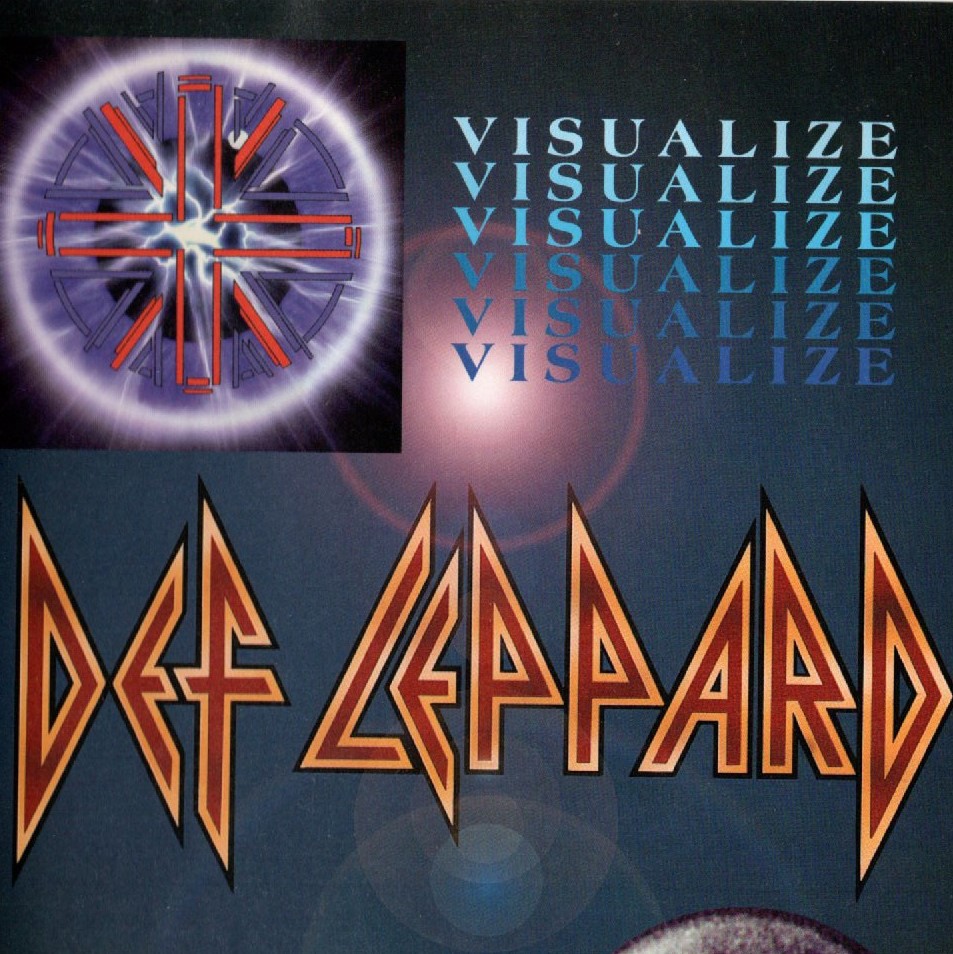
Perhaps a tad prematurely, immediately after Adrenalize had given all it had in terms of singles, Def Leppard released the spiritual sequel to 1989’s home video Historia. That thorough collection of videos was composed of music from four albums, while Visualize only covered one (and a bit). As such, this time they added interviews and interesting TV clips to fill out the run time.
Since Historia closed on “Love Bites”, it’s only fitting that Visualize opens with the next video, “Rocket”. As far as cool 80s videos go, “Rocket” was a success. It was even an educational slideshow of all Def Leppard’s musical heroes! It’s also very very 80s, with lots of TV sets hanging about.
Then Visualize takes a different track. The next big event in the lives of Def Leppard was a sad one: the passing of Steve Clark. He is commemorated with TV clips, interviews and an excellent all-Steve video for “Switch 625”. Joe Elliott laments that all Steve had in his life was a guitar and a bottle, but at least he left something worthwhile behind — the music.
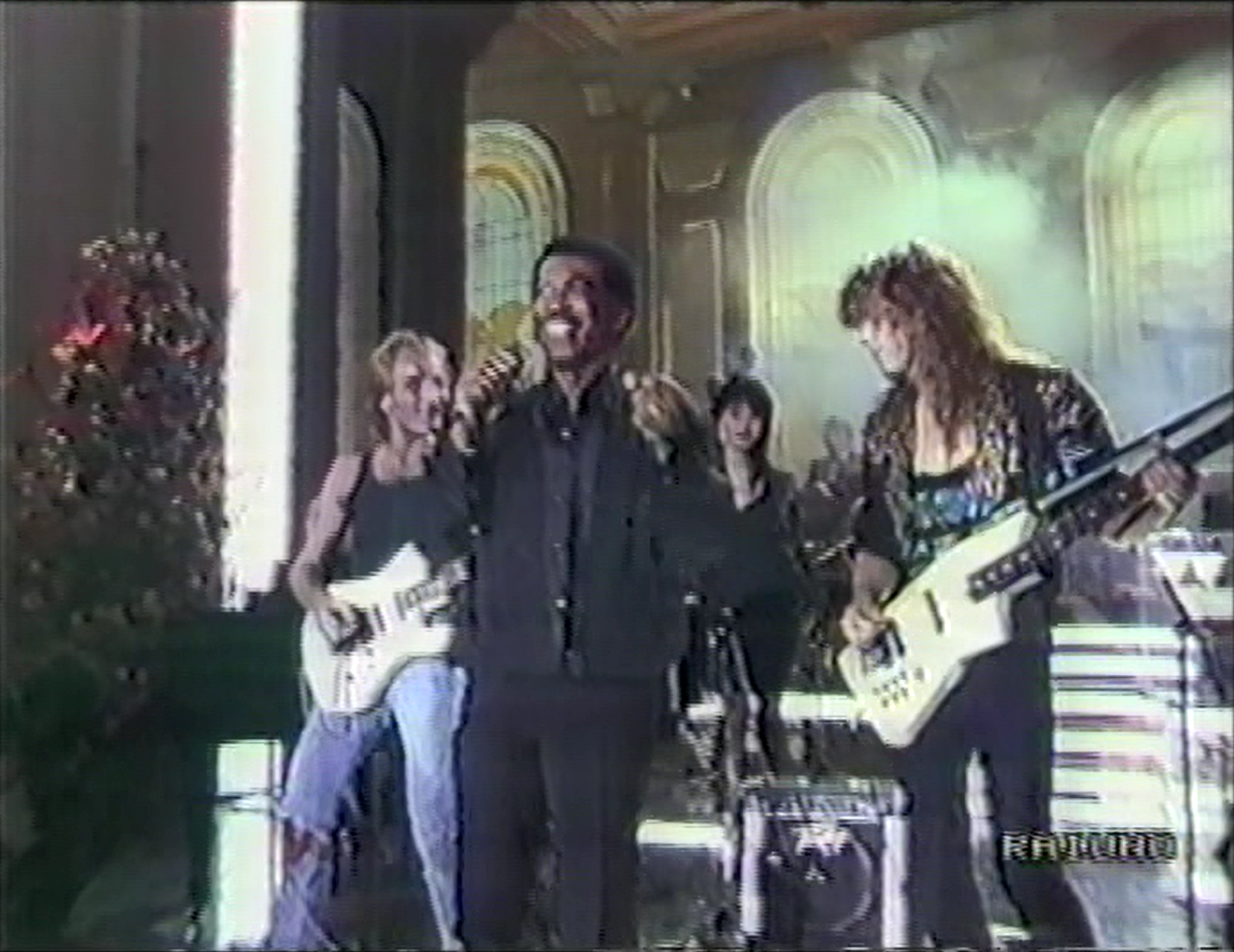
Interview tracks are interspersed between music videos. Rick Allen discusses his drum kit and how he uses his left leg to do what he used to with his arm. Then there’s a surprising video of a live Ben E. King TV performance, featuring his new backing band, Def Leppard. “Stand By Me” is not the complete clip but enough to show you that Leppard could do it! Rick Savage plays a strange 80s synth bass guitar, and Steve Clark was still with them. Another partial clip, “Jean Genie” with Joe, Ronnie Wood and the Hothouse Flowers, is cool but just a snippet. Same with an acoustic version of “Ziggy Stardust”. Shame they couldn’t use the full tracks. The origin of the track “From the Inside” is discussed with a short clip as well.
“Let’s Get Rocked” is opened by an amusing interview with Sav about filming in front of a blue screen. Indeed, “Let’s Get Rocked” was a pioneering video, if terribly dated. It’s also their only video as a four-piece band without Steve. The next interviews address this — the hiring of Vivian Campbell. His big debut was the Freddie Mercury Tribute Concert in early 1992. His music video debut with the band was on the mediocre “Make Love Like A Man”. Its gimmick was a big screen behind the band; pretty standard stuff. The rarely seen “I Wanna Touch U” follows, with Leppard once again live in the round! The fake crowd screams are distracting but the video is cool, if not triumphant.
The big ballad “Have You Ever Wanted Someone So Bad” has a gothic look, but oh so 90s in style. The picture-in-picture (some colour, some black and white) look was overdone. A small batch of interviews from the period are followed by “Tonight”, an excellent understated ballad. The conceptual side of these videos was getting progressively foggy, but when they’re on the screen in start black and white, the band look cool. “Heaven Is” was another rarely seen clip, and perhaps it’s better that way. As always, the band stuff looks great but the conceptual shots are just bizarre. Ditto “Stand Up (Kick Love Into Motion)”. Dunno what’s up with the naked people or Cliff Burnstein playing baseball with a window. A true shame, as this semi-ballad is a Def Leppard masterpiece of a song, simply top drawer. It deserved better. When the video came out, I was so disappointed. “What have they done?” We deserved better.
“Two Steps Behind”, “Love Bites” and “Photograph” are live, from a hometown gig in Sheffield. More of the show would be made available on a 1995 home video release called Video Archive.
Finally, the future: Joe says there’s a long long way to go, not realizing he just wrote a future Def Leppard hit song title! Collectively, they were excited to write together. Rick Savage says it’s “Phase 2”, and Joe Elliott employs another Star Trek analogy about exploring. There was plenty of creative energy in the band and it’s obvious. But don’t hit “eject”! Stay tuned for the post-credit scene! An important message from Joe.
Visualize was one of those sequels that just came too soon. Interview material is valuable and desirable, but Historia played more like a visual album. It was a better entertainment experience. Visualize is choppier. It wouldn’t matter so much if all the songs were complete, but the TV performances are just teases of complete tracks. Unfortunate.
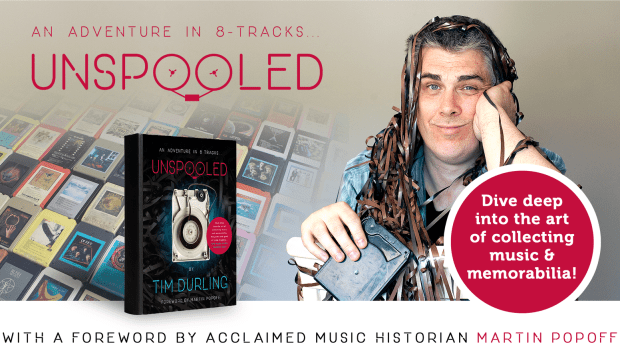
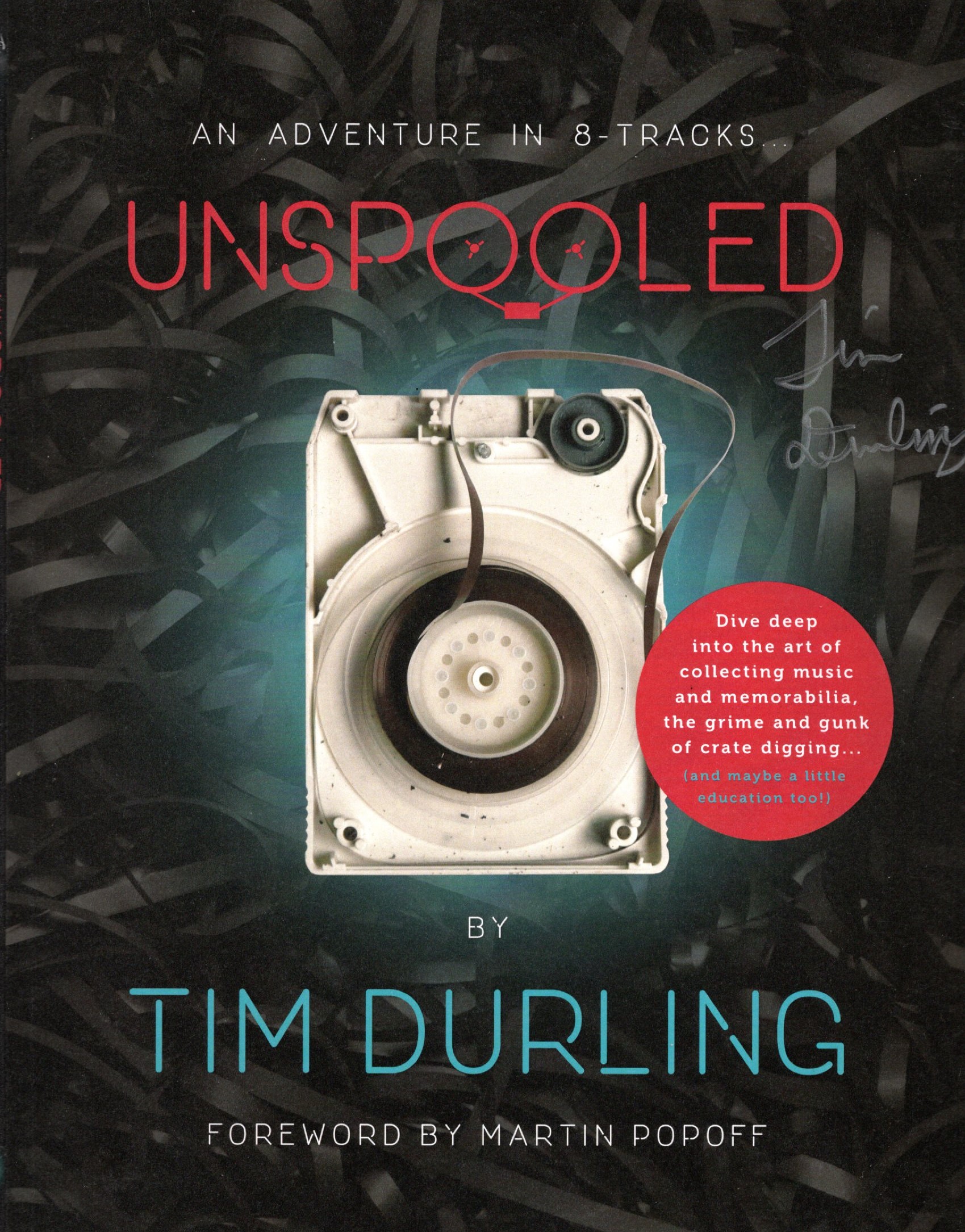
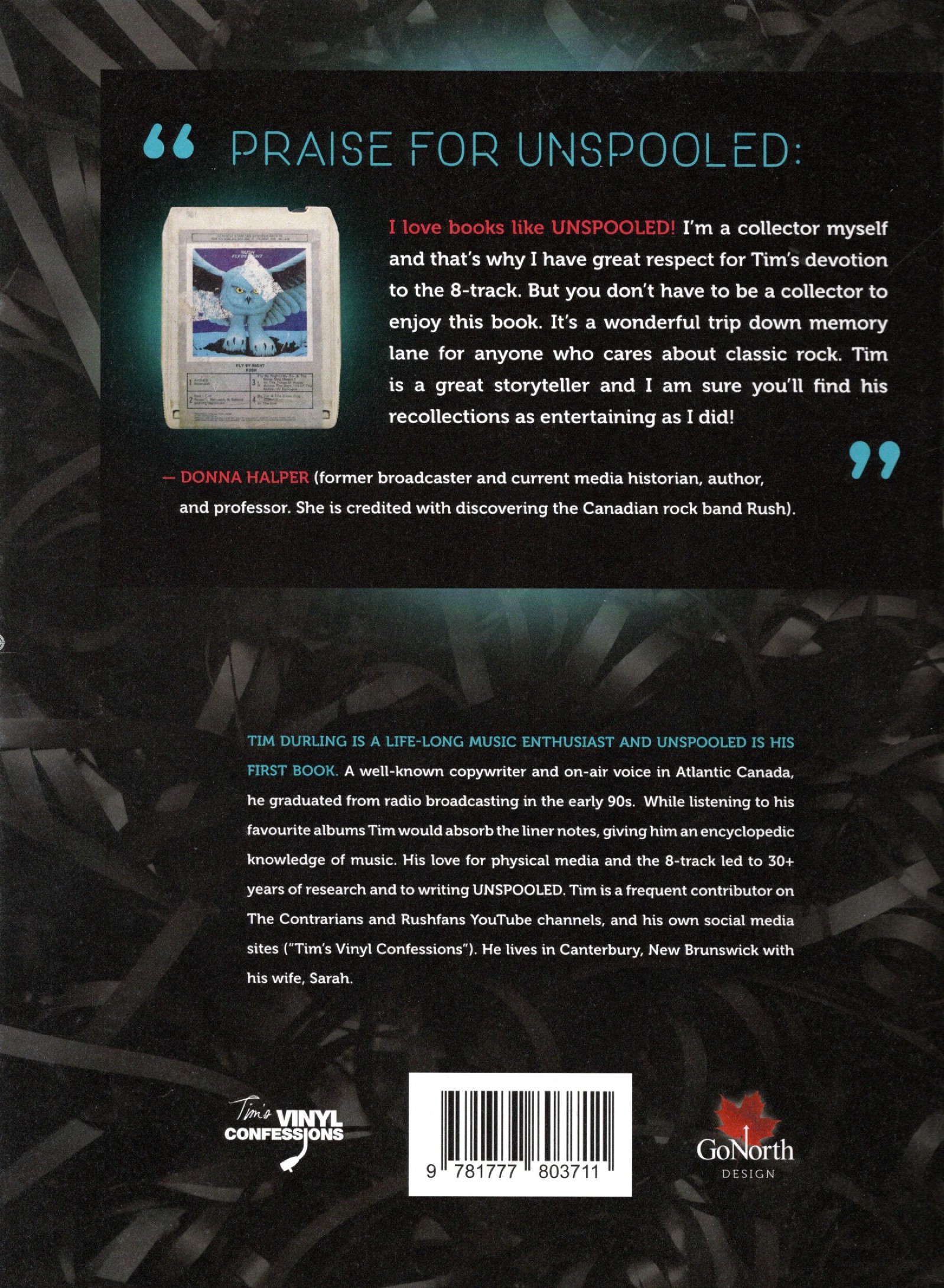
UNSPOOLED: An Adventure in 8-Tracks by Tim Durling (2022)
Every collector is different. We cannot be painted with a single brush. I, for example, collect music formats that I have the equipment to play. I don’t own any reel-to-reel and only a couple 8-track tapes for that reason. Tim Durling on the other hand doesn’t care. He loves 8-tracks even though he has no way to play them, nor does he really have any interest in getting into the players. Restoration of the players and tapes themselves is a expensive hobby that many do enjoy, but Tim is all about the collecting.
A single Journey tape sitting in a desk drawer was the modest beginning, years before Tim really dove into it. His passion for collecting the bands he loves is at the heart of Unspooled, Tim’s first book and a great resource for 8-track tapes. If the praise that Martin Popoff throws down in the forward isn’t enough to convince you, then I give up!
Unspooled is a visual feast. Every page pops with vivid print, and many are loaded with photos of tapes that you never knew existed on 8-track. Tim was fascinated early on to learn that record clubs such as Columbia House sold 8-track tapes through the mail, long after they were available in stores. These “RCO” tapes can be very difficult, but rewarding to find, especially when you have a love affair with collecting. See for yourself, how pretty the 8-tracks look when photographed next to their cassette, CD and LP counterparts. How many albums do you own in four formats?
Tim includes lists of known RCO tapes from 1981 to 1988. Wait…1988? Yes, somebody in 1988 was still ordering 8-track tapes from record clubs! Astounding. And Tim’s got the proof. He also has pictures from his childhood (sweet GI Joe’s, dude!) and of obscure tech like the infamous 8-track to cassette car adapter. Chapters are named after related songs, but there are plenty of surprises along the way. I’ve never seen a Bruce Springsteen box set on 8-track before.
Interviews and stories from friends and experts help colour in the picture a bit. Information you wouldn’t just find yourself. For example, what is a “coffee can tape”? 8-tracks were notorious for unspooling and being difficult to fix. Often customers would carry the mass of unspooled tape in a coffee can to be repaired. And here’s something else I didn’t know, but should have expected. Counterfeit tapes are a problem now in the collector’s market. Some of these tapes go for serious coin today. Stuff that you used to find at a garage sale for 10 cents, or worse, in the garbage. Contributions comes from characters such as Marco D’Auria the Contrarian, Ryan Murphy from RushFans, and yours truly, LeBrain.
Yes, that means I am biased, but I don’t think my review would be any different otherwise. Take Martin Popoff’s word for it. Limited copies of Unspooled are still available. Contact Tim’s Vinyl Confessions to order yours.
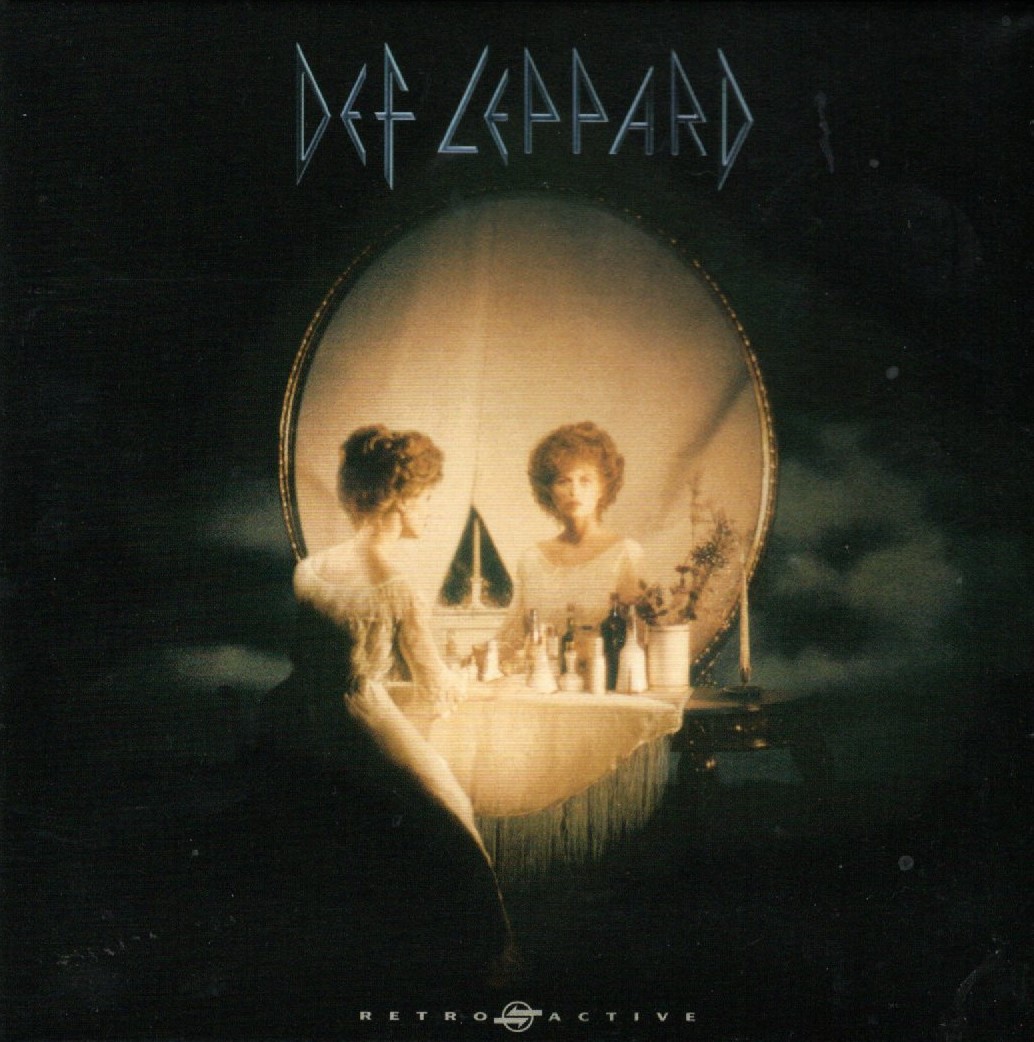
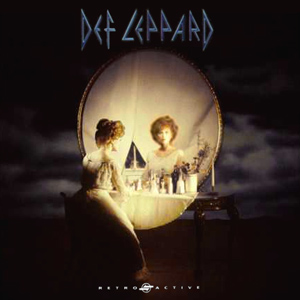
Like Hysteria before it, Adrenalize produced a wealth of riches in B-sides. Between the two albums, they had enough B-side studio material to turn into an album compilation. Tellingly, the final album called Retro-Active featured very different cover art, and a toned-down logo. It was intended to be the ending of an era, and the start of a new one. Guitarist Steve Clark was gone, replaced by veteran Vivian Campbell. The grunge era was two years deep, and Leppard were about to change sonically. In their minds they needed to “clear the decks” of old material so they could focus on the new.
What’s interesting about Retro-Active is that it is not simply a compilation of rare material. Everything has been reworked to some degree — everything. There are even two “new” songs, unfinished tracks with Steve Clark that were finally completed for this album. We will take this album track by track and go over the changes made to the original B-sides. (The printing on this 2019 CD reissue is so small, I had to pull out my original 1993 CD to read the notes.)
1. “Desert Song”. A track begun during the Hysteria sessions but left unfinished without lyrics or vocals. Joe finished the words in 1993, while Phil laid down guitar overdubs and Rick Allen re-recorded the drums. Steve Clark is featured on the second guitar solo. What’s surprising about “Desert Song” is how modern it sounds even though it was originally written in 1987. A slow, heavy groove is melded with middle-eastern vibes for a dark winner.
2. “Fractured Love”. Another from the Hysteria sessions. You can tell the intro is of more recent vintage compared to the body of the song. Joe’s vocals suddenly revert to the old screamin’ Elliott and it’s absolutely brilliant. Drums were re-recorded in ’93, along with the new intro by Joe and Phil Collen. Both these songs sound ahead of their times and well suited to the darker moods prevalent in the early 90s. “Fractured” is choppy, intense and reminiscent of the old band while still sounding like a 90s song. Steve Clark on lead guitar!
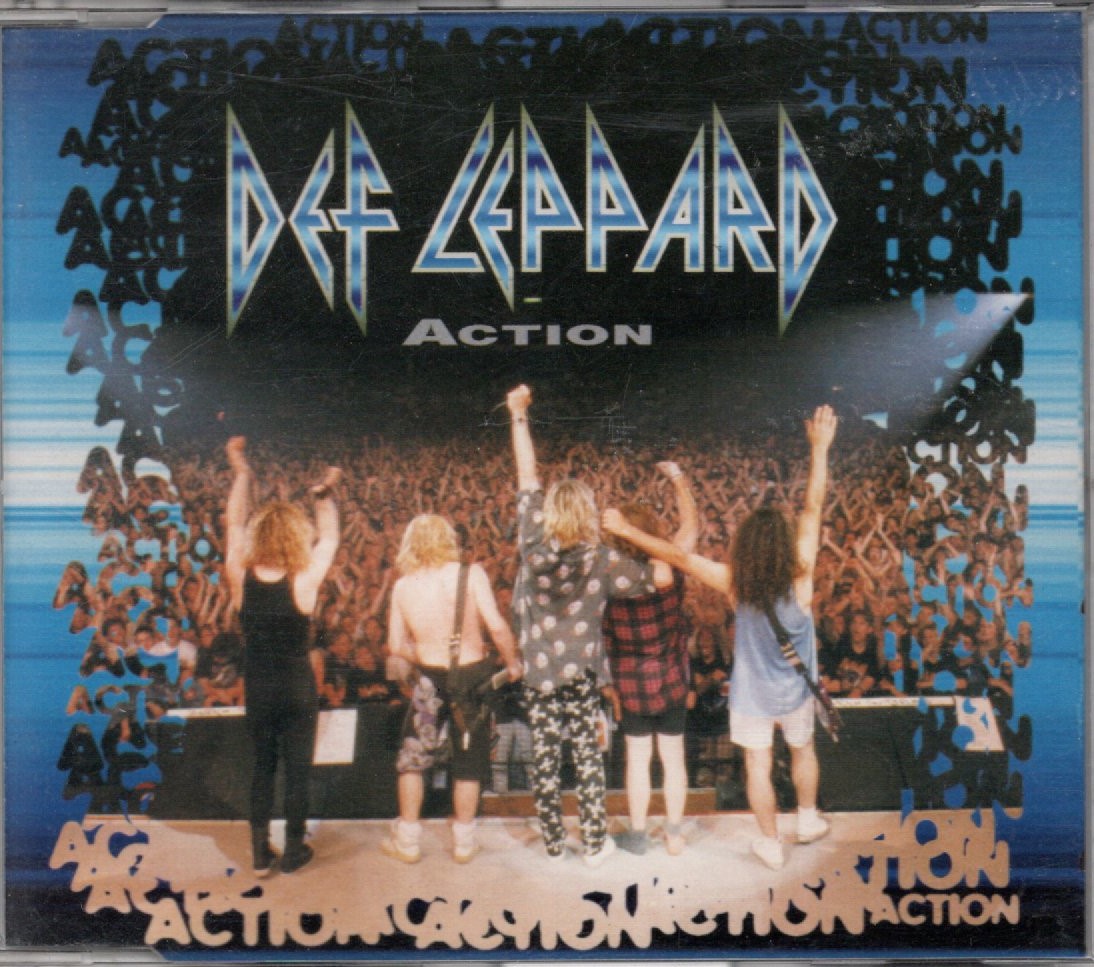
3. “Action”. This Sweet cover originated on the 1992 “Make Love Like a Man” CD single. Vivian Campbell had joined the band by this time and the track features some of his guitar work. Like most of the tracks on Retro-Active, the drums were re-recorded by Rick Allen in 1993. “Action” became a Leppard staple over the years, and as a rare fast/heavy rock singalong, you can hear why. In fact, it was later released as a single, from this album!
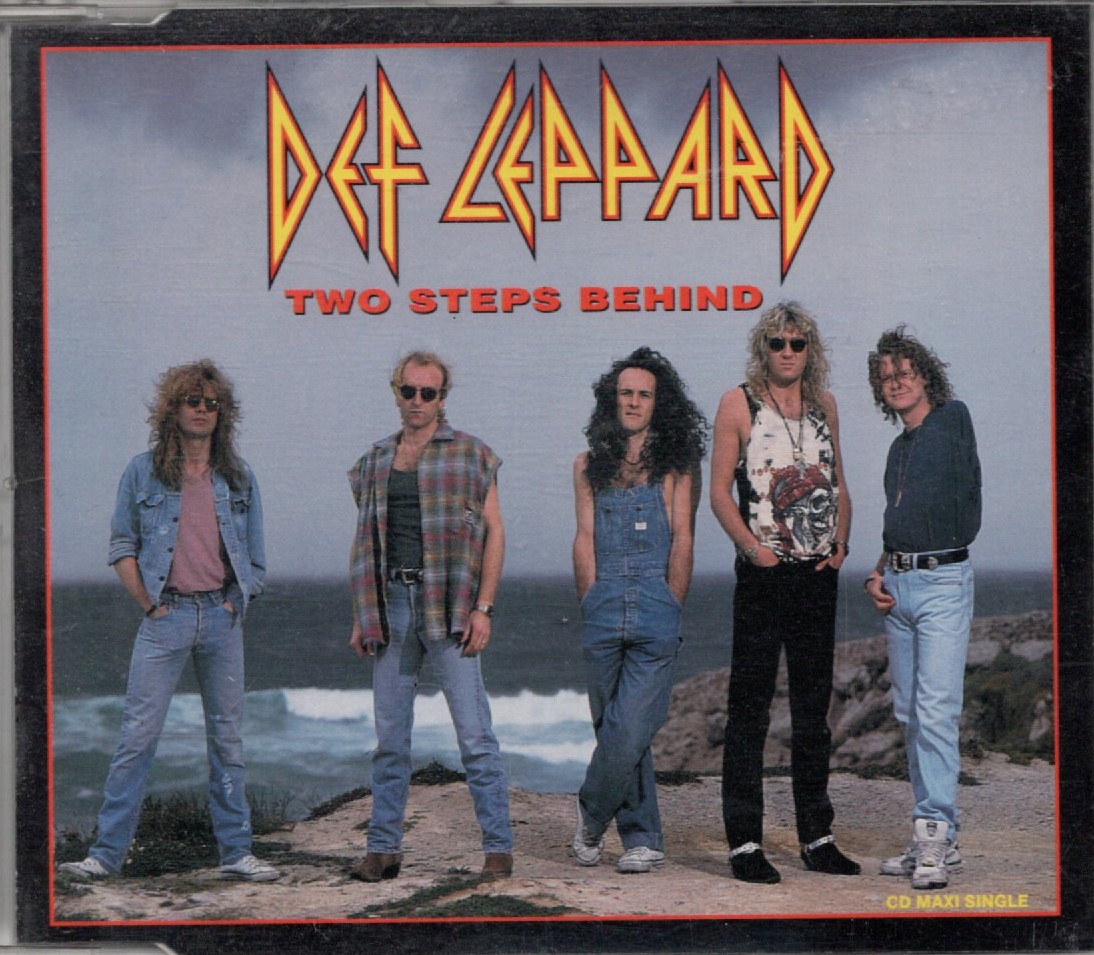
4. “Two Steps Behind” (Acoustic Version). As we’ll see, “Two Steps Behind” exists in a number of different versions. The demo was electric. The first version released appeared on “Make Love Like a Man” as a purely acoustic song with no drums. The second release had strings added by Michael Kamen for the Last Action Hero soundtrack, and that version was released as its own single. The version on Retro-Active is the popular Kamen single mix. This was Leppard’s very first acoustic song and it opened new doors for the traditionally hard rocking band.
5. “She’s Too Tough”. Helix recorded this Leppard outtake themselves for 1987’s Wild in the Streets. From their version, you could hear the song deserved wider renown. Def Leppard released their finished version on the single for “Tonight” in 1993. The drums were re-recorded for Retro-Active but there were no other changes made. This blitz of a rocker features the screamin’ Joe voice and all the adrenaline you can handle (and was missing from Adrenalize).
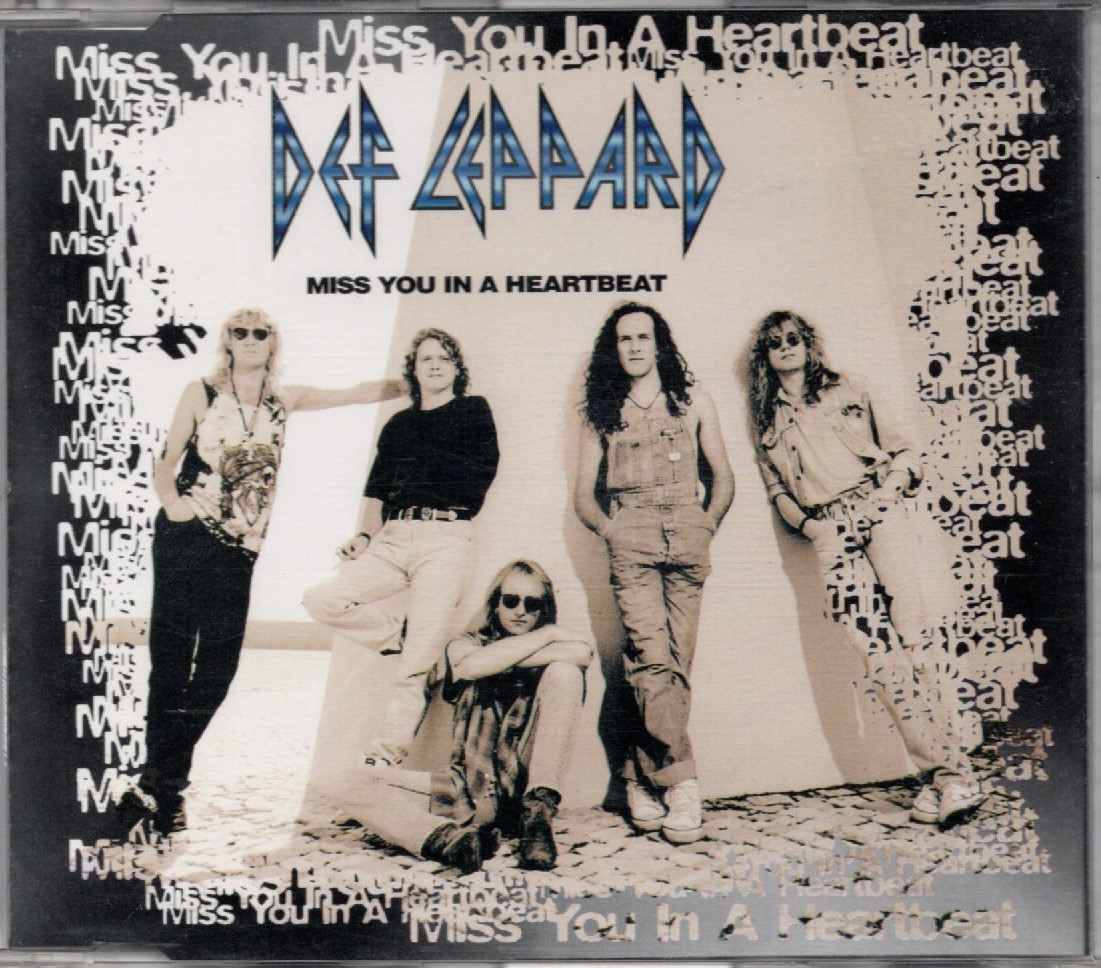
6. “Miss You In a Heartbeat” (Acoustic Version). This is actually a piano version of a song that exists in many forms. It was first recorded by Paul Rodgers and Kenney Jones as The Law in 1991. For that band, it was a low-charting single. It faired better for Leppard themselves, who released it as a single A-side themselves in 1993. This quieter version features a stunning acoustic guitar solo by Phil Collen. There are many, many versions of this song, as you will see as we proceed through this series. (And this album!)
7. “Only After Dark”. The Mick Ronson cover was first released on the “Let’s Get Rocked” single. Both Vivian and Phil added guitar overdubs for the Retro-Active version. The additional guitar depth is noticeable. Leppard are so good as these kinds of glam rock songs.
8. “Ride Into the Sun”. From the very first EP, and then re-recorded on the “Hysteria” single. Could this be the fastest Def Leppard tune? It’s certainly among them. Also ranks highly among the heaviest, and best, of Def Leppard! Rick re-recorded the drums, and for some reason Ian Hunter from Mott the Hoople added a honky-tonk piano intro. The “studio talk” at the end of the song has also been trimmed off. Sonically, this could be the best sounding version of “Ride Into the Sun”, though the preferred will always be the “Hysteria” B-side.
9. “From the Inside”. Originally released as part of a three-song session with Hothouse Flowers on “Have You Ever Needed Someone So Bad“. Billing themselves as “Acoustic Hippies from Hell”, Leppard were really leaning into their acoustic side! The song originated as a TV broadcast on a program called Friday at the Dome with Joe Elliott and Liam Ó Maonlaí. The only modification made to this version is that the count-in at the start has been deleted. Leppard fans may be surprised by the tin whistle but it’s not too much of a stretch. The bleak song is about the dark side of addiction.
10. “Ring of Fire”. Dipping back into the Hysteria B-side collection, “Ring of Fire” has a new intro. The drums were re-cut and backing vocals thickened up. It’s one of two Mutt Lange co-writes on the album and stands as one of Leppard’s harder rockers from the era. An excellent track, “so stick around and settle down, enjoy the mystery.”
11. “I Wanna Be Your Hero”. From the “Animal” EP, this is the second Lange co-write on Retro-Active. With new drums added, here it stands as one of the highlights among many highlights. The track should always have been on Hysteria. Combining ballad and rocker into one meaty package, “I Wanna Be Your Hero” is a stone cold Leppard classic.
12. “Miss You In a Heartbeat” (Electric Version). Nothing was overdubbed or re-recorded for this track, but the opening fades out of “I Wanna Be Your Hero”, meaning it is still different from its original B-side release on “Make Love Like a Man”. Another stone cold Leppard classic. A majestic electric ballad with layers of Phil’s sweetest guitars and backing vocals. A masterpiece.
13. “Two Steps Behind” (Electric Version). Previously unreleased. Joe’s original backing track was fully Leppardized with all the band members including Vivian. This gives you an idea of how the song was originally envisioned before it took its better known acoustic guise. The acoustic version is more original, but this one does boast a big huge Leppard chorus.
14. Unlisted bonus track! “Miss You In a Heartbeat” (Acoustic, Acoustic Version). This third version of the ballad is the softest. It is the piano-based version, but without the backing band. Just Joe, the piano, and Phil on an acoustic guitar solo. A nice surprise.
There are more demo versions of these songs on the B-sides of singles, that we will get to when we arrive at the appropriate disc in the CD Collection Volume 2.
As it turns out, Retro-Active was not entirely the clearing of the vaults we thought it was. There was still one more song with Steve Clark unfinished. One more compilation to release. The future was on the horizon, but the past had to be dealt with first. Which doesn’t diminish Retro-Active in any way. Where there is repeat of tracks, it is justified by the versions being completely different in tone and direction. It plays like a “new Def Leppard studio album” to the layman, but a compilation of the deepest cuts to the faithful. Cuts that have been freshened up and don’t repeat the exact B-sides in their collections. A win/win.
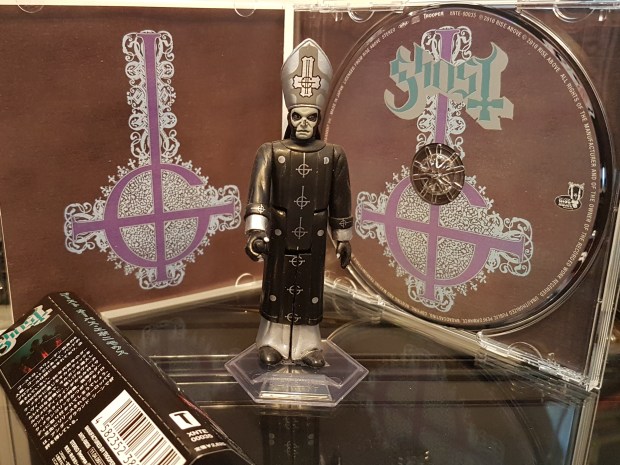
GHOST – Opus Eponymous (2010 Rise Above Japanese import)
They could have gone down as a novelty, if the music wasn’t so genuine. An expert mix of metal, Satan and Abba. From the gloom of the north came Ghost, led by Papa Emeritus and his Nameless Ghouls. We knew little about the band then, except that they were just too good to have come out nowhere like that.
As Ghost have grown and evolved, the shadow of their first album grows even longer. Opus Eponymous consisted of an intro, eight gothic keyboard-drenched metal anthems from hell, and one bonus cover track for the Japanese market. With “Papa’s” true identity wisely obscured at the time, the focus was off the extensive pre-Ghost discography of leader Tobias Forge. Though elements of his glam and death metal pasts remained, Ghost was truly unique right from their debut. Forge conjured a fictional backstory for the band in his mind. He imagined Ghost were a group of older guys. Active in the 70s, but started playing together in the late 60s. Very experienced and maybe a little bitter. Opus Eponymous was not meant to sound like a debut, and it does not.
Like entering a church on a cloudy day, “Deus Culpa” greets you as the light organ drifts through. But this is no ordinary mass, and the sermon is quite devilish. Foreboding dissonance and flat chords warn you against entering, but still you go. Then suddenly the rolling electric bass of “Con Clavi Con Dio” is followed by a blast of guitar and evil organ!
“Lucifer! We are here for your praise, evil one!” sings Forge with a provocative calm. What really made Ghost stand out was the juxtaposition of evil metal, with the keyboards and otherworldly, ethereal lead vocals of “Papa Emeritus”. Choir-like backing vocals and the persistent howl of organ add to the classic horror scene. Listening to the lyrics, it is clear that Forge knows his subject matter convincingly enough. But he also knows how to write a song and every second of “Con Clavi Con Dio” delivers some sort of hook, thrill, or chill. The production is also outstanding in its bare simplicity, compared to later Ghost.
The plinking intro of “Ritual” disguises its true heaviness, at first. Forge deftly merged a plutonium-heavy riff with light and delicate vocal harmonies. While you’re being caressed by the sweetest Satanic prayers, you’re also enduring the assault of guitars and bass. “Ritual” sounds, somehow, like a song that could have emerged from the year 1985, but with the wisdom of future knowledge. Quite possibly the pinnacle of this album.
Galloping in the dark, “Elizabeth” (long “i”, not short “i”) is among the heaviest tracks despite its melodic chorus. As a song about a suspected 16th century Hungarian serial killer, it could be one of the less evil songs on the record! It is followed by the dastardly catchy “Stand By Him”, featuring a very traditional metal guitar solo section. ”Tis the night of the witch, tonight,” beckons Forge, and you cannot resist his call to this tale of revenge. (Or justice?) Then comes in the chopper-like opening guitars of “Satan Prayer”, the most blunt of all the songs. Yet like the others, impossible to resist, because of impeccable construction from melody and riff. The clever keyboards and dual guitar solo are a confectionery topping over the robust chug of distortion.
A crack of thunder, the crash of drums, and “Death Knell” is here. Forge sells the creepy vocal easily, though not difficult given the words as he sings of evil rebirth. One of the most straight metal of the tracks, and the outro is pure Ozzy. “Prime Mover” then enters like a warning siren. Once the smoke has cleared, the bass does its work to level the stragglers. Forge floats over the waste, ethereal and haunting.
All that’s left on the domestic album is the brilliant instrumental closer “Genesis”. Apparently it’s a sped-up waltz; I think it’s a piece of hammering progressive brilliance. The repetitive keyboards provide the melodic hook, and ghostly guitars add to the story. Not to be left out, the bassline is delicious to listen to. There’s also a very Sabbath-y acoustic outro. The rituals are complete and a new evil is born. An outstanding album closer!
The Japanese CD contains a dark rendition of the Beatles’ “Here Comes the Sun”, mournful and sad. It’s the opposite of the George Harrison original. Some like it; some feel it’s the worst track on the album. It does work as a sort of coda, but is probably experienced best separately.
With Opus Eponymous, Ghost arrived. To their credit they’ve never tried to repeat this exact album. Instead Ghost continued to explore, a growth personified by adopting the guise of a new singer on every album (Papa II, Papa III etc.), even though they were all played by Tobias Forge! This remarkable debut is just as valuable as the later more diverse records, perhaps simply because of its more focused singular vision.
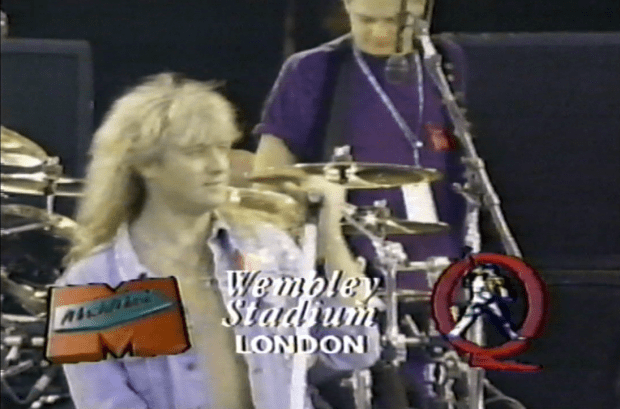
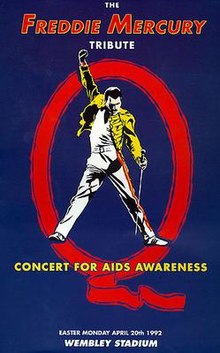
DEF LEPPARD – A Concert For Life – Tribute to Freddie Mercury (Wembley Stadium, 20 April 1992)
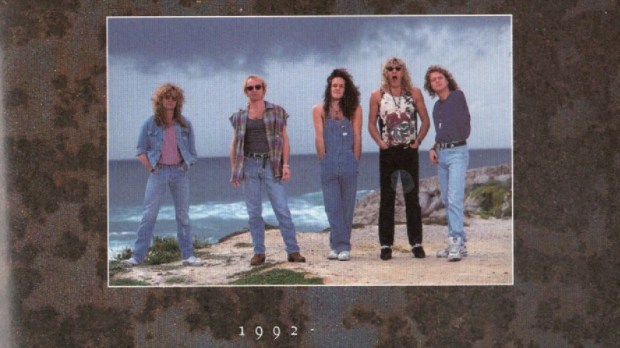
Metallica had come and blown the crowd of 72,000 away. Extreme impressed the skeptics with a Queen medley. Live broadcast to 50 countries, there was no pressure at all on Def Leppard! The Freddie Mercury Tribute Concert was only the biggest show of 1992. And they had a new member to show off.
The band had given their new guitarist an easy warm up at a club gig at home in Ireland. But his first high profile show would be the biggest imaginable. Without an introduction, out walked former Sweet Savage / Dio / Whitesnake / Riverdogs / Shadow King guitarist Vivian Campbell!
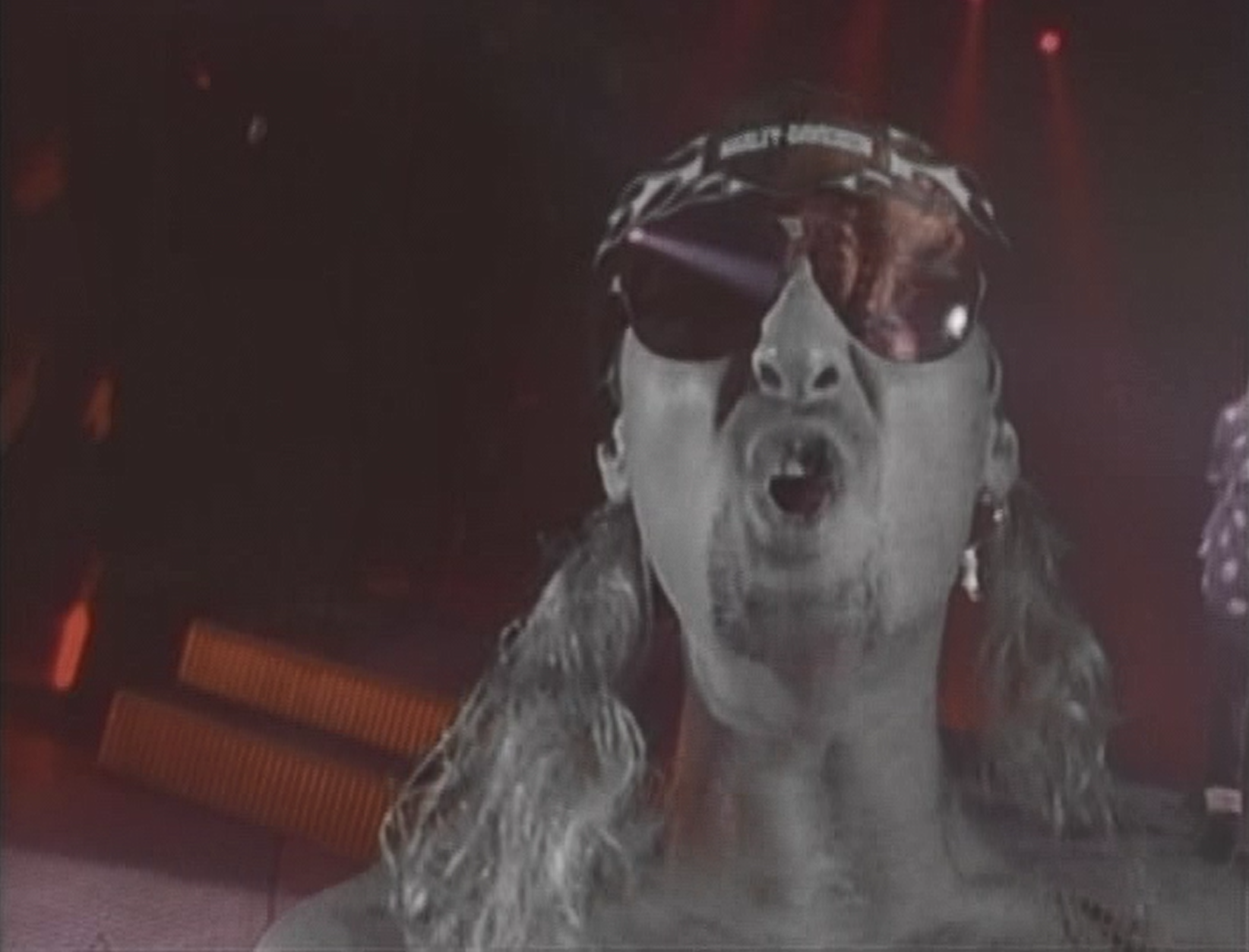
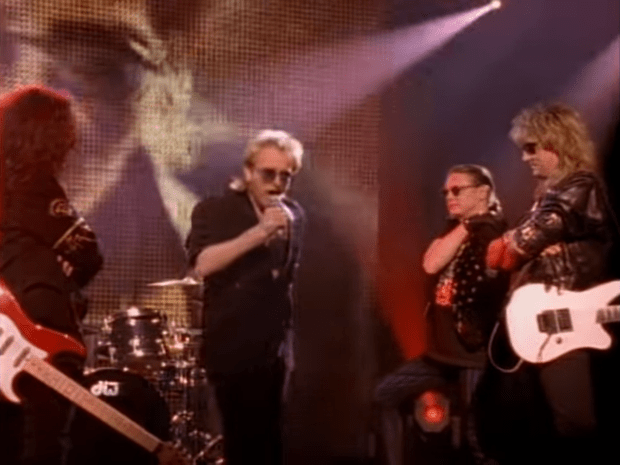
What a choice! There he was with his new band, completely confident and nailing “Animal”. In his Union Jack jeans, Joe Elliott bounced on the massive stage, working the crowd without missing a note. After a brief pause, he then asked the throbbing mass of people, “Do you wanna get rocked?”
It was the first major live outing of a brand new Def Leppard hit. Hamming for the camera, Vivian ably handles the backing vocals, adding more depth to the live Leppard sound. The late Steve Clark didn’t sing as many backing vocals, and Viv was a natural. The crowd ate it up, fists in the air and digging the new tune. One of the coolest moments is the solo, in which Phil Collen’s picking hand turns into a blur.
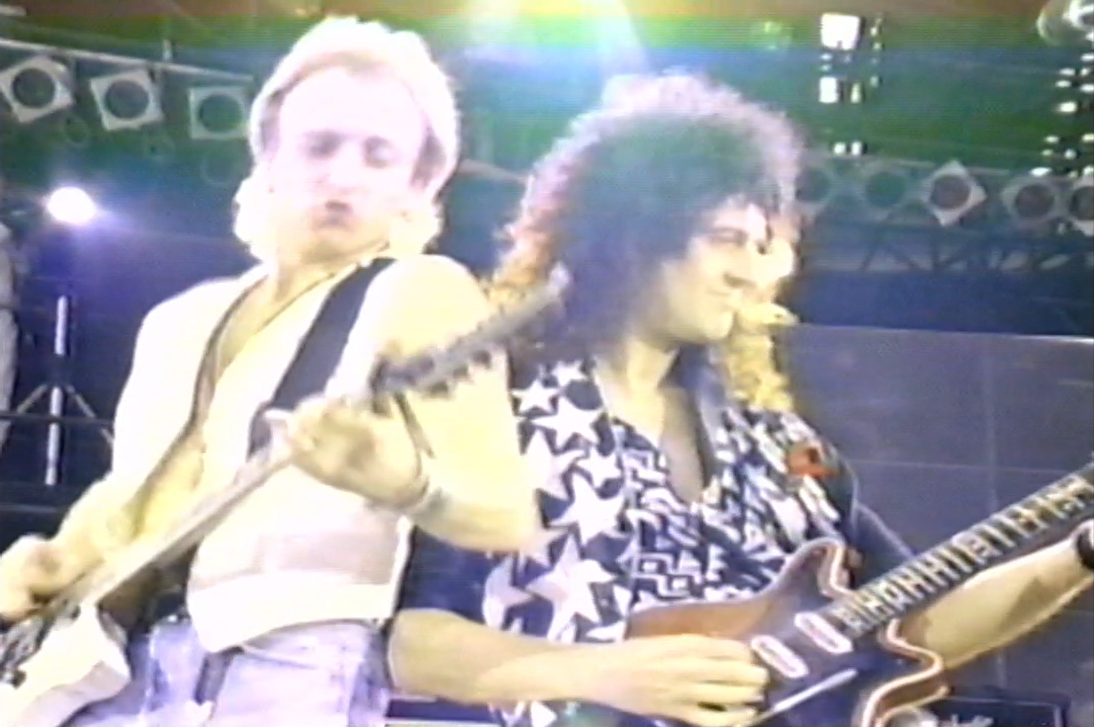
One more tune. And then an even bigger moment: Brian May himself joined Def Leppard for a cover of Queen’s “Now I’m Here”! (This track was later included on the 2 CD Adrenalize deluxe edition.) Of course we all awaited the guitar solo. Viv went first (introduced by Joe for the first time), and Phil took the second solo. They really made ’em wait for Brian May! It was, of course, not May’s first time with Def Leppard.
Even bigger things were in store for the Wembley Crowd as day turned to night. Queen emerged, playing a long set of classics with a series of incredible guest singers. And Joe got to open their set, with Slash on guest guitar. With one of his very favourite bands, Joe got to sing “Tie Your Mother Down”. And nailed it.
The big question for Leppard fans was “who could possibly replace Steve Clark?” In Vivian Campbell, they selected a guy who could play with both feel and shred, as well as write songs and sing. The personalities worked. The ironic thing is, post-Dio, Vivian had been seen as something of a “hired gun” guitar player. Would he last in Def Leppard? In his early interviews, he insisted that he was always looking for a band situation that he could stay in for life. It turns out that Def Leppard was that band.
Club gig aside, the Freddie Mercury tribute concert was Vivian’s real trial by fire. It was obvious the band had made the right choice. Nobody could truly “replace” Steve Clark as the band’s in-house riffmaster. Vivian helped Leppard evolve into the 1990s. On with the tour! Leppard might not have been the biggest rock band in the world anymore, but they rocked 72,000 people, plus millions more at home worldwide. Not too shabby.
5/5 stars
MuchMusic broadcast the whole show, and then did a repeat performance of the entire thing at night. It was then that I set my VCR and taped the entire broadcast, with Erica Ehm’s interviews with various bands, including Def Leppard. Wembley were treated to Queen videos on massive screens in between bands, and those videos are also part of the broadcast. MuchMusic’s feed was superior to MTV. I was in Frankenmuth, Michigan mere days later at the end of final exams, watching MTV. Our coverage was better. The complete show has never been officially released in any format.

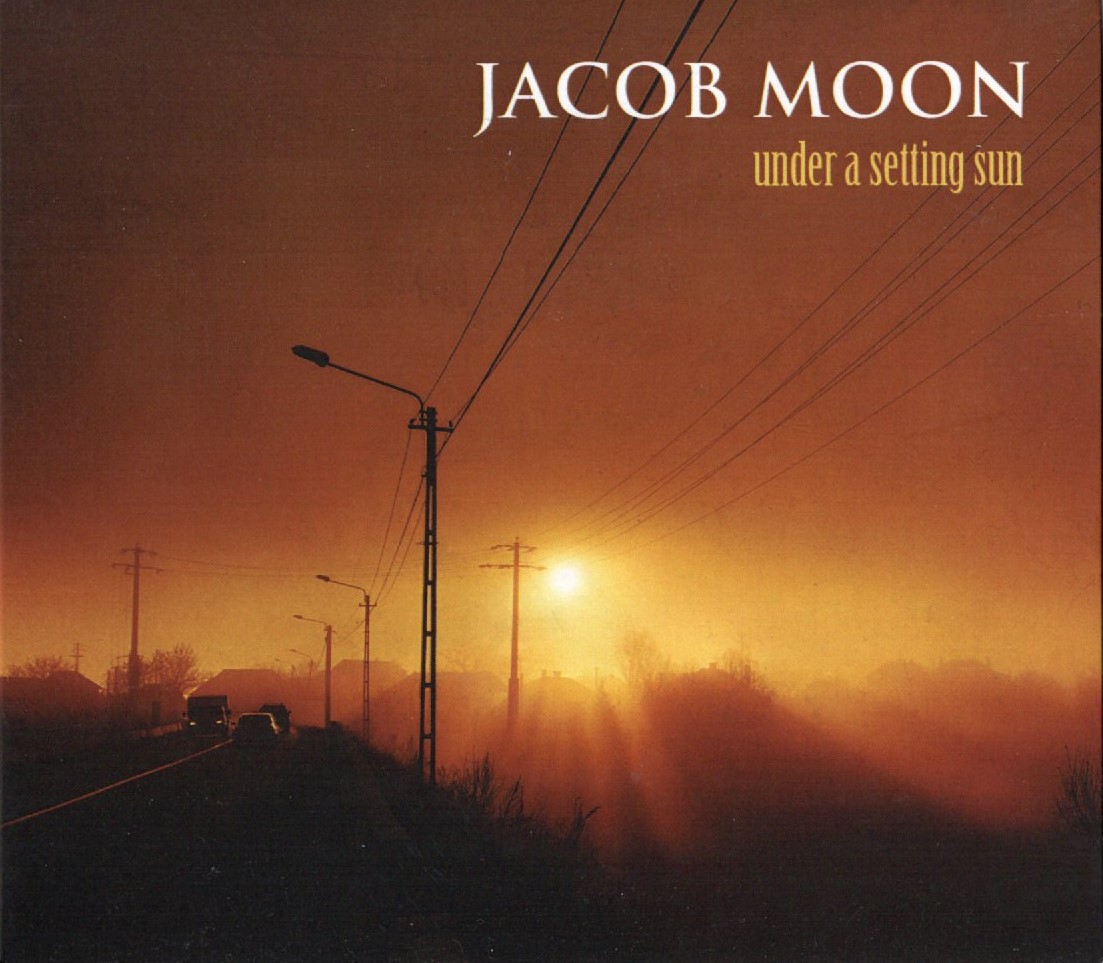 JACOB MOON – Under A Setting Sun (2022)

























You must be logged in to post a comment.