Reviews

RE-REVIEW: Iron Maiden – The X Factor (1995 2 CD Japanese import)

IRON MAIDEN – The X Factor (1995 EMI Japan 2 CD limited edition)

For this revisit, we will take a deep dive on the Japanese version of Iron Maiden’s controversial 1995 album The X Factor.  As the first new studio album in three years, anticipation ran high.  There was also a minor problem that needed sorting out.  Longtime vocalist Bruce Dickinson quit to go solo after more than a decade in Iron Maiden, leaving the remaining band with an air raid siren-sized hole to fill.  The band had already been rocked by the 1990 departure of guitarist Adrian Smith, whose songwriting and melodic solo construction was missed.  That’s not a knock on the guy who replaced him, Janick Gers.  Gers was a different kind of player, and the elements that Smith used to bring to the band were gone.  Fans had to endure an even more serious change when Wolfsbane vocalist Blaze Bayley was chosen to replace Bruce.

Virtually unknown in North America, Blaze Bayley was a powerhouse baritone who wasn’t known for hitting the highs of Bruce Dickinson.  However, Maiden seemed to like change and the 1990s were a darker time.  In that context, Bayley was a better fit.  Bruce’s style of singing was on its way out, while Bayley could have fronted a grunge band had he chosen to go that way.  At the same time, Steve Harris was dealing with losses in his life, and Bayley’s voice suited the more pensive tone of the new music.  In another major change, producer Martin Birch stepped down leaving Steve Harris and co-producer Nigel Green to their own devices, for better or for worse.  You’ll notice the mix is quite bass-heavy….

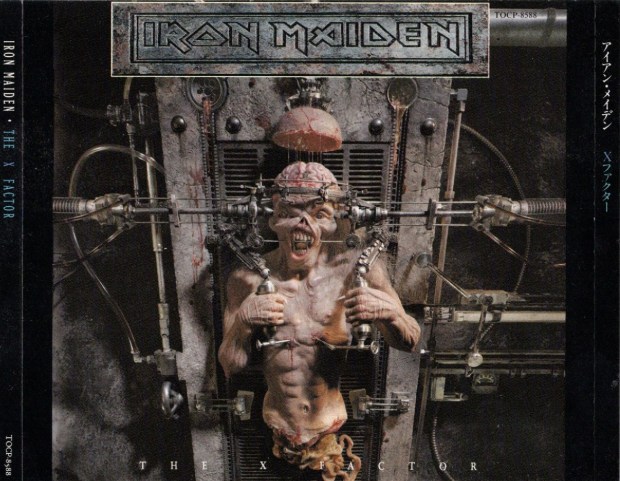
The X Factor was released in October of 1995 to a lot of indifference.  Even the new cover art by Hugh Syme turned off some fans.  It was the longest Maiden album so far by a long shot at over 70 minutes.  In Japan, the CD came with a bonus disc of three original B-sides, boosting the length to over 82 minutes.  Maiden rarely recorded original material for B-sides (“Total Eclipse” notwithstanding), but this time they had 14 tracks to choose from in total.  A bumper crop of creativity.

“Sign of the Cross” has to be one of Maiden’s most impactful openers, though it takes a minute to get going.  If you thought you bought a CD of Gregorian chants (very big in 1995; even Van Halen used ’em), then that’s forgivable.  Maiden jumped on the chant bandwagon for the 11 minute epic opener, a very unique track in the catalogue.  A bass intro begins the song proper, and if there’s one flaw on The X Factor, it’s too many bass intros (see above comment about “left to their own devices”).  The clean guitars backing the bass are a nice touch, and there is no question that The X Factor is a brilliant sounding album.  The vocals finally kick in almost three minutes into the song, kicking the song into a slow determined march.  The evocative imagery recalls dark corners of Catholic history while the music goes through multiple thrilling sections, from speedy manic solos (Janick proving his worth to a song like that) to more complex rhythms.  The song eventually resolves as it began, in quiet contemplation accompanied by bass.  “Sign of the Cross” was considered good enough to keep in the set even after Dickinson returned to Iron Maiden at the end of the 90s.

Wisely picking up the pace for the next track, the single “Lord of the Flies” kicks it into higher gear.  The speedy riff rocker barrels along steadily, with a slamming chorus.  Co-written by Gers, you can hear his influence.  Blaze sinks his teeth into the meaty verses and the chorus delivers the kind of hooks that we’re used to from Iron Maiden.  Once again, Bruce sang this song when he returned.  In this case, Dickinson was able to elevate the tune by using his air raid siren to boost the chorus.  That’s not a knock on Blaze, who owns the tune with grit and bite.
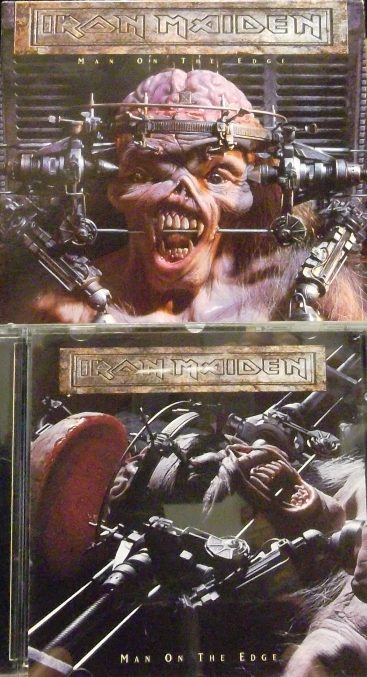
“Man on the Edge” is an interesting song not because it was the poorly chosen first single.  It’s interesting because just six years earlier, the song could never have been written.  As a co-write between Gers and Bayley, it’s entirely composed by the newest members.  Based on the excellent film Falling Down, the song depicts the character of “D-Fens” gradually losing it over the course of a day.  It’s just not up to the quality of the prior two songs, but Bruce still performed it on the 1999 tour.  Be forewarned:  excluding the bonus disc, this is pretty much the last time Iron Maiden pick up the pace on The X Factor.

That’s not to say the rest of the songs are junk.  “Fortunes of War” (another bass intro) begins soft and ballady, although it does get moving towards the end.  In the 1990s, Steve Harris really leaned into repeating sections of his songs, and “Fortunes of War” is certainly one of those.  It’s also one of many tunes on the album based on, or including, war imagery.  There’s a neat guitar part stuffed between bass sections, but too many bass sections!  It’s not that interesting an instrument, Steve.  Janick Gers and Dave Murray lay down a pair of nice solos, and drummer Nicko McBrain plays it fairly straight.  Not a lot of elaborate drum rolls on this album.  Nicko lays back with the songs.

The last song on side one was “Look For the Truth”, a dark contemplative song about personal struggles.  The bass intro this time is at least accompanied by guitar.  “Look For the Truth” begins slowly but then slams into heavy.  Blaze really has this one firmly in his grasp, as he spits out the words.  “It’s my final stand, I make a fist out of each hand.  To the shadows of the past, take a breath and I scream attack.”  This is the first of four co-writes between Harris, Gers and Bayley.  (Gers has seven credits on the first disc, Bayley has five, and Harris ten.)  The main hook here is a simple “Woah oh oh,” which works fine and dandy, and did so in concert.

“The Aftermath” is another slow war song…but with no bass intro!  It’s a little unorthodox as it goes almost three minutes before we hit the first chorus.  It really takes a while to get to the point where they speed it up, but it finally does with a cry of “I’m just a soldier!” and another wicked Janick Gers solo.  Then it resumes its plodding pace to the close.  Not an album highlight, but a song that was performed live on The X Fac-tour.

A little peppier is “Judgement of Heaven”, another soul-searching number with lines like “I’ve been depressed so long, it’s hard to remember being happy,” and “I felt like suicide, a dozen times or more.”  That’s countered with the line, “But that’s the easy way, that’s the selfish way, the hardest part is to get on with your life.”  Then the music cranks into gear and you feel empowered by the music and Blaze’s gravelly delivery.  You got this — you can do whatever you need to.  You can survive.  That’s the message and it sounds great coming from Iron Maiden.  The uplifting chorus “All of my life, I have believed judgement of Heaven is waiting for me,” is a little Christian sounding for this band, but it does the job.  And Davey Murray then flies in with a wicked signature solo, and then Gers joins in for some harmonies.  Blaze even tries for a high note at the end!

The album dips a bit in quality at this point.  “Blood on the World’s Hands” is not of the finest moments on The X Factor.  It boasts the worst bass intro yet, and it goes on for-bloody-ever.  At some points it sounds as bad I do, just randomly hitting notes in random order.  Mercifully the song really begins at 1:15 but the damage has been done.  It’s a decent song from that point on…but see above about Steve being left to his own devices as co-producer with Nigel Green.  A different producer would have axed that intro.  Cool Murray/Gers solo though, and Nicko gets to play around with unorthodox drums patterns.
“The Edge of Darkness” feels as if we’re moving towards an ending.  A dramatic re-telling of Apocalypse Now with yet another bass intro, this is a good song.  How many war songs do you need?  Don’t worry, this is the last one.  Like most of the tunes (especially those with bass intros), it begins slowly before heavy-ing up partway.  When it gets galloping, it’s solid gold.  “I know Captain that you’ve done this work before, we’ve got a problem and you can help us I am sure.”  You know where it goes from there.  “Your mission, terminate with extreme prejudice.”  All he wanted was a mission and for his sins they gave him one.  Vocally, Blaze has his hands full here with rapid-fire lyrics and plenty of “Woah-oh” hooks.  The guitar solos are like old-school Maiden again, and the gallop recalls earlier days.  “And now I understand why the genius must die…”

The album goes dark with “2 A.M.”, the third of the contemplative songs of self-reflection.  On first listen it doesn’t stand out but it grows over time.  “Here I am again, on my own again…”  We’ve all felt that way.  This is a sparse, direct, morose tune but not without merit.  On past albums it probably would not have made the final cut, though the guitar sections are great.

The final track on disc one is “The Unbeliever”, another unorthodox tune, centered on a bassline, but at least without a bass intro!  A Gers/Harris composition of self-reflection, that has a very different rhythm and layering of instruments.  “All my life, I’ve run astray, allowed my faith to drift away.”  Interesting that there are so many songs on this album about losing faith:  “Sign of the Cross”, “Judgement of Heaven”, and “The Unbeliever”.  The three dominant themes on this album (often overlapping) are war, losing faith, and personal struggles.  Quite different from the Iron Maiden that wrote songs about mythology, killers in alleyways, and dying with your boots on.  If there was ever a time to turn inwards and reflect, it was the 1990s.  Later albums would find a stronger balance of lyrical themes, but there is no question that the music of The X Factor suits the lyrics perfectly and vice-versa.

“The Unbeliever” ends with just an audio snip of studio chatter.  “That’s the one!” somebody says after a good take.

Over to disc two, exclusive to Japan:  all three tracks were available on B-sides to “Man on the Edge”, but one was exclusive to vinyl.  All three are fast songs that would have dramatically altered the complexion of the album had they been included in the regular tracklist.

The only Dave Murray co-write (with Harris) is the speedy “Justice of the Peace”.  This tune is about the decline of modern society.  “It must be the cynic in me, but I don’t really like things now.  The violence, the attitude, aggression that you see every day.  Sick society looks the other way.”  It has a similar vibe to “Man on the Edge” though not as manically paced.  Murray lays down a classic Beast-era sounding solo to top it off.  It’s over and out in just 3:34, the shortest song of them all.

“I Live My Way” is special because this is its only release on CD.  The only other way to get it is on vinyl.  Most Iron Maiden fans simply do not own a copy. As another speedy tune written by Harris/Gers/Bayley, it’s probably the least remarkable but certainly a special rarity.  You can count this as another one about self-reflection, though more headstrong and confident.

“Judgement Day”, the second song written by Blaze and Janick without involvement from Steve, is a fast blazer continuing the critique on modern society.  When the bonus tracks are considered, commentary on humanity could be considered the fourth dominant theme.  “There are no marks upon a man, that can say he’s good or bad.”  The lens is focused this time on the evil people living among us.  Musically it is most similar to a previous Maiden single called “Be Quick or Be Dead”.

The X Factor is a long album to start with, but the bonus disc here adds incredible value not only for the collector, but also for the listening experience.  The album needed more pep, less slow songs and fewer bass intros.  You could make a pretty incredible vintage-sounding X Factor “greatest hits” CD by including some of these B-sides, and capping the run time off at 45 minutes.

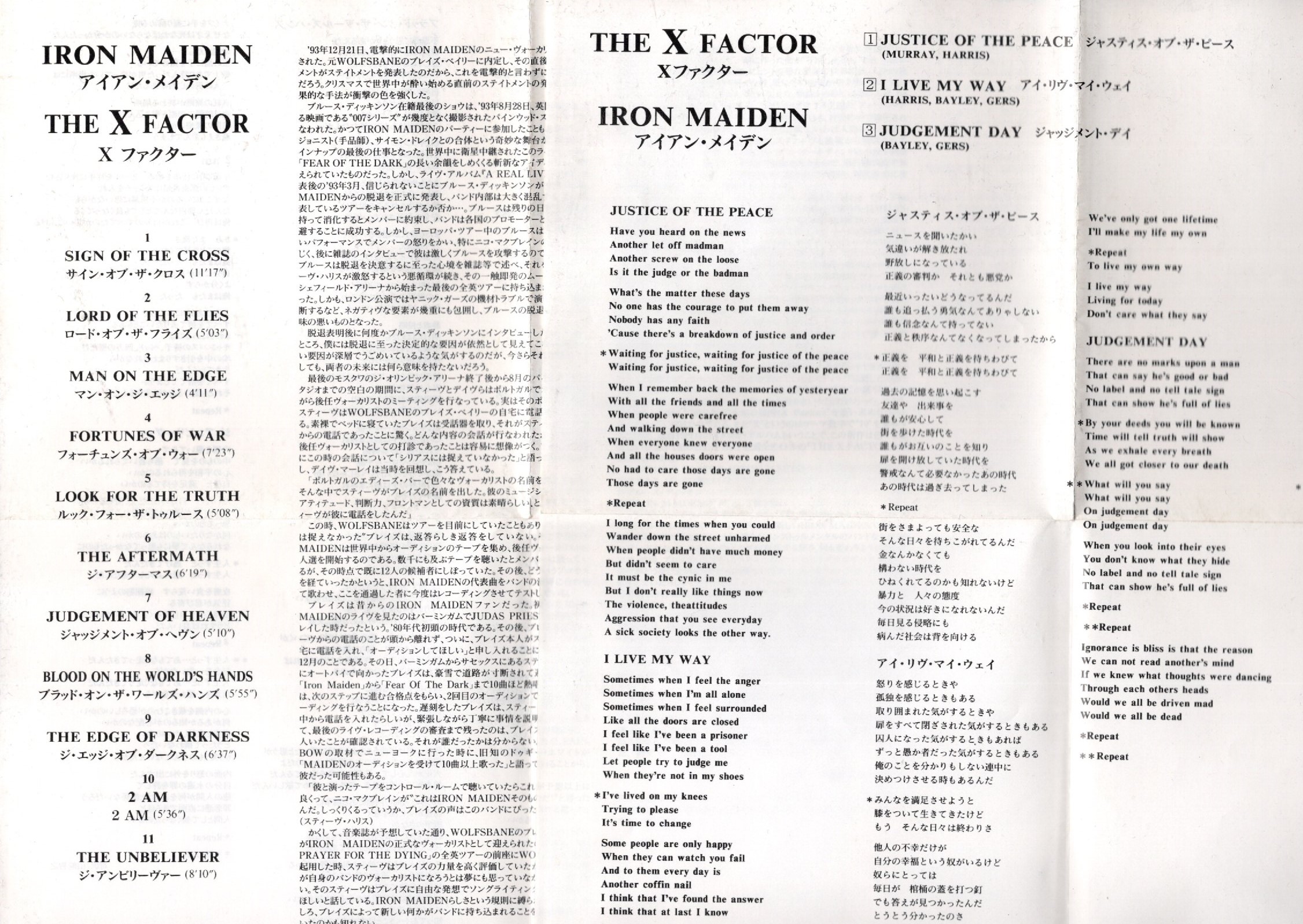
Japanese releases often got bonuses but this one has more than just extra music.  The old style “fat” CD case conceals additional booklets, some not included in the international releases; four in total.  They include:

  • Japanese lyric sheet for the album.
  • Japanese lyric sheet for the bonus disc.
  • Regular CD booklet, same as the international release.
  • Bonus 22 page full colour booklet exclusive to this release.

This bonus booklet is a real treat, featuring tons of album and single art, with band photos.  It includes a discography and list of Japanese tours, including the setlists.  It’s great even if you can’t read the notes in Japanese; all the titles are in English.

The X Factor is a deeply personal album that Steve Harris is very proud of and considers one of his best.  Fans have been split on this, with most considering it inferior to almost all the prior albums.  That’s not fair.  It’s very different, less aggressive, darker and slower.  It was an experimental evolution made possible by lineup changes and the shifting sands of the musical tastes of the 1990s.  There are deeper songs and the material fit the downbeat mood of the time.  Many of the songs were more energetic live.  Overall, not one of Maiden’s top five, and not a commercial success, but it can be a rewarding if overly long listen.  The inclusion of the B-sides on the Japanese set dramatically improves the experience.

3.75/5 stars


REVIEW: Def Leppard – Euphoria (1999)

Part Twenty-Two of the Def Leppard Review Series

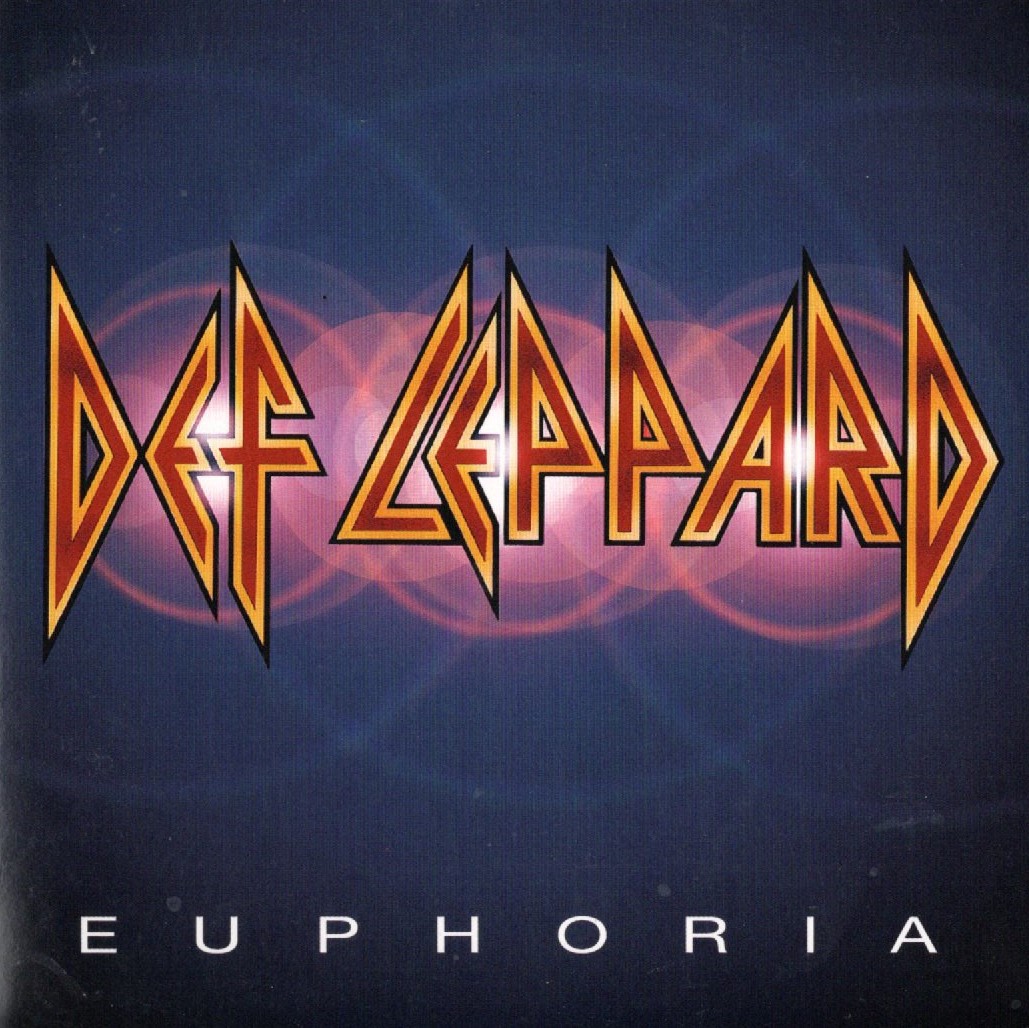
DEF LEPPARD – Euphoria (CD Collection Volume 2 Disc 4) (Originally 1999, 2019 remaster)

This is where we deviate from the norm.  After perhaps oversteering into the 90s with Slang, Def Leppard made a harsh course correction with their next album Euphoria.  An early retail solicitation  emphasized that after the Pyromania and Hysteria, comes the Euphoria.  It was clear where they were going.  The modern organic touch of Slang was dropped like a hot hand grenade!  In its place was an attempt to retread the hits of the past.  Mutt Lange was brought back to help polish up some songs.

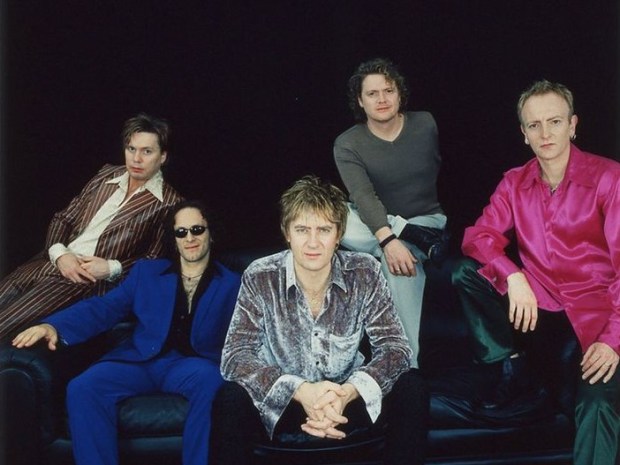
Perhaps worst of all, and like Scorpions, Motley Crue and Bon Jovi at the same time, Def Leppard’s image made a big change.  Hair was cut and styled.  Shiny suits and glammy modern clothes were purchased.  While the transition to Slang felt natural, the direction of Euphoria seemed terribly contrived.  It was no secret that Slang was not a hit, and Euphoria sounded like it was crafted to generate hits to multiple formats.

One of Euphoria‘s flaws is its length.  51 minutes isn’t a big deal, but 13 tracks was too many, as we’ll see.

Opener “Demolition Man” has cool stuttering guitars like bands of the 80s employed.  It’s fast, adrenalized, and stacked high with the patented layered backing vocals.  But it feels less like the triumphant return of Leppard and more…unnatural.  To go with the top speed pace of the song, F1 race car driver Damon Hill plays some outro lead guitar on the track.

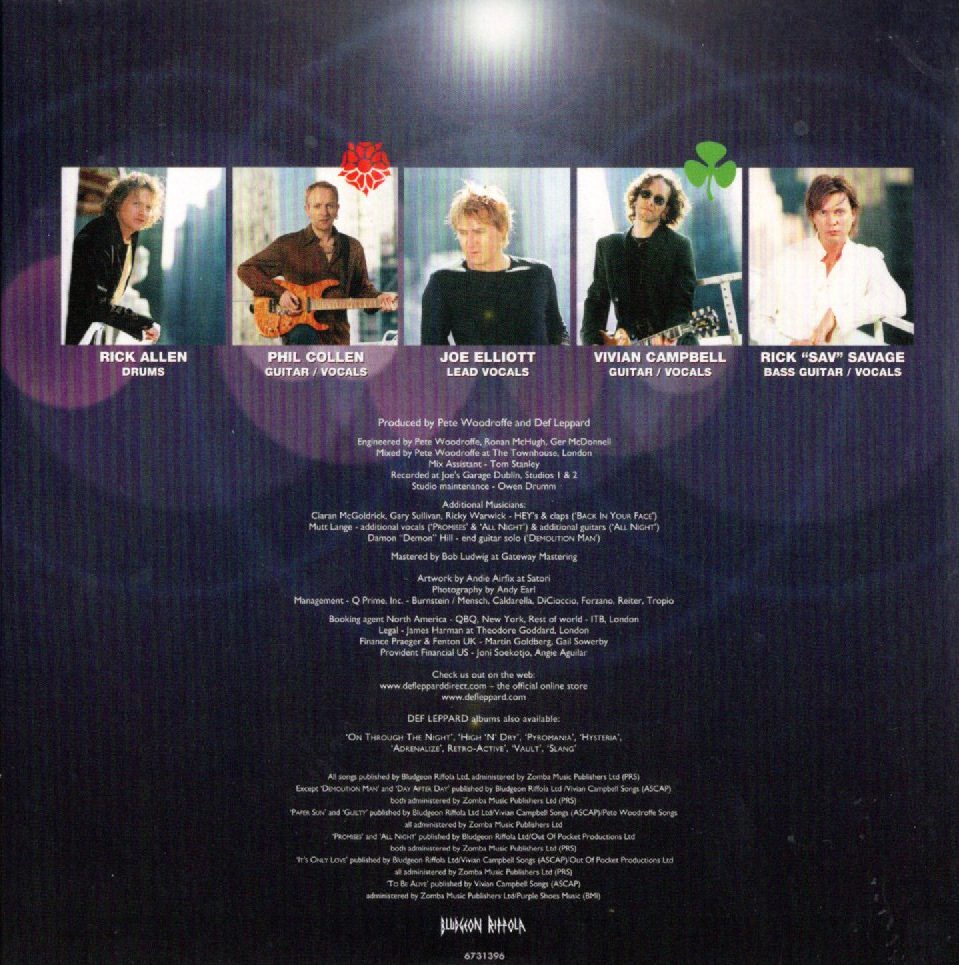
“Promises” was undoubtedly the centerpierce of the album.  A pretty successful re-write of “Photograph”, it captures the classic Leppard sound and vibe without the contrived feel.  The rich vocals of the chorus are hard to beat, and that signature Leppard guitar lick is easy to love.  The liner notes also give you lead solo credits for you to follow along – Phil or Viv.  This one has both in that order.  It’s a way to learn their individual styles, if you haven’t already!

The first serious dud is “Back in Your Face”, a plastic “Pour Some Sugar” homage with purposefully thin drum samples.  The ballad “Goodbye” is also filler, even though it was selected as a single.  By this time Leppard had accumulated plenty of ballads, and this reeks of a rewrite of “Have You Ever Needed Someone So Bad”.

The worst track on the record could be the Collen/Lange atrocity called “All Night”.  Digital funk just isn’t becoming.  A band like Extreme might have been able to make something of “All Night” if they did it without all the tech-y sounds, but this is a horrible mis-step.

Fortunately, “Paper Sun” is a mid-album redeemer.  A Leppard epic in the tradition of “Gods of Wars” and “White Lightning”, this one is worthy.  Sure it’s nothing new, but it has the vibe of a third song in a trilogy.  Play all three of those tunes in a row for some back chills.

“It’s Only Love” is another unnecessary ballad, which combines an Adrenalize vibe with Slang, but not memorably.  Then we have the embarrassingly titled “21st Century Sha La La La Girl”, a title as bad at Bon Jovi’s “Captain Crash and the Beauty Queen From Mars”.  It’s not a terrible song, though suffers from a plastic production problem.  It’s punchy, and has a singalong quality, but we’re lowering the bar a bit here.  The third ballad “To Be Alive” is the best of the batch.  Quiet and unassuming, it crosses Slang with Adrenalize more successfully.  Viv’s solo is excellent.

Collen’s “Disintegrate” brings us right back to the glory days of High N’ Dry.  Perhaps as close as they could ever get.  The blazing instrumental has definitely “Switch/625” vibes.  It is followed by another above average track called “Guilty”.  It sounds like a cousin to “Stand Up (Kick Love Into Motion)” which isn’t a bad thing.  Mid-tempo Def Leppard, plinking guitars, all good.  Continuing with some decent quality tunes, “Day After Day” has a slower, dramatic Leppard vibe.  The riff sounds vintage.

Closing track “Kings of Oblivion” turns up the tempo one last time for a pretty killer outro.  There’s a hint of the old Joe Elliott scream.  Maybe a smidge of Van Halen.  Rick Allen uses a variety of drum sounds on this album, but he sounds best right here on “Kings of Oblivion”, with a nice loud traditional snare.

A final assessment for Euphoria is difficult to reach.  It’s clear they were out to please old fans that were alienated by Slang.  We’ve argued that the superior Slang was a more creative attempt to adapt to the 1990s.  Euphoria felt like an absolutely commercially motivated attempt to capture “that sound” from the –ia albums, but also with a nudge towards late 90s pop rock.  The modern production does no favours.  But Leppard were unafraid to push further in that direction next time; not folding but going all-in.

Euphoria failed to crack the top ten in America, but “Promises” did hit #1.  It enabled them to go out on a long supporting tour.  But like many bands, the next few years would be rocky in musical direction.

2.5/5 stars

Previous:  

  1. The Early Years Disc One – On Through the Night 
  2. The Early Years Disc Two – High N’ Dry
  3. The Early Years Disc Three – When The Walls Came Tumbling Down: Live at the New Theater Oxford – 1980
  4. The Early Years Disc Four – Too Many Jitterbugs – EP, singles & unreleased
  5. The Early Years Disc 5 – Raw – Early BBC Recordings 
  6. The Early Years 79-81 (Summary)
  7. Pyromania
  8. Pyromania Live – L.A. Forum, 11 September 1983
  9. Hysteria
  10. Soundtrack From the Video Historia – Record Store Tales
  11. In The Round In Your Face DVD
  12. “Let’s Get Rocked” – The Wait for Adrenalize – Record Store Tales
  13. Adrenalize
  14. Live at the Freddie Mercury Tribute Concert
  15. Retro-Active
  16. Visualize
  17. Vault
  18. Video Archive
  19. “Slang” (UK single)
  20. Slang
  21. I Got A Bad Feeling About This: Euphoria – Record Store Tales

Next:  

23. Rarities – Volume Two

Tomorrow: Polychuck’s back!

The LeBrain Train: 2000 Words or More with Mike Ladano and Tee Bone

Episode 106 – The Return of Polychuck

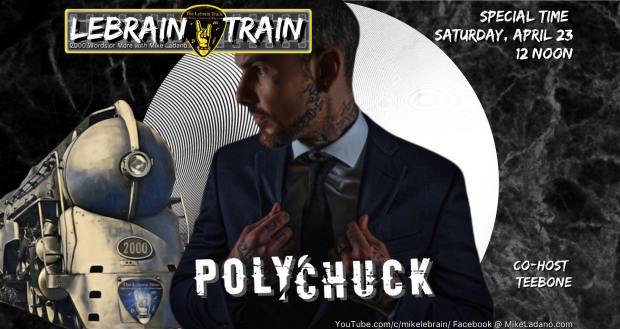
Polychuck has remained busy since I last spoke to him back in July of 2021.  Since that time he’s released the EP Shadows Remain, and his current single “Hero” featuring Derek Sherinian of Dream Theater on keyboards.  We can’t wait to talk to him about the song, its important meaning, and the band he has backing him on it.  This talented multi-instrumentalist has been creating a catalogue of songs that defy categorisation.  As if that wasn’t enough, he’s also a mixed martial artist!  Polychuck literally and figuratively kicks ass!

We always like to support Canadian talent, and Polychuck hails from beautiful Montreal, where he also teaches music.  Truly, the guy is inspiring and if you don’t know that already, you will this Saturday at noon on the Train.  Please join myself, Polychuck, and special co-host Tee Bone for this sure-to-be awesome episode.

Special Time!

SATURDAY April 23, 12:00 Noon E.S.T.  on YouTube, Facebook and also Facebook!


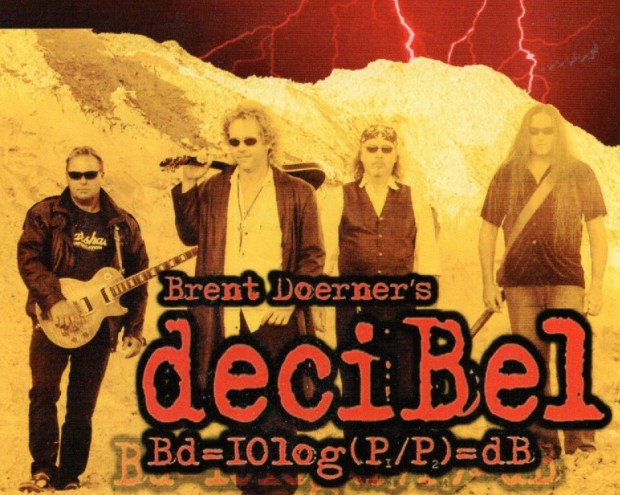
REVIEW: Brent Doerner’s Decibel (2006)

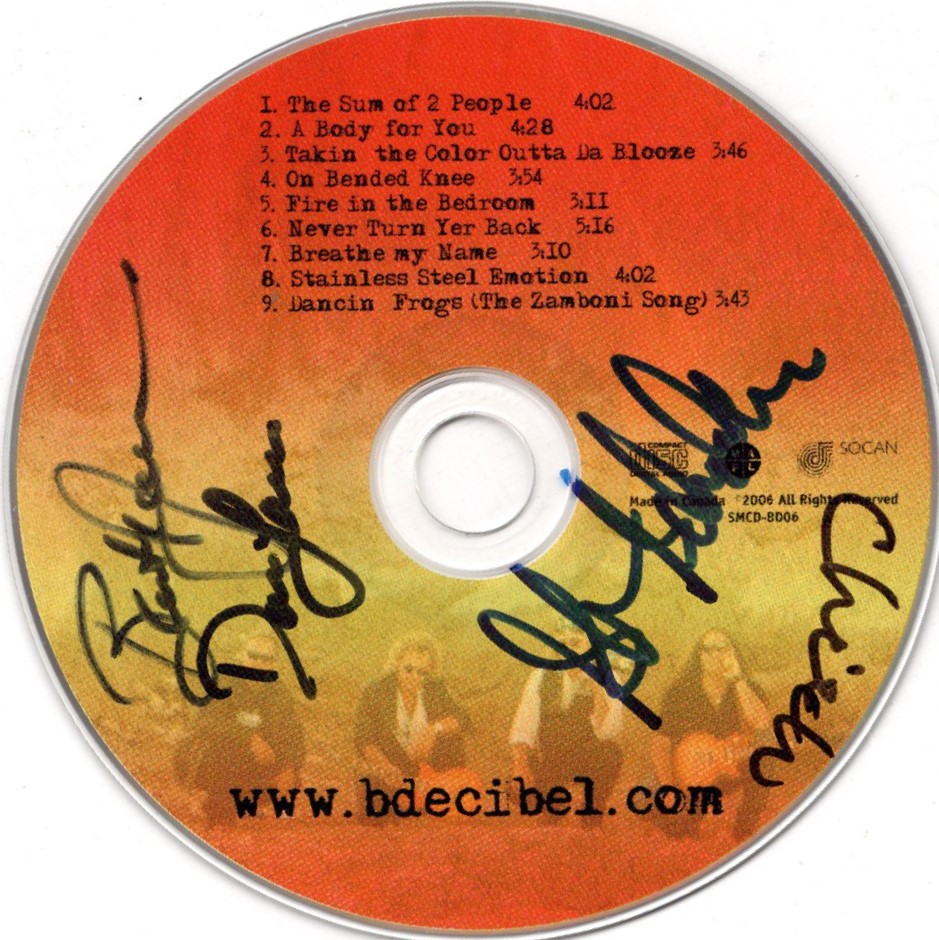
BRENT DOERNER’S DECIBEL – Bd=I0log(P₁/P₂)=dB (2006)

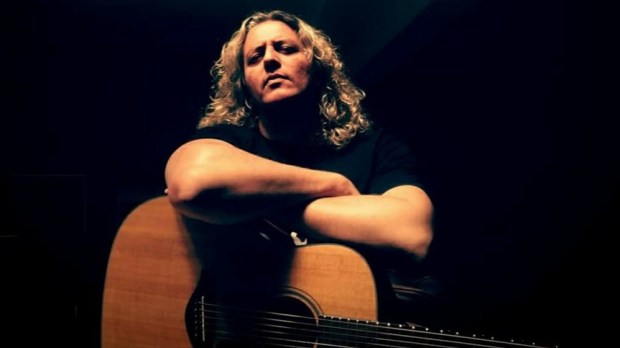
The Doctor, Brent Doerner, departed Helix in 1989.  His presence was missed by long time fans.  Although he rejoined in the 90s, it was only briefly.  Through the decade, he maintained his chops and took up country music in the clubs.  This added new dimensions to his playing when he inevitably returned to rock.  After spending a decade and a half as a “guitarpenter”, Brent decided he wanted to get back into music and make a statement on his own.  “I was bound and determined, come hell or high water, to make an album,” he said.  With a new band called Decibel consisting of Shane Schedler on lead guitar, the late Ralph “Chick” Schumilas on guitar, and Dan Laurin on drums, Brent did just that.  “If you don’t write good songs, it ain’t gonna fly baby,” says Brent.  Fortunately, the guys had a bunch of them.

The band lineup included three guitar players, two of them soloists.  On this disc, the triple axe attack is joined by future Helix guitarist Kaleb Duck on a couple tracks.

Opener “The Sum of 2 People” begins with a lethal riff and a slow, determined groove.  It then detours into a psychedelic, watery sound with Doener’s clever lyric contrasting love with math.  “X and y are the fractions, multiplied by nine!  Our love exceeds the math of the sum of two people.”  Good song, excellent set of words from the Doctor, showing off his underappreciated lyrical talents.  The track itself is quite varied, with a variety of connected parts and a classic sounding guitar solo.

Brent plays bass on most of the album, but Mike Benedictine guests on the wickedly choppy “A Body For You”.  “I’d hide a body for you, baby!” goes the chorus, but the riff is the real killer.  This is a challenging song, but check out the cool dual guitar bit in the middle.  Very vintage Helix.

The highlight track is third in line:  the pure boogie of “Takin the Color Right Outta Da Blooze”.  This is an upbeat, slide-laden track made for shaking asses.  Had there been a single, this is the clear choice.  It has the taste of twang, and unforgettable hooks.  It’s pure joy set to music.  “We’re getting bull-ridin’-ready!” sings the good doctor.  This is just a song about letting loose, and it’s the perfect accompaniment to doing just that.  Awesome track.

Another killer track, “On Bended Knee” has a vibe similar to early 80s Kim Mitchell – think songs like “Miss Demeanor”.  Simply excellent mid-tempo sentimental rock.  There’s something slightly majestic about the chorus guitar hook.

Drummer brother Brian Doerner guests on “Fire in the Bedroom”, a suitably upbeat rocker.  Giddy up, says Brent.  Solid advice.  The excellent solo features some of that twang but this otherwise pure rock and roll smoke.  Just fun.  Brian on drums adds a different flavour; a little more sophisticated rhythm and brainy fills.

If you like bands with multiple lead vocalists, then you will be pleased to note that guitarist Shane Schedler takes the microphone on “Never Turn Yer Back”.  He has a higher tone to his voice, and he throws in a soulful twist.  The song itself has an early Van Halen kind of vibe.  Mike Benedictine is back on bass, but that’s not him on the impressively dexterous intro!  “I play that, says Brent.  “I play the intro and the exit on that.  That’s from me being a guitar player; it sounded cool on bass.”  He’s right!  Another album highlight.

“Breathe My Name” has a cool kick to it, and an unorthodox groove.  A lot of the tunes on this album are smarter than you’d think.  They’re not meat and potatoes rock.  They have different rhythms throughout, changing and shifting and then suddenly sounding like another genre.  “Breathe My Name” largely rocks, but not in a brick-headed way.

There are no ballads on this album, but “Stainless Steel Emotion” is the most laid back of the songs, and really emphasises a southern twang.  Again, the riff recalls early Kim Mitchell, which might be why it sounds so classic.  “Got up late, felt not so great, with alcohol blues.  She just laughed, turned on the gas and waited for the boom!”  A funny, quirky song about love gone sour.  You can’t particularly compare “Stainless Steel Emotion” to any single band.  Brent likes writing unique songs, and this one has the right fit to be second last on an album.

Hilliard Walter, who would later join the band on bass and vocals, sings lead on the unique “Dancing Frogs (The Zamboni Song)”.  The powerhouse soul-blues vocalist kicks the song up about eighteen notches with class and sass.  The vibe of the song evokes the classic image of the dancing frog from the Warner Brothers cartoon One Froggy Evening.  “You can just picture the dancing frog with the top hat and the cane,” Doerner explains.  Why “The Zamboni Song”?  Because Hills Walter drove one!  “We’ve got the best damn Zamboni operator/driver/singer/lead vocalist in the country, man!”  There’s an old automobile “ooga” horn in there too, as a final original touch.  Do Zambonis have horns?

It must be stated:  Brent Doerner did not create an “immediate” sounding album on his debut.  He didn’t set out to make simple music.  The songs have twists in them, but also great hooks that will get you in time.  You notice by second listen, the hooks have started to set in.  The running order could probably be improved by opening with something catchier like “A Body For You” instead of the menacing “The Sum of 2 People”, but your experience may vary.  If only the album had big-budget production.  Some of the songs could have had potential.

Must-haves:  “Takin the Color Right Outta Da Blooze”, “A Body For You”, “On Bended Knee”, “Never Turn Yer Back”, “Stainless Steel Emotion” and “The Zamboni Song”.

4.5/5 stars

REVIEW: Steph Honde – Empire of Ashes (2020)

STEPH HONDE – Empire of Ashes (2020)

Steph Honde, the awesome singer/guitarist from France who has worked with Paul Di’Anno, Don Airey, Jim Crean, the Appice brothers and many more, is a man of varied musical tastes.  You might recognize the names “Hollywood Monsters” or “Now Or Never”?  In 2019 he recorded an acoustic album called Empire of Ashes that featured as its claim to fame, a full 23 minute version of “Supper’s Ready” by Genesis.  It is a truly excellent album, intricately arranged and recorded with lots of space between the instruments.  Honde made the album for himself, but in doing so, he created music for anyone.

Opener “Big Trouble” has a tropical acoustic vibe with breezy percussion.  Honde’s baritone voice is inviting but his guitar playing is really impressive come solo time.  You’ve heard him rip on electric before, but this is something completely different.  Yet as good as “Big Trouble” is, the second track “The Only Way” is only better.  It’s a passionate ballad based around a delicate piano line.  Honde deserves credit for his vocals on this song.  His French accent only adds to the aura.

Third, a different course is charted on “Gentle Shore”, which is a duet with Janita Jenny Haan from the band Babe Ruth.  The contrast between the two voices is really sweet and effective.  There’s a laid back, early Zeppelin vibe whether intentional or not.

One of the most inventive songs on the album is the acoustic cover of Deep Purple’s “Sail Away”, a complere 180 degree turn from the dark funky groove of the original.  The rich voice of Honde is complemented by Jim Crean’s rasp.  The two duet on a slowed down “Sail Away” in a completely different way from Coverdale/Hughes.  Crean just kills it, singing Glenn Hughes’ lines but in his own instantly recognizable style.

“Sail Away” was a side closer for Deep Purple on Burn, and it feels like it holds that same role, even though Empire of Ashes is a digital release.  That would make the title track “Empire of Ashes” the side two opener.  It is another brilliant song, with a glint of piano offering some brightness.  The chorus and solo are wonderful.  There’s something warmly familiar about the chorus.  Then, “Hearts Grown Cold” goes in a different direction.  Musically soft but with powerful vocals.  “You’re the one whose heart’s grown cold!” shouts Honde and it sounds like he means it.  Soulful backing vocals join him partway through.  The penultimate track “King For a Day” is a gentle climax (with a detour into Pink Floyd’s “Eclipse”)…before things get really crazy.

Faithfully covering all 23 minutes of “Supper’s Ready”?  That is crazy!  The electric guitars come out to play on this insane cover.   Honde did the whole song, every little twist and turn, and every rhythmic challenge and labyrinthine lyric.  The pure love of doing it comes through.  It’s simply one of the most impressive cover tunes you’ll have the opportunity to hear, hands down!

Artist like Honde, who do it for the music and not the money on albums like Empire of Ashes, deserve the 52 minutes in your ears.  If you consider yourself a fan of bands like Purple, Genesis and Floyd, then you owe it to yourself to check out Empire of Ashes.

4.5/5 stars
RE-REVIEW: Def Leppard – Slang (1996)

Part Twenty of the Def Leppard Review Series

Original Review:  Slang 2 CD edition (1996)

DEF LEPPARD – Slang (CD Collection Volume 2 Disc 3) (Originally 1996, 2019 remaster)

“Too alternative!”, they moaned.  “Doesn’t sound like old Def Leppard!”, they whined.  But what choice did Def Leppard have?

The world of 1996 was not the same as 1992, when Def Leppard re-emerged after a long hiatus with Adrenalize.  Leppard experimented wildly with their music on 1987’s Hysteria, but tended to stick to formula on Adrenalize.  After the hardship of losing Steve Clark, we can forgive them for not trying to re-invent the wheel a second time.  But by 1996, grunge had passed and the decade continued to move further away from classic hard rock and heavy metal.  It was overdue for Leppard to re-invent themselves one more time.  They owed it to themselves.  But it was actually more natural that that.

Vivian Campbell was on board for his first real album with Def Leppard, only to find they were “moving the goalposts”!  After making two painstakingly produced albums, it was time for change.  The band desired a fresh start with Campbell, using no holdover music from the past.  They wanted a more organic album, and part of that was Rick Allen incorporating acoustic drums back into his setup.  They were going to try and express themselves a bit more, and take some serious chances.  To hell with the critics, expectations, and old ways of doing things.

Regardless of how it sold, the final album Slang became a cult favourite for good reason.

Opening on a fade, the new Leppard begins different from any in the past.  “Truth?” is a slow, exotic groove with background samples and loops.  Not a stretch from “Rocket” in a technical sense, but completely different results.  Deeply distorted chorus vocals are a striking shift from the past, but are just as fetching.  An middle-eastern sounding solo nails the vibe, and drum loops offer more modern twists.  The mix sounds just as dense as anything you hear on Hysteria, but with completely different elements.  And fortunately Leppard haven’t forgotten how to write hooks, even if in a darker tone.

“Turn to Dust” takes the scene to India, with sitar and tabla.  Tempos are still slow and deliberate.  “Turn to Dust” has a bit more of the Def Leppard sound on the chorus, with Phil Collen singing backup, but the lyrics sure are different:  “Sentence rape me, segregate me” is a stark turn from “Let’s Get Rocked”.  But everybody was pissed off in the 90s.  This one drones on with ample musical genius towards the end.  Lots of strings and exotic instrumentation, backed by the grind of electric guitars.

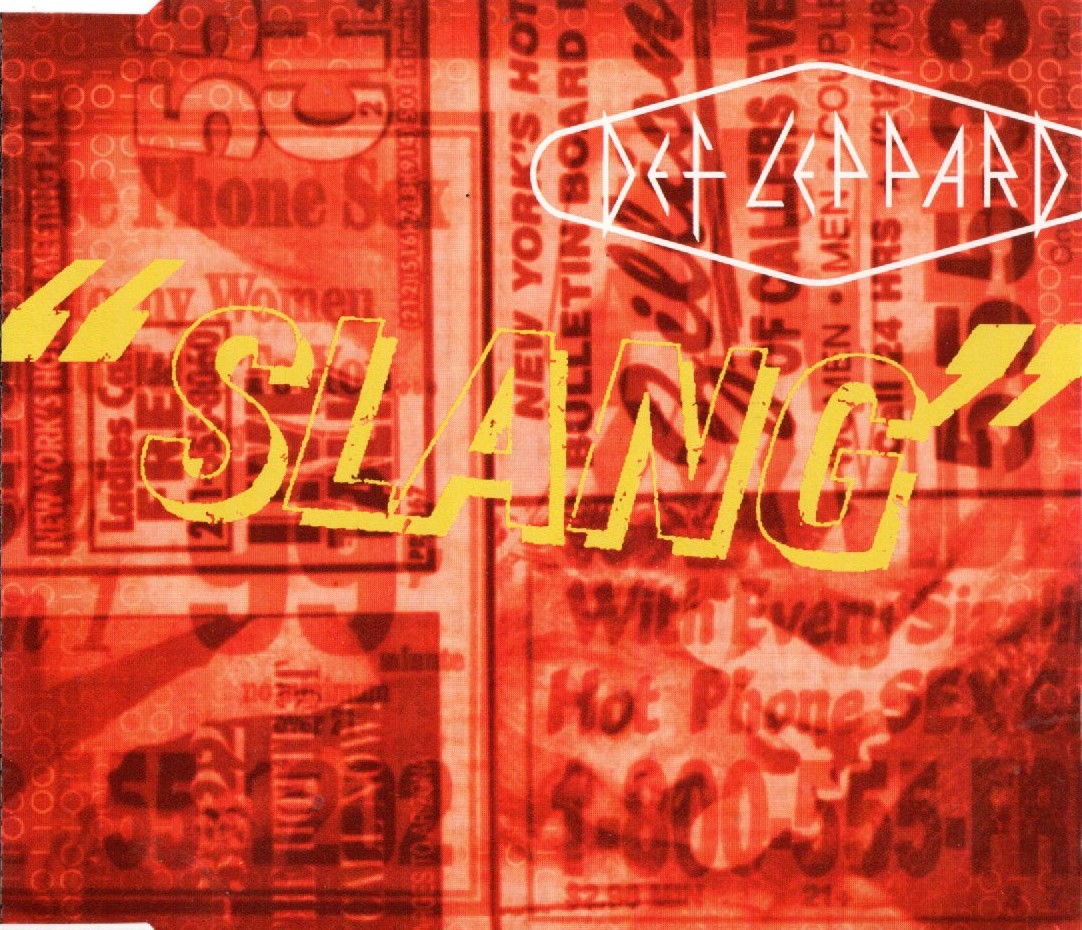
The title track “Slang” is an immediate and fun change of pace.  With a modern sound, it could have been a “Pour Some Sugar” for the 90s had it caught on.  Beats and samples mixed in with an irresistible chorus make for a catchy concoction.  It’s really the only upbeat song on the album, but a treat it is.

The ballad “All I Want Is Everything” was briefly previewed on the VHS release Video Archives, in an October 1995 acoustic performance at the Wapentake Club in Sheffield.  That acoustic rendition did not really hint at the dark ballad on Slang.  A simple but effective droning guitar part forms the backing, but the luscious Leppard melodies are delivered vocally and with guitar flourishes.  It’s a different kind of ballad for Def Leppard, but no less stirring.  It was a single, but underperformed compared to past Leppard hits.

Vivian’s “Work It Out” sounded more like a Crowded House song in demo form, poppy and quirky.  Once Leppard wrestled with it, a different kind of track emerged.  Duskier, heavier, with really dominating drums and surprisingly slinky bass from Rick “Sav” Savage.  The final Leppard version is certainly superior to Viv’s demo in the long run though both have merit.  “Work It Out” was another Slang single that should have done better.

One of the biggest album surprises (and perhaps most divisive) is the supple ballad “Breathe A Sigh”.  Gentle tic-tic-tic R&B drum samples back a song that is mostly vocal with minimal instrumentation.  Drums, piano, and understated guitar melodies should have guided this to a hit spot on the charts.

Flip the record for a darker turn of events.  “Deliver Me” is more straight-ahead rock, but certainly not upbeat.  This is heavy, foreboding and dangerous Def Leppard.  Again, not without their knack for a melody.  The quiet/loud dynamic is very 90s, but that doesn’t make it bad.  The fact that Leppard always strove for a melodic foundation keeps it from falling into the morass of soundalike 90s rock.

“Gift Of Flesh” is another surprising twist.  Blasting fast and loud, this track is the most old-school, but still dark like a cloudy sky.  With lyrics like “scorch the Earth and torch the sky,” this is a more apocalyptic kind of rocker for the Leppard we were used to.  But it does rock, and hard!  You could bang your head to it even if you can’t rock rock ’til you drop.

Was Slang too ballady?  “Blood Runs Cold” is the third such song, followed by a fourth called “Where Does Love Go When It Dies”.  Joe Elliott really nails a killer vocal on “Blood Runs Cold”, which is very light and airey.  “Where Does Love Go When It Dies” lightens the skies further.  Acoustic strumming is a more traditional sound for Leppard.  It’s a little more like the acoustic Adrenalize B-sides, with a minimal arrangement.

The last few Leppard studio albums had “album epics”:  “Gods of War” on Hysteria and “White Lightning” on Adrenalize.  Slang ends on an epic called “Pearl of Euphoria”.  There’s a lot going on in this track, with guitar overdubs and drones.  It’s a very Zeppelin-y song, but done in a modern way.  It draws from the same worldly wells that Zeppelin often explored.  Its fade-out alone is a minute long!

Unfortunately one of Slang‘s strengths, its adherence to the darker side of pop rock and hard rock, is also the factor that keeps it from hitting 5/5 stars like Hysteria.  It doesn’t necessarily make you feel as great after hearing it.  It does feel like you’ve heard something deeper and more profound, but not something that brightens your soul.

4/5 stars

Previous:  

  1. The Early Years Disc One – On Through the Night 
  2. The Early Years Disc Two – High N’ Dry
  3. The Early Years Disc Three – When The Walls Came Tumbling Down: Live at the New Theater Oxford – 1980
  4. The Early Years Disc Four – Too Many Jitterbugs – EP, singles & unreleased
  5. The Early Years Disc 5 – Raw – Early BBC Recordings 
  6. The Early Years 79-81 (Summary)
  7. Pyromania
  8. Pyromania Live – L.A. Forum, 11 September 1983
  9. Hysteria
  10. Soundtrack From the Video Historia – Record Store Tales
  11. In The Round In Your Face DVD
  12. “Let’s Get Rocked” – The Wait for Adrenalize – Record Store Tales
  13. Adrenalize
  14. Live at the Freddie Mercury Tribute Concert
  15. Retro-Active
  16. Visualize
  17. Vault
  18. Video Archive
  19. “Slang” (UK single)

Next:

21.  I Got a Bad Feeling About This:  Euphoria – Record Store Tales

REVIEW: Helix – “Don’t Get Mad Get Even” (7″ single)

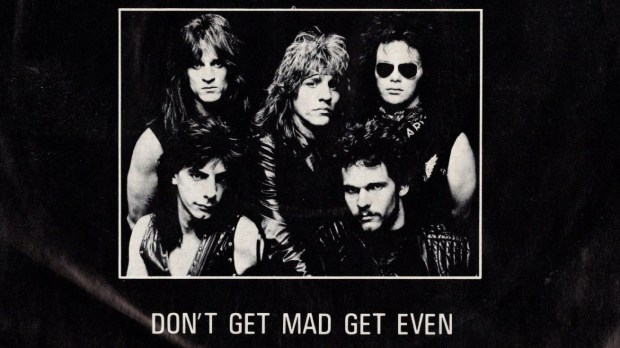
HELIX – “Don’t Get Mad Get Even” (1983 Capitol Records 7″ single)

Here’s a rarity for you, with a picture sleeve, even!  “Don’t Get Mad Get Even” is one of Helix’s least-known singles.  As a No Rest for the Wicked track, it has always been overshadowed by “Heavy Metal Love”.  I saw the music video, which was filmed at the same time as “Heavy Metal Love”, just once.  You never heard it on the radio.  It’s only on one (out of print) Helix “best of” CD appropriately titled Deep Cuts.  It wasn’t even on Over 60 Minutes With…, which focused on this period from Capitol Records.  In short, it’s a forgotten track except among the faithful.

Written by Lisa Dalbello and Tim Thorney, “Don’t Get Mad Get Even” boasts dual strengths. First there is the guitar hook, as tasty as any on classic rock radio today. Second is the chorus, an exceptional one at that, the kind Helix are good at. Powerful, melodic, emphatic and rebellious! Add in some cool solo work and what you have is a lost Helix classic. It’s truly a gem that deserves another listen from strangers and fans alike.

Interestingly enough, in 1982 “Don’t Get Mad Get Even” was recorded by Canadian rock singer Lydia Taylor (1983’s Most Promising Female Vocalist at the Juno Awards).

The B-side, “Check Out the Love” (credited to Helix as a band) is a little more well known than the A-side.  It was on both Over 60 Minutes With… and a live album recorded in Buffalo, NY.  I’ve probably heard ’em play it live on one of the many times I’ve seen Helix since 1987.  One way or another, this is a solid Helix banger with a dirty guitar hook.  The guitars on this song are just lethal, whether soloing or sliding.  Brian Vollmer’s vocals are melodic with grit.  It’s just the kind of song Helix are known for.  Rough n’ tough, but memorable.

The picture sleeve is an added bonus.  On the front, back row, that’s Greg “Fritz” Hinz, Brian Vollmer and Mike Uzelac.  In the front, the guitar duo of Paul Hackman and Brent “The Doctor” Doerner.  Every kid on our street thought Doctor Doerner was the coolest.  You can see why — he just that “look”.

Thanks to pal Craig Fee for locating this and many other Helix singles for me.

5/5 stars


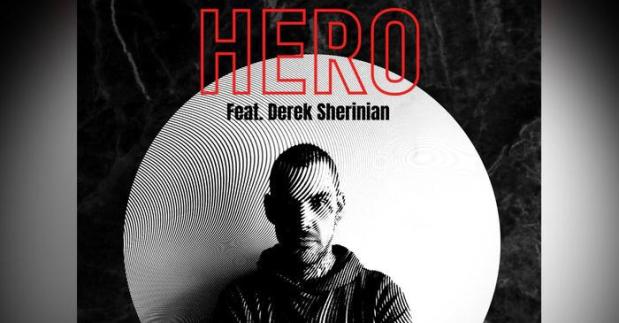
REVIEW: Polychuck – “Hero” feat. Derek Sherinian (2022 single)

Montreal’s Polychuck is a heck of a prodigy.  He’s a megatalented singer / songwriter / shredder / teacher / mixed martial artist (!!) who does it all, and now he’s expanding his palette and progressing.  Far beyond his first two EPs.  When we spoke to Polychuck on the LeBrain Train last year, he expressed his desire to get more progressive on his upcoming recordings.  By collaborating with former Dream Theater/Kiss/Alice Cooper keyboardist Derek Sherinian, he’s made a huge leap.  Also playing on this track are drummer Philipe Landry and bassist Frédérick Filiatrault.  With the added firepower, “Hero” has a fuller sound than previous Polychuck songs.  It’s like the playing field just got a whole lot bigger.

So let’s get to it.  Cut to the chase.  Polychuck, who is of Ukrainian descent, says “Hero” is a cry for peace, directly about current events.  In times of crisis, music helps sooth.  In turn, crises often inspire great music.

“Hero” commences with steely rhythm guitar with a wicked tone.  It bounces from heavy rocking to acoustic picking and an instrumental outro.  When Sherinian comes in near the start, he’s instantly recognizable.  His solo work here is lyrical, and the perfect compliment to the song.  Not to mention Polychuck’s own lead work, which is both impressive and melodic.  All the playing here is just awesome, period.

“Hero” is an impressive construction.  It’s complex, with several different sections including one at the end that reminds me of the keyboard part in “No More Tears” by Ozzy.  Importantly, all the sections work together like chapters in a story, and the flow is natural.  Best of all, “Hero” never stops being great through its 3:26 length.
Support up and coming talent like Polychuck and buy “Hero”.  If you love that Dream Theater vibe, you will absolutely dig it.

5/5 stars

REVIEW: Def Leppard – “Slang” (1996 UK single)

Part Nineteen of the Def Leppard Review Series

Alternate review:  “Slang” Souvenir pack single

DEF LEPPARD – “Slang” (1996 UK Mercury single)

Kobayashi Maru:  The no-win scenario.  By 1996 the musical landscape had drastically shifted.  Five years of musical upheaval had left many bands in the dust, but Leppard were one of the few survivors.  They simply could not rest of their laurels, and they knew that.  Had Def Leppard come out with another soundalike album in 1996, they would have been accused of retreading the outdated and obsolete 1980s.

We knew Leppard were interested in a more organic way of recording after being locked in studios for so many years.  Their interest in acoustic music was now expressing itself in songs like “Can’t Keep Away From the Flame”, a truly excellent if obscure Japanese Vault bonus track that was also included as a B-side from the new album Slang.  If a track this solid was considered a B-side, you could imagine what the new album was going to be like.  It was a positive sign.  But the album wasn’t going to be acoustic.  Where were Leppard headed this time?

A clue was revealed by the title track, released as a single in May 1996.  Def Leppard had returned to experimentation.  Just as Hysteria was different from Pyromania, now they finally had something just as different from Hysteria.

With hip-hop beats and a big guitar, “Slang” shocked the faithful.  Rick Allen was starting to incorporate acoustic drums back into his kit and they sounded fresh and hot.  All the old Leppard ingredients were shaken n’ stirred, and the new concoction was an acquired addiction.  It’s an upbeat celebration of the new Leppard.  They had indeed gone outside the box.  They had to.  And they did it with creativity and integrity whether you like it or not.

This UK single came with three acoustic bonus tracks, all recorded for the BBC.  Continuing their acoustic side road, “Animal” and “Pour Some Sugar On Me” fare well in acoustic form.  Other acoustic versions were coming, on a limited 2 CD edition of Slang (which we will discuss when we get to that disc of CD Collection Vol 2).

The real treat of this single is the acoustic version of “Ziggy Stardust” (also included on CD Collection Vol 3).  A brilliant take, in fact.  Most bands sound like jackasses trying to cover classic Bowie.  Not Def Leppard.  Their acoustic version has just as much edge as an electric take would.  Joe Elliott’s penchant for Bowie will become relevant a few years down the road, when we take a detour on a Cybernautic misadventure.

“Sugar” and “Animal” acoustic at the BBC remain exclusive to this single.  Worth tracking down.  Though ultimately there are other recordings out there, these are just as good and collectible as ever.

4/5 stars

Previous:  

  1. The Early Years Disc One – On Through the Night 
  2. The Early Years Disc Two – High N’ Dry
  3. The Early Years Disc Three – When The Walls Came Tumbling Down: Live at the New Theater Oxford – 1980
  4. The Early Years Disc Four – Too Many Jitterbugs – EP, singles & unreleased
  5. The Early Years Disc 5 – Raw – Early BBC Recordings 
  6. The Early Years 79-81 (Summary)
  7. Pyromania
  8. Pyromania Live – L.A. Forum, 11 September 1983
  9. Hysteria
  10. Soundtrack From the Video Historia – Record Store Tales
  11. In The Round In Your Face DVD
  12. “Let’s Get Rocked” – The Wait for Adrenalize – Record Store Tales
  13. Adrenalize
  14. Live at the Freddie Mercury Tribute Concert
  15. Retro-Active
  16. Visualize
  17. Vault
  18. Video Archive

Next:

20. Slang

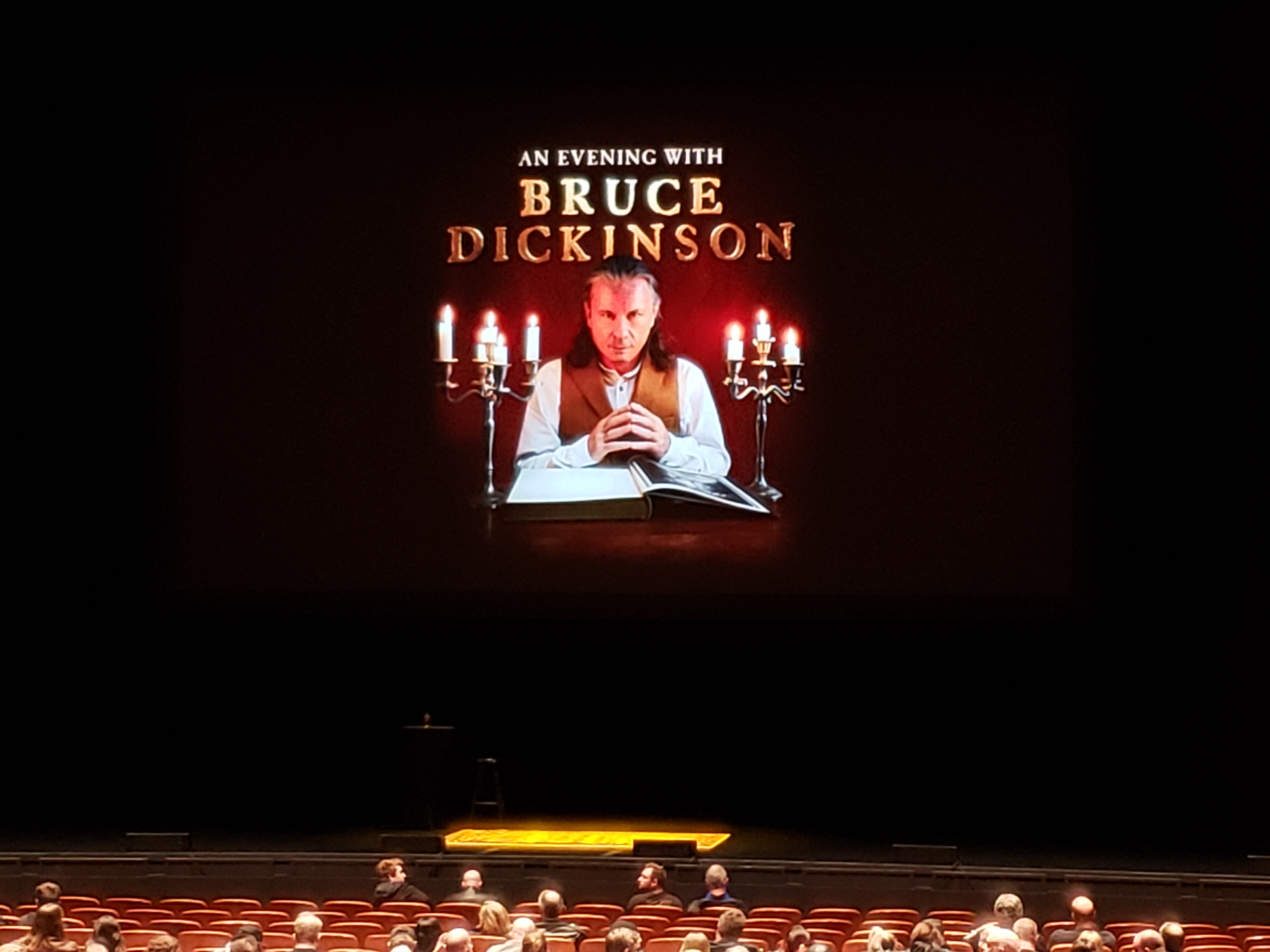
GUEST REVIEW: An Evening With Bruce Dickinson, 03/30/22, Kitchener, Centre In the Square by Dr. Kathryn Ladano

BRUCE DICKINSON – An Evening With Bruce Dickinson, 03/30/22, Kitchener, Centre In the Square 

By Dr. Kathryn Ladano


On the evening of Wednesday March 30th, I headed over to the Centre in the Square with my good friend Dave to check out “An Evening with Bruce Dickinson”. Dave bought two tickets to the show as soon as they went on sale months ago and asked if I’d like to come. While I’m admittedly not an Iron Maiden expert, I did grow up listening to the band via my brother (Mike LeBrain) and was aware of all of their albums and singles throughout the 80’s. I spent a lot of time watching Iron Maiden videos on Much Music and I recall when I was in grade 3 or 4 being asked what my favourite song was and answering “Aces High”. No one had any clue what I was talking about. I have a lot of nostalgia for that time and when I was a kid I knew all of the members of Iron Maiden by name and instrument, and of course I was very much in awe of Bruce Dickinson. So when I had the opportunity to learn more about him and hear some of his stories, I was keen to take advantage of that.

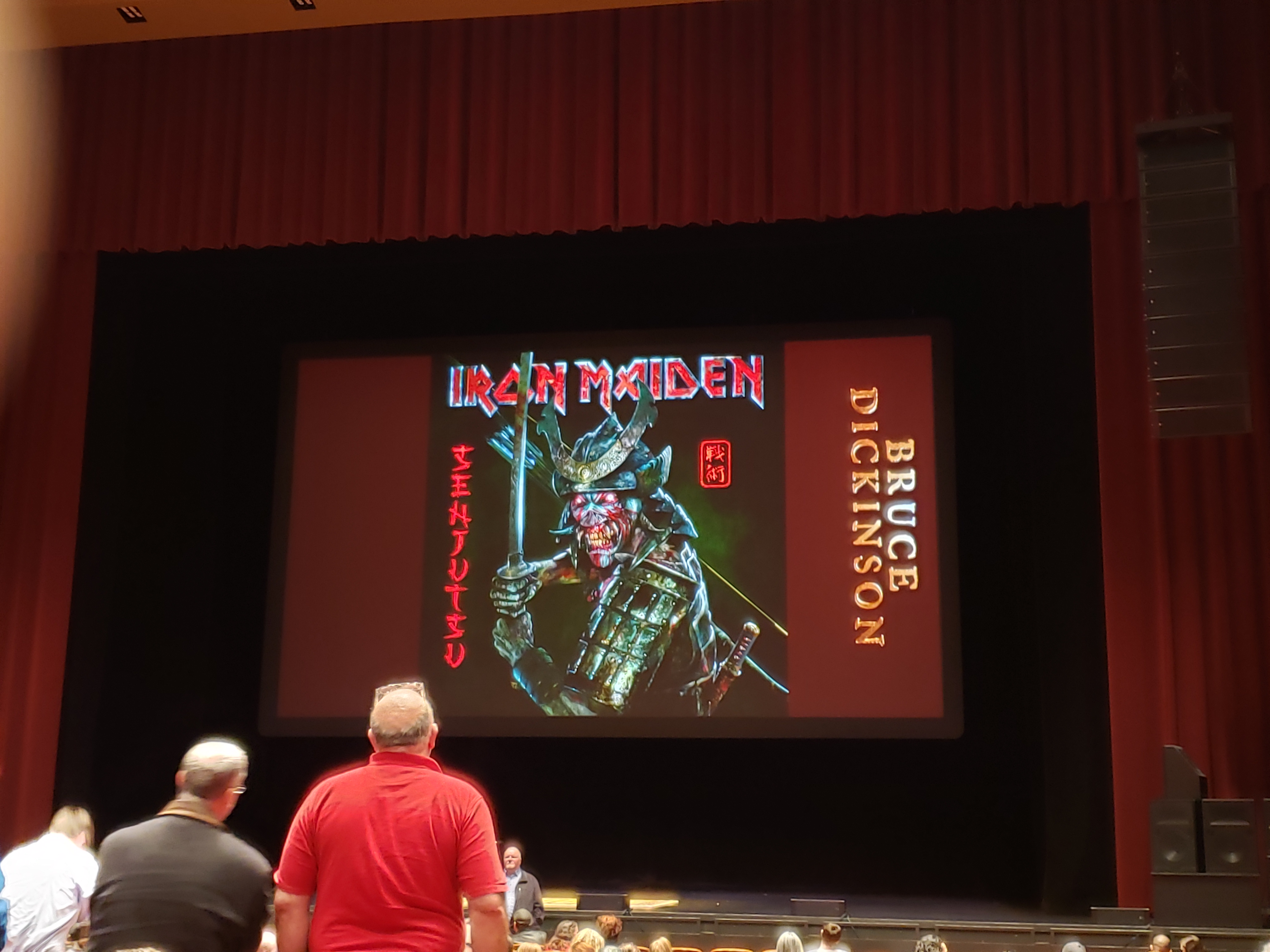
When Dave and I arrived at the theatre, we were in row X on the orchestra level – the last row on the floor. The audience size wasn’t as big as I was expecting and shortly after we arrived an usher came by and asked us if we’d like to move up to row L – we said yes! I don’t think the theatre was even half full, but I liked that – especially in COVID times when about 75% of the audience was unmasked and I’m admittedly wary of getting sick. It also obviously gave us a much better view. The show started exactly at 7:30 PM. I had the impression through the whole show that Bruce Dickinson had meticulously timed everything. The show didn’t even start a minute late. The intermission was exactly at 9:05 PM. The length of the intermission was exactly 25 minutes – that sort of thing.

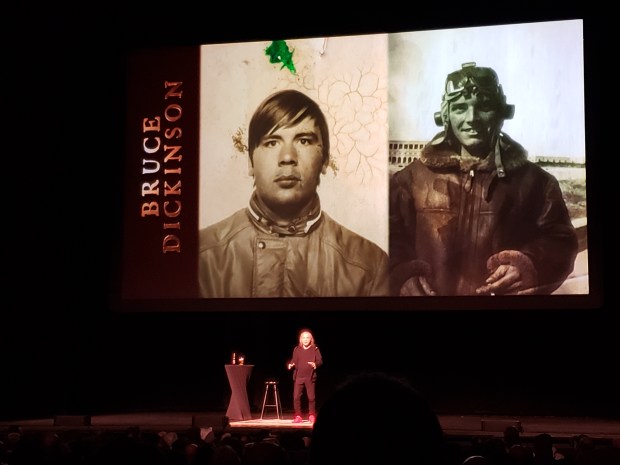
The show was in two sets. The first set was Bruce telling stories from throughout his life and the second set was strictly for audience questions. From start to finish, the show was a full 3 hours in length. It all started with Bruce coming on stage with the backdrop of a (very) old picture of him alongside a picture of his great uncle Frank. He started the evening by telling us about his uncle Frank, a WWII pilot and a huge influence on his life and interests. He also proceeded to tell us that in the image of him, he’d put blue crayon on his upper lip to make him look older. Right from the start you could tell that Bruce was extremely energetic and was going to give us everything he had. He was frequently bouncing around the stage – this wasn’t the kind of show where he sat on a stool and just talked the whole time (there was a stool there for him, and he never used it). He also came out with a beer – I suspect it was a “Trooper” beer – and enjoyed sipping that throughout his show.

While I was expecting him to speak primarily about Iron Maiden, he actually didn’t do a whole lot of this. He started out talking about his early days and how his parents sent him to “public school” – which we learned is essentially the equivalent of “private school” in North America. It was here that he started to get into music – originally wanting to be a drummer. His first band’s singer didn’t exactly work (a choir singer with an operatic approach), so Bruce switched over to vocals after a short time. I found his discussions about singing and the use of his voice to be the most interesting. Apparently when he started with Iron Maiden he was strongly encouraged to push his voice farther – to extend his range and use his falsetto voice and to really establish his own unique vocal timbre. He claimed that he really didn’t like the sound of his voice at first when he did this but gradually adapted to it. As a musician and teacher myself, I’m constantly trying to encourage my students to push outside of their comfort zone in this way, so I found his experience with this quite interesting. One other thing about his voice that was interesting to hear is that his voice, like everyone’s, has changed with age. He describes his as being deeper and rougher now, and he actually likes the sound of his voice better now than he did when he was younger. He feels the vocal changes that have come with age have allowed him to do things with his voice now that he couldn’t do before. This was really refreshing to hear because so many other singers have essentially lost their singing voices with age. Bruce Dickinson’s is just getting better.

Bruce spent a good chunk of time talking about the early days before Iron Maiden. He had pictures and stories from one of these bands, “Samson”. He told humorous stories of going to a gun shop in the UK and seeing a plastic Canada Goose statue which he had to purchase. He then proceeded to tape it to the roof of their car as they toured north to Scotland, and as he explained it, with pot smoke streaming out of the windows. No one ever stopped them! During this time he explained that he was already friends with the guys in Iron Maiden. When they needed a new singer they asked him and the rest is history. He told some funny stories about how at the start, he loved being in the centre of the stage, but Iron Maiden’s bassist, Steve Harris, also liked taking that spot at certain times during the show – so there were some battles in the early years for the prime spot on stage (apparently their original singer would set himself up off to the side and not right in the centre of the stage, so this wasn’t a problem for the band previously).

We heard about Bruce Dickinson’s battle with cancer – which he won. Apparently he never lost any hair on his head, but he lost all of his beard hair – and almost all at the same time. We heard stories of him being at a restaurant and his plate filling up with beard hair. We also heard stories about when he met the Queen and Prince Phillip. They both asked him “and what do you do?”. The Queen seemed to have no idea who he was or what heavy metal music was. Bruce spent a good deal of time talking about flying planes and we learned that he was not the first member of Iron Maiden to learn to fly – that was actually Nicko McBrain.

I also really enjoyed his talk about beer. Apparently Bruce Dickinson is the biggest beer fan in Iron Maiden. The band was asked by a winery if they would like to create an Iron Maiden wine and the band said no, because well, that seems like an odd fit. It was this, however, that gave Bruce the idea to create an Iron Maiden beer instead. If you can believe it, every single brewery that he approached with the idea turned it down except for Robinson’s brewery. Bruce was primarily involved in the process of creating the legendary “Trooper” beer, which they had for sale at the show. We learned a lot about the process of creating that beer and also that there are Trooper breweries in several different countries – and each country has its own unique Trooper flavour that isn’t available anywhere else. I’m hoping that a Canadian Trooper brewery crops up at some point.

When the intermission arrived, the video for Iron Maiden’s song, “Writing on the Wall” was shown. At this point I had to temporarily leave the theatre because as someone with post-concussion syndrome, my head started to feel like it was going to explode as soon as the music started. For anyone else though, I’m sure the experience of this song being played through the Centre in the Square sound system, along with the video on the huge screen would have been something pretty special.

There are far too many stories to try to summarize in one review, but I found the evening to be really enjoyable. Bruce Dickinson is a great showman – he displays such passion for his life and career and I feel that we more than got our money’s worth. Kitchener was the final stop on this tour. He did inform us that he was travelling to LA at 8 AM the following day to start working on a new solo album and this summer Iron Maiden will start their “Legacy of the Beast Tour”. Unfortunately there are no stops in Kitchener.  Overall, a great show!