Reviews

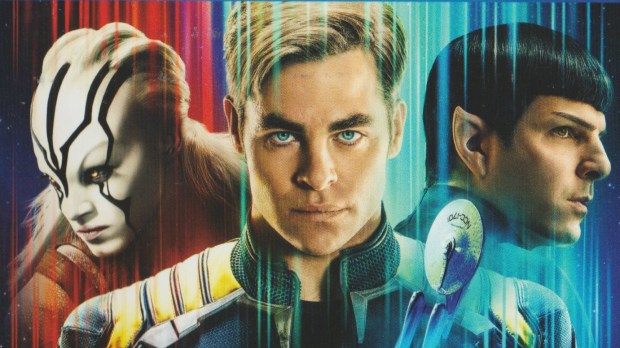
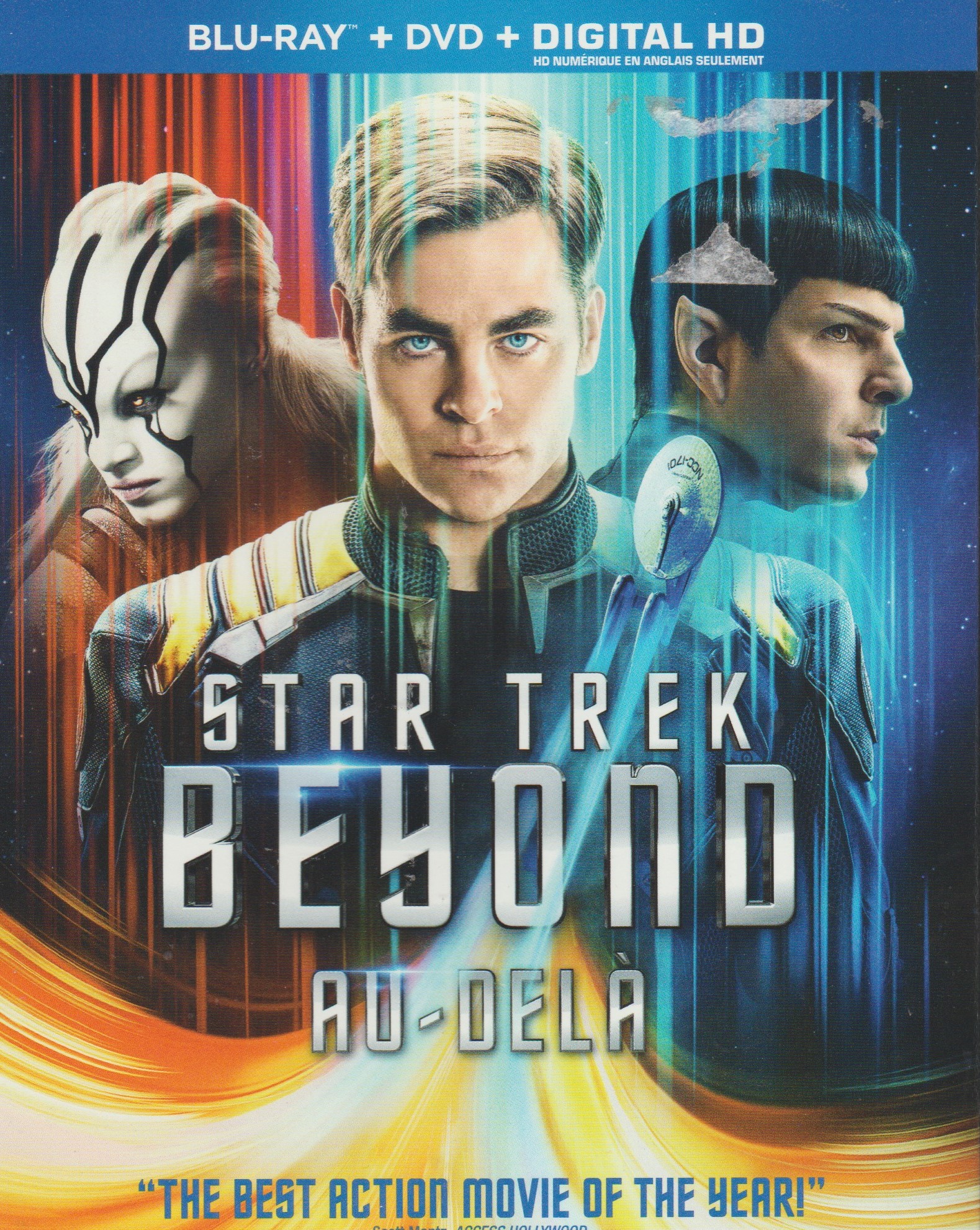
MOVIE REVIEW: Star Trek Beyond (2016)

STAR TREK BEYOND (2016 Paramount)

Directed by Justin Lin

The “Kelvin era” or “JJ-verse” Star Trek movies have been more “miss” than “hit”.  There was a time when you could count on every even-numbered Trek to be excellent, but Star Trek Into Darkness (#12) and Star Trek Beyond (#13) were two rotten movies in a row.  What went wrong?

Too.  Much.  Dumb.  Action.

Specifically, there is one modern action motif that is freakishly common today and it drives me insane every time.  It’s when a vehicle or body hits a wall or other obstacle, going right through, and keeps going, and going…minimal damage and zero loss of momentum.  This happens far too often in Beyond.   Hell, the bad guy Krall (Idris Elba) has a swarm of spaceships completely based on this physics-defying visual.

Every time Beyond feels like it’s going somewhere, the movie devolves into meaningless, dull action.  The shame of it is, there are other scenes that are character-driver and almost vintage Trekkian.  Dr. McCoy (Karl Urban) caring for an injured Spock (Zachary Quinto) felt right.  Captain Kirk (Chris Pine) tiring of his daily space-grind was reminiscent of the original Star Trek pilot “The Cage”, and also colours in a little bit about how the prime Kirk eventually became an Admiral.  These slower, more contemplative shots are then succeeded by numbing action, so far removed from Gene Roddenberry’s original vision that you can hear his complaints in the back of your mind.

Idris Elba is unfortunately underdeveloped and buried under layers of makeup.  His character Krall has cloudy hatred for the Federation, believing that their mission of peace and exploration weakens humanity, who must instead be prepared to defend itself.  Krall is not all he appears to be, of course, but the reveal is far less interesting than it could have been.  Ultimately, the setup is never enticing nor is the execution.  Since the plot is based entirely on the motivations of the villain, the movie can’t hold together.  It’s just an alien looking for a superweapon so he can kill lots of people.  And it’s never made clear why he even needs that superweapon, since he can do plenty of damage on his own.

Case in point?  Krall [SPOILER] takes down the U.S.S. Enterprise only three years into her five-year mission.  Compare this to the original prime U.S.S. Enterprise, which only went down only in a last ditch attempt by her captain to keep his crew alive.  Only after 40 years in space, three television seasons, and three movies.  Its ending was poignant, and after saving the crew countless times, it was earned.  This ships’ ending was not earned, to use the words of Rob Daniels.  We’ve only known her in a few hours of screen time.  Her demise was not earned.  It was just a gimmick to sell tickets.  See the Enterprise go down!

A new character created for this movie, Jaylah (Sofia Boutella) is a tough nut and good companion for Scotty.  Unfortunately, knowing the past history of female sidekicks in Star Trek films, that means you’ll never see her again.

Sadly, Anton Yelchin (Chekov) died tragically in an accident shortly before the film’s release.  J.J. Abrams has said that Chekov would never be recast by another actor.

Star Trek Beyond both gains and loses points for some real-world references.  The death of Leonard Nimoy in 2015 is reflected by [SPOILER] the death of Spock prime in this film, and there is a beautiful moment to reflect on that.  Less successfully, the character of Sulu (John Cho) is ret-conned as gay, to honour George Takei who played the original Sulu.  Even Takei found this ret-con to be strange since he never portrayed Sulu as gay at any point in the series.  It technically doesn’t directly contradict anything from the prime universe, but it feels so awkwardly shoed in.

Star Trek Beyond has, for the time being at least, ended Star Trek’s theatrical comeback.  Patrick Stewart has confidently returned to television in Picard, and so Trek never dies.  No thanks to Beyond.

1.5/5 stars
VHS Archives #92: On the set of “The Storm” with Helix (1990)

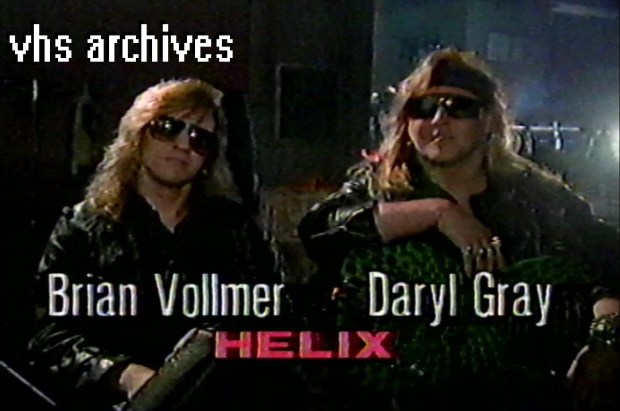
Helix made a bit of a comeback in 1990.  Their last studio album was three years prior.   Brent “The Doctor” Doerner was gone.  And their new platter, Back For Another Taste, was just a little different.  It was also their best in many years — maybe ever.  A little more serious.  The new video for “The Storm” reflected that.

MuchMusic was on set to watch “The Storm” being made, and got to talk to Brian Vollmer and Daryl Gray.  Longevity and the importance of music video are discussed here. From Hostess Sneak Previews in spring 1990.


REVIEW: The Darkness – Easter is Cancelled (2019 Japanese import)

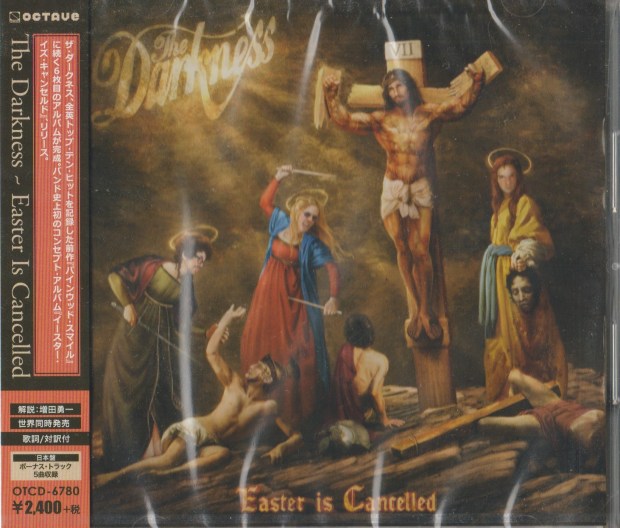
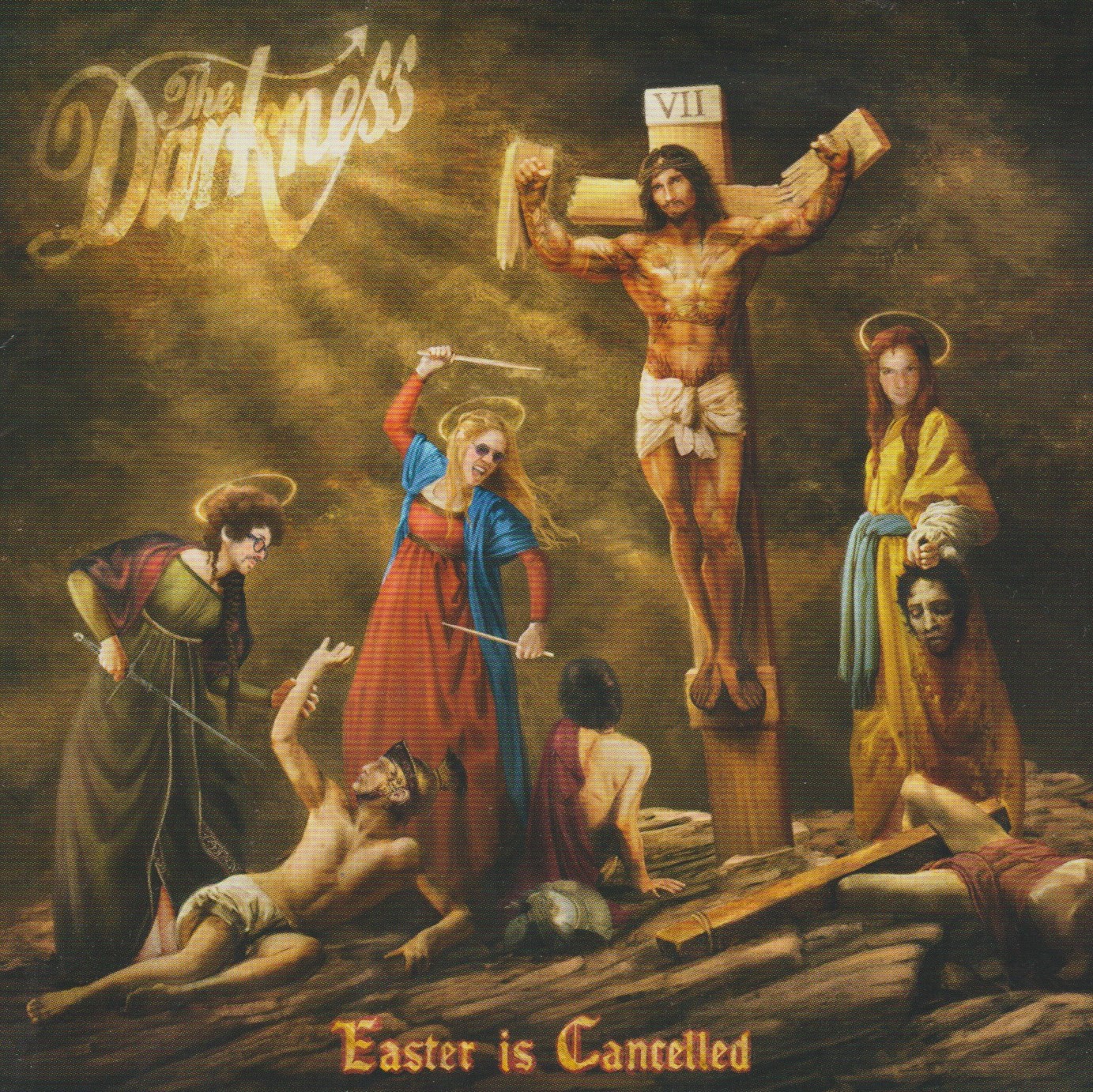
THE DARKNESS – Easter is Cancelled (2019 Canary Dwarf, Japanese release)

I’m baffled.  I’m truly baffled this time, and I’ve followed The Darkness through thick and thin!  From brightest days to darkest nights.  From Stone Gods to Hot Leg.  And for the first time, The Darkness have thrown me for a loop.

Easter is Cancelled sounds like their rock opera, their big concept album, with gentle acoustics turning into loud bombast.  It looks brilliant on paper, but in practice it sounds more like Tenacious D.  That’s it — this isn’t a Darkness album.  This is what the D should have released instead of whatever Post-Apocalypto was.

Where I used to shout with glee as one gleaming riff gave way to another and then another, now I hear only fragments.  Only portions of great tunes, not completely brilliant tracks front to back.  The top track is actually one of the bonus songs, called “Different Eyes”.  The guitar work on Easter Is Cancelled is consistently stunning, at least.

This review has been painfully hard to write.  I take no pleasure in this.  It took months of agonising to get here.  I don’t want to hate The Darkness.  I want to embrace them — all four of them! — with open arms and heart.  Perhaps one day, I will again.  With all due apologies to Justin, Dan, Frankie and Rufus, this one wasn’t for me.

2/5 stars

I would be neglecting my rock and roll duty if I didn’t report on the Japanese bonus track, “Dancing House”.  It’s only a minute long and it’s…umm…about people dropping in for a party.  It sounds like bad B-52’s.  Really bad B-52’s.  I cannot discern its purpose or reason to exist.


Hated this review?  Then click here for a much better one by 2loud2oldmusic!

REVIEW: Loudness – Disillusion (1984 Japanese version)

LOUDNESS – Disillusion (1984 Nippon Columbia)

For a few albums starting with their fourth record Disillusion, Loudness began recording English lyrics for outside Japan.  For the Japanese versions, the lyrics are a mixture of both languages with the choruses usually sung in English.  Whichever version you hear, Disillusion will satisfy your craving for memorable heavy riffs, brilliant vocals, and incredible guitar shredding.

Guitarist Akira Takasaki was considered the Japanese Eddie Van Halen and you can hear why on Disillusion.  Though Loudness are heavier than Van Halen, Takasaki employs techniques similar to King Edward.  Disillusion opens with the thunderous “Crazy Doctor”, on which you can hear the Van Halen chords loud and clear, though the track sounds more like heavier vintage Dokken.  As outstanding as Akira is, also unmistakable is singer Minoru Niihara.  The original Loudness frontman could really sing with all the necessary panache and metal inflection.

The opening guitar shreddery on the speed metal “Esper” recalls St. Edward once again, but Loudness could have given Metallica a run for their money on this one.  Completely over the top!  A number of fans think that Loudness softened their sound when they released their American major label debut Thunder in the East in ’85.  You can understand why they think that when you hear “Esper”.  However this is a balanced album, and the more melodic “Butterfly” slows things down so you can catch your breath.  Unfortunately “Butterfly” is the closest thing to a mistep on this otherwise brilliant disc.

There’s a Maiden-y vibe to “Revelation” circa Piece of Mind, but not just because of the name.  I wouldn’t be surprised to learn that Loudness were influenced by Maiden.  We do know that both Loudness and Maiden were influenced by Deep Purple so there might be some convergent evolution going on.

The parallels to Sir Edward continue on side two with an instrumental called “Erupt…” err, sorry, it’s called “Exploder”.  Whatever the similarities, Takasaki is an enticing guitar player and he came to public attention exactly when this kind of playing was most popular.  “Exploder” blows away most of the competition.  Only a handful of players could do stuff like this and they usually had names like “Rhoads” and “Halen”.

Vocals return on “Dream Fantasy”, another blazing hot metal extravaganza, with solid chorus intact.  It’s worth noting that Takasaki was not alone in musical excellence.  Drummer Munetaka Higuchi (R.I.P.) was a heavy-hitter who could thrash it up and come up with interesting fills.  Masayoshi Yamashita has a knack for a busy, melodic bassline, though mostly holds down the fort so Akira can fly.

“Milky Way” boasts a cool, smoother style of riff and another exemplary Minoru Niihara chorus.  It’s a challenging arrangement with different rhythms and textures.  Loudness were not simply banging out metal riffs for your rock and roll crazy nights.  They were stretching the boundaries of their abilities, playing intelligent metal like the Scorpions and Priest did in the 70s.  But they also weren’t afraid of getting down n’ dirty, as they do on “Satisfaction Guaranteed”.  Though you can’t tell without the lyric sheet, it’s the only song that is completely sung in English.  It’s not the lyrics, but the riff that will hook you.  Note the passing Maiden-esque gallop.

This version of Disillusion concludes with an epic “Ares’ Lament”.  It’s a cross between early Maiden and Scorpions with a touch of darkness, with a long shadowy outro reminiscent of “Child in Time”.  It’s a brilliant end to a pretty stunning album.

Disillusion is not immediate, except for “Crazy Doctor” which will hook you at first listen.   It’s a busy record, so you need to give it a couple proper listens to let the riffs and hooks come to the fore.  Once they do, you will uncover many elements of pleasure in the grooves within.  It sounds uncompromised and is more unique than the albums that followed.  It’s a fine example of metal forged in integrity.

4.5/5 stars

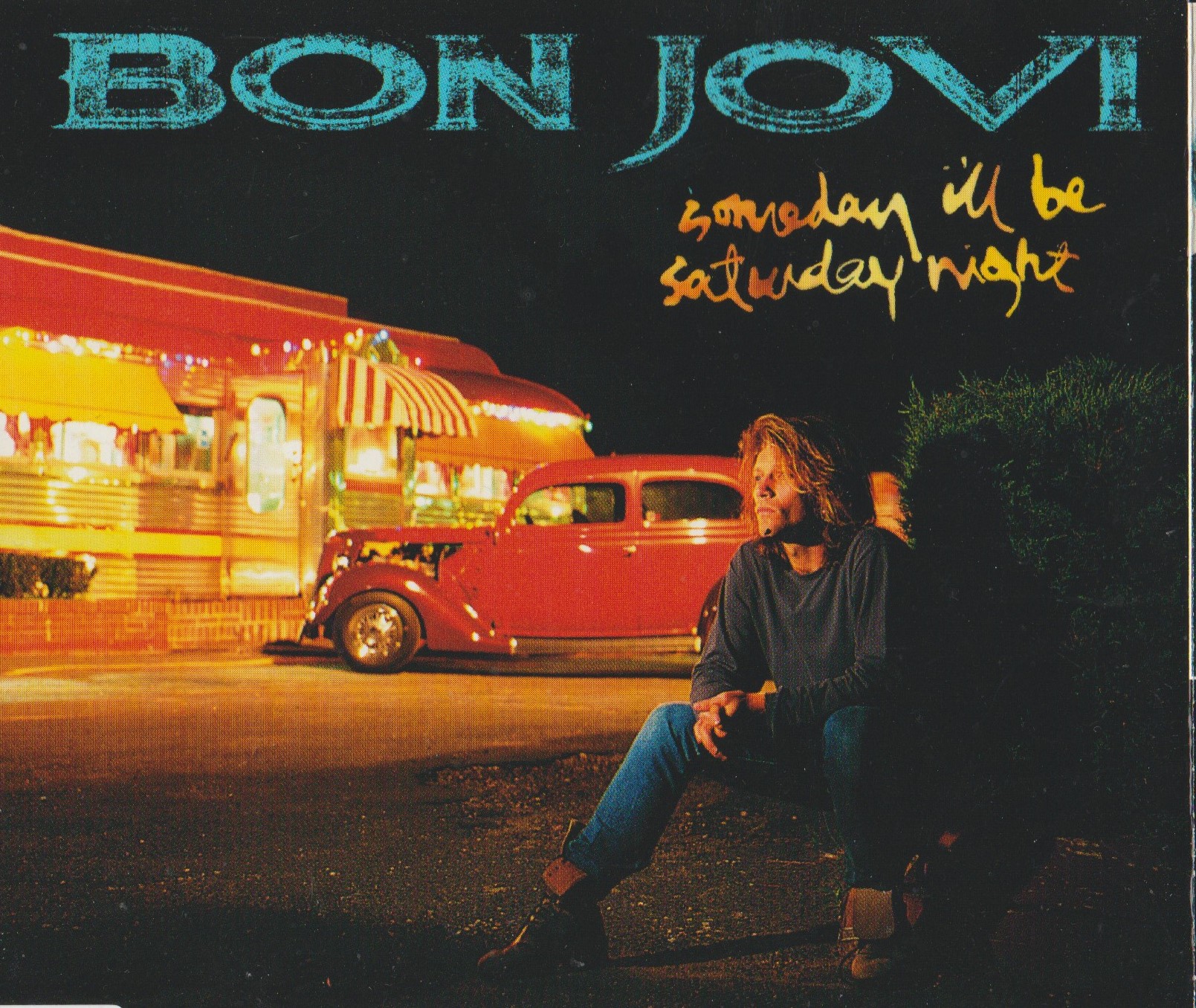
REVIEW: Bon Jovi – “Someday I’ll Be Saturday Night” (1995 single)

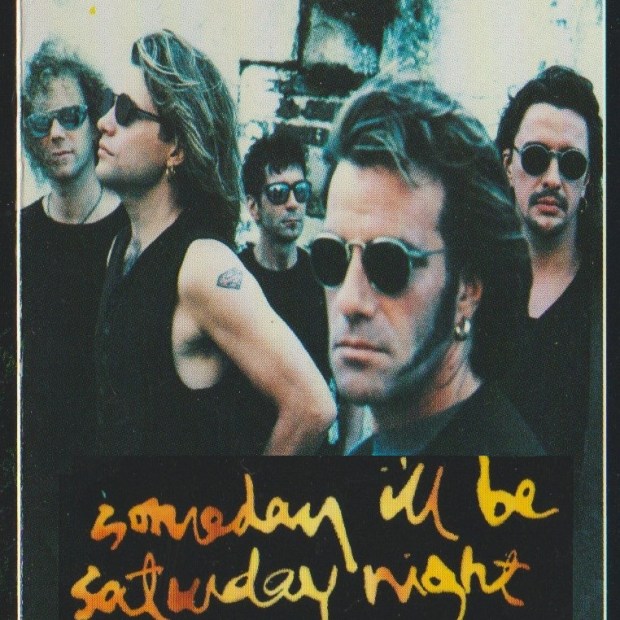
BON JOVI – “Someday I’ll Be Saturday Night” (1995 Mercury single)

It’s impossible to acquire a “complete” Bon Jovi collection; trust me on this. Even Jon Bon Jovi doesn’t have a complete Bon Jovi collection. Up to a certain point in time, it’s fun to collect as many B-sides and bonus tracks you can get your hands on.

The second single from “best of” album Cross Road (1994) was “Someday I’ll Be Saturday Night”, and it was a pretty clear indication of where the band would go on their next album These Days.  But — surprise bonus — this single doesn’t have the studio version (that you already own) from Cross Road.  It has an uncredited live version instead!  Added bonus — Alec John Such on bass.  He had yet to be replaced (on stage, anyway) by Hugh McDonald.  This is probably the only live version of the hit with Such on bass.

Make no mistake, “Someday I’ll Be Saturday Night” is a great song.  There’s a Bon Jovi niche for acoustic rock songs with down-on-your-luck/inspirational lyrics.  “My life’s a bargain basement, all the good shit’s gone.”  This is Jon’s bread and butter.  He wouldn’t know a bargain basement if he was shopping for old Bon Jovi singles in one, but he does this kind of rock really well.  This is one of the last of his must-haves of the genre.

Another rare one, “Good Guys Don’t Always Wear White”, is a studio track with the well-worn cowboy motif.  It’s from the movie The Cowboy Way featuring Jon’s old Young Guns buddy Keifer Sutherland.  Unexpectedly, this one is an  intricate hard-driving rocker, with a Sambora riff that he could take pride in.  Tico Torres is absolutely on fire on the kit.  That guy can lay down a groove while throwing in challenging patterns just for fun.  Why can’t Bon Jovi rock like this anymore?  This track feels more honest than the hard luck songs.

Two more live songs finish the CD.  These two are from Montreal in ’94:  “With A Little Help From My Friends” (Joe Cocker style) and “Always”.  The reason Bon Jovi can get away with “A Little Help From My Friends” is Richie Sambora, who always brings the soul and the integrity.  That’s not to say that Jon sucks.  Check out the note he holds at 3:57.  The man had lungs back in 1994!  The demographics of the audience are obvious: “Always” is almost drowned out by a sea of high-pitched screams!  It’s one of their last ballads that really deserves that kind of cheering though.

A great single is one that you can list to independently of the album, and doesn’t sound like a bunch of miscellaneous bonus tracks.  This single is like that.  There’s no wasted space, no filler, and no tracks you can get on the albums.  The live stuff is high grade and the studio track is extremely valuable for its hard rocking nature.  This is more like an EP than a single, but it’s all semantics.  Let’s just call it:

4.5/5 stars
 

You say you don’t like my kind,
A bitter picture in your mind.
No, it don’t matter what I say,
I hear you bitchin’ when I walk away.
I’ll never be what you want me to be,
You tell me I’m wrong but I disagree,
I ain’t go no apology.
Just because I don’t look like you, talk like you, think like you,
Judge and jury, a hangman’s noose,
I see them in your eyes.
Good guys don’t always wear white.


REVIEW: Bon Jovi – Bounce (2002, 2010 special edition)

BON JOVI – Bounce (2002 Universal, 2010 special edition)

Wrote off Bon Jovi after Keep the Faith?  Not so fast!

It was a post-911 world, which in strange hindsight was a more optimistic time than today.  Bon Jovi, always patriotic, had to respond.  While only a few songs relate to the tragedy, Bounce is easily the strongest Bon Jovi platter from the last 20 years.

That was my brother lost in the rubble,
That was my sister lost in the crush,
That was our mothers, those were our children,
That was our fathers, that was each one of us.

“Undivided” makes no bones about its subject.  It’s also one of the heaviest songs the band have ever laid down.  Much of this, according to the band, came down to a new guitar that Richie Sambora was using.  His tone is certainly aggressive and modern.

“Where we once were divided, now we stand united.”

If only temporarily.  It was certainly more inspiring in its time.  At least nothing can be taken away from the music, and Sambora’s always sublime soloing.

Lead single “Everyday” is less successful, leaning on modern production values instead of rock and roll.  At least it rocks hard and chunky for the most part.  The samples and effects could have been ejected without hurting the song.  But Bon Jovi’s biggest weakness after Keep the Faith was a dependence on ballads.  At least most of the Bounce ballads stand strong.  The first of these is one of the strongest, “The Distance”.  It utilizes Sambora’s crushing guitar effectively to create a rock/ballad hybrid.  You can headbang to the riff while crooning to the verses.  It’s topped with strings courtesy of David Campbell, making the whole thing so overblown…and so Bon Jovi.  That’s their style.  You either like it or you don’t.

“Joey” is less successful as a ballad.  It’s one of those “growing up in New Jersey” songs that Jon is good at writing.  “Blood on Blood” is the best example of that kind of song.  “Joey”, not so much.  The arrangement is generic and the words, well:  “I never cared that Joey Keys was slow, he couldn’t read or write too well but we’d talk all night long.”  I’m sure there are more lyrical ways of telling this story.

Midtempo “Misunderstood” is an album highlight (and second single).  The chorus is the selling point.  Vintage Bon Jovi melody and charisma.  Unfortunately single #3, “All About Loving You” is profoundly putrid, with drum machines and tinkling acoustic guitars aplenty.  A heavy rocker called “Hook Me Up” is also less than inspiring, although you can at least rock heavy to it in dumb fashion.

A pleasant ballad, “Right Side of Wrong” is similar to “Joey” but without the awkward lyrics.  What does it sound like?  Bon Jovi, with all the references he loves:  James Cagney, Butch Cassidy and the Sundance Kid.  Next, Sambora’s wah-wah guitar on “Love Me Back to Life” brings some heavy to another ballad, which is good, because there are three in a row.  It’s all about Sambora and the strings by David Campbell, which add some needed punch.

Most of the ballads to this point have featured piano with strings, but “You Had My From Hello” is a sweet acoustic number.  Pleasant is the word.  But the second last track “Bounce” is an ass-kicker and best track on the album.  “Call it karma, call it luck, me I just don’t give a f…f…f…”  OK, that sounds pretty cheesey.  Jon refusing to drop the F-bomb is funny when you think about it, but “Bounce” was a single, so it’s not like he’s going to swear all over it.  Richie’s solo is 2000s-era perfect, as good as mainstream music got back then.  “Bounce” rocks.  Unfortunately the album concludes on another cookie-cutter ballad, “Open All Night”.  It was written about an Ally McBeal episode that Jon guested in.  Hard pass.

The 2010 special edition includes a cool backstage pass and four live bonus tracks:  “The Distance”, “Joey”, “Hook Me Up” and “Bounce”.  The added value makes the upgrade worthwhile.

This album “bounces” back between rockers and ballads a bit much, but when the songs are solid, it fires on all cylinders.  Let’s say you trimmed two songs from the album to make it an even 10, like Slippery When Wet.  Then Bounce would be a more consistent listen, and perhaps considered a bit of a latter day classic.  It’s still probably the last “good” album they’ve released.

3.5/5 stars
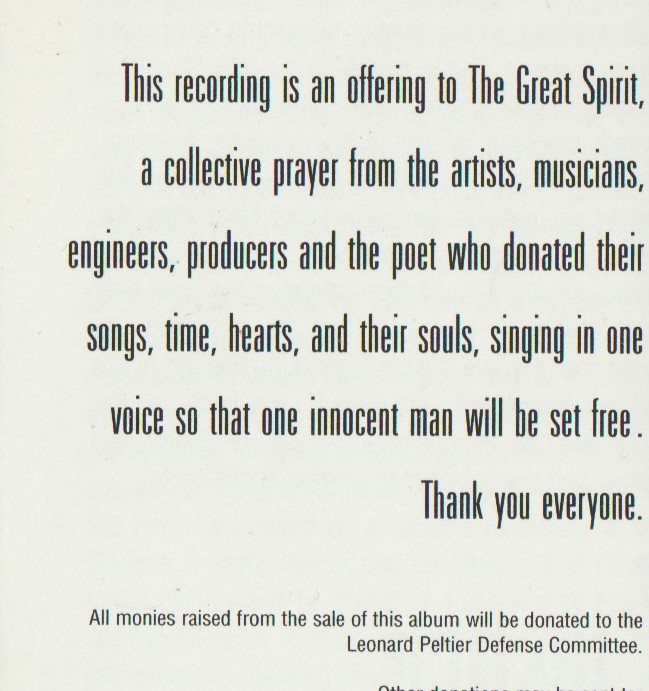
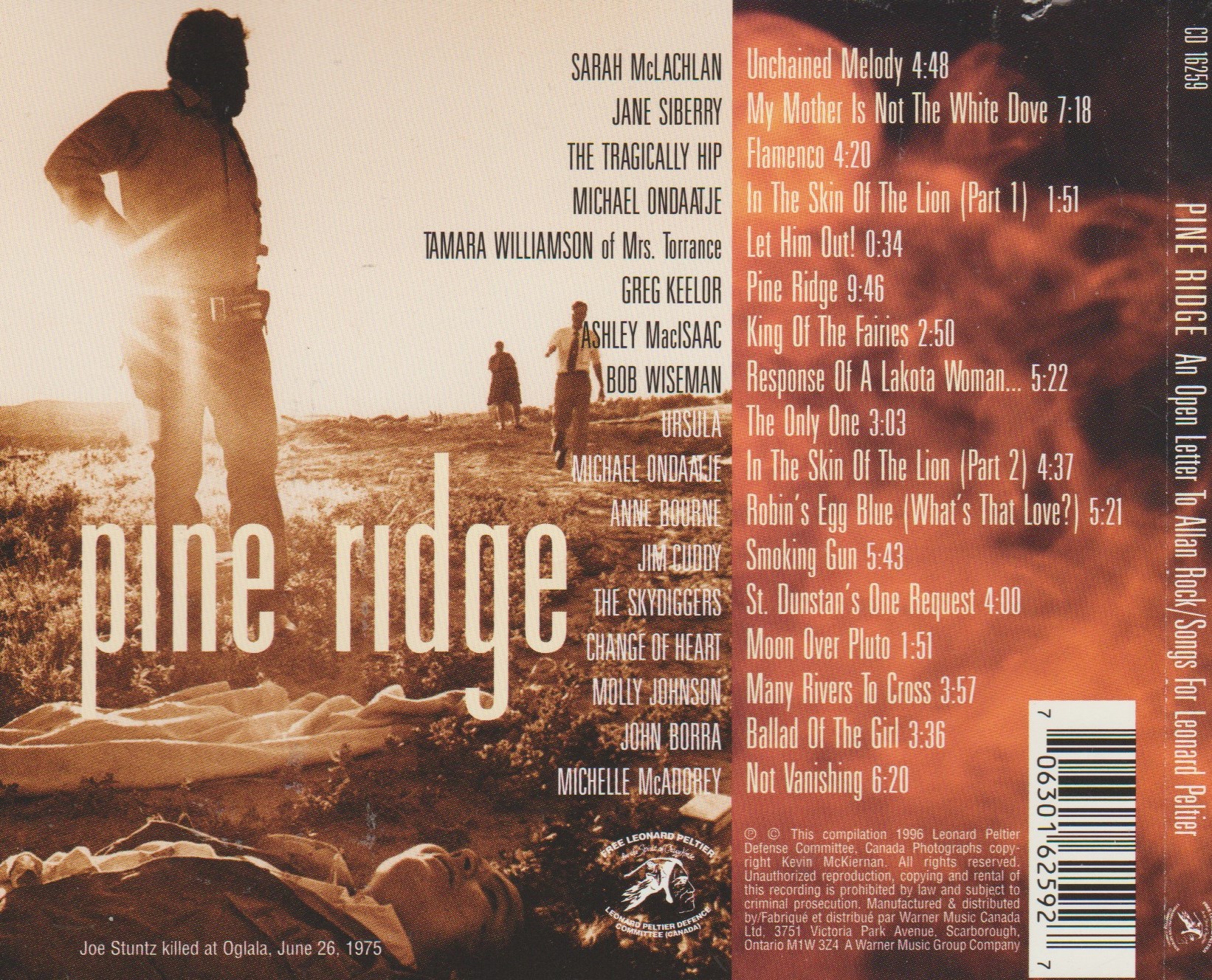
REVIEW: Greg Keelor – “Pine Ridge” (1996)

GREG KEELOR – “Pine Ridge” (1996, from Pine Ridge: Songs for Leonard Peltier)

Blue Rodeo are taking some heat these days for their stance on indigenous rights.  A small group of fans are abandoning the band for (quote-unquote) “going political”, but politics is nothing new for this Canadian institution.  In 2015, they recorded “Stealin’ All My Dreams” just in time for the 2015 Canadian election.  (The mp3 file had a tag reminding fans to vote!)  It was pretty clear from the song where they stood on the issues.  Further back, in 1996, they participated in Pine Ridge, a benefit CD for Leonard Peltier.  It’s a long story that has resulted in at least three movies, a U2 song, and support from Rage Against the Machine.  Greg Keeler’s contribution to the Pine Ridge CD is one of the strongest songs of his entire career.

The track may be credited solely to Greg Keelor, but if you look at the players, it’s actually Blue Rodeo.  Jim Cuddy, Bazil Donovan, Glenn Milchem, James Gray, Kim Deschamps…the gang’s all there, the classic Five Days in July lineup.  So it’s a Blue Rodeo song in every way but in name.  At 10 minutes in length, it is unprecedented in complexity for this great band.  And they wore their politics directly on their sleeves.

The government man hate the colour of your skin and your dogshined reservation,
No reasons why those two FBI were on Oglala land chasing that red van,
And the FBI admit Leonard Peltier did not commit the killings that have
Kept him 20 years in prison.

The track runs the gamut from quiet, contemplative picking to soulful and dramatic choruses, to a funky mid-section, and a huge ending.  It’s as epic as Blue Rodeo get.  It tugs at the soul, and stimulates the mind.  It’s a protest song in the grandest tradition, right out of 1969.  And nobody can flat-out play like Blue Rodeo.  Pedal steel, dobro, organ…it’s all here.  And it’s massive.

Stay political, Greg.  Regardless of where you fall on the current situation in Canada (it ain’t pretty), we can all agree that the world is richer for all the great protest songs of the past.  Here is another one, now an oldie itself.

5/5 stars
The Pine Ridge CD also features performances by The Tragically Hip, Blue Rodeo’s Jim Cuddy, ex-Blue Rodeo keyboardist Bob Wiseman, Jane Sibbery, Michael Ondaatje, Ashley MacIsaac, Sarah McLachlan, the Skydiggers and many more.  Worth the investment.


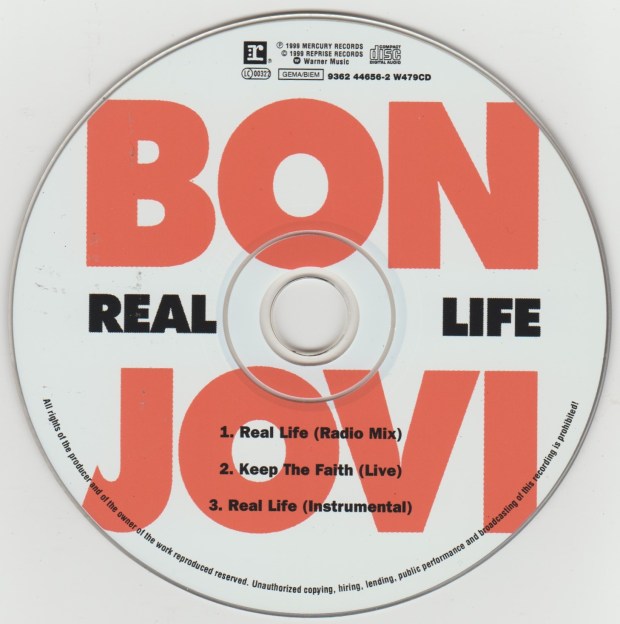
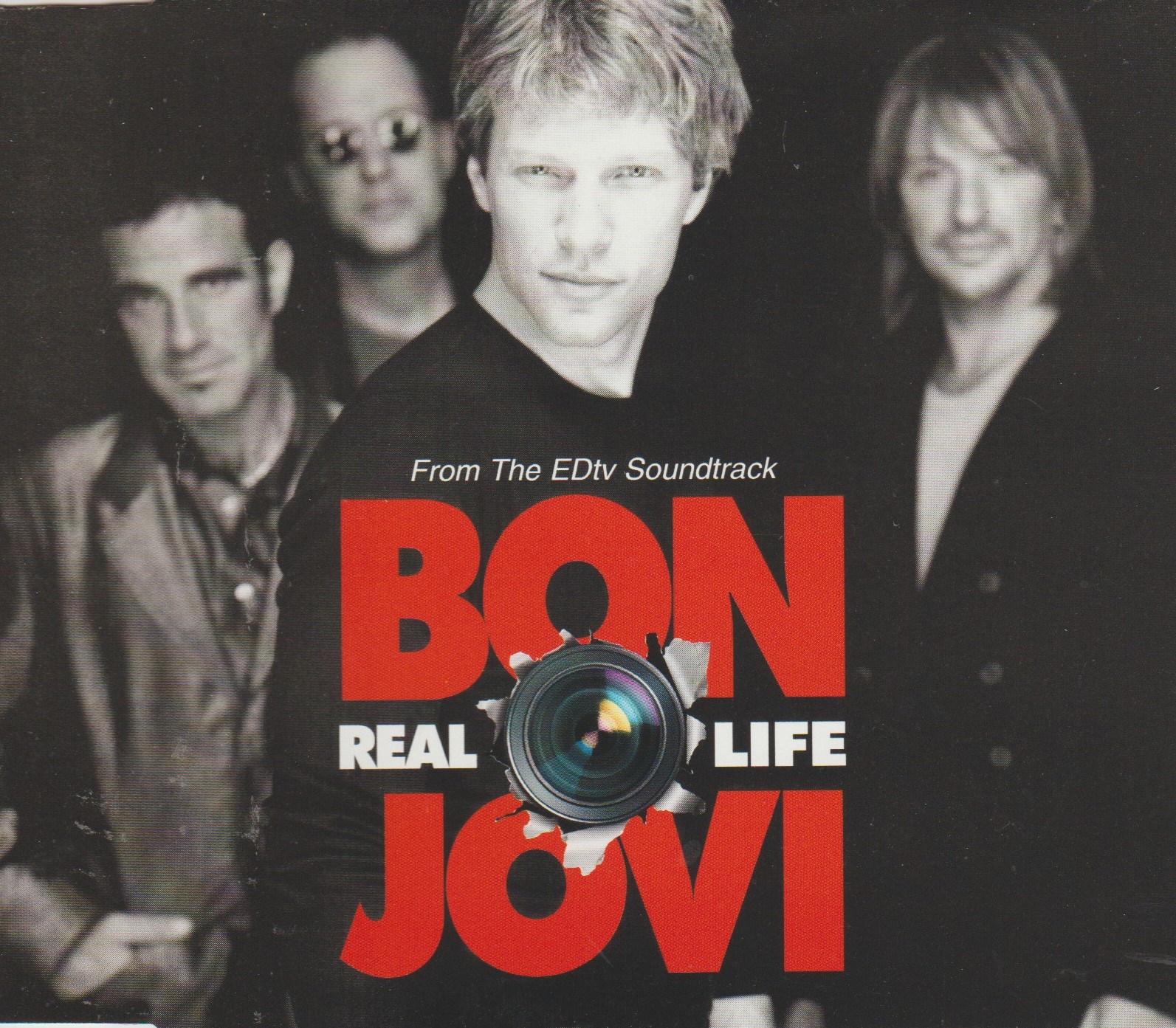
REVIEW: Bon Jovi – “Real Life” (1999 CD singles)

Forget Valentine’s Day…except when it’s good for traffic!  Back in my single days I used to call it “Bon Jovi Day” and listen to nothing but Jon & Richie.  Here’s some Bon Jovi for you!

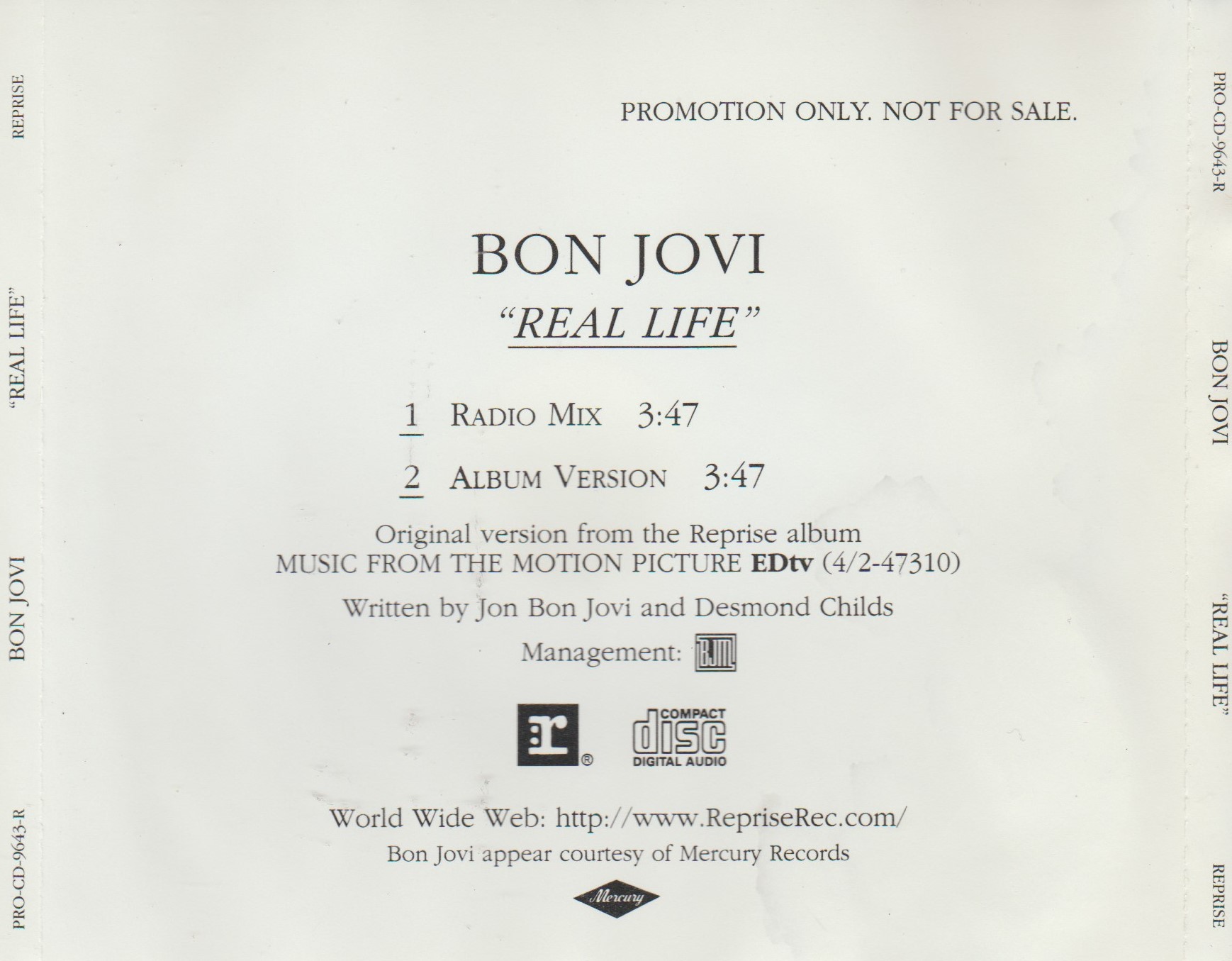
BON JOVI – “Real Life” (1999 Reprise & promo CD singles)

There was an unprecedented five year interregnum between These Days and Crush.  This pause allowed Jon Bon Jovi and Richie Sambora to get some solo albums out of their systems before the band re-convened.  In the buildup to the new album, Bon Jovi contributed a new single called “Real Life” to the movie EdTV.  Remember EdTV?  There were two movies out at the same time about a guy who had his whole life broadcast on television 24/7.  One, The Truman Show starring Jim Carrey, was a huge hit.  The other, Ron Howard’s EdTV starring Matthew McConaughey, was the also-ran.  EdTV might have been more interesting, but bombed.  This rendered the Bon Jovi single relatively obscure.  It’s not the first time a Bon Jovi movie track misfired.  Remember “Good Guys Don’t Always Wear White”?

“Real Life” was a decent tune, but it was a ballad at a time when Bon Jovi already had plenty.  There’s little to draw your attention, aside from Richie Sambora’s always alluring guitar and vocals.  The watery guitar tone is not far removed from These Days, but that album boasted the kind of ballads you’d never forget.  Songs like “Something to Believe In”, “These Days”, and “(It’s Hard) Letting You Go” are the kind of songs you carry your whole life.  “Real Life” is not.  In the wake of These Days, it was just another ballad.

Who is “Desmond Childs“?

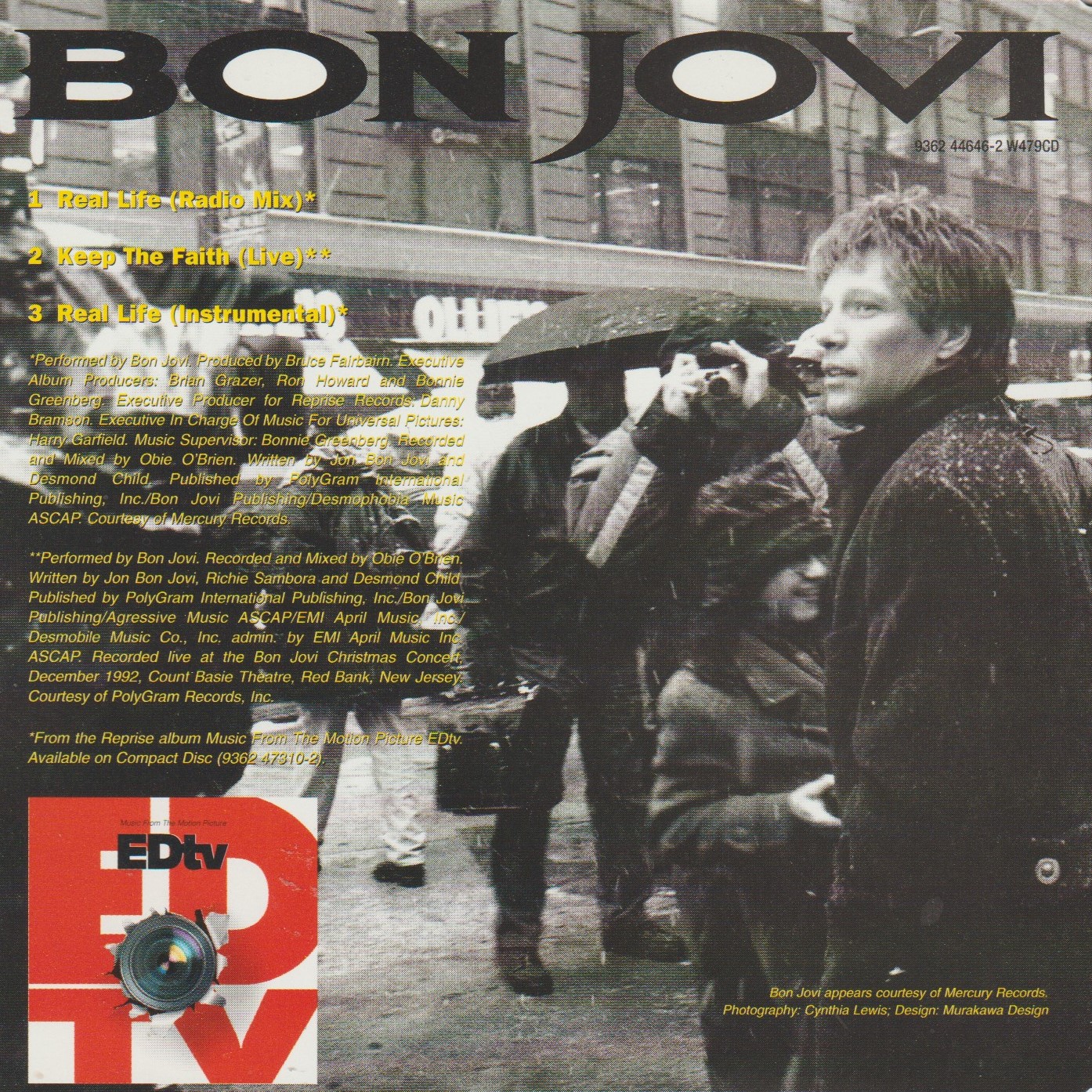
This commercial single has two versions of “Real Life”, but there are actually four versions out there!  For the “album version”, if you don’t want the EdTV soundtrack, look for a promo single instead.  The differences between the album version and the radio mix are slight, but the album version has more guitar where the single mix has more piano.  The third version is an instrumental mix, which is nice if you want to listen to Richie’s guitar a little more.  The fourth and final version is an alternate mix that can be found on the box set 100,000,000 Bon Jovi Fans Can’t Be Wrong.

Finally, a live recording of “Keep the Faith” rounds out the single.  It seems to be a standby live B-side for this band.    They used another version on the 2013 single for “Because We Can“.  It’s certainly one of their most accomplished songs.  The bass groove and Tico’s busy drum patterns keep your feet moving.  It’s noncommercial and it strives to be something bigger.  It might be, in a technical sense, Bon Jovi’s most unapologetic and best hit.

Interestingly enough, “Real Life” is the only Bon Jovi video without David Bryan who was away on an injury.  I don’t think he missed out on much.

2.5/5 stars
 

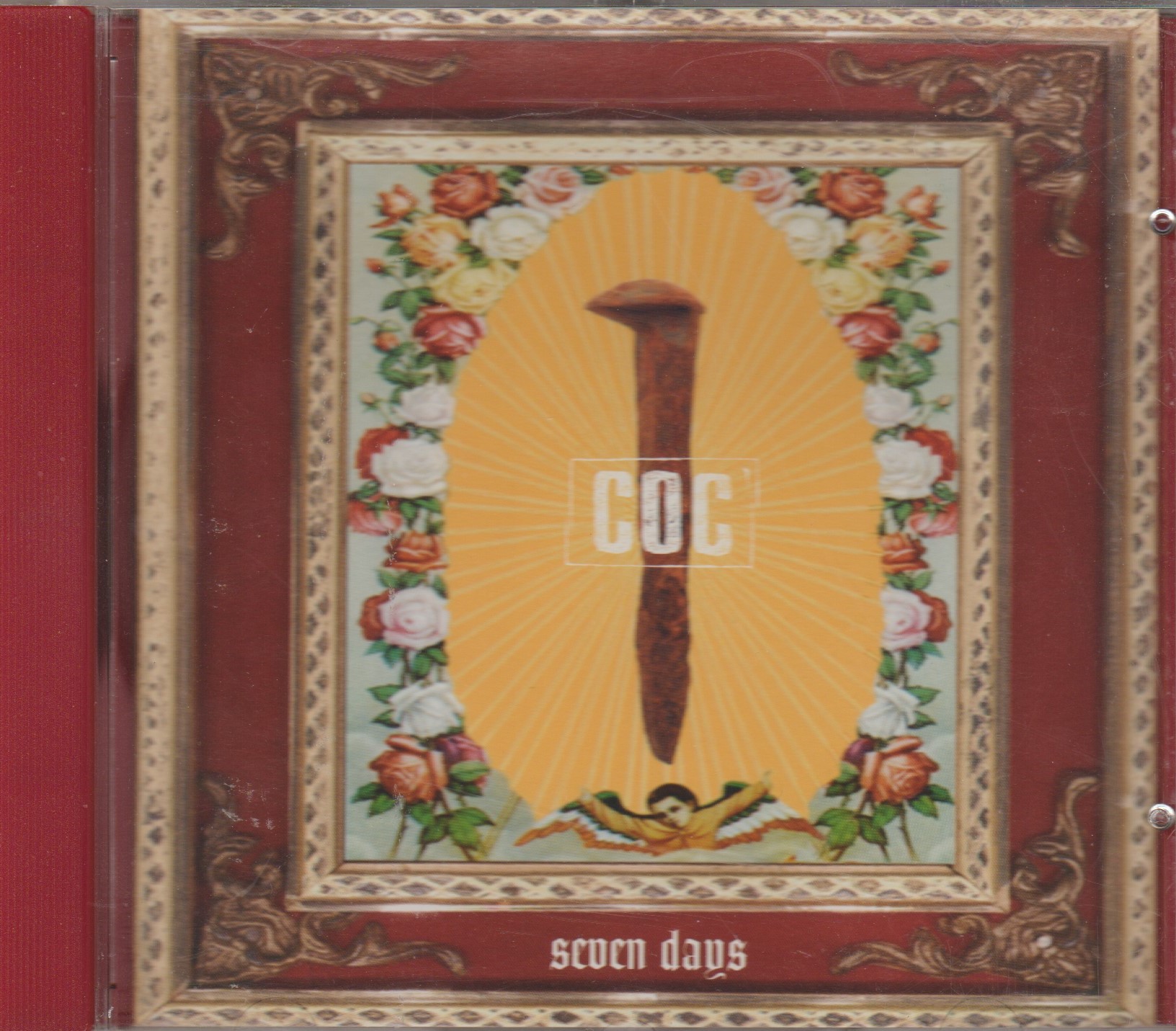
REVIEW: Corrosion of Conformity – “Seven Days” (1995 promo single)

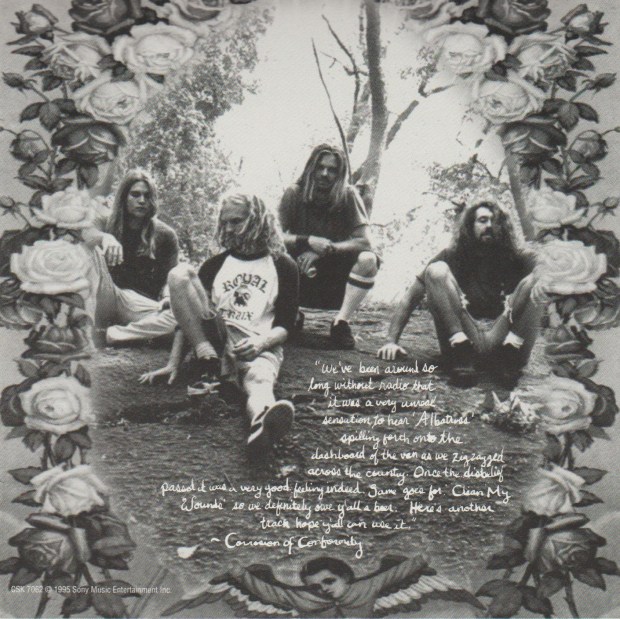
CORROSION OF CONFORMITY – “Seven Days” (1995 Sony promo CD single)

COC’s landmark album Deliverance spawned three singles, the least known of which was “Seven Days”.  The promo CD single contains a rarity that makes it worth tracking down.  It’s not expensive, and thanks to online stores not hard to find.

Deliverance is a heavy album even with a few slower songs on board.  “Seven Days” is one such track.  A slow, heavy dirge can often make for a good single.  This CD has two versions, the full-length album cut and a shorter single edit with a truncated fade-out.

The special track here is a “jam box tape” of “Fuel”, a track that was as yet unreleased.  COC recorded it properly for their next album, Wiseblood.  This early version is an identical arrangement, but way way more ragged.  Pepper sounds like James Hetfield on this one, but it has far more balls than the Metallica song of the same name.  Total smokeshow.  This is the proverbial “song you buy the single for.”

3.5/5 stars

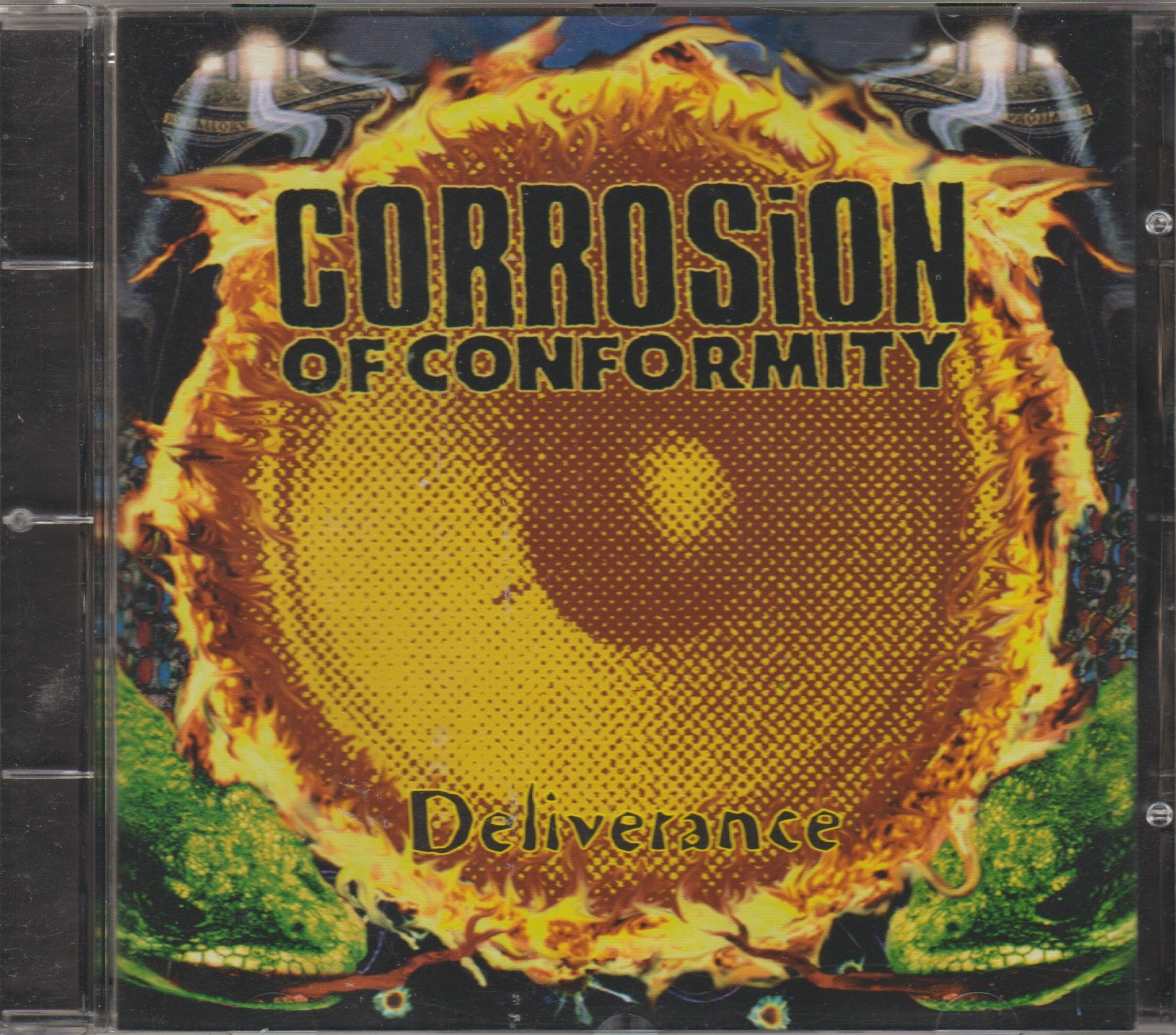
REVIEW: Corrosion of Conformity – Deliverance (1994)

CORROSION OF CONFORMITY – Deliverance (1994 Sony)

Gre-ea-easy!  That’s how the molton hot guitars sound on this landmark album.  Greasy, in the most complimentary way.  Six-stringers Woody Weatherman and Pepper Keenan have a way of making their guitar licks sound slippery and heavy at the same time.
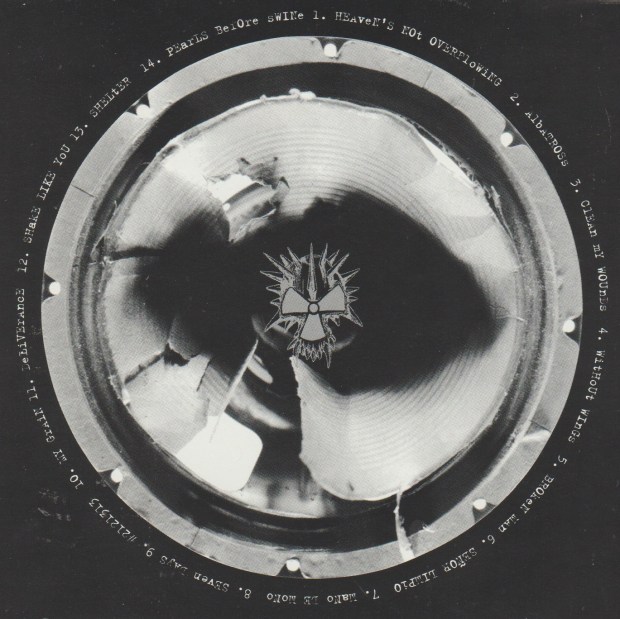
Corrosion of Conformity (“COC”) did something really smart when they set out to record this album.  After the departure of bassist Phil Swisher and singer Karl Agell (who both turned up later in Leadfoot), they promoted Pepper Keenan to lead vocals, and brought back founding member Mike Dean on bass.  Pepper scored a hit for COC last time out with a lead vocal on “Vote With a Bullet”, so it was a logical move.  As for Mike Dean, his punk roots and busy bass are important to the sound of this band.  Dean was also COC’s vocalist from time to time in the past, and gets a lead vocal once again on the title track.

The resulting album Deliverance is 14 tracks (give or take an instrumental or two) of heavy, dirty metal they way they make it in Raleigh, North Carolina.  Pepper’s vocals lent them a southern edge.  Metallica are fans — Pep auditioned for them on bass when Newsted left the band.  (What a sound Metallica could have had, with James Hetfield backed up by Pepper Keenan on vocals!)

Regardless of who’s singing or playing, COC nailed all 14 songs.  None of the proverbial “filler”.  This is one hell of a trip, an album that demands to be listened to from start to finish, no skipping.  John Custer’s crisp and chunky production brought out the metal side more than ever.


“Help me Jesus, help me clean my wounds. He said he cannot heal that kind.”

Check out the choppy riff on the single “Clean My Wounds”.  The song is a tour-de-force, a textbook example of all the right ingredients.  The riff is outstanding, but the verse and chorus melodies slay.  Drummer Reed Mullin has a spare groove, but he knows exactly when to accent it with some heavy hitting.  The multi-tracked vocal in the chorus (“Knock it down!”) is the perfect fit, but the Lizzy-ish guitar solos are an additional layer of perfection.

Another key track, “Albatross” is too heavy to be a ballad so let’s call it a dirge.  You can hear what Mike Dean brings to the table — a slinky, Geezer style of bass that provides subliminal melody.  “Albatross” flies on the wings of a strong melody and heavy performance.  It has a vibe similar to “Outshined” by Soundgarden but more mournful.

The aforementioned instrumentals are integral parts of the album.  Remember how a Black Sabbath album had key instrumental bits, usually introducing another song?  That’s what COC do here.  “Without Wings”, a dark acoustic guitar figure, leads into the heavy-as-fuck “Broken Man” exactly like a Sabbath song.  Later on, “#2121313”, an electric guitar piece, is joined directly onto “My Grain”.  “Mano de Mono”, another acoustic piece, is basically the front end of “Seven Days”, a mid-paced groove single.

Speaking of “My Grain”, it’s the most punk rock track, but even so it features a kickass bass solo!  Other noteworthy tracks include the wah-wah inflected title track (Mike Dean on vocals).  Jittery, jumpy riffs dominate “Señor Limpio”, another blistering blitz.  Finally there is “Pearls Before Swine”, the slowest and bluesiest of the tracks and a seriously heavy closer.

Corrosion of Conformity have made some good (albeit very different) albums over the years, but like many bands they have a clear peak.  That is Deliverance, the one perfect album they made.

5/5 stars