Reviews

DVD REVIEW: Blade Runner (1982) – Tribute to Rutger Hauer by Holen MaGroin

Guest review by Holen MaGroin


BLADE RUNNER (1982, 2007 Ultimate DVD edition, Warner Bros.)

Directed by Ridley Scott

The first time I saw Blade Runner, I was unimpressed. I didn’t believe it to be a bad film, but it inspired nothing inside me. However, something about it burrowed into my mind. It could have been the inspirational aesthetic, the cryptic atmosphere, or something operating deeper in my subconscious. Something I couldn’t place my finger on. Whatever it was, I had an undeniable desire to see the film again. When I acted upon that impulse, I fell in love with it. All the emotion and humanity that had eluded me on the initial viewing became elucidated the second time around. Since then, I’ve viewed the film many times. Each of my viewings reveals more secrets and offers new interpretations to this alluringly ambiguous picture.

I’m not entirely certain why Blade Runner went over my head the first time. If I had to speculate, I’d guess that my mind was so overwhelmed by the sheer visual spectacle, that I had a difficult time focusing on the movie behind it. After becoming accustomed to the astonishing world in which the story resides, it became clear to me that much more than just the design was awe-inspiring. Underneath the electronic digital exterior was a human pulse, one that beat the strongest in the characters that weren’t even human. It poses the existential question of the definition of life, and makes us wonder who should have the authority to define it.

The events take place in the future world of November 2019. Earth has become an overcrowded, polluted, and commercialized urban environment. The Tyrell Corporation manufactures synthetic human beings known as replicants. They are just as intelligent as their creators, while also possessing superior physical abilities. They’re used off-world for slave labor, and are forbidden on Earth. Deckard is a blade runner, the best there’s ever been. His job is to take out stray replicants, a process described by the euphemism ‘retiring’.
 

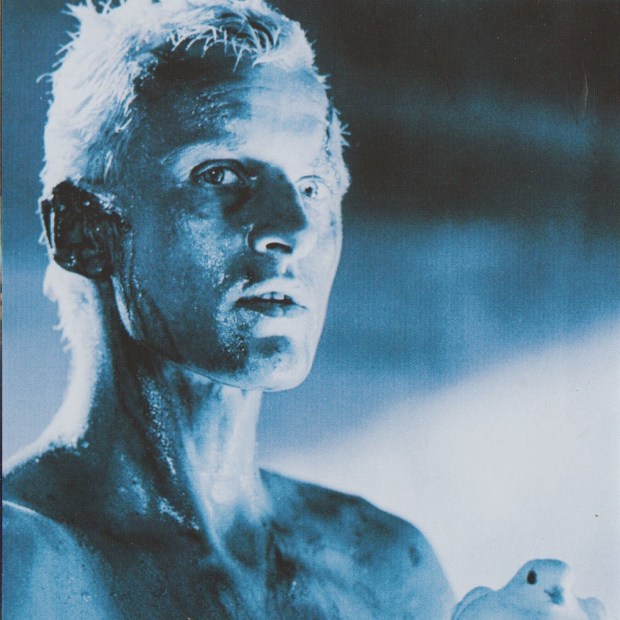
When we’re introduced to Deckard, it’s clear we’re observing a broken man. He lacks purpose, and hides his feelings of worthlessness behind alcohol and a bitter attitude. Having quit his job as a blade runner, he drifts around going through the motions. He’s living a very shallow existence, numbed by whiskey, afraid to feel, and terrified of self-reflection. He’s called in to do one last job, and does so only after being threatened by his old boss, Bryant. Six replicants escaped an off-world colony, and four made it to Earth with their lives. They’ve travelled to Earth in an attempt to extend their lives, which have been set to approximately four years. Their leader is the tactical and ruthless Roy Batty, an imposing figure played by the recently departed Rutger Hauer (R.I.P.). Deckard’s job is to retire them, as they are considered a threat to the public.

Despite being artificial, these four replicants are the most compelling characters in the film. They possess real emotions, and you can’t help but empathize with their plight for life. Their methods may be cutthroat, but understandable given the abhorrent treatment they’ve received at the hands of humans. Not excusable, but understandable. Roy is the most viscous, yet he is also the one we learn to care for the most. The other three want more life only because of their fear of death. Unlike his companions, Roy is a pensive philosopher that questions the nature of his existence, and sees the artificial manipulation of his life expectancy as an injustice perpetrated by Tyrell, his creator.

Contrarily, Deckard is a classic noir archetype inserted into a science fiction world as a way of contrasting him with his supposedly ‘less than human’ targets. He has no raison d’être, no philosophy, he simply exists. The very machines he’s been commissioned to destroy contain more human characteristics than he does. He has learned to detach himself from his emotions because somewhere inside he knows that his job is immoral. As the film progresses, it’s a truth that he finds harder and harder to deny.

His path to realization begins when he visits Tyrell at the onset of his case. While there he meets the beautiful replicant Rachel and is immediately captivated by her. Rachel isn’t initially aware that she is a replicant, as she is part of a new generation that has been fitted with memory implants. She’s rather sterile and distant at first, but ironically becomes more emotional as she comes to accept the fact that she is indeed a synthetic human being. This coincides with Deckard’s own increased feelings of guilt and empathy towards these machines as he approaches the completion of his job. Both characters struggle with the concept of humanity in a dehumanizing urban environment, falling in love as they relate to each other’s fear and uncertainty.
Meanwhile, Roy and the seductive Pris manipulate genetic designer J.F. Sebastian into leading them to Tyrell. Sebastian is afflicted with a disease that accelerates aging, allowing him to relate to and take pity on the replicants and their limited lifespan. Roy and Sebastian visit Tyrell during the dead of night, under the pretense of a chess game. Roy’s patience has been rewarded. He is finally able to face his creator. His resentment towards Tyrell for manipulating his lifespan culminates in the line “I want more life, fucker.” The profanity underscores the pent up rage. It’s an emotional slip for the previously silver-tongued devil, and a subtle hint for his surprising climactic decision at the end of the film. When Tyrell informs Roy that there is no way to extend his lifespan, he disposes of his creator and Sebastian.

Deckard learns of the deaths of Tyrell and Sebastian on his radio, and decides to check out Sebastian’s place. What follows is the infamous final confrontation between Deckard and Roy. Deckard offers absolutely no challenge to Roy. Roy’s methodical killings of before are replaced by a sadistic playfulness. Driven past the point of caring upon the realization of his inevitable mortality, he plays cat and mouse with Deckard. In the middle of their game Roy’s hand begins to seize up; his time has come. Deckard attempts to jump from one building to the next to escape, but doesn’t go the distance, grasping the edge hanging precariously high above the ground. Roy catches up to him and easily makes the jump to the next building, standing above Deckard as his fingers slip. But just as Deckard’s grip fails, Roy grasps Deckard’s arm and hoists him up onto the building, saving his life.

In this moment Roy realizes that the most human gesture he can make before death is forgiveness. Saving Deckard even after he killed all his companions was an act of mercy and forgiveness that made his final deed a human one. Roy has reached the stage of acceptance, and ponders in his death soliloquy that once someone dies, all of their memories are lost. All their experience is gone forever. As he puts it, “All those moments will be lost in time, like tears in the rain.” An immortal line written by Rutger Hauer himself, it fixes an image to the human fear that we won’t have a legacy, and that all we’ve learned and experienced will be lost forever. Roy believes that with the loss of his experiences, humans will remain ignorant of the nature of replicant life, and that humans will continue to view them as objects to be used instead of living creatures. As he dies peacefully, a dove ascends out of the oppressive city. The shot seems to suggest that Roy does have a soul, and the dove symbolizes something pure and innocent. Roy has redeemed himself by saving Deckard, and his purified spirit ascends to heaven.

Blade Runner is a pensive film. It takes its time unravelling to give the viewer a chance to think along with it. It’s about a man that learns to embrace his humanity from the very machines he’s expected to kill. He even falls in love with one. It makes us wonder what truly constitutes life, and what value a life has after it’s gone and forgotten. Blade Runner is moody, stylized, and very open to interpretation. It’s certainly not a film for everyone, but for the people that enjoy when movies offer more questions than answers, there are few that have done it better.

5/5 replicants
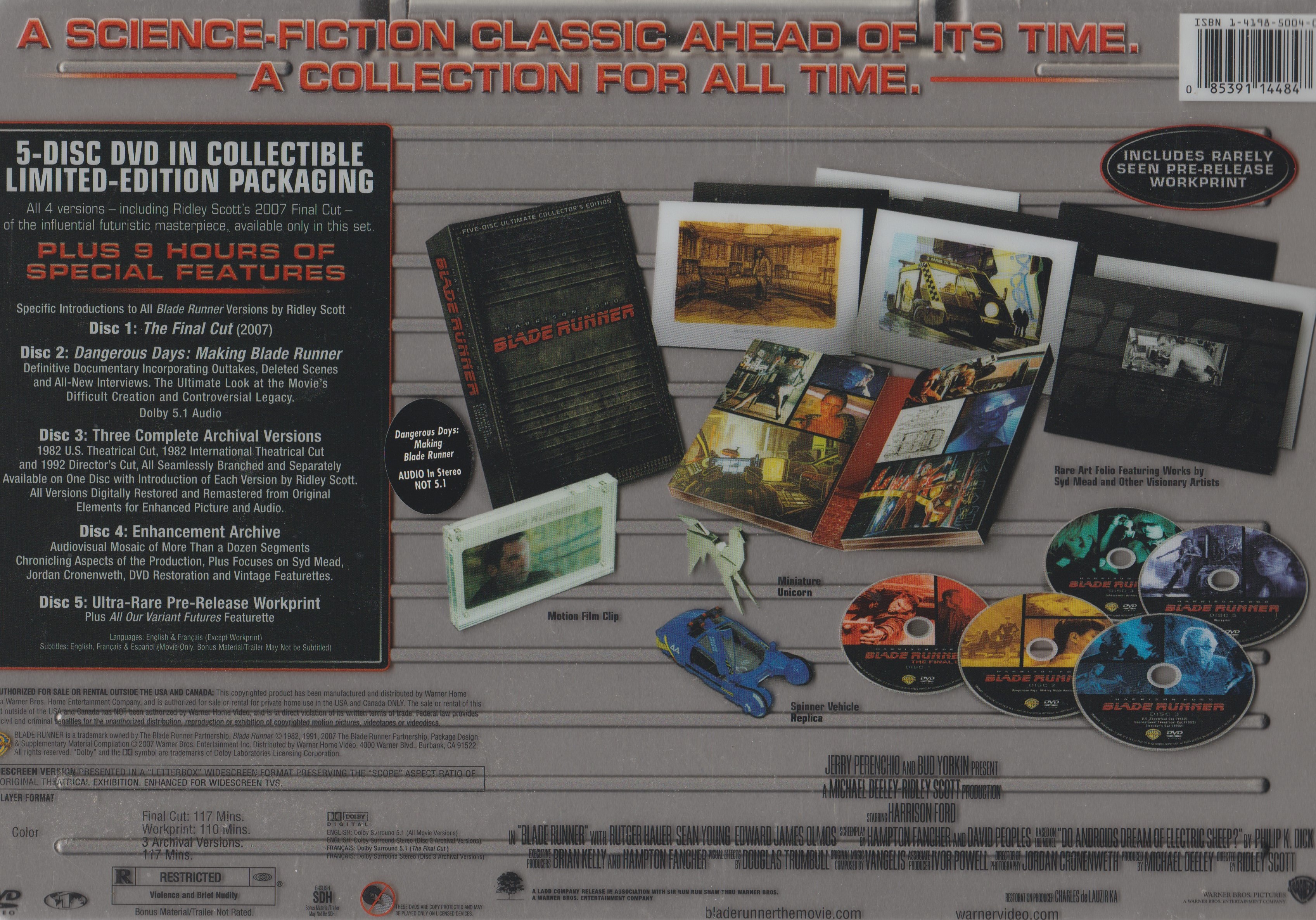
Version Guide

There are five distinct cuts of Blade Runner available on Blu-ray, so I figured I’d do a quick version guide and offer my opinion on the best version of the film (it’s not the Final Cut).

  • Work print (1982) – The original work print shown to test audiences. It is a few minutes shorter than the other cuts, which are practically all the same length. It contains different opening credits, and one instance of voice over narration during Roy’s death scene different than the one heard in the theatrical cuts.
  • U.S. Theatrical Cut (1982) – Voice over narration was added that elaborates on certain plot points and offers background information. This version also contains a happier ending.
  • International Theatrical Cut (1982) – Identical to the U.S. Theatrical cut, only it has a few instances of unedited violence.
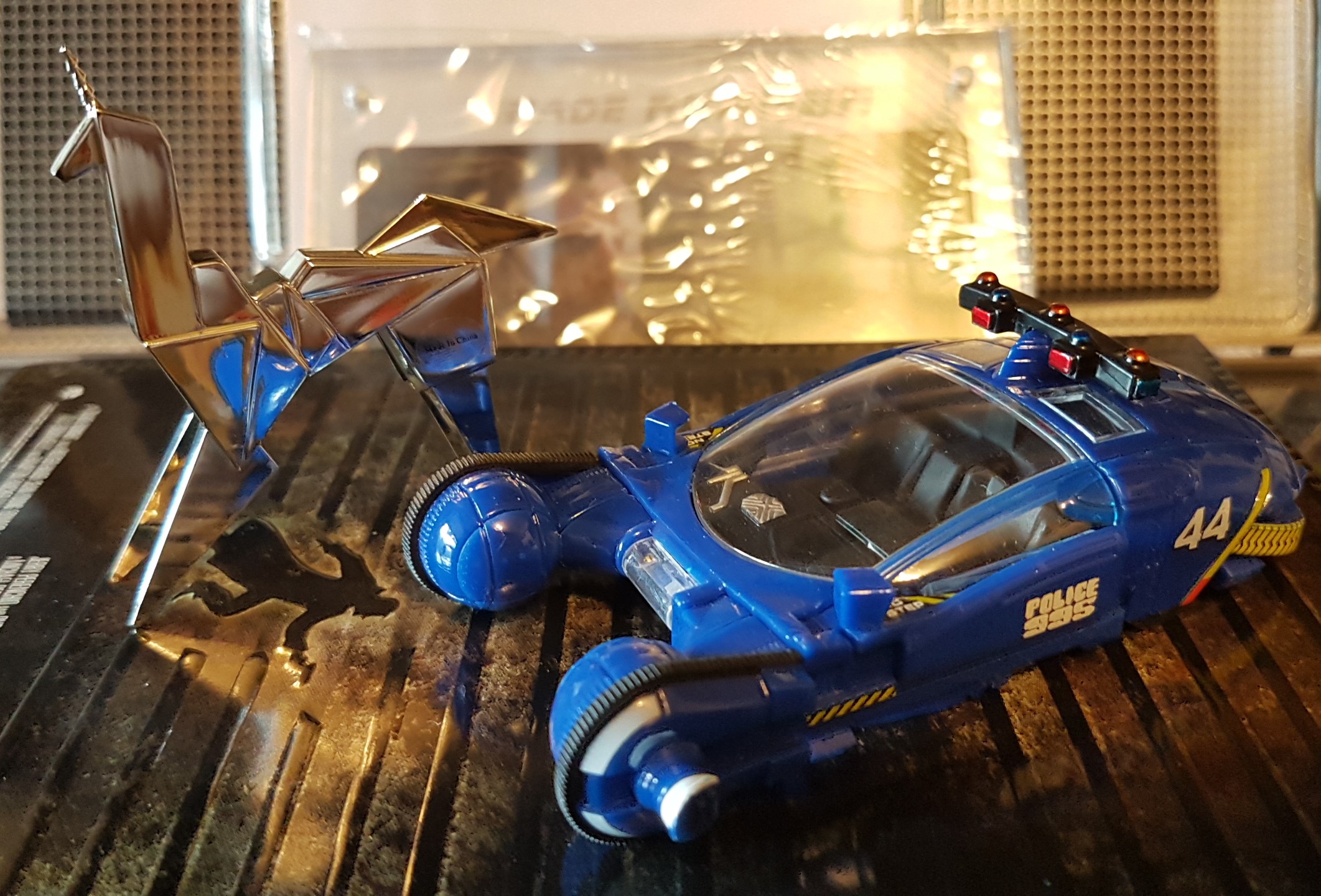
  • Director’s Cut (1992) – This version removes all voice over narration, and the happier ending. It also inserts a unicorn dream that heavily suggests that Deckard is a replicant. This version doesn’t contain the extra violence.
  • The Final Cut (2007) – Everything in this cut is cleaned up. The visuals, the sound, etc. Visible wires were removed from the flying cars, and an obvious stunt double’s face was digitally replaced with the actress’s face. Includes a longer unicorn dream, no narration, Roy apologizing to Sebastian before killing him, a different background for the dove shot, the violence from the international cut, and green color grading. Roy also says “I want more life, father.” This is the only version besides the work print where he says father instead of fucker.

My favorite (short version): The director’s cut.

My favorite (long version): The green color grading of The Final Cut is awful. It buries the spectacular world and neon colors in a gross green. Using CGI to replace a face and cover up wires is also a bit too revisionist for my tastes as well. I also think the assertion that Deckard is a replicant ruins the theme of the movie. Therefore, I don’t like the unicorn dream. I also don’t like Roy apologizing to Sebastian, it’s out of character. And father just isn’t as powerful as fucker, even with the God complex connotations. As for the theatrical cuts, the narration isn’t all that awful in my eyes (it’s performed pretty badly), but it is a better film without it. It has some interesting background information, but it ruins some of the ambiguity. I do like that the theatrical cut doesn’t push the idea that Deckard is a replicant, because it’s missing the unicorn dream. The happy ending is inconsistent with the movie’s tone though. So my ideal version would be the international theatrical cut without the narration, and without the happy ending. But since we don’t have that cut, my preferred version is the director’s cut, with the international cut coming in a very close second. You should watch both of those cuts just to get the full experience. I switch back and forth depending on my mood.

This review is dedicated to Rutger Hauer. Thanks for the films, man. We’ll miss you.
 

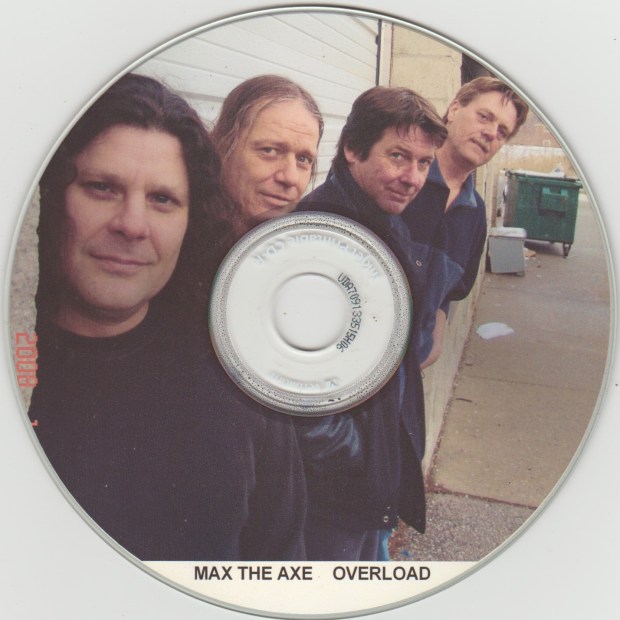
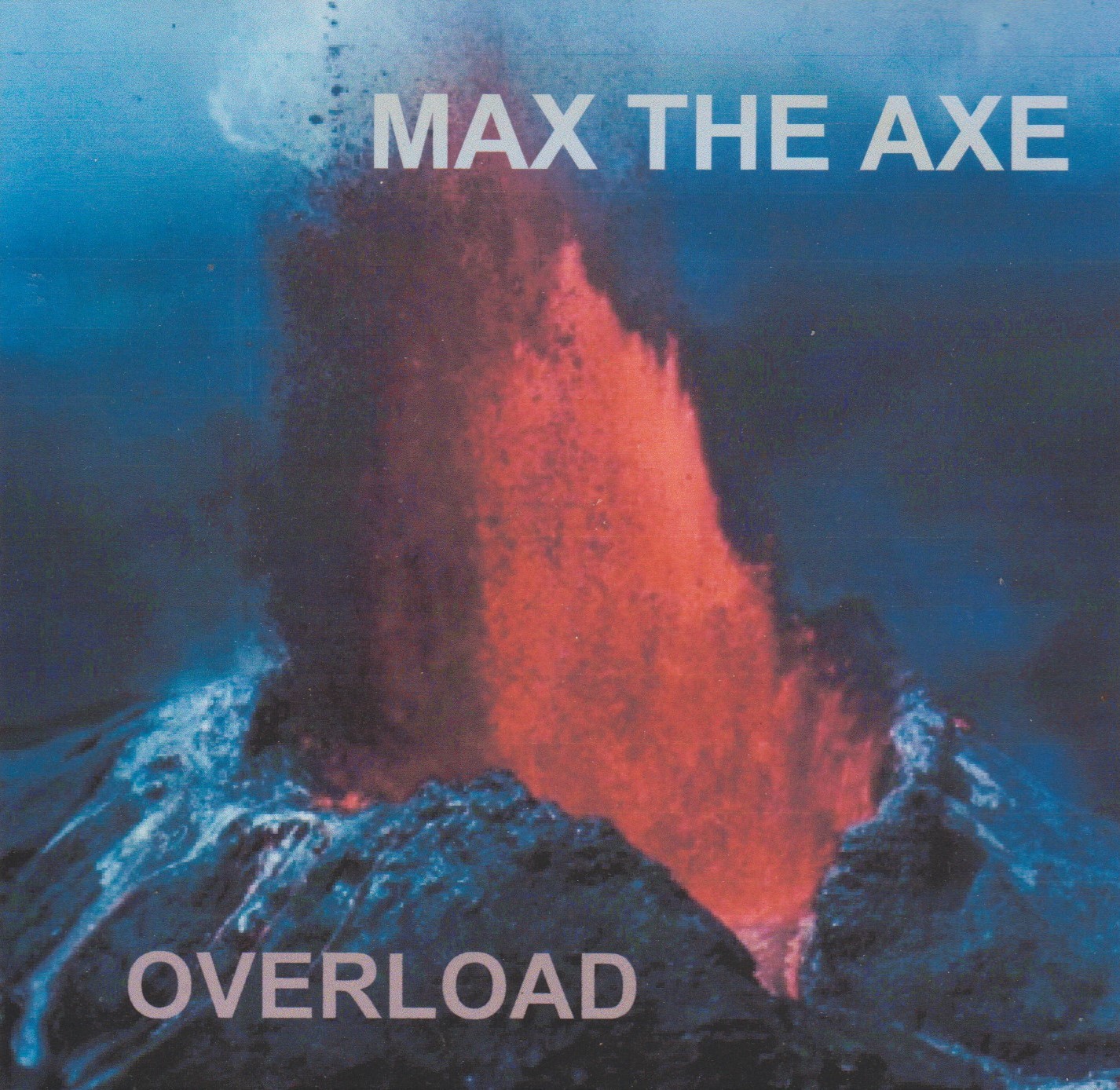
REVIEW: Max the Axe – Overload (2008 EP)

MAX THE AXE – Overload (2008 Mutant Mind EP)

The ever-prolific Max the Axe has plenty of CDs under his belt, but the 2008 EP Overload is one of his most pleasing.  Featuring vocalist Terry Guirey, Overload has six rocking tunes, clocking in at roughly 18 minutes.  No fuss, no muss, no fat to be trimmed.

Opener “Overload” (heard in the video below) begins quiet and ominously enough, but just when you’re expecting a Scorpions power ballad to start, in comes the heavy! “If I told you once, I told you over and over,” sings Guirey over a simple grungey punk riff. “‘Cause I’m prone to overload…” he says, so stand back. No guitar solo, just punk rock heaviness.

A jolt of feedback in “Blood Runs Red” illustrates the rawness of the recording. All you need is a riff and a melody, and Max serves it up blood-raw. He’s also not content to only give you just one riff per song! That’s also the case with “Labyrinth”, which settles into a nice groove.

If “River Grand” sounds familiar, it should. 10 years later, it was re-vamped with vocalist extraordinaire Eric “Uncle Meat” Litwiller on the Status Electric album.  While the Meat version is superior due to a tour-de-force vocal performance, the original still rocks with a grungier flavour.

A pair of Max favourites closes the CD.  “Livin’ the Country” and “Mexican Standoff” have to be heard live to fully appreciate them.  The CD will have to do for now.  “Livin’ the Country” is like Paranoid-era Sabbath, loosely riffing your balls off.  Stand by for a unique, patented Max guitar solo.  Then “Put your hands up!” for the “Mexican Standoff”.  If you live to tell the tale, you’ll want to hear it again.

Max should consider re-recording some more of these songs with Litwiller.  Max has the goods on Overload, an excellent primer for what was yet to come.

3.5/5 stars

REVIEW: KISSworld – The Best of Kiss (2017) – PLUS Kiss Re-Review Series complete directory

The KISS RE-REVIEW SERIES Part 47: The Conclusion

Two years ago, I bought this CD to use as the final review for the KISS Re-Review Series. I hadn’t played it.  I hadn’t even opened it. I wanted to save it for our conclusion…so here it is. A lot happened since we started, most notably the current End of the Road farewell tour.  Let’s wrap this series up in a bow.  And to do that properly you’ll find links to every single part and supplement to the KISS Re-Review Series below!


KISSworld – The Best of Kiss (2017 Mercury)
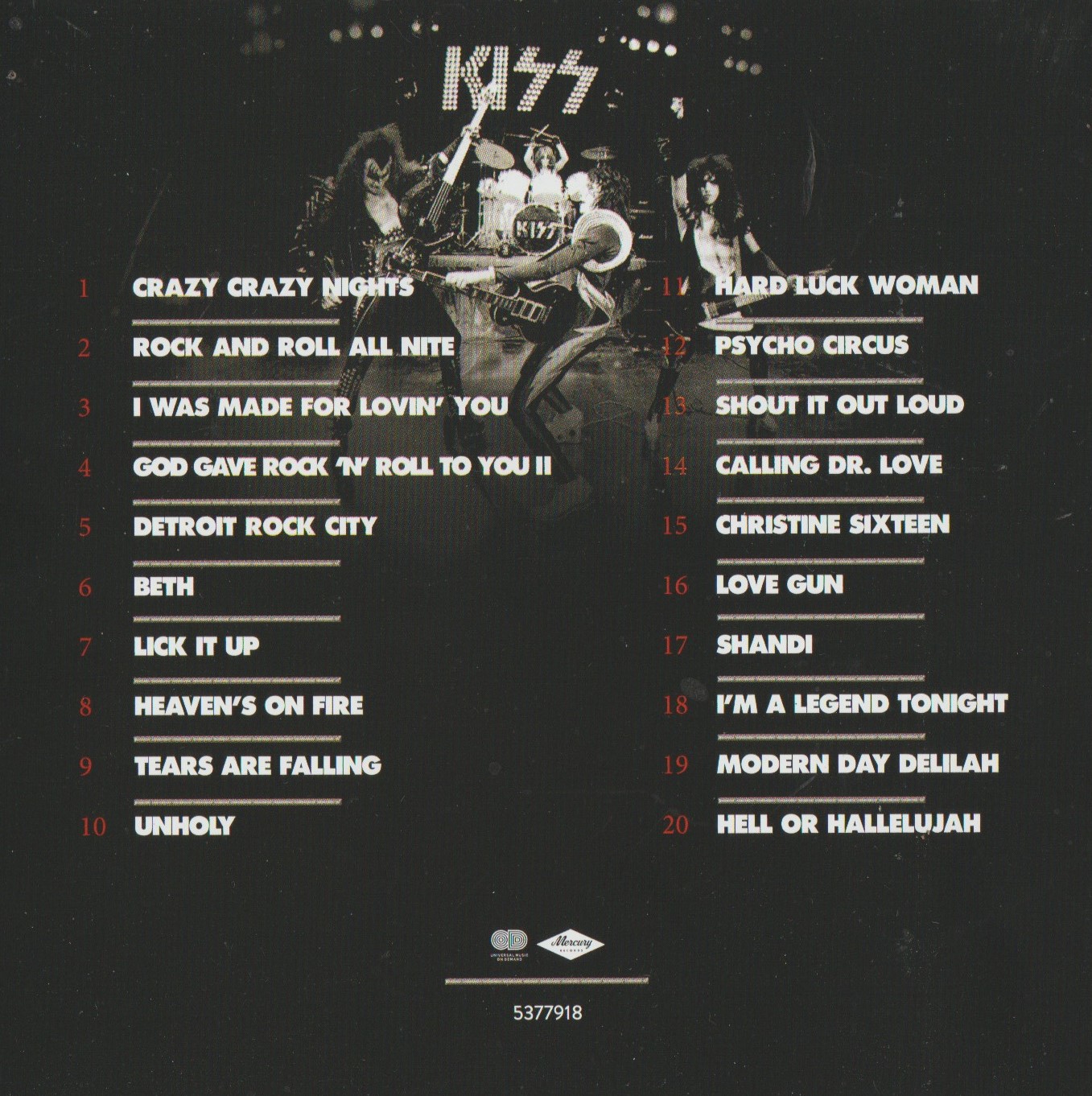
You know what KISSworld makes me miss?  The good old days when bands would bribe you into buying their new hits compilation by including something you didn’t have already.  In 1978, Kiss re-recorded “Strutter” for Double Platinum.  In ’82, Kiss recorded “I’m A Legend Tonight”, “Partners In Crime”, “Nowhere To Run” and “I’m A Legend Tonight” for inclusion on the UK compilation Killers.  And in ’88, Paul Stanley produced two new songs (“Let’s Put the X in Sex” and “(You Make Me) Rock Hard”) for Smashes, Thrashes & Hits.  Not great songs, but new ones at least, so you felt less foolish for handing Kiss more of your money.  By the time of 1996’s Greatest KISS album, they tacked on a new “live” version of “Shout It Out Loud”, and from that point on they pretty much gave up giving you any added value.  True, they did record “Samurai Son” for 2005’s KISS 40, but that was a mere blip in the overall pattern.

So in terms of reviews, all you can really talk about is song choice and running order.  It looks like KISSworld is just a revamping of various versions of KISS 40.  The running order is no longer chronological, but the songs are the same.  Opener “Crazy Crazy Nights” was on the single CD KISS 40.  “Unholy” was on the double CD version of KISS 40, albeit live.  “I’m A Legend Tonight” was on both, and so on.  It would have been nice to hear something you don’t get very often, like “All Hell’s Breaking Loose” or “Got to Choose”, but nobody expects bravery from a Kiss tracklist or setlist these days.

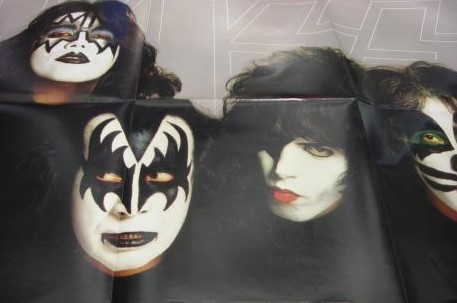
Kiss Dynasty poster

Fans who were buying Kiss albums during the peak years probably miss the excellent packaging Kiss would throw in for free.  Look at the mirror finish of the original Double Platinum LP, or the posters and masks and booklets that came with other albums.  Buy a Kiss CD today, get nothin’!  KISSworld has one vintage 1974 black and white photo inside, song credits and nothing else.  Granted, we know that Kiss doesn’t come up with these releases, it’s the record label.  And we keep buying them and buying them, “for the collection”, even though we know we’re going to be disappointed.  The label isn’t thinking of us when they issue this stuff.  They think of it as a part of their latest marketing push, aimed at people buying their first Kiss (or first Kiss in decades).  But they know — they know — that we fans are buying these things too.  They can’t throw us a bone?  What is there here for us?

Nothing, except another CD to file in the appropriate slot, making our collections “complete” again.  Will you listen to it?  Maybe, if you’re tossing coins and can’t decide which greatest hits to play on this particular road trip.  It is, however, the most complete of the in-print, easily-acquired hits CDs.  For a first timer, it would appear to make sense to grab this over Double Platinum or one of the other choices at the CD shop.  You’d be getting a good variety of tunes from over their entire career.  But you’re not getting something assembled with any logic or care, nor are you buying a fair representation of their best stuff.  In fact, this CD only has one song from their first three albums (“Rock and Roll All Nite”)  You could make a greatest hits just from their first three albums!  KISSworld‘s ill-considered tracklist is its downfall.

1/5 stars


THE COMPLETE KISS RE-REVIEW SERIES

GETTING MORE TALE #551: “You’re Wrong on Unmasked“ (Introduction to the Kiss Re-Review series)
Part 1: Wicked Lester (1972) & the Eddie Kramer demos (1973)
Part 2: KISS (1974 Casablanca)
Part 3: Hotter Than Hell (1974 Casablanca)
GETTING MORE TALE #353: Hotter Than Hell
Supplemental: DUST – Hard Attack (1972) / Dust (1971) (2013 Sony Legacy)
Part 4: Agora Ballroom 1974 (2015 Go Faster)
Part 5: Dressed To Kill (1975 Casablanca)
Part 6: Alive! (1975 Casablanca)
GETTING MORE TALE #552: Alive!
Part 7: Destroyer (1976 Casablanca)
Part 8: Rock and Roll Over (1976 Casablanca)
Part 9: Love Gun (1977 Casablanca, 2014 deluxe)
Part 10: Alive II (1977 Casablanca)
Part 11: KISS Meets the Phantom of the Park (1978 Hanna-Barbera TV movie)
Part 12: Double Platinum (1978 Casablanca)
Part 13: Peter Criss (1978 Casablanca)
Part 14: Ace Frehley (1978 Casablanca)
Part 15: Gene Simmons (1978 Casablanca)
Part 16: Paul Stanley (1978 Casablanca)
Part 17: Dynasty (1979 Casablanca)
Part 18: Unmasked (1980 Casablanca
Supplemental:  PETER CRISS – Out of Control (1980 Casablanca
Part 19: Best of Solo Albums (1979 Phonogram)
Part 20: Music From the Elder (1981 Casablanca, 1997 Mercury remaster)
Part 21: Killers (1982 Germany and Japan versions)
Supplemental: PETER CRISS – Let Me Rock You (1982 Casablanca)
Part 22: Creatures of the Night (1982 Casablanca, 1985 Polygram reissue)
Part 23: Lick It Up (1983 Polygram)
Part 24: Demos 1981-1983 (Bootleg)
Part 25: Animalize (1984 Polygram)
Part 26: Animalize Live Uncensored – audio portion (2015 American Icons)
Part 27: Runaway (1984 Tristar feature film)
GETTING MORE TALE #579: Entering the Asylum
Part 28: Asylum (1985 Polygram)
Part 29: Crazy Nights (1987 Polygram)
Part 30: VINNIE VINCENT INVASION – Vinnie Vincent Invasion (1986 Chysalis)
Part 31: eXposed (1987 Polygram VHS)
Part 32: Monsters of Rock (Bootleg from 1988 tour)
Part 33: In the Land of the Rising Sun (Bootleg from 1988 tour)
Part 34: The Ritz, NYC, 12th August 1988 (2015 American Icons)
Part 35: VINNIE VINCENT INVASION – All Systems Go (1988 Chysalis)
Part 36: Smashes, Thrashes & Hits (1988 Mercury)
Part 37: KISS – Still On Fire (Dave Thomas & Anders Holm (1988 book)
GETTING MORE TALE #608: Hot in the Shade
Part 38: Hot in the Shade (1989 Polygram)
Part 39: “Forever” (1990 Polygram EP
GETTING MORE TALE #690: Unholy Kisses
Part 40: “God Gave Rock & Roll to You II” (1991 Interscope single)
Part 41: ERIC CARR – Rockology (2000 EMI)
Part 42: ERIC CARR – Unfinished Business (2011 Auto Rock Records)
Part 43: Revenge (1992 Polygram)
Part 44: Alive III (1993 Polygram)
Part 45: KISS My Ass – Classic Kiss Regrooved (1994 Polygram)
GETTING MORE TALE #697: Kiss My Ass
Part 46: Toronto – Scotiabank Arena, March 20 2019
Supplemental: KISS Playing Cards
Supplemental: KISS Crocs
Part 47: KISSWorld – The Best of Kiss (2017 Mercury)

AND THERE’S STILL MORE!

72 MORE KISS REVIEWS available by clicking this link!


REVIEW: Alice Cooper – “It’s Me” (1994 single)

ALICE COOPER – “It’s Me” (1994 Epic single)

The Last Temptation, Alice Cooper’s acclaimed 1994 concept album, spawned a couple collectable CD singles.  Collectable, because 1) they had unreleased live B-sides, and 2) Eric Singer of Kiss played drums on them!

As far as Alice ballads go, “It’s Me” is not particularly special.  The song fits into the story of the album, but it’s musically in the same vein as the ballads from Trash and Hey Stoopid.  The mandolin is a nice touch, but Alice has more fondly remembered ballads.  “It’s Me” works best as part of the album it was written for.

The two live tracks were recorded in ’91, which actually makes Eric Singer pre-Kiss in this case.  “Poison” is stunning sounding live, but still with rich backing vocals.  The chorus of “Poison” requires several backing singers and Alice’s bands are always equipped for the job.  You can’t tell if Eric Singer is one of the vocalists, but you can easily recognise his style on the drums.  That’s him alright!  “Sick Things” is a strange one live; always has been.  Here, it is inflamed by guitarists Stef Burns and Pete Freezin’ (Freisen).

Alice’s CD singles were hard to find in the early 90s, but thanks to the internet you can get them affordably.  If you’re a Kiss collector, this is one to consider.  If not, just enjoy a snapshot of Alice live during an era that is so far undocumented by a live album.

3/5 stars

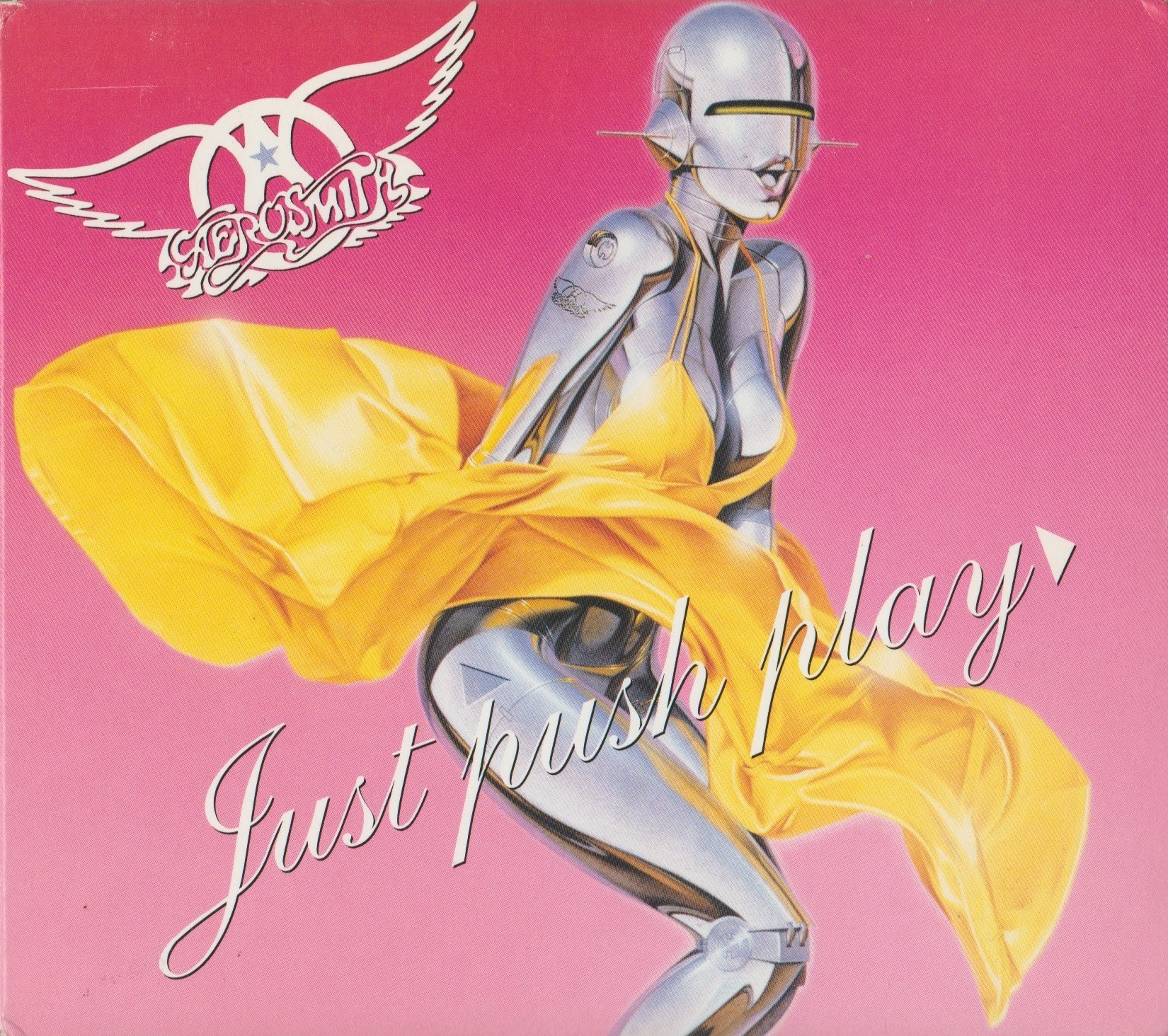
REVIEW: Aerosmith – Just Push Play (2001 2 CD Japanese edition)

AEROSMITH – Just Push Play (2001 Sony Japan 2 CD set)

Funny thing about some pretty bad albums: sometimes the bands con you into buying them twice. They do this with bonus tracks you may need and can’t find elsewhere. Aerosmith have been guilty of this on multiple occasions. You know what they say about fools and money.

In 2001, Aerosmith did it with Just Push Play. They placed a bonus track on the European CD (“Face”), and a completely different set of bonus tracks in Japan…but excluding “Face”. As one of the looser songs on a pretty stiff album, “Face” is pretty enjoyable.  So what about Japan’s exclusive song, “Won’t Let You Down”?  Well, for one it’s heavy.  For Aerosmith, it’s really heavy.  You could picture it on a better album like Nine Lives.  Though not perfect it’s a damn fine latter-day Aerosmith track.  It just needs another hook.

“Won’t Let You Down” and its associated Joe Perry guitar wizardry is the most interesting of the bonus tracks, but that doesn’t mean the rest are not.  Though “I Don’t Want To Miss A Thing” is more than slightly boring today, it was Aerosmith’s biggest hit to date.  This was the first time it appeared on an Aerosmith album, and only in Japan.

The second CD has a diverse stew of bonuses.  The first is a 3:17 radio remix of “Just Push Play”.  It’s mostly a matter of making the guitar, drums and other elements more prominent in the mix.  It’s quite a bit better than the album cut, though just as silly.  You gotta wonder if anybody in the studio told Steven to try it without the rasta accent.  That’s the remix I want to hear, because the chorus is great.

Moving on to live rarities, Aerosmith included a handful of previously released tracks that weren’t necessarily already in your collection.  First up:  California Jam II.  “Same Old Song and Dance”, “Draw the Line” and “Chip Away the Stone” were all available on the various artists album California Jam II.  If you have this, you don’t need to buy that.  The year was 1978 and Aerosmith were still cooking live.  Whether it comes from youthful or chemical energy, these tracks are faster than their studio counterparts.  Rough and dirty live Aerosmith without the backing tapes and fixes:  what’s not to love?  “Draw the Line” has more…definition?…than the original.  Still, smoking so hot that Joe Perry probably melted his strings.  It’s just plain great to any live version of “Chip Away the Stone“.  Top five Aerosmith song?  Welcome to the collection.

That’s not all folks, as we stick to 1978 and the famous Texxas Jam.  “Big Ten-Inch Record” and “Lord of the Thighs” would be familiar if you own Pandora’s Box.  Strange they included two tracks that were readily available, but here they are and there’s nothing wrong with ’em.

A brief word on the album Just Push Play itself.  We’ve already reviewed it in full, so let’s not rehash.  Joe Perry’s least favourite Aerosmith albumy panders for hits in the most embarrassing ways.  Hi-tech recording and outside songwriters watered it down.  The old Tyler/Perry combination was not to be found on a single track.  The other three guys have not a single writing credit between them.  It’s a sad state of affairs.

If you’re a masochist like me, you’ll want to get this one for the bonus tracks.  If not, just stay away.

Just Push Play1/5 stars

Bonus CD – 3/5 stars

REVIEW: I Mother Earth – No One (1993 promo cassette)

“No one leaves the caravan.” – IME

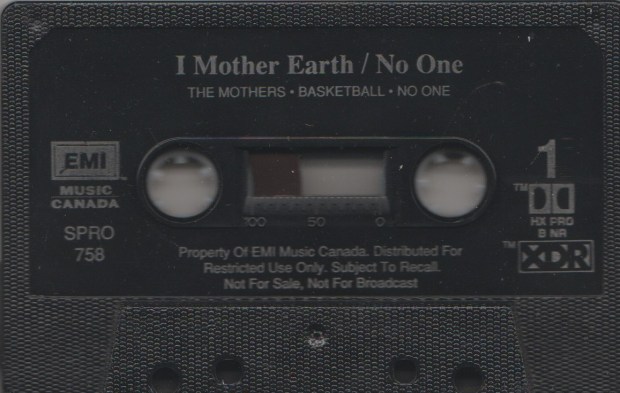
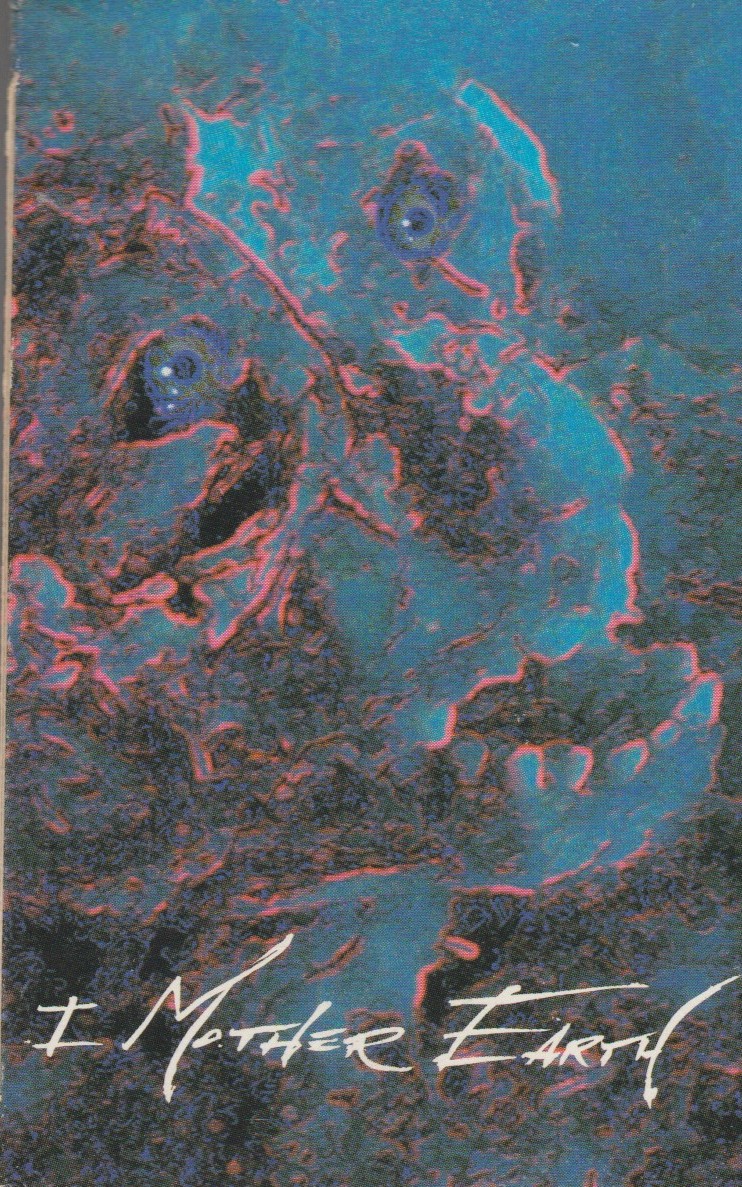
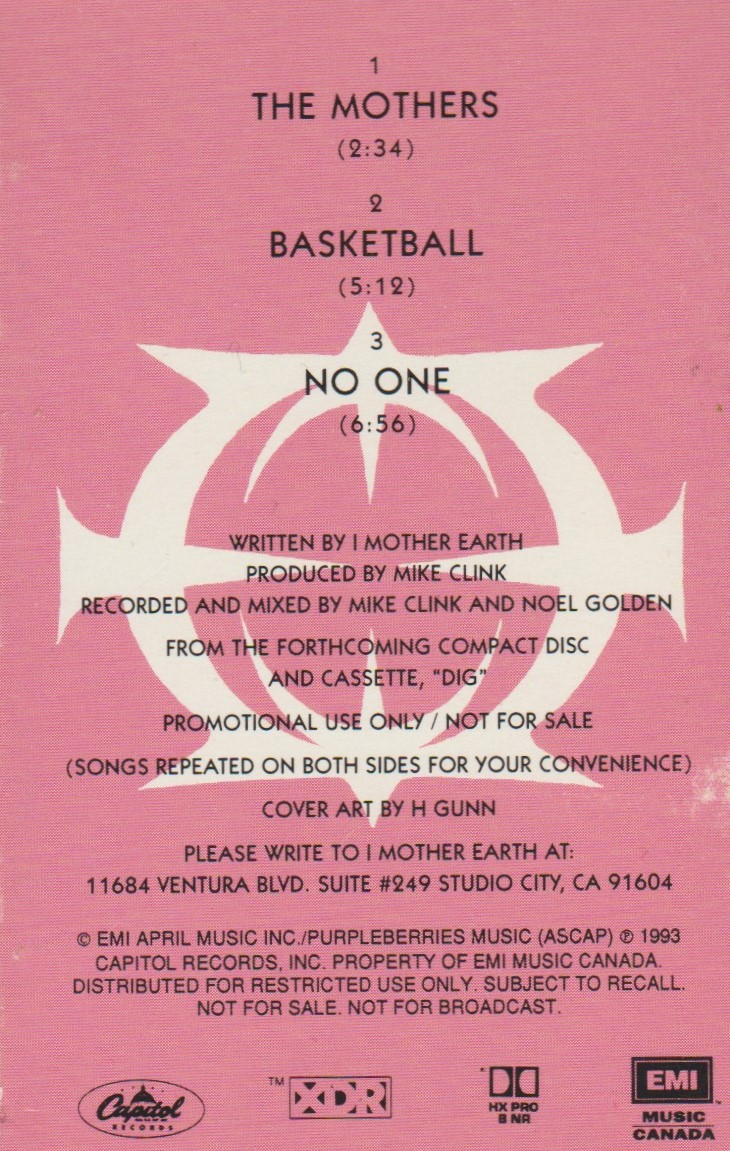
I MOTHER EARTH – No One (1993 EMI promo cassette)

M.E.A.T Magazine was such an awesome resource for Canadians.  Their exclusive metal content really was second to none.  M.E.A.T was on top of virtually every new Canadian band on the scene.  Thanks to them, we knew all about I Mother Earth well before they were signed to EMI.

Then one day in early ’93, M.E.A.T arrived in the mailbox slightly thicker than usual.  Inside the envelope was a free cassette tape, a promo provided by EMI.  Time to see what this I Mother Earth band sounded like.  Would they live up to the hype that M.E.A.T was creating?

The full length album Dig was not released until later that summer.  Even the music video for “Rain Will Fall” hadn’t come out yet.  This EP, titled No One, was all brand new to me.  It received a lot of play.  Out walking with the Walkman, in the car, at home or at the lake:  I Mother Earth swiftly consumed me.  I felt pretty cool hearing all this music before the masses did.  They were gonna love I Mother Earth.

The cassette (repeated both sides) wisely opened with the chiming guitars of “The Mothers”.  Softer and more psychedelic than I expected.

“Listen…to the Mothers…” sings Edwin.  The track meanders on a little bit, not quite a full song but also more than just an intro.  “A surreal sound of eight-legged groove, a serving of today’s psycadellicasy.”  The clever words were written by drummer Christian Tanna, although I certainly couldn’t make them out on my own.

After a long 10 second gap, the uberfunk of “Basketball” crushes the speakers.  It’s almost too fast, but surely demonstrated that these Torontonians could play.  It’s more than just rock music.  The exotic percussion coupled with the tribal-sounding drums really took it all to another level, whether they were playing funky or psychedelic.  There’s always room for exotic percussion.

I called “No One” the centrepiece of the album, and so it is also the highlight of this tape.  Rather than hyperspeed funk, this one is built around guitar riffs.  There are two riffs in particular on this song that just steamroll.  When joined with the full-on groove of I Mother Earth, the riffs dominate your brain.  Then it gets quiet as Edwin chants “No one leaves the caravan…”, and this serves as a reset before the song comes back full strength for the kill.  Listening today, it seems almost impossible for a band to have a song this advanced on their first album.  It’s seven minutes of riff, percussion and melody yet there’s no fat to trim out.  You’d expect something like this on a third album, not a debut.

Interestingly, none of the songs on this EP were singles.  Dig ended up producing four singles.  Consider the strength of this promo tape, and you can extrapolate that Dig is probably a really strong album.  You would be correct.

5/5 stars

SF19-1: Brand New

Sausagefest 2019


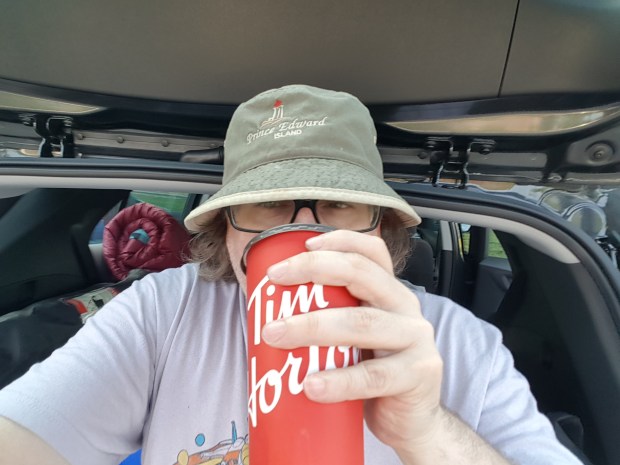
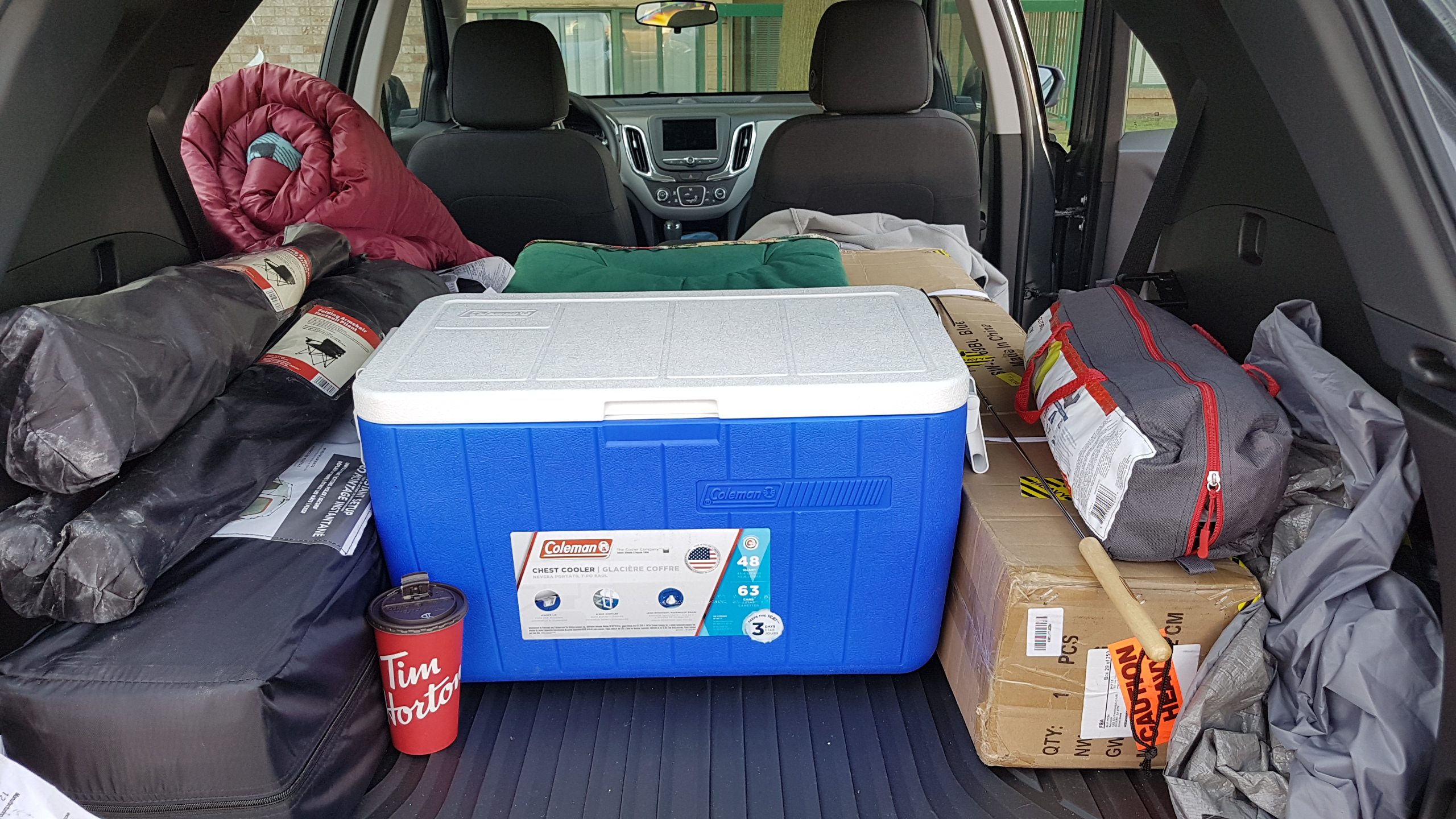
New vehicle.  New tent.  New canopy.  New chairs.  New camera.  New Kiss Crocs.  New jokes.  New songs.  Same old me.

I have the meat, now I just need the Meat.  I have specially curated a number of 8 gig flash drives full of music, including the entire Kiss catalogue.  There’s an old riddle dating back to at least 2015: “How many versions of “Beth” does it take to wake up Uncle Meat?”  We’ll find out!

I’m in a Bosstones mood so let’s rock! I will be openly campaigning for enough votes to get this song on the Countdown in 2020.


REVIEW: Vinyl Disc – a CD and a record all in one

VINYL DISC

If you love physical media (and chances are that you do or you wouldn’t be reading this) then you probably love it in all its myriad shapes and forms. Let’s be honest, when it comes to sheer varieties, there are far more weird vinyls out there than CDs. Picture discs, shaped discs, discs with liquid or actual objects inside the record, odd speeds, colours, thicknesses…you can take the vinyl LP in so many different directions. When you mess around with the CD format (shaped discs, enhanced discs, CD/DVD DualDiscs) you often end up with a product that won’t play in all players. Vinyl tends to be good to go for whatever turntable you have, though you will need a manual over an automatic when it comes to the Vinyl Disc.  That’s because it’s a 5″ disc, not a 7″, so you want to make sure you drop the arm on the media and not the platter.

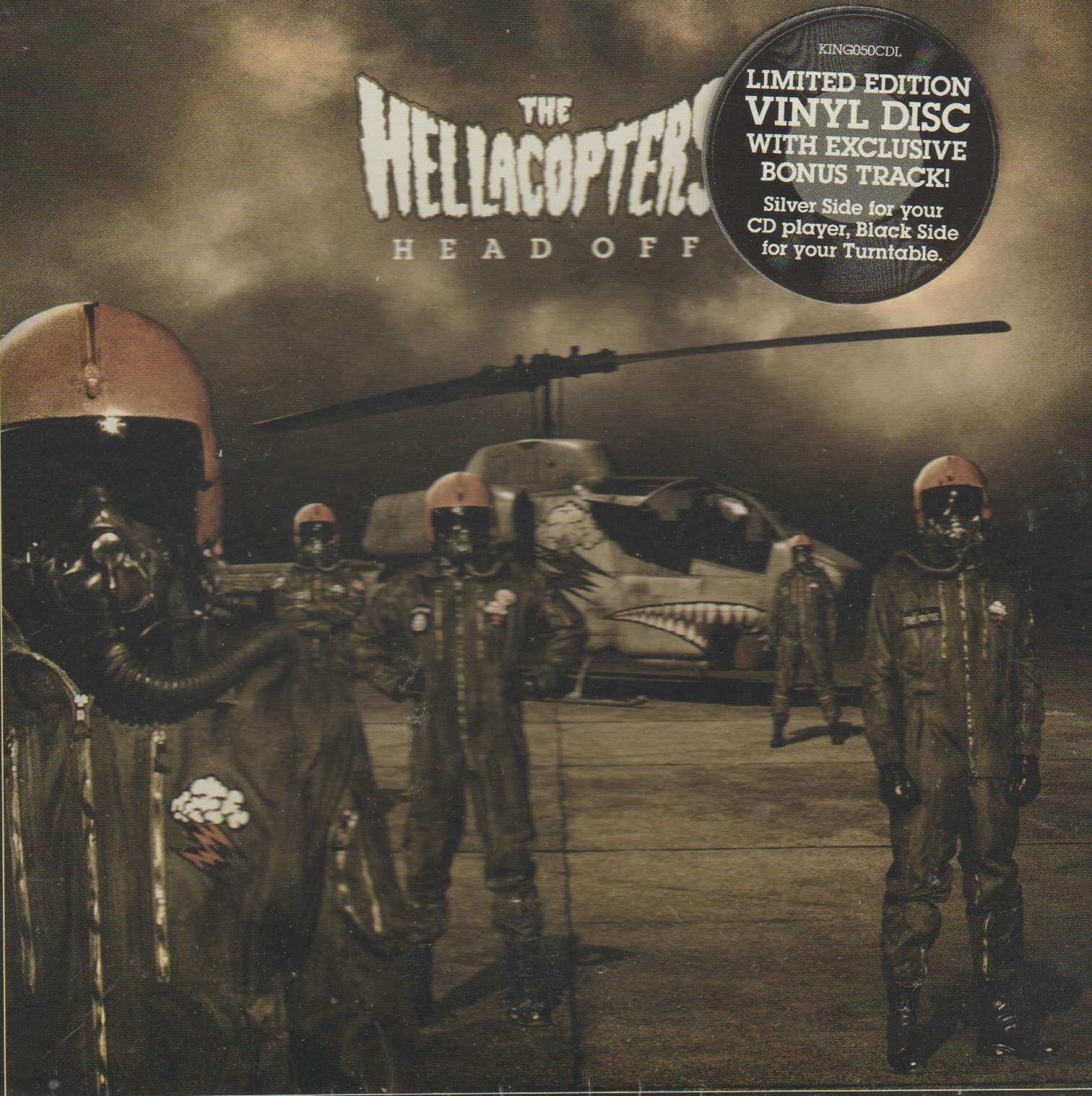
When it comes to odd formats, Youtuber Techmoan (or Mat if you’re not into handles) is the expert.  When I saw his video on the subject, I knew I wanted to get a Vinyl Disc just for the novelty value.  This is a CD that has normal CD content on one side, but a groove on the other.  This groove can be played on a record player, revealing a bonus track.  I wondered if any bands I liked had ever released one.

It turns out, one had:  The Hellacopters, who are vinyl-mad in the first place.  I have a couple albums of theirs with vinyl-only bonus tracks.  I didn’t own the album Head Off, so I went to Discogs and got the Vinyl Disc version.

In his video, Techmoan complained of the poor sound quality on the vinyl side of the CD.  My copy of Head Off was factory sealed, but still suffers from pops.  Perhaps I should not have played the CD side first.  The vinyl side could have picked up dust from inside my computer.  I played the vinyl side twice, the second time after a light cleaning.  Both times there were loud, distracting pops.  You can see them clearly in Audacity.

The sound quality was never going to be as good as a real record, not with those grooves packed so tight.  And how deep can they actually be?  Of course it has to play at 33 1/3 RPM.  While it’s not as bad a flexi-disc quality, don’t expect much better performance than that.  It’s flat and indistinct.

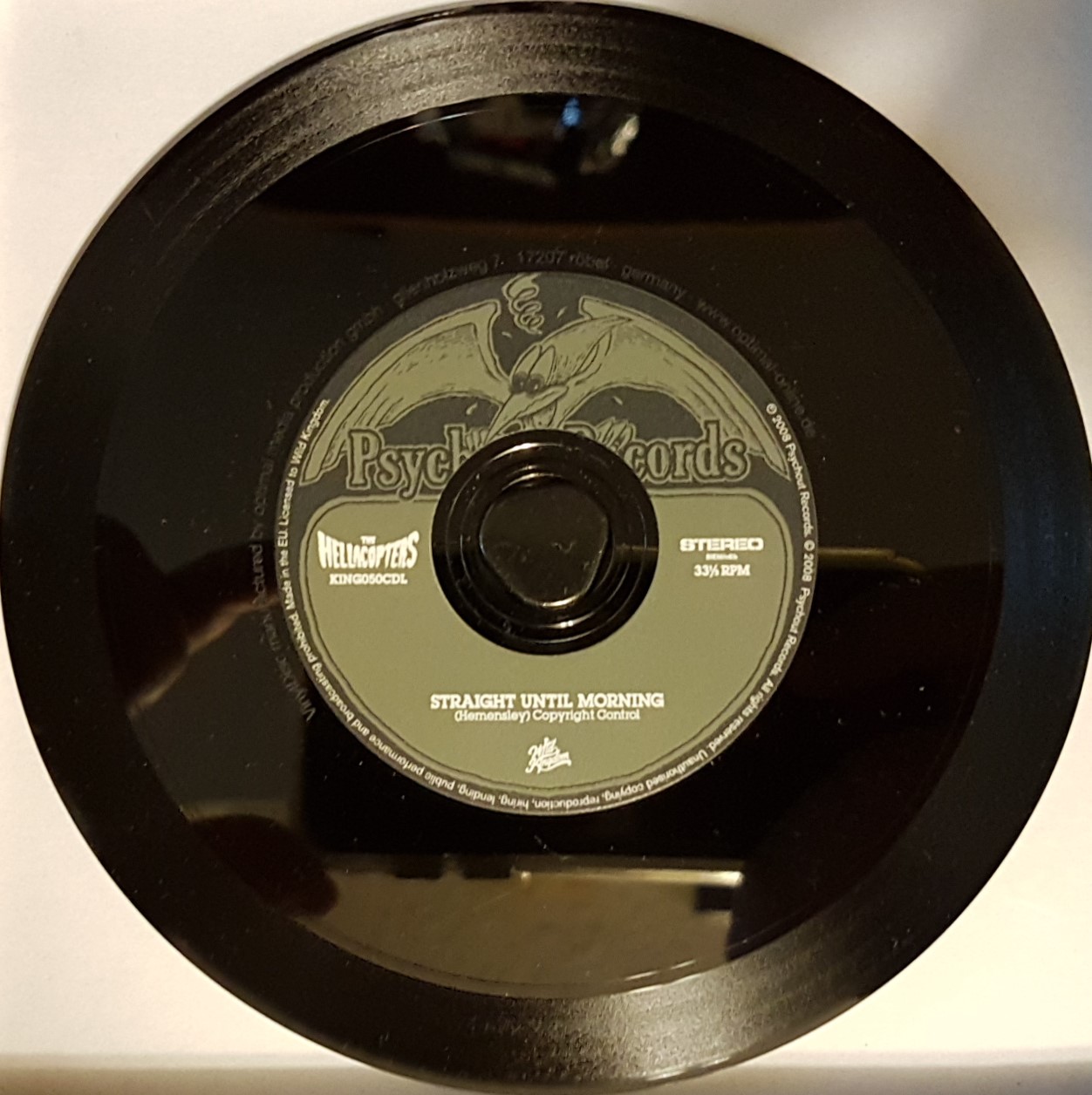
You also end up with inner groove distortion over the entire song, simply because a Vinyl Disc is basically all inner groove.  Look at the pictures below.  The entire disc is well within the runout groove on an LP, being just a little larger than the label.  It’s darned close on a standard 45.  Point is, compared to real vinyl, this disc is tiny, and that has consequences.

Distortion and noise matters less with a band like the Hellacopters.  A little inner groove distortion sounds OK on them, but not for other groups.  So, the vinyl side of the Vinyl Disc is a novelty.  Serious record fanatics are not going to want to listen to it, because it won’t be up to par for them.

What about the CD side?  No issues whatsoever.  It plays exactly like it should, with no side effects that sometimes plague non-standard CDs.  In this case, the album is only 36 minutes long, which I am sure will have many people asking “then why bother with putting another song on the other side?  Why not put them all together on the CD side?”

A very good question.

Look, this type of CD was launched in 2007 and only lasted about a year.  There was a reason it didn’t catch on, and you can hear that reason.  For 99% of the population, all they would have needed was all the songs on the CD.  It’s the 1% of us nutters that love weird stuff like this.  There is a very, very low number of people who sit up at night thinking, “Would it possible to play a CD on a record player if it had grooves?”  But I promise you, we exist, and our questions have been answered.

Yes, it’s possible.

But no, there really isn’t a good reason to want to do it.  Oh, I suppose if you had an album that was just over 80 minutes, and you needed to leave a song off (like Extreme did), you could have put it all on one Vinyl Disc.  But for far less cost, you also could have just included two CDs.

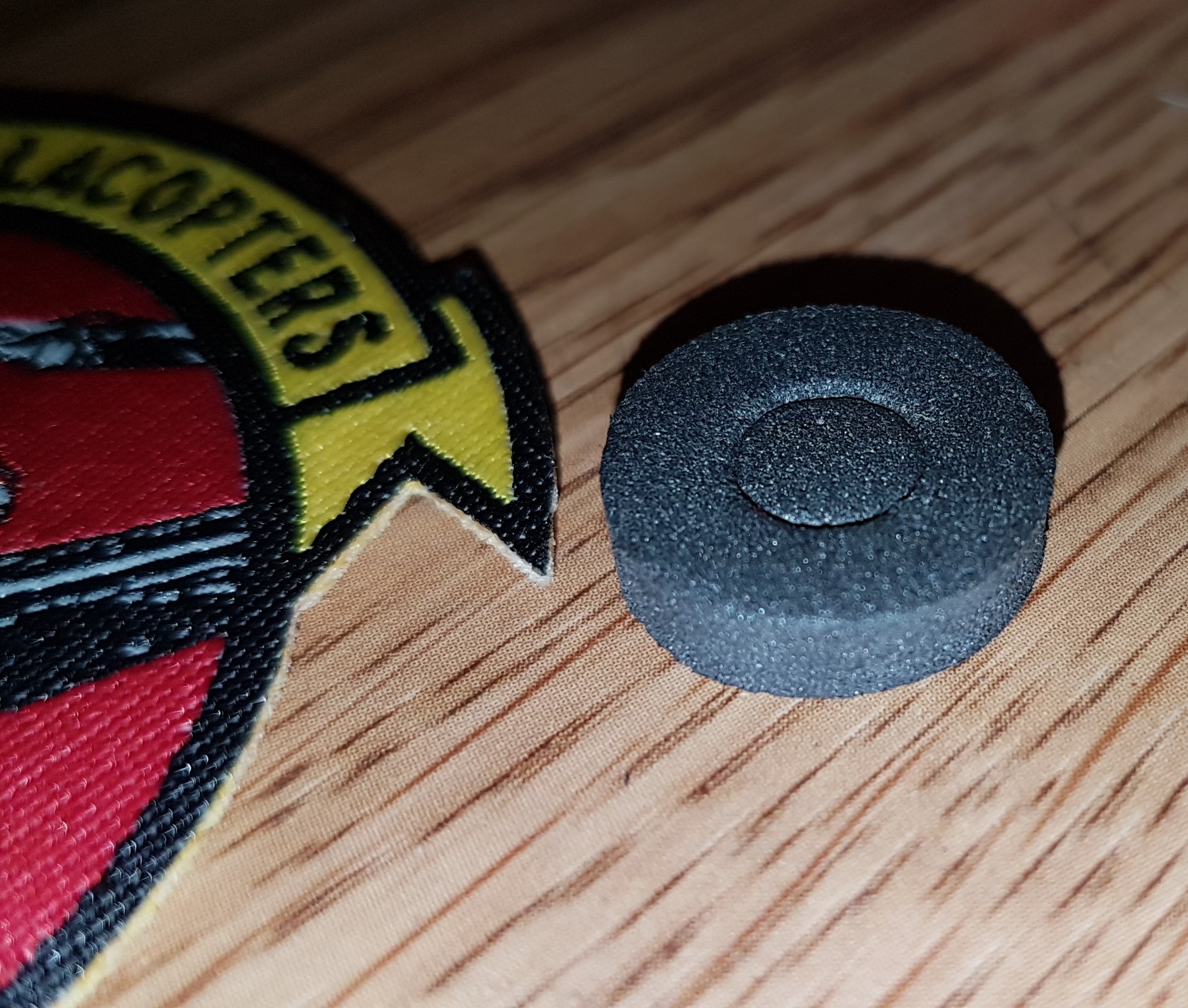
The vinyl disc comes with a little spacer, like a foam donut, so the larger CD hole will fit nicely on a record player.  This ensures nice smooth play.

Whoever it was that figured out how to marry a CD to a record, they are unsung geniuses. They answered the questions of insomniac format-heads worldwide, and they got it to work.

Just because it doesn’t work particularly well doesn’t mean it wasn’t worth it.


REVIEW: Helix – Icon (2018)

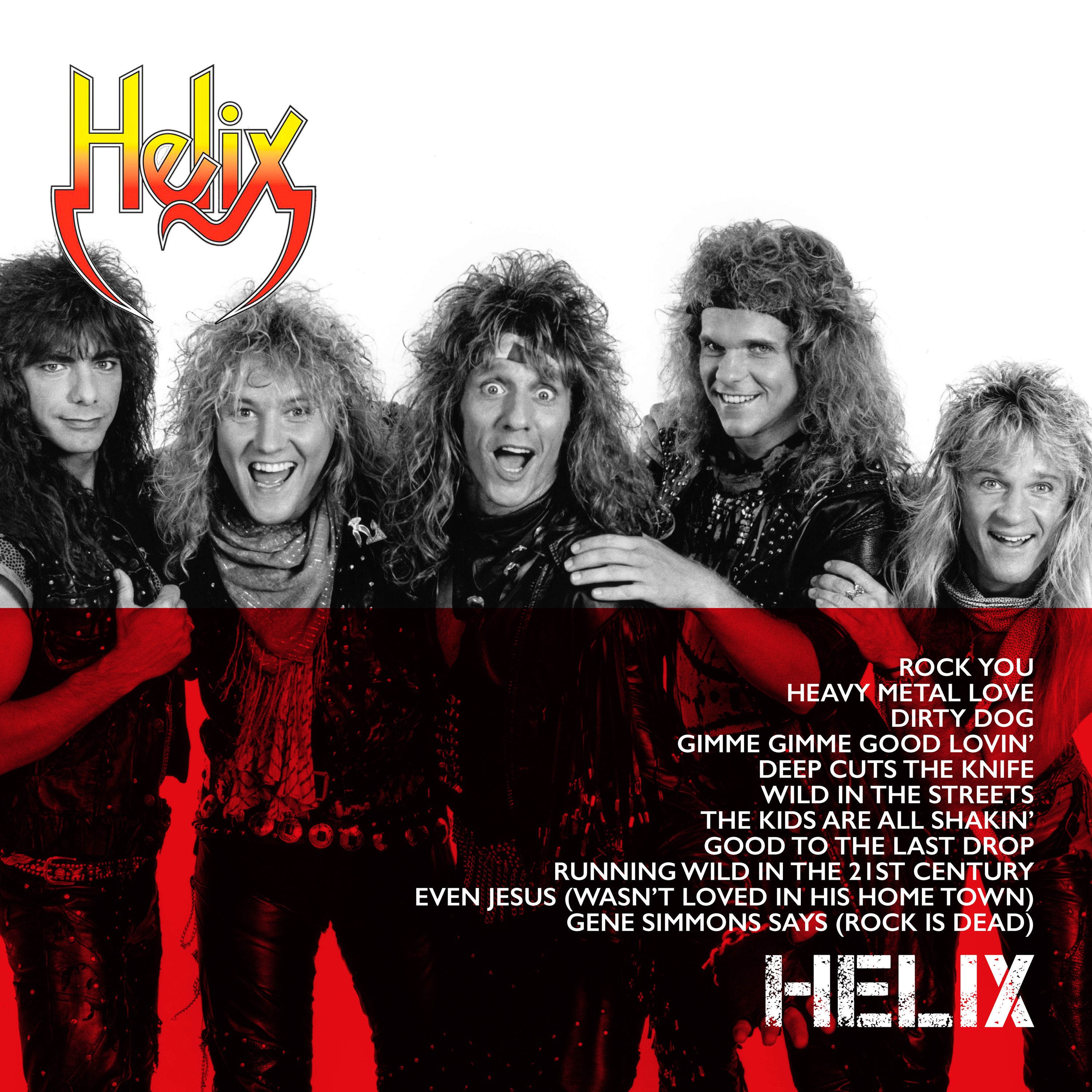
HELIX – Icon (2018 Universal vinyl)

New Helix vinyl?  Yes please.

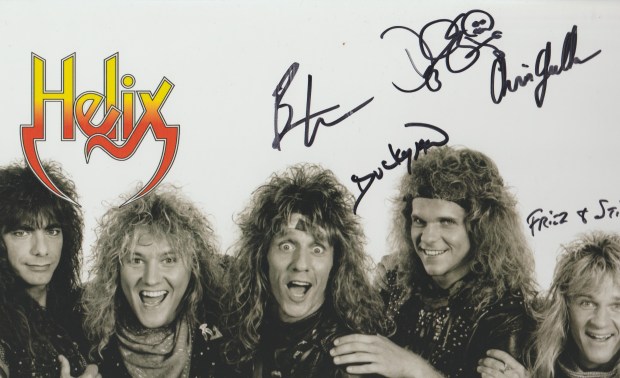
The Icon series of compilations used to be a budget CD line that you could pick up for $5 or under.  Now, you can even get ’em on vinyl.  Buy ’em direct from Helix mainman Brian Vollmer and he’ll sign it for you.  This copy is signed by all five current Helix members, including a pre-injury Fritz Hinz.

As far as Helix compilations go, you can’t do much with just 11 tracks.  Even so, Icon has some surprises and plenty of pleasers.  There’s also enough difference from 2016’s compilation Rock It Science to justify it.  Opening with the one-two punch of “Rock You” and “Heavy Metal Love”, Helix top loaded this thing with their best known songs.  Perfect for the newcomer, or just a great party.

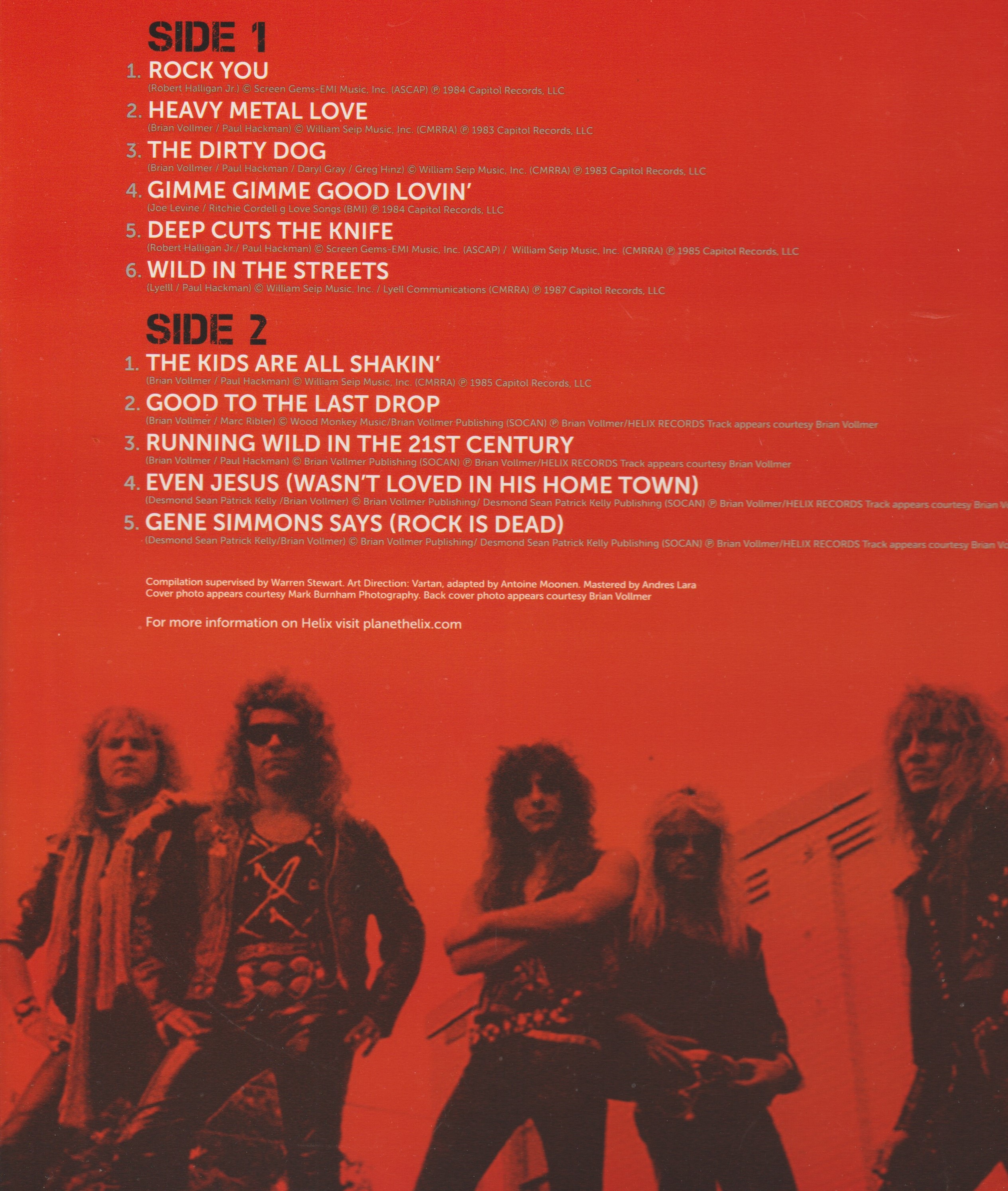
From there it’s “The Dirty Dog”, a long time Helix concert favourite.  This is followed in quick succession by some great singles:  “Gimme Gimme Good Lovin'”, “Wild in the Streets” and the dark ballad “Deep Cuts the Knife”.  All three songs are considered to be Helix classics.  “Deep Cuts the Knife”, written by guitarist Paul Hackman, is a particularly powerful ballad.  The entire first side is from the Capitol Records years, featuring the best known Helix lineup:  Vollmer, Hinz, Hackman, Brent Doerner and Daryl Gray.

Side two has a different flavour.  Only the hit “The Kids are All Shakin'” originates in the 1980s.  This top Helix pop rock track is followed by the Helix of the 90s and today.  “Good to the Last Drop” is another ballad, but much brighter than “Deep Cuts the Knife”.  This is the original album mix, with minimal keyboards.  Then it’s “Runnin’ Wild in the 21st Century”, kicking your teeth in at lightspeed.  The last two songs feature some help from guitarist extraordinaire Sean Kelly.  A razor sharp “Even Jesus Wasn’t Loved in His Home Town” comes from 2014’s excellent Bastard of the Blues.  The aggressive rocker is based on the fact that Helix can’t even their new songs played on the radio in their home town of Kitchener, Ontario.  Finally, the 2016 single “Gene Simmons Says (Rock Is Dead)” tells the demon where it’s at!  Maybe Helix don’t get radio play in Canada but rock ain’t dead — not if Vollmer and Co. have anything to say about it!

When it comes to Helix compilations, they are so numerous that you can really take your pick.  If you really care about the band, then just buy ’em direct from Vollmer at Planet Helix.  There are loads to choose from, but only this one was ever made on vinyl.  Or, you can just go CD!  Either way, support the boys if you’re gonna buy some Helix.

4/5 stars

REVIEW(S): Helix – Breaking Loose, White Lace & Black Leather (2019 expanded editions)

HELIX –

  • Breaking Loose – 40th Anniversary Expanded Edition (originally 1979, 2019 Prog AOR)
  • White Lace & Black Leather – Classic Hard Rock Expanded Edition (originally 1981, 2019 Prog AOR)

Helix have really done it this year. They have a new album (Old School) made up of some pretty excellent songs that were never completed before. On top of that, you can also get brand new reissues of their first two indi albums, Breaking Loose and White Lace & Black Leather.  Those two albums have already been reviewed in full, so this time we will focus primarily on the perks of these new CD versions.

Both discs feature lyrics, rare photos, and liner notes by Brian Vollmer.  All essential things for a reissue, so what else?  Unreleased tracks, that’s what else.  Good ones!  The hell, Brian?  Where have you been hiding this stuff?  If anyone assumed thought Helix cleared the vaults with their B-Sides album, they were mistaken.  Maybe Universal should have been storing their tapes at Planet Helix….

Too soon?

Breaking Loose features “Let Me Take You Dancin'” (not the Bryan Adams song), apparently the first song they ever recorded, at the behest of manager William Seip.  You can understand why they didn’t put it out, considering the Disco revolution going around.  It’s too dance-y for what Helix wanted to be:  a rock band.  With 40 years hindsight, it’s bloody brilliant.  Full-on horn section blasting away on a blatantly commercial rock song with just a whif of surf rock.  Nothing wrong with any of that in 2019.  “Sidewalk Sally” is the very first Brent Vollmer/Brian Doerner composition and you can tell by Dr. Doerner’s trademark chunky riff.  This song is strictly outtake quality, but it’s notable for historic reasons (and the pretty advanced drumming by Brian Doerner).

The second album, White Lace & Black Leather, has two interesting bonus cuts as well.  Brent Doerner wrote and sang a killer tune called “When the Fire is Hot”, which is one of the songs submitted to Capitol that got them signed.  It’s never been released.  It’s a very unpolished demo, but with a serious stomp and stunning guitar solo.  The final bonus track is an unreleased early version of “White Lace & Black Leather”, which was re-recorded for their third album No Rest for the Wicked.  See, for the first couple Helix albums, you had to wait until the next record to get the title track!

A brief talk about the albums themselves:  both are chock full of great, unpolished youthful rock.  Helix were just learning how to make records, but they had more than enough original material.  Between the key songwriters (Paul Hackman, Brian Vollmer & Brent Doerner), they had plenty of quality songs.  “Billy Oxygen”, “I Could Never Leave”, “Here I Go Again”, “You’re a Woman Now” and “Wish I Could Be There” from the first album alone are must-haves.  Nobody should be forced to live their life without hearing “Billy Oxygen”.  The second LP was almost as great as the first.  “It’s Too Late”, “Breaking Loose”, “Mainline”, and “It’s What I Wanted” stand with the best material from the first.  Sure, the band were rough around the edges, but they could already sing, play and write.  They were goin’ places!

As for the mastering job, the music is not brickwalled like the versions of some songs on the Rock It Science CD.  These discs are the versions to get; the expanded tracklist making them musts to the collecting fan who already own them all.  Best of all, Planet Helix is offering them and the new Helix album for just 40 bucks.  40 bucks for 3 CDs is a ridiculous deal.  I daresay these two albums have been steady companions to me over the years, and I look forward to re-enjoying them in this new form.

5/5 stars for Breaking Loose

4/5 stars for White Lace & Black Leather