RECORD STORE TALES #1159: A Mighty Wind & A Million Vacations
As fall starts to take hold, I need to be mindful. Mindful of dark thoughts and feelings. And so, on Friday night when we departed for the lake, I focused. The music must be bright, for it will be dark out soon. We must keep the spirits up, for it is that time of year again. By this time in 2022, I was already suffering from my seasonal disorder. In 2024, I’m doing OK so far.
In preparation for Friday night’s episode of Grab A Stack of Rock (the first indoor show at the lake in a year), we played the soundtrack to A Mighty Wind in the car. It has us singing and smiling along. We followed that with Max Webster’s A Million Vacations. The drive up was relatively uneventful. We were almost killed at the St. Jacobs roundabout by a white minivan who turned left from the right lane, but hey, it’s all good. I hit the brakes in time enough for the guy behind us not to rear-end my car. Thanks a lot of for the sudden jump in stress, but we made it alive in one piece. Along the way we spotted a cute cat in the bushes. We even arrived by 7:00 pm, which meant I had an hour to prepare for the 8:00 pm show, including some daylight time. The show went off without a hitch. Non-stop laughs, love and deep analysis. Just how I like it.
Saturday was a beautiful day, but we have different priorities in the fall compared to summer. Instead of going out and buying the best meat and veggies, we have to start using up what’s left in the freezer. I tried some experiments, but nothing was particularly successful. We ate some frozen steaks that had been sitting around all year, but they were tough and lined with gristle. I tried cooking some leftover corn in a pan with some onions and mushrooms, but the overall flavours didn’t mix well. I was left with something that tasted like shepherd’s pie, which was not what I was aiming for. The sweetness of the corn didn’t mix with the funkiness of mushrooms. After a summer of so many food experiment successes, it was alright to have one failure in 2024.
Saturday night, a mighty wind began to blow. We didn’t have too many storms in 2024, so this was more than welcome. Strangely, it remained warm outside. The rain came in spurts. We never got properly drenched. We just remained inside and enjoyed it.
We didn’t get as much done this weekend as we hoped. We always plan for more than we have time to do, but we didn’t let any time go waste. We made some great meals, had a nice fire outside, took the drone up, and Jen got to watch all her sports games.
On the way home, I began to feel that sadness creep in. I fought it off with Van Halen and David Lee Roth: 5150, and Skyscraper. 5150 did not do the trick. Skyscraper did. With Dave as the cheerleader and nostalgia in the music, Roth kept my spirits upbeat. It was the magical mixture.
Once home, I ordered an amazing deep dish pizza from a local place called Franklin’s. It was my first deep dish pizza, with the cheese running so gooey and the sauce so tangy. It wasn’t super deep, so next time I want to try something even bigger. Either way, bucket list item checked off the list.
Was this our last trip to the lake in 2024? We don’t know, but what I do know is that we did it right this time.
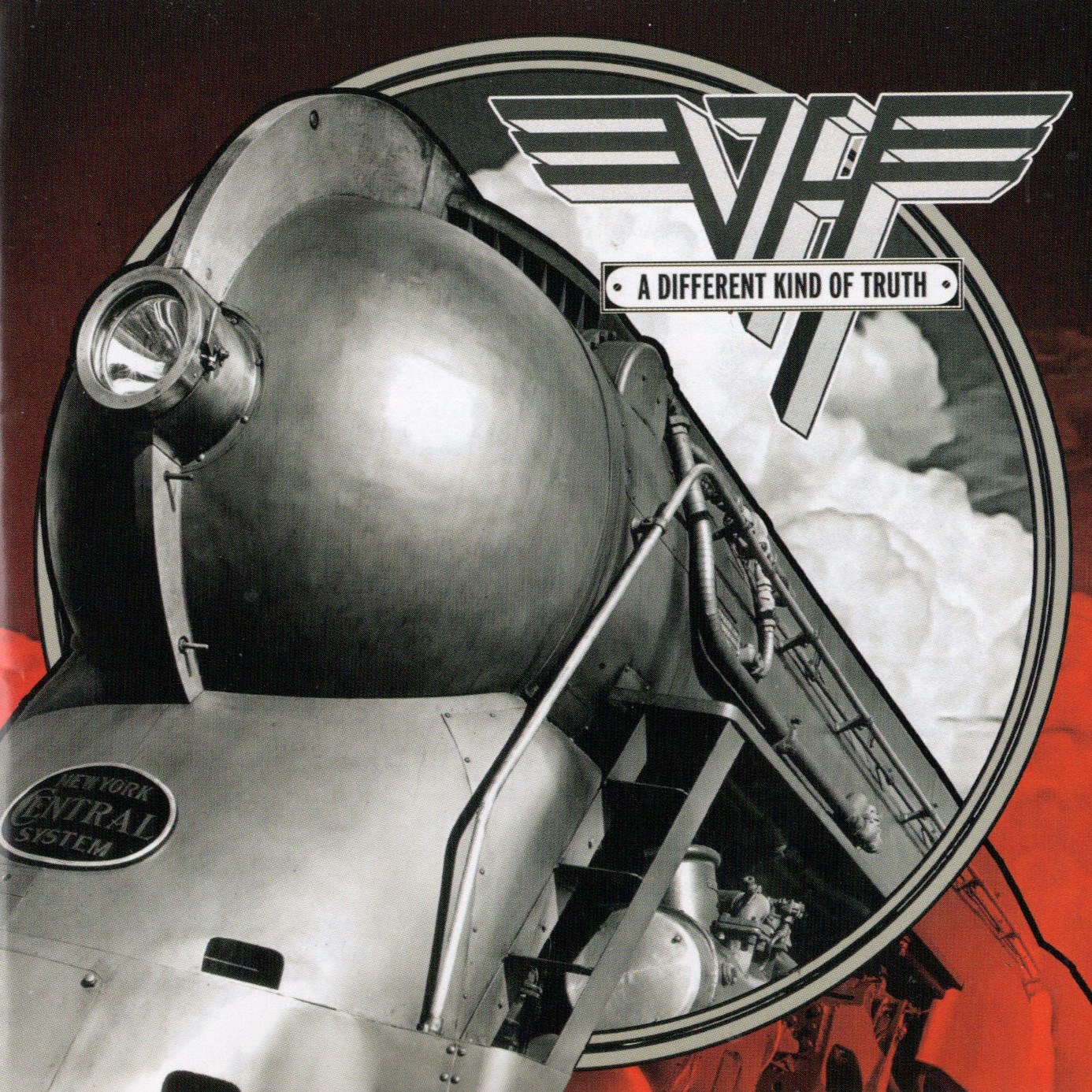
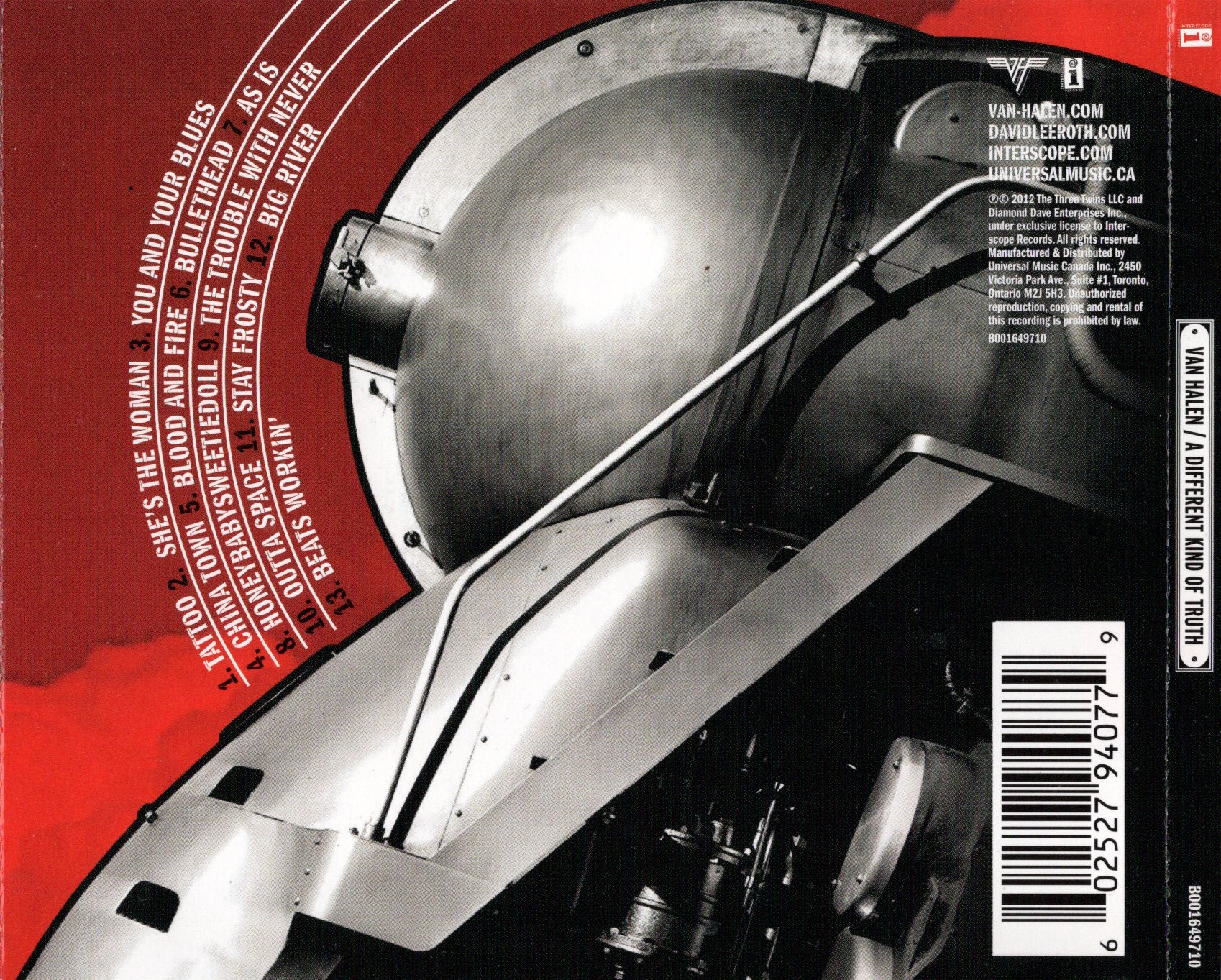
VAN HALEN – A Different Kind of Truth (2012 Universal CD/DVD set)
When this album was released in 2012, we all wanted Van Halen to win. Eddie had been through some tough times, but he finally did what the fans demanded: get back together with David Lee Roth, and record a new album. Sure, we all lamented that Michael Anthony was gone, but it was new bassist Wolfgang Van Halen that made it happen. Without Wolf, there would be no final Van Halen album. Just VHIII, and we know how most of you feel about that.
Working with new producer John Shanks in neutral territory, Van Halen managed to crank out a new album in just three years, starting with jams in 2009.
Wolf knew that Van Halen had to get back to a “classic” sound for their first new album with DLR since 1984. In addition to new music, Wolf dug back into Van Halen’s archive of unreleased material, and picked seven songs that rework and re-write. Roth called it a “collaboration with the past”, which is a good way of putting it. No, it does not sound exactly like old Van Halen; that would be impossible. It does, however sound like Van Halen with Roth.
Opener “Tattoo” was the first single and weakest track. It’s also the only one with audible keyboards (by Dave), though just for texture. Roth said the multi-layered chorus was inspired by artists such as Rhianna, but that chorus is actually the annoying part of the song. Eddie’s fills and Dave’s verses are fine and entertaining, as is Wolfie’s fuzzy bass. The chorus is the weak link, perhaps even worse than the lyrics: lines such as “tramp stamp tat” and “mousewife to momshell”. I like tattoos as much as the next guy, but I’ll never use the word “momshell” except when discussing this album.
The real banger is the second single, “She’s the Woman”, a pretty close approximation of the original Van Halen song (pre-debut album). Wolfie’s playing is monstrous, with a catchy circular bassline that proved the kid had the talent to be in this band. His dad must have loved jamming with him. Ed’s solo really brings us back to classic Van Halen, while Alex’s drums have that sound that we all missed. I hate to say it, but this rendition is probably superior to the original lineup’s version.
“You And Your Blues” has that choppy Eddie guitar we love, and those “ahh, ahh” backing vocals that scream Van Halen, even without Mike. Dave’s lower voice works well on the verses, though he is stretched out on the high notes in the chorus. A great Van Halen album-quality song. (If you’re fortunate enough to have a CD/DVD combo set, you’ll be treated to a cool acoustic version of “You And Your Blues” with loads of storytelling from Roth.)
“China Town” has some of the best shredding on album. From Wolfie’s crazy capo bass to the lightning fast tempo, all four members of Van Halen are on fire. If any song can be said to take the classic sound and launch it into orbit, it’s “China Town”, and Wolf is the star. The bass is not overly high in the mix, but when you listen to it and isolate it in your head, you realize that this guy has brought a new side to Van Halen: bass shred. Additionally, it’s a great song in every way.
Going back to 1984 and an instrumental section called “Ripley”, “Blood and Fire” was reworked in 2000 for an aborted reunion with Roth. Interestingly “Blood and Fire” actually sounds more like Hagar era Van Halen. It does contain one of Dave’s favourite concert phrases: “Well look at the all of the people here tonight!” If this track had been on 5150, it would have fit like a glove, though it would have been one of the more rocking tunes. Edward himself is the star on this one, as he rips, shreds, and tears as if it really was 1984 again.
“Bullethead” sounds new, and also goes back to the 2000 sessions. Van Halen speed and Dave “charasma” are held together by the rhythm section of Al and Wolf. It contains the lyric “Got a different kind of truth”, from which the album takes its title. Ed’s effect-laden solo is no less cool, though nobody will list “Bullethead” in their top 20 Van Halen songs. A cool album track it is, but that’s all.
One of the coolest tunes would have to be “As Is”. Opening with some Alex drum intensity, it breaks into a slow heavy riff, before finally accelerating into a powerhouse Van Halen smokeshow. That running riff sounds so classic, you could swear they injected Ed with youth serum. He sounds like a man reborn, both in terms of shred but also in fun. Ed gets to play with many different sounds and tempos on “As Is”, while Dave also gets to enjoy himself with singing and that spoken word stuff he does so well. Most of this is done very fast.
This sounds like a natural side break. “Honeybabysweetiedoll” (another 2000 track) comes across like a side two opener. Ed is experimenting with new sounds, like he used to, and you’ve never heard Ed sound or play like this before. He goes for a middle-eastern vibe, but with the kind of intensity that other bands do not have the mettle to muster. Dave’s lyrics about soccer moms don’t quite hit the spot where the music is concerned, but nobody’s listening to this song for the lyrics. It’s the guitar that makes the biggest impact here. You can imagine the Ed diehard fans just pounding their fists in celebration when they heard what Ed was up to, before they tried to figure out how he got that sound.
“The Trouble With Never” might be the only track that doesn’t seem like it goes anywhere. You also miss Michael Anthony the most on backing vocals here. It’s just a song. Not a great one, not a bad one…but with one hell of a cool bassline.
“Outta Space” originated in the mid-70’s as “Let’s Get Rockin'”. The riff is classic even though it never made an album before. Dave sings in his highest voice, which is actually cool after a lot of lower pitched songs. As you’d expect for a song originally called “Let’s Get Rockin'”, it smokes from start to finish, top speed and loaded with cool Eddie licks. It’s fun to hear the rhythm guitar drop out during his solo, just as it used to in 1978. Ed wasn’t fond of that sound, but it certainly evokes an era and a vibe. It’s like a warm sweater. Maybe Ed would appreciate that sometimes the absence of a guitar can also speak.
Dave plays acoustic guitar on the fun “Stay Frosty”, an old song that certainly recalls “Ice Cream Man” in every way. There’s one lyric that Dave liked to point out: “If you wanna be a monk, you gotta cook a lot of rice.” Hey, it’s not untrue. Let me put it this way: If you imagined a sequel to “Ice Cream Man”, it’s “Stay Frosty”. Not quite as good, but hits all the same beats that you want to hear.
“Big River” sounds like an older song. It has a cool curly guitar opening, before laying into this awesome guitar/bass groove. More a groove than a riff. Dave’s lyrics and singing are top notch on this song. Classic Van Halen. The surprise is that halfway through the song, for the solo section, it transforms into a completely different groove. This section has some of Eddie’s best playing too. It reverts back to the original riff for the last third of the song. All the while Wolfie is playing the most incredible bass fills, but never stepping on his dad’s toes. Think about that for a second. In the mix, you have the greatest guitar player in the world playing over this awesome riff, but the bass player still manages to throw a whole bunch of cool fills in there, without getting in the way. That’s a band, and that’s family, and that’s talent. If this song had been on an album like Fair Warning, people would still remember it today.
The closing song “Beat’s Workin'” starts with a cascade of Alex Van Halen drums, gone gonzo. It then breaks into a fun riff and a good time album-ender. A song called “Beats Workin'” should sound like a celebration. I get a bit of a Max Webster vibe, though heavier, along with a hint of Aerosmith. Once again the rhythm guitar drops out when Eddie goes solo, but then Wolf gets a moment in the spotlight too. His fuzz bass tone is very much unlike Michael Anthony’s. There’s a moment here when he and Alex are just playing while Ed does his thing, and it feels beautiful, especially now, knowing the family will never be reunited. But let’s not get too somber. It’s a party, after all.
The bonus DVD also includes acoustic versions of “Panama” and “Beautiful Girls”. They are alright. Valuable to have in your collection. You might not go back to listen to them very often. Another reason to own this physically is the lyric sheet, with cool sketches for each song. This is a Dave touch.
Final thoughts:
The album cover, though a cool picture of a train, just doesn’t feel like classic Van Halen. Then again, what does? They’ve had so many different kinds of covers.
The production on this album slams.
Though Eddie is the star, and we’re all listening to every note he plays, it doesn’t sound like an EVH solo album like VHIII did. It sounds like a real band album.
John Shanks and David Lee Roth did the best they could with what remains of Dave’s voice, and did a fine job of it by doing more of that speak-sing thing.
The flow on this album is excellent. There is hardly any filler, and every song works in its given slot, especially the closing trio of “Stay Frosty”, “Big River” and “Beats Workin'”.
Welcome boys and ghouls to Holen’s Halloween Extravaganza 2024! Throughout the month of October, yours truly will be supplying you with reviews of hellish horror every week. We begin with not one film, but five! I’ve decided to review Alice Cooper’s top 5 horror films according to an interview in NME.
In order to avoid a mammoth length approximating the intimidating size of the LeSausage*, I’ll keep each of these as concise as my loquacious heart will allow. The films are as such in the order that Cooper lists them.
5.SALEM’S LOT (1979)
A TV miniseries based on a Stephen King book as directed by Texas Chainsaw Massacre’s own Tobe Hooper? Sign me up. Featuring some of the greatest and most disturbing vampire makeup ever put to film, the parts that focus on him are the strongest moments of the film. That said, there’s too much fat in the runtime that focuses on the mostly uninteresting townspeople. It could have maintained the slow burn anticipation of revealing the vampire while cutting the three hour run time down to a standard ninety minute feature. Still, the vampire scenes rule.
3.5/5
4.SUSPIRIA (1977)
An iridescent Italian horror classic from Dario Argento. It’s a visually stunning piece with a masterful grip on tension. An American dancer travels to Germany to join a prestigious dance studio, only to learn it’s a front for a coven of witches. Ah, poop. Like several horror movies, it lacks narrative cohesion and momentum, but the visuals, mystery, and creatively graphic kills keep you interested in the ride.
4/5
3.THE HAUNTING (1963)
Black and white psychological terror. One of the all time great haunted house movies. The cinematography is immaculate, light and shadow coalesce with a classic story to foster a genuinely chilling atmosphere. The story isn’t particularly unique, with a scientist visiting a haunted house with several volunteers to prove the existence of ghosts, only to bite off more than they can chew. It’s just executed about as well as you could do so.
4/5
2.THE EVIL DEAD (1981)
Sam Raimi’s feature directorial debut, and Bruce Campbell’s big screen debut. It’s a feature length remake of a 1978 Raimi short film called Within the Woods which served as a demonstration to obtain funds for the full version here. Joel Coen was the assistant editor on The Evil Dead, and was inspired by this approach, opting to shoot a trailer for Blood Simple to secure funding for that film. No Evil Dead, maybe no Fargo, Big Lebowski, or No Country for Old Men either. How about that?
As for the film at hand, it’s a classic cabin in the woods story with gore aplenty and a kinetic campy style. Raimi’s visual style is antithetical to boredom when he’s directing anything except Kevin Costner’s worst baseball movie. The Evil Dead is good clean American fun, but would ultimately be improved upon in every way by the absolutely bonkers sequel Evil Dead II.
4.5/5
1.CARNIVAL OF SOULS (1962)
Perhaps the most overlooked movie on the list, it’s a haunting paranormal thriller with a somewhat predictable twist, but that’s not the point. A black and white haunting miracle of unease and gothic dissidence. The main character even plays a church organ! It excels in the quiet moments, as it builds to its tragically horrific but inevitable conclusion. Shoutout to director Herk Harvey, who also directed the greatest work safety film ever, Shake Hands With Danger.
5/5
Nice picks, Alice! His list meets the Holen seal of approval. Tune in next week kids for something completely different…
* That’s just a rumour. One I started myself. Flattery will get you everywhere, Holen! – Mike
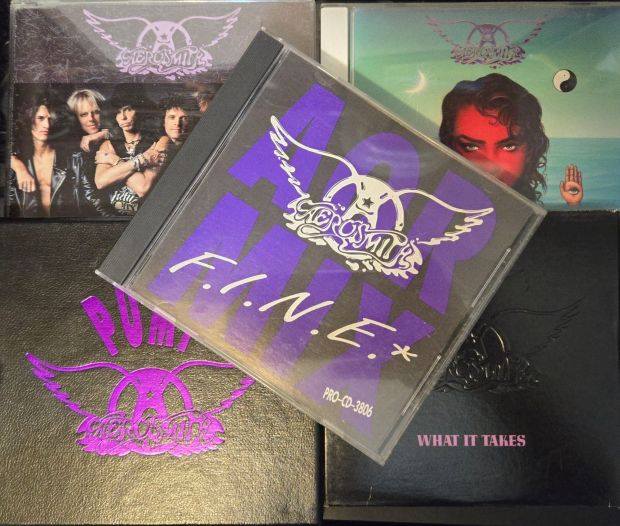
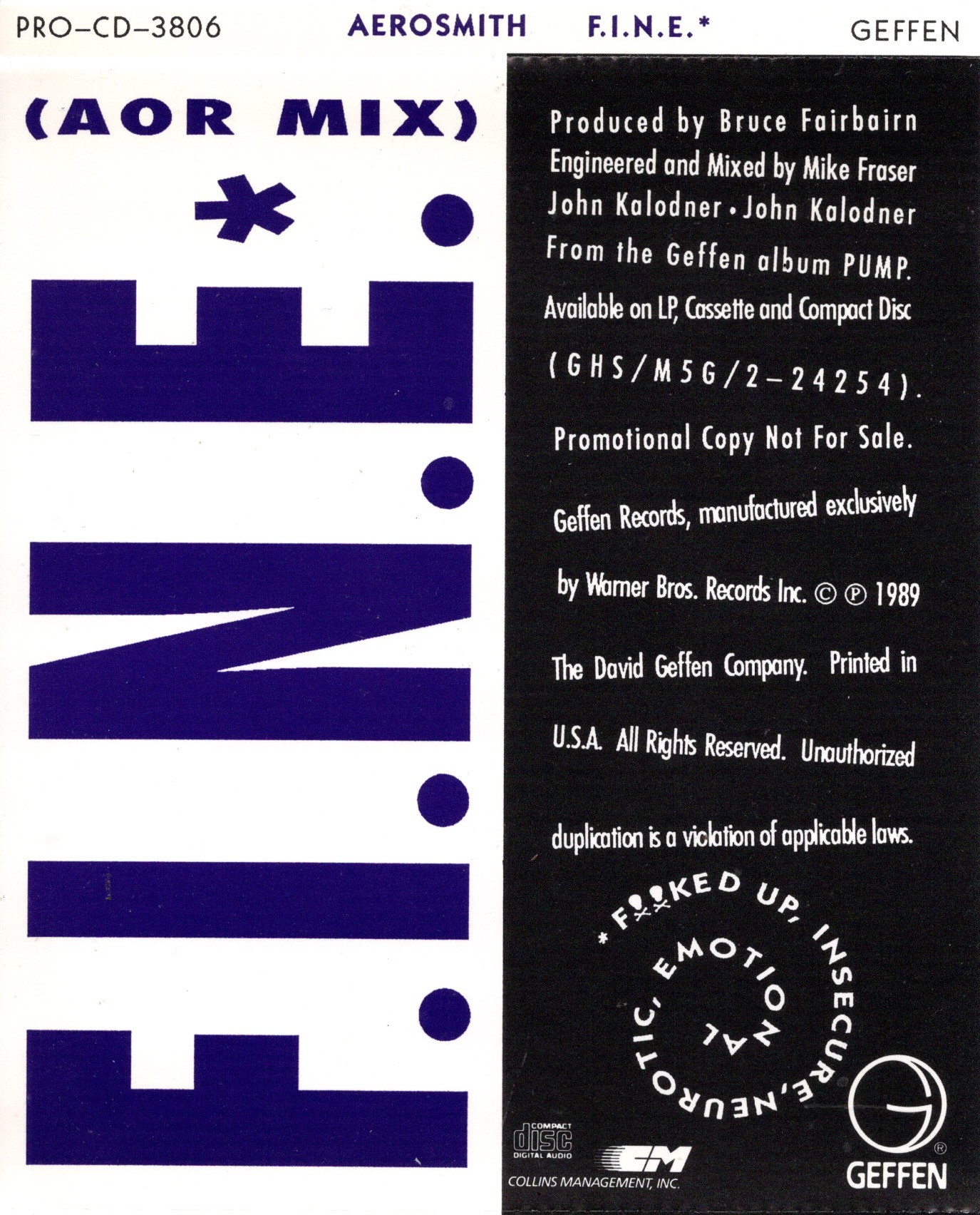
“AOR” equals “Album Oriented Rock”, a radio format established in the 1960s that essentially means “classic rock” by today’s standards. Therefore, this Aerosmith single would be a remix aimed specifically at those kinds of radio stations. Frequently and historically, many of these remixes are barely different at all from the album version. Additionally, “F.I.N.E.” from 1989’s Pump album was not really considered a single. It wasn’t available to buy commercially, and it wasn’t made into a music video. It was a radio single only. At 4:08, this track is not edited.
“F.I.N.E.”, which was track 2 on the album, is considered one of Aerosmith finer rock moments from the Geffen years. It was always focused on a biting heavy Aero groove, a melodic Tyler vocal, and that irresistible chorus of “It’s aaaaaaaalright!” This remix is hardly different at all. If anything, the bass might be coming through more clearly.
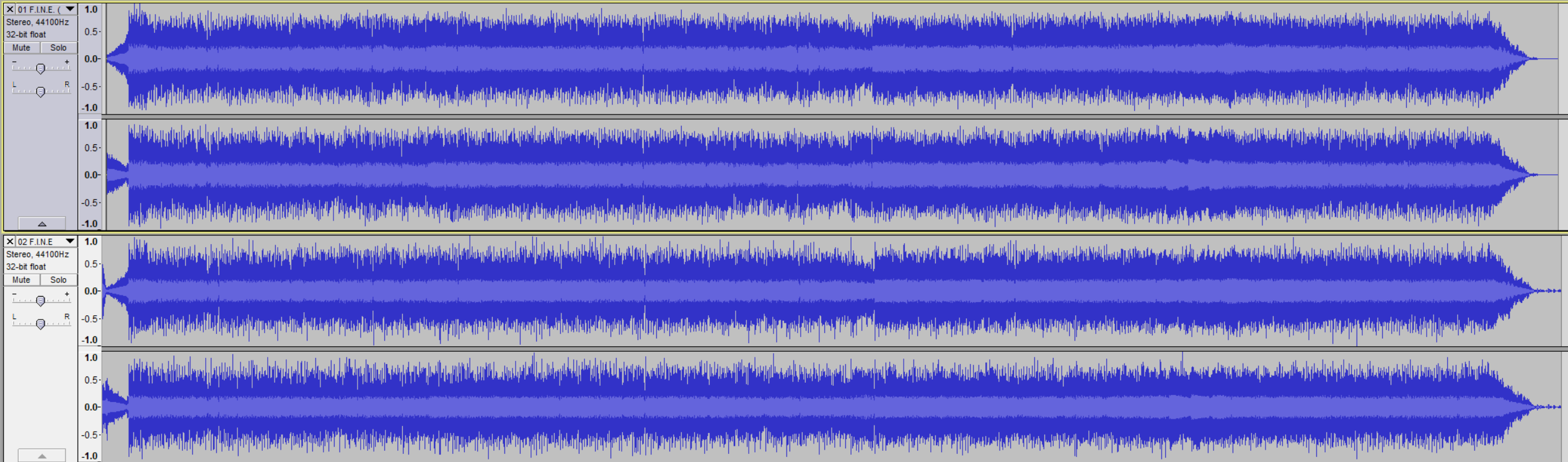
If you have a look at the waveform file below, you can see there isn’t much difference, though some are visible. The AOR mix is at top, the original 1989 CD file at bottom.
I don’t feel there’s any point in rating a promo CD single like on a scale of 5, because what’s the point? This CD is valuable as a collectible to fans and hoarders alike. It has an exclusive remix, and whether you can hear a difference isn’t the point to a collector. Sometimes obscure AOR mixes get reissued on greatest hits or box sets, but to date, this one has not.
“Joe Perry says I’m aaaaallright!”
Thanks again to Ash from Australia for sending me this CD which I shall file with my Pump collection!
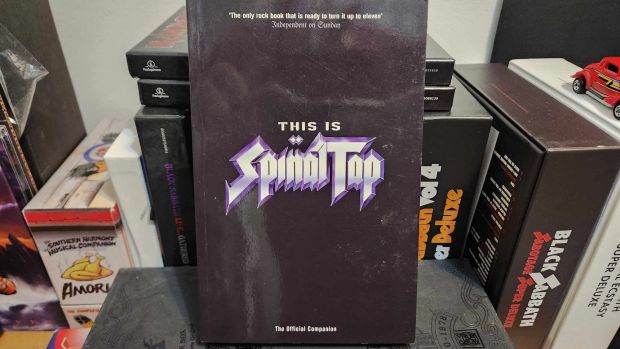
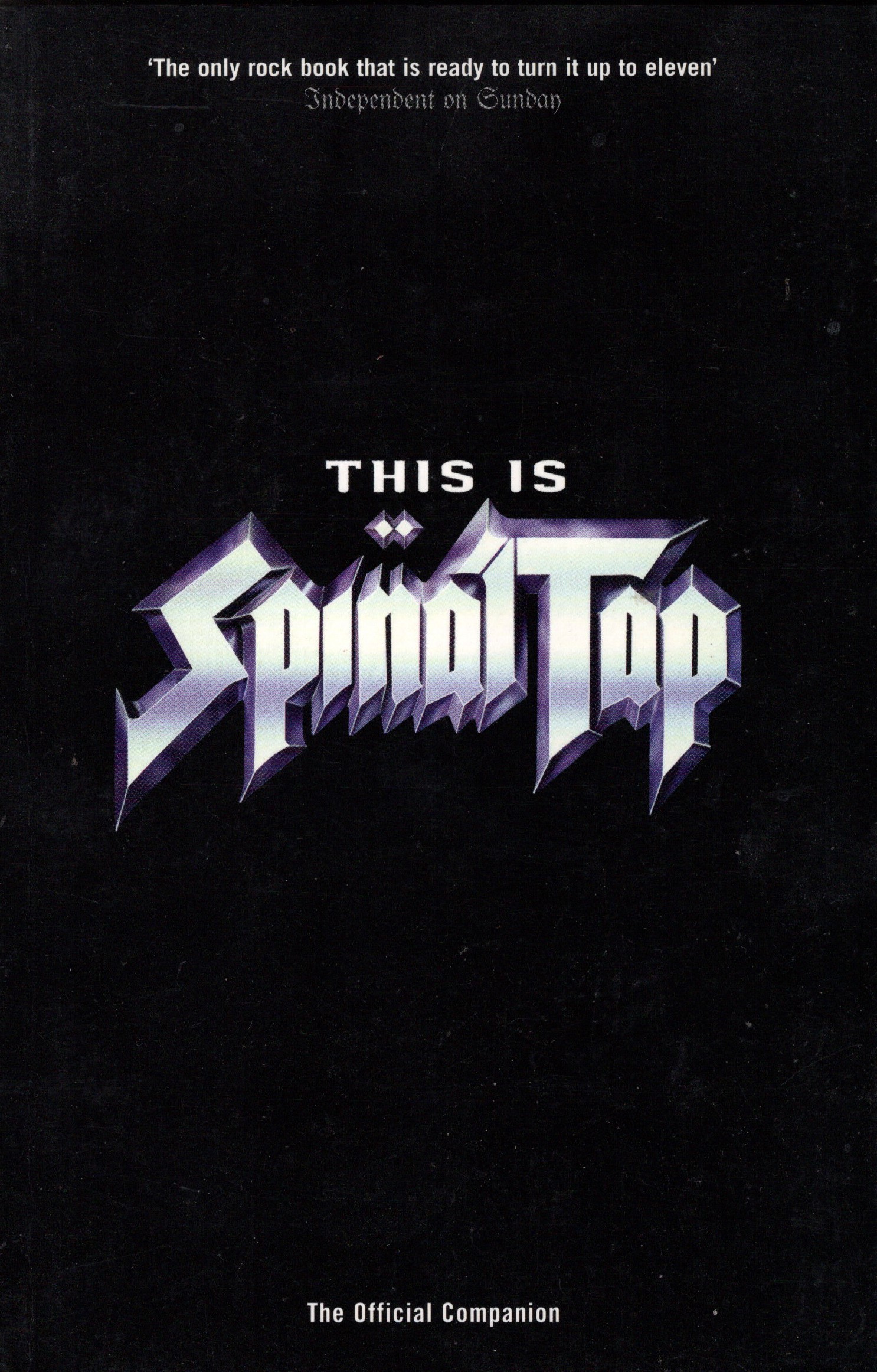
THIS IS SPINAL TAP – The Official Companion(2000, Bloomsbury, London)
You have the soundtrack. You have the DVD (maybe even the Criterion edition). You have the breakfast cereal. What else do you need? The Official Companion book, that’s what!
We begin with a “Prepilogue” by Michael McKean, who plays David St. Hubbins, offering some background on how Spinal Tap came to be, in the real world. From a 1979 TV appearance, to a 1982 demo film (not a script, like most movies, but a demo film!) to the 1984 finished masterpiece, McKean sums up the history and his gratitude from the start.
Next up is one of the funniest and most essential chapters. “Tap’istory” is a fictional timeline of Spinal Tap, from Derek Smalls’ birth in 1941, to a 2000 appearance with Mick Fleetwood on drums, and a remixed and remastered version of the film. This section is fascinating as it has release years for all of Spinal Tap’s fictional albums, including Brainhammer, Nerve Damage, and Blood to Let.
I found this book in the screenplay section of the book store, but Spinal Tap didn’t have a screenplay like most movies do. Instead of a screenplay, the bulk of the book is made up of a cool transcription of the film. This is done to extreme accuracy, to the point of transcribing Nigel’s final line, “wh-wh-what are the hours?” exactly as you read it here. If you ever wanted to quote This Is Spinal Tap as a hobby, this is how you do it to perfection. At the conclusion of the film transcription are several deleted scenes, such as David St. Hubbins meeting up with his now-punk rocker son.
Then we get to the lyrics, for basically every Tap song, including obscurities like the then-unreleased “Celtic Blues”, and stuff I’ve never heard like “Just Spell My Name”. Following this is an incredibly detailed glossary of everything Tap related you can imagine, including Rob Reiner, Steve Lukather, lukewarm water, and Walter Becker (who scribed the liner notes to Break Like The Wind, also included here).
For those Spinal Tap fans unable to read, the book also includes some full colour photo pages, with behind the scenes shots and rare promotional photos.
For any seasoned fan of Spinal Tap, this is an obvious augmentation to your collection. Tap into your local bookstore today and ask for a copy.
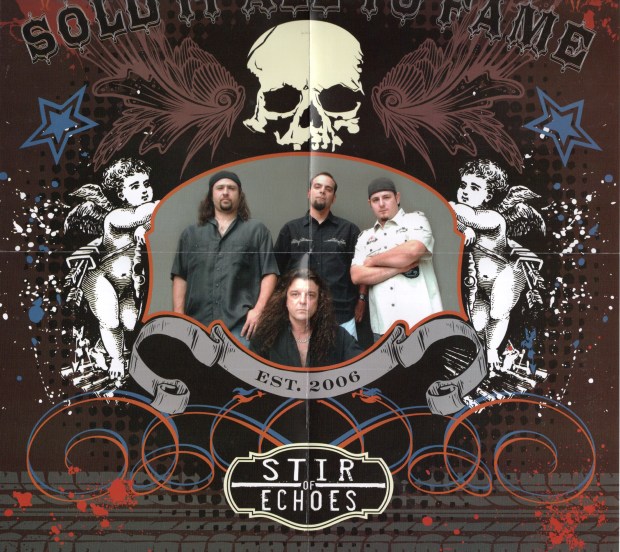
STIR OF ECHOES – Stir of Echoes (2008 Stir Records)
When Hamilton’s near-legendary metal band Mystique broke up at the end of the 1980s, singer Ray D’Auria bounced back with the hard rocking Slam Glory. That is a story and album unto itself. D’Auria’s next major release was a full lengther with quartet Stir of Echoes. The band formed in 2006 with a self-titled CD release in 2008. According to a note from filmmaker Marco D’Auria, the album was engineered by Steve Negus of Saga fame. What musical avenues would Ray explore this time, two decades after the end of Mystique?
The answer is: if Mystique was metal, and Slam Glory was hard rock, then Stir of Echoes is good old rough n’ raw classic rock. A heavier Led Zeppelin, perhaps.
Ray’s voice has transitioned to a rougher, more raspy delivery though still with the power and range we expect. Opener “Sentimental” boasts some slippy-slidey guitar bits and bites, while a locked-in bass/drum groove keeps things moving. This bluesy rocker is world class. I like how the rhythm guitar part drops out when the solo comes in – very live sounding. That’s Marco Ciardullo on guitar.
Track two, “Alone” is an upbeat rocker with Ray shredding the vocal cords throughout. It’s actually a bit of a drum showcase on the side, with plenty of solos and fills by Darryl Brown. There’s a bit of Zeppelin in the vocal delivery when Ray sings, “I, I…” at the midway point. A brilliant track that smokes with a bass solo (by Carmine…just Carmine) and impressive musical exposition.
The groove of “Sold It All to Fame” recalls the classic British blues of bands like Humble Pie. It sounds like it was born from a jam. There’s a tasty guitar riff to bite into. Following this groove, they go heavier on “Bonefoot” which might recall a Sabbathy vibe, circa the first three or four albums, in the riff and looseness. “Lies, lies, lies!” screams Ray D’Auria like a man wronged.
Stir of Echoes slow things to a nocturnal crawl on the blues “In the Cold”. Many classic heavy rock bands boast a classic slow blues, and this sounds like Stir of Echoes’ stab at the genre. The band gets to stretch out musically while Ray focuses on the pain. “All of this time…alllll of this time…” Like a classic-era rock singer, Ray sounds out of another decade.
The burner gets turned up to 10, and things start smoking again on “Little Dog”, an absolute blitz. Then they go for a more fun vibe on “Shot Gun”, which has one riff that definitely reminds us of Zep’s “How Many More Times”. You have to question how Ray could sustain this kind is singing! It’s top level, at all times, with the rasp and high notes! At the end of the song, they ignite the afterburners and the whole thing goes stratospheric.
The first respite on the album lies within the acoustic intro of “Burning in the Rain”, the closest thing they offer to a power ballad. Emphasis on the power. Really, it’s more of a bluesy showcase for Ray to offer up some of his most passionate singing. “Shake” takes things back to boogie, and the mid-tempo groove really allows the bassline to breathe. This is a great song to dance or drink to.
The only song you might consider “soft” would be the acoustic closer “Too Late”. Very Zeppelin III in feel. The lack of volume allows Ray to lay back a bit and really just sing. It’s just him and some acoustics, so the spotlight is on, and he uses it well. Brilliant performance.
Except “Too Late” isn’t the closer! There is an unlisted bonus track called “Wild Eye” which may be the best of the bunch! It’s certainly one of the most memorable. The stuttery opening riff is just a little different from the pack.
Stir of Echoes aren’t as diverse as Mystique, and the subject matter is more grounded. Stir of Echoes is more laser-focused on a specific kind of rock, and they go all-in. They do what they do very well. The last band that attempted this kind of sound and did it this well was called Badlands. If you know, you know. Get it.
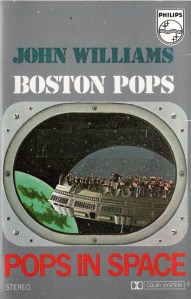
JOHN WILLIAMS – BOSTON POPS ORCHESTRA – Pops In Space(1980 Phillips)
January, 1980. John Williams succeeds Arthur Fiedler as the conductor of the Boston Pops Orchestra. Fiedler passed in July of 1979. Williams had received 14 Academy Awards nominations, 8 Grammies, and had conducted over 50 movie scores. Later that year, Phillips released Williams’ first recording with the Pops: a selection of his science fiction “greatest hits” so to speak. The audible differences between these and the original cinematic recordings are minor, but there for the diehard fan to enjoy. If not, the casual fan will be able to hear some of the best bits from Williams’ beloved scores to date. The Empire Strikes Back was a new release, and three cuts were recorded for this release.
1978’s Superman: The Movie truly made us believe that a man could fly, kids and adults alike. The Superman main theme is one of Williams’ greatest refrains in his long storied career. Triumphant, strong, and bright, it glows with the power of our yellow sun. You can envision Christopher Reeve (the greatest Superman) smiling and waving as he casually swooped across the silver screen. Williams’ music embodied Superman, and the optimistic spirit that the film represented. It bears similarities to other familiar themes, such as Indiana Jones, which was in production. It is a Williams “trademark” theme if you will; instantly identifiable and unmistakable. It has highs, lows and an incredible outro. This is followed by Lois Lane’s love theme, which we liked even as impatient kids who hated romance in our superhero movies. Some of Superman’s theme has a soft reprise here, but the piece is its own.
The brand new Empire Strikes Back is represented by three classic pieces: the action packed “Asteroid Field”, Yoda’s jaunty theme, and of course, “The Imperial March”, already on its way to becoming a thumbprint anthem for scum and villainy. There is not much to add here, because words are not sufficient to describe the sheer momentum of “The Asteroid Field”! Or the joyful playfulness of “Yoda’s Theme”. Or the symphonic metal majesty of “The Imperial March”, as we watch those monolithic, grey Star Destroyers cruising menacingly through space.
More Star Wars on side two, with the film Star Wars (not yet known as A New Hope – that happened in April 1981). The two themes included are the main title theme, and Leia’s theme. I noticed the most difference on the main title – the third note of the opening “bah bah bah…” part is held just a little longer. As for Leia’s theme, it is softer of course, but the violin strain is so memorable. So plaintive, yet beautiful. It grows in power towards the lush end, which is magnificent. Perfect for our princess in distress, though her reputation for kicking butt was starting to form!
The final piece included is a “Close Encounters of the Third Kind” suite, including the extended ending, added to the special edition. This 10 minute suite is a rollercoaster, as we recall scenes of awe and wonder. A bit of “When You Wish Upon A Star” plays, some piano tinkles, and we are swept away with Roy Neary on that starship, whether we wanted to see the inside or not.
As a “greatest hits” of Williams early science fiction music, Pops In Space is a treat to play. A concise treat, representing a small slice of Williams’ work, yet that little slice has some of his most indelible music.
If anything, fans of physical media need to get this album on any format, just for the cool cover art. The orchestra can be seen playing on a floating platform…in the vacuum of space! Far out.
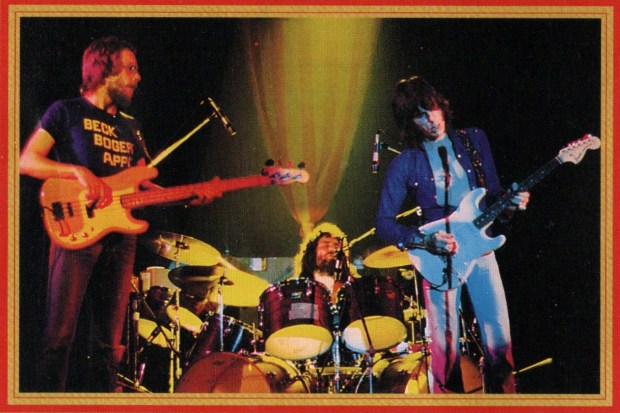
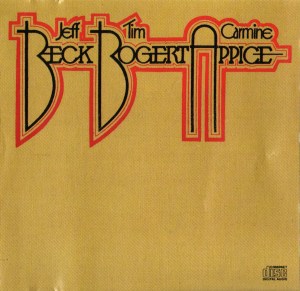
JEFF BECK, TIM BOGERT, CARMINE APPICE – Beck, Bogert & Appice(1973)
Supergroups often flicker in and out and existence. Beck, Bogert and Appice recorded one self-titled studio album in 1973. That album continues to be cited as an influence on bands, and you can hear it instantly. One listen to Beck, Bogert & Appice and you can immediately hear the echoes of the bands that followed. Beck, Bogert and Appice were touring before the even recorded the album, so they were already well prepared. Jeff Beck came in with a song that Stevie Wonder worked up with him on Talking Book. All three musicians write and sing lead vocals on the album.
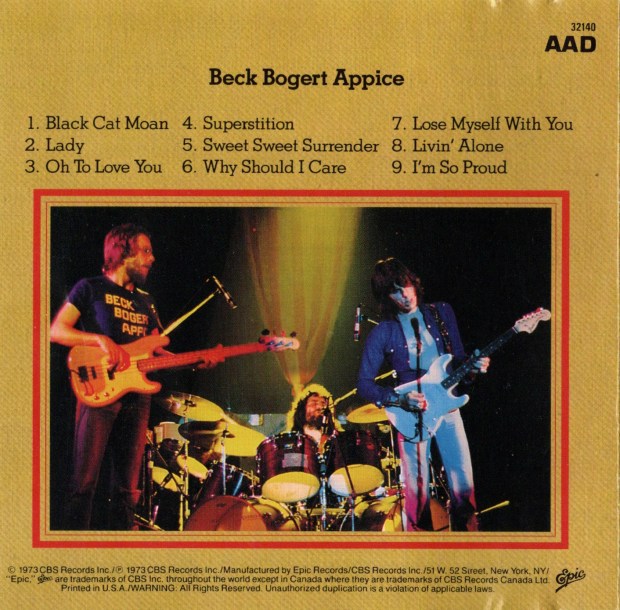
“Black Cat Moan” is a Don Nix blues (who also co-produced the album). It sure seems that Rose Tattoo must have ripped it off for “Rock and Roll Outlaw”! It’s marked by a a sting of slide guitar, a wicked blues grind, and Jeff Beck’s understated lead vocals. Carmine Appice plays it pretty straight, but this track just thuds! Bass heavy and weighty like lead, “Black Cat Moan” was some of the heaviest blues on offer this side of Black Sabbath. Stay tuned for some of the slidy-est slide guitar Beck ever recorded.
Appice sings lead on the the gut-busting groove of “Lady”, written with members of Atomic Rooster. Bogert’s melodically thunderous bass takes center stage. The production is so crisp, you can hear every finger pick, even flying at the speed they are. Listen carefully for a quick part in the song that Rush lifted for “2112”. The layered lead vocals sounds like they were taking inspiration from Cream. This track simply smashes everything in its way, letting the bass level the countryside before Beck plants some bluegrass with some twangy guitar licks. Meanwhille, Appice keeps the engine running with a tasty cymbal pattern and earthquake drum fills.
The ballad “Oh To Love You” is also sung by Appice and features piano and Mellotron accompaniment. It sounds like stuff David Coverdale was doing in his early pre-Whitesnake career a few years down the road. Carmine has a really nice swing on the beat, but that Mellotron really takes it home when it comes in.
“Superstition” ends side one with Tim Bogert’s first lead vocal. This version, worked up by Wonder with Jeff Beck, was supposed to come out first, but due to delays, “Superstition” was first heard in its Stevie Wonder incarnation. Once again, a rolling groove dominates the soundscape, with Jeff Beck stabbing guitar licks here and there, drawing blood every time. This arrangement is guitar heavy compared, with none of Stevie’s clavinet or keys of any kind. Beck goes caveman midway, like a prototypical Ace Frehley, who must have been studying every note at home. Then, Jeff Beck takes it high again, laying waste to the land as a guitar innovator like a rarified few before him. Carmine’s drum outro was later ripped off by Kingdom Come on “Get It On”.
The Rolling Stones recorded “Wild Horses” in 1971, and here is Beck , Bogert and Appice opening “Sweet Sweet Surrender” with similar sound. This, however is more a slow soul-rock lament. Carmine sings lead on this side-opener, and Beck colours the blanks with distant guitar. Tim Bogert takes things more upbeat the pop rocker “Why Should I Care”. This is the kind of song that Kiss would strive to write over and over again in the early 1970s.
Things get funky in a heavy on the brilliant “Lose Myself With You”, the vocal melody of which sure sounds a lot like Judas Priest ripped it off for”Saints In Hell”. This is funk of the heaviest order, a rare isotope of plutonium that you can only get with the fusion of these kinds of musicians.
Carmine sings lead for the remainder of the album. “Livin’ Alone” has a vibe not unlike early ZZ Top. Fast, blues based rock with melodic lead vocals. The shuffle sure recalls a few famous bands that would be known for such things later on. This is a potent, energized blast of rock.
Unusually, the album closes on a Curtis Mayfield soul classic: “I’m So Proud”. A slow dancer like this actually works well at this point of the album, because the listening is exhausted, quite frankly!
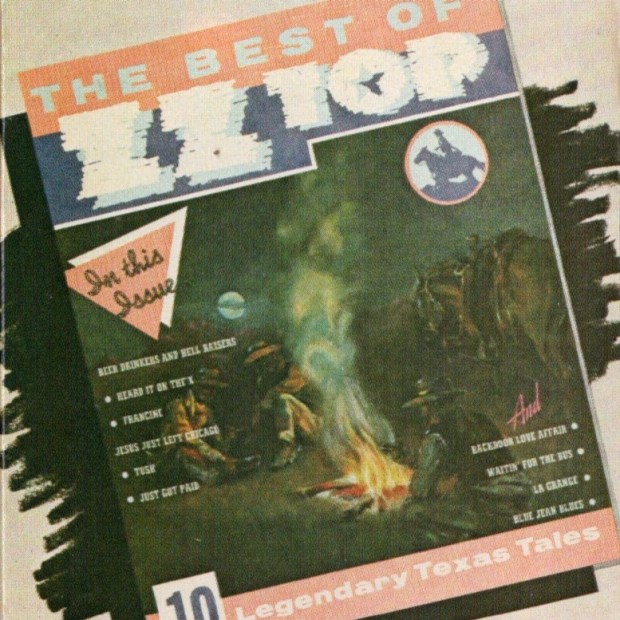
While ZZ Top were on a break between Tejas and Degüello, it made sense to issue the band’s first Best Of. This album was released in 1977 and though it did not chart high, it did eventually go double platinum, selling over 2,000,000 copies in the United States alone.
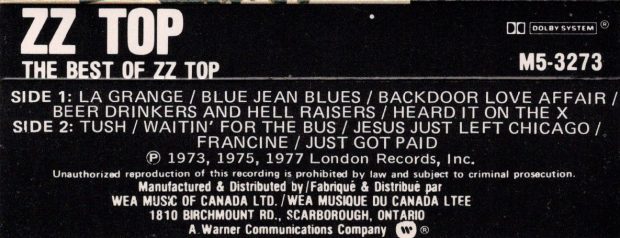
The cassette and vinyl releases had the sides flipped. This cassette copy in hand begins with “La Grange”, which is still a pretty solid opening even if the vinyl says otherwise! “La Grange” is an ode to a house of ill repute somewhere in Texas, and it became the prototype blues/rock shuffle for a generation. This song still burns up the radio today.
One of ZZ Top’s greatest blues had to be “Blue Jean Blues” from Fandango! So slow, so fully soaked in whiskey and gasoline that you can smell it from here. Billy Gibbons is fully in the driver’s seat here, but it is Frank Beard and Dusty Hill’s unobtrusive rhythm section that allows him to emote so well.
From the first album comes the dirty upbeat blues of “Backdoor Love Affair”. It’s a combination of elements: Billy’s distorted take on the blues guitar, mixed with Dusty’s melodic bass and Beard’s perfect punctuation. By the end of the song, it’s a jam around a tasty riff.
The familiar “Beer Drinkers and Hell Raisers” from Tres Hombres is an incendiary duet between between Billy and Dusty. Pedal to the metal, ZZ are off on one of the best rockers from the entire catalogue. This is the kind of song that endeared them to the headbangers. Similarly, “Heard it on the X” hones in on the speedy aspect of ZZ Top’s abilities. This is another duet with Dusty and Billy, and an ode to the Mexican radio stations that informed much of ZZ Top’s upbringing.
Flipping the tape, we are now hearing what is side one of vinyl. “Tush” ain’t a bad way to start. It’s the stuff of legend today. It boasts one of Billy’s best guitar riffs, yet it’s still little more than a basic blues. It’s just a winning combination: the blues progressions played by a rocking band. Billy’s leads are as much of legend as the song itself, stinging little zips of flavour in a bluesy soup of chords and drums.
“Waitin’ For the Bus” is a steady blues. The speed has been shed for this heavy sludgy one, with Billy laying down not just a guitar solo but a harmonica solo too, one after the other like one greasy blues rock statement. Then, just like on the Tres Hombres album, “Jesus Just Left Chicago” follows immediately after. Still blues, but of a different flavour. ZZ Top were always talented at showing us different sides of the genre, while mixing it with the sensibilities of rock guitar distortion.
“Francine” is a belter, a perfect pop rock tune, with more rock than pop. Billy’s little riff is tasty as candy, and the song has the necessary melodic mettle. Even so, it is overshadowed by the slide-drenched closer “Just Got Paid”. One of ZZ’s heaviest tracks, it’s made completely digestible by Billy’s incredible guitar work.
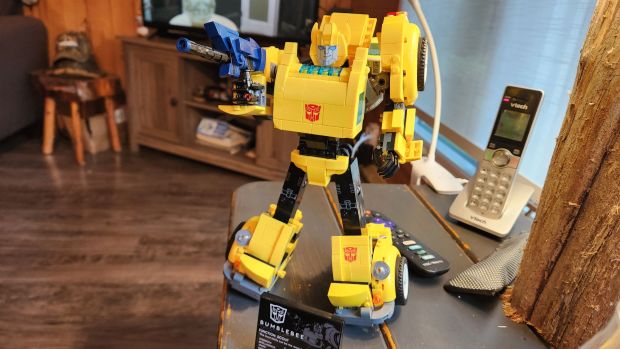
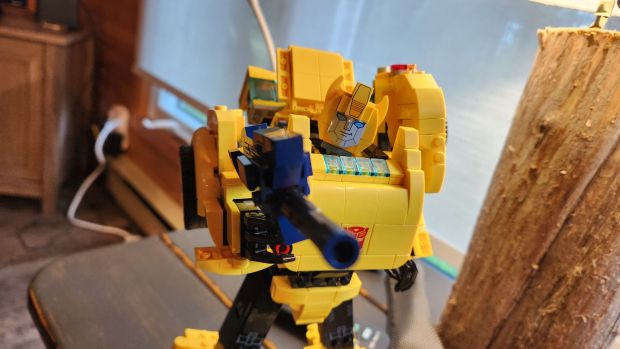
The set that got me “back” into Lego was 2022’s 10302 Optimus Prime. The fact they made a fully transformable Prime out of Lego bricks was unbelievable, and it was incredibly fun to built. It took two years, but a second toy in the line has now emerged: everyone’s favourite yellow Volkswagon, Bumblebee!
‘Bee featured heavily in the first two issues of the Marvel comics but soon faded in importance. Meanwhile, in the Sunbow cartoon, he was a main character. In both iterations, he was friend of a human boy named Witwicky: Buster in the comics, Spike in the cartoon. As a toy, Bumblebee was a “minicar”: less detailed, smaller, and affordable. He was a “penny racer” Volkswagon, small and compact, but could transform into a robot in two or three seconds, unlike bigger toys.
The Lego version of Bee has 950 pieces and costs $120. Prime had 1508 pieces at double the price. Bee is also far more complex in terms of construction and transformation. Prime has always been a simple design: fold out the legs and arms and that’s the most of it. Bee has to fold up from a tall robot to a compact car. There are a lot of steps and tricks to transforming Bee. He has a lot of hinges and flaps that have to be moved out of the way. Bee, however, has one weakness that Prime did not: partsfotming. Partsforming is a derogatory term for a transformation that involves removing segments and putting them back again in a different place. On Bumblebee, that would be his windshield/backpack. The first step of transformation is to remove the windshield segment, and fold it up. It will eventually become Bee’s jetpack.
Building was fun without a lot of repetitive steps. There are also some new parts in this set, parts that are new in particular colours, and lots of printed details including two Autobot logo tiles. We start at the feet. Once both feet are complete, we clip them together. This becomes the front of the car. From then on, we are essentially building Bumblebee in car mode. In that sense, it’s not that different from building other large Lego kits. As you build, you’re not entirely sure what is going to go where when he transforms, and that is part of the fun. When you’re done, you have a really nice Volkswagon model with the curves more or less in the right places. Leeway must be given for some gappiness in front and back, but it could pass for a Lego Volkswagon model in this mode. Lego also gives you some extra pieces: Two plain yellow tiles for those who want the Autobot logo hidden, and an alternate license plate. The license plates allow you to name your car Goldbug or Bumblebee. Goldbug was a name that Bee went by when a new toy of his was issued in 1987. Bumblebee was the first Transformers character ever reissued with a brand-new toy.
Putting this toy together was finicky, since there are so many hinges that clip into place. Getting to the head and seeing the printed face was a nice surprise. Lego could have included an alternate toy-accurate face to go with the license plates, but that of course would add to the cost. The windows are transparent blue, which looks so cool and matches up with some later toy versions of the character. There is also a tiny transparent piece with a little cartoon bee printed on it. That goes behind the windshield, as if a little bee was loose inside.
Bee also comes with a name plate, and a blue blaster gun, similar in design to his Sunbow character. The original toy and comic versions of Bee were unarmed, but later toys include weapons, some similar to this blaster. It clips onto a bar hidden on his hands. You don’t need his fingers to hold it, but all eight fingers do move – something that Lego Optimus can’t do. Lego have learned from that model, listened to fans, and the improvement is here in Bumblebee.
Bee has limited articulation in robot mode. The knees and feet cannot move. The hips can, and there is a little bit of an elbow hinge, with about 90 degrees of movement. You can rotate the arms 360 degrees at the shoulder, and get a little bit of poseability there. He can stand very sturdily in robot mode, with rubber pads on the bottoms of his feet keeping him from slipping too much.
Prime rated an easy 5/5. Bee has more value in price per parts ratio, and has a more complex transformation, while still including plenty of printed pieces. The only thing Bee has going against him is the partsforming, but that’s it.






















 mikeladano.com