REVIEW: Judas Priest – Unleashed in the East (1979, Remastered)

JUDAS PRIEST – Unleashed in the East (Originally 1979, 2001 Sony reissue)

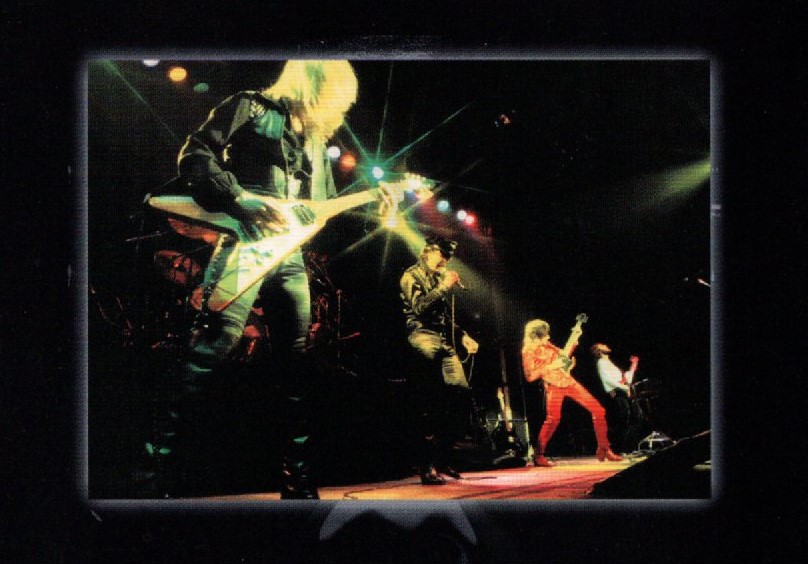
The best Judas Priest live album isn’t the biggest or the newest.  It’s the first:  the humble Unleashed in the East.  The first Priest album to be produced by Tom Allom, the last with Les Binks on drums…this is a special album for a number of reasons but most important are the songs.  It would not be going out on a limb to suggest that some of these tracks are now the definitive versions.

Like many live albums of the 1970s, it has been questioned how much of Unleashed in the East was redone in the studio.  Rob Halford has maintained that only the vocals were touched up, but it does not matter one iota when the needle hits wax or laser strikes plastic.  The band were at a musical peak in 1979, and with accelerated tempos, they attacked the best of their body of work, although neglecting the bluesier debut Rocka Rolla.

With “Exciter” (from 1978’s Stained Class) opening the set, this collection has more energy by comparison to the somewhat stiffer studio counterparts.  Les Binks has his foot on the pedal and the band is fully energized on this proto-thrash classic.  “Stand back for Exciter” indeed, as Halford has the Tokyo crowd in the palm of his hand, heavy on the echo.  “Running Wild” (1978’s Hell Bent for Leather) is extra caffeinated compared to the in-the-pocket original, giving the album the feel of a race.  KK goes bananas at the end, and then it’s his showpiece:  “Sinner” from 1977’s Sin After Sin.  Finally it sounds like Priest have stopped hurryin’ about.  About half of the track features KK taking his guitar to outer space in a trippy solo segment.

In its original form, “The Ripper” (1976’s Sad Wings of Destiny) was thin and stiff by comparison.  Here it is a beast, with Rob Halford fully unleashed and stalking the back-alley streets.  Easiest contender for most definitive version of a song on Unleashed in the East.  “Green Manalishi” also comes close, with this electrifying version containing the full-blown dual solo in fantastic, crisp, live glory in stereo.  Each part of the solo is an essential part of the song, just as “Green Manalishi” is an essential part of the album.  If you own the LP, this is where you flip sides and go straight into an adrenalized “Diamonds and Rust”, keeping the energy moving.  Binks’ double-bass work is fun as hell to listen to, like a kid who can’t stop tapping his feet excitement.

The Priest epic “Victim of Changes” takes its time to unfold, though mightily it does.  The live setting and the unstoppable Les Binks make this another definitive Priest live version.  It is the climax of the album, with the last two tracks “Genocide” and “Tyrant” unable to surpass its mountainous metal spires.  Regardless, both are far more fuelled than their seemingly crippled studio counterparts.  Halford is more expressive and engaging live, while the guitars riff on relentlessly.

This album would be 5/5 stars right here, full stop, no need to elaborate.  The already definitive Priest live album became even more definitive in Japan in 1979, and 2001 in the rest of the world, with additional bonus tracks.  On the 2001 remastered Sony edition, all the tracks blend into one another without fade-outs.

Most of the tracks originated on Hell Bent for Leather, with one from Sin After Sin.  “Rock Forever” and “Delivering the Goods” cook!  Not too dissimilar from the originals, these are nice additions that extend the album without weakening it.  “Hell Bent for Leather” was conspicuous by its absence from the album proper, so its restoration is significant.  Finally the lengthy “Starbreaker” occupies the final slot, including a Binks drum solo.  An odd positioning but a stellar version nonethless.  All said and done, the version of Unleashed with bonus tracks is just over an hour long.  By today’s standards that’s a bit short for a live album, but it certainly does feel more complete.

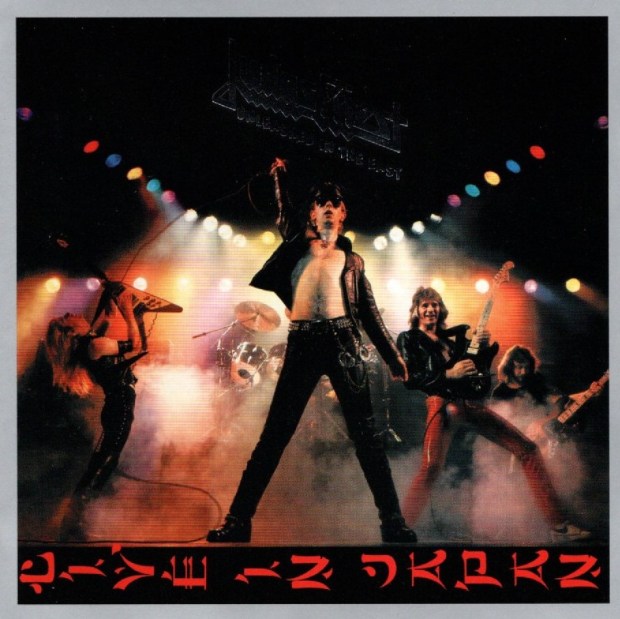
Though he was indeed a significant source of Judas Priest’s musical power both on stage and in the studio, Les Binks quit the band mid-tour to be replaced by ex-Trapeze drummer Dave Holland for the remainder.  Binks was never made an official member on paper and was dissatisfied.  To be sure, other Priest drummers can sympathise.  The only taint on this otherwise perfect “live” metal album is the absence of the departed drummer on the front cover.

5/5/5 stars


JUDAS PRIEST REVIEWS

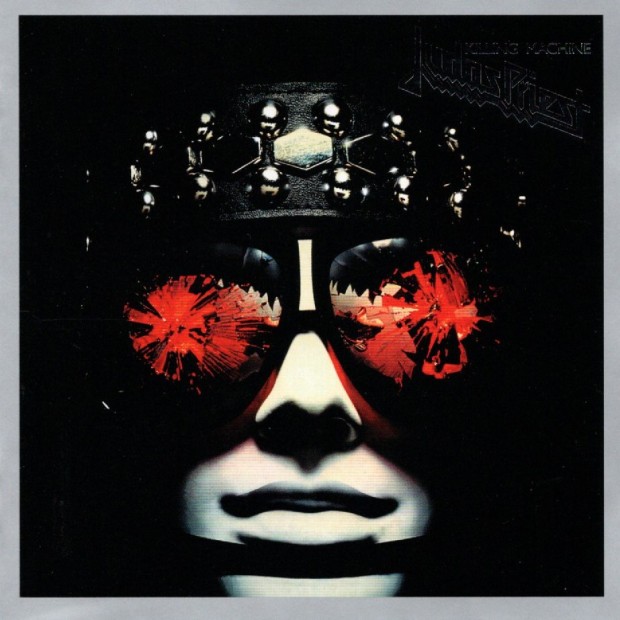
REVIEW: Judas Priest – Hell Bent for Leather / Killing Machine (1978)

JUDAS PRIEST – Hell Bent for Leather / Killing Machine (Originally, 1978, 2001 Sony reissue)

After producing “Better By You, Better Than Me” on Judas Priest’s Stained Class LP, James Guthrie was hired to do their next album.  This coincided with another step in Judas Priest’s evolution.  In the 1980s they would streamline and simplify their sound, but their earlier albums were darker and more complex.  1978’s Hell Bent for Leather (called Killing Machine in the UK) is the dividing line between the two sides of Priest.

A stuttering riffs opens “Delivering the Goods”, one of the best known tracks from this excellent LP.  A newly upbeat Priest does indeed deliver the goods on this bright rocker.  “Feeling like we’re ready to kick tonight, no hesitating, my bodies aching, looking for some action, satisfaction all right.” This is a far cry from “Saints in Hell” and “Dissident Aggressor”.  Now Priest are uplifting your rock and roll souls.  It’s a heavy, headbanging party track with solid gold riffage.  The outro is a showcase for drummer Les Binks, unfortunately on his final Priest studio album.  His loss would be felt through the entire 1980s.

Another simple hard rock classic, “Rock Forever”, is second in line.  Binks’ double bass work is like an impatient kid anxious to quit school for the day.  Part way through, a multi-tracked Halford turns into a cool choir of Robs.  Further in, “Evening Star” is a bit of a surprise.  Starting as a ballad, it quickly turns into a…rock and roll singalong?  As one of Priest’s most melodic songs, it could have easily swayed new fans onto this band.  It also could have turned off fans who liked their metal heavy.

Two tracks from this album have consistently been in the Priest setlists.  One is “Hell Bent for Leather”.  It has a delightfully dry sound, with guitars cranked and Binks on overdrive.  It was obviously good enough to close Priest’s shows going forward (mostly), with Rob riding out on his Harley.  It’s not Priest’s greatest song, but it is one of their most legendary.

Closing side one is “Take On the World”, sort of a prequel to “United” from British Steel.  With double tracked drums, it has a “We Will Rock You” quality, but done Priest style.  It’s clearly meant to be sung from the stage, to a screaming audience.  “Put yourself in our hands so our voices can be heard, and together we will take on all the world!”  Repeat, rinse, dry.

Side two’s opener is one of Rob’s naughty numbers:  “Burnin’ Up”.  The sexy groove on this one will nail you to your seat.  It’s an album highlight though it might leave you feeling funny, like that time you climbed the rope in gym class.  “You dish the hot stuff up but you keep me waiting, so I’ll play it dirty until your body is breaking.”

At this point, the US version of the album breaks into what I will call the greatest song Judas Priest have ever done.  It’s the second one that has remained in setlists.  And it’s not even one of theirs.  It’s Fleetwood Mac’s “The Green Manalishi (With the Two-Pronged Crown)”.  Rarely does a band make a cover song their own like Priest did with “Green Manalishi”.  Everything on this is perfect, from the impeccable tempo, to the immaculately composed solos, to the flawless riff.  Les Binks is right in the pocket, and it’s very telling that live versions with Dave Holland on drums were stiffer.  If you only ever get to hear one Judas Priest song in your whole life, make sure that it’s “The Green Manalishi (With the Two-Pronged Crown)”.

You could put a fork in the album at this point and call it “done”, but there’s still plenty of awesome to go.

A funky Priest groove goes down on “Killing Machine”.  A menacing Halford warns, “I got a contract on you,”  backed by trademark Priest riff.  The middle section with the solo is a whole different beast.  A faster song,  “Running Wild”, pumps the adrenaline with chugging guitars.  “I take on all comers, they back up or they fall,” sings Rob with a challenge in his voice.  At this point I’m convinced that this guy could take on the world for real.  “I rebel but I worked hard, and I demand respect,” he sings with earnest.

There’s a respite here before the end, with a ballad:  “Before the Dawn”, which reminds of softer moments from Sad Wings of Destiny.  The guitar solo is legendary, but Rob Halford is the star on this melancholy masterpiece.  Finally, Priest go dirty again with “Evil Fantasies”.  Lock up your kinks, or just go with it!  It’s another sexy groove.  Rob knew how to write lyrics appropriate to the music.  “You pout, I snarl, you whimper.”  It’s like a Romulan having sex with a Klingon.  It shouldn’t be, but it is, and it’s cool!

Sony tacked on two completely unrelated bonus tracks, but review them we must.

“Fight For Your Life” is a demo of “Rock Hard, Ride Free” from Defenders of the Faith, almost identical except for some of the lyrics, and solo section.  Great bonus material for that album, but not this one.  Also unrelated is a live version of “Riding on the Wind” originally from Screaming for Vengeance.  This blitzkrieg is from the legendary US festival.

Bonus tracks quibbles aside, Hell Bent for Leather (with “Green Manalishi”) is essential metal.  Period.

5/5 stars

* The lyrics on the Japanese version were poorly translated:  “Feeling rock queers, ready to kick tonight.”

JUDAS PRIEST REVIEWS

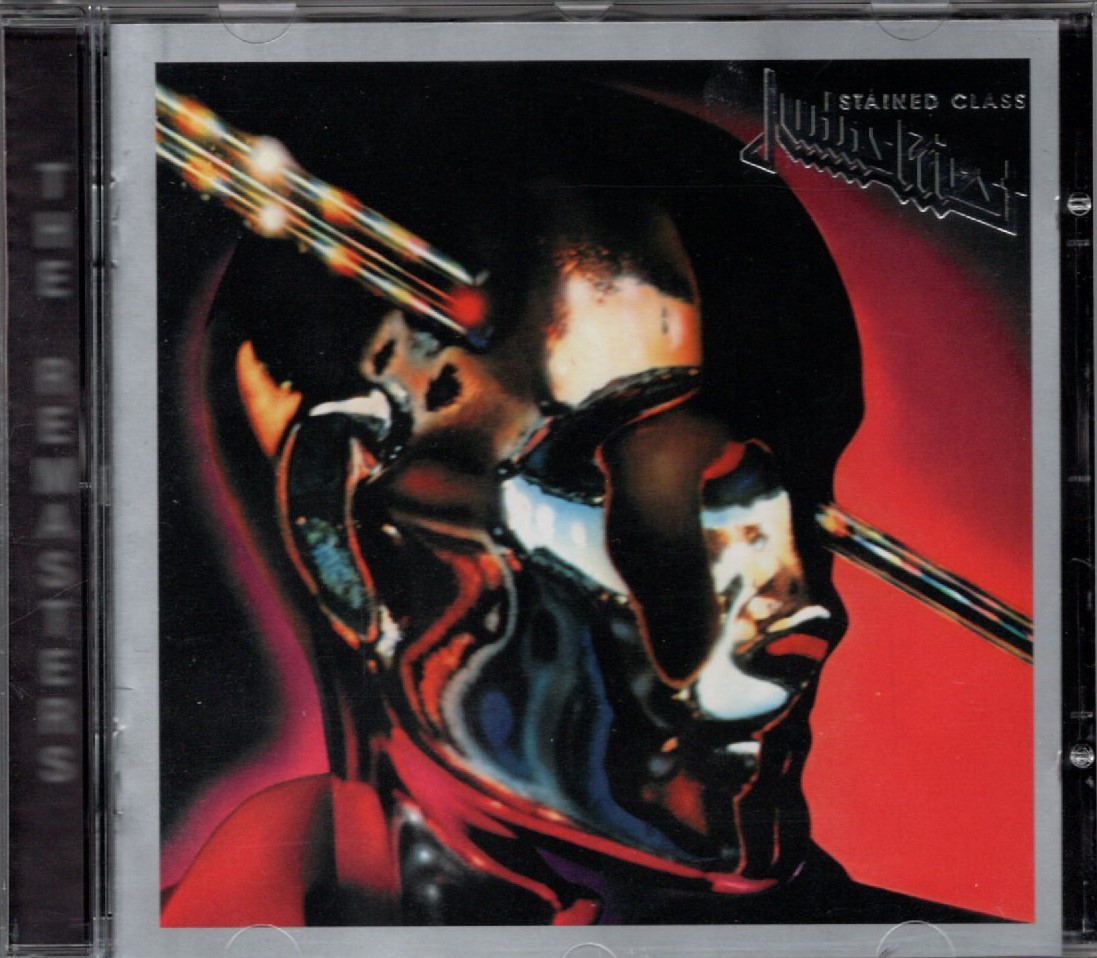
REVIEW: Judas Priest – Stained Class (1978, Remastered)

JUDAS PRIEST – Stained Class (Orignally 1978, 2001 Sony reissue)

I always considered Stained Class to be the “lost” Judas Priest album.  I rarely saw its name in a print magazine, and never saw a copy in a store.  Not until 1989.  As it turns out, I only needed one Priest tape to complete my collection.  There it sat, at Zellers at the mall.  My dad got out his wallet and bought it for me.  I could tell that he was not as impressed as I was that I had finally completed my Priest cassette library.

A year later after I bought it, Stained Class became world famous.  In 1990, Priest were taken to court over “Better By You, Better Than Me”, a song from the album.  Lawyers in Nevada argued that Priest had embedded backwards “do it!” messages within the song, prompting James Vance and Raymond Belknap to attempt suicide by shotgun.  Belknap succeeded, but Vance survived, horrifically disfigured.  In the summer of 1990, everybody knew the name Judas Priest.  But there were no backwards “do its!” embedded in the music.  Even if there were, what does “do it” even mean?  And why would a rock band want to kill off their source of income?

In short, I’m telling you that it’s perfectly safe to listen to Stained Class.  As one of the finer Priest albums, your life will be better for it, not worse.

Nine tracks.  New drummer.  The smouldering odor of quenched steel.  Stained Class.

Fall to your knees and repent if you please, and be sure to stand back for “Exciter”!  Though the production of the 1970s robs it of its potential thunder, “Exciter” does not fail.  Judas Priest had mastered the art of the speedy riff, and Halford coloured them with vibrant wordy imagery.  “When he leaps amidst us, with combustive dance, all shall bear the branding of his thermal lance.”  While it could have come from a comic book, it’s certainly a more challenging lyric than “Rock hard, ride free, all day, all night.”

Fire imagery continues on “White Heat, Red Hot”, a Glenn Tipton number with one of those mid-tempo guitar grooves that Priest specialize in.  The new kid, Les Binks, lends it a relentless heavy beat.  Yet it’s a cover tune, the aforementioned “Better By You, Better Than Me” (Spooky Tooth) that knocks me out.  That groove!  The record company suggested the tune, to balance an otherwise pretty heavy album.  It was a good idea.  While it’s not as notable as “Diamonds and Rust” or “Green Manalishi”, Priest put their own spin on it.  Headbangingly so!  Rob Halford’s vocal performance is top notch.

Side one ends with the closing duo “Stained Class” and “Invader”.  Halford duets with himself on the title track, a pretty cool effect for a metallic midtempo stomper.  Enjoy some nice guitar harmonies from the duo of Tipton and Downing.  Its gleaming chorus upholds a great song.  “Invader” has a similarly burnished chorus hook and a victorious tone.

The album’s second side is more challenging to the uninitiated.  A tantalizing riff leads in to the doomy “Saints In Hell”.  Shrieking, Rob agonizes over going “down into the fire”, but the real heat is coming from churning guitars.  Next, “Savage” is just that.  Time changes with tricky drum work, dualing solos, and screamin’ Rob is what you will get.  “What have we done to deserve such injustice?” pleads Halford, giving 110%.

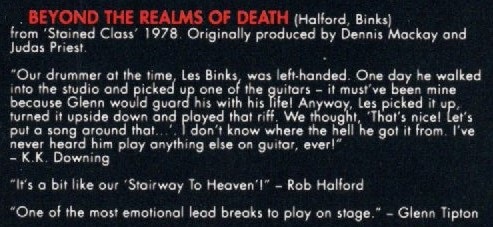
It is Les Binks that is credited with writing the guitar part to the album’s epic.  Says KK:  “Our drummer at the time, Les Binks, was left handed.  One day he walked into the studio and picked up one of the guitars.  It must have been mine, because Glenn would guard his with his life!  Anyway Les picked it up, turned it upside down, and played that riff.”  They built “Beyond the Realms of Death” around the guitar part.  Downing adds that he’d never seen Binks play anything on guitar before or since!  Like “Victim of Changes” before, it has distinct sections and builds up on itself.  “It’s a bit like our ‘Stairway to Heaven’!” said Rob; or perhaps to hell?  The centerpiece of the album.

Closing on “Heroes End”, Priest go out with a serious rocker and a couple more cool riffs for your collection.  An extended outro solo is one of its main features.

But that’s not all folks, because Sony added two bonus tracks on this 2001 CD edition!  And hey, I have nothing against “Fire Burns Below”, but this Turbo / Ram It Down outtake should have been added to a different album, not Stained Class.  The synth and programmed drums are jarring.  The back cover states it was recorded during “the earlier years of our career”.  This is obviously not true.  Too bad, as it’s a cool track although Priest probably didn’t need any more ballads at that point.  They already had “Out in the Cold” and “Blood Red Skies”, not to mention “Red, White and Blue”.  Decent ballad, but on the wrong CD altogether.  A live take of “Better By You, Better Than Me” has more relevance.  This is from the Painkiller tour in 1990, when the song was resurrected in their set after a long absence.  A middle finger to the lawsuit.  For that reason, this live version is important for the collector.

It’s a real shame this album was so rare when I was a kid.  Stained Class is Priest at one of their many peaks.  This was them at peak curiosity: willing to take chances, play with tempo and riff changes, and to challenge themselves.  By the next album they were starting to hone in on a commercially viable sound.  Cover tune aside, that’s not a consideration on Stained Class.

4.5/5 stars


JUDAS PRIEST REVIEWS

Sunday Chuckle: I think this duck used to be one of my customers at the Record Store

I just heard about this kids’ song that is popular in certain age groups. It’s catchy, but I can’t say that I like the lead character too much. He’s a duck that keeps pestering the clerk at a lemonade stand with the same question day after day and not buying anything. I swear to God I used to see him at the Record Store.

#866.5: Right Now, I Am Happy

A spontaneous mini-chapter as I navigate a November weekend.


GETTING MORE TALE #866.5: Right Now, I Am Happy

As of right now, 10:39 AM on a beautiful Saturday morning in early November, I am happy.

It might not last.  It might be a moment as fleeting as the breeze.  But as I remove my mask in the open air, and breath it deep, I feel good.

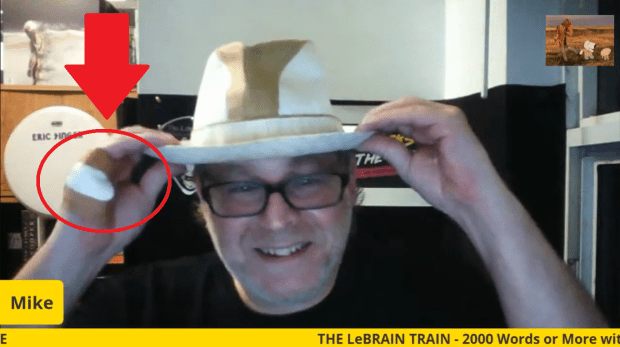
We’ve had a hell of a week.  A Wednesday kitchen accident left us without a functioning stove and a hell of a mess.  We are working hard and cleaning up.  Just one more thing, right?  But not the end of the world and nobody hurt.  Well, not too badly; I’m sporting a cut hand from some broken glass in a kitchen corner.  It just makes me look tougher!  Hah.

I am learning that it is OK that I can’t do all these home projects on my own.  Somebody is coming to haul the old stove away in about an hour.  On Monday somebody else will be delivering the new one.

I am enjoying my beloved music collection.  This week I have delved back into Judas Priest.  I currently have five Judas Priest reviews ready to post, just awaiting final revisions.  I intend to finish all the Judas Priest reviews before the end of 2020.  It’s going to happen.  It feels good to achieve a goal, trivial to others as it may be.  I am learning not to judge myself too harshly and to recognize my worth.

Priest were a really important band to me in my younger years.  Listening now, even to their more recent music, I still get a huge kick.  “Revelations” from Nostradamus might not sound like the Priest I knew back in 1987, but it gets my head a-bangin’.  My air guitar is tuned and ready to rock when I hear it.  My old bones still creek, but my young heart still pumps molten blood when I have the mighty Priest in my ageing ears.

Well, I’d better split, the junk lady will be here soon to pick up this old stove.  If it’s nice and sunny where you are then I recommend you go outside for some nice air.  It’s a beautiful day and right now, I am happy.

Storytime with Frank Loffredo on The LeBrain Train

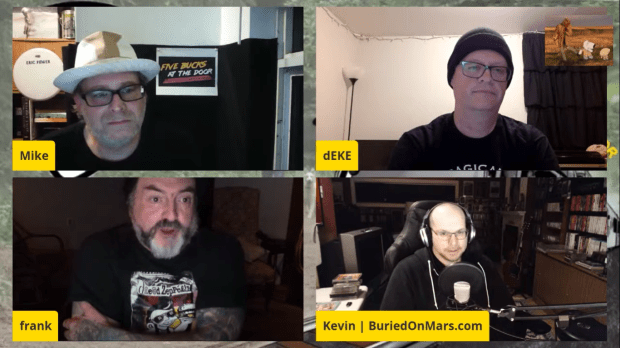
He came; he talked; he rocked!  Frank Loffredo of Thunder Bay’s legendary Crocks N Rolls joined the LeBrain Train to tell story, after story, after story.  Drawing from a broad palette of musical love, Frank talks punk, reggae, jazz, Canadian music, and everything in between.  How do you nurture a music scene in an isolated town like Thunder Bay?  Listen and find out.

As I often do, I began the show with a special unboxing.  If you want to see that, you can start the stream from the beginning.  If you just want to watch the interview with Frank, then start the stream at the 0:07:00 mark.

Thanks everyone for watching and asking your questions, and thanks to Frank for giving us two hours of your time!

Crocks N Rolls Friday with Frank Loffredo on the LeBrain Train

The LeBrain Train:  2000 Words or More with Mike Ladano

Episode 36


We have a special show lined up for you tonight — one I have been waiting six months to do!  Please join Deke, Mars, and myself tonight as we host the legendary Frank Loffredo, from Thunder Bay’s fine establishment Crocks N Rolls.

Last month, for a limited time, a documentary film by Kirsten Kosloski called Five Bucks at the Door: The Story of Crocks N Rolls was available to stream for free.  We were blown away by the musical history at Crocks, and also the guy at the centre of it all:  Frank.  This is a guy who put every band he could get on the bill, from Quiet Riot and King’s X to Sloan and Deke’s own Current River.  You don’t want to miss the stories that he has to tell.

Join us at 7:00 PM E.S.T.  

Facebook:  MikeLeBrain  YouTube:  Mike LeBrain


REVIEW: The Cult – Dreamtime / Live at the Lyceum (Japanese import)

THE CULT – Dreamtime (Originally 1984) / Live at the Lyceum (Originally 1986) (2006 2 CD Beggars Banquet Japanese set)

This was a bit of a surprise to me. Once I got this Japanese pressing in my hot little hands and opened it up, out popped two CDs! This was not advertized on the case. (Well, maybe it was in Japanese, but I can’t read Japanese!) The second CD is the legendary and extremely hard to find live album, Live At The Lyceum. For that live album alone, this Japanese import is worth the price of admission.

The debut album by The Cult is surprisingly solid, a fully-formed vision of the band with complete and catchy songs. For a long time this album was hard to get and all but unknown to “new” fans of the band who thought that it started with Love. This was rectified in the 90’s with numerous reissues, plus many of these songs found their way onto the Pure Cult compilations.

Dreamtime has a punk-like energy.  The drums (by Nigel Preston) hit hard.  “Horse Nation” and “Spiritwalker” open Dreamtime with a powerful one-two punch.  “Gimmick” has soaring vocals with stabbing guitars, coupled with a fast beat that gets the heart racing.  The title track has a similar accelerated pace.  The Cult are also known for their slower, darker, macabre side.  “83rd Dream”, “Bad Medicine Waltz” and “Butterflies” certainly cover that.  Dreamtime sounds like an angry young band unwilling to compromise.

Yet tracks like “Go West” had tremendous commercial potential.  Memorable, punchy melodies and Ian Astbury singing with all the panache he can muster.  “A Flower in the Desert” could be called a ballad if you like.  A dour, dusky one.  An impactful “Rider in the Snow” has some excellent guitar shimmer.

Gladly, I have found that there is not one weak track on this album. The songs are more challenging and not as instantaneous as Love, but when Astbury’s one-of-a-kind vocals mix with Duffy’s angular guitars, it sounds like the Cult. Period. From aggressive rock songs to mournful dirges like “Bad Medicine Waltz”, this album has a bit of everything that the Cult would later become, in embryonic form.  This set contains just the album, the original 10 songs, and none of the B-sides. Don’t fret however as those songs can be found on the Rare Cult set.


Although I got Live at The Lyceum (the original abbreviated cassette which only had eight of the 15 songs) in my teens, I was a stranger to early Cult.  This raw live disc (which opens with a bit of Wendy Carlos’ score from The Shining) includes all the songs from the 1983 Death Cult EP:  “Christians”, “Horse Nation”, “Ghost Dance” and “Brothers Grimm”.  It also includes the blistering Death Cult single “God’s Zoo” live, and the B-side “Bone Bag”.  Going even further back, “Moya” predates Billy Duffy, being an early single by Ian’s band Southern Death Cult.  It slams with vital energy.  As good as this whole live album is, “God’s Zoo” has to be the highlight.

Astbury is as combative as ever, and the crowd eats it up. The energy of this live album is astounding. I strongly encourage you to look for a Japanese copy of this CD for the live album — it is totally worth your time and money to do so. Lyceum was the second Cult album I ever owned (shame it was just a cassette) and I have very fond memories of learning about the Cult’s history by playing  that tape over and over.

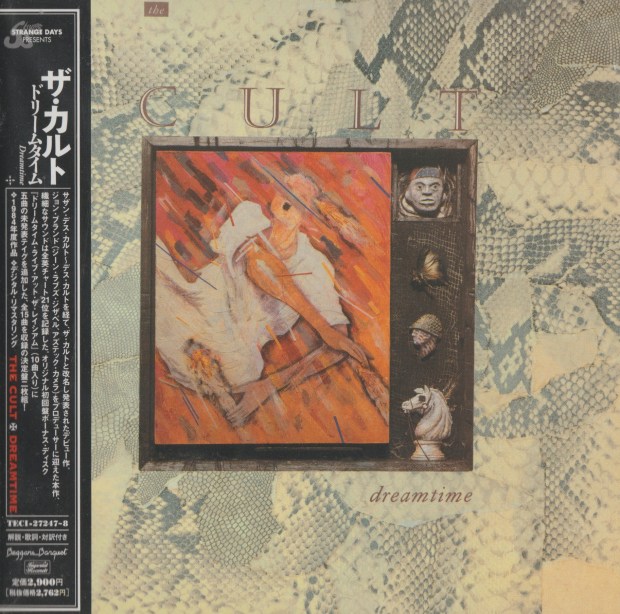
This Japanese CD release has the original, superior cover art.  With the full 15 song version of Live at the Lyceum included, it’s the standout version to own.  What an album, and what a live disc to boot.  Dig into the Cult.

4/5 stars

REVIEW: Metallica – Death Magnetic (Coffin Box)

METALLICA – Death Magnetic (2008 Vertigo Coffin Box)

“What don’t kill ya, make ya more strong!”

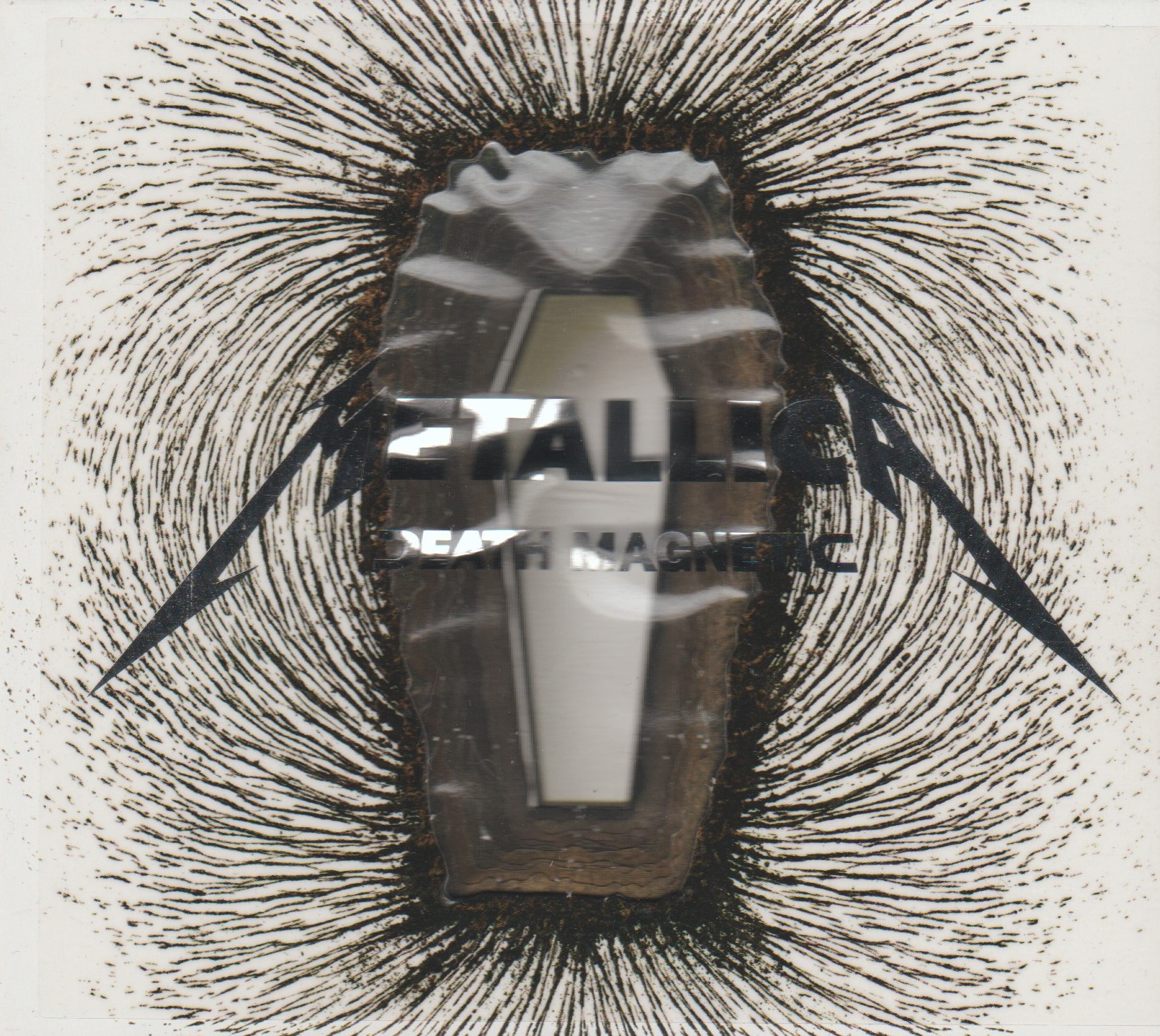
Like many bands these days, Metallica decided to release a boxed special edition of Death Magnetic to make a little extra cash.  And also like a lot of other bands, this “coffin box” edition was crazy expensive. To me the deciding factor wasn’t all the bells and whistles (and there are a lot of them) it was the inclusion of the exclusive CD Demo Magnetic. This disc includes 10 demo tracks, unfinished and otherwise unreleased versions of the final Death Magnetic songs.

There were only 2000 copies of this made, so if you didn’t pre-order, chances are you gotta pay the late tax.

Contents:

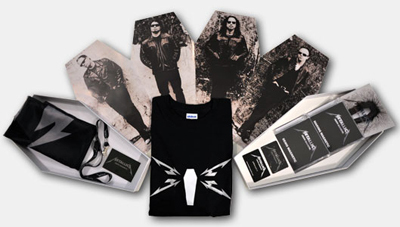
  • Death Magnetic CD (the digipack version, identical to the retail release)
  • Demo Magnetic CD
  • The Making of Death Magnetic DVD
  • Four imitation guitar picks (made of flimsy plastic, not actual guitar picks)
  • Exclusive T-shirt
  • Exclusive bandana
  • Backstage pass with lanyard
  • A card with a download code for a free show
  • Coffin-shaped poster

Death Magnetic is, unfortunately, one of the most famous victims of the Loudness Wars.  Why put time and effort into production only to drown it all out in the mastering?  Apparently the version of Death Magnetic that was used in the video game Rock Band 3 was mastered “normally”, and is far better.  This CD has punch though, I’ll give it that.

On its own the album is worth 4 stars.  Mastering aside,  It is an above-average collection of typical Metallica rockers. Gone are the nu-metal tendencies of St. Anger and that was the correct move. Clearly, Metallica were reaching back and trying to write riffs that sound like the late 80s and that’s also fine.  Metallica are not Dream Theater.  They do what they do, and they do it quite well.

Expect typical Metallica riffage, barking Hetfield vocals, the usual Lars drumming, some tasty solos from Kirk, and slamming bass from Robert.  That is what Metallica do.  It’s not a bad album and some of these songs are damned near as good as the old days.  You’ll love “Broke, Beaten & Scarred”, “That Was Just Your Life”, and “The End of the Line”.  A favourite song for sheer chorus reasons is “All Nightmare Long”. The demo version (called “Flamingo”) is also really decent.

If you’re a diehard Metallica fan, the kind who owns Fan Cans, then you’ll want this box set for the exclusive music. It’s sure to become a rare collectible.

4/5 stars


#866: Untitled ’94

GETTING MORE TALE #866: Untitled ’94

I didn’t go to the cottage at all in 1994.  I was busy with school, then in the summer met a girl, and finally got a job at the Record Store.  That was all the distraction I needed to stay home.  Girls trumped trees and water.  Priorities!

The first summer at the Record Store was a brand new world for me.  New faces, new names, new music.  Lots and lots of cleaning.  “If there’s time to lean, there’s time to clean!” went the saying.  A lot of the job was tedious.  Wednesday was “tape check day”.  From A to Z we had to check every cassette in the store and make sure the magnetic security strip was firmly attached.  If it wasn’t, we’d get some scotch tape and secure that sucker.  My hands always felt so grungy after a day of tape checking.

There was always filing to do, and new stock to price.  When we sold a tape or CD, we had to know to re-order them.  How was this accomplished?  Tapes had a little clear plastic sticker on the back.  It had the artist, title and record label written on it.  When we sold a tape, we had to file these stickers in a photo album, sorted by record label.  Then when the boss was ready to order more stock, he’d flip through the photo album and read the stickers.  When we re-stocked the tapes, we had to put the clear sticker back on.  CDs were similar except they were in clear bags with the info written on them.  The bags were used to re-order discs.

When something new was released, we had to make the stickers and bags for those items too.  I remember when T-Rev was hired, he used to leave special releases for me to do the tags and bags for.  Kiss Unplugged he specifically left for me, because it was the first Kiss album released during my tenure at the store.  The first of many.  I drew the Kiss logo on the tag and smiled.  Small things like that meant something to me, though after waiting so long for a new Kiss album, it was quite anti-climactic.

We had also started selling used CDs.  Some of the first I acquired with my staff discount were Sven Gali’s debut and Chronicles by Rush.  Weirdly, I was still buying a lot of cassettes.  Kim Mitchell’s brand new one Itch got the staff discount treatment.

In the early days the boss used to give us weekly homework.  We had to come in with a current top 10 list every week.  This was to ensure that we were familiar with the current hits that people would be asking for.  T-Rev did his homework; I did not.  I felt like I already knew it all.  Before I started at the store, I used to keep on top of “everything the kids were listening to”.  I guess the boss recognized that since he didn’t bug me for my homework every week.

I was glad to have this job at the Record Store when in late ’94 my relationship blew up in my face.  I compensated by throwing myself into the store.  I came in early every day so I could review all the new stock.  Business was fairly slow most nights.  We were not in a high-traffic mall.  We had our regulars and we had our time-wasters.  The drunks from the restaurant next door were interesting.  Some of them even spent money!  None of them were problems, just time wasters.  “Tire kickers” as I call them now.  Then there were a couple notable janitors.  Trevor Atkinson from highschool was one.  I wonder what ever happened to that guy?  He was certainly a time waster.  It’s my theory that he was the cause of the first customer complaint I ever received.

Working in that Record Store was pretty much my whole social life.  I didn’t know anybody at school anymore.  Through the store, I reconnected with highschool and neighborhood friends that dropped by to shop.  Guys like George Balasz and Scott Peddle.  The boss didn’t like his employees to socialize at work, but what could you do?  It was the local Record Store and I was working in it.  I knew lots of people.  He socialized far more than I did, but he was “the boss” so nobody could give him shit for it.  When one of his friends was in the store, he’d chat it up and get me to take care of everyone else.  “Do as I say, not as I do” was another one of his famous demoralizing sayings.

But it was a good job.  The boss used to say he was “firm but fair”.  For the first few years that was true.  For a retail job it was pretty good.  We got to listen to music during the shift and we felt like part of a team.  It was a special place during a special time.  I’m glad I was there before we grew, because that’s when things changed for the worse, from an employment point of view.  But for that brief period in the beginning, the Record Store was a part of my identity.  I’m still really proud of everything that we did there as a team.  I may be critical of some things, but I’m proud of being there on the ground floor when things were about to take off.