Sunday Chuckle: Radio Mission Accomplished Face

RECAP:  Visions In Sound – The Black Hole on 98.5 CKWR

To those of you who tuned in:  thank you!  Sorry to Holen MaGroin for not reading your email on the air.  I couldn’t quite figure out how to work “I wish I could ask about The Black Hole, but I’ve never seen it, Disney sucks ass, Fuck ’em,” into the discussion.

Thanks Rob Daniels for having me, and to Jason Drury for awesome insight and comedy relief. (Ernest Borg-ninny.)

I was doing research all week, including watching lectures from Neil DeGrasse Tyson and other scientists about black holes.  Neil DeGrasse Tyson is a harsh critic of the film, incidentally.  I was glad to have worked this into the discussion.  Due to the sheer amount of research I did, I was overprepared and hyped to go.

I always take a nap before the show, which used to air at 12:30 am.  Well, I hadn’t been on Visions In Sound for a while.  I woke up at 11:50 to have my coffee and a bite to eat.  Then my phone rang.  It was Rob and they were about to go live!  Turns out the show was back to the 12:00 am slot.  Whoops!  I hopped in the car and drove down to CKWR which happens to be only 10 minutes away anyway.  I made it in just in time for my introduction, and that’s including having to stop for a R.I.D.E. check on my way!  Thank you to the local boys in blue, always doing a fantastic job keeping us safe on the road.
Among the myriad subjects discussed, one of the most interesting to me included Rob’s topic, the blaster beam.  I’d never even heard of it before, but I have absolutely heard it before.  It’s an integral part of the soundtrack to Star Trek: The Motion Picture, which I am intimately familiar with.  I thought that what I was hearing was a guitar.  Turns out it’s a bizarre 15-foot long beam of stainless steel with strings and pickups.  You can hear it readily in The Black Hole (music by John Barry), and now I know what it really is.

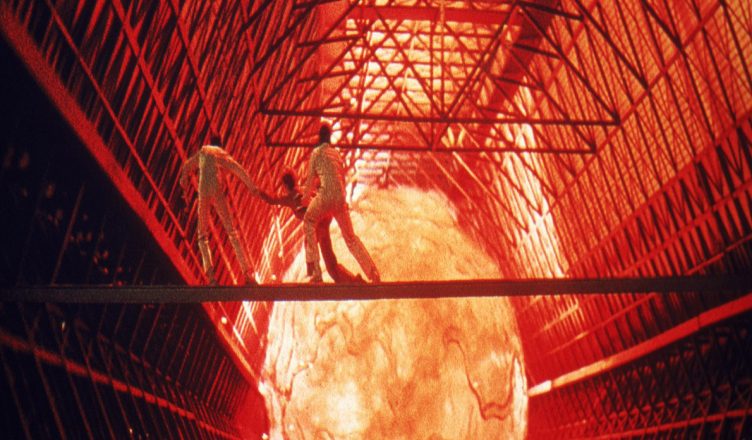
We also talked a bit about the toyline (available by mailing in UPC codes found on cereal boxes).  We couldn’t ignore the elephant in the room, which is the bizarre ending to a so-called “children’s film”.  In this visually stunning abstract sequence, the villain Dr. Reinhart (Maximilian Schell) embraces and merges with his robot minion called Maximilian (no relation).  Reinhart finds himself trapped in Maximilian’s shell (pun intended) ruling over a hellish landscape.  Wild-eyed and helpless, Reinhart is punished for the evil he inflicted.  Meanwhile our surviving heroes, including robot V.I.N.CENT. (Roddy McDowell) experience a wild ride including visions of a heavenly cathedral and a floating angel.  They then emerge in a brand new universe, to triumphant swells of Barry’s score.  This raises numerous questions about the film’s message on heaven, hell, morality, mortality, the soul, artificial intelligence, and more.

Thanks again to Rob for having me.  I am currently planning to be there for his 1000th episode a few weeks from now, and his Rise of Skywalker special the following week.

This episode can now be streamed at Visions in Sound, just click the link right here.



#798: Chinese Democracy

A sequel to Record Store Tales Part 285: Chinese Democracy

GETTING MORE TALE #798: Chinese Democracy

I met Thussy back in 2007.  He joined the team at work and we became friends immediately.  We liked the same stuff.  Trailer Park Boys, Guns N’ Roses, comedy.  He is responsible for getting me into Super Troopers, which admittedly took a couple tries.  We were also both getting married around the same time, so we had similar complaints and gripes to talk about.  Drama with bridesmaids and seating plans, egads.

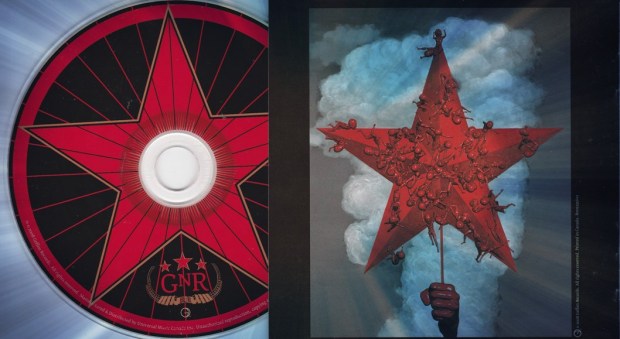
Thuss is a gamer, and we enjoyed chatting games.  Axl Rose did a voice (a radio DJ) in the video game Grand Theft Auto: San Andreas.  You could switch between stations, and if you chose the rock station you got Axl.  It was one of the few things Axl did that was released during that long dry spell between albums.  Of course, this led to ample discussions of Chinese Democracy.

“It’s never coming out,” Chris insisted.  I hated to say he was right, but it sure seemed that way.  He refused to back down on his position.  We’d been fucked with by this band for so long.  Guns had missed several release dates, so many that it had become a joke.  Axl chewed up managers and spat them out like stale bubblegum.  Then the Dr. Pepper soda company offered to buy a Dr. Pepper for everyone in America if Axl managed to make his 2008 release date.  Axl seemed good-naturedly amused by the idea, offering to share his Dr. Pepper with Buckethead when the album comes out.  (This because Dr. Pepper said the only Americans exempt from this offer were former Guns members Buckethead and Slash!)

On October 22 2008, I was working at my desk, listening to the radio when the DJ, Carlos Benevides, announced that they would shortly be playing a brand new single by Guns N’ Roses.  It was the title track, a song both Thuss and I were already familiar with.  He had a disc of rough mixes for many of the tracks, and I had the Rock In Rio bootleg CD set.  We already knew half the new songs, and “Chinese Democracy” was a track I thought smoked.  I called Thuss and he listened in as it played.

It sounded like shit on our little mono telephone speakers, but we were listening to brand new Guns!  The overall listener reaction was mixed to negative, but I already loved it.  “The album’s never coming out,” said Thuss.

“It has to, now.  There’s a single out.  It’s definitely coming.”

“No.”  Thuss was insistent.  “It’s never coming out.”

“But Dr. Pepper…” I began before being cut off.

“No.  Not coming out.  Never.”

The funny thing was, “Chinese Democracy” wasn’t actually the first song released from the album.  A month earlier, “Shackler’s Revenge” became the first new Guns song in nine years, when it was released as part of the Rock Band 2 video game, which neither of us had.

A new release date of November 23 was announced.  “Nope,” said Thuss.  “Nothing is coming out on November 23.”  It was, strangely, a Sunday.  Generally, nothing came out on Sundays.  It was absolutely an odd move that did throw the whole release into question for some.

I asked ye olde Record Store to hold a copy for me.  “Do you want vinyl?” he asked.  “No, just CD.”  It was something I’d regret, when he sold out of the vinyl a week later.  I emailed to ask if he had any left.  “Do you remember me asking you if you wanted vinyl?” he scolded.  “Yeah,” I sulked.

When I walked into the store on November 23 and was handed my precious copy of Chinese Democracy, it was so anticlimactic.  There it is.  It’s in your hands, the culmination of a decade and a half’s work.  You’ve been waiting all this time for this album, and there it sits.  An album that had “release dates” going back to 1995 and every single year since.  Then, you witness Guns return to the live stage from their cocoon, different but recognizable.  You watch them struggle to establish a lineup, and you hear rumour after rumour about song titles and release dates.  Then you’re holding a CD in your hands, a pitiful little plastic case with a little paper cover inside.  You hand the guy your debit card, he rings it in.  Transaction approved, you are handed your receipt.  Chinese Democracy goes into a little plastic bag.  Even though it’s probably the most expensive and longest gestating album of all time, your little plastic bag weighs the same as if you bought Sex Pistols.

At least I’d be able to show it to Thuss.  Monday the 24th rolled around.

“It came out.  I have it,” I told him as I strolled into his office.

“No it didn’t.  It never came out.  It’s never coming out.” He was sticking to his story come hell or high water!

“Yes it did! It’s in my car right now!  I’ll show it to you.”

“You have nothing,” he responded, refusing to come and look.

In the years since, Thuss has stubbornly stuck to his guns and his believe that Chinese Democracy has never come out.  “I have the unreleased mixes,” he says.  “That’s all there is.”


I emailed him to tell him I was writing this story, our tale of the time Chinese Democracy was released.

“So you are going to take a crack at some fictional writing…nice.”

I will never win this one!

So now I have two stories both titled “Chinese Democracy”.  I say, why not?  Peter Gabriel has three self-titled albums.

The Black Hole radio, tonight!

I will be LIVE at 12:30 AM (ET) Saturday morning with Robert Daniels and Jason Drury on VISIONS IN SOUND. Tune in on your dial to 98.5 or internet to CKWR!  You folks in the UK can tune in as you enjoy some morning java!  Join Us THIS Saturday 12:30-2:30am (ET).

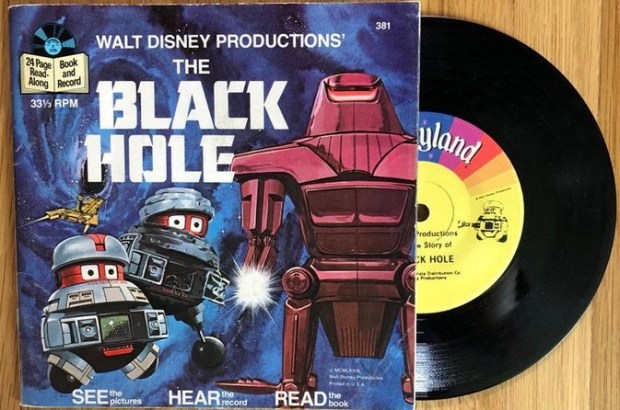
What a bizarre Disney film The Black Hole was.  Marketed to kids with funny looking robots from the House of Mouse, instead of a swashbuckling adventure, kids got a strange treatise on life, death, morality, mortality, God, the soul, isolation, artificial intelligence, good, evil, heaven, hell, and eternity.  It attempted to be Star Wars, 20,000 Leagues Under the Sea and 2001: A Space Odyssey.

Rob, Jason and I will be playing the soundtrack by John Barry, and dissecting this interesting and puzzling film piece by piece.

For my DVD review of the The Black Hole, just click here.


#797: Don’t Be Afraid to Ask For It!

GETTING MORE TALE #797: Don’t Be Afraid to Ask For It!

In the early 90s, we got our first Costco store in Kitchener.  My parents raved about how much I’d love it.  In those early years, I enjoyed going with them.  I’d throw a 20 pack of Hot Rods into the cart and see if they’d notice (they always did).  They didn’t have much of a music selection, but what they did have was priced to go.  So I picked up a few current releases:

The Guns was a nice score.  The full Tokyo show, split onto two VHS tapes (sold separately).  At Costco prices they were affordable.  The show later made up a large portion of their album Live Era.  Costco was great for buying new releases, junk food in bulk, and the occasional electronics.  We enjoyed getting free food samples and checking out the latest in TVs and videos games.  I stocked up on blank tapes.  But there was one thing Costco didn’t have.

To be clear, it wasn’t that I was looking to buy this.  I was just being a shit.  I have a juvenile sense of humour, and always have.  Costco should have known that if they were going to leave pads of paper for “suggestions” at the end of every aisle, someone was going to write silly things on it.

Most people wrote sensible suggestions.  “Too much packaging on products” was a good one.  It’s true, Costco would use far too much cardboard and plastic to package together three things of deodorant.  But I noticed they didn’t carry something; something important that could easily be sold in bulk.  My mom gave me shit for it, but I always wrote “CONDOMS” on the suggestion pads.

I didn’t need condoms, believe me.  Definitely not in bulk.  But something about the idea tickled my funnybone, and so every time, I wrote it down.

“MICHAEL!” my mother would scold.  I’d grin and laugh.  It went on and on like this, visit after visit.

But you know something?  It was a good idea.  So good that a few years later, they were stocked.  I couldn’t believe it.

“Kathryn!” I shouted at my sister.  “Get over here, you won’t believe this.”  I proudly pointed at the condoms.  “Do you think that’s because of me?”  I mean, I wrote it down enough times.

I think I had something to do with it.  At least, that’s the way I tell the story, and I’ll be damned if I’m changing it now.  Costco carries condoms because of me.

There was one guy I knew back in the day who would have appreciated it.  He was a friend of a friend.  We were at an age when you’d be expected to be “embarrassed” to be buying condoms.  Not this guy.  He went up to the counter at the drug store and said, “See that?  That’s a five pack.  That means I’m getting it five times.”  Then when the transaction was done, he’d conclude by saying “See you tomorrow!”  No embarrassment for that guy.  I like to think that I got Costco to carry condoms in bulk, and I did it for that guy.  You’re welcome!


REVIEW – Star Wars: Shadows of the Empire soundtrack (1996)

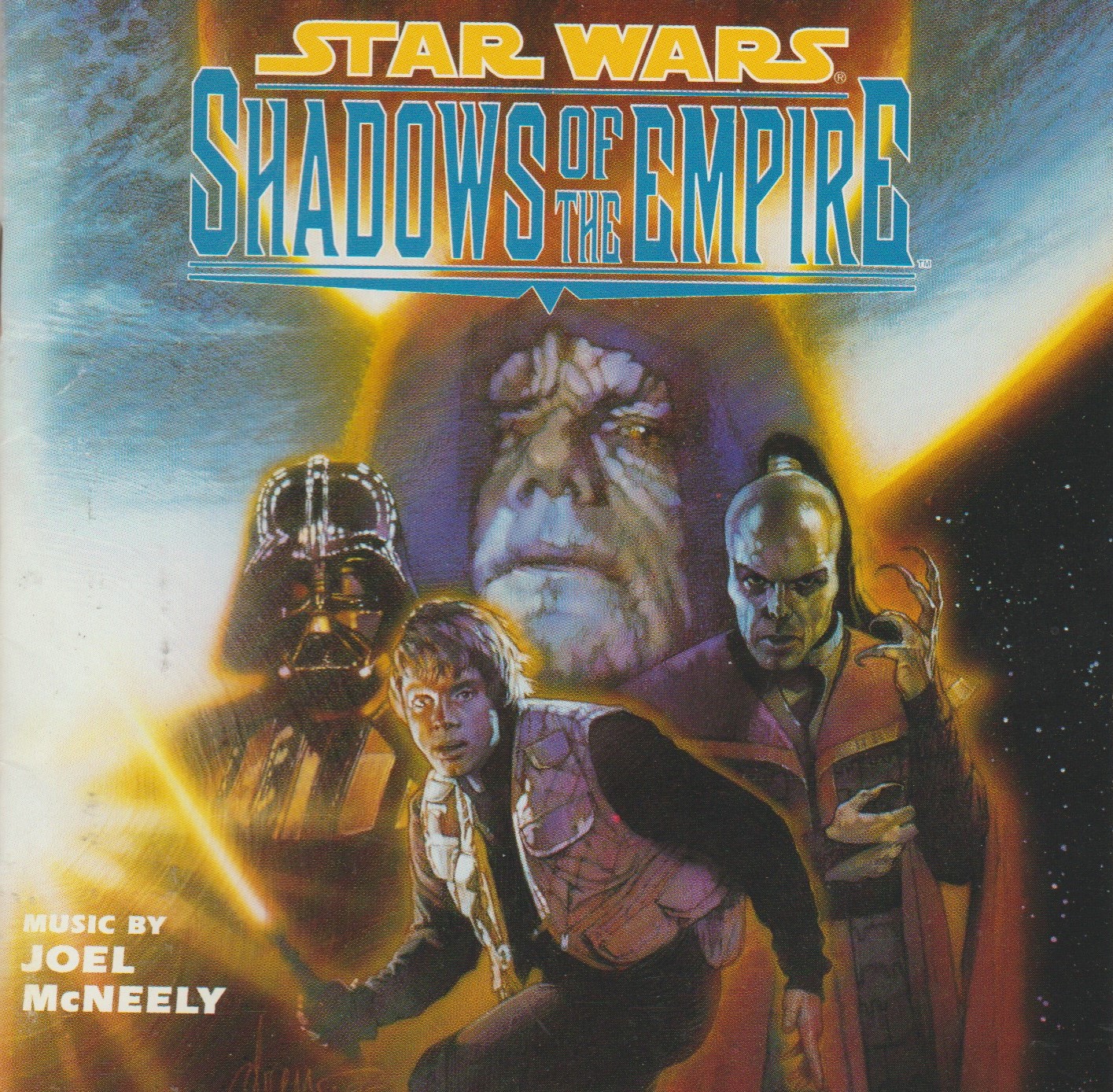
STAR WARS: Shadows of the Empire soundtrack (1996 Varese Sarabande)

by Joel McNeely

Things were starting to heat up!  As Lucasfilm toiled away at the Star Wars special editions behind the scenes (and Episode I even further behind the scenes), they also launched a huge new multi-media story.  It was called Shadows of the Empire, and it was meant to represent a movie between The Empire Strikes Back and Return of the Jedi.  Just as Star Wars was re-entering the public consciousness again, out came this massive, sprawling thing that was meant to make you feel like you did when a new Star Wars movie was released.  It included:

  • A comic miniseries by Dark Horse
  • A novel by Steve Perry (not the singer)
  • A new Kenner toyline
  • Topps trading cards
  • Nintendo 64 first-person shooter game
  • A soundtrack composed by Joel McNeely

The catch?  You had to get everything in order to get the complete story of Shadows of the Empire.  Scenes in the game were not in the comics or novel, scenes from the comics were not in the game, and so on.

McNeely had done a bit of soundtrack work, but had also crossed paths with Lucasfilm when he scored The Young Indiana Jones chronicles for television.  He was facing a losing battle by being the first composer besides John Williams to score a Star Wars soundtrack.  McNeely provides ample liner notes for each track of his score, explaining the scenes they represent from the fiction and how it translates into music.  These valuable notes are a terrific example of why listening to physical product is always the best way to listen to music.

The audio journey begins with the Star Wars theme, as if it were a full-fledged film score.  Differences can be heard, but not deviating far from course.  “Leia’s Nightmare” begins quiet and prequel-esque, with hints of “The Imperial March” and other classic Williams themes.  And even in retrospect, it is thrilling hearing them in the context of something new.

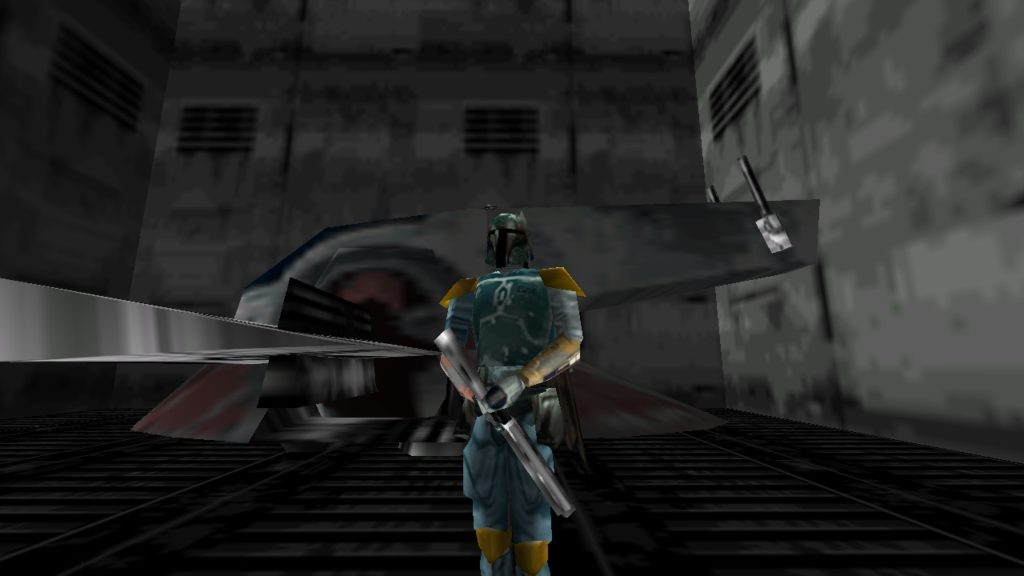
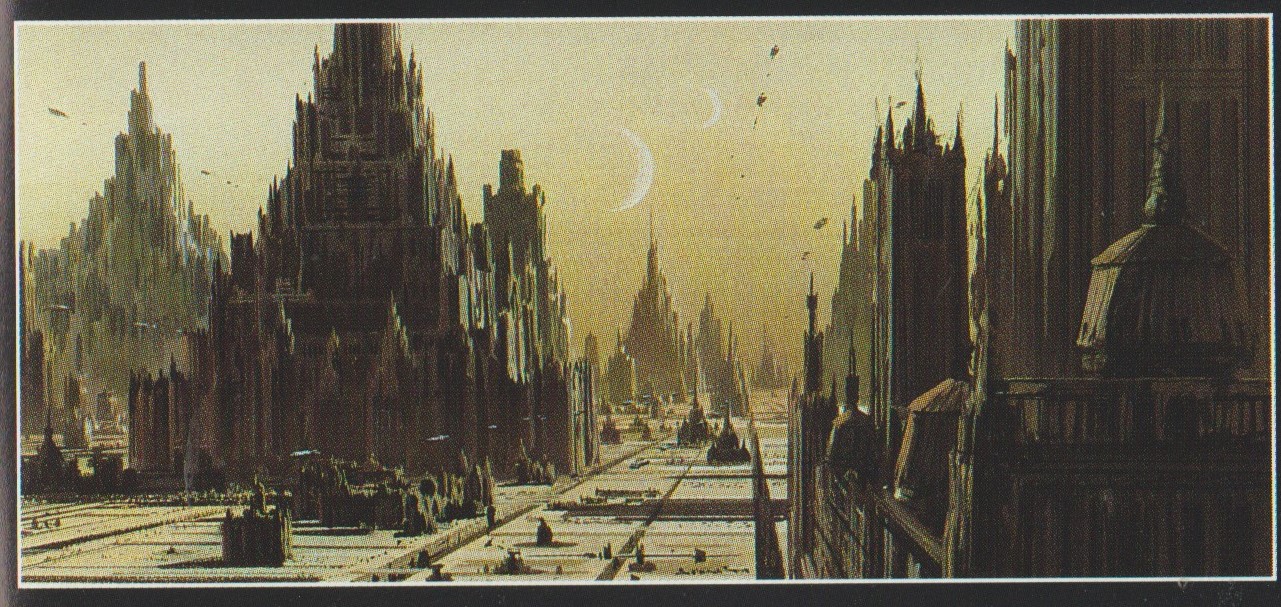
“The Battle of Gall” is an early attempt to rescue Han Solo from Boba Fett.  Fett has stopped at the Imperial moon of Gall on his way to Jabba the Hutt, with Solo frozen in carbonite.  Why?  No reason, except to milk the Boba Fett character even further.  Military drums can be heard as Luke and friends prepare their daring mission…doomed to fail, of course, since we have all seen Return of the Jedi.  A bouncy new theme in this piece sounds out of character, but memorable.  “Imperial City” is our first glimpse of the Galactic capitol world of Coruscant.  Much like it is described in The Phantom Menace, it is a planetary city.  Ideally, you’d be leafing through the Ralph MacQuarrie paintings of the planet while listening to the imposing horns and drums.  A  choir welcomes you to the city amidst fanfares and trumpets.  None of this sounds like Star Wars, but much of it is good.

An action scene on Tattooine follows, as Luke is chased by goons on speeder bikes.  He is rescued by new character Dash Rendar, a poor man’s Han Solo.  Dash has his own swashbuckling theme.  He was a huge part of the Shadows of the Empire campaign.  His ship, the Outrider, was saucer shaped with a side cockpit like the Millenium Falcon.  Lucas added it to the Star Wars special edition in ’97, making it screen canon forever.

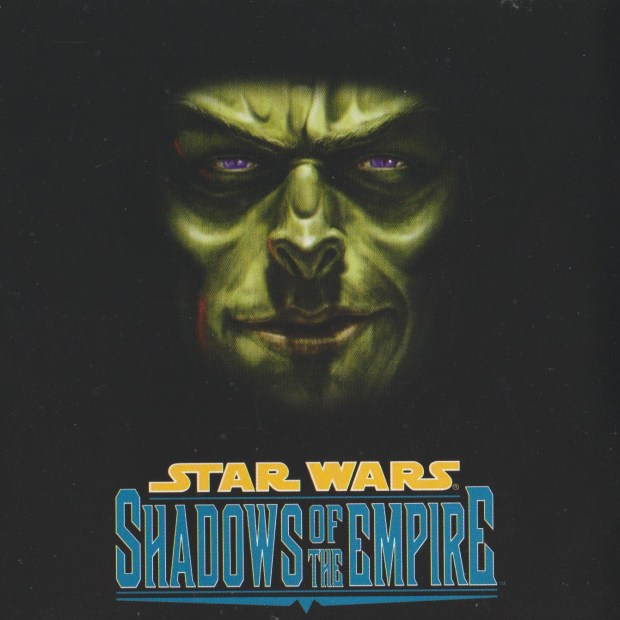
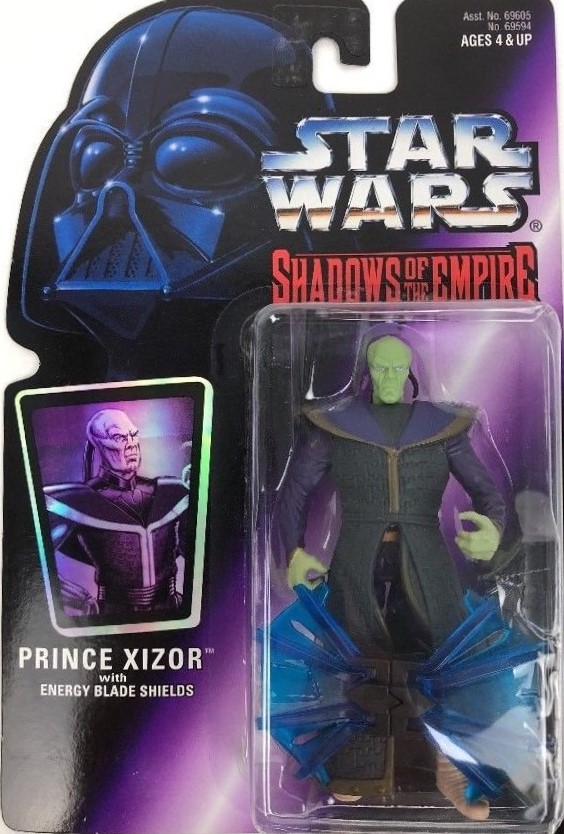
Leia’s mission follows, as she searches the lowest levels of Coruscant looking for a crime organisation known as Black Sun.  She wishes to forge an alliance.  Their leader, the tall green Prince Xizor (shee-zor), is the main villain of Shadows.  Not nearly as terrifying as Vader or the Emperor, but he has his own scary theme.  The music paints a picture of an evil entity with refined, extravagant tastes.  He has one advantage over Leia when they meet:  alien pheromones that make him irresistible to women.  But Leia loves Han.  This battle of wills is composed as a dramatic ballet called “The Seduction of Princess Leia”.

We learn Xizor failed to seduce Leia on “Night Skies”, a piece of music he shares with Darth Vader, as he attempts to contact Luke through the Force.  The dark side of the Force is palpable in the air, then Vader’s theme returns.  Next, Luke rescues Leia from Xizor’s palace on “Into the Sewers”, which are the only way to sneak in undetected.  Xizor is defeated on “The Destruction of Xizor’s Palace”, when a massive space battle ensues.  A choir heightens the tension while exciting action music animates what’s happening.  Grab your action figures and play along.

The only serious flaw is that the soundtrack should really end like a Star Wars movie ends — with the credits theme music.  That aside, Shadows of the Empire is an enjoyable piece of music when you want to hear something just a little different and contemplative in the galaxy far, far away.

3.5/5 stars

NEWS: When ‘The End’ is Not the End – The Return of Mötley Crüe

2014

Tommy:  “Hey guys, how do we sell this farewell tour to our fans?”

Mick:  “Let’s call it The End so everybody knows this is the last one.”

Tommy:  “Good idea, but that isn’t what I meant.  How do we sell it so that they believe it?  We don’t want to be accused of doing this for the money, like Ozzy, Kiss and the Who.”

Nikki:  “How about…how about we sign contracts stating that we’ll never tour as Motley Crue ever again?  We’ll do it publicly; it’ll be great for the tour.”

Vince:  “Do I have to sing?”

2019

Motley Crue: “Let’s not just rip the contract up, let’s blow it up.  CA-CHING!  For the fans!”


Motley Crue will return to the stage (and your credit card statements) with Poison and Def Leppard.  Excited?  Disappointed?  Indifferent?  Let us know in the comments.

#796: Improvisation

GETTING MORE TALE #796: Improvisation

When I need a particular piece of audio hardware today, I just have to decide what I want and order it.  It’ll be at the house two days later.  Oh, I need some more RCA cables to plug my tape deck into my PC?  No problem.  What colour and how long?  We have become soft and spoiled today, with the convenience of everything we desire at our fingertips.  Want a frozen turkey delivered to your front door?  No problem.  I’ll get you a turkey.  Or RCA cables.  Anything.

In the 1980s, we had to improvise.

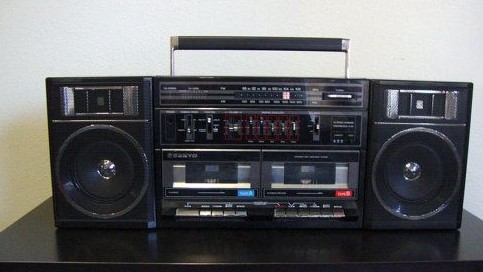
When I first discovered music, the second most important music-related activity (after listening of course) was taping.  It was the easiest, cheapest way to get new music and there was a social aspect to it as well.  You had to borrow an album from someone, go to their house to tape it, or vice versa.  Most kids had a budget price dual tape deck.  I had a single-deck Sanyo, eventually getting a dual deck boom box for Christmas of 1985.  By today’s standards, recording tape-to-tape on a cheap deck yields horrendous results.  In 1985, it was the next best thing to owning the album yourself.  If you were in a hurry, you could use the high speed dubbing feature but that always created speed and warble issues that we could even hear as kids.  Regular speed dubbing was the only acceptable way to copy a tape.  However sometimes we had to think outside the box.

The most notable instance of improvising with what we had was using speakers as impromptu microphones.  It’ll work if you have nothing better to use.  We used speakers as microphones frequently back then, but what about copying music tape to tape?

Let’s say I was making a mixed cassette, and that mix was going to have some live songs on it.  There was no practical way to do a fade-in or fade-out on a low end dual tape deck.  In this case, I would use a Walkman as an audio input to my recording deck.  The sound was, shall we say, harsh.  But you could do it.  You could take a cable and go right from the headphone jack to the microphone-in jack on the deck, but that sounded pretty terrible.  A better way was to use a cable that had a headphone jack on one end, split to RCA left and rights on the other.  But I didn’t have one of those.  I had to make it myself by splicing one to the other.  Improvisation!  We couldn’t just buy everything we wanted.  Cables are still expensive today and finding the right ones in stock at a given time wasn’t a guarantee.  You made due with what you had until you could afford to do better.  Using the Walkman’s volume control, I could now fade in any live track I wanted.  A small thing, but I was already ambitious.  I enviously eyed pictures of mixing boards in guitar magazines.

Another issue I had was recording vinyl.  I had never heard of a preamp.  But I realized that my old turntable sounded better when plugged into something else first.  My parents had an old receiver with an 8-track deck and radio.  The 8-track didn’t work anymore but I used that gigantic unit to boost the signal from my turntable, before going into my tape deck.  The sound was messy to say the least, but at least I was able to listen to and record my LPs.

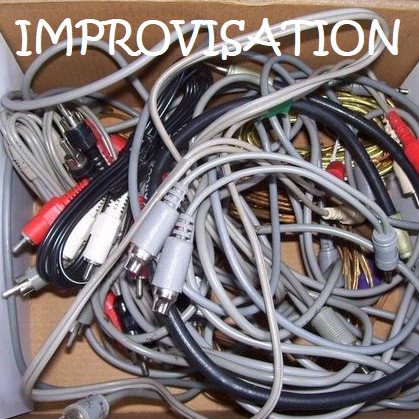
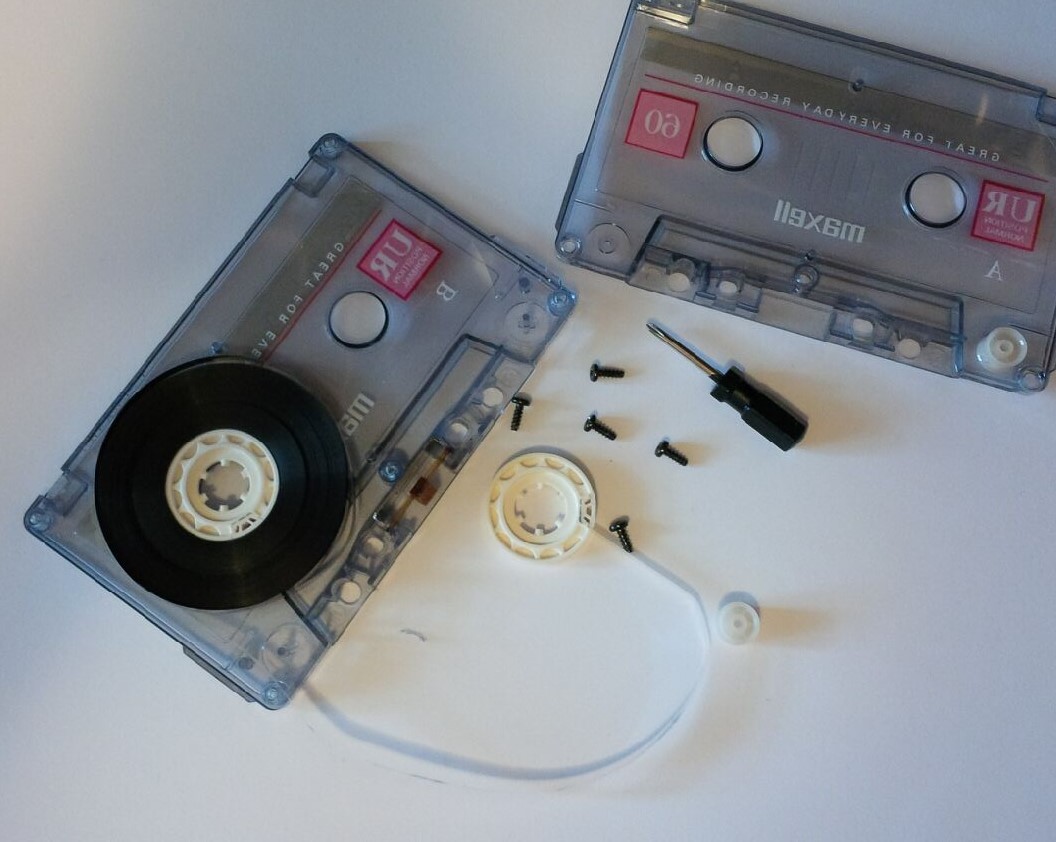
I had a little shoebox full of stuff I needed to push my audio capabilities, a small but mighty toolbox of essentials.  A tape head demagnetizer.  Isopropyl alcohol and lint-free wipes.  A record cleaning kit.  A little magnetic screwdriver for taking apart cassette tapes.  A gnarly pair of grey RCA cables that were the top of the line that I could afford.  My prized possession:  an RCA Y-connector.  That baby enabled me to take a mono signal, like from the family VCR, and split it to faux-stereo for recording to cassette.  Until we got a stereo VCR in the early 1990s, that Y-connector saw weekly usage on my Saturday mix tape sessions.

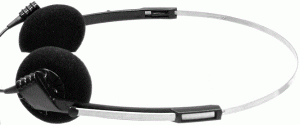
I had a little soldering kit that I could use to splice wires together, but one thing that I could never fix was a cheap set of Walkman earphones.  The kind with the little foam earpieces.  Utter shit, but that’s what we all had.  The headphone jacks on those things would not take long to start shorting out.  You’d go from a stereo signal to a mono signal to no signal back to mono without even moving it around.  I tried everything and could never fix those damned shitty earphone cords.  So you’d buy a new pair for $10 at the local Bargain Harold’s.  Those would be good for about a week before starting to give you problems.  Otherwise, everything that broke had to be fixed.

Maintaining your tape deck at home was essential, hence the isopropyl alcohol.  Hold your breath, dab some of that on a lint-free cloth, and gently clean the rollers and capstans inside your treasured boom box.  It would be remarkable how black that cloth could get.  I used my tape deck a lot.  I was constantly cleaning it, but it always had speed issues.  This was probably more due to poorly made, tightly wound cassette tapes than the deck itself.  Still, those old Sanyo tape machines were not designed to be worked as hard as I worked mine.  If I had known what a Nakamichi Dragon was back then, I might have been more motivated to get a part-time job!  But such machines were not available on an eighth grade allowance, nor was such a beast even known in these parts.

Using my limited resources, I was able to listen to and record from every format I had.  My turntable was so old that I could even play 16 and 78 rpm records (not that I had any).  Then a new format came along that slowly but surely digitised my entire world:  the compact disc.  I received my first CD player/tape deck for Christmas 1989, a mere four years after my first dual cassette.  An eternity in teenager time.  A significant fraction of my life to that point was spent meddling with tape decks and cables trying to get them to do what I wanted them to do.  Now this compact disc comes along, allowing me to hear the most perfect audio I’d even been exposed to.

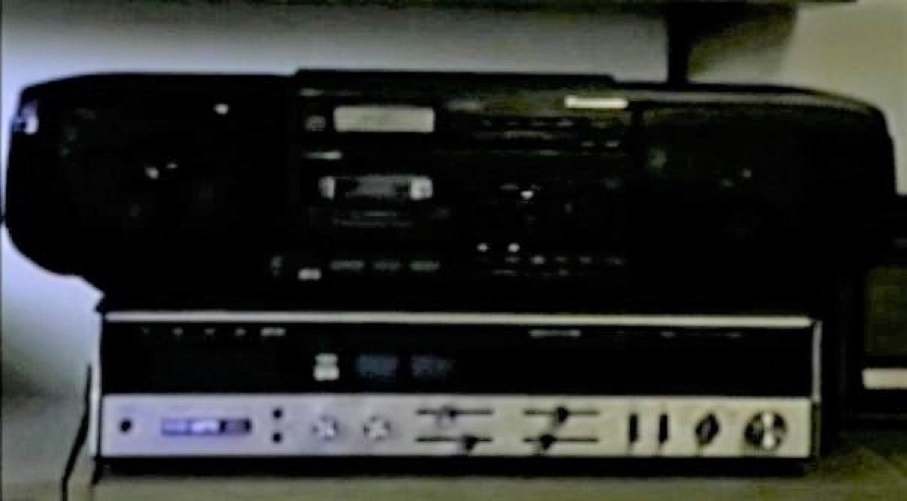
My first CD player on top of an old Lloyd’s 8-track/radio/receiver.  The old setup!

I remember playing one of my first CDs, Motley Crue’s Dr. Feelgood, for my buddy Bob and his brother John.  I skipped ahead to “Time For Change”, and then fast-forwarded to the fade out.

“Just listen to that!” I said with a proud look on my face, as I cranked the volume all the way to 10.

After a pause, John asked “What are we supposed to be hearing?”

“The silence!  Listen to that silence!”  There was no static on the digitally recorded, mixed and mastered fade out.

Bob and John weren’t as excited as I was, but the compact disc represented a new standard.  The stuff I had wasn’t going to cut it forever.  Soon, as long the source was digital, I was making mix tapes that sounded better than store bought.

As much as the results were often dicey, improvising with audio equipment was tremendously fun.  Working with your hands, the satisfaction of getting something to work the way you wanted…it was a fun way to spend a Saturday in the 80s.  Even if the only people who got to hear your handiwork were a handful of your neighbourhood friends and classmates.


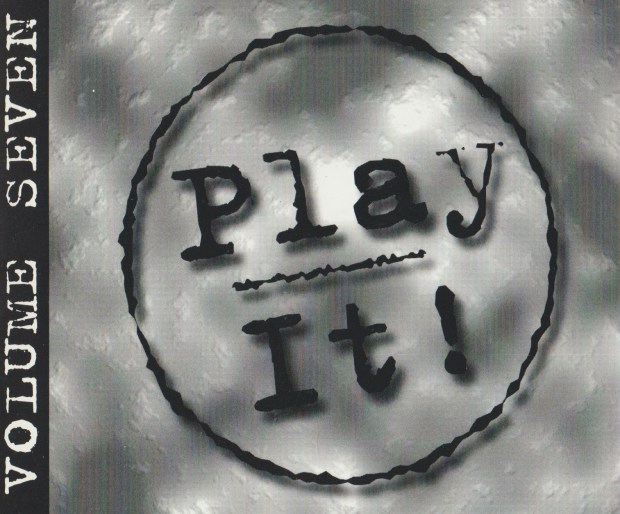
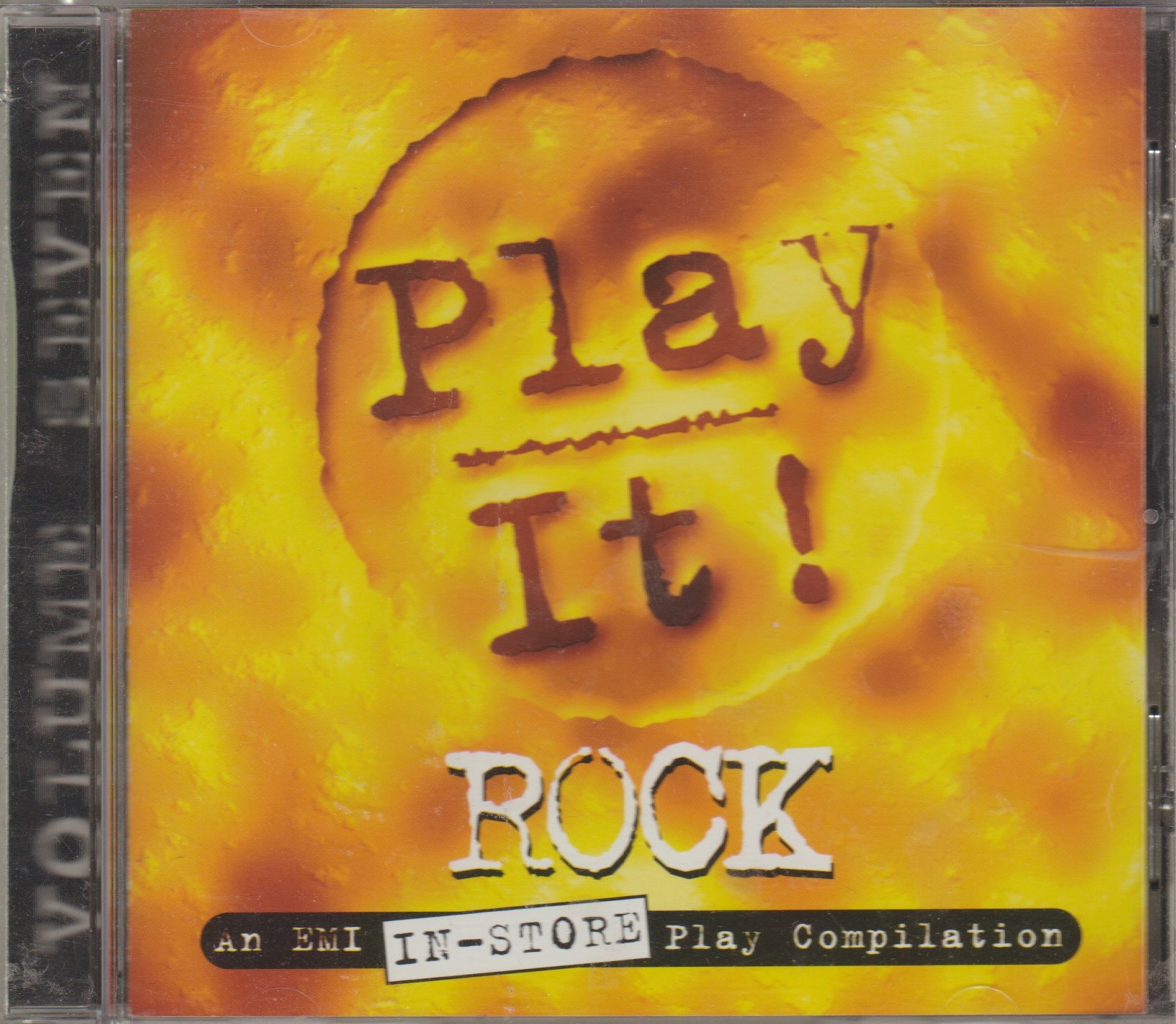
REVIEW: Play It! ROCK – An EMI In-Store Play Compilation – Various Artists (1997)

Play It! Volume Seven – ROCK – An EMI In-Store Play Compilation (1997 EMI promo)

“Woah!  I own ‘Song 2’.  How about that.”

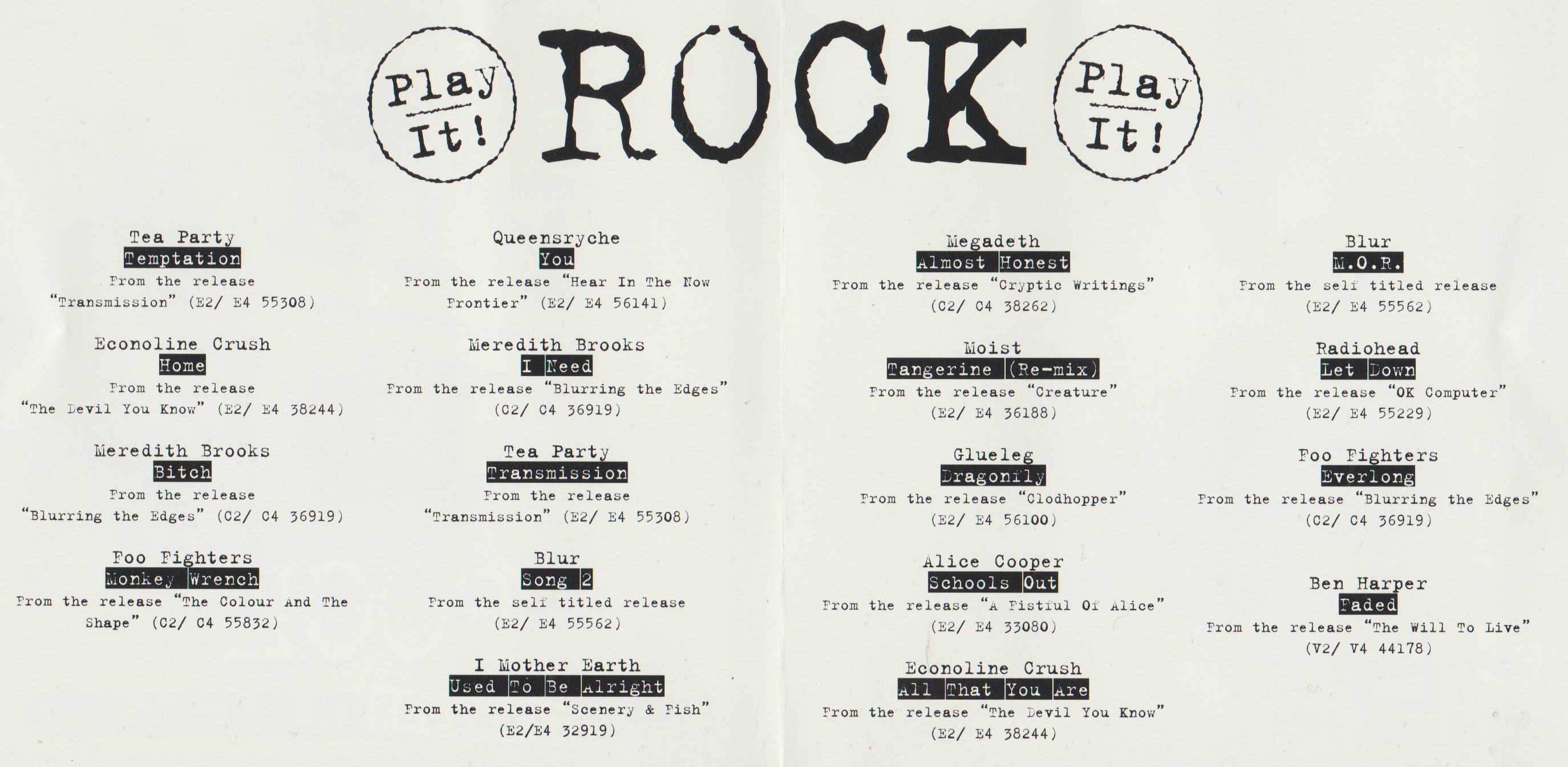
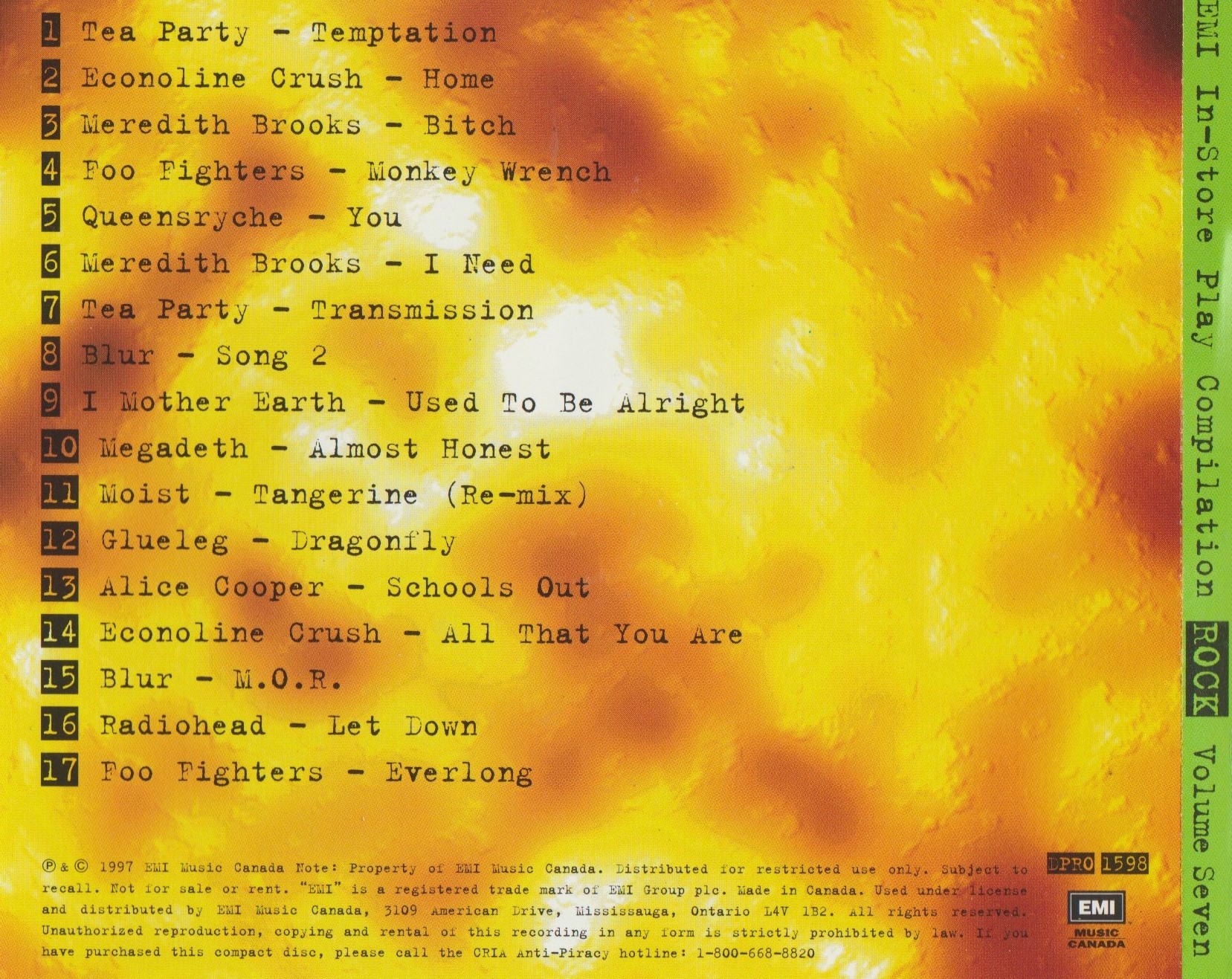
That was my first reaction upon revisiting this old promo CD from the Record Store days.  I really didn’t know that I had that song, and I’m sort of glad that I do.  This was a freebie, and not a bad one as it had some rarities on it.  In fact there’s only one artist on this disc I’d flat-out skip.  Let’s dive on in.

The first track is a rarity:  an unadvertized single edit of “Temptation” by the Tea Party.  “Temptation”, crossing the new sample-driven sounds of the late 90s with classic exotic Zeppelin, was huge.  The single edit snips off the extended intro.  Industrial rock band Econoline Crush is up second, who also had a big album (The Devil You Know) at the time.  “Home” was a memorable fast-paced single, but their big single “All That You Are”  is also included as track #14.  Far more mainstream, “All That You Are” was omnipresent in 1997.  It’s still a little too over-familiar to be enjoyable.

Skip Meredith Brooks.  I’ll be happy if I never hear the novelty song “Bitch” ever again.  Brooks has a second track on this CD, “I Need”, which suffers due to the spoken word verses.  No thanks.  Skip ’em both.  “I Need” reminds me of what I hated about 90s music.

Foo Fighters’ “Monkey Wrench” and “Everlong” were two of the greatest singles of 1997.  Fast paced, drums-a-blazing, and perfectly rifftastic.  In ’97 Grohl could do no wrong.  He released one of the few perfect albums of the year.  ’97 was Peak Foo — prove me wrong.  Flawless songs, still not taxing on the ears.  Probably never will be.

Queensryche had a new album in 1997, the ill-fated Hear in the Now Frontier.  “You” wasn’t one of the most notable songs, and here on this mainstream compilation, doesn’t fare well.  I don’t think EMI knew what to do with Queensryche, so hey let’s pick a song with 90’s intonations and throw it on this store play disc.  A second Tea Party song, “Transmission”, is its full unedited length, combining the same ingredients as “Temptation” but at lower velocity.  “Song 2” follows that, I song I’m admittedly not bored with at all.  A second Blur track later down the line, “M.O.B.” boats a cool riff and pop sensibilities.

I Mother Earth were riding a wave with their second album Scenery and Fish.  I’m not a fan of that disc and I can usually do without “Used to Be Alright”.  Fortunately Megadeth bring some metal to the proceedings.  From the underrated Cryptic Writings comes “Almost Honest”, a hard rocking single with nary a glimmer of thrash.  Great song from a period when Megadeth were quite adept at writing mainstream metal.

Rarities ahoy!  Moist’s “Tangerine” is remixed here, a mix that is far more industrial than the album, but that’s why remixes go on weird compilations I suppose.  Always fascinating, Glueleg are up next with “Dragonfly”, one of their catchiest numbers, still maintaining their weird genre-bending tendencies.

Alice Cooper steps in with a live version of “School’s Out”.  This being 1997, that automatically means it’s the one from A Fistful of Alice.  It’s a little strange hearing “School’s Out” on a compilation of all-new material, but I suppose EMI didn’t have confidence that a new Alice song (“Is Anyone Home?”) would attract new buyers.  But they were more likely to hear Radiohead’s “Let Down” and buy OK Computer instead.  It’s a stunning ballad that might have been unfamiliar to those who hadn’t bought the album yet — the exact people this CD was aimed at!  The CD closes on the slide-inflected “Faded” by Ben Harper.  It’s choked by unnecessarily grungy production.

Record companies rarely sent us free CDs, because we were a used CD store and they assumed we’d sell ’em.  What they didn’t realize was that it was usually guys like the asshole at CD Plus that would be selling their free CDs.  We’d try to be educated about what we bought, and avoid the promos like this one.  If a customer left it behind for us to take for free, it was up for grabs.  As a store-play disc, this would have been pretty good, assuming we had all those albums in stock to sell.

2.5/5 stars


#795: A Case for Security

A sequel to #424: How to Stop a Thief


GETTING MORE TALE #795: A Case for Security

Back when people used to actually steal physical CDs instead of just stealing a download, extravagant measures were taken to secure our precious inventory.

We had a magnetic tag security system.  At the entrance stood an electronic gate that would go into alarm mode any time one of those magnetic tags was near.  Every item we had in-store was tagged.  The system was not cheap.  I believe the tags cost 5 cents each (in 1994 dollars).  They were the cheapest ones available and they quickly added up.  The tags were not re-usable.  Once they were de-magnetized they were done.  Also, because they were sticky tags, if you ripped one off you wouldn’t be able to re-apply it very well as the sticky side got less sticky.  You could put it back on with tape, but no matter what you did, over time the tags would always start to peel off on their own.  We did a “tape check” every week to make sure every cassette still had a security tag firmly attached.

There was a different method for securing CDs.  To cut down on the use of the magnetic tags, we used plastic CD long boxes.  The magnetic tags were fitted inside, didn’t peel off, and could be re-used time and time again.  You couldn’t get the CD out of the long boxes without a key, or you’d destroy what was inside.  The key was kept behind the counter.

Like anything at the Record Store, this security measure had its pros and cons.  Storing those long boxes when not in use was a constant struggle.  We always seemed to be bursting at the seams with them.  We had cabinets underneath the CD shelving that were usually packed full.

The biggest “pro” was reducing the cost of the magnetic tags.  Since you could use the same case over and over again with the magnetic strip intact, you didn’t have to keep buying new ones.  The long boxes were also an added deterrent.  If you wanted to steal a CD you had to hide the long box under your jacket.

This didn’t stop people from trying.  One day, somebody from the mall came into the Record Store and told me that they found half a dozen broken long boxes in the trash outside.

“I think someone has been stealing from you,” she said.

I was immediately worried that someone managed to rip us off on my shift.  Fortunately that wasn’t the case, though Zellers were not as lucky.  Upon seeing the broken long boxes, I could tell they didn’t belong to us.  They came from Zellers, who used a similar system.  Someone managed to beat it.  How?

If nobody was looking, you could lift the CDs right over the magnetic gate.  That was the easiest way, and at Zellers, chances are nobody was looking.  Another method (supposedly anyway) involved lining the inside of your jacket with aluminum foil.  Apparently this would allow you to shoplift anything with a magnetic tag.  The urban legend, which may have been true, is that a local gang of CD thieves used this method.

The gang were known locally as “Pizza Guys”.  The cops were always two steps behind them.  The main detective on the case gave us pretty clear instructions.  We were to buy everything the “Pizza Guys” brought in, record it, and get their ID.  We were to flag any “shady” purchases but otherwise they told us it was business as usual.  I don’t know if the detective ever caught the “Pizza Guys”, but years later their leader Aristotles (real name!) went to jail for selling ecstasy, meth and heroin.  Quite a large step from stealing CDs!  According to the news, he got just six years in jail.

I don’t think the “Pizza Guys” were shoplifting CDs normally.  I think they were getting them from someone on the inside.  We’ll never really know.  We used to joke that one day we’d be in an HMV store minding our own business, when Aristotles would pop his head out of the stock room.  “We’re out of Big Shiny Tunes again!”

Even though the “Pizza Guys” usually brought in what you would call good titles (usually new releases), we all hated dealing with them.  As time went on without getting caught, they got more and more cocky and difficult to deal with.  It was good to know the cops were on our side, but I’m not a detective.  My job was not to fight crime in the city of Kitchener.  My job was to sell music, and these guys didn’t make it a pleasant experience for us.