DVD REVIEW: The Orville – The Complete First Season (2018)

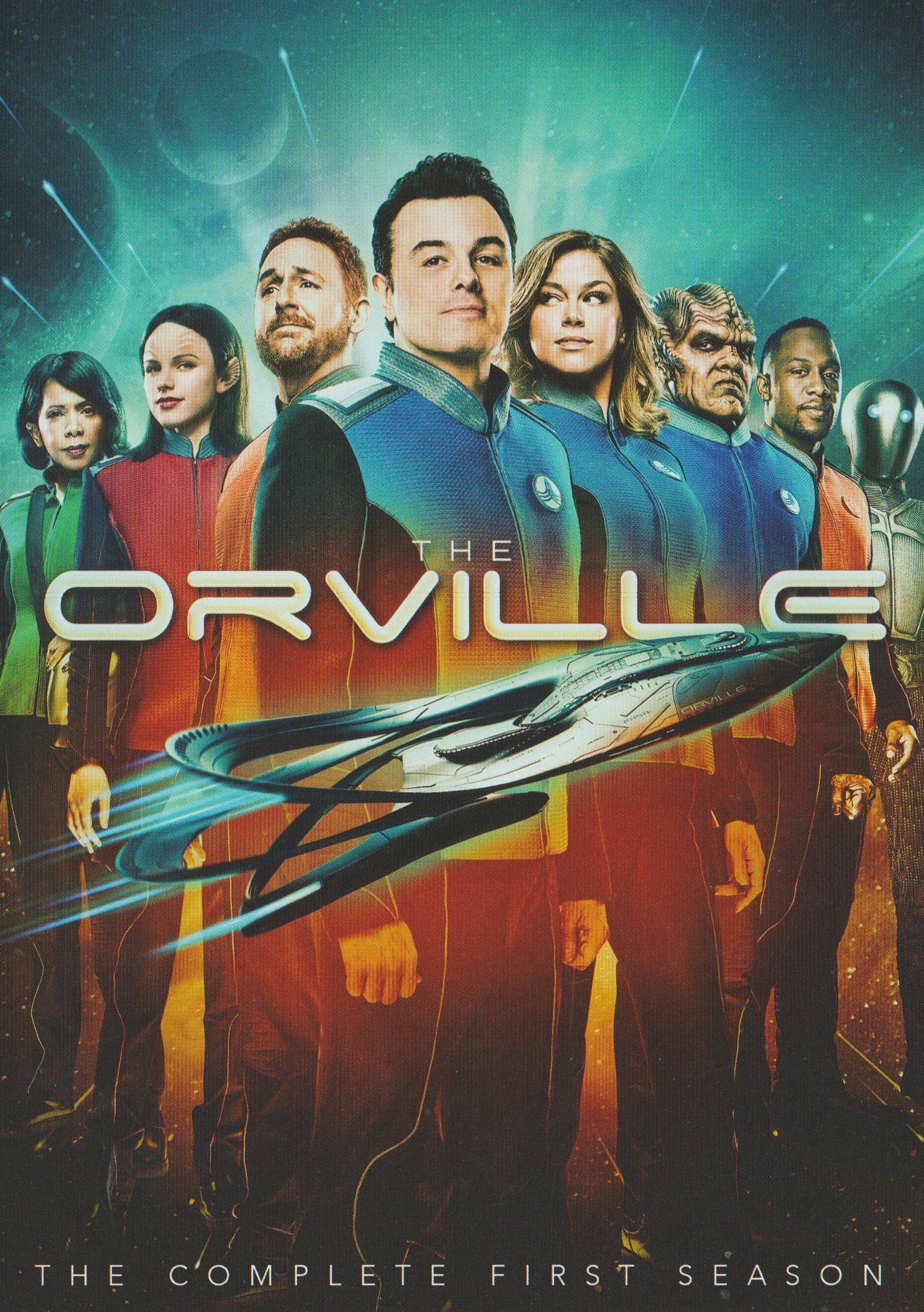
THE ORVILLE – The Complete First Season (2018 20th Century Fox 2 DVD set)

We like Star Trek: Discovery, we really do.  At the same time, we wonder, “Why do studios insist the only way to do Star Trek today is to modernise it into a gritty action drama?”  Does it have to be so?  Is Roddenberry’s utopian vision of the future somehow outdated?

Though CBS Paramount seem terrified of anything “too Trekky”, others have not been timid.  Sensing the wide-open void for something styled in the old spirit of Trek, Seth MacFarlane (of all people) made his move with The Orville.

Before you scoff, let’s not forget that MacFarlane clearly knows his Star Trek.  1) Patrick Stewart regularly appears on his shows.  2) He reunited the entire Next Generation cast for the first time on an episode of Family Guy.  3) He cast Michael Dorn in Ted 2 and dressed him up as Worf.  It should surprise no one that The Orville is closest in spirit to Star Trek:  The Next Generation.  In fact, not even Deep Space Nine or Voyager are this close.  From the gentle pastel sets including conference rooms, hallways and holodecks, to the techno-babble, to the minimal use of violence, The Orville is the NEXT Next Generation.  It is the Enterprise D, but if Captain Picard allowed the crew to crack wise when opportunity knocked.

It would take only the slightest nudge to turn The Orville into Trek canon.  Change some names and terminology, tone down the humour slightly, and you’re there.  Humour on a starship?  Yes, of course, but The Orville is not a comedy.  It is first and foremost science fiction, and indeed some of the best science fiction on television since Star Trek: Enterprise was cancelled.  The episodes are generally commentary on modern society, much like Star Trek has always been.  Change the setting to outer space and suddenly it’s parable.  Topics covered include the “court of public opinion” seen in social media today, gender reassignment, underachievers, religion in society, and making the most difficult decisions.  The biggest difference between the voyages of the Orville and the Enterprise isn’t even that big:  on the Orville, there are no transporter beams.

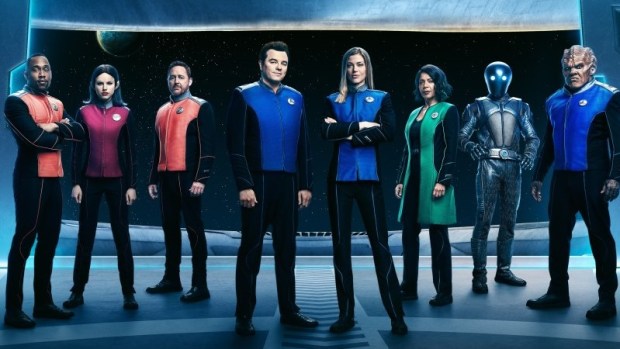
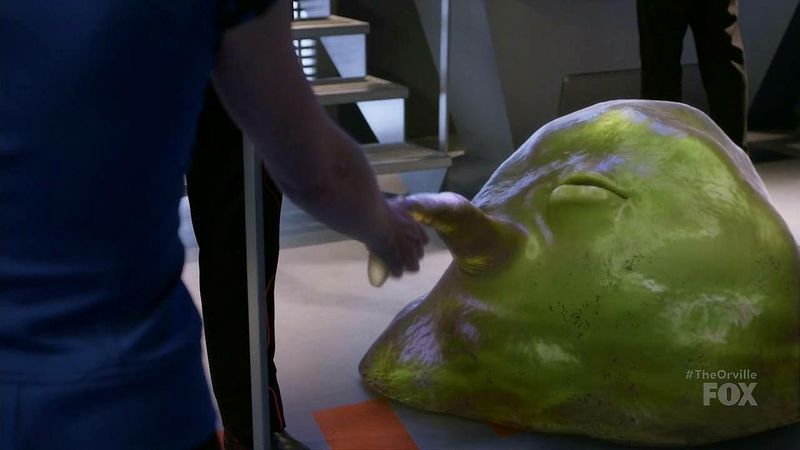
The crew of The Orville is obsessed with Earth culture circa 1980-present, but that is to be expected given Seth MacFarlane’s own interests.  References to movies and TV shows of today are rampant.  Jokes are toned down from the usual modern fare, but the pilot episode sets up a comedic premise.  Captain Ed Mercer (MacFarlane) catches his wife, Commander Kelly Grayson, in bed with a blue alien (Rob Lowe).  When Grayson is assigned as his first officer on the Union ship the Orville, the entire crew learns of their marriage issues.  Captain Mercer’s best friend (and best pilot in the fleet) is Lt. Gordon Malloy played by Scott Grimes of American Dad.  Seth’s buddy Norm MacDonald also shows up as Lt. Yaphit, a gelatinous yellow blob based on Odo from Deep Space Nine, but played for comedy relief.
Too much science fiction today has flimsy barely-there characters.  The Orville’s crew are more fully formed than the usual, with a few receiving interesting story arcs.  They are all new versions of classic archetypes.  The robot Isaac (Mark Jackson) is the twist on Data.  He is still immensely curious about humans, but knows he is vastly superior and considers everyone on the Orville his inferior.  Bortus (Peter Macon) is your “Worf”, a deep voiced, strong alien species with head ridges.  His unique trait is that his race is single-gendered, and much of his character development is in tandem with his partner Klyden (Chad L. Coleman).  Halston Sage plays the inexperienced security chief Alara Kitan, a young alien from a planet with such high gravity, that their species have evolved tremendous physical strength.  Though small she can easily throw a punch to send Bortus flying, or re-shape a cube of titanium with her hands!  Yet she lacks the confidence that her crewmates have in her.

More casting genius:  Penny Johnson Jerald, Deep Space Nine‘s Kassidy Yates, as ship’s doctor Claire Finn.  In cameos or recurring roles are Ron Canada (Next Generation), Charlize Theron and Liam Neeson (A Million Ways to Die in the West), Victor Garber (Titanic), Mike Henry (Family Guy), Robert Picardo (Voyager‘s Doctor), and Jeffrey Tambor (Arrested Development).  One has to respect both the sheer talent involved, and the willingness of Star Trek actors to participate.

As the show grows during its first season, comedy takes a back seat to science fiction.  In the bonus features, MacFarlane states that he paid attention to fan feedback, and he noted that fans were discussing the legitimate characters and science fiction tales.  Episodes feature a new twist on classic sci-fi (and even Star Trek) themes:  living in a simulation, a space zoo, Flatland, a civilisation living in a generation ship without its own knowledge, interference with space-time and developing cultures, and many planets with Earth-like societies that act as a mirror for us to view our own.  Ray guns are rarely used, and monsters are usually misunderstood.
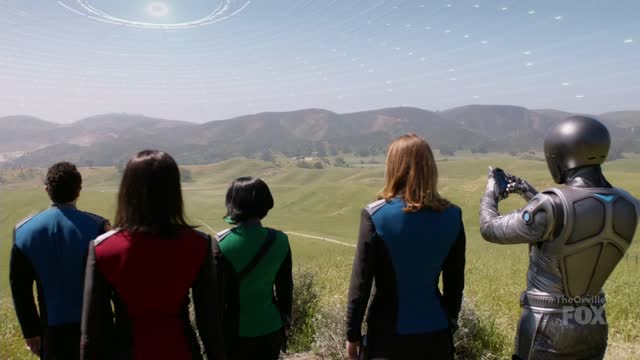
It’s remarkable but not untrue to say that The Orville is Star Trek, but without infringing any copyrights.  Dig a little further in the credits and you’ll have a better understanding of how they managed to play The Orville so close to classic Trek.  In the director’s chair:  Jonathan Frakes, AKA Riker, and director of Trek on both TV and in cinemas.  Also directing:  Robert Duncan McNeill, AKA Tom Paris and also director of many Voyager episodes.  Behind the scenes is Brannon Braga, a producer on The Next Generation, Voyager, Enterprise, Cosmos…and The Orville.  Jon Favreau even directed the pilot episode.  With a team like this in place, MacFarlane and friends were more than capable of making a show truly within the optimistic Roddenberry philosophy.  Guys like Braga, Frakes and McNeill spent years living in that universe.

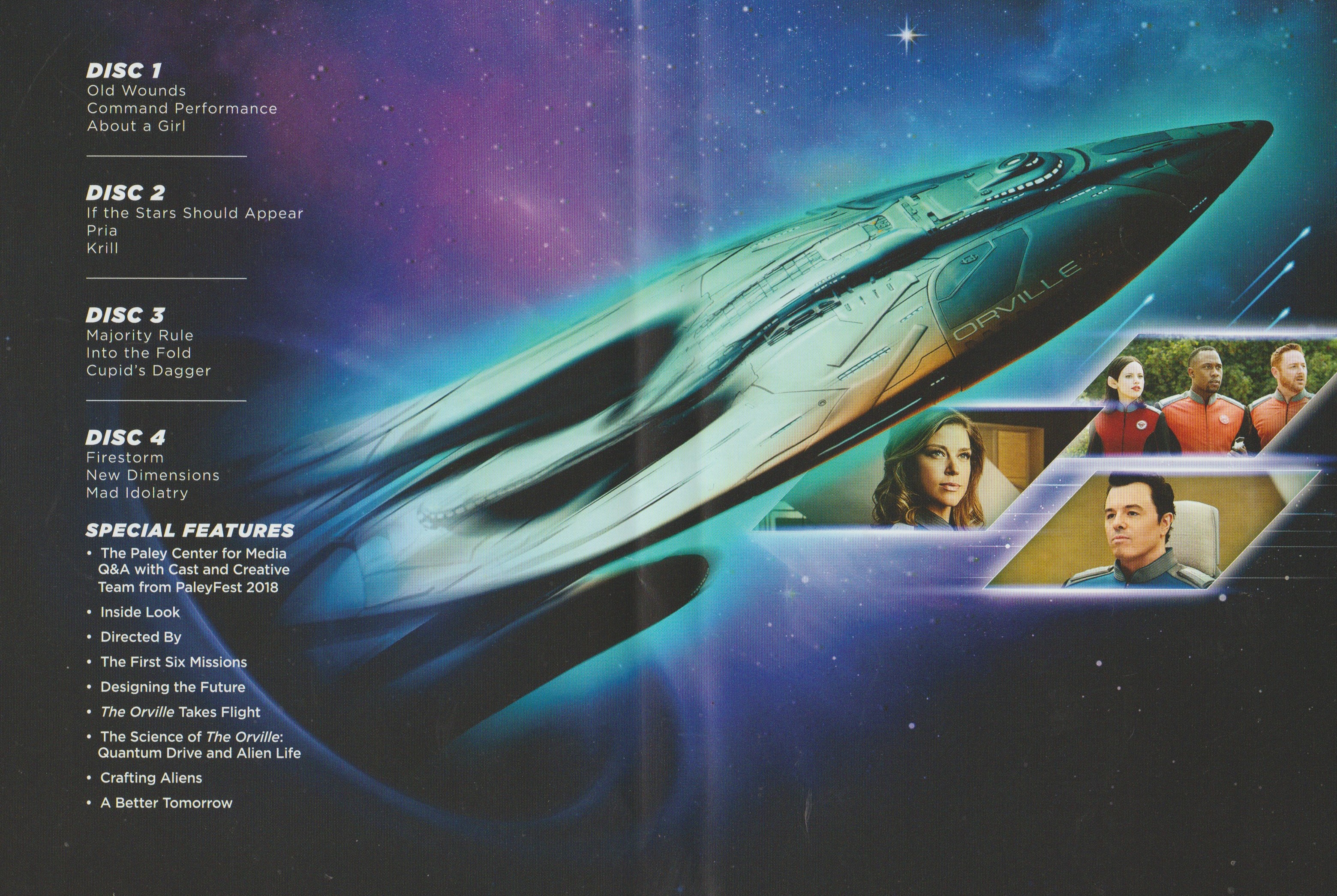
The DVD includes your traditional special features, the best of which is a Q&A session with the cast and creators of the show.  Another interesting featurette is about the physical model of the Orville spaceship, used for those slow “beauty shots”.

The Orville is the show that Trek fans have wanted for years now, at least since JJ Abrams brought it back to movie screens.  The true Trek on TV is not Discovery.  It’s not Short Treks.  It is The Orville.  If that pisses off CBS Paramount, then too bad.  If they won’t make the Trek that fans want, then someone else will — and did.

5/5 stars
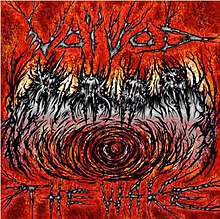
Just Listening to…Voivod – The Wake

Just Listening to…VOIVOD – The Wake

My first CD purchases of 2019 were based on lists:

  1. Tenacious D – Post-Apocalypto (Iron Tom’s list)
  2. Voivod – The Wake (Uncle Meat and Tom’s lists)

Tom and Meat both praised the new Voivod, so was a must.  The Meat Man happened to be online when I was giving first spin to both.  I struck up a conversation about the new Voivod, which went something like this:

Meat : Its The Voivod.

LeBrain : What do you mean?

Meat : Its a thing. Its The Voivod. Nothing before them was The Voivod. The phrase “one of a kind” is thrown around a lot, but is quite accurate about them in the literal sense. They are The Voivod.

LeBrain : I get you.

Meat : Sex Pistols meets Queensryche.

LeBrain : Yeah but more too.  Rush.  It’s really amazing they were able to carry on after Piggy. He didn’t play “normal” at all.

Meat : It’s still The Voivod. Even with a different writer. It lives within somewhere.

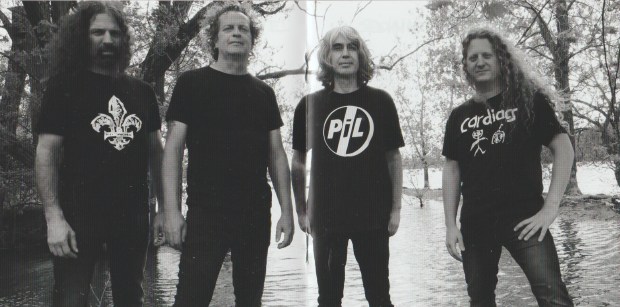
He said it way better than I could.  They are The Voivod and even with two “newer” members (guitarist Chewy and bassist Rocky), they still sound exactly like The Voivod.   A large part of this is singer/lyricist Snake, who has a voice identified with Voivod.  Away (drums) is also a vital component, always supplying the quirky rhythms and sci-fi cover art.

The Wake is a concept album but the story isn’t obvious on one listen.  “Scrolling down in paradise, absorbed by your next device.”  The setting is certainly familiar.  What The Wake does is bring classic progressive melodic elements into The Voivod.  This creates a swirly metal landscape, past present and future.

This is going to be an album that requires several spins before a deeper analysis.  Voivod’s icy brand of Quebec heavy metal can be cold as a Canadian winter.  Voivod will be getting plenty of play before it warms up again.

1. “Obsolete Beings” 5:35
2. “The End of Dormancy” 7:42
3. “Orb Confusion” 6:00
4. “Iconspiracy” 5:16
5. “Spherical Perspective” 7:41
6. “Event Horizon” 6:11
7. “Always Moving” 5:12
8. “Sonic Mycelium” 12:24

REVIEW: The Buddy Holly Story – Original Motion Picture Soundtrack (1978)

THE BUDDY HOLLY STORY – Original Motion Picture Soundtrack (1978 Epic)

The Buddy Holly Story was a remarkable movie, not because it was terribly accurate (it wasn’t).  Some of the best music biopics, like The Buddy Holly Story, feature the movie cast doing the singing and playing.  In a rare stroke of fortune, Gary Busey was cast as the perfect Buddy Holly.  He could sing enough like the rock and roll legend, and with some curly hair and glasses, Busey fit the bill.

The “Clear Lake Medley” is made up of Buddy’s greatest hits like “Peggy Sue”, “That’ll Be the Day”, “Oh Boy”, “Maybe Baby”, and “Not Fade Away”.  They’re amped-up, made to sound like the live concert experience.  Busey’s more manic in this setting than the old familiar studio versions.

The most interesting track, possibly, is the a-Capella “I’m Gonna Love You Too”, with just Gary Busey’s voice.  You can’t fake it in that setting.  The guy managed to sound enough like Buddy Holly through this whole soundtrack that you often drift away and forget that’s what it is.  The suspension of disbelief is complete.

All this and you’ll get a collection of some pretty amazing songs too.  You’ll know most of ’em, including “Everyday” and “Whole Lotta Shakin’ Goin’ On”.  As seen in the film, “Everyday” is a slow, ballady version.  That is certainly compensated for by the “Roller Rink Medley”, another adrenaline-pumped live set.

Truly a great soundtrack and a worthy addition for Buddy Holly fans.

4.5/5 stars
 

RODDY BOTTUM Chats! Sasquatch, Faith No More and more!

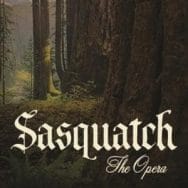
Roddy Bottum is a man of many talents.  A multi-instrumentalist, Roddy might be best known for his bands Faith No More and Imperial Teen.  Roddy is also a composer and Sasquatch: The Opera is his first entry on that stage, but surely not the last.

An opera about Sasquatch?  What’s the deal with that?  It’s been a difficult journey. I had the chance to question on Roddy about it and his other projects.  Read it from the man himself.


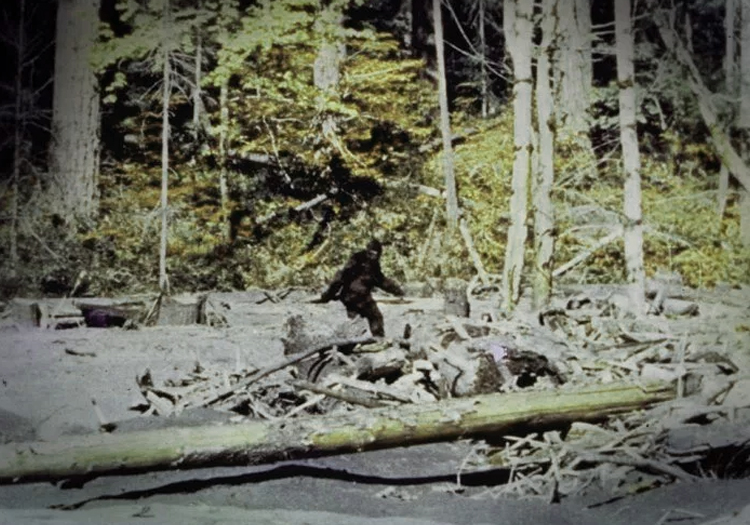
Mike:  Sasquatch: The Opera has to be the most intriguing three-word title I’ve ever seen. I understand the story is about the misunderstood “monster”, but how did you settle on the Sasquatch for your monster? I’m a bit of a Sasquatch geek, and I’m curious if you are too.

Roddy:   It’s a character I always identified with. The ‘gentle giant’ aspect of him I kind of created myself. It’s a characteristic I always am moved by in literature and film. Elephant Man, King Kong, Frankenstein… the vulnerability of the misunderstood oaf, if you will. I’m also very sexually attracted to exactly that type.

Mike:   Would you ever go on a Sasquatch expedition?

Roddy:  I think I could entertain that voyage in a ‘social studies’ kind of way but I would be hard pressed to putting my best foot forward in the hopes of finding the monster. I want to believe. I really do. It’s like being taught religion as a child. I remain sceptical and needing of proof.

Mike:  Absolutely understood; I hope one day we find that proof.  How would you describe the music, is it a “rock opera”? I have to assume it’s a little different!

Roddy:  The instrumentation is timpani drums, drum machine, two synthesizers and two trumpets. It’s not exactly rock but it’s more rock than symphonic.  I kind of based the musical vibe all around the timpanis. The grandeur of that instruments spoke a lot in the presentation of the piece.

Mike:  Do you perform on stage in the musical?

Roddy:  I did, yeah, I conducted the piece and played a synthesizer. The one with the easier parts.

Mike:  Did you compose Sasquatch primarily on the keyboard?

Roddy:  Yes, first in my head and then on the keyboard.

Mike:   I read about the apartment fire you had while in the midst of working on Sasquatch. You had to recreate the Opera from scratch, replace props and costumes? Are you happy with how it turned out?

Roddy:  The fire gave me the opportunity to create from a clean slate something that I’d already done before. I like that process, actually. The fire was really and truly one of the worst tragedies I’ve had to go through. The cliche of the open window that happens as a result of a closed one, though. That rang true. Still, though I’m spooked by fire and I can’t eat barbecue or mescal or anything with a smokey after taste. Too soon.

Mike:  I can’t even imagine what that is like…I love barbecue.  Can we expect another musical from you?

Roddy:  Yes, I’d like to create another opera that’s about the fall of a nation. Particularly America in this political climate.

Mike:  I’d be into that.  Now, I was going to go and see Sasquatch with my mom. She’s in her 70s and maybe a little old fashioned. Do you think my mom would have a good time, or would I regret bringing her?

Roddy:  I got some of my best criticisms from people older than myself. I’m 55. I like to think of the themes as universal though there are some elements of incest and drug use that seem to disturb people. How open minded is your Mom?

Mike:  She’s pretty cool, I think she can handle it.  Could Sasquatch get a CD or DVD release?

Roddy:  I honestly like to keep the opera in the realm of ‘shrouded in mystery.’ In keeping with the allure and mystique of Sasquatch, the being, I would prefer that the only people who witness my monster and my music are the ones in the theatre who come to see it. It’s too easy for people to listen to something online. I’m not into the lazy attendant factor of that, if that makes sense.

Mike:  It does, I have heard stand-up comedians say similar things.  It should be just in the moment.  Moving on, can you update us on the next Imperial Teen record? I heard it was in the mixing stages.

Roddy:  We just finished the record, mastered it last week and are working on the album artwork. It’s got 10 songs, it’s called Now We Are Timeless and it will come out on Merge Records July 12.

Mike:  I hope you don’t mind a little fan-geek questioning. I am a music collector. I pride myself in having “almost everything” for many bands I love, but one “holy grail” item would be a live Faith No More bootleg with Courtney Love on vocals. I have been searching for years…decades! Does such a thing exist or is that era now lost to the sands of time?

Roddy:  I believe the only audio recording of Courtney singing with us is on a VHS recording of a daytime public access television show recorded in San Francisco in 1984. Courtney wore a dirty white slip and brought into the studio bags and bags of old flowers she collected from the flower mart. We decorated the stage and lit incense and performed in dashikis.

Mike:  If it exists, I will find it one day!  Regarding Faith No More, I think Sol Invictus is a fantastic record.  Among your best. I usually give the rare “5/5 star rating” to Introduce Yourself, Angel Dust, and King for a Day. Now I have added Sol Invictus to that list. You don’t strike me as the kind of band that puts out albums you aren’t happy with, but the reception to Sol Invictus was overwhelmingly positive. With a few years hindsight, how happy are you with Sol Invictus today?

Roddy:  I think it’s a strong record, thank you. I’m glad we were in a position to not have to pander to radio playlist or whatever. We made the record we wanted to make and really didn’t compromise at any stage.

Mike:  Is that you on vocals in the verses to “Motherfucker”?

Roddy:  It is, yes, and thank you for noticing.

Mike:  Do you have any other projects cooking currently that you can tell us about?

Roddy:  I’m in a band called Nastie Band. Our record will come out in April. It features an 84 year old singer, a pair of identical twins, a drummer and guitarist and many theatrical elements. It’s a performance band, very dark. Another band I’m in is called Crickets. We’re going away this weekend on a writing retreat. Michael O’Neil and JD Samson are both in that band and we liken ourselves to a wobbly dance sound a-la Tom Tom Club. We have our first show in New York in February.


It sounds like 2019 is shaping up to be an exciting year for Roddy Bottum.  Be sure to check out the Nastie Band in April, and the new Imperial Teen record Now We Are Timeless in July.  Thank you Roddy for the chat!

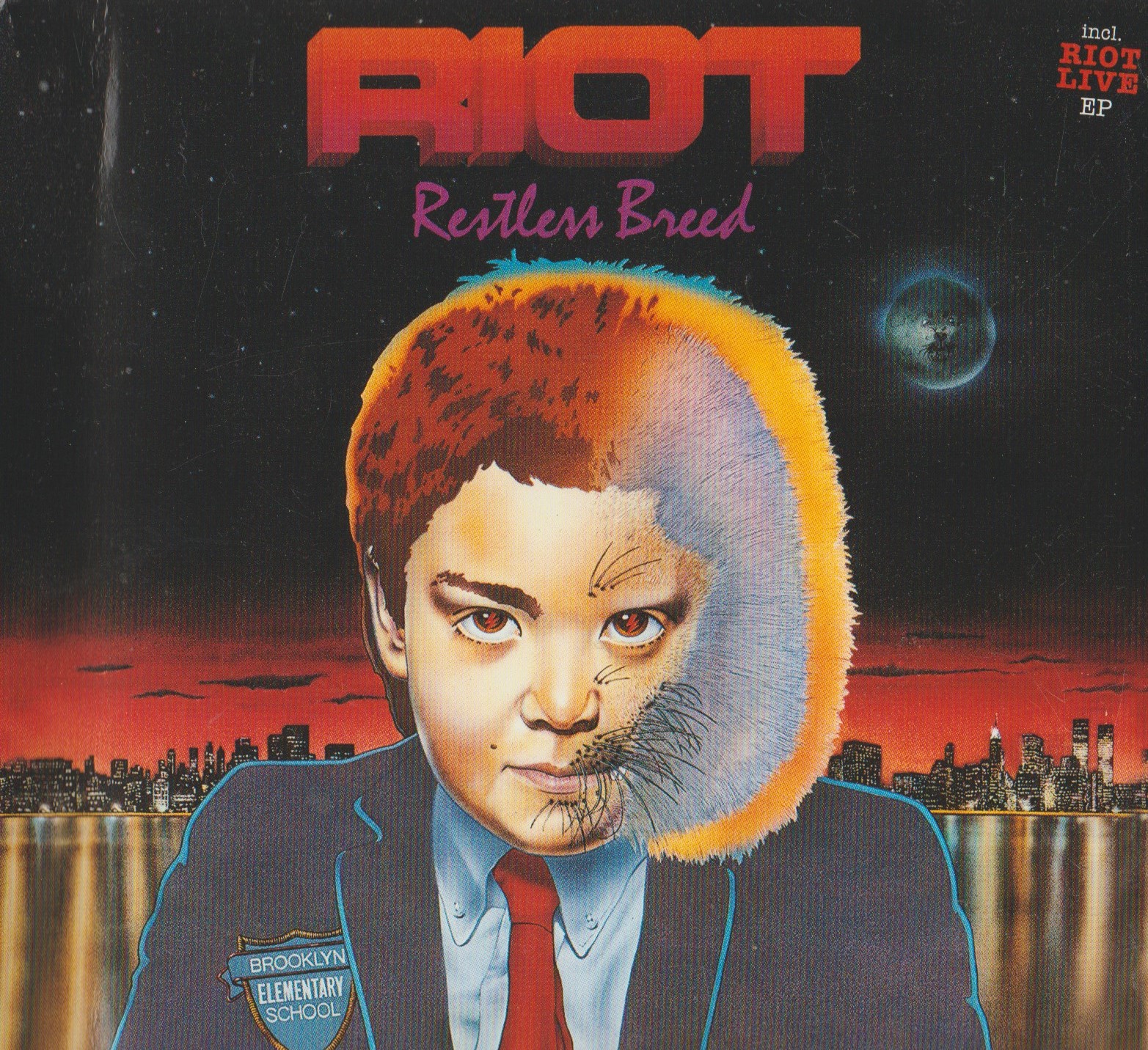
Just Listening to…RIOT – Restless Breed

Just Listening to…RIOT – Restless Breed

This remastered CD, complete with six spine-piercing bonus tracks, was a gift last summer.  I never owned any Riot before, and frankly didn’t even know much about the band besides the track “Born in America”.  A young pre-teen LeBrain said, “Who is this band?  They stole their name from Quiet Riot and their song title from Springsteen!”

Yeah…no.

The gift-giver knew what I was missing and so sent me his remastered Restless Breed with Rhett Forrester on lead vocals.  Riot was right in my wheelhouse.  This is quintessential 80s, riding that fine line between hard rock and heavy metal, but leaning further towards metal.  Solid riffs, memorable tunes, guitars out yer anus!  It’s one of those albums that turns out to be exactly what I liked then, and still like now, even though I missed it for 37 years.  The key, to me, is the powerhouse vocals of Forrester, who was murdered in a carjacking gone wrong in 1994.  What pipes this man had!  He could even make songs about a “Loanshark” sound cool.  “Collecting payments overdue!  Yai-yeah!”  That gets a big “fuck yeah” from me.

I’m spinning Restless Breed for the first time in a couple months.  “Loved By You” was the standout track last time.  This time, it’s still the most obvious “hit” of the bunch.  It’s extended to eight minutes on the bonus CD, called the Riot Live EP.  Although it suffers from repetition, “Loved By You” is an easy song to love.

Thanks for the CD, guy.  It certainly is Loved By Me!


Side one
1. “Hard Lovin’ Man” (Rhett Forrester, Doug Salomone) – 2:48
2. “C.I.A.” (Forrester) – 3:43
3. “Restless Breed” (Mark Reale) – 5:11
4. “When I Was Young” (Eric Burdon, Vic Briggs, John Weider, Barry Jenkins, Danny McCulloch) – 3:25
5. “Loanshark” (Reale, Forrester, Kip Leming) – 4:10

Side two
1. “Loved by You” (Rick Ventura) – 5:37
2. “Over to You” (Ventura) – 3:42
3. “Showdown” (Reale) – 3:49
4. “Dream Away” (Ventura) – 3:43
5. “Violent Crimes” (Leming, Forrester) – 2:30

2016 CD edition bonus tracks
11. “Hard Lovin’ Man” – 3:09
12. “Showdown” – 4:30
13. “Loved by You” – 8:02
14. “Loanshark” – 5:27
15. “Restless Breed” – 5:11
16. “Swords and Tequila” – 3:57

REVIEW: Chickenfoot – “Divine Termination” (2017 single)

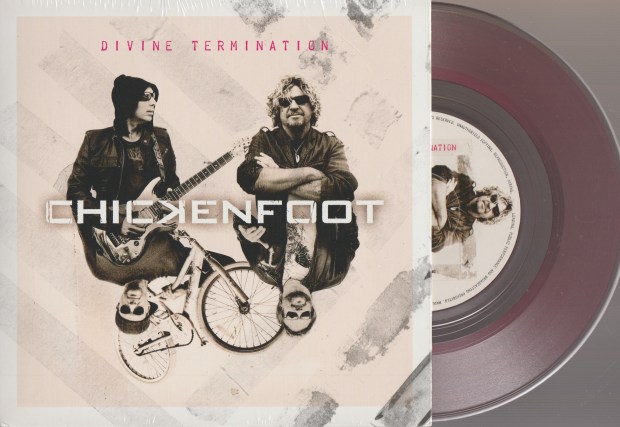
CHICKENFOOT – “Divine Termination” (2017 Edel coloured 7″ single)

For a band with only two albums, Chickenfoot sure do milk it.  After a single debut album, they did a live DVD called Get Your Buzz On.  Two albums in came a live album called Chickenfoot LV.  (Get it?  LV can mean both “live” and “55”, Sammy’s notable hit.)  Then another package called Best + Live, mixing the “greatest hits” with a new song and an audio release of Get Your Buzz On — which, by the way, was mined for five songs already on the previous LV album!

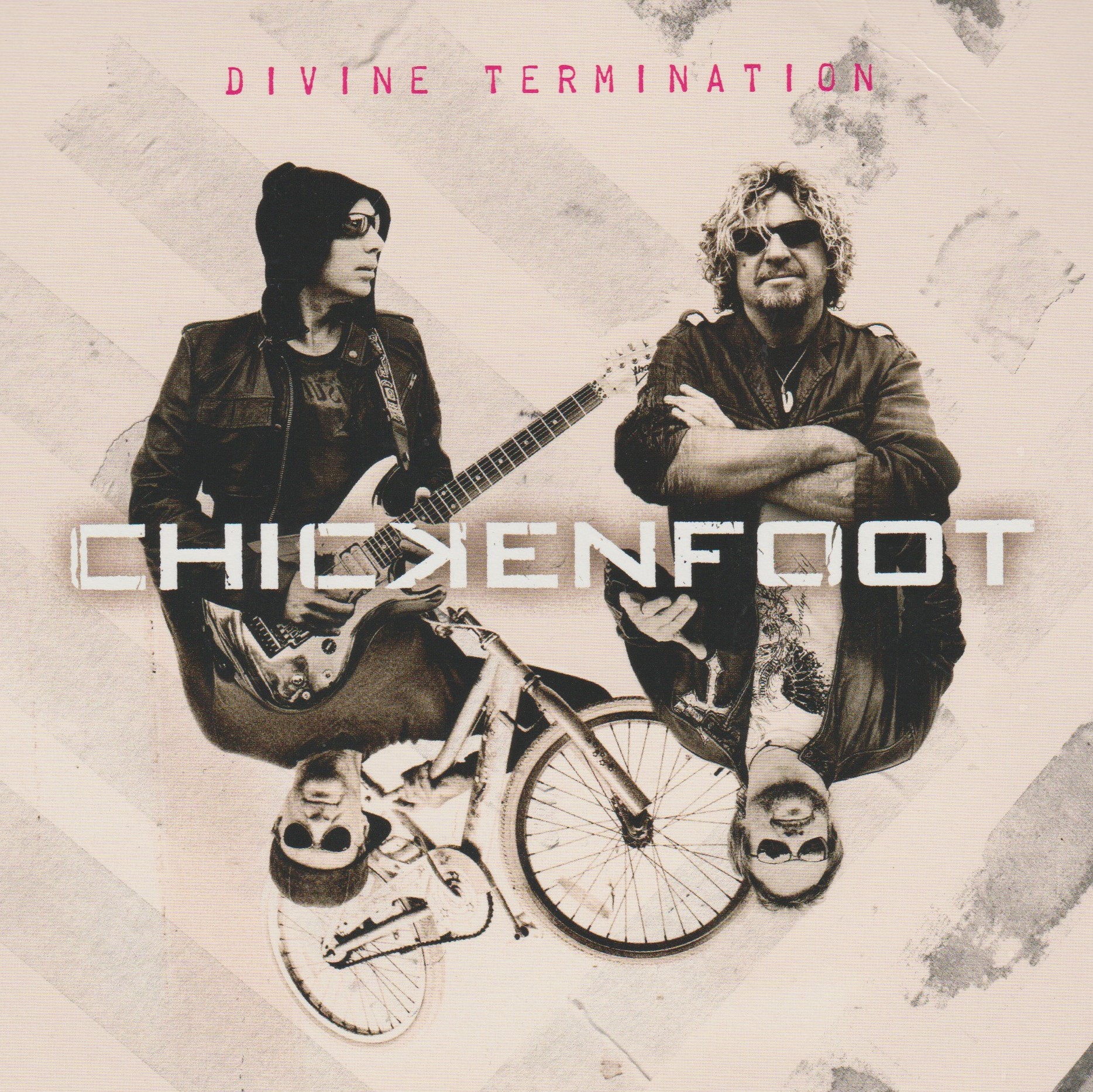
It’s all too much.  We like Chickenfoot here; really we do, but enough is enough.  Instead of buying all that stuff, we decided to just go for a 7″ single for the one “new” song called “Divine Termination”.  That seemed the most logical purchasing option, all things considered.  It’s a nicely packaged 45, on clear pink coloured vinyl.  The side A label depicts Sammy Hagar and Michael Anthony.  Side B has Joe Satriani and Chad Smith.  It feels nice and heavy in hand.

Unfortunately, it’s not all rose-coloured.  These guys had five years to come up with one good new song.  “Divine Termination” is not it.  Although it does have a neat, vintage sounding Deep Purple riff, the Chickenfoot hooks and harmonies are missing.  The chorus has no meat.  “Divine Termination” is forgettable even though Joe Satriani plays as brilliantly as ever.

On the flipside is another release of “Highway Star”, the Deep Purple cover.  It’s available on Best + Live, but its first issue was on Re-Machined, the Deep Purple tribute album.  Too bad the B-side isn’t something exclusive, but it does blow away the A-side.  Listen to Joe somehow make his guitar resemble Jon Lord’s Hammond Organ.

Maybe Chickenfoot were too creatively spent after years of solo and other projects to come up with a memorable new song.  There’s talk of a third Chickenfoot album in the future.  If so, it has to be better than “Divine Termination”.

2/5 stars


#730: It’s 2019. How do I play a record backwards?

GETTING MORE TALE #730: It’s 2019. How do I play a record backwards?

The fellows from Spinal Tap once lamented that there must be a conspiracy between the Dutch and the Japanese to eliminate any audio medium that you can play backwards.

There’s no proof, but Spinal Tap are not the kind of band who require proof.  The Dutch (Phillips) developed the compact cassette.  The Dutch and Japanese (Phillips and Sony) created the CD together.  You simply couldn’t play either format backwards, like you could with the good ol’ LP.  When the record was “finally” replaced by CD, it really did seem like playing music backwards to look for hidden messages was over and done.  How was Satan to communicate with teenagers like he did in the 1980s?

The 90s and early 2000s were a dark time for backwards messages.  It seemed like playing albums backwards would forever remain a thing of the past.  It was actually a real thing that some people did!  I have.  I played my Iron Maiden Piece of Mind LP backwards to find out what the hell Nicko McBrain was saying at the start of “Still Life”.  With the record on the platter, I cued the needle and spun the record backwards with my index finger.  It didn’t work very well, because I couldn’t keep a constant speed.  The pitch was all over the place.  Plus Nicko was using a comical accent, with reverb added.  Playing it backwards with a wobbly pitch meant I still could not tell what Nicko was saying!

This method of playing records backward wasn’t good for the player, the needle, or the vinyl.  We knew that; we just didn’t care.  We had cheap shit and it really didn’t make a difference.  The time to play a record backwards was when you had cheap kiddie equipment.


“Oh my God, Chicago kicks ass!”

So how can kids play music backwards today?  Without being able to play back-masked messages, can they truly enjoy the albums as completely as we did?  Thankfully, playing your records backwards is easier today than ever.  Thanks to “computer magic” (using Spinal Tap’s words) you can do it quickly and more easily than ever before.

STEP 1:  Download Audacity.  It’s free, easy to use, and very solid.

STEP 2:  Record your vinyl (forwards) into Audacity using a USB turntable.  Or, even easier:  load any track from your computer into Audacity.  For this demonstration we’re using the aforementioned “Still Life” by Iron Maiden.  The backwards spoken word Nicko bit is isolated by deleting the entire rest of the song.  (I’ve also boosted the volume on this part, which is quite quiet.  Now you can see the waveform more easily.)

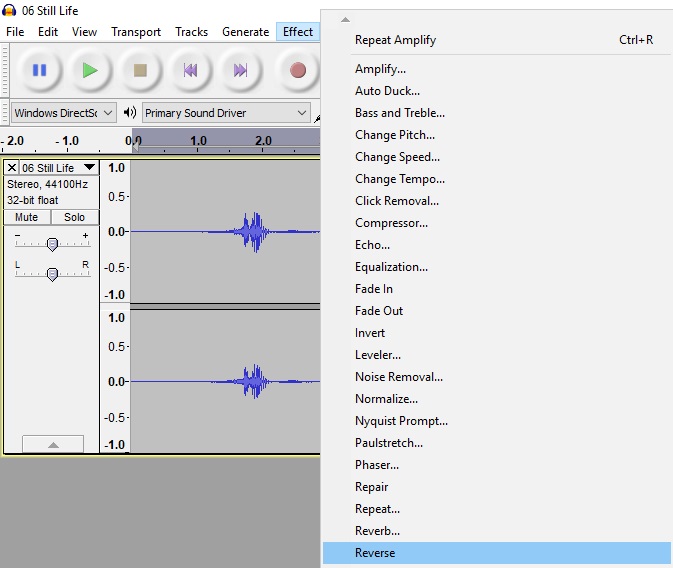
STEP 3:  Highlight the entire track.  Click “Effects” and “Reverse”.

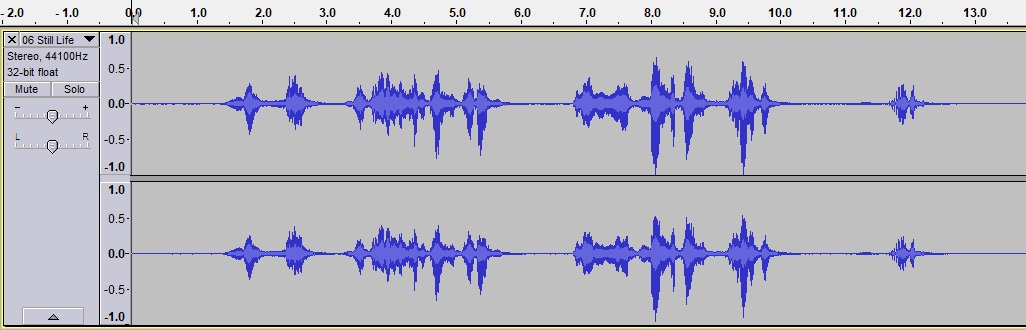
STEP 4:  Press play!  With just a glance you can see the waveform is completely reversed.

What’s Nicko saying?  Even playing it backwards at a constant pitch, it’s still impossible to tell what it is without enlisting the help of the internet, who have already solved this riddle.

“Hmm, hmm!” sniffs Nicko.  “What hoo said de t’ing wit de t’ree bonce.”   Roughly translated:  “What said the thing with the three heads?”  You might recognise “what hoo said de t’ing” as one of Nicko’s favourite phrases.  It appears again on Maiden’s “Black Bart Blues”.  Then he warns, “Dooon’t meddle wit t’ings you don’ unnerstand.”  Good advice for anyone.  Then finally, a belch!  It’s still all but unintelligible, even digitally reversed.

We had much  more success with an older record, Great White North by Bob & Doug McKenzie.  On the track “Black Holes”, you can choose to highlight and reverse only the backwards part of the track.  When you do it in Audacity, it’s a perfect digital reverse.  You can play it and it’s indistinguishable from any of the rest of the album.  In the waveform below, you can see the reversed section highlighted.  When you play the whole track like this, it’s perfectly seamless.

Now you can say that you learned something useful today.  Go ahead and try it on your Slayer albums now!


REVIEW: Def Leppard – The Lost Session (2018)

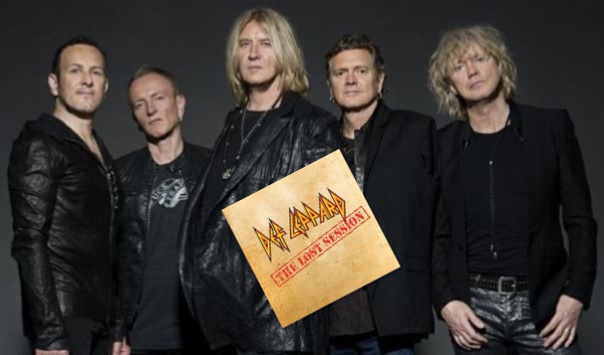
DEF LEPPARD – The Lost Session (2018 iTunes)

Cast your memories back to 2012.  Def Leppard re-recorded some very high quality “forgeries” of some of their classic hits for iTunes.  Three of these iTunes singles were released:

  1. “Pour Some Sugar On Me” / “Rock of Ages”
  2. “Acoustic Medley 2012”
  3. “Hysteria 2013”

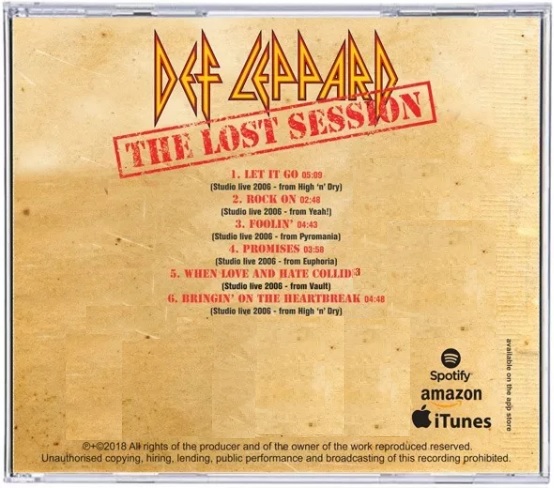
The iTunes exclusive concept dried up for Def Leppard afterwards, but in 2018 we got six more tracks, from a 2006 “lost session”.  The rest of the songs don’t sound like “forgeries”, as the first ones did.  These are listed on iTunes as “live”.  They are not.  They are also not meticulously recorded recreations.  They lie somewhere between:  not fully live, but raw in a way that Leppard rarely are.

There are a number of surprises in the re-recordings.  First and foremost:  “Let It Go”!  Any Leppard fan will tell you that the 1981 High N’ Dry LP is Leppard at their early, heavy best.  While nothing can compete with the Mutt Lange produced original, the re-recording is still razor sharp.  It gives you a chance to hear Phil Collen and Vivian Campbell on lead guitar.  The pair do not attempt to imitate Pete Willis and Steve Clark, instead blazing their own trail.

You don’t have to wait for the second surprise, a baffling one indeed: a re-recording of “Rock On” from 2006’s covers album Yeah!  Why do Leppard keep playing this song?  (It was even on their recent Best Of.)  Considering how they’ve beaten this dead horse, it’s actually not much of a surprise after all.  It was a boring song to start with, and Leppard can’t save it just by throwing down more guitars.  “When Love and Hate Collide” is another surprising choice to re-record.  The guitars are pretty incredible, but it’s just a ballad from a 1995 greatest hits CD.

“Foolin'” from Pyromania is missing the atmosphere of the original, but otherwise hits all the notes.  Joe Elliott still has an enviable voice.  Then it’s “Promises” from Euphoria, their best song from a dreary era.  Sure it’s a formulaic rewrite of their best hits rolled into one, but it works.  This re-recording is closest in sound and spirit to the original (from 1999).  Finally “Bringing On the Heartbreak” is a smokeshow as the closer.  It’s hard to really call it a ballad; there is some heavy rocking here too.  The guitars sound fabulous.  Def Leppard may no longer be the band they were in the 80s, but Phil and Viv are two of the best players in the game.  They don’t show off, so people rarely think of them when listing great guitarists.  But they are.  The outro solo (sounds like Vivian) nails it!

Def Leppard’s Lost Session is perfect for the fans who have it all.  Re-recordings are almost always very dicey cash grabs.  Leppard’s are worth the purchase.  They’re not cheap knock-offs.  New slants are fused with the old classics, so take these songs out for a fresh spin.

3.5/5 stars