Sunday Chuckle: Dangerous Henry

There is a nice guy at work, who isn’t the best with movie titles.  He’ll say to me, “I saw a movie on Netflix you will like,” but then not be able to tell me the correct name of the movie, or the name of anyone in the movie.  He reminds me of my grandma, trying to remember movie titles.  We took her to the theater to see “There’s Mail Waiting for You” (You’ve Got Mail), and she also really enjoyed “Brother Can You Spare a Dime?” (O Brother, Where Art Thou?).

The man at work was recently describing a movie he called “Dangerous Henry”.  It took me a minute….

So take it from the man at work that I now refer to as “Dangerous Dan”:   watch Dangerous Henry for some action thrills!


R.I.P. Geoff Nicholls

2017 rolls on like a mini-2016.  The latest casualty is former Black Sabbath keyboardist Geoff Nicholls who was on every Sabbath album from Heaven and Hell (1980) to Forbidden (1995).  He played bass and sang when need be.  For that period of Sabbath’s history, he was the only stable member excluding Tony Iommi himself.  Geoff passed at age 68, after a battle with lung cancer.  He was rarely pictured with the four “main” Sabbath members, but he was more important than most of them.  Rest in Peace.

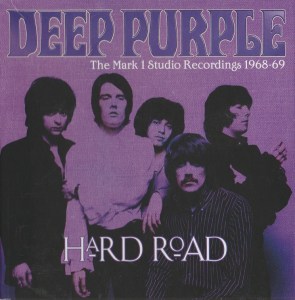
REVIEW: Deep Purple – Hard Road: The Mark I Studio Recordings 1968-69 (5 CD box set)

scan_20170123DEEP PURPLE – Hard Road: The Mark I Studio Recordings 1968-69 (2014 Parlophone)

It’s fantastic that old mono recordings are getting the CD treatment.  The original mono mixes of the old Beatles albums were a revelation to those who had never heard them before.  The original mono versions of Deep Purple’s Shades Of and Book of Taliesyn are less surprising, but still a welcome addition for completists who want to hear it “as it was” in 1968.  Comparisons are difficult, but both albums sound like they were meant to be in stereo.  Unlike the Beatles pop rock compositions, Deep Purple’s featured a lot of solo work and even full-blown orchestral movements.  The stereo separation makes that easier to appreciate.  Only Purple’s third album, 1969’s self-titled Deep Purple, did not receive a mono mix.  It is presented here in stereo only.

Now, these three Purple albums all received the deluxe edition treatment (single discs) in the year 2000.  Those versions on Spitfire (links in above paragraph) are still excellent ways to get this early Deep Purple music.  They are fairly common, have great liner notes and pictures, and feature the stereo versions plus 14 bonus tracks combined between them.  There is also a compilation CD called The Early Years featuring more bonus tracks, including 2003 remixes and live takes.  Where Hard Road fails is in replacing these previous four CDs completely.  One would hope you would get  all the associated bonus tracks from this period in one handy-dandy box.  Sadly this box is not quite so dandy.  Here is a list of tracks missing from Hard Road that were on the remastered single discs:

  • “Kentucky Woman” (alternate take on The Early Years)
  • “Hard Road” (BBC session on The Early Years and The Book of Taliesyn remaster)
  • “Hush” (live from US TV)
  • “Hey Joe” (live BBC recording from the remastered Shades Of).
  • “It’s All Over” and “Hey Bop-a-Rebop” (unreleased songs, live BBC sessions from The Book of Taliesyn)

The live BBC songs above can also be found on the double CD BBC Sessions…except for “Hard Road”.

scan_20170123-4

Of course there is plenty of material on Hard Road that is not on those earlier discs, making things that much murkier.  In addition to the original mono versions, these include:

  • “Kentucky Woman” remixed in 2003
  • “Playground” in a non-remixed version
  • “River Deep, Mountain High” and “The Bird Has Flown” (single edits)
  • A fresh 2012 stereo mix of “Emmaretta”
  • The isolated single B-side version of “April (Part 1)”
  • An early instrumental version of “Why Didn’t Rosemary”

Irritating, yes.  But only to completists.  For just about anyone else, Hard Road will satisfy their need for pretty much all the Deep Purple Mark I they can handle.  It’s not as complete as the title would let on, what with that live “Hush” and alternate take of “Kentucky Woman” missing in action.  Instead you will receive a large booklet with plenty of notes and a new 2013 interview with producer Derek Lawrence.  He was on board early, before they were in Deep Purple.  He describes an early version of the band called “Roundabout” (with Bobby Woodman on drums and Chris Curtis on bass) as “bland”.  When Ian Paice and Nick Simper joined, they sounded better, but to Lawrence clearly Ritchie Blackmore and Ian Paice were the stars.

Each disc comes in its own LP-style sleeve.  It’s a gorgeous set.  It sounds fantastic, and was assembled with the usual care that goes into a Deep Purple album.  A few niggling missing tracks aside, this is highly recommended to those looking add the first three Purple to their collection.

4/5 stars


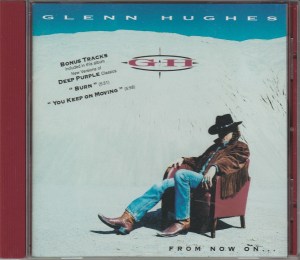
REVIEW: Glenn Hughes – From Now On… (1994 inc. 2 bonus tracks)

scan_20170122GLENN HUGHES – From Now On… (originally 1994, 1996 Explorer records reissue)

Glenn Hughes had his struggles, from being kicked out of Black Sabbath in 1986 to a long coked-out period of inactivity.  He began making waves again in 1992, but it was 1994’s From Now On… solo CD that really inaugurated the lean, clean & mean Glenn Hughes that still dominates today.  He has continued to release powerful soulful rock music under his own name and with supergroups such as Black Country Communion and California Breed.  The critics can’t stop raving about Glenn Hughes today, but in 1994 he wasn’t getting the attention deserved.

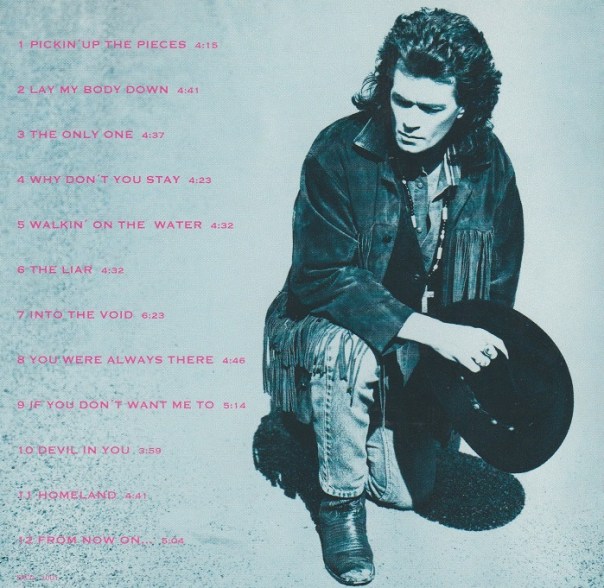
From Now On… features a Swedish band including two members of Europe: John Levén (bass) and Mic Michaeli (keys).  Comparing this album to the music that Levén and Michaeli make today, you can hear their influence.  There is the soul but also big big hooks.  The first opening track however is wide open and takes no prisoners.  “Picking up the Pieces” probably had an autobiographical meaning for Glenn, but the track is fast-forward bluesy metal as his old band Deep Purple have been known to do.  His voice is enviable, powerful and clean.  John Levén is a superb musician, but one only wishes it was Glenn on bass too, since he is the original maestro.  He takes it to a slower, sexier groove on “Lay My Body Down”, with big soul vocals.

Epic melodic rock diamonds begin to take shape with “The Only One”.  This epic track echoes some of the big choruses Glenn did with the supergroup Phenomena.  Think old tracks like “Kiss of Fire” and “Still the Night” from 1985.  “The Only One” is a successor to those tracks, with a big melodic chorus and a killer performance from Glenn.  “Why Don’t You Stay” is a soul ballad, but still in gear with the big 80s-style Glenn Hughes choruses.  It is closest in direction to Europe (a-la Prisoners in Paradise).  Hold on tight because that chorus crashes in like a tidal wave.

Back in the Deep Purple days, Glenn was the funky one.  “Walkin’ on the Water” brings a little bit of that funk vibe, but the focus is Glenn’s slinky vocalizin’.  A little bit of the Sabbath chug emerges on “The Liar” which acts as a natural side closer.  Rainbow’s 1995 album Stranger in Us All has a song with similar hooks called “Cold Hearted Woman”, but this is probably just coincidence.  Wicked guitars dart across the speakers as Glenn protests, “You’re the one they call the liar!”

There is a subtle progressive vibe to “Into the Void”.  Glenn sings it soft on the verses, and with power on the choruses.  You can hear the spooky keyboard influence of Mic Michaeli who co-wrote the song.  An unreleased Hughes/Thrall song finally emerged on “You Were Always There”, a funky little 80s number.  Re-recorded for 1994, it nonetheless sounds like period in which it was written.  Unfortunately “You Were Always There” begins a sluggish patch midway through the second side.  Rolling into the ballad “If You Don’t Want Me To”, nothing stands out like the previous songs.  “Devil in You”, another unreleased Hughes/Thrall song, begins to get things on track.  “Homeland” really delivers and it’s back to the soaring power choruses.  (And no, it’s not the same song as Europe’s “Homeland” on Prisoners in Paradise.  This one is co-written by Mel Galley.)  It’s bright days indeed, and “Homeland” is a beacon.  This builds up to the original CD closer and title track “From Now On…”.  This track pulses with understated power, and the incredible “voice of rock”, as Glenn is called.

The 1996 Explorer records reiusse adds two bonus tracks:  remakes of Deep Purple’s “Burn” (from Burn, 1974) and “You Keep on Moving” (from Come Taste the Band, 1975).  While Deep Purple re-recordings are numerous (hello Joe Lynn Turner and David Coverdale!), these two by Glenn Hughes are among the best you will find.  It is true that Whitesnake’s The Purple Album also has re-recordings of these two songs.  Glenn’s versions get the edge, due to the sheer power of the man’s vocal performance.  He didn’t have to downtune the songs as David did.

No album by Glenn Hughes will lead you astray, but From Now On… (with or without bonus tracks) is easy and cheap to find used.  Why not make it your first solo purchase from the man that the Japanese call “The God of Voice”?

4/5 stars

scan_20170122-3

#543: Loose Lips Sink Ships

GETTING MORE TALE #543: Loose Lips Sink Ships

One night, we had a staff meeting  for managers.  The lesson that evening was that “loose lips sink ships”.  This phrase dates back to World War II.  The idea was to avoid speaking openly about anything to do with the war.  You never know how any of that information might get back to the enemy.  The same held true for the cutthroat world of CD retail.

The reason he had to reinforce that “loose lips sink ships” rule is that one franchisee had made a huge mistake, boasting openly about a great location he had just found for a future store.  Wouldn’t you know it, our biggest rival swooped in and took the spot.  He heard about it because Gabby McGabberson was telling everybody.  The ship had sunk!

This served as a reminder to watch what we say.  You never know who might be listening.  I got caught a few times myself.  One afternoon I was talking about an ex-employee who got himself fired.  Sometimes I felt like he was making me prematurely grey, and I was venting some steam in store.   Little did I know that the guy’s brother was in the store, and reported my words back to him!  Whoopsie.   At least I didn’t say anything that was not true.  He got a new job working at HMV and I think that’s where he was happier to be.  Then there’s good ol’ Spoogecakes.  I can only guess but the loose lips theory is all I can come up with to explain why ex-coworker Spoogey (remember that explosion of drama?) had such a hate-on for me.  It started in mid-2006, about six months after I quit the store.  A third party informed me that she had this weird crush/obsession.  I was oblivious to that and it was a little off-putting to find out.  I think once word got back about how I reacted, the hate set in.  I’ll never know for sure, but the point is: anything said can be repeated.

We were trained to answer customer inquiries about how the store was doing in vague terms only.   The boss caught me once when we first opened the branch I managed.  “How are you guys doing today?” asked a customer.  “Pretty busy!” I answered, seemingly innocently.  Afterwards the boss instructed me, “Never tell people we’re busy.  Never tell them if we’re slow either.  Only answer ‘business is good’.  How do you know that guy won’t try to break in and rob us now that he knows we’re busy?”

Sensible advice.  Never show your cards.  I took that advice and only answered vaguely from that point on.  That’s what I instructed my staff to say too.  Loose lips sink ships:  “Business is good.”  If the customer pressed for more details (and you might not believe it, but some did!) I would just play stupid and say that I didn’t know the numbers.   I even caught a guy trying to sneak a glimpse at my sales log book, all casual-like.  Can you believe that?

Business folks would be well advised to take my old boss’ advice.  Loose lips sink ships!


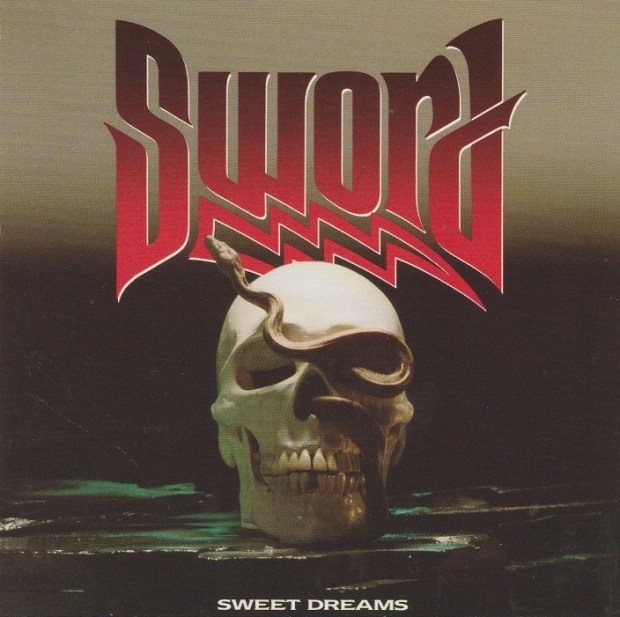
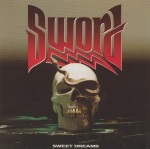
REVIEW: Sword – Sweet Dreams (1988)

scan_20170121SWORD – Sweet Dreams (1988 Capitol)

Canada’s mighty Sword took another swing on their second and final album Sweet Dreams.  They recorded a fine debut in Metalized (1986), but as with any band, growth is expected on album #2.  No problem for Sword.

Metalized was relentless, thrashy, fast, and punishing.  Sweet Dreams is heavy but diverse.  This is immediately obvious on the opening title track.  The tempo is condensed to a slow metal Zeppelin stomp.  The melodies are more focused.  The sound (thanks to Gggarth and Jack Richardson) has more oomph and depth.  What the band sacrificed in speed was paid back in other qualities.

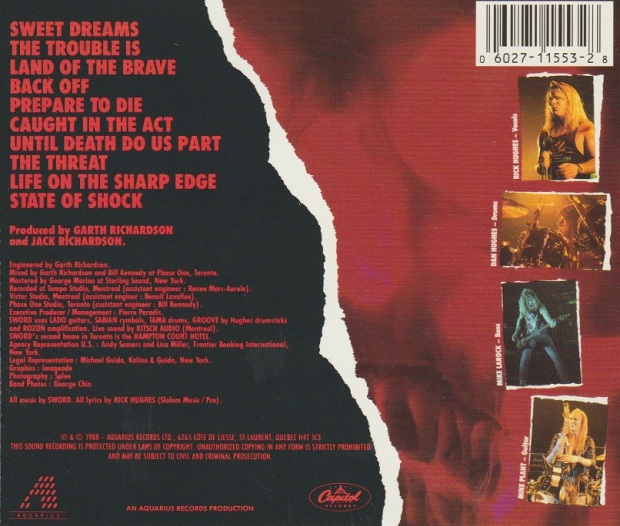
Capitol records released “The Trouble Is” as the first single/video. Rick Hughes’ enviable voice makes it sound like Sword, otherwise it could have been one of Dokken’s heaviest tracks. The lyrics are surprisingly still valid in 2017: “People are lying, they keep on trying, to live where they can be free. They jam into boats with a knife at their throats…” It hasn’t changed much in 30 years. “Land of the Brave” tackles war, a popular metal topic ever since Black Sabbath wrote “War Pigs” back in 1970. The screams of Rick Hughes mimic the horrors of the battlefield. An apt comparison would be Iron Maiden, with a little bit of Metallica. For some rebellious attitude, check out “Back Off”, which hits the gas pedal during the chorus. Another popular metal topic: “Back off preacher, stay away!” Ozzy would have been proud. Guitarist Mike Plant blasts through his solos effortlessly, showing off a variety of rock styles. “Prepare to Die” (also heard on the recent Live Hammersmith CD) is the thrashiest of the bunch on side one, sounding like vintage Sword.

Cool thrashy shreddery kicks “Caught in the Act” right in the nuts to commence side two.  It switches up on “Until Death Do Us Part”, focused by the stomp of the beat.  If Sweet Dreams has any weakness it is that there are two Swords.  The speedy metal of “Caught in the Act” and “Until Death Do Us Part” are a contrast to the more accessible rock of “The Trouble Is”.  One of the most stunning tracks on the album is “The Threat”, on which all the ingredients mix perfectly.  (They get bonus points for naming themselves in the lyrics:  “Ride with the sword in your hand, and some day with the sword you will die.”)  For a real surprise check out the slide guitar grease of the incredible “Life on the Sharp Edge”.  It’s all over with “State of Shock” which will knock you senseless for all the headbangin’ going on.  Seems Motorhead must have rubbed off on them a bit.  “State of Shock” goes out like a champ leaving you punched out drooling on the mat.

Sword stopped after two albums and Rick Hughes moved on to the mainstream rock band Saints & Sinners.  Sweet Dreams succeeded as a second album should.  It pushed the sound outwards.  Hughes and company should be proud of both of their records.

4/5 stars

scan_20170121-2

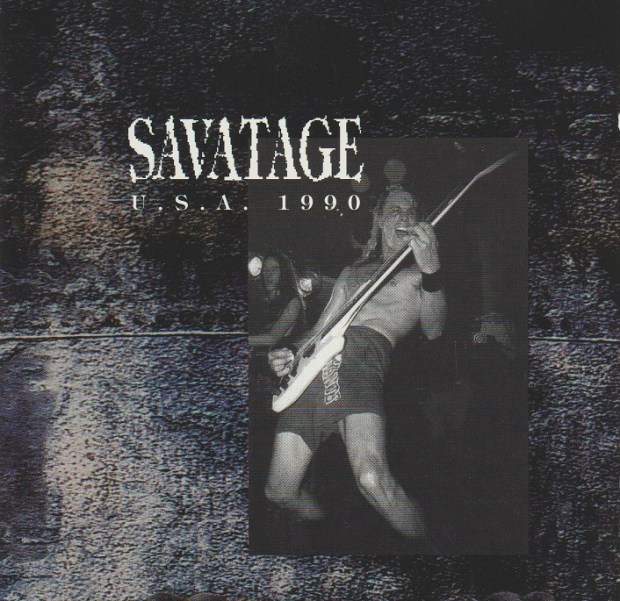
REVIEW: Savatage – U.S.A. 1990 (bootleg CD)

scan_20170120SAVATAGE – U.S.A. 1990 (1994 Live Storm bootleg CD)

When a bootleg live CD just has a picture of the bass player on the front, you know you’re not in for a perfect listening experience (Motorhead, Kiss and Iron Maiden bootlegs excepted).  Nothing against Johnny Lee Middleton of course, but it would make more sense to put Jon or Criss Oliva on the cover.  U.S.A. 1990 (released 1994) comes from Live Storm in Italy, where many bootlegs originated.  It seems to consist of songs from multiple shows, due to the repeating “Of Rage and War” and “Hounds”.

Repeat aside, U.S.A. 1990 focuses on early heavy tracks with not a single ballad.  Fans of early ‘Tage are going to love getting live versions of “The Dungeons are Calling” and “City Beneath the Surface” from the Dungeons are Calling EP (1984).  There is also the amazing riff-tastic title track from Sirens (1983), to this day still one of their best tracks.  Interestly enough, this very same version of “Sirens” was released officially (and in official sound quality) as a bonus track on the long deleted Music For Nations pressing of Sirens.  You can tell when Jon screams “Danke schön! Hello Deutschland!  You are metal!”  It’s the same version…but wait a sec!  Last I checked, Deutschland is not in the U.S.A.!  Such is the charm of a bootleg release.

“Hounds” from Gutter Ballet (1990) is ominous and evil-sounding, made more so by Jon’s blood curdling screams and howls.  He calls it “doom music”.  Also from 1990, “She’s in Love” is just speed on top of riffs on top of screams.   Gutter Ballet was an ambitious album, and part of that was a three-song suite about insanity.  From that suite “Thorazine Shuffle” is lifted, a classic example of Criss Oliva’s style of snaky guitars. “Of Rage and War” brings another menacing riff, and a topical lyrical message:

Better listen to me you son of a bitch,
Better disarm those missiles sleeping in the ditch,
You have no goddamn right to do the things you do,
The world would be a better place if we were rid of you!

“Sirens” is the centerpiece, a stormy metal drama loaded with waves of guitar crashing against the rocks, wrecking everything in their way.  Jon’s shrieks warn away the meek and timid.  Only the strong will survive the “Sirens”.  You will find no refuge in the “Hall of the Mountain King” either.  This castle of stone shall offer no protection from the riffage pouring down.  Madness reigns, so just go with the groove and get your stomping boots on.  The final track is the upbeat rager “Power of the Night”, the title track from their 1985 album.  It’s a string of lyrical cliches backed by some serious heavy rock.  Raise the fist of the metal child!  Unfortunately the track is cut short.

U.S.A. 1990 is a fairly common bootleg, so if you find one in the $7-8 range, take a shot.

2.5/5 stars

REVIEW: Raiders of the Lost Ark – Original Motion Picture Soundtrack (2008 CD reissue)

scan_20170116RAIDERS OF THE LOST ARK – Original Motion Picture Soundtrack (Originally 1981, 2008 CD reissue)

When it comes to sci-fi nerds, movie geeks, and Speilberg buffs, there is one name that we all salute:  composer John Williams.

In 1981, Williams was given the task of composing yet another soundtrack for his buddy Steven:  Raiders of the Lost Ark.  Like Star Wars and The Empire Strikes Back before it, it needed identifiable themes to accompany our characters:  the heroic school teacher (!) Indiana Jones, his one true love Marion, and a whole slew of evil Nazis.  This time Williams needed to come up with appropriate music not for epic space battles, but to inspire awe in the wrath of God and the Ark of the Covenant.

To go with the 2008 theatrical release of (the atrocious) Kingdom of the Crystal Skull, Lucasfilm remixed and reissued the original Raiders soundtrack with 30 minutes of bonus tracks.  (Unfortunately, both the LP and box set have music not on this CD, but we don’t get this stuff for free, so a review of this CD is all you get.)  Virtually every note will be familiar to fans both casual and die-hard.

Indy begins his adventure “In the Jungle” and immediately you can picture the spiders and creepy-crawlies that Indy had to step through.  “The Idol Temple” has even more creepy-crawlies, and Williams expertly finds the musical effects to go with the eight-legged chills.  Just like the movie, be ready to jump startled at certain cues.  Serious action begins on “Escape from the Temple”, the kind of track that is a benchmark for such scenes.  The “Flight From Peru” is the very first appearance of the famous Indiana Jones theme, as he escapes death…barely!

scan_20170116-3

In America, Indy is paid a visit at the school by two “Washington Men” who want him to find something.  This is the eerie, understated debut of the Ark’s theme, though Indy’s own theme plays around with it, indicating the two will eventually collide.  “A Thought for Marion” introduces her theme, and then back to the Ark’s music once again.  The ominous overtones indicate that Indy’s mission to find the Ark will not be easy.  He is then off to Nepal with music that hints at the dangers ahead.  In Nepal he finds both Marion and the medallion, which has its own dark music.  The military drums foreshadow the involvement of the Nazi forces also searching for the Ark.

The score takes a slight middle eastern turn with “Flight to Cairo”, also augmented with Indy and Marion’s themes.  The two must find the Ark before the Nazis do with the help of Indy’s old Egyptian friend Sallah.  Marion finds herself in trouble almost immediately.  “The Basket Game” is one of the most memorable cues from the movie, though it ended badly for Marion and Indy.  Williams uses articulate melodies in a cartoon-like style to hint at the motion happening on screen.  With Marion gone, Indy must continue his quest with Sallah.  Together they visit a wise man, and discover that someone is trying to poison them with “Bad Dates”.

“The Map Room” is the setting for the next piece, building tension back with the Ark theme.  This incredible cue ends with Indy discovering the location of the Well of the Souls.   What I always assumed were sound effects in the scene is actually music (chimes).  Soon he finds Marion alive and well.  Her theme and that of the Ark return for another go-round as the heroes finally find the treasure.  The music when the Ark is found is similar to that in the Star Wars scene where the first Death Star explodes.   More creepy-crawlies (“Snakes…why’d it have to be snakes?”) infest “The Well of the Souls”, surely the creepiest scene in the movie.

Another great Indy action cue is “Indy Rides the Statue”, a piece of music that recurs when our hero is in great danger.  Escaping the Well of the Souls, Indy must battle a massive German henchman in “The Fist Fight”.  The tension is turned up again, and fans will recall this piece from one of the most punishing action scenes in the film.  “The Desert Chase” is the longest piece on the album, to suit a roller-coaster scene of thrills and chills.  The music delivers the same thrills, as you can picture Indy on that horse chasing down those Nazis.  It’s among Williams’ finest music.

scan_20170116-6

A tender moment (“Marion’s Theme”) is short lived as the Nazis return.  The action-packed music takes Indy to a secret Nazi island in the Mediterranean (“The German Sub” and “Ride to the Nazi Hideout”).  The horrifying finale reveals “The Miracle of the Ark”, and again some of Williams’ best music.  The end credits music “Raiders March” is some of most memorable music in film history.  It revisits the most exciting music from the score.  It is similar in style and equal in quality to what John Williams did with the Star Wars saga end credits.  This single track should be in any serious music lover’s collection.

For a more knowledgeable take on the Raiders soundtrack, we spoke to Rob Daniels from the Visions In Sound radio programme.  He had this to add:

When I first heard John Williams’ score to Raiders I immediately fell in love with the theme. In fact it has been my ring tone on my phone for several years over at least three phones. That being said the score to Raiders is much more than its theme. By the way, the theme is actually two separate pieces that Williams had written to be the title theme for the film.  Speilberg loved them both and asked them to be combined.

John Williams is the master of memorable themes and Raiders is no exception. There are several wonderful themes such as the aforementioned “Raiders March” but also to be commended is “Marion’s Theme” and the “Ark Theme”. Though I have to admit that my favourite comes in the cue “Desert Chase” as Indy is going after the Ark as it is on its way to Cairo. As the cues play you can see the Nazi soldiers being thrown from the truck and Indy’s fight in the cab with one of them as he eventually gets dragged behind the truck to his final victory and escape. It’s an amazing piece of audio gymnastics in an 8:18 cue.

Williams is known for his broad themes (See Star Wars & Superman) but he also plays the smaller moments just as well. (See “The Medallion” & “To Cairo” cue). In the hands of another composer this could have been just another score but Williams elevated the film to a fun and epic adventure that can be playful, sad and triumphant, sometimes all in the same cue.

The remixing renders an awesome sounding CD with the depth and clarity you expect.  A nice looking booklet has the images to go with it.  Remember listening to a soundtrack while leafing through the photos in the LP?  Relive that with the reissued Raiders of the Lost Ark.

5/5 stars

 

QUIZ WINNER Scott goes Rogue, receives prize


Scott works hard for his prizes!  When he said that Lego Album Cover Quiz #3 was his “entire afternoon” he wasn’t kidding.  That’s what makes a winner!

Yesterday, I had the opportunity to hand over Scott’s prize (a new copy of Whitesnake’s killer Saints & Sinners CD, featuring “Here I Go Again” and “Crying in the Rain”).  We met up and saw Rogue One which gets better upon further viewings.

There are more QUIZZES and more PRIZES coming in 2017!  Stay tuned, watch this space, or better yet, sign up for daily notifications so you never miss a chance to win some cool rock.


Sunday Chuckle: Meat says the darndest things

For this week’s Sunday Chuckle, it started with an enthusiastic Facebook post from me that “Gypsy Road” by Cinderella was now playing on the radio.  That generated two responses including this one from Uncle Meat:


ear-fuckies

You just learned a new term.  “Ear fuckies” — the sensation of having Tom Keifer screamin’ in your ear!