REVIEW: Def Leppard – Official 11 track live mp3 collection (2000-2001)

This review is for Scott, your Heavy Metal OverloRd.
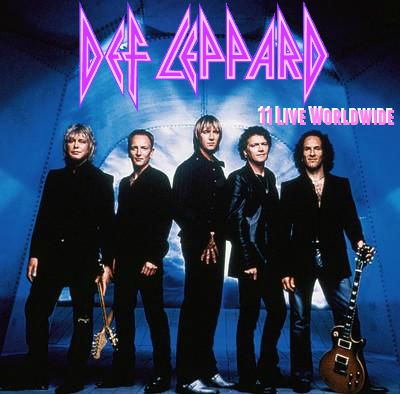
LEP 1999DEF LEPPARD – Official 11 track live mp3 collection, download only (2000-2001)

We at LeBrain HQ have always loved being able to shed some light on music that is so rare, that you just can’t find out much of anything about online anymore.  It seems one of most obscure categories of rare music are official downloads from long ago that were never physically released, and long since taken down.  15 years isn’t a long time ago, but did you know that in 2000-2001, Def Leppard gradually put up 11 live tracks to download from their official site?  This was long before they had any sort of live album out whatsoever.

These official live recordings were selected by the band, and were released over a period of several months.  They were not available for long.  They were taken down by the time Leppard changed their site over to promote the X album in 2002.  Taken together, I assembled them in order of release into a a full length live album by Def Leppard — unofficial, yet official just the same!

The first song released was the old acoustic standby “Two Steps Behind” (San Antonio, Texas, 2000).  Joe begins by announcing that they were recording the show, and that this particular night was also the “official opening evening, at it were, of our brand new website, www dot defleppard dot com.  And that’s the reason we’re recording it, because we’re gonna put it on the web.  Worldwide, you guys are going worldwide!”  That certainly explains things!  The recording itself is quite excellent, rich and clear.  You also know there are no overdubs, because chords are missed and the songs goes on.  To me this is the ideal form of live recordings: official, but with a loose “who cares” attitude in regards to fixing mistakes later on.

An older classic, “Women” (Salem, Oregon, 2000) has similar sonic qualities.  It’s also quite bass heavy which is a nice change of pace for this band.  There had already been a B-side live version of “Women” out there for a while, recorded in 1987 for the video In the Round – In Your Face.   This version however has the currently lineup with Vivian Campbell, and a Joe Elliot who hits all the screams at the end.  This would have to be my go-to live version when I want to hear one.

The first then-new Def Leppard song to get the live release treatment was “Demolition Man” from Euphoria.  This one, from Denver, Colorado in 1999, sounds faster than the album version.  On an album of mostly so-so songs, “Demolition Man” at least had some velocity to it, unremarkable as it is.  It’s over and out quickly enough.

LEP JAPAN“When Love & Hate Collide” (Tokyo, 1999) is the second ballad released in the collection.  Although you could get an acoustic version on the bonus disc (Acoustic in Singapore) to Slang in 1996, this was the first full-on electric live release.  This version has some heft to it, and once again I would say this is the go-to version to listen to.

Def Leppard have been playing The Sweet’s “Action” for so long now, that you may as well consider it a built-in part of their set.  This was the first live version made available (London, 1999).  Like “Demolition Man”, it seems faster and much heavier live.  Joe’s voice is sounding pretty ragged at the end — as it should be after a performance like that!

The hit song “Animal” from Hysteria was not readily available in live form, at least on an audio format.  They did it unplugged for Acoustic in Singapore, and there were a couple VHS videos out there too, but nothing on vinyl or CD.  This more recent version (Nashville, Tennessee, 2000) is as reliable as any other.  It’s clear that even though the Euphoria album was shaky, the tour behind it was anything but.

Def Leppard started putting the instrumental scorcher “Switch 625” live again on the Slang tour.  It was welded onto “Bringin’ On the Heartbreak” for a High ‘N’ Dry medley, just like it was on album.  This Montreal recording from 1996 is incredible.  Even the ballad has some serious crunch and scream to it.  Would you like some feedback?  Here you go, turn it way up.  Campbell nails the solos on “Heartbreak”, but it is “Switch 625” that is the pièce de résistance.  Just listen to Rick Allen, but don’t leave your jaw on the floor!  At the end, Joe says “Ladies and gentlemen, the best drummer in the world, Mr. Rick Allen!”  Then, a moment later you can hear Joe say, “He is,” to affirm the man’s awesomeness.  These two were released as one solid 8 minute 12 second track.  Then, from the same 1996 show in Montreal is another special track.  Is it “Knockin’ on Heaven’s Door”?

“Mama take this gin from me,
I can’t drink it anymore,
Where’s the sink, I gotta pee,
Looks like I’m checking into Betty Ford…”

In another moment of “I’m really glad they didn’t cut that,” Joe needed to fill a minute while Phil Collen went to pee!  They left it in.  Joe then turns the microphone over to Phillipe for his song “Miss You in a Heartbeat”, performed acoustically.  Phil does the lead vocal and also the acoustic guitar solo, while it is quite possible that Joe himself went to pee.

“Rock! Rock! Till You Drop” is the only song from Pyromania to be released as part of this series.  By the opening tapes, it sounds like it was the first song of the set in Cardiff, Wales in 1999.  As such, Joe’s got a lot of screaming to do, but he does a good job.  What an opener that must have been!  You have to give these five guys credit for putting a lot of energy into their live performances.  There is a lot of singing, soloing, and riffing to do, and they don’t make it easy for themselves!

The final two songs of the set were recent Euphoria songs, from the Tokyo show in 1999 once again.  The ballad “Goodbye” is just boring as hell.  You gotta get out there and promote the new album and single, but this was never a good album or single.  It was a weak attempt to write another “Have You Ever Needed Someone So Bad”.   Thankfully they saved the best Euphoria song for last, which was “Paper Sun”.  I like when Def Leppard get into that “Gods of War” / “White Lightning” space, and that is what they did with “Paper Sun”.  (It also has shades of “Women”.)  Unfortunately these last two recordings, being new songs and all, feel a little more stiff.  The band weren’t as familiar with them obviously, but I think you can hear it.  Still, what are the chances of Leppard ever playing “Paper Sun” live again?  Slim to none, I’d say.  So who’s complaining?  Not this guy.

Since this time, Leppard have put out plenty of official live product.  There’s the excellent double live Viva! Hysteria, with loads of rarities.  There’s Mirrorball, a double album representing a standard modern Def Leppard concert set.  There was even a bonus live disc added to the deluxe version of Pyromania.  None of those releases have “Demolition Man”, “Goodbye”, “Paper Sun”, “Miss You in a Heartbeat”, or “When Love & Hate Collide”.  That makes this collection pretty special, to this day.

4.5/5 stars

We at LeBrain HQ want to hear from you if you know any more about these tracks.  Any information gleaned such as actual recording or release dates will be happily added to this review.  (Comments regarding trades will be deleted.)

#430: Album Art – Where can it go?

Scan_20150826

RECORD STORE TALES MkII: Getting More Tale
#430: Album Art – Where can it go?

How important is album artwork today?  Still important, I’d argue, though not as much as it was in the 60’s, 70’s and 80’s.  You can tell that artwork is still important, because every major artist produces “cover art” any time they release a single, even if there is no physical product for it to be applied to.  Artists will commission art or pose for expensive new pictures to accompany the new music.

Columbia Records kicked off the era of album artwork in 1938, a full decade before the birth of the LP.  Columbia’s art director Alex Steinweiss is generally credited with the introduction of packaging art.  Before him, 78’s used to come in plain sleeves with very little printing on them.  Some sleeves would have large holes in the middle, through which you could read the label on the record.  After the dawn of the LP, the rest of the record manufacturers in the world had caught up and were using artwork on their LPs in the 1950’s.  The standard size was 12 – 3/8”.

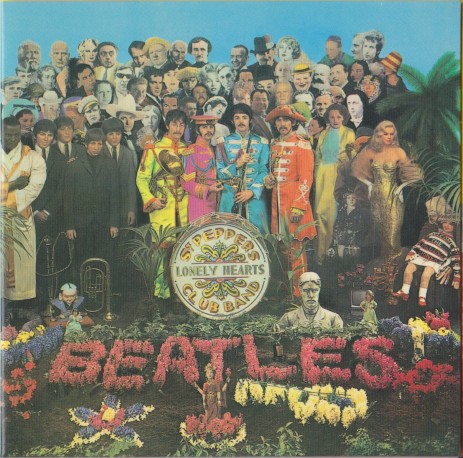
When you think of Sgt. Pepper’s Lonely Hearts Club Band today, you inevitably picture that incredible album artwork as well as the songs.  That cover, with its 57 different distinct figures pictured, became a high water mark.  They also included cardboard cutouts inside, a gimmick that Kiss were eager to copy and make their own.  Sgt. Pepper’s artwork cost 60 times more to create than the average album cover in 1967!  It took a band with the success of the Beatles to push the limits in this way.

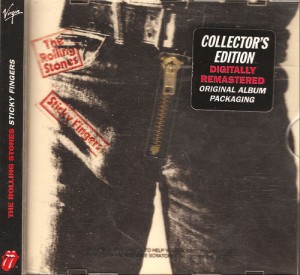
The Rolling Stones included postcards in their Exile on Main Street (another unforgettable album cover), but they also brought album artwork into three dimensions.  Sticky Fingers featured a working metal zipper, with which you could open the jeans on the front cover, to reveal briefs inside.  It was a level of interactivity previously unseen.  The zipper tended to cause damage to the records and packaging in shipment, but pioneering is a process of trial and error!

Early 90's CD reissue of Sticky Fingers with zipper

Early 90’s CD reissue of Sticky Fingers with zipper

Perhaps Led Zeppelin took LP artwork to its end point, with 1979’s In Through the Out Door.  The record was concealed in a sealed, stamped paper bag that looked like a cheap bootleg, but inside would be one of six different album covers.  You would not know which you got until you tore it open.  The Grammy award winning packaging also included an inner sleeve that one could paint on, just by adding water!  If you wet a paintbrush (or anything, for that matter), you could dissolve paint embedded in it and colour it yourself.  Finding an original unpainted inner sleeve is the goal of a true collector.

Historically speaking, album artwork like this had several purposes.  The first and most obvious would be to identify the product inside (something Led Zeppelin messed with by not including their name on Led Zeppelin IV).  The second purpose was to attract the eye, in the crowded shelves of the record store.  It was noted by many that a brown cover just melted into the background.  Something striking would jump out, and be hard to miss in the racks.  Another job of the cover art was to tie together all the related marketing for the LP.  The artwork could appear in magazine ads, posters, and later on, in music videos.

The purpose of cover art that Kiss embraced was to give value for the money.  Not only did you get killer artwork with loud rock and roll inside, but you also got a cardboard Love Gun, or even masks you could cut out and wear.  Fans drooled over these extras.  For a while, any time Kiss put out an album, you knew that the packaging would be special.  For albums such as Destroyer and The Elder, they even used gatefold sleeves – an added, unnecessary expense for single LP packages.

Album artwork suffered in the 80’s and 90’s.  With cassettes and ultimately CDs replacing the 12.375” width of an album cover, the pictures were smaller and less striking.  You could not pack as much information onto a 4.75” CD sleeve.  Iron Maiden’s artist Derek Riggs was known for hiding secret messages and logos in his album covers, including a mischievous “Indiana Jones was here” and “Wot, no Guinness?” inside Powerslave.  These touches are lost on smaller CD covers.

There is no question that the majority of cover art suffered in the 90’s.  Some bands and labels still strove to give the buyer some extra value, but the canvas was now teeny tiny.  Tool are an example of a band who took advantage of the CD age.  Their AEnema CD had lenticular, “moving” cover art, thanks to a special jewel case that enabled 3D images.  You could even swap images by folding the booklet differently, and get a different moving scene.  Kiss copied this, less successfully, for Psycho-Circus in 1998.  Coloured plastic jewel cases were another way to get some attention on the CD racks.  Bands such as Alice in Chains and Collective Soul used coloured jewel cases for their self-titled albums in 1995, but these were fragile and prone to scratching.  The cardboard digipack was another method to enhance CD cover art, but they were not popular with everyone.  Some consumers complained that the covers wouldn’t fit properly into their CD towers, and would scratch up the discs if poorly designed.  And then of course, we had artists such as Garth Brooks who decided to milk the fans by releasing the same album with different cover art, encouraging them to “collect them all!”  His Double Live had no less than seven covers to collect.  That would come to well over $150 total for the collector who had to have each one.

LPs are currently having a second surge of popularity.  Will it last?  No.  Before you cry “heresy!”, remember that in today’s society, convenience is king.  That means portability.  Vinyl LPs are meant to be enjoyed at home.  The future will remain digital, although LPs will probably never die completely.  The advent of digital music has reduced the importance of cover art yet again.  You don’t need a cover, obviously, to enclose something that does not physically exist.  Yet, cover art is still being made.

Some have chosen to take cover art in the digital age to minimalist extremes.  U2’s Songs of Innocence was initially released digitally, with a very plain photo of a white LP sleeve with “U2” stamped on it.  Kanye West embraced minimalism on Yeesus, releasing the CD with no packaging to speak of at all.  A CD housed in a clear jewel case, sealed by a strip of orange tape, and a sticker with some credits – that’s all Yeesus gave us, surprising many by not going completely over the top with it.  It’s still an artistic statement, but is it the kind of art that a fan will embrace and cherish?

I feel that album artwork is currently in a state of flux.  LPs are having their moment again, and with them, lavish packaging that one can handle and enjoy.  On the other hand, simple digital pictures are all kids need today, to be attached to their mp3 files.  I hope that some enterprising, artistic individual, a modern day Alex Steinweiss, will innovate and bring back cover art in a lasting way.  I sure hope, because I do like cover artwork to accompany my music.

YEESUS

REVIEW: Iron Maiden – The Book of Souls (2015)

NEW RELEASE

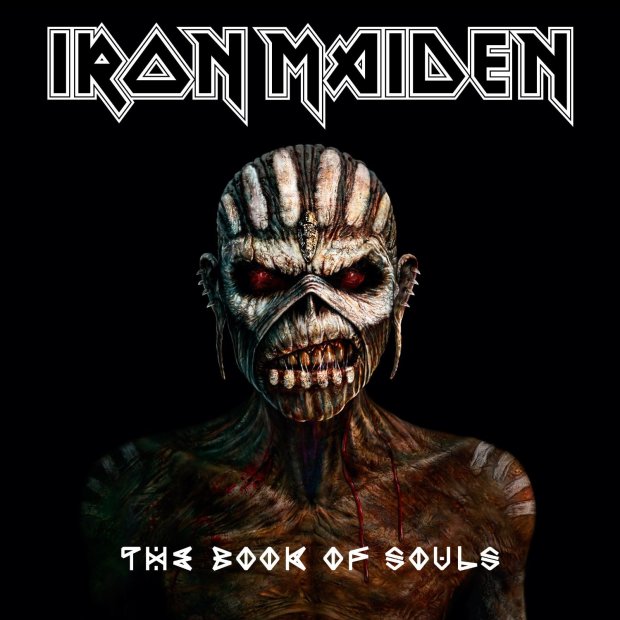
IRON MAIDEN – The Book of Souls (2015 Parlophone, collector’s book edition)

I have a new hero.  His name is Bruce Dickinson.

Bruce has not only beaten cancer back to that dark hole from which it came, but he takes command on Iron Maiden’s new opus The Book of Souls.

Even though he only has writing credits on four of the 11 tracks here, his impact is massive.  With lungs of iron, Bruce propels everything.  For the first time (possibly) ever, I feel that the most important band member is not leader Steve Harris, but the singer himself.

Right from the opener “If Eternity Should Fail”, Bruce is center stage.  He wrote this complex number himself.  It boasts one of Maiden’s most memorable choruses yet, and musical twists and turns that return us to Powerslave.  Meanwhile, there is a hook that reminds me of Bruce’s solo song “The Ghost of Cain”, from Accident of Birth.

We took a good look at the lead single, “Speed of Light” a couple weeks back.  Maiden often write a fast, heavy blazer to go with a new album, and that’s “Speed of Light”.  Even though it is the single, it is far from the strongest song.  Written by Bruce and Adrian Smith, it is certainly a good Iron Maiden track, but in comparison to the monuments of metal that surround it, “Speed of Light” feels like a brief diversion from the epic metal moments at hand.  Adrian’s solo, however, is delicious.

“The Great Unknown” (Smith/Harris) opens softly, but even so there is a menacing tone to Bruce’s voice and the underlying instruments.  With a slow, thrusting riff, “The Great Unknown” soon lurches forth, a killer metal march for the ages.  Bruce pushes his voice to the very limits, giving it all and then some.  As with many of the songs on The Books of Souls, I hear hints and echoes of past Maiden epics.  This is not a lack of originality, more like a signature — familiar but always different.  “The Great Unknown” ends on the soft note with which it began.

What is an Iron Maiden album without a Steve Harris bass intro?  He and producer Kevin Shirley captured a wonderful bass sound on this album.  “The Red and the Black”, another epic, is the only Harris solo writing credit.  It has a riff that takes me all the way back to Killers, but then it is gone, and it’s onto another riff…and another…and another.  At 13 minutes in length, this is one of those trademark Harris songs.  Time changes galore, loaded with hooks.  You can draw parallels to many epics from the past, but to do so takes away from this one.  “The Red and the Black” is a proud achievement, a passionate metal song as only Iron Maiden can really do.  Adrian Smith handles one of the guitar solos with a huge splash of wah-wah, and that is simply a thing of beauty.  In sum, if you took a little bit of everything that makes Iron Maiden great and unique, then all those ingredients are in “The Red and the Black”.  Bass outro, and that’s that.

A semi-shorty (5:52) is in the next slot, a fast riffer called “When the River Runs Deep” written by Steve and Adrian.  This one is hard to compare to any past Maiden tracks, as it occupies a space all its own.  Adrian Smith sometimes brings in riffs that sound like something other than Iron Maiden, and I think that’s “When the River Runs Deep”.  Adrian takes another wah-wah solo, but not to be outdone is Janick Gers who throws down an edgy solo of his own.  As far as Iron Maiden goes, this song is guitar solo nirvana.

A 10 minute epic always makes a good closer when you’re Iron Maiden, so the title track “The Book of Souls” (Gers/Harris) is last for disc one.  Gentle acoustic guitars and keyboards emulating pipes tell us that this is previously uncharted territory.  Then “The Book of Souls” trudges forth, with a beat not unlike “Mother Russia” from No Prayer for the Dying.  There’s far more to the song than that, however. Soaring lead vocals (Bruce only seems stronger!) just ice the cake.  All three Maiden guitarists shine on this, but Janick and Adrian have some solos that just play off each other so well. You want those trademark Maiden guitar melodies?  How about galloping riffs?  Nicko McBrain killing it on the drums?  Maiden deliver, in top notch style, everything and then some more.

IMG_20150907_114837

Bruce and Adrian co-wrote “Death or Glory”, opening side two with frenetic drums and riffing.  Going for the throat, The Book of Souls has more fast riffs per minute than any Maiden album in decades.  In five brief minutes, you are blasted against the wall, bounced off the floor, and nailed to the ceiling.  Don’t hurt your neck from all the headbanging.  This time, the guitar spotlight is on Dave Murray for an intense, dramatic solo.

“Shadows of the Valley” (Gers/Harris) sounds a lot like “Wasted Years” at first, but only briefly.  If anything, “Shadows of the Valley” recalls Dance of Death-era Iron Maiden.  Although this song is not as powerful or memorable as others on the album, it does contain some seriously incredible instrumental moments.

One of the most heartfelt and powerful songs on the album is the shortest.  “Tears of a Clown” is a thoughtful moment about Robin Williams.  The poignant lyrics are to the point:

All alone in a crowded room,
He tries to force a smile,
The smile it beamed or so it seemed,
But never reached the eyes, disguise,
Masquerading as the funny man do they despise.

I found this to be one of the compelling songs.  Of all the bands to commemorate Robin Williams, I did not expect it to be Iron Maiden.  But they did it in such a way that it completely fits.

Dave Murray and Steve Harris might not have known that Bruce already has a solo song called “Man of Sorrows”, but it doesn’t matter much since Maiden’s song is called “The Man of Sorrows”.  Musically this sounds much like X Factor-era Maiden.  Bruce takes it to a higher level than that.  Dave himself has a nice slow bluesy solo at the end that is just pure gravy.

The biggest surprise, the biggest song, and the biggest challenge has to be “Empire of the Clouds”.  Written solely by Bruce and coming in at almost 20 minutes, it is unprecedented in the Maiden canon.  Never before have the credits “Bruce Dickinson – vocals, piano” been written inside one of their albums.  For the first time ever, the piano is a part of Iron Maiden’s makeup.  Maiden have used orchestras before, and the strings return as well.  “Empire of the Clouds” is a peak accomplishment, something that they (and Bruce) can proudly proclaim, “we did that”.  The piano is a natural fit, in the way it is used to make an epic song even more dramatic.  Aviation has been one of Bruce’s favourite lyrical subjects for a long time, but “Empire of the Clouds” might be his first song about airships.  You can trust him to instill it with all the drama and heaviness that you expect from Iron Maiden.

Even though 92 minutes have elapsed, The Book of Souls does not particularly feel longer than A Matter of Life and Death or The Final Frontier.  Like those two previous records, The Book of Souls is going to have to be digested long-term, returned to again and again to fully absorb and appreciate.  This is an album in the true sense:  best appreciated in sequence, as a single work.  There’s an intermission in the middle for you to change CDs and take a break, but I recommend diving right back in once again.

With Bruce’s very serious health scare, and the increasing age of the band, there is always the chance that this could be the last Iron Maiden album.  Of course, some said that about The Final Frontier as well.  It seems that ever since Brave New World in 2000, Iron Maiden have set to top the previous album each time.  The cumulative effect of that is that they had a hell of a lot to live up to on The Book of Souls.

Mission accomplished.

5/5 stars

Disc 1
1. If Eternity Should Fail (Dickinson) 8:28
2. Speed Of Light (Smith/ Dickinson) 5:01
3. The Great Unknown (Smith/ Harris) 6:37
4. The Red And The Black (Harris) 13:33
5. When The River Runs Deep (Smith/ Harris) 5:52
6. The Book Of Souls (Gers/ Harris) 10:27

Disc 2
7. Death Or Glory (Smith/ Dickinson) 5:13
8. Shadows Of The Valley (Gers/ Harris) 7:32
9. Tears Of A Clown (Smith/ Harris) 4:59
10. The Man Of Sorrows (Murray/ Harris) 6:28
11. Empire Of The Clouds (Dickinson) 18:01

For the official KeepsMeAlive review by Aaron, click here!

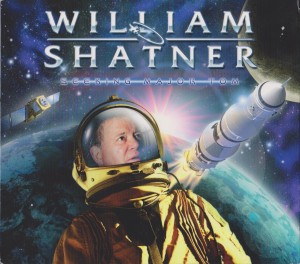
REVIEW: William Shatner – Seeking Major Tom (2011)

Scan_20150828 (5)WILLIAM SHATNER – Seeking Major Tom (2011 Cleopatra)

Why?  Why do I keep doing this to myself?  I spend hard-earned money on something I knew would be shit.  I knew it!  Didn’t I?

The hype was palpable in the air.  Two of my favourite worlds collided — heavy metal and Star Trek.  Captain James T. fucking Kirk, doing sci-fi rock classics, with luminaries of the art such as Ritchie fucking Blackmore, Zakk fucking Wylde, Dave fucking Davies and many, many more.  It’s almost as if it was a compulsory purchase.

I…wished I had…resisted.  (notice the Shatner-like pauses?)

You know how many times I have listened to Seeking Major Tom?  Once.

Let’s go in for round two.  Let’s see what happens.

Did I mention this is a double album?  This is a double album.  The original versions of a lot of these songs are deeply ingrained in our hearts and memories.  “Bohemian Rhapsody”, “Learning to Fly”, “Iron Man”.  I have a lot of feelings invested into these songs, and deep respect for every musician playing on the album.  There is even a mini Ozzy Osbourne band reunion on Iron Man, as Zakk Wylde and Mike Inez reteam once again.

Shatner first teams up with Nick Lalensi of the Strokes for “Major Tom (Coming Home)”, and musically it’s perfect, and very Strokes-like…Bill’s vocals take some getting used to.  Not bad though!  He’s not attempting to sing, it’s a spoken word performance.  It’s performing the lyrics as if it was poetry.  For “Major Tom”, it actually works kinda brilliantly.  The original “Space Oddity” is next, and this one features one Ritchie Blackmore and his lovely wife, Candice Night.  Candice adds melody enough with her backing vocals, and Bill makes his style work on the song.  Blackmore is the real star here, and it is too bad his electric guitar is low in the mix.  He takes a solo where there would normally be saxophone.

I’m actually surprised by how listenable this is!  Bill manages to evoke emotion with his monotone, which is remarkable to me.

I’m not familiar with the U2 song “In a Little While” at all.  The space connection here is that astronaut Frank De Winne once read the lyrics live from the International Space Station, beaming his vocals to a U2 concert, recorded for the DVD U2360° at the Rose Bowl.  Bill is joined by an unlikely guest, Lyle Lovett, but once again I am surprised by how well this works.  Lyle’s still got it, I’ll tell you that much!  This segues into a reprise of “Space Oddity”, and then the Steve Miller favourite “Space Cowboy”.  Brad Paisley and Steve Miller himself (he still plays brilliantly)  join Bill on this one, which…well, it crashes and burns in the atmosphere.  Bill takes on the persona of a drunken cowboy (?) and it’s just a bit too weird.

“Space Oddity” returns once again, but this time, we’re going “Space Trucking” with Ian Paice and Johnny Winter…acoustically.  “Come on!  Come on, let’s go Space Truckin’!” invites Bill, coming across more as a creepy old guy than the kind of person who drives a space truck you’d feel comfortable jumping into.  Just wait until he screams, “Yeah, yeah yeah yeah!”  No, no, no, no.  “Rocket Man” (Elton John), featuring progressive rock veteran Steve Hillage, works much better.  Hillage creates sounds similar to the “space whale” call from Star Trek IV: The Voyage Home.  Bill’s interpretations of old classics work better when he’s not hamming it up.  Much like his acting.  And ham it up is exactly (predictably) what he did with “She Blinded Me With Science”, featuring Bootsy Collins.   Since the original is so goofy, this works plenty well.  Reggae veteran Toots Hibbert lends some credibility to the Police classic, “Walking on the Moon”.  This is pretty good too!  The ever-excellent Peter Frampton drops by for “Spirit in the Sky”, a song I usually find irresistible due to the vocal melody.  Unfortunately that melody has been gutted, and without it, there’s not much left in terms of a song.

The first (and last) time I listened to this album, I remember being repulsed by “Bohemian Rhapsody”.  You can picture it, can’t you?  It’s terrible.  “I’m just a poor boy,” whimpers Bill, and it’s awful.  “Mama,” he cries, and I’m crying too.

Thankfully, Hawkwind’s “Silver Machine” (with Wayne Kramer and Carmine Appice) is a lot better than that.  It actually rocks pretty heavy, and Bill finds the right tone for his vocals, no problem.  This is noisy goodness and quite possibly the best track on the disc.  A segue back into “Major Tom (Coming Home)” leads into a Sheryl Crow original called “Mrs. Major Tom”.  This is a very nice piano based ballad, showcasing Sheryl’s powerful pipes.  It’s a sequel of sorts to “Coming Home”, about what happens if he doesn’t come home.  Bill doesn’t even appear on this one, strangely enough!  It closes the first disc on a somber but very classy note.

I don’t know where Bill heard The Tea Party, but that’s who he’s covering on “Empty Glass”, featuring Michael Schenker.  This track was from The Tea Party’s final album before breakup, Seven Circles, which I own but can’t remember at all.   I should revisit it soon, because “Empty Glass” (which references Major Tom, a Starman, ground control, and Diamond Dogs) is damn good and heavy.  “Lost in the Stars” is from the 1949 musical of the same time.  The dusky, sparse piano accompanies Bill’s deep speaking voice perfectly.  Still mellow but in tune with the Pink Floyd original is “Learning to Fly”.  The only thing wrong with this version is that there is nobody who sounds like David Gilmour, and his guitar hook is such an important part of the original classic.  Bill sounds perfectly at home, and the musical background is sturdy enough.

The Kinks’ Dave Davies helps Shatner out on guitar, for the Byrds’ “Mr. Spaceman”.  It has that campy feel that doesn’t particularly work well.  It’s amusing, but a novelty.  “Twilight Zone” by Golden Earring (known for that chorus of “When the bullet hits the bone), rocks.  Warren Haynes from the Allman’s kicks every ass in the room on his extended guitar solo.  There is then a Shatner original called “Struggle”, written with his producer Adam Hamilton (ex L.A. Guns).   This soft dramatic piece seems vaguely familiar, like a U2 outtake, and is very good in fact.

Winding things down, Sabbath’s “Iron Man” featuring Ozzy’s old band members Zakk Wylde and Mike Inez is an easy one to screw up, and Shatner does so gloriously.  He sounds appropriately Dalek-like on the opening line, “I am Iron Man!” but he attempts to sing the song.  I repeat: he attempts to sing the song “Iron Man” by Black Sabbath.  This goes about as well as you would expect.  Zakk backing him on lead vocals only creates an irritating cacophony.  The album ends on a very different note:  “Planet Earth” by Duran Duran.  Not having any particular attachment to the original, I quite liked this one.  Hamilton plays some killer disco bass on it.  It sounds like “I Was Made For Lovin’ You”.

Going into this for the second time, I fully expected the album to suck again.  The truth is, it doesn’t.  It sure didn’t click with me the first time, but it is truly not a bad album.  Metallica made a double album with vocals like this once; I think it was called Lulu.  From this two disc set, you could extract one good solid CD of enjoyable William Shatner interpretations.  So, given that:

2.5/5 stars

REVIEW: The Sex Pistols – Filthy Lucre Live (1996 Japanese import)

“Fat, forty and baaaack!” – Johnny Rotten

Scan_20150823THE SEX PISTOLS – Filthy Lucre Live (1996 Virgin Japanese import)

Late to the punk rock scene in ’96, I threw Filthy Lucre Live on the speakers in-store.  Impressed by their canon of catchy, simple guitar rock, I decided I was a fan and bought a double disc version of Never Mind the Bollocks.  I still think the reunited 1996 band were valid and put out a worthwhile document of that tour.  I was fortunate to finally stumble upon the Japanese version with additional B-side bonus tracks, from the concurrent “Pretty Vacant” live single.  It was brand new and cost only $20 at the 2013 Toronto Musical Collectibles Record & CD Sale.

Recorded on 23 June, the album was released only a month later.  Even though a big money reunion tour isn’t very punk rock, a one month turnaround isn’t bad!  The backing vocals however sound so clean that I wonder if some very un-punk overdubs happened in that time.  I don’t know.  I do know that the vocals of Steve Jones, Glen Matlock and Paul Cook deliver the hooks required while Johnny Rotten rants with full-on vibrato.  Either way it sounds brilliant.

Scorching through “Bodies”, the Pistols in ’96 kicked many competitors in the ass.  “Seventeen”, with its classic chorus* of “I’m a lazy sod!” lacks some of the edge it used to have in the 70’s, but I don’t think the thousands of people singing along minded too much.

“New York” rocks sloppily, and Johnny Rotten delivers his voice with that vibrato…almost distracting, almost unnerving, but strangely catchy.  His vocals have become more exaggerated and dramatic over the years and I like these renditions of the songs.  Steve Jones’ sloppy guitar riffs are mixed too low, or perhaps mixed that way to hide a multitude of feedbacky sins?  Who cares.  “No Feelings” slams just as hard either way.

“Don’t be naughty…I’ve done you no wrong,” Johnny scolds the crowd before diving into “Did You No Wrong”.  One song is much the same as another, but that hasn’t stopped AC/DC either. “We’re not that fucking bad after all, are we?” sneers Johnny.  Do I detect some pride?  “God Save the Queen” is early in the set, but as venomous as ever.

Through “Liar”, “Satellite”, and the cover of “(I’m Not Your) Stepping Stone” the set drags a bit. “Holidays in the Sun” brings back that excitement and reckless abandon.  “Submission” is next, another riffs as simple and memorable as “Holidays”, and do I detect a touch of “Where Have All the Good Times Gone” by the Kinks there at the end?

“Pretty Vacant”, “EMI”, “Anarchy” and “Problems” close the set for a memorable end.  Even though I don’t think they ever really gave two shits about the music, there was a lot of good music.  John Lydon is a parody of himself, and he knows it and embraces it.  He’s become a grumpy, angry elder statesmen of punk and Filthy Lucre Live is representative of that version of him. Either way, it’s an enjoyable departure from the same old versions.

The Japanese CD comes with some B-side bonus tracks.  “Buddies” is what sounds like an audience recording of “Bodies”.  I guess for that raw punk authenticity?  “No Fun” is also present, a Stooges cover to add to the count of classic punk rock.

4/5 stars

*I’m aware that Johnny Rotten would likely kick me in the ass for calling his music “classic”.  He’d probably also disagree with many more of my words, but I love that crazy guy.

#429: “What kind of music do you like?”

RECORD STORE TALES MkII: Getting More Tale
#429: “What kind of music do you like?”

Have you ever spent a little bit of time trying to get to know somebody new that you were interested in romantically? Probably, unless you have people throwing themselves at you like little girls at a Bieber concert. I’m sure most of us have made that small talk, when first making someone’s acquaintance. Nowadays it’s often done in email.  Routine questions and the like.

You know the typical subjects, when you just meet somebody. Do you like pets? Do you like to travel? What’s your favourite food?  (My answers always were:  1. Yes, 2. No, and 3. Anything that swims.)

The most difficult question of them all, the one that I could go on and on and on about was: “What kind of music do you like?”

What kind of music do I like?? How many hours do we have???

How do I answer that question? How do you answer that question?

It’s also a bit of a loaded question.  I learned early in life that if I answered simply “Heavy Metal”, that was a dealbreaker with a lot of girls!  I’m sure things are a lot different today.  I remember my buddy Bob telling me, “This girl at work said she’d go out with me, if I didn’t listen to rock.”

I used to try and keep my answers short. When a person is just starting to get to know you, they don’t necessarily want an essay-form answer to a simple question. “What kind of music do you like?”  I refused to answer “everything” because when most people say they like “all music”, 99% of the time, it’s not true. I’ve certainly dated people who claimed to like “all” music, but didn’t seem to enjoy anything I picked in the car….

Keeping things simple, I used to try to answer the music question in the following ways:

1. “Anything with guitars”.

I stopped using that one early because frankly it’s not true. Ben Folds Five didn’t use guitars. I have jazz and classical music without guitars. And there’s lots of music out there with guitars that just plain sucks!

2. “Anything that rocks”.

I thought, “Hey, that’s better than my other answer. Lots of music rocks. Even electronic music can rock.” But it doesn’t really answer the question, does it? It’s a subjective answer. It’s like answering, “Anything good.”

I had one really, really annoying customer at the Record Store one afternoon. She wanted some new music to listen to. It didn’t have to be “new” new, just new to her. When asked what kind of music she liked, she just answered, “Good music.”

She kept us running around for the next hour, trying to find CDs in the store that she would like. She would sit and try them on the listening station. She sampled the discs that we picked for her to try, and just answer, “I didn’t like these.” We asked again, is there anything specific you’re looking for? “I just like good music,” she answered, clearly as frustrated as we were.

My getting-to-know-you answer evolved into the following:

3. “I buy CDs from every section of the music store, but my favourites usually have loud guitars.”

Honest, true and short. And hopefully from that answer the young lady knew what she was getting into with me!

Did you used to get that question? How did you answer it? Leave a comment!

“Heavy metal, hard-core, punk, pop, or thrash.
You can call it anything it don’t matter to me.
Call it what you want.
It’s all music to me.”

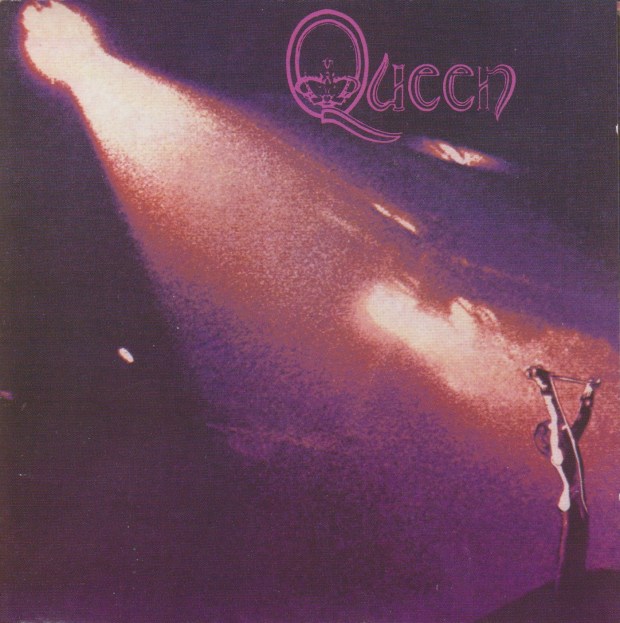
REVIEW: Queen – Queen (1973)

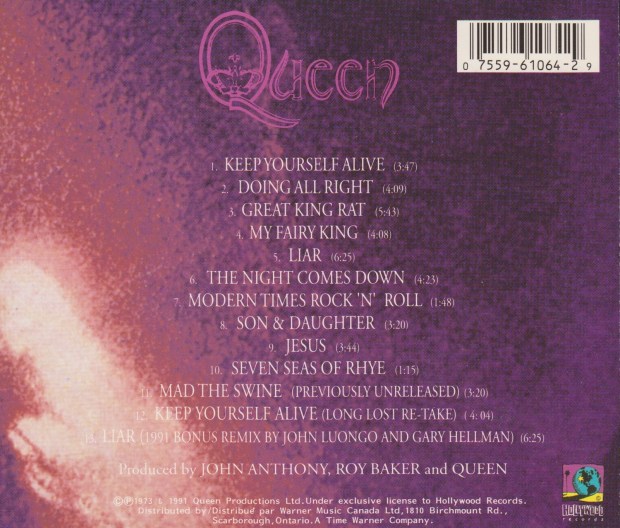
Scan_20150816 (2)QUEEN – Queen (1973, 1991 Hollywood reissue)
I’m in a unique position for someone who was a newborn when this album came out.  By happenstance, this was my first Queen album.  My mom bought it for me.  She bought it at the store that I would one day spend over a decade working myself.  This just happened to be the one she picked.

A few weeks prior, I had been immersed in the latest issue of one of the big guitar magazines.  Queen were out there doing press for Innuendo, and this magazine did a run down with Brian May of the entire Queen discography.  I read it over and over again.  I knew the pop hits, but what of these other songs they were talking about?  “Stone Cold Crazy” had to be awesome for Metallica to cover it.  And this tune “Bohemian Something”…by the description alone I needed to hear it.

And then, only a month or two later, I was hanging out with my friend Andy watching music videos in the basement.  My mom came downstairs.  She had been up watching the news.

“Hey guys, sorry to interrupt,” she said, “But Queen just made an announcement.  Freddie Mercury has AIDS.”

“Oh no,” Andy and I said almost simultaneously.  The rumours were that he was very, very sick.  Although Brian May denied it only months before, fans feared for the worst.  Freddie hadn’t toured since 1986. He looked gaunt, frail, in the most recent photos.  We were both saddened to know the rumours were true.  The very next day, Freddie Mercury died.

That’s my story where it comes to the first Queen album.  It is an intensely personal love for me.

I was surprised how raw it sounds.  Yet although the guitars are rough by comparison to later Queen, the layering of vocals and instruments has already begun on “Keep Yourself Alive”.  It is one of the most brilliant Queen rockers of all time.  When I first heard this song, I recognized some gallop that was later ripped off by Iron Maiden.  Roger Taylor (credited as Roger Meddows-Taylor) even gets a drum solo!  First single, first song — drum solo.  Why not?  Brian’s layered guitar solos point the way to where he would go with the instrument.  It’s worth noting that Queen get a co-production credit.  I’m sure they had a lot to do with the way they wanted to hear the instruments and vocals.

“Doing All Right” begins as a tender piano ballad, but it soon goes into an acoustic section, before finally going fully electric and amplified.  The voices of Freddie, Brian and Roger have a distinct sound that is Queen.  Roger’s voice in particular gives it an edge.  All “Doing All Right” lacks is the intense focus that Queen would later acquire.

Queen’s first serious epic was “Great King Rat”.  Freddie wrote the song himself, and a complex number it is.  Vocally, melodically, and lyrically, it is a killer.  Brian’s wah-wah solo in the left speaker is an eargasm, but it’s fascinating to hear him playing against himself in the right speaker.  There’s a flamenco inspired part that hints towards a similar section on “Innuendo” many years later.  This song is dazzling in its resplendent luminosity.  Another Freddie song, “My Fairy King” follows, and shows of his operatic side.  Fingers dancing on the piano keys, Freddie leads the way through various tempos and textures.  There is nothing simple about it.  And so closed the first side of the first Queen albums.

Another Freddie epic opens the second side, which is “Liar”.  I always assumed “Liar” had to be a Brian song because of the heavy guitar riff, but it is a sole Mercury credit.  Roger’s drum work is stunning, but it’s Queen — everybody’s stunning.  Since we haven’t mentioned him yet, It should be noted that John Deacon (credited as Deacon John) is Queen’s secret weapon on the bass.  Not only is he always dead on, but he composes catchy bass lines that are subliminally absorbed into your cranium.  You’re not always aware of Deacon when you’re listening, but when you focus on the bass, you realize he’s always very melodic.  That’s probably important when Brian is laying down such heavy chords!

The acoustic guitar comes out again for “The Night Comes Down”.  It’s a pleasant ballad, nothing outstanding, somewhat lacking in focus in favour of atmospherics.  But is it possible that Queen invented punk rock with “Modern Times Rock ‘N’ Roll”?  Unlikely.  Still, there isn’t a better word to describe it.  It’s less than 2 minutes, direct, heavy and blazingly fast.  Taylor wrote it and sang it with his sandpaper raspy voice.  The only think un-punk about it is Brian May’s very rock ‘n’ roll guitar solo.  In no way is this a Queen classic, but I think it’s pretty fascinating.

Queen got some heavy groove going on with “Son & Daughter”.  “The world expects a man to buckle down and to shovel shit”, wrote Brian in the lyrics that Freddie sings.  Uncharacteristically Queen!  It’s heavy, short and to the point with great hooks.  Then comes “Jesus”, the story of Christ’s birth and performing of miracles.  Certainly this is unusual subject matter for a rock band like Queen.  Although it begins dramatic and hymn-like, it has a very heavy middle section with blazing May guitars; too many to count!  To me, this song proves that God loves rock and roll.

Queen closes with a preview for the next album, an interesting twist that you don’t see often.  “Seven Seas of Rhye…” is a short instrumental previewing the main piano hook.  Of course, “Seven Season of Rhye” as a full song on Queen II became a classic.  On Queen I it’s a curious but good closer.

Scan_20150816

Every good CD reissue should have bonus tracks.  The 1991 Hollywood CD issue of Queen has three, while the cassette only had one, which was “Mad the Swine”.  This is an odd little song, an acoustic hippie track that you can sing along to but probably don’t want to.  “Corny” is an appropriate word.  Better is a remake “Keep Yourself Alive”.  The band tried out different instrumental bits on this version, especially noticeable in Roger’s busier drum part.  The vocals are also glossier and better defined.  The tapes were lost and then re-surfaced in time for the 1991 reissue.   I think it’s likely a track like this would have eventually been released as a B-side, had the tapes not been lost for so long.  It’s a great and very interesting version that can co-exist along with the original.

The unfortunate thing about the 1991 reissues were the inclusion of useless remixes.  If it were a vintage remix from an earlier period that’s one thing.  But these are 1991 remixes, done for the express purpose of creating bonus material for reissues.  The artistic value in them is questionable.  That said, “Liar” is pretty faithful to the original, but with mixing board tricks to draw attention to different parts.  There are some unheard guitar parts as well, which are fascinating.  Of the 1991 remixes, this is one of the better ones.  (Don’t even get me started on Rick Rubin’s remix of “We Will Rock You” with Chad Smith on drums and Flea on bass.  That atrocity was even released as a Queen single.  But I digress.)

That’s the last track on the CD.  I know what you’re thinking now.  “But LeBrain,” you are saying to yourself, “Isn’t there a more recent reissue with more bonus tracks?  Aren’t you going to tell us about those, too?”  Yes, there is a more recent version (2001, on Universal) with more bonus tracks (six total).  No, I’m not going to talk about that today.  Reason being, I don’t have it yet.  But Christmas is coming.

5/5 stars

Scan_20150816 (3)

#428: Seven Years Ago Today…

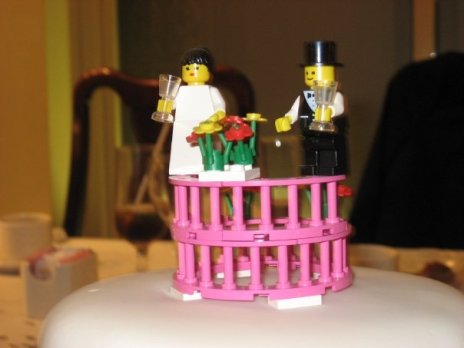
sugarlego

RECORD STORE TALES MkII: Getting More Tale
#428: Seven Years Ago Today…

Happy Anniversary to the lovely Mrs. LeBrain, who is still putting up with my shit today!

For seven whole years now, she’s been trying to convince me that I’m a snorer. I kept telling her, “Video, or it didn’t happen.” Even though she told me I can shake the windows, I refused to believe.

Until today.

Sausagefester Sebastien Xavier Meunier has provided the video proof above, recorded this year at Sausagefest 2015. That is my tent. And that, apparently, is my snore.

I love you Mrs. LeBrain. I won’t ever doubt you again.  Today, you win!

REVIEW: AC/DC – Rare…Rarer…Rarities (bootleg)

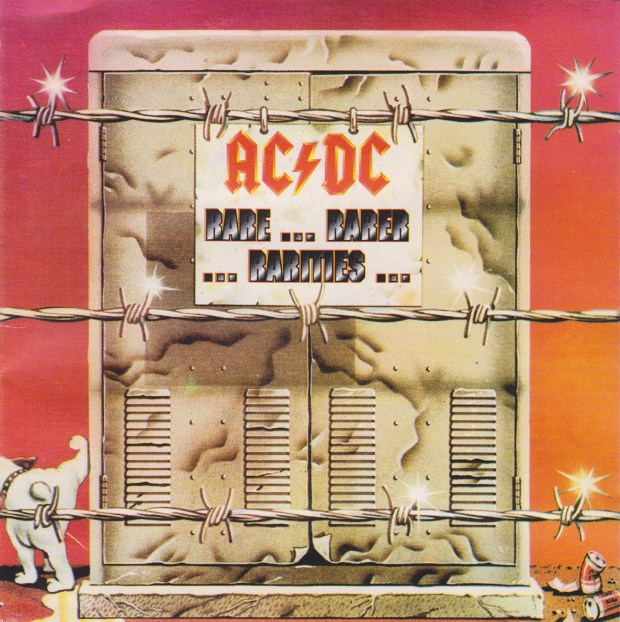
Scan_20150818AC/DC – Rare…Rarer…Rarities (Flight records bootleg CD, year unknown)

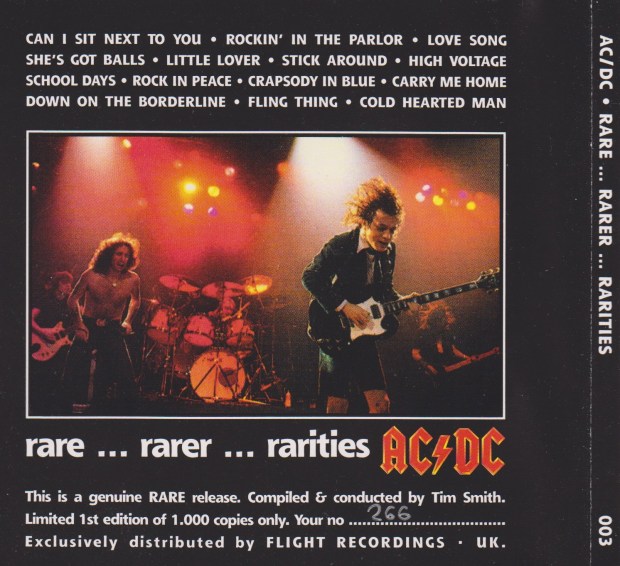
Rare…Rarer…Rarities, huh?  Indeed, this is a bootleg CD that includes rarities that most fans don’t have on an official release.  The pretty comprehensive Backtracks box set, which came out later, covers most of these songs…but not all.

Most of these tracks are either single B-sides or songs that were exclusively released on the Australian versions of albums.  Until Backtracks came out, those songs were very hard to find in North America.  The only one I had was “Rock in Peace”, from Dirty Deeds Done Dirt Cheap.  I couldn’t believe my luck in scoring the Australian CD of that album.

There are, however, two songs that none of us are likely to ever own an original physical copy of.  These two tracks alone make the bootleg CD purchase worth considering, since they are AC/DC’s first single from 1974, featuring original singer Dave Evans.  Most fans have never heard anything with Dave Evans singing.  These are ripped from an original 7″ single.

“Can I Sit Next to You Girl” is a song every AC/DC fan knows, because this golden oldie was re-recorded on T.N.T. (1975).  Bon Scott’s cheeky delivery made all the difference in the world.  Dave Evans is just some guy, asking to sit next to you.  Bon was Bon fucking Scott asking to sit next to you…who do you think gets the girl?  This early single was issued in the summer of ’74, and it has a completely different, much more laid back intro.  It’s not nearly as heavy as it would later become.  Evans does have a fine vibrato, I must say!

Every single has a B-side, and “Rockin’ in the Parlour” was AC/DC’s first.  It’s much more “rock and roll” than you expect from AC/DC, but it’s catchy and melodic.  Angus and Malcolm have yet to fully develop their styles, but you can certainly tell its them.  You can hear for yourself, that Dave Evans was not the lyricist that Bon Scott was.  “She said, ‘I got some booze, around at my place, so come along and have some fun!'”  Sorry Dave, but that just won’t cut it when the band is AC fucking DC.

The rest of these songs are all in print today, so they can be acquired on official AC/DC releases.  “Love Song” (High Voltage) shocked me on the first number of listens.  Is this AC/DC’s one and only ballad?  I guess so!  “Oh Jean, Oh Jean!” sings Bon, seemingly heart broken.  Once you get used to it, and accept the fact that there are no other AC/DC songs that sound anything like it, you might enjoy it.  I know that I do, from time to time.

I’m not sure what makes “She’s Got Balls” and “Little Lover” qualify as rarities.  As far as I can tell these are the album versions.  Next!  “Stick Around” (High Voltage) is a cool tune, a laid-back AC/DC rocker with lots of space between the instruments.  You can hear the air sizzle!  The riff is about as simple as it gets: two chords.  But they are the right chords!  “High Voltage” is slightly longer than the album version, and this is also on Backtracks.

“School Days” is a Chuck Berry cover, one of very few covers AC/DC recorded.  Chuck Berry is the prototype of AC/DC anyway, so this version fits like a glove.  Hail hail rock and roll, indeed!  This was originally on T.N.T., but you can get it on the Bonfire box set too.  The aforementioned “Rock in Peace” is a shorty, heavy with that AC/DC stomp and the same damn riff they’ve been playing for 40 years.

AC/DC have always had tongue firmly in cheek, but “Crabsody in Blue” is probably the jokiest song they ever recorded.  A slow blues similar to “Ride On” deserves to have some down-and-out lyrics. Bon takes that to a descriptive extreme!

“Oh, and when they start to bite,
Then it’s time you saw the light,
For an appointment.
Before you start to scream,
That’s when you apply the cream,
Blues ointment.”

Only Bon Scott can really write a lyric about venereal disease. Nobody else seems quite as qualified.

“Carry Me Home” was the heavy and instantly likeable B-side to “Dog Eat Dog” (1977).  Using his speaking voice to full effect, Bon proves to me why he is one of rock’s all time greatest frontman.  His animated vocal performance here is something that very few singers can pull off.  (Ian Gillan is one such singer — think “No Laughing in Heaven”.)  Then, “Down on the Borderline” is Brian Johnson’s only showing on this CD.   This was the B-side from “Moneytalks” (The Razors Edge), but it sounds little like that album.  Sonically and vocally, it resembles Blow Up Your Video, right down to the muddy finish.  I have no doubt it was recorded for that album.

“Fling Thing” is AC/DC’s take on “The Bonnie Banks o’ Loch Lomond”, which they cheekily credited to Young/Young! It sounds like quite a party was going on during the recording, which falls apart after a mere two minutes! This was originally the B-side to “Jailbreak”. The final song is “Cold Hearted Man”, which was recently dusted off for the Iron Man 2 soundtrack album.  It was on Powerage (1978) first, and a dark prowler it is.

A lot of people like to joke that all of AC/DC’s songs sound the exactly the same.  This CD of also-ran’s has proven otherwise, and “Cold Hearted Man” is a perfect closer for a solid collection of rock.

3.5/5 stars

Scan_20150818 (2)