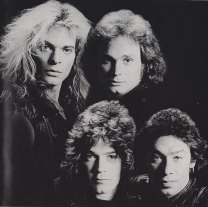
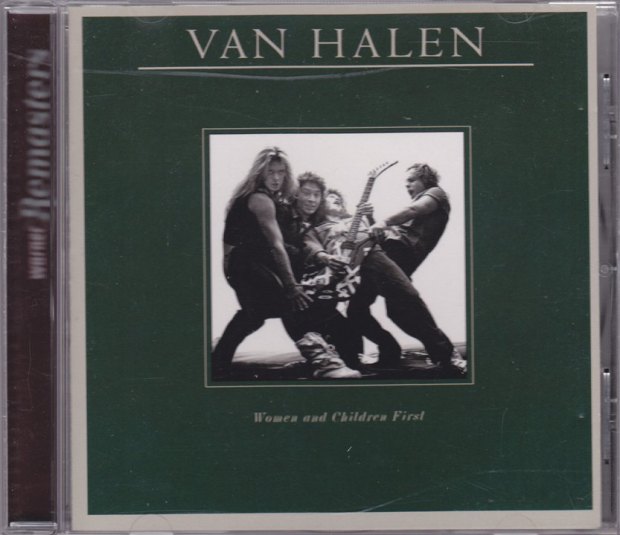
REVIEW: Van Halen – Diver Down (1982)

VAN HALEN (Not Van Hagar!) Part 6: Intruder

My latest series of reviews at mikeladano.com is an in-depth look at all the classic VAN HALEN albums, with David Lee Roth.  Dig in!

Part 1: The Early Years (Zero – 1977)
Part 2:
On Fire (Van Halen – 1978)
Part 3: Somebody Get Me A Doctor (Van Halen II – 1979)
Part 4: Everybody Wants Some!! (Women and Children First – 1980)
Part 5: Push Comes to Shove (Fair Warning – 1981)

VAN HALEN – Diver Down (1982 Warner)

Of all the classic Van Halen discs in the canon, I find Diver Down hardest to review.  After the pugnaciously perfect Fair Warning, the band really started battling over direction.  Deciding to try for some hits rather than continue experimenting musically, Van Halen turned in the 31 minute Diver Down, a collection of covers, instrumentals and joke tunes with only a couple of serious rockers.  Yet every time I listen to it, don’t I absolutely enjoy Diver Down?

To my ears, Diver Down sounds like an intentional return to the party rock sounds that launched Van Halen in the first place.  It certainly does not sound like an album that should follow Fair Warning.  Now, we’re back into covers:  The Kinks’ “Where Have All the Good Times Gone!” opens the record.  Eddie pointed out that the song and album are loaded with errors.  He misses some harmonics in “Where Have All the Good Times Gone!”…and it’s fucking perfect.  There’s nothing wrong with Van Halen showing up to play a drunken party again in the old neighborhood, is there?  Even if they’re the big kids now?

“Hang ‘Em High” was an older song that the band exhumed for Diver Down.  It immediately evokes the heavier material from some of the earlier records.  Only now, Van Halen had learned to work in a recording studio and were taking advantage of some of the tricks they had picked up over the years.  Eddie’s extended solo sounds spontaneous and live.

“Cathedral” is a trick of guitar volume swells.  By physically manipulating the volume knob on his guitar, Eddie created a sound that reminded him of a church organ.  Tonally it resembles where Van Halen would go on the next album.  This is just an intro (a beautiful one at that) to “Secrets”, a laid-back original.  “Secrets” has vibe, and this is as good a time as any to point out the ace rhythm section of Alex Van Halen and Michael Anthony.  These guys were a big part of the overall Van Halen sound.

By 1982, David Lee Roth was starting to become interested in the new medium that was music video.  He directed the concept video for “(Oh) Pretty Woman”, a Roy Orbison cover.  Dave’s classic ingredients were all there:  a cavalcade of characters, little people, and a joke-a-minute style of cool.  The video however ran too long once edited together.  The song was not even three minutes long, and Dave didn’t want to make further cuts.  Instead he played synthesizer, while Eddie made guitar noises with a beer can on the neck, and they called that “Intruder”.

“Pretty Woman” features the biggest mistake on the entire album (which is just loaded with ’em, just listen).  Where Roy Orbison sang this:

“‘Cause I need you, I’ll treat you right,”
Come with me baby, be mine tonight.”

Roth unwittingly sang just this:

“‘Cause I need you, need you tonight…”

VH DD_0002Side Two commenced with yet another cover.  David Lee Roth really wanted to do “Dancing in the Street”, but Eddie wasn’t into it.  Eddie already had a unique synthesizer part he was working on for his own song, and Roth suggested they use it for “Dancing in the Street”, which they did.  If there was one song I’d skip on Diver Down, it would be this one.  It does get a fair bit of radio play, though.

“Little Guitars” (and the intro that precedes it) is a bonafide Van Halen classic.  Eddie was intrigued by flamenco guitar but couldn’t get the fingerpicking.  Instead he used his own tricks (and a pick) to make it sound similar to what the flamenco players were doing.  The song itself is a sassy mid-tempo rocker with a shiny melody.  Once again the classic ‘Halen harmonies are to thank.

VH DD_0003There are two schools of thought on “Big Bad Bill (Is Sweet William Now)”.  One is that it’s a joke cover tune that shouldn’t have been on an album.  Another is that while the song is humorous, it is also very special.  This is a song from 1924 that Roth had discovered on the radio.  Then, Dave suggested that they invite Jan Van Halen, the father of Eddie and Alex, into the studio to play clarinet.  I get chills up my spine listening to Jan’s lyrical playing.  Alex is playing with brushes, the others are on acoustics, and Dave is absolutely at home.  This song is quintessential Dave Lee Roth, and conjures up that ol’ timey Al Jolson sound.

Dave plays the acoustic intro to “The Full Bug”, and then Eddie kicks in with that riff.  Alex and Michael create that classic Van Halen shuffle as the band careens to the end of the record.  Roth throws down a ballsy harmonica.  This track could also be considered a bonafide Van Halen keeper.

Concluding with “Happy Trails” is only logical.  The boys sound absolutely blitzed as they drunkenly sing acappella, before they all crack up at the end.  Diver Down, undoubtedly a party rock album, is over.

While Diver Down is still fun to listen to, it seems like a blip in the overall Van Halen trajectory.  It’s clear that it is not as innovative as some albums previous, nor does it rock as heavy.  Yet, it’s likable.  It still sounds great in the summertime.  As Craig Fee pointed out, “I still think DLR’s version of ‘Where Have All The Good Times Gone?’ is way better than the original.  For every shitty cover (‘(Oh) Pretty Woman’ comes to mind), you have original gems like ‘Little Guitars’ to make up for it.”

But how the hell do I rate it?

4/5 stars (?)

VH DD_0005


REVIEW: Van Halen – Fair Warning (1981)

VAN HALEN (Not Van Hagar!) Part 5: Push Comes to Shove

My latest series of reviews at mikeladano.com is an in-depth look at all the classic VAN HALEN albums, with David Lee Roth.  Dig in!

Part 1: The Early Years (Zero – 1977)
Part 2:
On Fire (Van Halen – 1978)
Part 3: Somebody Get Me A Doctor (Van Halen II – 1979)
Part 4: Everybody Wants Some!! (Women and Children First – 1980)

VAN HALEN – Fair Warning (1981 Warner)

If Women and Children First was the point where the party got dark and a little ugly, then Fair Warning is the hangover.  It was also the point where, according to Edward Van Halen, the band started butting heads.  Eddie was interested in pushing his guitar, and himself, to new limits.  Other influences were more interested in the band continuing to create hits.  The conflict seeps through the grooves of what might be called an angry hard rock album.

A year prior, the band had planned on opening album #4 with “Growth”, a riff that was to continue on from the outro to Women and Children First.  That concept was abandoned in favor of a bold move: inaugurating the album with a funky guitar solo piece.  Edward tried slapping the strings like a bass player would for the unique intro to “Mean Street”; then this changes to his patented tapping technique.  There is only one guitar player who naturally sounds like this, and that’s Eddie.  Then it’s off to “Mean Street”, a chugging rocker with Roth offering us an ominous warning:

See, a gun is real easy on this desperate side of town,
Turns you from hunted into hunter, Go and hunt somebody down.
Wait a minute, somebody said “Fair Warning, Lord!”
Lord, strike that poor boy down!

What a killer opener to a killer album.  Now you know what you’re up against.  Van Halen, as heavy as ever, give no quarter on Fair Warning.  Maybe that’s why it is such a fan favourite today.

“‘Dirty Movies'” turns in some more stunningly original fretwork.  This dark rocker has a catchy chorus and more wickedly cool Roth lyrics.  Mike and Alex lay back and let the song breathe.  Another classic, “Sinner’s Swing!” doesn’t let up.  The Van Halen harmonies are intact, and this is the first upbeat track of the album.  Saving the best for last, “Hear About It Later” closes Side One.  This is one of my all-time favourite Van Halen tracks.  It captures all the classic ingredients:  innovative guitar, a smokin’ riff, a great chorus with the VH harmonies, and a whole lot of that Roth attitude.

VH FW_0004


It’s hard to follow a track like that, unless it’s “Unchained” doing the following.  Side Two’s classic opener kicks your ass, my ass, and any asses left in the room.  Edward puts the flanger on overdrive for that killer riff.  Roth throws down one of his classic spoken word breaks in the middle:  “Hey hey hey hey!  One break, comin’ up…”

“Unchained” is one of the most important Van Halen tracks in the canon.  Some would consider it a peak for this band, and I think that theory holds water.  It’s definitely a high water mark, a flawless combination of all the crucial components.  “Unchained” is a memorable classic on an album that, at times, can be more difficult to penetrate on first listen.

One of Fair Warning‘s hidden gems is “Push Comes To Shove”.  It features a slow disco beat and a funky, slippery bass intro.  Eddie’s innovative guitar work is a highlight, but the song is soaked with a cool whiskey-stained vibe.  Roth would later explore similar territory on his solo track “Ladies Night in Buffalo?”

“So This Is Love?” was, like “Unchained”, chosen as a single.  It has a cool walking bass line by Michael Anthony, something I associate with early Van Halen quite a lot.  The track is upbeat and irresistible.   It’s a mere reprieve though before “Sunday Afternoon in the Park”.  This forboding experimental synthesizer piece acts as an intro to the final song, “One Foot Out the Door”, but the two parts are actually equal in length (just under two minutes each).  You can hear the foreshadowing of what would come later on the 1984 album.  The synthesizer merges with the whole band on “One Foot Out the Door” which is as heavy as synth-based rock can get.  It’s a smoking track regardless of what instruments are playing it.  Fear not, Eddie throws in an amazing extended guitar solo with which he closes the song, and album.

Of note is the cover art, a painting called The Maze by William Kurelek.  It depicts childhood bullying, and reflects the some of the darker tones inside.  Van Halen were changing, and their album artwork alluded to this.

Fair Warning did not sell as well as Women and Chidren First, though it is equal to and arguably superior in quality.  The downturn in sales influenced the direction of the next album, which would appear one year later.

5/5 stars

REVIEW: Van Halen – Women and Children First (1980)

VAN HALEN (Not Van Hagar!) Part 4: Everybody Wants Some!!

My latest series of reviews at mikeladano.com is an in-depth look at all the classic VAN HALEN albums, with David Lee Roth.  Dig in!

Part 1: The Early Years (Zero – 1977)
Part 2:
On Fire (Van Halen – 1978)
Part 3: Somebody Get Me A Doctor (Van Halen II – 1979)

VH WACF_0001VAN HALEN – Women And Children First (1980 Warner)

Three albums in, Van Halen started to stretch their wings.

The band were selling millions of records and touring was strong.  Eddie’s desire to grow as an artist began to stir, slightly.  The signs were beginning to show on Women And Children First, Van Halen’s first album of the 1980’s.  With producer Ted Templeman still in tow, Van Halen went heavier, and darker.

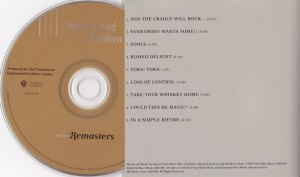
Eddie’s flanged guitar opens the record with “And the Cradle Will Rock…”, a song which should make virtually any Van Halen road tape.  For the first time, you can discern keyboards, accompanying Eddie’s guitar.  For the first time, there are multi-tracked guitars used to great effect.  Eddie coaxes different tones for different sections from his instrument, and experiments with the stereo field.  Not to be outshone is frontman David Lee Roth, with his menacing howls and hip lyrics.

“Everybody Wants Some!!” is just as adventurous.  It opens with over a minute of drums and guitars, with Roth making jungle sounds and welcoming us inside.  Again, Van Halen uses multiple tracks and his guitar in innovative ways to paint an aural picture.  Once the song kicks in, it’s off to the races.   Roth’s as sassy as ever, the best party frontman in any rock band in the country.  His squeals and shrieks are as important (if not more) than the lyrics he’s singing.  It’s more about the sounds and the images they evoke, but everyone’s invited:

Everybody wants some!
I want some too, whoa
Everybody wants some!
Baby how ’bout you? Yeah

Some bluesy bends intro the 6-minute “Fools”, a rare long bomber for this band.  Much of it is intro, a treat of Van Halen’s fingers on the fretboard, before the main riff kicks in at 1:20.  The band lock into a heavy groove, and Roth turns in another cool lyric: “Why behave in public if you’re livin’ on a playground?”  The harmony vocals of Michael Anthony and Edward himself seal the deal, as they take center stage on the chorus.  Roth’s scat outro reveals influences far deeper than rock and roll.

“Romeo Delight” concludes Side One with a racing guitar riff and a cool vibe.  It takes a frontman like Roth to hold his own in a song like this against a player like Edward, and he does.  He’s the ringleader of this party and he makes sure you don’t forget it.  Each “yeeah!” and “hey!” is placed with precision.

VH WACF_0005

You just gotta take a breath after a song like that.  It’s a good time to flip the record, and Side Two opens with a guitar intro called “Tora! Tora!”.  God knows how he’s tormenting that instrument to make the sounds he does.  Roth’s shrieks introduce “Loss of Control”, Van Halen’s fastest boogie.  I wouldn’t advise trying to dance to this one, and headbanging could induce damage to the neck.  Eddie’s solo is another stunner, but equally impressive are all the fills, licks and sounds through the whole song.

Acoustic picking introduces “Take Your Whiskey Home”, as Van Halen get swampy.  Roth nails that bluesy vibe, but it’s just a fake-out.  Van Halen really seem to like to switch gears, and when this sucker goes electric, hang on.  The riff is menacing and Dave’s lyrics are some of his best.  He’s always had a way with words and this is a great early example of Dave’s type of poetry:

Some goes to women, some goes to Jesus,
though I’m absolutely certain both’s all right.
But it takes me at least halfway to the label
‘fore I can even make it through the night.

The acoustic guitars are back out for “Could This Be Magic?”  Yes, it certainly is magic.  Van Halen capture an earlier era, one of simpler scratchy recordings. You can even hear the rain, which was recorded and added to the track.  Nicolette Larson sings backing vocals on the chorus, but this sounds like a drunken party.  It’s the best singalong you’ve never been invited to, and the vibe is killer.

“In A Simple Rhyme” is an upbeat closer.  Women and Children First is a varied ride; it is the point in the party when people start getting a bit drunk and crazy and things look like they could get out of control.  “In A Simple Rhyme” is melodic like Van Halen hits past, with a singable chorus and classic ‘Halen harmonies.  But wait…this is not the end!  Utilizing the concept of the hidden track, an unlisted instrumental is the coda.  The doomy riff, called “Growth” was one that Van Halen had played around with, and planned to use again to open their fourth album.  Perhaps the name “Growth” indicated where Eddie planned to take the band in the future.

Women And Children First represents growth and…”maturity” is not the word.  Perhaps the start of a new world-weary wisdom is evident here.  Whatever the case, the success of this album assured Van Halen that they would be able to carry out the sonic experiments they desired.

5/5 stars

REVIEW: Van Halen – Van Halen II (1979)

VAN HALEN (Not Van Hagar!) Part 3: Somebody Get Me A Doctor

My latest series of reviews at mikeladano.com is an in-depth look at all the classic VAN HALEN albums, with David Lee Roth.  Dig in!

Part 1: The Early Years (Zero – 1977)
Part 2: On Fire (Van Halen – 1978)

VAN HALEN – Van Halen II (1979 Warner)

The 1970’s were much kinder to rock bands than the present.  A debut album charting at #18 was considered a great start back then.  Today, that is no guarantee.  Van Halen II went to #6, and was recorded in only three weeks.  Imagine that today, when four to five year gaps between albums is the norm!

Edward Van Halen is said to be not-so-fond of Van Halen II, where Michael Anthony felt II had stronger songs than I.  The two albums are very similar sonically, although this time Edward was allowed to do more guitar overdubs.  On “Dance the Night Away” you can hear some melody guitar playing over the rhythm, but most of the guitars are still panned hard to the left.

“Dance the Night Away” is one of the brightest stars on Van Halen II.  Its catchy melodies recall some of the more pop material on the first album, such as “Jamie’s Cryin'”  It is sandwiched between “You’re No Good” (the album opener) and “Somebody Get Me A Doctor”, this writer’s favourite track.  “Doctor” is smokin’ and heavy, Roth shrieking about needing ambulances.  Edward’s riff is one of his more legendary.  Riffs like these helped establish Edward as more than just a soloist and player, but also a rock-solid writer.  “You’re No Good” is dark and ominous, reminiscent of “Little Dreamer” from album #1, even though it is actually a cover of a 1960’s easy listening hit.

“Bottom’s Up!” demonstrates Van Halen’s ability to write killer party rock.  It’s hard to resist singing along to the drunken, live sounding group vocal section in the middle.  Edward plays a sexy solo in the right channel while the rhythm remains on the left.  “Outta Love Again” features a stuttery rhythm and some of those patented Roth shrieks, and it closes Side One.

“Light Up the Sky” is as electric as the title implies.  It opens Side Two with an ascending lick and chugging riff, fully in metal territory.  Edward’s solo is one of the album’s highlights.  “Spanish Fly”, the album instrumental, features Eddie fingerpicking on a nylon string guitar.  Regardless, there is no mistaking the artist behind the instrument, as all the technique is there.  The segue leads into the riffy “D.O.A.”.  “D.O.A.” remains a classic Van Halen song, very much an example of their early sounds.

“Women in Love…” is a mid-tempo song, with a stunningly shimmery tapped intro by Eddie.  It one one of Van Halen’s catchiest choruses.  As important as the guitar is to Van Halen’s sound, so too are the backing harmonies.  Finally the album concludes with “Beautiful Girls” which is considered to be another Van Halen party classic.

The songs on Van Halen II are not as well known as those on Van Halen, but there is very little difference in quality.  Van Halen II is probably less stunning simply because it came second.  It’s hard to jump so quickly into a second album and make jaws drop exactly the same way.

There would be no reprieve.  After a tour, and almost exactly one year later, Van Halen would release their third album in as many years.

4.5/5 stars

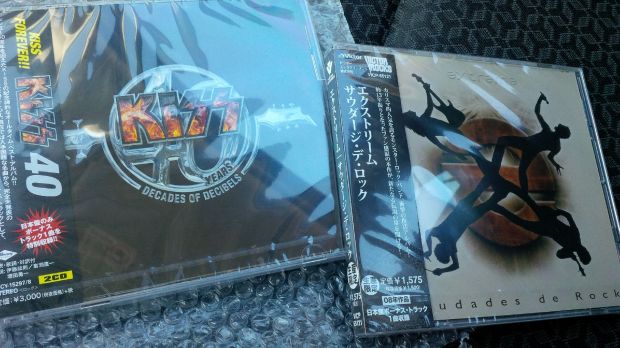
NEW ARRIVALS! KISS 40 & Extreme’s Saudades de Rock Japanese imports!

Bonus tracks:

  • KISS 40 – “Hell Or Hallelujah” – Live in Japan 2013 (Previously unreleased)
  • Saudades de Rock – “Mr. Bates” – 1986 Demo (Previously unreleased)

IMG_20140607_100448

REVIEW: Van Halen – Van Halen (1978)

VAN HALEN (Not Van Hagar!) Part 2: On Fire

My latest series of reviews at mikeladano.com is an in-depth look at all the classic VAN HALEN albums, with David Lee Roth.  Jump in!

Part 1: The Early Years (Zero – 1977)

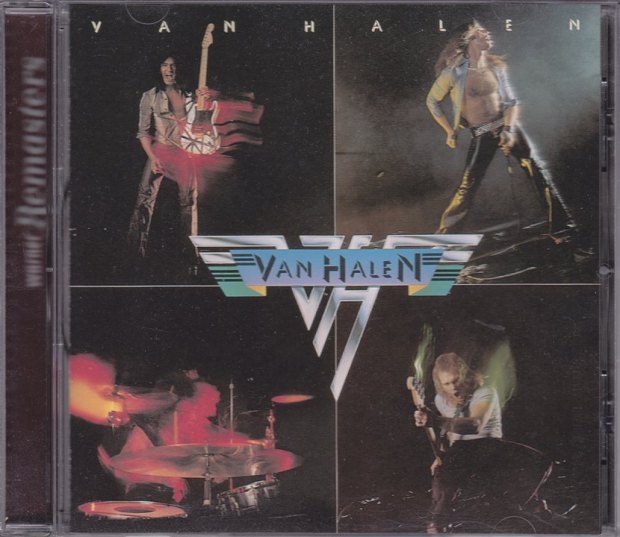
VH_0001VAN HALEN – Van Halen (1978 Warner)

Then, the inevitable happened:  Van Halen signed with Warner Brothers in 1977, and went into the recording studio with Ted Templeman.  The producer, probably best known for his work with the Doobie Brothers (though he did have a Captain Beefheart record under his belt), helped hone Van Halen’s sound to a razor-sharp edge.  The relationship was to be a long and fruitful one.  Templeman was responsible for every classic Van Halen album, before helming David Lee Roth’s Eat ‘Em and Smile in 1986.  Templeman even returned to co-produce the Van Hagar album For Unlawful Carnal Knowledge.  One might venture that the producer had a huge impact on the overall sound of early Van Halen.

Their first collaboration was released in February 1978.  Van Halen.  When my dad first heard the name, he responded, “Van Halen? Sounds like some kind of tropical disease.”  But they had built an audience playing legendary gigs at Gazzarri’s in West Hollywood, and with the help of a 1978 tour they propelled the album to #18 in the US.  Not bad for a rock band in the middle of punk.

It’s impossible to talk about the songs without talking about the players.   Edward Van Halen’s guitar work here set a very high bar, even for himself.  His biggest complaint about the guitar on Van Halen is that it is mixed hard to the left channel.  This old fashioned recording technique failed to create the beefy sound Van Halen had heard in his head.  As he put it himself, if you were in a car with the left speaker blown, you wouldn’t hear any guitar, only its faint shadow on the right.

Van Halen may not have introduced techniques such as tapping,  pick slides, pinch harmonics, and whammy bar dives but he did use them in new, in-your-face ways.  He turned these simple tricks into music, and on Van Halen, he did it mostly without overdubs.  Much of the album consists of a single track of guitar.  Templeman was trying to capture their live sound, but Edward would later get his way when it came to the guitar.

David Lee Roth was the most exciting rock frontman of the era, in this writer’s opinion, and he managed to bring that to vinyl.  He’s raw, menacing, and cool.  Every shriek, every sigh, every squeal is scientifically designed for maximum impact at the exact right moment.  Meanwhile, Michael Anthony’s backing vocals helped create that “Van Halen sound” — hard rock with harmonies.  Like only a few others (Hendrix for example), Van Halen managed to extend their own sound into the covers they did, to the point that their cover versions are as well known as the originals.  “You Really Got Me” (The Kinks) is an apt example.

It is not difficult to argue that every song on Van Halen, from the originals to the covers to the 1:45 guitar solo, is classic.  There is not much more to be said about these tracks.  They had been stewing in Edward’s head and fingers for years, and had acquired a deadly tightness.  Side One is one of the heaviest sides of rock and roll in the 1970’s.  From the slow burnin’ “Runnin’ With the Devil” to the explosive “I’m the One”, the first side is non-stop smoke.  Putting a guitar solo as track #2 might be suicide for some records, but on Van Halen, “Eruption” only serves to whet the appetite for more.

“Ain’t Talkin’ ‘Bout Love” is menacing, ominous, forboding, and heavy.  Roth’s banshee wails are unholy enough to frighten wild beasts.  For songwriting, “Ain’t Talkin’ ‘Bout Love” is a highpoint of Van Halen’s entire canon.  They continued to play it live with Sammy Hagar on the 5150 tour.

VH_0002Side Two lets up a bit and introduces Roth’s early pop tendencies with “Jamie’s Cryin'”.  Edward’s inimitable riff was later sampled by Tone Lōc for his hit “Wild Thing”, introducing Van Halen to yet another new audience.  The reprieve is brief; next is a stampede from the “Atomic Punk”.  Although the guitar work is miles above and beyond any punk band, the loud spirit is there and menacing as any other.  Switching gears yet again, “Feel Your Love Tonight” is catchy and danceable.  The harmonies of Michael Anthony and the Van Halen brothers make the chorus something special, and Eddie’s guitar solo throws in lots of those signature licks that you know and love.  “Little Dreamer” is darker, another side that Van Halen does very well.  Roth and Edward gel together to paint an aural picture, while Michael and Alex stay out of the way.

David Lee Roth plays the acoustic guitar on “Ice Cream Man”, a blues song by John Brim dating back to 1953.  Brim never could have envisioned where Van Halen take the song after the first minute.  The space-age guitar solos would have been unimaginable to a bluesman of the 1950’s.  What Edward did with the blues on “Ice Cream Man” can only be described as completely original.  And let’s not forget about David Lee Roth!  “Guarantee-ee-ee-ee-ee-eed…to satis-a-fy!”

Finally, “On Fire” (which opened the Gene Simmons-produced Zero demo) closes this rollercoaster album.  Pure heavy metal with burning fretwork is an apt description.  Roth has mentioned in the past Van Halen’s early Black Sabbath influences.  Here, Van Halen anticipate where Black Sabbath would go with Ian Gillan on Born Again.

Even their logo was bad ass.  Van Halen has it all.

5/5 stars

As great as Van Halen still is today, and as highly as I rated it…the best was still yet to come.

REVIEW: Van Halen – Zero (1976)

VAN HALEN (Not Van Hagar!) Part 1: The Early Years

Time for the newest series of reviews at mikeladano.com!  I hinted at this one a while ago.  It’s time to take an in-depth look at all the classic VAN HALEN albums, with David Lee Roth.  We’ll go from the very beginning to 1984.  But don’t fear – I’ve already reviewed most of the Van Hagar discography.  See below for a list of other Van Halen reviews.

VAN HALEN – 3 (Collectors’ tin 1998)
VAN HALEN – 5150 (1986 Warner Bros.)
VAN HALEN – A Different Kind of Truth (2012)
VAN HALEN – Balance (1995 Warner – Japanese version included)
VAN HALEN – “Best of Both Worlds” (1986 Warner 7″ single)
VAN HALEN – The Best of Both Worlds (2005 Warner)
VAN HALEN – “Can’t Stop Loving You” (Parts 1 & 2, inc. collector’s tin)
VAN HALEN – “Right Now”(1992 cassette single, Warner)
BRIAN MAY & FRIENDS – Star Fleet Project (w/ Edward Van Halen)

Alright!  Let’s rock!

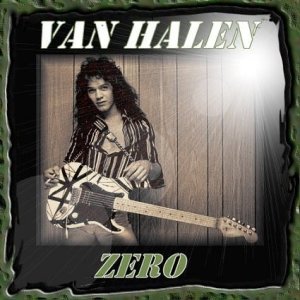
ZEROVAN HALEN – Zero (1976 Gene Simmons demos)

Van Halen: unquestionably one of the most influential hard rock bands of all time. By the mid-1980’s, every band had to have a “hot shot gun slinger” guitar player; such was the impact of Eddie’s innovative fretwork. David Lee Roth set the frontman bar extraordinarily high. Where Ozzy Osbourne, Robert Plant and Freddie Mercury had mastered the art of driving a crowd wild, David Lee Roth took it airborne.

Van Halen formed in 1972, and released their debut album in 1978. Originally known as Genesis and then Mammoth, the original lineup featured Eddie and Alex Van Halen, plus bassist Mark Stone. By 1974 they had replaced Stone with Michael Anthony, and added the flamboyant frontman Roth. This legendary lineup would go on to record several landmark demos, many of which would be re-recorded later. Some songs appeared on the first few Van Halen records. Some wouldn’t appear on album until 1984 and A Different Kind of Truth (2012).

Famously, Van Halen hooked up with Gene Simmons to record a 10-song demo. Simmons wished the band to change their name to “Daddy Longlegs”, and we should be grateful that this never occurred. The Simmons partnership was shortlived. According to Simmons in a 1988 MuchMusic interview, record label heads thought David Lee Roth looked too much like Jim Dandy from Black Oak Arkansas. Simmons also claimed that labels “didn’t get” why there was no backing guitar when Eddie took a solo. Unable to land Van Halen a deal, Simmons tore up the contract he had with the band.

Other fruit from this period included three Kiss demos, still unreleased to this day. Eddie and Alex Van Halen played on Gene’s demos for “Have Love Will Travel” (aka “Got Love For Sale”), “Christine Sixteen”, and “Tunnel of Love”. These songs were demoed for Love Gun, but “Tunnel of Love” would not be released until Gene’s 1978 solo album, in re-recorded form. These songs are considered a holy grail for Van Halen and Kiss fans alike, and to my knowledge they have never been bootlegged.

One demo that has been heavily bootlegged are the 10 songs Van Halen recorded with Simmons in LA and New York, referred to as the “Zero” demo. It has never been officially released anywhere. Fans hope that one day it will be released in a Van Halen box set of some kind. In the meantime, we have low-quality bootlegs to study and enjoy.

Even then, Van Halen were writing monstrous riffs and hooky songs. The talent of Eddie Van Halen was already apparent, but the full thunderous pyrotechnic sounds of the debut album were not yet there.  “On Fire”, for example, is 90% intact but the guitar solos are tentative and yet to achieve the heights on record.

“Let’s Get Rockin’” was re-written on A Different Kind of Truth as “Outta Space”. “She’s the Woman” was also partially re-written for that album. The riff from “Put Out the Lights” was re-used on “Beats Workin’”. “Big Trouble” became “Big River”, an amazing song.  Interestingly, the intro to “Running With the Devil” was originally the outro to “House of Pain”, which preceded it!

Clearly, Van Halen were writing great material from the early days, since nearly every idea from this demo was used on an album, sooner or later. “Babe, Don’t Leave Me Alone” is the only song that I don’t recognize from an album, but that doesn’t make it a bad song. Perhaps Van Halen will finally finish it for the next album.  “Woman in Love” barely resembles “Women in Love” from Van Halen II, only in superficial ways.

The Zero demo is one of those unreleased hard rock cornerstones. Like a fountain it never seems to stop giving. These songs were played live many times by the band before Simmons recorded them, and they are tight. Roth’s voice is high, youthful and powerful. If anything, the band sounded a little generic. It would take Ted Templeman and the debut record for Van Halen to find their own unique sonic niche.

4/5 stars

ZERO 2

Part 1: The Early Years (Zero – 1977) VH_0003
Part 2:
On Fire (Van Halen – 1978)
Part 3: Somebody Get Me A Doctor (Van Halen II – 1979)
Part 4: Everybody Wants Some!! (Women and Children First – 1980)
Part 5: Push Comes to Shove (Fair Warning – 1981)
Part 6: Intruder (Diver Down – 1982)
Part 7: House of Pain (1984 – 1984)
Coda: Can’t Get This Stuff No More (Best Of Volume I – 1996)

Part 297: “The World Must Change”

EARTH

RECORD STORE TALES Part 297: “The World Must Change”

1997. A middle-aged mustached gentleman walked into my store with Eric Clapton’s latest single, “Change the World”.

“Hi,” he said. “I bought this at HMV, but it’s not what I wanted. I’m looking for a song, I think it’s called “The World Must Change”. Do you know it?

I searched my memory for a bit but drew a blank.

“I heard it on the radio. It’s a real hard-driving song,” he said, “and I could swear in the lyrics, he was singing ‘the world must change’. I told the girl at HMV and she said it was Eric Clapton. She sold me this, and it’s definitely not the right song.”

If he told the girl at HMV that it was a “hard-driving” song, I don’t know how she came up with “Change the World”, unless she’d never heard “Change the World” before. It is anything but hard-driving.

The fellow searched my rock section for pretty much any CD that look like it had songs about changing the world, and listened to a number of them, but came out blank.

A Google search today reveals little, aside from a George Benson song called “Everything Must Change”, but that is even further away from “hard-driving” than the Clapton track.

He ended up selling his Clapton single to me for $2, because HMV wouldn’t take it back once opened. It was a huge drop from the $9.99 sticker price, and he wasn’t happy, but $2 was pretty much top dollar for us to buy CD singles at the time (unless you had something rare, like an old Metallica single). I felt genuinely bad that I couldn’t find that song for him. I suggested he call the radio station on which he heard the track.

Now today, I appeal to the Internets at large:  Any ideas what song it could have been? Post a comment!

GALLERY: Deep Purple – Made In Japan Super Deluxe unboxing

Thanks to Amazon, this arrived today.  Only a week late, but for free shipping I won’t complain too much.  When a parcel comes packaged inside not one but two boxes, you know it’s big.  And this sucker is heavy.  5 discs, with two huge books inside.  I can’t wait to dig in.

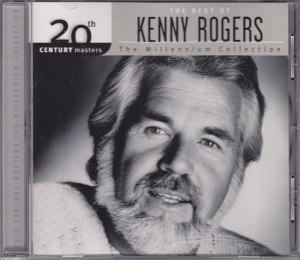
REVIEW: Kenny Rogers – 20th Century Masters – The Millennium Collection

KENNY_0001KENNY ROGERS – 20th Century Masters – The Millennium Collection (2004 Universal)

A CD like this, at this price point (generally around 5 bucks) is perfect for the non-fan like me.

I’ve always liked Kenny’s songs, but I was not a fan. My mom bought me a copy of The Gambler when I was a kid (well, it was for my grandpa but he already had it, so she let me have it). I only listened to the title track. I like a handful of Kenny Rogers songs, the rest I find too sappy. So this CD is perfect for me. It’s all the Kenny I need.

I can only review this CD based on my own likes and dislikes, and stuff like “Crazy In Love” is just too sappy. But “Lady” is cool, it has some drama to it. It’ll never make it to one of my road trip CDs, but it’s cool. “She Believes In Me” is another softy, but there’s something schlocky about it that I enjoy.  Let’s be honest, I bought this CD for “The Gambler”, “Ruby”, “Lucille”, “Reuben James” and one of the greatest psychedelic funk rock songs ever written, “Just Dropped In (To See What Condition My Condition Was In)”. They wisely sequenced the CD with this song last. Saving the best for last!

As with all 20th Century Masters CDs, there are some brief liner notes for the unitiated, and a brief running time. Good enough for me. I’m given to understand that “Someone Who Cares” is a non-album single, so that’s a bonus.  Unfortunately, it’s slower than molasses in January.  Thankfully, “Something’s Burning” by the First Edition has some upbeat parts to offset the ballads.

Normally I rank these 20th Century Masters discs no higher than 2 stars, but I’ll go higher this time, because I’ll never need to buy another Kenny Rogers CD.

3/5 stars