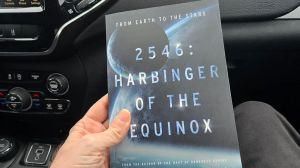
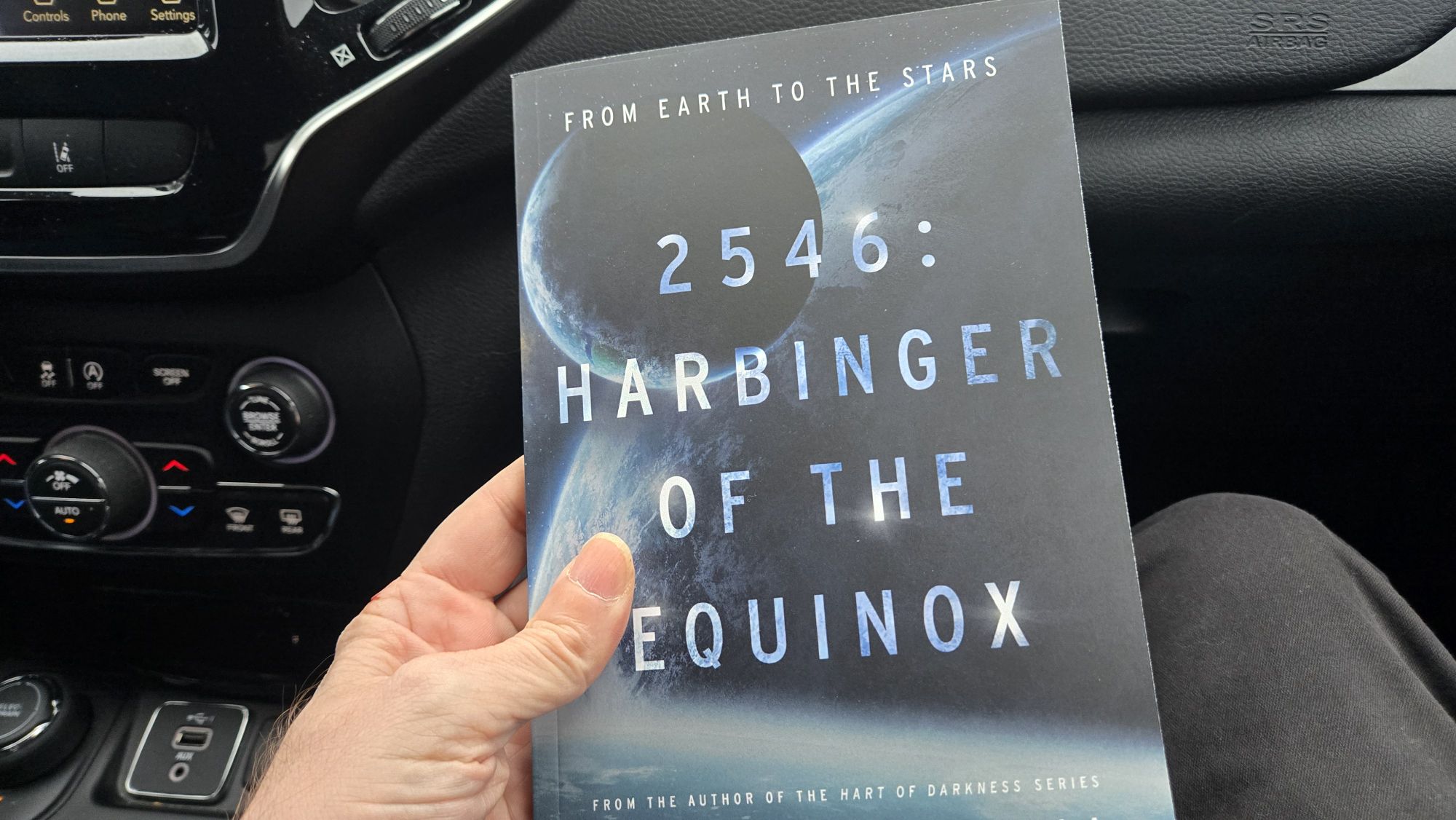
🅻🅸🆅🅴 Solidarity Forever: Stevie Van Zandt with author Robert Lawson

GRAB A STACK OF ROCK With Mike and the Mad Metal Man

🅻🅸🆅🅴 Episode

Episode 126:  Solidarity Forever: The Art and Soul of Stevie Van Zandt
With author Robert Lawson

Robert Lawson is a talented author (and music researcher) and friend, who actually appeared on our old show the LeBrain Train back in 2021.  Tonight is his Grab A Stack of Rock debut, and his first time meeting the Mad Metal Man, Harrison Kopp.

When Robert was the LeBrain Train, it was to discuss his book Still Competition:  The Listener’s Guide to Cheap Trick, a thorough and essential read.  He has also penned detailed books on Nazareth and the Guess Who.  This time, we’re talking about Stevie Van Zandt, the subject of Robert’s new book Solidarity Forever.  This is a subject about which Robert is intensely passionate for reasons musical and spiritual.  As Robert says, writing this book was “his job”.

“Little Steven” Van Zandt is a fascinating figure in rock, from his instantly recognizable stage visage, to his popular role on the Sopranos.  This book will teach you about the solo career of Little Steven, and breaks down “every album, every single” just as we collectors want.  Robert is also knowledgeable on many other artists in genres from jazz to rock, and we will doubtless stray off track spontaneously.  And that is half the fun.

Tune in tonight and ask Robert your questions live, on Grab A Stack of Rock.


Friday November 21 at 7:00 PM EST, 8:00 PM Atlantic.  Enjoy on YouTube or Facebook.

INVESTIGATIVE REPORT & REVIEW: Spastic Phono Band – “Wings Under Japan” 7″ single – What’s the story behind this band?

SPASTIC PHONO BAND – “Wings Under Japan” (1980 7″ single, Slipped Disc Records)

INVESTIGATIVE REPORT – 45 years ago…

[Editor’s note:  the authors of this report have asked to retain their anonymity.] 


The year:  The harsh winter of 1980, remembered for its deep cold and snow.   In the realm of popular music, all four Beatles were still alive, even though the band had been broken up for a decade.  One of the Beatles soon found themselves in a wee bit of trouble.  This trouble would spill all over the world news, causing rippling effects and ramifications far beyond the shores of England, for that winter in New York State, a band would go on to record a song….

The Beatle in trouble was the still-babyfaced Paul McCartney.  It was no secret that he was already known for enjoying the green leaf.   Back in 1972, McCartney was arrested in Sweden for possession of Lady Ganja.  He was released without charges at that time, but his reputation was now cemented.  McCartney wanted to book a Japanese tour in the mid-70s, but the country was very strict about illegal substances and refused Paul permission to play.  The fans in Japan would have to do without.

Finally, in 1980, Japan had a change of heart and granted permission for Paul McCartney and Wings to tour in the Land of the Rising Sun.

He just needed to make sure he packed appropriately for the trip.

Paul McCartney is an undisputed musical genius.  His songs will last 100 years.  That does not mean that Paul always used his head.  Despite the scrutiny he was bound to experience upon entering Japan, he decided to bring a stash with him.  He was arrested upon discovery at the Narita Airport with 220 grams of Hawaiian green.  Reportedly, he didn’t even attempt to hide the electric lettuce, just packing it in his carry-on bag with his clothing.  Paul subsequently spent 10 days in the keiji shisetsu (刑務施設); actually the Tokyo Metropolitan Police Department.  Teenage girls numbering about 50 serenaded the station during Prisoner 22’s incarceration.

Unfortunately for Paul, the nature of this arrest and jailing far away from home meant headlines all over the world.  “PAUL IN CHAINS” and “EX-BEATLE ARRESTED IN JAPAN” went the articles, along with a photo of McCartney being escorted by Japanese officials.  It was huge news, especially in the UK where it became a bit of a media circus.

The judge in the case determined that McCartney brought the drugs for personal use and not trafficking, and decided that Paul had spent enough time in jail.  He was taken to the airport, and flown to Holland, where he was (perhaps surprisingly) refused entry.  He still had time for a chat with the press.

“How did you get out?” asked the reporter.

“Walking on foot,” answered Paul in typical cheeky Beatle humour.

The experience was “a drag” for Paul.  “I was woken up at six in the morning, then had to sit cross-legged for a roll-call. It was like Bridge on the River Kwai. They shouted out ’22’ in Japanese, and I had to shout back, ‘Hai!'”

The 11 date Japanese tour was cancelled at the cost of 2.5 million dollars and 90,000 tickets.

Did he learn from his experience?

“Now I have made up my mind never to touch the stuff again. From now on, all I’m going to smoke is straightforward [cigarettes]. No more pot.”  He later acknowledged his own stupidity.  “Well, to this day I have no idea what made me do it. I don’t know if it was just arrogance or what. Maybe I thought that they wouldn’t open my suitcase.  I can’t put myself back into that mindset now…to this day I have no idea what made me do it.”

Over in America, shortly after shoveling out from a massive dumping of overnight snow, a young songwriter named “Vic Trola” was inspired to write a song.  At least that’s how the credits read on the actual record.  A recent online theory postulated that “Vic Trola” was indeed a pseudonym, but these writings are mostly found in conspiracy theory discussions.  A fringe group that splintered off the main conspiracy theory group added that “Vic” was short for “Victoria”, not “Victor” as previously assumed.   These theories are largely dismissed by the other groups.  Our own extensive research has failed to unearth any other compositions written by Trola; just the one that you are reading about today.  We do know, thanks to documents obtained in the process of researching this article, that after catching their breath from shoveling the drive on that cold winter day, Trola went inside and began writing.  The surviving notes from Vic Trola’s respirologist confirm these facts.

Vic Trola’s song, as it evolved into its final form, was the product of on-stage gigging by the mysterious Spastic Phono Band, and that is where our story really begins.  Though their names are now lost to time, and their relationship to Vic Trola is clouded, we do know that they consisted of a tight rhythm section.  Both the drummer and bassist were exceptional.  They boasted a dual guitar configuration, and multiple lead singers including one female vocalist who appears prominently on their sole recording called “Wings Under Japan”.

The Spastic Phono Band had experience.  They had already been working on a set of originals and comedic covers.  Favourite hits by Santana and the Might Zep were endowed with new witty words, and they found an audience who shared their sense of musical comicality.  Encouraged by the audience reception to these songs, the Spastic Phono Band turned their attention to the hot news of the day:  Paul’s arrest in Japan.  Presumably with Vic Trola’s lyrical input, they started playing bits of his Beatles and Wings hits in a medley.  Egged on by the crowd, and adding throwaway lyrics here and there, the song “sort of wrote itself”, according to a maraca player who claims to have been there at the time (and requested complete anonymity).  It took only three or four shows for the song to come together as we know it today.  The Paul medley became an instant live hit.  The crowds ate it up.  They learned the words, sang along and shouted for more!  Clearly, the song needed to be recorded in a studio, and put out on a record.

Unfortunately for the band and Vic Trola, who were based out of Liverpool (New York, pop. 2400), there were few studios around within the reasonable driving distance of a beaten-up touring van.  Their studio of choice would be unavailable for three weeks, and time was of the essence.  The Paul story was hot now, not later!  Even if they recorded the song immediately, it would have to be mastered and pressed at a record plant, meaning they had to act immediately.  The scarcity of nearby studios presented a challenge.  Would these young musical minds be able to publish their Paul pastiche in time?

As they used to say, the Spastic Phono Band let their fingers do the walking:  They picked up the phone and eventually connected to something that somehow passed as a recording studio.  The old schoolhouse that they booked was certainly was not conceived as a studio when it was built in the last decade of the 1800s.  The top floor housed the recording space, but in a decidedly inconvenient design and safety choice, it was only accessible via an outdoor fire escape.  All the band’s equipment had to be hauled up the emergency exit:  drum after drum after drum, followed by amp after amp.  Bags were passed from vehicle to musician and up the fire escape, which wobbled with every tentative step.  Also, it was winter.  Members of the band were not sure if they were going to survive the combination of snow and ice, metal steps, and gravity.   To our great fortune, they did.

The studio owner was also the engineer, and his soul still lived in the 1950s.  He didn’t grasp the nuance, or understand the Spastic Phono Band’s particular brand of humour.  He did, however, have a friendly personality and got along with the band.  A good sounding record began to take shape on tape.  The band nicknamed the engineer “Eddie”, a reference to a classic Leave It To Beaver character, Eddie Haskell.  Eddie’s studio had all the necessary equipment (minus an elevator).  He even had an ARP synthesizer which can be heard on two segments of the recording: “Silly Drug Laws and “Banned in Japan”.  Though the band did not have the budget to spend more time in the studio to do some further work on the guitars, the band climbed down the fire escape holding in their mittens a reel-to-reel tape of their hard-earned work.  Physicists specializing in the behaviour of water at low temperatures speculate that the tape was almost dropped once on the way down, but saved from an icy fate in the snow.

The schoolhouse was demolished in 2025 at 131 years old.

Though recorded, the song still had to be mastered and cut to vinyl.  With time slipping away, and Paul McCartney finally starting to experience a decline in the media frenzy over his Japanese vacation in the big house, the Spastic Phono Band were in an ever-increasing time crunch.  Their song, heavily dependent on McCartney’s imprint in the public consciousness, had to make its way to a physical record that you could buy.  Their preferred manufacturer was fully booked and the band could not wait any longer.  The track was complete, mixed and ready to be mastered…but where?

Through furious searching and some tense bidding on eBay, we have obtained some of the logs, unfortunately anonymous, detailing the following sequence of events of the recording:

Monday.

Tempus is fugiting.  Much to our dismay, the cute Beatle’s troubles in the Far East are rapidly becoming old news.  Also with windchill, it is about four degrees today.

The Paul story was soon displaced by other current events.  The Iranian Revolution made fresh headlines, and soon came the hostage crisis.  Front pages were dominated by the tense 444 day crisis, during which 66 Americans were held hostage at the US Embassy in Tehran.  As it happens, another band in the same area as the Spastic Phono Band, a trio, were working on a song referencing these events.  One of the songs in their regular set, popular in some of the local Irish venues around the area, was Jerry Jeff Walker’s “London Homesick Blues”.  It featured the unique chorus of “I wanna go home with the armadillo.”  (Who wouldn’t?)   This was easily adapted into “I’ve had enough of the Ayatollah”.  The clever lyrical substitute worked, and the band approached the club owners documented only as “The Brothers Three”.  The Brothers actually owned three clubs, which seemed poetic.  The Brothers Three liked the song, feeling that it tapped into the sentiment of the day.  The reached into their pockets and financed a studio recording of the Walker cover.  They were now in the record business.

The Spastic Phono Band, who were familiar with the trio in question, learned of this.  Realizing it was a good idea, they decided to make their own pitch to the Brothers Three.

Wednesday.

They went for it.  Sure, they argued a bit and the oldest one may have smacked the youngest one, but we did get a unanimous decision.  The Brothers Three are going to allow us to use the disc maker where they pressed the Ayatollah record.  

The record would be made in a little postage-stamp sized record plant (if you could call it that) in Connecticut.

Tuesday. 

One of the Brothers Three picked me up in his MG convertible today.  We took the tape to a dumpy little record pressing company.  Mission accomplished.  We ordered 300 copies to be made.   Then headed home, but my companion driving the convertible decided to put the top down.  It may be February thaw, but it was so cold I still don’t have feeling back in my nose.  Considering calling an otolaryngologist.

Frozen noses aside, when the boxes containing 300 copies of “Wings Under Japan” finally arrived, the McCartney story was equally cold.

Friday.

Believe it or not, there isn’t a lot of demand for a record by a band that nobody’s heard of.

The records were delivered to stores, who tried their best to push it, but were fighting an uphill battle. The record was not a hit.  The 300 copies did eventually end up in the hands of the public.  There are no documents detailing any sales, so we do not know if the band sold them at shows, or by mail order, or any of the other quaint methods available in 1980.   Mr. McCartney never stumbled upon the record, as far as the evidence suggests.  At least, we know he hasn’t sued.  But could he even locate the Spastic Phono Band if he wanted to?  We could not.  Vic Trola has pulled a DB Cooper:  Taken the money (if any) and flown.

Though only the original 300 copies were made, we were able to track one down for this article.  It was clearly loved in its previous home.

Housed in a yellow-brown sleeve (the original?), the 45 has a nice maroon label, stating this is on Slipped Disc Records.  Charmingly, the song “Wings Under Japan” is split over the two sides…sides 3 and 4.  (It has been suggested that this release, with sides 3 and 4 instead of 1 and 2), gave George Lucas the idea to number The Empire Strikes Back as Episode V instead of Episode II as expected.  With that film releasing in May 1980, we cannot completely dismiss the claim.)

The track is just over seven minutes combined.

Leavin’ on a Japanese roadtrip,
Headin’ down a London runway,
Paul said ‘I need to bring along some good weed,
Because it helps me relax when I play.’

Guffaw!  The song begins with a spoof of “The Ballad of John and Yoko”, now called “The Ballad of Paul and Linda”, with a similar structure, but words about Paul.  “The way things are gooooin’, they’re gonna scrutinize me!”  And they did…but not long enough for the Spastic Phono Band.  The song continues.

Staring at the man with the baggie.
Paul said, ‘Maybe I’m amazed!
It only amounts to less than half an ounce,
Why do you have to get so carried away?’

In perhaps the most obvious yet fun twist, the song then goes into Wings’ “Hi Hi Hi”…but re-written as “High High High”.  This is funny because it’s so obvious, it had to be done.  It’s amazing nobody else did it.  Incidentally the harmony vocals in this section are rich and excellent.

Next up in the Paul medley is “Silly Love Songs”, redone as “Silly Drug Laws”.  “What’s wrong with drugs, I’d like to know, ’cause here I go again!  I’m in jail…”  Another example of great singing by the Spastic Phono Band, but listen to that 1970s groove and the dexterous bassline!  This is some serious playing.

Side “3” ends, and so we flip to side “4”.  Fortunately in the modern era, we can use our digital capture software to seamlessly edit the two into one track!  Next is “Band On the Run”, revised as “Banned In Japan”.  In this case, the original song is almost a medley of different sections itself.  The Spastic Phono Band do several of them here.  “Stuck inside these stone walls, might be here forever!”  There is a poignant moment coming here, frozen in time.  Little did they know that John Lennon had only months to live, for in December of 1980, he would be murdered in New York.  So to hear the line, “I’ll join with Ringo, and George and John and we’ll put the reunion on,” reminds us that finite period of time when such a thing was indeed possible.

A brief pause and then, just like on Abbey Road, wait for a Beatles-y coda.

“Wings Under Japan” is, quite frankly, one of the best parody medley songs (or however you want to describe it) you’ll ever find, for three reasons.

  1. The mystery.  Who are the Spastic Phono Band anyway?  We may never know.  (Or, more accurately…we may never tell.)
  2. The musical prowess.  There is some serious playing and singing on this brief single, and your life would be richer if you heard it.
  3. Though depicting events before some of you were born, the lyrics are still hilarious due to the timeless nature of weed jokes.

5/5 stars.


Tim’s Vinyl Confessions Ep. 736: Ace Frehley (CDs)

Like ships passing in the night, once again I cannot seem to hook up with Logan Collins at the same time and place!  Logan and I did, however, contribute to this fantastic episode of Tim’s Vinyl Confessions.

With the loss of Ace Frehley fresh in our minds, the three of us go through our Ace Frehley CD collections.  There are certain items in my collection you may not have seen before, such as a promo single for “Do Ya”.  We engaged in deep discussion on each album, the key tracks, and the specific versions we have on display.  Most of us, we miss the Ace and spend most of our time just talking about how great he was.

Check out this episode of Tim’s Vinyl Confessions, which will premiere later today.

VIDEO: Max the Axe – “I Don’t Advocate Drugs” live in Ontario – Lego animated by Harrison Kopp

From the album Live In Ontario, here is the second music video from the CD:  “I Don’t Advocate Drugs”.  This video was painstakingly animated, using real Lego bricks, by hand.  No AI here folks.  Bricks were collected to create these characters including all four members of the band:  Max the Axe (lead guitar), Uncle Meat (lead vocals), Mike Mitchell (bass), and Dr. Dave Haslam (drums).   Depicting a druggy trip and a stage performance by the band, look for several easter eggs referring to past Max the Axe songs, or even Dr Dave’s well-stated hatred of Transformers.

A magnificent job, Harrison!  Well done!

🅻🅸🆅🅴 Sing Me Away: The Night Ranger Album Review with Tim Durling

GRAB A STACK OF ROCK With Mike and the Mad Metal Man

🅻🅸🆅🅴 Episode

Episode 125:  Sing Me Away: The Night Ranger Album Review with Tim Durling
With co-host John Snow (The Collection and 2Loud2OldMusic)

Author and Youtuber Tim Durling has been busy.  Sing Me Away: The Night Ranger Album Review isn’t even his newest book!  More on that later, because tonight we celebrate the California Quintet and Tim’s panel book on them.

Joining us tonight is fellow expert and fan John Snow, who will be prove that you can still rock in America, oh yeah!

Tim is a passionate Night Ranger fan and collector, and we will quiz him tonight on everything that went into this book.  The albums, the lineup changes, the amazing tunes, and Tim’s collection. We’ll also talk about the present and what’s happening right now in the world of Durling the author.  We’ll do an unboxing and talk about a contest where you can win yourself a Durling book!

Don’t miss this one live, as we love to interact in the comments.  We always have fun lined up, and fun will be had!


Friday November 14 at 7:00 PM EST, 8:00 PM Atlantic.  Enjoy on YouTube or Facebook.

#1224: Nov 11: An Uncle Paul Story

A sequel to #138:  Remembrance Day

RECORD STORE TALES #1224: Nov 11: An Uncle Paul Story

November 11 is a very important day in my family.  Since my grandfather and his brother both served in Europe during World War II, it was a tradition that I have always known.  My grandfather rarely told war stories.  It used to make me uncomfortable.  At home, my dad would educate me on different battles, and the tanks and the guns and planes involved.  My dad’s specialty is the Pacific theater, but he certainly taught me the difference between a Panzer and a Sherman.  I knew what the Battle of Britain was.  I had seen all the old movies.  So when my grandfather seemed…haunted by the war, it contrasted that childish “cool factor” that you get by watching a tank fire its cannon.

From my earliest memories, we went to the cenotaph every Remembrance Day, heard the cannons fire, shivered in the cold and watched Grampa lay a wreath.  I was short and could hardly see.  Back then, November 11 was a school holiday, so families could go to the cenotaph.  Eventually they ditched that holiday in favor of an in-school memorial.  This took place in the gymnasium.  They’d run a film and I’d just sit there thinking “right now Grampa would be laying his wreath.”  We lost him in 1983 but the family always went.

This is where the story deviates from today’s theme.  My Uncle Paul and Aunt Maria would also go to the cenotaph with us.  They drove in from Stratford.  For us, it really was a full family day.

The family tradition was modified after 1982, when Remembrance Day was stripped of its holiday status in 1982.  The change was slight.   I didn’t even know about it for years.

My Uncle and Aunt would come to town for the ceremony at 11 o’clock, but stayed the day to visit.  My dad and uncle would go to the local car dealerships and look at the new models.  Best of all, they would pick my sister and I up from school at the end of the day!  What a treat.  Not only didn’t we have to walk home on a cold day, but we got to ride with Uncle Paul and my dad.  We would laugh and smile the whole way home.  I loved this modification to the old tradition…but there was more.  Much more.

Little did I know, but after the Remembrance Day ceremony, the whole family would head over to Hi-Way Market and visit their incredible, legendary toy section.  My Aunt and Uncle would buy all of our Christmas gifts right there in one shot.  Every GI Joe.  Every Atari game.  Every Transformer.  They were sitting there in the trunk, directly behind us as we rode home from school.  Every single gift that I was salivating over, nightly in the toy catalogues.  They were right there, mere inches away!

If it sounds like I still can’t believe it, it’s still amazing to me that they did this for years and I had no idea!

Thanks Uncle and Aunt for making every Remembrance Day visit a special one for a kid. And thanks to Grampa and Uncle Gar for doing what had to be done.


#612: Remembering Their Sacrifices [Re-Post]

At the the 11th hour of the 11th day of the 11th month in 1918, the Armistice was signed, ending the fighting in the Great War. At least, they called it the Great War, or “The War to End All Wars”. Today we just call it World War I, because even greater horrors followed.

My grandfather “Sam” (Crawford) fought in World War II, helping bring an end to the evil of Hitler and Nazi Germany. I think my grandfather would be disgusted today to see Nazis being referred to as “very fine people”. What did he fight for, if we are to casually welcome that evil back to the streets?

“Gar” and “Sam” Winter

We can never forget the sacrifices those soldiers made. My grandfather survived and came home to raise a family with my grandmother. His brother wasn’t so lucky. He lived, but was injured in the trenches and he never walked right again.

I tend to think of the veterans and the soldiers of the present year round. My wife goes out of her way to thank veterans any time she sees one in uniform.  I think of them every time I am free to write whatever I want to, in this great land of Canada. Had the Nazis won, there would be no freedom here. On November 11, at 11am, we have a moment of silence to honour all the soldiers from every war in which they fought and died for our freedom. That is an important tradition to keep. But I think we should think of them more often.

“Sam”

My grandfather rarely told war stories around the kids, but I do remember one night when he told my dad about looking up and seeing a Panzer tank coming. “I shit my pants,” he said and I think he was being truthful. Imagine those young guys — kids, really — in a country far from home, running from a tank. The bravery is awesome. I can’t even imagine.

My grandfather died (cancer) when I was too young to appreciate what he did. I knew he fought, and I got to watch him lay a wreath at the cenotaph every November 11. I didn’t understand the significance of what it means to be a soldier until I was older. If I were a little older, I would have tried to get him to tell me about it.

Bryan Adams’ 1987 album Into the Fire has the best song about Remembrance Day that I know.  This very special track was made into an emotional music video.   In 2014, The Trews came out with something almost as good:  a song called “Highway of Heroes”.  The Highway of Heroes is an actual highway (the 401), given this nickname for the stretch of road on which the bodies of fallen soldiers are brought home.  The Trews’ song is a touching tribute.

Check out these two songs and remember why you’re even able to listen to them.  Because of the Heroes.


VIDEO: That Time Rob Daniels Gave Me Girls, Girls, Girls

The poster appears to be a reprint but the generosity of Rob has ensured that it will live on in my music room!


50 Years of IRON MAIDEN episode 25: Visions of the Beast featuring Bob Cesca from Camp Chaos

50 Years of IRON MAIDEN episode 25:  Visions of the Beast featuring Bob Cesca from Camp Chaos

GRAB A STACK OF ROCK #124

Back in 1999/2000, a little video called “Napster Bad!” went viral.  You know it, you shared it, you loved it.  Well, not Harrison because he was not born yet.  Bob Cesca (founder of Camp Chaos) created that video and many others, including official music videos for bands such as Motley Crue, Yes, and…Iron Maiden!

Bob is a talented jack of many trades, and also a massive Rush fan.  In this effortless interview, Bob tells us everything you wanted to know about him and Iron Maiden.  2003’s Visions of the Beast double DVD was a massive collection, and Camp Chaos did six music videos for it.  These videos mixed animation with the original familiar music video footage.  We break them all down in detail, including how to access the Easter Eggs.  How was he contacted by the Maiden camp?  How much input did Iron Maiden have on his creative process?  Why did he choose certain Eddies and settings, and how did he decide what to edit out of the originals to make way for animation?  It is a fascinating trip back in time, as current events impacted some of the videos, even though the songs themselves were oldies.  Hey…are there 10 ME-109s out of the sun…or not?

Bob also answered all our non-Maiden questions, such as why James Hetfield and Lars Ulrich have no noses in “Napster Bad”?

After Bob had answered all our questions, Harrison and Mike took a deep dive on the rest of the contents of the DVD set.  If you owned Visions of the Beast back in the day, own it now, or not yet…you will want to pop it in after this episode.

Please welcome Mr. Bob Cesca to Grab A Stack of Rock, and 50 Years of Iron Maiden!  Join us at the premiere in the comments tonight – we love interacting with you!

A big thanks to Tim Durling for introducing us to Bob!

Friday November 7 at 7:00 P.M. E.S.T.  Enjoy on YouTube.


Past episodes:

Handy YouTube Playlist:

REVIEW: Union – Live in the Galaxy (1999)

UNION – Live in the Galaxy (1999 Standback)

  • John Corabi – vocals/guitar
  • Bruce Kulick – guitar/vocals
  • Brent Fitz – drums/vocals
  • Jamie Hunting – bass/vocals

This great, forgotten Union live album should be added to the collections of any fans of John Corabi or Bruce Kulick.  Packed with great songs from Union, Motley Crue, Kiss, the Scream, and even Cheap Trick and the Beatles, this live album delivers on every level.  11 tracks live, plus two bonus studio songs.  Power to the music indeed!

There are no specifics about recording dates, but regardless the album has been well sequenced, opening with Union’s own album opener, “Old Man Wise”.   Very much a continuation of the Motley and Kiss albums of 1994 and 1997 respectively.  Mix them up with riff and groove sauce, you’d get something like “Old Man Wise”.  Bruce’s playing is always fascinating and “Crabby” was in top voice.  Grit and power are the words of the day.  This song pounds, and Bruce absolutely rules.  We go straight into the equally grooving but more upbeat “Around Again”.  Union had an excellent self-titled album out at the time, and it makes up the bulk of the album.  Fortunately the band’s original songs set a high bar.  Bruce Kulick doesn’t put out crap.  A third song from the debut, “Heavy D…” might be called a ballad, but really it’s a quiet song with heavy parts.  Or is it a heavy song with quiet parts?  It is performed with gusto in either guise.

“We’re gonna do something from Carnival of Souls!  This is called the ‘Jungle’, baby!”  Then Jamie Hunting comes in with that rolling bassline, originally played on album by Bruce himself.  Kulick’s past with Kiss makes an appearance on “Jungle”, a song Kiss never performed live, so quite a treat.  John Corabi’s spin on a Paul Stanley vocal is full of raspy power yet still appropriate.  Hearing this makes one wish that Kiss did have the balls to play it live.

That’s a lot of heavy rock in a row, and to lighten the mood, it’s the Union original “Love (I Don’t Need It Anymore)”, which is dedicated to a certain someone who was involved with a current event in the news at the time.  It’s a little more upbeat, a little more “Motley” and absolutely one of the best Union songs from the debut.  The chorus kills like a classic from Dr. Feelgood.  Corabi then takes us back to his earliest catalogue, The Scream’s “Man In the Moon”.  The Scream were a sort of musician’s super group, featuring Bruce Bouillet and John Alderete from Racer X.  The Scream was more mainstream than that.  This is a melodic rocker with a bluesy twist, and the band do a slamming job of it.

Bruce Kulick takes center stage on another Kiss song that was never played live, and his vocal debut:  “I Walk Alone”, which he wrote with Gene Simmons.  It begins with a short, Zeppelin-esque guitar exercise from Bruce.  As for the vocals, you gotta give Bruce credit for not going back and fixing things.  This is Kulick’s voice raw and exposed and imperfect and yet…perfect for the album.  In many ways, this is better than the Kiss version, as Bruce adds a really sweet guitar outro.

A fun unexpected cover next:  Cheap Trick’s “Surrender”!  The backing vocal abilities of the entire band enable them to easily pull this off.  You’d look at it on paper and scratch your head a bit, but it’s short work for these pros.  It’s all about the vocals.

A dramatic “Pain Behind Your Eyes” brings to the stage another soft/hard hybrid with wicked drumming and vocals.  However this is just a prelude to one of the heaviest Motley Crue songs ever:  “Power to the Music”.  Corabi takes center stage doing some screamin’ and preachin’ to the crowd.  The demanding song is handled ably by Corabi, seemingly relishing playing this awesome song live on the stage again.  They probably would have blown Motley off the stage doing the same song.

After some band intros, we get some Kulick solo wailing right into the final song “Tangerine”.  Nothing like the Zeppelin song, this is a riff-rocking groover with excellent melodic delivery by John Corabi.  Union were a melodic band, but John’s approach added the grit and grime that is like rock candy going down.  This song slays with a resilient groovy riff.

Bonus studio tracks are two:  an acoustic rendering of “October Morning Wind” from the debut, and a Beatles cover that blows away the more well know Oasis version.  First up though, the rich acoustics of “October Morning Wind” really bring warmth to a cold subject.  “My pain is measured by a sky that is old and grey,” sings John in a song that may well be about seasonal affective disorder.  Then, the Beatles cover is handled with ease.  “You’ve Got to Hide Your Love Away” benefits from similar acoustic warmth.  It sounds live in the studio, and again the lead and backing vocals make it work seemingly without effort!

Union really made a strong impression with their first two releases, the debut and the live album.  Was it too soon for a live album?  When you look at the setlist, absolutely not.  They had enough material with which to build a very strong set of songs, needing only one true cover (the Cheap Trick song).  The bonus acoustic tracks are icing.

4.5/5 stars