
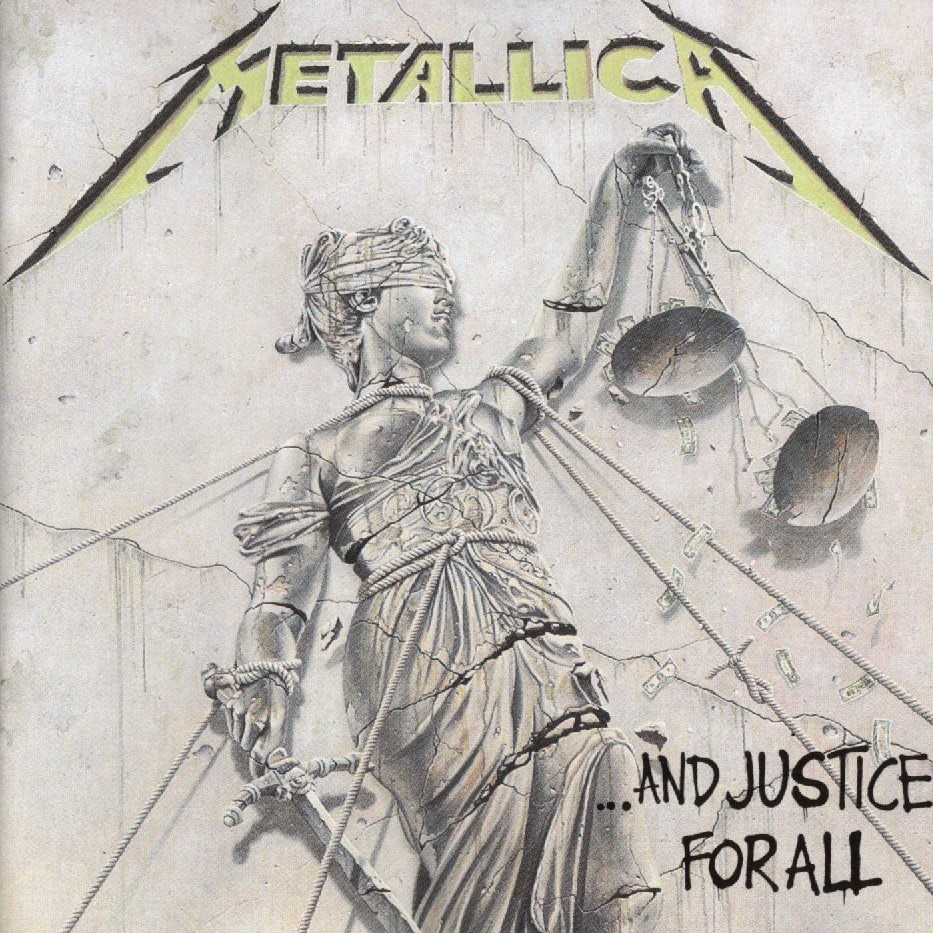
 METALLICA – …And Justice For All (1988 Elektra)
As I cast my mind back to 1988, the omnipresence of Metallica’s …And Justice For All cannot be ignored. For one thing, the band’s new studio album was a double album, which was all but unheard of at that time. The cover art was striking. The band were now on TV, after stubbornly avoiding music videos for years. “One” was the name of the song, and it was even more stark and impactful than the album art. If the band wanted their first-ever music video to be influential and monumental, they succeeded. However despite all the praise, the cries of “sell outs!” echoed on the “letters to the editor” section of various rock magazines. How dare Metallica make a music video. One letter in Hit Parader magazine compared Justice to Bon Jovi. It’s hard to imagine a reaction like that from the perspective of today, but as much as Justice was Metallica’s most successful album to date, there were thousands of fans who resented them for it.
The other elephant in the room is the production and mix of the album, which is brittle and lacks bass. There were various stories, such as hazing the “new kid” Jason Newsted by removing the bass, but today Lars and James largely blame themselves, saying their hearing was burned out and they just kept turning everything up until you couldn’t hear the bass. There are other stories and other parties who received blame at various points of the timeline, but the thing is this: Justice has sonic issues. We all are aware of this by now.
Let’s dig into this hour-plus album and hear what the fuss was all about.
A backwards guitar harmony fades in from the start, a striking and cool effect. Then immediately the riff and drums kick in, and the snare is loud. It dominates the mix, with the riff itself chugging away behind. James Hetfield awakens the dead, and this could have been his vocal peak, in terms of grit combined with sheet lung power. “Blackened” is a blast, like Metallica of old, and though the pace is breakneck to start, it soon switches up to a deliberate march. Lars is absolutely bangin’ away, and there are so many wicked riffs and licks that you’ll want to go back and take notes. This is a textbook course in writing metal, with a dose of complexity and catchy challenges. Kirk Hammett really plays some cool stuff in the solos as well, demonstrating his experimental side just a tad. “Blackened” is the only song on the album with a Newsted co-writing credit.
The title track is second, almost 10 minutes in length and loaded with riffs and tempos. Hetfield growls like a beast of the social ills of the world. Lars’ drum parts are almost out of the jungles. It’s a cool track, undoubtedly powerful and a peak for a certain kind of Metallica track. They had come a long way from their New Wave of British Heavy Metal / punk rock hybrid sound of old. But, much like Iron Maiden at the same time, Metallica were becoming more interested in progressing musically. You can actually hear some bass on this track ,and Jason’s really playing some wild stuff.
At this point of the album, we’re getting acclimated to the frigid cold mix and brittle guitars. Kirk’s wild solos are an anaesthetic to the constant cutting of James’ rhythm guitar.
On vinyl, this is where side one would have flipped to side two, opening with “Eye of the Beholder”. Cool, underrated opening riff to this song, and again Lars sounds like a jungle beast. James is singing lower, but with the same ferocity. Lyrically, James tapped into the angst and frustration that their fanbase felt in their lives. He was able to articulate for them, the things that they were seeing in their world. And they were pissed off. Kirk’s solo comes from a more exotic locale, but fits in regardless.
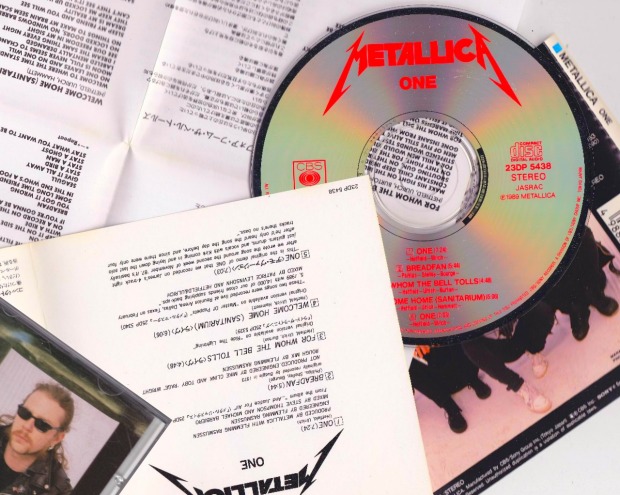
“Beholder” ends somewhat abruptly, and then the opening machine gun fire of “One” announces the arrival of the coming hit single. The clean guitars that open the track actually sound pretty good, though the snare drum is a sharp contrast to them. Though not Metallica’s first foray into softer tones of metal, “One” was top-notch. There’s no need to go into details on the lyrics as that could be a post unto itself. Like many classic metal bands before them, Metallica took inspiration from literature, though via a film interpretation. The anti-war word resonated with the audiences of 1988. The video, using dialogue and visuals from the film Johnny Got His Gun, was all but universally lauded. As a song, “One” doesn’t need the video to stand up. It builds until it eventually turns into a musical battlefield, with machine guns made of bass drum hits, and explosions from snares. Then Kirk’s solo tells a story of its own, a manic tale of fight-or-flight tension. “One” is every bit as good as they say it is.
This is where vinyl, or even cassette, has their advantages. This is a good place to give your ears a break, at the end of side two. Ear fatigue will set in if you don’t take a moment here! So, on your CD player or streaming service, take a pause. For vinyl, just keep flippin’.
Side three opened with “The Shortest Straw”, another hammering riff, and then Metallica take it for a twist. Hetfield is barking mad on this one! It is not the most memorable of the Justice nine, but it doesn’t play it simple or safe either. The chorus is one you can shout to, and Kirk’s solo is certainly unorthodox.
“Harvester of Sorrow” became a concert standard, and it is a bit of a needed slower moment after the brutality was that “Shortest Straw”. The riff is simpler, more deliberate and to the point, and melody is present in the vocal growls! It’s one of their more accessible moments, but for some irate Hit Parader reader to call stuff like this “Bon Jovi” is utterly ridiculous. It’s slow but stomping. James’ vocals would still raise the dead.
Side three’s closing track is the lesser known “The Frayed Ends of Sanity” and I still hate that “oh-wee-oh” bit (“March of the Winkies”) from The Wizard of Oz that opens it. Totally out of place, and I could swear New Kids on the Block or somebody like that used the bit in one of their songs too. Anyway. The band never played it live until 2014, making it the last song from Justice to make it into the live set. That’s not to say it’s a bad song – there’s a really cool middle section that just builds and builds, and then unleashes an absolute monster of a riff, like Iron Maiden on speed.
The final side features Cliff Burton’s last writing credit, “To Live Is To Die”. Almost 10 minutes in length, this largely instrumental track features the appearance of the Metallica acoustic guitars, which soon give way to robotic hammering and a monumental set of riffs. Solo work by both James and Kirk is extraordinary. There are left turns, and it all serves to set up the closing blast of “Dyer’s Eve”.
“Dyer’s Eve” is a thrash blast of metal; so fast that it’s the only “short” song on the album at 5:12. It comes in suddenly and after a brief cascade of metal madness, and goes full thrash, pedal to the metal, all burners on full. It’s so much, packed into such a short space. It’s one of the most effective songs on the album for that reason, and a bit of a cult classic. “Dyer’s Eve” is one of the deep cuts that just scream for more exposure.
Justice is a trip, a journey, a series of chapters in a larger story. It deserves the scrutiny given to its mix but conversely, it also deserves as much attention as your ears are able to pay to it. Despite the lack of bass, there are things here your mind can dissect down to some brilliant performances if you give them the focus. Justice is not an easy listen, but they don’t all have to be. The cool thing with it is, as you grow with it over the years, different songs become your favourites. Maybe 30 years ago, it was “One” or “Blackened”. Then after a while, maybe “Beholder”, then “Dyer’s Eve” and “Shortest Straw”! The album will never cease to have favourite moments if you love Metallica.
It would be easy to give it a 5/5 stars, but the issues with the bass cannot be ignored.
4.5/5 stars






 mikeladano.com
