DEF LEPPARD – Raw – Early BBC Recordings (The Early Years Disc 5) (2019)
This final disc of Def Leppard early tracks consists of two separate BBC sessions: 1979, and a few songs from Reading in 1980. Due to this fact, there is some minimal repeat in the song selections, but you won’t mind getting two versions of “Wasted” instead of just one! This disc offers a variety of early Leppard songs and rarities.
BBC Andy Peebles Session – June 7 1979
The EP was out and Leppard were starting to get radio play. They were invited to the BBC and recorded four songs for broadcast.
Opening with “Glad I’m Alive”, Leppard get one of their most underwhelming non-album tracks out of the way early. It sounds better and heavier than the studio cut on Disc 4 produced by Nick Tauber. Solos and backing harmonies are fire. “Sorrow is a Woman” follows, with a quiet, cool laid-back intro of a different flavour. Things kick in on the chorus of course, but this is not the definitive version of the track. The guitar solo section has a nice shimmer to it. Third up is “Wasted”, which opens with a growl. That guitar is vicious, and Joe just goes for it on the vocals. This recording has bite. The final track, “Answer to the Master” is absolutely fine.
Friday Rock Show Session – October 3 1979
“Satellite” enters with a crash of drums, a little hesitant on the pace. The fun “Rock Brigade” is similar to the early version on Disc 3, but heavier. The second version of “Wasted” sounds heavier than the first — the band was growing. Really this song is a highlight of anything it’s on. This BBC sessions ends with “Good Morning Freedom”, probably the fastest and most pumped-up version we’ve heard yet. This might be the best recording of the track available.
Live at the Reading Festival – August 24 1980
The next time the BBC caught up to Def Leppard, they had an album out. With Ozzy Osbourne, Iron Maiden, Whitesnake and UFO on the same bill, Leppard were anxious. Then Ozzy dropped out, and Leppard had to follow Slade in one of their best festival performances — a daunting task. Fortunately the bandt fought hard and had some killer new material up their sleeves.
Opening with “Satellite” (2nd appearance on this CD) and “When the Walls Came Tumblin’ Down” mashed into a medley, you can hear that the band were fired up. After this workout, it’s the unreleased “Medicine Man” which today we know as “Rock! Rock! (Till You Drop)”. Imagine getting to hear that track back in 1980, and then when it was finally released in ’83 on Pyromania, going “I know that song!” The early “Medicine Man” version is cool because that riff is unstoppable.
The apocalyptic epic “Overture” is right in the middle of the set, but it was already well known due to its inclusion on the original Leppard EP. Joe’s unholy yelp of “Go!” at 1:50 is the moment that the band just tear it loose. Then it’s another new song in “Lady Strange”, absolutely off the hook and hammering with delicious chord after chord, each one more addictive than the last. Finally after some audience participation noise, it’s “Getcha Rocks Off”. The audience goes nuts and Leppard leave triumphant.
This excellent disc collects some seriously well-recorded and preserved archival material. It’s all valuable, showing the growth of the band as they get more comfortable with themselves and performance. They were always great, with a serious knack for riffs, and this disc delivers plenty of them in unreleased format. Untampered, unhampered, and unchained.
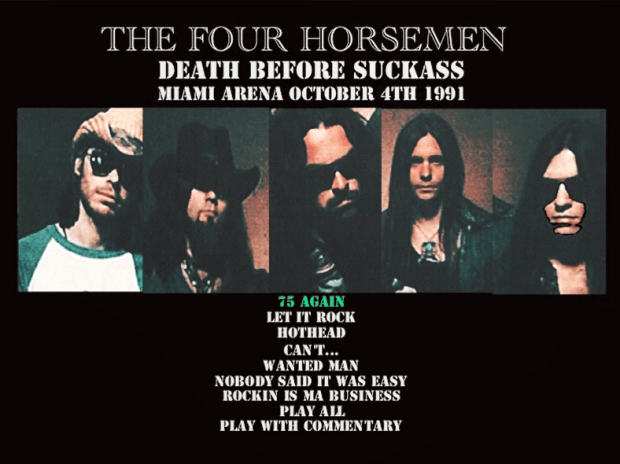
THE FOUR HORSEMEN – Death Before Suckass – Live at Miami Arena (DVD – Version 2.0 sourced from original 8mm tape)
The Four Horsemen were so fucking good, and this DVD really is the proof. Man, how cool did they look? Frank C. Starr, rocking the stage all confident in his pirate shirt, black gloves, and white sneakers. A look I admittedly tried to emulate in the 1990s. Haggis wonders how this “guido car mechanic from Long Island” managed to end up opening for Lynyrd Skynyrd? Because he was born to be there!
The video quality is surprisingly good for an audience bootleg. The camera is high in a balcony, but close enough to the stage to get some great shots. The camera moves around and zooms in from its vantage point, getting clear images of pretty much the whole band except the “big fucking Yeti” behind the drum kit. The video isn’t all that grainy, and there’s a consistently entertaining commentary by guitarist Haggis! He’s very grateful to whoever smuggled a suitcase-sized video camera into the arena to film the band with such care.
Opening for Skynyrd, Dimwit Montgomery (the aforementioned Yeti) swiftly kicks things into motion with “’75 Again”. According to Haggis, the band were practising their “big stage rock star posing”, something he learned from the Cult. Onto “Let It Rock”, the groove is honed and the band is synced up like conjuring “the ghost of Bon Scott”. Frank Starr and Dave Lizmi are the most mobile of the band, moving from one side of the stage to the other, back and forth, while the others tend to stay put. Haggis wonders how Lizmi could hear himself solo when his amps were on the opposite side of the stage! Though the tune starts as a groove, it quickly turns into a blitz.
Onto “Hothead”, a track partly stolen from Humble Pie, says Haggis. Apparently nobody noticed. Frank’s in total rock star mode, just killing it vocally. Then a cover of Savoy Brown’s “Can’t Get Next to You”, the band settle into a low groove. An excuse for Lizmi to show off his stuff, but any excuse is a good excuse. When he solos, he owns the stage. You can see him break a string mid-solo; he just sweeps it out of his way and keeps going.
Moving on to “Wanted Man” (the first song recorded for Nobody Said It Was Easy). Frankie is just fun to watch. He truly was a great frontman. Lizmi’s solo is out of this world, completely different from the album version. A shirtless and tattooed Haggis is so skinny he looks like he should be hooked up to an IV instead of a guitar. But enough with the deep cuts. It’s time for the hits: “Nobody Said It Was Easy” and “Rockin Is Ma Business”. Why was this band not huge? They were so fucking good and their songs were fucking brilliant!
Ironic fact I learned: the man named after a pudding made of a sheep’s innards was a vegetarian.
This DVD can be acquired directly from the Four Horsemen store. It is certainly worth it, even if you already own the Death Before Suckass CD. It’s a different show with a similar setlist, but the audio seems superior. The commentary seals the deal. Essential Four Horsemen buy.
DEF LEPPARD – Too Many Jitterbugs (The Early Years Disc 4) (2019)
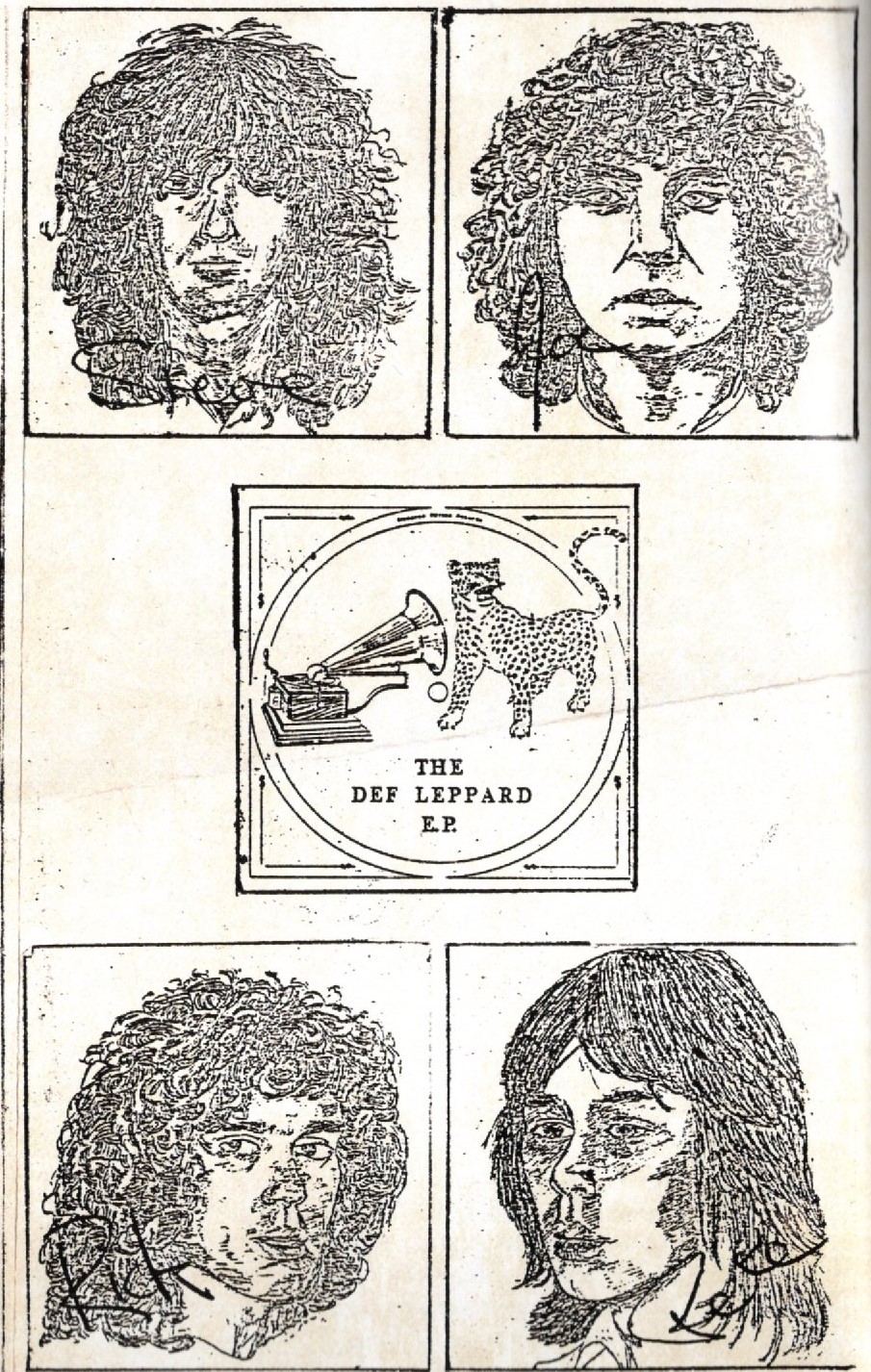
Because of the non-chronological nature of The Early Years box set, we are now back at the beginning: Def Leppard’s first rare EP, and singles releases. Only on Disc 4 do we finally get to go back to the original Def Leppard EP, which has seen a few re-releases over the years, but none as convenient as this.
The story goes that young Def Leppard used money loaned to them by Joe Elliott’s father, and booked a studio for one weekend. Drummer Tony Kenning was fired just before the start of recording, for being sidetracked by a girlfriend. Frank Noon from The Next Band (featuring Rocky Newton on bass) was chosen to fill-in temporarily. It was The Next Band’s own three-song EP release that inspired Leppard to make their own. They only had a handful of rehearsals with the drummer completed before it was time to hit the studio.
“Ride Into the Sun” was properly perfected when it was re-recorded in 1987 as a Hysteria B-side. The original still boasts the same relentless riff, but without the increased velocity. The chorus is a bit different, but here it is: the beginning! Out of the gates with a good song, with room to improve. And improve young Def Leppard would.
Next on the EP is “Getcha Rocks Off”, the only track that has been available on CD for three decades. It saw its first digital release on Lars Ulrich’s excellent 1990’s NWOBHM compilation. The version that eventually made its way to On Through The Night is heavier, but this ground-floor version has an identical arrangement. The solo work shows the band had early talent, and the riff demonstrates their ability to come up with the goods.
Finally: “Overture”, the big Def Leppard epic that later closed On Through the Night. A little progressive, the 7:45 track meanders from mellow acoustic opening to galloping riff to blasting guitar workouts. Much of it is first takes, with Joe having little time to finish the vocal. However the job was complete. The record was made.
All that was left was to ask Frank Noon to join the band full-time, which he declined. 15 year old Rick Allen was selected instead. (Noon later reunited with Rocky Newton in Lionheart.)
All 1000 copies of the EP sold within a week. Radio started to play Def Leppard. Finally they signed the big record deal and the rest is history. Still, there are plenty of rare tracks from the early years that were recorded. Most were released but some are here in this box set for the very first time.
“Wasted” with “Hello America” on the B-side was originally released in 1979. These are early versions that differ from the Tom Allom-produced tracks on the album. Neither are as as heavy, with “Wasted” in particular needing more bite. These versions, by Nick Tauber, were deemed not worthy of album release by the record company. The ferocious “Wasted” riff is there but needs to be turned up – way up! “Hello America” fares better as a more melodic rock tune. It lacks that synth riff on the chorus of the song, which makes it a little more raw. It also has a really long fade-out.
The Tauber sessions yielded two more songs that were never released. “Rock Brigade” and “Glad I’m Alive”, for whatever reason, were held back until The Early Years box set. “Rock Brigade” is probably the best of these tracks. Rick Allen’s marauding drum rolls steal the show, but not as much as on album. In general, the Tauber versions are less aggressive recordings, and Joe’s vocals are not as unleashed as on the final album. “Glad I’m Alive” is the only one that didn’t make the album. It is the song with the lyric “too many jitterbugs”, but is otherwise unremarkable. Not many hooks (if any). It is only available in The Early Years.
Leppard’s next B-side was “Good Morning Freedom” from the eventual “Hello America” single. This is a song that surprisingly and delightfully was resurrected by Leppard live (more on that later in the series). It is early quintessential early Leppard, centered on the riff and designed to get the heads-a-bangin’. It is not without hooks, and might be as good as anything else On Through the Night has to offer, “Wasted” notwithstanding.
The next tracks are the disc are single edits, which are padding to some and valuable curiosities to others. Moving into the High ‘n’ Dry era, they are edits of “Let It Go”, “Switch 625” and “Bringin’ on the Heartbreak”. Nice to have to be complete, but not essential listening. All three are obviously better in their full length versions, but you gotta try what you gotta to get on the radio. “Let It Go” has a shorter intro, and a truncated middle section, weakening its impact. “Heartbreak” fades out early.
“Heartbreak’s” B-side was a fast and heavy fan favourite called “Me An’ My Wine”. It was given a raucous and fun music video when it was remixed by Mutt Lange in 1984. Both “Wine” and “Heartbreak” were remixed for 1984 reissue, and were included in updated editions of High ‘n’ Dry. All versions, original and remixed, are present in this box. For some, the remixed “Heartbreak” with added keyboard accents will be the favourite, because it’s the one they grew up with. It sounds more like a Pyromania single. The keys do help spruce up the song, which honestly has a couple dead spots otherwise. As for “Me An’ My Wine”, it has a longer intro and the drums have been treated to sound a little more 80s. Incidentally, though you can get them on old High ‘n’ Dry CD pressings, this is the first time that these remixes have been available in a remastered form.
And that’s the disc — a damn fine one in fact, because it manages to include every non-album track that Leppard released during those early years. It makes for a fun listen, as you hear the band evolve. Even if some songs repeat, they are different enough to not interrupt the flow. Many of the B-sides have never been released on CD format before, so the value here cannot be understated.
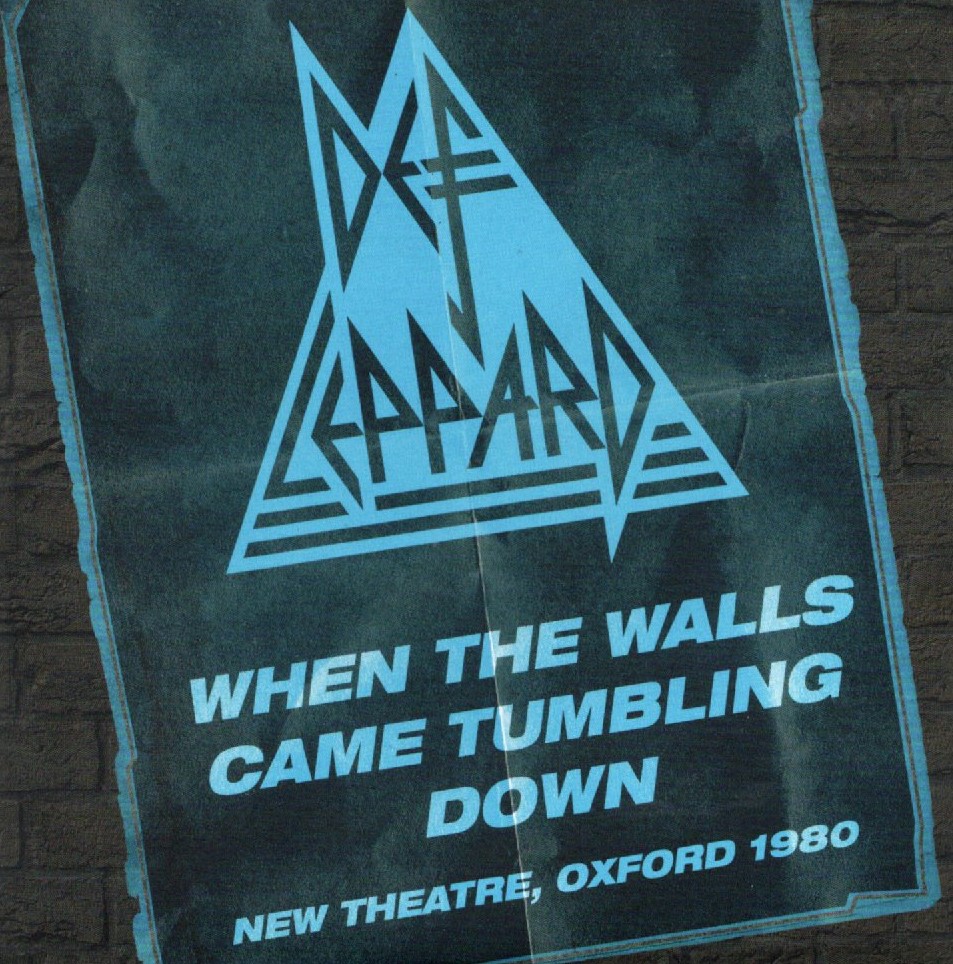
DEF LEPPARD – When the Walls Came Tumbling Down – New Theatre, Oxford 1980 (The Early Years Disc 3) (2019)
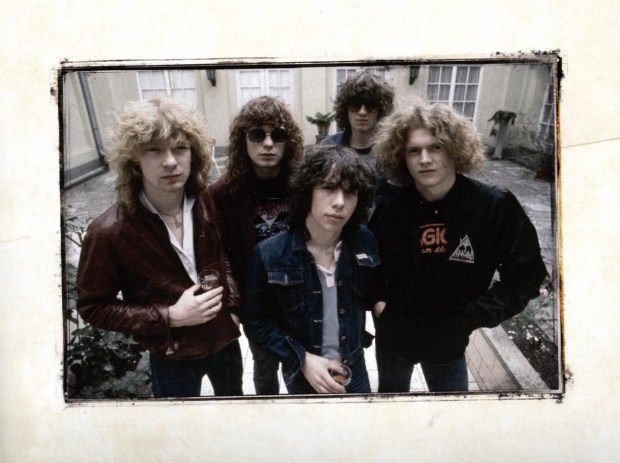
Of Leppard’s many live releases, When the Walls Came Tumbling Down is the most ferocious. The early Leppard including Steve Clark and Pete Willis was a different kind of predator. This particular setlist, captured after the release of the debut album On Through the Night, is extremely valuable to fans. The band performed all 11 albums tracks, a clutch of early singles, and unreleased material.
“When the Walls Came Tumbling Down” is played first, full speed ahead. Joe playfully changes one of the choruses to “When Oxford Came Tumbling Down”, and without pause they barrel right into the adrenalized “It Could Be You”. There are no touch-ups or fixes done to these recordings.
The single “Rock Brigade” has a different flavour, more focused on the melody, with the foot less on the gas pedal. Joe Elliot demonstrates confidence. Rick Allen is a monster on the drums and Rick Savage is audibly holding it down. Keeping to a similar tempo, “Satellite” swaggers all over the stage with determination, and Pete Willis absolutely slaughters on the solo.
There’s only a brief respite. “Medicine Man” is an unreleased song that was later reworked into “Rock Rock (‘Til You Drop)” from Pyromania. The quiet opening only lasts a moment before that now-familiar riff kicks in. There’s no question that “Medicine Man” benefited from its later evolution, but many elements of the song were already, joyfully, in place.
“Answer to the Master” is rolled out with that snakey riff, and Joe is extra-engaging. A trend is now apparent: virtually all these songs are better than they are on album. Another unreleased gem called “When the Rain Falls” might be more familiar under its later name, “Let It Go” from High N’ Dry. Some elements including the riff survived to the final track, but what a serious riff that is! When Leppard had both Willis and Clark in the band, they were a riff factory.
Back to On Through the Night, “Sorrow is a Woman” is more lively than it is on LP. Same with the non-album single “Good Morning Freedom”. From the drums to vocals to sheer energy, it’s better than its studio counterpart, with an intense solo to burn.
“It Don’t Matter” has a cool groove, and more drive than it does on album. This version is evidence that Joe already had ample frontman abilities. This takes us to “Overture”, the Leppard epic with the soft opening and big arrangement. This is where Leppard’s two lead guitarists get to show off in dramatic fashion.
The last unreleased song is “Lady Strange” from High N’ Dry, which is in more complete shape than the other two. As it is on album, it’s one of Leppard’s most impressive songs so far. Riff, verse and chorus are combined in perfect form. Only minor tweaking would be needed before it was album ready.
The final batch of album songs for the night are laid out. “Getcha Rocks Off” is a blast. “Hello America” is looser than album. And “Wasted”? Total blitzkreig. Unstoppable and unbelievable. Finally the very last track, “Ride Into the Sun” is the timeless beloved B-side, originally from the Def Leppard EP making it three for three EP tracks. It’s over before you know it, two and a half minutes are gone and that’s all folks!
Even though it is completely lacking in hit singles, it might not be going out on a stretch to say that When the Walls Came Tumbling Down is a strong contender for Best Live Def Leppard album.
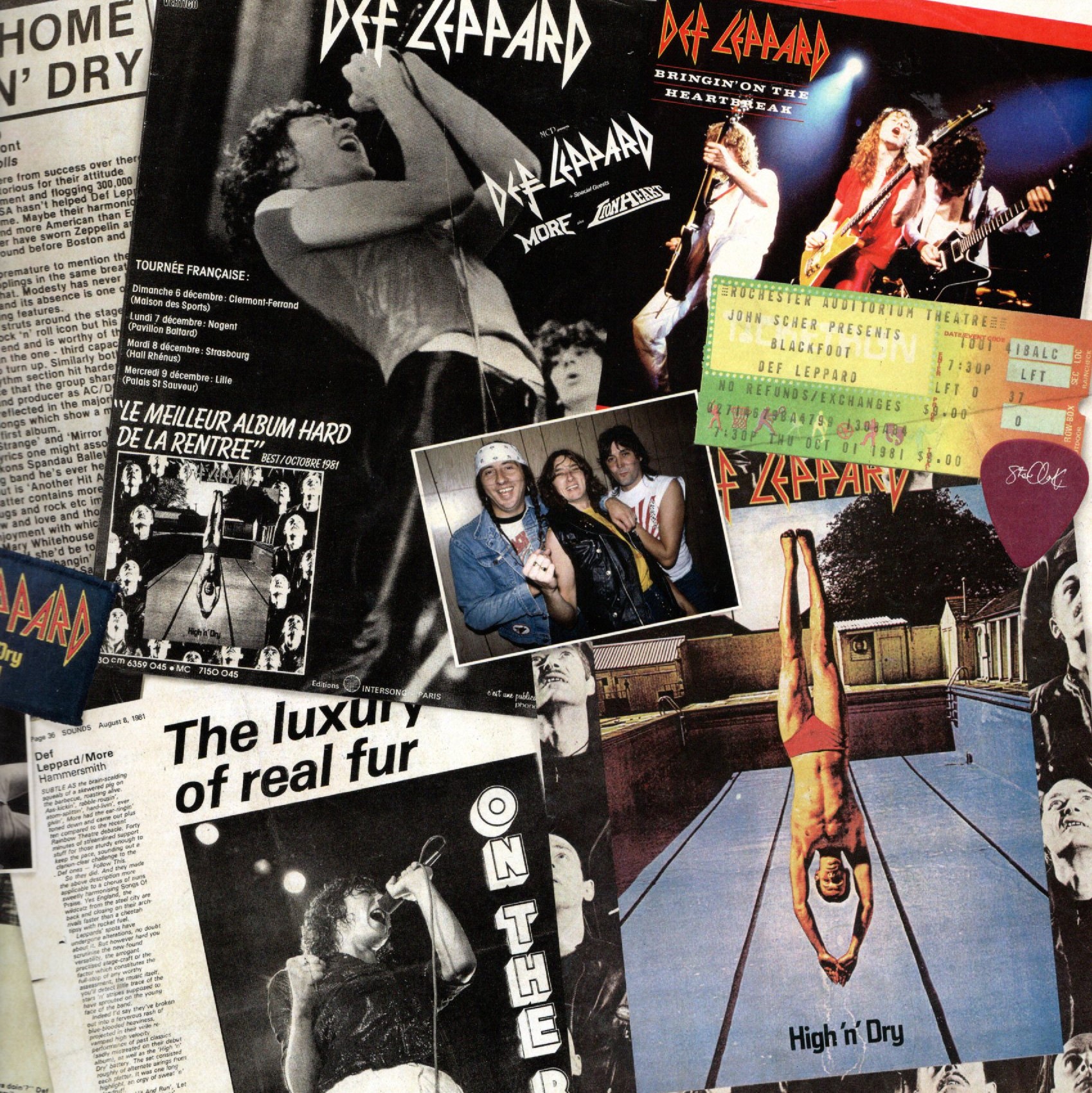
DEF LEPPARD – High ‘n’ Dry (The Early Years Disc 2) (Originally 1981, 2019 remaster)
Leppard’s pride in their debut album only extended so far. They knew that the sound they heard in their heads was not captured on tape. So they waited, and waited, and waited, until AC/DC producer Robert John “Mutt” Lange was available. When he had completed the recording of Foreigner’s 4 (six million copies sold), they got to work on Leppard’s second record. And work they did, with the band members unsure after many takes if they could even play it any better. They could, and they did. With Lange on hand to help refine the songs they had written, Leppard had never sounded better.
Today, High ‘n’ Dry is often cited by diehards as the band’s best record. It bares the teeth of AC/DC, but the attention to melody and harmony was typical of more commercial bands. It was a winning combination; High ‘n’ Dry has no filler songs.
The sharp opener “Let It Go” makes the changes apparent. A better recording, a more confident (and screamy) Joe Elliott, and an incessant bass groove propels it. The guitars cleverly lay back until necessary for the big rock chorus. All dynamics missing from On Through the Night. This time, they could afford a real cow bell — no more tea kettle! With “Let It Go” opening on such a solid, fast note, where do we go from here? No letting up! “Another Hit and Run” is even better, with quiet parts contrasting with the increasingly heady! Joe has found his voice, and uses it to rip and shred. Don’t try to follow the lyrics — it’s all about how the frontman screams them at you.
Finally, Rick Allen is permitted to slow down for the sleek, slower groove of “High ‘N’ Dry (Saturday Night)”. This tenacious track takes its time to blow you away. It was also one of three they recorded in a single session for music video purposes.
Another video from that session was the hit ballad “Bringin’ on the Heartbreak”, although MTV aside, it didn’t really have the intended impact until later. Originally titled “A Certain Heartache”, with Mutt’s help they steered it away from its Zeppelin-y origins and honed it closer to a hit. Sad verses are coupled with a chuggy riff at the chorus, which is beefed up by the backing vocals of Mutt and the band, gradually finding that sound step by step. The lyrics are nothing to write home about with, “You got the best of me,” predictably rhyming with “Oh can’t you see.” But then the track ends not with a total fade, but with the urgent pulse of a new bass track. It’s the brilliant instrumental “Switch 625”, paired with the ballad as if to say “don’t worry folks, we haven’t lightened up.” Leppard were, after all, a part of the New Wave of British Heavy Metal bands. “Switch 625” is something that would have generated melting heat on that scene. Written solely by Steve Clark, this is one instrumental that is not filler in any way. It’s a song.
So ended side one, but side two commenced with the crash of “You Got Me Runnin'”, a single-worthy number that scorches the skin with its burning tower of riffs. Joe bemoans a girl that he don’t trust, while Steve Clark and Pete Willis do their best Angus and Malcolm. Rick Allen, all of 17 years old now, keeps the beat minimal while Rick Savage maintains the pulse on bass. When Pete breaks in with his guitar solo, it’s one of the best of his time with Leppard. But it’s the crucial chorus that keeps you coming back, a singalong brute with gang vocals that could have been lifted from an era past.
Then things get eerie with “Lady Strange”, hurling multiple riffs at the speakers, and boasting a chorus to back it all up. Tough guy Joe claims to have never needed love before meeting his “Lady Strange”. This is the only track with a Rick Allen co-writing credit, and features a scorcher of a Clark guitar solo. Elliott’s screams have never sounded more tormented. Brilliant stuff.
Without a break, we plow “On Through the Night”, and one of the fastest tracks on the album. There’s a surprising, quiet Zeppelin-y middle breakdown that’s welcome, but otherwise this track is built for speed. “Rock n’ roll is no safety net!” screams Joe. If there were any single track to delete from High ‘n’ Dry, you could make an argument for “On Through the Night”. However, fact is you need it to set up “Mirror, Mirror (Look Into My Eyes)”.
Displaying their penchant for parentheses, “Mirror, Mirror (Look Into My Eyes)” takes Def Leppard back to dark territory. A single spare Clark riff carries the song while Allen and Savage lay back. It’s the kind of brilliant construction that Clark was becoming the master of. Tension building riffs, stinging solos, topped with another perfect Joe Elliott vocal melody.
Finally it’s the all-out chaos of “No No No”, a memorable way to close out a hell of an album. Breakneck pacing, top lung screaming, and a blitz of a Willis riff. Melody? Unimportant! If the guitars weren’t so obviously well arranged, this could have been punk rock.
Different versions of “No No No” run different lengths. This one is 3:12 with a slight fade and then abrupt stop. One can never go wrong with an original vinyl LP, featuring an infinite groove at the end, with Joe Elliott shouting “No!” over and over again, until you either stop the record yourself, or wait until the ultimate end of the universe — your choice. Another variation of interest is the the 1984 reissue of High ‘n’ Dry, with two remixed bonus tracks. We will discuss those later as they are included on Disc Four of this set.
Praise today for High ‘n’ Dry is fairly universal. Martin Popoff rated it higher than Pyromania. It truly is a remarkable photograph (pun intended) of a brief period in Def Leppard when they were still solidly riff-focused, but with the moderate temperance of Mutt Lange. A period that has never and can never be repeated.
Rush weren’t really known as a “cash grab” kind of band. That’s why the Christmas 2009 release of Working Men was so surprising to fans.
12 tracks, all but one previously released on live Rush albums of recent vintage. It is not difficult to figure out that this disc was created to keep Rush product on the shelves while the band was on break during the Christmas season. While the music is excellent (obviously), it is hard to imagine a Rush fan that would play this single-disc album before listening to the actual live albums that the tracks were sourced from. This is Rush’s version of You Wanted The Best by Kiss, but with only one unreleased recording instead of four.
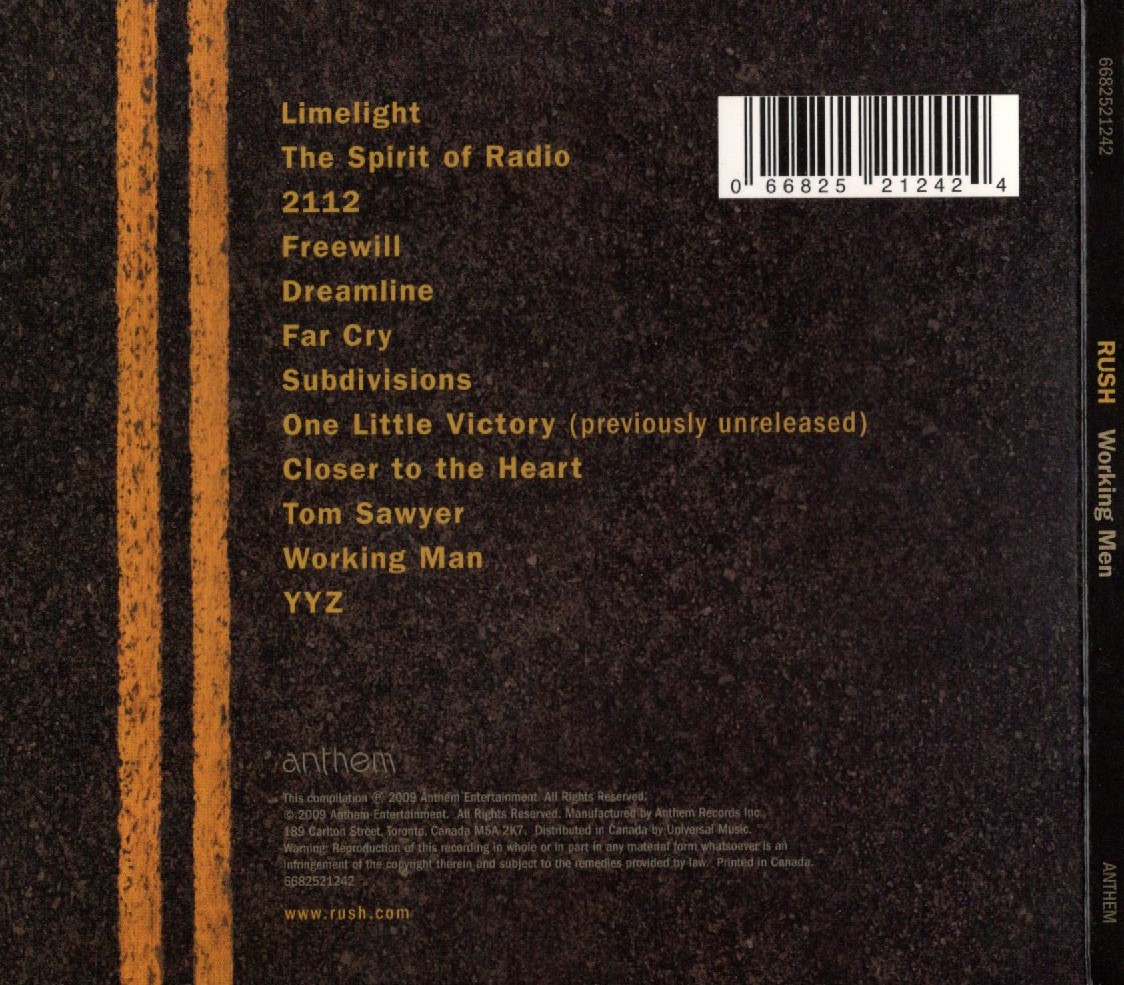
Here’s a tracklist, and a breakdown of where these tracks were lifted from:
1. “Limelight” (From Snakes & Arrows Live)
2. “The Spirit of Radio” (From R30)
3. “2112 Overture/The Temples of Syrinx (From Rush in Rio)
4. “Freewill” (From Snakes & Arrows Live)
5. “Dreamline” (From R30)
6. “Far Cry” (From Snakes & Arrows Live)
7. “Subdivisions” (From R30)
8. “One Little Victory” (From the R30 tour) (Previously Unreleased)
9. “Closer to the Heart” (From Rush in Rio)
10. “Tom Sawyer” (From Snakes & Arrows Live)
11. “Working Man” (From R30)
12. “YYZ” (From Rush in Rio)
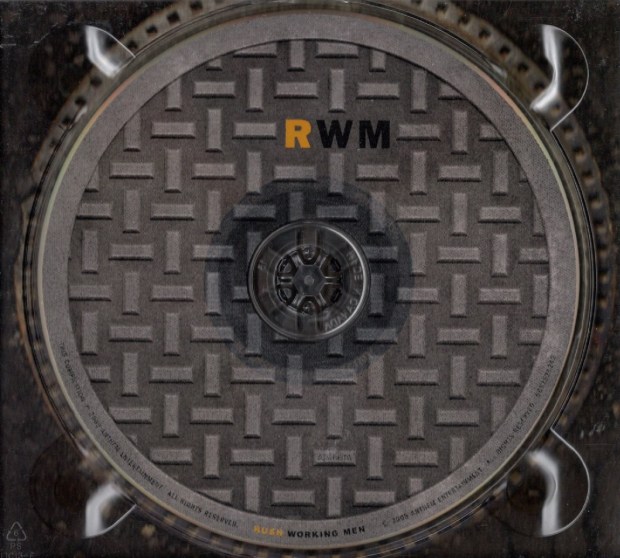
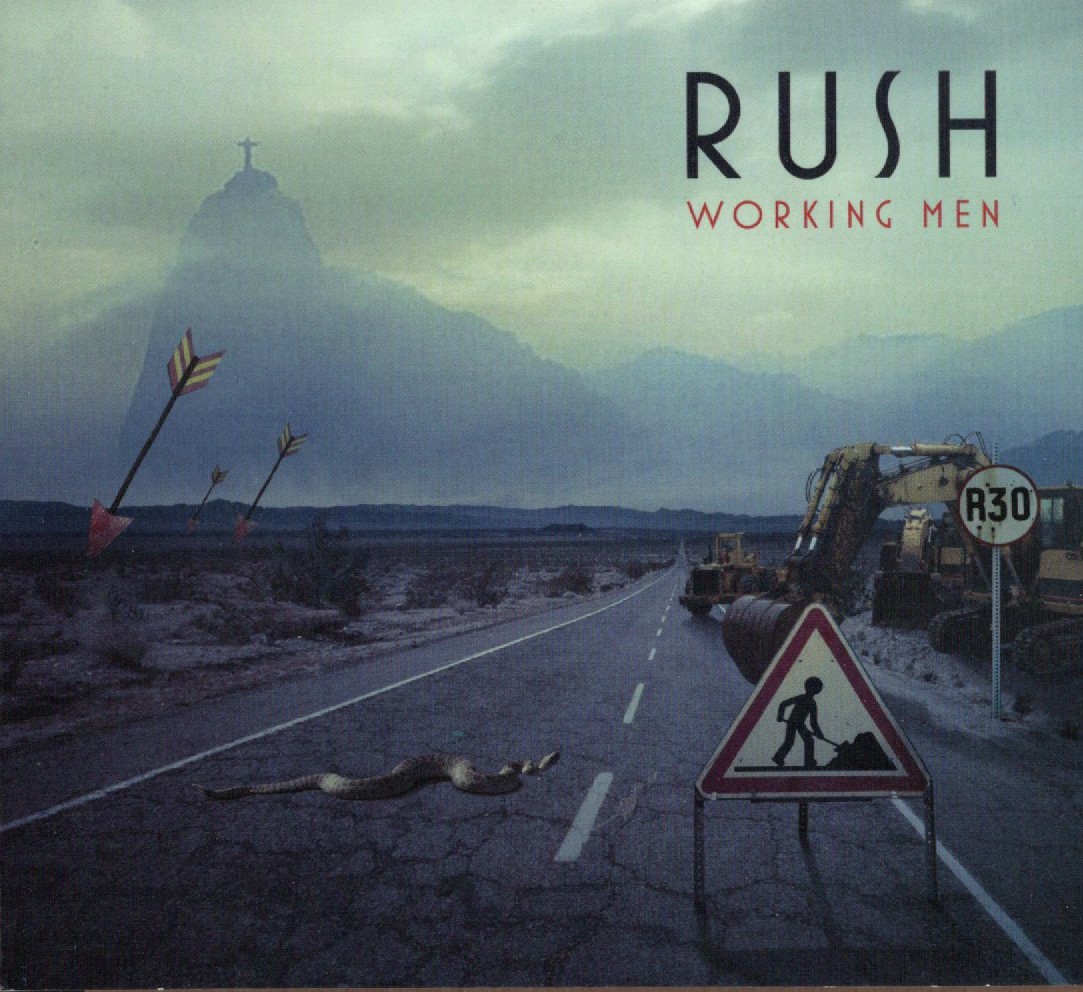
“One Little Victory”, a stormy firecracker of a version, is the lone previously unreleased song. Is that one song worth your $15? You decide. Unfortunately “One Little Victory” is basically all you’re going to get for your money. There is no booklet and there are no liner notes to speak of. The cover art, once again by Hugh Syme, is quite nice, hinting at past works.
The songs fade-in and fade-out, rather than flow as a seamless listen. The selections lean heavily on oldies as opposed to newer tracks, which does not really reflect what a Rush concert was about at that time. Clearly, this was to entice consumers who wanted songs they have heard frequently on the radio. At least the running order is well sequenced for maximum firepower.
This release is not particularly for anybody except completists and Rush diehards. Everyone else would be well advised to spend their money on Rush In Rio, R30, or Snakes & Arrows Live.
2/5 stars, not for the music, but just because it’s a bit of a Christmas cashgrab.
JETHRO TULL – The Jethro Tull Christmas Album (2003 Fuel 2000)
With an actual new studio album, The Zealot Gene, due in 2022, The Jethro Tull Christmas Album is no longer the final record by the storied band! It is however the last one with Martin Barre, putting a (night)cap on the largest part of Tull’s discography. Although it’s a seasonal album, it is very Tull and would not have been a bad farewell if it was indeed the last record (as we all thought it would be). 16 tracks, over an hour in length…but how Christmas-y is it?
With a blast of flute, “Birthday Card at Christmas” addresses those whose birthdays fall during the holiday. A fine acoustic Tull tune (as they all are), it doesn’t sound particularly seasonal. Which will suit many of us just fine. Flute acrobatics stun the senses, trickling out the speakers like little blasts of hail. Moving on to “Holly Herald”, this instrumental medley has more of the Christmas flavour. Recognizable carols, with the flute providing the main melody. Andrew Giddings’ accordion is a lovely touch. Pure winter delight!
“A Christmas Song” is a Tull original, a re-recording of a 1968 B-side. It has always been an intriguing song, sparse and stark. Mandolin and acoustics ring true with the march of a drum behind. It is logically followed by a re-recorded sequel tune, “Another Christmas Song”, which has its own modern flavour based on keys, flute and electric guitar. This soft ballad is like the sound of a clean snow on Christmas day, though the lyrics offer more depth.
A jazzy instrumental “God Rest You Merry Gentlemen”, led by flute, reminds of the old Mr. Bean sketch where he conducts the Christmas band, and goes all jazzy. Barre’s guitar here is sublime. When Tull get jazzy, they never disappoint. Just dig it and get down, in the snow! It’s impossible not to like, especially if you love instrumental acrobatics. The bass work by Jonathan Noyce just rolls. Next is the re-recorded “Jack Frost and the Hooded Crow”, a 1982 original B-side. A little less direct, a little more progressive. A very Tull-sounding “Last Man at the Party” is another acoustic original. The lyrics relay images of a traditional Christmas party even if the music is just Tull being Tull. Bouncing flute, speeding acoustics.
“Weathercock” is a new version of the closing track from Heavy Horses. It’s more about traditional country living, but with winter imagery. Not an immediate song by any means, but fitting the vibe of the album. Moving on to “Pavane” composed by Gabriel Fauré, this lovely tune has exotic, smooth and challenging sections, but it’s not very Christmas-y. The original was a piano work, but this version balances the spotlight between players. More seasonal sounding is “First Snow on Brooklyn”. “I could cut my cold breath with a knife,” sings Ian. A beautiful string section backs this original song, somewhat epic, warming the soul like a hot coffee at Christmas.
You’ll love “Greensleeved” (a take on “Greensleeves”). It’s an instrumental version of the traditional classic. Its ties with Christmas go back to 1686 so it is not out of place here. But man does it swing! This is just fun, with monstrous instrumental mastery. Get up and dance to this brilliant little tune. Then it’s a remake of Tull’s “Fire at Midnight”, one of their most memorable Songs from the Wood. This take is more laid back, but is unmistakable as the Tull mainstay. Somewhat obviously, “We Five Kings” is Jethro’s version of “We Three Kings”, once again rendered in a laid back jazzy instrumental vibe. Challenging to play, easy to listen to. Check out Barre’s acoustic guitar solo work.
The excellent single “Ring Out Solstice Bell” conveys that Christmas joy. It’s likely the most Christmas-y of all the music on this album. Anderson has an occasional knack for a universal melody and “Ring Out Solstice Bell” lets them float in the cold winter air. A magical seasonal tune for anybody, even the Scrooges or Grinches on your list. If there’s only one tune you need on this album, making it “Solstice Bell”. It is, of course, an update of the original on side one of Songs from the Wood. (The 2004 single from this album had two exclusive B-sides as well.)
One of Tull’s greatest instrumentals in their long illustrious history was J.S. Bach’s “Bourée”. There is a new version on the Christmas Album. It’s different. Less swing, more relaxed. Still Tull but not repeating the exact same track from the past.
Finally the album closes on a rare Martin Barre original called “A Winter Snowscape”. Quiet, gentle, yet determined. Barre’s acoustic work is shadowed by Ian Anderson on flute. It is a perfectly understated closer to a unique Tull album.
Of course, like anything else, this album was reissued later on with a bonus live album called Christmas at St. Bride’s 2008. As a live album it deserves its own standalone review, but it’s unfortunate that to get it, some will have to buy the album twice. Not very Christmas-y…or perhaps the pinnacle of modern Christmas tradition?
On it’s own, this is a pleasant seasonal album to play while wrapping your gifts or celebrating with friends.
No matter how I do this, I’m doing something out of order. So here goes. Hi! Welcome to the DEF LEPPARD REVIEW SERIES where we will attempt to cover in some way everything Def Leppard here at LeBrain HQ. Some of these articles will be re-reviews. Some will be beefed up, some will be streamlined.
What about order? Deciding to start with The Early Years box set, we could go in two ways. We could run through Discs One through Five, starting with On Through the Night. Or, we could go chronologically and begin on Disc Four, Too Many Jitterbugs, which has the first EP and early demos pre-dating the album. Obviously, we’ve decided to to go in disc order, and worry about chronology later. So let’s get, let’s get, let’s get, let’s get rocked.
DEF LEPPARD – On Through the Night (The Early Years Disc 1) (Originally 1980, 2019 remaster)
The obscenely young quintet from Sheffield were starstruck. Drummer Rick Allen was just 16 years of age. There Def Leppard were in Tittenhurst Park, Ringo Starr’s home formerly owned by John Lennon, with Judas Priest producer Tom Allom, laying down tracks for their debut LP. Signed to Vertigo, the band was filled with awe to be on the same label as their heroes Thin Lizzy. Recording nine songs from their live set and two newly written tracks, the band took just three weeks to get the job done. Unfortunately, so much time was spent on Steve Clark and Pete Willis’ guitar overdubs, that Joe Elliott only had two days left to record all his vocals. This can be heard on the final product. At least Joe got to sleep in Lennon’s bedroom for the duration of the recording!
On Through the Night is a beefy 11 tracks, written mostly by Clark and Elliott with seven Rick Savage co-writes and seven by Pete Willis. It showcases ambition, promise, and raw talent. In a word: potential. One of its major strengths is the dual guitar team of Clark and Willis. Clark tends to be thoughtful and compositional in his solos, while Willis effectively jumps on the wah-wah.
“Rock Brigade” wastes no time getting cranked, 16 year old drummer Rick Allen going wild on the big tom rolls. An adrenalized band gets to work on a serious riff, while Clark and Willis dart in and out with curt fills. The handclaps sound lifted from a Judas Priest anthem, but this song burns it up. Joe’s vocals are set back in the mix a bit more than we’re used to, but there are hints of the kind of backing vocals that Def Leppard would endevour for in the future. In short, “Rock Brigade” kicks ass.
A strange layered vocal mix fails to hit the mark that Leppard would do with regularity later on, but it does serve to introduce “Hello America” uniquely. This naive rocker even has a little bit of synth to accent the sugary chorus, but otherwise sticks to the driving riff. Clark comes in with a wicked solo, showing off some of the creative technique he’d be famous for. A strange video clip for “Hello America” was filmed, with the drum kit featured at the front of the stage and everybody else behind. Rick Savage got stuck at the very back.
The acoustic guitars are out for “Sorrow is a Woman”, too heavy to be called a power ballad. The choruses rock heavy as anything else, though the verses remain quiet. This is one of the tunes that Joe could have used some more time refining. For fans of the early solo work of Clark and Willis, get ready for some pretty epic guitar constructions. They tell their own stories within the song.
One of the two songs written in the studio was “It Could Be You”: Fast choppy metal, with a Priest-like riff and unusually high Elliott vocals. Cool riff but more refinement time needed. Its energy is remarkable and as with all the tracks on On Through the Night, Rick Allen burns it up on the drums as a supernovic ball of nuclear combustion.
Taking it back to a metallic city groove, “Satellite” is the first use of one of Joe’s favourite astronomical objects in a Def Leppard song. This is a great car tune. Cool and classy staccato guitar picking on the second verse. Takes an unexpected acoustic detour midway, showing the ambition and ability that these five kids had in their blood. Then it breaks into another unique guitar section after the Willis guitar solo. Clearly, not the commercial techniques later employed by the band, but more an effort to emulate some of their heroes like Page and Lynott, as best they could.
Talking of ambition, “When the Walls Came Tumbling Down” closes side one with nothing but. A pretentious Joe Elliott monologue introduces the track cheesily enough.
In the first day of the first month, in some distant year, The whole sky froze gold. Some said it was the aftermath of the Radium bomb, And others told of a final retribution. A terrible revenge, from the gods.
The post-apocalyptic settings is a metal niche unto itself, launched by Black Sabbath and maintained by Aerosmith, Queensryche and Judas Priest. This is not one of Def Leppard’s more successful attempts at getting serious, but you have to marvel at their cohones for trying.
The “Wasted” riff, a Steve Clark creation, is one of Leppard’s most legendary. This simple steamer is pure power set to music. That riff, what a riff! Just a few chugs and then a unified resolution. But what a riff! No wonder the band had to resurrect it in recent years. The fans wouldn’t let it stay buried. “Wasted” is a centerpiece gem, and itself contains a certerpiece of a guitar solo by Clark, skillfully constructed by the young protege.
“Rocks Off” contains the annoying crowd noise overdubs, clearly artificial, but you can’t stop this little one from launching. Once again it’s all about the riff, and the Clark era of Def Leppard do not get enough recognition for their riffs. The song is disrupted by a solo section that harshly pans the guitars from right to left in distracting fashion.
The other song that was written in the studio is the surprisingly strong “It Don’t Matter”. Some very rich guitars, properly spaced in the mix, make for some cool riffs and licks. There’s a laid back chorus and good backing vocals. The cowbell is also effective except it’s not a cowbell. The band didn’t have one so they used the house tea kettle for which they were properly scolded by the housekeeper Ruth. Thing is — it sounds OK!
Moving on to the penultimate track, “Answer To the Master” has a verse that is stronger than its chorus, which is really more about the riff. Rick Allen gets the spotlight for a brief moment before the band break into an AeroZeppelin-like funk. “Whole Lotta Walk”? Then there’s a startling guitar solo section more influenced by the likes of Lizzy.
Finally Leppard decided to go with a big epic as their album closer, “Overture”, which also closed their debut EP (which is on Disc Four of The Early Years). It’s another post-apocalyptic soundtrack, a multi-parted manufacture. Some truly great guitar parts are buried within, but this track is an example of overreach. The kind of truly epic recording they were striving for could not be achieved in the time they had, but you can hear frequent shots of brilliance. Each riff and lick has its own unique hook.
On Through the Night went to #15 in the UK but failed to crack the top 50 in the US, charting at #51. It did not go Platinum until 1989, well after Hysteria made Def Leppard into demigods. If anything it planted the seed and made the band more focused on what they wanted to achieve when they had a second chance. And it wouldn’t be long before fate hooked them up with Robert John “Mutt” Lange, which would alter their course forever. On Through the Night stands today as a Polaroid of an innocent past, when Def Leppard caked on riff after riff in an effort to reach the heights of the bands they adored. It lacks focus, both within the songs and on Leppard’s collective strengths. Focus that they would soon gain in spades, and later in excess!
VANDENBERG – Vandenberg (Originally 1982, 2011 Rock Candy remaster)
I must the only person in the world who doesn’t care about the first Vandenberg album.
There’s nothing wrong with it. I can’t say anything too critical about it. A track or two aside, it just fails to click.
Of course the standout is “Burning Heart”, the song that Whitesnake rehearsed but never released on Slip of the Tongue as they should have. This hot ballad would have been a hit for the ‘Snake, had Adrian Vandenberg not got hurt and replaced on album by Steve Vai. It’s a truly remarkable song that, honestly, deserved the Coverdale treatment. (Fortunately, you can get a rough version of the song by Whitesnake.) It was good enough to use as an effective side one closer.
On another highlight, Adrian plays some stunning classical acoustic stuff on “Wait”. It transforms into a slow, cool dark rocker but has the unfortunate chorus of “Wait, wait, wait, ’til the shit hits the fan.”
“Your Love Is In Vain” is fine, B-level hard rock, akin to Helix, or Talas, or any band of that nature. Bert Heerink is a somewhat generic singer who doesn’t help elevate the track higher. Kind of a Derek St. Holmes style singer. “Back On My Feet” sounds like a Quiet Riot B-side, right down to the high notes that the bass occasionally hits. “Ready For You” could have been a Van Halen-like speed rocker but lacks the teeth that superior production can bring. “Too Late” has a cool riff and boogie, also recalling Van Halen. Wicked neoclassical, finger-tappin’ solo work too. “Nothing to Lose” is a decent song, with a good chorus that sounds like Talas. “Lost in a City” and “Out in the Streets” are not memorable at all and the production does them no favours.
Let’s say three keepers:
“Burning Heart”
“Wait”
“Nothing to Lose”
Whitesnake should have re-recorded “Burning Heart” properly on the road, when Adrian returned to the band after his injury. They blew a huge opportunity for a timeless hit by not doing so.
The best thing about this album is the guitar work. The songs are secondary.
Special thanks to Jennifer Ladano for telling me to write this story down!
RECORD STORE TALES #951: Set Your VCR! It’s 1986 and KISS Meets The Phantom Is On Tonight!
When thinking back about my earliest rock and roll discoveries, it’s important to recall the order in which I got the albums, or first heard the tunes. It seems like I had always known “Rock N’ Roll all Nite”, but since my first Kiss albums were Alive! and Hotter Than Hell, those were the songs I knew best. And I barely knew them! I got my first Kiss in September of ’85. But I was learning slowly. Eventually I’d get Asylum, and gradually tape Kiss albums from my neighbour George.
Something else happened that exposed me to Kiss in a new way, that I sometimes forget about. It was the first time I saw Kiss Meets the Phantom of the Park.
Everybody knew about Kiss Meets the Phantom, but few of us were old enough to have seen it. When it showed up in the TV guide one week, on some Buffalo station, it seemed like every kid with access to a VCR set it to record. It was being shown at something like 1:00 in the morning on a Sunday.
Upon waking, I got my sister up early and we raced downstairs to watch. We did not have time to watch the whole thing that morning. It was winter, possibly the tail end of Christmas holidays, and we were off to the lake for one day. We watched some, went to the lake, had lunch at the Embassy, and came home to finish the movie.
I noticed there were far more ads to fast forward through on late night TV than during the day!
Actual ads from the actual tape of the actual night.
My sister recalls liking Kiss Meets the Phantom; my memories are quite different. I was bored to tears any time Kiss wasn’t on screen, and you had to wait through, like, an hour (with ads) for Kiss to arrive at the bloody park! I didn’t know who this Anthony Zerbe fellow was, but at age 13 I considered him possibly the worst actor I had ever seen.
It was my first time seeing Peter Criss on video and not just still photos, and I was surprised at his voice. I told everyone, “Peter Criss sounds like Aquaman.” I had the show right, but the character wrong. Michael Bell did the voice of Peter Criss in Kiss Meets the Phantom, and Wonder Twin Zan in the cartoon Superfriends. Legend has it that this was because Peter didn’t show up to loop his lines in post-production. Whatever the case, it led to a different urban legends: that Peter Criss had given up rock and roll, and taken up a lucrative career as a cartoon voice actor!
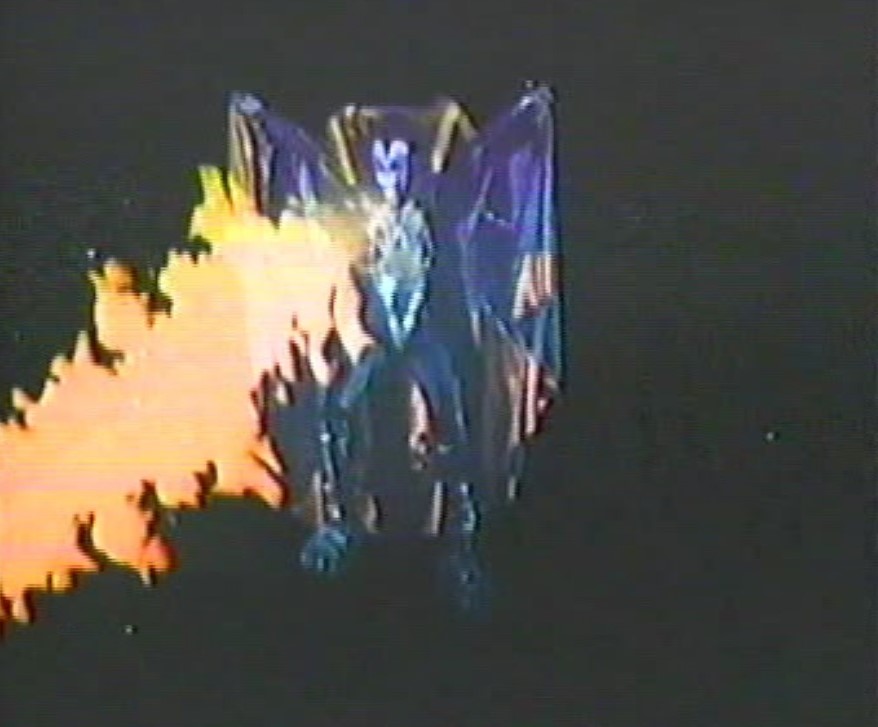
I thought Gene’s distorted voice was tiresome after a while, and Paul seemed the coolest. My sister liked that Kiss were like superheroes with powers. On the other hand, I didn’t like that. If Paul Stanley couldn’t shoot a laser beam out of his eye in real life, I didn’t understand why he would in this movie. They were still Kiss, still playing the same Kiss songs, but also super-powered. My rigid brain couldn’t reconcile the two.
As for the music, the movie contains several songs that I heard for the very first time that day. “Beth” (acoustic, no less), “Shout It Out Loud”, “God of Thunder” and “I Stole Your Love”. (“Rip and Destroy” doesn’t count.) Now, because I didn’t know these songs, and there were no captions, I had to guess at the titles. “Shout It Out Loud” was the easy one. But these were the live versions taken from Alive II, fast and reckless. Not to mention we were hearing it on a TV with mono speaker; state of the art for the time, but not for proper music listening. So that’s why, for that day at least, I thought “God of Thunder” was “Not a Doctor”, and “I Stole Your Love” was something that sounded like “I Ho-Jo-Ho”.
The process of discovering Kiss was so memorable because it’s so fun. The superhero character aspect appealed to my sister and there’s no denying that it had something to do with why I loved Kiss too. But hearing the songs and albums for the first time can only happen once. And I can clearly remember a tinge of sadness when I finally acquired Rock and Roll Over, the last original Kiss album I needed to finish my collection. I was starkly aware that I was having this experience for the last time: hearing a classic Kiss album, guessing who was singing the songs by the title alone, and discovering hidden favourites. As I learned when Crazy Nights came out, hearing a new Kiss album was simply not the same as discovering the classics!
Kiss Meets the Phantom was a struggle to sit through then, but fortunately I saw it at an age when Kiss still seemed larger than life. Objectively, it is a pretty terrible film, best enjoyed as a trainwreck. The best parts are the concert scenes, which was the closest I got to seeing Kiss live at age 13. It was my first exposure to some really important songs even if I wondered why Gene was singing about being “Not a Doctor”!


 DEF LEPPARD – Raw – Early BBC Recordings (The Early Years Disc 5) (2019)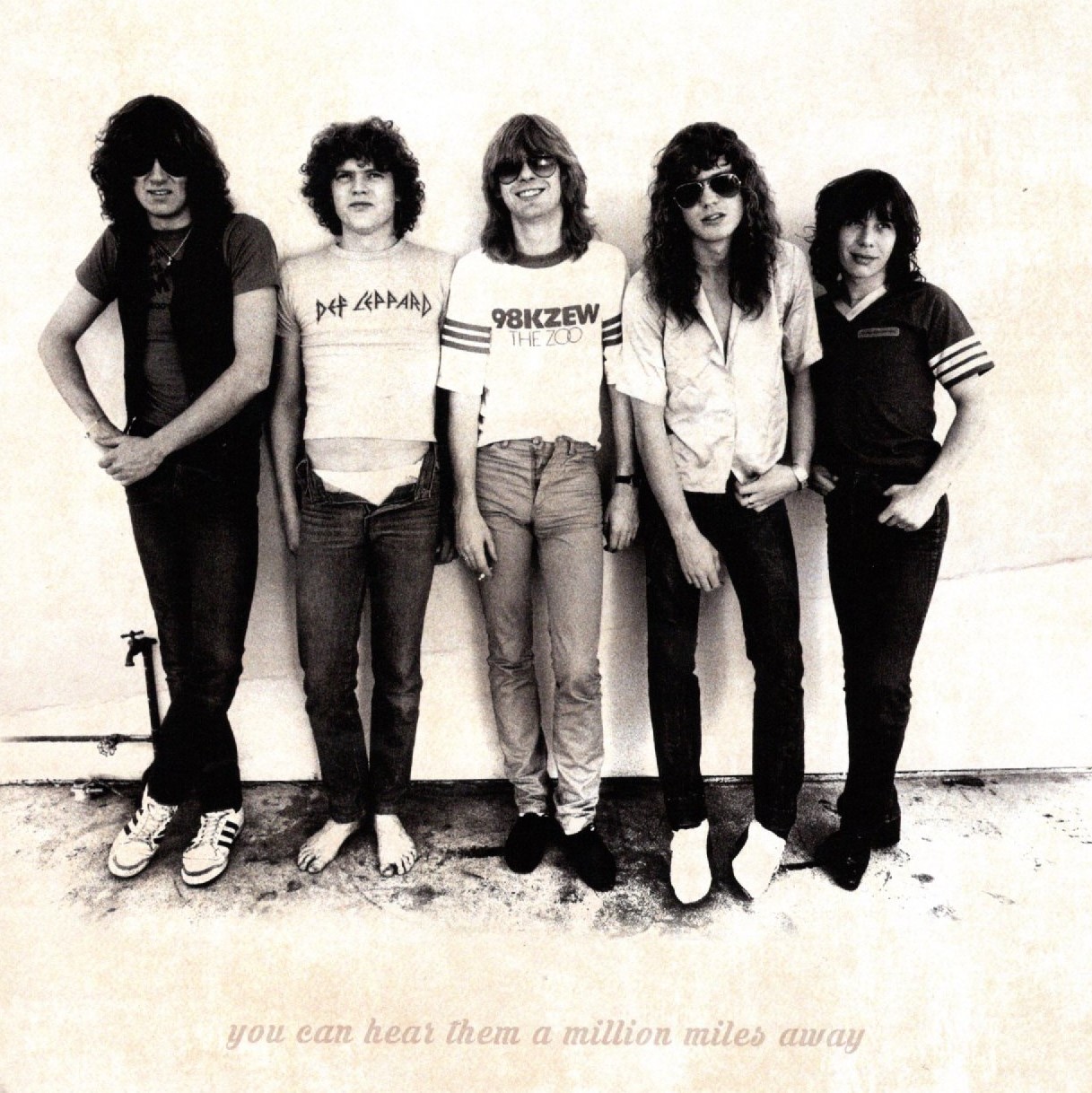

















 mikeladano.com