classic rock

REVIEW: The Jethro Tull Christmas Album (2003)

JETHRO TULL – The Jethro Tull Christmas Album (2003 Fuel 2000)

With an actual new studio album, The Zealot Gene, due in 2022, The Jethro Tull Christmas Album is no longer the final record by the storied band!  It is however the last one with Martin Barre, putting a (night)cap on the largest part of Tull’s discography.  Although it’s a seasonal album, it is very Tull and would not have been a bad farewell if it was indeed the last record (as we all thought it would be).  16 tracks, over an hour in length…but how Christmas-y is it?

With a blast of flute, “Birthday Card at Christmas” addresses those whose birthdays fall during the holiday.  A fine acoustic Tull tune (as they all are), it doesn’t sound particularly seasonal.  Which will suit many of us just fine.  Flute acrobatics stun the senses, trickling out the speakers like little blasts of hail.  Moving on to “Holly Herald”, this instrumental medley has more of the Christmas flavour.  Recognizable carols, with the flute providing the main melody.  Andrew Giddings’ accordion is a lovely touch.  Pure winter delight!

“A Christmas Song” is a Tull original, a re-recording of a 1968 B-side.  It has always been an intriguing song, sparse and stark.  Mandolin and acoustics ring true with the march of a drum behind.  It is logically followed by a re-recorded sequel tune, “Another Christmas Song”, which has its own modern flavour based on keys, flute and electric guitar.  This soft ballad is like the sound of a clean snow on Christmas day, though the lyrics offer more depth.

A jazzy instrumental “God Rest You Merry Gentlemen”, led by flute, reminds of the old Mr. Bean sketch where he conducts the Christmas band, and goes all jazzy.  Barre’s guitar here is sublime.  When Tull get jazzy, they never disappoint.  Just dig it and get down, in the snow!  It’s impossible not to like, especially if you love instrumental acrobatics.  The bass work by Jonathan Noyce just rolls.  Next is the re-recorded “Jack Frost and the Hooded Crow”, a 1982 original B-side.  A little less direct, a little more progressive.  A very Tull-sounding “Last Man at the Party” is another acoustic original.  The lyrics relay images of a traditional Christmas party even if the music is just Tull being Tull.  Bouncing flute, speeding acoustics.

“Weathercock” is a new version of the closing track from Heavy Horses.  It’s more about traditional country living, but with winter imagery.  Not an immediate song by any means, but fitting the vibe of the album.  Moving on to “Pavane” composed by Gabriel Fauré, this lovely tune has exotic, smooth and challenging sections, but it’s not very Christmas-y.  The original was a piano work, but this version balances the spotlight between players.  More seasonal sounding is “First Snow on Brooklyn”.  “I could cut my cold breath with a knife,” sings Ian.  A beautiful string section backs this original song, somewhat epic, warming the soul like a hot coffee at Christmas.

You’ll love “Greensleeved” (a take on “Greensleeves”).  It’s an instrumental version of the traditional classic.  Its ties with Christmas go back to 1686 so it is not out of place here.  But man does it swing!  This is just fun, with monstrous instrumental mastery.  Get up and dance to this brilliant little tune.  Then it’s a remake of Tull’s “Fire at Midnight”, one of their most memorable Songs from the Wood.  This take is more laid back, but is unmistakable as the Tull mainstay.  Somewhat obviously, “We Five Kings” is Jethro’s version of “We Three Kings”, once again rendered in a laid back jazzy instrumental vibe.  Challenging to play, easy to listen to.  Check out Barre’s acoustic guitar solo work.

The excellent single “Ring Out Solstice Bell” conveys that Christmas joy.  It’s likely the most Christmas-y of all the music on this album.  Anderson has an occasional knack for a universal melody and “Ring Out Solstice Bell” lets them float in the cold winter air.  A magical seasonal tune for anybody, even the Scrooges or Grinches on your list.  If there’s only one tune you need on this album, making it “Solstice Bell”.  It is, of course, an update of the original on side one of Songs from the Wood.  (The 2004 single from this album had two exclusive B-sides as well.)

One of Tull’s greatest instrumentals in their long illustrious history was J.S. Bach’s “Bourée”.  There is a new version on the Christmas Album.  It’s different.  Less swing, more relaxed.  Still Tull but not repeating the exact same track from the past.

Finally the album closes on a rare Martin Barre original called “A Winter Snowscape”.  Quiet, gentle, yet determined.  Barre’s acoustic work is shadowed by Ian Anderson on flute.  It is a perfectly understated closer to a unique Tull album.

Of course, like anything else, this album was reissued later on with a bonus live album called Christmas at St. Bride’s 2008.  As a live album it deserves its own standalone review, but it’s unfortunate that to get it, some will have to buy the album twice.  Not very Christmas-y…or perhaps the pinnacle of modern Christmas tradition?

On it’s own, this is a pleasant seasonal album to play while wrapping your gifts or celebrating with friends.

3.5/5 stars

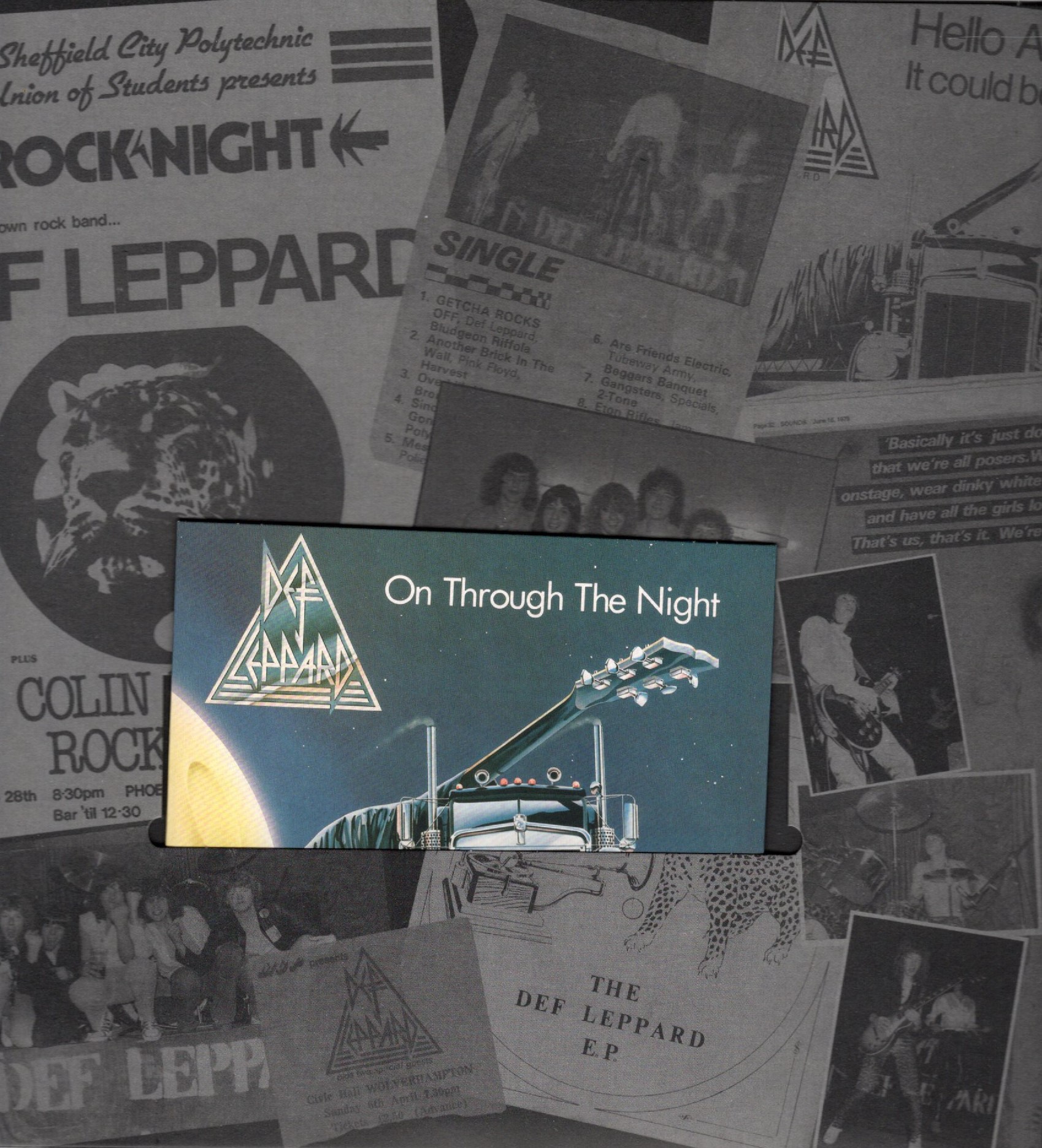
RE-REVIEW: Def Leppard – On Through the Night (The Early Years Disc 1)

Part One of the Def Leppard Review Series

No matter how I do this, I’m doing something out of order.  So here goes.  Hi!  Welcome to the DEF LEPPARD REVIEW SERIES where we will attempt to cover in some way everything Def Leppard here at LeBrain HQ.  Some of these articles will be re-reviews.  Some will be beefed up, some will be streamlined.  

What about order?  Deciding to start with The Early Years box set, we could go in two ways.  We could run through Discs One through Five, starting with On Through the Night.  Or, we could go chronologically and begin on Disc Four, Too Many Jitterbugs, which has the first EP and early demos pre-dating the album.  Obviously, we’ve decided to to go in disc order, and worry about chronology later.  So let’s get, let’s get, let’s get, let’s get rocked.

Original review: On Through the Night (1980)

DEF LEPPARD – On Through the Night (The Early Years Disc 1) (Originally 1980, 2019 remaster)

The obscenely young quintet from Sheffield were starstruck.  Drummer Rick Allen was just 16 years of age. There Def Leppard were in Tittenhurst Park, Ringo Starr’s home formerly owned by John Lennon, with Judas Priest producer Tom Allom, laying down tracks for their debut LP.  Signed to Vertigo, the band was filled with awe to be on the same label as their heroes Thin Lizzy.  Recording nine songs from their live set and two newly written tracks, the band took just three weeks to get the job done.  Unfortunately, so much time was spent on Steve Clark and Pete Willis’ guitar overdubs, that Joe Elliott only had two days left to record all his vocals.  This can be heard on the final product.  At least Joe got to sleep in Lennon’s bedroom for the duration of the recording!

On Through the Night is a beefy 11 tracks, written mostly by Clark and Elliott with seven Rick Savage co-writes and seven by Pete Willis.  It showcases ambition, promise, and raw talent.  In a word:  potential.  One of its major strengths is the dual guitar team of Clark and Willis.  Clark tends to be thoughtful and compositional in his solos, while Willis effectively jumps on the wah-wah.

“Rock Brigade” wastes no time getting cranked, 16 year old drummer Rick Allen going wild on the big tom rolls.  An adrenalized band gets to work on a serious riff, while Clark and Willis dart in and out with curt fills.  The handclaps sound lifted from a Judas Priest anthem, but this song burns it up.  Joe’s vocals are set back in the mix a bit more than we’re used to, but there are hints of the kind of backing vocals that Def Leppard would endevour for in the future.  In short, “Rock Brigade” kicks ass.

A strange layered vocal mix fails to hit the mark that Leppard would do with regularity later on, but it does serve to introduce “Hello America” uniquely.  This naive rocker even has a little bit of synth to accent the sugary chorus, but otherwise sticks to the driving riff.  Clark comes in with a wicked solo, showing off some of the creative technique he’d be famous for. A strange video clip for “Hello America” was filmed, with the drum kit featured at the front of the stage and everybody else behind. Rick Savage got stuck at the very back.

The acoustic guitars are out for “Sorrow is a Woman”, too heavy to be called a power ballad.  The choruses rock heavy as anything else, though the verses remain quiet.  This is one of the tunes that Joe could have used some more time refining.  For fans of the early solo work of Clark and Willis, get ready for some pretty epic guitar constructions.  They tell their own stories within the song.

One of the two songs written in the studio was “It Could Be You”:  Fast choppy metal, with a Priest-like riff and unusually high Elliott vocals.  Cool riff but more refinement time needed.  Its energy is remarkable and as with all the tracks on On Through the Night, Rick Allen burns it up on the drums as a supernovic ball of nuclear combustion.

Taking it back to a metallic city groove, “Satellite” is the first use of one of Joe’s favourite astronomical objects in a Def Leppard song.  This is a great car tune.  Cool and classy staccato guitar picking on the second verse.  Takes an unexpected acoustic detour midway, showing the ambition and ability that these five kids had in their blood.  Then it breaks into another unique guitar section after the Willis guitar solo.  Clearly, not the commercial techniques later employed by the band, but more an effort to emulate some of their heroes like Page and Lynott, as best they could.

Talking of ambition, “When the Walls Came Tumbling Down” closes side one with nothing but.  A pretentious Joe Elliott monologue introduces the track cheesily enough.

In the first day of the first month, in some distant year,
The whole sky froze gold.
Some said it was the aftermath of the Radium bomb,
And others told of a final retribution.
A terrible revenge, from the gods.

The post-apocalyptic settings is a metal niche unto itself, launched by Black Sabbath and maintained by Aerosmith, Queensryche and Judas Priest.  This is not one of Def Leppard’s more successful attempts at getting serious, but you have to marvel at their cohones for trying.

The “Wasted” riff, a Steve Clark creation, is one of Leppard’s most legendary.  This simple steamer is pure power set to music.  That riff, what a riff!  Just a few chugs and then a unified resolution.  But what a riff!   No wonder the band had to resurrect it in recent years.  The fans wouldn’t let it stay buried.  “Wasted” is a centerpiece gem, and itself contains a certerpiece of a guitar solo by Clark, skillfully constructed by the young protege.

“Rocks Off” contains the annoying crowd noise overdubs, clearly artificial, but you can’t stop this little one from launching.  Once again it’s all about the riff, and the Clark era of Def Leppard do not get enough recognition for their riffs.  The song is disrupted by a solo section that harshly pans the guitars from right to left in distracting fashion.

The other song that was written in the studio is the surprisingly strong “It Don’t Matter”.  Some very rich guitars, properly spaced in the mix, make for some cool riffs and licks.  There’s a laid back chorus and good backing vocals.  The cowbell is also effective except it’s not a cowbell.  The band didn’t have one so they used the house tea kettle for which they were properly scolded by the housekeeper Ruth.  Thing is — it sounds OK!

Moving on to the penultimate track, “Answer To the Master” has a verse that is stronger than its chorus, which is really more about the riff.  Rick Allen gets the spotlight for a brief moment before the band break into an AeroZeppelin-like funk.  “Whole Lotta Walk”?  Then there’s a startling guitar solo section more influenced by the likes of Lizzy.

Finally Leppard decided to go with a big epic as their album closer, “Overture”, which also closed their debut EP (which is on Disc Four of The Early Years).  It’s another post-apocalyptic soundtrack, a multi-parted manufacture.  Some truly great guitar parts are buried within, but this track is an example of overreach.  The kind of truly epic recording they were striving for could not be achieved in the time they had, but you can hear frequent shots of brilliance.  Each riff and lick has its own unique hook.

On Through the Night went to #15 in the UK but failed to crack the top 50 in the US, charting at #51.  It did not go Platinum until 1989, well after Hysteria made Def Leppard into demigods.  If anything it planted the seed and made the band more focused on what they wanted to achieve when they had a second chance.  And it wouldn’t be long before fate hooked them up with Robert John “Mutt” Lange, which would alter their course forever.  On Through the Night stands today as a Polaroid of an innocent past, when Def Leppard caked on riff after riff in an effort to reach the heights of the bands they adored.  It lacks focus, both within the songs and on Leppard’s collective strengths.  Focus that they would soon gain in spades, and later in excess!

An innocent but earnest beginning.

3.5/5 stars
Next:  The Early Years Disc Two –  High N’ Dry

REVIEW: Vandenberg (1982)

VANDENBERG – Vandenberg (Originally 1982, 2011 Rock Candy remaster)

I must the only person in the world who doesn’t care about the first Vandenberg album.

There’s nothing wrong with it. I can’t say anything too critical about it. A track or two aside, it just fails to click.

Of course the standout is “Burning Heart”, the song that Whitesnake rehearsed but never released on Slip of the Tongue as they should have. This hot ballad would have been a hit for the ‘Snake, had Adrian Vandenberg not got hurt and replaced on album by Steve Vai. It’s a truly remarkable song that, honestly, deserved the Coverdale treatment. (Fortunately, you can get a rough version of the song by Whitesnake.) It was good enough to use as an effective side one closer.

On another highlight, Adrian plays some stunning classical acoustic stuff on “Wait”. It transforms into a slow, cool dark rocker but has the unfortunate chorus of “Wait, wait, wait, ’til the shit hits the fan.”

“Your Love Is In Vain” is fine, B-level hard rock, akin to Helix, or Talas, or any band of that nature. Bert Heerink is a somewhat generic singer who doesn’t help elevate the track higher. Kind of a Derek St. Holmes style singer. “Back On My Feet” sounds like a Quiet Riot B-side, right down to the high notes that the bass occasionally hits. “Ready For You” could have been a Van Halen-like speed rocker but lacks the teeth that superior production can bring. “Too Late” has a cool riff and boogie, also recalling Van Halen. Wicked neoclassical, finger-tappin’ solo work too. “Nothing to Lose” is a decent song, with a good chorus that sounds like Talas. “Lost in a City” and “Out in the Streets” are not memorable at all and the production does them no favours.

Let’s say three keepers:

  • “Burning Heart”
  • “Wait”
  • “Nothing to Lose”

Whitesnake should have re-recorded “Burning Heart” properly on the road, when Adrian returned to the band after his injury. They blew a huge opportunity for a timeless hit by not doing so.

The best thing about this album is the guitar work. The songs are secondary.

2.5/5 stars

#951: Set Your VCR, It’s 1986 and KISS Meets The Phantom Is On Tonight!

Special thanks to Jennifer Ladano for telling me to write this story down!

RECORD STORE TALES #951: Set Your VCR!
It’s 1986 and KISS Meets The Phantom Is On Tonight!

When thinking back about my earliest rock and roll discoveries, it’s important to recall the order in which I got the albums, or first heard the tunes.  It seems like I had always known “Rock N’ Roll all Nite”, but since my first Kiss albums were Alive! and Hotter Than Hell, those were the songs I knew best.  And I barely knew them!  I got my first Kiss in September of ’85.  But I was learning slowly.  Eventually I’d get Asylum, and gradually tape Kiss albums from my neighbour George.

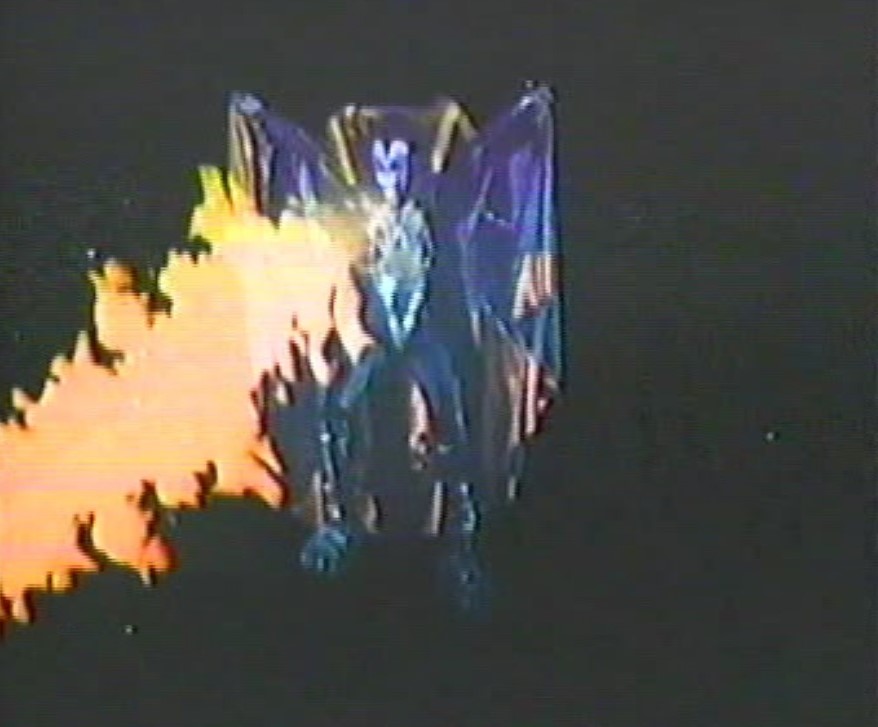
Something else happened that exposed me to Kiss in a new way, that I sometimes forget about.  It was the first time I saw Kiss Meets the Phantom of the Park.

Everybody knew about Kiss Meets the Phantom, but few of us were old enough to have seen it.  When it showed up in the TV guide one week, on some Buffalo station, it seemed like every kid with access to a VCR set it to record.  It was being shown at something like 1:00 in the morning on a Sunday.

Upon waking, I got my sister up early and we raced downstairs to watch.  We did not have time to watch the whole thing that morning.  It was winter, possibly the tail end of Christmas holidays, and we were off to the lake for one day.  We watched some, went to the lake, had lunch at the Embassy, and came home to finish the movie.

I noticed there were far more ads to fast forward through on late night TV than during the day!


Actual ads from the actual tape of the actual night.

My sister recalls liking Kiss Meets the Phantom; my memories are quite different.  I was bored to tears any time Kiss wasn’t on screen, and you had to wait through, like, an hour (with ads) for Kiss to arrive at the bloody park!  I didn’t know who this Anthony Zerbe fellow was, but at age 13 I considered him possibly the worst actor I had ever seen.

It was my first time seeing Peter Criss on video and not just still photos, and I was surprised at his voice.  I told everyone, “Peter Criss sounds like Aquaman.”  I had the show right, but the character wrong.  Michael Bell did the voice of Peter Criss in Kiss Meets the Phantom, and Wonder Twin Zan in the cartoon Superfriends.  Legend has it that this was because Peter didn’t show up to loop his lines in post-production.  Whatever the case, it led to a different urban legends:  that Peter Criss had given up rock and roll, and taken up a lucrative career as a cartoon voice actor!

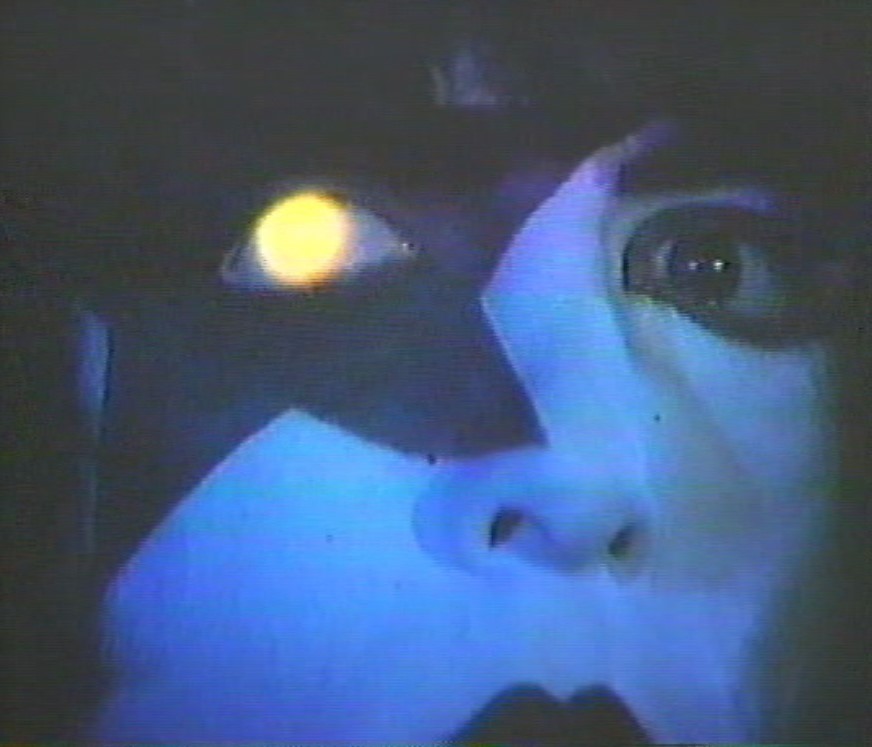
I thought Gene’s distorted voice was tiresome after a while, and Paul seemed the coolest.  My sister liked that Kiss were like superheroes with powers.  On the other hand, I didn’t like that.  If Paul Stanley couldn’t shoot a laser beam out of his eye in real life, I didn’t understand why he would in this movie.  They were still Kiss, still playing the same Kiss songs, but also super-powered.  My rigid brain couldn’t reconcile the two.

As for the music, the movie contains several songs that I heard for the very first time that day.  “Beth” (acoustic, no less), “Shout It Out Loud”, “God of Thunder” and “I Stole Your Love”.  (“Rip and Destroy” doesn’t count.)  Now, because I didn’t know these songs, and there were no captions, I had to guess at the titles.  “Shout It Out Loud” was the easy one.  But these were the live versions taken from Alive II, fast and reckless.  Not to mention we were hearing it on a TV with mono speaker; state of the art for the time, but not for proper music listening.  So that’s why, for that day at least, I thought “God of Thunder” was “Not a Doctor”, and “I Stole Your Love” was something that sounded like “I Ho-Jo-Ho”.

The process of discovering Kiss was so memorable because it’s so fun.  The superhero character aspect appealed to my sister and there’s no denying that it had something to do with why I loved Kiss too.  But hearing the songs and albums for the first time can only happen once.  And I can clearly remember a tinge of sadness when I finally acquired Rock and Roll Over, the last original Kiss album I needed to finish my collection.  I was starkly aware that I was having this experience for the last time:  hearing a classic Kiss album, guessing who was singing the songs by the title alone, and discovering hidden favourites.  As I learned when Crazy Nights came out, hearing a new Kiss album was simply not the same as discovering the classics!

Kiss Meets the Phantom was a struggle to sit through then, but fortunately I saw it at an age when Kiss still seemed larger than life.  Objectively, it is a pretty terrible film, best enjoyed as a trainwreck.  The best parts are the concert scenes, which was the closest I got to seeing Kiss live at age 13.  It was my first exposure to some really important songs even if I wondered why Gene was singing about being “Not a Doctor”!

[Re-Post] Part 241: Halloween, KISS style!

Always nice to repost a seasonal classic.  Enjoy this Halloween tale.

RECORD STORE TALES Part 241:  Halloween, KISS style!

Our annual inventory count fell on October 31.  For five years straight, I never got to dress up, hand out candy, or do anything fun on Halloween because I was too busy counting discs and CD towers!  However in the early days, this wasn’t the case.  Halloween 1996 was actually a pretty good one.

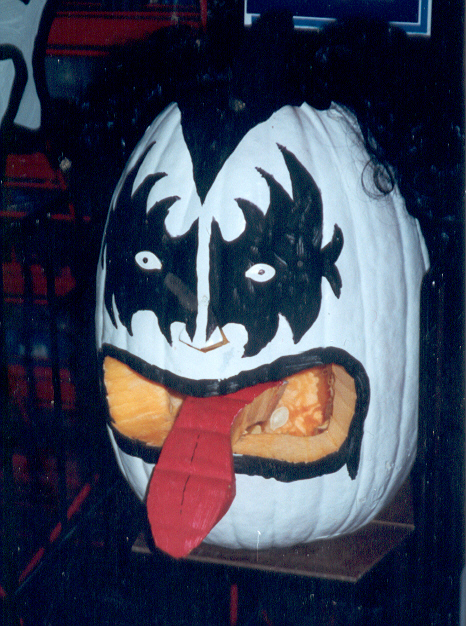
Like most malls, ours had a few Halloween contests.  T-Rev entered the store in the Pumpkin Carving category.  He and I came up with the plan to do a Kiss pumpkin.  T-Rev, the store owner’s brother, and myself gathered in my mom’s workshop in the basement. My mom had plenty of paint, and I was good at drawing the Kiss makeup designs.  T-Rev had the idea to make the pumpkin Gene Simmons, and figured out how to make a pumpkin tongue stick out.  I must say he did an amazing job.

The first step was to spray paint the pumpkin white.  One of the guys did the cutting.  Then, I drew the Demon design with a black magic marker.  We thought the nose needed to be more three-dimensional, so I cut it out a bit.  Together, we began colouring in Gene’s makeup.  We needed something to define the eyes of Gene, and T-Rev thought of using pumpkin seeds.  We added a wig, and voila!

T-Rev propped Gene up on the magazine stand outside the store.  Immediately we started getting compliments, and the response was pretty unanimous:  We had done the best job in the entire mall.

Unfortunately, the judges didn’t base their ratings on who had done the best job.  They were only marking the results, whether the store employees did the pumpkins themselves or not!  A store that hired a professional carver won first place.  We came in second.  There was no prize for second.  T-Rev and I considered that to be cheating.  Cheatie-cheatertons.

The contest was over, and not too soon:  the pumpkin had begun to rot, as pumpkins do.  That didn’t stop a customer from coming in on November 1st and offering him $10 for it.  T-Rev accepted his gracious offer, even though the thing would be turning horrific in a day or two.  A fool and his money, right T-Rev?

By 1997, the store had moved out of the mall.  This was our last pumpkin carving contest, but at least we had the satisfaction of winning the popular vote.  As far as I’m concerned, we went out on top.  My personal consolation prize was later on, Halloween 2006.  By this time I had moved on to United Rentals.  They took Halloween very, very seriously at United Rentals!  I dressed up as Paul Stanley, and this time, I finally won first prize!

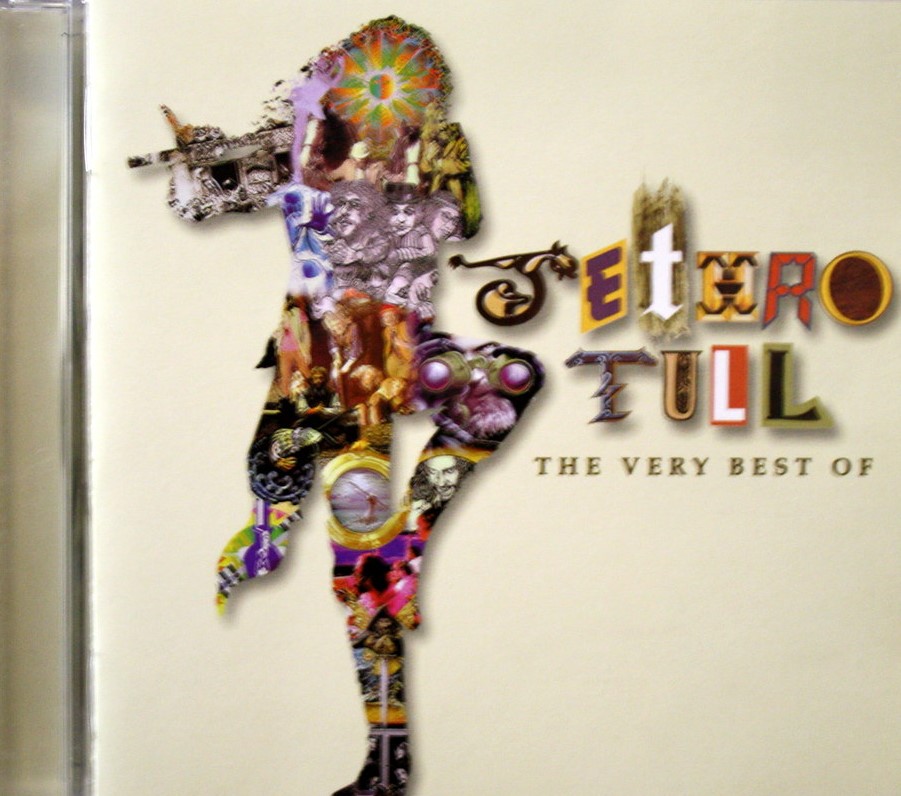
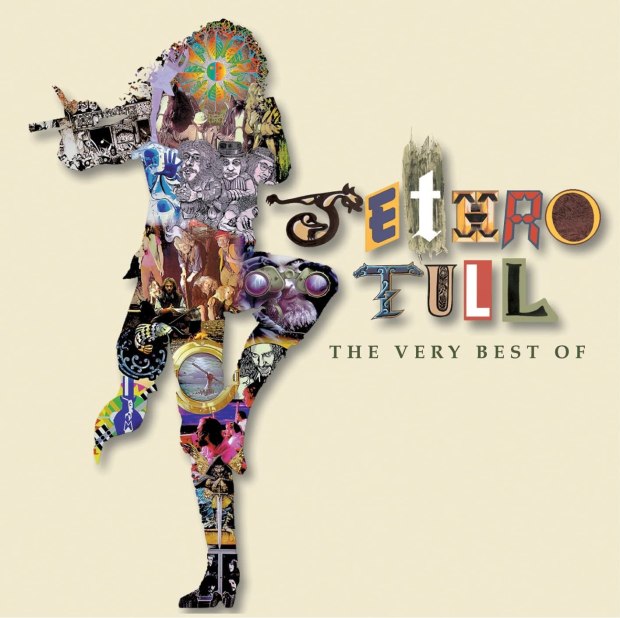
REVIEW: Jethro Tull – The Very Best of Jethro Tull (2001)

JETHRO TULL – The Very Best of Jethro Tull (2001 Chrysalis)

Every fan had their first Jethro Tull purchase.  Mine was 20 years ago, with their newly released Very Best of Jethro Tull.  Why not?  I was working at the Record Store when a used-but-mint copy dropped in my lap for only $8 (staff discount).  It was only right of me to ensure it got a good home.

Unlike some “hits” compilations, this one didn’t strike with clusters of songs I wanted to focus on in the future.  Other compilations can do that.  For example I decided to hone in on the Brian Robertson Motorhead album immediately after hearing a double best-of.  With The Very Best of Jethro Tull, I liked it all equally.  I just wanted to get them all, with no particular priority.  It all sounded great to me.

The album is non-chronological and contains some edit versions.  “Thick As A Brick” is cut down from 44 minutes to just three — makes sense.  They chose the first three minutes, which are ojectively the best known.   Other edits are the single versions of “Too Old To Rock ‘n’ Roll: Too Young to Die” and “Minstrel in the Gallery”, while “Heavy Horses” gets a new edit bringing it from nine minutes to a more single-like three.  The songs span the 1968 debut This Was to 1995’s Roots to Branches.  Several albums are not represented at all, such as Benefit, A Passion Play, A, Stormwatch, Under Wraps, Rock Island, Catfish Rising, and J-Tull.com.  Justifiable?  That’s up to personal taste.  Several non-album singles are included instead, such as the well known “Living In the Past” and the wicked string-laden “Sweet Dream”.

The album has an excellent flow, only interrupted with the synth-y “Steel Monkey” from 1987’s Grammy-winning Crest of a Knave.  Preceded by the savage “Locomotive Breath” and followed by the tender picking of “Thick as a Brick”, it doesn’t fit in except as a speedbump.  If I may be so bold, I believe “Steel Monkey” was included simply because it would be odd not to include something off that controversial Grammy winner.

While I enjoyed all the songs, the one that stood out particularly strong was “Bourée”. I never heard Bach swing like that before! The diversity of this CD, spanning all styles of rock from progressive to blues to folksy. Yes, the flute can rock and Ian Anderson is the Eddie Van Halen of the instrument.

4/5 stars
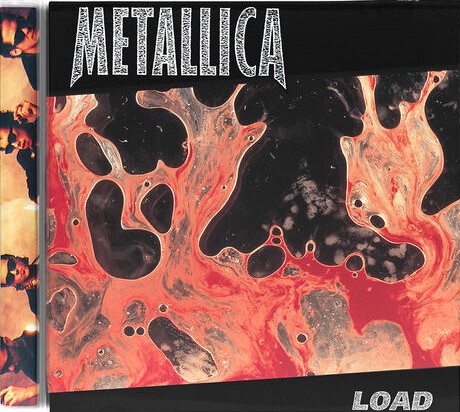
#942: My Brushes With Metallica

RECORD STORE TALES #942: My Brushes With Metallica

I don’t mind admitting that my first Metallica was Load.  Yeah, I was one of them.  Hate on if you gotta.

Like many my age, the first exposure came in 1988 via their first music video:  “One”.  To say the visuals were disturbing would be accurate.  Although I did enjoy the song, I didn’t feel the need to hit “record” on my VCR when it come on.  Other kids at school sure liked it, and copies of Johnny Got His Gun were claimed to have been read by some of them.  I figured I could continue to live without Metallica.

The Black album was released in 1991.  I was watching live when Lars Ulrich called in to the Pepsi Power Hour to debut the new music video for “Enter Sandman”.  The new, streamlined and uber-produced Metallica looked and sounded good to me.  I loved when James said “BOOM!” and thought that hooking up with Bob Rock had worked out brilliantly.  The sonics were outstanding.  While I enjoyed the singles Metallica released through the next couple years, I never took a dive and bought the album.  Why?

Three main reasons.  The key one was that I knew, even before I knew I had Obsessive Compulsive Disorder, that I would feel compelled to collect all the Metallica singles that I had missed over the years.  That was, as yet, a bridge too far.  Second reason was that I satisfied my craving for that style of Metallica in 1992 when Testament came out with The Ritual.  It had a track like “Sandman” called “Electric Crown”.  It had a song like “Sad But True” called “So Many Lies”.  It was perfect for my needs.  Thirdly, for whatever reason I didn’t think I was going to enjoy “old” Metallica, which again, I would feel compelled to collect.

When I started working at the Record Store in 1994, I had the night shifts alone.  I could play whatever I wanted and sometimes I gave Metallica a spin.  I can remember “Enter Sandman” coming on while I was cleaning, and saying to a customer, “Man I love this song!”  He nodded awkwardly and wondered why I was telling him.

A bit later I was hanging out with this guy Chris.  He was extolling the virtues of thrash metal, and put on Kill ‘Em All.  I was astonished when “Blitzkrieg” came on.  “I know this song!  I love this song!”  I exclaimed as I jumped up.  Air guitar in hand, I started bangin’ to the riff.  “This is a song by Blitzkrieg,” I explained to Chris.  “It’s on the New Wave of British Heavy Metal CD that Lars Ulrich produced.  I didn’t know he covered it.”

This is the point at which I like to say I became a Metallica fan.  Collecting the older stuff was still daunting, and a lot of it was expensive because it was out of print.  Which is really why it took Load for me to finally buy a Metallica CD.

1996 was a glorious but so stressing summer!  I was managing my own Record Store for the first time.  The weather was gorgeous.  The stock we had was incredible.  The stress came from staff, which turned over faster than a dog begging for belly rubs!  There was “Sally” who was caught paying herself excessive amounts of cash for the used CDs she was selling to the store.  There was The Boy Who Killed Pink Floyd who came to work hungover and worse.  And, most trying of all, music sucked for people like me who missed the great rock of the 70s and 80s.

On June 4, Metallica released Load to great anticipation.  Their new short-haired look (a Lars and Kirk innovation) turned heads and it was said that Metallica had abandoned metal and gone alternative.  Of course this was stretching the truth a tad.  Metallica had certainly abandoned thrash metal on Load, and arguably earlier.  Alternative?  Only in appearance (particularly Kirk Hammett with eye makeup and new labret piercing).

Load was the kind of rock I liked.  The kind of rock I missed through the recent alterna-years.  I had been buying Oasis CDs just to get some kind of new rock in my ears.  Finally here comes Metallica, with the exact kind of music that I liked, and at the exact time I needed it.

And yes, I did immediately start collecting the rarities and back catalogue.  Garage Days and Kill ‘Em All (with “Blitzkrieg” and “Am I Evil?”) were both out of print at that time.  I snapped up the first copies I could get my hands on, when they came in used inventory.  We were selling them for $25 each, no discount.  I later found a copy of a “Sad But True” single featuring the coveted “So What” at Encore Records for $20.  The new Load singles were added to my collection upon release.  The truth is, I picked the best possible time to get into Metallica collecting:  when I was managing my own used CD store!  I soon had the “Creeping Death” / “Jump In the Fire” CD.  A Japanese import “One” CD single only cemented what a lucky bastard I was to be working there.

Because Metallica came to me relatively later in life, today they never provoke the kind of golden memories that Kiss or Iron Maiden do.  However the summer of ’96 was defined by Metallica.  Driving the car, buddy T-Rev next to me, playing drums on his lap.  His hands and thighs got sore from playing car-drums so hard.  Load was our album of the summer and it sounded brilliant in the car.  Hate if you hafta, but that’s the way it went down for this guy in the dreary 90s.


REVIEW: Slash’s Snakepit – It’s Five O’Clock Somewhere (1995)

SLASH’S SNAKEPIT – It’s Five O’Clock Somewhere (1995 Geffen)

Somewhere in the multiverse is an alternate reality where Axl Rose did not reject Slash’s songs for the next Guns album.  In that version of history, the new Guns N’ Roses was not titled Chinese Democracy; perhaps it was called Back and Forth Again.  And it would have sounded a lot like It’s Five O’Clock Somewhere, the debut album by Slash’s Snakepit that we received in our reality’s year 1995.

As it went down, Axl said “no” to the songs Slash had finished, so Slash put them out as his first solo album.  And then Axl wanted them back.  In 1994, on the VHS The Making of Estranged: Part 4 of Trilogy, you can hear Guns working on one of these songs.  In the background, the music that would eventually become Slash’s “Back and Forth Again” is playing with Axl whistling overtop.  In the alternate reality, somebody’s listening to it right now as a Guns N’ Roses song.  In ours, it will only be Slash’s Snakepit.

Although Slash was enthused about his new music, and was eager to make a raw bluesy rock n’ roll album, Axl had other plans.  Who was right in the end?  It’s hard not to see Axl’s point of view.  Slash’s 14 songs had just one hit and 13 fillers.  Most of the best GN’R tracks were not written by Slash; they were written by Izzy Stradlin.  Left to his own devices, Slash’s batch of songs here lack memorable hooks.

Let’s start on a positive note at least — the lead single “Beggars & Hangers-On”.  Written by Slash n’ Duff with lead singer Eric Dover, this is a song that any band from Skynyrd to the Crowes to Zeppelin to Guns N’ Roses would have been proud to play.  Check out that riff — it’s as regal as the blues gets.   Powerful and soulful aching vocals from Dover.  The chorus roars, bright and bold, and you could only imagine what Axl could have done with it.  Matt Sorum’s drums splash at all the right moments, in his trademark fashion.  It’s a damn perfect song.  And it made people really excited for the album that was to come, Guns or no Guns.

Well, there were some Guns.  Slash had been working with Matt Sorum and the recently fired Gilby Clarke.  On bass was Mike Inez from Alice in Chains.  Though not in the Snakepit lineup, Slash also imported Dizzy Reed and Ted “Zig Zag” Andreadis from GN’R.  With those players, it sure sounded like Guns.  Only Dover really differentiates them.  Dover…and the songs.

There are fragments of brilliance through the whole record.  The acoustic intro to “Neither Can I” for example.  The circular snaky riff to the manic “Be the Ball” (not to mention Slash’s lyrics, which seem to be his personal life philosophy).  The boogie-woogie of instrumental “Jizz Da Pit”.  The wicked Inez bass on on Gilby Clarke’s “Monkey Chow”.  The Aerosmith vibe to “I Hate Everybody (But You)”.

And it’s a long album.  70 minutes of solid rock without a lot of variation.  Which is one reason why Slash’s 14 songs wouldn’t have cut it for Guns in 1995.  Appetite for Destruction had a variety of different songs on it, even if all shared a go-for-the-throat ferocity.  Slash did get the straightforward live sounding rock album he desired.  The guitars sound absolutely thick and offer a hint of what Slash and Gilby would have sounded like together on an original Guns studio album (like naturals).

It’s just a damn shame Slash’s solo debut is so disappointing.  It bears witness that Axl might not have been wrong.  You could make a hell of a GN’R album* out of the best tracks its members came up with.  But this isn’t it.

2/5 stars

* Alternate 1995 Chinese Democracy:

  1. Chinese Democracy (GN’R)
  2. Beggars and Hangers-On (Slash)
  3. Better (GN’R)
  4. Dead Flowers (Gilby/Axl – Stones cover)
  5. I.R.S. (GN’R)
  6. Street of Dreams (GN’R)
  7. Tijuana Jail (Gilby/Slash/Matt)
  8. Madagascar (GN’R)
  9. Absurd (GN’R)
  10. Six Feet Under (Duff/Matt – Neurotic Outsiders)
  11. This I Love (GN’R)
  12. Back and Forth Again (Slash)

REVIEW: Metallica – Enter Sandman (Remastered 2021 German CD singles)

METALLICA – “Enter Sandman” (Remastered 2021 German CD singles – 5″ Maxi CD and 3″ Pockit-CD)

The Black Album box set is coming!  Batten down your wallet because it looks absolutely incredible.  Yet on the 14 CDs and 6 DVDs, you won’t find the specific live tracks released only in Germany on the new set of “Enter Sandman” CD singles.  (There is also a glow-in-the-dark vinyl single, but it is missing the live tracks.)  All the discs maintain the style and design of Metallica’s original 1991-1992 singles.  This is an appetiser for what is to come, including two of the newly remastered Metallica tracks.  Proceeds went to German charity.

“Enter Sandman” and “Sad But True” are the two remastered studio cuts included.  The remastering sounds good and the tracks are not brickwalled.  Fans will be pleased to know that Metallica opted out of the Loudness Wars this time.  Good thumping bass, nice and prominent.  Crisp, clear, and loud enough.  “Sad But True” is really punchy.

The live tracks are all taken from Frankfurt or Stuttgart, shows not included in the box set.  The 5″ Maxi-CD and 3″ Pockit-CD each contain two exclusives.  Just like in the days of old, you have to buy both formats to get all the tracks.

“Through the Never” is one of the thrashiest songs from the Black era, and the very dry recording here is evidence of non-tampering.  Tasty wah-wah from Kirk Hammett.  “Damage, Inc.” brings thrash the old school way, Metallica as frantic as ever, barely holding it all together, but making the heads bang no matter what.  By the end it’s a total steamroller.

The teeny little 3″ CD is no less mighty.  “Of Wolf and Man” is choppy and heavy.  Hunting relentlessly like the titular wolf, Metallica are out for blood.  What’s really wild is the long jammy section at the end which contains a surprise.  Finally the Budgie cover of “Breadfan” ends the whole series of tracks with an explosive go-for-the-throat attitude.  Sloppy but foot on the gas the whole way.

What’s better than a wicked set of Metallica CD singles, including a 3″?  What could beat that?  How about if both discs were pressed in black plastic?  Would that do anything for ya?  These limited singles are sure to be collectible for their exclusive tracks and unique traits.  Try the German Amazon site for international shipping.  Contrary to a report in Bravewords, these singles do ship worldwide.

4/5 stars

REVIEW: Paul Laine – Stick it in Your Ear (1990)

PAUL LAINE – Stick it in Your Ear (1990 Elektra)

A remarkable album by a singular talent.  Paul Laine came equipped with buckets of ability and a hell of a team.  Laine wanted Bruce Fairbairn at the producer’s desk, and through sheer determination, that’s who he got.  His debut album Stick it in Your Ear was compared to Bon Jovi, but Paul had more youthful innocence and exuberance.  Similarities are inevitable, but you can hear the difference when he starts to sing.

If you want to play the comparison game, the long dramatic intro to the song “One Step Over the Line” is similar to Bon Jovi’s “Lay Your Hands On Me”.  This tough little mid-tempo rocker gives Paul a chance to belt.  The cool keyboard accents are from an era when rockers were unafraid of a little sweetening.  It goes a bit Deep Purple during the long instrumental break — the track is over seven minutes long.

Things really kick into gear on “We Are the Young”, a legitimate rock anthem.  Laine was just a kid, so when he sang it, he meant it.  In the middle is a progressive rock keyboard break, proving Paul had many dimensions already.  Then he goes all Robert Plant in the outro!

After two pretty epic tracks in a row, Paul’s big hit “Dorianna” makes its appearance.  This irresistible little pop rocker is replete with organ intro (edited out of the single version) and shimmering guitar harmonies.  Not to mention that chorus, which will stay in your head for the rest of the day.

A power ballad, “Is It Love”, represents that best that the genre has to offer.  If you thought you’ve already heard every ballad that is worth hearing, then make room for one more.  The power chorus nails it, and that backing piano must be a Fairbairn twist.  This is followed by the most “Bon Jovi” of any of the songs, “Heart of America”.   But only if Bon Jovi could sing like a screamin’ hurricane, because the truth is, this songs blows away any of Jon’s in terms of power.  Corny lyrics, but what’s a kid from Canada going to write about?

“Main Attraction” opens a bit like Van Halen, showing off the shredding, and then breaks into a dash.  It’s the least individual of the songs, sounding the most generic, but it’s not a bad tune by any means.  Just the least impressive of nine pretty awesome tunes.

Things take a striking turn on the blues “Doin’ Time” featuring a jam with James Cotton on harmonica.  Beginning authentically, Paul soon breaks into a wicked screamin’ blues.  When James Cotton starts blowin’, the thing just goes to another level.  One of the best rock-blues tracks you’re likely to find this side of Badlands.

A big anthemic ballad called “I’ll Be There” blows the nuts off anything Jon Bon has cooked up over the years.  It’s more like Holidays In Eden era Marillion, two years early.  But that’s just a preamble to the finale:  “Break Down the Barricades”, a massive tune with enough hooks to feed an entire nation of hungry rock n’ rollers all their vitamins and minerals.

Stick it in Your Ear might be the last great debut album of the hard rock age.  While the genre suffered from too much similar product on the shelves, and was destined to be supplanted by something more edgy, this is one album that deserved a shot.  More so than some of its contemporaries by established bands entering slumps at the same time.  This is simply a very special album that started Laine on a long career that continues today.

4.5/5 stars