cozy powell

REVIEW: Black Sabbath – The Sabbath Stones (1996)

Bought at HMV, Stone Road Mall, Guelph ON, on import for $29.99 in 1996.

BLACK SABBATH – The Sabbath Stones (1996 IRS)

The Sabbath Stones, a record-company cash-grab, is a greatest hits compilation of Sabbath’s Tony Martin years (mostly) plus a smattering of bonus tracks. While it is not perfect, and so many great songs were omitted, it is still a really great listen from start to finish. Tony Martin is probably the most derided of all Sabbath vocalists. Having seen Sabbath live on their final tour with Martin (also including Cozy Powell and Neil Murray) I can say that I quite enjoyed that incarnation of Sabbath. Also, in 1996 when this was released, albums such as Headless Cross and The Eternal Idol were very hard to find on CD.  With that in mind, read my track-by-track breakdown.

1. “Headless Cross” — This compilation is the IRS years (that’s the record label, not the government agency) and thus starts with their first IRS album, Headless Cross. The title track is one of those underground classics. The groove here is monstrous (thanks, Cozy)  and the notes Martin hits in the chorus are superhuman. This track, back in 1989, was Sabbath getting back to a truly heavy evil sound. Shame that the keyboards (on all tracks by Geoff Nicholls) are mixed so high!

2. “When Death Calls” — One of my favourites from Headless. Beginning with fretless bass (by temp bassist Lawrence Cottle) and haunting vocals, you’d almost think this was a ballad. By the end, it’s breakneck, with Tony Martin singing these evil lyrics about how “your tongue will blister” when Satan says you’re to die! The guest guitar solo by Brian May will sear your soul.

3. “Devil and Daughter” — A third great track from Headless, an album loaded with great tracks. This is an uptempo one all the way through!

4. “The Sabbath Stones” — From 1990’s underrated Tyr album. I quite liked Tyr. “The Sabbath Stones” is a fast one, wicked, but muddy in sound as was all of Tyr. Once again, Martin hits inhuman high notes by the end.

5-7. “The Battle Of Tyr/Odin’s Court/Valhalla” — These three tracks are actually all bits of one long piece, on Viking mythology. Sabbath at the time were trying to get away from the “Satanic thing”, and Vikings were still evil enough to sing about. Some fans didn’t like that turn of events but I think Sabbath were well ahead of their time. “The Battle Of Tyr” is a keyboard-y bit, just an intro to get you in the mood. “Odin’s Court” is acoustic, with Iommi picking a simple melody while Martin sings about “leading us on, to the land of eternity, riding the cold cold winds of Valhalla”. That takes us into the main meat of the trilogy, the “Valhalla” portion. One of the most powerful of all Martin-era tracks, with great keyboard accents and a memorable Iommi riff, this was my favourite track off Tyr.  (It’s either this one, or “Jerusalem”.)

8. “TV Crimes” — A brief departure from the Tony Martin years. In 1992, he was out and Ronnie James Dio, Geezer Butler, and Vinny Appice were back in. The album was called Dehumanizer and even though it did not sell well, a hardcore following now consider it among the very best Sabbath albums of all time, and possibly one of the best things Dio’s ever done. Why it was underrepresented here with just one song is beyond me. There should have been at least three Dehumanizer tracks on this CD (I would have nixed “Devil and Daughter” and “The Sabbath Stones” in favour of two more with Dio singing.) Anyway, “TV Crimes” (the single) is here, and while not one of the best songs from Dehumanizer, it and “Time Machine” were the two most well-known.

9. “Virtual Death” — Tony Martin is back, with Rainbow’s Bobby Rondinelli and Geezer Butler too!  That would not last long, as Geezer soon fled back to Ozzy’s solo band to record the Ozzmosis CD. “Virtual Death” is hardly one of the better songs from the Cross Purposes album, a decent record if a bit soft. Having said that, the soft tracks were really quite good and “Virtual Death” was just a grunge song.  Black Sabbath influenced that whole scene, but they ended up copying Alice In Chains’ trademark vocal style on “Virtual Death”.  That double tracked vocal melody could have come right off Dirt.

10. “Evil Eye” — Another puzzling Cross Purposes selection.  I can’t think of a reason to include it.  There was once a legend that “Evil Eye” was co-written by Eddie Van Halen, who went uncredited.  The same rumour suggested that Van Halen either performed the guitar solo or wrote the solo for Iommi to play.  Joe Seigler of black-sabbth.com has busted this rumour as false.   My two tracks from this album would have been “I Witness” (fast one) and “Cross Of Thorns” (slow one).

11. “Kiss Of Death” — Finally we arrive at the end of the Martin years with the dreadful Forbidden album. It’s sad because it wasn’t the end that Tony Martin deserved. The album just got out of hand and next thing you know, Ozzy was back. This track was at least one of the strongest ones. A killer, slow closer with some unbelievable Cozy Powell drum fills, if it had been recorded right it would have just slammed you in the face.

12. “Guilty As Hell” — Another Forbidden track, and one of the weakest. “Can’t Get Close Enough” should have been subbed in. Just filler.

13. “Loser Gets It All”TREASURE!  The Japanese Forbidden bonus track, finally available domestically! (Please note, the Cross Purposes Japanese bonus track “What’s The Use” is still unreleased outside Japan, dangit.) This song, a shorty just over 2 minutes, is actually stronger than all the other Forbidden stuff. Good riff, good keyboards, not bad sounding. Shame it was buried on a Japanese release.  Why?  Who knows.  Maybe Tony Martin does.  Tony, drop me a line.  I’d love to talk.

And that finishes the final IRS album, and the final one for Martin. He’d been replaced once before by Dio, and now finally by the once and future Ozzy, and it’s all over for him.  Since then he’s taken a back seat to his more famous predecessors, although he released the strongly reviewed (by me) Scream solo album in 2005.  He also did a number of albums with guitarist Dario Mollo, two of which I own but have to revisit.

There are three “bonus tracks”, songs that were included under license, from the period before the IRS years.  The inclusion of these songs really make the album a fun listen.

14. “Disturbing The Priest” — My favourite incarnation of Sabbath was 1983’s Gillan/Iommi/Butler/Ward and this is my favourite song from Born Again. It’s so evil you’ll feel like you need to confess your sins after listening! I have no idea how Gillan managed such demonic screams. Brilliant selection!

>

15. “Heart Like A Wheel” — I’m actually quite fond of the Glenn Hughes fronted album, Seventh Star, but this song has no place on this album. Granted Sabbath played it live on the ’86 tour with Ray Gillen subbing in for Hughes, but it’s too slow and bluesy. The title track or “In For The Kill” should have been subbed in.

16. “The Shining” — Tony Martin triumphantly ends the album with his first single with Black Sabbath.  “The Shining” has a vintage Iommi riff, and more ungodly high notes. There are early demos of this song from before Tony joined the band, with other singers, as Iommi had this riff a long time before.  A 1984 demo entitled “No Way Out” was recorded with Ian Gillan’s short-lived replacement singer, David “Donut” Donato.  Then it was re-written and re-sung by Ray Gilllen, and this version was recently released on the Eternal Idol deluxe edition. Tony Martin’s version then is the third incarnation of the song that I have, and it’s a triumphant one.  I love the way this album was bookended with Tony Martin songs.

That’s the CD: 80 MINUTES LONG! You just can’t argue with cramming that much music onto one disc. And yes, you can get 80 minutes onto a CD, and this album is the proof.

While I have argued against the inclusion of some songs, by and large this is a well-made compilation, for a record company cash-grab. Considering the Martin years have been buried, I think it is well worth owning. I listened to it all the time.

4/5 stars

REVIEW: Black Sabbath – Forbidden Rough Mix (bootleg)

BLACK SABBATH – Forbidden Rough Mix (bootleg CD)

Black Sabbath’s Forbidden album has a unique place in the Sabbath canon.  It is almost universally condemned by casual and hard core Sabbath fans alike.  I am one of the many who did not like Forbidden, and you can read about why right here.  It was also the final studio album released under the Black Sabbath name, until now.

Forbidden should have been great.  It had the uber-talented Tyr lineup of Tony Iommi, Tony Martin, Cozy Powell, and Neil Murray.  Even with all that muscle, it came out as the weakest Sabbath album ever, probably hindered by Ernie C’s limp production.  I was eager to get my hands on the “rough mix” of Forbidden, which supposedly sounded a lot better.

This CD, simply titled Forbidden Rough Mix is dubbed from a cassette.  That said, it sounds a lot better than any cassette I’ve ever dubbed.  It’s bootleg quality, and I’m fine with that.  The only unfortunate thing is that it is all instrumental versions.  You can hear some of Tony Martin’s vocal bleeding through from somewhere, but it’s not mixed in.  Maybe he was singing scratch vocals in the studio for the band to play along with.  I know that Forbidden was a time of upheaval in the band, with Martin not knowing if he was in or out at any given time.  Ice T was coming in to lay down his own vocal tracks, and nobody would tell Tony if this was for the whole album, one song, part of one song, or what the deal was.

Anyway, if you were hoping for better sounding versions of the Forbidden songs, then this might be as close as you get.  Even though it’s the same album, this version sounds somehow faster and heavier.  It’s some kind of audio illusion, because the drums are unfettered, and you can hear the cool bass runs.  Neil Murray’s bass is much more interesting than it comes across on the original album.   Everything sounds more Sabbathy.   There’s some stunning guitar work buried in there.  This could have been a great album.

Even though it’s just instrumental, the title track “Forbidden” is so much better than the album version.  I can listen to Cozy’s drums!  There’s a lot more keyboards, as performed by Geoff Nicholls in this mix.  Even “The Illusion of Power”, one of the worst songs on the original album, is a cool, traditional sounding Black Sabbath death march on this CD.  Throw an eerie sounding Ozzy lead vocal on top of this instrumental track, and you could have had something appropriate for the Volume 4 album.

‘Tis a shame.  A bloody shame.  There’s been a rumour floating around for years that Tony Iommi is trying to get this album re-released in deluxe edition format.  If that’s the case, great but I’m not counting on it.

4/5 stars
REVIEW: Whitesnake – Slide It In (1984 UK, US edition, 25th Anniversary edition)


WHITESNAKE – Slide It In (EMI, UK, US mixes, 25th Anniversary Edition)

Slide It In is a great album.  I’m very partial to Come An’ Get It, but perhaps Slide It In truly is their best.  The production (on the US mix) is absolutely perfect, with Cozy’s drums sounding like drums should sound!  Big and loud with lots of emphasis on those rat-tat-tat-tat drum fills of his that I love so much.  I personally love 9 of its 10 tracks, only “Gambler” being not my cup of tea.  Strangely, the new CD edition opens with “Gambler”.  I remember my original cassette opened with the title track!

I was very disappointed with the 25th Anniversary edition of Slide It In. It seems hastily thrown together with not much thought given to collectors nor to continuity.  2 tracks are missing from the UK version of Slide It In! (“Love Ain’t No Stranger” – a single, no less – and “Hungry For Love”).  They also talk about the UK mix of B-side “Need Your Love So Bad”, but don’t include it.   Instead, they give you the version from the “Is This Love” single, from 1987, which has no place on this reissue.  Why isn’t it on the deluxe of Whitesnake 1987?  I don’t know!

Fortunately, the esteemed Heavy Metal OverloRd purchased “Need Your Love So Bad” on an original 7″ single with picture sleeve, so you can read all about that missing track on his excellent site.  (He even bought me a copy, which is on its way!)

give-me-more

The missing tracks kind of pissed me off.  I had hoped to acquire, in one purchase both classic mixes of the album.  Instead, I still hunted for and bought the UK version of Slide It In for two freakin’ missing songs. And then to top it off, a live acoustic version of “Love Ain’t No Stranger” from 1997 was included on the deluxe, taking up space that could have been used on missing songs from the period.  This unrelated live version is already available on the live album Starkers In Tokyo.

Anyway, Slide It In.  What a great album.  Jon Lord, Cozy Powell, you just can’t go wrong!  My buddy Rob Vuckovich said, “The final album showcasing Coverdale as a singer…not a screamer.  Remember when he went solo after breaking up with Purple?  I believe he said something to the effect that he did not want to scream his balls off…strange…listen to him from 1987 and onwards.”

Certainly, Slide It In contains some of Coverdale’s most passionate, powerful vocalizing.  Just listen to the amazing not-ballad “Love Ain’t No Stranger”.  I know, technically, audible breathing is not considered professional singing.  But Coverdale uses it as part of his expression.

The title track is just an incredible rock song with hints of blues, catchy and powerful, if a tad dirty!  “Slow An’ Easy” is the album’s six minute centerpiece.  That slide guitar riff…oh man!  So perfect.  Just perfect.  All this is punctuated by Cozy’s tastefully perfect drum fills.  This was the album that turned me onto Cozy as a drummer.  He immediately became a favourite, largely thanks to “Slow An’ Easy”.

As mentioned, “Love Ain’t No Stranger” is another incredible song, a not-ballad with a soaring chorus and mellow,impassioned verses.  This is certainly one of the best songs David has written, and he’s written plenty of them.  But it’s the only slow moment on Slide It In.  This album kicks.

“Spit It Out” (oh, dirty David!), “Give Me More Time”, and “Guilty of Love” are other standouts.  I really like “Guilty of Love”, a fast paced fun rocker, with a riff to kill.  Just listen to Cozy’s drums! And let’s not forget the classic “Standing In the Shadow”, a song that David later re-recorded in 1987 for the 12″ single “Is This Love”.  As with most remakes, the original is superior.

The version of Slide It In that I grew up with and loved most of my life was the remix, the US version.  The 25th Anniversary deluxe edition contains this version, and the 8 tracks from the original UK mix.

What’s the difference then?  Slide It In was released in the UK with the Whitesnake lineup of David Coverdale and his cohorts Jon Lord (keys), the aforementioned Cozy Powell, Colin Hodgkinson on bass, and guitarists Mel Galley and Mickey Moody.  They recorded and released the original version of Slide It In, which came out sounding a little flatter, to my ears.  Within a short while Mickey Moody had left the band and been replaced by the more flashy and modern John Sykes, from Thin Lizzy.  Hodgkinson was fired and replaced by Neil Murray, who was already a Whitesnake veteran from a previous tenure.  Jon Lord went off to rejoin Deep Purple, so Bill Cuomo added more keyboards   With Sykes and Murray, much of Slide It In was re-recorded, adding more guitar solos.  The album was remixed and released as such in the US to tremendous success.The addition of Sykes’ trademark squeals and a fresh mix made a good but “just another Whitesnake album” into a great and important one, at least for this genre and this band.

I prefer the harder edged US version, but they both have their merits.  Different solos can be found on the two versions, and fans of 1970’s Whitesnake may prefer the UK mix.   Regardless, from that unstoppable slide guitar on “Slow An’ Easy” to the awesome blue-rock-balladry of “Love Ain’t No Stranger”, this is a great album.  Even the quiet, soulful B-side “Need Your Love So Bad” is album quality.  It just wouldn’t have fit on a record this rockin’.

The DVD is fine, all the music videos and a few live tracks from the era are included. However, once again…a live version of “Love Ain’t No Stranger”, this one from one of the ‘Snake tours in the 2000’s, and also the Starkers version. Why? I don’t know.

Why not just release a simple 2 CD set with both versions of the album remastered? I don’t know.

The remastering is good otherwise, the liner notes are great, revealing the inner tensions and goings-on with Whitesnake of the time.

Slide It In – standard US version:  4.5/5 stars

Slide It In – 25th Anniversary Edition: 2/5 stars for leaving off two original UK tracks in favour of later content

Slide It In – standard UK version:  3.75/5 stars – the US remix really kicks the songs in the pants!

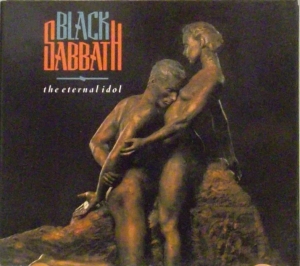
REVIEW: Black Sabbath – The Eternal Idol (deluxe edition)

I’m addicted to buying these deluxe editions.  I think this is the last of my Black Sabbath deluxes. Check out more of my Sabbath deluxe reviews by clicking here!

SAM_2180

BLACK SABBATH – The Eternal Idol (2010 deluxe edition)

The years of chaos were seemingly coming to an end as Black Sabbath stabilized into a solid core of Tony Iommi, Geoff Nicholls, and new lead singer Tony Martin. The drum and bass positions would continue to swirl for another year, right up until the Headless Cross tour. Getting to this point was not without struggle, and this new Deluxe Edition illustrates this beautifully.

I’m going to sidestep the issue of “Does The Eternal Idol really deserve the Deluxe Edition treatment?” and just be glad it’s out. There are, after all, two B-sides here that were ridiculously expensive to acquire on 12″ vinyl. Those songs, “Some Kind of Woman” and the original version of “Black Moon” (which would later be re-recorded on Headless Cross) finally complete the Eternal Idol picture. And they’re not bad songs either, particularly “Black Moon”. “Strange Kind of Woman” I haven’t wrapped my head around yet. It’s this uptempo boogie rocker, and aside from “Blue Suede Shoes” I don’t think I’ve ever heard Black Sabbath boogie before. But it’s not bad, Tony’s playing is awesome, but maybe…ill advised is the term I’m looking for?

The bonus disc is the entire album’s original recording with former vocalist Ray Gillen (their seventh singer) before he was replaced by Martin (their eigth). This had been mostly available on a very common bootleg called The Ray Gillen Years, but missing a couple tracks. Now, the entire album as recorded by Gillen can be heard, and in much better sound quality.  Gillen was a very different type of singer, bluesier, very Coverdale-esque.  He later reappeared with his Sabbath-mate Eric Singer in Jake E. Lee’s Badlands.

SAM_2184

I can still remember keeping up with the Sabbath story via their music videos on MuchMusic. I was surprised when I saw that the “new” singer, the bearded Glenn Hughes, had been replaced by the much cooler looking Tony Martin. Skeptical, I watched the video for the first and only single “The Shining”. Lo and behold, the song was awesome! The riff (which goes back to an old unreleased Sabbath song from 1984 called “No Way Out”, featuring a lineup of Iommi, Geezer Butler, Bill Ward and David “Donut” Donato) was powerful and epic.  As good as any riffs Sabbath had done with Ronnie James Dio. The new chorus shimmers with intensity. This new singer rocked! Unfortunately, Martin would spend his entire career with a “mini-Dio” or “Dio-clone” tag. The similarities are that Martin has a similar range and equal amount of power, but not the grit, and a different character. Fortunately for him, Martin would stick around for 5 albums, but never shook the “replacement singer” tag.

Aside from “The Shining”, I find The Eternal Album to lack lustre. “Glory Ride” is the only other song that was single-worthy, a great romp that reminds me heavily of “Strange Wings” by Savatage (a song that featured Ray Gillen on backing vocals, coincidentally!) The rest of the songs…well, they ain’t bad, I guess. They’re just unremarkable, which is not good for a band that has seldom been anything but.  “Born To Lose” is fast and furious, as is “Lost Forever”. “Scarlet Pimpernel” is one of those atmospheric Sab instrumentals that they were known for in the early days, and its inclusion was very wise. However, the songs so tend to meld into one another, with only “The Shining” and “Glory Ride” making my personal Sabbath road tapes.

I mentioned the creation of this album was chaotic. Aside from the replacement of the lead singer position mid-album, there were also two drummers: Eric Singer departed to be replaced by ex-Sabbath drummer Bev Bevan! But by the tour, Bevan would be replaced by ex-The Clash drummer (Dr.) Terry Chimes. Dave (brother of Dan) Spitz partially recorded the bass to be replaced by ex-Rainbow and Ozzy bassist Bob Daisley. Daisley was gone before the video for “The Shining” was filmed, to be replaced by a mystery man who nobody bothered to catch the name of. You can see him in the video. The story goes, they needed a bassist for the video and pulled this guy off the street. For the tour, Jo Burt filled the bassist slot. Neither Chimes nor Burt would stick around to the next album, Headless Cross.

Did you get all that?

The Eternal Idol was a crucial step towards solidifying Black Sabbath once again, after the chaos of the previous years, but it would be the next album, Headless Cross, that was a resounding return. A much more solid album, Headless featured the new nucleus of the two Tonys and the legendary Cozy Powell on drums. Session bassist Lawrence Cottle (a great fretless player) was replaced for the while by Cozy’s longtime rhythm partner, Neil Murray. That lineup of Powell, Murray, Iommi and Martin (always with Geoff Nicholls on keys) would prove to be one of the most stable in the band’s history and the one that I saw when I first saw Sabbath live in 1995 on the Forbidden tour.

Anyway, I’m going off on a tangent. My point was to show that this album was really not the “comeback” that it could have been, but merely a step towards rebuilding Black Sabbath. You have to admire Tony Iommi for not giving up. The Eternal Idol is not for those fans who just like Ozzy, or just like Dio. Eternal Idol is for the metal maven who wants to know every chapter in the band’s history. Otherwise, I can’t recommend it, except for the two songs “The Shining” and “Glory Ride”. Purchase accordingly.

3/5 stars

GUEST SHOT: 30 Albums that Uncle Meat Thinks You Should Visit (Or Re-Visit) Part 2

Missed part 1? Click here.

Here’s part 2 of 3 – 30 albums essential to Meat’s being, that should be essential to yours, too!  So, without anymore preamble, I’ll leave you with Uncle Meat, as he discusses 10 more albums, in alphabetical order by title, that you need to visit (or re-visit).


HIGH TENSION WIRES  –  STEVE MORSE (1989)

Simply put, Steve Morse is my favorite musician of all time.  I have had the pleasure of seeing Mr. Morse a total of 6 times when you combine The Dixie Dregs, Deep Purple and The Steve Morse Band.  Unlike the releases of some of his contemporaries, High Tension Wires is not your typical shredder album.  Oh it shreds alright, but Steve Morse is much more than a trickster.  There are beautiful compositions, unforgettable solos and some just plain ol’ rocking too.  Included is the link to a live version of a track perfectly named “Tumeni Notes”.  For more examples of the greatness of Steve Morse, introduce some Dixie Dregs into your collection.  You can thank me later.


HOT HOUSE  –  BRUCE HORNSBY (1995)

When Bruce Hornsby said goodbye to The Range, he immediately said hello with Harbor Lights, a heavily jazz-infused turn that completely changed the music world’s perception of him.  Hot House sees Hornsby taking that one step further.  The album’s cover speaks a thousand words.  It is a painting of an imagined band session between Bluegrass legend Bill Munroe and Jazz legend Charlie Parker. Nuff’ said there.  This recording contains many musical giants including Pat Metheny, Jerry Garcia, Bela Fleck and Chaka Khan.   Hot House is very addictive.  I know most of the words off by heart on this record.  Hopefully someday you will too.

JEFF BECK GROUP  –  JEFF BECK GROUP (1972)

This album definitely falls under the underappreciated category.  Sometimes known as  The Orange Album, Beck’s playing has never been better on this collection of original compositions and covers.  I would call this more of a Soul album than anything.  The incredible vocals of Bobby Tench seem to highlight this record at times, as you will see on the live performance of “Tonight, I’ll Be Staying Here With You” I have included for this entry.   Also worth noting, this album is one of the first recordings of the late Cozy Powell’s career.  The guitar work alone on “Definitely, Maybe” is enough reason itself to seek this record out.  Perhaps a rock n’ roll legend’s best work.

JOHN PRINE  –  JOHN PRINE (1971)

I actually discovered the music of John Prine while working at the same record store chain that Mr. Ladano speaks of in this blog.  There is no one quite like John Prine.  Some artists write great songs.  Some artists write great lyrics.  Only a select few truly do both this well.  There is no doubt that John Prine’s self-titled album contains some of the best lyrics ever written.  “There’s a hole in daddy’s arm where all the money goes.  Jesus Christ died for nothin’ I suppose?”  That is just brilliant shit.  “You may see me tonight with an Illegal Smile.  It don’t cost very much, but it lasts a long while”.  I have said this many times and I am still saying it now.  John Prine is THE best lyric writer …. Ever.  Fuck Bob Dylan.  Yeah, I said it.


KRIS KRISTOFFERSON  –  KRIS KRISTOFFERSON (1970)

For the sake of alphabetical order by album, this Kristofferson follows the John Prine album on this list.  Really it should be the other way around.  While I stand by my earlier praise of Prine lyrics, I would certainly listen to the argument that there wouldn’t be a John Prine without Kris Kristofferson.  The songs on this album show a huge diversity and a sense of patience that just makes him so cool.  “Best Of All Possible Worlds” is just insanely-good storytelling and “Me and Bobby McGee” became a mega-smash for Janis Joplin.  Of all the great concerts I have seen, watching Kris Kristofferson and a guitar for two hours in 2006 will always be one of the best concerts I will ever see.  The true greats just need to show up.

LEGALIZE IT  –  PETER TOSH (1976)

After being a key member of Bob Marley & The Wailers for years, Peter Tosh embarked on a solo career.   On his first solo release, Legalize It, I personally believe Tosh recorded the greatest Reggae album of all time.  Fuck Bob Marley.  Yeah, I said it. (Wait why am I so hostile? Ha.)  Remember that one of Marley’s biggest hits “Get Up Stand Up” was co-written with Peter Tosh.  I love this album from beginning to end, and the album’s cover remains a visual anthem for Marijuana activists everywhere.  Sadly, Peter Tosh was taken from us when he was shot in the head during a home robbery.  Rastafarian music at its finest.

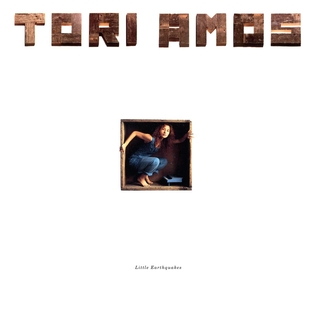
LITTLE EARTHQUAKES  –  TORI AMOS (1992)

There is only one way to put it.  During the spring of 1994 I became a literal disciple of Tori Amos.  By the end of 1996 I had seen her live 7 times.  Several of them in 2nd or 3rd row center seats, since this was back when you could actually wait all night for tickets and be rewarded for it.  This album spoke to me in a way no other album has, or really could.  Frustration with women, with Christianity and with life, I didn’t want to hear about hope in the horizon.  I obviously needed to experience the frustration of someone who understood.  I still have a red-head obsession because of Tori.  This is in my ten favorite albums of all time and always will be.  Little Earthquakes is full of intense and pretty compositions. The humor of “Happy Phantom” contrasts the pain of “Me and a Gun”.  And the included track here is “Precious Things”, which sees Tori Amos exposing herself as the angry and sexual piano player she truly is. Myra Ellen Amos is quite simply a beast.


MELISSA  –  MERCYFUL FATE (1983)

Mercyful Fate’s first two albums are among the best Metal albums of all time.  When you realize that this album came out a full year before Kill ‘Em All did you can start to see just how important this band truly were.  Mercyful Fate are the High Priestesses of underappreciation.  Yes King Diamond looks kinda ridiculous. And yes their lyrics are nothing short of evil incarnate.  Lines such as “Drinking the blood of a new born child” and “I’ll be the first to watch your funeral, and I’ll be the last to leave” sometimes are  so over the top that I guess it is understandable how an album this good could be ignored.  If Thin Lizzy and Iron Maiden had a baby, and that baby grew up listening to nothing but Black Sabbath, the end result would have to look and sound something like Mercyful Fate.  It’s no coincidence that the best thing Metallica has recorded since …And Justice For All is their medley-cover simply-titled “Mercyful Fate”.  One of the greatest Metal albums of all time hands down.  Click on the YouTube link and hear the start of “Curse of the Pharaohs”.  If you don’t immediately recognize “2 Minutes to Midnight” you are lying to yourself.


NEVER, NEVERLAND  –  ANNIHILATOR (1990)

After Annihilator’s first album, Alice in Hell, it was time for a new lead singer.  Out was the awful singing of the ridiculously-named Randy Rampage, and in was ex-Omen singer Coburn Pharr.  The second album of this Ottawa, Ontario band was a vast improvement  over the first album in every way.   Without question the guitar playing of Jeff Waters alone makes this an absolute must-have recording for fans of thrash guitar or just guitar in general.  If you can think of a better Metal album to  come out of Canada then I would love to hear it.  If you have never heard this album, and you consider yourself a “Metal guy” then you are missing out huge.  I am having a hard time trying to pick a song to post here for listening purposes.  That is how truly great this record is from beginning to end.


OPUS EPONYMOUS  –  GHOST (2011)

I know, I cannot believe it either.   Only the second of twenty (so far) albums to be released after 1999 that appear on this list.  This album by Swedish band Ghost is nothing but special.  Before I heard this album I was told that it sounded like a cross between thrash metal and Blue Oyster Cult.  As it turned out that description really was right on the money.  Melodic background vocals nestled in between heavy riffing.  I have to say that this album is my favorite Metal album in probably the last twenty years.  The PERFECT blend of melody and heaviness.  This is the only album that since I have got my iPod, every time I switch the music on it I leave this whole album on there.  Every minute of this album is pure genius and I am super-stoked for their upcoming 2nd album titled Infestissumam that will be released this spring.  Hail Satan!!!!


That’s it for now, stay tuned for part 3, coming soon…

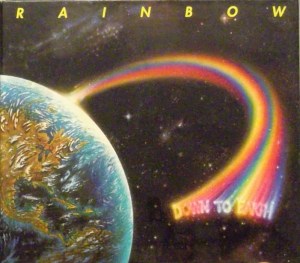
REVIEW: Rainbow – Down To Earth (deluxe edition)

SAM_1921

RAINBOW – Down To Earth (1979, 2011 Universal deluxe edition)

I was a little surprised (in a good way) that Down To Earth by Rainbow was given the deluxe treatment.  I really only expected the Dio albums to be re-released in such grand fashion, but here we are with the sole Graham Bonnet offering.  (To date, the debut album Ritchie Blackmore’s Rainbow has yet to be issued in deluxe form.)

The brand new liner notes reveal that Cozy Powell was not happy with the commercialization of Rainbow’s sound, and that’s why he quit the band. Indeed, Down To Earth sounds like a very different band from that who recorded Long Live Rock ‘N’ Roll. (And in fact only Cozy and Ritchie Blackmore remain from that album.)

Having said that, Down To Earth is a damn near perfect confection of Blackmore’s sublime riffing and commercial rock. Yes, many of these songs could have been on the radio at the time, but the guitars are cranked, and Graham Bonnet has grit and power to spare. In short, this is a fantastic album, majestic and grand, with all the hallmarks that make Ritchie Blackmore one of the most important guitarists in history.

From the opener “All Night Long” to the manic closer “Lost In Hollywood” and everything in between, there is not a weak track on this album. Everybody knows the hit, “Since You Been Gone,” which still gets played on rock radio today. In a way I like to compare this album to Seventh Star by Black Sabbath — a shift, but the elements are still in place. Except Down To Earth is still heavier than Seventh Star, it just lacks Dio’s mysticism.

My personal favourites, aside from the above tracks, include the mid-tempo and sublime “Making Love”, and the manic “Danger Zone”.  None of the eight tracks are skip-worthy though.

The new lineup included future Deep Purple keyboardist Don Airey, and Ritchie’s old Purple bassist Roger Glover.  Glover had built quite a career producing bands like Nazareth, and he also produced Down To Earth.  He did a great job of it too, in particular with Cozy’s smashing drum sounds.

Two bonus tracks on disc one are “Weiss Heim”, the instrumental, and the B-side “Bad Girl”. Both songs were previously available on Finyl Vinyl and other compilations, but it is nice to have the sum total of the Graham Bonnet studio recordings here in one place.

The second disc contains a series of instrumental demos, which really highlight Cozy’s incredibly solid drumming and Ritchie’s picking. You can hear all the subtleties of Blackmore’s playing, every note and every stroke of the pick ringing clear. If you’re the type who can listen to a record and learn to play a song by ear, then you will love this disc. You’ve never heard Blackmore’s playing so bare. And Cozy? Well, his cymbal work is to die for, and of course his snare drumming is metronomic. It’s incredible that even if he wasn’t inspired by the songwriting, he was still playing this good. There are also a few tracks with embryonic lyrics such as “Spark Don’t Mean A Fire” (which became “No Time To Lose”). A “Cozy Powell Mix” of “All Night Long” is an annoying remix with the vocals mixed way way back, the guitar almost inaudible, and the drums upfront. Interesting from an analytical point of view, but not very enjoyable to listen to. The demos do a much nicer job of highlighting Cozy’s work.

Missing: “Since You Been Gone” live Monsters Of Rock Festival, Castle Donnington, England 1980. Also previously released on Finyl Vinyl, no idea why it’s not here. There was plenty of room.   Also missing is “All Night Long” from the same show, which was released on a compilation called All Night Long – An Introduction To Rainbow, and another just called Anthology.   It would have been nice to every Bonnet related recording in one place, but maybe they are planning on a Donnington live album at some point, who knows?

As with all deluxe editions, there are photos and great liner notes. This little-known period of Rainbow is illuminated by a lot of facts and stories of which I was previous unaware. A good read to go with some great music.

Now let’s get a deluxe going of Blackmore’s Rainbow, already!

4/5 stars

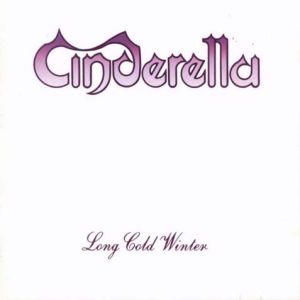
REVIEW: Cinderella – Long Cold Winter (1988)

Longcoldwinter

CINDERELLA  – Long Cold Winter (1988 Polygram Records)

I remember how excited I was upon hearing the first single, “Gypsy Road”, in the summer of ’88.  Cinderella had managed a bluesier, more “authentic” hard rock sound for their critical second LP.  Night Songs was OK, but Long Cold Winter was better in every way.  The cheese factor had been replaced by pedal steel guitars, pianos, and Hammond B3 organs.

Drummer Fred Coury was touring with Guns N’ Roses (Steven Adler had broken his hand punching a wall) during much of the making of Long Cold Winter.  It’s not clear how much of Long Cold Winter he played on, as the band pulled in two incredible session drummers for the project:  Denny Carmassi (of Heart and later Coverdale – Page), and the late great Cozy Powell!

From the bluesy opening of “Bad Seamstress Blues”, it was clear that the AC/DC clone Cinderella that featured Bon Jovi cameos in its videos had evolved.  Two incredible, throat wrenching rockers follow this:  “Fallin’ Apart at the Seams” and “Gypsy Road”.  Both songs easily stand up today as forgotten classics of the “hair metal” era.  But truthfully, Cinderella only made one “hair metal” album.  Long Cold Winter doesn’t really fit in with that scene, and their next album Heartbreak Station would leave it behind completely.

“Don’t Know What You Got (Till It’s Gone)”, the epic power ballad, is more Aerosmith than Poison, and still features a great guitar solo straight out of the Iommi blues notebook.  I’m not too keen on “The Last Mile”, a straightforward rocker, but it was still chosen as a single from this album.  Much better is the side-closing “Second Wind”, amped up and stuttering.

Side two opened with Cinderella’s “serious” blues, the title track.  It’s a bit too contrived for me, it has a vibe of, “Hey, let’s write our ‘Since I’ve Been Loving You’!”.  Lots of repeated “baby baby baby” Plant-isms.  At the time it was released, this song was seen as a serious departure for the band, but in hindsight it’s really just a first step into a larger world.  It’s somewhat reminiscent of the rare occasions that Black Sabbath has attempted a slow blues (I’m thinking “Feels Good To Me”, also featuring Cozy Powell) mixed with Zeppelin.

“If You Don’t Like It” is another standard rocker, nothing special, but this is followed by no less than three great songs in a row.  First is the single “Coming Home”, not really a ballad, but a hybrid.  This was one of the most immediate songs that I fell for when I picked up the album.  You can tell that Cinderella wrote a lot of this album on the road, by the lyrics.  “Coming Home” is one such road song.

“Fire and Ice” is heavy, sort of a revisited “Second Wind”, another standout!  Then the album closes with the slide-laden “Take Me Back”, which strikes me as another road song.  Just as good as “Coming Home”, but heavier, it was a great album closer.  Personally if this album had spawned a fifth single, “Take Me Back” would have been my pick, hands down.  And I think this album could have justified five singles.

The band evolved further with album #3 (which featured strings by John Paul Jones!), but I think Long Cold Winter strikes the perfect balance between screeching rock and bitter blues.  From the classy album cover on down to the perfect production, I don’t think they’ve ever made a better album.

4.5/5 stars

GALLERY: Record Store Excursion 2012 Supplimental

Aaron sent me these photos too late to include in my video report.  These were taken at Sonic Boom Music, and Pauper’s Pub.

Mmm, beer.

I’ve also compiled some of the photos of discs that I scored that day, from some of my review blogs.

And lastly, the video is below, in case you missed it!

REVIEW: Black Sabbath – Forbidden (1995)

BLACK SABBATH – Forbidden (1995, bonus track)

Once upon a time Black Sabbath were the most vital metal band around, but not in 1995.  The 80’s and early 90’s were much rougher, with a rotating lineup of singers, drummers, and bass players. Only original member Tony Iommi and longtime keyboardist Geoff Nicholls weathered the storm consistently.

Bill Ward and Geezer Butler were both playing in Black Sabbath again in late 1994, but by 1995 both had bailed (for the umpteenth time) again.  That left Iommi with Nicholls and singer Tony Martin not knowing what was going to happen next.  There were rumours in the press that Ice T (yes, Ice T) would be soon joining Sabbath.

That didn’t happen (thank God!) and the lineup here is nothing but pure heavy metal pedigree.  It is also a reunion of the 1989-1991 Tyr band.  Neil Murray and Cozy Powell were back on bass and drums.  This would be Murray’s second and Powell’s third Sabbath album.  Murray and Powell, of course, also did time together in Whitesnake, forming a rock solid rhythm section that only great chemistry can produce.

So what happened? What went wrong? Why does Forbidden suck so bad?

The reasons are threefold. One, the album was rushed out amid much confusion within the band. Rumours of Ozzy’s return abounded and Martin didn’t know if he was in or out. Morale sucked.  Second, the record company insisted on a more “current” sound. Thus, the album was produced by Body Count’s Ernie C, and I guess that is the connection to Ice T, who guest raps on the opening track.   Third, I think the album was recorded in roughly a week and doesn’t really sound finished.  Rather, it sounds like a demo sonically and song-wise, with all the filler songs that don’t normally make it to a released album.

Powell, normally a thunderous drummer, is reduced here to a dry hollow whollop thanks to Ernie C’s crummy production.  It’s too bad because Cozy is playing some serious awesome drums that you can’t hear properly.  The entire album suffers, the vocals sound raw and rushed, and the songs smack of second rate tunage.  Granted, everybody knows that Iommi has bags and bags of tapes full of riffs, and some of these riffs are great. However, a riff cannot make a song, and without decent vocal hooks, this Sabbath album is as flat as they come.

It is truly a shame that Tony Martin had to go out with this as his final Sabbath album, after years of loyalty and being dumped twice! I saw them on this tour, and they were great. Shame they were supporting a terrible album.

Highlights:

“Can’t Get Close Enough” is close indeed to being a great song, but not quite. It has a great mellow intro and then this incredible distorted riff kicks in, but the vocal track is slightly underwhelming.

“Kiss of Death” is the closing epic, and best song on the album. Cozy’s drum rolls are like the thunder of Valhalla by the time you get to the choruses and outro. The song reaks of anger and betrayal. “Nothing you can do will hurt me, I am indestructible,” sings Martin over a slow, powerful riff.  Wonder if he knew the writing was on the wall as far as his tenure in the band went.

And that’s it. “Rusty Angels” and “Forbidden” have great riffs but are otherwise not noteworthy. “I Won’t Cry For You” had potential as a ballad, but is inferior in every way to similar songs like “Feels Good To Me”, for example. This album is so dead, so lifeless, not even the grim reaper on the cover can be bothered to stand up.

I know some critisized the cover of this album as being too cartoony, but once you open it up and get the full picture, it is much better. The reaper is sitting next to a tomb, and out from the tomb are the ghosts of all five Sabbath members, Ice T, Ernie C, and lots of ghouls and goblins, done in MAD Magazine type charicatures. It’s a rare fun cover from a band that usually takes its doomy image far too seriously.

Shame that the album isn’t as fun. In the 15 years (and counting) since I bought it, I can usually count on it as a sleeping aid. It’s just that boring.

1/5 stars

OF NOTE: Japanese version had a bonus track, a short 2 minute song called “Loser Gets It All”. It is, sadly, the best track on the album. The good news is that you can get it on a compilation album called The Sabbath Stones if you can’t find the Japanese version.

Side one
1. “The Illusion of Power”
2. “Get a Grip”
3. “Can’t Get Close Enough”
4. “Shaking Off the Chains”
5. “I Won’t Cry for You”

Side two
6. “Guilty as Hell”
7. “Sick and Tired”
8. “Rusty Angels”
9. “Forbidden”
10. “Kiss of Death”

Japanese bonus track
11. “Loser Gets It All”

[youtube http://www.youtube.com/watch?v=xSHOq_bhMwI&w=560&h=315]

Part 136: Black Sabbath, July 22 1995 (REVIEW!)

Sadly, my concert review for this show no longer exists.  Ye olde floppy discs don’t exist anymore, and the site that once hosted the review (sabbathlive.com) no longest exists.  Therefore I’m forced to re-write this as a Record Store Tale.

RECORD STORE TALES PART 136:  Black Sabbath July 22 1995

July 22, 1995.  Tom, myself, and a few of the boys decided to go see Black Sabbath.  They were playing Lulu’s Roadhouse, the world’s longest bar, with Motorhead opening.  It felt like a step down for both bands, but the place was packed.

We arrived just before Lemmy hit the stage.  They ripped into a scorching set to promote their latest album, the high-octane Sacrifice.   I remember Lemmy introducing the title track:  “Don’t try to dance to this one or you’ll break both your fucking legs!”  At the end of their set, Motorhead promised to return (and they did a year later).

I remember Tom and I being blown away by Motorhead.  I didn’t own any — this show officially was what made me a fan.  I kicked myself for not really paying attention to them earlier, but better late than never eh?

Motorhead remain today one of the best bands I’ve seen.

But I was there to see Black Sabbath.  We moved closer to the front of the stage to be in position.  We chose a spot perfectly between where the two Tony’s would be, right up front.

The crowd was getting a little drunk and restless.  A fight started…well, I hesitate to really call it a fight,  it was over before it started.  We all turned around to see this big huge dude headbutt this little tiny Kurt Cobain looking guy.  Knocked him out cold.  Then the big guy realized everybody was watching and hastily made an exit.

Then, Black Sabbath:  Tony Iommi, Tony Martin, Cozy Powell, Neil Murray, and Geoff Nicholls.  What we didn’t know was that Cozy only had seven more gigs after this one.  Then he would be replaced by another Sabbath vet, Bobby Rondinelli.  And of course little did I know that I’d never see Cozy live again in any band:  He was killed in a car accident 3 years later.

They hit the stage to the classic Martin-era opener, “Children of the Grave”.  Sabbath’s set was sprinkled with tunes from the Ozzy era (“War Pigs”, “Iron Man”, “Paranoid”, “Sabbath Bloody Sabbath”, “Black Sabbath”) and the Dio era (“Heaven and Hell”, “Mob Rules”) and many of his own tracks.  They played three from the lacklustre new record, but at least three of the better songs:  an awesomely dramatic “Kiss Of Death”, the explosive “Can’t Get Close Enough”, and the filler song “Get A Grip”.

It was just before “Get A Grip” that the stagediving began.  Tom vacated the stage area right away.  “Get a grip is right!” he said to me.  “I’m out of here.”  Two songs later I followed him.  This drunk girl started grinding me from behind, so I took the first chance to slip away and catch up with Tom.

The one song I really came to see was “The Shining”, one of the best Martin-era tunes, and his first single with the band.  Sabbath delivered.  They also played two from Headless Cross including “When Death Calls”.  Neil Murray played the chiming bass intro to this song that I’d never heard before.  It was the only unfamiliar song.  I resolved to get Headless Cross as soon as possible.  (It took two months for Orange Monkey Music in Waterloo to get it from Europe.)

Vague memories:

Tony Martin was a so-so frontman.  Much of the time, he would spread his arms Christ-like and shake his thinning hair.  He talked a lot and I remember he had small, beady but friendly looking eyes.  He did the best he could.  He sang his ass off, although he had lost a fair chunk of his range.

I remember Iommi ditched his SG for an unfamiliar red guitar during the overdriven “Can’t Get Close Enough”.

I could barely see Cozy, which is my biggest regret.

I was pleased that Sabbath played a well-rounded set with new stuff.

Little did I know that the end was near.  Not only was Cozy soon to be out, but promoters cancelled much of the end of the tour.  Sabbath headed over to Japan, threw “Changes” into the set (OMG!) but were done by the end of the year.  For the first time in a long time, Sabbath were put on ice while Tony (Iommi) worked on a solo album with Glenn Hughes.

Meanwhile, the lawyers were conspiring to create a new/old Sabbath lineup.  By 1997, Ozzy was back, and the band now featuring founding members Osbourne, Tony Iommi, Geezer Butler, and new drummer Mike Bordin of Faith No More.

I’m glad  to have seen Sabbath with Martin.  He did five albums, and I like three of them.  I think he did the best he could under difficult circumstances.  He’s a talented guy, so it’s great to have seen this lineup especially since Cozy would be gone so soon!