hard rock

REVIEW: Mr. Big – Bump Ahead (1993)

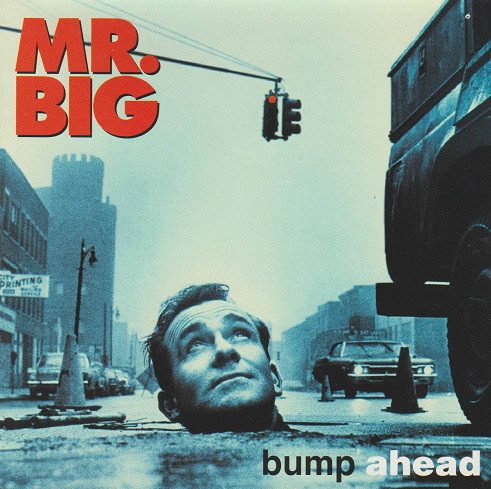
MR. BIG – Bump Ahead (1993 Atlantic)

Living up to Lean Into It was never going to be an easy thing to do.  By the time 1993 rolled around, it didn’t even matter.  Mr. Big were going to be ignored no matter what they did.

There are no giant leaps and bounds on Bump Ahead, but there are enough decent rock thrills and ballads to call it a good album.  A lot of the heavy artillery is expended right on the first track, “Colorado Bulldog”.  An amped-up Van Halen shuffle is cranked to the max with the one and only Billy Sheehan pushing the whole thing on the bass.  It’s an insane affair of accelerated playing and a stomping riff.

“The Price You Gotta Pay” keeps it heavy, anchored by a patented Sheehan groove.  Eric Martin’s bluesy soul rasp gives the music accessibility, but there is plenty going on instrumentally too.  Fans of sheer playing will find plenty of challenging licks within.  Likewise, “The Whole World’s Gonna Know”.  It sounds like a redo of an old Talas song called “Smart Lady”, with a new improved chorus.  They lay down a granite groove on “Temperamental”.  Plenty of solid rock is to be heard here.

That said, let’s not kid ourselves.  Mr. Big made their money with ballads like “To Be With You”, and so they loaded the deck here with a few more.  “Promise Her the Moon” is sentimental, understated and classy.  The big one is Cat Stevens’ “Wild World”.  Mr. Big were not likely to blow it on a song this magnificent.  Their version is more lush than Stevens’, but is actually quite great.  They miss the mark on “Nothing But Love”; too syrupy with its guitar synth orchestra.  In a case of ballad overdose, there is a fourth:  “Ain’t Seen Love Like That”.  It’s one of those basic campfire ballads.  Good song, but not essential.

Bump Ahead has a bit more filler than preferred.  “What’s It Gonna Be” is fine funky rock, but the chorus is pedestrian.  They go a different direction on the psychedelic “Mr. Gone”.  Don’t forget this is the band that gave us “Green-Tinted Sixties Mind“, though “Mr. Gone” isn’t as perfect as that.

They close the album on the free cover “Mr. Big”, the song that gave them their name.  The grind of “Mr. Big” ends the album on an upstanding note, but damn, they should have cut one of those ballads doncha think?  The fact is, Mr. Big were simply not going to have a hit with a ballad in 1993.  Wasn’t gonna happen.  The Japanese edition had a bonus track called “Long Way Down”, which wasn’t that outstanding but perhaps should have been included in the main tracklist at the expense of a ballad.

3/5 stars.

REVIEW: Mr. Big – Hey Man (1996)

MR. BIG – Hey Man (1996 Atlantic)

With the recent passing of Pat Torpey, it’s definitely time for some fresh listens to classic Mr. Big.  Their most underrated album might be their fourth, Hey Man, on which Torpey had three writing credits.  1991’s Lean Into It is generally considered the highwater mark, but Hey Man boasted songs just as strong and many just as memorable.   If only MTV wasn’t avoiding Mr. Big and bands of their era like the bubonic plague.

Mr. Big were always ferocious musicians, and formed as a “supergroup” of such.  The point of Mr. Big was for these mega-instrumentalists to write some commercial rock, and that has been their modus operandi on every album.  When Mr. Big formed, Torpey already boasted two albums:  Ted Nugent’s If You Can’t Lick ‘Em…Lick ‘Em, and the supergroup Impelliteri.  Billy Sheehan was already worshipped for his work with David Lee Roth and before that, Talas.  Guitarist Paul Gilbert had established himself as a wunderkind with the Shrapnel band, Racer X.  The key ingredient to Mr. Big is the blue-eyed soul of singer Eric Martin.  He had a two album solo career before he made the unlikely jump to supergroup.

It’s the rocking side of Mr. Big that hits the ground running on first track “Trapped in Toyland”.  Heavier and grooving more than usual, Mr. Big poured the gas on the fire right off the bat.  It’s a huge impression.  Gilbert wrote this smoker with his old Racer X singer Jeff Martin, and Russ Parish of Fight (and now Steel Panther).  That would explain the heavy!  What really nails the heavy sound is the combination of Billy Sheehan’s bass rumble in conjunction with Torpey’s smashing beat.

The most stunning of all the songs is the second, a bonafide Mr. Big classic called “Take Cover”.  It simmers under an infrared pulse of drum beats and understated chords, and then bursts wide open on the choruses. It’s triumphant songwriting and a fine example of how musicianship and songcraft can work together.  It is one of their career best.

“Jane Doe” goes funky a-la “The Crunge”.  Eric Martin pushes it into soul on the choruses.  A couple ballads follow, one acoustic and one darker.  “Goin’ Where the Wind Blows” fills the slot of past Mr. Big acoustic ballads, something that had become compulsory after the success of “To Be With You”.  The more interesting song is “The Chain” which has a sombre edge.

There is an undeniable twang to “Where Do I Fit In?”, so much that it could easily be mistaken for Tesla.  It’s a solid side closer, though “sides” were becoming meaningless in 1996.  Hey Man has never seen a vinyl release, and the dying cassette version was the only one with “sides”.

Eric Martin makes it soulful on “If That’s What it Takes”, which doesn’t deserve to be called a ballad so we won’t.  It serves as a reminder of how these musicians can adapt to any situation.  The Paul Gilbert who plucks these earthy chords is the same guy who shred all over Lean Into It.  Pat Torpey turns into a human steamroller on “Out of the Underground”.  It’s as heavy metal as Mr. Big have been.  Then they go “Dancin’ Right Into the Flame” on a pretty cool ballad.  It has a bit more finesse than the usual.

You can tell immediately that “Mama D.” was written by Paul Gilbert, because it has one of those squirrly Gilbert guitar licks that only he writes.  To close the album, they return to a heavy soul-funk on “Fool Us Today”.  Pat Torpey is rock solid and a key ingredient to a fun closer.

Track for track, Hey Man can go up against most other Mr. Big albums.  They had a temporary breakup after this CD, a result of it being criminally ignored.

4/5 stars


REVIEW: Ritchie Blackmore’s Rainbow – Black Masquerade (2013)

RITCHIE BLACKMORE’S RAINBOW – Black Masquerade (2013 Eagle Rock from a 1995 TV broadcast)

It’s a damn shame it took so long for this recording to get a release. Recorded in 1995, this CD release was a German TV broadcast, and is the only live Rainbow album to feature singer Doogie White. The only difference from the recent Stranger In Us All album lineup is the drum seat. John O’Reilly was jettisoned in favour of Chuck Burgi who was with Rainbow from 1983 to 1984.

There are some clear mixing problems on some tracks, notably the opener “Spotlight Kid”.  The backing vocals sound as if they are from another song, or audio leakage from another broadcast.   There’s little else wrong, aside from those things that happen in a real live setting.

In some respects this lineup of Rainbow was rather faceless, but Doogie White was an entertaining and versatile frontman.  He’s comfortable in all eras of Rainbow, and he does them all, plus two eras of Deep Purple.  That means Doogie White not only sings his own material (seven tracks from Stranger In Us All) but also must sing the songs of Ian Gillan (“Black Night “, “Smoke on the Water” and “Perfect Strangers”), David Coverdale (“Burn”), Ronnie James Dio (“Man on the Silver Mountain”, “Long Live Rock ‘N’ Roll”, “Temple of the King”), Graham Bonnet (“Since You’ve Been Gone”) and Joe Lynn Turner (“Spotlight Kid”).  White even does a classic Ian Gillian singalong in “Black Night”, imitating Ian’s “Doo doo doo doo doop!”, before breaking into a traditional drinking song with improvised lyrics.

What about Ritchie?  Brilliant as ever, and even though he is notorious for…not enjoying…being filmed, it doesn’t seem to inhibit his performance here.  Extended solo sections sound like joy.  Perhaps having his true love on stage with him, Candice Night on backing vocals, soothed the savage Man in Black.  Regardless he sounds as flawlessly and quintessentially “Ritchie Blackmore” as ever.  There’s only one.

Live albums from obscure, buried periods like this often yield solid hardened gems.  “Hunting Humans” and “Ariel” are better live than they were on album.  Things are looser and livelier.  “Wolf to the Moon” has guitar and keyboard interplay that takes it further than it went on album.

The most intriguing track is the Dio-era classic “Temple of the King”.  As Doogie tells it, when the band were recording in America, they’d often pop out for a drink.  Sometimes they’d play music in bars and “Temple of the King” came from those times.

Given that there is so much bloody live Rainbow out there (with another brand new live album just announced!), Black Masquerade can understandably go fairly low on your want lists.  If you see it though, don’t hesitate.

4/5 stars

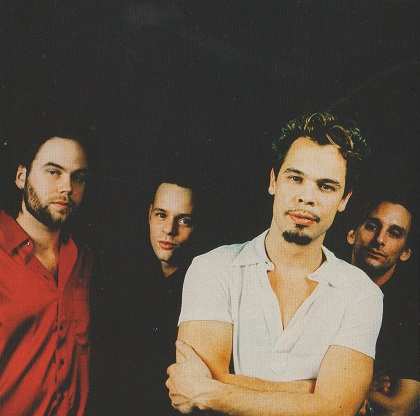
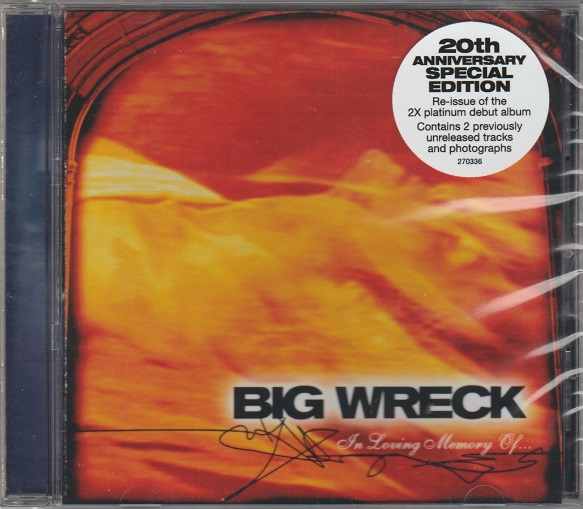
REVIEW: Big Wreck – In Loving Memory Of… (20th Anniversary edition)

BIG WRECK – In Loving Memory Of… (Originally 1997, 2017 Linus Entertainment anniversary edition)

“You need to get into some new bands, man,” said my buddy T-Rev.

Trevor had a point.  Most of my collection was rooted in the 70s and 80s.  New bands weren’t appealing to me, one or two excepted.  But I did hear this new band on the radio (Q107) called Big Wreck that I didn’t mind.  “Like a bluesy Soundgarden with a hint of Rush” said the DJ.  Their first single “The Oaf” was pretty awesome.

“I found a new band I liked,” I told Trevor.  “Big Wreck.”

“Hahaha, oh man.  You found a new band and they suck!” he retorted.  Trevor was really into Brit-pop and probably hoped I would have discovered the Bluetones or Supergrass.  Alas, it wasn’t to be this time.  I bought the Big Wreck album In Loving Memory Of…, and I liked it enough to get the 20th Anniversary Special Edition two decades later.

Big Wreck were a little bit of a throwback.  Their use of blues was different from the post-grunge bands they were competing with, and that’s what initially appealed to me.  And yes, Ian Thornley could be compared to Chris Cornell in terms of singing power.

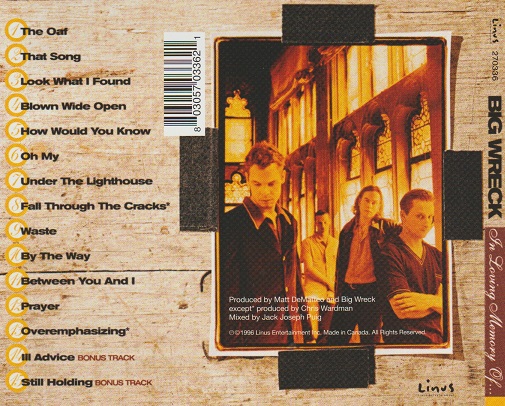
The album boasted a number of immediate standouts.  “The Oaf” was the tough introduction, but “That Song” followed it with something immediately accessible.  “Look What I Found” takes a trip to the levee, emulating a Zeppelin stomp through the production of 1997.

There’s a balance of heavy/light here, that skews too much on the light side.  Fortunately the two CD bonus tracks put the scales back on the heavy side.  The only real weakness to In Loving Memory Of… is a reliance on slow songs within the bulk of the album.  Some of the quiet songs are incredible.  “Under the Lighthouse” (a single in Canada only) has atmosphere out the wazoo.  Echoes of heartbreak are smeared through “Blown Wide Open”, another single.

If I had to put my money on it, I’d say “Under the Lighthouse” is the best song on the disc, ballad or not.

In Loving Memory Of… is most enjoyable when jaunting through bluesy rock guitars.  The musicianship is always exceptional.  “How Would You Know”,  “Fall Through the Cracks”, “Overemphasising” and “Between You and I” are comfortably in rocky framework, with outstanding lead work.  The album does run a bit long, though.  In 1997, the full length value of a CD was being utilised more than today, now that bands realise less is often more.  The original 13 tracks ran an hour long, which is probably 15 minutes too long.

Yet the two additional bonus tracks are excellent.  Both speed along at a good clip.  The bright “Ill Advice” is more upbeat than most of the album, save “That Song”.  “Still Holding” has punch.  The album would have been stronger for their inclusion if they had been there all along, despite its length!

Fixin’ for a shot of 90s nostalgia?  The Big Wreck anniversary edition might be what you needed.  The band are playing the whole album in sequence on their current tour, so you may as well become re-acquainted.

3.5/5 stars


#620: The Retired Jedi Master (of Rock)

GETTING MORE TALE #620: The Retired Jedi Master (of Rock)

It is always sad when one of my old Jedi Masters of Rock loses their passion for it.

I think for Bob, that began when he entered college. While Bob taught me the ins and outs of Iron Maiden, Ozzy Osbourne, Dio, and Motley Crue, he was drifting away from heavy metal. There is nothing wrong with diversifying, but his passion for the heavier side of things was waning.

I remember in the summer of ’91 when Motley Crue released their awesome new groove-laden single, “Primal Scream”. I asked Bob if he liked it, and his response was that the new Motley was “too heavy”. My heart broke in two pieces that day. I was so excited about that track. Motley were doing exactly what I wanted them to do: turning it up and giving no fucks. Bob just wasn’t into that.

His tastes were changing. I think a big part of it was that the girls he liked at college weren’t into heavy metal. Bob was checking out more commercial sounds and ballads. One of his favourite groups was Frozen Ghost.  I also remember he was very much into Bad Company’s Holy Water. Meanwhile I was digging into the roots of metal and the bands of the future as well: from Deep Purple to I Mother Earth.  Our paths diverged.  I couldn’t be less interested in new Bad Company, but I was intent on collecting the entire Black Sabbath back catalogue.  It made me a little sad, but I’m not regretful about where my explorations took me over the years.

I think it can be summed up as below:

1. The girls we liked didn’t listen to metal.
2. Bob’s tastes diversified while he outgrew metal.
3. I doubled down on metal, going all in. The girls might not like metal, but maybe they’d appreciate my don’t-give-a-fuck attitude?

Bob’s method got him dates. My method did not! But my musical journey took me far and wide.  From the deep neon coloured oceans of Frank Zappa, to the craggy peaks of Mount Marillion, and back to the Valley of Judas Priest. As real life took over – job, wife, kids – Bob was no longer the music head that I was. He has always been a hard worker, and a family guy. My passion only grew deeper. The longer, heavier and more complex the tunes, the more interested I was in the band. I loved musicianship. Ballads were starting to sound the same to me, and there were some cool new sounds coming out of the woodwork.

Life took Bob and I in different directions. He met a lovely lady named Trish and now has four kids. I have none.  If I had four kids, would I still have time to invest in my passion, music? Bob’s kids keep him very busy, believe me!

Bob sold off his collection many years ago. He had some amazing Iron Maiden 12” singles and picture discs. I bought a few of his singles, but there was one tie-dyed bootleg picture disc EP that I would have loved to get my hands on. I couldn’t tell you anything about it today, except that it was Iron Maiden. He had to do what he had to do. It’s gone now and he has little recollection at all about it.  That information is sadly lost to me now.

Not every Jedi Master of Rock stays in the trenches forever. Some do, and end up writing about it on the internet. Bob may have retired his rock and roll shoes, but his influence lives on right here in these pages.  Thank you for your wisdom and friendship.


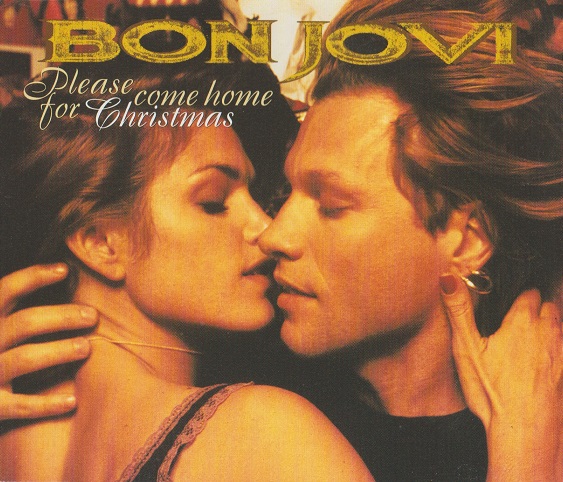
REVIEW: Bon Jovi – “Please Come Home for Christmas” (1994 single)

BON JOVI “Please Come Home for Christmas” (1994 Mercury single)

Christmas of ’94 was a good one for Bon Jovi.  Their first greatest hits record Cross Road was a smash, returning Bon Jovi to the charts.   It spawned two hit singles:  “Always” and later on, “Someday I’ll Be Saturday Night”.  With all that going on, it is understandable if you missed another Bon Jovi single that was just under the radar.

“Please Come Home for Christmas” is billed as a Bon Jovi single, but in actuality it’s a Jon Bon Jovi solo track.  It was first released exclusively to the album A Very Special Christmas 2 (1992), billed to Jon Bon Jovi and not performed with the band.  By ’94, “solo” and “band” Bon Jovi were becoming blurred.  Jon’s solo track “Blaze of Glory” was on Cross Road even though it’s from Jon’s first solo album.  Nowhere on the “Please Come Home for Christmas” single is it indicated that this is a Bon Jovi solo recording, further blurring the lines.

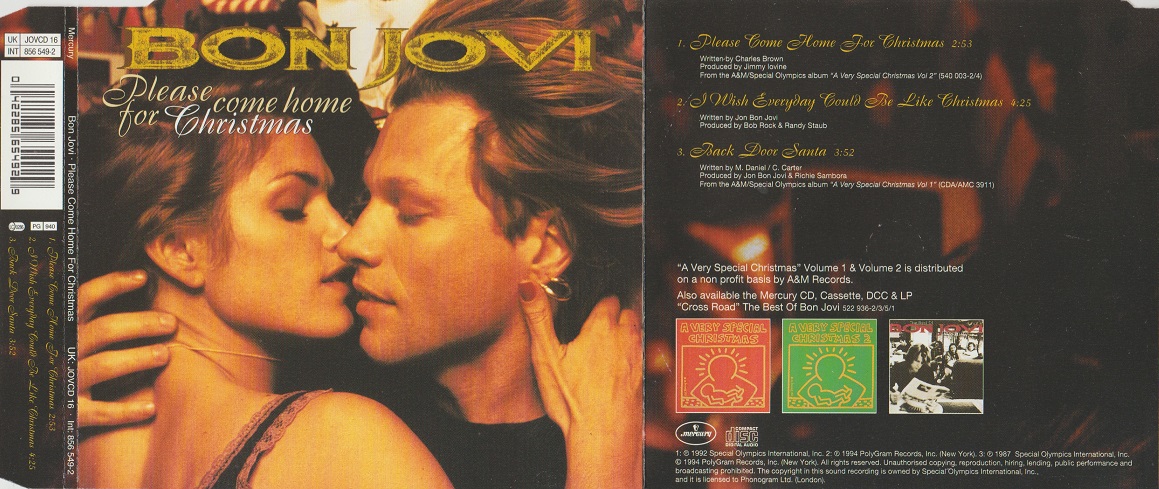
None of that really matters; Bon Jovi is Jon’s band and this single gathers together his first three Christmas recordings in one place.  It’s actually a great value.

The old Charles Brown seasonal classic has been covered over and over, notably by the Eagles.  Jon’s version isn’t bad either.  You either like Bon Jovi or you don’t.  If you like Bon Jovi then this will probably be right up your alley.

Next up, one of the B-sides from Keep the Faith and an original song too:  “I Wish Everyday Could Be Like Christmas”.  This has the vibe of Keep the Faith, with full production by Bob Rock.  Why can’t everybody be kind to each other every day like they are on Christmas?  It ain’t easy to write an original Christmas song, and Jon did an excellent job on this one.  I’ve always preferred it to “Please Come Home for Christmas”.

Finally, from the first Very Special Christmas album (1987), it’s a live take of “Back Door Santa” (Clarence Carter).  That means it’s from the Slippery When Wet tour.  Vintage Bon Jovi with cheesy keyboards right out “Social Disease”.  It’s not good but it’s here!  Meaning, Bon Jovi fans don’t have to look for A Very Special Christmas to complete their collections.

Two for three decent songs isn’t bad.  All are non-album tracks, so that’ll make this single worth it to you.

3/5 stars
REVIEW: Raw M.E.A.T 1 – Various Artists (1990)

Welcome to…
…Hosted by Vinyl Connection

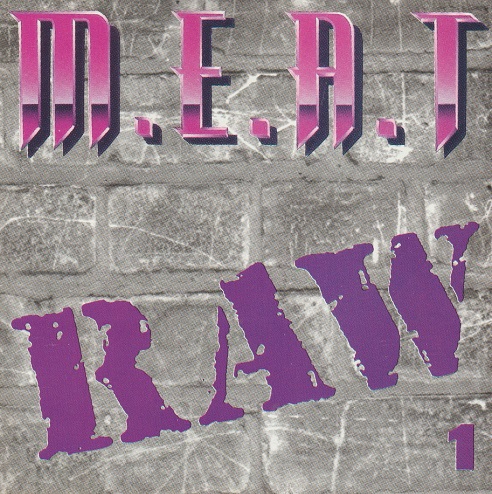
RAW M.E.A.T 1 (1990 M.E.A.T Magazine)

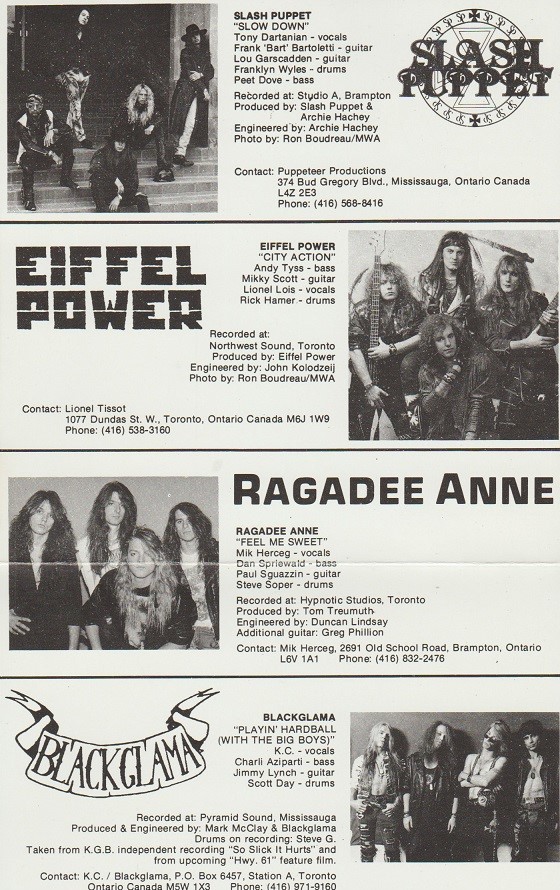
Drew Masters’ legendary metal magazine M.E.A.T took a lot of pride in promoting Canadian talent.  The next logical step was putting out a CD featuring the best of the best in unsigned Canadian rock and metal.  The flagship band was Toronto’s Slash Puppet.  On this first volume, only groups from the province of Ontario signed up.   Even though the talent all came from a small region in and around Toronto (with one exception), it’s a surprisingly diverse selection of styles.

I look at Raw M.E.A.T as a first tapping of an oil reserve.  It was a gusher.  So much untapped raw talent, unheard in suburbs.

“Slow Down” by Slash Puppet was previously issued on their indi tape, but Raw M.E.A.T 1 was its first issue on CD.  The track has been described as Motorhead meets Faster Pussycat and that still fits the bill.  Lead singer Anthony J. Mifsud was the sandpaper throat to go with the rough and tumble music.  You can hear why there was such a buzz around Slash Puppet.  They had pro-level tunes and performance. All they needed was a break.

Most Raw M.E.A.T buyers knew what they were getting with Slash Puppet. The rest of the tunes were uncharted territory.

Eiffel Power, from Taranna, knocked it out with “City Action”.  Singer Lionel Lois  had ample range and lung capacity for this fun metal shuffle, very current for the time.  Think of Extreme’s first album but with more muscle.  Then there’s the instantly likeable “Feel Me Sweet” by Brampton’s own Ragadee Anne.  Yes, it’s true:  coming up with names for bands isn’t always easy, but “Feel Me Sweet” kicks.  One reason they sound so professional is due to the production by Tom Treumuth (Triumph), surely an advantage in the studio.  Glam rock with bite and youthful innocence sure sounds good.

Blackglama (Toronto) take it to the streets with the rock/rap hybrid of “Playin’ Hardball (With the Big Boys)”.  This was just a year or two ahead of its time, though director Bruce McDonald used it in his 1991 film Highway 61  (but not the soundtrack CD).  The next group, Washington Wives, bring it to immaculately composed AOR rock.  “Memoirs, Etc.” has backing vocals from Phil Naro, from just across the border in Buffalo.  Naro is best known for Talas and his work with Kiss’ Peter Criss.  “Memoirs, Etc.” is vaguely familiar, as if you’ve heard its like on the radio before (Journey? Night Ranger?), but there’s no question this track was hit-ready.  Zero fat content, this is all meat of the most melodic variety.

Short Avenue has another “name” attached, that being “Scarpelli”.  Guitarist Gene Scarpelli is the son of Gino, of Toronto’s Goddo.  Short Avenue sounds nothing like Goddo, rather more like some tough street punks ready to mix it up.  With hindsight, they sound like precursors to The Four Horsemen.  “Push Comes to Shove” is right in the same vein as the Horsemen’s “Rockin’ is Ma Business”.  From the Horsemen to the Cult:  The Cult have always been big in Canada.  First impressions are that Trouble In Mind (Toronto) were very inspired by Ian Astbury.  Regardless, their track “Sweet Addictions” is album quality.  Lead singer Beau (just “Beau”) turned up on a later instalment of the Raw M.E.A.T series, but that’s another story.

We depart Toronto momentarily for a trip to the nation’s capitol.  Ottawa’s Antix had been self-releasing vinyl since 1986, and “Kick It Up” was a new track.  With a Van Halen shuffle, their track hits the right spots, but suffers from inadequate production.   It’s unfortunate that the most experienced band has one of the poorest sounding tracks on the CD.

Russian Blue received their first major exposure via Raw M.E.A.T, and thanks to their incredible song “Once a Madman”, they gained a cult following.  They were a double threat:  a magnificent singer and a terrific guitar player.   Vocalist Jo E. Donner found himself compared to a young Robert Plant.  Richard Gauci backed that up with memorable guitar hooks.  “Once a Madman” gets the job done in just 3:15, leaving behind an unforgettable and unique rocker that begs for repeat listens.  One reason it sounds so good?  Produced by a pre-fame Harry Hess of Harem Scarem.

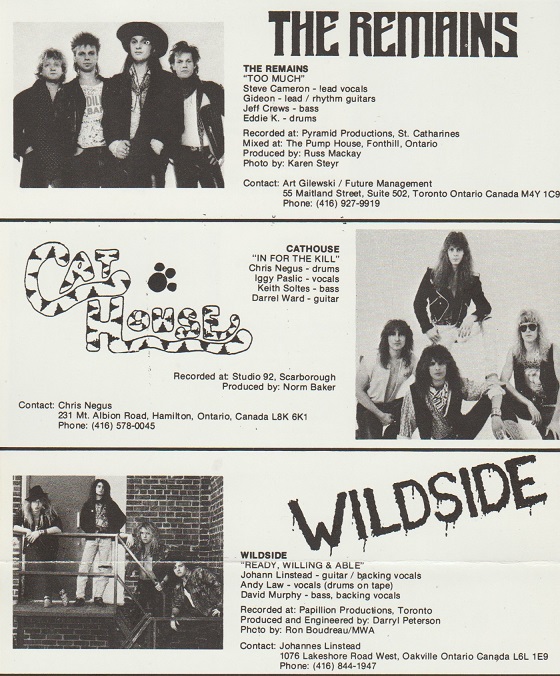
The next band, Zyle, sound like they were going for a traditional metal sound.  The Scorpions come to mind immediately, as does fellow Canadian rockers White Wolf.  They needed a bit more originality.  The guitar solo directly quotes Randy Rhoads, too close for comfort.  But then it’s The Remains with something a little more street punk.  A variation of the classic Peter Gunn riff, “Too Much” is actually never enough.  It’s the right mixture of middle finger and middle eight.

Hanging out just down the QEW are Hamilton and Oakville, from which come the last two groups.  Cathouse prove that you can never have enough permutations of the classic Van Halen shuffle.  “In For the Kill” nails it, with a vocalist who seems like equal parts Skid Roper and Rob Halford.  Finally, Oakville’s Johannes Linstead is best known today for his flamenco guitar albums.  He didn’t start there!  Wildside (later to become Gypsy Jayne) are about that sleaze rock.  You can hear that the guitarist is something special, though you wouldn’t predict the future from this one track.

It’s difficult to be objective, even though so many years have passed since Raw M.E.A.T 1.   Many (if not most) of these bands had potential.  Toronto in the early 90s was ready to explode as “the next Seattle”, but there was no “next Seattle”.  12 of these 13 songs are really fondly remembered, with one just needing a little more originality.

4.5/5 stars


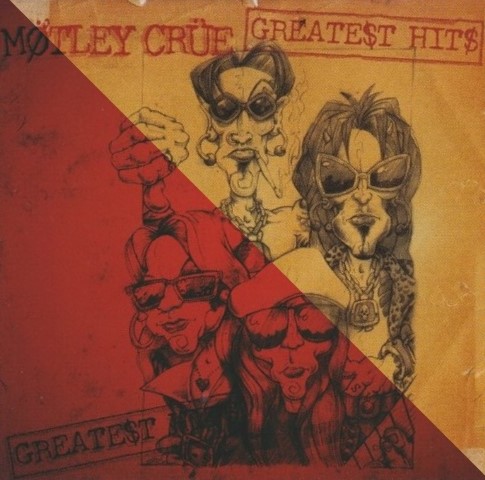
Motley Crue – Greate$t Hit$ (1998, 2009 versions)

MOTLEY CRUE – Greate$t Hit$ (1998 Motley/BMG), Greate$t Hit$ (2009 Motley/Masters)

Most fans will agree that Motley Crue’s 1997 reunion album Generation Swine was, at best, disappointing.  The Crue tried to right the ship by returning to producer Bob Rock.  Together they came up with two new songs, “Bitter Pill” and “Enslaved” that recalled better days.  We discussed the wherefores and origins of 1998’s Greate$t Hit$ album in Getting More Tale #611:  Afraid, on which the two new songs were released.  As you’ll read here, the 1998 issue of  Greate$t Hit$ is better than its 2009 update.

Both “Bitter Pill” and “Enslaved” bring Motley’s sonics back to their previous setpoint with Vince Neil, Decade of Decadence.  The combo of Motley plus Bob Rock produces the kind of results you expect:  punchy, heavy rock tunes with hooks.  Neither is as memorable as “Primal Scream”, but serve their function.  If this lineup had stayed together perhaps they could have taken it further, to the next stage of evolution.  Tensions between Vince and Tommy Lee eventually erupted.  Tommy left the band to pursue his own sanity and a side project called Methods of Mayhem.

The ’98 Greate$t Hit$ also offered up one other cool bonus:  a previously unreleased remix of “Glitter”.  It’s softer and more electronically processed, but a very cool alternate version.  Dropped into this running order, Greate$t Hit$ turns out to be a remarkably fun and consistent listen.  It would be a highly recommended way to get a broad assortment of great Motley and some rarities too.

Then, as part of the promotional cycle for a later, better reunion album (2008’s Saints of Los Angeles), Greate$t Hit$ was updated and reissued.  Including its previous incarnation, the 2009 Greate$t Hit$ became the fifth Motley Crue best-of compilation (not counting box sets and rarities compilations).

So what’s the difference?

13 tracks overlap between the two: “Too Fast For Love”, “Looks That Kill”, “Smokin’ In The Boys Room”, “Home Sweet Home”, “Wild Side”, “Girls, Girls, Girls”, “Dr. Feelgood”, “Kickstart My Heart”, “Don’t Go Away Mad (Just Go Away)”, “Without You”, “Primal Scream”, and “Afraid”. The 13th track is “Shout At The Devil”.  In 2009 they used the original version, where on the old CD it was “Shout At The Devil ’97” (a re-recording from Generation Swine).

Three tracks were previously released as “new” songs on other greatest hits CDs: “Primal Scream” (Decade of Decadence), “Sick Love Song” and “If I Die Tomorrow” (Red, White & Crue).

Two tracks were from the newest Motley platter, Saints Of Los Angeles: The title track, and a brand-new remix of “The Animal In Me” featuring more keyboards.

Zero tracks from the albums Motley Crue or New Tattoo are included (neither album had all four original members).

There are 19 songs total included, which is a beef-up from the 1998 version, which had 17 songs.  “Bitter Pill” and “Enslaved” were excluded, but both are available on Red, White & Crue (2005). The remix of “Glitter” from the 1998 version is not and is now deleted.

The songs on the update, unlike the 1998 version, are mostly in chronological order. The exception is “Afraid” which is shuffled out of place with “Sick Love Song” for reasons unknown. The flow of the album is OK, with the kickass “Too Fast For Love” starting the proceedings. The mixture of rockers to ballads is engineered for high octane, and the ballads only kick in when needed. The album only runs out of gas towards the end:  “Sick Love Song” isn’t very good didn’t require a second look here.  “Bitter Pill” should have been kept instead.  The final track “The Animal In Me” is just too slow for a closing song. “Saints Of Los Angeles” would have been more appropriate to close this set.

Even though the 2009 update has 19 songs compared to 17, the ’98 version wins due to the inclusion of “Bitter Pill” and “Enslaved”. It’s more enjoyable listen from start to finish, with better flow and song order.  The ’09 Greate$t Hit$ smacks of an obvious cash grab. Check out the liner notes. They haven’t even been updated. The essays are 10 years out of date, the notes refer to the “two new songs” (which aren’t there), and the back cover artwork still reflects “Bitter Pill”. Essentially, the only changes to the packaging are the colours with a new slipcase added, displaying a newer band photo from the Saints sessions.

Greate$t Hit$ 1998:  4/5 stars

Greate$t Hit$ 2009:  2/5 stars
 

RE-REVIEW: KISS – “God Gave Rock & Roll to You II” (1991 single)

The KISS RE-REVIEW SERIES Part 40:

 – “God Gave Rock & Roll to You II” (1991 Interscope single)

Kiss’ Hot in the Shade tour wasn’t a sellout, but it was well received by fans who appreciated that a bunch of older songs were back in the set.  The tour was unfortunately highlighted by the June 15, 1990 date in Toronto, igniting a feud with Whitesnake.  Kiss were third on a four-band bill, with David Coverdale, Steve Vai and company in the headlining slot.  Paul Stanley used his stage raps to complain that Whitesnake wouldn’t let them use their full setup, including a giant sphinx.  When Whitesnake hit the stage, it was to a chorus of boos.  Steve Vai later stated that it was the first time he had ever been booed.  Vai once even walked onstage to the sound of people chanting “Yngwie! Yngwie! Yngwie!”, but he had never been booed until the incident with Kiss in Toronto.

When the tour wrapped up in November, Kiss took a few months off before gearing up again in the new year.  It was to be another album, another tour, but suddenly real life interfered.

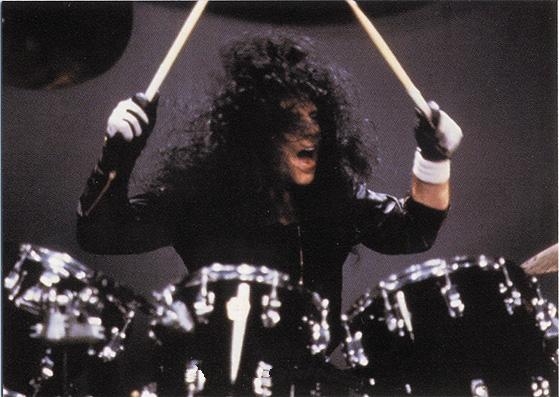
Eric Carr hadn’t been feeling well.  Flu-like symptoms turned out to be heart cancer.  Simultaneously, Kiss received an offer to record a song for the sequel to Bill & Ted’s Excellent Adventure.  Carr underwent surgery in April, with chemotherapy following.  Having little choice, Kiss recorded without him.  Eric Singer, who had performed so well on Paul Stanley’s solo tour, filled in on drums.  Eric Carr, in a wig, was able to play for the music video taping.  He gave his all, and did a full day’s shoot, with excellent (pun intended) results.

Unfortunately a rift was developing, with Eric Carr feeling shunned and excluded from Kiss.  He was afraid he was going to be replaced, permanently, and his relationship with the band was strained.  Although everybody hoped Eric would make a full recovery, he passed away from a brain haemorrhage on November 24, 1991.  Eric Carr was 41.

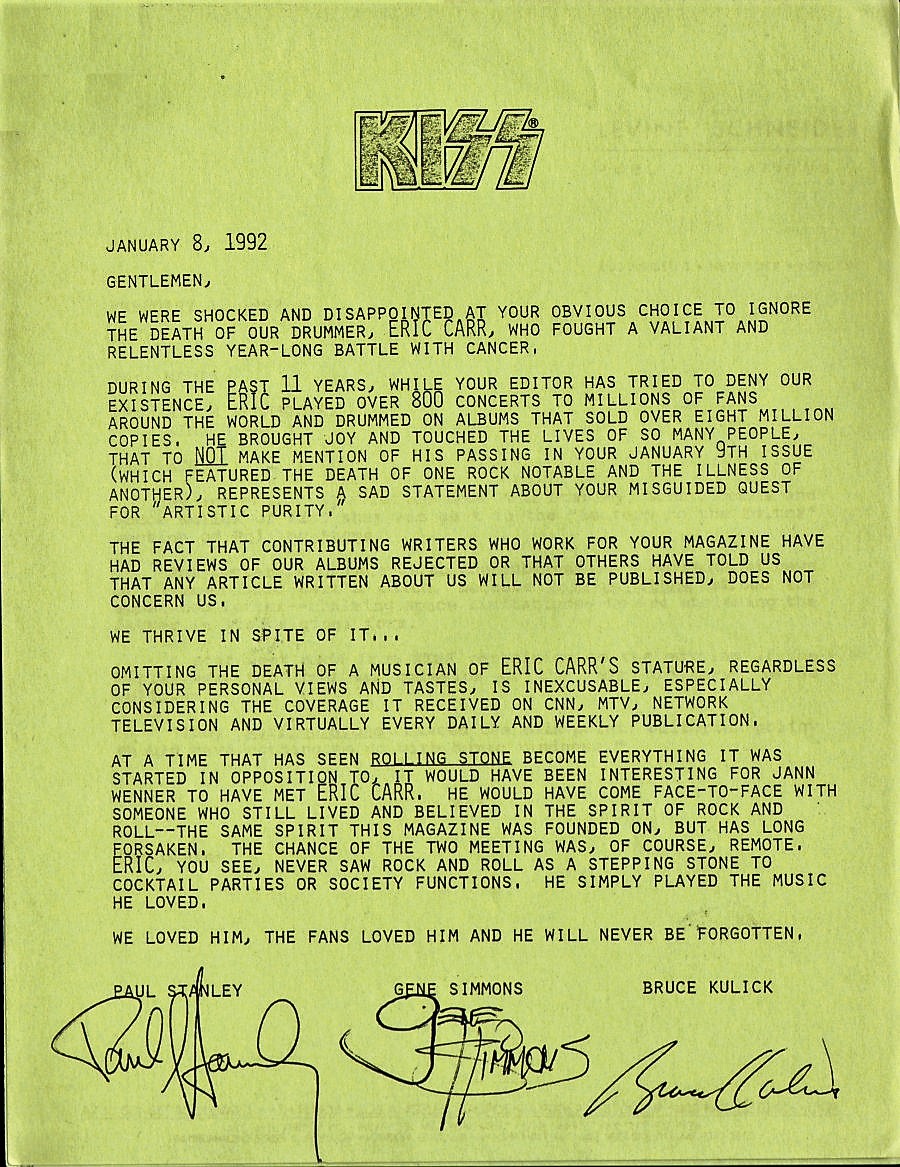
On the same date, Freddie Mercury of Queen succumbed to AIDS.  Carr’s death was barely mentioned in the news, including Rolling Stone magazine who missed it completely, prompting a harsh reply from Kiss:

If anything positive came from Eric Carr’s death, it was that Kiss were going to put all that anger and frustration back into the music.  The music was to be their Revenge.

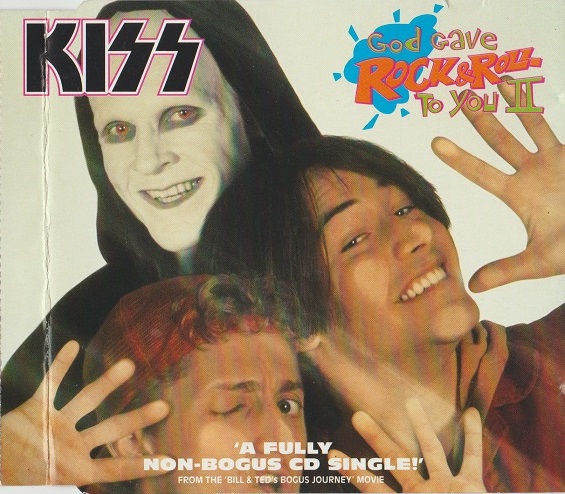
It started with “God Gave Rock & Roll to You II”, a re-imagining of an old Argent song for the Bill & Ted movie.  Eric Carr may not have been well enough to play drums, but that didn’t stop him from singing.  His vocals on “God Gave Rock & Roll to You II” were his last.  The song wouldn’t be the same without Carr, as he can be heard sweetly harmonising with Paul Stanley.   Eric Singer wasn’t credited on the single, or the final soundtrack for Bill & Ted’s Bogus Journey.  It simply says “performed by Kiss”.

“God Gave Rock & Roll to You II” was important for two more reasons.  First, and very significantly, it was produced by Bob Ezrin.  Ezrin was responsible for the two albums that some consider Kiss’ best, and Kiss’ worst.  It had been 10 years.  A Kiss-Ezrin reunion was very big news for fans.  It indicated that Kiss meant business this time.  Secondly, “God Gave Rock & Roll to You II” was the first Paul Stanley/Gene Simmons (with Bob Ezrin and Russ Ballard) co-writing credit since 1985, and their first shared vocals in ages upon ages.

Although it didn’t make waves in 1991, “God Gave Rock & Roll to You II” has become enough of a favourite to make it onto 2015’s Kiss 40 compilation, and continue to be played live.  It shows off what Kiss can really do.  Yes, they can sing!  Yes, they can play!   This lineup could do it particularly well.  It’s appropriate that Eric Carr went out on a good Kiss track.  And Eric Singer was the right guy to continue.

There are three released versions of “God Gave Rock & Roll to You II”:  The single edit (3:57), the soundtrack version (5:23) and the final 1992 version that was later released on the next Kiss album (5:19).  The single edit cuts out too much of the grand, pompous arrangement, including the epic opening.

In an ironic twist, the version of “God Gave Rock & Roll to You II” that is in the movie has a guitar intro solo by Steve Vai.  The same guy whose band got booed in Toronto thanks to Kiss.

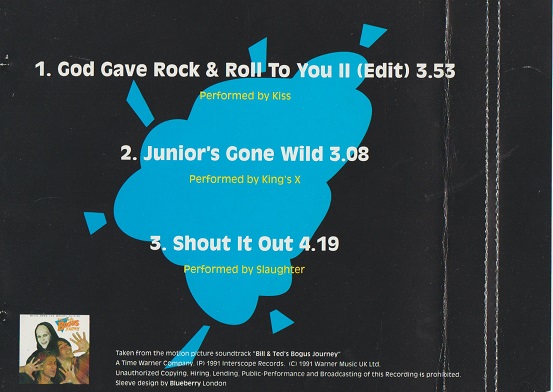
The CD single is rounded out by two more songs from the Bill & Ted soundtrack, by Slaughter and King’s X.  The King’s X track, “Junior’s Gone Wild” (previously reviewed in our mega King’s X series) has never been one of their better tunes, but as a non-album rarity, a nice one to have.  Just don’t judge King’s X by this one track.  Slaughter turned in something better, a fun party tune called “Shout It Out”, also a non-album recording.  Slaughter, of course, were one of Kiss’ well-received opening acts on the Hot in the Shade tour.  And what was their Kiss connection?  Mark Slaughter and Dana Strum were in a band with Kiss’ old guitar player, called the Vinnie Vincent Invasion!

As work proceeded on the next LP, the world suddenly changed.  Hard rock was out, and grunge took over MTV.  This single bought Kiss a little bit of time, but it was going to be the longest gap between Kiss albums yet — three years.  Revenge had to wait a little longer.

Today’s rating:

3.5/5 stars


Original mikeladano.com review:  2012/08/08


REVIEW: The Darkness – Pinewood Smile (2017 Japanese 15 track edition)

THE DARKNESS – Pinewood Smile (2017 Canary Dwarf Japanese printing)

Please welcome Rufus Tiger Taylor to the drum kit!  Son of Roger Taylor (the guy from The Darkness’ biggest influence, Queen), I think we can assume this kid knows his way around a drum set.  It’s the third drummer in three albums for The Darkness.  Original member Eddie Graham was on board for Hot Cakes (2013), but he was replaced by Emily Dolan Davies for Last of Our Kind (2015).

The Darkness are The Darkness are The Darkness — don’t expect them to ditch the operatic vocals or bombastic arrangements.  Pinewood Smile is more of what fans love, perhaps turned up just a little bit louder than before.  Indeed, the second track “Buccaneers of Hispaniola” sounds like The Darkness have been listening to a lot of Queen II on maximum volume.  “Japanese Prisoner of Love” has similar epic Queen inspirations, but melded to a momentous thrash metal riff.

Their penchant for humour remains unabated.  “And we’re never gonna stop shitting out solid gold!” sings Justin Hawkins on one radio-ready rock tune.  “Southern Trains” features the truism “There are fucking assholes everywhere.”  We must assume the trains in the south of England are shite:  “Fuck you, southern trains, we’re not getting anywhere!”

Of course, what would a Darkness album be without a few ballads?  It can’t be all heaviness and gloom.  “Why Don’t the Beautiful Cry?” is a quite lovely acoustic Darkness ballad.  Bright and sunny “Happiness” is the gleeful mood of early Darkness returned.  There are a number of exceptional diverse tracks as well, that defy categorisation.  “I Wish I Was in Heaven” and “Lay Down With Me Barbara” stretch out, incorporating different elements both hard and soft, but always catchy as the plague.  The standard album closer “Stampede of Love” is a folksy “Blackbird”-ish duet with Justin and Dan Hawkins…but stay tuned for a manic unlisted coda!

On to the bonus tracks — four on the deluxe edition, five on the Japanese.  These are a little stranger than the standard album tracks.  What is a “Uniball”?  Ummm…it’s when you have to have one testicle surgically removed.  Yes, The Darkness wrote a heavy metal song about it.  B-side worthy “Rack of Glam” is a decent pun with a punchy chorus.  “Seagulls” is quite exceptional, highlighted by mandolins and a slight celtic flavour.  Maybe the subtitle “Losing My Virginity” is why it ended up as a bonus track.  Also brilliant is “Rock in Space”, the most pompous and bombastic track of the group.

The Japanese exclusive track is a demo of “Why Don’t the Beautiful Cry?”, which is a real treat.  Stripped back to just the basic acoustic arrangement, you can really just listen to Justin and Dan harmonising.  No drums, no bass.  Even though it’s just a demo, you can choose which version of “Why Don’t the Beautiful Cry?” is your favourite, because both have merits.

What Pinewood Smile lacks, compared to previous Darkness albums, is an immediately loveable pop rock standout track.  Something like “She Just a Girl, Eddie” or “Last of Our Kind”.  Pinewood Smile doesn’t have those kinds of songs, but hopefully this means we’ll still be listening to it a year or two later.

4/5 stars