hard rock

REVIEW: Winger – Winger (1988)

Part I of a Winger DOUBLE-SHOT.

WINGER – Winger (1988 Atlantic)

When Winger started out, they really played down to their audience.  Kip Winger was a classically trained musician.  Reb Beach was already a virtuoso guitar player whose talent can’t be under-stressed.  Keyboardist Paul Taylor had been around the block a number of times, including a stint with Kip Winger in the Alice Cooper band.  Most impressively, drummer Rod Morgenstein is best respected for the rock fusion combo Dixie Dregs.  To hear guys with that background singing a song that goes, “She’s only seventeen, Dad says she’s too young but she’s old enough for me,”…well it’s just embarrassing.

I call bullshit, Mr. Clarence R. Winger.  He’d been studying classical music since the age of sixteen.  You know he could do better if he wasn’t trying to write cliche rock lyrics.

Musically, Winger (the debut album) isn’t half bad.  In fact it’s more than half good!  The opener “Madalaine” is cheesey rock, but it’s above the bar due to the intense guitar shreddery of Mr. Beach.  It was an era when it was OK to just get up there and tap tap tap away.  There is some musical integrity contained herein, but it’s not in the lyrical department.  The single “Hungry” begins with a string quartet (only 22 seconds’ worth), arranged by Kip.  See?  Flashes of the talent within, but cloaked behind a typical rock power ballad with one of the most overused titles in the genre.  Good songs both…but written down to a specific audience by guys who can do better.

Chief offender “Seventeen” wouldn’t be half bad if it had a different title; any title.  Call it “Buttermilk”.  Instead of:

“She’s only seventeen (seventeen),
I’ll show you love like you’ve never seen,
She’s only seventeen (seventeen),
Dad says she’s too young but she’s old enough for me.”

Change that to:

“I love my buttermilk (buttermilk),
Makes my pancakes as smooth as silk,
I love my buttermilk (buttermilk),
Mom says it’ll make me fat, stop that buttermilk!”

See?  My lyric had depth that theirs doesn’t.  It’s light and shade.  Yes, buttermilk will make your pancakes extra tasty, but what of the health costs?  I could go on and on about the brilliance of my lyric vs. Kip Winger’s.  But I won’t.  You get the point.

Shredding musicianship aside, “Seventeen” is not a good song.

“Without the Night” works well enough as a Bon Jovi-esque power ballad.  What should have been deleted, because they already had enough original material, is a cover of Jimi’s “Purple Haze”.  This is dreadful, overplayed, oversexed, with the only saving grace being a guitar battle with Reb Beach on one side and Dweezil Zappa on the other.  Two monster players going at it is right on.  Kip Winger “ooh ahh-ing” all over “Purple Haze” is blech.  Just focus on Reb and Dweezil, and try your best to ignore Clarence.

The original LP had a side break here, and I think that’s a good idea.  I need to take a moment to get some fresh air.  Something stinks in here….

“State of Emergency” has a little progressive complexity to it, some chops and lyrics that are not about seventeen year old girls, so that is good.  “Time to Surrender” shreds impressively over a slow Ratt-like riff.  All considered, “Time to Surrender” is one of the strongest tracks on the album.  Sadly, “Poison Angel” is the worst.  This one could have been dropped.  “Hangin’ On” is good enough, again boasting some impressive playing from Reb Beach.  The key to listening to Winger is to focus on the instrumentation.

The most impressive track is the ballad “Headed for a Heartbreak”.  Cheesey, yes.  But listen for a moment, to the arrangement, and to the playing.  It’s a hit power ballad, yes…but there are progressive complexities to the arrangement.  Listen to Rod Morgenstein’s drumming.  His patterns are not simple rock cliches.  Too bad it’s so hard to hear what he’s doing.  Winger has a brittle production, thanks to schlock-meister Beau Hill, ruiner of many an album.  Over-processing and harsh gating on Rod’s drum sound gives the album a plastic feel.  Some tracks such as “State of Emergency” should have more heft, but it is lost.  “Time to Surrender” needs less gloss.  The album has hardly any bass, and the thing about that is that Kip Winger is actually a pretty good bassist (not to mention singer).

The CD only bonus track (oh 1988, I miss you so) is a short rocker called “Higher and Higher”.  It’s a better track than the similar-paced “Poison Angel” and should have swapped places with it.  There’s also one other interesting little track to be found.  Another short rocker called “Out for the Count” made an appearance on the soundtrack to Karate Kid III.  I picked that up at a Zellers store, I think, on a clearance sale around 1992.  It was an odd find, but being a collector I grabbed it for the one track.  (Also on the CD is “48 Hours” by a band called PBF, better known as Pretty Boy Floyd!)  Swap “Out for the Count” for “Purple Haze”, and the Winger album would have been far stronger.

It’s really hard to boil this down to a simple number rating.  I’ve come up with an equation based on your valuing of playing and songcraft,

Where x = a scale from 0-5 on how much you value shredding,

and y = a scale from 0-5 on your importance of song craft,

Then the rating for this album is:

= 3 + (x/4) – (y/4) / 5 stars

WINGER


REVIEW: The Cult – Ceremony (1991)

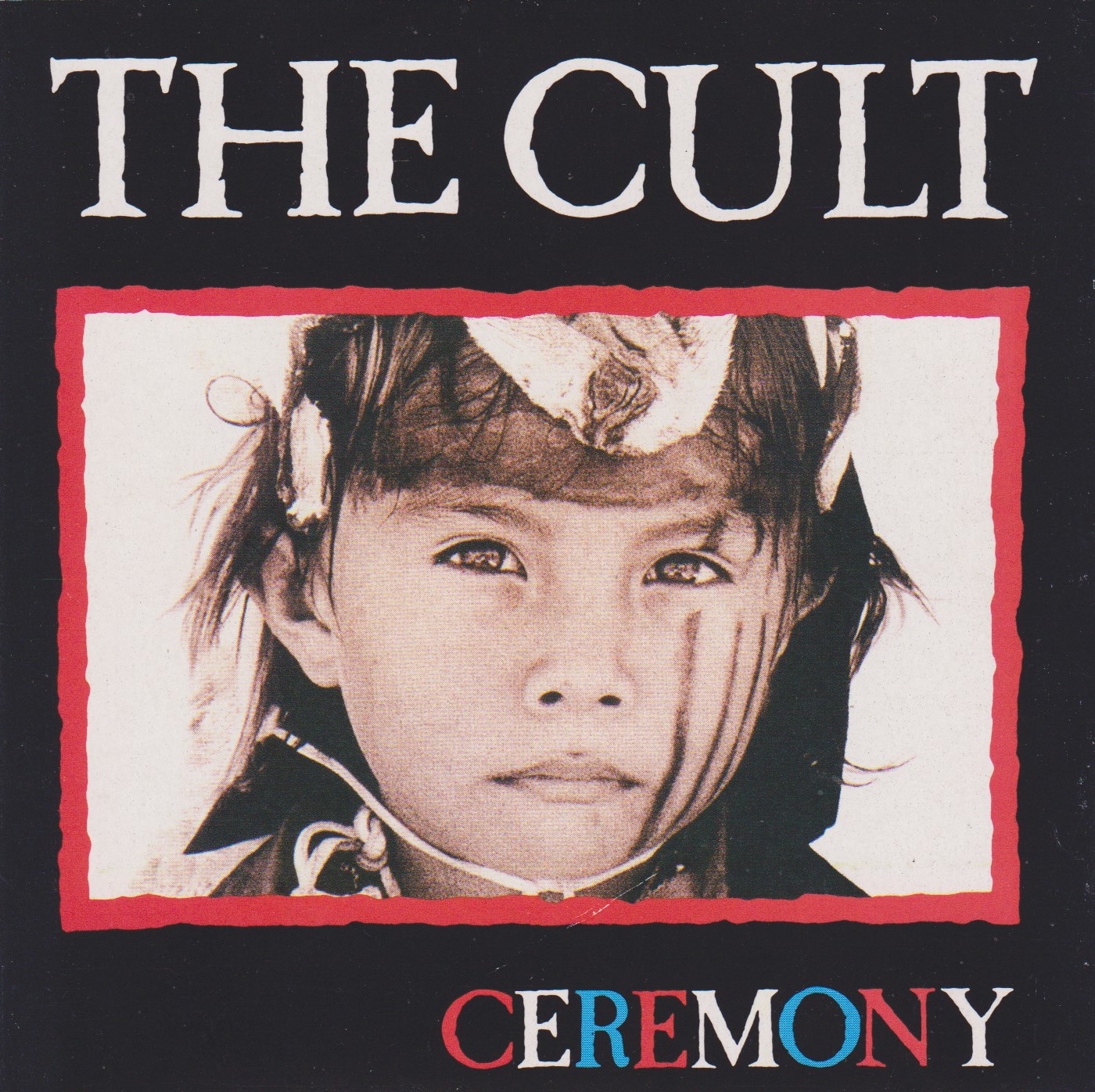
Scan_20160729THE CULT – Ceremony (1991 Beggars Banquet)

Only 25 years late, I have finally acquired the Cult’s Ceremony CD, thanks to my kind and generous reader Wardy.  I somehow missed this album all those years, even though I own all the singles.  There are some songs here that are completely new to me.  Ceremony received mixed reviews when it was released, as it represented the band’s furthest move away from their roots, into commercial radio rock.  Let’s see how accurate that is.

It starts sounding more like some lost Deep Purple album, with big organ and jammy sounds.  Richie Zito co-produced this disc, and the band got a sharper sound out of the studio than they did with Bob Rock last time.  Sonically, Ceremony has more impact, more heft, more oomph than the big and echoey Sonic Temple.  The “Ceremony” in question on the title track is the rock arena, as the Cult had definitely become arena rock.  They had also been reduced to a core duo.  Jamie Stewart and Matt Sorum were gone, and the Cult used session musicians during this period.  Charlie Drayton (bass) and Mickey Curry (drums) helped the band achieve what sounds like a very sincere crack at this kind of rock.  Accessible it is, but the Cult didn’t really sell out.  Check out the frantic “Wild Hearted Son”.  Like the sound of a stampede of horses across the plains, “Wild Hearted Son” does not let up.  I think I lot of fans were disappointed that the new Cult sound wasn’t more esoteric, but that doesn’t make it bad.

Just as relentless as “Wild Hearted Son” comes the “Earth Mofo”.  One thing I had never really paid attention to before was the bass.  Drayton’s get some great bass chops.  The production of Ceremony leaves a lot of space between the instruments, so you can hear them.  Those who find Sonic Temple overproduced may dig on this, so give “Earth Mofo” a spin.   That’s nothing though compared to the powerful “White”.  Epic in scope, “White” is a massive groove with layers of acoustic instruments a-la Zep.

I didn’t see the tender sound of “If” coming, just piano and Ian’s crooning.  Not after all that heavy hitting rock.  But then “If” also explodes into something bigger, anthemic and memorable.  I’m starting to think that if Ceremony got a bad rap back in ’91, it’s because people weren’t paying proper attention.

“Full Tilt” is a great name for a rock song.  Riffed out with generous helpings of rock sauce, “Full Tilt” was reported to have knocked a picture of at least one journalist’s wall.*  Just wait until the afterburners ignite in the last minute of the song.  Strangely, the very next track is the acoustic ballad “Heart of Soul”; a good song indeed but not as great as “Edie (Ciao Baby)” was.  Back to the rock, “Bankok Rain” lacks the charisma that the rest of the tunes seem to have in common, though there is certainly nothing wrong with it’s staggering riff.  By the end you won’t care, because the whole thing  burns like fire and gasoline until all the fuel is spent.

A fascinating Cult song is “Indian”, a basic acoustic song with cello accompaniment.  As Cult ballads go, this is definitely a peak moment.  Ian infuses more passion into one line than most singers can do in a whole song.  Unexpectedly, the album moves right on to another ballad, “Sweet Salvation”, which is actually less a ballad and more a soul song.  It’s powerful, as are all these songs in their own ways.  Ian Astbury breaks out the Morrison poetry jams to kick off the ending track, “Wonderland”, a riff driven slow broil.

That’s the album, and it’s hard to gauge where it sits among the whole Cult catalogue.  Certainly, this and Sonic Temple are brother records.  They are stylistically more similar than Cult albums tend to be.  Ceremony possesses track after track of scorching rock music.  Does it make as strong an impression as the bombastic Sonic Temple?  Not quite.  By stripping the production to a more sparse and live sound, perhaps the Cult sacrificed the nuances.  Ceremony gleams shiny with amped up guitars and drums aplenty.  It is hard to find fault.  It is still a fine album.

3.5/5 stars
* That’s a true story, but I can’t remember what magazine I read it in.  The reviewer said, quote “‘Full Tilt’ knocked a picture off my wall.”

REVIEW: Jim Crean – Insatiable (2016)

NEW RELEASE

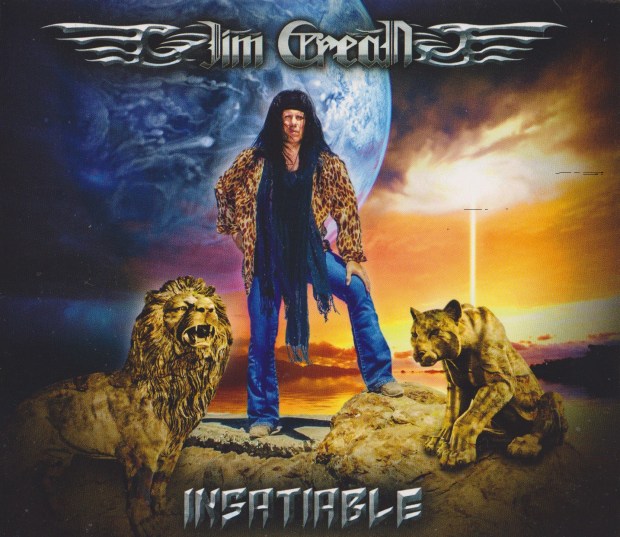
JIM CREAN – Insatiable (2016 Rocker Records)

If you’re not familiar with Jim Crean, that’s OK.  You probably know of his famous friends.  Crean sings lead with the Appice Brothers (Carmine and Vinny) for their Drum Wars live shows.   Both brothers appear on his solo CD, Insatiable, along with other stars such as Phil Lewis (LA Guns), Mike Tramp (White Lion), Tony Franklin (The Firm/Blue Murder), Phil Naro and more.  But it doesn’t matter how many guests you fill your album with if you don’t have the tunes.  Crean has not only the tunes, but also the voice.
In a way the weirdest track is the intro by Don Jamieson from That Metal Show.  He pronounces “Appice” differently for each brother.  Carmine is “Appeece” and Vinny is “Appicee”.  Very odd.  The title track “Insatiable” features Vinny, but the song does not address the pronunciation controversy!  If you’re a fan of 80’s sunset strip rock, then “Insatiable” is for you, like Faster Pussycat but fed a steady diet of heavy metal.  Crean has range and rasp, and the result is the kind of rock that people miss today.

Vinny might be best known for his stint in Dio and Black Sabbath with Ronnie James.  With the late Jimmy Bain on bass, Appice and Crean re-created Dio’s “Caught in the Middle”.  Having original players and writers on it lends it a credibility that most covers can’t match.  Best of all, Crean can pull it off!  Singing Dio is, to put it mildly, not easy.  Crean pulls it off with confidence and ability, just as he does with his own original tune “Touch”.  Not to exaggerate, but “Touch” has to be one of the best songs to come out in 2016:  killer mid-paced rock, besides the riffs and that voice!  Another fine cover, L.A. Guns’ “Over the Edge” is performed with assistance from Philip Lewis.  A more obscure choice from 1991’s Hollywood Vampires, it’s a powerful slow rock track with a Zeppelin-y groove.  Guitarist Steve Major also needs to be singled out for a fine performance on this one (and all the tracks).

The most star-studded song is the lead single, “Can’t Find My Way”, a Mike Tramp cover.  Mike sings on it, as does Phil Naro, with Tony Franklin on bass and Carmine on drums.  (Tony and Carmine make it 2/3rds of the original Blue Murder, minus only John Sykes.)  This ballad is a bit slow, a bit long, but kicks in for the chorus. I actually prefer Jim’s original material. “Follow Your Heart” is one such original, this one featuring ex-Dio guitarist Rowan Robertson. It has a distinct Dio-ish vibe, aided and abetted by Vinny’s incomparable drum sound. The final three originals (“Shut Your Mouth”, “Turn it Around”, and “Miss Me”) are all very strong hard rock songs. Crean wrote all his originals himself. What a talent. Such a voice, with sharp songwriting chops. This guy has more talent in his pinky than CC Deville has in his entire body.

Two bonus tracks close it out, both covers: Mr. Big’s rockin’ “The Whole World’s Gonna Know”, and “Magic Touch” by Kiss. Sharp fans will recall that Crean contributed “Magic Touch” to Mitch Lafon’s Kiss tribute CD, A World With Heroes.  If you missed that now sold-out CD, you can at least get Jim’s version of the song here.  “Magic Touch” is, of course, great.  It always was, but now here’s a chance to hear it without the disco (Kissco?) trappings.  As for “The Whole World’s Gonna Know”, Jim’s version may surpass the original.

Added Can-Con bonus:  Much of the album was recorded in Toronto, just a stone’s throw away from Jim’s base in Buffalo, New York.

Added extra bonus:  My copy included a DVD with the “Can’t Find My Way” music video.

If you like hard rock with integrity the way they used to make it, then this album is for you.  If you buy one new release this week, make it Jim Crean’s Insatiable.

5/5 stars
 

REVIEW: AC/DC – Who Made Who (1986 soundtrack to Maximum Overdrive)

movie-soundtrack-week

Today’s movie soundtrack comes by no coincidence.  Today’s my birthday!  And I got this album on this day in 1987 from my partner in crime for many years, Bob!


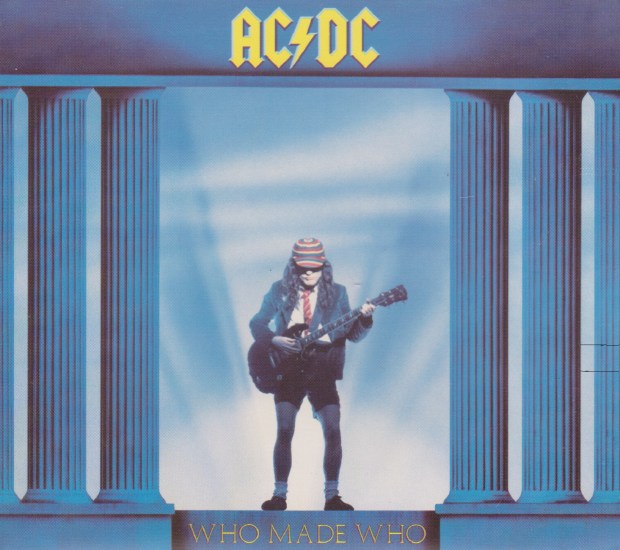
AC/DC – Who Made Who (1986 Epic soundtrack to Maximum Overdrive, 2003 remaster)

As a movie director, Stephen King is a great novelist.

30 years ago, Maximum Overdrive was King’s directorial debut.  The movies based on his books had been box office gold so far, but King always complained about the adaptations of his original material.  So why not hand the reins over to him?

King’s goal was to make “the loudest movie ever made”, and part of that was leaving the soundtrack to AC/DC.  King issued the film with instructions that “this film is to be played as loud as possible.”  The funny thing, according to him, was that most theaters did it.

AC/DC did the entire soundtrack, a mixture of old and new material.  It was an unorthodox move and it left AC/DC with what some consider to be their first real “greatest hits” album; this coming from a band who in 2016 has yet to issue an actual greatest hits album!

The robotic pulse of “Who Made Who” commences the affair, a massive hit still a radio staple today.  One of AC/DC’s most recognisable tunes, “Who Made Who” was a bigger smash than the movie that spawned it.  That’s Simon Wright on drums, emulating the perfect beats of Phil Rudd before him, creating a fine facsimile.  The keys to the song though are the simple and catchy guitars of Angus and Malcolm Young.  Having nailed down the art of writing catchy bases for songs, the brothers Young really perfected it here.

They also perfected it on 1980’s “You Shook Me All Night Long”.  Placing the biggest AC/DC hit of all time second in line is almost like nailing the coup de grâce prematurely, but there is plenty more firepower on the album.  It works in the second position, cleaning up anyone left standing and getting them shakin’ on the dance floor.

AC/DC added two brand new instrumentals to this soundtrack (“Johnson was sick that day”, joked Angus).  “D.T.” is the first of them, somewhat unremarkable and echoey on the drums.  But this is designed as background music for movie scenes, so it really shouldn’t be measured by the same yardstick as, say, a Rush instrumental.  The second on side two is the peppier “Chase the Ace”.  Punctuated with some cool Angus licks, “Chase the Ace” is simple and effective like “D.T.”.

There were a few tunes from the recent Fly on the Wall album, all killers.  “Sink the Pink” (oh, Brian!) is recorded so muddy that you can’t hear the words, but it does rock.  Angus’ guitar break is pure fun, and the song gets your ass moving.  That leads into the sole Bon Scott inclusion, “Ride On”, from a quieter moment in the film.  What’s really cool is that even though these songs are from all over the place, Who Made Who sounds like a fairly cohesive trip.

Side two commences ominously with “Hells Bells”, a fine way to distribute classic tunes evenly across the sides.  “Shake Your Foundations” is on its tail, hitting you with another blast of AC/DC right in the face.  One of the better tunes from Fly on the Wall, “Shake Your Foundations” does its advertised job.  Yet, I do believe there was only one way to properly end this album.  That would have to be the cannon-fire of “For Those About to Rock”.

Who Made Who was actually my first Johnson-era AC/DC album, given to me by my buddy Bob on this day in 1987.  If this review is slanted ever so slightly in the “pro” direction, so be it.

4.5/5 stars

#502: Sausagefest XV: The Complete Countdown

Thanks for hanging out this week for six new instalments of the ongoing series Getting More Tale!  Today we bring the week back full circle.  


GETTING MORE TALE #502: Sausagefest XV: The Complete Countdown

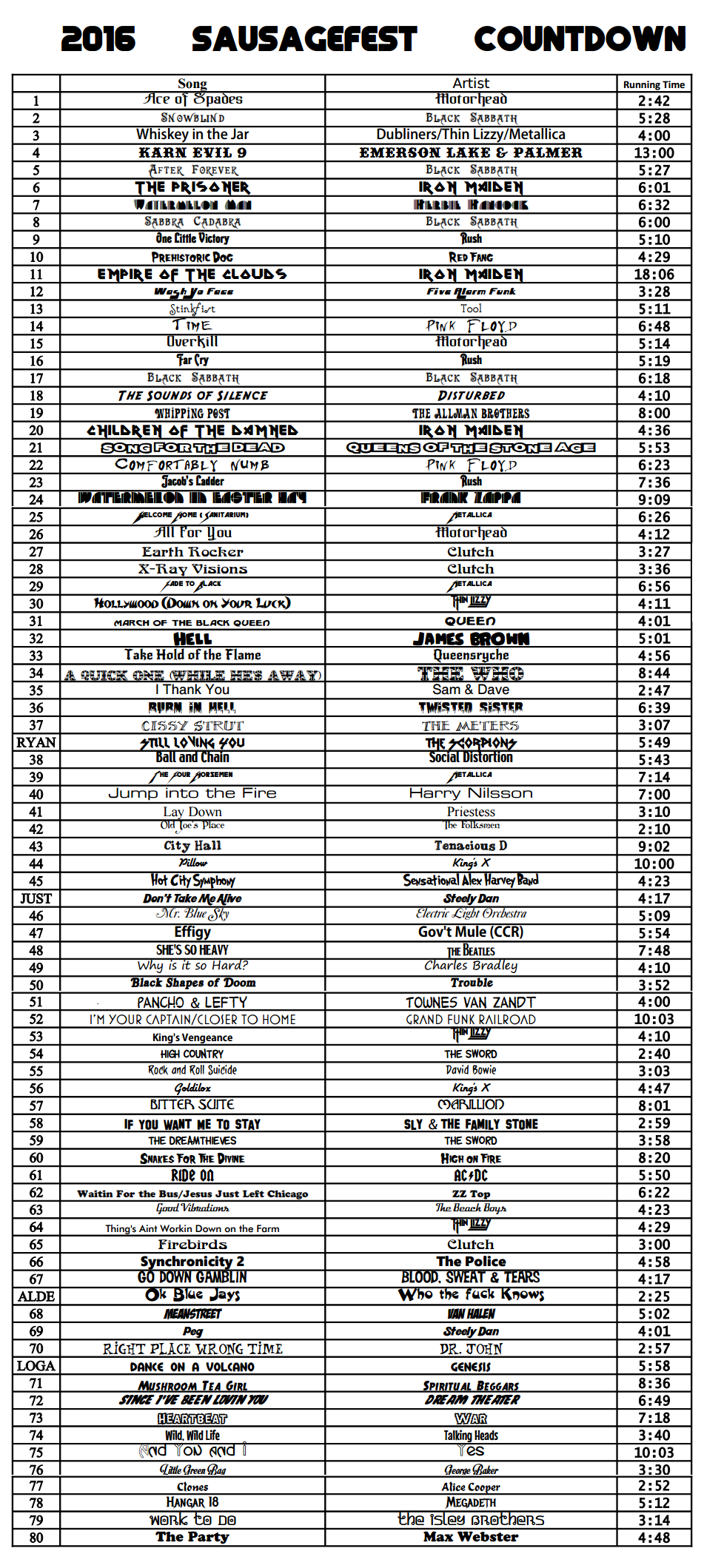
Clickity-click the glorious list below to enlarge.  This complete countdown was a blast to enjoy over two nights.  A few people said, “This was my favourite mix of tunes so far.”  As the 15th Sausagefest, that’s a mighty statement.

A couple notes:

Songs with names but no numbers are “tributes” to that particular Fester.

Only three songs that I voted for made the list this year:

  • “Take Hold of the Flame” – Queensryche
  • “Hollywood (Down On Your Luck)” – Thin Lizzy
  • “Empire of the Clouds” – Iron Maiden

You may be wondering what’s up with that version of “Whiskey in the Jar”.  What they did here was an interesting experiment.  Tom called it “ham-fisted”, and it was, but it was still a lot of fun.  We had three votes for “Whiskey in the Jar”, but by three different artists.  Technically, that would count as one vote each for three songs, rather than three votes for one song.  Instead, Tom creatively mixed together a medley of all three versions by the Dubliners, going into Thin Lizzy, then Metallica, back to Lizzy and ending with the Dubliners again.  Ham-fisted perhaps, but an interesting contrast that went over very well with the crowd.

If there are any tunes below that you haven’t heard before, I recommend giving them a spin!

Untitled (2)

REVIEW: Sammy Hagar – Sammy Hagar / I Never Said Goodbye (1987)

Scan_20160705SAMMY HAGAR – Sammy Hagar / I Never Said Goodbye (1987 Geffen)

Remember when everybody in the Van Hagar camp just loved each other?  Things were so happy in Van Hagar, that Sammy released a solo album in 1987 and nobody got mad.  Hell, Eddie himself co-produced it and played bass!   Hagar was obligated to do another solo album to get out of his contract with Geffen, and so the self-titled Sammy Hagar was recorded quickly.  Sammy apparently forgot he released another album also called Sammy Hagar in 1977, so this one was re-titled I Never Said Goodbye.   (I still call it Sammy Hagar.)

There was something particularly weird about this release on cassette. I had a version, purchased from Columbia House around 1989-1990, with a bizarre cover. The J-card was designed to fold around outside the cassette shell. I’m not sure why to this day, and I’ve never seen another copy like it. The artwork was obviously designed to fold on the outside rather than the inside, but I’ll never figure out why.

All the members of Van Halen even appeared in Sammy’s video for “Hands and Knees”.  The plot was simple, and perhaps a foreshadowing of things to come.  A bored Hagar calls his bandmates (including nextdoor neighbor Eddie) to jam, but nobody’s interested.  Instead, Hagar jams with a group of robots!  “Hands and Knees” was an odd choice for a first single, being a dark and slow mood tune.  The video guaranteed attention, and still garners a chuckle today (albeit a sad one, knowing these guys aren’t pals anymore).  I love Michael Anthony’s huge brick of a cell phone.  The video was better than the song, though it does have a killer of a chorus.  It’s clear if you listen that Eddie Van Halen is one damn fine bassist too.  Are you surprised?

One thing about this album, though:  it’s really commercial.  Like way, way more pop even than 5150.  It’s no surprise that some writers like the esteemed Martin Popoff have slagged this album.  The production has an airy 80’s feel, not enough oomph.  The opening track “When the Hammer Falls” is a hard rocker, but it could have been thicker with more meat.  Not that it would have helped too much.  The chorus on this one is pretty weak, which is too bad since the riff is good enough for rock and roll.

The second single, which Van Halen used to let Sammy play live acoustically, is “Give to Live”.  Van Halen’s version can be found on 1993’s Live: Right here, right now.  Hagar’s studio original is unabashedly pop, bombastic…and good.  I admit I still enjoy this very cheesy ballad.  Hagar is rarely profound, and neither is “Give to Live”, but it’s a nice song indeed.

A shitty synth (?) horn section urinates all over “Boy’s Night Out”. Speaking of synth, “Returning Home” is all but unpalatable. This is one of Sammy’s UFO yarns, a story of a guy returning back to Earth to find it wrecked. “I saw the ruins, once the smoke cleared, once upon returning home.” It’s just sunk by all this terrible synthesizer junk and programming. The UFO has crashed into the damn mountain!

ALIENS

The second side surprisingly opened with some blues jamming:  “Standin’ at the Same Old Crossroads”.  And that would be Sammy on the slide guitar.  “Crossroads” leads directly into “Privacy”, a “Radar Love” re-write that is better than “Radar Love”.  Maybe I’m just sick of “Radar Love”, but “Privacy” has some smoking playing on it, proving again that Hagar is actually a pretty badass soloist.  Side two on a whole is actually much better than the first.  “Back Into You” is a vintage-style Hagar radio rocker.  Journey must have wished they wrote “Back Into You”.  The keyboard overdubs aren’t necessary but hey, it was the 80’s and this is a great little AOR rocker.

Another tune that Hagar played live with Van Halen was “Eagles Fly”.  He actually presented the song to the band for 5150, but it was turned down.  A live Van Halen version can be found on the 1993 single for “Jump (Live)”.  He did it acoustically on stage, but the studio version is bombastic and big like “Give to Live” is.  It’s a pretty impressive tune, for pop rock.   David Lauser’s drumming makes the song, I’m a sucker for that rat-a-tat-tat!

The album ends on a ho-hum note, the soul-funk of “What They Gonna Say Now”, sort of this album’s “Inside” to close it out.  Just not good enough.  If you want to hear Eddie Van Halen playing bass up close and personal, he’s very audible here, but he’s not a flash bassist.  He plays with the groove for the song.

It’s tempting to think of this album as a collection of tracks that were not right for Van Halen, and that’s mostly true.  A lot of it, however, just wasn’t good enough for Van Halen.  “What They Gonna Say Now” could have been a Van Halen track, but it would have been the weakest tune on 5150 if so.

2.5/5 stars

REVIEW: Skid Row – Revolutions Per Minute (2006)

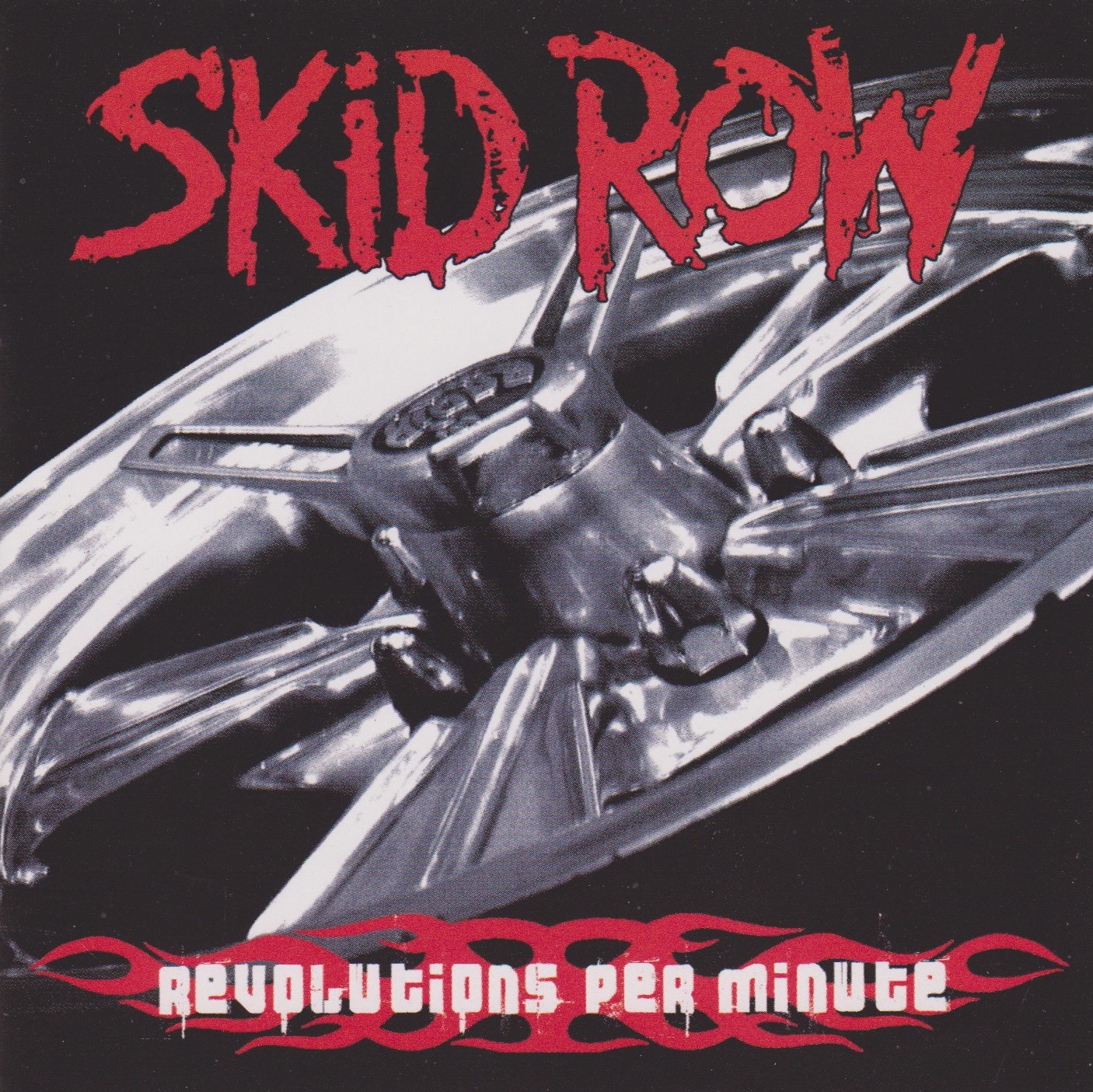
Scan_20160614SKID ROW – Revolutions Per Minute (2006)

Skid Row did a pretty good job of replacing the irreplaceable Sebastian Bach on their fourth LP, Thick Skin.  It earned a more than healthy 4.25/5 stars, in part due to the charismatic vocals of Johnny Solinger.  For their second album with Johnny, they re-teamed with producer Michael Wagener, but had mixed results in repeating the magic.

Revolutions Per Minute is heavy enough; there was no issue of the band going soft.  There was a dip in quality from the songwriting department, strongly dominated by bassist/leader Rachel Bolan.  Strangely, they chose to pad out the album with a cover (The Alarm’s “Strength”) and a remix.  It’s worrisome when the best song is a cover.  There’s a distinct pop-punk vibe on many songs, which one has to trace back to Bolan.  Dave “Snake” Sabo has two co-writes, and Scotti Hill a mere one.

“Disease” is very Skid Row, nothing outstanding, but a strong enough way to open the album.  The punk-like “Another Dick in the System” is better.   With Solinger scraping the ceiling with his screamy high notes, it’s reminiscent of old Skid Row circa Slave to the Grind.  “Pulling My Heart Out from Under Me” follows with an 80’s Elvis Costello vibe to the guitars.  This one is quite a departure from Bach-era Skid Row, and a decade later I’m still not sure if I like it.  You can’t fault a band for experimenting, but if the results aren’t good enough, that’s a tough call.  I’m not sure if “Pulling My Heart Out from Under Me” is good enough.  The worst of the punk influenced songs is “White Trash”, which is so indescribably bad that I won’t even try.  It’s not funny and not good.  Back to something that sounds like Skid Row, “Nothing” is one of those tunes that you could imagine was written in 1988 for the debut album.

Scan_20160614 (2)Influences collide on “When God Can’t Wait”.  Johnny Solinger is a country guy, and Rachel Bolan is a punk guy.  It seems 1+1 does indeed =2, and the sum total of punk and country is rockabilly.  I have to admit to liking this one, even though I’m still not sure if it’s any good.  I definitely prefer it to the next tune, “Shut Up Baby, I Love You” which doesn’t have much going for it aside from the full-metal tempo.

Strangely, the best original song is “You Lie” which begins as nothing but pure country.  Only after the twangy guitar solo does it accelerate into rock territory, but it’s the country part that rules.  The final track is a “Corn Fed” remix, which adds slides, harmonica and accoutrements.  At least that ends the album on a good notes.  The CD does start to drag a bit with two lacklustre songs, “Love is Dead” and “Let it Ride”, so the remix of “You Lie” is a smart way to end it.

You get the feeling that Skid Row had potential for a great album, but only came up with enough good songs for an EP.

2/5 stars

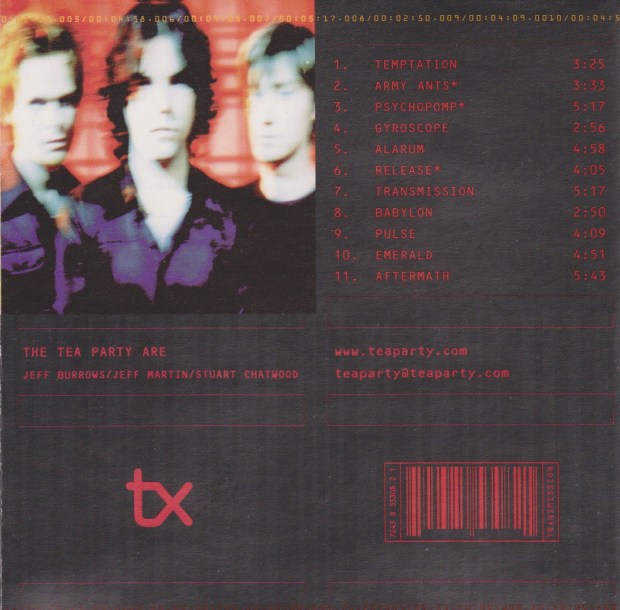
REVIEW: The Tea Party – Transmission (1997)


Scan_20160526THE TEA PARTY – Transmission (1997 EMI)

Tea Party fans are often split on Transmission.  There is little doubt that the previous Edges of Twilight album was a high water mark.  With over an hour of exotic and varied folks-blues-rock hybrids, it’s a favourite for many.  The band took a stark turn on Transmission, embracing electronics.  Jeff Martin produced the album himself, and you could not expect a more opposite album to Twilight.  Thanks to the opening single “Temptation”, the album was another hit.  Most fans seemed OK with the changes.

At first, it doesn’t seem like anything is unusual in Tea Party land.  “Temptation” (the album version anyway) opens with a fair bit of exotic strumming on some sort of stringed instrument, as the Tea Party often do.  Then the samples and looped drums kick in, and they are huge!  Middle Eastern exotics, radio noise, keyboards and a killer riff all combine with loops to create a new kind of Tea Party.  So far so good — the experiment paid off.

Martin had a penchant for odd song titles on this album, like “Army Ants”.  Vocals furiously distorted, this makes for a heavier Tea Party.  Jeff Burrows is providing some excellent drum backbeats, but at times they are buried under other sounds.  The title track “Transmission” is way better though, burning like electronic incense.  Static, loops and acoustics return for “Psychopomp”, one of the five singles they released.  While it takes a while to get there, “Psychopomp” boasts a powerfully melodramatic chorus, Martin roaring as he does.  “Gyroscope” has a spinning sound, one of the more hypnotic tracks (and also a single).  One of the more impressive singles was the ballad “Release”.  This was eventually given an EP of its own which we’ll look at another time.  A basic keyboard/drum ballad, it is simple and bleak but hard to forget.  It almost reminds of early 80’s Robert Plant.

There isn’t a lot of variety and distinction between the songs.  “Alarum” repeats the formula:  Electronic effects, exotic sounds, roared-out chorus.  This was the disappointing factor with Transmission.  The band had established themselves with a diverse sound, but that sound is narrowed on Transmission.  All the same ingredients are there, but they are focused by the electronic lens, which sharpens them but also bleaches them to all one colour.  “Babylon” is one of the exceptions, with drum & bass elements, and off-kilter song structure.  It was appropriately given a very bizarre music video.  An interesting experiment, but not as affective a song as something simpler like “Release”.

The Tea Party had some fun in other ways too. They like hidden bonus tracks, but this time they didn’t stick one at the end. They stuck an instrumental (dubbed “Embryo”) at the end of track 8 (“Babylon”). It’s actually a cool little piece of music.

Since the Tea Party are an ever-evolving band, it was safe to assume they would not stay in the electronics lab forever. Their next album, Triptych, was different again. Transmission remains their most loop-heavy album to date.  At least they did it at the right time — The Prodigy’s massive mainstream album The Fat of the Land was released mere months before.  The public were ready and hungry for computer-precise beats and samples, and the Tea Party delivered a unique hybrid with their own brand of rock.  For the most part, it worked.

3/5 stars

Scan_20160526 (2)

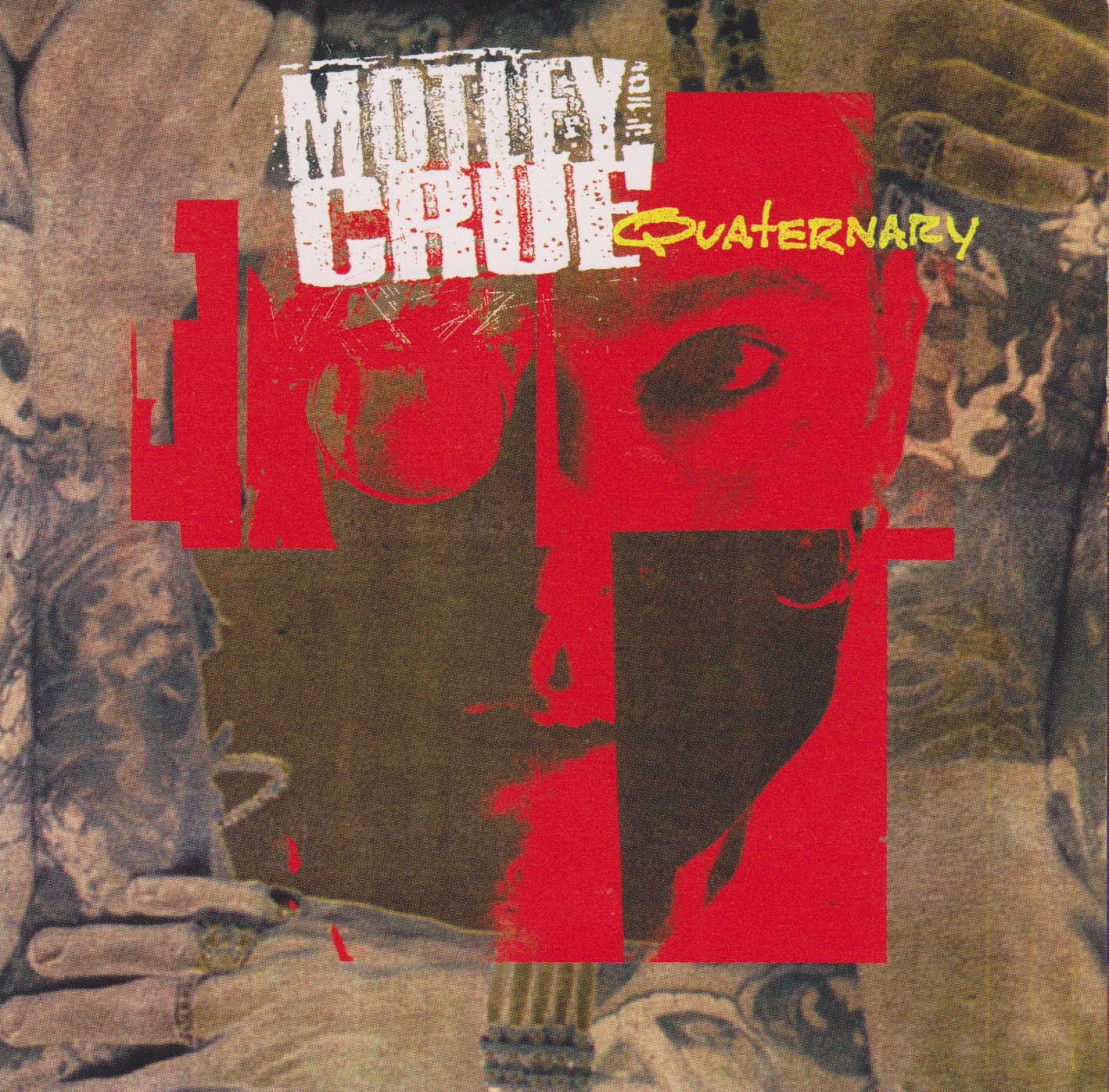
REVIEW: Motley Crue – Quaternary (1994 Japanese EP)

MOTLEY CRUE – Quaternary (1994 Elektra Japanese EP)

For me, undoubtedly the most heavily anticipated new album of 1994 was the new Motley Crue.  Originally titled ‘Til Death Do Us Part, the self-titled ’94 Crue disc was their first with new singer/guitarist John Corabi.  They holed up with producer Bob Rock and knuckled down, creating what could have been the most important album of their careers.  The long wait (five years between studio albums) and cryptic remarks from the studio indicated that this would be the heaviest Motley album ever, and their most ambitious.  The new, serious Motley for the 90’s had, as always, written plenty of extra material too.

In addition, producer Bob Rock had an idea for getting creative juices flowing.  He asked each of the four members of Motley Crue to write and record a solo track with no input from the other members.  This was slightly historic:  the first time Nikki Sixx, Mick Mars, Tommy Lee or John Corabi had done anything solo.  With all the numerous outtakes recorded for the Motley Crue LP, there was now plenty of extra material to put out as a bonus EP.

Scan_20160612A mail-away coupon inside the Motley Crue CD alerted fans that five more tracks were available by mail order only.  20,000 copies of the original EP were pressed.  They included all four solo tracks and a new Motley Crue song called “Babykills”, featuring fifth Beatle Billy Preston on clavinet!

Still, the lucky fans in Japan didn’t have to mail away for anything.  They were able to buy Quaternary right on their store shelves, and because it’s Japan, they also got bonus tracks.  The Japanese version of Quaternary was not a five song EP, but more like a nine-song mini-album.  I had no idea such a thing existed until finding one at Sam the Record Man in Toronto in the summer of 1996.   It still has the price tag:  I paid $49.99, for a total of three songs that I did not have before.

Today, every one of these songs can be found on the box set Music to Crash Your Car To: Volume II, along with even more bonus mixes.

Quaternary commences with industrial noises and studio dialogue:

Tommy Lee:  “I can’t play with fuckin’ clothes on man, this is bullshit.”
Bob Rock: “Play naked.”
Tommy Lee: “Fuckin’ jeans on, a fuckin’ shirt…what up with that?”
Bob Rock: “What, do you work in a bank?”

The industro-rap metal of Tommy Lee’s “Planet Boom” is a track he had been working on for years. An early version made its debut in the background on the 1992 home video release Decade of Decadence. Even though the words “industro-rap” and “Tommy Lee” don’t really sound good together, “Planet Boom” kicks ass. Tommy played all the instruments, utilising a simple, detuned Sabbathy riff and a relentless drum loop. The strength of his vocal came as a surprise, as did the song in general. A few years later it was remixed for Pamela Anderson’s movie Barb Wire. (Stick with this original.)

After a brief studio discussion with Mick Mars about hemorrhoids (?), his blues instrumental “Bittersuite” blows your ears off. Motley fans know that Mick Mars is the most musically talented member, considered an underrated and under appreciated rock god. The blues-rock of “Bittersuite” isn’t as satisfying as I imagine a pure blues offering to be, but there is no doubting Mick’s talent here. Both as a writer and a player, Mick hit it out of the park (Chris Taylor played drums). Mick’s goal was to pay tribute to rock-blues greats like Beck, Hendrix and Blackmore. Mission accomplished. His guitar tone is beautiful and so are his emotive licks.

Nikki Sixx goes third, with another industrial-metal cross. “Father” is one angry fucked up track. It’s heavy and direct, on-trend for 1994, and very abrasive. The riff and song are simple, but Nikki’s anger leaks through. “Father — where were you?” Backwards guitars, electronics and loops on top — you can tell Nikki and Tommy were listening to the same kinds of music at the time!

New kid John Corabi goes last, and in the liner notes he says that “Friends” is his first piano song. He meant to go acoustic, but “Friends” just came out of him. It’s a pretty Queen-like ballad with lovely harmonies in the middle. Although Mick Mars’ song is probably a greater technical achievement, “Friends” is my favourite of the solo tracks. When a guy like Corabi gets going on a ballad, it’s usually going to be amazing anyway. Throw in the Queen elements, and I’m just a sucker for it! It’s really a shame that Motley did not continue with John beyond this. The potential for greatness was always there.

After more studio chatter, we break into “Babykills”, the Billy Preston collaboration. “Babykills” is fun and funky hard rock, probably the heaviest thing Preston ever played on. Unfortunately his part is little more than an added topping. Great tune though; probably far too good to lie hidden away on an obscure mail-order EP.

An impromptu jam that seems to be called “I Just Wanna Fuck You (In the Ass)” ends the original EP on a jokey note.  “What the fuck do you want, for fuck all?”

Scan_20160612 (3)

As mentioned, the Japanese had bonus tracks.   These are tracks that did not make the finished Motley Crue album, since they had recorded so much extra material.  “10,000 Miles Away” is a cool blues ballad, showing off more of Mick’s fine fingerwork.  It was obviously too much of a standard sounding song to fit in with the experimental Motley Crue album.  Not that the album stood a chance in hell after grunge cleared the decks, but you do wonder if it would have been better received if some of these more digestible songs were included on it.

The one track on the Japanese release that is easy to skip is the Skinny Puppy remix of “Hooligan’s Holiday”.  This track was already available on the “Hooligan’s Holiday” single and it’s since been re-released in other places too.  It’s long — over 11 minutes.  Dave “Rave” Ogilvie remixed it with Dwayne Goettel and cEvin Key, so it is of possible interest to Skinny Puppy collectors.  The thing that bugs me about it is that it strikes me as lazy.  The song is pretty much the same as always for the first three minutes, and then the remixing begins.  The whacked out and frankly boring remixed part goes on for almost seven more minutes, before transitioning back to the standard song.  In other words, what Skinny Puppy did here was edit out the middle section and guitar solo of the song, drop in seven minutes of remixed barf, and then put the ending back on.

Two demos round out the CD:  “Hammered” (which did make the album) and “Livin’ in the No” (which did not).  The “Hammered” demo is structurally the same as the album version, no radical departures.  It sounds like much of it is live in the studio, and it’s clear that Motley were focusing on grooves.  It’s all about the four guys being locked in.  Finally “Livin’ in the No” is in the standard hard rock mold.  Again, a track like this fits in less well with the unorthodox LP, but might have made it more accessible for fans.  Even so, a guy like Vince Neil would never have been able to sing “Livin’ in the No” and make it sound good.

There is little question that the Motley Crue album deserves its 5/5 star rating.  This being a collection of outtakes, the same cannot be expected.  Still, it does deserve a very respectable:

4/5 stars

Get the complete EP including all Japanese bonus tracks on Music to Crash Your Car To: Volume II. That set also contains more remixes originally from single B-sides of the era: “Misunderstood” (Guitar Solo/Scream Version), “Hooligan’s Holiday” (Derelict Version), “Misunderstood” (Successful Format Version), “Hooligan’s Holiday” (Brown Nose Edit).

Scan_20160612 (5)

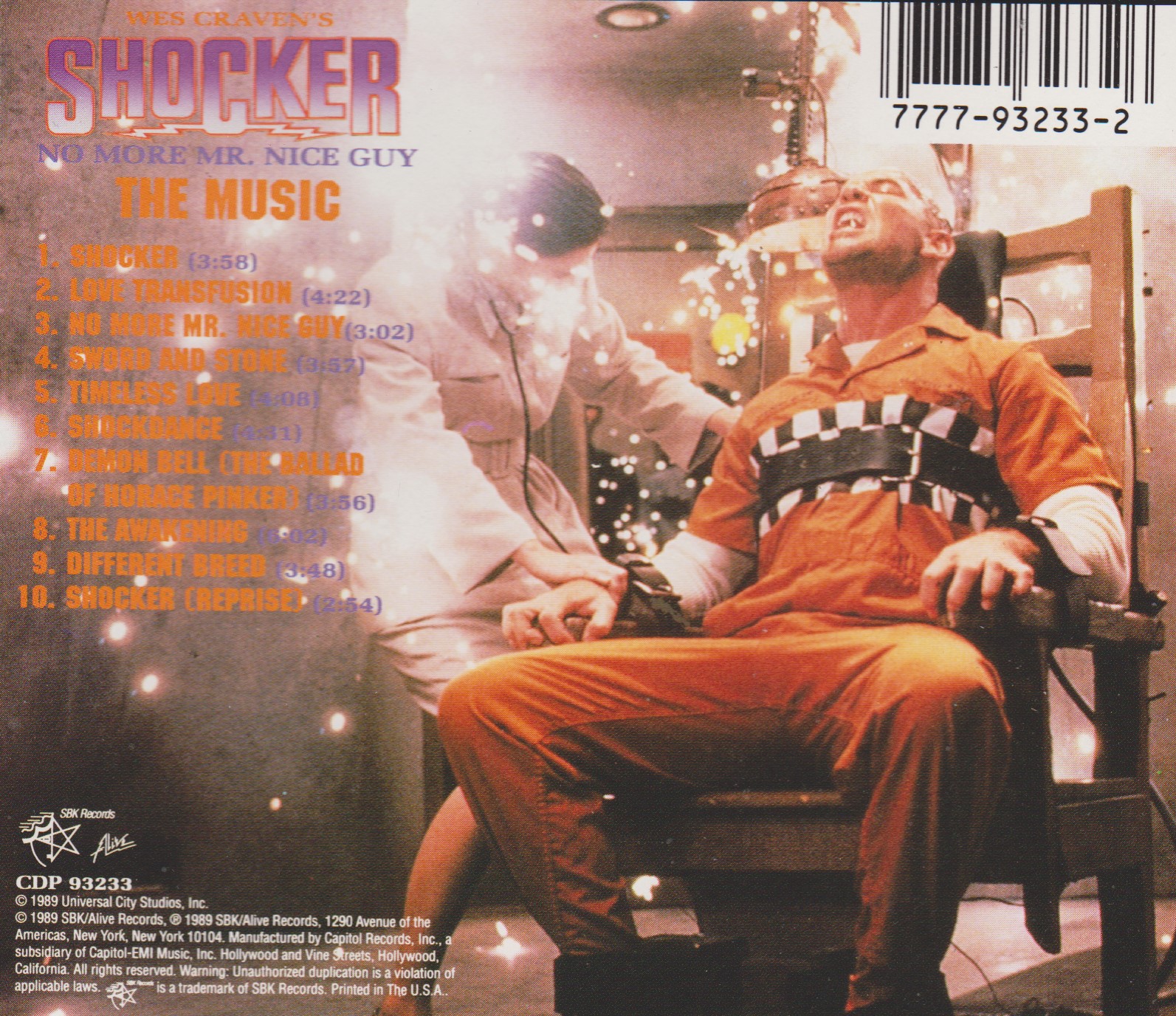
REVIEW: Wes Craven’s Shocker – The Music (1989)


MOVIE SOUNDTRACK WEEK

Scan_20160607Wes Craven’s SHOCKER – No More Mr. Nice Guy – The Music (1989 SBK)

1989’s slasher film Shocker was Wes Craven’s attempt to introduce a new character to the pantheon of horror.  Unfortunately, Horace Pinker and the movie he rode in on were quickly forgotten.  Also forgotten was the heavy metal soundtrack, so let’s have a gander and see what you may have missed.

Ever heard of The Dudes of Wrath?  This temporary “supergroup” consisted of various members from track to track, but the best song they did was “Shocker” itself.  With lead vocals by Paul Stanley and Desmond Child, it’s a must-have for Kiss maniacs.  If that’s not enough, Vivian Campbell, Tommy Lee and Rudy Sarzo also play on it.  It’s like a collision of some of those bands — Kiss, Dio, Motley.  The anthemic outro will slay you.

Desmond’s writing is all over this album, and he co-wrote a track with Alice Cooper that ended up being recorded by Iggy Pop called “Love Transfusion”.  Sub out the saxophone for guitars and you could easily imagine this being a Trash B-side.   In fact I wouldn’t be surprised at all if the backing track is from the Cooper sessions, because this sounds exactly like an Alice Cooper song with Iggy Pop overdubbed.  All the musicians are guys from the Trash album.  Do the math.

It’s hard to imagine a weirder team up than Desmond Child and Megadeth.  Dave Mustaine was deep into the powders at the time, and he recorded “No More Mr. Nice Guy” with a three piece Megadeth.  The late Nick Menza had joined the band already, but Marty Friedman was yet to be hired.   Most Megadeth fans are familiar with this track, since it was re-released on their Hidden Treasures EP.  Certainly not the band’s finest moment.

Paul Stanley reappears in a writing capacity on “Sword and Stone”, performed by Bonfire.   Paul wrote it for Kiss’ Crazy Nights LP with Desmond Child and Bruce Kulick.  If it had been on Crazy Nights, it might well have been the best tune on there.  Paul’s demo has yet to be released in an official capacity, but it’s been heavily bootlegged.  Bonfire’s version is fantastic, but it only makes me hungry for a fully recorded and mixed Kiss version.  One day….

Another version of The Dudes of Wrath appear on side two, this time with Alice Cooper on vocals.  “Shockdance” sounds like little more than a slowed down variation of the “Shocker” riff, with Alice and actor Mitch Pileggi rapping over it. Just terrible stuff, actually. Thankfully Desmond redeemed it a little bit with the song he wrong with Dangerous Toys, “Demon Bell”. Like Guns N’ Roses galvanized and electroplated, “Demon Bell” slays.

Voodoo X were the band of Jean Beauvoir, who Kiss fans know from his many co-writes and guest appearances on their records. He only made one record as Voodoo X, and his song “The Awakening” is damn fine indeed. At first you’re thinking, “Oh it’s just another crap ballad”. Then a riff kicks in, and it blasts right off. It’s a bit like 80’s Kiss meets Top Gun. The last band up is Dead On, pretty pedestrian thrash metal, and one of the few songs without any involvement of Desmond Child. The angry elf vocals are hilarious, but the song is almost a parody of bad metal. The album ends with a reprise of the title track “Shocker” from the first side. Basically what this means is that you get to hear Paul Stanley singing for another two or three minutes, when he was really able to hit some seriously high notes. Cool!

The worst track is probably the ballad “Timeless Love” by Sandi Saraya.  Guess who wrote this putrid sappy swath of heartbreak?  Desmond Fucking Child!

Shocker isn’t the greatest soundtrack, but it’s a hell of a lot better than the movie that spawned it!

2.5/5 stars

The helpful back cover doesn't even tell you who's on it.

The helpful back cover doesn’t even tell you who’s on it.