Voice Of Reason marked the end of an era for Harem Scarem. It’s the last album by the original lineup before Mike Gionet departed, and the band got huge in Japan. I always found it difficult to understand how their home country of Canada could leave them obscure while the Japanese couldn’t get enough of them. In-the-know melodic hard rock fans point to Harem Scarem’s 1993 album, Mood Swings, as a high water mark for the band and genre. Although the band stretched out far and wide, Mood Swings remained the album that fans pined a return to. Voice of Reason had the difficult task of following that album. Harem Scarem had to both take it up a notch, and retain what made them great at the same time. Unfortunately that didn’t happen.
Mood Swings had a slightly progressive edge to its hard rock, with lush multitracked Queen-like harmonies and a diverse set of influences. They turned that up on Voice of Reason, attempting to become more Queen-like it seems. More vocal harmonies, more guitar layers and flourishes, more complex song structures. Those are all good qualities. I think one could do a lot worse than to be compared to Queen. But Harem Scarem weren’t able to summon forth another batch of perfect hard rock songs to go with it.
Although the direction this time out is mellower and more ballad-oriented, none of the tunes are particularly bad. You would not listen to Voice of Reason and point out bad songs. Instead it just goes through your brain like a foggy haze, without really retaining any of it. Perhaps they went too far with the layered vocals. This was self-produced so there would be nobody there to reel it in. There are still a few standouts, which are “Warming A Frozen Rose”, “Blue”, “Breathing Sand”, and “I’ll Be Brief”. These tracks are more memorable and stand out a little from the others.
The music video for “Blue” didn’t help matters.
MVP: Guitarist Pete Lesperance is the band’s Nuno Bettencourt. He is a skilled, creative player able to make his guitar do seemingly anything he needs it too. The wah-wah he throws into chorus of “Warming a Frozen Rose” helps make the song, and his shredding everywhere else is top drawer.
Those lucky fans in Japan got a bonus track on their version of the CD. “Candle (acoustic version)” is actually superior to the regular album version by being a little more unique and memorable. Very cool bonus track.
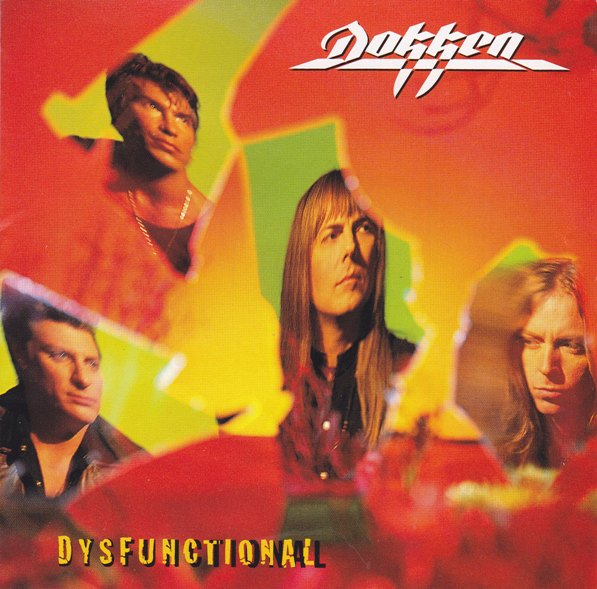
No matter how good the band may have been, when Dokken reunited for a new album in 1995, it was a no-win scenario. They always seemed to be one of those bands that critics loved to hate. I read a ridiculous review of Dysfunctional that said, “If Don Dokken fell in a forest, would he make a sound? And if he did, could they get George Lynch to solo over it for an hour?” What a stupid review. The album deserves a lot of praise, because when Dokken did reunite, the music was as strong as ever. They had discovered modern groove, added onto their lush harmony vocals, and it managed to sell 300,000 copies.
Dysfunctional was conceived originally as the second Don Dokken solo album, which just happened to have Mick Brown and Jeff Pilson on it. (Jeff had recently split from Dio.) The record company persuaded Don to call up George Lynch and make it a true Dokken album. Originally George was just supposed to come in and re-do the guitar solos, but Don wanted George’s rhythm. That was smart. George ended up with writing credits on most of the songs in the process.
I have to admit that when this came out, a new Dokken album was the last thing I expected to see. Deep into the grunge years, Dokken came out flying with a modern melodic hard rock record with warmth, depth and awesome production values (by Don and Michael Wagener). Raging solos, great ballads, glorious riffs, and those Dokken harmony vocals mark one of the best Dokken albums of their career. It’s certainly lots better than the ones I’ve heard that followed it.
There are lots of highlights. No songs suck, but some are better than others. The best tune was the 7-minute single, “Too High to Fly”. I don’t know who came up with the riff, whether it was Don or George, but this song kicks ass. Jeff Pilson gets into a wicked bass groove, dominating the verses. Don’s lead vocal is among his most impassioned and the band is smoking. This is a shoulda-been Dokken classic. I am given to understand that it is the only song from Dysfunctional that is still played live from time to time.
Other favourites include “Inside Looking Out”, which shares the same grooving direction. “Long Way Home” is like classic Ye Olde Dokken and could have fit in on Back for the Attacknext to “Mr. Scary”. On the softer side, I really like the understated “Nothing Left To Say”, a classy acoustic ballad. Jeff Pilson’s backing vocals coupled with strings create a timeless atmosphere. Then there’s the album epic: “The Maze”, a lush, multi-part progressive song with harmony vocals piled on top of harmony vocals. It doesn’t get thicker than this! The record closes on “From The Beginning”, an ELP cover and another classy acoustic song.
I don’t need to tell you how great George Lynch is. The record company were right to get him involved. He helped make this album really special. And that’s not to say that “Wild” Mick Brown or Jeff Pilson don’t bring it, because both of them did and then some. Just that George has a very unique sound. There is only one George Lynch.
Dysfunctional is a compulsory purchase if you have ever liked Dokken. It is a shame that the title proved true. George bailed after the dismal followup album (Shadowlife) and Pilson wasn’t far behind. Sad.
RECORD STORE TALES MkII: Getting More Tale #367: Greatest Hits 2 A sequel to#364: Greatest Hits
The last time we talked about greatest hits albums, I listed seven reasons that die-hard fans usually shun them. Readers came up with some of their own, and also arguments to defend greatest hits albums. I usually advise fans to buy key studio albums rather than compilations, depending on the person. Yet I still own a few hundred greatest hits albums. There have to be good reasons.
And what about you? How many do you own? What are your favourites? Why did you buy them? I asked myself those three questions too. #1. I don’t know. #2. There are many, but Double Platinum and Killers by Kiss are up there. #3. Let’s talk about that in depth…I broke it down into seven points:
1. There are some artists that I barely know. Neil Diamond or Kenny Rogers, for example. There might be a handful of songs I like, but not enough that I have heard to take the plunge and buy an actual album. Or, I know it’s an artist that I don’t want many albums from. I have a feeling that I only want one or two CDs, so one of them is usually a greatest hits. I collect a lot of music, but I can’t collect everybody. Sometimes I’ve done the research to know that I need one or two CDs and nothing more.
2. Exclusive tracks are often dangled as bait. But sometimes greatest hits albums are stuffed with exclusive radio edits and remixes that aren’t obviously credited. Kiss’ Double Platinum is one such album. Aerosmith’s Greatest Hits had a number of special edits of songs. Collectors like myself often look for such versions. They make for an enjoyable way to hear a familiar song with a slightly different slant.
3. Artwork. Younger folks might not understand why this matters, but I come from the age of physical product. With some bands, you don’t want just the music. You want all the album covers too; they are sometimes as important as any other aspect of the music. Iron Maiden is the first, obvious example. I own several Iron Maiden greatest hits discs simply because I wanted to own all the Eddies. There is a certain satisfaction in viewing them all lined up in order.
4. Historical importance. Some greatest hits albums are just historically important. Best of Van Halen Volume I for example – even if I didn’t buy it for the two new songs, I would have wanted it for the significant role it played in breaking up Van Hagar! You might want to own Their Greatest Hits by the Eagles for the fact it’s the top selling hits album of all time.
5. Sometimes, I actually do listen to greatest hits! Sure, not often by comparison. But if I’m in the car with the Mrs., she might prefer a Deep Purple greatest hits set to a 5 disc version of Made in Japan. I own ‘em, so if they’re good I may as well play ‘em. Also, If I’m going somewhere and I only have an hour or so to listen to music, a greatest hits album often scratches whatever itch I have.
6. Gateway music. My entrance into the world of Thin Lizzy was one CD (Dedication: The Very Best of).
That point is the most important one. Using a greatest hits album to delve further in the discography is such an excellent experience. My first two Deep Purple’s were greatest hits. Now my Purple collection is of a prodigious size. I don’t even know how many I have. 100 maybe? More? And it keeps growing!
My first Floyd? Echoes: The Best of Pink Floyd. My first Rush? Chronicles. First ZZ Top? Greatest Hits. See where I’m going with this? These are bands that, today, I am still collecting. I still buy whatever’s coming out. Which brings me to my last point.
7. Personal history. I’ve developed a relationship with some of those greatest hits albums over the years, even if they have been superseded by better ones. Something about the familiarity, I suppose. But even though all my first greatest hits albums were on cassette, I still went and bought CD copies of them all. In some cases, vinyl too!
What are your favourites? Does it bother you to own multiple copies of the same songs? If your favourite band came out with a greatest hits album tomorrow, would you consider buying it? Let me know!
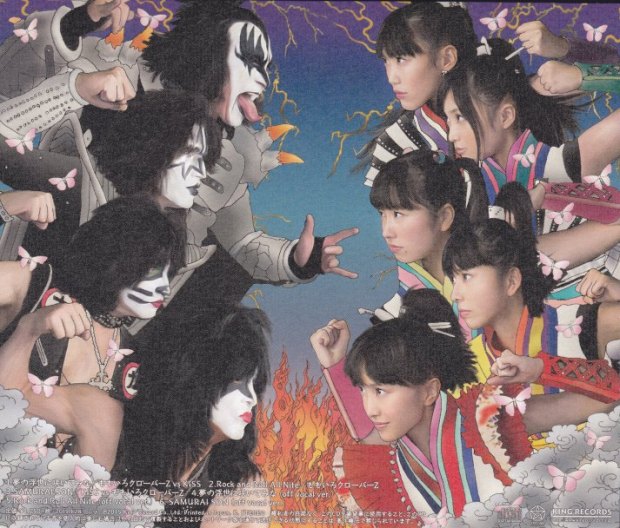
MOMOIRO CLOVER Z vs KISS – “Yume no Ukiyo ni Saitemina” / “Samurai Son” (2015 King Records Japan CD singles, sold separately)
Here they are, the new singles featuring the Kiss vs Momoiro Clover Z collaboration. “Samurai Son” appeared on the current Best of Kiss 40 CD, billed there as the “U.S. Mix”. That meant there are other versions out there, so I ordered the singles (two separate releases) from Japan. Even if I did not like the other versions of the song, the single covers were cool enough to keep as collectibles. As it turns out they are printed on high quality textured parchment style paper, and have stunning inner and outer art. They also come with transparent outer shells with shiny embossed symbols and writing. For packaging, it’s 5/5 stars for these singles.
Between the two singles, there are four different mixes from the “U.S. Mix” of “Samurai Son”. All feature Kiss, to a certain degree. Here’s how the versions break down, from “Least Kiss” to “Most Kiss”:
5. “Yume no Ukiyo ni Saitemina”. This is the full-on Japanese version with the spotlight primarily on Momoiro Clover Z. They take the lead vocals and their elements of the song and style and brought up in the mix. It’s funny to hear Kiss singing background vocals in English, underneath the Japanese lead vocals! Who know if the words actually go together in any way.
4. “Yume no Ukiyo ni Saitemina” (instrumental version). Kiss are the backing band on this track and you can clearly hear Tommy soloing, but the Kiss and J-pop elements are mixed fairly equally here. These first two renditions of the song are on both versions of the single.
3. “Samurai Son” (instrumental version). From the CD with the artwork emphasizing Kiss. This instrumental is based on the Kiss rather than the Momoclo version of the song. Tommy is in the spotlight a bit more on this version, as the instrumental mix leaves more room for his guitar licks to take the spotlight.
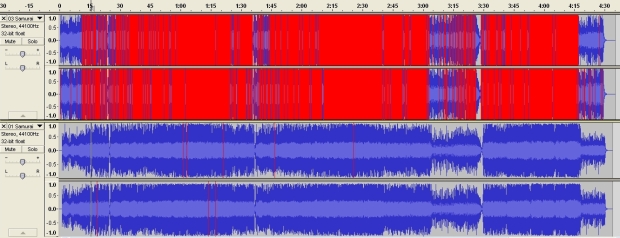
2. “Samurai Son”. From the same CD as the above track, this is a Kiss-heavy version similar to the “U.S. Mix” on Best of Kiss 40…but not quite the same. It follows the same blueprint of Kiss being up front and the Momoclo girls audible in the background and on the chorus. It has vocal, guitar and J-pop parts that are not as apparent in the “U.S. Mix”. Gene’s vocals also sound higher in the mix. It’s audibly mastered way, way louder than Kiss 40, as you can see from the Audacity waveform below. Track 3 from the CD is on top, the “U.S. Mix” from Kiss 40 is beneath.
1. “Samurai Son” (U.S. Mix). The Kiss 40 version; the mix that is geared to appeal mostly to Kiss fans. Logically, it sounds the most like Kiss. It’s only on Kiss 40; neither of these two singles have this mix which makes it a little more special for Kiss fans.
There are more tracks, but I’ll be frank — I didn’t even rip them to the computer. These tracks are vocals and instrumental covers by Momoiro Clover Z of “Rock and Roll all Nite”. I listened to it; it’s cute. If you want to try and get your little niece into rock music, this might be the way to do it. It has some guitars but it’s very cutesy. (Probably still better than Poison’s version though, Mr. Rockett.)
Finally there is the Blu-ray containing the music video, that I cannot play due to region restrictions. That’s why they invented Youtube, I think….
I give Kiss credit for doing something different like this and making it accessible to different audiences. My favourite version is the one on Kiss 40, but that one was custom built for people like me. These two singles are fun additions to the collection. It’s one of those conversation pieces you can show that one guy you know who says he has “all” the Kiss CDs.
RECORD STORE TALES MkII: Getting More Tale #361: LeBrain Goes to Toronto
Went to Toronto yesterday to visit Mrs. LeBrain at the hospital, and also visited Sonic Boom music at 215 Spadina while I was in town. I’m tired, so all I had the energy for was this quick & dirty 4 minute video. Hope you like it. You know I found music to buy…
RECORD STORE TALES MkII: Getting More Tale #358: The Personal Impact of Led Zeppelin
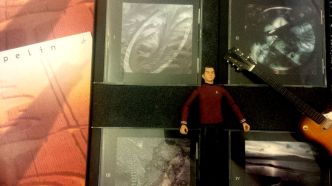
Christmas 1990 was another major turning point in my musical life. I know others who can say the same thing for the same reason. Led Zeppelin had released their first box set, a 4 CD collection of 54 essential tracks, remastered by Jimmy Page himself. This was the impetus I needed to finally take the Zeppelin plunge.
Prior to this, I had stayed away from Zeppelin. I only knew a couple live videos from MuchMusic, which didn’t appeal to me at all. A rock band wearing sandals? The fuck was this? I couldn’t wrap my head around the violin bow solo, nor the band. I remember watching the old live “Dazed and Confused” video with my friend Bob. “You can tell that guy’s on drugs,” he said of Jimmy Page.
That was in the 1980’s. By the turn of the decade, I was starting to tire of plastic sounding pop rock bands. I was craving authenticity, and I know I wasn’t the only one. Bands like Warrant were wracked by controversy, when it was revealed that they employed two guitar teachers to write their guitar solos and teach the members how to play them. Too much fakery for me — at that point I decided to stop listening to them. I sold my Warrant tapes. Warrant in turn accused Poison, the band they were opening for, of using backing tapes live. All kinds of bands were accused of using backing tapes. Sebastian Bach was quoted as saying, “The only band out there that doesn’t use backing tapes live today is Metallica, and that’s a fact.” (I am fairly certain Iron Maiden are above such tom foolery as well.)
The old “Dazed and Confused” video that Much used to play
I didn’t want backing tapes, I wanted authentic pure rock music. There was a bustle in my hedgerow. I wasn’t satisfied with the new releases coming out either. A lot of groups that I really liked released disappointing albums in 1990. From Dio to Iron Maiden to Winger, there were too many bands that failed to impress that year. A band like Zeppelin seemed to have not only authenticity, but solid consistently. They were hailed as the greatest rock band of all time by just about every rock group I heard of!
I received the box set from my parents on Christmas day 1990. The following day, Boxing day, I had set aside to listen to the entire box set from start to finish – about five and a half hours of listening. I took a brief lunch break between discs 2 and 3. I emerged from my room that afternoon, dazed, but not confused at all. There were some songs that I didn’t care too much for – “Poor Tom”, “Wearing and Tearing”, “Ozone Baby” – mostly songs from Coda. They were vastly outnumbered by the songs that absolutely blew me away, even though I had never heard of them before: “Your Time Is Gonna Come”, “Immigrant Song”, “Ramble On”, “The Ocean”, “All My Love”…I could not believe the sheer quality of the music.
Sure, Led Zeppelin’s songs weren’t produced as slick as I was used to. They were a far cry from Whitesnake. Jimmy Page wasn’t a shredder like Steve Vai, but I felt a personal shift. I thought bands like Whitesnake and Cinderella had been exhibiting the epitome of integrity, with the ace players and incredible musicianship. Like athletes, musicians only seemed to achieve loftier heights over the decades with their playing. This was exemplified by a guy like Steve Vai who pushed guitar into entirely new frontiers. Cinderella, on the other hand, had even worked with Zeppelin’s John Paul Jones, who provided strings to their bluesy Heartbreak Station LP. I thought Cinderella were the blues! But now, my eyes were really opening. It was like Obi-Wan Kenobi had prophesized: “You’ve just taken your first step, in a larger world.”
Led Zeppelin (and also ZZ Top) were talking about blues artists I never heard of. Muddy Waters? Lightning Hopkins? Robert Johnson? Who were these people that were so influential that Zeppelin were known to lift entire songs from them?
I had a thought: “From this moment on, I will never be able to listen to rock bands the same way again. I used to think Cinderella were authentic blues. How can I ever go back to listening to Cinderella with the same feeling of passion? How can I play bands like Slaughter and Judas Priest, and think for a second that these guys are any better than the old guys like Zep?”
Fortunately I found that eventually Cinderella, Whitesnake and Led Zeppelin could co-exist in my collection. Liking one does not mean you can’t like the others. Even though Led Zeppelin raised the bar to extraordinary heights, I found it wasn’t too hard to “lower my standards” sometimes and enjoy a little “Slow An’ Easy” with David Coverdale. Zeppelin simply opened my eyes: that there was an entire history of blues that I hadn’t really been aware of before. My musical life journey was about to expand exponentially.
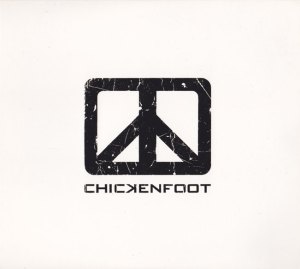
This reissue of the fantastic debut Chickenfoot CD is a decent but imperfect repackage. The music is so good, I can’t stay mad about the double-dip. You can get this cheap if you hunt, so keep that in mind. First let’s talk about the music, before we get into the reissue.
I will go out on a limb and call this the best album Sammy Hagar had made in many years, and better than most (if not any) Van Hagar album. Part of the reason is the performances by this cast of pros (Sammy, Joe Satriani, Michael Anthony, Chad Smith), and part of the reason is solid songwriting. What’s left is youthful energy, which this band of old dudes has plenty of.
The first obvious highlight for me was the glorious return of the Van Hagar harmony vocals. Michael Anthony was responsible for a lot of that in Van Halen, and it was just a joy to hear him harmonizing with Sammy again. Close your eyes and you’d think you’re listening to some lost Halen track circa For Unlawful Carnal Knowledge. Then you recognize those warm Satriani guitar tones and tricks. Finally you hear Chad Smith on the drums, making it all sound easy. This actually sounds like a real band.
Highlights: The single “Oh Yeah”, “Sexy Little Thing”, “Runnin’ Out” (definite sounds like a long lost Halen tune), “My Kinda Girl” (my kinda chorus!), and “Turnin’ Left” (which just grooves). “Bitten By The Wolf” has this bluesy Satriani-circa-Flying kind of vibe. There are no weak songs, and nothing which doesn’t fit the direction of this band. There’s no point going song by song. Each one features the stellar playing, singing and melody that you would expect for this band of pros. Satch’s tone is rich, beautiful and perfect. This is most definitely hard rock. There’s nothing too wussy about Chickenfoot. Even the ballad “Learning to Fall” has the integrity of an outtake from Flying in a Blue Dream. It’s hard not to enjoy something with Joe Satriani on guitar!
“Bitten By The Wolf”, of course, was the original bonus track on the vinyl and download versions of Chickenfoot. Now you can get it on a proper CD with this two-disc reissue. In addition you get an hour long DVD. This disc contains a couple fun music videos, interviews with each guy, and some excellent live stuff. Two things I noticed right away on the live stuff: One, Joe plays a lot more solos. Watching him play is a real treat. I’ve never seen Joe play up close on a DVD before. My God this man’s fingers move fast. Plus he’s entertaining as a showman. Two, Chad Smith is great to watch. On CD he makes it all sound easy. On DVD he makes it all look easy. This tower of a man just locks in and powers through. Awesome to watch. No wonder he is so in-demand with everybody from the Dixie Chicks on down.
Of note: There are many who do not like this album as much as I. Craig Fee from 107.5 Dave FM told me that this record was “disappointing, like seeing an all Toronto Maple Leafs NHL All-Star team, standing there in their blue jerseys.”
I only had two disappointments. One, the original CD had no booklet, only a link to download a pdf file. That remains so on this edition. I would have loved a booklet. Two, the original also had this awesome heat-sensitive packaging. The cover was almost entirely black, but when you placed your warm hand on it, pictures of the band members appeared. That packaging is not a part of this edition. Instead, the black has been replaced with white and now you can see the pictures unobscured. Two very small qualms. I still own the original CD and a vinyl copy to boot, so it’s not a big deal to me.
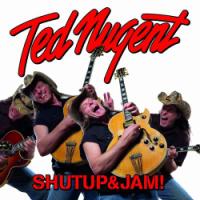
Alright Nuge, it’s been a bumpy ride between you and I. It’s been a love/hate thing with us. Let’s see if I can stomach 2014 Ted, or if the politics are overshadowing the music. As we Canadians say, Give’r!
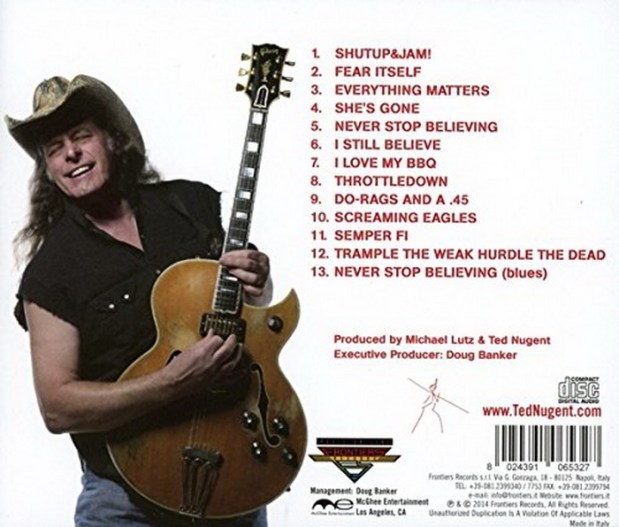
One thing for sure: there is no denying that Ted has lost absolutely nothing. The opening title track is faster, meaner and more fun than 99% of the flock. The great Gonzo still shreds a chaotically perfect solo as if the studio is Cobo Hall. “There just comes a time when you just gotta rock,” he sings. Sounds good to me Ted, I’m on board for that! Ted keeps it rolling with a vicious riff on the excellent “Fear Itself”, and old pal Derek St. Holmes lends lead vocals to “Everything Matters”. A whole album of Ted’s shrieking has never been easy to swallow, so I’m always glad to hear Derek’s smooth pipes. By the slippery bluesy rock, you might think it’s ZZ Top.
Speaking of old friends, Sammy Hagar (who is friends with everyone except the current members of Van Halen) shows up to sing lead on “She’s Gone”. It’s a ball crusher of a song (basically just a variation on “Going Down”), but I guarantee that the guitar solo will sound great wailing out of your car windows this summer. Even better though is the pure fucking joy in the riff for “Never Stop Believing”. I have a new favourite riff and it’s “Never Stop Believing”. The song ends on some really nice laid back picking from Ted, reminding me that he is one of the most underrated players from the classic rock era.
“I Still Believe” indicates to me that Ted really wanted to get his point across when he said he’d “Never Stop Believing”. The opening riff apes “Helter Skelter” a little bit, but the rest of the track is pure Nuge. I like that Nuge is singing fairly tame things like “I still believe in America” and “I believe in liberty” rather than “fuck the Democrats”. The next patriotic statement Ted has for us is “I Love My BBQ”. And I absolutely dig the shout-out to us Canucks. “I love my Barbeque, it’s what Canadians do” sings Ted in the first verse! A small minority may be offended but my mouth is drooling. But I really don’t think it’s Ted’s primary intention to upset you. I think he’s really just trying to be funny, like a stand up comic. Sometimes comedy involves a little bit of a poke and a prod. If Weird Al sang a song about a delicious hamburger, nobody would have a problem with it.
Kicking ass is Ted’s business and “Throttledown” is just one of those pedal-to-the-metal rock instrumentals. “Do Rags and a .45” sounds like Anvil except for that title. “Screaming Eagles” doesn’t give up an inch either, guitars fueled and ablaze. None of these songs overstay their welcome. Shutup & Jam features five songs in the 2 minute range in a row! “Semper Fi” is the last of these five, a stomper rather than a screamer. Ted then tells us he’s going to “Trample the Weak Hurdle the Dead”. “War is not the answer,” sings Ted. “I only know evil has got to go.” It’s a great tune and it’s not hard to sing along. And that’s the key. All of these tunes are immensely catchy with lyrics I can sing without having to worry about being considered a right-wing radical by my neighbors.
A blues version of “Never Stop Believing” closes the album; a rough recording appropriate for the gritty approach. It’s a bit of a throw-away compared to the regular version, decent but not nearly as special. Ted’s playing is always the reason to listen.
I really liked Shutup & Jam. If I had heard it in 2014, it would have been a contender for the Top Five list.
RECORD STORE TALES MkII: Getting More Tale #352.5: CODA – “It’s All Helix’ Fault!”
RECAP: In Getting More Tale #352, we learned about my history of dental problems coinciding with Helix concerts.
Today, that legacy has continued.
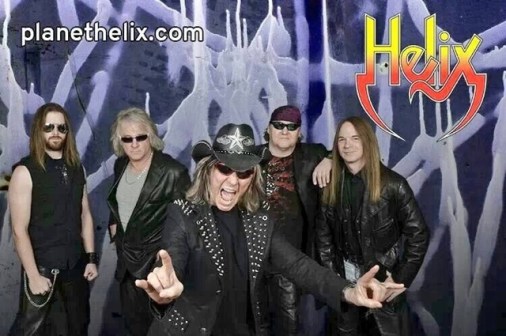
This morning, I won tickets to see Helix next time they hit town. (For concert details, click here.) Simon McGhee was giving away tickets this morning on 107.5 Dave FM. All you had to do was call in, and give Simon the nicknames for Brent Doerner (“The Doctor”) and Greg Hinz (“Fritz”). Before Simon could read off the phone number, I was already listening to it ringing. The show is at the Wax in Kitchener on February 14. That being Valentine’s Day, I am of course going with Uncle Meat.
This evening, I had a dentist appointment. And wouldn’t you know it? Cavities! Two of them! My history of dental issues and Helix concerts continues.
Damn you Helix! See you on the 14th, I’ll still give you an “R”.
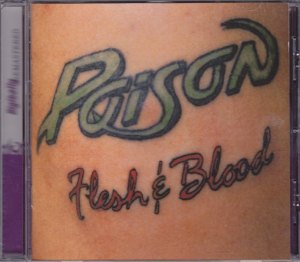
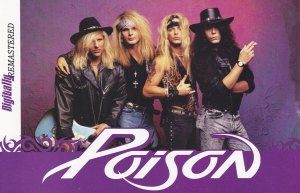
Ah, Poison! The band everybody loved to hate! In spite of that, Poison made a couple pretty good albums. Flesh & Blood is the best of the original C.C. DeVille era, and probably their most successful. It spawned a huge headlining tour that also produced a double live album. Flesh & Blood was also their “get serious” album, although in that regard it was only a partial success. The idea was to write and record more mature music and lyrics, something that C.C. was opposed to. He saw nothing wrong with the glam-slam-king-of-noize direction that they started on, and maintained that Look What the Cat Dragged In was their high point. He saw the introduction of blues influences as diluting the Poison sound he liked.
That’s all bullshingles. Flesh & Blood is the best thing C.C. has done, and is second only to Poison’s Native Tongue album with Richie Kotzen. C.C. was still far from a great guitar player, but on most tracks it’s his most accessible and least annoying playing. (On others…well, we’ll get there.) Take the opening track “Valley of Lost Souls” for example (preceded by a jokey answering machine tape called “Strange Days of Uncle Jack”). “Valley” rocks heavy with integrity and an edge that Poison hadn’t displayed before, and C.C. throws in a lot of tasty, toffee-like strings. His soloing will never be considered virtuoso, and his tone has always been thin and annoying, but never has C.C. generated such guitar thrills as he does on this album. (Most of it.)
I’m sure that producer Bruce Fairbairn steered this ship with a firm hand. His stamp is all over Flesh & Blood: from weird segues to rich backing vocals, this is a Fairbairn production through and through. Fairbairn was known to be a taskmaster, and I’m sure he worked C.C. (and the whole band) to the bone. The title track, “(Flesh & Blood) Sacrifice” has his patented, perfectly arranged vocal stamp. The vocals are layered and almost Leppard-lush. When we’re talking about a singer like Bret Michaels, you know it’s not going to be Pavarotti. The credits don’t list additional singers, but there are some names in the tail end of the thank-yous: Paul Laine, for example. Laine was a Vancouver local, where Poison recorded the album. Why is he being thanked? I think it’s safe to assume that Laine and others helped out in the backing vocals department. Anyway, “Sacrifice” is the second excellent song in a row. Say what you like about Poison as performers, they wrote some fucking good songs too.
“Swampjuice (Soul-O)” is some surprisingly good C.C. acoustic blues. Actually not bad at all — but just instrumental filler. As is the next song, a massive huge hit single: “Unskinny Bop”. The song is awful, the lyrics worse, and C.C.’s solo is like razor blades. I mean that in a bad way. Total shit. Garbage. “Let It Play” verges on filler, but it’s good enough. It’s simple but memorably melodic. Better is the timeless sounding single “Life Goes On”. I liked this bombastic electric ballad then, and I still do now. Michaels is a limited singer, but this is a damn good ballad. I give Fairbairn credit for the backing vocal hooks. The first side of the album closes on the forgettable but adequate hard rocker “Come Hell or High Water”.
Kicking off side two with the single “Ride the Wind” is a no-brainer. This song sounds like its title. It sounds like a car song, a rock and roll ode to the thrills of the road. I’d rank this easily among Poison’s best hits — top five. “Don’t Give Up an Inch” is filler, but “Something to Believe In” was another huge single. Hearing it again today, I find it hard to dislike. I wanted to, but I can’t. I think Bret wrote some pretty good lyrics here. The part about his best friend who died “in some Palm Springs hotel room” is about his bodyguard, a guy he was really close to. It’s pretty heartfelt, and the piano ballad still stands up as well as any by Aerosmith from the same era.
Some boring C.C. pedal steel guitar leads into “Ball and Chain”. It’s a pretty good rock boogie, but the second-to-last song “Life Loves a Tragedy” is the best track on the album. Even better than “Ride the Wind” but similar in vibe, this song shoulda woulda coulda been a hit. The soft intro fools you into thinking it’s a ballad. It’s not. It’s a ballsy rocker with another Bret Michaels lyric that you’d call more mature. “My vices have turned to habits, and my habits have turned to stone,” sings Bret. “I gotta stop living at a pace that kills, ‘fore I wake up dead.” Not poetry really, but a hell of a lot better than “Unskinny bop bop, blow me away.” The chorus kills, as does the whole song. Another top five Poison track in my book.
The album ends on a pile of shit called “Poor Boy Blues”. This may well be the worst Poison song of all time. Of all time! C.C.’s playing is so pointless, so brutal, so annoying, that I don’t know why somebody didn’t pull the guitar out of his hands. Wah-wah alone does not a solo make! This song stinks so bad. Dammit, Poison, you’re not a blues band fer fuck’s sakes! This song should have been axed, there is no reason for it to still exist.
The 2006 remastered edition has two bonus tracks. The first is a disappointing acoustic version of “Something to Believe In” from the “Life Goes On” single B-side. It has new lyrics (erasing one of the things I liked about the song) and absolutely pointless guitar playing by C.C. His solos and melodies go nowhere. It’s just a guy playing all kinds of notes on an acoustic guitar that don’t have any direction: There’s no tension, no release, no hooks. This version sucks. Lastly there’s “God Save the Queen”, an instrumental demo version. This too sucks. More directionless soloing from C.C. over the Pistols riff. That’s all it is.
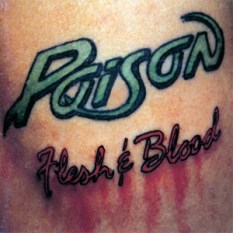
Interestingly the remastered edition has two changes that I’ve noticed. The cover is the “censored” version without the extra blood on the arm. This is a US import, and I think in Canada we had the other cover originally. Second, the reprise of “Strange Days of Uncle Jack” that closes the album is missing. Normally this would fade in from the end of “Poor Boy Blues”. Now, “Poor Boy Blues” ends with a few seconds of silence where that reprise used to be. I don’t know why they did that. I’m assuming somebody mistakenly used a version of the song from a compilation album.
I know I’ve been hard on Poison in this review, but this is actually a great album. Take away “Unskinny Bop” and “Poor Boy Blues” and I would call it pretty damn solid. As for the remaster? Disappointing.

























You must be logged in to post a comment.