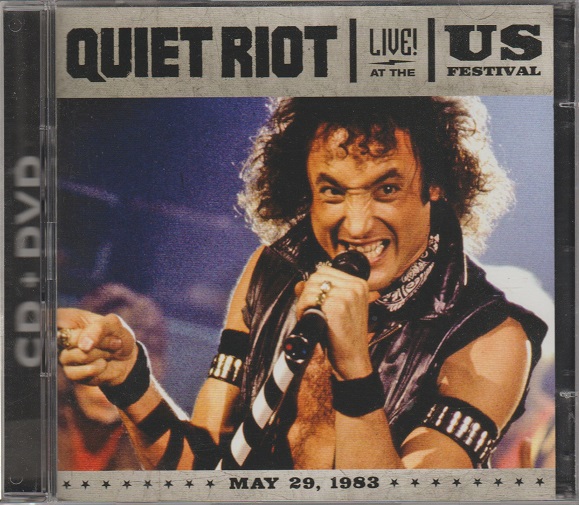
QUIET RIOT – Live at the US Festival (2012 Shout! CD/DVD set)
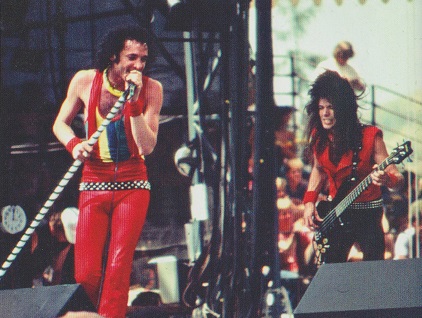
This was a long awaited release, since the US Festival was way back in 1983! The Holy Grail would be an official Van Halen release of their legendary performance, but I digress. There aren’t a lot of really great live Quiet Riot albums out there, with one called Extended Versions being the best package. Live at the US Festival is brief at just seven songs (plus a 4:38 guitar solo that also includes a sneak preview of a song called “Scream and Shout”). It does capture Quiet Riot at their peak, at a critical gig, and includes a DVD of the whole thing for the complete package. (Come on, Van Halen…)
Let’s have a look at the DVD first. The crowd is vast, the costumes ridiculous, but there’s some kind of fire in the air. The atmosphere is electric and the band are absolutely great visually, particularly Rudy Sarzo. DuBrow is the consummate glam frontman, and an underrated one at that. Have a giggle at the old style giant screens displaying the band logo.
The CD itself sounds good, no complaints there, and the recording sounds untampered (evidenced by a messy Carlos Cavazo guitar solo in “Cum On Feel the Noize”). Sarzo’s bass is mixed nice and audibly. It would have been better if more of a booklet was included, but it’s just a simple fold-out with no liner notes. This set is sparse and just over 40 minutes long. A lot of that time is taken up by talking. You get the big hits though, and the non-album track “Danger Zone”.
Live at the US Festival is a pretty easy Quiet Riot purchase to justify because of the included DVD.
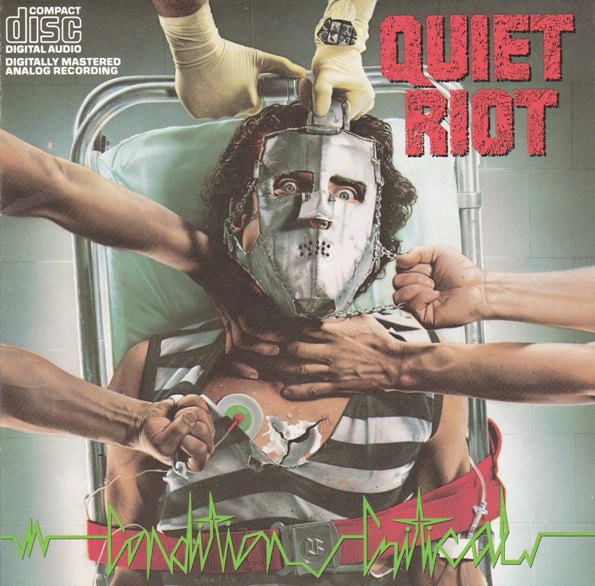
I’ve reviewed almost every single Quiet Riot album now. Only Guilty Pleasures awaits of the studio albums I have left to cover. Why did I leave 1984’s Condition Critical for so long? As the follow-up to Metal Health, you’d think I would have tackled it already. But I didn’t even have the album ripped to my computer.
As a half-arsed Metal Health clone, I’ve never felt like Condition Critical deserved a lot of time spent on it. I received it in 1985, and it has never been an album I have particularly cared for. I still think today that most of the songs are not very good. At that, almost every song is an inferior clone of a prior one on Metal Health:
“Sign of the Times” = “Metal Health (Bang Your Head)”
“Mama Weer all Crazee Now” (Slade cover) = “Cum On Feel the Noize” (Slade cover)
“Winners Take All” = “Thunderbird”
And so on and so forth. Spencer Proffer returned to produce, so even sonically Conditional Critical is all but a clone of the previous record. I’m sure the guys thought they were repeating the magic to take them back to the top of the charts. How wrong they were! Most of the new songs were written solely by Kevin DuBrow, and it feels rushed.
Condition Critical still retains some of the fun of Metal Health. Although not as good, the dumb-titled “Stomp Your Hands, Clap Your Feet” is plenty fun just like Quiet Riot classics. “Party all Night” is also a hoot, and you have to admit that the guys did make a pretty hilarious music video for it. Quiet Riot broke with the help of MTV, and they at least retained their knack for making an amusing music video.
On side two of the album there was hidden a serious heavy tune, the title track “Condition Critical”. This slow grinder is one of those great lost tracks that you can only get on the album. Banali breaks the levee with some solid drums. Songs like this make tracking down the record worthwhile for those willing to give it a shot.
On the other hand, I had a friend who said “Winners Take All” is probably the worst Quiet Riot song of all time.
All week, Aaron over at theKeepsMeAliveand I will be colluding. Monday to Friday, we will be talking about the same CDs. He hasn’t read my reviews, and I haven’t read his. Today, we’re both discussing Quiet Riot‘s landmark Metal Health. Be sure to check both reviews each day this week!
QUIET RIOT – Metal Health (1983, 2001 Sony remastered edition)
While my first rock album ever was Kilroy Was Here, by Styx, my first metal album ever was this one: Metal Health, by Quiet Riot. Although I was really into Styx, Quiet Riot were the first band that I “loved”. Some music that people liked when they were in grade school embarrasses them today that they ever owned it. Not me, not this album. Since buying it in ’84, I’ve owned this album on cassette, LP and twice on CD. And I’ll probably buy it again; I understand there is a more recent reissue out with more bonus tracks. Metal Health was the crucial cornerstone in my musical development, and always will be one of my all-time favourites. Read on!
The opening drum crash to “Metal Health”, sometimes also referred to as “Bang Your Head (Metal Health)”, instantly transports me back in time. Chuck Wright played bass on this one, extra slinky and funky (although Rudy Sarzo plays on most of the album). Suddenly I’m in the basement at my parents’ house, listening to this cassette on my old Sanyo ghetto blaster. I still recall, the cassette shell was white. I played the crap out of it, annoying everyone.
“I got a mouth like an alligator” sings lead howler Kevin DuBrow, and how accurate he was. I had no idea that Kevin’s mouth would cause the band to oust him only a few years down the road. I liked the attitude of the lyrics, and the aggression of the guitars. Impossible to ignore was new drummer Frankie Banali, who to this day is an absolute ballcrusher of a hard rock drummer. His metronomic groove on Metal Health gave it the drive. I wouldn’t have been able to break it down and articulate it like that when I was a kid, but these are the factors that attracted me to the song.
“Cum On Feel The Noize”, the Slade cover, is now more famous than the Slade original or Oasis’ version for that matter. It’s a great tune, but Quiet Riot and producer Spencer Proffer nailed the sound and the vibe. The gang vocals are irresistible. The cover was a huge hit, but it painted them into a corner.
Much like my first rock purchase Kilroy Was Here, there were songs I liked and songs I hated. I don’t think I was the only 12 year old kid who didn’t have the patience for ballads. Girls? Who cares! So I also hated “Don’t Wanna Let You Go”. I wasn’t obsessive about listening to whole albums back then, since I was brought up in the LP age where we just dropped the needle. So I often fast-forwarded through “Don’t Wanna Let You Go”. Or we would play side one of the cassette, rewind, and play it again. (“Don’t Wanna Let You Go” was on side two of the cassette version). Shortly after I suddenly noticed girls were EVERYWHERE, the song started to click with me. Its sparse arrangement driven by Frankie’s drums make it a really special song. Carlos Cavazo’s guitar solo had melody and composition to it, and drew my attention to the fact that a guitar solo wasn’t just a 30 second bore, but a micro-structure within the song, like a song all its own.
“Slick Black Cadillac” is a remake of a song from the second Quiet Riot album (cleverly titled Quiet Riot II) although we didn’t know that at the time. “Slick Black Cadillac” is simply a classic today, and even though there isn’t a Randy Rhoads writing credit on it, you can hear the echo of his influence in Carlos’ guitar fills. The lyrics to this song are so catchy, and soon you too will be singin’ about those solid gold hubcaps. I was attracted to songs that told a story, and the rudimentary story here is a guy in a Caddy runnin’ from the “coppers on his trail”. There’s no Dylanesque poetry, and DuBrow was never a crooner. This is about loud guitars and drums, a singer who is screaming his face off, and songs about cars and rocking!
You know I got a fully equipped rock ‘n’ roll machine, At speeds that take me high, high, high, At dead man’s curve, I only hear one word, drive, drive, drive!
Love’s A Bitch” is less successful but it has a mournful quality that isn’t bad. “Breathless” is better, a fast rocker featuring Frankie’s breakneck but steady pounding of the skins. Following at the same pace, “Run for Cover” is just as furious, but lacking in melody. Carlos Cavazo’s guitar showcase “Battle Axe” used to precede “Slick Black Cadillac” on my cassette version, which it was perfectly suited for. On the original LP and the CD, it opens “Let’s Get Crazy”. Because the running order of the cassette is permanently branded into my memory, it’s hard to get used to. “Let’s Get Crazy” is goofy, seemingly an attempt to have another song like “Metal Health” on the same album. As such it’s filler.
Finally there is “Thunderbird”, the piano-based ballad that Kevin wrote for the late Randy Rhoads. Didn’t like it then, love it today.* It’s a beautiful song and maybe the best thing DuBrow’s ever written. It’s cheesy as hell, but who cares? The heart is there.
CD bonus tracks include a fun live take of “Slick Black Cadillac” (complete with DuBrow’s “vrroooom, vrrrrroooom!”) taken from a radio promo release. Also present is “Danger Zone”, an outtake that is not quite up to the album standards, but certainly close. Remastering is loud and clear, and liner notes are informative enough.
Enjoy. Doesn’t matter if it’s 1984 or 2015, this is a great album.
4.5/5 stars
* When we were kids, my sister and I used to play ‘air bands’ to this album. I’d always make her sing “Thunderbird” while I would get the ‘better’ songs!
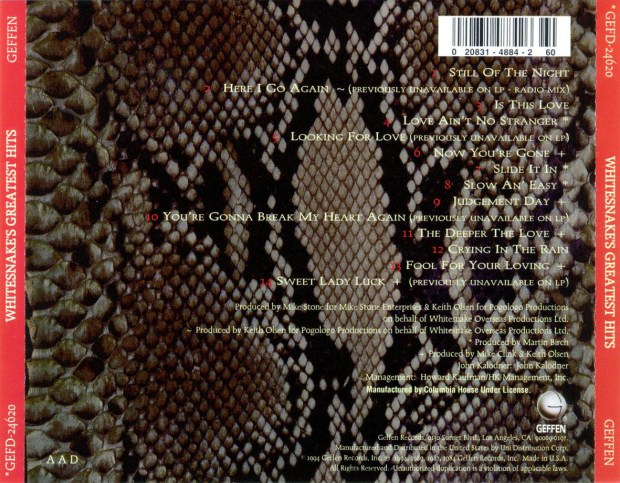
I don’t own this CD. Never have, actually. I gave it enough in-store play (only while working alone!) that I have no problem reviewing it. This Greatest Hits CD dates back to 1994, the year I first started working at the Record Store. As such, it was the first ever official Whitesnake Greatest Hits CD, the first of many. The band had been broken up for about four years at that point. Even by 1994 standards, it was only an OK release. It did contain some rare tracks, but was limited to Whitesnake’s 1984-1989 Geffen output only. For budget-priced collections, I would recommend the cheaper 20th Century Masters – The Millennium Collection because it still has all the hit singles from that period at a lower price. For fans who need more, the much better Whitesnake Gold or Silver Anniversary Collection make a more complete picture with more rarities and deep album cuts. These of course weren’t available in 1994. Today music buyers have a lot more to choose from.
One inclusion that some listeners may not enjoy about Greatest Hits is the version of “Here I Go Again” chosen. This is not the well-known album version that most people have heard. This is the “single remix” with different guitar solos (by guest Dan Huff) and more keyboards. Some radio stations do play it from time to time, but I think most casual buyers would listen to this and say, “I don’t like it as much”. And nor do I, but it is a rarity.
Otherwise, this album (like 20th Century Masters) contains every hit single from the period, and nothing from the blues-based records before. It does feature some other cool rarities: the B-side “Sweet Lady Luck” featuring Steve Vai, “Looking For Love”, and “You’re Gonna Break My Heart Again”. However, with the many compilations and remasters released since 1994, these songs are no longer hard to find. “Sweet Lady Luck” was even released on a Steve Vai boxed set!
Rounding out this selection of hits and rare tracks are deeper album cuts. These are include the glossy Kashmir-esque “Judgement Day”, “Crying in the Rain ’87”, “Slow Poke Music” and the wicked “Slide It In”. They help balance out the ballad-y hits that Whitesnake were adept at writing.
Interestingly, when this album was released, David Coverdale assembled a new, shortlived Whitesnake and toured for it. That version of Whitesnake included former members Rudy Sarzo and Adrian Vandenberg, both of the 1987-1990 version of the band. It also included drummer Denny Carmassi (Coverdale-Page) and guitarist Warren DeMartini (Ratt). Shame that no live recordings from this version of the band have never been released. The band disolved for several year again after this, only to reform in 1997 with a new lineup including Carmassi and Vandenberg.
This album is only mildly better than 20th Century Masters, but is inferior to the more recent, more comprehensive compilations I have mentioned. Buy at a sensible price point.
Originally, I got this for my birthday in 1987. This is the first of a two-day OZZY DOUBLE SHOT!
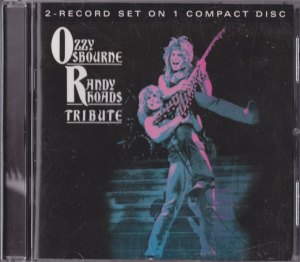
OZZY OSBOURNE – Randy Rhoads Tribute (1987, 2002 Sony remastered edition)
It took years for Ozzy to be emotionally ready to release this live album, recorded for intentional release in 1982. When Randy died, it was quickly shelved and replaced by Speak of the Devil, an album consisting entirely of live Black Sabbath covers. When Tribute was released in ’87, it was my first real exposure to the talent of Randy Rhoads. I think Tribute still stands as the very best testament to Randy.
Finally restored to CD was the concert opening featuring a recording of “O Fortuna” from Orff’s Carmina Burana. This essential part of the concert was edited off the 1995 remastered edition, a CD which I advise everyone to stay away from. If you have it, get rid of it and replace it with this one.
“I Don’t Know” is a dynamite opener. Ozzy’s vocal sounds heavily processed and thickened up in the mix. Whatever tampering is done with it, I don’t know (pun intended). What I do know is that Randy Rhoads’ live guitar is so much more than it was in the studio. Unleashed, Randy makes every lick that much more different from the last, unafraid to throw every trick in his very large book out for you to hear. His live sound seemed thicker, but it’s his playing that steals the show, as it should. It’s looser live, Randy pulling off wild sounds midstream at all times. He was obviously someone who had clear ideas about what he wanted to play along with the ability to execute them.
The single/video from this live album was “Crazy Train”, featuring Ozzy’s new 1987 hair cut. The album version is longer but no less definitive. Not only is Randy’s playing at its peak, but I like drummer Tommy Aldridge’s busier fills. In my mind, the live version of “Crazy Train” kills the original.
“Believer” is a bit of a slow point in the show. That’s Rudy Sarzo, Randy’s old Quiet Riot bandmate, on that bass intro. Future Deep Purple keyboardist Don Airey is also present, providing the haunting opening to the classic “Mr. Crowley”. What an astounding version, too. Once again, I’d call this one pretty close to definitive. Lifting the clouds away, the set goes to the party anthem “Flying High Again”. Revealing my naivete at the time, I had no idea what Ozzy was talking about when he said, “It’s a number entitled ‘Flying High’ so keep on smokin’ them joints!” I truly did not know what a joint was, or what “flying high” referred to. I assumed the song was about feeling good, and I suppose that it is. My friends and I didn’t know, and I think that’s the great thing about rock lyrics.
When I was really young, I didn’t like ballads or slow songs that much, but Ozzy was one of the exceptions. “Revelation (Mother Earth)” might be somber but it is also powerful, and with Randy Rhoads on guitar, you can never get to be too soft! Going back to Black Sabbath, Ozzy was always an anti-war crusader. “Mother Earth” seems to be a continuation of that theme. I always found it funny that during the 80’s, Ozzy was always being accused of devil worship by people who had no clue. Meanwhile, Ozzy’s singing about nuclear disarmament.
Two long-bombers in a row follow: complete with drum solo, it’s “Steal Away (The Night)” followed by an extended “Suicide Solution” with Randy’s solo. The “Steal Away” drum solo is still classic to me, but it’s “Suicide Solution” that no serious rock fan should be without.
The setlist detours to Sabbath covers next: a trio of “Iron Man”, “Children of the Grave”, and “Paranoid”. The two Ozzy guitarists who handle Sabbath best are Zakk and Randy. Randy doesn’t play by the rules at all. He throws in licks and tricks that were not on the Sabbath originals in any way, but somehow it all works. Randy was just untouchable in that way. Everything he played was classy and perfect.
Two older recordings conclude the live portion of this album: “Goodbye to Romance” and “No Bone Movies”, recorded earlier with Bob Daisley on bass and Lee Kerslake on drums. I don’t see that in the credits anywhere, nor do I remember seeing it on the original CD’s credits. “SHARON!” I will say that “Goodbye to Romance” blows the original away in my books.
The album closes with an alternate studio version of the acoustic Randy piece “Dee”, named for his mother Delores Rhoads. This version includes outtakes of mistakes and Randy speaking, and it’s a haunting way to end the album. Especially when Randy says, “Let’s hear that,” takes off his guitar and headphones, and goes into the control room, ending the track. It feels interrupted, like Randy’s life.
In the liner notes, Ozzy himself states that “What you are about to hear are the only live recordings of Randy and I,” but that was clearly incorrect, since there was already the Mr. Crowley EP, and later on, a whole other live album included with the deluxe Diary of a Madman. The booklet also includes an insightful letter from Mrs. Rhoads to the fans. Rest in peace, Randy.
We’ve had a couple strong new releases in a row here of late: The newHelixandJudas Priest albums have been particularly great.
I guess two out of three ain’t bad.
NEW RELEASE
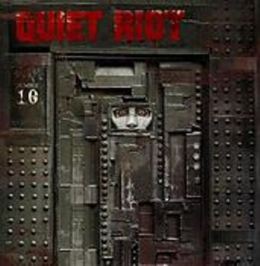
QUIET RIOT – 10 (2014 iTunes or Amazon mp3 download)
I’ve made no secret of my dislike for the happenings in Quiet Riot recently. I find their current reunion, with no original members, to be tenuous at best. Singer after singer, Quiet Riot stumbled onwards before finally hiring Jizzy Pearl of Love/Hate and Ratt fame. With Pearl they’ve managed to record an album. 10 is the name of that album, another thing I find a little disrespectful. The name 10 seems to me to imply it’s their 10th album. It’s not; all fans know Metal Health was their third, not first, album. This seems to play into an earlier attempt to re-write the Quiet Riot related Wikipedia pages to state that Metal Health was the band’s first record. Why? I can only speculate that this is done to promote the current Quiet Riot as having “original members”, when in fact they have none.
However, I’m going to listen with open ears, because that’s what I’m here to do.
First track, “Rock in Peace” is one I like quite a lot. What I don’t like is the muddy, muddy sound. The drums sound like they’re in another room. It’s too bad because I think the song has potential. As for Jizzy, it’s easy to adjust to him as lead singer of Quiet Riot. Although he doesn’t sound like the late Kevin DuBrow too much, he does have certain screamy qualities in common with DuBrow. This enables him to adapt to the Quiet Riot sound. The lyrics quote the band’s biggest original hit, “Metal Health”, which is alright. Halford’s quoted himself before too. OK, so production aside, not bad.
“Bang For Your Buck” has some tasty guitar by the talented Alex Grossi, making his first Quiet Riot album appearance here. Unfortunately the otherwise fine song is held back by Jizzy, overreaching and straining. Grossi really does redeem the song especially with the solo…but damn this album sounds muddy. Congested. Like I have a head cold while listening to it.
Third in line is the weird titled “Backside of Water”. I don’t know what that title means, and since this is a digital release, there are no lyrics. It smokes along nicely, with more fantastic Grossi guitars, but it’s an unremarkable song that doesn’t sound like Quiet Riot, except in the sense that Quiet Riot has a lot of unremarkable songs. The Ratt-like “Back on You” is outtake quality. I’m sensing that the guys think they can just throw a shout-AC/DC-style chorus on something and call it catchy, but it doesn’t work that way.
“Band Down” is what you’d call a “down n’ dirty” rocker. I’d call it dull, and poor sounding. I think they’re trying to recapture that “Stay With Me Tonight” vibe, but without a memorable chorus. But “Dog Bone Alley” is worse, absolutely sunk by horrendous backing vocals. It has a slinky, heavy groove, and some smokin’ guitars, but that’s not enough to build a song with.
Alex Grossi, Jizzy Pearl, Frankie Banali, Chuck Wright
Quiet Riot’s biggest stumbling block has always been songwriting. That’s why some of their biggest hits are covers. Quiet Riot 10 continues that frustrating tradition. Just like albums such as Alive and Well had some good songs and solid moments, so is Quiet Riot 10. And that’s only six songs!
What Quiet Riot did to make a full album is include four live songs, kinda taking a page out of the ZZ Top book, a-la Fandango! These tracks are all obscurities, songs not available in live versions before. They all feature Kevin DuBrow, but could Frankie have not found better sounding recordings? From Quiet Riot III is a horrid sounding version of “Put Up or Shut Up”. This is bootleg quality, and not even good bootleg quality. Too bad; sounds like it was a good version. Then, from the stinky Rehab CD comes an unnecessary “Free”. So it’s heavy, whoop-de-do. It’s a shitty song, and the vocals are so damn distorted at times that it sounds as if Kevin’s under water. “South of Heaven” too suffers from these sonic defects. It seems like they were going for a Zeppelin “Nobody’s Fault But Mine” kind of vibe, but as if the mothership crashed into “The Ocean”. (See what I did there?) Kevin even yelps, “Push, push!” It’s a shame because Frankie really is a smokin’ drummer.
The final track is a nine minute rock n’ roll medley. This is a great jam. Humble Pie’s “Red Light Mama, Red Hot!” is a great little obscure choice. Kevin sounds like he’s having a blast. Actually the whole band sound like they’re having more fun here than they were playing their own originals. This seques into other more familiar hits, still harkening back to that old British blues rock sound.
Live many albums of Quiet Riots past, 10 stumbles and fails at times, while producing pleasing hard rock surprises at others. The sonic issues are a surprise to me. I hope a physical CD release, if there is to be one, would improve the sound.
2/5 stars
1. “Rock in Peace” 4:00 2. “Bang For Your Buck” 3:52 3. “Backside of Water” 4:18 4. “Back on You” 3:24 5. “Band Down” 3:17 6. “Dogbone Alley” 4:29
Live 7. “Put Up or Shut Up” 4:18 8. “Free” 4:05 9. “South of Heaven” 5:25 10. “Rock ‘n’ Roll Medley” 9:22
For further reading, check out Jon Wilmenius’ review of Quiet Riot 10.
There are several Quiet Riot live albums available: this one, Setlist, Live at the US Festival, and Live & Rare. All are vintage recordings from the early 1980’s. Of the three, you might look at Extended Versions and pass on it. It looks cheap and unofficial. To overlook this CD would be a mistake, and this is why.
Sure, it lacks any sort of booklet or liner notes. All I know is that the first eight tracks are from Pasadena in 1983, and the last two from Nashville the same year. From the outside you wouldn’t know that. The only information is the ominous “Recorded Live” which tells you very little indeed. Being 1983, this is the “classic” lineup of Kevin DuBrow, Frankie Banali, Rudy Sarzo, and Carlos Cavazo, on the Metal Health tour. Introducing “Love’s A Bitch,” DuBrow reveals that they only began their US tour a short while ago.
Perhaps because it’s early in the tour, or maybe because they’re home in California, Quiet Riot pulled out two rarities for the Pasadena show. These are “Gonna Have A Riot” and “Anytime You Want Me”, neither of which are on Quiet Riot I or II. Both are written solely by DuBrow, but “Gonna Have A Riot” is from the Randy Rhoads period. “Anytime You Want Me” is of more recent vintage, and it’s actually quite an excellent pop rocker. Also rare was the set opener, “Danger Zone”, unreleased until 2001 when the studio version was added to the Metal Health remastered CD.
In addition to the rarities, you get the hits: “Metal Health”, “Cum On Feel The Noize”, “Slick Black Cadillac”, “Love’s A Bitch”. There’s also a handful of well liked album cuts such as “Let’s Go Crazy” and the smoking “Breathless”. That song knocked me out as an 11 year old and it still does today. All performed by the band in their prime, before the downfall.
Live & Rare sounded awful, but this CD sounds pretty good. I’m not sure if it’s a radio broadcast, but it’s perfectly listenable. It’s too bad there’s no packaging, because if this had been packaged with more effort and care, it could have been sold as an “official” live album quite easily. Bummer there’s no liner notes, all you’re going to get is the music. However, the music stands up for itself and it’s an enjoyable live album.
Bought at an HMV store in Guelph Ontario, spring 1996.
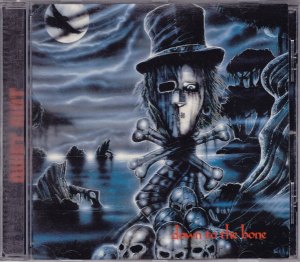
QUIET RIOT – Down To The Bone (1995 Kamikaze)
After the fairly impressive Terrified in 1993, I had my hopes up for Down to the Bone. I shouldn’t have. Even though this album represents the reunion of the seasoned QRIII lineup (Kevin DuBrow, Carlos Cavazo, Frankie Banali, Chuck Wright), this is one of the worst albums that Quiet Riot have ever released, and that’s saying something.
The songs on Down to the Bone fall into two categories: filler, and covers. The album is bogged down by boring production and mixing. Cavazo’s guitar tone is harsh, and makes the overly long album difficult to listen to in one sitting. The snare drum sound is obtrusive and not very good. Down to the Bone has a cold sounding mix, dry and irritating. This isn’t helped by the filler music contained herein. “Dig” for example contains a pathetic excuse for a chorus, making you wonder how anybody could have thought this was a good song. It’s a shame because Cavazo’s solo is melodic and cool, but a great guitar solo is not enough to save the song. There are moments here and there, melodies and riffs that are memorable, but no actual songs that you’d say, “Yeah, that’s a good song.” Only the cover of The Kinks’ “All Day and All of the Night” made my Quiet Riot road tape.
Down to the Bone overstays its welcome at almost 70 yawn-inducing minutes. I have very rarely played this album. The last time I can distinctly remember listening to the whole thing — until now — was over a decade ago. Go ahead and ask me how any of the songs (besides the cover) go. I won’t be able to tell you.
WHITESNAKE – Slip of the Tongue (1989, deluxe edition)
Normally I go crazy for these deluxe editions. Many are great! The Whitesnake deluxe editions have not been great. This is the third and last one in my Whitesnake deluxe edition series of reviews.
Once again, instead of two CDs, you get an expanded CD and a brief DVD. The lack of decent bonus material really frustrates me because there is more in the vaults. You know there has to be more in the vaults. In fact in the liner notes, David tells us that there is more. He name-drops several unfinished songs that didn’t make the cut, but fans would kill to hear.
Slip Of The Tongue was not the best Whitesnake album (not by a long stretch), but with 20/20 hindsight and the presence of Steve Vai, it’s fun to listen to. Yes, it’s too glossy, and yes, Vai was not the right guy to be in Whitesnake, but the result is one of those strange one-off’s like Black Sabbath’s Born Again, or Motorhead’s Another Perfect Day. It’s an album that doesn’t quite fit with the back catalogue, but has become a cult favourite. I have long been a fan of it, simply because Steve Vai is jaw-dropping even when playing pedestrian hard rock.
For Vai fans, he plays it pretty straight here, not a lot of craziness. There’s a broken string on one song, and some cool solos, but nothing bizarre like you’ll find on a Vai solo album. If you want to hear him just do some serious hard rock and balladeering without the crazy stuff, this is the CD for you. Within the scope of Whitesnake, Vai sets the album on fire; throwing in notes where you didn’t know they could fit, making sounds you didn’t know a guitar could make, and overdubbing a mountain of fills. Just check out opening track “Slip Of The Tongue” for some serious burning, via a 7-string Ibanez guitar through an Eventide harmonizer.
Song-wise, this is mostly hard rock and very little blues. The slick remake of “Fool For Your Loving” (originally from Ready An’ Willing), which Coverdale’s liner notes reveal he didn’t want to do, is inferior to the bluesier, groovier original. “The Deeper The Love”, purportedly a soul song, is actually just a great hard rock ballad with some wonderful Vai licks. The best songs are the epic Zeppelin-esque “Judgement Day”, the aggresive “Wings Of The Storm”, the hit rocker “Now You’re Gone” and the signature Coverdale album closer “Sailing Ships” which has become one of his philosophical classics.
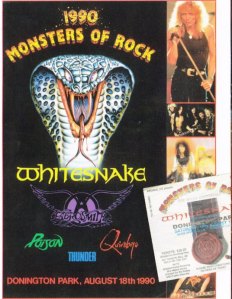
Among the sparse bonus tracks: the B-side “Sweet Lady Luck”, which is available many times elsewhere now, on both Whitesnake and Steve Vai compilations. Also, the US single mix (by Chris Lord-Alge) of “Now You’re Gone” is included but many fans would be hard pressed to tell the difference. The promo-only “Vai Voltage Mix” of “Fool For Your Loving” predictably throws in a lot more guitar. (I already had this on a promo single that I acquired for $2, but this is good for fans to have.) There are two tracks from the 1990 Donington Festival, which would have been a real treat, because these songs (unlike the other bonus tracks) had never been released before. This was the first ever official release of Whitesnake live stuff with Vai. But it was also just a sneak preview of an actual 2 CD/1 DVD release of the full Donington show. Double dipping sucks!
Then, just like on previous deluxe editions…another live track by a more current edition of Whitesnake! Honestly, this ticks me off for two reasons. One, you can get the new live Whitesnake albums with no difficulty and two, it’s from 15 years later and has nothing to do with Slip Of The Tongue. Yet these new live versions pop up on all these Whitesnake reissues. Why?
The DVD is brief and hardly as satisfying as another CD would be. You get the three original music videos, the two Donington live songs, and then another bunch of unrelated live stuff. Two live tunes from 1997’s Starkers In Tokyo acoustic show, and yet another live track from a more recent Whitesnake live DVD, which is available on its own. Again, I feel this is a bit of a ripoff. It’s nice to have these Starkers tunes on a DVD, but why not release an entire separate DVD of that show? It has nothing to do with Slip Of The Tongue, except that Coverdale played a couple of these songs live.
The booklet by Coverdale is a real treat, revealing much previously unknown tidbits to tease your friends with. I had no idea that Adrian Vandenberg for example managed to play a little bit of backing guitar on the album. Previous issues of the CD stated that Vai handled all guitar duties, but that has turned out to be false. Also, Coverdale talks a bit about Glenn Hughes, and why you can barely hear him sing on this CD, even though he’s credited on backing vocals.
Frustratingly though, Coverdale also mentioned all those unfinished and unreleased songs from these sessions: “Kill For The Cut”, “Burning Heart”, “Parking Ticket”, and so on. These were all titles that I read about 25 years ago in Hit Parader magazine, and wondered why they didn’t show up on album B-sides. The booklet reveals that they were never finished, but that is no excuse — they should have been presented here as bonus tracks instead of this unrelated live stuff. The Sabbath deluxe editions have tons of unfinished songs on them. So do some of the reissues of the early Whitesnake albums, such as Come An’ Get It. This CD should have been the same. Unless David is hanging onto these songs for some kind of anthology box set in the future, I can’t figure out how they arrived at the selections for this reissue CD! It’s maddening. Do it right, or not at all.
Decent album, great liner notes, top notch and generous packaging, and great remastering job. Crap bonus material.
When Rudy Sarzo rejoined Quiet Riot, re-completing the classic Metal Health lineup, there wasn’t much fanfare. There also wasn’t much fanfare for this album which came and went without so much as a whisper. The reason is pretty simple. Like most of Quiet Riot’s post-1983 output, it’s not that great.
It’s better than I feared though. Some of these new songs are darnright good. “Against The Wall” is the best of the new songs, a rocker that would have fit on Condition Critical as one of the best tunes. It’s a peppy, upbeat motivational rocker. “Angry” is also not bad, being pretty heavy with a great vocal delivery from DuBrow. It is incredible that right up until his death, Kevin DuBrow’s voice was as strong as ever. “The Ritual” is a groover, something previously unknown for Quiet Riot. It’s mean and nasty and it works really well.
The rest of the new material isn’t all that hot. Quiet Riot’s problem has always been poor songwriting. Much of their best material were either covers or co-writes. There are awkward choruses that just don’t hit the spot; bridges and verses that jar with the riffs. These songs don’t sound like completed songs, they sound like a bunch of parts stuck together. Witness “Too Much Information” (which I actually like the lyrics to quite a bit), “Don’t Know What I Want”, “Alive and Well”, and “Overworked and Underpaid”. These are not great songs. They have neat parts and nice bits buried within them, but as a whole…sorry, no. There is also one truly awful song, the funk-crap of “Slam Dunk (Way To Go)”. What an awful song. Truly a terrible, terrible song that never should have made it past the demo stage.
There’s one previously released track, the AC/DC cover “Highway To Hell” (previously released on the AC/DC tribute album, Thunderstruck). It’s OK, but let’s face it, very few bands can cover AC/DC. Carlos Cavazo can’t play that rhythm part and make it sound right. Sarzo’s bass is a little too bouncy. Otherwise, it’s an OK cover, but once again Quiet Riot are padding out albums with covers…
The record company made them re-record six of the old classic tracks, and here they are tacked onto the end. Some are OK. “Don’t Wanna Let You Go” (one of my personal favourite Quiet Riot songs) has been rearranged acoustically. Carlos’ acoustic guitar is beautiful, and because this song presents a new arrangement, I think it’s worthy of inclusion. The rest offer very little of interest. Why re-record old classics? There’s no real artistic reason, only financial reasons. I guarantee you that you will not replace your old copy of “Metal Health” with this re-recorded version. And the new version of “The Wild and the Young” is just bad, bad, bad. All the techy-uniqueness of the original has been replaced by pseudo-heaviness and funk. Yes, funk, there’s a funky break right in the middle that should have been excized. It’s just awful.
As an album, Alive and Well has enough good going on to make it listenable, but this is no comeback. This is treading water, zero growth. Amazon is loaded with positive reviews, fanboy-ish as they are. Well, I am the biggest Quiet Riot fan around. And I’m just being objective here when I say this: Unless you’re die-hard like me, you don’t need this album.
 QUIET RIOT – Live at the US Festival (2012 Shout! CD/DVD set)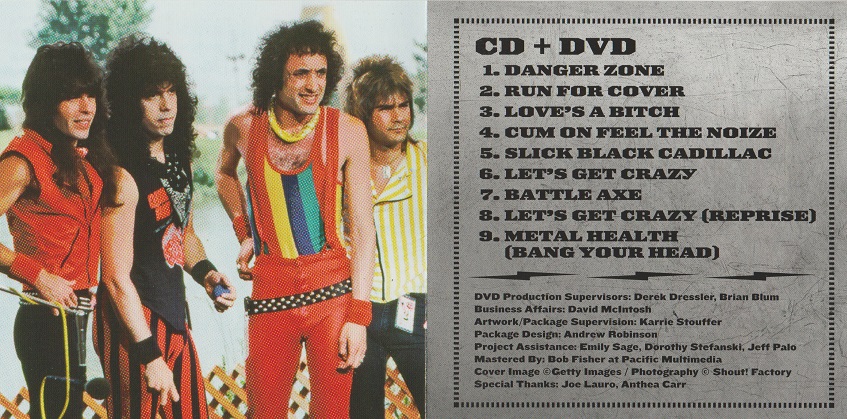













 mikeladano.com