steve smith

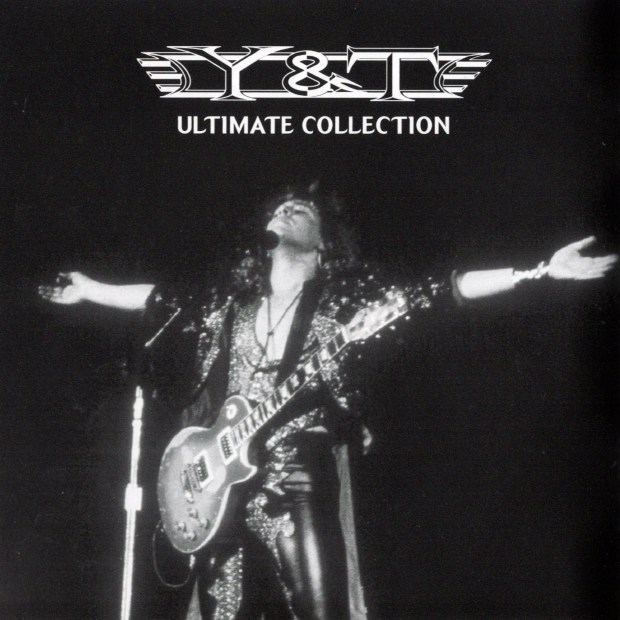
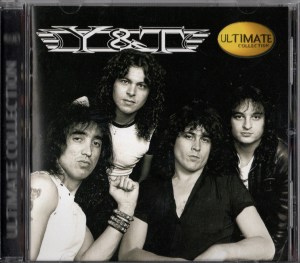
REVIEW: Y&T – Ultimate Collection (2001)

Y&T – Ultimate Collection (Universal)

When Tim Durling, author of Down For the Count: The Y&T Album Review, found out I didn’t own any Y&T, he sought to rectify the situation.  As a passionate and knowledgeable fan, he knew that I wanted to start with a good compilation that covered all the songs I liked, and as many albums as possible.  The Ultimate Collection was the CD he vouched for, and he did not steer me wrong.  This is an amazing compilation.

The disc opens with four songs from Earthshaker, their first album as Y&T after two records as Yesterday & Today.  “Dirty Girl” is an unusual if brilliant opener.  It’s both slow and heavy, with a couple genius guitar solos, one different from the other, and each telling a story.  This track plods in the best possible way, with a cool signature riff and a stomping beat.  The chunky “Hurricane” and an epic “Rescue Me” follow, but “I Believe In You” is a real standout from Earthshaker.  This is a powerful metal ballad, like something the Scopions used to score hits with.  Dave Meniketti has expert control of his voice, with a vibrato to die for.

A clutch of songs from Black Tiger (produced by Max Norman) follows.  The title track from that album fades in from ominous jungle sounds (because tigers usually live in the jungle).  “Cat eyes!  She draws you in!”  Dave is singing about a different kind of jungle here.  The black tiger he’s singing about is of the feminine variety, and Dave wants you to heed his warning.  “She’s playing for keeps, so you better get away!”  Just a smoking metal track with stinging guitars.  “Open Fire” is just as heavy, if a bit faster.  These two songs boast hooks, both on guitar and vocals.  Y&T are experts at this high-velocity rock, but “Forever” could fool you into thinking it’s another ballad…until it storms off, bordering on thrash metal.  “Forever” definitely competes with the kind of heavy rock bands that were starting to make a name for themselves in the early 80s.  Leonard Haze pushes it over the top with his adrenalized drumming.

Chris Tsangarides took over production duties on Mean Streak.  We only get two heavy hitters, including the title track “Mean Streach”.  (That’s a joke – listen to the chorus.)  “Midnight In Tokyo” is the other, and by contrast, this song isn’t as simple or straight ahead.  Complex, jazzy verses collide with melodically heavy choruses.  Phil Kennemore must be credited for some really incredible, gallopy and melodic bass playing.

In Rock We Trust was produced by Tom Allom of Judas Priest fame.  We only get one track from this record, the big hit “Don’t Stop Runnin'”.   This one is especially notable for the backing vocals.  The band probably don’t get enough credit for that, and the thick and sweet chorus is all band.   Though I did see this music video on Toronto Rocks and the Pepsi Power Hour once or twice, it should have been a lot bigger.  This band had a number of circumstances against then, as discussed in Tim Durling’s book, available on Amazon.

The next couple studio albums were produced by Kevin Beamish.  Some may love, and some may hate, the direction this band evolved on Down for the Count and Contagious.  If the songs chosen here are any indication, the band were going for a more radio-oriented mid-80s mainstream sound.  They still managed to pack punch into the songs, but “Summertime Girls” and “Contagious” are notable more streamlined and polished.  The melodies and backing vocals take more prominent positions, and keyboards enter the fray.  I think these tracks are great.  They are among my childhood favourites.  I love the backwards-recorded drum parts on “Summertime Girls”.

A live track from Open Fire provides some much-needed music from the first Yesterday & Today album, which was on London Records and unavailable for this compilation.  Wicked riff from Joey Alves on “25 Hours A Day”!  Note the backing vocals once again.  Whether they were polished in the studio, it doesn’t matter.  The band can sing.  This fun rock groove has a little more power than the studio version.  Nice bass solo from Phil!

The end, temporarily, was 1990’s album Ten produced by Mike Stone.  The ballad “Don’t Be Afraid of the Dark” turned me off back in the day.  It was too soft for the direction I was headed.  Judas Priest was dropping “Painkiller” while Y&T released a ballad.  It just wasn’t what I wanted.  I should have given Ten a chance.  I love this song now.  Though the lineup had changed, and Journey’s Steve Smith was playing drums in the studio, it still sounds like Y&T.  Those melodies and backing vocals!  That “touch by touch, little by little!” hook just knocks me out, not to mention Meniketti’s voice and delivery.

Y&T came back in 1995, retaining Stef Burns and Jimmy DeGrasso from the last incarnation.  Musically Incorrect was the name of the album, and “I’m Lost” is an absolute smoker!  You’d think it came from one of the earlier albums…because it does.  It was originally on Struck Down and re-recorded here.  It’s one of the fastest songs on the compilation, and the raw 9o’s production gives it a vintage sound.  It’s challenging stuff.  DeGrasso absolutely smokes on the drums.  No wonder he ended up in Megadeth a bit later on.  The same lineup remained on Endangered Species in 1997.  A heavy ballad called “God Only Knows” represents that album.  It’s passionate metal, with the kind of wrought-iron arrangement you expect from a power ballad.  Absolutely killer lead solo work.

The final track takes us back to the beginning.  A live version of “Beautiful Dreamer” from 1991 is originally from the debut Yesterday & Today.  Again, it’s a little more complex, but still boasting the kind of melodies, riffs and singing that we expect from Y&T.  That is, high quality heavy rock.

This is easily the best first-purchase Y&T you can make.  It’s a great sampling of as much music as you can reasonably expect.  Solid listen front to back, and then back to front.  Liner notes are by the late Gerri Miller of Metal Edge magazine.

5/5 stars


REVIEW: Tony MacAlpine – Edge of Insanity (1985 Shrapnel)

TONY MacALPINE – Edge of Insanity (1985 Shrapel)

Tony MacAlpine seemed to be in every guitar magazine when I was a kid, but I never got to hear his music. He looked cool, and he was highly praised as a shredder, but his music (on Shrapnel records) was impossible to find unless you ordered it from a specialty shop.  Like most of Shrapnel’s output, it was produced by Mike Varney.

His 1985 solo album Edge of Insanity features an impressive band:  Journey’s Steve Smith on drums, and of course it’s common knowledge that Billy Sheehan played bass.  The album is instrumental.

Opener “Wheel of Fortune” has a neoclassical vibe, with the rapid fire bassline enabling MacAlpine to focus on the melody rather than shred his way throughout.  There is certainly a commonality in terms of musical direction with Yngwie, but Tony’s approach is more easily digested.  Tony’s music has an actual bottom end thanks to Billy, and of course Steve Smith’s technique speaks for itself.  He’s more than capable of heavy metal hammering as he does on “Wheel”, but listen carefully and you will hear his signature cymbal work, so unique to me.

“The Stranger” discards some of the neoclassical robes, and rocks a more straight-ahead blitz.  Tony has a wicked keyboard solo mid-song, showing the breadth of his abilities.  The pulse of the song is all Sheehan, and Smith’s fills sound a lot like a certain band that started with a “J”.

A live solo called “Quarter to Midnight” is unaccompanied.  It reminds me of a Randy Rhoads solo.  There’s some nice whammy work near the end, which was so popular in the era.

A ballady song called “Angrionia” (mis-printed on the back cover, but correctly in the booklet) follows; quite a nice little tune with the occasional bursts of neoclassical guitar speed.  Billy has a couple nice rips as well.  MacAlpine multitracks his guitars for effect.

“Empire in the Sky” has a very cool keyboard intro, that leads into a gallopy metal number.  This has a mid-tempo vibe like Maiden circa Seventh Son when keyboards were happening.  You could imagine this coming from that era, though of course Tony was three years ahead.  His doubletracked leads set it apart from that, and there are some chunky riff chords happening beneath, though this is not a riff album.  There’s also some outro guitar twangin’ that is absolutely freakin’ rib-shattering.

An Yngwie vibe pervades “The Witch and the Priest”.  You hate to make comparisons, and it seems lazy, but when you hear a vibe there might be something to it.  Of course, Billy Sheehan and Steve Smith help make it sound less Yngwie.  Tony’s tone is warmer than the Swedish shredder’s as well.

“The Taker” is the only song with Tony playing bass and it’s less prominent for that reason.  This tune is a full-speed blaze, with Tony deftly weaving melody through all his playing, and then suddenly taking a left turn with harpsichord-like keys and then some organ for good measure!  “The Taker” keeps you on your toes.

Tony treats us to actual classical music next:  his spin on Chopin.  “Prelude 16, Opus 28” is performed on piano, and you’d never guess it wasn’t from a professional classical pianist.  This prelude leads into Tony’s “Edge of Insanity”, a deep cut title track and one that allows the chug-chug-chug of the metal to come through.  There’s still a soaring melody and flying bassline to absorb.  Smith’s drum parts are smashing – literally.  A great tune and a little easier to digest than the speedier stuff.

“The Raven” has classical keys opening a speedy metal rollercoaster ride.  Once again, Smith is classing up the place several notches with his signature fills.  Tony rarely lets up, constantly treating the listener to impressive shred.  He switches tones (and probably guitars) at some points, giving the lead work different voices.

The closing track, “No Place in Time” has some slinky Billy bass, and really allows him to have some of the spotlight.  His playing here is all about the groove he’s laying down, and how he complements Tony’s lead.  MacAlpine uses doubletracked guitars and plays a slow melody.  It’s not the most memorable track, and not the most effective closer.

Edge of Insanity is more accessible than a lot of instrumental guitar albums of the era.  If some of those other artists seem daunting but you’d still like a taste of neoclassic rock, then go for some Tony MacAlpine.

3.5/5 stars


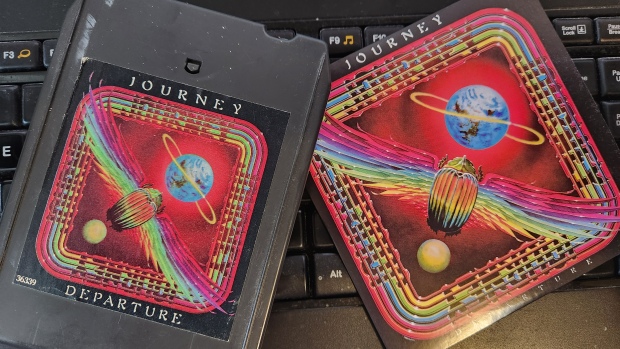
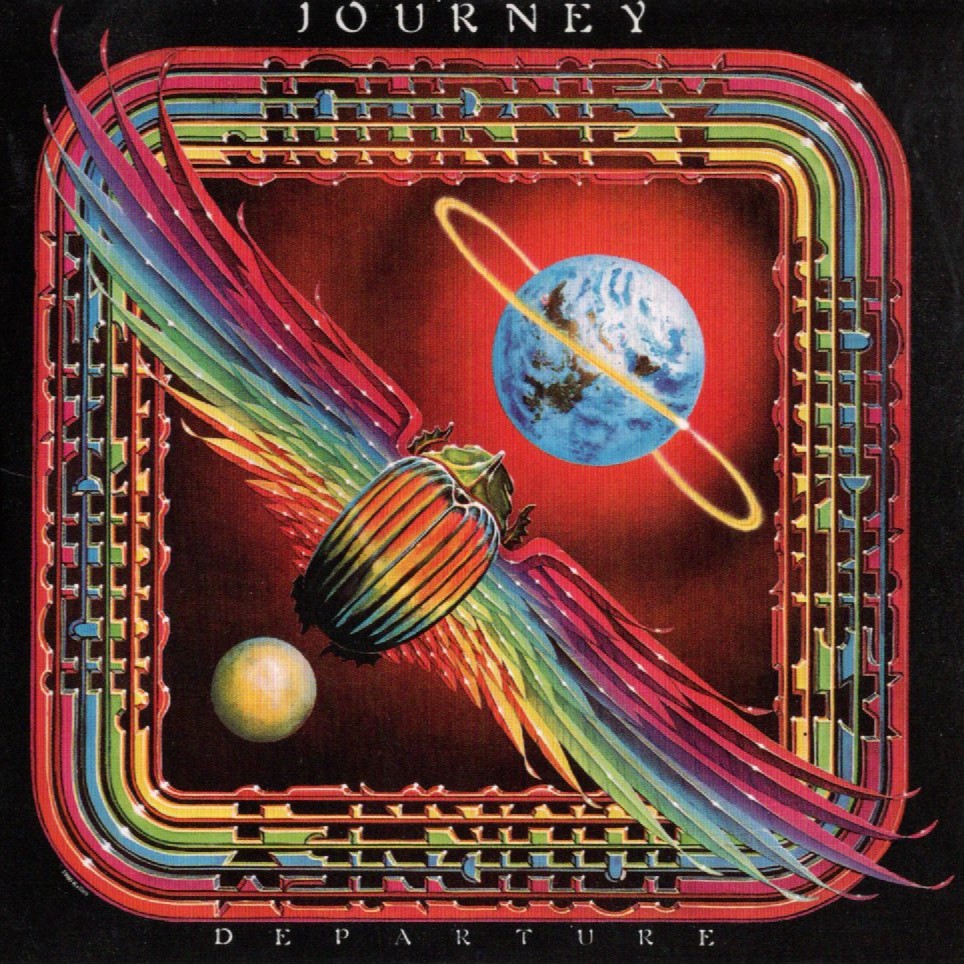
REVIEW: Journey – Departure (1980, Remastered CD & 8-track) – Happy birthday Neal Schon!

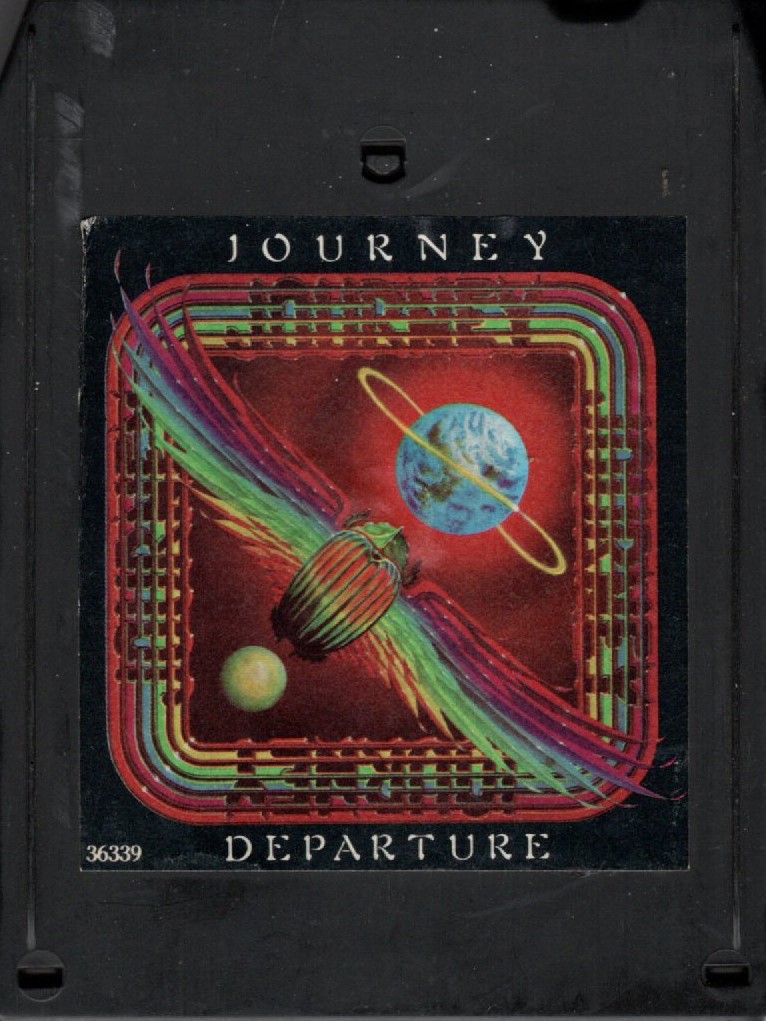
JOURNEY – Departure (1980 CBS 8-track, Remastered 2010 Sony CD)
CD from the set 3 Original Album Classics

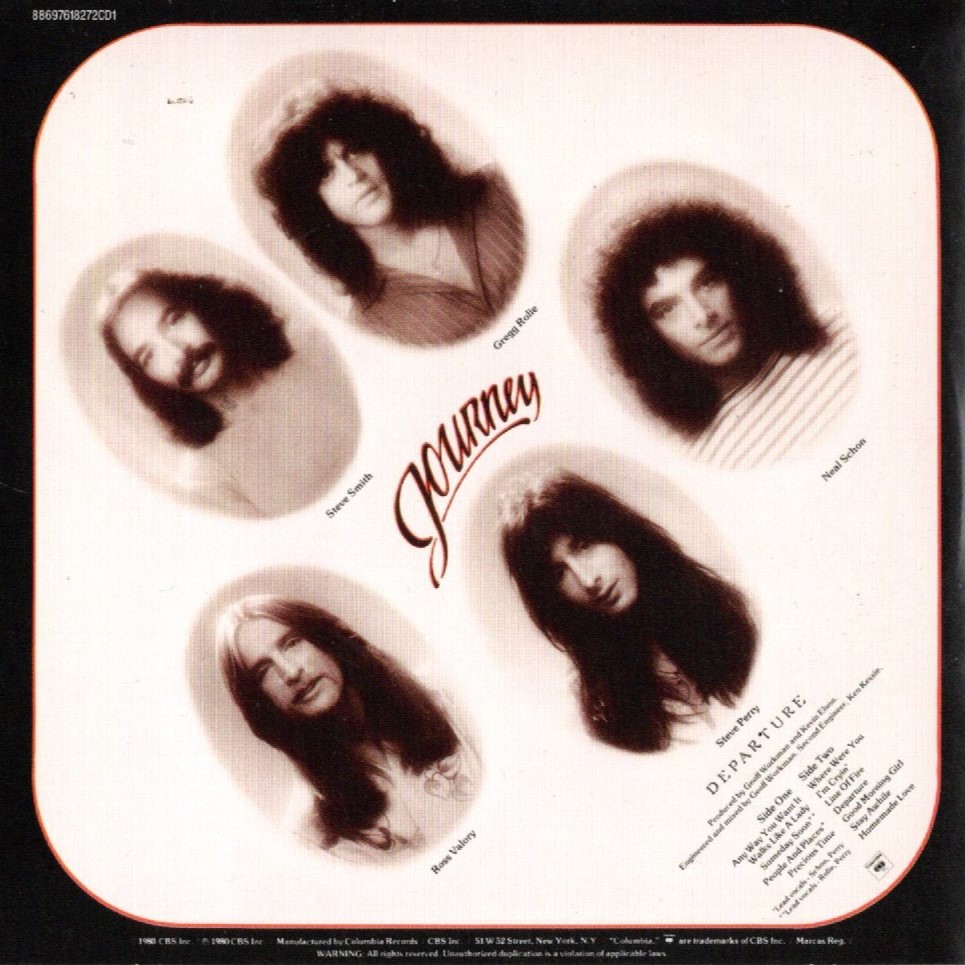
Changes were afoot in Journey, and alluded to on Departure.  Aside from the Japan-only soundtrack Dream, After Dream, this was the last stand for Gregg Rolie.  While he would also appear one more time on the Captured live album, he was not there for the new studio track included.  For all intents and purposes, Departure is his “last album”, to use an inaccurate but easy term.  For the man who once was Journey’s only lead singer, Departure only has one of Rolie’s lead vocals, and only two co-writes.  (In the discography, Departure directly followed 1979’s compilation of early material, In the Beginning, featuring early material and a large number of Rolie vocals.)

With Steve Perry leading the charge, Departure commences with the party anthem “Any Way You Want It”.  Those who don’t know it, know it.  It has been featured in the Simpsons, twice!  A rare honour, and mega-exposure, for good reason.  Perry’s impeccably arranged chorus is irresistible.  Rolie’s organ is the perfect accompaniment to keep in the realm of classic rock and roll.  Of course Schon’s solo is also tasty as heck, but this song is know for its party-hardy chorus.  For those who like to dig deeper, Ross Valory’s pulsing bassline goes underappreciated today, and Steve Smith’s smooth cymbal work is often taken for granted.

A surprising twist is taken on track two, the laid back blues pulse of “Walk Like A Lady”.  Sounds like Smith is playing with brushes, and Neal really plays it classy.  Then, a jab of organ and the players are off to indulge themselves.  “Oooh yeah!” shouts Perry, as if enjoying the jamming himself.  Soulful harmony vocals by the band really take this out on an authentic note.

Third song, third musical direction:  power balladeering!  Rolie sings a duet with Perry backing him on “Someday Soon”, a melancholy but punchy ballad.  Though it was not a single, perhaps it should have been.  There’s a cool, unique angelic vocal section near the end that nicely complements Steve Smith’s drum fills.

“People and Places” is like an exercise in creative vocal arrangements, if not showing off.  Neal Schon sings lead with Steve Perry on this complex track.  It’s more like the Dream, After Dream material than a lot of Departure.  If only the modern Journey were unafraid to create more unique music like this.  It still has room for a powerful melody and some warming cascades of guitar.  This song moves directly into “Precious Time”, which has a vibe like the still-in-the-future track “Liberty”.  Lyrically it foreshadows the “Line of Fire” on side two, and also has Rolie on harmonica.  It turns into a more typical Journey rocker by the midpoint.  Lots of tasty Schon guitars to be savoured here.

Unusually for an album of 1980, Departure had 12 tracks:  five on the first side, and seven on the second.  This is where we’d flip.

The big concert rocker “Where Were You” kicks off the back end of Departure.  This one pounds the pavement with beats, riffs and boppin’ piano.  It too could have been a single, though it did open their concerts on tour.  Then, a completely different mood drops:  “I’m Cryin'” hits like a cold wave of grief, though not without its musical thrills.  Soon it’s over and the rockin’ “Line Of Fire” brings the party back.  There’s no better way to describe it than a fast, good time rock and roll song.  “So don’t go sayin’ Steve is a liar!” warns Perry to some young lady who done him wrong.  “Bye bye bye Susie, so long girl!”  (He sure got over what was bothering him on “I’m Cryin'” pretty fast.)  Take note of Schon’s technical solo work here.

“Departure” / “Good Morning Girl” is softly progressive, with strings and light guitar, and little else.  This is over quickly, and then it’s the ballad “Stay Awile”, one of the sweetest songs Steve Perry or Journey have ever done.  Once again, listen to the bass and drums for a different perspective.  Perhaps the only thing better than Perry’s lead vocals are when he does it live.

Fortunately, Journey had the wisdom to end the album on a rocker:  “Homemade Love”.  Some of Perry’s worst words accompany some of his most acrobatic singing.  Still, at least it’s a good jam to go out on, with some fretboard burning fingerwork by Neal.

Interesting, the 8-track tape might have what would be called a bonus track here:  a reprise of “Line of Fire”.  It’s here mostly for timing reasons; there are no songs split between tracks anywhere on this album.  So, 8-track buyers got an uninterrupted listen, plus a reprise of “Line of Fire”.  Information is scarce, but it would be fun to hear the tape this way,

On remastered CD, we got some slightly more interesting bonus tracks than 8-track offered.  “Natural Thing” is a bluesy B-side, which was later released as the B-side to “Don’t Stop Believin'”.  Chronologically though, it is from this era and is as strong as any similar material on the album.  Funny how some tracks don’t make the cut when others do.  If you were told this was a standalone single, you wouldn’t have a reason to doubt it.  The CD also includes “Little Girl” from Dream, After Dream which is a difficult album to find and Rolie’s studio farewell.  It is a string-laden power ballad, very progressive, and far darker than anything on Departure.

Departure features an unusually rougher sound than other Journey albums.  The production seems unpolished despite the complexities of some tracks, with the vocals sometimes occupying a strange space that’s not quite in front of the music.  Still, a classic album is a classic album and there are so few flaws with Departure that it’s easy to dismiss them all.

5/5 stars

Unboxing and Admiring the new JOURNEY – FRONTIERS 40th Anniversary Vinyl

REVIEW: Journey – Greatest Hits (1988, 2008)

JOURNEY – Greatest Hits (Originally 1988, 2008 expanded reissue)

It’s OK if your first album by anybody was a “greatest hits” of some sort.  Over 15 million people bought Journey’s Greatest Hits in the US alone, and you can be guaranteed that several of those millions were buying Journey for the first time.  Hundreds of thousands more copies still sell annually.  This has to be considered one of the most successful hits compilations by a rock band.

Even if you were a Journey diehard back in 1988, you still wanted Greatest Hits.  It had two huge Journey hits from movie soundtracks:  “Only the Young” (Vision Quest) and “Ask the Lonely” (Two of a Kind).  These songs were not meant to be obscurities; both were slated for the Frontiers album.  These are two awesome songs with insanely catchy choruses, one a rocker and one a soft burner.  Two gigantic peaks of the Jonathan Cain era of Journey, who co-wrote both songs.

“Don’t Stop Believin'” doesn’t need any additional commentary, except this:  listen to the drums.  That’s Steve Smith, the wizard of tempo.  There is a reason that Smith can often be found filed in the Jazz section.  Listen to his creative hits, cymbal work, and timing.  Yet not a lot of snare.  Same with “Separate Ways (Worlds Apart)”.  This is not typical rock drumming, and this is something that his replacements have had to recreate as faithfully as they could.

Greatest Hits ignores the first three Journey albums (pre-Steve Perry), and justifiably so.  Those first three progressive rock albums, as fascinating as they are, bore no hits.  “To Play Some Music” peaked at #138.  The earliest tracks are the radio staples “Lights” and “Wheel in the Sky” from 1978’s Infinity.  Incidentally these are the only tracks without Steve Smith, featuring his predecessor Aynsley Dunbar.

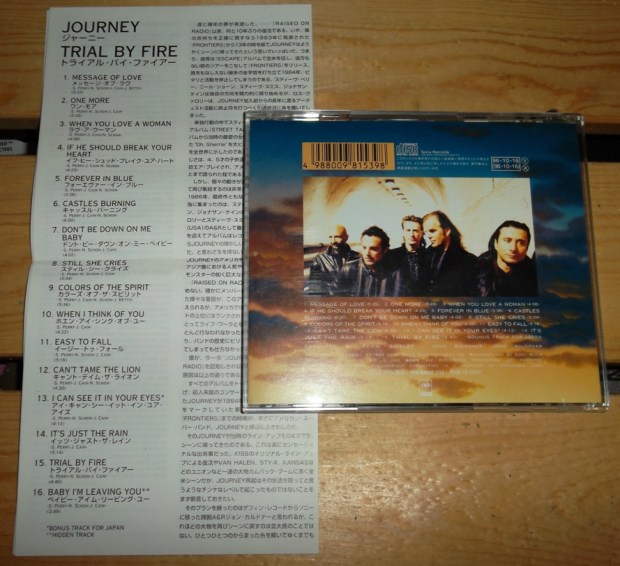
In 2008, Sony a series of budget-priced reissues including Journey’s Greatest Hits.  This version has one additional bonus track from Journey’s reunion album Trial By Fire from 1996.  This is a fantastic album, but the ballad chosen (“When You Love a Woman”) tips the album too far on the scales to ballads.

Through all the hits you know, and maybe a couple you don’t (“Girl Can’t Help It”? “Send Her My Love”?) you will get a clear picture of some of Journey’s facets.  But only some.  Little of their instrumental wizardry, which continued into the Steve Perry era with songs like “Dixie Highway”.  You also will not hear many hard edged moments, like “Stone in Love”.  You will however get a taste of Steve Perry’s soul, and the excellent hooks that he concocted with Neal Schon and Jon Cain.  You will absorb some awesome Schon tone.  On the later tracks, like “I’ll Be Alright Without You” and “Be Good To Yourself”, you will hear the slickness and groove of Raised on Radio.  But there are so many more key Journey tracks, as good if not better than these.

4/5 stars

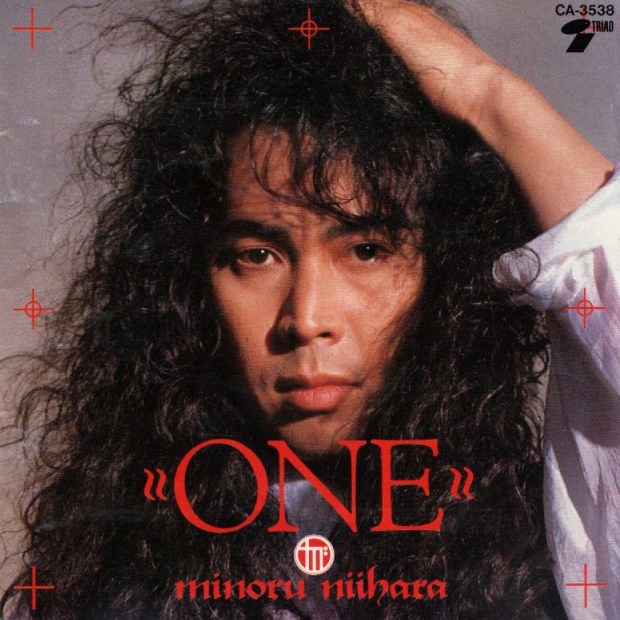
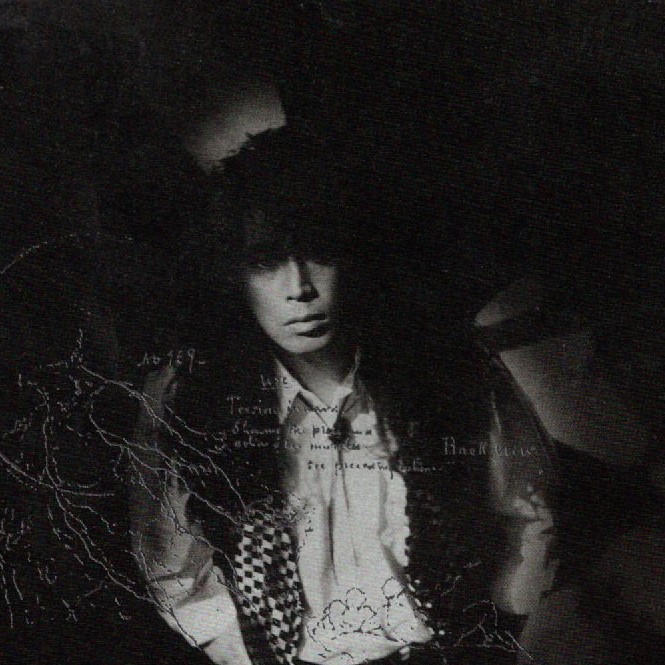
REVIEW: Minoru Niihara – One (1989)

MINORU NIIHARA – One (1989 Triad)

Original Loudness vocalist Minoru Niihara was let go in 1988 so they could have a stab at a success with an American singer.  While they went their way (and did not cross over onto the charts as they hoped), Niihara recorded his first solo album appropriately titled One.  He worked at Cherokee studios in Hollywood, where there must have been a lot of rock stars hanging out.  The credits on One include:  Mark Slaughter, Reb Beach, Doug Aldrich, the rhythm section from Journey (Steve Smith and Ross Valory), Kal Swan, David Glen Eisley, and the Tower of Power horns!

That being said, you might expect a straightforward hard rock album right out of 1989 like so many you remember from that year.  You’d be partly right.  However the lyrics are mostly in Japanese, and while the intent might have been to make a straight-ahead commercial rock record, it goes a bit sideways on some tracks.

It sounds like some of the same opening sounds as on Alice Cooper’s Trash album (also 1989) are used on first instrumental “Overture”.  Then it goes soft rock, with guitar strings tinkling like a fragile piece of glass, backed by heavenly keyboards.  In a jarring shift, the first proper song “Let’s Get Together” doesn’t meld well with this intro.  It also sounds a bit out of time, a relic from a couple years prior.  But Minoru is on top of it.  “Let’s get together! Have fun tonight!” goes the boppin’ English chorus, with plenty of the expected thick backing vocals from the Hollywood cast and crew.  Although it already sounded dated for 1989, “Let’s Get Together” is a fun track clearly aiming for a party concert vibe.  Not bad — production is clunky, and there are a couple key changes that sound off, but it’s otherwise a fun song that does what it’s there to do.

American rock vibes dominate “Stand Up to the Danger”, sounding a bit like “Loud and Clear” by Autograph.  That could be Reb Beach just rippin’ it up on the solo, but the track is very standard for the genre.  A neat ballad follows, the Journey-like…ahem…it’s a case of a language barrier, I’m sure, but the song is called “Come Over Me”.  Very much like a Journey ballad, and it’s probably Valory and Smith on bass and drums respectively.  Maxine and Julia Waters on backing vocals.

A cool 80s bass groove sets the tone on “I Can’t Wait”.  This mid-tempo car-cruiser is an album highlight, and a track worth getting in your ears.  Great solo too (Doug?).  Coincidentally, Minoru’s replacement in Loudness was a fellow named Mike Vescera, and he later recorded a different song called “I Can’t Wait” with Yngwie J. Malmsteen.  One of Minbru’s weaknesses (and it probably comes down to English as a second language) is a reliance on cliche song titles.  “I Can’t Wait”, “Stayin’ Alive”, “Dynamite”, and “Fool For You” are all song titles you’ve heard before.

Speaking of “Dynamite”, the next track on the disc — it’s a little more unique.  With a bluesy opening, it soon lets loose with a blast of saxophone.  The chorus is full-on pop.  A little clunky in construction and production, but different and still cool.

A soft keyboard ballad called “You Can Do It” sits right in the middle of the album.  Even though vinyl, and  especially cassettes were big in 1989, One only saw release on CD.  No “side one” or “side two” with this album.  Once more the ballad would sound appropriate on a Steve Perry album, and the guitar solo is really smooth.  Good song; Minoru’s style of singing is a bit overblown for a soulful ballad, but you can certainly tell he loves singing this way.

“Bluest Sky” is cool, acoustic and stripped back but “Stayin’ Alive” really scorches.  It’s the closest thing to classic Loudness.  It is the only clearly heavy metal track on the album.  Probably Reb Beach ripping up his fretboard and whammy bar on the solo.  Definitely Mark Slaughter on the chorus.  The horn section returns on “Fool For You”, but Minoru’s over-the-top singing does not suit the funky metal stylings.  He does well on “Too Long Away to Reach”, a little more restrained.  But it is the third ballad that really does sound like Journey.  So much that you’d assume it was Neal Schon on guitar.

Finally Minoru closes his solo debut on one more ballad, “I’ll Never Hide My Love Again”.  This time it’s a big power ballad with a massive chorus, and because it’s dramatically different from the earlier ballads, it works.  Definite vibes of King Kobra’s “Dancing With Desire” (1985).

See what I mean when I say that One sounds dated already even for 1989?  That doesn’t make it bad, but not all pieces fit.  There are some obtrusive keyboard overdubs, some of the ingredients just don’t mix.  While Minoru is a fine vocalist, and he gives 110% here, some of the songs sound like they would work better if he laid back a bit.  Then again, that could be the language barrier; the words he is singing might be totally appropriate to his vocal output.  Everything in music is subjective anyway.  Regardless of interpretation, Minoru Niihara’s effort is no less than his whole heart, and you have to give credit for that.

3/5 stars


REVIEW: Shaw Blades – Hallucination (1995 Japanese import)

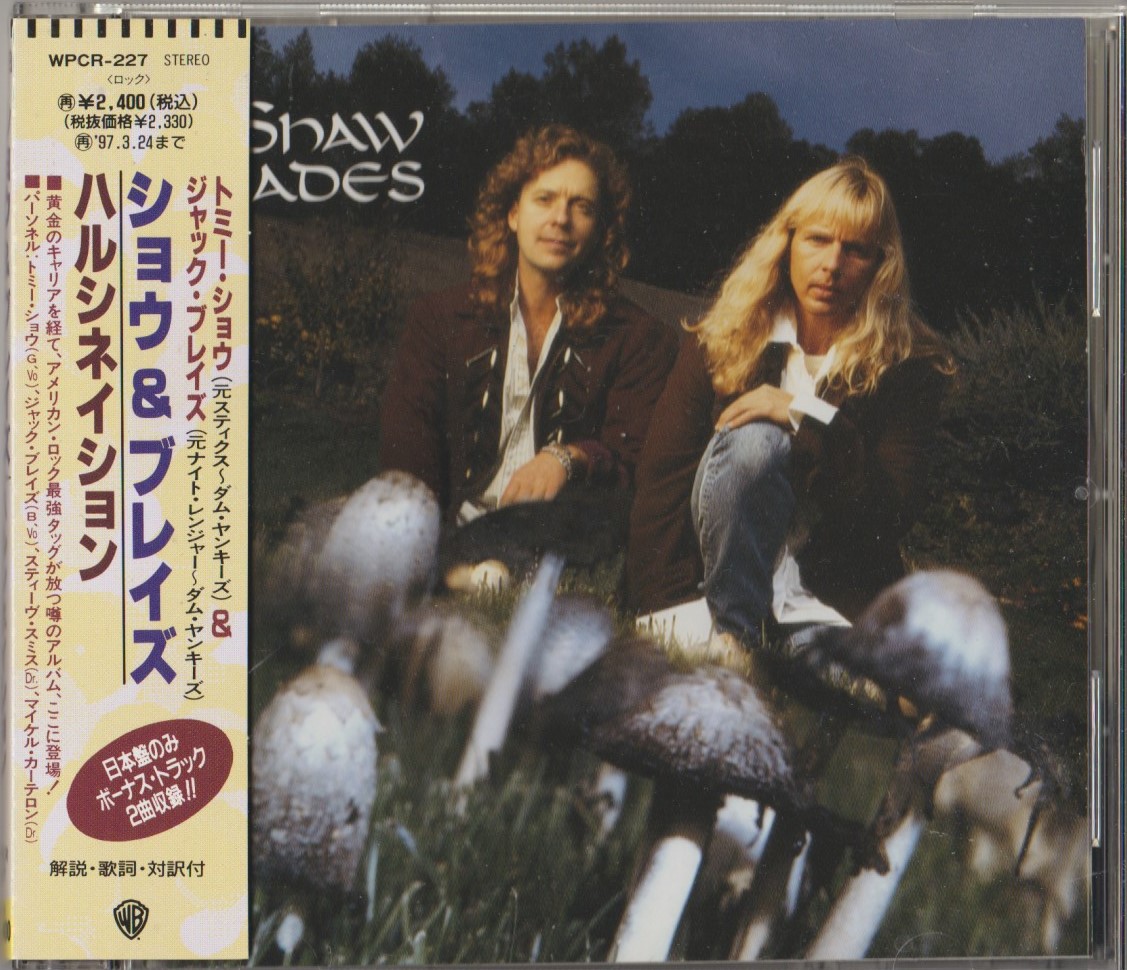
SHAW BLADES – Shaw Blades (1995 Warner Japan)

Ever wonder what Damn Yankees would have sounded like without Ted Nugent?  Possibly, a little like Shaw Blades.  In 1995, the Nuge returned to his solo career with Spirit of the Wild.  Tommy Shaw and Jack Blades had already formed a successful songwriting partnership (with an Aerosmith hit under their belts) and so together they continued.  Damn Yankees drummer Michael Cartellone joined them, but for the most part it’s expert Journey-man Steve Smith — one of the smoothest drummers in rock.

Expect acoustic rock and ballads with impeccable harmonies.  Boring, you say?  Not at all; not when you have a batch of songs this strong.  Opener “My Hallucination” is a lament for the 1960s, with an electric guitar backing up Shaw and Blades’ perfect vocals.  Those two guys can hit some notes.  “I’ll Always Be With You” is more like campfire rock, a summetime gem and ode to innocent love.  There are some sweet Def Leppard chords tucked in there.  Third in line, the strong “Come to Be My Friend” gets a touch psychedelic but it’s the smoking acoustic soloing that will blow you away.  Either that or the insanely good chorus harmonies.

“Don’t Talk to Me Anymore” is the first song you could call an outright ballad even though it’s a soft album.  It’s lightly arranged with a less is more attitude.  Then things get upbeat on “I Stumble In”, an outstanding memorable head-nodder.  Journey fans will recognize their favourite drummer’s always fascinating tom tom work.  Moving on to the album’s second true ballad, “Blue Continental”, a laid-back Southern vibe permeates.  It’s logically followed by “Down that Highway”, upbeat but stripped to the basics.  A couple acoustic guitars, two voices, some tambourine and accents (fiddle, keys) and you have a song!

The electric guitar comes out for “How You Gonna Get Used to This”, one of the less remarkable songs compared to the catchier acoustic tunes.  The mandolin makes an appearance on “The Night Goes On”, another quiet but excellent ballad.  “I Can’t Live Without You” draws things to an end, but is also unremarkable.  Among diamonds, it fails to shine bright enough.  Fortunately, the ending it was preceding is a short track simply called “The End”, which reprises themes from prior songs, tying up the album with a nice bow.

This album produced no commercial singles, but there were two extra tracks, exclusive to the Japanese CD.  “How Does It Feel” brings back the electric guitar, but it’s more interesting than the other electric songs on the album.  It could be a grower.  “Straight Down the Line” is the gem.  It’s the fastest song of the whole bunch, upbeat but light, and a blast in the car.  Tommy’s intricate little lightning fast guitar hook is a tasty delight.  Tracks like this are why collectors really seek out Japanese imports.  They are their own rewards.

Any version of the debut Shaw Blades is going to be thoroughly enjoyed.  Get one.

4.5/5 stars
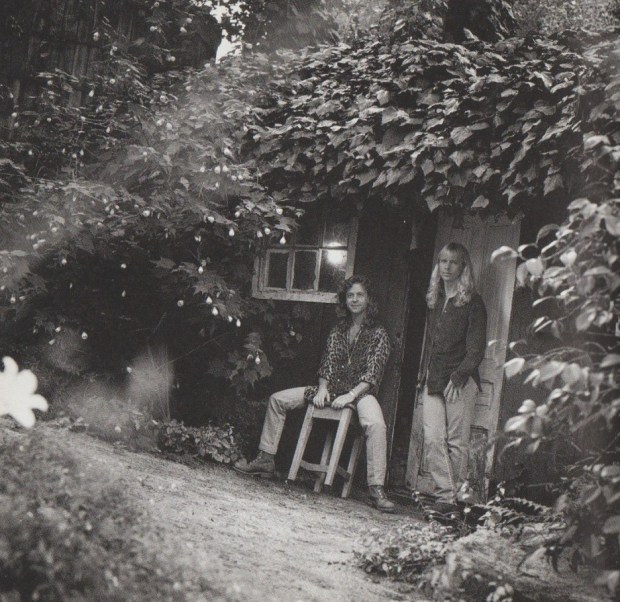
#673: Message of Love

GETTING MORE TALE #673: Message of Love

The old saying goes “Better late than never”.  This is often true, especially in music.  It is never too late to discover an old band.  Be it Led Zeppelin, Thin Lizzy, or Queen, it has been pretty easy for me to catch up.  As is my modus operandi, when I discover a band I tend to jump in headfirst and not look back.

I took a similar path with Journey.  Journey were never considered “heavy metal”, and although metal magazines did cover them, I was never exposed to their music as a kid.  If they were not on the Pepsi Power Hour in the 1980s, then chances are, I didn’t hear them until later on.

Prior to official “discovery”, I think I only knew two Journey songs.  “Any Way You Want It” was used on the Simpsons in a memorable scene.  I also remember hearing “Wheel in the Sky” on the radio while eating out with my sister and my grandmother.  “Who is this?” I kept asking.  The song was incredible!

I didn’t find out for many years that it was Journey, although I did form an idea of what Journey sounded like otherwise.  Dream Theater covered “Lovin’ Touchin’ Squeezin'” on their Change of Seasons EP.  “I hate that song!” said T-Rev upon seeing the EP.  I didn’t care for it either.  But I was still curious why Joey Belladonna from Anthrax counted Journey as one of his favourite bands.  Something to do with the singer?

I really had no idea who Steve Perry was.  I heard of him.  I didn’t know he was one of the most influential singers of the 70s and 80s!  In 1994, his solo album For Love of Strange Medicine was released.  It was my first year at the Record Store and I still didn’t really know who he was.  I remember stocking the CD, but I kind of blew it when I sold my first copy to a customer.

“This is supposed to be great,” said the lady buying the Steve Perry CD.

“Yeah,” I said, trying to make conversation where I shouldn’t have.  “He’s a great guitar player.”  Wrong guess.

“He’s also an amazing singer!” said the lady with class, trying not to embarrass me.

I will never forget calling Steve Perry a great guitar player.  What a clueless poser I was!

My moment of discovery finally came in 1998.  T-Rev, Tom and I were in a mall in Burlington, as I recall.  The new Journey song came on:  “Remember Me”.  This was one a one-off track from the Armageddon soundtrack.  It was credited as “Journey (featuring lead vocals by Steve Augeri)”.  As I would later find out, Steve Perry quit the band and was replaced by a similar sounding Steve.  I didn’t care about that, because the song was incredible!  I looked forward to eventually getting the CD, which I would have been buying anyway for new Aerosmith and Our Lady Peace.

That was my gateway:  a soundtrack song with a replacement singer, from a shitty Michael Bay movie.  Embarrassing yes, but the truth it is.

My bosses and co-workers cringed as I jumped right into my new favourite band.  First up:  Greatest Hits, remastered of course.  Bought it, loved it.  It was a little light, with all those ballads, but I expected that.  It was songs like “Only the Young” and “Separate Ways” that slayed me.  To me it sounded as if Bon Jovi ripped off every trick he had right from Journey.  Early Bon Jovi, for sure.  Not everyone agreed with me on that, particularly Bon Jovi fans, but I don’t think it’s a stretch.

Next I acquired their Time3 box set, at which point I finally got a proper Journey education.   From their progressive jam band beginnings to a bitter ending at the close of the 80s, the Time3 box set got me up to speed.  Almost.

One thing was missing:  Journey’s 1996 reunion album with none other than Steve Perry.  Fortunately for me, one of my regular customers (whom the bosses hated because he chewed gum when he spoke) brought me a mint condition Japanese version of Trial By Fire, complete with bonus track.  Something about the album clicked with me, and to do this day — do I dare say it? — I think it’s my favourite Journey.  Trial By Fire is exceptional.  It is diverse, perhaps even more so than prior Journeys.  It is passionate, and Steve Perry’s seasoned voice is the real journey.

Of course all this new Journey love meant I was playing them in store, constantly.  One kid named Matty K absolutely loathed every time Steve Perry sang “Whoa-oh-oh oh” in any form.  Everybody else probably thought I lost my shit.  What can I say?  Journey’s music actually made me feel good.  Of course I wanted to play it often, and I’m sorry the others hated it.  And hate it they did!

Steve Perry didn’t want to tour after Trial By Fire and so was replaced by Steve Augeri for a couple releases…who was then replaced by Jeff Scott Soto in a killer lineup that didn’t last…and Soto was replaced by current singer Arnel Pineda.  His remarkable story is the stuff for a whole other article, but I still love Journey.

Since I missed out the first two times around, I would love to hear a Journey reunited with Steve Perry once again.  It doesn’t matter that his voice has changed.  There is nothing quite like hearing him sing.  Or play guitar?  I can’t remember!

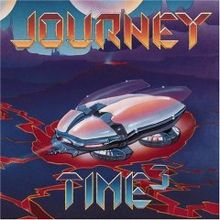
REVIEW: Journey – Time3 (1992 box set)

scan_20161015-2JOURNEY – Time3 (1992 Sony 3 CD box set)

Very few box sets satisfy the way that Journey’s Time3 satisfies.  When it was released in 1992, Journey wasn’t even a functioning entity anymore.  Sony’s box set still represents the kind of care and attention to detail that makes for an extraordinary listen.  It is arranged (mostly) chronologically with ample rare and unreleased material.  What is most remarkable is how great this rare and unreleased material is.  Aerosmith did a similar looking box set in 1992 as well (Pandora’s Box), but their set isn’t as steady a listen as Time3 is.  Time3‘s ample wealth of worthwhile rarities rank it easily as the superior set.

From start to bitter 80’s breakup, every Journey member from 1975 to 1986 is included.  George Tickner, Aynsley Dunbar, Robert Fleischman, Randy Jackson, Mike Baird and anybody else you may not have known were in Journey are represented in this box.  There are ample liner notes and photos explaining the roots and branches.  (Humorously the notes claim the early Journey instrumental “Nickel & Dime” may have been the prototype that Rush ripped off for “Tom Sawyer”.)  Valuable early rarities include the unreleased jazz rock number “Cookie Duster” and an excellent vocal track called “For You” recorded  with Robert Fleischman singing.  Fleischman might be best known as the original singer for Vinnie Vincent’s Invasion a decade later, but in Journey he turned in a pretty powerful pop rock song.  This was just before Steve Perry joined the band as its first full-time lead singer.  Keyboardist Gregg Rolie took care of the vocals before Perry joined, in addition to performing several smoking organ solos included herein.

There is a distinct change between the early progressive jam rock tracks and “For You”.  When they hired on a lead singer, it was with the intention to get a big break, and Steve Perry was the final ingredient.  With Perry they recorded brilliant classics such as “Patiently”, “Anytime” and the unforgettable “Wheel in the Sky”, which unfortunately is only included here as a live version.  Indeed, the Journey box set’s only weakness is a substitution of (non-rare) live versions for studio originals.  “Lights” is another such substitution.

Just as the band were making this prog-to-pop transition, drummer Aynsley Dunbar left.  His style was more progressive and frankly too highbrow for the direction Journey were going.  He was replaced by another total pro, the feel-oriented Steve Smith, a jazzbo at heart who can play R&B like nobody’s business.  “Too Late” from 1979’s Evolution is a perfect example of what he did to the Journey sound, as things simplified.

scan_20161015-4

With Smith behind the kit, the hits kept pouring in.  “Lovin’ Touchin’ Squeezin'” (also included live), “Any Way You Want It”, “Line of Fire” and many more burned up speakers across America.  The band very quickly went from “point A” to “point B”, but also with several exceptional looks backward.  Some of these lesser known gems include “Little Girl” from a rare Journey soundtrack album called Dream, After Dream done for the Japanese market.  There is also the live “Dixie Highway” from Captured that shows off some serious instrumental chops.  A rare highlight is the soulful and unreleased cover of “Good Times”, with full-on horn section, from 1978.  It’s one of the songs that make it worth buying a box set like this.

Rolie left after Dream, After Dream and did not appear on the one new Journey song on Captured:  “The Party’s Over (Hopelessly in Love)”.  This brilliant pop rocker pointed the way towards the next era of Journey.  From The Babys came new keyboardist (and sometimes guitarist and singer) Jonathan Cain.  Cain forever brought Journey into the 1980’s, with modern keyboard accompaniment and serious writing abilities.  He has since become an indisposable member of the band, as important as founding guitarist Neal Schon himself.  Jon Cain’s first was the Escape album, which has sold nine million copies to date.  Not a bad little debut.  With “Don’t Stop Believin'” , “Stone in Love” and the smash ballad “Open Arms”, Journey ascended to the top of the mountain.  These tracks are all included as their studio originals.

There are a number of notable and great rarities from this period included in Time3.  “Natural Thing” was the soul-laden B-side to “Don’t Stop Believin'”, but feast your ears upon “La Raza Del Sol”, which snuck out as the progressive flipside of “Still They Ride”.  This blazingly recalls the arrangements of the early years with an unusually contemoplative lyric.  Check out Schon’s flamenco guitar solo.  There is the understated and brilliant rocker “Only Solutions”, from the 1982 Tron soundtrack.  These are valuable songs, that any Journey fan should enjoy completely.  Moving forward, “All That Really Matters” is a synthy demo with Jon Cain on lead vocals.  It doesn’t sound like Journey, but Cain fans will find it interesting.  Two more soundtrack songs are indispensable:  “Only the Young” from Vision Quest, and “Ask the Lonely” from Two of a Kind (both 1983).  Each song was significant enough to include on 1988’s Greatest Hits, so fans are well acquainted with both.  It’s incredible to think that Journey had songs of this quality to give to soundtracks.

scan_20161015-5

Towards the end, as bands often do, Journey began falling apart.  Steve Perry had a hit solo debut Street Talk (1984) and he returned to Journey more confident, imposing a soul/R&B direction upon the band.  Steve Smith and founding bassist Ross Valory were out.  Randy Jackson and Mike Baird were in.  Raised on Radio took forever to record and underwhelmed fans upon reception.  A live version of “I’ll Be Alright Without You” with the new members indicates that Journey had sanded off the rough edges.

Even at the end, there were still interesting happenings.  The liner notes reveal that even as the band was ending, they were winning awards.  Journey performed at the 1987 Bay Area Music Awards with a different singer — Michael Bolton.  One has to wonder where that could have gone.  The last music on this set chronologically comes in the shape of two unreleased instrumentals called “With a Tear” and “Into Your Arms”.  They were recorded in 1986 but not used for Raised on Radio, and so they were finished in 1992 by Schon and Cain for this box set.  Sadly these instrumentals are better than most of the tracks on Raised on Radio.  One is a ballad, and one is a rocker, but both are exceptional.  Journey started life with instrumentals, and so it’s fitting that Schon and Cain polished off the box set with a couple as well.

scan_20161015

This box set was reissued a number of times, but for the money you can’t beat the original 1992 printing with the long box and large booklet.  The liner notes are ample but the rare photos may even top them.  From the earliest days there are pictures of the band with original guitarist George Tickner and drummer Prairie Prince.  Prince was invited to join permanently, but chose to join the Tubes instead, a band he found more creative.  He was replaced by Aynsley Dunbar who recorded the first LP.  Also pictured within are some truly impressive hair styles, clothes, and moustaches.

With tracks this strong from start to finish, great packaging, and such a wealth of rare material, it seems Time3 should be an easy 5/5 stars.  However, that niggling issue of live tracks (particularly “Wheel in the Sky”) replacing studio cuts is really devious.  It’s unnecessary.  It all but forces casual buyers to also own Greatest Hits for the studio versions.  It seems very calculated.

Otherwise, proceed.

4.5/5 stars
scan_20161015-3


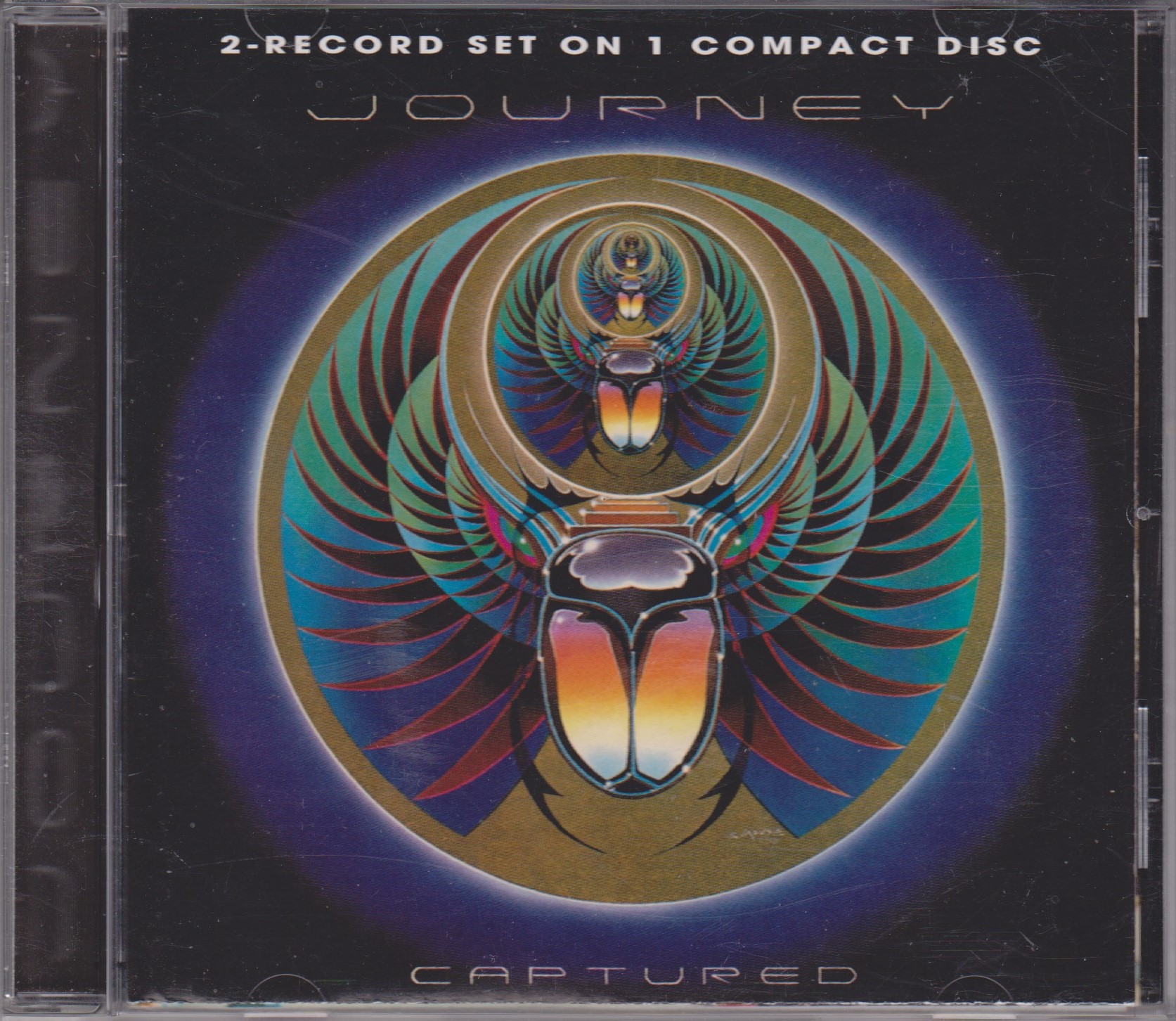
REVIEW: Journey – Captured (1981)

Scan_20160722JOURNEY – Captured (1981 Columbia, 1996 Sony SBM remaster)

Captured was a turning point for Journey.  After this, they went from mega to uber-mega.  It was their first live album, and their last with founding keyboardist and singer Gregg Rolie (who actually sang lead in Journey on their first three albums, before they discovered Steve Perry).  When Rolie left and Journey hired on Jonathan Cain, they went in an even more radio-friendly direction.  The live album captured (pun intended) the end of the Rolie era with basically every hit they had.  They were more of a rock and roll band back then, and this album shows it.

The scorching heat of “Where Were You” is the perfect track to prime the rock n’ roll BBQ.  Journey’s brand of rock is driving, but polished to a shimmery gleen.  This is partly due to the impeccable pipes of Steve Perry.  I’m not sure if Steve has even heard of a bum note, let along sung one.  But Perry was only one of two singers in Journey, and Rolie has his first lead on the mid-tempo pleaser “Just the Same Way”.  Although he is not comparable to Perry, he’s no slouch and the different singers gave Journey more dimension.

Blazingly fast, the gleeful “Line of Fire” is the hardest rocker on the album. “So don’t go sayin’ Stevie’s a liar!” he sings, and the crowd goes nuts. But Journey are probably better associated in the public eye with tender ballads. “Lights” live is a definitive version. It merges into another beautiful ballad, “Stay Awhile”. Perry’s singing here is so splendid, so perfect, so soulful and powerful that it’s hard not to just be amazed. Not to be outdone is Neal Schon with one of his most memorable guitar solos on “Lights”. A pretty version of “Too Late” makes it a trilogy.

Scan_20160722 (3)One of the coolest treats on Captured is a new song, “Dixie Highway”, that was never recorded on a studio album. Boogie with Journey down the Dixie Highway and listen to that blazing musicianship, more progressive rock at times than radio friendly AOR. Then it’s the Rolie/Perry duet “Feeling That Way”, an out-and-out classic. The combined sheer lung power on that stage that night could not be measured by science. It is said by some that all the canines within the city of Detroit suddenly perked their ears simultaneously at that moment, with a spill-off effect happening in areas of close proximity across the border in Canada. The University of Marysville is currently investigating these reports, hoping to calculate numerically just how much Steve and Rolie sang their fucking balls off that night.

Rolling right into “Anytime” and “Do You Recall”, the listener is treated to some lesser-recognized Journey classics that are as good or better than their biggest hits. “Do You Recall” in particular boasts the kind of melodies and smooth rock grooves that radio hits are made of. With that out of the way for now, they go into a blues jam with “Walk Like a Lady”. According to Steve Perry, “We got two of the best blues players in the whole world here tonight. Two of the best! We got Mr. Gregg Rolie on the Hammond B-3 and Mr. Neal Schon on the Stratocaster!” After a blazing Schon solo, Journey blast into “La Do Da”, another one of their lesser-known rock blitzes.  Bass solos!  (By Ross Valory!)  Drum solos! (by Steve “Machine Gun” Smith!)  And then the listener is rewarded for their patience with a string of their biggest hits:  “Lovin’, Touchin’, Squeezin'”, “Wheel in the Sky”, and “Any Way You Want It”.
That’s a hell of a double live album right there.  No, Journey’s Captured is not remembered on the same level as Live and Dangerous, Frampton Comes Alive, or Kiss Alive (I or II).  Captured is certainly great, but somehow falls ever so shy from achieving the same lofty heights as the aforementioned.  It’s difficult to pinpoint exactly why it’s not quite up there.  Perhaps it’s the perfectionist style of the band, because it’s certainly not Steve Perry.

It’s not over though:  Journey included a new song, and their first ever without Gregg Rolie on keys.  Studio cat Stevie “Keys” Roseman filled in, on the ironically piano-based “Hopelessly in Love”.   This unsung classic is one of the strongest Journey songs in the canon.  It’s too bad that it rarely gets pulled out for compilations, instead residing at the end of a near-forgotten live album.

4/5 stars