The song “Ladano” written by Veronica Tapia, performed by Stan Climie (bass clarinet), Laurie Radford (electronics)
RECORD STORE TALES MkII: Getting More Tale #396: Ladano
It looks easy to say, and it is! LA-DA-NO. Emphasis on the middle DA. That’s it! That’s all!
Yet, as a kid, I knew that if I ever wanted to be a famous rock star, I’d have to change my name. I considered “Michael Ladd” as a good stage name. See, the problem is that most of my life, people haven’t been able to pronounce my last name. Would Peter Criss be famous today if he went by his real name Peter Criscoula? Would Gene Simmons still be the Demon today, if he stuck with the name Chaim Witz? I don’t know, but it’s hard to imagine the 1960’s with Robert Zimmerman instead of Bob Dylan, right? “Michael Balzary” is harder to say than “Flea”…and would Declan McManus had a shot at the charts if he didn’t change his name to Elvis Costello?
The ironic thing is, my grandfather changed his last name’s spelling in the early 1900’s to “Ladano” so that Canadians would be able to pronounce it easier. I’m sure he would have been disappointed in my 2nd grade teacher who must have thought I was related to Lando Calrissian, since she pronounced it “LaLando”.
Sometimes my sister, also a musician, will be referred to simply as “Lando”, to which she would really like to respond, “You’ve got a lot of guts coming here…after what you pulled.”
She has stubbornly refused to change her name even after marriage. In fact she has a song called “Ladano”.
Here are some more of the best variations of my last name that I have seen and heard:
“Ledano”
“Ladana” (in my dad’s first email address set up by Bell!)
“Ladno”
“Landon”
“Landano”
“Landono”
“Landoni”
“Laudon”
“Ladino”
“Ladeeno”
“Ladhani”
“Ladayno”
And finally, my favourite:
“Radono”
That last one was on an official cheque from a major bank!
My last name is traditionally supposed to be spelled Laudano. I’ve traced my family back five generations to Amalfi, Italy in the mid-1800’s. Our side of the family left Amalfi for Sicily, opening up a shop there in Porto Empedocle. The Laudanos then left for America in the early 1900’s and changed the spelling on purpose after arrival. I think my grandfather would be disappointed to see the many mutilations of our name, despite him simplifying it to Ladano!
There are many Laudanos still out there, some in Ontario, Canada and others in New Hampshire. One thing we all have in common: Whether it is spelled Ladano or Laudano, we’re all family and we call each other “Cousin”. (Turns out the Laudanos are actually a musical family with an extensive history of musicians!) One recent “cousin” I have met is Luigi, who came here from Amalfi Italy, where the Laudanos also originated. He is a very popular server from the highly recommended local restaurant Borealis (“Think Global, Eat Local”). Luigi married into the Laudano family, so now we call ourselves “cousins”! Getting to know those Laudanos has been a lot of fun for us.
I wonder if my cousins have had their name as mangled as mine?!*
* In a strange twist, one of my former online handles used to get mangled, too. “Geddy”. I used to use the name “Geddy” on message boards about 20 years ago. The majority of people misspelled it “Getty”. I’m not kidding.
Blue Rodeo are not a “Greatest Hits” band. Indeed, before this album came out, Jim and Greg routinely used to say, “We’ll only do a greatest hits when we’re finished.” Well, record company pressure must have gotten to them (or they may have just outlasted their own expectations), and they released this typical hits compilation: 12 hits and 2 new songs, just like every other band’s hits compilation.
The problem with Blue Rodeo is that they are so much more than the sum of their hits. Sure, “Rose-Coloured Glasses” (track 2) is a hit single, but what about “Rebel” or “Heart Like Mine”? (This is the album version of “Rose-Coloured Glasses”, not the very rare single remix, only available on 7″ single back in 1986). There’s simply no room on a single disc hits album for the songs that define the Blue Rodeo sound. Blue Rodeo were and still are more about albums, the bigger picture. Especially in the early days, each album was a different direction from the last. Each of the first five (and arguably six) first Blue Rodeo studio albums stand as critically important pieces of work.
Having said that, you do get a generous slice of hits here. Fans know these songs already, so I won’t spend too much time talking about them. “Lost Together”, the full length version of “Diamond Mine”, “Bad Timing”, “Try”…these are all songs that saturated the radio in the late 80’s and early 90’s. Peppered along with them are tunes like “Trust Yourself” from Casino, a minor single that some might have forgotten. I was pleased that “Side of the Road” and “Dark Angel” were here, which represent Blue Rodeo’s less commercial side.
For those who love Jim’s ballads, some of his most notable are here. For those who prefer Blue Rodeo’s radio country-rocking side, there is “Til I Am Myself Again”, “It Could Happen to You” and the classic “Hasn’t Hit Me Yet”. Greatest Hits vol. 1 is a fair slice of great tunes. Certainly there are none to skip…just that there are plenty more where these came from.
Missing in action: any songs from The Days In Between, Blue Rodeo’s most recent album at the time. I guess that’s because The Days In Between just was the first underwhelming Blue Rodeo album. The US version of Greatest Hits subbed in Jim’s hit ballad “Bulletproof” from the later Palace Of Gold, instead of “It Could Happen To You” from Tremelo. (Palace Of Gold followed Greatest Hits, but not in the US where this was released afterwards.)
The two new tracks were a revelation. Blue Rodeo had started experimenting with a horn section, and the Greatest Hits tour featured these additional musicians on their back catalogue. The two new songs also feature the horns and strings. This led into their next album, the aforementioned Palace of Gold, which utilized these instruments throughout. A re-recording of “After The Rain” benefits greatly from their soulful sounds (not to mention extended solos and jamming). The Bee Gees cover “To Love Somebody” (lead vocal by Greg) has ended up being one of the best covers Blue Rodeo has done to date, live or otherwise. The new sound with horns would be fully realized on Palace Of Gold, but fear not if you don’t like this sound: they soon reverted to the classic configuration of the band.
My best advice is, if you want to really check out some Blue Rodeo, pick up those early albums one by one when you find them cheap (it’s not hard to do). If “Try” is your favourite song, pick up Outskirts, and then explore the rest of the gems on that classic record. Likewise if “Lost Together” is the only song you know, pick up that album and be surprised by the deep album cuts that you would have missed otherwise. And most of all, see the band live.
RECORD STORE TALES MkII: Getting More Tale #395: Dutch Boy
As kids in the 1980s growing up in Kitchener, we would buy our music anywhere we could find it. A lot of mine came from the mall: stores like Zellers and A&A Records. Other places to find music included Hi-Way Market on Weber Street. That store was incredible! They had the largest toy section I’d ever seen, and every Christmas a professional Lego builder would put together a giant display. None of these places exist anymore.
Another place that carried a small section of music was actually Dutch Boy Food Markets, just down the street from Hi-Way Market. It too is long gone, but I have many memories. It had a modest dedicated music area, but they also sold food, toys and clothing. It was considered a supermarket but it had a little bit of everything. My dad remembers buying many of my beloved G.I. Joe figures at that store. He also says that we bought our Atari 2600 there. That Atari still works today. I think we got it in 1982. My aunt actually used to work at a Dutch Boy location (not the same one) in Waterloo.
My friend Bob used to go there frequently. I used to think it was because he was Dutch, but it probably had more to do with the fact that one of the Kitchener stores was within biking distance.
One afternoon in early ’88, we hopped on our bikes and hit Dutch Boy to check out the music section. This “new” band called Whitesnake had been in our ears lately, but we only knew two albums: Slide It In and Whitesnake/1987. I didn’t even know they had any albums out before Slide It In at that point. You can imagine our surprise when we found numerous other Whitesnake titles at Dutch Boy: Snakebite, Trouble, Lovehunter, Come An’ Get It, Saints & Sinners, and Live…in the Heart of the City. All reissued by Geffen, all on cassette.
“Woah!” Bob exclaimed. “Whitesnake! Is this the same band?”
“No it can’t be.” I said. “They’re only supposed to have two albums!”
Each of us grabbed a mitt full of Whitesnake cassettes and began examining them for more details.
This Whitesnake and our Whitesnake were both on Geffen. This Whitesnake shared the same logo that was found on Slide It In. It had to be the same band after all. I explained this to Bob.
“This is the same Whitesnake,” I said. “Look…they are using the same logo.”
“Yeah,” he replied, “but have you ever seen that guy before?” He pointed to Mickey Moody on the cover of the live album. He sure didn’t look like anybody I knew from Whitesnake, but it was impossible to ignore the evidence.
“I think,” concluded Bob, “that Whitesnake are another band that had albums out before we heard of them.” That happened from time to time. We would discover a “new” band like White Lion or Europe, only to find that they had some little-known earlier albums. It made it both frustrating and exciting to try and collect albums.
We both started collecting the earlier Whitesnake music. Bob was first, picking up Saints & Sinners at Dutch Boy. He brought the tape over one afternoon for me to copy. We loved the original version of “Here I Go Again”, as well as “Crying in the Rain”. Later on, I added Snakebite and Come An’ Get It to my collection. I enjoyed the earlier, more rock & roll sounds of these previously unknown Whitesnake tapes.
I’m not sure exactly when Dutch Boy closed, but I do remember the last album I bought there. It was now spring 1990, and I had a CD player by then. Once again Dutch Boy did not disappoint. I found a Van Halen disc there that I had never seen before on any format other than vinyl. The album was Fair Warning. Since it was the most “rare” Van Halen I had found so far, I chose to buy it. It came to about $24 with tax, a lot of money for an album that was barely half an hour long. It should go without saying that Fair Warning was one of the best purchases that my young self ever made.
Too bad Dutch Boy had to shut its doors. It was a good store and I hear a lot of fond memories of it from others. Do you remember?
Passion and Warfare was released in 1990. I didn’t expect it to chart, but it did! It was an exciting time for instrumental guitar records. Joe Satriani had recently become a household name with albums such as Surfing With the Alien and Flying in a Blue Dream, but Flying had vocals on some songs. Now his student Steve Vai was on the charts with his own solo album.
Different from Flex-able, which was basically just released demos, Passion and Warfare was a fully realized piece of art. Some consider it to be Steve’s “real” debut album. Some of the music dated back almost a decade. “Liberty”, said Steve, was a melody he heard in a lucid dream and tried to recall. Of the dream, Steve remembered saluting a flag he didn’t recognize, with an anthem playing. “Liberty” opens the CD, which is actually a lyricless concept album. Steve Vai is nothing if not ambitious. There is some dialogue on and between songs (some performed by Steve’s then-Whitesnake bandmate David Coverdale), and the liner notes trace out some of the dreams that inspired the music.
Lyrics for a song that has no lyrics!
“Erotic Nightmares” is self-explanatory. Steve composed a chunky rock track with so much guitar that I doubt he even knows how many tracks of shredding is on it anymore. Guitars build layer after layer, playing melodies that don’t seem possible to perform with fingers. It’s not mindless shredding for the sake of shredding. The “concept album” aspect means that the songs have movement and go to different places, trying to convey these ideas to the listener. Steve used an Eventide harmonizer to give his guitar flute and keyboard-like tones. Those bizarre sounds compounded with Steve’s impossible fretwork means this is one hell of an ambitious song and album.
Steve was using his new Ibanez 7-string guitar exclusively now. I believe he stated in an interview that there is hardly any 6-string on Passion and Warfare at all. It’s that 7th string that enables Steve to dig low on the groovy “The Animal”. With the expert rhythm section of Stu Hamm (bass) and Chris Frazier (drums), there is no way this would suck. Steve remembers to throw enough melodic hooks down to keep it listenable for laypeople. “Answers” is less accessible, a cute dance of strange munchkin-like melodies. There is a melody here, however, that recurs through the length of the album. It’s an old melody, and part of it appeared on Flex-able and an Alcatrazz album as well. Clearly these ideas had been gestating a long time before they were fully realized on tape.
After a brief dialogue snippet (a tape of a preacher that Steve recorded off the radio many years prior) comes the track “The Riddle”. That’s right — the answer came before the riddle. I love stuff like that. It sounds like there are backwards guitars on this song, but who knows! I’m sure Steve can make his guitar sound backwards. “The Riddle” is a long epic that goes to exotic territories, and many textures. “Ballerina 12/24” is a short transitional piece that shows off the Evontide harmonizer – the notes are moved up a few octaves making it sound unlike a guitar at all. Then a deep breath and it’s onto the serious album epic — “For the Love of God”. Considered by some as one of the greatest guitar songs of all time, you can hear what all the hype is about. The melody that it is based on becomes increasingly more complex and expressive as the song progresses. That’s not a sitar on the song either, just Steve wrenching sounds of the guitar that it was not intended to make!
You can’t close a side better than with “For the Love of God”. The second half of the album commenced with the jokey “The Audience is Listening”. While this is a smoking track, the dialogue (performed by Steve’s actual grade school teacher) doesn’t stand up to repeated listens. It’s amusing but it has a short shelf life. The school room theme had some comparing it to “Hot For Teacher” by Van Halen, but there’s no similarity beyond that. It was an obvious choice to release as a single/video, with Thomas McRocklin playing young Stevie.
“I Would Love To” was the most accessible track on the album, and it too was chosen as a single/video. This is as mainstream as Passion and Warfare gets! An uptempo rock track like this is an easy point of entry for the uninitiated. That’s not to say anything is sacrificed for the sake of simplicity. Steve’s guitar is as dropping as ever. I’m not sure where it fits into the concept of the album. The liner notes tell us that the next song, “Blue Powder”, depicts a scene “high above the trees. Everything was more vivid than I thought was ever possible. I saw things from all sides. Then I realized I wasn’t perceiving things through human eyes.” Deep stuff, but musically it starts as a slow blues. Through the fingers of Steve Vai of course, so that means different from any slow electric blues you’ve heard before. And then it goes to outer space, anyway. It’s incredible how well Steve can play the blues, as well as the space-age stuff, and make it sound authentic. “Blue Powder” also boasts a freaky-funky bass solo from Stu Hamm.
I love that they make fun of New Kids on the Block in this video
“Greasy Kid’s Stuff” serves as an upbeat track with the smoking-guitar quotient at max. “Alien Water Kiss” is another brief demonstration of how a harmonizer could make the guitar sounds like a not-guitar. “Alien Water Kiss” actually sounds like what it’s supposed to sound like — assuming aliens have lips. You get the feeling that a lot of Steve’s lucid dreams were wet dreams! “They must have sensed that my actions and thoughts were harmless, being that they induced a union between us.” Yikes!
Sometimes Steve Vai doesn’t get too weird and just writes beautiful music. “For the Love of God” is one such song, and so is “Sisters”. This soft ballad showcases a side of Steve Vai that some don’t know. His technique is flawless, but so is his feel. It doesn’t hurt to have Hamm and Frazier playing with him, who are also able to wrench feeling from their instruments. The final song, “Love Secrets” is just Steve, at his most bizarre. It’s a dramatic close to a confusing concept album, that leaves you with the feeling that you just heard something really significant. You don’t know what that is, but it has a weight to it — and that’s what draws you back.
I’ve been listening to and enjoying Passion and Warfare for 25 years now. Although Steve’s guitar tone sounds a little thin by comparison to today’s standards, I am just as enthralled as I was in 1990. Passion and Warfare remains a genius album, and to this day it is still my favourite.
RECORD STORE TALES MkII: Getting More Tale #394: Between the Buttons
Kitchener, early 1985. A 12 year old little Mike is at Stanley Park Mall with friends Bob and George, and a little bit of allowance money. There was a crappy little rock shop in the mall that sold T-shirts, posters and buttons. It was on a corner of one of the corridors, right down the hall where I would later work at the Record Store myself. For a little while back then, my favourite band was W.A.S.P. They were soon usurped by Iron Maiden and ultimately Kiss. At the time of this particular visit, it was still W.A.S.P., and my favourite W.A.S.P. was Chris Holmes.
I had enough money for one rock button – my first. The one of Chris caught my eye. He looked cool and theatening in the picture holding his blood-streaked guitar. Bob approved. “If you get that one,” he reasoned, “you’d be the only guy in Kitchener to have that button on his jacket.” I don’t know how he knew so precisely that I would be the only person in Kitchener to have it, but it made sense. The shelves were full of other bands: Motley Crue, Van Halen, Motorhead, Iron Maiden, Judas Priest, Rush, and Black Sabbath. You didn’t see as many W.A.S.P., and you didn’t see any with just Chris Holmes.
“I’ll take this one,” I shyly said as I made my purchase, but I was happy. Which button would be next?
Over the months, I added more to my collection. Two more W.A.S.P. buttons, an Iron Maiden, and a Kick Axe Vices were next. The funny thing about that one is, of all the buttons here, the only band I don’t own an album from is Kick Axe. I love their song “On the Road to Rock” but to this day, I still do not own Vices! I still don’t have any Kick Axe!
My sister got into the action and bought one of David Lee Roth (she liked “California Girls” and “Just A Gigolo”) and one of Maiden’s Steve Harris. (When Roth left Van Halen I believe we covered his face with a ZZ Top Eliminator sticker!)
Bob and I focused on Iron Maiden from there in, although I seem to remember also having a Judas Priest button that is now lost. We would trade them until we had all the Eddies we could find. Eddies were the best, much better than buttons with just the band on them. We were specifically looking for the Eddies. The most common seemed to be the mummy Powerslave Eddie. They were everywhere. The best one, to us, was the “Aces High” Eddie. We each had one.
Once in highschool, Bob did something I wish he didn’t. He ripped all the pins out of the back of his buttons, so that he could better tape them up in his locker for display. Every last one, wrecked. Bob had a habit of modifying things, only to destroy them. He hacked a piece of out his guitar to make it look more jagged, but it weakened the tone. The paint job he gave it wasn’t much better! He also wrecked his amplifier by sewing a huge Iron Maiden Powerslave patch onto the front.
I on the other hand am glad I hung onto this stuff and kept them intact. They bring back so many memories. I can remember that conversation about the Chris Holmes button at that store. I remember being with those guys at that exact spot and buying that button for those reasons. I think that location might be vacant now. I don’t know because I haven’t been to Stanley Park Mall in a long time. The place has almost completely died, except for a bank and a grocery store.
When we kept items like these buttons as kids, I probably said something ridiculous like “One day this will be worth something, so I’d better keep it.” What I didn’t appreciate is that these buttons are worth something now. They trigger memories, and that is something money can’t buy.
R.I.P. George.
The rest of these buttons came much later and there’s not much to say about them. The I Mother Earth Blue Green Orange and Yoda buttons were both store promos. The Samuel Jackson Snakes on a Plane button was made by me, at a summer barbecue for Jen’s old work in Brampton. That movie had just come out and I had an Entertainment Weekly magazine in the car. We entertained some of the younger kids by giving them good pictures to make buttons with on their button maker, and I made Samuel for myself! There were two Jamaican ladies there who loved it. Those two really liked Samuel, if you know what I mean!
The Walter Sobchek (John Goodman) and “Geddy” buttons were made for me by friends. The rest were gifts.
The Helix Power of Rock and Roll button was given to me by Brian Vollmer himself at thePower of Rock and Roll CD release party! The cool thing about it is that it is dated specifically to that gig, August 19 2007.
Having followed I Mother Earth since before their first album Dig, I was disheartened when Edwin left the band for a solo career. It is true that songwriting in I Mother Earth was dominated by the Tanna brothers, but nobody likes when an original singer leaves a band. Edwin was first (by mere months) to get a new album out, and Another Spin Around the Sun couldn’t sound less like I Mother Earth!
The liner notes shed a lot of light on the album. Lots and lots of studio musicians, different writers, keyboards and programming. Expectations for anything band-like should be dropped. The opening song “Theories” has big echoey guitars, but also very-90’s programmed drum beats and modern “funk”. The 420 references tell us what the lyrics are about, and then the very next song is called “Trippin'”! Maybe Edwin was also high when he quit I Mother Earth.
“Trippin'” was a single, but I remember one of my co-workers “Criss” being incredibly annoyed by it. Even more irritating is another single, “Hang Ten” which sounds like…oh fuck, I don’t know? Sugar Ray meets Edwin? Something indigestible anyway. Edwin’s going for a lounge crooner vibe on the verses before hitting us up with a “big rock chorus” but stumbles under the weight of its own ambition.
Daniel Mansilla, who plays percussion with I Mother Earth as an “unofficial member” lends some class to “And You”. The real percussion stuff is more my speed than the trip-hoppin’ beats Edwin laid down on the first few tracks. Unfortunately what “And You” has in percussion, it lacks in memorable hooks. There’s nothing lazy about it though, especially when it goes into a dreamy Beatles section near the end. At least you can say that Edwin made the most of his solo debut.
The lullaby-like “Screaming Kings” has a psychedelic vibe and a big chorus (enough anyway). As such it’s one of the few that I still remember. I also remember “Shotgun” but not because it’s good. It’s Edwin trying to buy modern punk metal rock or something. Edwin mixes up the genres quite a bit on his album, but I don’t think they always turn into great tunes. “Shotgun” is that noisy rock that frankly kinda annoys me.
Every CD in my collection has a reason for being there. In normal circumstances, Edwin would not have survived a CD purge this long. The only reason I kept the CD is the song “Alive”. This magnificent — nay, majestic — big ballad is the one song that does sound world class. The lyrics are uplifting, the music a perfect fit. Edwin finally gets a big chorus to bellow, and it’s about damn time. It’s also the perfect place for the strings that permeate the album. In some respects, it reminds me of David Coverdale’s “Last Note of Freedom”.
The rest of the album is largely a mirror of the first. There are the dusky pseudo-funky tracks that sound so dated to the late 90’s. There are the darting guitar parts that never coalesce into solid hooks. There are the drum samples. Even the song called “Rush” fails to be one. “Take Me Anywhere” ain’t bad.
In final 90’s fashion, there is a hidden bonus track. Can you guess the genre? “Another Drink” is a lounge song! It’s actually a pretty decent lounge song, with LP scratch added for authenticity, but it didn’t help my impression that Edwin was chasing trends and styles. One tequila, two tequila, aye carumba. (Those are some of the lyrics.)
Edwin followed this album with Edwin and the Pressure in 2002, but it did very little in terms of sales. Edwin returned to a solid rock form with new band Crash Karma in 2010. Another Spin Around the Sun remains essentially a one-song album for me.
METHODS OF MAYHEM – Methods of Mayhem (1999 Universal)
Tommy Lee’s vision was to marry guitar riffs to sick beats, and he quit Motley Crue in order to do it. As his first album outside of the band he helped make famous, Lee enlisted many guest performers and producers: Kitchener Ontario’s own Scott Humphrey at the console, with Mixmaster Mike (Beastie Boys), George Clinton, Kid Rock, The Crystal Method, U-God (Wu-Tang Clan), Lil’ Kim, Snoop Dogg, Fred Durst, Phil X (Bon Jovi), Chris Chaney, and even Randy Jackson on bass. Tommy also teamed up with a guy named TiLo and called him the other half of Methods of Mayhem.
Guest appearances like these don’t do much for me. Methods of Mayhem must stand or fall on its songs. Sick beats are one thing, but in my world you need songs too. Could Tommy Lee and Scott Humphrey deliver? Fresh out of jail with new ideas, Tommy set to work.
Tommy was clearly relishing the chance to act all gangsta after his much-publicized arrest and incarceration for assault. The album opens with a recording from L.A. County Jail, and Tommy Lee trying to make a collect phone call. Then the heavy riff of “Who the Hell Cares” crashes. It’s extremely reminiscent of the kind of guitar riffs that Motley Crue were writing for their 1994 self-titled magnum opus. I like Snoop Dogg’s trademark smoove style on it. To me it’s not about the rapping, but the snaky and stomping guitars. In honestly, “Who the Hell Cares” sounds more like Motley Crue than a lot of New Tattoo! This melds straight into “Hypocritical” which has a similar “Motley Rap” sound. “Anger Management” (an obvious reference to Tommy’s personal issues) has yet another one of those heavy Motley riffs, making me question just how much Tommy wrote on that 1994 album. Quite a bit, I’ll wager. As much as I wanted to hate the album, I can’t.
The single “Get Naked” (with Clinton, Durst, Mixmaster Mike and Lil’ Kim) is really annoying. Tommy references his porno tape, whoop de do. This song sucks, especially lyrically. Thankfully “New Thing” with Kid Rock is better, even though Kid uses the guest appearance to boast that he’s gone “five times platinum”. Musically the song sounds like one of the ballads on Generation Swine…but marginally better.
“Proposition Fuck You” makes me laugh, but I’m easily amused. This one is just straight rap, no rock. Cool techno hooks on “Crash” helps the song work its way into the skull. I get the impression that this kind of song is where Motley Crue were trying to go on the aforementioned Generation Swine, but for some reason this is much better. Same with “Metamorphosis” which sounds like, but surpasses most tunes on Generation Swine!
Milking his jail time once again, “Narcotic” opens with a phone recording with information about parolee’s upcoming drug tests…and then the sound of a joint burning. It’s a tiring cliche. “Forget about rehab! Gimme another one! The justice of my ass!” These are some of the lyrics. “Mr. Onsomeothershits” (ugh, come on) and “Spun” end the album on a so-so note. Lots of beats and sounds, not a lot of songwriting.
It’s a rollercoaster affair, Methods of Mayhem. It’s much better than you’d expect, but when it sucks, it sucks!
The CD is enhanced, with screensavers, music videos, and a brief thing called “Making of Mayhem” which sheds little light on the actual creative process. It’s no more than just a collage of people posing for the camera in the studio, unfortunately. You will learn nothing about the making of the Methods of Mayhem album by watching the “Making of Mayhem” featurette. Don’t you hate stuff like that?
RECORD STORE TALES MkII: Getting More Tale #393: Format of Choice
What is your audio format of choice? Which is the one that makes up the majority of your collection?
In addition to occasionally speaking in the third person, LeBrain has specific wants and needs in his music collection. I have a fast and loose set of rules when it comes to choosing the format on which I buy new music. Some prefer the ease and speed of downloading from iTunes. Others prefer the so-called “warmth” of vinyl. How do you decide what formats to buy your music on?
Here are my collection priorities:
#1. Compact Disc
99% of my collection is on CD. I have many reasons for this. One is the superior sound quality: a CD just sounds better than an mp3. A CD won’t crash like a hard drive. The oldest CDs in my collection are over 25 years old, and still look and play perfect. They have always been stored in their CD cases after use, in a cool dry place. They do not suffer from CD rot, which is a deterioration of the aluminum layer inside a CD due to oxidation. The discs may not last 100 years, but I am confident that most if not all will be enjoyed through my lifetime. CD rot can be minimized or prevented just by handling your CDs correctly.
I have chosen CD as my #1 format for other reasons other than longevity. They are easily transferred to mp3 for better portability (they are already easily portable). Playing mp3 files in a mobile environment like my car can only extend the life of the source CD. Also, compact discs are easy to store and just look cool when all lined up in my collection!
I buy almost all my CDs online now, and they ship fast and easy. Most of the time the packages will even fit in my mailbox, saving me a trip to the post office! For these simple reasons, CDs are the lion’s share of the LeBrain Library.
#2. Vinyl
Today’s vinyl LP has been around since 1948, and even then the technology wasn’t new. It merely updated and standardized something that had been playing on gramophones for a couple decades. They used to be made out of substances such as hard rubber and shellac, but vinyl proved to be versatile and enduring.
Since vinyl has been around so long, and couldn’t even be killed off by the cassette or compact disc, it is safe to say you should always be able to buy something to play an LP. However, an LP doesn’t have the longevity of a CD in terms of a long playing life. Your CD laser never makes contact with the plastic, but your stylus does contact the surface of the vinyl. The force of friction means that every play will wear down your LP, even if it’s only microscopically. The key is to use good clean equipment and records. If you do, a record will outlast a temporary format such as VHS or cassette tape. Minimizing friction-causing dust particles extends the life of both LP and needle.
For all these reasons, vinyl is my second priority in format collecting. They are bigger and take up more room, but when I want the warmth of an LP or just bigger cover art, there is only one way to go. 180 gram vinyl is especially nice to hold and listen to. For buying old albums affordably, vinyl is a great alternative to CD. Some old metal albums have had limited CD releases in other territories, making them expensive and hard to get once they go out of print. Vinyl can be a cheaper alternative for your collection.
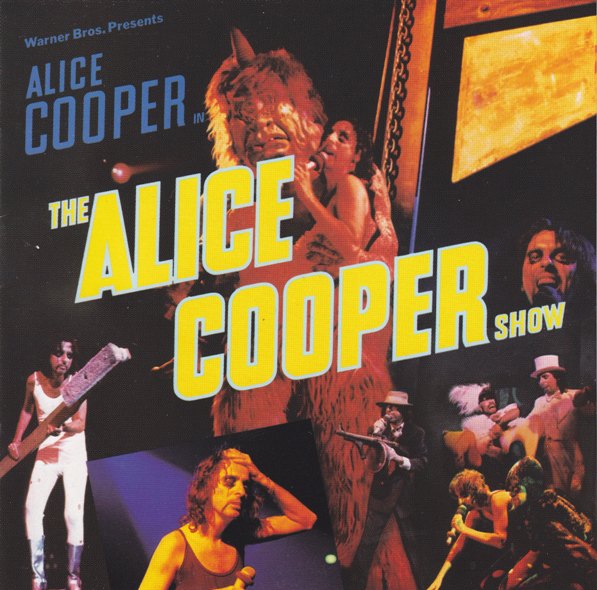
Vinyl bonus tracks are a slam-dunk reason to buy an LP. Alice Cooper’s Welcome 2 My Nightmare is a great example of an LP that has a track unavailable on any other format (“Flatline”). And of course Jack White took the idea of LP bonuses to the ultimate level with his “Ultra LP” version of Lazaretto.
#3. Digital download (mp3)
I hate paying money for something that does not physically exist. If I have to, I will, but I only “have to” when there are bonus tracks unavailable on any physical format. Given the choice and the money, I will always buy the physical version, not just 1’s and 0’s floating around on a magnetic hard drive. I hate that you (usually) don’t get any info or liner notes with an mp3. I hate that your hard drive just needs to have a nice crash for you to lose this music that you paid for. I understand the convenience, but digital downloads do not service my needs.
I know there are high quality download formats such as FLAC, but that still doesn’t solve the problem of not being on a physical format that won’t crash, and my issue of paying for a non-physical entity. I also know that a lot of people don’t care about these things, and I wanted to understand why. I asked one reader why he prefers his iTunes:
“Here’s my deal: At the time when iTunes first came out, I had three young daughters. Getting to the record store (when there were record stores) was tuff to say the least, let alone the cost as well! I just couldn’t drop $20 all the time. Sure, I made exceptions and I bought actual product like Maiden and Rush, but iTunes became my way of music buying. Especially re-buying albums I had owned on cassette or vinyl. I just re-buy them on iTunes and download straight to my iPod! Now that my daughters are teens, I have just stayed the course with iTunes. I pre-order product from them, like the latest Priest, and the Van Halen live album. Convenience is just the way of life for me now! Don’t get me wrong though, I would still enjoy buying the actual product, but man it does boil down to affordability! iTunes delivers that and I can stay current with adding to my dinosaur rock collection! Ha!”
#4. Cassette
Once the mighty majority of my collection, cassettes have been reduced to a mere novelty. I treasured them for portability and convenience, but now I loathe them. I debated putting mp3 last on my formats of choice, but the truth is, cassette is far worse.
Cassettes have several things going against them. The first is moving parts. A CD or LP requires no moving parts, but a cassette has spindles and rollers that rub against and wear the magnetic tape. Sometimes a cassette’s parts can be too tight inside, causing it to warble when you play it. But it’s the analog tape itself that is the real problem. Even brand new, a cassette will not sound as rich as an LP because it’s not capable of reproducing the same range of frequencies. A cassette has a built-in high level of static noise. Then once you start playing it, magnetic particles begin to wear off. In fact over time, tapes will degrade to be unlistenable, no matter how well you take care of them. Even worse, record companies used the worst quality tape for their releases. If you bought a cheap blank Sony tape, you would have better quality than a store-bought record label’s cassette.
The poor sound and lack of longevity are the two main reasons I’m still replacing all of my old tapes with CDs and LPs. Anybody got a copy of Bonham’s Mat Hatter on CD for me to upgrade to? How about Wolfsbane’s first? Still looking for those!
#5. Miscellaneous
Not really ranked last, I just wanted to mention other formats that I own music on.
5.1 surround sound can’t be encoded on a standard CD, so DVD and Blu-ray have to step up to the plate. I have several Rush, Queen, Black Sabbath and Deep Purple albums (among many others) that have been given official Quadrophonic or 5.1 surround mixes. Often, these mixes include bits of music that are not in the stereo versions, such as guitar solos and fills.
The problem with DVD and Blu-ray is that I only have one home theater system. I only have one place, one room in the house, where I can listen to these special albums. I can’t play them in the car, on a walk, or at the cottage. As such, a Quad or 5.1 release gets limited listens at Chez LeBrain.
How many people are there like me? Let me know your favourite formats in the comments section!
KISS – Unholy Kisses(Audience recorded bootleg, 1992 Flashback)
“You know who we are, let’s kick some ass!”
That’s how Paul Stanley introduced the legendary Kiss on their stripped-down 1992 club tour, April 23 1992 in San Francisco. The Revenge album was a “reboot” of sorts, out of necessity. New drummer, new attitude, and a return to the producer (Bob Ezrin) who helped make them huge. A return to the clubs without the lights, stage show, and costumes helped Kiss transition into the 90’s. If this one bootleg CD is any indication, then the club tour was a huge success.
Eschewing their normal opening routine, the band entered to the sound of “Love Gun”, but heavier than ever. Many fans consider the Simmons/Stanley/Kulick/Singer lineup to be among their best, and this live bootleg proves why. In fantastic voice, Paul leads this devastating lineup to demolish the clubs in their wake. Full of adrenaline, “Love Gun” is faster than its studio counterpart, and Bruce Kulick creates his own individual guitar solo that fits the track.
Gene’s next on “Deuce”, the new lineup infusing it with menace. The CD, though obviously a bootleg, sounds great. Even though the drums are a bit distant you can hear that Eric Singer has come into the band paying homage to the drum parts he inherited. Then Paul takes a moment to tell the audience that they’ve been so fired up about the way Kiss have been sounding, that they just got to come down to San Fransisco and play. A rough opening to “Heaven’s On Fire” is a mere hiccup after they get going on the hit single. For the first time you can clearly hear new guy Eric Singer singing background vocals.
“You ready to hear something old? One of those Kiss klassics? Bruce – let ’em have a taste.” Then the shocked audience picked up their jaws as Kiss slammed through “Parasite” for the first time since 1976. Returning to songs like this was critical for a band who spent the 80’s largely ignoring the deep cuts.
One thing I love about bootleg CDs is the chance to overhear some audience chatter. “Shout it Out Loud” however is marred by one nearby fan who keeps singing “You got to have a party,” even when that’s not the current part of the song! Minor beef, as “Shout it Out Loud” rocks and is another song that was tragically ignored during most of the 80’s.
“How many of you people have Kiss Alive? Gene must know this one. Gene’s got Kiss Alive. Goes like this!” There begins “Strutter” (also from the first Kiss album) and the crowd goes nuts. “Dr. Love” follows, with Eric Singer showing off some fancy footwork on the double bass drums.
Fans who were shocked by these old tunes must really have lost their minds when “I Was Made For Loving You”, heavy as hell, tore through the club. “I Was Made For Loving You” was re-imagined as a chugging metal track and in the club environment, it’s only more raw and aggressive. Then Paul lets another bomb drop when he introduces “100,000 years” from the first album. “Oh my God! I don’t fucking believe it! I do not fucking believe it!” says one nearby fan, obviously excited by this rarity. It’s incredible how well Bruce and Eric adapted to the sound of old raunchy Kiss.
But what of new Kiss? The band weren’t ready to start unveiling all the new songs, as Revenge hadn’t even come out yet. They did roll out two: the first single “Unholy”, and album cut “Take it Off”.
“We got a new album about to come out,” begins Paul. “And I’ll tell you something, this album is the shit. I’ll tell you, this album is our fuckin’ Revenge and when you hear the album you’ll know what I’m talking about.” Indeed, as promised the new songs kick ass, though “Unholy” is kind of awkward in the live setting. “Take it Off” is more like Kiss.
It’s all oldies from here. Aside from the new Revenge songs, the most recent track that Kiss played here was “Heaven’s On Fire” from 1984! (Note: this CD is not the full concert and 1985’s “Tears are Falling” was also played that night.) I think it’s safe to say that Paul and Gene understand some of the errors in direction they made over the last 10 years, and successfully steered the ship back on track. “Firehouse” and “Cold Gin” from the first album are present. “I Stole Your Love”, “Detroit Rock City”, and “I Want You” close the CD. “I Stole Your Love” with the backing vocals of Eric Singer is top-notch!
The songs played that night that aren’t on this CD are “God of Thunder”, “Lick It Up”, “Got Gave Rock and Roll to You II” (its live debut), “Rock and Roll all Nite” and the aforementioned “Tears Are Falling”. Too bad this is only a single CD bootleg, but bootlegs were so expensive that a double would have cost at least $60-80. If it was a double, I never would have bought it and heard what I have of this awesome show!