Reviews

REVIEW: Swingers – Music from the Miramax Motion Picture (1996)

movie-soundtrack-week


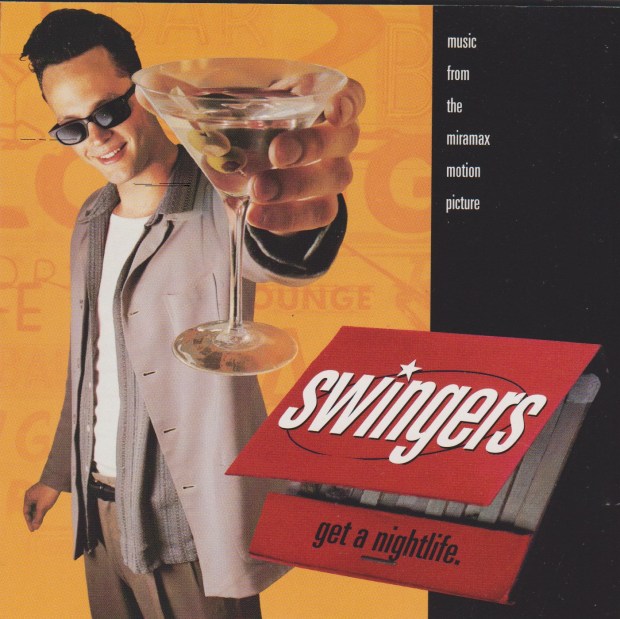
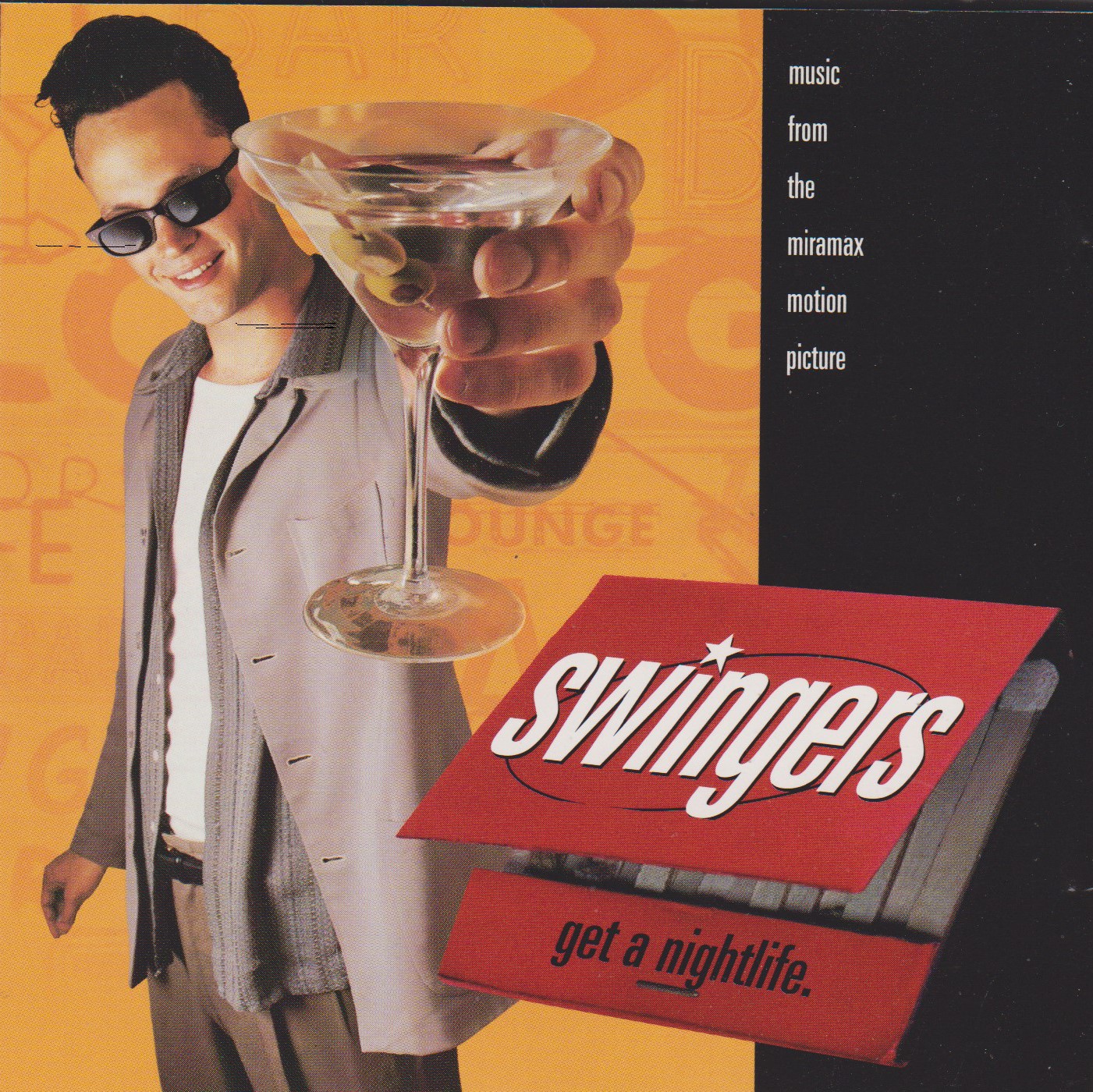
Scan_20160714SWINGERS – Music from the Miramax Motion Picture (1996 A&M)

Now here…now here is a soundtrack!  Every track is a keeper.  With a mixture of oldies and newer songs, Swingers had a peerless balance.   If you’re down to swing, dance, or just get dirty, this soundtrack has what you need.  Bonus points for the uber-thin and young Vince Vaughn on the front cover too. Jon Favreau executive produced the soundtrack, and it’s clear the guy has good taste in music.

I love it when a soundtrack puts scenes from a movie right in your head.  Dean Martin’s “You’re Nobody ‘Til Somebody Loves You” kicks off both the CD and the movie, and all I can think is “Vegas baby, Vegas.”  That slow jazz just sets the mood for the adventures ahead.  The horns pop!  It’s money, baby.  Talk about setting the bar high for an opening track; thankfully there’s lots more to come.

“Paid for Loving” by Love Jones brings me right into the film’s setting again, but it’s Tony Bennett’s “With Plenty of Money and You” that has me seeing the bright lights of Vegas before me.  Remember Mikey and T rolling up in their suits?  You’d feel like a high roller too, with a song like this playing.  Tony is followed by Big Bad Voodoo Daddy (who appeared in the film).  Now, I do kinda wish it was the live version of “You & Me & the Bottle Makes 3 Tonight (Baby)”.  In the film, Big Bad Voodoo Daddy play it live, but this is a studio version.  I think including the live version would have been an extra treat for fans, but I’m not complaining.  If you don’t find yourself tapping your toes to it, call the coroner, because you may be dead.

Mixing new and old, Scotty and the guys from Big Bad Voodoo Daddy are chased by Louis Jordan, from way way back in 1941.  If you love muted trumpet solos, then dig right in.  A song you should recognise is the oft-played “Groove Me” by King Floyd (1970).  It’s a soul classic that found itself used on TV ads over the years.   More jazz (a couple cool instrumentals), and more Big Bad Voodoo Daddy are to be found as the CD progresses.  Daddy have three tracks on the CD, all of which were in the movie.  “Go Daddy-O” has to be a favourite for sure, but “I Wan’na Be Like You” has a tropical salsa beat.

Roger Miller’s “King of the Road” isn’t jazz and doesn’t swing, but it has the same golden oldie feel.  It’s not the only country song:  George Jones himself honours the CD with his presence.  The melancholy ballad “She Thinks I Still Care” is one of the…saddest, I guess…lyrics I’ve ever heard.  It’s a great song from a great scene in the film.

“Pick up the Pieces” by the Average White Band is the kind of song everybody needs.  “Need” isn’t too strong a word either.  You know the song, you love the song.  You have to.  It’s required.  Finally, “I’m Beginning to See the Light” by Bobby Darin completes the journey, and it’s back to the same kind of sound that Dean Martin started the album with.  And what a journey it is!  You just…feel BETTER after listening.  When I bought this CD, I felt like this line of dialogue directly applied to me:

“You’re a big winner.  I’m gonna ask you a simple question and I want you to listen to me: who’s the big winner here tonight at the casino? Huh?  Mikey!  That’s who!  Mikey’s the big winner.  Mikey wins.”

5/5 stars

REVIEW: O Brother, Where Art Thou? – Soundtrack (2000)

movie-soundtrack-week


O BROTHER, WHERE ART THOU? – Music from a film by Joel Coen and Ethan Coen (2000 Universal)

Hot damn!  It’s the Soggy Bottom Boys!

Even if you hated the film (have a doctor check to see if you still have taste left), you can’t deny the fun and authentic roots music on its soundtrack.

A bizarre re-telling of Homer’s The Odyssey set in the 1930’s depression-era south, O Brother was nothing if not unique.  It mixes a liberal interpretation of Greek mythology, with Americana and the mythology of the blues era.  Some people don’t get it, some people do but don’t like it, and others have long been swept away by its charms.  Those with an allergy to George Clooney, fear not:  he does not actually sing on this soundtrack, although his co-star Tim Blake Nelson certainly does (on “I’m in the Jailhouse Now”). Dan Tyminski from Alison Krauss & Union Station sings for Clooney’s character Ulysses Everett McGill on the signature hit, “Man of Constant Sorrow” though many people assume it’s George.

The soundtrack CD is a mixture of light and dark.  The first two songs  are the perfect example:  “Po Lazarus” is a chain-gang work song, just before Ulysses Everett McGill and his two companions break free and embark on their Odyssey.  It’s followed by a 1928 recording by Harry McClintock, “The Big Rock Candy Mountain”, a joyful nonsense song about a hobo finding paradise on the rails.

“Where the boxcars all are empty,
And the sun shines every day,
On the birds and the bees,
And the cigarette trees,
The lemonade springs,
Where the bluebird sings,
In the Big Rock Candy Mountains.”

The composite of light and dark reflects the movie itself, but makes for a fairly inconsistent listen.  The soundtrack follows the progress of the film, but without the story backing it up, it’s harder to go with the flow from song to song.  The a capella “O Death” (Ralph Stanley) for example is squeezed between the popular songs “Man of Constant Sorrow” and “I’m in the Jailhouse Now”, so most people will typically skip it.

I look at this soundtrack CD as a great “starter kit” for exploring more genres of music.  The dominant ones are folk and bluegrass, but there are also blues tracks and hymns.  Norman Blake’s “You Are My Sunshine” sounds wonderful sitting in the shade on a summer day.  Immediately after that, you get the velvet tones of Alison Krauss, from the baptism scene with “Down to the River to Pray”.  You have never heard a more perfect version, serene, still and deep as the water.  And, yes, the Soggy Bottom Boys!  In the film, Ulysses Everett McGill and his companions Pete, Delmar and Tommy Johnson (loosely based on Robert) wind up cutting a record.  There are four versions of “I Am a Man of Constant Sorrow” on the album.  The first is the acoustic track shown being recorded in the film.  The version that became a hit single in the real world is from the climax, a fully augmented mix with fiddles and slides.  That is included closer to the end of the disc. There is an instrumental version on acoustic guitar by Norman Blake, a fine take indeed.  The fourth is an instrumental version on fiddle by John Hartford, barely recognisable.  All four are quite different but valuable.

Blues singer and guitarist Chris Thomas King was cast in the film as Tommy Johnson, and his solo track “Hard Time Killing Floor Blues” is a fine example of acoustic blues.  There is plenty of sunny and gleeful folk, such as “Keep on the Sunny Side”, “I’ll Fly Away”, “In the Highways” and of course “In the Jailhouse Now”.  Tim Blake Nelson is certainly a multi-talented guy, but the yodelling part is not performed by John Turturro as it appears in the film.  Still Pat Enright’s yodel part is one of the highlights of the entire album.  It’s important to note that producer T Bone Burnett captured authetic sounding performances here.  Close your eyes, mix some scratchy vinyl sounds over it, and you can imagine these are vintage recordings from the 1930’s.

Emmylou Harris, Gillian Welch, the Fairfield Four, the Cox Family and more…this CD is a great way to both enjoy an hour of music from the film, and kickstart a collection of folk, bluegrass and more.  Dig in!

4.5/5 stars

Final bonus:  Sh*t LeBrain’s Grandma Says!

I love my grandma with all my heart, but sometimes she gets the names of movies wrong.  We took her to the theater to see “There’s Mail Waiting for You” (You’ve Got Mail), and she also really enjoyed this movie, which she calls “Brother Can You Spare a Dime?”

REVIEW: AC/DC – Who Made Who (1986 soundtrack to Maximum Overdrive)

movie-soundtrack-week

Today’s movie soundtrack comes by no coincidence.  Today’s my birthday!  And I got this album on this day in 1987 from my partner in crime for many years, Bob!


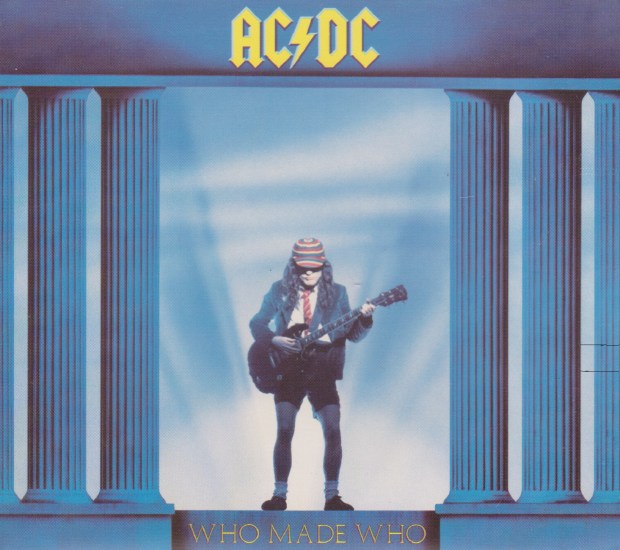
AC/DC – Who Made Who (1986 Epic soundtrack to Maximum Overdrive, 2003 remaster)

As a movie director, Stephen King is a great novelist.

30 years ago, Maximum Overdrive was King’s directorial debut.  The movies based on his books had been box office gold so far, but King always complained about the adaptations of his original material.  So why not hand the reins over to him?

King’s goal was to make “the loudest movie ever made”, and part of that was leaving the soundtrack to AC/DC.  King issued the film with instructions that “this film is to be played as loud as possible.”  The funny thing, according to him, was that most theaters did it.

AC/DC did the entire soundtrack, a mixture of old and new material.  It was an unorthodox move and it left AC/DC with what some consider to be their first real “greatest hits” album; this coming from a band who in 2016 has yet to issue an actual greatest hits album!

The robotic pulse of “Who Made Who” commences the affair, a massive hit still a radio staple today.  One of AC/DC’s most recognisable tunes, “Who Made Who” was a bigger smash than the movie that spawned it.  That’s Simon Wright on drums, emulating the perfect beats of Phil Rudd before him, creating a fine facsimile.  The keys to the song though are the simple and catchy guitars of Angus and Malcolm Young.  Having nailed down the art of writing catchy bases for songs, the brothers Young really perfected it here.

They also perfected it on 1980’s “You Shook Me All Night Long”.  Placing the biggest AC/DC hit of all time second in line is almost like nailing the coup de grâce prematurely, but there is plenty more firepower on the album.  It works in the second position, cleaning up anyone left standing and getting them shakin’ on the dance floor.

AC/DC added two brand new instrumentals to this soundtrack (“Johnson was sick that day”, joked Angus).  “D.T.” is the first of them, somewhat unremarkable and echoey on the drums.  But this is designed as background music for movie scenes, so it really shouldn’t be measured by the same yardstick as, say, a Rush instrumental.  The second on side two is the peppier “Chase the Ace”.  Punctuated with some cool Angus licks, “Chase the Ace” is simple and effective like “D.T.”.

There were a few tunes from the recent Fly on the Wall album, all killers.  “Sink the Pink” (oh, Brian!) is recorded so muddy that you can’t hear the words, but it does rock.  Angus’ guitar break is pure fun, and the song gets your ass moving.  That leads into the sole Bon Scott inclusion, “Ride On”, from a quieter moment in the film.  What’s really cool is that even though these songs are from all over the place, Who Made Who sounds like a fairly cohesive trip.

Side two commences ominously with “Hells Bells”, a fine way to distribute classic tunes evenly across the sides.  “Shake Your Foundations” is on its tail, hitting you with another blast of AC/DC right in the face.  One of the better tunes from Fly on the Wall, “Shake Your Foundations” does its advertised job.  Yet, I do believe there was only one way to properly end this album.  That would have to be the cannon-fire of “For Those About to Rock”.

Who Made Who was actually my first Johnson-era AC/DC album, given to me by my buddy Bob on this day in 1987.  If this review is slanted ever so slightly in the “pro” direction, so be it.

4.5/5 stars

REVIEW: Heavy Metal – Music From the Motion Picture (1981)

movie-soundtrack-weekHere we go with another week of movie soundtracks! It’s a case of the second one being even better than the first, so let’s start things off properly, shall we?


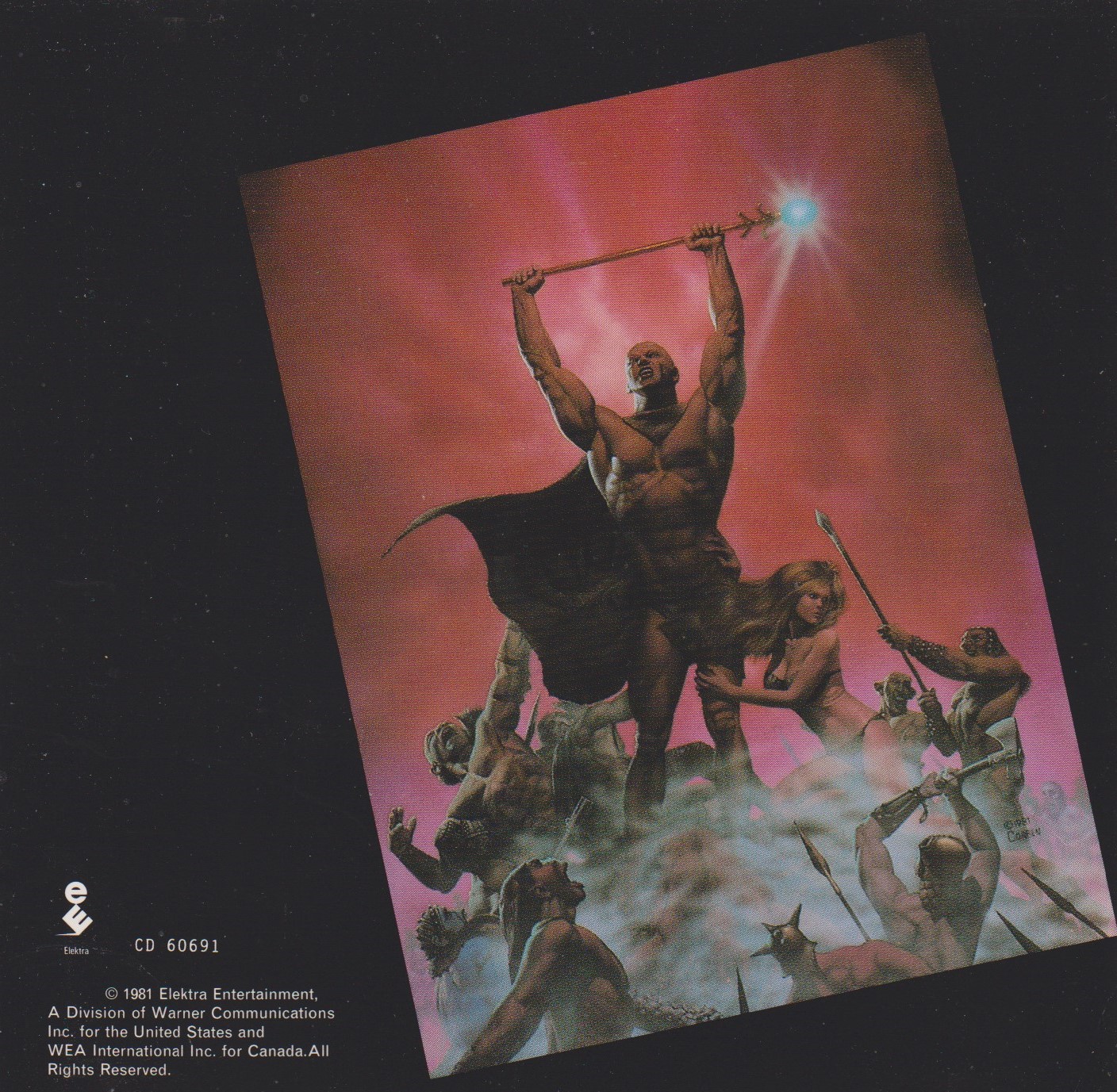
Scan_20160706HEAVY METAL – Music From the Motion Picture (1981 Elektra)

I’d never seen anything like Heavy Metal before.  It was a sci-fi cartoon with a bunch of guys from SCTV doing voices…but it wasn’t for kids!  I probably saw my first animated genitalia in Heavy Metal.  It was also the first time I heard Sammy Hagar.

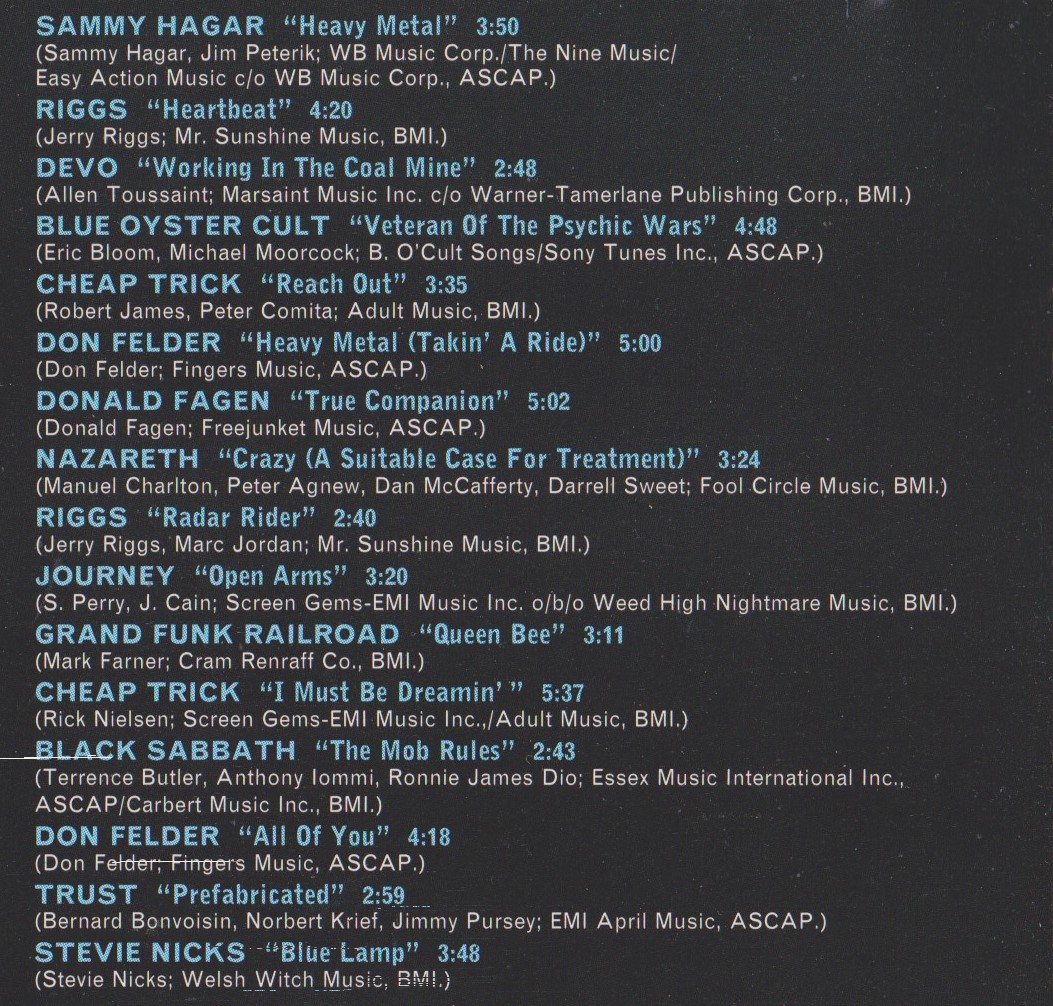
Sammy’s title track opens the now-legendary soundtrack, which like many others was deleted in the 1990s and commanded heavy prices on the second hand market.  When I worked at the Record Store during that period, there were always plenty of names on the wish list for this album.  There were tracks on here that were hard to find anywhere else.  This version of Hagar’s “Heavy Metal” is different from the one on Sammy’s Standing Hampton LP, and it was not the only such exclusive.  “Heavy Metal” is one of Hagar’s best tunes, simply legendary.  It’s a pummelling good time!

The rest of the album is equally awesome.  Riggs (Jerry Riggs, later of the Pat Travers Band) has a Hagar-esque rocker called “Heartbeat” that is definitely good enough for rock n’ roll.  You might not expect DEVO to be on an album called Heavy Metal, but what’s not to like about “Working in the Coal Mine”?  I’m sure more than a few metal fans would have skipped this one back in 1981, but when compared to the next song by Blue Öyster Cult…what’s the big deal?  B.Ö.C.’s “Veteran of the Psychic Wars” leans just as heavily on synthesizer, so purists be damned.  “Veteran of the Psychic Wars” is a classic, through and through, a dark apocalyptic ballad that can’t be touched.  Some would say it was the last gasp of B.Ö.C. before a long period of mediocrity.  Cheap Trick utilised synth too, but their “Reach Out” is a rocker.  Cheap Trick were another band in a period of decline, following the departure of original bassist Tom Petersson. “Reach Out” was a damn fine tune, and not on one of their albums at the time.  (It’s hard not to notice that Tod Howarth ripped off the verses of “Reach Out” for his own song “Calling to You” with Frehley’s Comet.  Howarth later played with Cheap Trick as a sideman.)

Don Felder from the Eagles isn’t the kind of guy you’d expect to hear do a song called “Heavy Metal (Takin’ a Ride)”.  It’s an Eagles-metal hybrid and it’s pretty cool, more metal than Eagles, but you can hear them in there.  He’s followed by Steely Dan’s Donald Fagen who presents the interesting “True Companion”.  It’s progressive jazz light rock nirvana.  The punks will hate it, but the same guys who dig Captain Beyond will appreciate it.  Quite daring to include tracks like this on a CD primarily made up of rock and metal, but this helped open the minds and tastes of many metal heads over the years.  Nazareth re-centers it back to rock and roll, with “Crazy (A Suitable Case for Treatment)”.  It’s not among Nazareth’s best but it’s always such a pleasure to hear Dan McCafferty gargling glass.

Scan_20160706 (2)

Riggs returns with “Radar Rider”.  Heavy riff in hand, it’s a slammin’ good track.  But it is overshadowed by the bombast of “Open Arms” by Journey, one of the biggest ballads in the history of balladry.  You know what’s funny?  Even though I have heard this song 106,941 times as of this morning, I still smile upon hearing it.  There must be something timeless to it that I can’t explain.

Grand Funk were in a decline (like a few of these bands), and “Queen Bee” from Grand Funk Lives was their contribution.  Good track, though it does not sound much like the Grand Funk I know from the 1970s.  And then it’s Cheap Trick again, with a noisy throwaway track called “I Must Be Dreaming”.  It’s a bizarre track from the high priests of rhythmic noise, but they do bizarre just as well as they do catchy.

There’s one band that I think blew the doors off the album.  One band that, to me, is always associated with this album.  One band that defines the phrase “heavy metal”, and that one band is Black Sabbath.  If you listen to fools, the mob rules!  This was brand new Black Sabbath at the time; Mob Rules wouldn’t be out yet for a couple months.  I have always preferred the soundtrack version of “Mob Rules” to the different recording that made it onto the album.  This could be because it was the first version I owned.  Regardless, to my ears it sounds faster and livelier…and more “Geezer-er”.  Not that it matters, because no matter how you slice it, “The Mob Rules” is a shot of adrenaline right to the heart.

Don Felder takes it back to a slow groove with “All of You”, a good rock ballad with some seriously cool funky bass.  All told, the Heavy Metal soundtrack has some damn fine playing on it from all of these bands — just incredible musicianship in these grooves.  Things wind down with Trust, and a very heavy track called “Prefabricated”.  Nicko McBrain was in Trust in 1981, but this does not sound like Nicko on drums.  The song would have been better without the vocals.  Especially when it’s followed by Stevie Nicks, one of the most iconic voices in rock.  “Blue Lamp” was recorded for her solo debut Bella Donna, but not used.  It’s certainly not outtake quality.  In fact it’s pretty damned classic.

That’s what the Heavy Metal soundtrack is:  a classic.  If you like heavy metal, but don’t like soundtracks, then you should still own this one.  Make it so.

4.5/5 stars

Scan_20160706 (3)

Like many movies with a rock soundtrack, there was also a score for Heavy Metal released.  I asked our friend Rob Daniels from Visions in Sound for a few words on this score in the interests of being complete:

“It’s a great score by the late Elmer Bernstein who is best known for a lot of 80’s comedic scores including Ghostbusters, Animal House and Airplane. His score fits perfectly within the metal music atmosphere, weaving its way through the various stories and songs to the Taarna story. The “Taarna” theme was actually first written for the Farrah Faucett character in the 1980’s film Saturn 3 but was not used. It includes an unusual instrument called a Ondes Martenot, similar to a Theremin but with a physical keyboard. Bernstein used the instrument quite a lot in his scores. While a lot of people know Heavy Metal for the songs in the film the score is of equal note and probably one of Bernstein’s best.”

HMSCORE


REVIEW: Frank Zappa – Zappa Picks – by Larry LaLonde of Primus (2002)

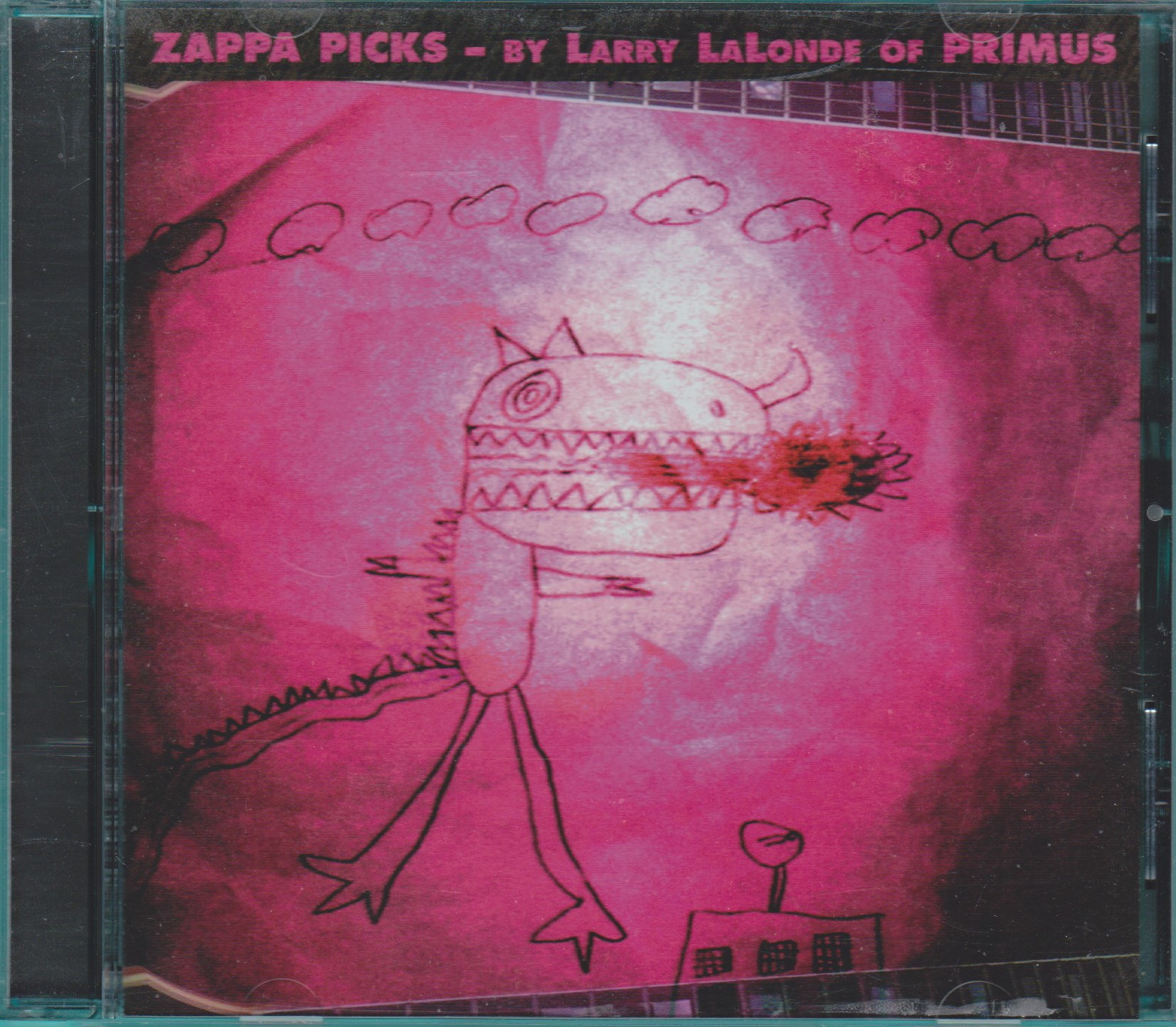
Scan_20160613FRANK ZAPPA – Zappa Picks – by Larry LaLonde of Primus (2002 Rykodisc)

This was a cool idea for a series.  I love the concept.  Big name fans of Zappa compiling their own Zappa disc.  I only know of one other disc — a Zappa Picks by Jon Fishman of Phish.  I prefer Primus to Phish, so getting Larry LaLonde’s instalment of Zappa Picks seemed like a good idea.  LaLonde assembled an eminently listenable, endlessly entertaining and humorous Zappa album. And of course the playing is still stunning, because it’s Zappa.

What I like about this album is that you get a lot of great and challenging tunes that aren’t on the Simply Commercial hits album. In fact I think there’s only one song that appears on both! The CD is sequenced in such a way that it sounds like an actual album in terms of flow. Songs merge into each other seamlessly and the pacing is perfect. I’m discovering a lot of music I missed, because I simply don’t have all the Zappa albums.  Who does?

This is spacey fun.  It’s guitar nirvana.  It’s percussive.  There is a wealth of material both instrumental and vocal.  It’s weird all the way to the edges of comprehension.  It stretches every genre you can think of.  It’s anything but boring.

Highlights:

  • “Five-Five-FIVE”
  • “Dumb all Over”
  • “Camarillo Brillo”
  • “Doreen”
  • “Wind Up Workin’ in a Gas Station”
  • “Black Page #2”

5/5 stars

REVIEW: Sammy Hagar – Sammy Hagar / I Never Said Goodbye (1987)

Scan_20160705SAMMY HAGAR – Sammy Hagar / I Never Said Goodbye (1987 Geffen)

Remember when everybody in the Van Hagar camp just loved each other?  Things were so happy in Van Hagar, that Sammy released a solo album in 1987 and nobody got mad.  Hell, Eddie himself co-produced it and played bass!   Hagar was obligated to do another solo album to get out of his contract with Geffen, and so the self-titled Sammy Hagar was recorded quickly.  Sammy apparently forgot he released another album also called Sammy Hagar in 1977, so this one was re-titled I Never Said Goodbye.   (I still call it Sammy Hagar.)

There was something particularly weird about this release on cassette. I had a version, purchased from Columbia House around 1989-1990, with a bizarre cover. The J-card was designed to fold around outside the cassette shell. I’m not sure why to this day, and I’ve never seen another copy like it. The artwork was obviously designed to fold on the outside rather than the inside, but I’ll never figure out why.

All the members of Van Halen even appeared in Sammy’s video for “Hands and Knees”.  The plot was simple, and perhaps a foreshadowing of things to come.  A bored Hagar calls his bandmates (including nextdoor neighbor Eddie) to jam, but nobody’s interested.  Instead, Hagar jams with a group of robots!  “Hands and Knees” was an odd choice for a first single, being a dark and slow mood tune.  The video guaranteed attention, and still garners a chuckle today (albeit a sad one, knowing these guys aren’t pals anymore).  I love Michael Anthony’s huge brick of a cell phone.  The video was better than the song, though it does have a killer of a chorus.  It’s clear if you listen that Eddie Van Halen is one damn fine bassist too.  Are you surprised?

One thing about this album, though:  it’s really commercial.  Like way, way more pop even than 5150.  It’s no surprise that some writers like the esteemed Martin Popoff have slagged this album.  The production has an airy 80’s feel, not enough oomph.  The opening track “When the Hammer Falls” is a hard rocker, but it could have been thicker with more meat.  Not that it would have helped too much.  The chorus on this one is pretty weak, which is too bad since the riff is good enough for rock and roll.

The second single, which Van Halen used to let Sammy play live acoustically, is “Give to Live”.  Van Halen’s version can be found on 1993’s Live: Right here, right now.  Hagar’s studio original is unabashedly pop, bombastic…and good.  I admit I still enjoy this very cheesy ballad.  Hagar is rarely profound, and neither is “Give to Live”, but it’s a nice song indeed.

A shitty synth (?) horn section urinates all over “Boy’s Night Out”. Speaking of synth, “Returning Home” is all but unpalatable. This is one of Sammy’s UFO yarns, a story of a guy returning back to Earth to find it wrecked. “I saw the ruins, once the smoke cleared, once upon returning home.” It’s just sunk by all this terrible synthesizer junk and programming. The UFO has crashed into the damn mountain!

ALIENS

The second side surprisingly opened with some blues jamming:  “Standin’ at the Same Old Crossroads”.  And that would be Sammy on the slide guitar.  “Crossroads” leads directly into “Privacy”, a “Radar Love” re-write that is better than “Radar Love”.  Maybe I’m just sick of “Radar Love”, but “Privacy” has some smoking playing on it, proving again that Hagar is actually a pretty badass soloist.  Side two on a whole is actually much better than the first.  “Back Into You” is a vintage-style Hagar radio rocker.  Journey must have wished they wrote “Back Into You”.  The keyboard overdubs aren’t necessary but hey, it was the 80’s and this is a great little AOR rocker.

Another tune that Hagar played live with Van Halen was “Eagles Fly”.  He actually presented the song to the band for 5150, but it was turned down.  A live Van Halen version can be found on the 1993 single for “Jump (Live)”.  He did it acoustically on stage, but the studio version is bombastic and big like “Give to Live” is.  It’s a pretty impressive tune, for pop rock.   David Lauser’s drumming makes the song, I’m a sucker for that rat-a-tat-tat!
The album ends on a ho-hum note, the soul-funk of “What They Gonna Say Now”, sort of this album’s “Inside” to close it out.  Just not good enough.  If you want to hear Eddie Van Halen playing bass up close and personal, he’s very audible here, but he’s not a flash bassist.  He plays with the groove for the song.

It’s tempting to think of this album as a collection of tracks that were not right for Van Halen, and that’s mostly true.  A lot of it, however, just wasn’t good enough for Van Halen.  “What They Gonna Say Now” could have been a Van Halen track, but it would have been the weakest tune on 5150 if so.

2.5/5 stars

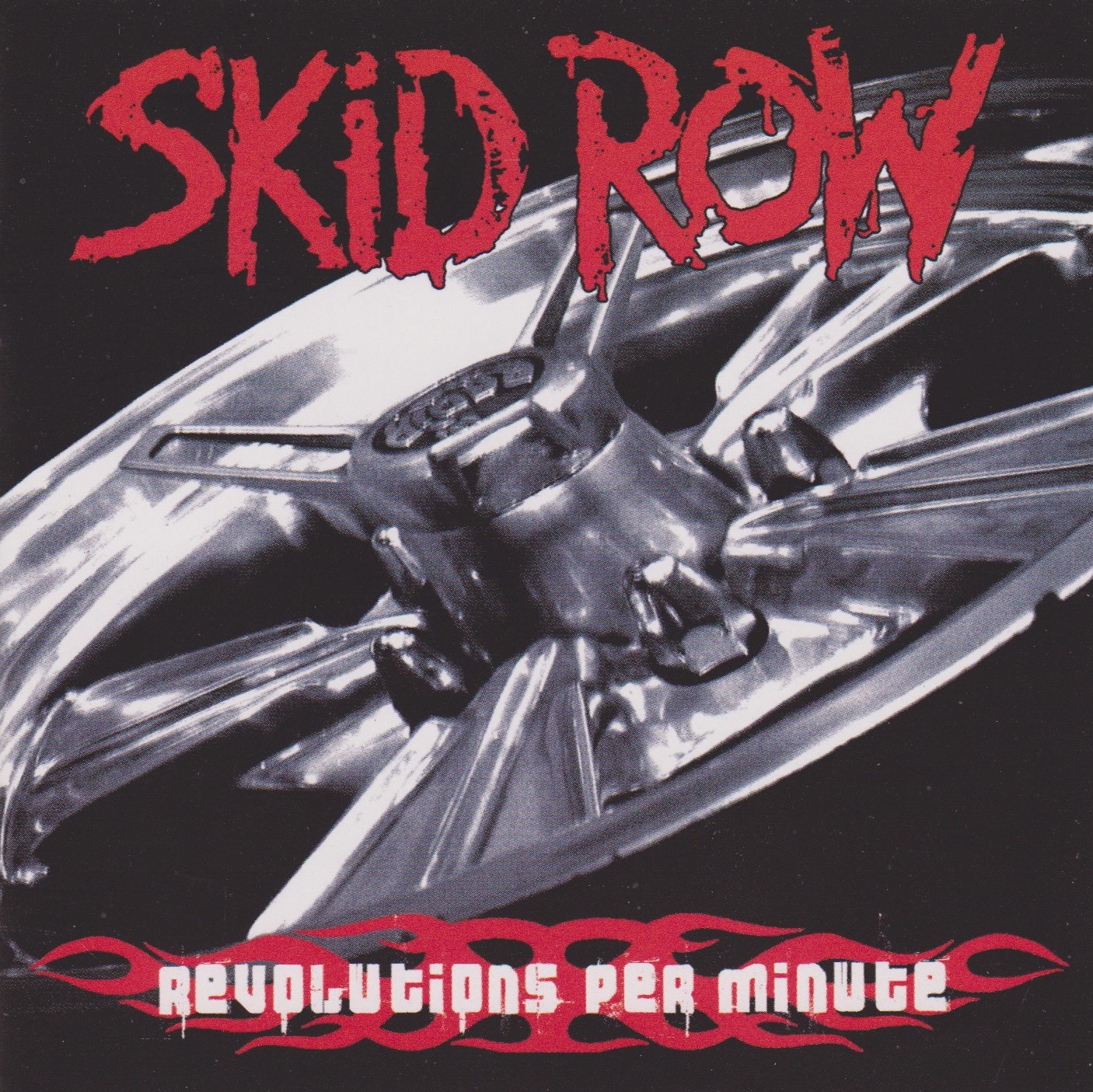
REVIEW: Skid Row – Revolutions Per Minute (2006)

Scan_20160614SKID ROW – Revolutions Per Minute (2006)

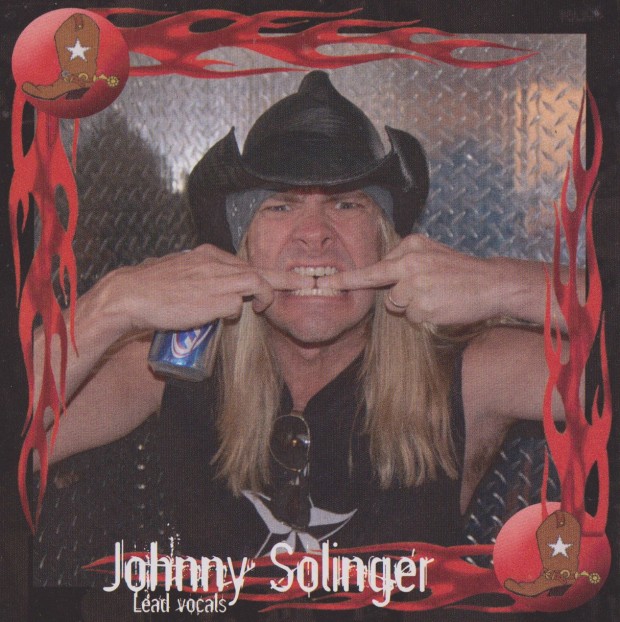
Skid Row did a pretty good job of replacing the irreplaceable Sebastian Bach on their fourth LP, Thick Skin.  It earned a more than healthy 4.25/5 stars, in part due to the charismatic vocals of Johnny Solinger.  For their second album with Johnny, they re-teamed with producer Michael Wagener, but had mixed results in repeating the magic.

Revolutions Per Minute is heavy enough; there was no issue of the band going soft.  There was a dip in quality from the songwriting department, strongly dominated by bassist/leader Rachel Bolan.  Strangely, they chose to pad out the album with a cover (The Alarm’s “Strength”) and a remix.  It’s worrisome when the best song is a cover.  There’s a distinct pop-punk vibe on many songs, which one has to trace back to Bolan.  Dave “Snake” Sabo has two co-writes, and Scotti Hill a mere one.

“Disease” is very Skid Row, nothing outstanding, but a strong enough way to open the album.  The punk-like “Another Dick in the System” is better.   With Solinger scraping the ceiling with his screamy high notes, it’s reminiscent of old Skid Row circa Slave to the Grind.  “Pulling My Heart Out from Under Me” follows with an 80’s Elvis Costello vibe to the guitars.  This one is quite a departure from Bach-era Skid Row, and a decade later I’m still not sure if I like it.  You can’t fault a band for experimenting, but if the results aren’t good enough, that’s a tough call.  I’m not sure if “Pulling My Heart Out from Under Me” is good enough.  The worst of the punk influenced songs is “White Trash”, which is so indescribably bad that I won’t even try.  It’s not funny and not good.  Back to something that sounds like Skid Row, “Nothing” is one of those tunes that you could imagine was written in 1988 for the debut album.
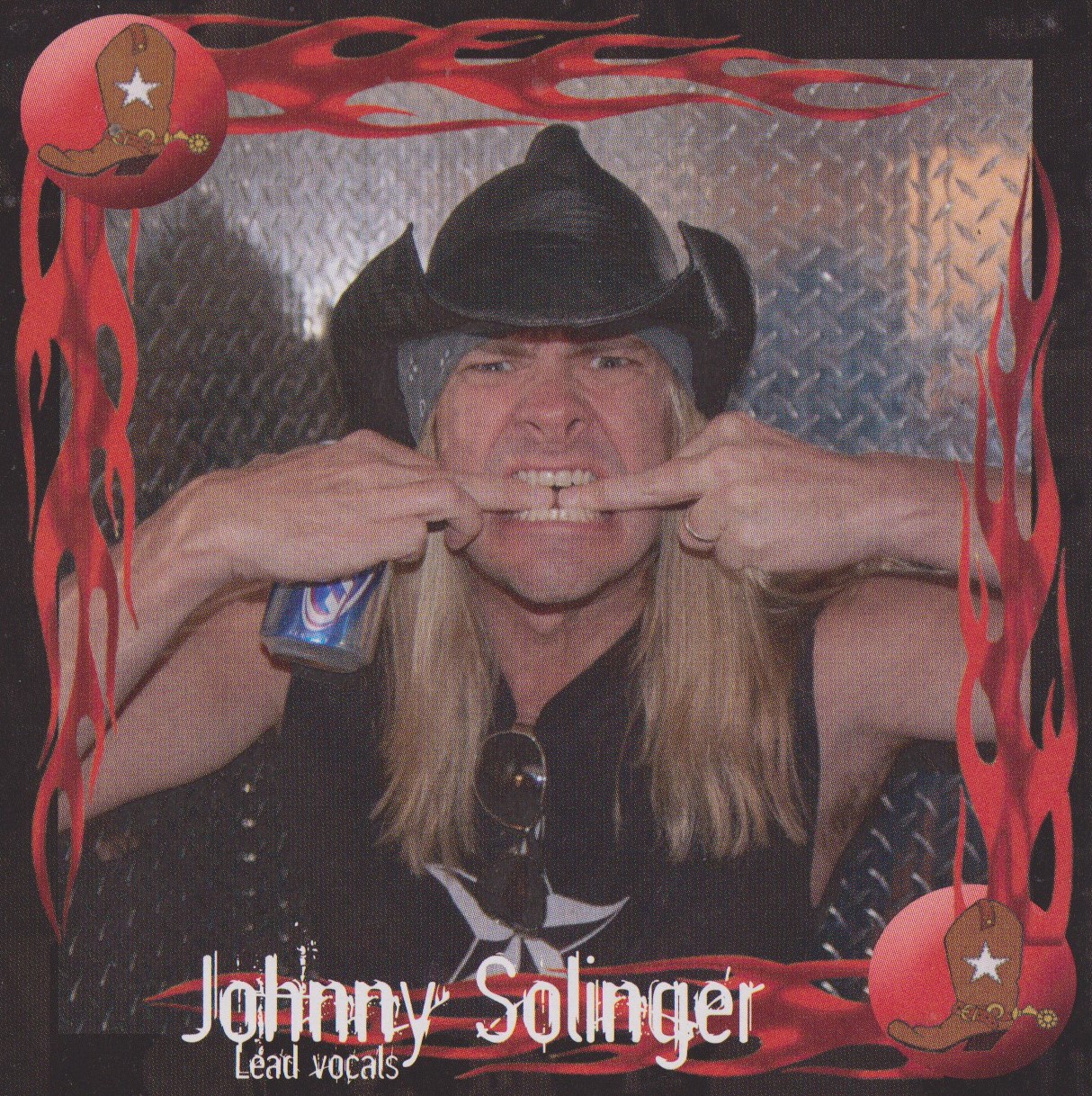
Scan_20160614 (2)Influences collide on “When God Can’t Wait”.  Johnny Solinger is a country guy, and Rachel Bolan is a punk guy.  It seems 1+1 does indeed =2, and the sum total of punk and country is rockabilly.  I have to admit to liking this one, even though I’m still not sure if it’s any good.  I definitely prefer it to the next tune, “Shut Up Baby, I Love You” which doesn’t have much going for it aside from the full-metal tempo.

Strangely, the best original song is “You Lie” which begins as nothing but pure country.  Only after the twangy guitar solo does it accelerate into rock territory, but it’s the country part that rules.  The final track is a “Corn Fed” remix, which adds slides, harmonica and accoutrements.  At least that ends the album on a good notes.  The CD does start to drag a bit with two lacklustre songs, “Love is Dead” and “Let it Ride”, so the remix of “You Lie” is a smart way to end it.

You get the feeling that Skid Row had potential for a great album, but only came up with enough good songs for an EP.

2/5 stars

REVIEW: Marillion – Barrowlands, Glasgow, Scotland. 4 December 1989. (FRC-005)

By request of J.

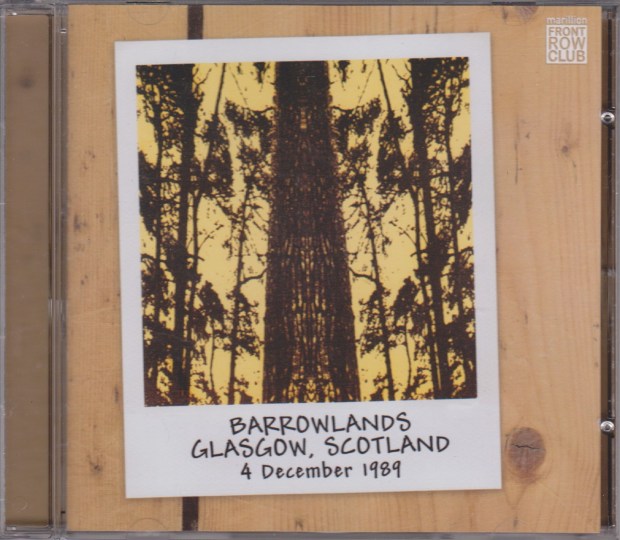
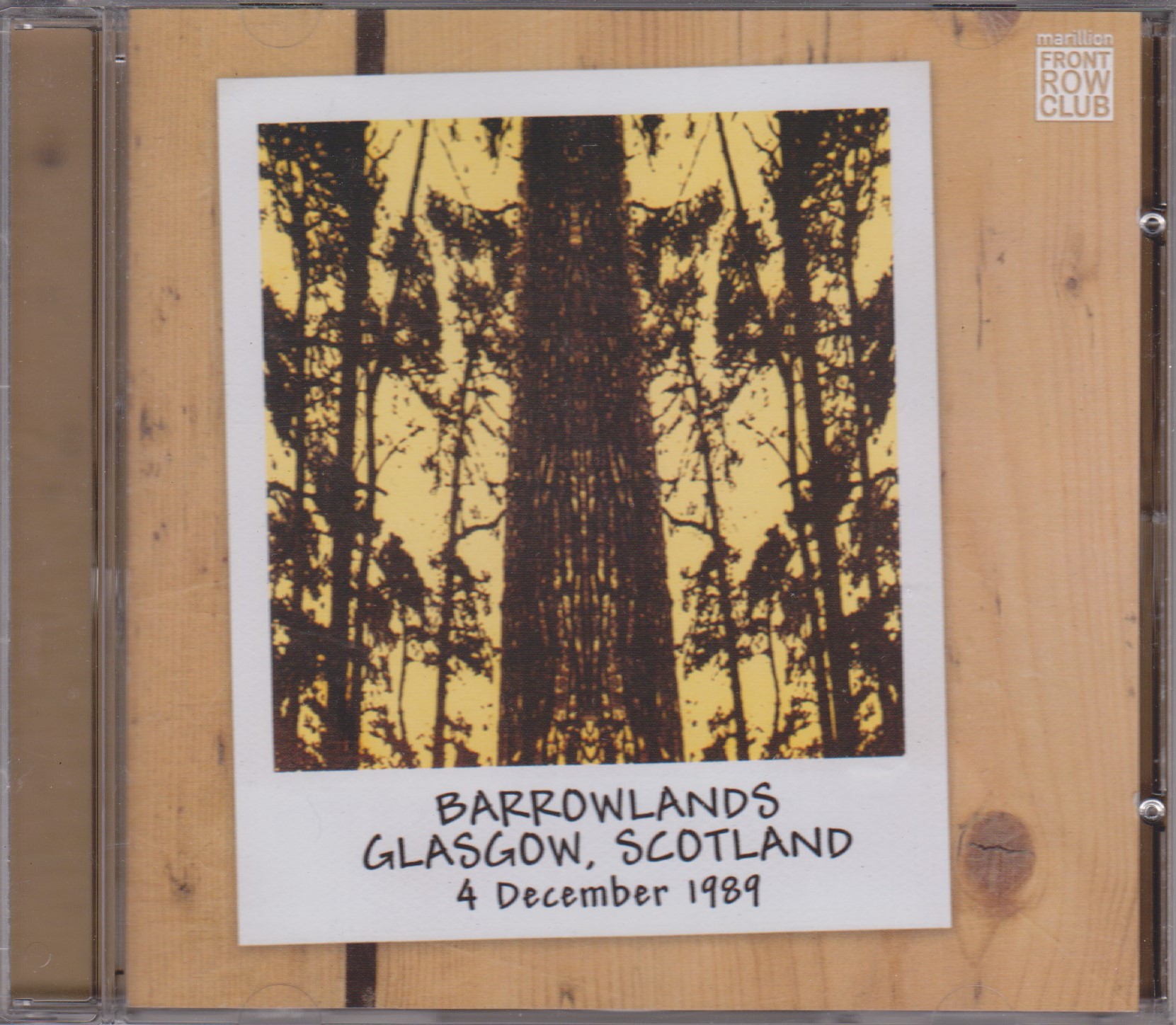
Scan_20160615MARILLION – Barrowlands, Glasgow, Scotland. 4 December 1989. (FRC-005 – 2002 Racket Records)

Marillion have always been an innovative band, not just musically, but also the ways they interact with their fans.  In 1992, they started offering mail-order exclusive live albums to the diehards.  The first one, Live in at the Borderline sold out quickly.  Live in Caracas took a few years to sell out; I have an original copy of that one.  The third, Live in Glasgow, also sold out quickly.  Today I own a remastered and reissued version, Barrowlands, Glasgow, Scotland, released in 2002 as part of Marillion’s Front Row Club.

The Front Row Club was a subscription service.  Sign up for a year, and Marillion would mail you a live album every two months.  Some were single discs, like Barrowlands, and some were doubles.  They were sourced from all parts of Marillion’s history.  Subscribers could choose to opt out of releases they didn’t want, for example I didn’t need a second copy of Caracas.  There were 43 Front Row Club releases in total, and I have them all (excepting the optional Caracas).  (For a review of FRC-006:  River, click here.)

In 1989, Marillion were showing off the new guy, Steve “H” Hogarth on vocals, guitars and keyboards.  If they were to get a cold reception, Scotland would have been the place.  After all, former singer Fish was a proud Scot, and replacing a singer is always dicey.  Fortunately for Marillion, fans embraced Steve H very much, and the Barrowlands show is evidence of that.

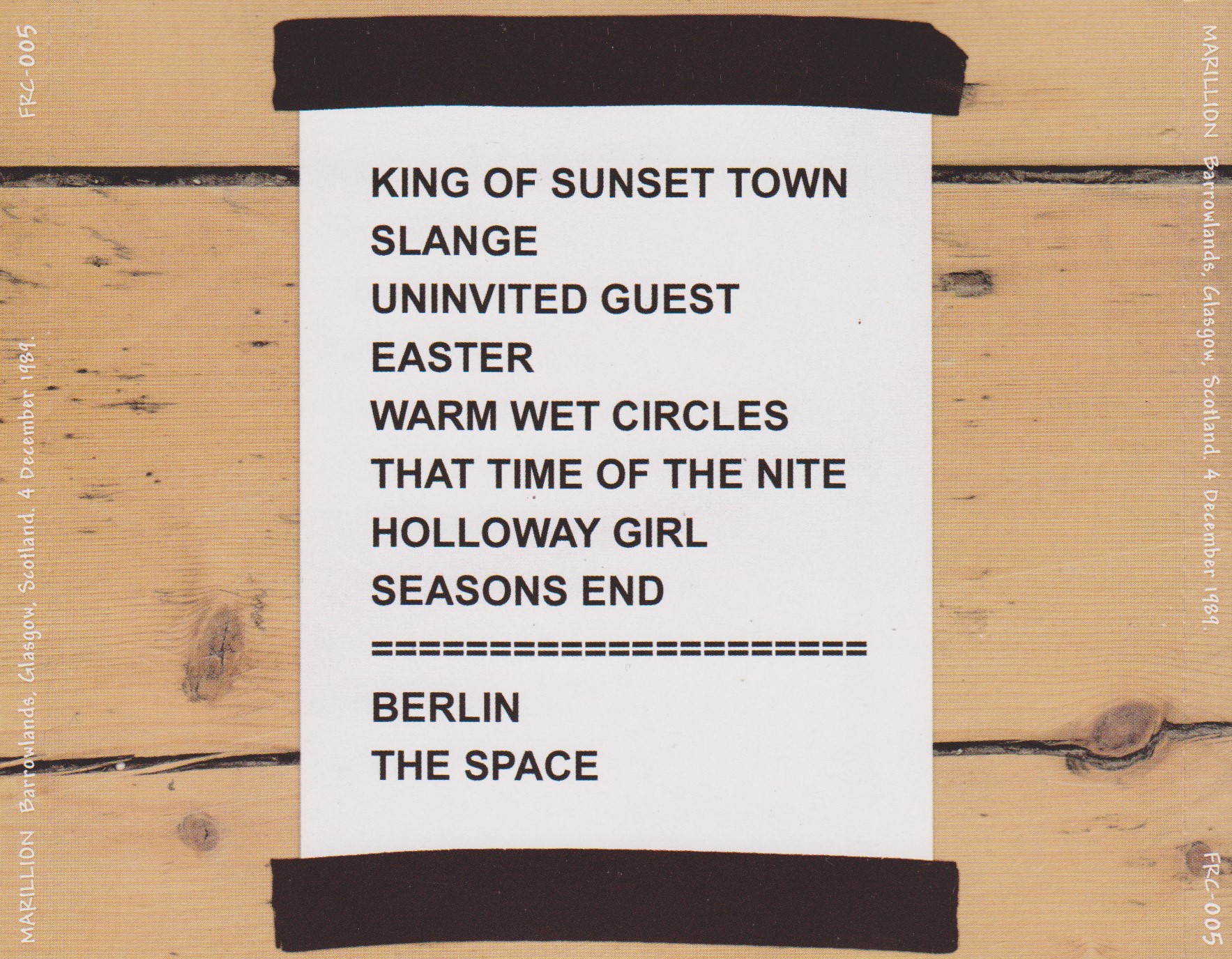
Opening with the brand new classic, “King of Sunset Town”, it sounds like Marillion had them in the palms of their hands from the first notes.  This releases was recorded from the desk onto cassette tape, and it sounds remarkably good considering!  “Sunset Town” has the instrumental adventures that fans expect, but with a passionate vocal very unlike Fish.  Singing along, the fans were already familiar with the new material.  The drums sound amazing in the Barrowlands, and Steve Rothery’s solo had the fans screaming.

There are only eight tracks from Barrowlands — apparently, somebody forgot to flip the tape as the band played.  Instead, two songs from a show in Bradford were added to the end.

“Slàinte Mhath” (or “Slange” as it is spelled phonetically on the back cover) is a beloved fan favourite. It was one of the songs that H felt more comfortable singing.  The crowd grew quiet.  This was an important song to get right.  No worries there.  “And you listen, with a tear in your eye, to their hopes and betrayals, and your only reply is slàinte mhath.”  (Cheers, good health.)  The line is greeted with a few excited screams.  While he was nothing like Fish, H managed to raise the hair on my arms.

“Good evening Glasgow!  It’s very nice to meet you.  We waited a long time for this!”  It must have been a tremendous relief for H to be accepted in Glasgow.  Two new singles follow “Slàinte”: “Uninvited Guest” and the ballad “Easter”. These are songs that remained in the setlist for tour after tour, and they do not vary much from other live takes. It is interesting to listen to these fresh versions, new to the band as they were to the crowd. “Easter” is youthful and beautiful.

Hogarth seemed drawn towards the Clutching at Straws material. “Warm Wet Circles”/”That Time of the Night” were performed for a few tours after, and Steve did them very well.  It’s a 10 minute slab of progressive rock with labyrinthine lyrics as only Fish could write.  Hogarth nailed it.

“On promenades where drunks propose to lonely arcade mannequins,
Where ceremonies pause at the jeweller’s shop display,
Feigning casual silence in strained romantic interludes,
‘Til they commit themselves to the muted journey home.”

I mean come ON!

And that’s it for old songs.  More were played that night, but the tape didn’t get them.  Too bad, because they included “Market Square Heroes”, “Incommunicado”, “Kayleigh” and lots more.  Barrowlands goes on with “Holloway Girl”, which boils with a dark intensity.  Marillion and Mark Kelly are very good at using keyboards for texture, and this is a good example.  Also dark and powerful is “Seasons End”, introduced by the Christmas carol “Oh Come Emmanuel”.  This early warning about global warming is a reminder that this is not some new theory.  We’ve known about global warming for decades.  Marillion turned that into a pretty epic quality track.

That’s it for the Barrowlands tracks.  “Berlin” and “The Space” are added to make it an even 10.  There’s a shift in sound quality as it gets a little clearer, but it’s not obtrusive.  “The Space” is a very apt way to end a CD.

Rating something like this…it’s almost “What’s the point?”  There are 43 of these bloody Front Row Club albums.  You can’t get them anymore.  You have to look at this as a good but incomplete set of some of the earliest live Marillion with Hogarth.  When we’re talking about a band with probably 100 live albums or more, it all becomes a little hard to see the forest for the trees!

3.5/5 stars?

Scan_20160615 (2)

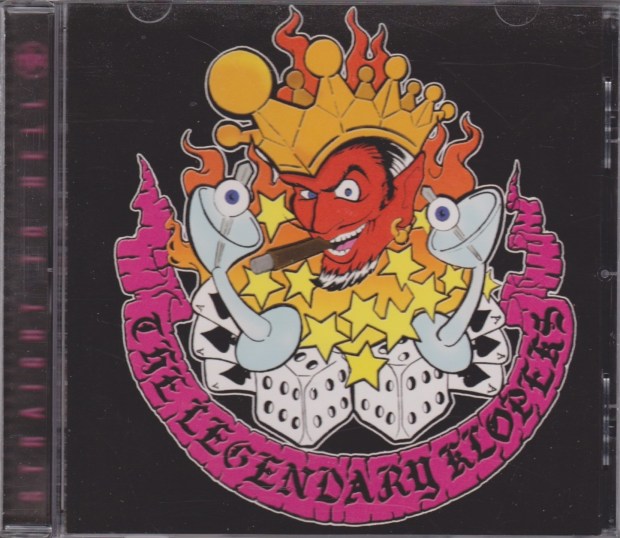
REVIEW: The Legendary Klopeks – Straight to Hell (2002)

STRAT

Happy Canada Day! Here is your Can-Con for this holiday: The Legendary Klopeks. According to bassist Mike Lukacs, “We used to always play Shannon [Larratt]’s Canada Day BME BBQ every year. Always liked that.”

For a review of the Klopeks’ first album Homicidal Suicidal Klopekticidal by Aaron at the KMA, click here!

THE LEGENDARY KLOPEKS – Straight to Hell (2002 Pink Skull)

Once upon a time, in Niagara Falls Ontario, there was a band.  This was a band unlike any other.  They were fronted by future Guinness’ World Record holder Sweet Pepper Klopek.  Sayeth the Huffington Post, “Sweet Pepper Klopek…has set many Guinness World Records [and] managed it again by lifting a 5.4 kilogram, or 12-pound, sledgehammer suspended from two huge fish hooks plunged through his cheeks.”  Mixing punk rock, wrestling and humour, their best album is the 24 track Straight to Hell.

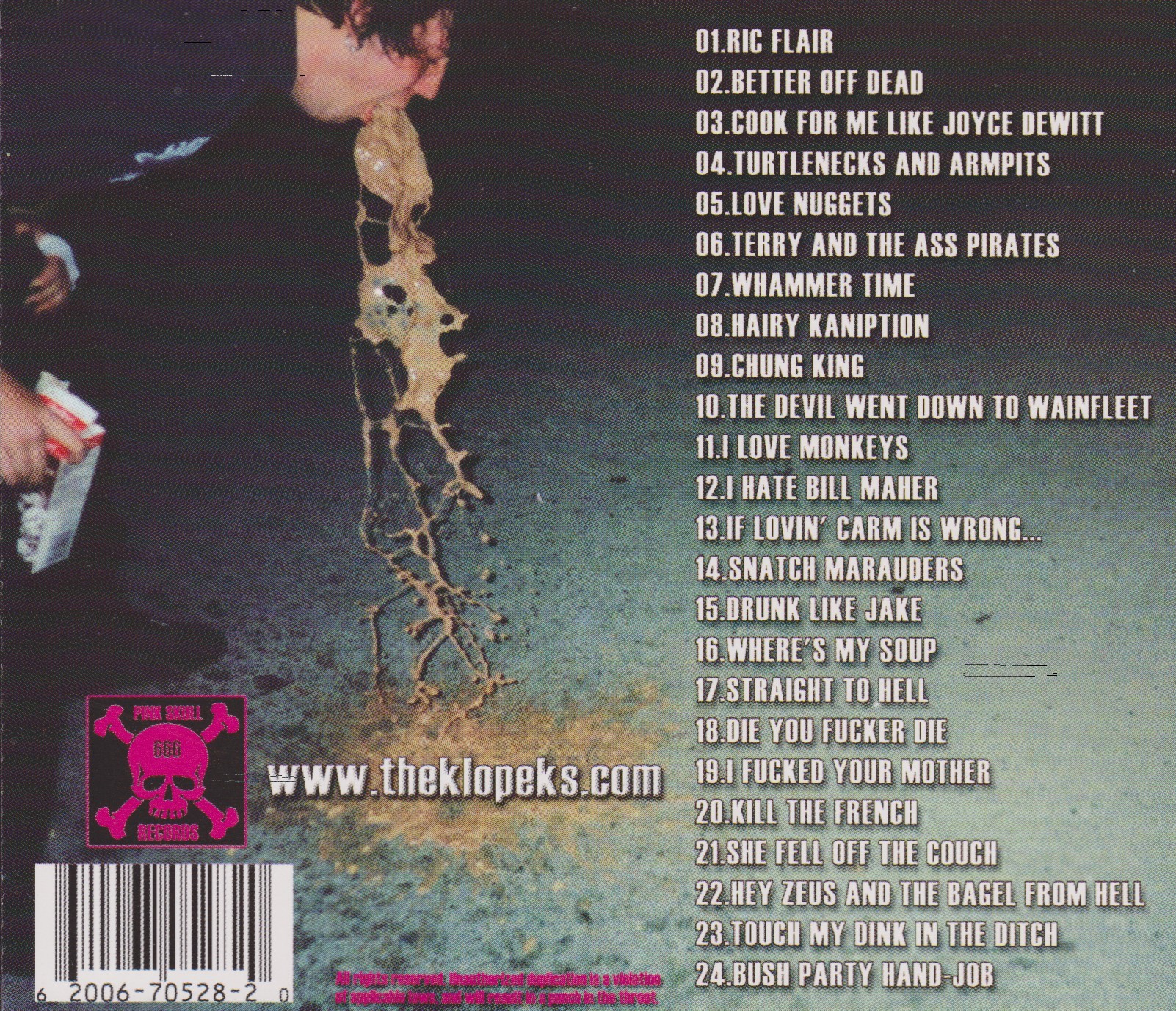
Every song ends with the words “fuck you!” and almost all are under three minutes.  There are also several tracks only a few seconds in length, and yes, even they end with “fuck you”!  Some sample song lyrics:

“Where’s my soup?  Fuck you!” (“Where’s My Soup”, 10 seconds)

“Touch my dink in the ditch.  Fuck you!”  (“Touch My Dink in the Ditch”, 12 seconds)

“Turtlenecks and armpits.  Fuck you!”  (“Turtlenecks and Armpits”, 20 seconds)

For the record, “Where’s My Soup” has long been this writer’s favourite Klopeks tune.  For a while I considered getting a “Where’s My Soup” tattoo.  A tattoo shop in St. Catharines Ontario used to offer free tats to anyone getting Klopek ink.  And I did consider it, but ultimately decided against.  After all, how did I know that in 10 years time, my favourite song wouldn’t be “Terry and the Ass Pirates”?  Or “Bush Party Hand Job”?  Or “She Fell Off the Couch” which has an actual guitar solo?

The fact of the matter is, every song is fast, brittle, vulgar and incredibly fun.  The lyrics are fuck-laden beyond conception.  The Big Lebowski himself has never dropped so many F-bombs in just 33 minutes. Nothing is taken seriously. Most songs start with bass noodling via Lemon Kurri, moving on to Sweet Pepper screaming like a man possessed. Regardless, these are actually really good punk songs! There is nothing polite or safe on this CD — that’s why they called it Straight to Hell!  No apologies.  “When it’s all said and done and I’m dead and gone, life’s a fuckin’ game, and fuck you I won!”

5/5 stars

Scan_20160622 (3)