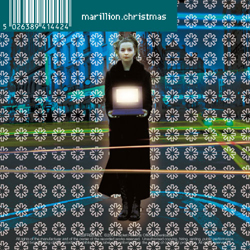
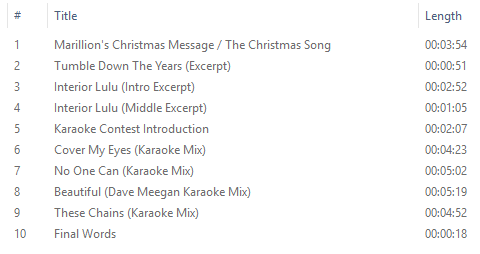
The second Marillion Christmas CD was sent out the year of marillion.com, a pretty good if misunderstood experimental studio album. Marillion began to incorporate elements such as dub and loops. They were also getting the hang of this special fanclub Christmas CD idea. Where the first was a mixed bag, the second is one of the their best.
Opening with a hauntingly beautiful “Gabriel’s Message”, the mood is set. Steve Hogarth’s enviable golden pipes are front and center. Heavier instrumentation begins to ebb and flow halfway through, and a cool carol is ended. If you think Trans-Siberian Orchestra is cool, you’re going to love this. It’s better.
Let the rarities commence, with the single edit of “The Answering Machine” from Radiation, unavailable on commercial CD. Still an enjoyable song, with its cacophony of noise and keyboards lending it a unique progressive flavour. The next two songs are real treats. “Interior Lulu” and “Tumble Down the Years” were both recorded for Radiation, but held back for marillion.com because they didn’t quite fit. For the first time, the Radiation mixes are included here. (Not for the last time, as Marillion soon issued extensive “making of” albums for their later catalogue.) If Radiation had included them, it would have been a far more mellow album. Both tracks are quite different from the final versions. “Tumble Down the Years” has a more rock and roll vibe.
Up next, a “Technopop Remix” of “Memory of Water”, a runner up for the “Big Beat Mix” that went out for CD singles and bonus tracks. It’s not as iconic, and never really sounds like Marillion the way the “Big Beat Mix” does, and it’s far too long (10:02). There are then three acoustic tracks: “Abraham, Martin and John”, “Runaway” and “Estonia” originally done for a cancelled French EP. You can find acoustic versions from this period on the album Live From the Walls, but these ones sound properly recorded in a studio. “Abraham, Martin and John” is so good it will bring tears to your eyes. An absolute treasure.
Hey remember on the 1998 CD, when Marillion included some instrumental “Karaoke” versions for a contest? One of the winners is on this CD, the Cradley Primary School’s lovely version of “Beautiful” (the Dave Meegan mix). They must have had some cool teachers at that primary school! It’s pretty cool hearing the kids singing those words.
Heaven only knows that we live in a world, Where what we call beautiful is just something on sale. People laughing behind their hands, While the fragile and the sensitive are given no chance.
Finally, the annual Christmas message from the band is placed at the end of the CD instead of the start. They’re not as goofy (or drunk) on this instalment, as they run through the tracks and wish us all a Happy Christmas. Thanks, guys!
MARILLION – & the Web Christmas 1998 – Happy Christmas Everybody! (1998 Racket Records)
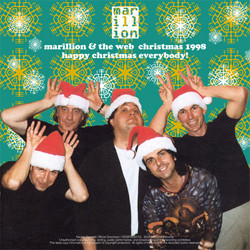
Marillion have always been a fan-friendly band, offering up special rarities for the most dedicated. In 1998, fan club members received the very first Marillion Christmas CD. It’s one of the least satisfying of what turned out to be a long-running proposition, but since it was the first, we’ll let it slide. At just 30 minutes, Happy Christmas Everybody is also the shortest. Most of the music consists of “Karaoke mixes” for a contest they were running. Record your own vocals, send it in, and win!
The first-ever “Christmas Message” track from Marillion explains the origin of the CD, as the guys crack up themselves in the background. This is mixed into “The Christmas Song”, a festive version of “We Wish You a Merry Christmas” by Marillion. (A standalone song would have been better.)
Exciting at the time, the next tracks are excerpts from the next Marillion album, marillion.com. Hey, it was 1998, what are you going to do? Jethro Tull had an album called J-tull.com. Regardless of the title, this CD had sneak previews of “Interior Lulu” (two snippets) and “Tumble Down the Years” from the next album. The mixes are not the final ones from the album, which is interesting to fans, but they’re so damn short. They’re also samples of very mellow sections of songs, which may (or may not) have given false impressions of the new album.
The four Karaoke mixes are all but full length, with one done by Marillion producer Dave Meegan himself. The instructions are so quaint. “We’re inviting you all to make tapes!” Tapes! Just mail them in! It’s a little odd to hear landmark pop rockers like “Cover My Eyes” without the massive hook of the lead vocals! All you get for vocals are some backing tracks on the chorus. Fabulous drums on that track, by the way Mr. Mosley. “No One Can” is cool because you can hear the backup instrumentation a lot more without the syrupy singing. “Beautiful” is the one by Dave Meegan, and as such it’s the most listenable. He mixed in new elements, making it more like an interesting instrumental arrangement. The more recent “These Chains” is probably the least appealing of the Karaoke songs due to its minimalist approach.
We’ll cut Marillion some slack. It was the early days, their first Christmas CD, and the exclusive mixes are appreciated even if the album previews are not. There aren’t any really usable Christmas songs on this album, a problem they’d fix next time out.
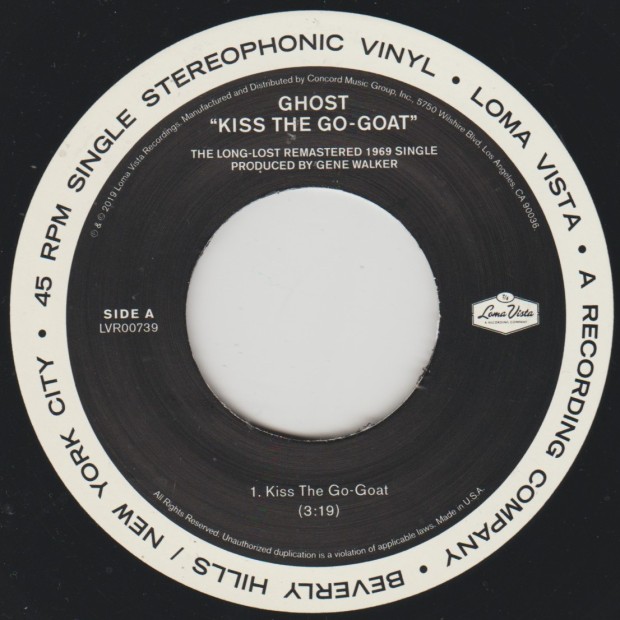
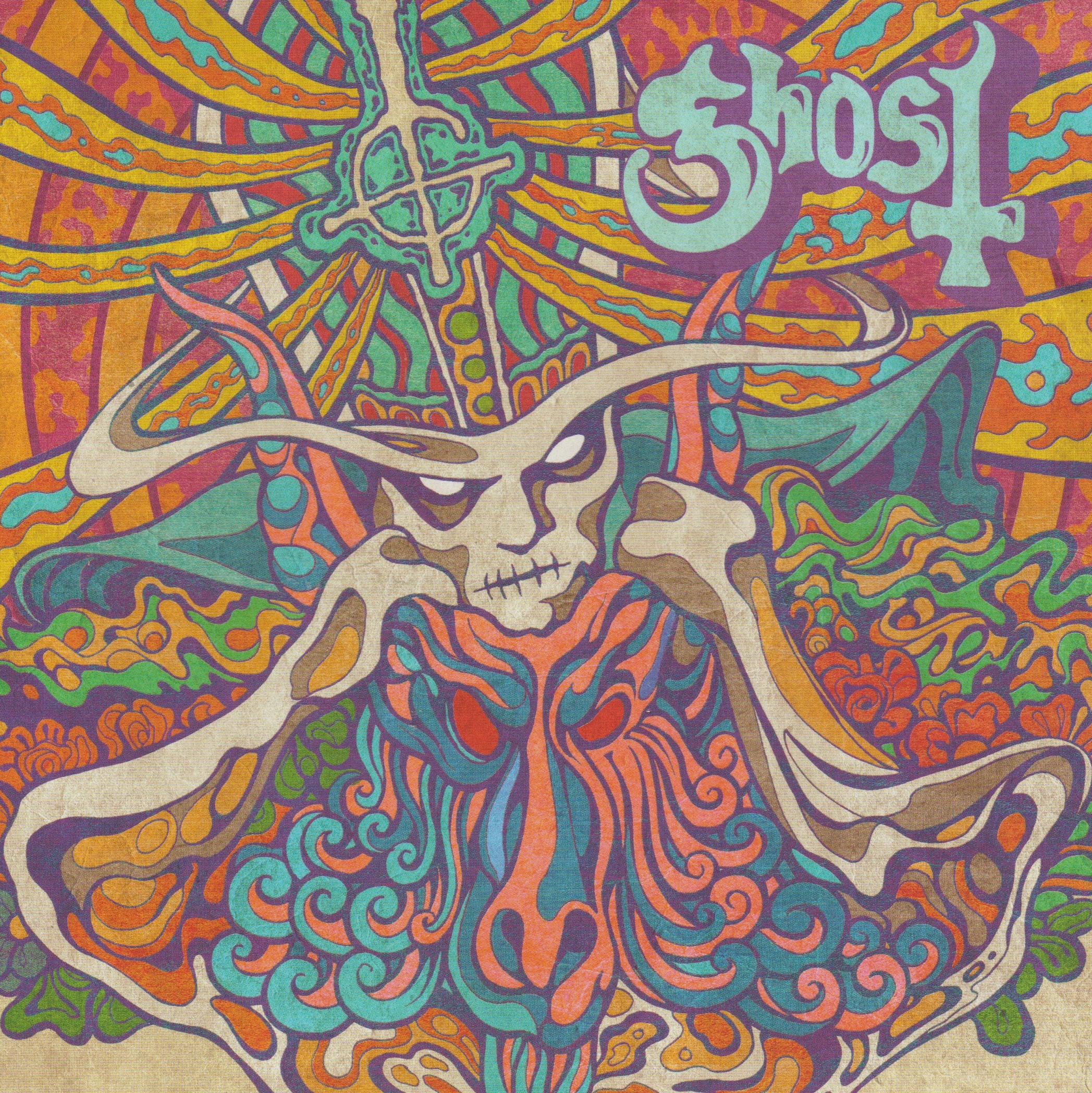
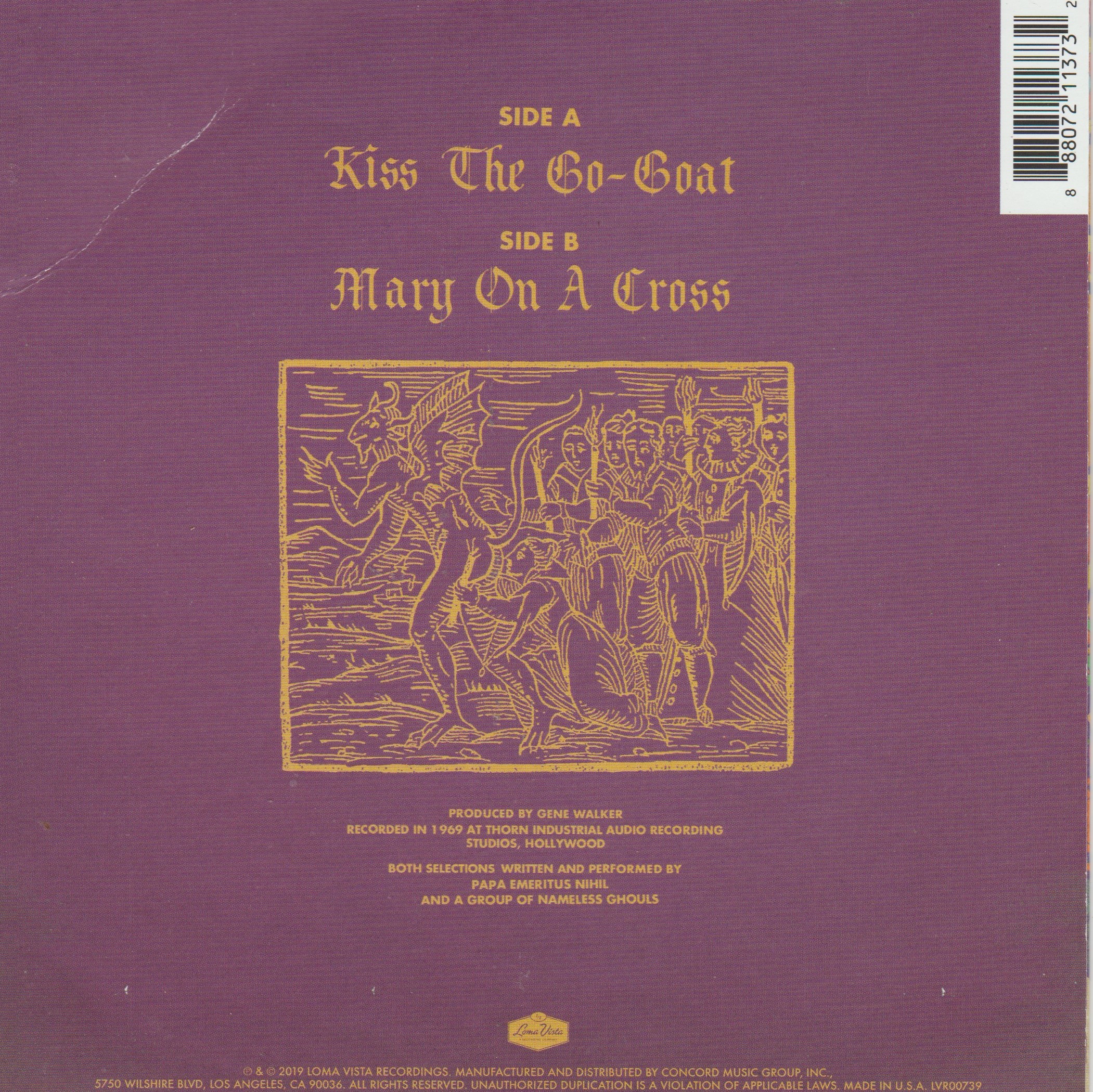
GHOST – “Kiss the Go-Goat” (2019 Loma Vista 7″ single)
Ghost began as a gothic, Satanic metal experiment. They grew to include more pop and more humour, and while it hasn’t all been good, most of it has. In 2019, Papa Nihil and his merry band of Nameless Ghouls have returned with the kitschy single “Kiss the Go-Goat” / “Mary on a Cross”. It’s not much of a departure from their last album, the excellent Prequelle.
Look at the subtitle on the A-side of the label. “The long-lost remastered 1969 single.” That Ghost humour again.
“Kiss the Go-Goat” has a driving organ/guitar riff that is the kind of stuff recent Ghost glory has been based on. The corny chorus of “Satan, Lucifer…” is far removed from the old orthodox days of “Satan Prayer” and ante-nicean creeds. But it rocks, solidly and without embarrassment. A track this good could easily have been on Prequelle. “Mary on a Cross” doesn’t have the same impact, but is not an also-ran. It’s a little darker but the recurring organ part is perfectly piquant.
If not for the worrisome possibility (probability?) that these two songs will show up on some kind of future deluxe edition, this single would be an absolute must for all boys & girls, far & wide. In fact, it has shown up on a very very expensive edition of called Prequelle Exalted, in a disc called Seven Inches of Satanic Panic. Unless you plan on spending that kind of dough, maybe buying this single is a good option after all.
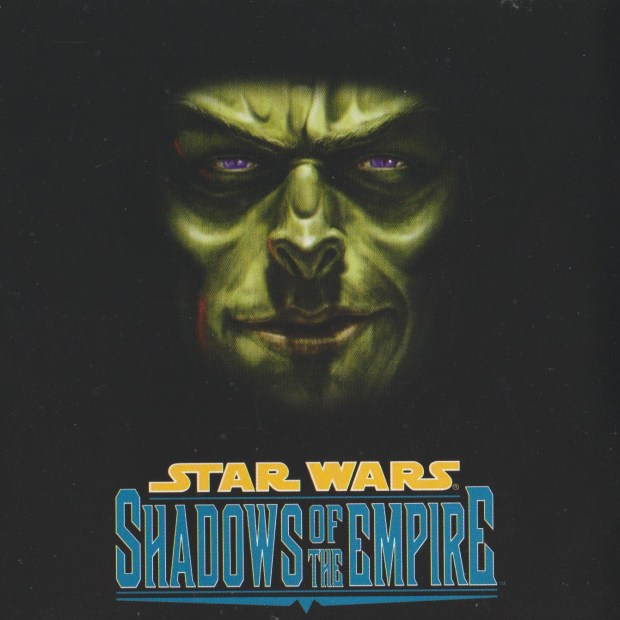
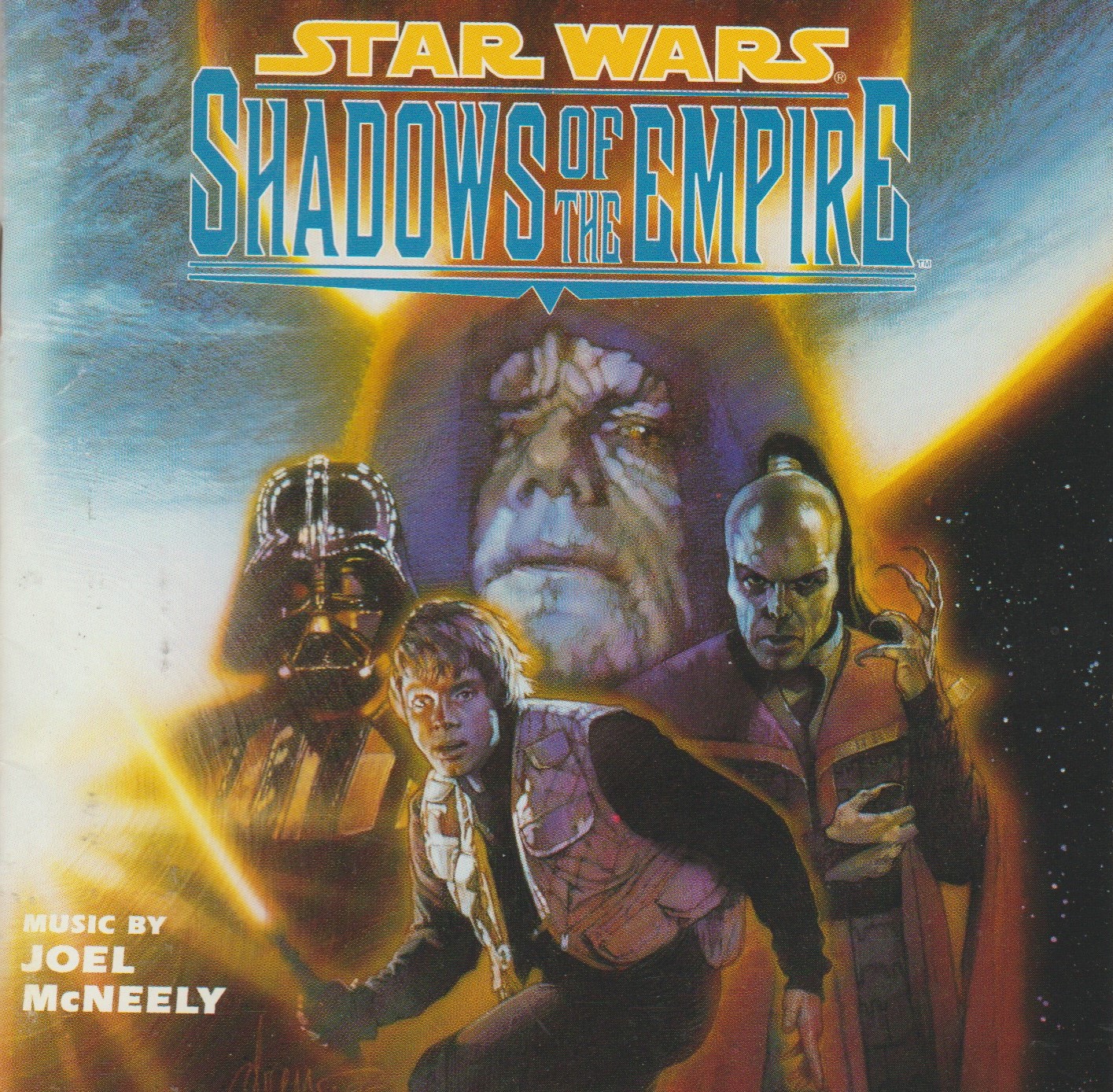
STAR WARS: Shadows of the Empire soundtrack (1996 Varese Sarabande)
by Joel McNeely
Things were starting to heat up! As Lucasfilm toiled away at the Star Wars special editions behind the scenes (and Episode I even further behind the scenes), they also launched a huge new multi-media story. It was called Shadows of the Empire, and it was meant to represent a movie between The Empire Strikes Back and Return of the Jedi. Just as Star Wars was re-entering the public consciousness again, out came this massive, sprawling thing that was meant to make you feel like you did when a new Star Wars movie was released. It included:
A comic miniseries by Dark Horse
A novel by Steve Perry (not the singer)
A new Kenner toyline
Topps trading cards
Nintendo 64 first-person shooter game
A soundtrack composed by Joel McNeely
The catch? You had to get everything in order to get the complete story of Shadows of the Empire. Scenes in the game were not in the comics or novel, scenes from the comics were not in the game, and so on.
McNeely had done a bit of soundtrack work, but had also crossed paths with Lucasfilm when he scored The Young Indiana Jones chronicles for television. He was facing a losing battle by being the first composer besides John Williams to score a Star Wars soundtrack. McNeely provides ample liner notes for each track of his score, explaining the scenes they represent from the fiction and how it translates into music. These valuable notes are a terrific example of why listening to physical product is always the best way to listen to music.
The audio journey begins with the Star Wars theme, as if it were a full-fledged film score. Differences can be heard, but not deviating far from course. “Leia’s Nightmare” begins quiet and prequel-esque, with hints of “The Imperial March” and other classic Williams themes. And even in retrospect, it is thrilling hearing them in the context of something new.
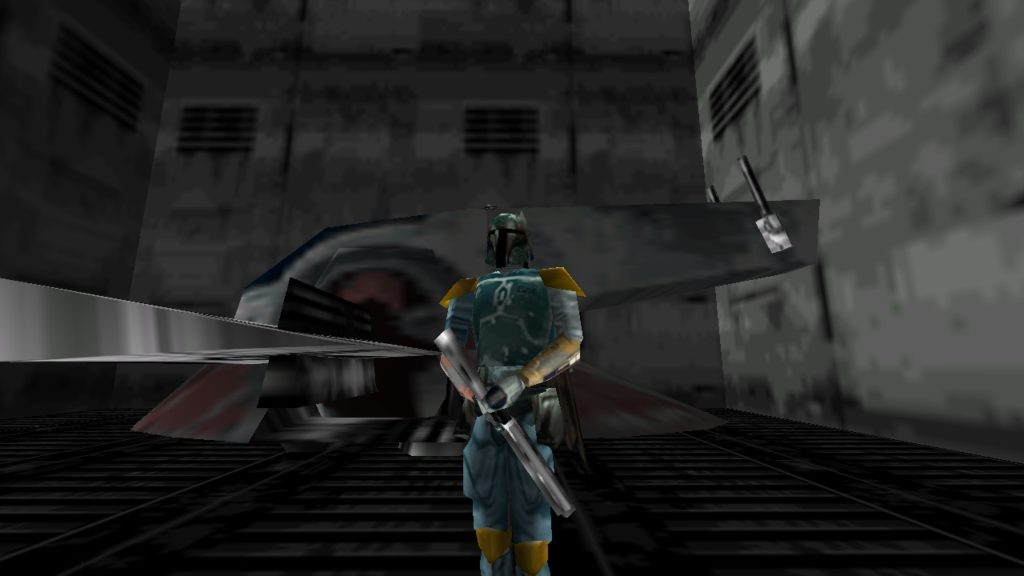
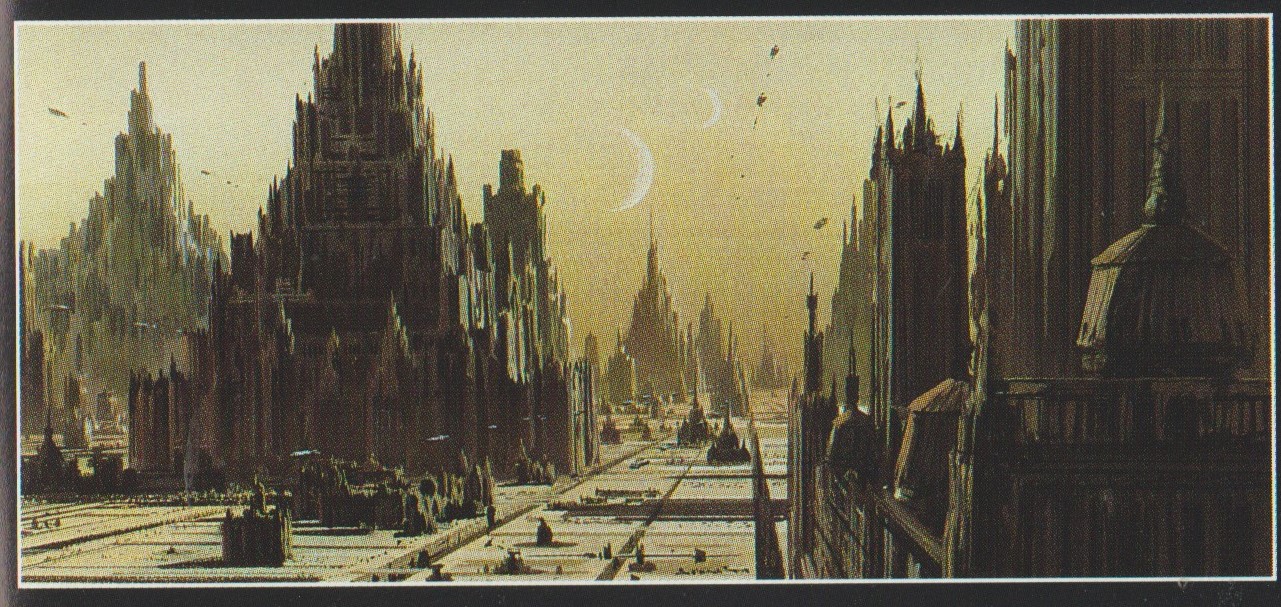
“The Battle of Gall” is an early attempt to rescue Han Solo from Boba Fett. Fett has stopped at the Imperial moon of Gall on his way to Jabba the Hutt, with Solo frozen in carbonite. Why? No reason, except to milk the Boba Fett character even further. Military drums can be heard as Luke and friends prepare their daring mission…doomed to fail, of course, since we have all seen Return of the Jedi. A bouncy new theme in this piece sounds out of character, but memorable. “Imperial City” is our first glimpse of the Galactic capitol world of Coruscant. Much like it is described in The Phantom Menace, it is a planetary city. Ideally, you’d be leafing through the Ralph MacQuarrie paintings of the planet while listening to the imposing horns and drums. A choir welcomes you to the city amidst fanfares and trumpets. None of this sounds like Star Wars, but much of it is good.
An action scene on Tattooine follows, as Luke is chased by goons on speeder bikes. He is rescued by new character Dash Rendar, a poor man’s Han Solo. Dash has his own swashbuckling theme. He was a huge part of the Shadows of the Empire campaign. His ship, the Outrider, was saucer shaped with a side cockpit like the Millenium Falcon. Lucas added it to the Star Wars special edition in ’97, making it screen canon forever.
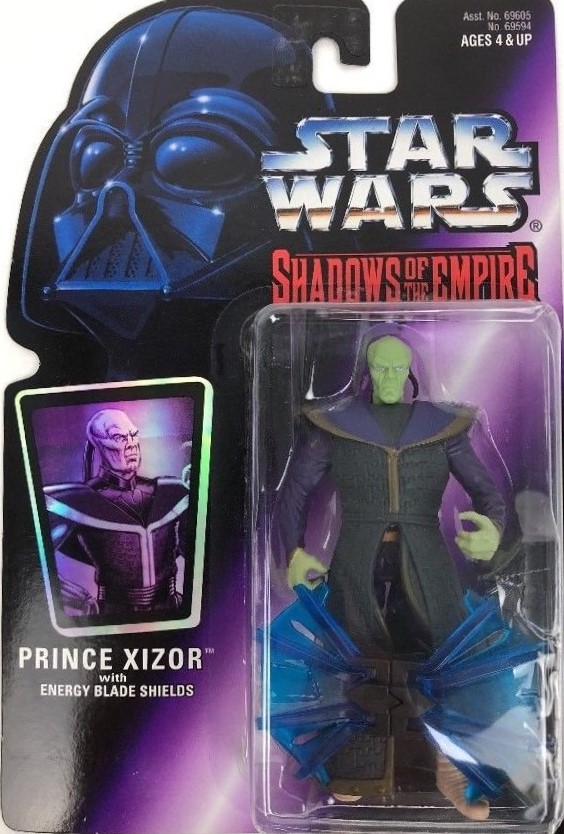
Leia’s mission follows, as she searches the lowest levels of Coruscant looking for a crime organisation known as Black Sun. She wishes to forge an alliance. Their leader, the tall green Prince Xizor (shee-zor), is the main villain of Shadows. Not nearly as terrifying as Vader or the Emperor, but he has his own scary theme. The music paints a picture of an evil entity with refined, extravagant tastes. He has one advantage over Leia when they meet: alien pheromones that make him irresistible to women. But Leia loves Han. This battle of wills is composed as a dramatic ballet called “The Seduction of Princess Leia”.
We learn Xizor failed to seduce Leia on “Night Skies”, a piece of music he shares with Darth Vader, as he attempts to contact Luke through the Force. The dark side of the Force is palpable in the air, then Vader’s theme returns. Next, Luke rescues Leia from Xizor’s palace on “Into the Sewers”, which are the only way to sneak in undetected. Xizor is defeated on “The Destruction of Xizor’s Palace”, when a massive space battle ensues. A choir heightens the tension while exciting action music animates what’s happening. Grab your action figures and play along.
The only serious flaw is that the soundtrack should really end like a Star Wars movie ends — with the credits theme music. That aside, Shadows of the Empire is an enjoyable piece of music when you want to hear something just a little different and contemplative in the galaxy far, far away.
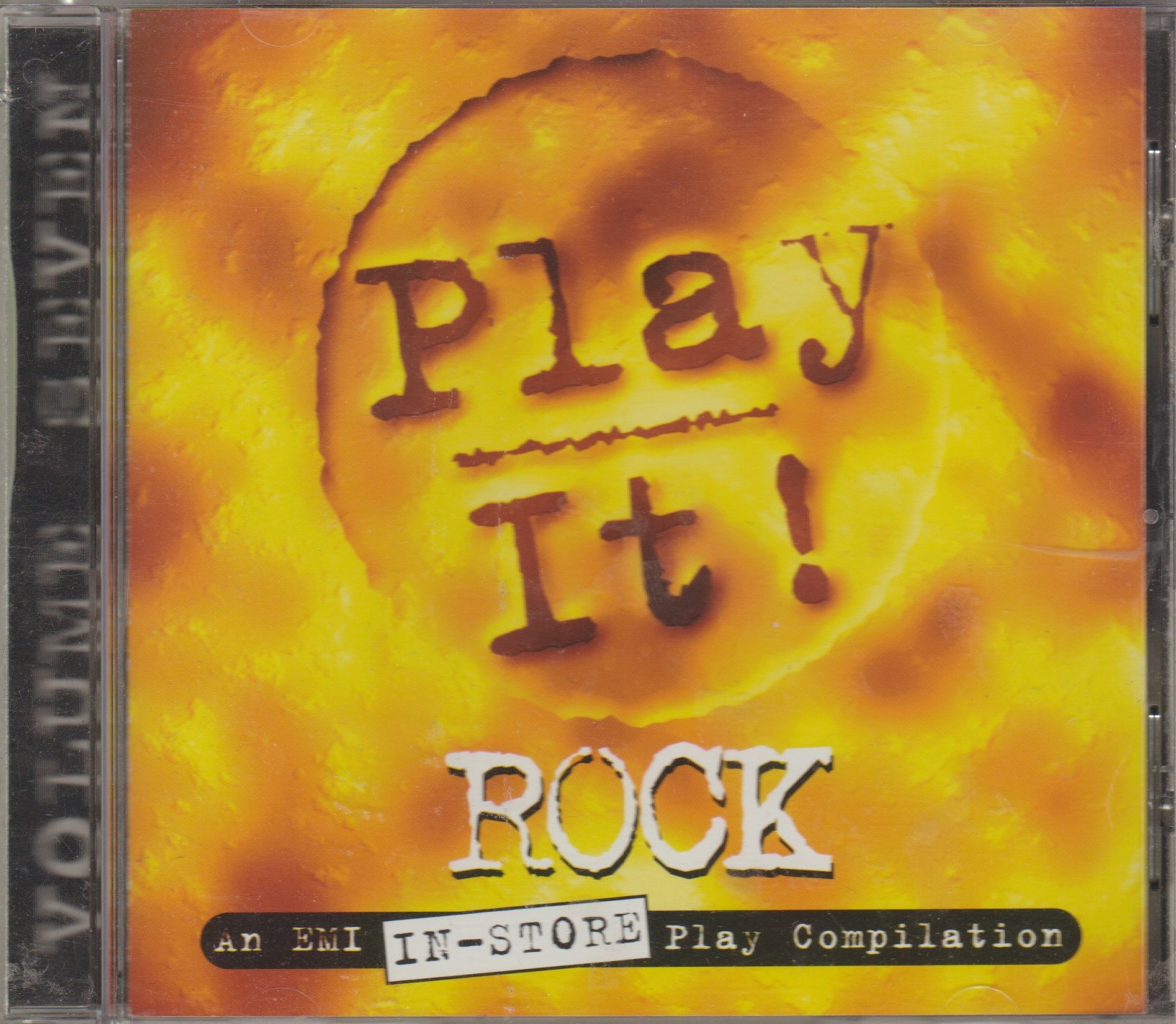
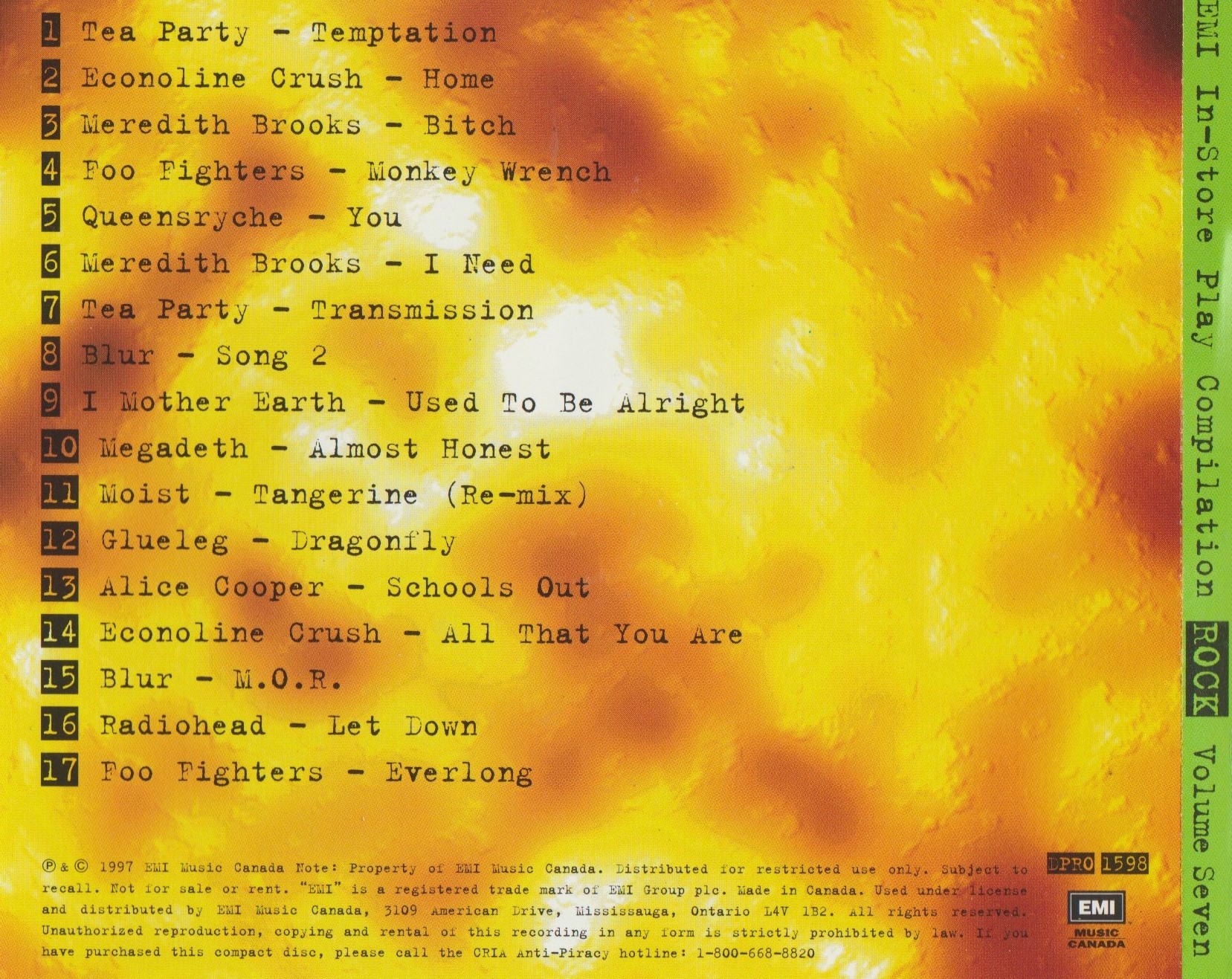
Play It! Volume Seven – ROCK – An EMI In-Store Play Compilation (1997 EMI promo)
“Woah! I own ‘Song 2’. How about that.”
That was my first reaction upon revisiting this old promo CD from the Record Store days. I really didn’t know that I had that song, and I’m sort of glad that I do. This was a freebie, and not a bad one as it had some rarities on it. In fact there’s only one artist on this disc I’d flat-out skip. Let’s dive on in.
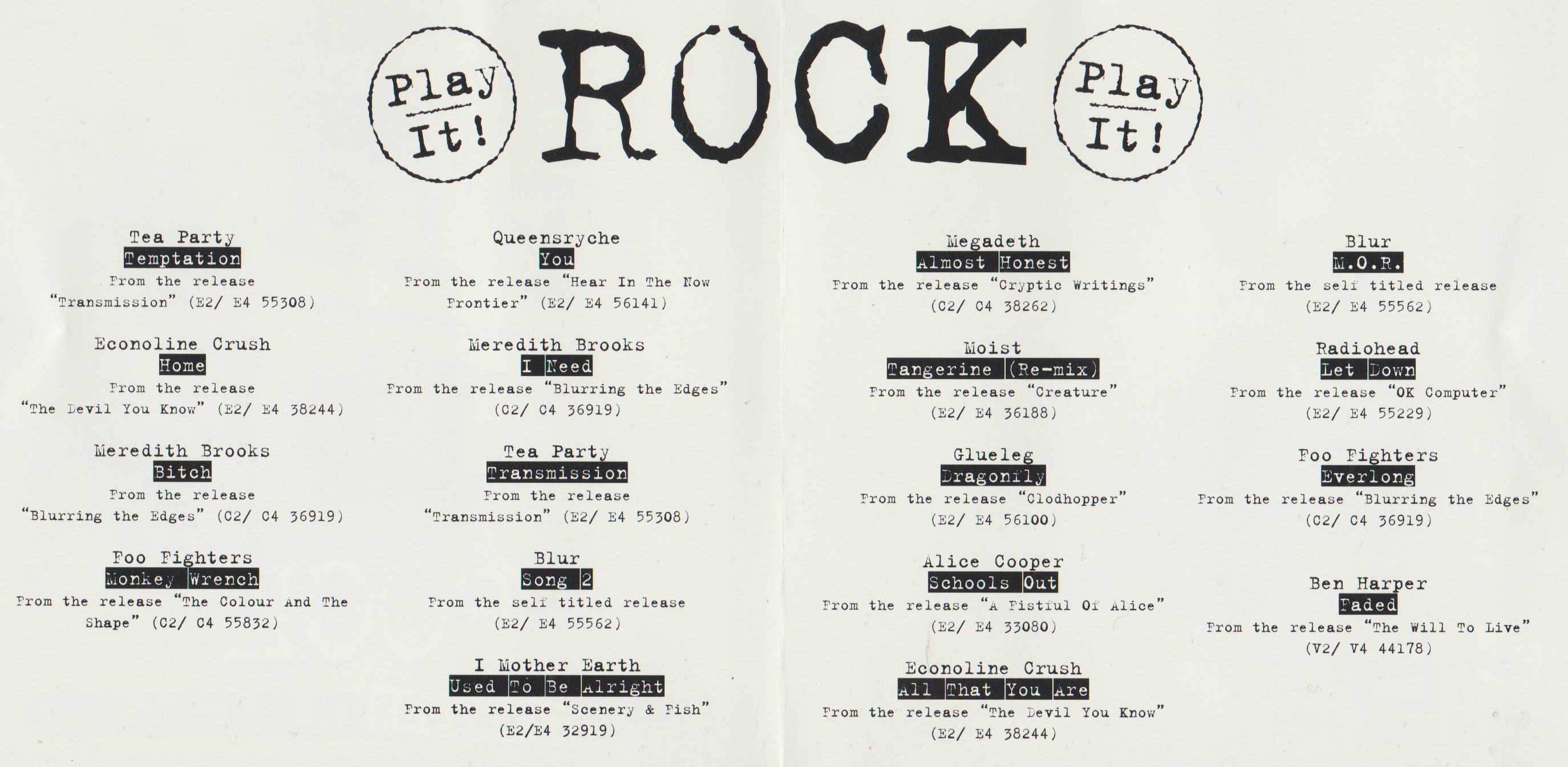
The first track is a rarity: an unadvertized single edit of “Temptation” by the Tea Party. “Temptation”, crossing the new sample-driven sounds of the late 90s with classic exotic Zeppelin, was huge. The single edit snips off the extended intro. Industrial rock band Econoline Crush is up second, who also had a big album (The Devil You Know) at the time. “Home” was a memorable fast-paced single, but their big single “All That You Are” is also included as track #14. Far more mainstream, “All That You Are” was omnipresent in 1997. It’s still a little too over-familiar to be enjoyable.
Skip Meredith Brooks. I’ll be happy if I never hear the novelty song “Bitch” ever again. Brooks has a second track on this CD, “I Need”, which suffers due to the spoken word verses. No thanks. Skip ’em both. “I Need” reminds me of what I hated about 90s music.
Foo Fighters’ “Monkey Wrench” and “Everlong” were two of the greatest singles of 1997. Fast paced, drums-a-blazing, and perfectly rifftastic. In ’97 Grohl could do no wrong. He released one of the few perfect albums of the year. ’97 was Peak Foo — prove me wrong. Flawless songs, still not taxing on the ears. Probably never will be.
Queensryche had a new album in 1997, the ill-fated Hear in the Now Frontier. “You” wasn’t one of the most notable songs, and here on this mainstream compilation, doesn’t fare well. I don’t think EMI knew what to do with Queensryche, so hey let’s pick a song with 90’s intonations and throw it on this store play disc. A second Tea Party song, “Transmission”, is its full unedited length, combining the same ingredients as “Temptation” but at lower velocity. “Song 2” follows that, I song I’m admittedly not bored with at all. A second Blur track later down the line, “M.O.B.” boats a cool riff and pop sensibilities.
I Mother Earth were riding a wave with their second album Scenery and Fish. I’m not a fan of that disc and I can usually do without “Used to Be Alright”. Fortunately Megadeth bring some metal to the proceedings. From the underrated Cryptic Writings comes “Almost Honest”, a hard rocking single with nary a glimmer of thrash. Great song from a period when Megadeth were quite adept at writing mainstream metal.
Rarities ahoy! Moist’s “Tangerine” is remixed here, a mix that is far more industrial than the album, but that’s why remixes go on weird compilations I suppose. Always fascinating, Glueleg are up next with “Dragonfly”, one of their catchiest numbers, still maintaining their weird genre-bending tendencies.
Alice Cooper steps in with a live version of “School’s Out”. This being 1997, that automatically means it’s the one from A Fistful of Alice. It’s a little strange hearing “School’s Out” on a compilation of all-new material, but I suppose EMI didn’t have confidence that a new Alice song (“Is Anyone Home?”) would attract new buyers. But they were more likely to hear Radiohead’s “Let Down” and buy OK Computer instead. It’s a stunning ballad that might have been unfamiliar to those who hadn’t bought the album yet — the exact people this CD was aimed at! The CD closes on the slide-inflected “Faded” by Ben Harper. It’s choked by unnecessarily grungy production.
Record companies rarely sent us free CDs, because we were a used CD store and they assumed we’d sell ’em. What they didn’t realize was that it was usually guys like the asshole at CD Plus that would be selling their free CDs. We’d try to be educated about what we bought, and avoid the promos like this one. If a customer left it behind for us to take for free, it was up for grabs. As a store-play disc, this would have been pretty good, assuming we had all those albums in stock to sell.
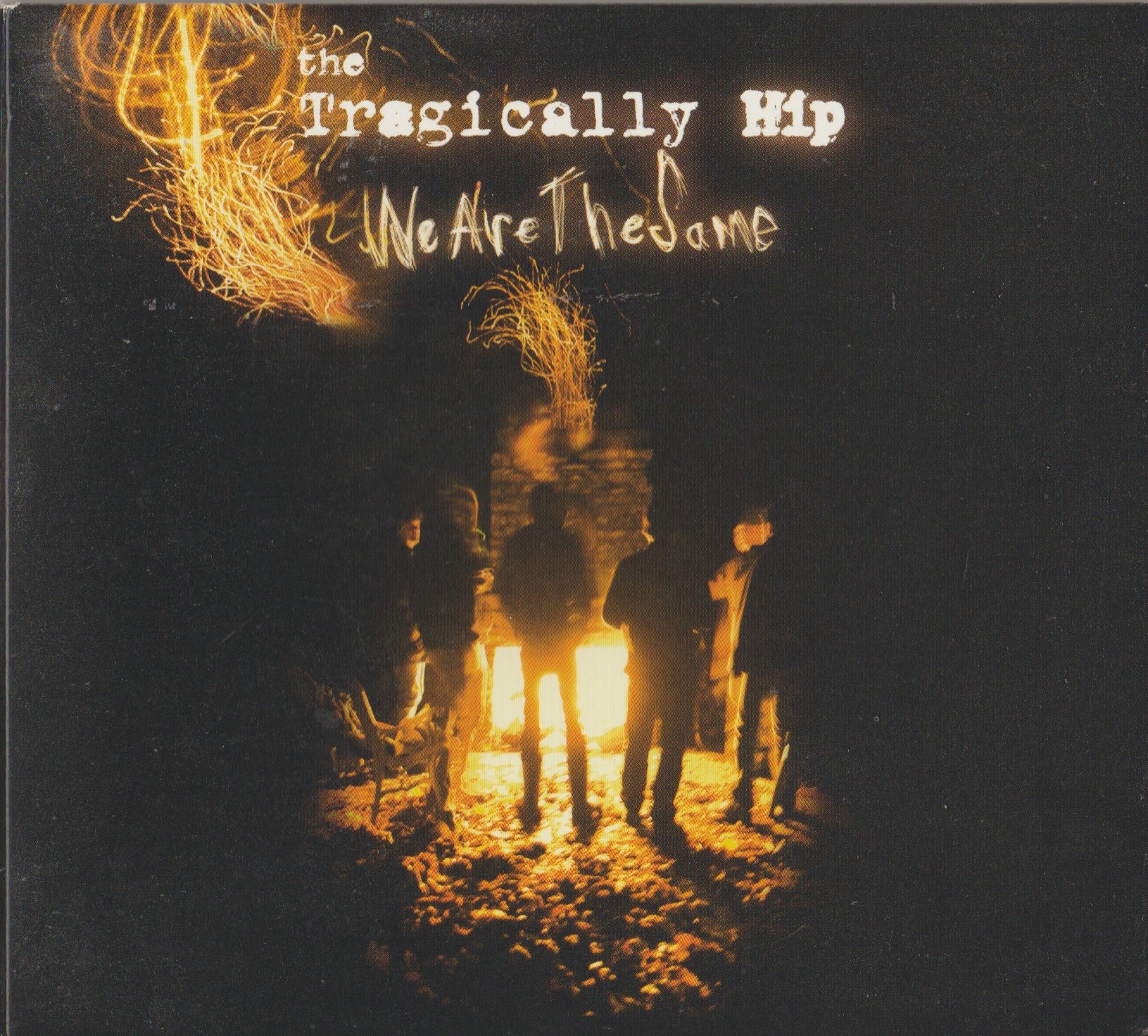
“Later” records by bands are often overlooked in favour of a handful of classics, usually released early in a band’s first decade. Here is one that should not be ignored: We Are the Same, The Tragically Hip’s mellow 2009 offering. Sure, the Hip had plenty of late career highlights. But something about We Are the Same just connects. It’s like plugging your soul into the great wide Canadian open, autumn-coloured maple leaves tossing in a cold breeze. The rustling is accented by a softly wafting smell of coffee.
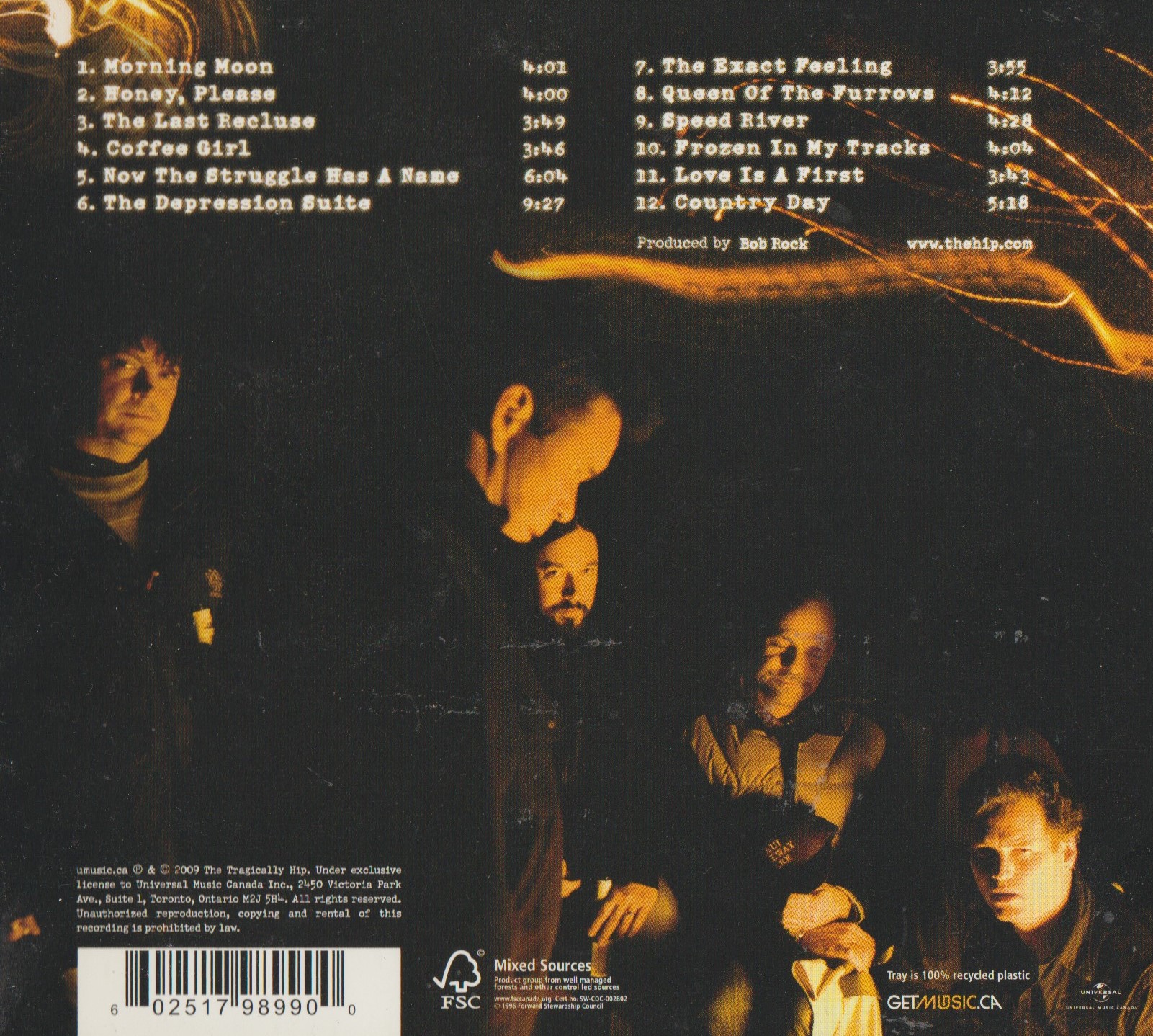
We Are the Same sounds (for a largely acoustic album anyway) absolutely massive. Thank you, Bob Rock. Perhaps there’s even a concept to this Gord Downie-driven album: it opens with a song called “Morning Moon” and ends with “Country Day”. From the beginning, the chords of the Canadian prairies jangle on acoustic guitars. Familiar hints of Neil Young and Gordon Lightfoot fill the room, while Downie sings of a golden Labour Day.
You’ll hear lush string and piano accompaniment all over We Are the Same (piano by Barenaked Ladies‘ Kevin Hearn). Take second track “Honey, Please” which is as pop as the Hip were ever likely to get. Johnny Fay’s snare drum splashes are the only recall from the old days. Then, one of the most luxurious tracks. It’s also one of the best: album highlight “The Last Recluse”. It delivers strange melodies wrapped in lonely imagery. “Who are you? The last Canada goose”.
Geoff over at 1001albumsin10years says “I have argued it is the best side 1 in the catalogue.” I wouldn’t dare disagree.
“Coffee Girl” with its loop-like drums and trumpet solo is one of the more unusual, but also most successful compositions. Downie had a miraculous way with words.
Your favourite mixed tape, You popped it into the deck, Don’t care if it’s out of date, Old Cat Power and classic Beck.
The first big rock chords come crashing down on “Now the Struggle Has a Name”, also adorned with regal strings. As great as it is, it’s just preamble to a Hip epic: “The Depression Suite”, a multi-parted masterpiece. It sparkles and growls, brilliantly and eloquently through a maze of quintessential Gord travelogue lyrics.
Peaking with a track like “The Depression Suite” only means the second half of the album has much to live up to. An Aerosmith-like “The Exact Feeling” (can’t you just hear “Jaded”?) is the first song that feels like a drop. But then “Queen of the Furrows” is a gentle acoustic song with delightful picking. Until an explosive chorus kicks in, drawing your attention again. Cool noisy guitar solo to boot!
The final four tracks are consistent, with “Frozen in My Tracks” being the strangest and heaviest, and “Love is a First” the strongest. Its’ beat poetry and sharp bassline are the main hooks, but the chorus is a blast. Yet it’s still clearly a case of the final few songs living in the shadow of the first.
An album this brilliant needs to be enjoyed over time, but do be sure to add it to your collection. [See below for our recommended edition.]
4.5/5 stars
…Since you’re going to need this album one way or another, our recommended version if you can find it, is the “Kollector’s Krate”. Kool Krate’s were an inconvenient way to store discs, but here’s one with a Tragically Hip logo on it. Stuffed inside: a We Are the Same T-shirt, and a rare live bonus CD. Whether Live From the Vault Vol. 4 is worth over $300 or not, that’s between you and Discogs. (And that’s just the CD, without the Krate or T-shirt!)
BRITISH WHALE – “This Town Ain’t Big Enough for Both of Us” (2005 Atlantic CD single)
In 2005, while we anxiously awaited a new Darkness album (and they changed producers from “Mutt” Lange to Roy Thomas Baker), Justin Hawkins decided to do something on his own. The rumour mill was going on about how the new Darkness was going to be an 80s-fest. Justin’s solo single under the name British Whale certainly conveyed that sound.
“This Town Ain’t Big Enough for Both Of Us” is a Sparks cover, previously tackled by Faith No More. The original track was from 1974, but Justin’s rendition really did sound like the 80s. Russell Mael’s high pitched vocal was exaggerated by Justin, with the cheese-whiz poured on thick. It’s the kitchen sink approach. But a classic pop song cannot be sunk and it’s quite listenable. Faith No More’s cover would win in a one-on-one competition, but Darkness fans will obviously want to hear Justin’s take. The music video was popular because it featured world darts champion Phil Taylor (no relation to the Motorhead drummer). Some fans expressed disappointment that the music video wasn’t included on the single, but in 2019 it matters not. (The video was included on a DVD single, along with a “making of”, but that DVD did not include the B-side “America”.)
Perhaps better than the A-side is the more Darkness-like B-side. It’s a tribute to the USA, its weather, and trees. According to “America”, Justin really likes the scenery! He sounds very sincere in his high-pitched praise. There’s gui-board (or “keytar”) and a guitar solo that sounds like a cross between Brian May and Thin Lizzy. It’s a bit of goofy fun. Actually an excellent track, even containing some music from the “Star Spangled Banner” in the well-constructed solo.
These two songs really seem to convey that Justin really wanted to have some fun, blowing off steam with pop music in 2005. In a way these songs are “peak Justin”. You just can’t imagine anything more Justin than this! (British Whale did another single called “England” in 2006 that never saw a physical release but we’ll cover that another time.)
British Whale can be bought on CD for ridiculously low prices. If you’re a Darkness fan, you have no excuse. Dive on in!
“Twisted Sister…come out and play!” Happy anniversary to Come Out and Play released on this day 34 years ago.
TWISTED SISTER – Come Out and Play (1985 Atlantic LP & Spitfire CD remaster)
What was a band at the proverbial crossroads to do? Continue along the commercial path of the 3 million copy selling Stay Hungry? Or revert to the tried and true heavy-as-an-SMF sound of yore?
There was only one dissenting vote. Bassist Mark “The Animal” Mendoza felt that putting “Leader of the Pack” on the new album was a mistake. The other four voted “yes” but some grew to regret it. Both Dee Snider and J.J. French have since realized the error of their ways. Today, Come Out and Play is acknowledged as the beginning of the end, though it has its fans and some sturdy tracks to support it.
Twisted Sister recruited Scorpions producer Dieter Dierks and enlisted high profile guest stars like Alice Cooper, Billy Joel, Brian Setzer and Clarence Clemons. They were top-loaded onto a old-time rock and roller called “Be Chrool to Your Scuel”, and the gamble backfired immediately when MTV banned the music video for its zombies and ghouls. It’s an interesting track at least. You don’t hear a sax solo on a Twisted Sister song every day, nor the kind of plucking that Brian Setzer deals in.
“Leader of the Pack” was a failure as well, actually a re-recording of a track that debuted on the Ruff Cuts EP. The video (starring the then-hot Bobcat Goldthwaite) further painted Twisted Sister as a novelty band.
Tensions, especially between Mendoza and Snider, were amplified. The songs that sound like they were meant to be “hits” fall far short. The impression you get from “You Want What We Got” is that it was intended to be a specific kind of hit. Unfortunately it’s just a repetitive anthem. “Lookin’ Out for #1” is similarly filler, a song that never quite clicks.
Some tracks maintained a heavy rock presence. They include the anthem “I Believe In Rock and Roll”. It’s a manifesto for the PMRC generation; a decent attempt that just misses the mark. “Come Out and Play” features A.J. Pero nailing down a speedy beat, but the production of Dierks neutered the powerful drummer. Dierks introduced keyboards to some of the tracks, watering them down needlessly. “The Fire Still Burns” works better than some of the other songs, and despite the production you can hear A.J. is just crushing the kit. If the backing vocals sound unusually lush, that’s Don Dokken and Gary Holland. “Out on the Streets” trades the speed in for plaintive melodies, and is the better for it. Finally “Kill or Be Killed” does what it promises. Unbelievable that A.J. could play at such a relentless velocity, but he was an absolute beast.
Strangely, some of the best tracks are the ballads. Dark ballads. Ballads of depression, of loneliness, of alienation. “I Believe in You” is the first of two, bolstered by strong melodies and Dee Snider’s enviable pipes. The one that impresses the most is the CD and cassette bonus track “King of the Fools”. Although “Kill or Be Killed” ends the album just fine, this coda adds some substance. Sounding like a man destroyed, Dee sings the melancholy lyrics.
What kind of kingdom has no throne? No crown or castle do I own, I don’t have silver gold or jewels, Yet I’m the king, king of the fools.
It’s surprisingly thoughtful songwriting, complimenting the mournful melodies. Yet there is a defiant, powerful streak in the choruses.
King of the fools, Who are these people to cast stones? King of the fools, Better a fool than just a clone.
Dee Snider has always resonated with the underdogs, the bullied, the downtrodden. “King of the Fools” might be the most honest of all those songs. Some regal guitar melodies by J.J. French and Eddie “Fingers” Ojeda show that they were picking up what Dee was laying down.
Here’s the catch though. If you’re buying this album, you need “King of the Fools”. To get it, you’ll want the CD. But Come Out and Play might be most notable for the album cover you can only get on vinyl. Open up that manhole cover and out pops Dee Snider in all his…all his…rags.
Heeere’s Dee!
Do what I did. Get CD and LP, just for the cover. Everybody needs a pop-up Dee Snider.
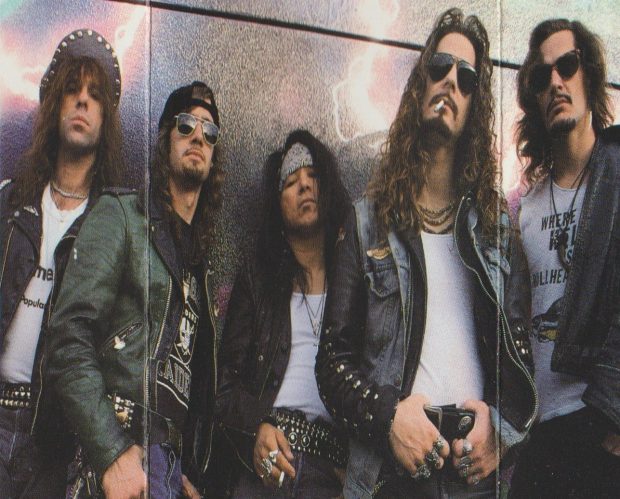
I missed their first EP, Name Your Poison. None of the local record stores knew who Little Caesar were, but rock magazines like Hit Parader were already tootin’ their horn. When their major label debut Little Caesar hit the shelves, it was none other than Bob Rock in the producer’s chair. “Chain of Fools” was selected for the lead single/video, which was probably a mistep. It did show off Little Caesar’s knack for crossing Skynyrd’s southern rock innards with soul, but a more mainstream rocker like “Down-N-Dirty” would have been less of a shock to the uncultured longhairs of 1990.
Soulful blues rock was all the rage in 1990, with the likes of the Black Crowes and The London Quireboys hitting the charts. Was Little Caesar just one too many bands? They didn’t have the impact of the other two, though they certainly stacked up in the quality department. Lead howler Ron Young’s lungs are enviable, with a southern gritty drawl and authenticity to go.* The rock continues through “Hard Times”, which puts out a killer street rock vibe, able to tangle with any Hollywood competition. “Chain of Fools” serves to show off Young’s limitless talents, but as a hard rock adaptation, falls shy of their original.
Diversity points are earned for a stellar ballad called “In Your Arms”, delivering on a solid soul vibe. Young’s voice is the focus, revealing depth track after track. There’s a darker turn on “From the Start”, foreboding but with anthemic chorus. The first side’s closer puts you in a “Rock and Roll State of Mind” with a harmonica-inflected blues burner.
Gotta big monkey and he’s on my back, It’s warmer than China, it’s better than crack, It’s burnin’ like fire, it’s takin’ my soul, yeah, So damn addicted to rock ‘n’ roll.
You may as well call this one my theme song. The history of rock is delivered in under five minutes.
White boys stole it back in ’55, Turned in to disco in ’75, Said it all started with “Blue Suede Shoes”, yeah, For years brothers called it just rhythm and blues.
Tell it how it is, brother!
Money can’t buy it ’cause it can’t be sold, If you say it’s too loud, then you’re too fuckin’ old.
Flip the tape. “Drive it Home” takes the car/sex metaphors to a dirtier level. On, Ron, I bet you’d like to drive it home! Another dusky ballad called “Midtown” changes the mood and the groove. A ballad with balls and a banjo? Then, “Cajun Panther” is its own descriptive, but the slippery guitar will hook you right in. Greasy slidey goodness from Creedence county. The next song, “Wrong Side of the Tracks” is actually closer to the mainstream and doesn’t stand out amongst more unique material. Unique like “I Wish It Would Rain”. It may be another ballad but its southern flavouring make it clearly different from anything on the radio in 1990. “Little Queenie” nails the soul-rock vibe one last time, going out in style, but also with a song that doesn’t really sound like a closer. Perhaps a little song shuffling would have put “Little Queenie” in a better spot to showcase its strengths.
Sonically, since this is a Bob Rock production, you already know what it sounds like. It’s a big sounding album that captures the band in top shape and presents them in an appropriately dressed frame. It’s a 12 track album and although that was becoming the norm, Little Caesar would have been a more effective debut if it were 10 songs, focusing on the ones that made it unique.
3.5/5 stars
* Tragically, Ron Young was killed in 1991 by a time-travelling Arnold Schwarzenegger, in Terminator 2: Judgement Day. ** ** Fake News. But he was in the movie and did get his ass kicked.
WHITESNAKE – Slip of the Tongue(originally 1989, 2019 (6 CD/1 DVD 30th Anniversary Rhino box set)
There’s a theme you may have noticed every time we review a Whitesnake box set: David does it right.
Here’s another one: Coverdale cares.
Slip of the Tongue gets the super-deluxe treatment this time, the third of the “big three” to go that way. This is the album that divided fans the most. Replacing Vivian Campbell was none other than ex-David Lee Roth stringbender Steve Vai.
“What the hell would that sound like?” we all wondered.
Longtime Whitesnake fans felt it was a step too far into the world nebulously defined as “hair metal”. Others loved the guitar mania inside, with Vai stretching out in ways different from his prior bands. Not the “definitive” Vai record that they still wanted (and would get a year later), but certainly a platter they could sink their teeth into. And it was a weird reason that Steve was playing on Slip of the Tongue at all.
As you’ll see from a feature on the included DVD (“A Look Back: Whitesnake Chronicles with DC and Adrian Vandenberg”), the album was written and thoroughly demoed with Adrian. They wouldn’t need a guitarist until it was time to tour. At this point, Adrian injured his wrist and was unable to finish. Steve Vai and David Coverdale found that they got along famously and the seven-string wizard brought his unique and advanced stylings to the blues-based Whitesnake.
What the hell would it sound like?
It sounds absolutely mental.
With the benefit of now hearing all the demos that Adrian laid down, it’s obvious Steve Vai didn’t just pick up his guitar and play the parts. It’s clear right from opener “Slip of the Tongue”. Compare the album to Adrian’s demos on the other discs. Vai changes one of the chord progressions to high-pitched harmonics, and, let’s face it, improves the song. Elsewhere there are unique trick-filled runs and fills that add another dimension to the music. If Whitesnake was always 3D rock, Vai upped it to 4. The guitar work is blazingly busy, never cliche, and always to the advancement of the song. With all respect to Adrian Vandenberg who wrote these great songs, Steve Vai was more than just icing on a cake. Slip of the Tongue arguably sounds more a Vai album than Whitesnake, even though he didn’t write any of it.
The beauty of this set is that if you’re more into ‘Snake than alien love secrets, you can finally hear the purity of Adrian’s vision in the multitude of early demos included.
Unfortunately, if you’re familiar with the album you’ll hear something’s up by track 2. “Kitten’s Got Claws”? That song used to close side one. What’s up? The album running order has been tampered with, and so has “Kitten’s Got Claws”. It’s now missing the Steve Vai “cat guitar symphony” that used to open it. It could be a different remix altogether. My advice is to hang on to your original Slip of the Tongue CD. You’re probably going to still want to hear the album and song as they were.
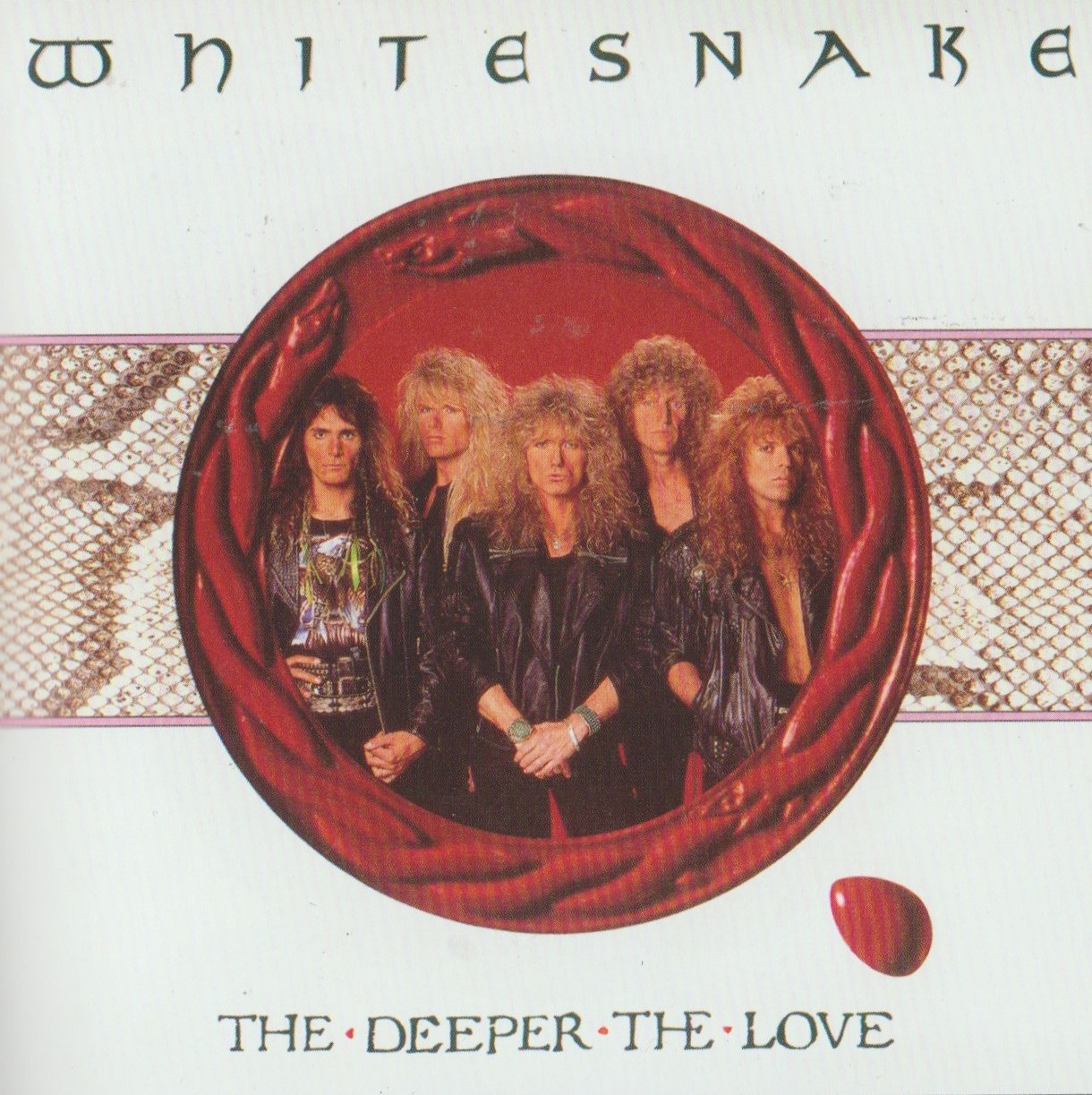
This running order puts “Cheap An’ Nasty” third, a song that structurally resembles the ol’ Slide It In Whitesnake vibe. Of course Vai’s space age squeals and solos modernized it. Listen to that whammy bar insanity at the 2:00 mark! Up next is “Now You’re Gone”, a classy rocker/ballad hybrid that has always been an album highlight. The demos on the other discs allow us to hear how much this song was improved in the final touches. That cool answering vocal in the chorus, and the hooks that Vai added, came much later. Strangely, this box set puts the other ballad, “The Deeper the Love”, up next. Keyboard overdubs made it a little too smooth around the edges, but a good song it remains.
The Zeppelinesque “Judgement Day” is a track that used to piss off some fans, who felt it was an abject rip off from “Kashmir”. The Vai touch of sitar (replacing guitar in the early demos) probably aided and abetted this. Regardless it succeeds in being the big rock epic of the album, and a favourite today. Another strange choice in running order follows: “Sailing Ships”, formerly the album closer. It’s quite shocking to hear it in this slot. Again, Vai replaced guitar with sitar, and David goes contemplative. Then suddenly, it gets heavy and Steve takes it to the stratosphere.
“Wings of the Storm” used to open side two; now it’s after “Sailing Ships”. Some tasty Tommy Aldridge double bass drums kick off this tornado of a tune. Vai’s multitracks of madness and pick-scrapes of doom are something to behold. Then it’s “Slow Poke Music”, a sleazy rocker like old ‘Snake.
The new version of Slip of the Tongue closes on “Fool for Your Loving”, a re-recording of an old classic from Ready An’ Willing. The new version is an accelerated Vai vehicle, lightyears away from its origins. Coverdale initially wrote it to give to B.B. King. Vai is as far removed from B.B. King as you can imagine. The original has the right vibe, laid back and urgent. This one is just caffeinated.
The only album B-side “Sweet Lady Luck” is the first bonus track on Disc 1. By now it is the least-rare B-side in the universe, having been reissued on a multitude of Whitesnake and Vai collections. Valuable to have to complete the album, but easy to acquire. It’s basically a second-tiered speed rocker with the guitar as the focus. Other B-sides from this era were remixes, and they are included here as well. The Chris Lord-Alge mix of “Now Your Gone” is the kind that most people won’t know the difference. Vai said that Lord-Alge could make the cymbals sound “like they have air in them.” Then there’s the “Vai Voltage Mix” of “Fool for Your Loving”, which has completely different guitar tracks building an arrangement with way, way, way more emphasis on the instrument. The rest of the disc is packed with four more alternate remixes: “Slip of the Tongue”, “Cheap An’ Nasty”, “Judgement Day” and “Fool for Your Loving”. These mixes have some bits and pieces different from the album cuts. Vai fans will want the alternate solo to “Cheap An’ Nasty”, though it’s less whammy mad.
Of course, “Sweet Lady Luck” wasn’t the only song that didn’t make the album. In old vintage interviews, Coverdale teased the names of additional tracks we didn’t get to hear: “Parking Ticket”, “Kill for the Cut”, and “Burning Heart”. They’ve been safely buried in Coverdale’s vault, until now. Additionally, it turns out that Whitesnake also re-recorded a couple more of their old songs: “Ain’t Gonna Cry No More” and “We Wish You Well”. They’re all here in different forms on the demo discs.
Perhaps “Kill for the Cut” would have been one dirty song too many for the album. It ain’t half bad, and has a unique little bumpin’ riff. “Parking Ticket” had potential too. Rudy Sarzo gave it a pulse that might have taken it on the radio. The 1989 monitor mix would have been perfect for B-side release. Why did Cov have to hold out on us all these years? “Burning Heart” was a special song, a re-recording of an old Vandenberg track that David really loved. Unfortunately the monitor mix is is only a skeleton of what could have been a sensational Whitesnake ballad. “Ain’t Gonna Cry No More” is heavily modernized, with keyboards sounding like they were trying to recapture “Here I Go Again” (which they were). “We Wish You Well” is more contemplative, with piano as the focus.
All of this previously unheard material is scattered over several discs. “Evolutions” (Disc 3) is a familiar concept to fans of these box sets. Demos from various stages of completion are spliced together into one cohesive track. You will be able to hear the songs “evolve” as the band worked on them. Every track from the album plus “Sweet Lady Luck”, “Parking Ticket” and “Kill for the Cut” can be heard this way. Disc 4 is a collection of monitor mixes with all the album songs and all the unreleased ones too. These discs are the ones that allow us to really hear the album the way it would have been if Adrian didn’t hurt his wrist. We would have got an album that sounded a lot more like Whitesnake. It was audibly different even if familiar.
Perhaps the best disc in the entire set is “A Trip to Granny’s House: Session Tapes, Wheezy Interludes & Jams”. It’s just as loose as it sounds. Enjoy the funk of “Death Disco”, the funkiest David’s been since Come Taste the Band. If you’ve always wanted to hear David sing “Tie a Yellow Ribbon ‘Round the Old Oak Tree”, now you finally can! There’s a lot of goofing off in some of these tracks, but also a lot of rock. It’s live off the floor as they rehearse the songs, as a four piece band with Adrian. Not all the final lyrics or solos are set, but the songs are so raw and fresh. Some of the jams show a side of Whitesnake we rarely got to see. Kind of Purple-y in the way they just could take off and rip some blues.
Given all the rich audio extras, it’s OK if one of the CDs is a little impoverished. That would be disc 2, “The Wagging Tongue Edition”. This is a reproduction of an old promo CD, featuring the album Slip of the Tongue with a Dirty David interview interspersed. This was meant for radio premieres. It has the entire album in the correct order, but because it’s faded in and out of interviews, it’s really not a substitute for a proper copy of the original album. At least the vintage 1989 interviews are interesting. It saves collectors from buying a copy on Discogs. (Coverdale claims “Judgement Day” was originally titled “Up Yours Robert”. Ooft.)
There’s another disappointment here and it’s difficult to forgive. In 2011, Whitesnake released the long awaited Live at Donington as a 2 CD/1 DVD package. This brilliant performance finally gave us a permanent record of Whitesnake live with Vai. In our previous dedicated review, we had this to say:
Musically, it’s a wild ride. It’s not the Steve Vai show. Adrian gets just as many solos, and his are still spine-tingling if more conventional. It is loaded with ‘Snake hits, leaning heavily on the three Geffen albums. In fact there is only one pre-Slide It In song included: The Bobby “Blue” Bland cover “Ain’t No Love in the Heart of the City”. And, since it is also the pre-grunge era, there are plenty of solos, which today seems excessive. Aldridge does his drum solo at the end of “Still Of The Night”. Vandenberg gets his “Adagio for Strato”/”Flying Dutchman Boogie”. Most excitingly, Steve Vai performs two songs from his then-brand new (and top 40!) album Passion And Warfare: “For The Love Of God” and “The Audience Is Listening”, with Aldridge on drums. Coverdale even introduces him as “Mr. Passion and Warfare!” so I imagine there was no sour grapes that Vai’s album was doing so well. And lemme tell ya folks — the audience WAS listening, and going nuts too!
Unfortunately, to save a little bit of plastic, this set was reduced to a single CD for its inclusion here. The Vai and Adrian solos were cut, though Tommy’s drum solo in “Still of the Night” is retained. To cut the guitar solos in such a guitar focused boxed set is not only unwise but unforgivable. Fans who don’t have Live at Donington are going to want to shell out again just to get the solos. Fortunately, the whole show is uncut on the included DVD.
The DVD has plenty of added value; it’s not just a reissue of Live at Donington. You’ll get the three music videos from the album (“Now You’re Gone”, “The Deeper the Love” and “Fool for Your Loving”). There’s even a brand new clip for “Sweet Lady Luck” cobbled together from existing video. Then, you can go deeper into the album. The aforementioned sitdown with David and Adrian is really enlightening. Another behind the scenes feature narrated by David is fantastic for those who love to watch a band create in the studio. Coverdale’s not a bad guitarist himself.
These Whitesnake box sets also include ample extras on paper. There’s quite a nice miniature reformatted tour program with the majority of cool photos. A large Slip of the Tongue poster can adorn your wall, or remain safely folded up in this box. Finally, there is a 60 page hardcover booklet. This is a treasure trove of press clippings, magazine covers, single artwork, and more. Lyrics and credits wrap it all up in a nice little package.
Because we know that David puts so much into these box sets, it’s that much more heartbreaking that this one is so slightly imperfect. The shuffled running order and lack of guitar kittens on “Kitten’s Got Claws” is a problem. The truncated live album is another. It means I have to hang onto old CDs that I was hoping to phase out of my collection in favour of this sleek set. Alas, I’ll keep them as they are my preferred listening experience.
Otherwise, in every other way, this box set delivers. It makes a lovely display next to its brethren and it justifies its cost.

 MARILLION – marillion.christmas (1999 Racket Records)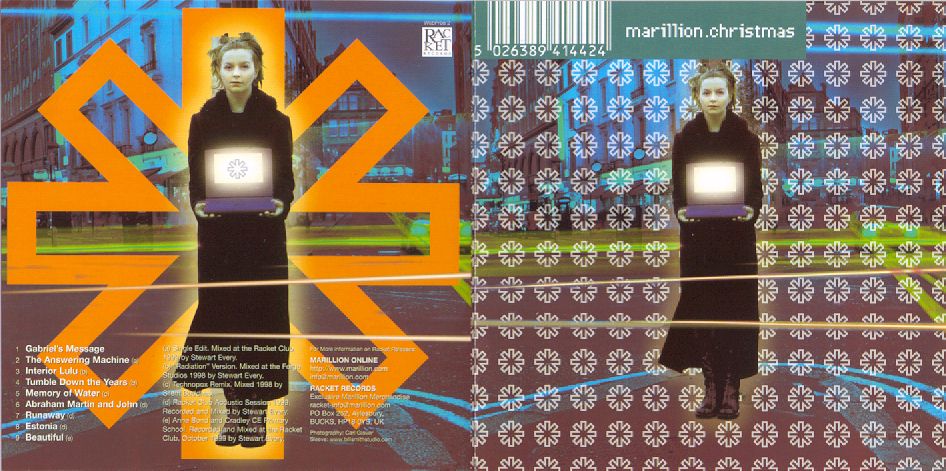















You must be logged in to post a comment.