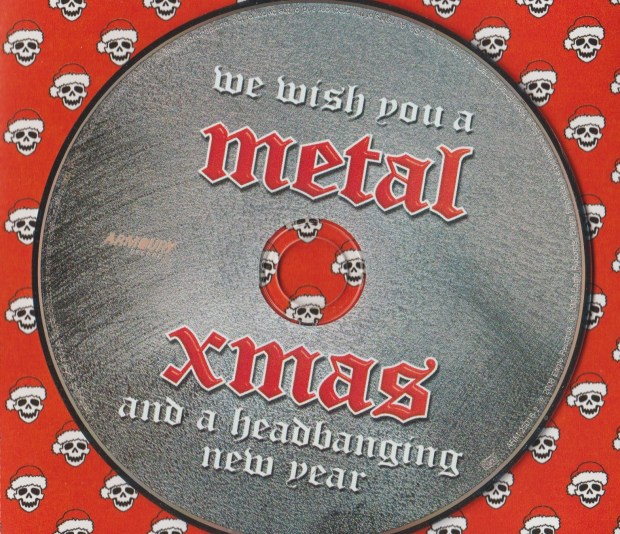
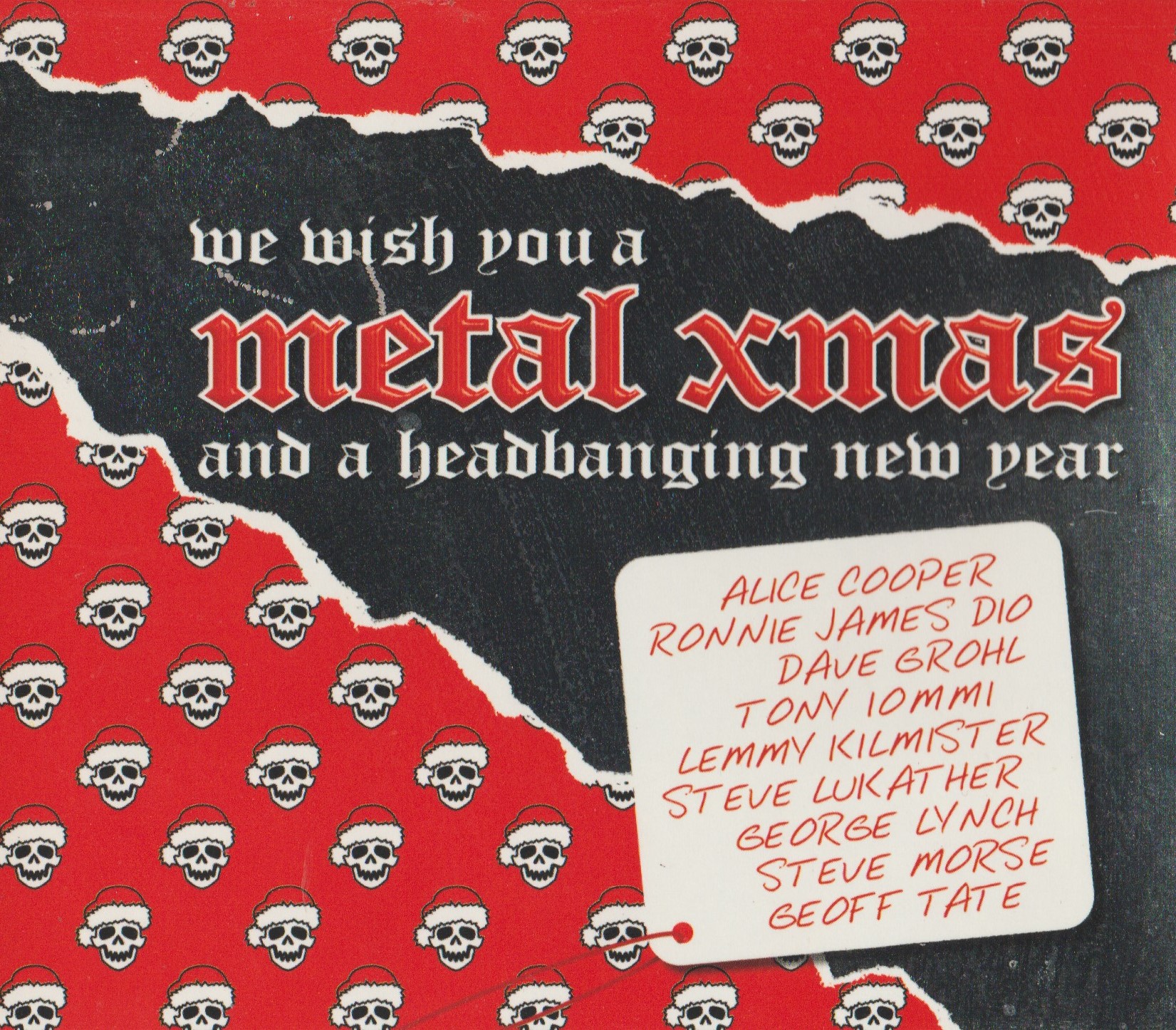
WE WISH YOU A METAL XMAS AND A HEADBANGING NEW YEAR (2008 Armoury)
Yep, It’s another Bob Kulick album with various guests. You know what you’re going to get. Let’s not dilly-dally; let’s crack open the cranberry sauce and see what a Metal Xmas sounds like.
Generic! A truly ordinary title track features the amazing Jeff Scott Soto on lead vocals, but it’s a purely cookie-cutter arrangement with all the cheesy adornments you expect. Ray Luzier fans will enjoy the busy drums, but this does not bode well for the album.
Fortunately it’s Lemmy to the rescue, with “Run Rudolph Run”, an utterly classic performance with Billy Gibbons and Dave Grohl. All spit n’ vinegar with no apologies and nary a mistletoe in sight. I remember playing this for my sister Dr. Kathryn Ladano in the car one Christmas.
When Lemmy opened his yap, she proclaimed “This is bullshit! How come they get to make albums and not me?”
Lemmy Kilmister, pissing people off since day one, has done it again. You can buy the CD for “Run Rudolph Run” even if the rest is utter shit.
A silly “Santa Claus is Coming to Town” by Alice Cooper echoes “The Black Widow”, but novelty value aside, is not very good. A joke song can only take you so far, and Alice is usually far more clever. (At least John 5’s soloing is quite delicious.) And even though Dio is next, “God Rest Ye Merry Gentlemen” comes across as a joke, too. Which is a shame because the lineup is a Dio/Sabbath hybrid: Tony Iommi, Rudy Sarzo, and Simon Wright. Dio’s joyless, dead serious interpretation is amusing only because of its unintentional dry humour.
Funny enough, Geoff Tate’s “Silver Bells” has the right attitude. Even though Geoff is perpetually flat, his spirited version (with Carlos Cavazo, James Lomenzo and Ray Luzier) kicks up some snow. That makes me happy, but it pains me to say that Dug Pinnick’s “Little Drummer Boy” (with George Lynch, Billy Sheehan and Simon Phillips) doesn’t jingle. Ripper Owens, Steve More & pals team up next on “Santa Claus is Back in Town”, so bad that it borders on parody.
The most bizarre track is Chuck Billy’s “Silent Night”, with thrash buddies like Scott Ian. Chuck performs it in his death metal growl, and it’s pure comedy. Oni Logan can’t follow that with “Deck the Halls”, though it’s pretty inoffensive. Stephen Pearcy’s “Grandma Got Run Over By a Reindeer” adapts the riff from “Tie Your Mother Down” and succeeds in creating a listenable track. “Rockin’ Around the Xmas Tree” is ably performed by Joe Lynn Turner, sounding a lot like a Christmas party jam.
The final artist is Tommy Shaw with John Lennon’s “Happy Xmas (War is Over)”. It’s an authentic version and while not a replacement for the original, will be enjoyable to Styx fans.
Christmas albums by rock artists are, let’s be honest, rarely worthwhile. This one has only a handful of keepers so spend wisely.
GETTING MORE TALE #802: Get a Haircut and Get a Real Job
“No razor has ever been used on my head, because I have been a Nazirite dedicated to God from my mother’s womb. If my head were shaved, my strength would leave me, and I would become as weak as any other man.” – Samson, Judges 16:17
The Biblical Samson drew his great strength from his hair. He foolishly shared his secret with Delilah, who had his locks cut in his sleep. True to his confession, Samson’s supernatural strength was gone.
As a young rock fan, I once identified a lot with Samson.
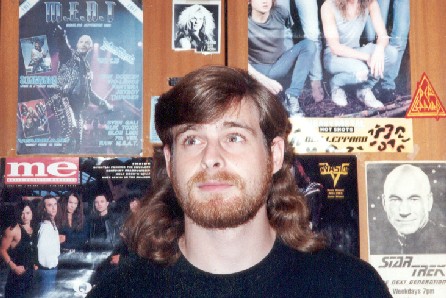
As soon as I discovered rock and roll, I wanted long hair. Guys seemed to have so few options to stand out in a crowd. Looking at the gymnasium during class, it looked like groups of clones.* Different body types, different heights, but all the same. No individuality. I didn’t want to look like that. Like them. Like people I shared nothing else with. I wanted to look like me.
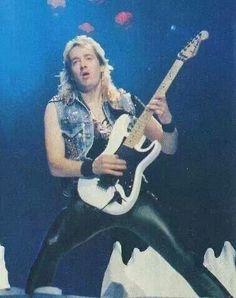
I admired the long hairs that adorned my rock wall of fame. I thought Adrian Smith from Iron Maiden, the blonde straight mullet style, looked best. I didn’t like Bruce Dickinson’s fringe, and Steve Harris’ curls would never come naturally to me. That was the thing. I wanted something that looked natural, not hair that seemed supported by an invisible superstructure like Bon Jovi’s. Nothing flammable due to excessive use of chemical fixatives. It had to look effortless – like you woke up that way.
I didn’t want my allegiances to be misidentified. I wanted it to be obvious: rock and roll, and only rock and roll. I didn’t want to walk down the hallway, mistaken for somebody who listened to Duran Duran. And so, starting in grade nine, I really tried to grow out my hair.
The major issue was, of course, parental guidance. Dad didn’t like my “long” hair. It never got that long; a couple inches tops. Then he would order it to be chopped. Bob and I sometimes went to the barber together, and we would always request to “leave the back long”. They’d explain they had to trim the dead ends, and so what we were left with rarely looked “long”. It did look very, very 80s.
Dad just didn’t understand. This wasn’t about looking neat and clean and tidy. It was about looking different from all the clones. There were very few long-hairs at our school, and once they had some length going, each guy looked different and unique to me. That’s what I wanted. Nothing that said “conformity”, but maybe something that said “Def Leppard”. Who, by the way, had not become the biggest band in the world yet.
The cycle went on for the first three years of highschool. Grow it, cut it, “leave the back long”. Eventually I developed a nice mullet that I considered a good start. This came to an end in late 1989.
It felt like the end of the world.
In October of ’89, my dad insisted it was time to get a job. He knew the manager at the local grocery store and put in a word. An interview was set up. I dutifully went to the mall and checked in at the barber shop. “Cut it all off,” I said despondently. None of this “leave the back long” stuff. Not this time.
I walked out looking like everyone else, self esteem made worse by my new glasses. Over at the grocery store, I was expected. “Your hair looks fine,” said the manager. He had already spoken to my dad, who told him I was just getting a hair cut before the interview.
It was only about 10 minutes before I was welcomed aboard and introduced to new co-workers. My first day would be the coming Friday. But before that, I had to make it through a day at school with my new hair.
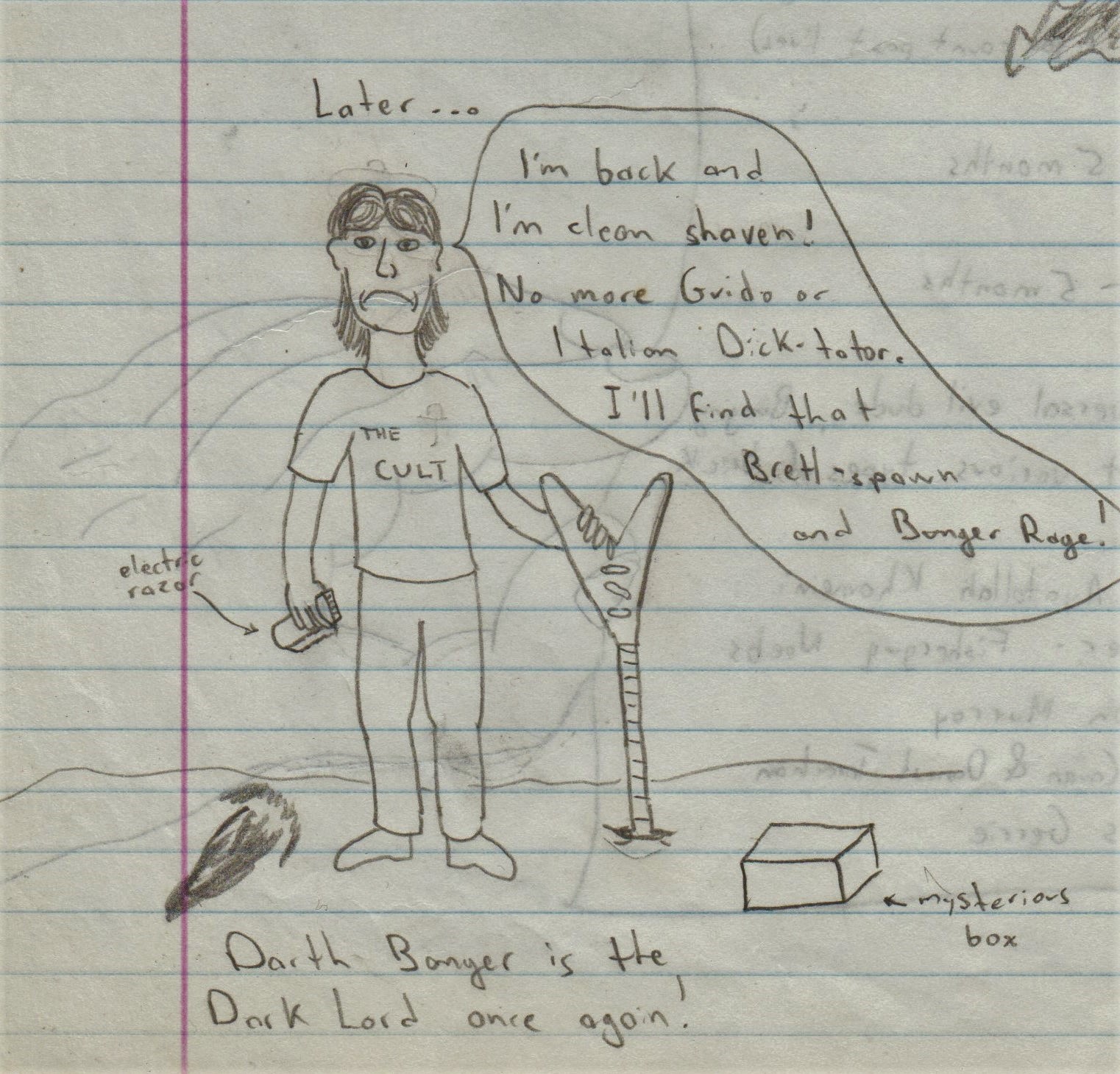
I was quite happy with my character, the evil Darth Banger. Most of my classmates were being lampooned far worse than I. David Kidd, who was obsessed with drama class, was Emperor Kiddspeare. Later when we decided to go after him harder, he became the Phantom of the Opera. My stalker Bobby was Bobby the Hutt. I got off easy. Whatever misdeeds he was up to, Darth Banger was always rocking a guitar. In fact, his starship was a giant Flying V. He was just a stereotypical metal head, but also leader of the Evil Empire, so I went with it knowing I could have had it so much worse.
When I showed up at school with the new short hair that I was forced to adopt, Brett-Lore had to reflect it. I couldn’t be Darth Banger anymore. Because I am Italian, and because I now resembled Mussolini more than Metallica, my character was briefly reborn as Il Duce, the Guido. Later on, I tried letting my facial hair grow in and suddenly my new character became Beardo-Weirdo.
This was all very depressing to me. I didn’t care that I had a job. All I could think about was that I had seemingly lost the only thing that made me different. Now my ears stuck out. I looked like everyone else. And now even my comic book was becoming something I didn’t enjoy anymore.
The one interesting thing about work: for me, in my life, every job introduced me to new music. The guys at the grocery store liked heavier music than Motley Crue and Bon Jovi. They liked Sabbath, and Zeppelin. As soon as I was able, I added We Sold Out Soul for Rock ‘N’ Roll to my collection. “Sweet Leaf” became my new favourite although I had no idea what it was about. A girl named Leaf, possibly?
I worked at the grocery store for about nine months, leaving before the start of a busy summer. The hair started growing back as soon as I could make it. The Duce character never worked for Brett-Lore, and as soon as I was able, I forced Darth Banger back into the story. The other authors agreed but under one condition.
Everybody in the comic got teased pretty mercilessly and so I had to pay more dues before Banger was allowed to return. Il Duce had to be put through hell, and so I drew all sorts of embarrassing shit for him to go through, before he finally transformed back into Darth, this time with a nice single-seater Flying V spaceship to pilot himself.
As my hair grew back, I started to feel like myself again! I was happier.
It reached record lengths by the early 90s. But the landscape had changed. Long hair was more common, and looking unique less easy. One day my dad made a comment about how he’d pay me $10 per inch if I cut my hair off, so I went and did it. He didn’t think I would, but I did. Some of my biggest rocker heroes had shed their locks. By this time I’d discovered something almost better than hair: beards.
The fact was, try as I might, I never had “good” long hair. It always wanted to curl up; get out of control. Without investing in styling and products, it would never really look “good”. And that defeated the whole “effortless” idea. But it took grunge to get me to the point where it didn’t matter to me anymore.
It’s funny how something as superficial as hair took up so much of my time and energy, but the fact is, these things used to matter. They used to matter a lot! Maybe not in the grand scheme of things, but when you’re in highschool, the grand scheme of things was limited to the walls of the school. I just wanted to walk my own path my own way. I think I did OK.
* Later on I wrote a tune about this subject called “Clones”, a bitter examination of all the ball-capped lookalikes in school.
When Udo left Accept, it was was hard to imagine the German metal pioneers without him. After a false start (including a photo session) with a singer named Rob Armitage, Accept finally settled on American David Reece.
Here Wolf and David tell MuchMusic why Reece was the guy after more than 200 applicants for the job. The album was called Eat the Heat, with lead single “Generation Clash”. It’s an interesting interview considering the hindsight that the lineup ultimately did not work and Accept broke up, before reuniting with Udo in 1993.
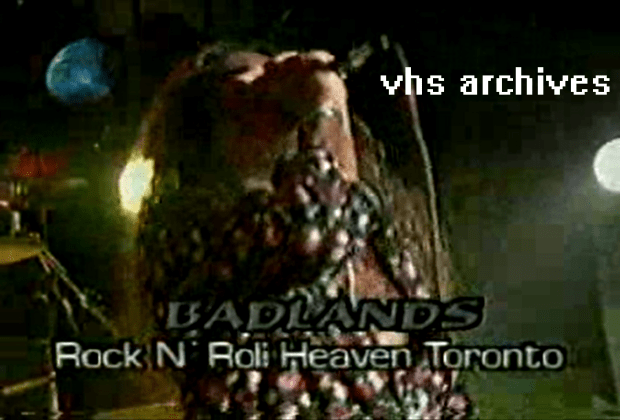
Badlands were one of the hottest new rock acts of 1989, notable because they were bringing in this influence called “the blues” that had been absent from the scene lately.
Find out what Ozzy thought of the blues when Jake E. Lee and Ray Gillen sit down with MuchMusic at Rock N’ Roll Heaven! Raw video of their live set included.
Glad tidings and joy! It’s the final day of the least popular series in the history of this site. Yes, the daily hits took a nosedive, but we have succeeded in reviewing every single Marillion Christmas CD. You’ll find a directory below. Thanks for reading if you did! Back to our regularly scheduled program next time.
The very last Marillion Christmas CD to date is another double live album. It’s actually a summer Festival gig (July 2015) with a shorter set, and two Christmas songs from December 2014 added at the end. Most of these tracks have appeared on other Christmas albums, all but “The Invisible Man”. It’s notable for focusing on long-bombers and only a couple of “hits”.
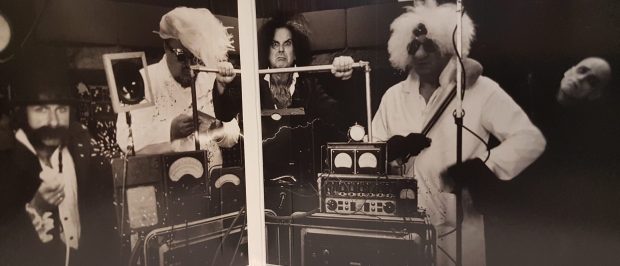
Not sure what’s up with the cover though, the band dressed as mad scientists, all but Pete Trewavas. It’s a suitable image I suppose, since Marillion are like the mad scientists of rock music.
17 minutes of “Gaza” opens the show, heavy as hell, one of the most intense Marillion songs of their 40 year history. It might be about the Holy land but it’s not what you’d call Christmas-y! Expect a driving ride through war-torn landscapes, with quieter respites strategically placed. Lightening the mood, “You’re Gone” kicks things up. The pop melodies and dance beats get the toes tapping.
“Oh fuck, now Pete’s gone,” says Hogarth between songs. Fortunately the bassist returns! “Power” from Sounds That Can’t Be Made follows, one of the better songs from the later years. The only anomaly on this album is “Sugar Mice”, the sole oldie in the set. “I prefer their old stuff”, Steve says to chuckles from the audience. As usual, he absolutely nails the song, a passionate poem to the down and out. The other Steve (Rothery’s) guitar solo is a song to itself, a beautiful complement to the perfect words. “Man of a Thousand Faces” from Marillion’s “acoustic period” (This Strange Engine) is different from the other songs, performed with extra expression. (“Bbbbbabble of Babylon”.) The crowd loves it and keep singing well after the song ends.
Nothing but long bombers for the rest of the show. “Neverland” (10:28), “King” (8:05), and “The Invisible Man” (15:13) represent some of the most epic Marillion music ever committed to tape. Heavy, heavy moods! Complex, driven songs, each one with mini-compositions within compositions. “Invisible Man” in particular is like listening to a stream of songs, and live, it breathes.
The added two Christmas songs, from Germany and France respectively, are ones that have appeared on Marillion Christmas CDs before. Lennon’s “Happy Xmas (War is Over)” is a go-to for this band. Acoustic guitars, gentle keys and jingle bells are all it takes. A loungey “Christmas Song” is funny for how Steve messes up the lyrics right from the start. So it’s not the definitive Marillion version, but it’s genuine.
That’s what makes all these live performances special. There’s no fixing. Everything is how it went down. There’s no point in releasing CDs of so many individual concerts if you’re going to fix them in the mix. Whether it’s a forgotten word or a missing bassist, it’s all in.
MARILLION – Live at the Forum – Christmas Tour 2014 – 11 December 2014 (Abbey Road “instant live” CD set)
This CD was unusual in that it wasn’t a fanclub-only release. It was an “instant live” released by Abbey Road, from Marillion’s 2014 Christmas tour — a double live album. And unlike the official 2014 fanclub release, this one has (some) actual Christmas music on it!
“Gazpacho” is an apt way to start a celebration, which was the goal according to Steve Hogarth. The lyrics might not be all bright and gleeful (“They say the King is losing his grip again”) but the music certainly is. One of Steve Rothery’s catchiest riffs is coupled with Hogarth’s unmistakable voice.
“The Uninvited Guest”, an early single about HIV, is second in the setlist and one several looks back at the fondly-remembered early days. It’s a bit loose and sluggish but the fans always sing along when prompted. The newer “Power” follows, ominous and powerful, pun intended. Chalk it among Marillion’s most memorable choruses.
Hits follow in quick succession: “No One Can” and an extended “Warm Wet Circles”. The laid back vibe continues as Marillion comfortably play for the dedicated. They ping-pong back and forth between old and new, as the next two songs “Woke Up” and “Trap the Spark” are from 2008’s double album Happiness is the Road. That atmospheric record has been a hard one to absorb over the years. The songs are not immediate. Fortunately it’s “Easter” next, a song that never fails to get the masses singing along.
“Sounds That Can’t Be Made” from the album of the same title still pleases, thanks in no small part to Hogarth’s passionate vocal. Things start to feel seasonal, however, on “Seasons End” which sometimes (like this time!) opens with “O Come O Come Emmanuel” as only Hogarth can do it. The song is as poignant today as folks like Greta Thunberg try to deliver the same message that Marillion had in 1989.
So watch the old world melt away, A loss regrets could never mend, You never miss it till it’s gone, So say, goodbye.
Didn’t Hogarth say this concert was a celebration? Well, Marillion have always been dark. It’s been said that their early music with Fish was all about alcohol, and the later music with Hogarth about “death and water”. There is a nugget of truth for that.
“Man of 1000 Faces”, from their “acoustic period” feels a bit more like a singalong. If you can master the tricky words, that is!
I’m the man of a thousand ages, You see my face in the stones of the Parthenon, You hear my song in the babble of Babylon. I’m the man of a thousand riches, Be my guest at the feast of Satyricon, You spend the money that my logo’s printed on.
But the whole thing coalesces into an absolutely massive mountain of music at the end, perfect for the crowd to chant alone. It’s made for audience participation. Then, the progressive rock epic “King” is jokingly dedicated to Harry Styles. It’s a dubious honour, since the song was inspired by tragic figures such as Elvis and Kurt.
After a brief pause, it’s time for some Christmas music. It’s “The Christmas Song” but not the same “Christmas Song” from the very first Marillion Christmas CD. It’s the “real” one. “Chestnuts roasting on an open fire…” Apparently it didn’t go over well in Glasgow or Manchester. “Fucking Northerners”, says Hogarth. They bravely tried it again in London where it seemed to be better received. “Above average!” shouts an audience member. They top that with John Lennon’s “Happy Xmas (War is Over)”.
The show is ended with a bunch of oldies: “Sláinte Mhath”, “The Release”, and from the first album, “Garden Party”! “The Release” is interesting because it’s a B-side, albeit a very popular one, due to its soaring chorus and everyman lyric. Hogarth always does well on “Sláinte” though it is quintessentially a Fish song. As for “Garden Party”, it might be Marillion’s only real party song, quaint as it is. “I’m rucking, I’m fucking!” but Steve lets the crowd finish for him. It’s excellent fun on a CD that is often too serious for your house Christmas party.
You can hear just why this band has such a rabid fanbase on just about any of their live albums, but this one is particularly warm and inviting. Have a listen.
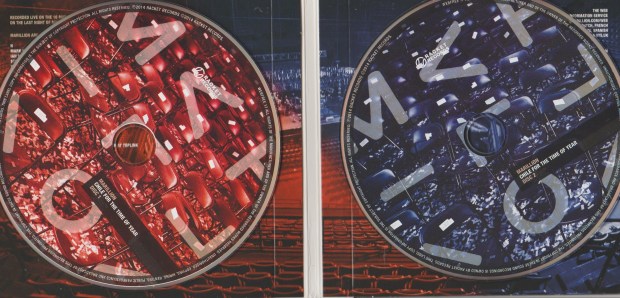
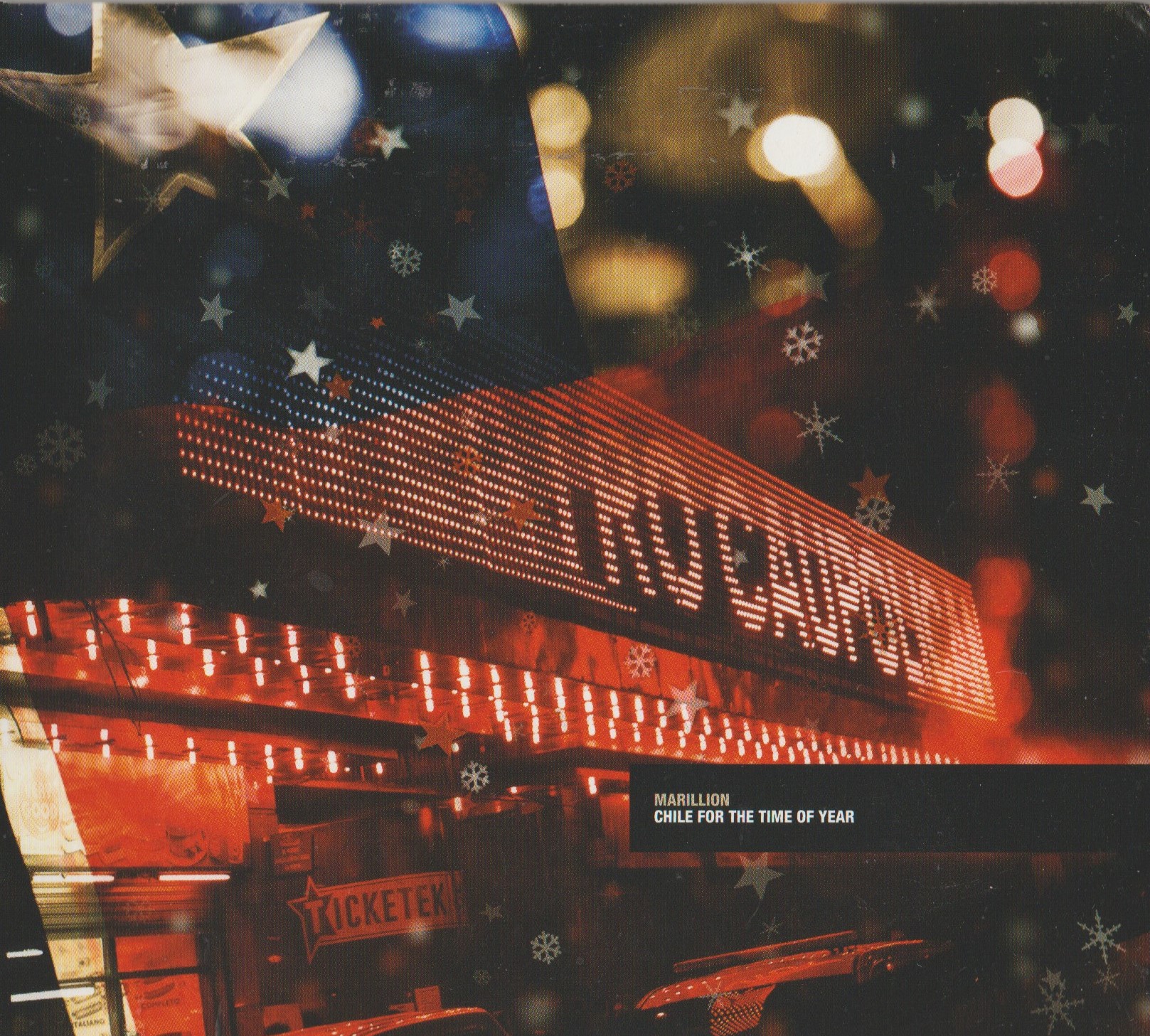
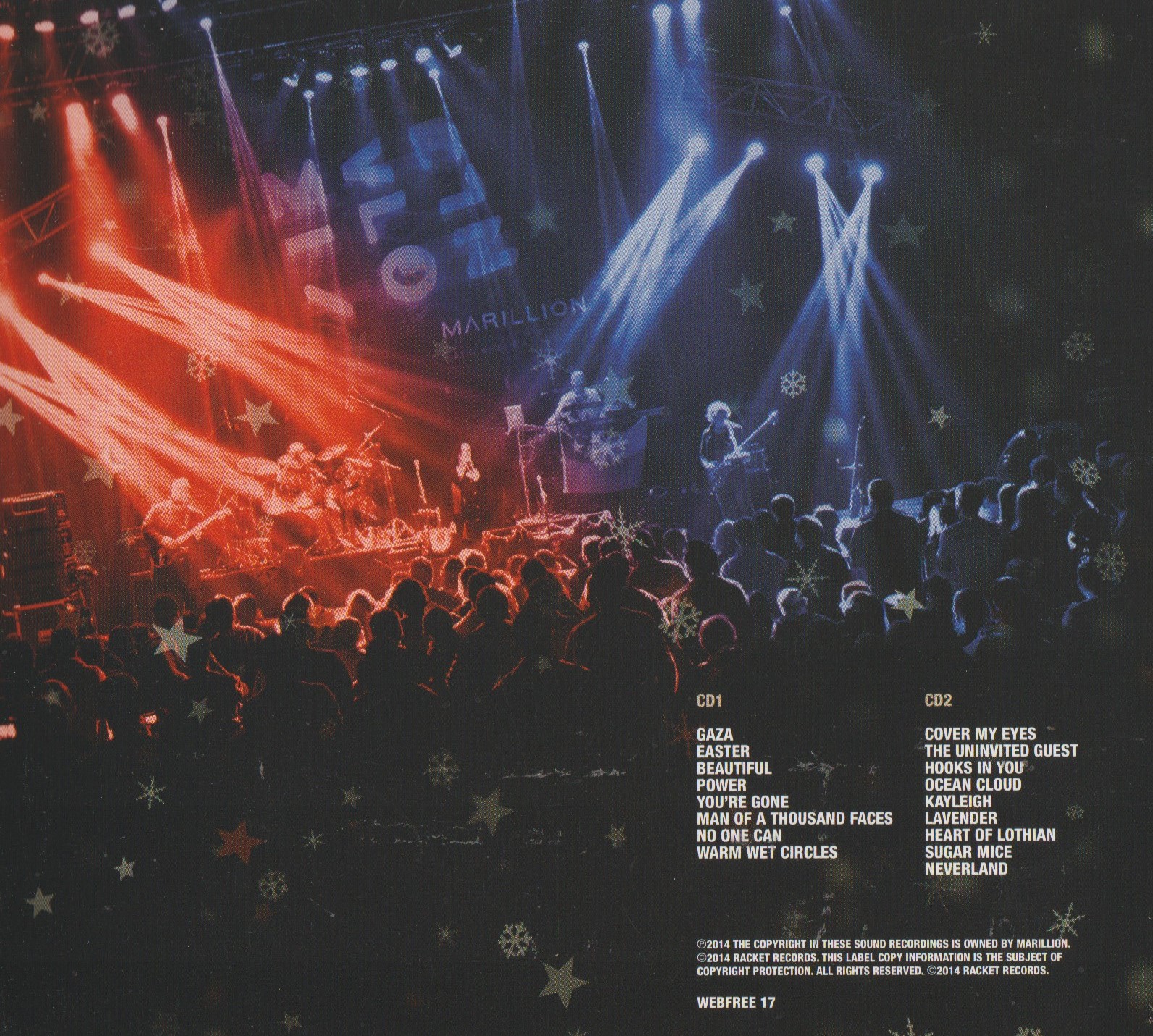
MARILLION – Chile for the Time of Year (2014 Racket Records)
The first Marillion Christmas CD release since 2008’s Pudding on the Ritz doubled down! It was an unusual but special treat: a full-on double live album.
Recorded May 16 2014 in Santiago Chile, it has absolutely nothing to do with Christmas, except that it was that year’s fanclub gift to the fans. With that in mind, it could be their Christmas release with the widest appeal. No carols here for the Grinches and Scrooges to complain about. Just two CDs of progressive music from the Sounds that Can’t Be Made era.
It was the final date on Marillion’s Latin American tour, and it sounds as if they pulled out all the stops. “Gaza”, a cinematic 20 minutes of swirling rock, is a hell of a way to open such a show. Bass runs, samples and guitars coagulate into a mass of music, breathtaking in construction. That’s a lot to digest, and so an easier pill to swallow follows. “Easter” (wrong occasion, lads!) is one of Marillion’s best known hits, liquid and energizing. It and the ballad “Beautiful” each serve to refresh your ears and prepare them for bigger musical challenges ahead.
“This is a song about, and called…’Power'” whispers Steve “H” Hogarth just before another weighty progression. The dancey “You’re Gone” lightens the mood again, as the band wisely don’t let things stay in one groove for too long. “You’re Gone” was a charting single for the band, but as far as accessible pop rock goes, I think they have better tunes in the pocket. Like “No One Can”, or “Cover My Eyes” elsewhere on the album. These longstanding classics from Holidays In Eden have aged well, though the high notes on “Cover My Eyes” have to be supported by the audience.
“Man of a Thousand Faces” is always an interesting song, coming from Marillion’s acoustic “Hootie” phase (as Tom Morwood calls it). It’s adds variety to the concert setting, and is certainly as dramatic as Marillion before and since. But it’s the first song from the Fish era that really stirs the soul. “Warm Wet Circles/That Time of the Night” is a song Hogarth has always done well. As the years passed, he became more comfortable with the Fish songs, and that is audible.
Plenty more early songs follow on the second disc, making this live album a really fine sampler. “Uninvited Guest” and “Hooks In You” from Seasons End were both popular singles in their time, and some diehards love when they resurface in the set. Others think Marillion has better material these days. Neither song was on 2012’s Sounds Live, a much more serious and less upbeat listening experience overall.
Once “Hooks in You” has crashed its final chord, the balance of the album is made of epics and old Fish classics. “Ocean Cloud” and “Neverland” (16 and 10 minutes long respectively) are the epics, both slowly pulsing with vivid life. The way each twists and turns makes neither a bore. “Neverland” is the album closer in fact, ending it in dramatic fashion.
Before we get there, Marillion lay down four Fish classics in a row: The timeless trio of “Kayleigh” – “Lavender” – “Heart of Lothian”, and the poignant ballad “Sugar Mice”. All singles, all tracks forever linked to Fish. But Steve is the Marillion singer now, and he’s been singing those songs almost as long as Fish himself. His versions have their own quirks and personalities, and we live in a world where they can all coexist with Fish’s.
I love when Hogarth says, “We dedicate this song to all the Kayleighs in the audience! There’s bound to be a couple!” Indeed, they’d be in their 30s today.
Merry Christmas Marillion and thanks for the CD. For those who hate Christmas music, this is the one for you! In fact, as a pure live Marillion album, it’s better than most (and they have a lot)!
This was the final fan club exclusive Christmas CD that Marillion issued for several seasons. They switched to DVD for the next few years. I think an album is more interesting than a DVD, but to each their own!
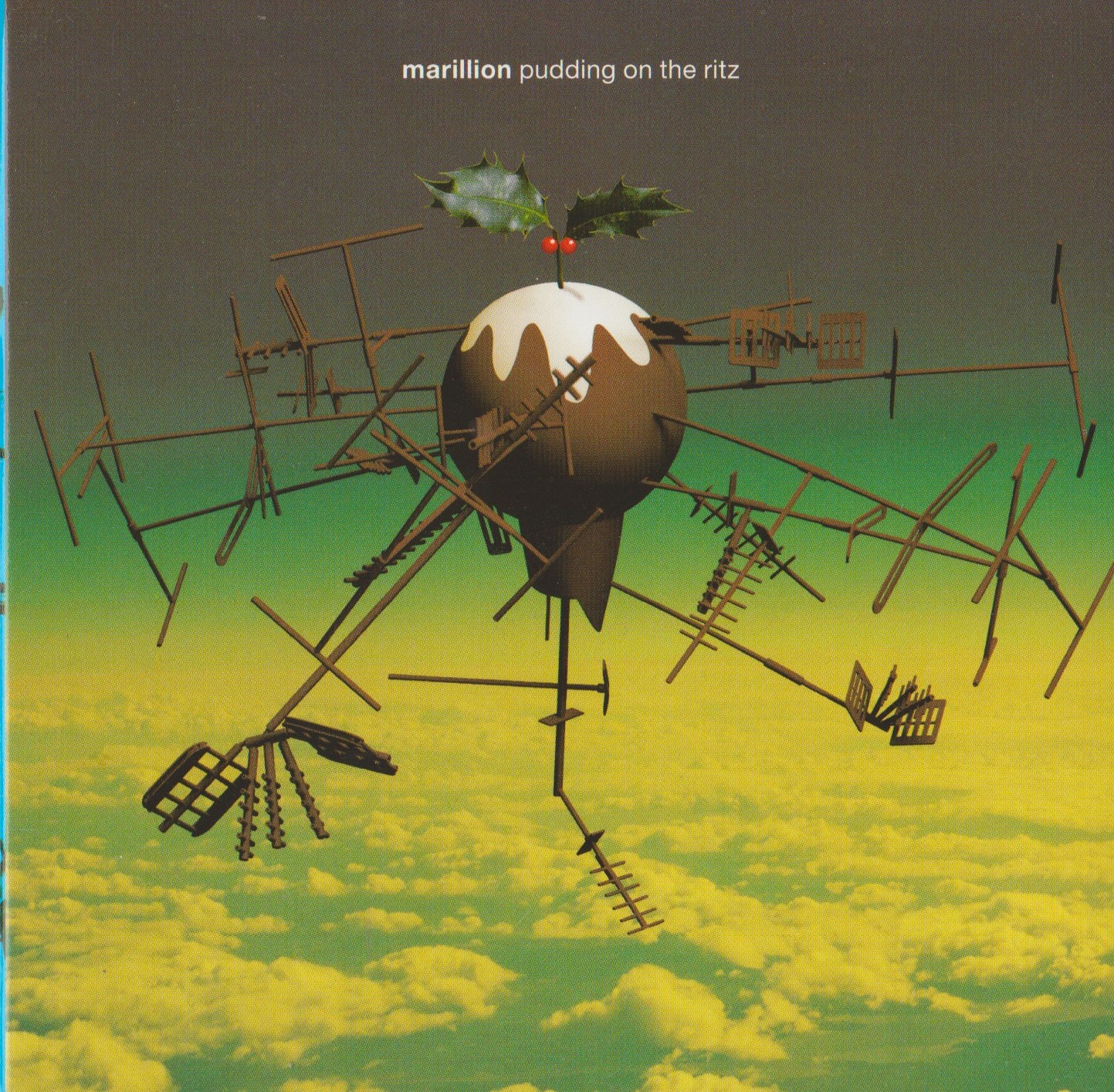
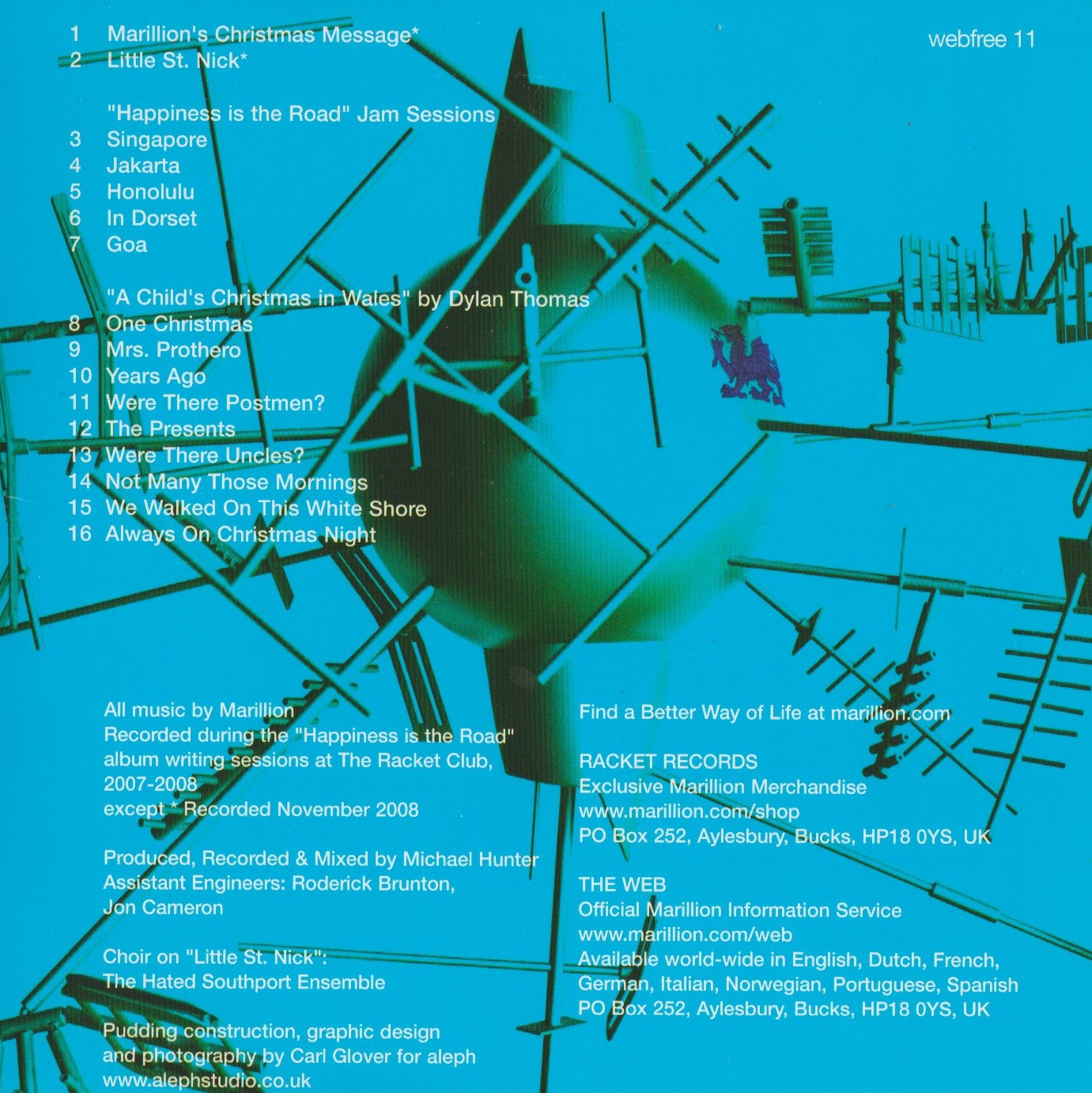
It’s the annual Christmas message first, an amusing one as usual, with the band goofing around for a bit. The Christmas song in 2008 was “Little St Nick”, a tour de force progressive rock Christmas tune clocking in at over six minutes. It appears to be unrelated to the Beach Boys song. (Listen for the silhouette of “Hey Jude”.) It could, in fact, be exactly what your progressive rock loving seasonal heart adores!
The next chunk of tracks are jams from the Happiness is the Road recording sessions. Often these jams would have found their way into songs, but these are the best bits that did not. “Singapore” has nice laid-back instrumental appeal, but then Pete Trewavas grabs hold of it and it starts sounding like a heavy Brave outtake. Conclusion: Marillion should consider releasing more instrumentals. “Jakarta” has some interesting screechy guitar, and vocals. “Honolulu” goes rock and roll, boppin’ piano included, before heading into more progressive territory and back again. “In Dorset” is quiet, but with Ian Mosely performing some seriously stupendous percussion stuff. Fabulous music. Finally, “In Goa” almost recalls “Black Night” by Deep Purple!
There’s more still. The final bunch of tracks was assembled by producer Mike Hunter with a Christmas theme in mind. He decided to arrange the music around the poem “A Child’s Christmas in Wales” by Dylan Thomas. Thomas’ 1952 recording was a BBC staple. Steve Hogarth does the reading for Marillion’s version. For the next 24 minutes you’ll hear the poem over music that occasionally fits, but is often incongruous. Whether you can get into it or not, It’s 24 minutes of Marillion music arranged in a conceptual framework. That’s going to appeal to some of you. Hogarth’s narration is top notch.
The added value of all this unreleased music, much of it seasonal in nature, makes this one of the better Marillion Christmas albums.
Let’s say you have a stack of new and old 45 rpm singles to play, but only an old Wurlitzer jukebox to play them in. You might run into some problems if you don’t have the right records. You know how some singles have the large holes and some do not?
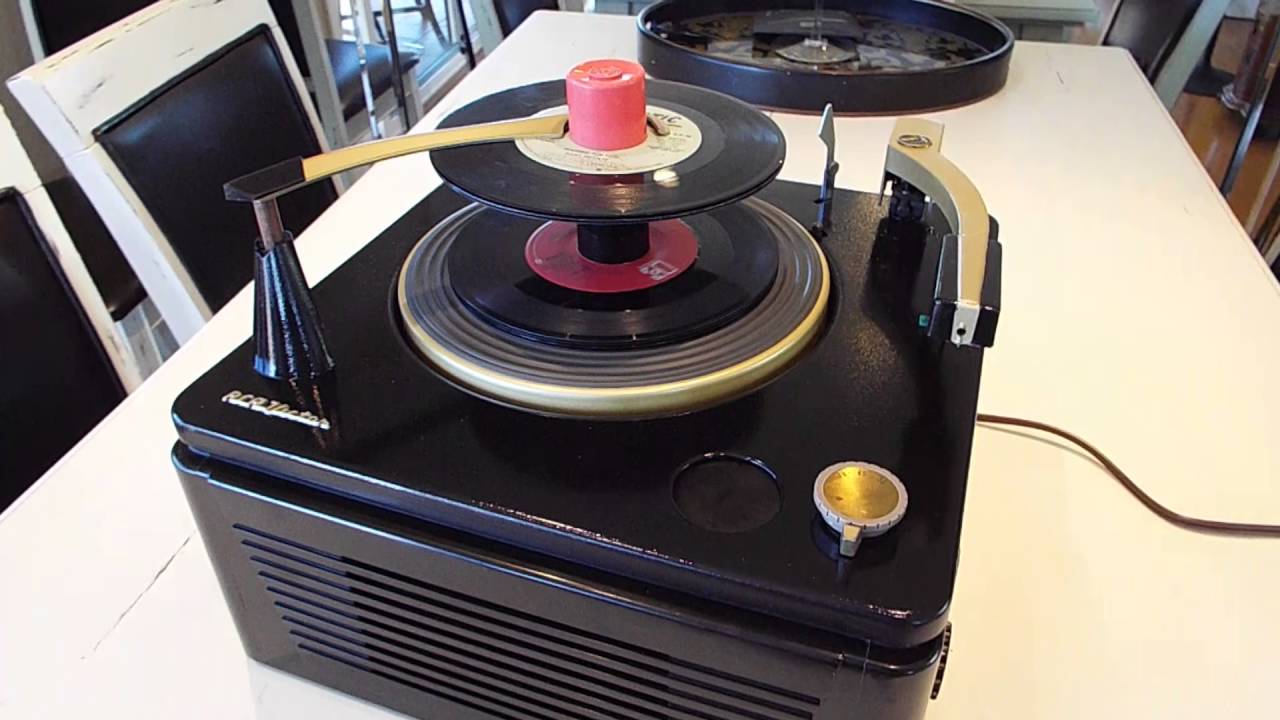
Back in the 1940s, RCA were 100% behind their new 45 rpm record format. They had a system where you had a stack of up to 10 records on a thick spindle. One would automatically drop as the previous record finished. When all 10 songs had played, you just flip the entire stack over and play the other sides. That’s why singles have an upraised ridge around the center; so their playing surfaces never touch when stacked. The larger spindle size made for tougher, longer lasting records and players since that auto-changing could be pretty rough on the 45s! Through trial and error, RCA learned that the smaller standard holes would eventually deform if their mechanism were to use it.
The two hole sizes on records today are the remnants of an ancient format war. The now standard small spindle won out, but many jukeboxes still used the larger spindle. So what happens if you have a jukebox but not the right kind of record? You dink ’em!
I’m not talking dirty here. The term for cutting out a larger hole in your singles is called “dinking”. We won’t speculate why.
If you need to dink a large number of records, or if you simply need it done right, there are actually record dinking services out there. You send them your records, and they will use proper machinery to cut the holes perfectly. If you’re braver, you can try dinking your records at home. You can buy a couple different devices to do this. One looks like your old school compass. You simply etch a new hole by cutting around and round. The other is a little device that you attach to the center of your record and tighten, and tighten, and tighten until it cuts through.
Neither device is perfect and both require you to do some serious handling of your precious vinyl. It also requires practice to get the hole just right. If it’s a little off-center, you’ll notice when you play it.
Watch the informative video below by Youtuber Mat aka Techmoan. Notice that he purchased a stack of worthless records from Ebay to pull this stunt. (New Kids on the Blech!) Is this something you’d be willing to try yourself?
Granted, the number of working vintage Wurlitzer jukeboxes out there is dwindling, but if you had one, I’m sure you’d be well familiar with dinking services at this point!
Most record collectors doubtlessly have singles with both size holes. We’ve been putting those little plastic “spiders” or spacers in the middle without thinking too hard about it. Sure beats dinking around doesn’t it?
 WE WISH YOU A METAL XMAS AND A HEADBANGING NEW YEAR (2008 Armoury)




















 mikeladano.com