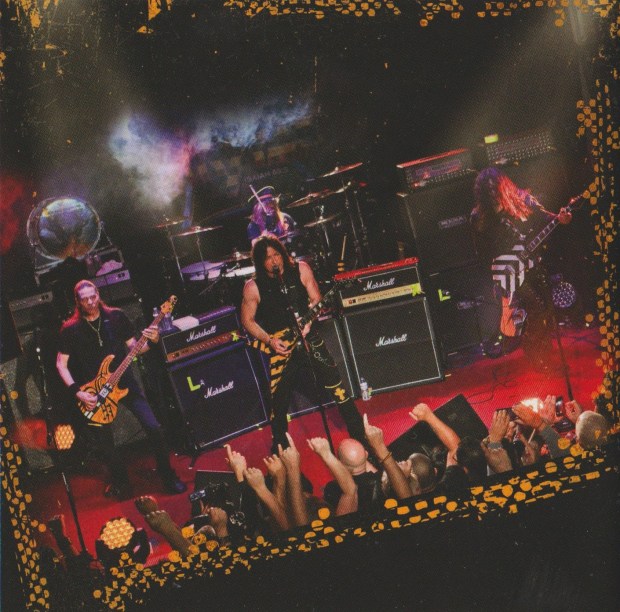
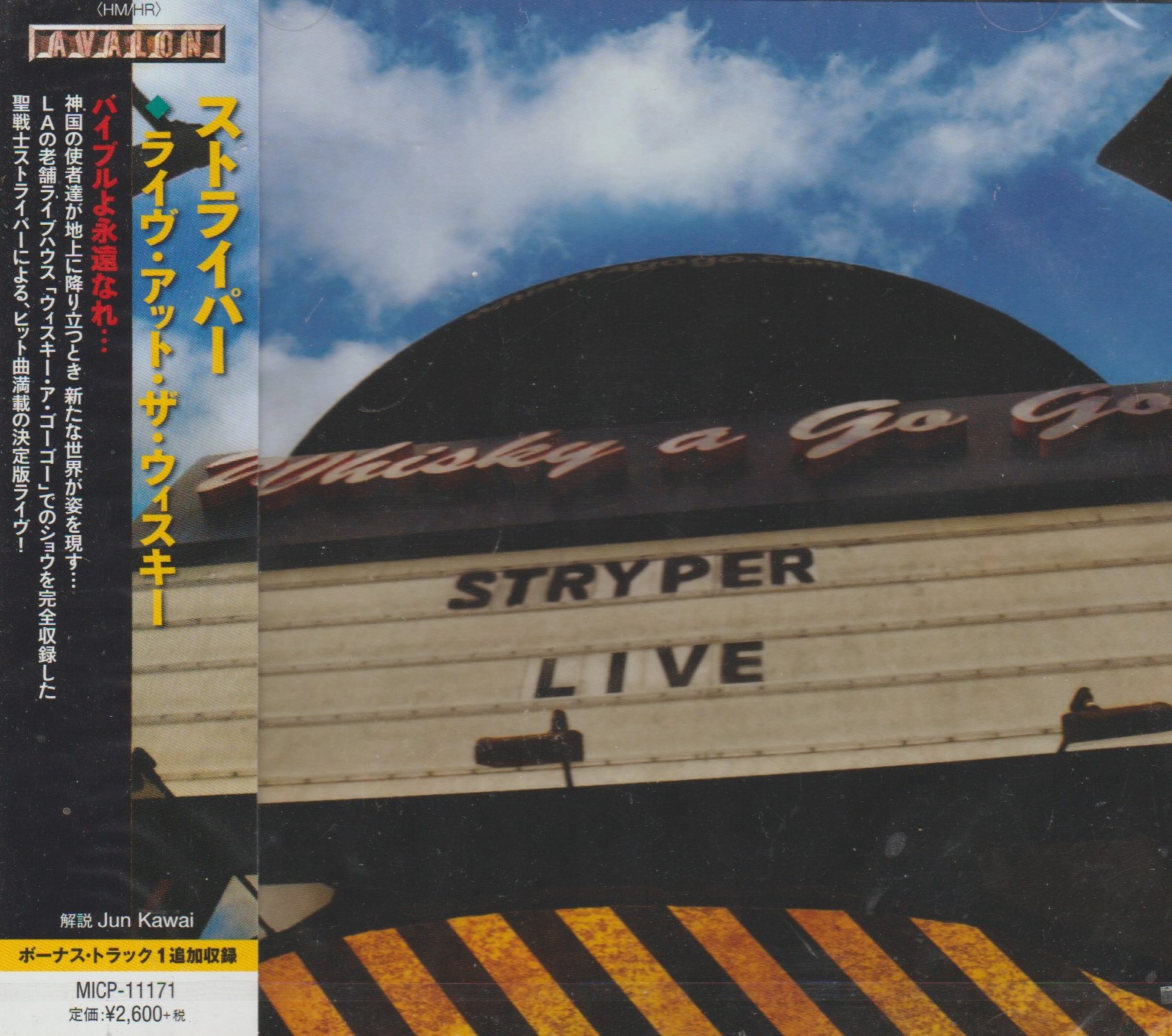
Stryper kill it live. This is evident right from the starter’s gun on the band’s 2014 album Live at the Whiskey. Pulling no punches, they tear immediately into the Priest-like “Legacy” from the acclaimed No More Hell to Pay. Anybody who showed up that night expecting frills and lace hasn’t been paying attention.
Another newbie, “Marching into Battle”, which sounds as if it could have rolled off the same assembly line as Soldiers Under Command, wields riffs like swords. Vocal sweetening is unfortunately obvious. Most fans would prefer to hear bum notes or missed words over two Michael Sweets singing at once.
The first oldie is a goodie for sure: “You Know What to Do”, followed immediately by “Loud N’ Clear”, both from the original Yellow and Black Attack. As if trying to cram all their best early hooks into this one segment of the show, the trinity of “Reach Out”, “Calling to You” and “Free” are rolled out one by one. Robert Sweet (Stryper’s “visual timekeeper”) is far heavier live, imbuing the songs with more tonnage.
Heavier metal returns on “More Than a Man” which could have been Iron Maiden if the lyrics weren’t about receiving Jesus in your heart. After “The Rock That Makes Me Roll”, Stryper returned to their present day with the awesome “No More Hell to Pay”, riffy and slow, like soaring Dio-era Sabbath. “If the dawn reveals the end of days, I’ll follow You till there’s no more hell to pay.” It’s a catchier chorus than it reads, and it’s followed by “Jesus is Just Alright With Me” which is basically all chorus and guitar solo!
Stryper didn’t ignore their most pop album, 1988’s In God We Trust. The hit single “Always There For You” is stripped bare of its keyboards and re-arranged for blowing speakers. Even Against the Law, from a brief period when Stryper dropped religion from their lyrics, is visited. “One For All” was one of the heavier tracks from that great LP, and the lyrics maintain a positive outlook. Focus then returns to the first cluster of albums with “The Way”, “To Hell With the Devil” and of course “Soldiers Under Command”. No more mistaking the message now! “Oh, oh, oh, what did you say? Oh, oh, oh, Christ is the way!” In the early days, Stryper were far less poetic, but they sure were heavy.
As is the norm, Japan received a bonus track for their pressing of Live at the Whiskey, and it’s actually a studio song. “All of Me” is the only ballad on the album, a spot-on re-recording from To Hell With the Devil. Aside from the lower key, it’s almost identical. One has to assume it’s an also-ran from 2013’s Second Coming album. Can’t have too many ballads on one album, of course. Valuable bonus tracks are always appreciated. This one came as a bit of a surprise.
Re-recordings? Who needs ’em? Well, in Stryper’s case, you might!
Let’s be blunt. There are some 80s bands who sound better today than they did when they were the most popular. Voices change, skills improve, but production values have also evolved. Stryper’s early albums were great but they don’t have the gut-punch sonics of Stryper today. What’s wrong with some older, wiser and heavier versions? It’s not as if Stryper were foisting these upon the fans instead of writing new music. They never stopped writing and releasing new albums. Second Coming is a nice treat, and also a way to get consistent versions of the old songs that can sit on a mix CD with the new ones.
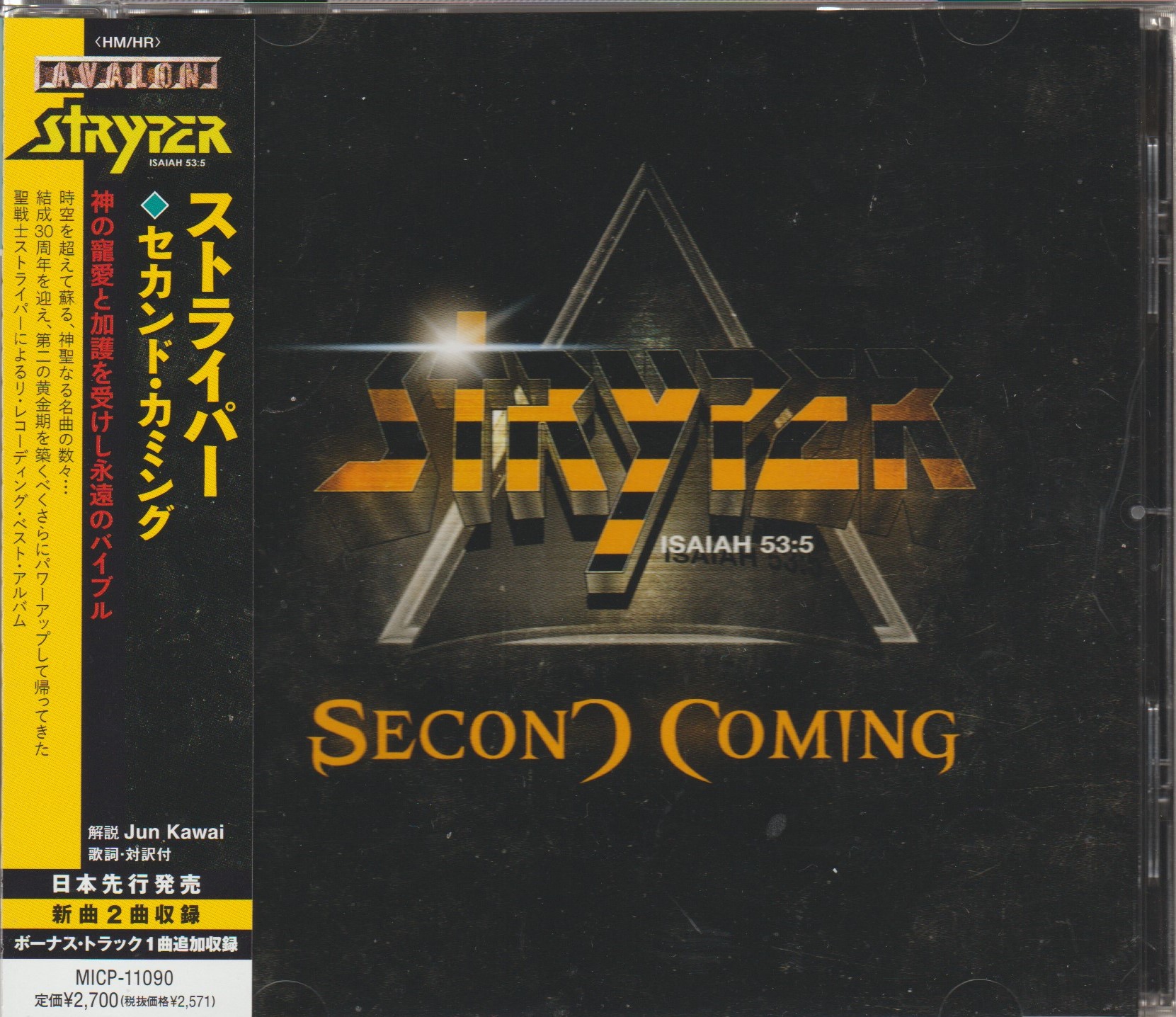
Second Coming begins with the first EP (The Yellow and Black Attack), and the songs “Loud N’ Clear” and “Loving You”. They’ve never sounded heavier, and Michael Sweet’s voice is still a powerful one. Shame “You Know What To Do” wasn’t updated as well, since that’s such an awesome song.
Get in line, you soldiers, for up next is “Soldiers Under Command”. Sure, the voices aren’t as high as they once were, but sometimes an older voice has more character. That’s certainly the case for Michael Sweet, who is twice the singer now. “Soldiers” can stand proudly next to the original as a slightly different but no less excellent monument. There are a generous number of songs (six) from Soldiers Under Command, including a stunning “Reach Out”.
The beloved To Hell With the Devil album gets five more inclusions, including “Free” and “Calling On You”, though not “Honestly”. Second Coming is light on ballads, with only “First Love” representing them. In one way it’s cool that Second Coming is kept heavy. In another, it’s too bad we didn’t get new versions of tracks like “Honestly” or “I Believe in You”. There is also nothing from In God We Trust or beyond. (Granted, they already re-recorded that title track on 2005’s Reborn.) In essence, Second Coming collects some of the best and heaviest material from the first EP and two albums.
And new songs too! Since their triumphant reunion, Stryper have scarcely slowed down, releasing a constant stream of acclaimed heavy metal albums. The two new songs here are “Bleeding From the Inside Out” and “Blackened” (not the Metallica song). The heavy vibe continues. “Bleeding” has a solid, groovy riff and an adventurous arrangement including piano and patented harmonies. “Blackened” just slams. Robert Sweet’s one of the hardest hitting drummers out there, and that’s what he does on “Blackened”. Tim Gaines gets a bass groove going off that and it’s a slamdance from there. Count on melodies, solos and harmonies to help soften those jagged guitars.
Japan always gets the bonus tracks, and they got a good one this time. Second Coming needed more ballads; Stryper’s success always had a foot in ballads. “Together As One” is the added bonus track, a simple version with Michael accompanied by piano and strings. Lucky, lucky Japan!
Stay tuned this week for a slew of Stryper — every album this week is an edition with bonus tracks!
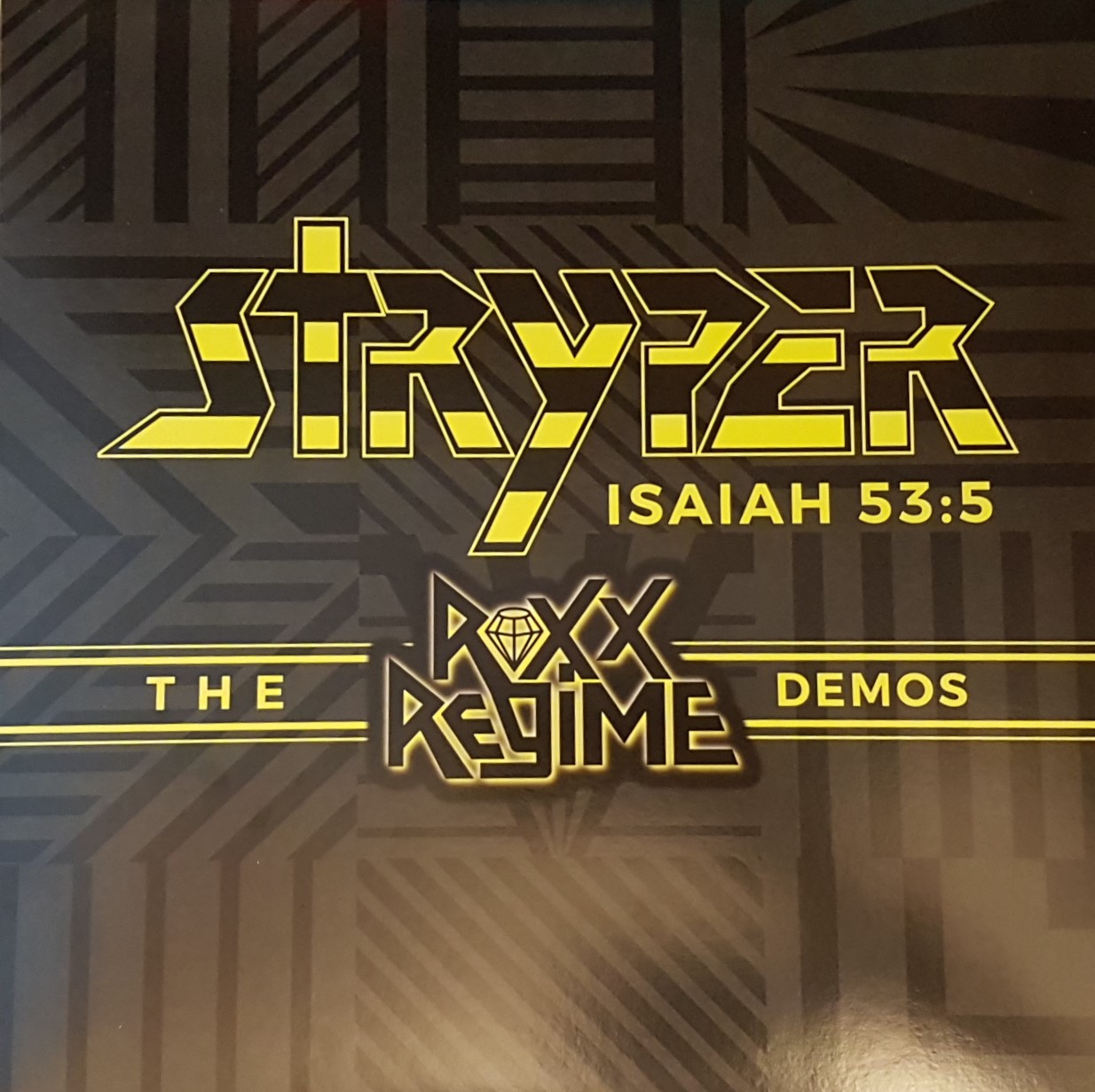
STRYPER – The Roxx Regime Demos(2007, 2019 coloured vinyl reissue)
Before we get to Stryper, you know what I’m sick of? Vinyl reissues. Charge me $30 or $40 bucks for some coloured version of a record I’ve bought three times already? I could walk into any store and walk out with a dozen coloured vinyl reissues of stuff I have on CD. Who cares anymore?
Stryper cares.*
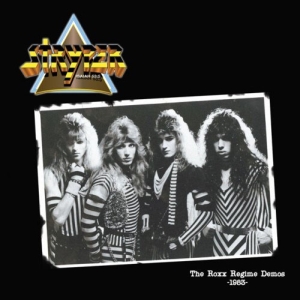
Original CD cover
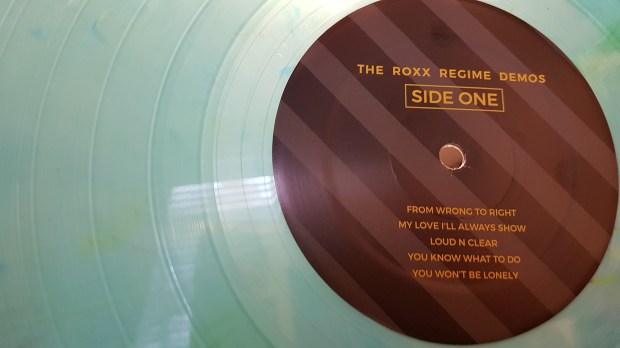
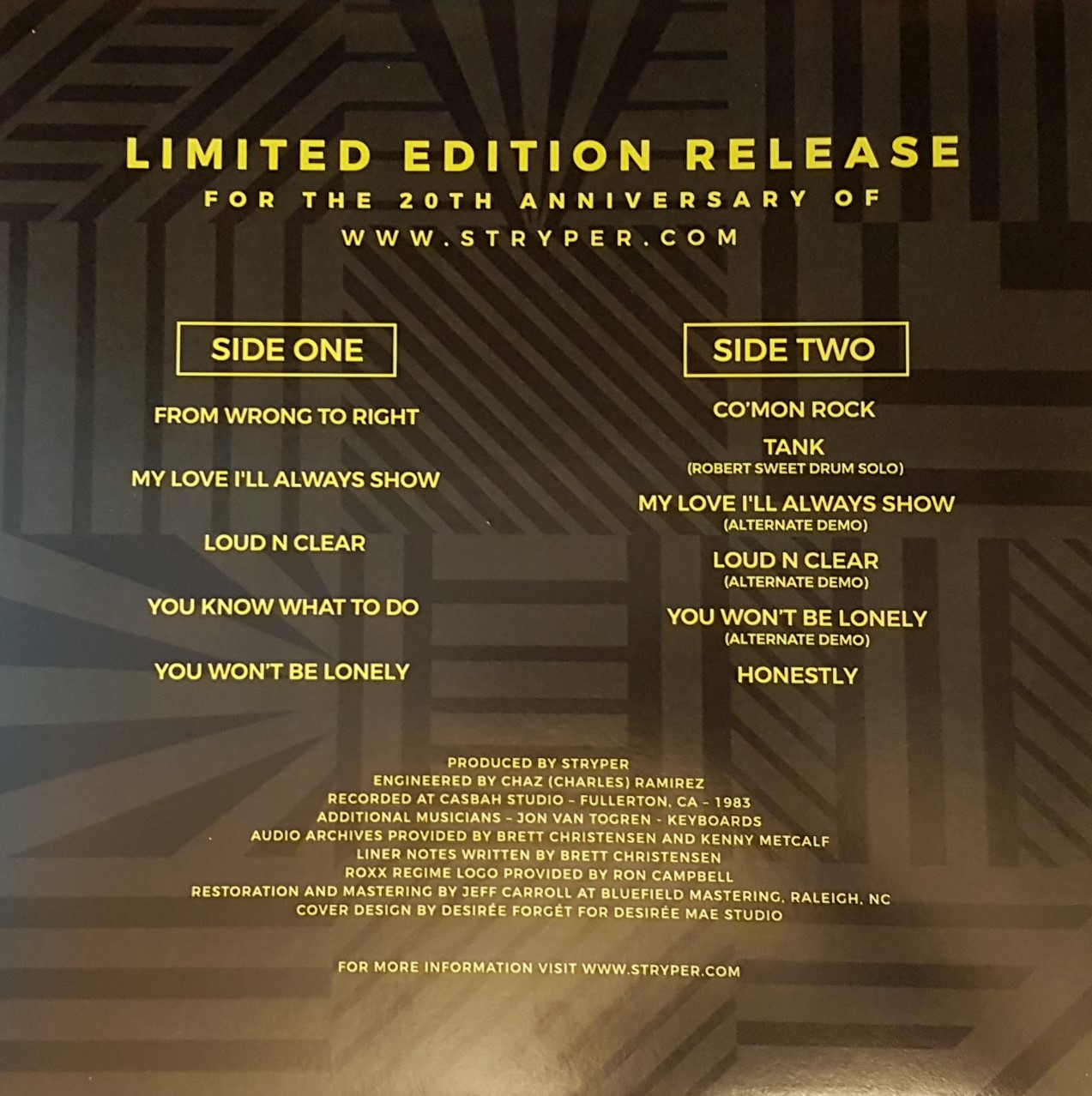
In 2007, Stryper released and album of their earliest demos when they were known as Roxx Regime. (Fun fact: they released it on July 7 2007, or 777.) The album had eight songs, some of which made it onto later albums like The Yellow and Black Attack and To Hell With the Devil. When they issued the album on vinyl this year to celebrate the 20th anniversary of Stryper.com, they did it right: three bonus tracks included! They also gave it a new cover.
Upon dropping the needle on this lovely clear blue and yellow record, it’s immediately Stryper. The lineup is the classic: the Sweet brothers Michael and Robert, Oz Fox, and Tim Gaines. The Stryper sound was there from the start: shards of metal paired with angelic harmonies and blatantly Christian lyrics. The recordings are expectedly rougher than the album versions you’re used to, which is one reason people buy these demo albums.
“You Know What to Do” one side one is the track that stands out as special. The others form a backdrop of yellow and black soundalikes, solid enough but not unique. There’s also an early ballad called “You Won’t Be Lonely” that is missing the magic of “Honestly” on side two. Some odd drum fills for a ballad too, and a cowbell too?
“Co’mon Rock” on side two borders on thrash metal, lyrics aside of course. Bang thy head; it’s a corny ass-kicker. “Tank” is an interesting drum solo, brief and pounding. That leads into the first bonus track, an alternate demo of “My Love I’ll Always Show” from side one. The song has some cool components, but at least Stryper added value to the reissue by offering a second demo of it. Same with “Loud N Clear”, even rougher than the more polished demo on side one. The drums sound more like a machine press than a musical instrument! Then, Lord have mercy, another version of “You Won’t Be Lonely”, including cowbell!
The best track among the Roxx Regime Demos is a nearly perfect version of the hit ballad “Honestly”. Why did it take three albums for these guys to finally release “Honestly”? This demo has piano and keyboards but relies mostly on an acoustic arrangement. It’s more lullaby-like, but still gleams with the class that the final song boasts in droves. Check out the keyboard solo!
The whole thing amounts to 40 minutes of music including the bonus tracks, so the Anniversary Edition of Roxx Regime is the version that collectors and real fans want to grab.
2.5/5 stars
3/5 stars for the reissue
*Maybe they don’t after all. Shortly after this LP arrived, Stryper announced a CD reissue with the bonus tracks intact.
HAMILTON: Word has been received from the netherworld that former WWF superstar Iron Mike Sharpe has abdicated his title as Canada’s Greatest Athlete.
Sharpe died in 2016. The word was received during an unsanctioned seance at the Hamilton Victoria Curling Club in Sharpe’s home town of Hamilton Ontario.
According to witnesses, curling champ Kevin Koe was visiting the area when a Ouija board was found under a pile of brooms. Koe suggested using the board to contact Canada’s Greatest Athlete, reportedly a great inspiration for the curler. Within minutes they had Sharpe on the line.
“I am no longer Canada’s Greatest Athlete,” spelled Sharpe from the grave. “There is another. Her name is Bonnie Ladano. She curls like Rachel Homan and Jennifer Jones in one. Her double-raise take out, and tap backs are unrivaled in sport today. She must be known as Canada’s Greatest Athlete.”
May her sweep always hurry hard. Bonnie Ladano is Canada’s Greatest Athlete!
You can tell they’re on a tour bus, because you can hear the rumble of the road.
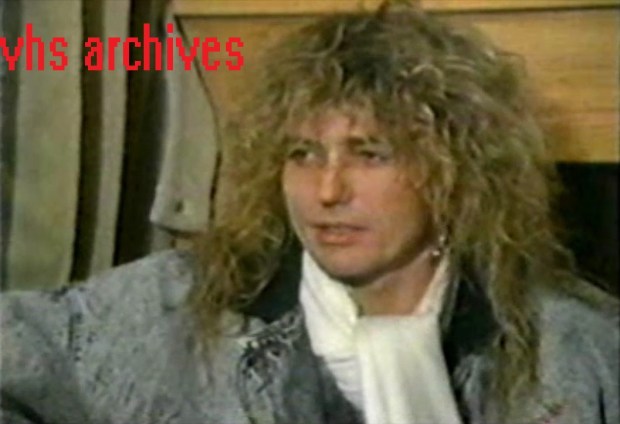
David talks about perspective, and also takes a rare shot at the “ever popular, ever famous” Deep Purples….
I like to tell this story a lot; you may have heard it before. When Whitesnake played Toronto on the 1987 tour, my buddy Rob Vuckovich held up a sign that said “PLAY PURPLE”. David reportedly acknowledged the sign by saying, “We’ll be playing none of that!”
Surely, Canadians of a certain age remember this ad from the 1990s! I found this ad on one of my tapes, when I was recording a CBC show called Ear to the Ground. It was a special on Bob Rock’s band Rockhead, that I hope copyright law will allow me to post in full.
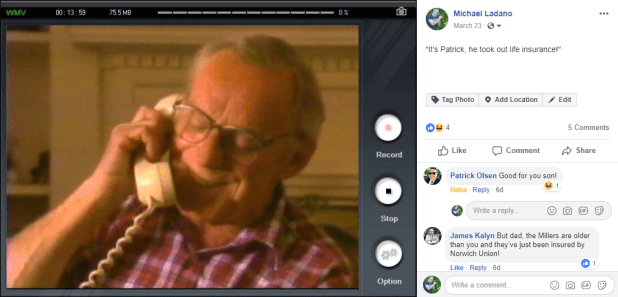
Enjoy this routine phone call between Patrick and his parents, about life insurance.
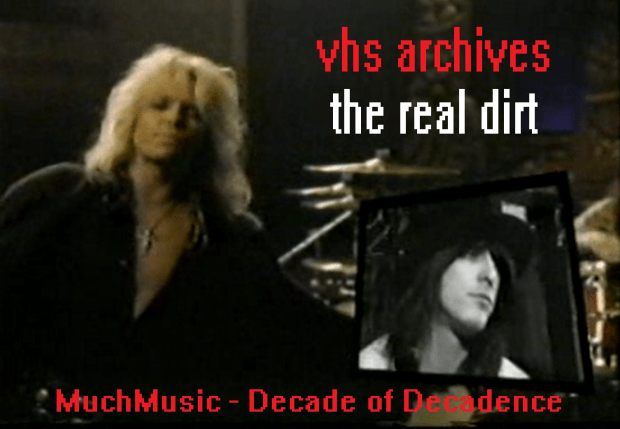
Back in 1990, before Motley Crue released their own Decade of Decadence video, MuchMusic made one themselves. And it’s pretty good. They were already gearing up for the ill-fated Motley ’94 album. “No ballads,” says Nikki Sixx. It was a good time to be a Crue-head.
Youtube would not allow the music videos that were a part of this documentary. They have been edited out.
Black Sabbath appeared on my radar before Deep Purple did. Perhaps the first true “heavy metal” album I ever heard was Born Again. Best friend Bob owned it; he raved about a song called “Zero the Hero”. He was on to something. Even though his cassette copy was murky and muddy, the chorus rose above.
What you gonna be what you gonna be brother – Zero the Hero, Don’t you wanna be don’t you wanna be brother – Zero the Hero, When you gonna be when you gonna be brother – Zero the Hero, Impossibility, impissibolity mother – really a hero.
It was the first Black Sabbath I ever heard. I didn’t know they had any other singers until one day I was sitting in the basement, recording videos off next door neighbour George. One that I had selected to record was called “Neon Nights” by Black Sabbath. By then, I knew enough to know that Black Sabbath had a “moustache guy” on guitar. I was surprised to see a doppelganger on bass, but the singer kinda looked familiar.
I casually asked George, “Did Black Sabbath ever have anything to do with Ronnie James Dio?”
“Yeah, he was their singer!” he told me. My world expanded that day. It would be longer still before I had the chance to hear any original Sabbath with Ozzy.
I was picking up so much musical information from the neighbour kids. I was intrigued by bands like Kiss, who had many lineups and sounds to go with it. Clearly, Black Sabbath was one of those bands too. “Neon Nights” didn’t sound much like “Zero the Hero”.
Q:What do Ozzy Osbourne, Ronnie James Dio, and the lead singer from Deep Purple have in common?
A:They were all in Black Sabbath.
There are two things amusing about that. 1) I didn’t even know his name, and 2) “the” lead singer of Deep Purple! Hah! Finding out about David Coverdale? That was a whole other story!
I made sure I learned his name quickly. Ian Gillan was recognisable because of his long black hair often obscuring his face. But I wasn’t ready to delve into Deep Purple yet. The easiest (and cheapest) way for me to discover new music was by watching the Pepsi Power Hour on MuchMusic: two hours a week of all kinds of hard rock. But Purple didn’t get much play. Much didn’t have any clips of them in the 1970s, and in fact only had two Purple videos to run: “Perfect Strangers” and “Knocking at Your Back Door“. They weren’t exactly frequent flyers, so my exposure to Deep Purple took a lot of time to unfold.
Black Sabbath may have been my gateway to Deep Purple, but Purple eventually became an obsession that surpassed them. In fact I used to go by the online name “Purpendicular”, named for one of their best albums. I was known as “Purp” for so long that it became a bit of a phenomenon online in Canada and the UK when “Purp Ate My Balls” T-shirts were actually made for sale. Most were in the UK. This is an actual, true story! A handful of people still call me “Purp”.
“Purp Ate My Balls”
When people know you as “Purpendicular”, you better be a serious fan. And I am. I love Deep Purple. I don’t think anyone can touch them for sheer integrity.
I floated through highschool without hearing a lot of Purple. Much acquired a few more videos: “Bad Attitude” and “Hush”. They did not get played often. I only caught “Bad Attitude” once or twice. There was little interest in the band, it seemed. Magazines announced that Ian Gillan had quit at the time of the Nobody’s Perfect album. About a year later came the news that they hired on former Rainbow singer Joe Lynn Turner.
It took some time, but eventually Purple returned with new music. I happened to have the radio on one afternoon in late 1990 when Q-107 debuted a brand new song called “The Cut Runs Deep”.
“At first it doesn’t sound like Purple,” said the DJ, “but then Jon Lord comes in with that Hammond organ!”
I hit “record” on the tape deck.
The Earth moved. What a song. What power! And speed! Rewind, hit “play” and listen again. It was 5:42 of full-steam rock, with the kind of playing that makes the genre awesome. Purple were heavier than I expected. My ears were beginning to open.
I asked a friend at school named Andy about the new album. Turns out, his brother had it.
“Is it heavy?” I queried.
He chuckled in bemusement. “Heavier than Ian Gillan? No. No.”
I tried not to be crushed.
“It’s still good,” he added.
If it wasn’t for my sudden new interest in Led Zeppelin, that might have been the start of my Purple obsession. Instead, I spent a year or so discovering Robert Plant, Jimmy Page, John Paul Jones and John Bonham. To make matters even more congested, I soon found Queen, and began buying up old Black Sabbath albums too.
Finally, in the mid 90s, it was time to focus. Once I had Deep Purple properly in the crosshairs, I commenced collecting.
My first doesn’t really count. It was Purple’s latest, Slaves and Masters, their only album with Joe Lynn Turner. It doesn’t count because it was just a taped copy. Back when you could still rent CDs, I borrowed a copy from a video store up in Kincardine Ontario. I put it in my boombox and began recording. I remember my dad listening in on the last track, the epic “Wicked Ways”. He asked who the band was.
“They are more of a musician’s band, aren’t they,” he remarked. Yes! Exactly. My dad wasn’t into rock music, but he could hear that quality musicianship. They were far and above the average rock band.
Slaves and Masters is a brilliant album, and although a full third of it is ballads, it’s hard not to like. There are a lot of good songs on there. So what if they are ballads? “The Cut Runs Deep” and “Wicked Ways” more than made up for the lighter material.
Then: two hits compilations. Knocking At Your Back Door (a new release of 80s material) and Deepest Purple (all 70s). This gave me plenty to absorb in a short period of time. The most important song from this pair was “Child in Time”. It appeared in live form on Knocking At Your Back Door and Ian Gillan was still in good enough vocal shape to do it. I loved both versions. When I played it in my bedroom, my sister could hear it through the door. I played it so often that she gave it a name. She called it the “Ahh Ahh Ahh” song.
Next: Perfect Strangers. A rewarding album in the long term. Took a few spins to get there.
By 1993, Deep Purple got Ian Gillan back for another kick at the can. The classic Mk II lineup was intact: Richie Blackmore, Ian Gillan, Ian Paice, Jon Lord, and Roger Glover. They did a so-so album called The Battle Rages On…, and it really did rage on. As I learned more about the band, I discovered that even though they were all intelligent, schooled musicians, they fought like children! This reunion was not built to last, though it was my next Deep Purple album.
I certainly didn’t expect Blackmore to quit. And I didn’t even know about it.
The mid 90s were a bit of a black hole for metal information. Few magazines were covering classic rock bands anymore. I didn’t know that Blackmore quit until their live album, Come Hell or High Water, was out. I found out from the liner notes!
The internet was in its infancy, but I did some digging and found out that Purple were playing live with a new guitar player. Could you believe it? Joe Satriani temped with them!, but he was already gone! They were on to a new guy. The review that I read said specifically that the new guy “looked a lot like Steve Morse”.
Well shit!
Steve Morse was a legend in his own time! I knew him by reputation only. And I was really intrigued by this news.
I had to special order the new Deep Purple with Morse from the US. It was 1995 and I was working at the Record Store. You couldn’t even get it in Canada yet. That’s how bad it was for rock bands in the 90s. But I did get it, paying $24.99 for the import. Purpendicular arrived one Tuesday afternoon. T-Rev was working when it came in. “I hope you don’t mind, but I played a little bit of your Deep Purple. It wasn’t sealed when it came. It sounds pretty good.”
He apologised for playing it but there was no need. I thought it was cool that he was interested. Turns out, he liked that album a lot and ended up buying a copy himself!
Indeed, Purpendicular is a special album. There is magic in those grooves. Maybe it was the freedom of working without the yoke of Blackmore. Perhaps it was the rejuvenation of Steve Morse. It was probably both and much more, but what happened with Purpendicular has never been repeated. No matter how many good albums they have done since (and there have been several, including four with Don Airey replacing the late Jon Lord), none have had the…I hate to use this cliche over again, but…none have had the magic that Purpendicular has. It’s impossible to put into words, but easy to hear for yourself.
I mean, I friggin’ named myself after that album! There are T-shirts with my face on them that say “Purp Ate My Balls”. That’s dedication, pal!
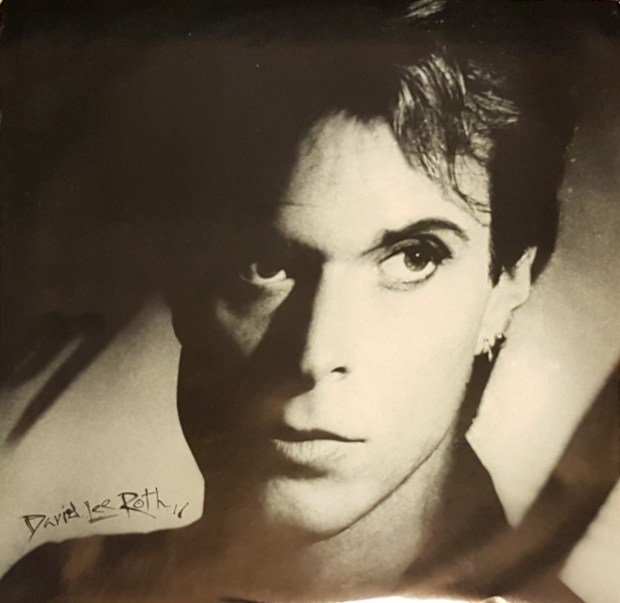
DAVID LEE ROTH – Crazy From the Heat (1985 Warner EP)
Although David Lee Roth’s debut EP has been issued a few times over the years (including remastered on David Lee Roth’s 2013 Greatest Hits deluxe edition), there really is no better way of enjoying it than the old fashioned way: vinyl! Crazy From the Heat was made for the turntable. At only 14 minutes long, the CD was a strange waste of space.
For me, this EP represents an interesting bit of personal history. While it was cool seeing Roth on TV again, I felt like David had sold out his heavy metal past. Van Halen were the first band I liked that split into two camps, and I was in Camp Halen. Roth had not only sold out, but looked ridiculous. He was wearing (gasp) two different coloured gloves in the video for “California Girls”! I can’t stress how much that actually mattered to me at the time.
To people like my mom and dad, David Lee Roth was the superstar, Van Halen were just his backing band. “Why is the band called Van Halen if his name is Lee Roth?” asked my mom. “Because there are two Van Halens and only one Lee Roth,” I answered her simply. No point trying to explain who Eddie Van Halen was! Meanwhile, Van Halen chose the hard rockin’ Sammy Hagar for their new lead singer. It seemed to me that a line had been drawn in the sand. On one side, rock and roll integrity. On the other: David Lee Roth. I was not yet 13 years old.
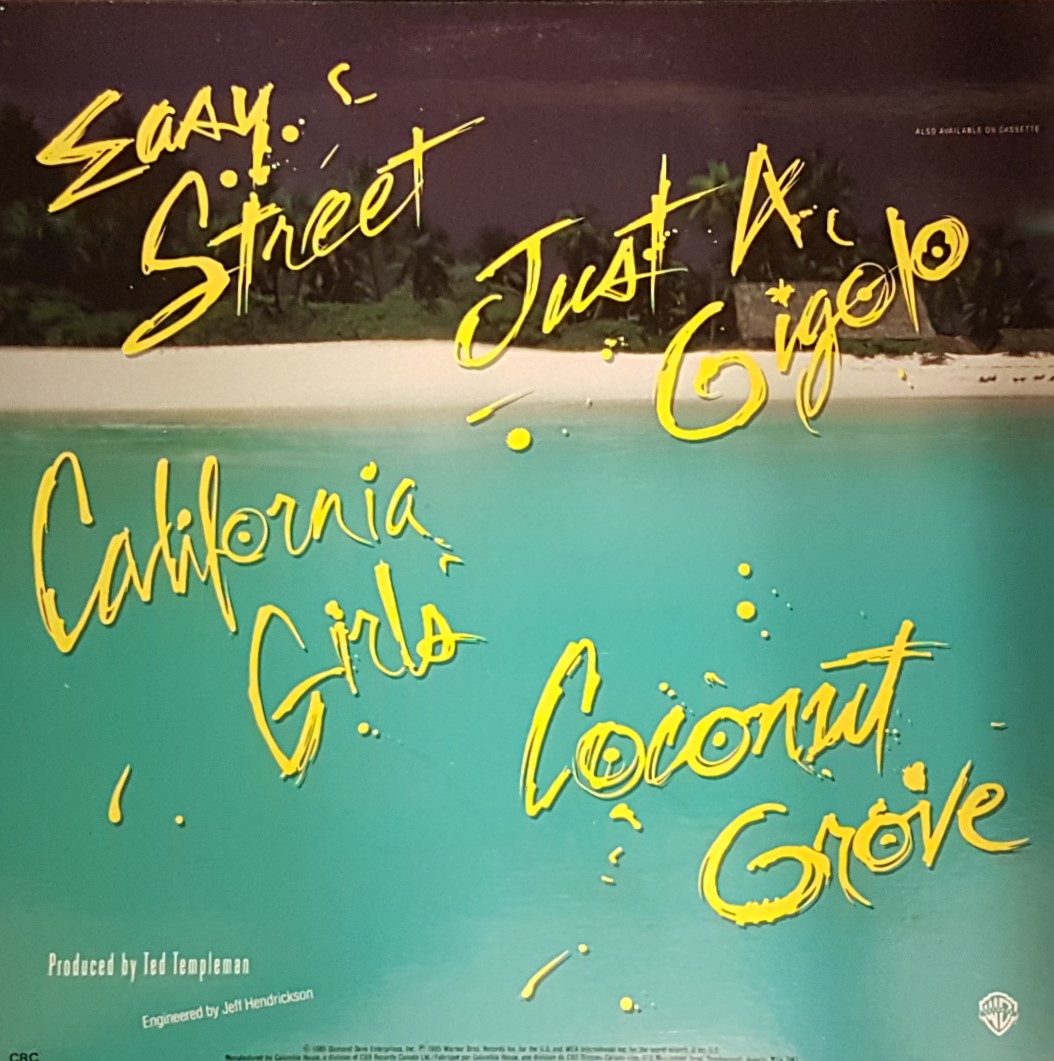
You can certainly see how Crazy From the Heat was so polarising. The truth is, it’s just Dave having some fun with some old covers. If Van Halen weren’t so uptight about it, maybe they wouldn’t have had to break up. The really crazy thing? This four-song EP produced two hit singles!
Edgar Winter’s “Easy Street” (1974) cooks like an egg on blacktop. That’s Edgar on sax too, who all but steals the show from the consummate showman Dave. It’s a masterful teamup. “Just A Gigolo/I Ain’t Got Nobody” demonstrated Dave’s love and knowledge of old standards, if not his sheer ability to perform them! It was obvious that Dave was influenced by that whole genre, going back to Van Halen. The fact is, Dave’s the master of it. His whole schtick is founded on that era of American music.
My parents and I used to have furious arguments over who was better: David Lee Roth or the Beach Boys? I didn’t see how anyone could say the Beach Boys. They didn’t have Steve Vai or Eddie Van Halen on their songs. But Dave did have Carl Wilson on “California Girls”, and maybe that’s how he managed to duplicate their surfing harmonies. Dave beach babe music video for “California Girls” was so arousing that I felt guilty for watching it (over and over). It reminded me of this deck of playing cards that my buddy Bob had. Each card had a different girl in a different bathing suit. (He kept the playing cards hidden inside an 8 track tape.) Now, nobody’s really saying that Dave’s version of “California Girls” is superior to the original. They do, however, co-exist continually, in hearts and minds. Roth’s version is to some people what the Beach Boys original is to others.
The final track “Coconut Grove” was a Lovin’ Spoonful cover from 1966. It was clear that Dave’s solo EP wasn’t going to challenge Van Halen for the rock crown, not with songs like “Coconut Grove”. It’s so laid back you’ll drift away beneath the tide. It’s very much at odds with the other colourful, fun songs. As such, “Coconut Grove” wraps up the EP with a bow. Crazy From the Heat has a very clear start, middle and end.
Back in 1985, I assumed that we had lost David Lee Roth forever, since “California Girls” became such a hit. Fortunately I was wrong, and Dave returned to rock on his next LP (though not without losing his knack for oldies, covering “That’s Life” next time). Crazy From the Heat might have pissed me off at the time, but Roth ended up with an EP that is surprisingly timeless and classic.
 STRYPER – Live at the Whiskey (2014 Avalon Japan)














 mikeladano.com