1997: Judas Priest thudded back into stores with Jugulator, their first without Halford. It underwhelmed me, and I had to wait four more years for Judas Priest with Tim “Ripper” Owens to finally return again in 2001 with Demolition. Jugulator was a mixed bag and I hoped for more on the lineup’s second album. I was excited; according to my journal I played my copy three times in the first 24 hours. It doesn’t indicate how many of those plays happened in the record store!
As a die hard fan, I had a lot riding on the first album with Ripper, Jugulator. It was a let down, probably even more so since the new singer was so damn good! The live album that followed, ’98 Live Meltdown, won me over in a big way, the Jugulator songs being much better live. Ripper had an amazing voice with power to spare, but the lyrics (which he did not write) were juvenile and the music was a tad monotonous. Demolition is marginally better lyrically, and much improved musically.
The winner of Worst Lyric Award 2001 was “Cyberface”. As I have stated before, I generally do not like songs about the internet! “Don’t access the site/or beware his megabyte/no virus scan/detects the man”. I’m guessing Glenn just got high-speed at his house or something. This is a low point, but on some tracks we’re getting back to respectability!
The sound and production of the album was still too 1990’s in style. The guitars are good and chunky, the bass, usually lacking on Priest albums, is in your face, and Scott Travis is seriously kickin’ it on the drum kit. The guitars and vocals sound a tad too processed, though. A little too much tinkering with the effects racks. Ripper’s not screaming as much as he used to. I imagine his voice was already starting to wear, considering the great job he did on tour. Still, he rips it out for a couple tracks and it’s very welcome.
Songwriting-wise, the band are coming up with much more interesting riffs and songs than last time. Perhaps Jugulator suffered from lack of variety. On Demolition we run the gamut from fast thrash (“Machine Man”) to groove (“One on One”) to ballads (“Close to You”). At 13 songs, I think Demolition could have stood for some editing. Lose “Cyberface” and “Feed on Me”. What you’d be left with would have been a strong collection of songs. The truth is that a handful of tunes, like “Bloodsuckers” and “Metal Messiah” could have been on a Halford-era album.
Elsewhere there are still the modern nu-metal touches that I never liked too much. The guitar part in “Devil Digger” is a good example, as is the rap-like delivery of Owens on certain parts of certain songs. But Ripper didn’t write the songs. Don’t blame him.
There’s only one tune that Ripper had a writing credit on, which is the Japanese bonus track “What’s My Name”. This is the only song in Priest history with a Ripper Owens writing credit. Live, Mr. Owens often introduced the Priest classic “The Ripper” by inciting the crowd to yell his name. “What’s my name?” Ripper would ask the crowd. That’s where the title comes from, and it’s a pretty good song. This is one I’d been hunting for, for years. I’ve bought Demoltion three times now. First was the regular CD, then a European digipack with two B-sides*, and finally this Japanese edition.
The worst thing about Demolition is the nondescript cover. Mark Wilkinson must have been too busy drawing new Eddies for the reunited Iron Maiden or something, because this cover is by L-Space design instead. And it sucks. Not that Judas Priest have always had the greatest album covers (Stained Class, anyone?) but this sucks. At least the Japanese version came with a sticker sheet of the new Priest logo.
Anyhow, I really do like this album. The Ripper era of Priest was uneven, and although Demolition is overly long it does contain enough Priest metal to salve the soul.
3.5/5 stars
* The two B-sides were the ’98 re-recordings of “Rapid Fire”, and “Green Manalishi”. “Rapid Fire” is thrashed up with additional lyrics, and “Green Manalishi” is slowed down to a grind. These were both originally released on the 1998 Japanese CD single for “Bullet Train”, which I already have. Therefore my digipack version of Demolition will be passed on to another rock fan.
1973 to 1993? But didn’t the first album (Rocka Rolla, which has no songs on this CD) come out in 1974? Doesn’t this CD only actually include music from 1977-1990? And didn’t Al Atkins form the original Judas Priest in 1969? 1973 was the year that Atkins left to be replaced by Rob Halford, who himself quit in 1992. So, 1973-1993? OK, I guess I’ll play along.
Due to complications and conflicts with Gull Records, Metal Works 1973-1993 contains no songs from the first two albums (the aforementioned Rocka Rolla and Sad Wings of Destiny). Instead, a live version (from Unleashed in the East) of “Victim of Changes” is subbed in to represent the early period of the Priest. After that, every album is given a look-see.
Aside from the songs that couldn’t be included for legal reasons, it is hard to argue with most of this track list. It is a near-perfect representation of pre-Ripper Priest, with the odd tune I’d swap out for another, but more or less awesome all the way through. Personally I think “Night Crawler” is and pretty much always has been an excessively cheesy song…like sharp cheddar. I would have put on something else from Painkiller, like “Between The Hammer and the Anvil” or the battering “Hell Patrol”.
Most conspicuous by its absence is “Green Manalishi”. Maybe the band decided not to include a cover (Fleetwood Mac), even if it’s one of the best things that Priest have ever recorded. I think “Green Manalishi” today is equally associated with Priest than Fleetwood Mac, if not more so by a hair. It may as well be their own song.
Many longtime personal faves are included: I love “Bloodstone”, “Desert Plains”, “Night Comes Down”, and “Blood Red Skies”. These are songs that weren’t necessarily “hits”, but were huge hits with my teenage self. There’s one inclusion that bugs me, and that’s “Heading Out to the Highway”. I love that song, but unfortunately somebody chose to use the Priest…Live! version over the original Point of Entry track. Furthermore, none of the live substitutions are listed as such on the back cover. There is no indication on the back that any songs are anything but the original. I consider that dishonest.
The liner notes are interesting for a quick read; tales from four of Judas Priest’s members (Rob, Ian, KK and Glenn) for each of the songs. Nothing earth shattering, just some fun brief stories. It’s interesting, however, how Priest completely glossed over Rob’s departure in the liner notes. Indeed, by reading, one would have no idea he was gone. A little misleading to the metal mongers of the time, especially with Rob about to debut his new band Fight a couple months later….
This 2 CD set is polished off with some fine artwork from Mark Wilkinson, tying in the “metal works” theme with a nod to Birmingham with some iconic characters and images from Priest covers past. The Painkiller does battle with the bird of prey from Screaming For Vengeance, with lots going on in the background.
The summer of ’93 was loaded with expensive sets for metal fans to buy. Ozzy Osbourne put out the double Live & Loud. Van Halen released Live: Right Here, Right Now, also a 2 CD set. Iron Maiden had twoseparate single disc live albums, followed by a double live in the fall. That right there is a lot of cash to be spent, and that’s just a handful of essential purchases that fans had to choose from. There was a ton of new music to buy, not including the grunge bands vying for our dollars that year. Priest failed to deliver in terms of value. Metal Works 73-93 was an expensive collection featuring no music fans didn’t have, and those darned live tracks. It felt tossed off.
JUDAS PRIEST – Priest…Live! (1987, 2001 Sony 2 CD remastered edition)
I have a long history with Priest…Live! My cassette was originally bought at Stedman’s in Kincardine Ontario, July 1987. An LP copy was sold to me by a co-worker named Chris from his own collection about a decade later. Finally I bought a 2 CD remaster which is the last version I hope I’ll need.
Priest…Live!was my first Priest live album. I got the albums out of order: Defenders, Screaming, Turbo, Priest Live. Then, after discovering the pre-Screaming songs for the first time, I slowly began expanding backwards: Point of Entry, British Steel, Unleashed, Rocka Rolla, Sad Wings…
Because of this album’s crucial role of introducing me to “old Priest”, I have a really hard time being critical about it. I will say this: This version of “Metal Gods” with the really melodic chorus is awesome. It’s my favourite version of this song, by a fair bit. I don’t know if that was live or overdubs or backing tapes or whatever. It sounds really cool.
Regardless of how I feel about “Metal Gods”, I can tell you that Priest Live covers pretty most all of the critical post-Unleashed numbers from 1980 (British Steel) to 1986 (Turbo). You get all the tracks you’d expect from the 1980’s: “Freewheel Burning”, “Turbo Lover”, “You’ve Got Another Thing Comin'”, “Living After Midnight”, “Heading Out To The Highway”. Clearly the concept here is to have no songs that overlap with the band’s previous live album, Unleashed in the East, a tactic used by other bands such as Kiss, on records like Kiss Alive II. While being fair to the fans economically speaking, as a live concert experience that means you’re missing out on “Green Manalishi”.
Luckily this remaster is now expanded to two CDs, and decked out with three bonus tracks including the crucial “Hell Bent For Leather”, but this remains the only holdover from the pre-1980 period. While the home video/DVD version of Priest Live contains “Green Manalishi”, that video was taken from just one show (Dallas, Texas) while the CD has songs from an Atlanta concert as well. Essentially the CD and DVD versions are two different things. In addition to “Green Manalishi”, the DVD also has “Locked In” and “Desert Plains”. Live versions of these songs do exist on Priest remasters, but they are different versions, not the Dallas recordings.
Live in Dallas, but not the version on the album.
I enjoy the running order. To begin the concert with the mellow and dramatic “Out In the Cold” was a really cool, daring move. It sets the stage for a dramatic concert. From there it’s pedal to the metal: “Heading Out to the Highway”, “Metal Gods”, “Breaking the Law”…
I know from an old Guitar World interview that KK and Glenn felt the album could have been mixed better, that too much time was spent “fixing it” in the mix. Sure enough the crowd noise sounds artificially enhanced and there are backing vocals that I am certain are not live. Otherwise, the record sounds pretty good! But that could just be the nostalgia talking. The guitars could have had more teeth; it was the 80’s though. Dave Holland’s snare sound is in the annoyingly high range, but these are not major concerns. Halford’s interaction with the crowd is more friendly than usual, which is nice especially after viewing something like the Rising in the East DVD. He does do a couple annoying sing-alongs, with the crowd…I’m sure it was fun to be there, they’re not fun to listen to on headphones.
One more nostalgic point: I remember buying this back in that summer of the 1987 and thinking, “Why did Priest change their logo?” I loved the old logo. I never really thought this was a good album cover. Very plain, which seemed to be the fashion in the late 80’s, a decade that Priest Live embraces without shame.
Welcome to PRIEST WEEK! It’s all Judas Priest, all week. Let’s go!
JUDAS PRIEST – Rocka Rolla (1974 Gull Records)
Years before the glory of Sad Wings of Destiny, Judas Priest was just another Birmingham bar band playing their version of the blues. Original lead singer and founder Al Atkins wrote a lot of the early material, with a variety of lineups. Atkins quit the band in the early 1970’s and “Bob” Halford was brought in, along with second guitarist Glen Tipton. Judas Priest as we know it was born.
I remember the next door neighbor George played me the song “Rocka Rolla” and I immediately loved it. It had a cool riff and a hypnotic chorus. Years later (1989) I walked into Sam the Record Man and bought my LP copy off the near-legendary Al King. Finding a copy on cassette was nigh on impossible so I bought an LP. Little did I realize that was a good move. I can still play the LP and it sounds great, whereas a cassette would be in a Thunder Bay landfill by now.
Unfortunately Rocka Rolla disappointed me. I didn’t like it when I got it in ’89 and I still find it kinda dull. The band wrote a lot of songs with Al Atkins, largely blues-based rock, and that’s what Rocka Rolla is: Leftovers from the Atkins era, slow blues jammers meandering along at a leisurely pace. There is precious little heavy metal here. “Run of the Mill” and the “Winter” suite, for example, run the gamut from hippy-dippy flower power love to amateur British bar blues. Yet, Jethro Tull these guys were not, and Rocka Rolla is strictly second rate. The drummer on Rocka Rolla was John Hinch, a musician that Tipton described as “inadequate” to play Priest’s more challenging material. Maybe that is one reason that Rocka Rolla lacks power.
There are a couple decent moments that keep this album from being a 1-star stinker. The title track is a fun proto-metal number, with a neat classic sounding riff. There is also the outro to “Dying to Meet You”, known as the “Hero, Hero” section which actually has some spark. “Never Satisfied” has some powerful moments. “One For the Road” is a good song. The rest is basically a band trying to find its direction, not sure whether it’s a jam band, a blues band, or a rock band, and excelling at none of those sounds.
There’s a bonus track on some CD versions, tacked-on but unrelated. This is the version of “Diamonds & Rust” from the Best Of album. Great song and great version, sounding totally out of place here. Also of note, there are two album covers. I prefer the soda bottle cap much more than that weird football player bomber guy.
Two years later, Judas Priest laid down one of my all-time favourite metal classics Sad Wings of Destiny. How they turned the ship around so drastically is beyond me. New songs, new chemistry? Let’s be grateful they did turn it around, for if this band failed to do so you never would have heard of them.
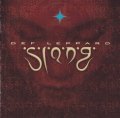
This is the second time I’ve reviewed a version of Def Leppard’s ill-fated Slang CD. As Joe Elliot says in the booklet inside, the band were considering calling it Commercial Suicide, such were the changes in sound. The mid 90’s was not a kind time for rock bands of Def Leppard’s ilk. Everybody had to adjust, and Leppard chose to do so by making their sound darker and more organic. That was fine with me. I’ve already reviewed Slang; a 4/5 star album in my books. For your convenience I’ll talk about the original Slang album at the end of this review. For now I just want to talk about the “Deluxe Edition” and the bonus tracks.
Like many Def Leppard albums before it, Slang produced a number of excellent B-sides. Some are on this CD. Some are only available on the iTunes version. I have all the singles anyway, but iTunes also have two exclusive unreleased tracks of their own. (You can buy these songs separately; you don’t have to buy all of Slang again to get them.) These two songs are early demos of “All I Want Is Everything” and “Move With Me Slowly,” the latter with Phil singing. While “Move With Me Slowly” is similar to its incarnation on CD 1, “All I Want Is Everything” is drastically different. It’s a much more standard “power ballad” at this stage, little resembling the song it would become. This take is not to be confused with the “first draft” of “All I Want Is Everything” on CD 2, which sounds a lot more like the album counterpart.
That’s one issue with the Deluxe Edition of Slang. There is a lot of repeat. Songs you will hear three times in one version or another include “All I Want Is Everything”, “Gift Of Flesh” (previously known as “Black Train”) and “Deliver Me” (previously known as “Anger”). Especially when you include all the different bonus tracks, the Deluxe can be a hard slog to listen to in entirety. I had to split it up over two nights.
But it is worth it. Although some demos barely differ from the album counterparts, some have different lead vocals by Phil or Vivian. There are some unreleased songs that I have never heard before. “All On Your Touch” is a nice ballad that was only finished in 2012. Then there’s Vivian’s funky-Zeppelin song “Move On Up” which is quite adventurous. Some of the demo versions, such as “Raise Your Love” (an early version of “Slang”) differ quite a bit from the album versions. Although listening to the Slang Deluxe is a long journey, it’s also a very interesting one in terms of hearing how Def Leppard wrote and recorded it.
Almost all the B-sides for Slang were included on one version or another, except for live B-sides. Songs included are the old-school sounding “When Saturday Comes,” and the instrumental “Jimmy’s Theme” which are only on the iTunes version. (See below for complete track listing including all iTunes bonus tracks.) “Move With Me Slowly” is a bluesy, ballady number that could have been a single in its own right. Ditto “Can’t Keep Away From the Flame” which could have been an acoustic single. “Burn Out” and “Worlds Collide” are also B-sides, but these two were not released until 1999 on the singles for “Goodbye”. Both are heavy, heavy rockers.
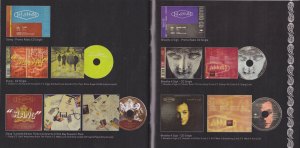
Let’s talk about the packaging. I’ve heard a lot of surprise and complaints when this CD arrived inside a big fat “double” CD case. That is kind of a surprise; you don’t even see these with 3 CD sets anymore let alone a double. The booklet inside is nothing to write home about. There are some words from Joe and lots of live photos, but nothing in the way of specific liner notes. If you’re wondering where these songs were recorded or released before, info inside is vague. There are track listings for all the Slang singles, but that only covers part of it.
As our friend the Heavy Metal OverloRd says, this probably doesn’t deserve the title “Deluxe Edition”. In fact, I asked HMO if he’d like to weigh in on this, since he has some strong opinions about it. For fun I asked him to comment in Scottish slang:
Def Leppard ur a bunch a fannybaws by the way. They hink the new edition of Slang is a “deluxe edition”. But it isnae. This widnae even huv been deluxe in 1995, never mind noo.
When it turned up I wis pure gutted. I thought the booklet had better be snazzy but it wisnae either. Just a wee hing where Joe tried tae mind stuff fae back in the day. Nae liner notes. Nae lyrics. Nuhin. Just some shite photies. My old copy had two discs, a slimmer case and lyrics. And some photies an aw! Gid wans. One of them oan a bus like they were aw goin doon the toon or somethin. How wis that no deluxe but this is deluxe? If they’d called it a “2CD Edition” that wid huv been awrite but they didnae. This is “deluxe”… cept it isnae. I don’t have a Scooby whit they’re playin at. Eejits.
Well said. Lastly, I want to leave you with a look at the actual original album, Slang. Here’s all the pertinent text from my previous review in case you’re too lazy to click the link. It’s a great album and I’m glad it’s getting a second look today.
DEF LEPPARD – Slang(1996)
“Truth?” is a thunderous opener, laden with modern sounding samples and rhythms. Even better is the hypnotic “Turn to Dust”. Although it moves slow, it has loads of exotic atmosphere and instrumentation. Neither of these songs sound like old Def Leppard. There are major changes, including acoustic drums, darker tones and a noticeable lack of shout-along gang vocals.
It’s still the same spirit though. There’s an obsessive attention to detail, layers of backing vocals, and tasty choruses. It’s just 1996’s version of those things. Listen to the title track, “Slang”, for example. It doesn’t sound like anything Leppard have done before, but you can see it as “Sugar” a decade later if you like.
“All I Want Is Everything” is another personal favourite, a great ballad but again unlike what Def Leppard has done before. It has a certain power to it, without being loud and obnoxious. It has a plaintive quality and a fantastic chorus.
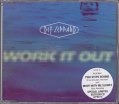
Next is “Work It Out” , a contribution from “new kid” Vivian Campbell. It is absolutely loaded with cool guitar squeeks and squonks, no wankery, but a new kind of guitar heroism. These little adornments are there in the mix waiting to be discovered, under suitably thick drones of rhythm guitars. I love this song, which really proved to me that Leppard had successfully adapted their sound to the mid-90’s. A shame it didn’t sell.
Phil’s “Breathe A Sigh” is one that threw a lot of people for a loop. Either Spin or Rolling Stone (I forget which) compared it to TLC. Indeed, loops make up a large part of the percussion parts, and the band seem to be trying R&B on for size. What keeps it Def Leppard are the layers of droney guitars in the back of the mix, and the immaculate vocal choirs.
Interestingly, Slang was stacked with four singles in a row, “Breathe A Sigh” being the final single. This does not mean the album is out of ammunition. “Deliver Me” brings back the heavy. Leppard In Chains? Def Temple Pilots? Not one of the best songs, “Deliver Me” at least balances some of the softer material. Better is “Gift of Flesh”, a driving riff rocker with some slammin’ drums from Rick Allen. Phil wrote this one. I bet it would have been smokin’ live if they ever played it.
This fades directly into a lush but quiet ballad called “Blood Runs Cold”. I could imagine some old-timey fans running away in fear that their nuts would shrivel, at the sound of this one. I love this song, but I’m not sure it needed to be followed by yet another ballad, “Where Does Love Go When It Dies”. Although not a single, “Where Does Love Go When It Dies” was recently dusted off by the band as part of their recent acoustic medley. It is more upbeat than the previous song, and has a folky campfire quality. It also gives the album a sense of flow: an upturn before the dramatic closer.
“Pearl of Euphoria” is that dramatic closer, which returns the listener to the dark, powerful tones that we began with. Leppard don’t often reflect a strong Led Zeppelin influence, but you can definitely hear some “Kashmir” here. Not only is Rick Allen laying down a Bonham-esque groove, but some of the guitar bits flying in and out of the speakers remind me of the sound collage section in “Whole Lotta Love”. It’s a great closing song.
4/5 stars
iTunes bonus tracks:
1. “Truth?” (Demo Version) – Previously on “Work It Out” CD single. 2. “Work It Out” (Demo Version) – B-Side from “Work It Out” with Viv singing and completely different from the other versions on the Deluxe. Viv referred to it as his “Crowded House” version. 3. “All I Want is Everything” (Demo Version) – Exclusive. 4. “Move With Me Slowly” (1st Draft) – Exclusive. 5. “When Saturday Comes” From the film When Saturday Comes and “All I Want Is Everything” single. 6. “Jimmy’s Theme” From the film When Saturday Comes and “All I Want Is Everything” single. 7. “Cause We Ended as Lovers” (Solo track by Phil) From the Jeff Beck tribute album Jeffology: A Guitar Chronicle and “All I Want Is Everything” single. 8. “Led Boots” (Solo track by Viv) From the Jeff Beck tribute album Jeffology: A Guitar Chronicle and “All I Want Is Everything” single.
We had just started repairing scratched CDs via a GTA-based third party contractor. They were able to remove a miniscule layer of plastic from the playing surface, rendering a smooth surface that would not deflect your CD player’s laser. The result was a playable, sellable CD, with a clouded appearance on the CD itself. The cloudy look was usually very minor, although it was sometimes enough to turn a customer off of buying the CD.
After repairing the scratched discs, they would be put in brand new CD cases and then on the shelves to sell. But we also had to mark each disc as “repaired” somehow, so that if any were returned as defective, we would know they had been fixed. We could then get the fee for fixing the disc credited back to us, or the contractor could try to fix it again and buff it deeper. Either way, we needed to mark them, somehow.
The best way to fix a surface scratched CD
We agreed that the least problematic way was to stamp the inner (usually blank and hidden) sleeve of the CD, the part underneath the plastic tray. We stamped it with our store logo. For most discs at the time, nobody would ever notice the stamp unless they pulled the case apart. The only problems were with discs that had inner picture sleeves under clear trays. We were forced to put the stamp directly on the artwork in those cases, a process that killed me every time. I hated defacing a CD. It’s not something I would ever do to my own property.
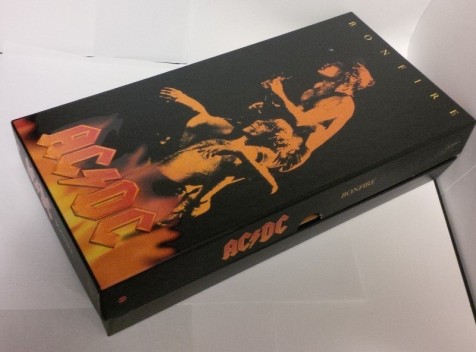
Around this time, AC/DC just released the luxurious Bonfire box set, a monolith of rock containing many separate additional treats: A pick, a bottle opener/keychain, a sticker, and a temporary tattoo. This was high on my priority list, so I put my name in our store’s computer reservation system for the first used copy that showed up.
It was only a few weeks before a used copy did show up. One of the higher-ups decided to work in my store that day. A man came to the counter with some CDs to sell, and the Bonfire box set. It was mint, complete, everything intact. However the higher-up didn’t consider the set as “mint” as I did; she determined that one of the CDs from the Let There Be Rock set was scratched. It had a tiny nearly invisible mark on it not even the size of a hair, but not a scratch. She dutifully stamped the inner tray and put the CD in the pile to be sent out and fixed.
I was disappointed that the tray had been defaced, but there was no way I was letting that disc get sent out and fixed. It would look worse, with the cloudy finish. I preferred the un-fixed finish with that tiny hairline mark that I could barely see. I can see the scratch even less today with my aged eyesight!
I bought the set but that stamp is still there. I covered it up with a white sticker, and was grateful that the box set didn’t have clear CD trays with artwork underneath.
That stamp still bugs me. I still see it there, and it still bugs me! How do you feel about things like this? Defects in the physical musical product that you love? I know I can’t be alone.
Postscript: Years later some damn rat kid stole the stamper. On my watch!!
For the uninitiated, get ready. You’ve never heard anything in your life like Mr. Bungle. Featuring the powerful pipes of Mike Patton, Bungle was his pre-Faith No More band which he admirably kept going through the 90’s before finally calling it a day. This album, produced by John Zorn and completely different than anything Bungle did after, is a challenging first listen for the musically timid. It is also acutely rewarding, and can only do good in expanding your musical vocabulary. If that ain’t your cup o’ tea, it also has lots of X-rated, adult only lyrics; words that will keep you laughing, disgusted or titillated all the way through. See: “Squeeze Me Macaroni” (sex with food) or “The Girls of Porn”.
Mr. Bungle squeezes multiple genres into single songs, often switching gears multiple times within a minute. Careening joyfully from breakneck-speed horn-laden funk, to death metal guitar with doo-wop vocals, to circus music and beyond, this is not for the meek. This is for the open minded. This is for the bored, those who can no longer handle the same damn songs on the radio all the time, the same keys, chords, time changes and instrumentation. And if you’re a Mike Patton fan already, but somehow missed this, prepare to have your mind blown.The production by John Zorn is perfect. How he managed to arrange all these instruments, samples, and voices together into coherent songs is nothing short of genius. The sound is gloriously crisp. This is Mr. Bungle’s magnum opus.
Highlights:
“Travolta” – Changed to “Quote Unquote” on later pressings for obvious legal reasons.
“Squeeze Me Macaroni” – “Hostess Ding Dong wrapped an eggroll around my wong / While Dolly Madison proceded to ping my pong”
“The Girls Of Porn” – “The urge is too much to take / All I can think about is playing with myself / It’s time to masturbate / I got my Hustler and I don’t need nothing else”
“My Ass Is On Fire” – A memorable shocker ending with Patton chanting “Redundant, redundant, reeeedundant, reDUNdant…”
“Stubb (A Dub)” – A song that questions, among other things, if a pet dog believes they will grow up into a human being.
Regardless of the contrasting styles and lightning fast changes, after a fashion the album flows, and cannot really be broken down into singles, or put on a mix CD. It needs to be listened to in its entirety, in sequence. And be careful, when turning up the volume during the quiet moments. You might want it louder to hear some bit of dialogue that’s mixed in too quietly. That’s just when they blast you with more guitar and horns!
If you don’t like this on first listen, don’t fret. You’ll love it by the 21st. Guaranteed*.
July 1990: A M.E.A.T. Magazine interview (issue #14) with Ronnie James Dio states that he was unhappy with Dream Evil, one of my favourite Dio albums. He felt the songwriting was unfinished, that the songs needed tightening up. Supposedly some of the changes he made were a response to that. If that’s indeed the case, then Lock of the Wolves came as a total shock. These songs feel even less finished than any Dio album before.
Dio had completely revamped his band. Craig Goldy (guitar) was the first one to leave. Apparently Vinnie Appice, Jimmy Bain and Claude Schnell didn’t care for Goldie, but they all ended up departing too. Ronnie was no longer happy with the writing process nor the dischord that had set into the making of Dream Evil. Because of these circumstances he was able to revamp the entire Dio lineup but not by choice.
Ronnie took on a young and international crew: Swedish Jens Johansson on keyboards (ex-Yngwie Malmsteen), new York kid Teddy Cook on bass, ex-AC/DC skin-pounder Simon Wright, and the young 17 year old Scot, Rowan Robertson as his new guitar wizard. Robertson won the role after a cattle-call resulted in 5000 tapes sent to Dio for his consideration. The end combination was a band of skilled players, but lacking in road-tested chemistry. Plus the pressure was certainly on Robertson, having guitarists like Vivian Campbell and Richie Blackmore writing the solos you were going to be playing.
About half the album was written when Bain and Appice were still in the band, and they appear on several writing credits. Robertson has a co-write on every song, and Jens Johansson has two, while new bassist Cook has one. Regardless of the numerous writers, the album is very singular in its direction. That is to say Lock Up the Wolves is a painfully sloooowww Dio album.
I was very disappointed that there are only a couple fast rockers to keep the blood pumping. The first track, “Wild One”, fools you into thinking this album will be a rocking good time full of tasty guitar hooks and wicked Dio lyrics. However, “Born On The Sun”, while boasting a great chorus melody, sags and droops. “Hey Angel” and “Between Two Hearts” are more of the same. I kept waiting for another fast song, or just something different to keep me awake. I had realized that Lock Up the Wolves is loaded with boring pseudo-bluesy riffs, slow to the point of coma-inducing.
The only slow tunes that really have spark of any kind are the monstrous title track (over 8 minutes of drama) and the ballady “My Eyes”. “My Eyes” is my personal favourite track on the album, and perhaps worth the price of purchase if you can find the album cheap. It’s also fun to play the game “How many of Dio’s other song titles are in the lyrics?” with this one. The CD-only bonus track “Why Are They Watching Me” is the only other serious fast rocker on the album, and I have no idea why it was the CD-only bonus track, because the album desperately needed a kick in the pants.
And that is Lock Up the Wolves in a nutshell. Approximately 50 minutes of slow, pseudo-bluesy guitar and dull rhythms. About 10 minutes of heavy metal. That’s it.
DEEP PURPLE – Perfect Strangers Live (2013 Eagle Vision 2LP/2CD/1DVD deluxe edition)
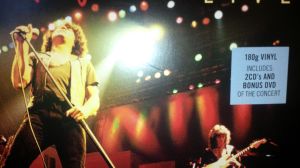
Perfect Strangers Live, a new 2013 release of a 1984 recording in Sydney, proves many things but one of them is this: The proverbial “vaults” must be an endless place where this band is concerned. Year after year newly released archival recordings hit the shelves, all worthy of your hard-earned music budget dollars. Perfect Strangers Live is available in multiple formats, but I chose to go with the deluxe 180 gram vinyl set, complete with 2 CD and single DVD versions included. I bought this via the Deep Purple Appreciation Society, who I especially appreciated this time. I ordered the set and it got lost in the mail. After contacting Ann directly she posted another one right off to me which arrived safely to my delight.
It’s a beautiful beast of a package. The heavy vinyl gives the set real heft, but it’s also a triple gatefold sleeve as well. If you loved the reunion era of Deep Purple Mk II then some version of this set will be an obvious must for you. You can buy it separately as a 2 CD set, a DVD, a 3 disc set, or go hogwild like I did with the vinyl deluxe set. Hell if you’re really nuts for the band there’s a 3 LP, 2 CD Japanese version with extra goodies. As to the version I own, the only disappointment comes in the way the CDs and DVD are housed in the set. I hate spending a lot of money on a package that will absolutely scratch your CDs. No matter how careful you are, something will get scratched and that’s a bummer. So I ripped the CDs and put them away for good.
The music contained within is 100% worth your money and probably the best documentation of this era of Deep Purple. There are other collections out there, most notably the 1985 recording In the Absence of Pink (Knebworth). There was also the Highway Stars bootleg contained within the Bootleg Series box set. This one tops the rest sonically. The recording and mix are excellent. You could easily mistake it sonically for a modern recording. Everything is audible, including Gillan’s oft-buried congas.
Speaking of Gillan, the man was in absolutely stunning shape. I don’t know why the band used backing tapes (quite obviously) during the screams on “Child In Time”. Gillan’s live screams didn’t need the boost. Somehow he keeps it going all the way to the 12 minute closer “Smoke on the Water”. Gillan had just finished his stint with Black Sabbath, but he sounds infinitely better here than on any live recording I’ve heard with Black Sabbath.
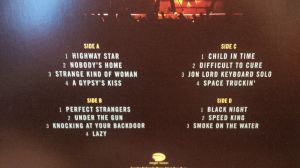
It’s hard to pick a single MVP on Perfect Strangers Live, such is the dynamic of Deep Purple when firing on all five cylinders. Certainly Ritchie Blackmore is a delight, projecting intensity and playfulness at every turn. During “Strange Kind of Woman”, Blackmore treats the Australians to “Waltzing Matilda”. On “Under the Gun”, he’s mesmerizing as he tortures his Fender. Ritchie’s solo that closes a 15 minute “Space Truckin'” is among the most electrifying moments you will hear. Jon Lord is as wonderful as ever on that same song, and of course “Child In Time”. Not to go without mention are Glover and Paice. Ian Paice is the little engine that would not quit; Roger Glover the anchor.
Also important to mention are the “new” songs. Deep Purple played more than half of their new LP including both singles: “Knockin’ On Your Back Door”, “Perfect Strangers”, “Nobody’s Home”, “Under the Gun” and “A Gypsy’s Kiss” (preceded by a bluesy Blackmore jam). Purple rarely played so much off Perfect Strangers at one time, and some of these versions are just scorching! “Nobody’s Home”, possibly “Under the Gun” too, are superior to the album versions…even when Gillan forgets the words. (That’s kind of my favourite part.)
As for the DVD, it too looks and sounds amazing. I don’t know what else is out there video-wise from this period but I haven’t seen anything better than this. You know Blackmore and cameras, he’s often got his side to the camera, or he turns away just as they turn to him. That’s the man in black, that’s the enigma. It’s a great DVD, although Lord and Paice are often buried behind their instruments. Lord goes from keyboard to keyboard, extracting different sounds.
The cherry on top is a 20+ minute tour documentary. It’s a rare look at a time when Deep Purple was more or less getting along as well as they ever would!
I haven’t played the vinyl. I haven’t decided if I will. Let me know if you care enough for me to review the vinyl, and I’ll consider it as a possibility. I’ll be honest, after struggling to get the records back in the sleeve after taking the photos for this review, I’m not eager to take them out again.
RECORD STORE TALES Part 270: Star Trek vs. Star Wars
I took my fair share of ribbing for being a Star Trek fan at the record store. I’ve been a Star Trek fan since I was a little kid – I had a kid’s size Scotty uniform shirt. The first episode I can remember seeing was Operation: Annihilate! It terrified and excited me at the same time, and I couldn’t believe the heroism of Mr. Spock. He was my favourite character by far. Kirk was always getting distracted by girls.
I witnessed some amazing moments in Trek-history during my time at the store (1994-2006). Generations came out a few months after I started, and I remember watching a City TV Generations special on the little screen in our store one night. It was a quiet evening in the mall and there was nothing to do but clean. The TV was usually on Much, so I switched it to the Trek special. That was a fun night for me.
Shortly after that, Voyager debuted and I raced home from work to catch the pilot episode which I was recording. I missed the first 20 minutes and in the pre-PVR days you couldn’t just rewind and watch a show that you were recording “live”. Yes, it was an exciting time to be a Trekkie. My co-workers teased me about it, but Christmas ’95 my boss bought me a thoughtful Art of Star Trek book that I still have. That was pretty cool of him. He knew nothing about Trek but he picked a cool book with a Generations special in the back. He was relieved that I liked it.
As a Trekkie (I dislike the term “Trekker”), I’ll be the first to admit that it’s a pretty hit-and-miss affair, being a fan. For every great movie like First Contact, there was a shite movie like Nemesis. By the late 90’s, being a Trek fan was a lot less exciting. Especially when George Lucas started cranking up the Star Wars machine again with the Special Editions, in theaters.
The last time that I was really excited about Star Trek (before the recent reboot) was Star Trek: Insurrection. On December 11, 1998 I was working the night shift with a new guy, a class act named Dave “Homer”. It was a Friday night, and the new guy said that he and his roommate were going to catch the new Trek movie on opening night. Was I interested in joining them? Of course I was.
In addition to Dec 11 being opening night for Star Trek: Insurrection (joke name – Star Trek: Big Erection), it was also opening night for the brand new movie theater in town. Then known as Silver City, it’s now called Gateway Cineplex 10. Added bonus: Silver City was a mere hop-skip-and-jump away from the record store. If we cashed out quickly, we would have absolutely no problem catching the late show and still have time to get drinks, corn and a bar.
Homer was somewhat new in town and didn’t know the way. I did, so I led the car convoy. We were pleased to see that it wasn’t too busy at all. His buddy Ollie (who briefly worked for us later on) joined us, and we got our seats. Silver City was the latest, most modern theater. The stadium seating was awesome, we never had anything like this in town before. I couldn’t imagine a better setting for a new Star Trek movie!
Oh, it got better.
I always enjoy the previews. First up was a cool looking movie called Rushmore. Not having a clue what we were seeing, it looked interesting and Homer and I made mental notes. (Long story short – I love Rushmore.)
Second trailer though…
STAR WARS.
Yes, the Star Wars Episode I trailer had fans buzzing. You have to remember that nobody had a clue yet what a useless piece of shit Young Anakin would be. (I feel bad for the actor Jake Lloyd, nobody could have played that fucking character.) We didn’t expect Jar Jar to be even worse than the worst Ewok, with so much screen time. None of these flaws could be discerned from that first trailer, which was a collage of pure bad-assery and cool imagery. What were those beasts emerging from the fog? What planet is this? Holy shit Tattooine. What’s that silver ship? Why did C3P0 have no coverings? And who the fuck is that evil looking dude with the double lightsaber?!
I’d seen a choppy, small version of the trailer online. To see it on the big screen, in surround sound, in front of a new Star Trek movie? My mind was blown before the opening credits!
It was hard for a whole Star Trek movie to top that one trailer for Star Wars. I think for us it was pretty equal – we left enthused about both. Insurrection was good, but we all felt that it was much like an “extended episode”. It wasn’t bad, it was certainly better than 1994’s Generations, but it lacked the weight of 1996’s First Contact. As Trekkies, we were satisfied and excited to see where the franchise would go next. As a money paying audience, we knew the movie was simply not up to the high bar set by First Contact. As long as it didn’t get worse from there…
It got worse from there. We had no idea that Paramount would flush it all down the shitter with Star Trek: Nemesis (2001). Just as we had no idea that George Lucas had a massive clusterfuck of sewer sauce in the pipeline for Star Wars Episode I. Instead, we choose to focus on the rush of that evening, the excitement of the experience. In fact it is best summed up by Mr. Spock himself:
“After a time, you may find that having is not so pleasing a thing, after all, as wanting. It is not logical, but it is often true.”


 Elsewhere there are still the modern nu-metal touches that I never liked too much. The guitar part in “Devil Digger” is a good example, as is the rap-like delivery of Owens on certain parts of certain songs. But Ripper didn’t write the songs. Don’t blame him.
 * The two B-sides were the ’98 re-recordings of “Rapid Fire”, and “Green Manalishi”. “Rapid Fire” is thrashed up with additional lyrics, and “Green Manalishi” is slowed down to a grind. These were both originally released on the 1998 Japanese CD single for “Bullet Train”, which I already have. Therefore my digipack version of Demolition will be passed on to another rock fan.


 Due to complications and conflicts with Gull Records, Metal Works 1973-1993 contains no songs from the first two albums (the aforementioned Rocka Rolla and Sad Wings of Destiny). Instead, a live version (from Unleashed in the East) of “Victim of Changes” is subbed in to represent the early period of the Priest. After that, every album is given a look-see.




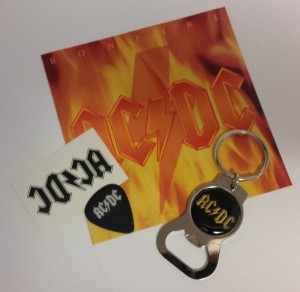 Around this time, AC/DC just released the luxurious






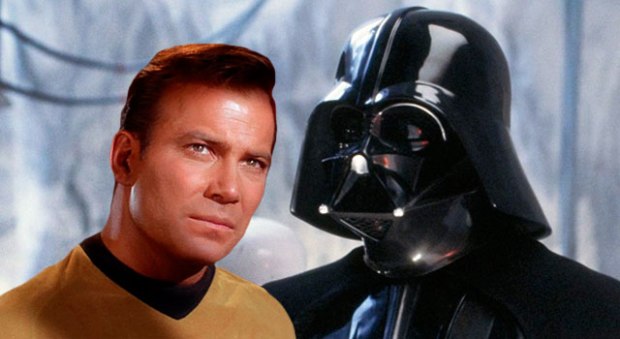
 I witnessed some amazing moments in Trek-history during my time at the store (1994-2006). Generations came out a few months after I started, and I remember watching a City TV Generations special on the little screen in our store one night. It was a quiet evening in the mall and there was nothing to do but clean. The TV was usually on Much, so I switched it to the Trek special. That was a fun night for me.
 In addition to Dec 11 being opening night for Star Trek: Insurrection (joke name – Star Trek: Big Erection), it was also opening night for the brand new movie theater in town. Then known as Silver City, it’s now called Gateway Cineplex 10. Added bonus: Silver City was a mere hop-skip-and-jump away from the record store. If we cashed out quickly, we would have absolutely no problem catching the late show and still have time to get drinks, corn and a bar.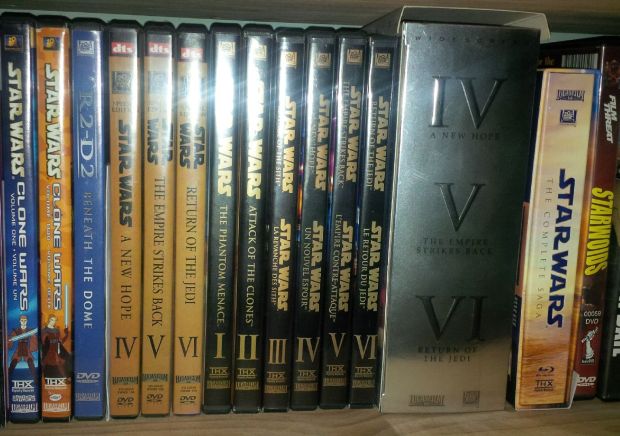

 mikeladano.com