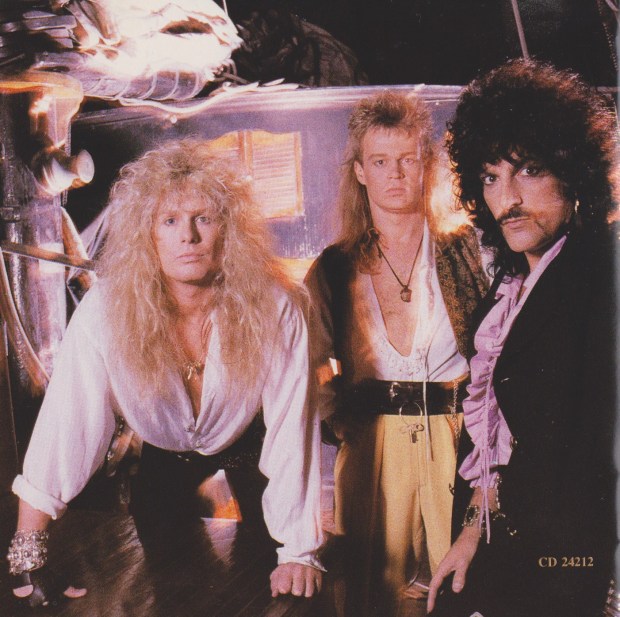


BLUE MURDER – Blue Murder (1989 Geffen)
For some, expectations were high.
On paper, it was genius. Teaming up the legendary drummer Carmine Appice with anyone will turn heads, but John Sykes, the ex-Thin Lizzy and Whitesnake guitar genius? Sign us up. Add in ex-Black Sabbath singer Ray Gillen, and the Firm’s Tony Franklin on bass, and that right there is an interesting combo. Two words were buzzing around the camp, and they were “blues” and “jams”. When the band did start jamming the blues, they realized that Ray Gillen didn’t have much to do during the long instrumental breaks they were producing. The decision was made to cut Ray and trim the band down to a classic power trio, with Sykes singing lead. The trio format was fairly unique among rock bands in the late 80’s. (Ray hooked up with another new blues-rock band, Jake E. Lee’s Badlands.)
Adding to the hype machine behind the new christened Blue Murder was the tapping of up and coming producer Bob Rock. Coming off of some hit albums by Kingdom Come and The Cult, it was assumed Rock would do the same for Blue Murder. They hiked up to Little Mountain Sound in Vancouver and recorded the album, dedicating it to Phil Lynott.
Unfortunately it was pretty clear after a few listens that despite the hype and big names, Blue Murder was not the supergroup debut that it should have been. Indeed, the lineup expired after one record.
Sykes’ singing was not the issue. His vocals on songs such as “Riot” and “Ptolemy” are more than adequate. Power and range were not an issue for Sykes. Perhaps his unique guitar stylings were too associated with the mega-selling Whitesnake 1987, because the sonic connections are obvious. Too much ‘Snake, not enough Lizzy. The songs are not all bad either, though many could use some minutes trimmed from them. At nine songs and 52 minutes, Blue Murder does have the instrumental chills that Sykes wanted to get across, but at the cost of diluting the impact with meandering rock songs. Other issues must fall at the feet of Bob Rock. Though Blue Murder earned the producer a nomination at the Juno awards in 1990, the muddy sound is very far indeed from what Rock can do. “Sex Child” is a perfect example of this. Rock strove to give Carmine a big drum sound, but there are also excessive keyboards and layers of vocals all occupying the same sonic space. This robs it of the groove. It’s a chore to finish the whole album in a sitting, due to some of these problems.
There are three album highlights that are possibly worth the expense to rock historians. They are the singles “Valley of the Kings” and “Jelly Roll”, and the epic “Ptolemy”. At 7:50, “Valley of the Kings” had to be severely edited down for a single/video. It has all the progressive rock qualities that you know these guys are capable of, and who isn’t a sucker for lyrics about pharoahs and pyramids? Must credit must also be given to Tony Franklin, who makes it sound as if the fretless bass is easy to play! You don’t hear enough fretless in hard rock, and Franklin is one of the world’s very best. Period.
Interestingly, “Valley of the Kings” was co-written by then-Black Sabbath singer Tony Martin. You can absolutely hear parallels to Sabbath’s Headless Cross released the same year – an album that also had some fretless bass on it thanks to Lawrence Cottle!
“Jelly Roll” was a music video, fitting the slot for some good time summer acoustic rock. Instead of going ballad, Blue Murder went to the bayou. The tricky slide licks recall Whitesnake, but unfortunately towards the end, the song sinks into typical ballad territory. It sounds like two songs melded together, but I like the first part best.
The final keeper is the progressive epic “Ptolemy”. Unfortunately the lyrics don’t have much to do with the actual mathematician and astronomer who lived almost 2000 years ago. Instead the song is about tomb robbing; unrelated to Ptolemy of Alexandria. This is a shame since they could have written about Ptolemy’s musical studies (Harmonics), or his influence on the concept of the universe of a series of spheres that create music. Fortunately the musical qualities of the song enable us to overlook the words.
There are also-rans worth checking out: particularly a track called “Billy” which is the most Thin Lizzy of all the tunes. You could imagine, if Phil had lived, that he could have recorded “Billy” for a mid-80’s Thin Lizzy album. Unfortunately most of the material resides in Whitesnake territory, especially the carbon-copy ballad “Out of Love”, and the closer “Black-Hearted Woman” which recycles Whitesnake riffs.
Too bad. Loads of potential, but blown in the delivery.
2.5/5 stars












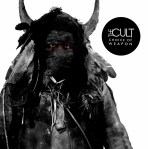 If you’ve heard the Choice of Weapon album, then you already know these are good songs, and they were good songs at this stage too. What Bob Rock did is add a layer of polish to them, some additional thump, and more hooks. That’s what Bob is good it, love him or hate him. If you haven’t heard Choice of Weapon, by all means, get out there and get it! What’s cool about it, and this, is that The Cult have revisited their ability to write quintessential Cult riffs, while still pushing forward into new boundaries. Plus I think Ian’s voice has aged remarkably well. As he’s gotten older and more grizzled, his voice has acquired more character.


 mikeladano.com