classic rock

REVIEW: Rush – A Farewell to Kings (2017 super deluxe edition)

RUSH – A Farewell to Kings (2017 Anthem 3CD/1 Blu-ray/4 LP super deluxe edition, originally 1977)

And the men who hold high places,
Must be the ones who start,
To mold a new reality,
Closer to the heart,
Closer to the heart.

Today’s rock fans have a new reality of their own:  a market flood of “anniversary” or “deluxe” reissues far and wide.  The floodwaters are murkier when multiple editions of the same reissue are available, or when reissues are deleted in favour of new reissues!

2017 represents 40 years of Rush’s fine sixth album A Farewell to Kings.  An anniversary edition was guaranteed, but choose wisely.  For those who need the brilliant new 5.1 mix by Steven Wilson, you will have to save up for the 3CD/1 Blu-ray/4 LP super deluxe edition.  Only that massive box set contains the Blu-ray disc with Wilson’s mix.

To frustrate fans even further, A Farewell to Kings had a 5.1 reissue back in 2011, as part of the Sector 2 box set.  That 5.1 mix (by Andy VanDette) has received heavy scrutiny from audiophiles.  Steven Wilson, however, is well known for his work in the 5.1 field, and his work on the 40th anniversary mix lives up to his reputation.  His crisp mix is deep but unobtrusive.  It is occasionally surprising but always stunning, and over seemingly way too soon.  The separation of instruments is done with care, and without robbing the music of its power.  Rush albums were fairly sparse back then but Wilson managed to make a full-sounding mix out of it.

Powerful is A Farewell to Kings indeed.  Though the title track opens with gentle classical picking, before long you’re in the craggy peaks of Mount Lifeson, with heavy shards of guitar coming down.  Young Geddy’s range and vibrato are remarkable, though for some this is the peak of Geddy’s “nails on a chalkboard” period.

11 minutes of “Xanadu” follows the trail of Kublai Khan.  “For I have dined on honeydew, and drunk the milk of paradise!”  Neil Peart’s lyrics rarely go down typical roads, and “Xanadu” surely must be listed with Rush’s most cherished epics.  Volume swells of guitar soon break into new sections unfolding as the minutes tick by.

“Closer to the Heart” is the most commercial track, never dull, never getting old, never ceasing to amaze.  “Woah-oh!  You can be the captain and I will draw the chart!”  Poetry in motion.  “Closer to the Heart” may be the most timeless of all Rush songs.

“Cinderella Man” and “Madrigal” live in the shadow of “Closer to the Heart”, always there but not always remembered.  (Ironically enough, both these tracks were covered by other artists in the bonus tracks.)  “Madrigal” acts as a calm before the storm:  a cosmic tempest called “Cygnus X-1”.  Another great space epic by Rush cannot be quantified in language.  As it swirls around (even better in 5.1), you’re transported across the universe by the black hole Cygnus X-1.  Peart hammers away as Lifeson and Geddy riff you senseless.


The blacksmith and the artist,
Reflect it in their art,
They forge their creativity,
Closer to the heart,
Yes closer to the heart.

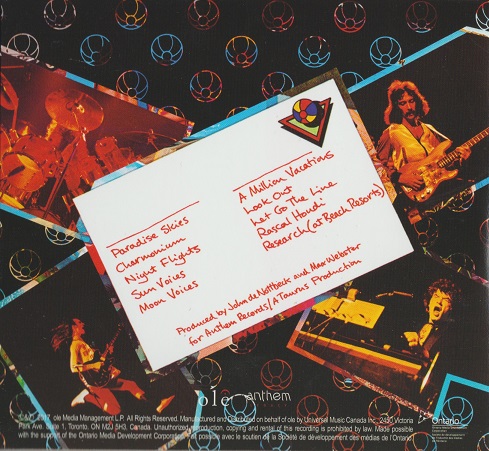
Next, Rush forged their creativity on the road.  They recorded their London show on February 20, 1978 at the Hammersmith Odeon.  Previously, 11 songs from this show were released as a bonus CD on the live Rush album Different Stages.  This newly mixed version adds intro music, the missing three songs and the drum solo.  (The missing songs were “Lakeside Park”, “Closer to the Heart”, and all 20 minutes of “2112”.)  Because this set has all the songs in the correct order, the old Different Stages version is obsolete.

Opening with “Bastille Day”, the London crowd is into the show from the start.  They cheer for the familiar “Lakeside Park”, which is followed by “By-Tor & the Snow Dog”.  This early Rush material is as squealy as Geddy has ever sounded.  He’s pretty shrill but Rush are tight.  It gets more adventurous when “Xanadu” begins, and from there into “A Farewell to Kings”.  Hearing Rush do all this live helps drive home just how talented they are.  The powerful set rarely lets up, as it relentlessly works its way through early Rush cornerstones.  “Working Man”, “Fly By Night” and “In the Mood” are played in quick succession, but is “2112” that is the real treasure here.  Anthems of the heart and anthems of the mind; classics all.

Philosophers and plowmen,
Each must know his part,
To sow a new mentality,
Closer to the heart,
Yes, closer to the heart.

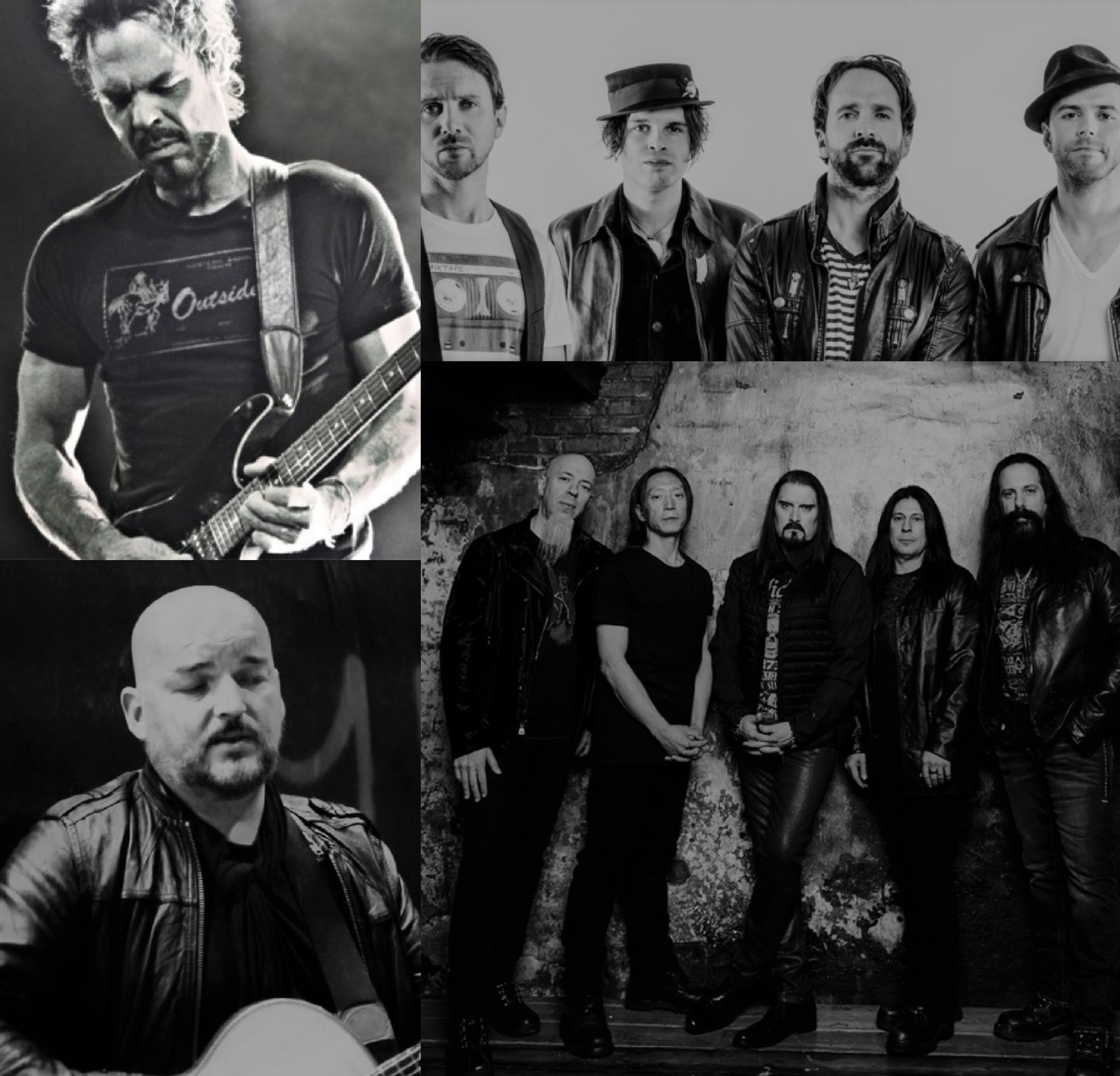
What about bonus tracks?  You got ’em.  As they did for 2112, Rush invited guests to contribute bonus covers, and each does their part.  Headlining these are progressive metal heroes Dream Theater with their own version of “Xanadu”.  Dream Theater really don’t do anything small, so why not an 11 minute cover?  Mike Mangini is one of the few drummers who could do justice to such a song — well done!  Big Wreck do a surprisingly decent take on “Closer to the Heart”.  Not “surprisingly” because of Big Wreck, but “surprisingly” because you don’t associate Big Wreck with a sound like that.  Ian Thornley ads a little banjo and heavy guitars to “Wreck” it up a bit.  His guitar solo is shredder’s heaven.  The Trews’ take on “Cinderella Man” is pretty authentic.  Did you know singer Colin MacDonald could hit those high notes?  He does!  Alain Johannes goes last with “Madrigal”, rendering it as a somber tribute to the kings.

The last of the bonus tracks is a snippet of sound called “Cygnus X-2 Eh”.  This is an extended and isolated track of the ambient space sounds in “Cygnus X-1”.  Steven Wilson speculated it might have been intended for a longer version of the song.

Whoa-oh!
You can be the captain,
And I will draw the chart,
Sailing into destiny,
Closer to the heart.

Box sets like this always come with bonus goodies.  The three CDs are packaged in a standard digipack with extensive liner notes and photos.  Four 180 gram LPs are housed in an upsized version of this, with the same booklet in massive 12″ x 12″ glory.  The LP package alone is 3/4″ thick!

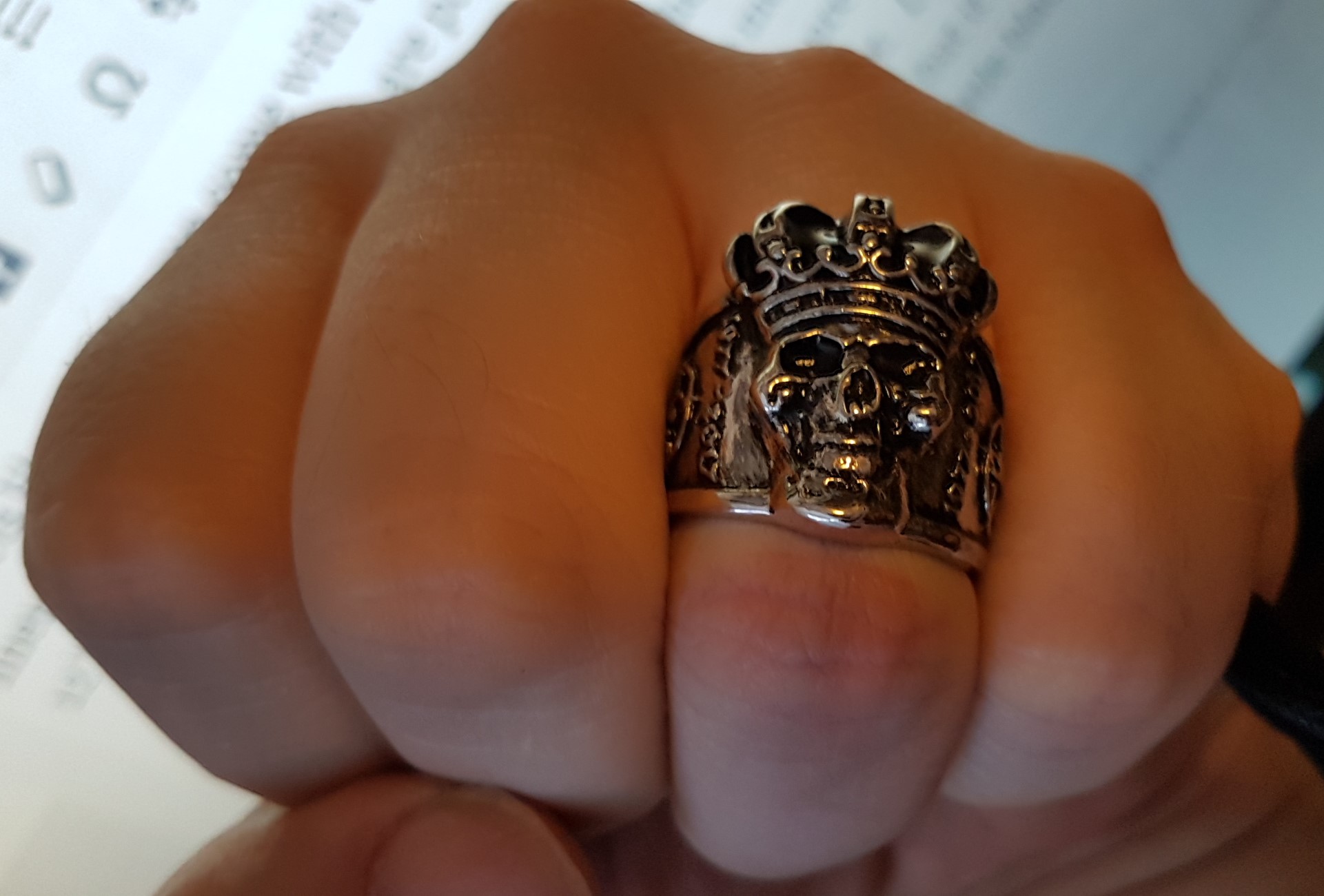
A reproduction of the 1977 tour program is here in full glossy glory.  This contains an essay called “A Condensed Rush Primer” by Neil.  Additionally, all three members have their own autobiographical essay and equipment breakdown.  Alex Lifeson’s is, not surprisingly, pretty funny.  Things like this make a tour program more valuable and as a bonus, this is a great addition to a box set.  Digging further, there are two prints of Hugh Syme pencil sketches.  These works in progress are interesting but it’s unlikely you’ll look at them often.  The turntable mat is also just a novelty.  Perhaps the goofiest inclusion is a little black bag containing a necklace with a Rush “king’s ring” attached to it.  Wear it to work next casual Friday!


Whatever edition of A Farewell to Kings you decide to own (the most logical is the simple 3 CD anniversary set), you can rest assured you are buying one of the finest early Rush albums.  If you have the wherewithall to own the super deluxe with 5.1 Steven Wilson mix, then let the photo gallery below tempt you.

4.5/5 stars

REVIEW: Guns N’ Roses – Acoustic Session in NY (1987 radio broadcast)

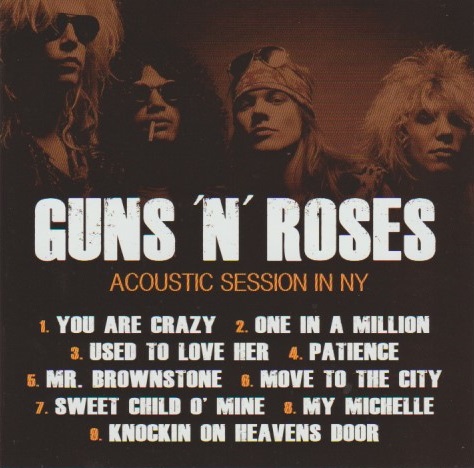
GUNS N’ ROSES – Acoustic Session in NY (1987 radio broadcast, Laser Media release)

Radio broadcasts of historic value can be found for dirt cheap.  Guns N’ Roses played an intimate set on October 30 1987 at CBGB’s in New York, and today you can own a CD of it just by being in the right Walmart.

The GN’R Lies EP was still over a year away but several tracks were previewed:  “Patience”, “Used to Love Her”, the acoustic version of “You’re Crazy” and the controversial “One in a Million”.  It was only the second time “One in a Million” had been played live and the audience doesn’t particularly react where you think they would.  They do, however, get quite a kick out of “Used to Love Her”.  According to Rolling Stone, there were about 100 people in the club that night.  They also got to hear the unfamiliar “Move to the City” and “Mr. Brownstone”.

The balance of the CD is from an unknown gig, fully plugged in: “Sweet Child O’ Mine”, a ferocious “My Michelle” and a very early cover of “Knockin’ on Heaven’s Door” by the original five.  Since you’re never poorer for owning vintage live Guns with Izzy and Steven, the three tracks are welcome bonuses (though a source listing would be nice).

3.5/5 stars


200 word

REVIEW: Judas Priest – Firepower (2018)

JUDAS PRIEST – Firepower (2018 Sony)

It’s 2018 and the Priest is back.  The excitement for the mighty metal band’s return has been restrained by the knowledge that Glenn Tipton is too ill to tour.  Parkinson’s disease — what a bastard that is.  Co-producer Andy Sneap has stepped up to take over Glenn’s guitar parts on tour.

Meanwhile on album, Glenn’s contributions to Firepower can be heard.  Sneap and classic Priest producer Tom Allom recorded one of the most biting Priest albums to date.  More impressive than the sound they captured are the performances.  Rob Halford in particular is more expressive than he has been in years.

At 14 tracks and almost an hour, Firepower suffers only from too many tracks.  There are a couple that clearly could have been cut and left for B-sides or bonus tracks.  “Flame Thrower” (similar to “Hot For Love” from Turbo), though a cool title, would have been great on a B-side.  On album, I’d rather race ahead to some of the more exciting tracks.

Firepower throws it back to sounds of the past.  Sometimes it’s Painkiller, and sometimes Angel of Retribution.  Rock writer Heavy Metal Overload noticed sonic similarities to Halford’s Resurrection CD.   At other times it’s brand new, because guitarist Richie Faulkner brings new things to the table, such as slide.

There are many highlights among the 14 tracks.  “Evil Never Dies” and “Never the Heroes” both immediately jump out for their melodic mastery.  Rob is sounding better than he has on the last couple, with a few tasty screams to enjoy.  As time goes on, new favourites will replace old.  Perhaps it’ll be “Spectre”, “No Surrender”,  “Children of the Sun”, “Rising From the Ruins” or even “Flame Thrower”!  Another highlight:  mellow album closer “Sea of Red” which bears lyrical similarities to “Blood Red Skies” from 1988’s Ram It Down.  In general, Firepower is about fighting back.

The cover art by Claudio Bergamin is Priest’s new mascot, “Titanicus”.  Silly name aside, this one Priest’s best album cover in decades.  (Mark Wilkinson continues to contribute to the packaging art as well.)  Notice how Bergamin’s lines match up with the style of past Priest albums like Screaming for Vengeance.

It’s hard to imagine a better album this late in their career.  Priest have done it again.  Firepower lives up to its name.

4.5/5 stars


JUDAS PRIEST REVIEWS


REVIEW: Alice Cooper – The Sound of A (2018 EP)

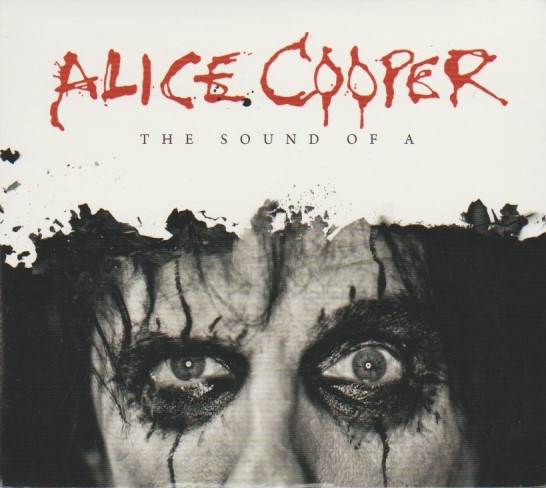
ALICE COOPER – The Sound of A (2018 Ear Music EP)

“The Sound of A” is in the air…but it took 50 years to get there!

Alice Cooper’s Paranormal was one of the most delightful rock releases of 2017, which really came as no surprise.  Alice has been consistently awesome for several albums in a row.  Any time he works with producer Bob Ezrin, you can count on quality.  The new five track Sound of A EP is quality.

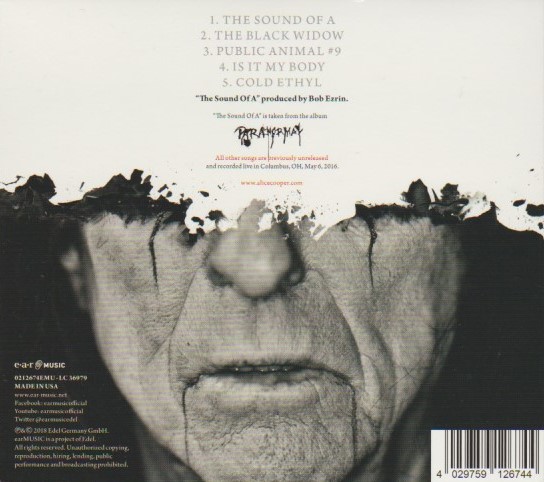
The song “The Sound of A” was written in 1967 by Alice and bassist Dennis Dunaway.  When Cooper reunited with members of the original band for some songs on Paranormal, Dunaway suggested revisiting “The Sound of A”.  With Bob Ezrin’s help, “The Sound of A” has become another in a long line of understated Cooper classics.  It has the sound of Welcome to My Nightmare with a hint of the present.  Another apt (but coincidental) comparison would be “Journey of 1,000 Years” by Kiss.

“The Sound of A” is packaged with four unreleased live songs:  “The Black Widow”, “Public Animal #9”, “Is It My Body” and “Cold Ethyl”.  Of these, the real treat is “Public Animal #9”, an old School’s Out favourite that has never seen release on any Alice live album.  This is from Columbus Ohio in May 2017.  As is often the case, “The Black Widow” is shortened live, but “Public Animal” is damn fine.  Can you believe it took this long to get a live version?  It’s one of the best on School’s Out, albeit in the shadow of a big hit.  Even “Cold Ethyl” is hard to find live.  You can locate it on 2011’s No More Mr. Nice Guy via Concert Live, and the semi-official Extended Versions and Alone in His Nightmare.

Don’t miss The Sound of A.  Consider it a live EP with some stuff you’ll be glad to have.

4/5 stars

REVIEW: Ritchie Blackmore’s Rainbow – Black Masquerade (2013)

RITCHIE BLACKMORE’S RAINBOW – Black Masquerade (2013 Eagle Rock from a 1995 TV broadcast)

It’s a damn shame it took so long for this recording to get a release. Recorded in 1995, this CD release was a German TV broadcast, and is the only live Rainbow album to feature singer Doogie White. The only difference from the recent Stranger In Us All album lineup is the drum seat. John O’Reilly was jettisoned in favour of Chuck Burgi who was with Rainbow from 1983 to 1984.

There are some clear mixing problems on some tracks, notably the opener “Spotlight Kid”.  The backing vocals sound as if they are from another song, or audio leakage from another broadcast.   There’s little else wrong, aside from those things that happen in a real live setting.

In some respects this lineup of Rainbow was rather faceless, but Doogie White was an entertaining and versatile frontman.  He’s comfortable in all eras of Rainbow, and he does them all, plus two eras of Deep Purple.  That means Doogie White not only sings his own material (seven tracks from Stranger In Us All) but also must sing the songs of Ian Gillan (“Black Night “, “Smoke on the Water” and “Perfect Strangers”), David Coverdale (“Burn”), Ronnie James Dio (“Man on the Silver Mountain”, “Long Live Rock ‘N’ Roll”, “Temple of the King”), Graham Bonnet (“Since You’ve Been Gone”) and Joe Lynn Turner (“Spotlight Kid”).  White even does a classic Ian Gillian singalong in “Black Night”, imitating Ian’s “Doo doo doo doo doop!”, before breaking into a traditional drinking song with improvised lyrics.

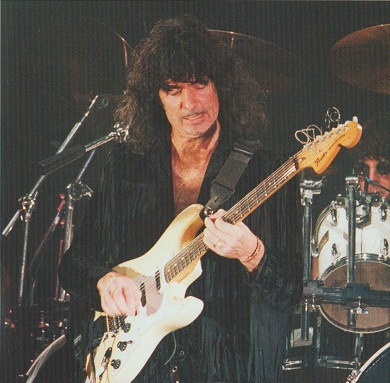
What about Ritchie?  Brilliant as ever, and even though he is notorious for…not enjoying…being filmed, it doesn’t seem to inhibit his performance here.  Extended solo sections sound like joy.  Perhaps having his true love on stage with him, Candice Night on backing vocals, soothed the savage Man in Black.  Regardless he sounds as flawlessly and quintessentially “Ritchie Blackmore” as ever.  There’s only one.

Live albums from obscure, buried periods like this often yield solid hardened gems.  “Hunting Humans” and “Ariel” are better live than they were on album.  Things are looser and livelier.  “Wolf to the Moon” has guitar and keyboard interplay that takes it further than it went on album.

The most intriguing track is the Dio-era classic “Temple of the King”.  As Doogie tells it, when the band were recording in America, they’d often pop out for a drink.  Sometimes they’d play music in bars and “Temple of the King” came from those times.

Given that there is so much bloody live Rainbow out there (with another brand new live album just announced!), Black Masquerade can understandably go fairly low on your want lists.  If you see it though, don’t hesitate.

4/5 stars

REVIEW: Queen – On Air (6 CD box set)

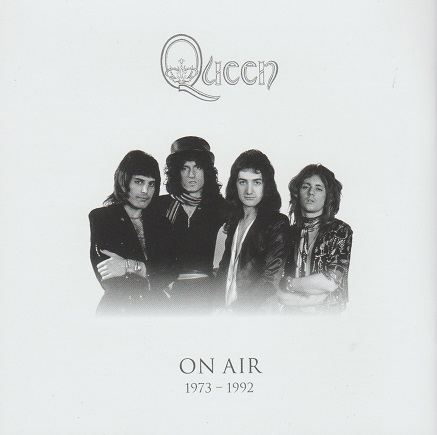
QUEEN – On Air – The Radio Collection (2016 BBC 6 CD box set)

Go big or go home.  Why buy the 2 CD version of Queen On Air when you can go for the 6 CD smorgasbord?  If you love Queen, it is the only way to do it.  Having said that, if you only “like” Queen and wouldn’t give your own blood to buy a box set, then the simple 2 disc standard edition will probably suffice.  The first two discs in this set are the same as the standard edition.  Everything else is a bonus.

The contents of the first two discs are The Complete BBC Sessions, 24 songs in total plus some disc jockey chit chat.  Because these tracks come from multiple BBC appearances, some songs are played more than once, such as “Keep Yourself Alive”, “Modern Times Rock ‘n’ Roll” and the epic “Liar”.  Most of the recordings are from the very early 70s — 1973 and 1974.  Queen were a rough and ready beast back then, but these versions are really not too far off from the original album tracks.  Because it’s the BBC, the recordings and fidelity are excellent.  This is a treasure trove of early Queen, all the best tracks, captured perfectly.  Any fan of the first three Queen albums will be more than satisfied with these discs.  Then, there’s a gap.  After the Sheer Heart Attack (1974) era, there is nothing until 1977’s News of the World.  That album is represented by four of the best tracks:  the fast and guitar-heavy version of “We Will Rock You”, plus “It’s Late”, “My Melancholy Blues”, and “Spread Your Wings”.

According to the liner notes, even though they were a new band, Queen were afforded unusual leeway at the BBC.  Everyone knew they were talented and capable, and so when Freddie Mercury demanded very high standards and everything just so, he was accommodated.  The pay off is that these recordings are stunningly good, and rival the official album versions for quality.  Apparently the BBC sessions were heavily bootlegged, and you will understand why.

Disc 3 contains portions of three concerts.  Shame it’s not the full shows.  I’m sure those will come one day.  In the meantime, enjoy this CD.  You will hear highlights from concerts in 1973, 1981 and 1986, again recorded by the BBC.  This makes for a diverse listen, including guitar solos and covers.  The 1981 recording from Sao Paulo, Brazil is the weakest in terms of sound, but still perfectly listenable.  The 1986 material from Germany is fabulous.  Freddie dropped an “F” bomb in “Under Pressure” as he was being recorded for radio!

This might be where most listeners have to check out.  The final three CDs are interviews with all four members of Queen — 210 minutes of interviews.  Did you know Freddie Mercury could speak Japanese?  Full concerts would be better than interviews, but here they are.  Also among the interviews is a chat with producer Roy Thomas Baker.  The interviews range from 1976 to 1992 and the tribute concert.  Queen never reveal too much, but the timeline of interviews provides a lot of detail surrounding Queen’s most celebrated albums.

The problem with the interviews isn’t so much the quality, but a matter of “when am I going to listen to all this” and “how often”.  The music is the meat of it.  This box set can be found affordably, so be aware of what’s inside and don’t pay too much.

3.5/5 stars


#633: Don’t Take Offence At My Innuendo

GETTING MORE TALE #633: Don’t Take Offence At My Innuendo

I didn’t understand Queen until it was almost too late.  When I was a highschool hair metal brat, Queen were “too pop” for my tastes.  Much of their music seemed to be novelty songs to me.  Highschool pep rally music:  “We Will Rock You”, “We are the Champions”.   In the late 80s, North America had all but given up on Queen.  My exposure to them was minimal until 1991.

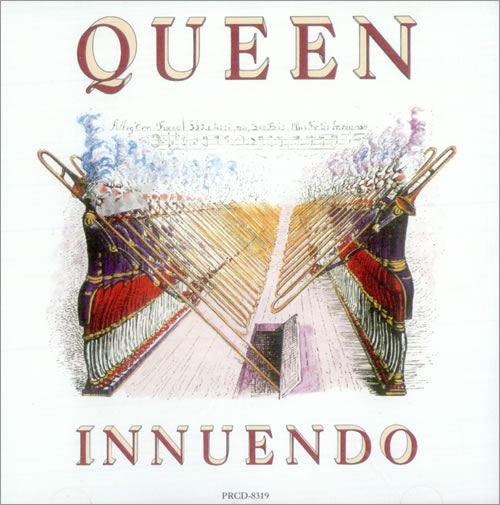
MuchMusic began playing a new Queen video called “Innuendo”.  The animated short was intense with firey guitar histronics (courtesy of Steve Howe from Yes) and an exotic Zeppelin edge.  Having just got into Zeppelin big time, this was very appealing.  At school, old pal Scott Peddle concurred.  “That new Queen is quite the Zeppelin tune,” and I agreed.  As far as I was concerned, any band that could homage Zep’s “Kashmir” with their own unique slant, well, I had to check them out!

M.E.A.T Magazine had a new interview with Brian May that year, and so my learning began.  It was the first I heard of Freddie’s rumoured health problems.  Queen hadn’t toured since 1986 and this raised questions.  Little did I know, but the British tabloids were all over Freddie with candid photos and near-death pronouncements.  Brian denied the health concerns, but admitted that it was Freddie who didn’t want to tour.  This was because as singer, he couldn’t smoke, drink and party with the rest of the band.  He had to take care of his voice.  So went the interview.  Brian assured readers that Queen would continue, as they were already half-way through the next Queen album, eventually released in 1995 as Made  in Heaven.

The next chapter in my learning came during the summer.  In guitar magazine interview, Brian May ran through all the Queen albums one by one.  I drank in every word, as I got a rough outline of what this band was all about.  Diversity, mostly, and I liked that.  Zeppelin too was diverse, but I sensed that Queen took it to another level.  I made plans to begin collecting Queen.

After highschool, I managed to stay in touch with a guy named Andy.  Andy had an older brother with an extensive record collection.  Andy told me all about this song called “Bohemian Rhapsody”.  He was over one night when my mom came downstairs to tell us some bad news.  It was the 23rd of November, 1991.  Freddie Mercury had made a statement.

“Following the enormous conjecture in the press over the last two weeks, I wish to confirm that I have been tested HIV positive and have AIDS. I felt it correct to keep this information private to date to protect the privacy of those around me. However, the time has come now for my friends and fans around the world to know the truth and I hope that everyone will join with me, my doctors and all those worldwide in the fight against this terrible disease. My privacy has always been very special to me and I am famous for my lack of interviews. Please understand this policy will continue.”

There was such a stigma surrounding AIDS then, more so than today.  It is easy to be critical of Freddie’s decision to keep his illness secret.  Unless you were there in 1991, then you really can’t know how difficult it was for AIDS sufferers at the time.

Andy and I were shellshocked.  The rumours were true.  The denials were false.  Brian later admitted that he knew early on that Freddie was sick.  Still, Andy and I had no idea how serious it was.  We talked, we listened to Queen.  Freddie died the very next day (the same day as Eric Carr of Kiss).  I had hardly got to know him.

My mom was headed to the mall and she asked if I wanted anything.  “Yes,” I answered.  “The first Queen album please.”  She returned that afternoon with Queen, 1973.  It was my first Queen.  I intended to collect them in order.

Getting all the albums in original order went sideways shortly after.  Less than three months after Freddie’s passing, came a worldwide phenomenon:  Wayne’s World.

Overnight, Queen were everywhere again.  Everyone knew every word to “Bohemian Rhapsody”.  The few months’ head start that I had were meaningless.  Two weeks later, Hollywood Records released Classic Queen in North America.  This was essentially a revised Greatest Hits II from 1991, (which they didn’t even bother to release here) with older hits thrown in.  Later that year came a new version of Greatest Hits, with the track listing revamped to avoid overlap with Classic Queen.  Confusing?  Indeed, it must have been to old fans who already had the old Greatest Hits with the original cover art.  That immediately became a collectable.  To new guys like me, I was just trying to keep up.

Hollywood Records reissued all the old Queen albums as part of their 20 Years of Queen series.  There were bonus tracks.  I had begun my Queen collection on cassette, but I was irked to discovery that some of the CD editions had bonus tracks that were not on the cassettes.  And so, I already had to re-buy.  Interestingly, some of those old 1991 bonus tracks are remixes that are now out of print and not available on the newer Queen reissues.

It was a blessing that I stopped buying them in chronological order.  After all, I didn’t want to wait that long to get Innuendo, an album with more than the average amount of heavy Queen rock.  Next, I got News of the World.  Its bonus tracks was a pretty awful remix of “We Will Rock You” by Rick Rubin and featuring Flea.  Fortunately the album itself was much better.  Queen’s best?  Quite possibly, due to “It’s Late”, a Queen epic as regal as any.  The 6:27 Brian May workout is a clear highlight on an album of nothing but.  “It’s Late” sunk its hooks in me deep.

As it was difficult for Hollywood Records to to extract new releases from a defunct band, the reissues continued.  Queen At the Beeb was out of print, so it was re-released with new cover art as Queen at the BBC in 1995.  This collection of live oldies from Queen and Queen II were not what the hit-buying general public were interested in.  My copy was a cassette promo from the Record Store, intended for store play.  The boss never played it so I claimed it.

Working at the Record Store, I was able to fill in most of the blanks in my collection.  A nice find was a version of The Miracle with 14 tracks instead of the more common 13.  I still have that.  (The additional track was the 12″ remix of “Scandal”.)  It was ol’ buddy T-Rev who made sure I knew these things.

As the years passed, Queen releases became less important.  The long-awaited final album Made in Heaven became a shelf warmer at Christmas 1995.  Regardless of its deep emotional contents, people didn’t want to know.  The unfortunate effect of Queen’s sudden comeback in North America is that people lost interest a few years after they gained it.

Not me.  Made in Heaven became a dark favourite.  Two years later, Queen indicated they weren’t done yet.  The trio of Brian May, Roger Taylor and John Deacon regrouped for one last song:  the ballad “No-One But You (Only the Good Die Young)”.  It was a tribute to Freddie and Princess Diana, and released on a new compilation called Queen Rocks.

John Deacon retired, but then something strange happened.  The duo of Brian May and Roger Taylor reconvened as “Queen +”.  This moniker was used for a number of remixes on Greatest Hits III: Queen + Wyclef Jean, for example.  There was Five + Queen doing a new boy band version of “We Will Rock You”.  Queen + Paul Rodgers did an album (The Cosmos Rocks) and a number of tours.  But it wasn’t until a former American Idol TV contestant named Adam Lambert came on board that Queen regained mass public awareness.  Now, Queen + Adam Lambert are a hot touring commodity.

That might have to be enough.  Because nobody bought The Cosmos Rocks, Queen + Adam Lambert are unlikely at this time to record new music.  Instead they will be tearing up stages Down Under in 2018.  They promise all the favourites, and a few unexpected oldies.  Lambert is a versatile singer who can do it all, so Australia and New Zealand are now on alert:  Queen + Adam Lambert are coming and are promising a hell of a show.

  • Auckland – 17 & 18 February
  • Sydney – 21 & 22 February
  • Brisbane – 24 February
  • Adelaide (first Queen shows since 1984) – 27 & 28 February
  • Melbourne – 2 & 3 March
  • Perth – 6 March


REVIEW: Queen – Flash Gordon (with 1991 and 2011 bonus tracks)

Flash Gordon – Original Soundtrack Music by QUEEN (Originally 1980, 1991 and 2011 Hollywood CDs)

When mom and dad rented the movie Flash Gordon, we sat and watched it as a family.  “It’s terrible,” a family friend told us.  There were only so many movies available to rent at the local store (Steve’s TV), just one small wall of VHS and Betamax.  Flash Gordon came home with us one weekend, and because we tried to make the most of our movie rentals (including the VCR, also a rental) we watched it twice.

I have not seen Flash Gordon since that childhood weekend.  It really was awful.  Maybe we hoped for more because Max Von Sydow was in it.  Neither Sydow, nor Brian Blessed, nor a young Timothy Dalton could save Flash Gordon.

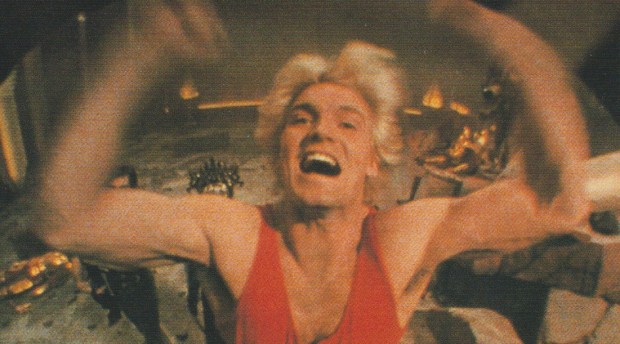
Flash Gordon, New York Jets

Queen also could not save the movie, though their soundtrack is certainly one of the best things to come of it.  (Another is the movie Ted, basically a love letter to the original Flash Gordon).   All four Queen members wrote music for the film, and recorded it as a band.  Brian May wrote the lion’s share of material, though Freddie Mercury was responsible for “Vultan’s Theme”, later ripped off for an Atari video game called Vanguard.  I wonder if Freddie ever saw a dime from that?  I knew Freddie’s song from the video game by heart, long before I ever heard the album by Queen!

The soundtrack gave us one Queen hit single, “Flash’s Theme” written by May.  The 2011 double CD has a single version, and a live cut from Montreal in ’81 (also on Queen Rock Montreal), as bonuses to the album track.  “Flash’s Theme” is sparse but catchy, featuring movie dialogue that makes it seem like the film should be much better.  Queen’s bombast was ideal for this.  When Roger Taylor sings the highest notes in the chorus, it’s sheer musical delight.

The album plays like a soundtrack, with lots of atmospheric keyboard instrumentals and movie dialogue.  Because of its ambient nature, you might not at first recognise some tracks as Queen.  Some is similar to the ambient work that closed their last album, Made in Heaven.  The music is far more grand than its onscreen imagery.

One of the most memorable instrumentals is “Football Fight”, a Mercury synth workout.  Perhaps sometimes we forget what a great keyboardist Mercury was, simply because he was such an amazing vocalist.  “Football Fight” is super fun, and you can also get it in a piano-based demo version on the 2011 CD.  Check out a Queen-tastic version of Wagner’s famous “Wedding March” performed by May on guitar.  Finally there is the rock track “The Hero”, a riffy song with full vocals by Freddie.  It reprises some prior themes from the soundtrack, such as “Vultan’s”.  Queen is augmented by an orchestra on “The Hero”, which is as grand as you would expect.  Like “Flash”, you can also get “The Hero” on disc two in live form, in Montreal 1981.

A long forgotten bonus track for this album was released on the 1991 Hollywood Records CD.  A remix by somebody called “Mista Lawnge” starts off well enough, with a grinding beat synched to May’s guitar.  It goes downhill when somebody starts rapping, “Flash, one time!  Flash, two times!”  Note to all remixers:  Never, ever add random rappers to rock songs.  Don’t.

Rest assured, no matter which version of Flash Gordon you pick up, there are some definite musts on the album.  Much of it will only appeal to fans of soundtracks.  If that sounds like you, take a ride with Flash to planet Mongo and get down with some Queen.  Skip the movie!

4/5 stars

REVIEW: Max Webster – A Million Vacations (1979)

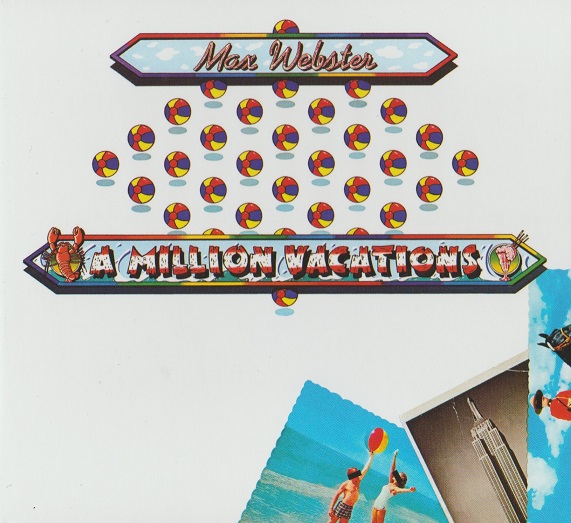
MAX WEBSTER – A Million Vacations (originally 1979, 2017 Anthem remaster)

Why are Max Webster still held in such high esteem by their devoted fanbase?  Possibly because they concocted an ideal mixture of humour and incredible playing and composition.  Much like Frank Zappa, Max Webster felt that humour does indeed belong in music.  It’s “smart kid rock” but never taking itself too seriously.  From playful musical sections to the words of lyricist Pye Dubois, Max could also be counted on to poke you in the ribs.

A Million Vacations is certainly one of their best albums, if not their absolute magnum opus, but that’s all a matter of opinion.  At this stage of the game, Max was really cooking.  The 10 songs within represent some peak level songwriting, and several are still on the radio today.  Through the airwaves, “Paradise Skies”, “Let Go the Line”, “A Million Vacations” and “Night Flights” might be speeding over Canada somewhere as you read this.

“Paradise Skies” indeed!  One of Max’s most immediate tracks is the party opener.  Total mainstream Max: catchy hooks, insane playing, and a chorus that’s ready to blast off.  Terry Watkinson’s “Charmonium” is more complex but no less catchy.  The keyboardist wrote the song and does the lead vocals as well.  Dig into those flurries of notes making up some tasty solo sections.  Losing no momentum, “Night Flights” keeps a jaunty pace.  Pye Dubois’ poem about the love of touring reminds us how important Pye was to the band.  How many bands have a touring lyricist?

Breaking the fun-loving character for just a moment, a day-dreamy “Sun Voices” has connections to the next songs, “Moon Voices” and “A Million Vacations”.  “In my chair, chaise lounge…” and how many songs can you think of with a chaise lounge in the words??  “Sun Voices” is a meditative poolside view.  Perhaps then the side-closing instrumental “Moon Voices” is the loud party, after the sun goes down?

“A Million Vacations” (written by drummer Gary McCracken and Pye Dubois) on side two is a party-ready Canadian summer anthem.  Part of being Canadian is hibernating for our cold, dark winters.  Once we have endured the freeze, and life returns with the spring thaw, it is like a celebration.  “A Million Vacations” has that feeling.  “Throwin’ out all kinds of fishing line, Friday Friday is a good time to shine.”  Yes indeed, hitting the outdoors is a Canadian weekend tradition in the summer time.

“Look Out” is an often forgotten buried gem.  The chorus is written around a catchy keyboard riff, which suddenly gives way to a conga jam.  It’s Max as only Max can do, daring but never fearing.  But side two’s centerpiece is undoubtedly the magnificent ballad “Let Go the Line”, with Watkinson back on lead vocals.  Kim Mitchell orchestrates a guitar chorus for the main instrument hook and it’s instant love.  For sheer smart pop songwriting, “Let Go the Line” is Max’s finest.  The new 2017 remaster from the recommended box set The Party really reveals a lot of nuance in the back that were hard or impossible to hear on previous CD editions.

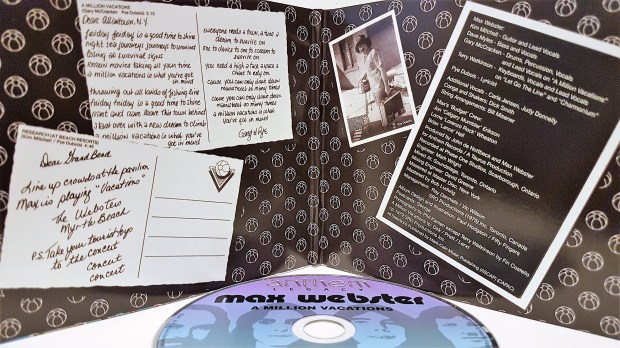
Kim gets a little goofy with “Rascal Houdi”, an undeniable party rocker.  “I’m switching out, I’m out to lunch,” and it’s a teenage blast.  But the party finale, “Research (At Beach Resorts)” takes it to the max (pun intended).  “Line up crowds at the pavilion, Max is playing ‘Vacations'”.  It’s a beach party, and Max is “in Newport for research, to get abreast of things…”  What about Wasaga Beach on Georgian Bay?  Already taken care of, friends.  “We’ve just researched Wasaga Beach, bonfire pits at midnight.”  But what the heck are they “researching”?

“What is it that we stare at?
Is it the passports and campsite stars?
Or the monogrammed bikinis and cars?
Or maybe we just need some perspiration ’cause we’re frostbitten Canadian boys!”

There are few bands better than Max Webster, folks, and Max’s A Million Vacation is an easy album to love, so flip it over and play it again like I’m about to.

5/5 stars
 

#620: The Retired Jedi Master (of Rock)

GETTING MORE TALE #620: The Retired Jedi Master (of Rock)

It is always sad when one of my old Jedi Masters of Rock loses their passion for it.

I think for Bob, that began when he entered college. While Bob taught me the ins and outs of Iron Maiden, Ozzy Osbourne, Dio, and Motley Crue, he was drifting away from heavy metal. There is nothing wrong with diversifying, but his passion for the heavier side of things was waning.

I remember in the summer of ’91 when Motley Crue released their awesome new groove-laden single, “Primal Scream”. I asked Bob if he liked it, and his response was that the new Motley was “too heavy”. My heart broke in two pieces that day. I was so excited about that track. Motley were doing exactly what I wanted them to do: turning it up and giving no fucks. Bob just wasn’t into that.

His tastes were changing. I think a big part of it was that the girls he liked at college weren’t into heavy metal. Bob was checking out more commercial sounds and ballads. One of his favourite groups was Frozen Ghost.  I also remember he was very much into Bad Company’s Holy Water. Meanwhile I was digging into the roots of metal and the bands of the future as well: from Deep Purple to I Mother Earth.  Our paths diverged.  I couldn’t be less interested in new Bad Company, but I was intent on collecting the entire Black Sabbath back catalogue.  It made me a little sad, but I’m not regretful about where my explorations took me over the years.

I think it can be summed up as below:

1. The girls we liked didn’t listen to metal.
2. Bob’s tastes diversified while he outgrew metal.
3. I doubled down on metal, going all in. The girls might not like metal, but maybe they’d appreciate my don’t-give-a-fuck attitude?

Bob’s method got him dates. My method did not! But my musical journey took me far and wide.  From the deep neon coloured oceans of Frank Zappa, to the craggy peaks of Mount Marillion, and back to the Valley of Judas Priest. As real life took over – job, wife, kids – Bob was no longer the music head that I was. He has always been a hard worker, and a family guy. My passion only grew deeper. The longer, heavier and more complex the tunes, the more interested I was in the band. I loved musicianship. Ballads were starting to sound the same to me, and there were some cool new sounds coming out of the woodwork.

Life took Bob and I in different directions. He met a lovely lady named Trish and now has four kids. I have none.  If I had four kids, would I still have time to invest in my passion, music? Bob’s kids keep him very busy, believe me!

Bob sold off his collection many years ago. He had some amazing Iron Maiden 12” singles and picture discs. I bought a few of his singles, but there was one tie-dyed bootleg picture disc EP that I would have loved to get my hands on. I couldn’t tell you anything about it today, except that it was Iron Maiden. He had to do what he had to do. It’s gone now and he has little recollection at all about it.  That information is sadly lost to me now.
Not every Jedi Master of Rock stays in the trenches forever. Some do, and end up writing about it on the internet. Bob may have retired his rock and roll shoes, but his influence lives on right here in these pages.  Thank you for your wisdom and friendship.