hard rock

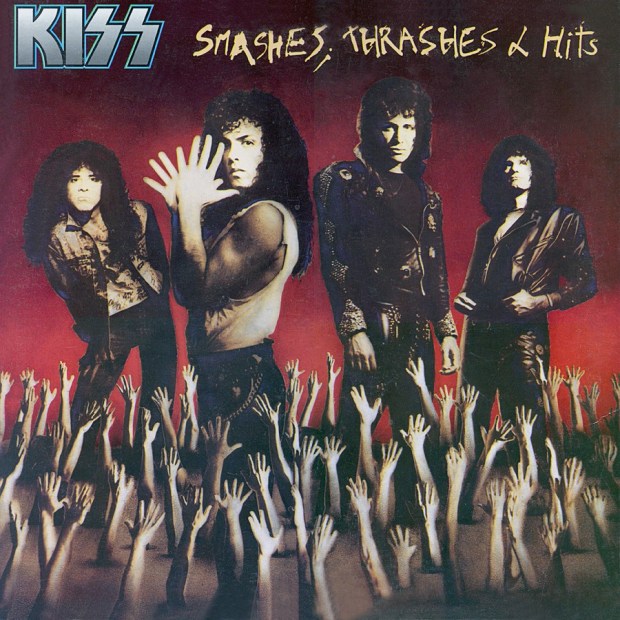
RE-REVIEW: KISS – Smashes, Thrashes & Hits (1988)

The KISS RE-REVIEW SERIES Part 36: 

 – Smashes, Thrashes & Hits (1988 Mercury)

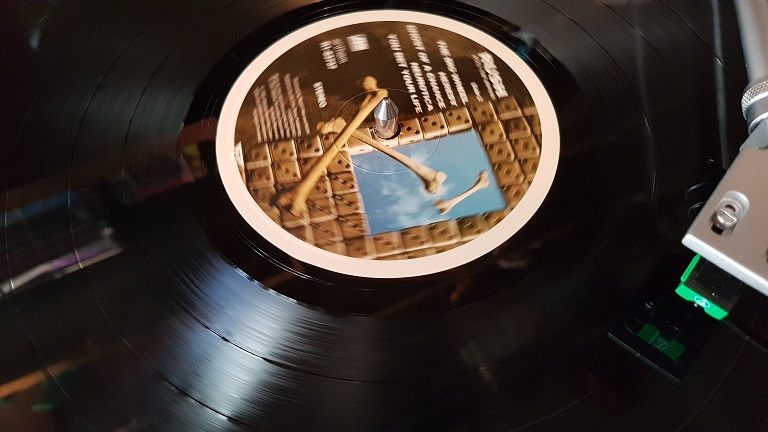
Though hard to believe, in 1988 Kiss needed the money.  According to CK Lendt in his book KISS and Sell, they were in trouble financially.  Some bad investments and too many expenses, plus the underperformance of Crazy Nights, had the band in a bind.  The traditional easy solution is to throw together a “greatest hits” set.

Gene announced this album to Canadian audiences on a trip to the Great White North promoting his record label, Simmons Records.  House of Lords were the band he primed to be big, and their debut album is held in high esteem by rock connoisseurs worldwide.  It seemed to fans that Simmons was transitioning from Hollywood to businessman.  Surely, it was hard to believe him when he claimed Kiss was still his priority.

Greatest hits albums need something new to sell them.  This was left to Paul Stanley, who produced two new songs co-written with Desmond Child (and Diane Warren on one).   It seems unlikely that Gene cared much at this point.  In the music video for one of the new songs, “(You Make Me) Rock Hard”, he can be clearly seen miming the wrong words.

Speaking of music videos, “Let’s Put the X in Sex” was something new for the band (and it wasn’t the lawsuit from the people who owned the building in the video).  Suddenly, Kiss were a three-piece backing band with a guitar-less frontman.  At least in the videos for Crazy Nights, Paul Stanley wore and danced with a guitar.  In “Let’s Put the X in Sex”, he is front and center, without instrument:  the frontman.  Gene’s just the bass player in these videos, looking completely lost.  Paul was doing all the work behind the scenes, therefore he was going to take the spotlight.  And why not?

Getting two new Kiss songs on a greatest hits was good in theory.  Even back then, we sensed they were more the “Paul Stanley Project” than Kiss.  For Kiss, they are too light and glossy.  “Let’s Put the X in Sex” has horns (or is it synth?) making it sound vaguely like an Aerosmith outtake from Permanent Vacation.  At least Steven Tyler injects a little cleverness into his innuendo.  Both Bruce Kulick and Eric Carr rise to the occasion with worthy work, but the tune is a dud.

Likewise with “(You Make Me) Rock Hard”, which passed for a rocker at the time.  Neither of the new tracks are as good as the four on Kiss Killers.  Paul must have just been out of gas.  He states these songs were the best he could do at the time without his partner in crime.  “Rock Hard” is just Kiss by numbers.

First two tracks aside, Smashes, Thrashes & Hits contains 13 of the greatest.  Most are remixed (ill-advisedly) to bring all the tracks to a standard sonic backdrop.  The remixes are from a variety of names in a number of studios:  Dave Wittman, David Thoener, Jay Messina for example.  Some played it a little more loose with the tracks, others didn’t meddle much.  “Love Gun” is an example of a remix that changes things up, but still works.  Ace’s solo is given more emphasis by mixing out the vocals.  It’s a cool alternate arrangement.  Excess echo is added on the drums…you can’t win ’em all.  Many of the remixes suffer from drum related issues.

Smashes, Thrashes & Hits takes a scattershot approach to running order.  It’s very telling that no tracks from Crazy Nights were included, except in the UK where “Crazy Crazy Nights” and “Reason to Live” were hits.  No tracks with an Ace Frehley writing credit were included, and only one from Peter Criss.  That’s another gripe that fans have with this album.

“Beth” is included, a throwback to one of Kiss’ biggest hits, which they tended to shun since Peter’s 1980 departure from Kiss.  It’s considered a slap in the face to Peter that Eric Carr was called in to re-record the lead vocal.  The backing track is identical.  Carr never felt comfortable in this role, but had never been featured on an album lead vocal before.  It was a hell of a dilemma for the drummer.  He’d been in the band for six years and six albums, and never got a lead vocal.  He did the best he could.  The re-recorded “Beth” didn’t replace the original, and it remains an oddity in the Kiss canon.

One afternoon in the summer of 1990, Bob and I were hanging out with these two girls at his trailer that we were going out with.  We were listening to songs, but Bob and I didn’t seem to get much say in what songs.  One of the girls said, “I have some Kiss!” and put on Beth.  As soon as she did, I had a feeling it wouldn’t be the original.  Simultaneously, Bob and I both said, “Oh no, it’s Eric!”  The girls had no idea what we were talking about or why it was a big deal.

Smashes, Thrashes & Hits was the first compilation to reconcile the makeup and non-makeup eras of Kiss.  The majority are from the makeup years, as it should be, with only three from non-makeup albums.  You could argue for this song and that song, but the running order is jarring.  “Heaven’s On Fire” into “Dr. Love” is not even as bizarre as “Beth” into “Tears are Falling”.  The less familiar remixes don’t help the situation.  Incidentally, the only songs untouched by remixers’ hands are “Lick It Up”, “Heaven’s On Fire”, “Tears are Falling” and “I Was Made For Lovin’ You”.

There was no tour for Smashes, Thrashes and Hits.  Gene had his label stuff, including a new Canadian band called Gypsy Rose to think about.  (Remember “Poisoned By Love” on Simmons Records?)  Paul Stanley didn’t want to sit idle, and so did a 1989 solo tour.  Kiss family member Bob Kulick returned to his side on guitar.  Kiss keyboardist Gary Corbett was there with bassist Dennis St. James and ex-Black Sabbath drummer Eric Singer.  The setlist featured a number of old Kiss classics that hadn’t been played live in 10 years, such as “I Want You”.  Eric Carr was unhappy about the solo tour, worrying about what it meant.  Like most Kiss fans, he wondered if it was the beginning of the end.  He also worried that Paul didn’t ask him to be his solo drummer.  Paul said it was because two Kiss members wouldn’t be right for a solo tour.  Ominously, Eric Carr said about Singer:  “That’s the guy who’s going to replace me.”

Fans were confused and some were unhappy.  Like they had once before, Kiss were drifting further and further into pop music.  This time, it was without Ace Frehley to keep them anchored.  Paul Stanley now seemed to be a Bon Jovi-like dancing frontman.  These new songs were not easy to stomach, and the Eric Carr vocal felt all wrong.  Had Kiss lost all credibility?  Smashes, Thrashes and Hits wasn’t winning any back.

Today’s rating:

2/5 stars

Original mikeladano.com review:  2012/08/06

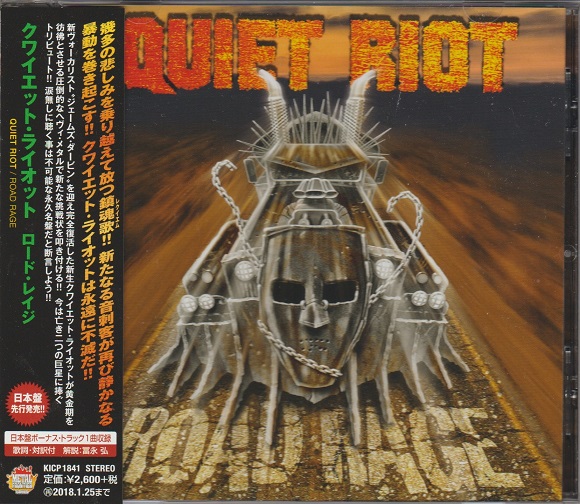
REVIEW: Quiet Riot – Road Rage (2017 Japanese version)

QUIET RIOT – Road Rage (2017 Frontiers Japanese version)

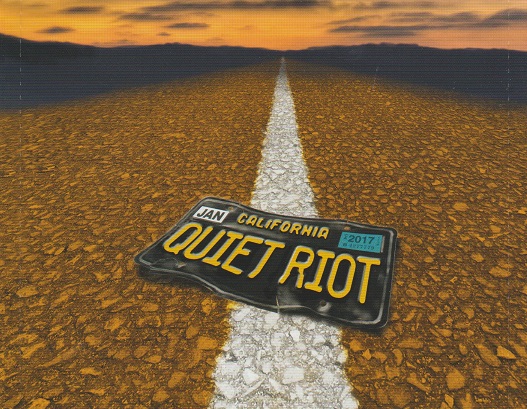
We’ve always been honest but truthful Quiet Riot fans here at LeBrain HQ.  We’ve been banging our heads for almost 35 years now, and they included some ups and some downs.  The death of Kevin DuBrow was heartbreaking.  Some of our Quiet Riot reviews haven’t been the most popular, but we have always maintained an open mind.  Frankie Banali’s resurrected Quiet Riot with no original members left a bad taste in the mouth, especially after management attempted to re-write the band’s history on WikipediaPages were edited to indicate that the Metal Health album was Quiet Riot’s debut, seemingly in order to qualify Banali as an original member.  Ugly and undignified; but music talks and bullshit walks.  Quiet Riot’s first post-DuBrow always was 2014’s 10, with Love/Hate singer Jizzy Pearl taking over as the band’s sixth lead singer.  It wasn’t that good and it’s conceivable that the band know it.  No physical edition was ever released, and you can’t even buy a download anymore.

So, it’s delightful to be able to say that the new 2017 Quiet Riot album called Road Rage is…not bad at all!  Actually quite good!

It’s even been rocky since 10.  Jizzy Pearl left amicably, to be replaced by ex-Steven Adler singer Seann Nichols.  They recorded a new album, even released one full song online…and then suddenly Nichols was out!  American Idol alumnus James Durbin was hired in short order, and re-wrote and re-recorded the entire album.

Skeptics, be silent.  Our fair and balanced take on Quiet Riot in the past should speak volumes for the review you are about to read.  It would be far easier to mock Quiet Riot for their choice of a TV show contestant as a frontman, but it would be grossly inaccurate.

Durbin’s youthful enthusiasm will either win you over, or leave you complaining that he’s “not enough like DuBrow” and it “doesn’t sound like Quiet Riot”.  Here’s the truth — that’s good.  We’ve endured one soundalike singer after another.  Durbin has a fresh spin, and there’s little question the guy is just pleased as hell to be fronting this band!  he gives it all on “Can’t Get Enough”, a new uptempo Quiet Riot party tune.  Co-writer Neil Citron must have written the riff with a classic Quiet Riot vibe in mind.

Then it’s down weird street a little bit with the Indian-flavoured intro to “Get Away”.  It takes a moment, but once you realize “Hey, this isn’t the same old Quiet Riot”, you will be able to realize that “Get Away” is a damn good song.  It’s actually quite melodic rock, but with a Zeppelin groove.  Then it’s the pro-weed “Roll This Joint”, which has a seriously decent Zep vibe too.  The lyrics are pretty cheesey (“I’m with Cheech and Chong and Willie and Marley!”) but you gotta cut Durbin some slack.  He’s young and it’ll connect with some of that crowd.

The thing is, you just can’t dislike Durbin.  He wins you over, especially on the lead single “Freak Flag”.  This is the most Quiet Riot sounding track of the disc, but with Durbin it’s no carbon copy.  “Freak Flag” kicks ass and you can imagine it working great live.  Same with “Wasted”.  That chorus (“Take a shot!”) grows fast.  Even the ballad “The Road” doesn’t suck.  Through the 11 tracks, it’s clear who the star on this album is.  The new frontman rose to the challenge.  In the back, Frankie Banali’s providing the Quiet Riot backbeat; the linkage between past and present.  Guitarist Alex Grossi also turns in a worthy performance, and Chuck Wright (bass) has a co-write on the slippy-slidey “Still Wild”.  Despite the circumstances in the making of the album, Quiet Riot sound more focused than they have in decades.

Frankie’s revival of Quiet Riot has been going seven years straight, through five singers before getting James Durbin on board.  Only the singer has changed; Grossi and Wright have stood by through thick and thin.  No matter what, Quiet Riot will continue.  Fans should be advise that the first album with Durbin has turned out great, and let’s hope this is a long-term lineup.  He’s got the necessary range to sing vintage DuBrow, but in his own voice.  And that voice is growing quite compelling.  Not every song is killer, but the majority of the album gets the job done.  Enough to justify putting your money down.

The Japanese version of Road Rage has an exclusive bonus track.  It is an acoustic version of “Make A Way”, one of the heavy album tracks.  This isn’t a crappy remix, but an entirely new recording of the song in acoustic arrangement.  It’s different enough that it actually seems like a new song.  Bonus track:  win!*  

As Durbin sings, “Take a shot!”  Give Road Rage a road test.  Just don’t “Knock ‘Em Down”, or you will have to “Get Away”.  The quality of this album in terms of sound and songs gives the new Quiet Riot a level of credibility they didn’t have before.  Easily their best album since 1993’s Terrified or even before.  Let your “Freak Flag” fly, James Durbin!

3.75/5 stars

*  Former singer Seann Nichols made a comment in an interview that implied the version of Road Rage with his vocals was released in Japan; this is unfortunately not the case.  If you have any Seann Nichols versions of the Road Rage songs, please contact us here.  We are dying to review them in contrast to the final album!


REVIEW: Vinnie Vincent Invasion – All Systems Go (1988)

The KISS RE-REVIEW SERIES Part 35Vinnie Vincent solo #2.

VINNIE VINCENT INVASION – All Systems Go (1988 Chysalis)

Ex- guitarist Vinnie Vincent could have made it big as a solo artist.  He had the talent, and the songwriting ability.  What he didn’t have was self control.  It’s too bad, because his second album was far more accessible than the first.  With a movie tie-in with the lucrative Nightmare on Elm St. movie series, the Invasion was primed and ready….

And then the band split.

According to singer Mark Slaughter (on an instalment of the Eddie Trunk show), Vinnie told Mark that was going to fire bassist Dana Strum.  “Where does your loyalty lie?” he asked the vocalist.  Mark told him if Dana was going, he’d rather go with Dana.  So that’s what happened. Mark and Dana formed the successful Slaughter, while drummer Bobby Rock joined another huge band called Nelson.

This all came as a bit of a shock to fans, who expected the Invasion’s second album All Systems Go to take off.  It spawned two singles/videos that were right in sync with popular rock at the time.  Vinnie toned down his guitar excesses from the first album, and Mark Slaughter was obviously the kind of frontman born to rock.  A damn shame.

All Systems Go wasn’t a skimpy album:  11 tracks plus two CD-only instrumentals.  Vinnie took sole writing credit on every track, including the drum solo.  For extra fun, the tracks are not listed in order on the back cover and the instrumentals are unlisted.  This is a throwback to the way records were sometimes released in the 60s and 70s.  The tracks (including the instrumentals) are listed in the correct order on the CD itself.  This kinda sucks when you are actually listening to it and want to know which song is playing.

This is the album that lived up to what Vinnie was capable of, although he stated a preference for the first “uncompromised” first album.  “I should never have changed singers,” he said without mentioning Mark by name.  Mark’s sassy vocalizin’ dominates the album, which might have pissed off Vinnie.  His charisma and talent is immediately obvious on the sleazy groove rocker “Ashes to Ashes”.  A tight song with a good riff and a great chorus is all you need.  Vinnie’s solo is no less impressive, but much more innovative and suiting to the song.  Guitar heroism in the making…almost.

“Dirty Rhythm” brings more sleaze: faster, more cowbell and more Sunset Strip.  The Invasion had more talent than the average glam rock band of the day, and so this is pretty exceptional stuff for the genre.  Where they really succeeded was with the radio friendly stuff.  The Freddy Krueger crossover ballad “Love Kills” should have been massive. We the benefit of hindsight, we can see that Mark Slaughter was born to be a star. He was absolutely the right singer for these songs.

Goofy title aside, “Naughty Naughty” is a decent return to sleazy glam, and “Burn” rocks similarly.  “Heavy Pettin'” is an even worse title, concealing another good glam rocker.  Perhaps lyrics weren’t Vinnie’s greatest talent, but there’s not much else wrong with it.  Guitar heroism returned on “The Star-Spangled Banner”, played by an orchestra of electric guitars!  It’s an apt intro for “Let Freedom Rock”.  It’s over the top fun, and the guitar solo would make Yngwie pee his leather pants.

The other single “That Time of Year” was just as good as “Love Kills”, if not better just because it’s not as dark. Its midtempo rock pseudo-ballad stylings were instantly likable.  It’s easy to imagine it as a hit, despite a glut of soundalike bands in 1988.  Vinnie’s solo verges of majestic.  It’s really hard to imagine was he didn’t like about this album.  It’s not a bad thing that the songs dominate over the solos; the solos are more impressive when they serve the song.

Had the band not split, and if they released a third single, it could have been “Ecstasy”.  Don’t forget, Vinnie wrote “Tears” which was a pop hit for John Waite, and even recorded by Peter Criss.  “Ecstasy” is its spiritual sequel.  “Deeper and Deeper” also has pop qualities, but is clearly a rocker.  The point is this:  don’t underestimate Vinnie Vincent.

Out of the blue, the LP/cassette version of the album ended on heavy shred metal.  “Breakout” kicks ass.  If fans felt at any point that the album was going soft, then “Breakout” would have redeemed it for them.  The only real issue is a problem on many of the songs on this album: the production.  It’s thin, and the backing vocals tend to be shrill.  “Breakout” could be rib-busting with more crunch.

On CD, there are two instrumentals to close.  “The Meltdown” is a messy cacophony of drums and electronics.  You’ll be thankful it’s over.  Stick around for Vinnie’s acoustic tune “‘Ya Know’ – I’m Pretty Shot”.  What a diverse and schooled player he is.  From classical fingerpicking to blues and traditionals, is there anything he couldn’t do with just six strings?  Years from now, this is what Vinnie should be remembered for.  This one acoustic instrumental should establish him as a genius on the same level as Randy Rhoads and Yngwie Malmsteen.

Potential was almost fully realized here.  If the sound was thicker and the disc was trimmed for length, All Systems Go would be fully classic.

3.5/5 stars

#600: The Vault

GETTING MORE TALE #600: The Vault

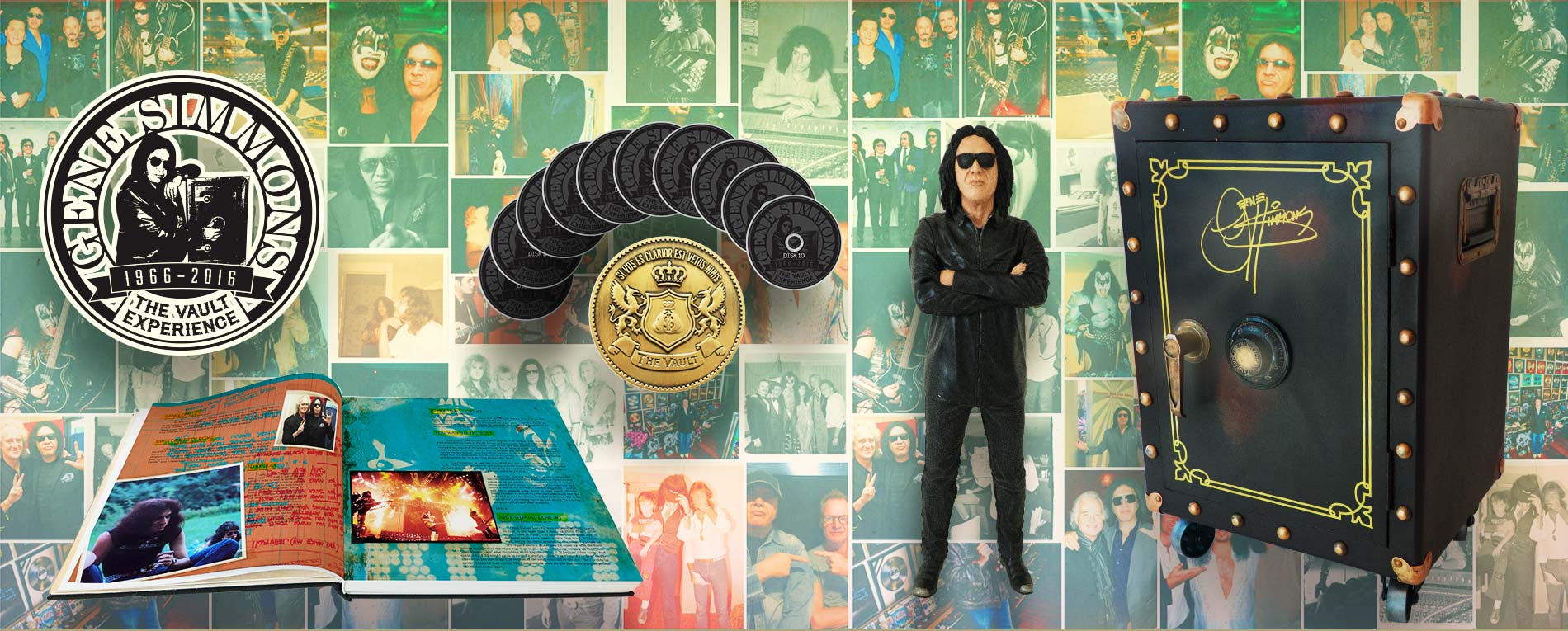
By now, surely you have heard that Gene Simmons is finally releasing his massive 150 song boxed set, The Vault (1966-2016).  Gene has been talking about this box for over a decade, under the previous working title Monster.  Entirely unreleased, these songs are a treasure trove of things that fans have wanted for years.  Gene’s Love Gun-era Van Halen demos?  Supposedly here.  Along with “Feels Like Heaven” and dozens of tracks we’ve wanted in official quality.  In other words, The Vault box set is as much a must-have as the original Kiss Box Set itself.  A full track list has yet to be released, but we can be assured that there will be music that we have long sought on Vault.

Gene likes to promote his big ticket items in terms of what they weigh, as if that’s a reflection of value.  Vault comes in a safe that weighs 38 pounds.  The box also includes:

  • 10 CDs, 150 unreleased songs
  • In Gene We Trust “gold” coin
  • The very first Gene Simmons figurine  without makeup (also without any articulation)
  • Deluxe book containing over 50,000 words and 160 pages of unseen photos from Gene’s personal collection
  • A “hand selected personal gift” (no exchanges)

All this for only $2000 USD.

“But Gene,” you might be thinking to yourself, “that’s not enough.  I want more!”

If you want more, you better be prepared to pay for it.

For $50,000, Gene will deliver your copy of Vault right to your home.  It’s called the “Vault Home Experience”, but only available in the United States:

  • You plus 25 friends get Gene in your own home for two hours
  • Pictures/videos/autographs
  • Intimate “Songs & Stories” session and Q&A
  • Signed “golden ticket”, exclusive T-shirt, USB stick (with song “Are You Ready”), and laminate pass
  • Each guest gets a laminate and T-shirt
  • Numbered The Vault (first 300 sold)

What’s that “Songs & Stories” session?  This is really “stories about songs”.  Gene won’t be singing live. The FAQ states that “if you have an acoustic guitar around, Gene may strum a few tunes for you and your guests.” “If” and “may”.

Don’t have $50,000?  That’s OK.  For just half ($25,000) you can get “The Producer’s Experience” in one of select US cities.

  • Buyer and one guest spend one hour in a recording studio with Gene
  • Buyer’s name appears as an “Executive Producer” on The Vault
  • Buyer & Gene listen to tracks and discuss The Vault
  • Photos/autographs (up to four items)
  • Guaranteed low numbered The Vault (first 500 sold)
  • Skype call from Gene

Think about it. You and a friend just need to raise $12,500 each!

Finally there is the basic $2000 “Vault Experience”.  These are all over the world, including two in Toronto (May 2018).

  • Gene hand delivers The Vault
  • Buyer and a guest meet Gene
  • Photos/autographs (up to two items – more “if he has time”)
  • Gene performs an intimate “Songs & Stories” session and Q&A
  • Signed “golden ticket”, exclusive T-shirt, USB stick (with “Are You Ready”), and laminate pass

It pays to read the language of this.  Gene’s “hand delivery” of the box set is really just you going to pick it up from him in one of a few select cities.  I picture it like Santa Claus at the mall.  Stand in line, get your few minutes with the old guy, a picture and your present (Vault).  The only true “hand delivery” is available for $50,000.  It’s also important to think about all the different activities squeezed in to a short period of time for you and all the other buyers. Each buyer is only allotted five minutes with Gene.

If you and 24 (American) friends pitched in $2000 each, you could in theory throw a two hour home party starring Gene Simmons.  That could make for a pretty cool bachelor blowout.  You’d still have to figure out who gets The Vault box set when you’re all done.  Maybe you could share it, with everybody getting it two weeks a year!  It’s your money, it’s entirely up to you.

Is it worth it?  I am sure these experiences will be sold out.  What if you can’t make it out to one of the Vault Experience locations?  In lieu of meeting Gene, you can have it shipped normally.

$2000 is a lot of money to most of us.  We music collectors are not loyal to just one band.  Gene may have released his box set, but other bands are also vying for our dollars.  This Christmas, Max Webster, Bruce Dickinson, the Sex Pistols, Whitesnake and more will have new box sets to sell.  Are we to budget all our money to just Gene this year?

I cannot.  I love Kiss, but not just Kiss.  No other artist I’ve ever loved has asked this much money for unreleased demos.  Yes, let’s put this into perspective.  It’s not the Wu-Tang Clan selling a new million dollar album to some pharma-jackass.  These are unreleased demos — stuff that either was never intended for release, or weren’t good enough for albums.  Incredibly desirable to collectors, but artificially inflating the price to $2000 not only puts them out of reach, but exaggerates what you’ll be getting inside.  To fans and collectors, it might be worth the money.  Play the songs for your buddies and they might wonder why the hell they were worth $2000.

At the end of the day, I just want the music.  An official, physical copy of the music.  At $13.33 per song, Gene is asking way too much for unreleased demos and a bunch of knick-knacks I wouldn’t buy otherwise.  I can’t pay that much, even for unreleased Kiss.


REVIEW: Mr. Big – Defying Gravity (2017 deluxe edition)

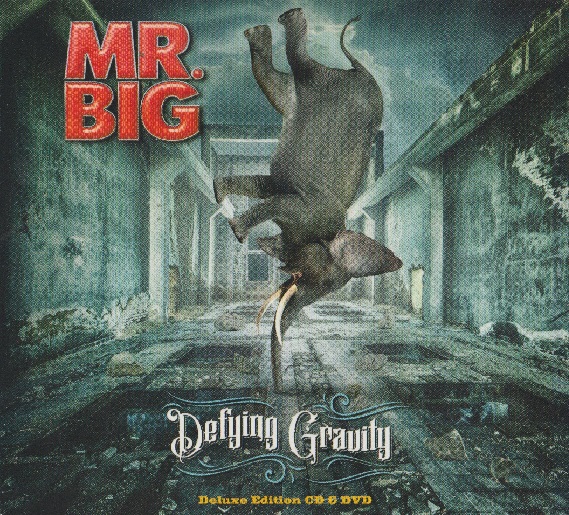
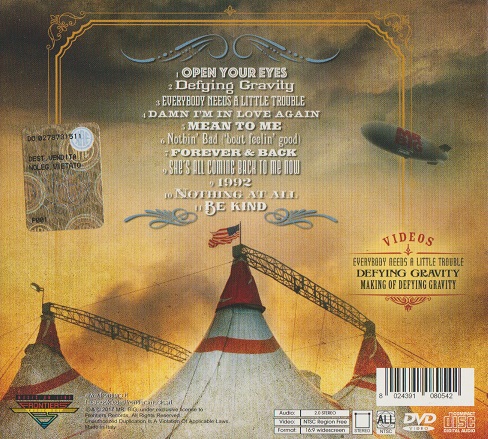
MR. BIG – Defying Gravity (2017 Frontiers CD/DVD edition)

I can still remember, very clearly, my thoughts about “To Be With You” when it finally became a hit in 1992.

“It’s a deserved hit,” I thought, “But that’s the end of Mr. Big having any chance of being seen as a serious band by the general public.”

Serious indeed.  Eric Martin had a previous career as a blue-eyed soul singer.  Paul Gilbert was in shred band Racer X with future Judas Priest drummer Scott Travis.  Pat Torpey was a well-known drummer for appearing on several shred rock albums, like Impelliteri.  And Billy Sheehan, of course, is generally listed as one of the top bassists of all time, with a period at the end.  These guys were not slouches.  But they did form a commercial rock band, and suffered the consequences that most commercial rock bands did in the 1990s.  They faded to obscurity.  Everywhere but Japan, where they continued to thrive as rock heroes.

It’s gratifying that 25 years later in 2017, Mr. Big have an album out that’s as good as any of their first four.  They even reunited with their original producer Kevin Elson.  But it’s all not peaches and cream.  Pat Torpey suffered a setback in 2014 when he was diagnosed with Parkinson’s disease.

Undaunted, Torpey still worked with his loyal bandmates on Defying Gravity.  Just as before, he participated in shaping the songs, even though he was unable to play on them.  Ace Frehley’s drummer Matt Starr* has taken over live and recording duties, while Torpey wrote and produced the drum parts.  In the accompanying DVD, it’s very gratifying to see the band adapt seamlessly to this new reality.  They even have fun with it in the music videos, as Starr and Torpey play together and switch instruments.  Check out the lead single and title track for a great example of making it work.

Speaking of the lead single/video…holy shit, what a hook! Gilbert’s tricky and exotic timing and note choices are somehow bent and twisted into a pop song! It’s that schooled approach that makes certain Mr. Big songs completely unlike whatever is on the radio, but just as catchy.

All the songs have spark, and the solo work is untouchable.  Bluesy and funky hard rock is the basis of “Open Your Eyes”.  The second single (“Everybody Needs a Little Trouble”) stomps out a heavy blues rock beat.  On to “Damn I’m In Love Again”, Mr. Big take a drive into the country.  “Nothing Bad ‘Bout Feelin’ Good” is a hybrid, using the acoustics in a heavier way.  There are plenty more hit-quality highlights:  “Forever & Back”, and “She’s All Coming Back to Me Now”.  For the fans:  “Nothing At All”, the heavy rockin’ “1992” (a brilliant look back at the glory days), and “Be Kind” which is just a jaw dropping example of what these guys can do with just their voices, instruments and a song!

For a deeper understanding of this album, check out the deluxe edition with bonus DVD.**  Not only will you get all the music videos, but also behind the scenes segments on set, and the EPK (“electronic press kit”).  Finally there is a track by track analysis of every song featuring each member, and more behind the scenes footage.  This is where you’ll find the most insight.  Influences abound from the expected to the  unexpected.  From doo-wop to Christina Aguilera?  Why not.  The one with the beat cribbed from Aguilera is actually one of the heaviest and solo-dense tracks (“Mean to Me”).

Defying Gravity isn’t really a surprise, because Mr. Big have put out plenty of good albums over the recent years.  Perhaps it’s a bit more inspired.  It certainly has potential to be on a few “top ten of 2017” lists this year.

4/5 stars

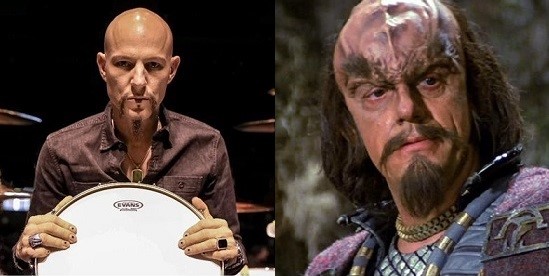
* Matt Starr may in fact be a Klingon.  In the Original Series, Klingons looked much like humans, without their trademark head ridges.  What gives away Starr’s possible Klingon status is his dead ringer of a Klingon moustache and beard.

Matt Starr is the one with the drum head.

** I know what you’re thinkin’. “LeBrain, why didn’t you buy the Japanese edition with a bonus track?” This time out the only bonus track is a radio edit of “Defying Gravity” which, cost considered, I can live without.

RE-REVIEW: KISS – The Ritz, NYC 12/08/1988

The KISS RE-REVIEW SERIES Part 34

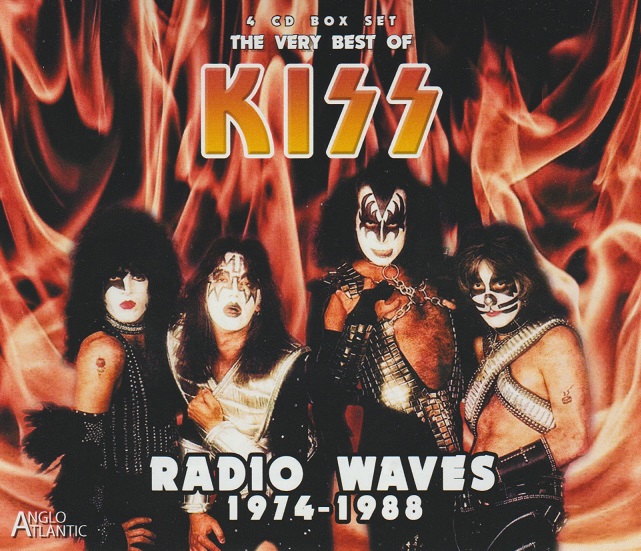
 – The Ritz, NYC, 12th August 1988 (from 4 CD set Radio Waves 1974-1988) (2015 American Icons broadcast release)

At last, we are at the end of the Crazy Nights era.  Radio broadcasts are the next best thing to a bootleg.  Actually, strike that.  Radio broadcast CDs are often better than bootlegs.  The audio is usually decent because it’s a professionally recorded broadcast.  They are almost always cheaper than an equivalent bootleg CD too.  Broadcast discs are easily found on various Amazon sites and all over Ebay.  Thanks to their abundance, sometimes you can even choose from multiple releases of the same concerts.

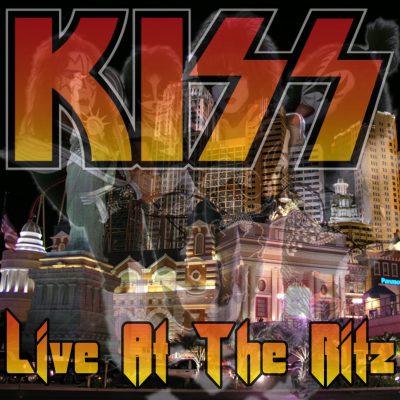
One such show is Kiss’ 1988 performance at the Ritz in New York in 1988.  It’s a tight, hot Crazy Nights recording, but there are pros and cons to the different releases.  There was a 2013 Gold Fish release of the Ritz concert, called The Ritz on Fire, reviewed here.  Fans immediately noted that “Reason to Live” was missing, although others had “Reason to Live” on different releases.  In fact The Ritz on Fire is missing two songs:  “Bang Bang You” is the other.

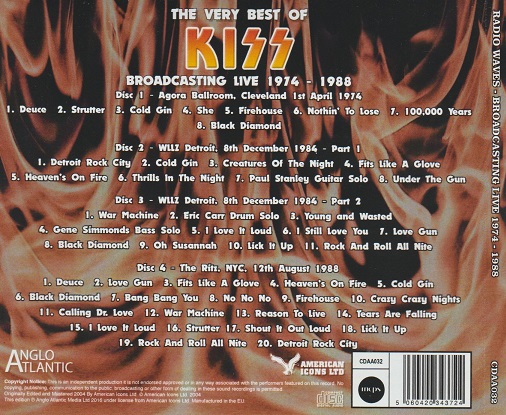
To get all the songs, one recommended version is the 4 CD set The Very Best of Kiss – Radio Waves 1974-1988.  Inside you will get:

  • Disc 1:  Agora Ballroom, Cleveland, April 1 1974.  We reviewed a better version of this show with bonus tracks from ABC In Concert and the Mike Douglas Show.
  • Discs 2 & 3:  Animalize Live Uncensored 1985.   Missing some of the stage raps, but including all the songs from the original VHS release.
  • Disc 4:  The Ritz NYC 1988.  All the songs, but missing some of the stage raps.

Nothing’s perfect.  These broadcasts are quirky that way.  You can buy Radio Waves 1974-1988 to get all the songs from the Ritz show, but not all of Paul’s stage raps.  You could, of course, compile the best of the two versions together into one custom complete concert.  The sound quality is virtually the same.  What about an official release?  The only Kiss-produced media of this concert is a rare 11 song bonus DVD that came with Kissology Vol. 2, but only at US Best Buy.

Regardless of which version you buy, this concert has a good reputation with fans and it is easy to hear why.  Eric Carr and Bruce Kulick rose to the challenge and gave a Kiss a hard, professional sheen.  Meanwhile, behind the curtain stood Gary Corbett, thickening up the sound with additional  keyboards and backing vocals.  Paul Stanley was in his prime, hitting notes only dogs could hear.  Meanwhile Gene Simmons was present in body if not spirit.  Notably, “Shout it Out Loud” was performed at the Ritz, making it a rare 80s appearance of that song.  “Dr. Love” was also something of a rarity at the time.

Choose according to your own preferences, but don’t be afraid to pick up some version of Kiss at the Ritz.

Today’s rating:

4/5 stars

Original mikeladano.com review:  2014/01/27

GUEST REVIEW: Rush – “Distant Early Warning” (1984) by Aaron Lebold

I asked Aaron Lebold if he wouldn’t mind throwing in a few words about “Distant Early Warning” for my Grace Under Pressure review.  He sent me 772 words!  So here’s an entire separate post for you — Aaron Lebold on “Distant Early Warning”.


RUSH – “Distant Early Warning” / “Between the Wheels” (1984 Anthem)

by Aaron Lebold

Mike has asked me to do a review on the song “Distant Early Warning” by Rush.  When I first met Mike I quickly realized that Rush was one of his favorite bands,* and though he showed me a lot of their work, this song was the one that always stuck out to me the most.

My interpretation of the song may be a bit different now than it was when I first heard it; one of the greatest things about music is that its personal meaning can shift depending on what is going on in your own life.  I find musical interpretation to be completely personal, and what you take from it may be completely different than what the artist even intended.**

I was always reluctant to hear the artists of the songs I enjoyed explain them, as it could feel very crushing if the impact it had on me was not the actual meaning. I will explain what this song means to me, but that doesn’t mean I’m right.  It does mean that I am able to see why it had relevance to me, and if you have found a different interpretation, you are not wrong.

“An ill wind comes arising, Across the cities of the plain, There’s no swimming in the heavy water, No singing in the acid rain, Red alert, Red alert”

To me this is the ability to foresee an event, there is a metaphoric storm on its way, and it is serious enough for us to stop our own distractions, and unhealthy coping strategies in order to prepare for what is ahead.

“It’s so hard to stay together, Passing through revolving doors, We need someone to talk to, And someone to sweep the floors, Incomplete,  Incomplete”

This talks about the separation among us as people to me; we all tend to find our own paths and some of us become relevant to each other, where others become lower class, and we may see them as nothing more than the person who is sweeping the floors for us. This type of discrimination makes us incomplete as a human race.

“Cruising under your radar, Watching from satellites, Take a page from the red book, And keep them in your sights, Red alert, Red alert”

This again is a reference to having greater insight than others may possess. Being able to observe a situation undetected and being able to gather forethought about what the results may be.  The Red Book is a reference to Psychology, and this suggests using that manner of thinking as you move forward.

“Left and rights of passage, Black and whites of youth, Who can face the knowledge, That the truth is not the truth, Obsolete, Absolute, yeah”

To me this makes reference to our way of thinking, and things we may have misinterpreted as priority.  Rights of passage is the idea of moving from one group to another, and relates to social classes and advancement. Separating the races of children is another method of creating a divide.  The truth could refer to the idea that we are all one class and one collective  group of people, and that a lot of our perceptions are obsolete in the big picture.

“The world weighs on my shoulders, But what am I to do? You sometimes drive me crazy, But I worry about you”

To me this means that even though I may have my own problems, and I don’t always agree with someone’s actions, I still care for them and can’t help but notice when they seem to be heading in a bad direction.

“I know it makes no difference, To what you’re going through, But I see the tip of the iceberg
And I worry about you”

This basically means to me, that I am aware that my insight does not change your situation, but I can see the bigger picture and it makes me worried about how it may end up affecting you.  The Tip of the Iceberg is of course a reference to the Titanic, and how there is much more lurking under the water than is visible from the surface. The results can be potentially devastating, as they were for the historic vessel.

I can’t recall exactly what drew me to this song when I was younger, and I may have interpreted things differently back then, but the bottom line is that I found relevance and importance in the lyrics.  You may have a completely different take on this song, which is great.  The best thing about music is using it to find our own connections, and get us through our own lives.

Aaron Lebold


* So he thought.  In 1994 I was still a Rush poser.  I only owned Chronicles.  


** “Distant Early Warning” was written about the loneliness of someone who worked the DEW Line- a system of radar stations in the far northern Arctic region of Canada set up to detect incoming Soviet bombers during the Cold War, and provide early warning of any sea-and-land invasion. – wikipedia

REVIEW: Rush – Grace Under Pressure (1984)

Part one of a two-parter.

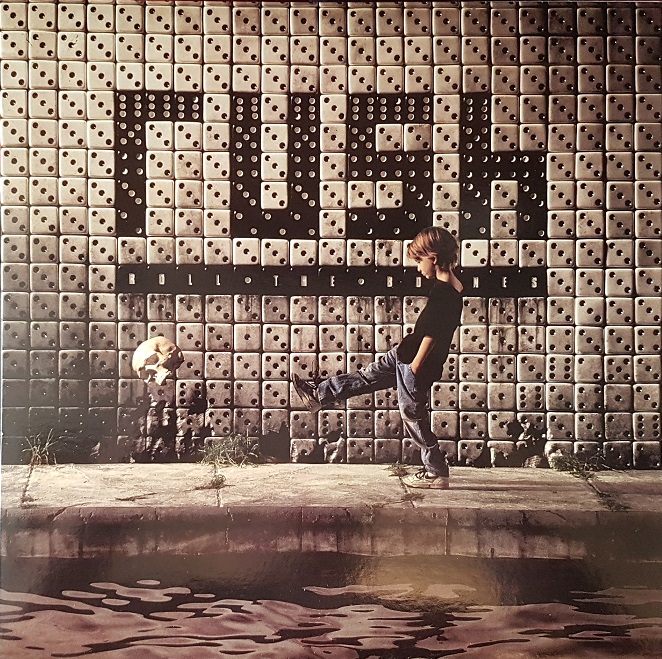
RUSH – Grace Under Pressure (1984 Anthem, 2011 Universal remaster)
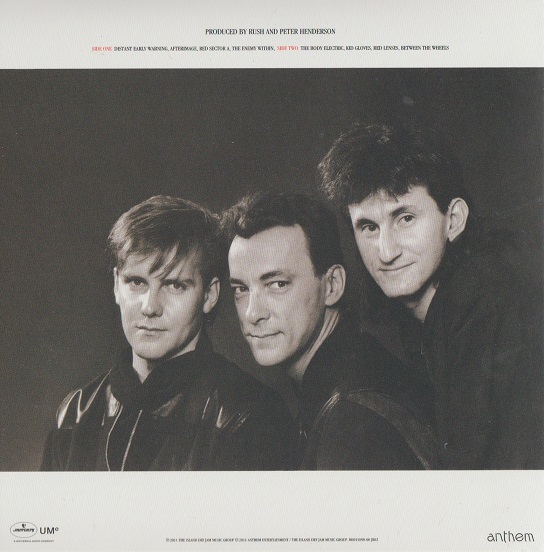
When Rush followed 1982’s synth-driven Signals, they said goodbye to producer Terry Brown.  The band weren’t satisfied with the sonics of Signals and wanted to try working with different people.  They chose Steve Lillywhite, who wasn’t available, and so used Peter Henderson.  The album Grace Under Pressure was one of their most difficult to make.  Perhaps this is why it has such a cold, dark aura.

Even if Grace Under Pressure has a downer vibe, the first side is excellent.  Few albums have a strong an opener as “Distant Early Warning”.  Rush’s recent penchant for keyboards is front and center.  It also boasts one of their most catchy choruses:  “I see the tip of the iceberg and I worry about you.”  This single is a perfect storm of hooks, tension and biting guitars.

The album as a whole shows new influences.  “Afterimage” has a contemporary 80s new wave sound, but “Rushified”.*  Alex Lifeson in particular seemed to draw new influence from Andy Summers of the Police.  Reggae and ska became a part of the band’s arsenal, with Lifeson deftly handling those enigmatic chords.  “The Enemy Within” is one track that shows off these tricky new rhythms, in a frantically rocking way.  Synths and sequencers are a part of the picture on “Red Sector A”.  This post-apocalyptic track utilizes robotic rhythms to paint a picture of a future world.  “Are we the last ones left alive?  Are we the only human beings to survive?”  The lyrics are actually inspired by Geddy Lee’s mother, a holocaust survivor.  With the digital pulse beneath, you could just as easily imagine it’s about The Terminator.**

The second side also has memorable tracks such as “The Body Electric”.  This number definitely has a Blade Runner-like future setting.  “One humanoid escapee, One android on the run, Seeking freedom beneath the lonely desert sun.”  And how many songs can you name with lyrics in binary?  A lesser Rush song, “Kid Gloves”, is upbeat but not legendary.  “Red Lenses” is also somewhat forgettable, except for Peart fans who will savour every little moment of exotic and electronic percussion.

Rush saved the longest track for last, “Between the Wheels”, a melancholy but challenging track that reminds of the old school progressive Rush.  Backing guitars are exchanged for keyboards, but Lifeson uses the guitar to make unorthodox sounds.

It’s unfortunate that Grace Under Pressure has a brittle and icy production.  While that definitely works on “Red Sector A” and “Distant Early Warning”, one wonders what side two would sound like if it were a little fuller.

4/5 stars


* “Rushified” is a word coined by Paul Rudd in the film I Love You Man.

** Aaron Lebold will return tomorrow to discuss Rush lyric interpretation.

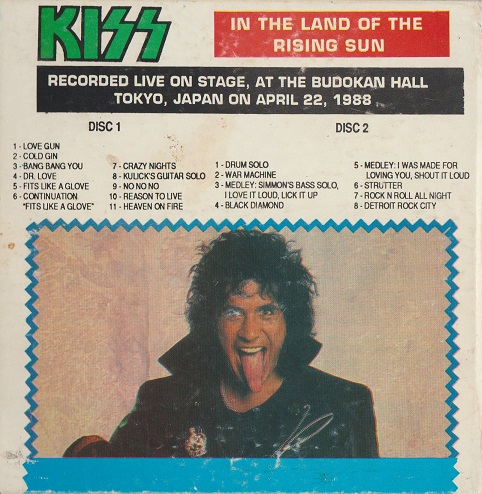
REVIEW: KISS – In the Land of the Rising Sun (live 1988 bootleg)

The KISS RE-REVIEW SERIES Part 33

 – In the Land of the Rising Sun (Big Boy Records bootleg from 1988 tour)

If you are in the mood for some live Kiss from the late 80s, then your journey might just come to an end here: Kiss at the Budokan, Tokyo Japan, April 22 1988. It’s not the last live Kiss from 1988 that we’ll examine, but it’s decent.  This 2 CD set boasts a more extensive track selection than Monsters of Rock, recorded in Germany in August.  It’s an audience recording, but above average quality.  It sounds like it is sourced from a previous vinyl generation.

In Germany, Kiss opened with “Deuce”, but in Japan, they didn’t even play it.  Instead they opened with “Love Gun”, chased immediately with some “Cold Gin”.  Therefore, it’s cool to have a couple bootlegs from this tour, to get a broader range of songs.  Japan also heard “Bang Bang You” from Crazy Nights.  Not a highlight to be sure, but a rarity that Kiss fans will want in their bootleg collection.  In a strange twist, “Fits Like a Glove” is split into two tracks, just like it was on the Germany CD, made by a completely different company.

Bruce Kulick’s solo before “No No No” is much longer, leading us to think that the solo on the Germany CD was edited for length.  This is the one to check out, to hear what kind of solo Bruce was playing in 1988.  Kulick is continuously impressive.  He always does justice to the original Ace Frehley (or Vinnie Vincent) ideas, but by playing his own solos with the right feel.  His technique is all but flawless.  This disc also has the Eric Carr drum solo and Gene’s bass solo intro to “I Love it Loud”.

There are plenty of tunes here that either weren’t played in Germany or just weren’t on that CD:  “Bang Bang You” (see above), “Calling Dr. Love”, “Reason to Live”, “War Machine”, “Lick It Up”, “I Was Made For Lovin’ You”, “Shout it Out Loud”, and “Strutter”.  “I Was Made For Lovin’ You” hadn’t been played live since 1980.

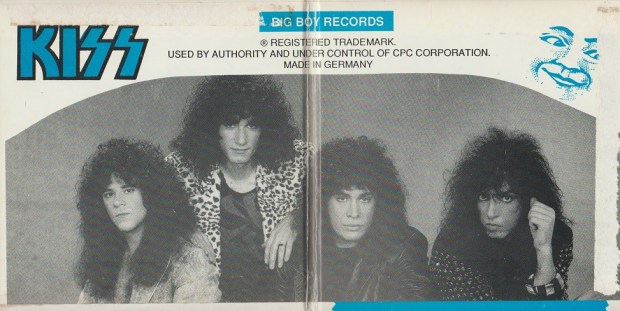
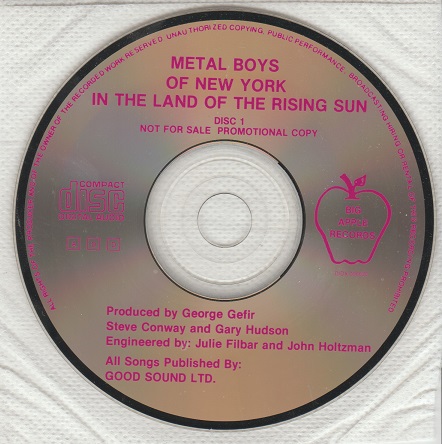
Almost every bootleg CD I own has some amusing mistake or quirk that I enjoy picking out.  This has a couple.  The label can’t decide if it’s named “Big Boy” (inner sleeve) or “Big Apple” (disc itself).  There are three “producers” and two “engineers” credited, for a bootleg CD.  I guess Eddie Kramer wasn’t available.  Kiss is credited on the disc as — not Kiss! — as the “Metal Boys of New York”!  Finally, in order to appear that nobody was making money off Kiss’ back, it is claimed on the CD that this “promotional copy” is “not for sale”.

Don’t let that deter you.  Buy it if you find it.

3.5/5 stars


REVIEW: KISS – Monsters of Rock (live 1988 bootleg)

The KISS RE-REVIEW SERIES Part 32

 – Monsters of Rock (Mistral Music bootleg from 1988 tour)

Oh, live bootlegs!  A fascinating and labyrinthine assortment of live Kiss bootlegs are out there, but don’t always expect the covers and song titles to match the actual contents!  Kiss didn’t release a live album from the Crazy Nights tour, as was expected by many fans.  An old Faces magazine from 1986 proclaimed, “Already there is talk of the next studio album, and Alive III.”  Instead we have numerous bootlegs from this period to sift through.

This CD is without any notes, but fans pieced together that it’s Schweinfurt, Germany, August 27 1988.  Kiss opened with “Deuce” rather than “Detroit”, and the energy is electric.  Bruce Kulick did a fine job of adapting his style to the old Kiss songs, and “Deuce” demonstrates that Bruce really was the right guy for the band.  He’s awesome but he plays for the song and not himself.  “Love Gun” is next, truly an awesome song, and with Paul at the peak of his vocal prowess, it rarely sounds better.  Meanwhile, Eric Carr sings the backing vocals impeccably, but there’s an annoying electronic drum that he hits at the end of it, a very 80s touch that wasn’t necessary.

The Kiss classics you’ve heard a million times are great as always, but what about the newer material from Crazy Nights?  It takes a while to get there.  “No No No” and “Crazy Crazy Nights” are crammed back to back in the middle of the set.  “No No No” acts as Bruce’s big solo too, which is fantastic, but the song isn’t.  It’s a shambles, as if they don’t know exactly how to play it.  “Crazy Crazy Nights” is much better, almost a classic.  They follow that up with the also-recent “Tears are Falling”.

One cool surprise is a bit of “Heartbreaker” right before “Fits Like a Glove” which is strangely split up between two tracks.  Another surprise is obtrusive keyboards.  Since Kiss had an offstage keyboardist now, maybe they felt like they had to use him on songs like “Cold Gin” that totally do not need keyboards.  In fact it’s like oil and water.  The keyboards roll off the rock and roll like an annoying rain storm.

The CD has some audio issues, odd noises here and there.  Ignore the track list on the back which is nonsense.  You’ll find the real track information below for your convenience.  At least the back cover credited keyboardist Gary Corbett, surely a rarity.  For a real howler though, check out the front cover.  That’s not Bruce, and that’s not 1988!

With all respect to Ace Frehley, the originator and influencer, I think Bruce Kulick is the finest guitar player that Kiss ever had.  His solo career is certainly worth investigating, and so is live Kiss from his time in the band.  Monsters of Rock is difficult to recommend over others, but if you find it within your price range, go for it.

3/5 stars