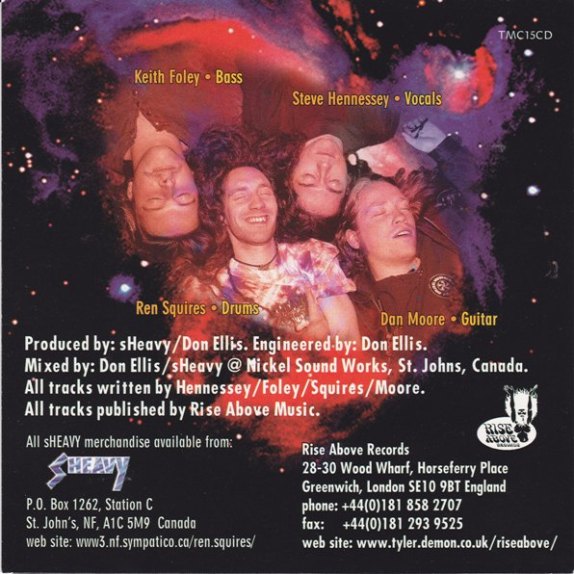
Back then in the olden days, you were actually expected to type that whole url into your browser!
RECORD STORE TALES Part 204: An Introduction to sHEAVY
MARCH, 2000. Saturday night. One of our store owners was throwing a house party. Tom, being the usual musical selector at parties, put a cassette on for me. He rewound to the beginning and hit “play”.
“Mike,” he said, wild-eyed with excitement. “One of my customers gave me this tape. It’s the new Ozzy. It’s not out yet. This is a bootleg copy.”
This intense, guitar heavy distortion faded in. The voice, also distorted and processed, was a dead ringer for a young Ozzy!
“Ozzy’s singing great, isn’t he?” Tom inquired mischievously.
“That’s not Zakk Wylde on guitar,” I retorted. “I’d know if it was Zakk, and that guy’s not Zakk.”
Tom faltered. “That’s, uhhh, the new guy.”
I called bullshit. “This isn’t Ozzy. It sounds a hell of a lot like early Sabbath, and it’s really good, but it’s not Ozzy.”
“Fuck!” Tom spat out. “I can’t believe you got it so fast. When I heard it, I truly thought it was new Ozzy at first. At least the way the new Ozzy should be, you know what I mean? Hear all that fuckin’ Sabbath going on there?”
I did indeed hear all the Sabbath going on. In fact, of all the bands that people hyped to me as being “Sabbath-y”, this band came closest.
The band is from St John’s, Canada, and they are called Sheavy. They kicked serious ass. The album we were listening to was 1998’s The Electric Sleep. The song: “Virtual Machine”. Often found on many bit torrent sites as a “lost” Black Sabbath reunion song. It is not. It is Sheavy, and that’s how close they nail the vintage Black Sabbath sound.
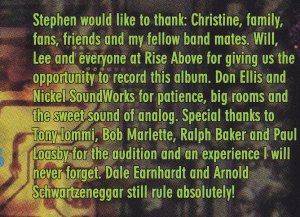 The singer is a fellow named Steve Hennessey, and according to the CD booklet, he once had an audition with Tony Iommi and Black Sabbath’s then-producer, Bob Marlette! What could that have been for? An Iommi solo album, or Sabbath itself? The CD doesn’t reveal. “Special thanks to Tony Iommi, Bob Marlette, Ralph Baker and Paul Loasby for the audition and an experience I will never forget,” is all it says! He nails every inflection that Ozzy used to do, it’s that uncanny.
I marveled at the music, and decided to buy it the next day. I ordered it from Amazon along with Jalamanta, the first solo album from then-Fu Manchu drummer Brant Bjork. (Even though I worked in a record store, there was no point in trying to order obscurities like these through our supplier.) When they arrived, I was blown away by both. I occasionally brought Sheavy to the store to play at work, and many people asked if this was the new Sabbath or the new Ozzy. “Nope,” I’d say. “This is a band from Newfoundland and Labrador called Sheavy. They’re awesome.”
Unfortunately for a Canadian band, their albums were really hard to find! A little while later, I picked up the next album, Celestial Hi-Fi, on Japanese import, from HMV. The bonus track “Nine December” is an asskicker that made it worth the extra cash. They’re just an awesome band, and they grew past the Sabbath-clone tag after a couple albums. Unfortunately, toiling away in relative obscurity for almost 20 years has taken its toll, and the band’s future is uncertain. For that reason I’m grateful they’ve left many great albums behind.
Tomorrow, we’ll look at The Electric Sleep in a detailed review. Check back soon.




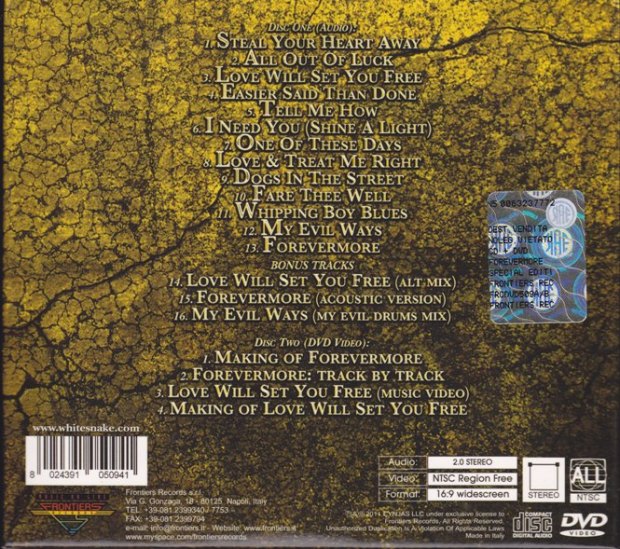
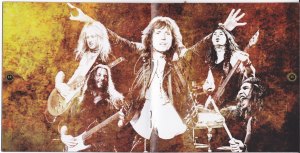 You can definitely hear an urge from Coverdale and Co. to keep everything loosely based on the origins of Whitesnake. You get a lot of bluesy rock, a lot of soul singing from one of the best there is, and some serious groove. On the whole, this album sounds like a growth from the last album, the solid but safe Good To Be Bad. Good To Be Bad was a decent album, but very “safe”. It did not stray much if at all from the classic Whitesnake 1987 sound, complete with guitar solos from the John Sykes School of Axe Wizardry. Now Whitesnake are stretching out more, and dropping a lot of the Sykes-isms. If the last album was a debut album of sorts, this one definitely sounds like the more confident second album.

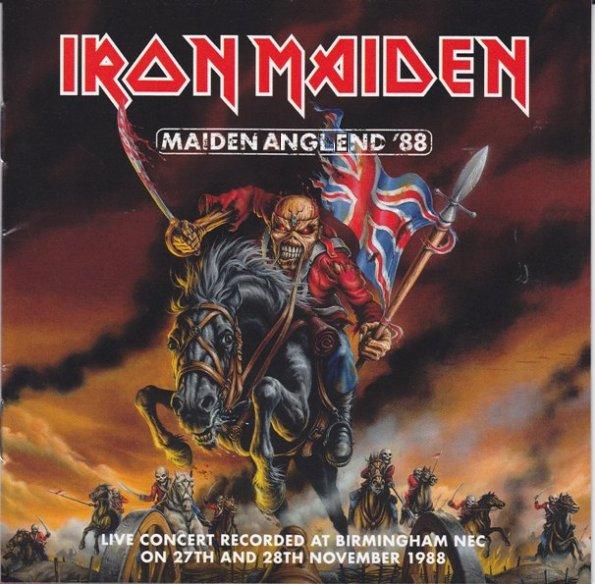





 I still think of CDs in terms of being albums, of having a “side one” and a “side two”, and to me this sounds like a natural break between two album sides. I like side one, but side two wears on me. The title track has a wicked wicked cool sounding guitar solo, but it’s just one lick that repeats four times. Typical 90’s simplicity. Then there’s “Gretna Greene”. The lyrical matter is that of abuse, but unfortunately this very important subject is relegated to the back seat by the title of the song. Yes, it’s an O.J. Simpson trial reference. That wouldn’t matter so much if the music stood up, but this song is pretty boring. They stay that way until “Human Crate”, which is slower but a really cool song with powerful vocals. The album ends with a ballad, “In A World of My Own Making”. For the first two minutes it’s just a piano, and Rob. It’s a side of Halford rarely heard. Then the band comes in, and it becomes a slant on “Beyond the Realms of Death”. Except…with flat sounding drums and brittle guitars.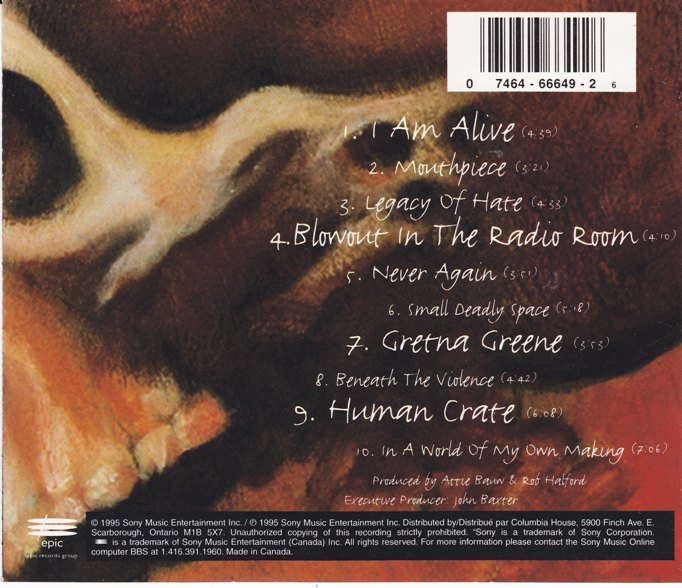




 I believe I am well on record as not being a fan of remixes in general. There
  I’ll be honest, I struggle getting through the remix side in one sitting. There are some cool moments, such as the chance to hear isolated instruments and solos. “Vicious” is an example of a remix that works for me. It’s weird, it has an opera singer and dance beats added, but it’s pretty heavy and cool. But in general, the Fight songs were simple and repetitive to begin with. Making them simpler and more repetitive didn’t work for me. Sure, I own some Nine Inch Nails albums, but this sound isn’t where my heart lies.


 mikeladano.com