heavy metal

REVIEW: Skid Row – Slave to the Grind (both versions)

SLAVE TO THE GRIND_0001

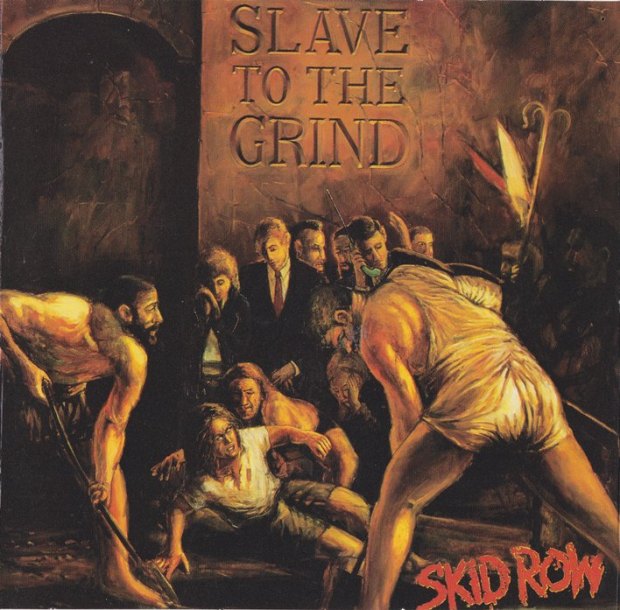
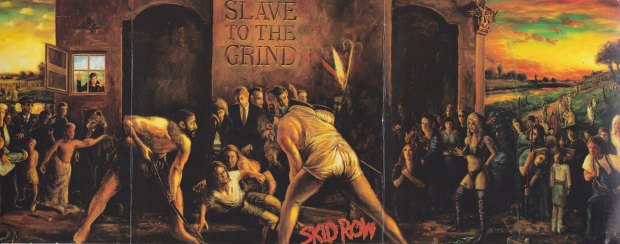
SKID ROW – Slave to the Grind (1991 Atlantic “clean” and “dirty” versions)

The Skids knew the second album had to kill. The band, always heavier live than the first album implied, also knew the second album had to sound more like they did in concert. And following up a huge hit debut, they also demanded the album be all killer, no filler. Raising the bar and ignoring the record company, the band re-convened and kicked every ass in the room. The result is Slave to the Grind, one of the best hard rock albums of ’91 period.

The first single “Monkey Business”, which is essentially just dirty grooves n’ screams, was about as commercial as the album got.   With this as first single, it was clear that Skid Row didn’t care whether they got played on MTV or not.  There was nothing glossy or slick about it.  It’s still obvious that there’s something special here, and I credit that to two factors:  the songwriting talents of Snake Sabo & Rachel Bolan, and the frontman chops of Sebastian Bach.  Bach commands this song.   It’s not just his vocals.  It’s his confidence, his swagger, and his ego shining through.

If “Monkey Business” didn’t scare your little sister, then the second single “Slave to the Grind” definitely did.  For the first time, Skid Row jumped straight into the thrash metal deep end.  Drummer Rob Affuso had the chops to do it, and it really was a natural step to take.  Other bands were getting heavier in 1991 too, but none of them took a turn like this.  Skid Row raised the bar for everyone in their field in ’91.

The other singles from the album were technically “ballads”, although the band were eager to point out that none of them were anything like “I Remember You”.  They were dark and edgy.  The record company execs no doubt shit their pants when they heard the magnificent “Wasted Time”, which I can only describe as epic.   It’s an incredible song, and it’s one of the few that Bach had a hand in writing.  Baz wrenches all the emotions from his soul and that’s what I hear coming from the speakers.   “Quicksand Jesus” and “In A Darkened Room” are only a little less impressive.  They share the same kind of mood and sonic landscape.  There is really nothing commercial about any of them.  They all have headbanging moments and integrity.

Rounding out the album were several very strong deep cuts.  “The Threat”, track 3 on the disc, easily could have been a single.  In fact Terry David Mulligan of MuchMusic asked Sebastian if it was going to be selected as a future video, so I’m not alone in thinking that.  “Psycho Love” is a bangin’ bass groove, laid to waste by Bach’s scorching vocal.  “Livin’ on a Chain Gang” is another standout, an angry one about injustice.  Then you have slow, landmine-infested blasters like “Mudkicker”, and fast smokers like “Riot Act”.  All strong songs.  The only one I’m not keen on is “Creepshow”, a jokey tune about the kind of people you’d see on daytime talk shows.

SLAVE TO THE GRIND_0003Skid Row knew well ahead of time that some markets would not release an album with a song called “Get the Fuck Out” on it.  This fun punk rocker sounds like a Rachel song, but Bach’s attitude nails it.  It’s probably a bit of a novelty, but it’s fun.  “Fuck you if you can’t take a joke!” says Bach in one line.  But it’s OK: if you can’t take the joke, you can buy the version of the album without “Get the Fuck Out”.  Earlier pioneers in the clean/dirty dual releases, Skid Row saved the song “Beggars Day” for the Walmart version of the album.  (Also sold by Columbia House in Canada.)  I think it’s cool that they gave both markets added value with exclusive songs.  This song is more traditional metal (perhaps Priest-like) than the rest of the record, but it’s equally strong.

Michael Wagener produced this album with a raw, unpolished finish.  But there are backing vocals where you need ’em, and the instruments are clear and in your face.  It still sounds heavy today, unlike a lot of other music from the same year.  It just seems like everything clicked, and all the factors were in place.  Slave to the Grind kicks ass with the best of them.

4.5/5 stars

REVIEW: Ozzy Osbourne – Bark at the Moon (2002 Remixed version)

Happy Hallowe’en! AAHOOOOOOOH! Bark at the moon!

OZZY OSBOURNE – Bark at the Moon (2002 Sony, unadvertised remixed)

Much like Diary and Blizzard, when Bark At The Moon was reissued in 2002, it was also remixed. People who own my preferred edition of this beloved Ozzy classic have noticed the unadvertised remix. (There was no sticker on the cover indicating this album was remixed, and it was also ignored in press releases.  The liner notes claim this was mixed by Tony Bongiovi, like the original.) Why this was done is a mystery to me, I’ve never read anything about it. All I can say is that you’ll notice particularly on Jake E. Lee’s solos, the overall sonics, and some keyboard parts as well. The ending to some songs, and the beginnings of others are very different.  Maybe Ozzy thought the album sounded dated?  The remix seems as if they were trying for the drums and effects to sound “current”.  Which is silly, of course.  This year’s “current” is next year’s out of date, but classic will always be classic.

Either way, the original mix of Bark has been an underdog favourite for many years.  Ozzy seems to really want to bury the Jake years.  He only plays the title track live, none of the other songs. Granted, “Bark at the Moon” is clearly an outstanding track.  There are still some lesser-known classics here equally good as the album tracks on Diary or Blizzard. For example, “Rock ‘N’ Roll Rebel”. This riff monster sounds like the natural successor to some of the best moments on Diary. There are a ton of great songs here. “You’re No Different”, which is one of those great Ozz slow burners is another one. I’ve always liked “Slow Down” and of course “Waiting for Darkness”. Ozzy had gothed out his sound a lot more on this album and you’ll hear a lot more keyboards and even strings.

Ozzy was in a bad place back in ’83.  Still hurting from the death of Randy Rhoads, Ozzy was forced to audition players again, a process he hated.  Jake E. Lee (ex-Ruff Cutt) was selected, perhaps due to his ability to meld white hot riffs with neoclassical shredding.  Bassist Bob Daisley returned, as did drummer Tommy Aldridge, who had played on the last tour.  Don Airey returned for keyboard duties, creating a spooky atmosphere for the Ozzman to prowl.

And prowl he did.  This is a hard rocking album, probably harder than the two Rhoads discs.  It is also a dark sounding album.  Blizzard has a lot of musical joy on it; you can hear that these guys were stoked to be playing those songs.  Bark sounds a bit tired by comparison, a bit like a druggy haze.  “Now You See It (Now You Don’t)” is an example of a song that has all these qualities.  It has a hard, almost Sabbathy guitar riff, but is cloaked in darkness.

“Rock ‘N’ Roll Rebel” is the most upbeat song.  Who doesn’t like a song about rebellion in the name of rock and roll?  It also has obvious references to the TV preachers who were out to get Ozzy at the time, so the song is like a big middle finger from Ozzy.  “I’m a just a rock ‘n’ roll rebel, I’ll tell you no lies.  They say I worship the devil, they must be stupid or blind.”

Then you have the jokey weird ballad, “So Tired”.  At least that’s how I heard it then, and still hear it now.  The video seems to emphasize the jokey aspect.  Who doesn’t love to see Ozzy dressed up as monsters?  As far as the song goes, I have no idea what they were thinking at the time.  Maybe it was the drugs?  Another weird thing — even  thought I think the song is a joke, I love it!

As mentioned, since the remix changes the sound of the album and swaps out solos here and there, pick up one of the earlier CD editions. The 1995 remaster is pretty good; it contained the B-side “Spiders” (sometimes written as “Spiders In The Night”).  Unfortunately even though it’s a well sought rarity, it’s not one of Ozzy’s better songs. It’s an obvious B-side. Better (because it’s funnier) is “One Up The B-Side” which makes its CD debut on this edition. “The bent overture”. Heh.

Now that Ozzy and Sharon have seen the light and finally reissued the original mixes of Blizzard and Diary, one can always hope for a long term Ozzy reissue program. I’d like to see the original mix of Bark At The Moon made available again. I think it’s a shame that Ozzy seems to have disowned most of the Jake E. Lee era. Jake was and remains a great guitarist — check out his work on the incredible Badlands album.

4.5/5 stars (original)
3.5/5 stars (remix)

REVIEW: White Lion – The Best Of (1992)

WHITE LION – The Best Of (1992 Atlantic)

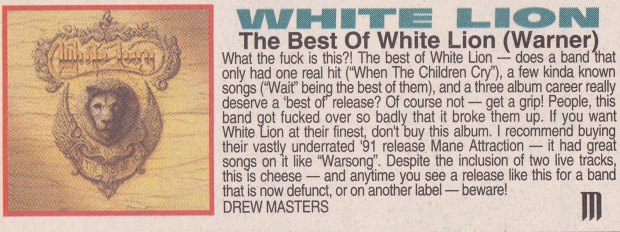
I’m going to keep it short and sweet this time, and defer to a 1992 review by M.E.A.T Magazine’s Drew Masters (issue 38, Nov. 92):

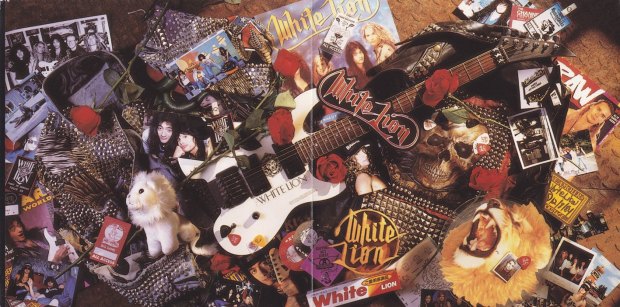
BEST OF WHITE LION_0001

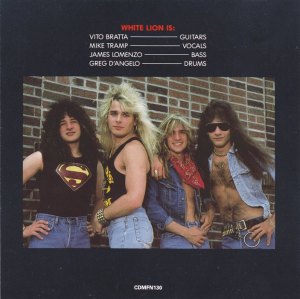
He’s right.  I don’t agree with the single M rating though; these are mostly good tunes.  They’re sequenced awkwardly as fuck though.  The flow on this disc is just completely fucked.  The songs don’t work in the sequence they’re in.  And Drew is correct in inferring that many of White Lion’s prouder, heavier moments are missing.   Vito smokes on the live tracks, but Tramp can’t hit the notes.  Buy Pride, not this.

2/5 stars

REVIEW: Blaze – Silicon Messiah (2000)
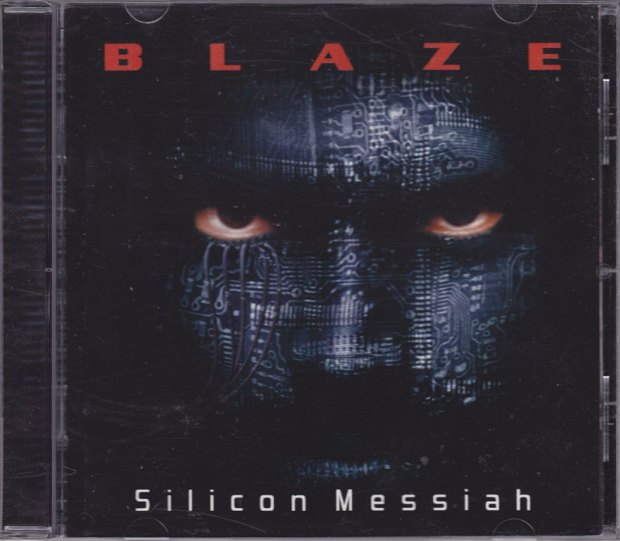
BLAZE_0001BLAZE – Silicon Messiah (2000 SPV)
It took Blaze Bayley a couple years to bounce back with a new band and album, and given the fan reception to his work with Iron Maiden, I was skeptical.  I didn’t shell out for the Japanese, but I did grab the domestic CD as soon as a copy arrived in our stores.  I was pleasantly surprised, as Blaze’s debut solo release Silicon Messiah is a very heavy and memorable disc.

The weakness for some will be Blaze’s voice.  You either like it or you don’t.  Outside of the context of Iron Maiden, his deep vocals work better.  The opening track “Ghost in the Machine” for example is a de-tuned chugger the likes of which Maiden wouldn’t do.  Blaze’s vocals work better with this kind of low, growly metal.  Fortunately there is still enough melody (on the killer chorus) and riffage to keep heads banging.  And no wonder: the CD is produced by metal master Andy Sneap, who laid waste to several excellent Accept albums recently.  Blaze wrote the music with his new eponymous band:  Steve Wray and John Slater (guitars), Jeff Singer (drums), and Rob Naylor (bass).  The band is somewhat faceless, aside from Blaze himself there’s nothing identifiable about the band.

If there is a weakness to Silicon Messiah, it’s that there is a certain sameness to the songs.  It’s a bit homogeneous:  grinding, de-tuned riffs, melodic choruses and solos, with powerful but low vocals.   Fortunately Blaze has written some surprisingly decent lyrics to go with the songs, with several seeming to fit together into some kind of cyberpunk concept.

Highlights:

  • “Silicon Messiah”, perhaps the most Maiden-like track.
  • “Born as a Stranger”, also Maiden-like (think “Be Quick or Be Dead”); speedy goodness.
  • “The Brave”, another fast one that kicks all the asses in the room.  “Fortune favours the brave” indeed.
  • “Identity” which boasts lots of tasty guitar bits along with loud and quiet parts.
  • “The Launch” which is essentially “Man of the Edge” by Iron Maiden re-written (but with a better chorus).
  • “Stare at the Sun”, your typical Maiden-inspired epic closer.

Blaze Bayley, his band and Andy Sneap created a pretty decent metal album here.  It’s perfectly listenable throughout, if a bit anonymous sounding.  Fans of Blaze will dig it.

3.25/5 stars

REVIEW: Europe – Europe (1983)

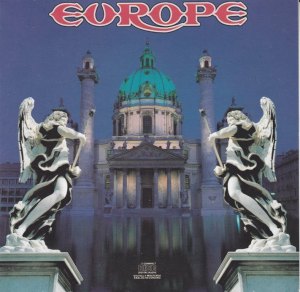
EUROPE_0001EUROPE – Europe (1983 CBS)

Summer 1989.  My buddy Bob showed up at the door.

“Mike!” he began.  “They have a Europe album you don’t have down at Sam the Record Man.  You should get it, but it’s only on record.”

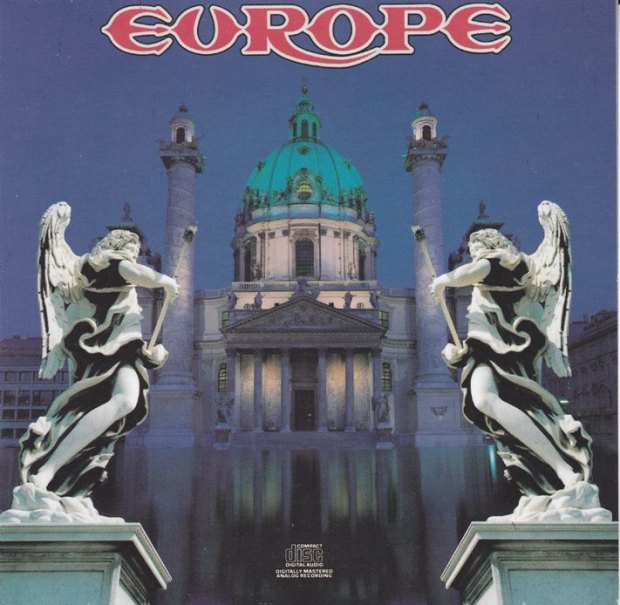
I knew Europe had albums prior to The Final Countdown, but I had never seen nor heard them.  Since my primary format was cassette back then, I passed on the vinyl version.  A few weeks later, Europe the album showed up in the new Columbia House catalog, so I ordered it on tape.  I had reasoned out that this was their first album, but the 1989 date on the back made it look like a new release.  In fact Martin Popoff even reviewed it as such in Riff Kills Man!, stating that the poodle hair and keyboards were “gone” and replaced by sheer heavy metal.  He’s right about the heavy metal, even if he had the order of the albums wrong.  Europe resembles the band of “Carrie” and “Rock the Night” only superficially.  This is a metal album, and a damn fine one at that.

The regal, thunderous riff of “In the Future to Come” should warn away anyone expecting power ballads.  This speedy UFO/Priest hybrid certainly took me by surprise.  Singer Joey Tempest’s voice was not the soulful powerhouse it would later become, but he was just a kid at the time.   The metal here is pure: no frills, no excesses, just steamhammer rhythm and a howling lead singer.  Throw in some ace John Norum guitar work and you have something to talk about.  His double-tracked solo might be reminiscent of Thin Lizzy.

“Farewell” is straightforward heavy metal, on the hard rock side of things.  Some may be off-put by the flat lead vocals, but I say, “Hey, it’s rock n’ roll.”  The song slams and the chorus is memorable enough for me.  Then “Seven Doors Hotel” changes the scene with a haunting piano opening…but it’s merely a fake out.  The speed metal riffing and wailing Norum are back.  Norum makes his Les Paul howl like Joey does at the microphone.  Even though there’s some neoclassical finesse to some of the music, I hear a bit of Phil Lynott in there too.

My favourite song then and now is probably “The King Will Return”.  The lyrics aren’t very good, but English wasn’t Joey’s first language.  I still enjoy the words, as it’s one of those medieval story-telling songs that I’m a sucker for.  This softer song is still pretty epic and wouldn’t be considered wimpy by anyone.  Side one was closed by the Norum instrumental song “Boyazont”.  I don’t know what a “boyazont” is, but who cares?  Norum instrumentals are usually ballsy and catchy, and this is no exception.

The second side is commenced by “Children of this Time”, which continues much in the vein of songs like “In the Future to Come”.  Then for a respite, “Words of Wisdom” has an acoustic verse.  That doesn’t make it a ballad!  No, this picks up speed for the chorus and continues to storm the gates of Valhalla like the rest of the album.  It’s a bit slower in pace, but the drums still hit like hammers while Joey howls at the thunder.  I think I can even hear timpani.  “Paradize Bay” (not sure why they spelled it with a z) is one of the album’s strongest cuts.  It’s a relentless battering ram with a chorus that hints at the grandness of Europe in the future.  Norum’s solo is sloppy but delicious.  “Memories” then closes the album on a frenetic note.  There are plenty of  “woah woah” vocals to go around, and drummer Tony Reno seemingly pulverizes his kit.  There’s another voice singing with Joey on the outro of the song; is this John Norum?

This album was self produced, and as such it sounds very raw.  But heavy!  Not all bands who self produced early in their careers managed to get results as good as those on Europe.   For 1983 and just a bunch of kids, this is damn fine work!  And it holds up.  It’s a headbanger.

5/5 stars

BOOK REVIEW: C.K. Lendt – KISS and Sell: The Making of a Supergroup

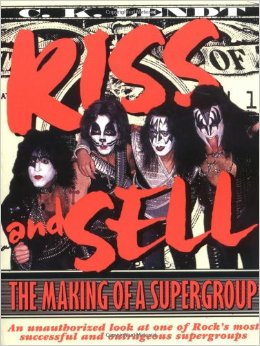
KISS AND SELLC.K. LENDT – Kiss and Sell: The Making of a Supergroup (1997 Billboard Books)

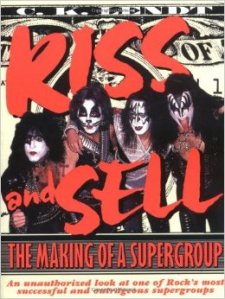
Chris Lendt used to be an accountant for Kiss’ management company (from ’76-’88), and according to him, quite close to the band. He spent a lot of time on the road, with the band, keeping track of the money.  The story he tells is amusing at times, off-topic at others, but also often critical of his former bosses.

Lendt distills Kiss’ legacy to profit/loss diagrams. At the same time, he tells a lot of stories about excess, touring, and groupies, but not a lot about rock and roll. If you are looking for the nitty gritty details about Kiss and the music, this is not the book for you. For that book, check out Black Diamond by Dale Sherman. If you want one person’s account of the inner workings of the Kiss business, then read on.

Lendt describes parties, extravagent budgets, and stage shows. Where things get really interesting in this book is when things start to go sour for Kiss, right around the time of the Dynasty tour in ’79. He desribes Gene’s plan for “Kiss World”, a traveling amusement park that was to play outside of Kiss’ concerts on that tour. Needless to say it never happened, but it’s not something that’s well covered in other books, at least in this level of detail. He talks about recording budgets, about Ace Frehley building a gajillion dollar home studio that was never used (and later turned into a swimming pool), about wigs (Gene’s), about gurus (Paul’s), and about desperately copying every move Bon Jovi made when they hit it big in ’86, before his company was fired by Kiss in ’88.

He also spends a bit too much time talking about Diana Ross, whom his company was also managing. There are too many pages about investments, stuffy boardroom meetings, profit margins, and budgets. While this book is very insightful, covering many details that nobody else was privy to, it’s not enough about rock and roll. I can’t even tell if Lendt really likes rock and roll. Certainly, he liked working for Kiss in the early years, and the touring, but the later years are marked by constant criticism.  (A bit like my own Record Store Tales, I guess.)

Pick up Kiss and Sell cheaply, read it and enjoy it; but please also pick up Dale Sherman’s Black Diamond, and Kiss’ own Behind The Mask. Both books are more about the music, and both books are actually surprisingly critical as well. All three together will be a very well rounded reading of the hottest band in the land.

3/5 stars. More if the author would stick to the topic!

GALLERY: Piles and Piles of Music

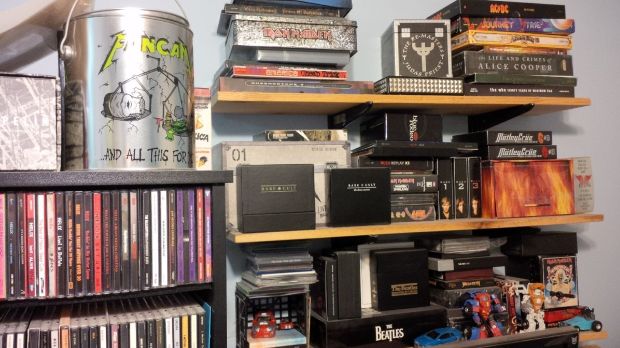
Nothing like getting a re-organizing project going, eh?  Especially when you’re a music lover like we all are.  Here are some pictures of things as they are now, before I begin.   The reason there are so many piles of discs out is because I’m out of storage space.  I will cleverly re-organize and create space, but the long term solution is that I’ll have more room when we move.  That plan has been delayed due to Jen’s illness but we’ll get there.

In the meantime, organizing and handling the physical product is really a labor of love.  It’s work too, but it’s a lot of fun.  It gives me an excuse to spend time with some old friends for a few hours!

You’ll probably recognize a few of the titles visible below from recent reviews!

REVIEW: White Lion – Fight to Survive (1985)

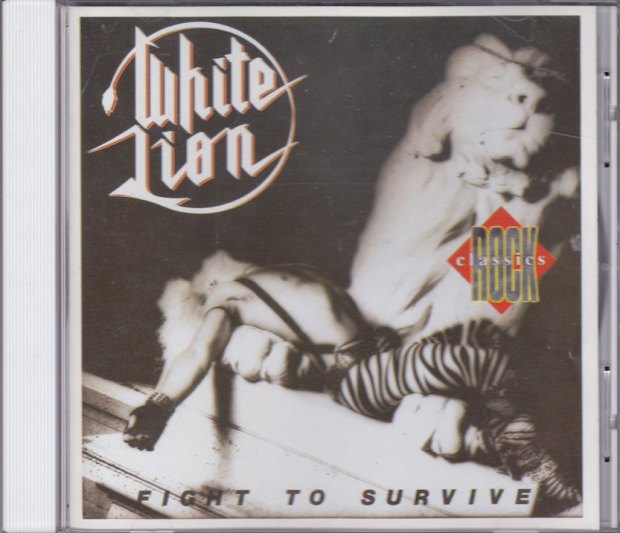
FIGHT TO SURVIVE_0001WHITE LION – Fight to Survive (1985 Music for Nations)

Growing up in the 1980’s, there were a lot of new bands coming out that we latched onto pretty quickly. White Lion was one. My buddy Bob probably liked them better than I did, but I was a fan too. Back in those days, I was the guy buying all the rock magazines, while he was starting out in college. I’d tell him all the latest rock news, what albums were coming out, and so on.

One afternoon we were chatting, and I had something pretty major to tell him. I had read a White Lion interview in Circus magazine, and it revealed something neither of us knew before: Pride was not the first White Lion album! They had done a previous, independent (and rare) record called Fight to Survive that we didn’t know existed. Even back then, Bob and I were collectors, so we sought that album with great vigor.

It took years for him to find it on cassette, and then several more for me to get it on CD. Now I have it, so let’s talk about it.

The opener is “Broken Heart”, which was re-recorded in ’91 for Mane Attraction. Perhaps this early version, sans keyboards, is the better of the two. Regardless, this had hit single written all over it even back then. The chorus kills and even though it has ballady verses, it also has enough balls to pump the fist in the air.  “Cherokee” is another one with a killer chorus.  The songwriting here isn’t perfect, or polished.  It has some clunky moments, but it definitely had something.  Unfortunately, the title track is a lame-o Van Halen rip off, trying to be something like “Mean Street” or something, but missing the mark.  The lyrics about shields and swords are out of place on an album with a song like “Broken Heart”.  Vito Bratta is ripping off Randy Rhoads rather than Eddie Van Halen on the solo, but he had really yet to evolve into the player he became.

FIGHT TO SURVIVE_0002“Where Do We Run” picks up on one of the albums themes:  great choruses (and guitar solos)  that don’t have a great song around them.  However, “In the City” has nothing much of anything going for it: it’s a real flaccid side closer.  Side two’s opener “All the Fallen Men” is much better, sounding something like a Dokken single.  This song is a standout.  The rhythm section of James LoMenzo and Greg D’Angelo had already established a good groove together.  Mike Tramp’s lyrics are not profound (nor would they ever be) but he’s trying.

“All Burn in Hell” is one of those choruses without a song.  “Kid of 1000 Faces” is a song without a chorus.  “El Salvadore” opens with a really cool classical guitar/eletric guitar duo.  This at least has an original sound, or at least for 1985 it was.  And the song itself?  Another great chorus just begging for a good song, a memorable riff — anything!  White Lion were really good at writing song fragments.  Finally, the piano-based ballad “Road to Valhalla” is one of the cheesiest, unconvincing “serious” ballads I have ever heard in my life.  Mike Tramp’s flat vocals don’t help the matter much, but this song is so cookie-cutter that it sounds as if taken from a handbook called How to Re-Write “Home Sweet Home” in Three Simple Steps.

Fight To Survive has a couple great songs, and several brilliant fragments.  If they’d tightened it up and put out five as an EP, we’d be on to something.  Unfortunately, Fight To Survive is only worth:

2.5/5 stars

FIGHT TO SURVIVE_0003

REVIEW: KISS – Alive 35: Live at Credit Union Centre, Saskatoon SK, Nov 10 2009

ALIVE 35_0001KISS – Alive 35: Live at Credit Union Centre, Saskatoon SK, Nov 10 2009 (Concert Online)

I would buy any “instant live” type CD by Kiss — that’s a given. The sheer quantity available means I will never own a complete collection of them. What I chose to do was buy a handful, selectively. I was most interested in Canadian shows, and of course concerts where new songs from Sonic Boom were performed.

Kiss’ concert in Saskatoon on November 10 2009 fit the bill perfectly.* Something about Paul Stanley shouting, “SASKATOON!” The new songs performed that night were “Modern Day Delilah” and “Say Yeah”, both personal favourites. As a bonus to me, there’s also a version of “Shock Me” with Tommy Thayer singing. Some Kiss fans have taken exception to Tommy singing this song in addition to wearing Ace’s costume. I’m not going to get into that. All I will say on the matter is that I would rather hear “Shock Me” live than not.

ALIVE 35_0003The concert opens with four 1974 Kiss classics in a row: “Deuce”, “Strutter”, “Let Me Go Rock ‘N’ Roll” and “Hotter Than Hell”. “Let Me Go” seems to fall apart, giving the show a raucous flavour.  It doesn’t get any more retro than that.  That’s four of my favourite Kiss songs in a row; four songs I never tire of. Paul’s voice is sore, cracking in several places.  The job still gets done with the backing vocals of Eric Singer, Gene Simmons and Tommy Thayer. Eric definitely pulls a lot of weight vocally. As much as I wanted to hear new songs, “Say Yeah” suffers a bit vocally.

Highlight: Undoubtedly, a 16 minute version of “100,000 Years”. Eric Singer does his drum thing, and then Paul and Tommy both pick up their guitars and do a call-and-response jam, throwing in a few Zeppelin licks.  You don’t think of Kiss as the kind of band that executes 16 minute extended jams, but it works in a primitive, primordial way.

Paul Stanley’s stage raps are absolutely classic. Paul knows Canada. He knows that all he has to do is say “Montreal” and he gets the crowd going. Just before “Rock all Roll all Nite”, Paul informs the crowd that Shannon Tweed is in the house! The fellow Canadian is greeted warmly by the people of Saskatoon. However my favourite rap is this:

“There’s so much trouble in the world. If you came here tonight to hear some band tell you how to end global warming…if you came here tonight to hear some band tell you how to end world hunger…you are in the wrooong place tonight! I’ll tell you something, we all came here tonight to escape from the world! Tomorrow morning when we get up it’ll be just as screwed up as it is today. We might as well have a little fun! And you know if somebody says to you…’You outta be a little more socially conscious, you outta be doing what you can to help save the world.’ You say to them, ‘Listen to me. Tonight’s my night off and I wanna Rock and Roll all Nite and party every day!'”

Hard to argue with that, Paul!

4/5 stars

 *I still want a CD from a European show where they performed “I’m An Animal”, however.

#325: Answer to 4-Play Quiz No. 1

Congrats to Brian Zinger for the win!

Play the tracks in order and solve the 4-Play: what is the common thread to these four song?

1. Iron Maiden – “Flight of Icarus”

2. Nirvana – “Lithium”

3. Freddie Mercury – “Mr. Bad Guy”

4. David Lee Roth – “Just Like Paradise”

Answer:

PERIODIC TABLE OF ELEMENTS!

1. IRON Maiden (Fe)

2. LITHIUM (Li)

3. Freddie MERCURY (Hg)

4. David Lee Roth aka DIAMOND Dave = CARBON (C)

FACT:  C also stands for curveball.