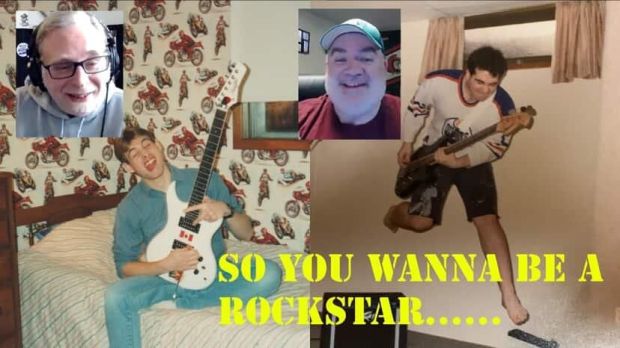
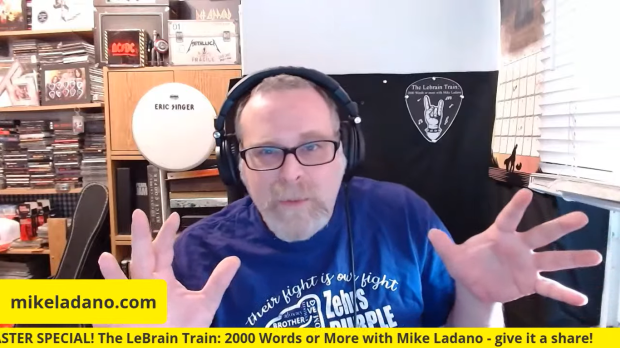
Scream for us, YouTube! Dan Chartrand and I have reunited for this fun episode about nostalgia and dreams. So you wanna be a rock star? We’ll tell you what not to do!
In this incredibly fun episode, Dan will tell you about his rock star ambitions which eventually resulted in three CDs by Dead Culture Society. He’ll also tell you about “turning down” the bass player job in Quiet Riot, and pissing off Rudy Sarzo to an extreme degree. (Never make fun of the way Rudy licks his fingers when playing bass.)
I dug up some things from my teen years, dreaming of being a rock star. I found the original script for my remake of the “Nothing But A Good Time” music video, and some postcards from my partner in crime Bob Schipper. We talk air bands, buying our first guitars, and the art of swinging them over our shoulders. Learning to play? Not important! Getting the stage moves right was what we focused on.
Please join us for this incredibly fun and occasionally hilarious trip down memory lane, and give Dan a like and subscribe! We will be back!
RECORD STORE TALES #1093: What Are the Earliest Pieces of Music You Remember Loving?
We are all shaped by our earliest experiences, whether we admit it or not. What were the first songs and pieces of music that you remember loving? Let’s have a look at 10 of mine, from my pre-heavy metal years!
10. The Doctor Who theme.
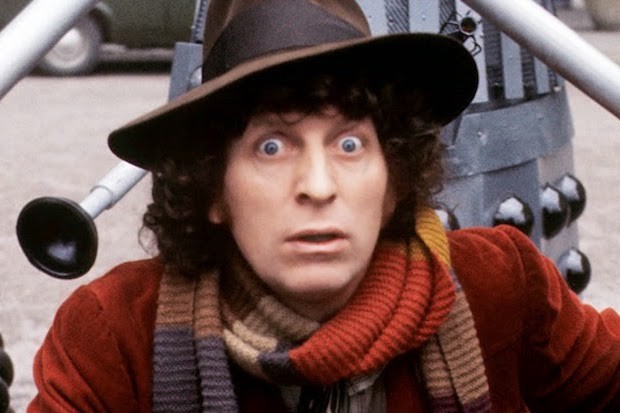
I grew up with the third and fourth doctors: Jon Pertwee, and Tom Baker. In particular I remember the Baker years as the most important to my childhood. I asked my mom to knit me a long brown scarf like Baker’s Doctor wore. I also remember sitting in front of the TV and recording the intro music to Doctor Who, so I could rewind and play that tape whenever I wanted to. The music was all synth, and entirely spooky, cool and catchy.
9. John Williams’ scores.
Star Wars was first. Empire was second. Raiders was third. Those three soundtracks made up the majority of my musical listening for years. I didn’t own any other records. Just John Williams. When you consider the impact that Holst’s The Planets had on Williams, and heavy metal too, it is no wonder that heavy metal music would later speak so clearly to me.
8. Joey Scarbury – “Theme from The Greatest American Hero (Believe It or Not)”
My earliest musical loves all came from TV or cinema. This was the first non-Williams record I owned, on a 7″ single. Mike Post co-wrote the song, and he would figure into the career of Van Halen much much later. “Believe It Or Not” was a pleasant pop song with an irresistible chorus. The B-side was a ballad called “Little Bit of Us”. I hated it. I remember playing the single at 78 RPM to see if it would make the song any better. It didn’t.
7. Magnum P.I. and The A-Team theme songs.
Here’s Mike Post again, with the theme music to Magnum P.I. starring Tom Selleck. Funky electric guitar hovered behind a bouncing string section playing the theme. It was like my John Williams soundtracks had collided with rock instrumentation. I would sit in bed and hum these themes, singing myself to sleep. And guess who was behind the A-Team’s music? Also Mike Post! Military drums and more symphonic theme greatness. I was well on my way, wasn’t I? These two themes were critically important to the whole action TV show genre.
6. Michael Jackson – “Beat It” and “Thriller”
Like every kid in the mid-80s, I loved Michael Jackson. It would not be an exaggeration to claim that every kid in my grade liked Michael Jackson to a certain degree. He had a number of hits on the radio, including “Say Say Say” with Paul McCartney, which I was frustrated to find was not on my Thriller cassette. Of course, I had no idea who Eddie Van Halen was yet, but he was in my head, playing the “Beat It” guitar solo without my knowledge. Michael’s songs were perfectly written and produced. His videos were groundbreaking, but I hadn’t seem them yet. I wasn’t even sure what he looked like at first. Tabloid photos always showed a gaunt Jackson hiding from the cameras. Once we saw his videos, I was shocked at how effeminate his speaking voice was, for a guy who sang so powerfully. Yet, I only played two or three songs on the tape.
5. Culture Club – “Karma Chameleon”
Hot on the heels of Jackson was Boy George. “Karma Chameleon” was impossible to forget, and I could care less about any of his other hits. I had the Colour By Numbers cassette and never played it except for one song. The album cover shocked me! I thought Culture Club was synonymous with Boy George – a one-man band. I had no idea there were other members, or what they looked like. I liked the tune, but this band was not for me. Eventually I would erase both Jackson and Boy George, and record other things on their tapes.
4. Styx – Kilroy Was Here
“Mr. Roboto” was the song that hooked me, but the album itself was pretty good: “Cold War”, “High Time”, “Don’t Let It End (Reprise)”, “Heavy Metal Poisoning” and “Double Life” were awesome rock songs! As before, I had no interest in the ballads. I played them once or twice, and just skipped them from then on. Styx were the first band with multiple singers that I liked: Dennis DeYoung, Tommy Shaw, and James Young. I wonder what influence this would later have on my love of KISS. Styx were bombastic and huge. The gatefold album came with lyrics, which I studied as if they were containing deep hidden meaning.
3. AC/DC – “Dirty Deeds Done Dirt Cheap”
I recorded this song from my best friend Bob, along with “The Mighty Quinn” by Manfred Mann, and if memory serves, “Ooby Dooby” by Roy Orbison. I might be wrong on that last one, but AC/DC was the one I kept playing over and over, sometimes to irritate people. I remember distinctly telling people I liked the chorus because the singer sounded like “he had a frog in his throat”. My classmate Alan Runstedtler said “I like songs with the guy with the frog in his throat!” and so did I. It was pure comedy and novelty to me, but the guitars lay the groundwork for what would come later.
2. John Fogerty – “The Old Man Down the Road”
MuchMusic had arrived! I had no idea who Fogerty was, or that he was in a legendary rock band called Creedence Clearwater Revival. All I knew was that he had a really, really cool music video on TV, and I couldn’t stop watching it. The upbeat bluesy song with rattling slide guitar seemed cool to me. I decided that I liked John Forgerty based on that one song. I was slowly discovering rock music, and the last song on this list was the last one I loved before going full-metal in 1984.
1. Quiet Riot – “Cum On Feel the Noize”
I didn’t know what they looked like. I didn’t know anything about their prior history, the two Japanese albums, or Randy Rhoads. All I knew was I had finally found “my thing”. My sound. Bombastic, big, loud, catchy, well-written, and perfect.
Without Quiet Riot, I may never have taken my next tenative steps: Helix, Iron Maiden, Judas Priest, and W.A.S.P. All much heavier than Quiet Riot. Without Styx, I might never got gotten into Quiet Riot. Without John Williams, I might never had dug into Styx. Who knows?
I loved Quiet Riot well past their best-before date. I remember other kids at school making fun of me for calling Quiet Riot my favourite band. “They’re out!” laughed Ian Johnson. “Duran Duran are current!”
Fuck Duran Duran.
My journey into metal was natural and organic. I don’t know if those kids from school even listen to music anymore. Their loss.
There’s no question I have the disease of a collector. It’s undisputed and quite obvious. I like to have not just one of a thing, but many. I couldn’t just start with one Kiss album, I had to get more. The goal was to get them all. Having one GI Joe figure wasn’t enough. You had to have as many as you could afford. It’s marketing genius that this common psychological flaw was exploited guilt-free for so long. Where did it start with me?
Perhaps my collector’s nerve was first tickled by Lego. The more you get, the better stuff you can make. Every year, new pieces were introduced. In 1978 they launched the “Space” theme of Lego. Prior to that came the new “Technic” pieces. Right as I was hitting the perfect age for creating things made of Lego, they upped their game in a way that completely meshed. I remember getting quite a few Space sets and several Technic too, including one where you build an 8-cylinder engine. All you needed were more pieces to fully realize your creative visions.
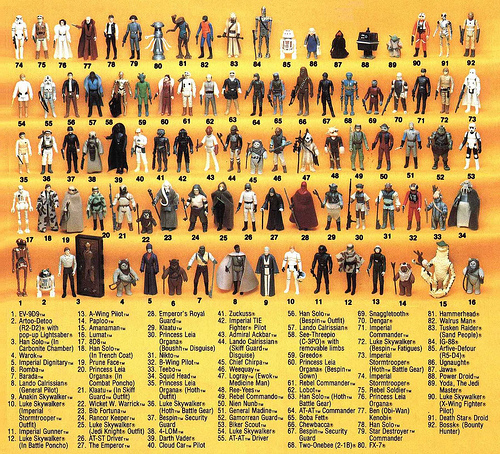
At the same time, Star Wars had hit theatres and we were starting to collect the action figures. This planted a seed. Cleverly, Kenner included pictures on the back of every figure package: Each Star Wars figure, numbered in a checklist style. This was cribbed from trading cards, like Topps — another Star Wars merchandising brand we tried to collect. Something about a checklist is an itch that begs to be scratched by certain personality types. Hasbro recycled the checklist gimmick with their in-pack Transformers catalogues in 1984.
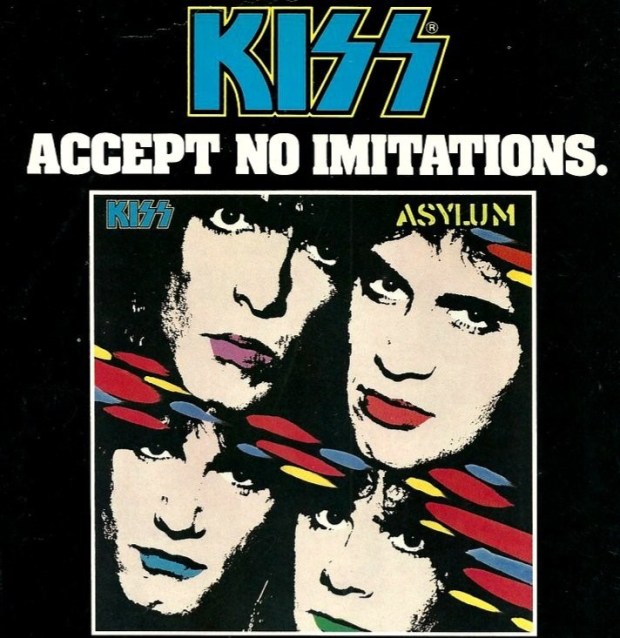
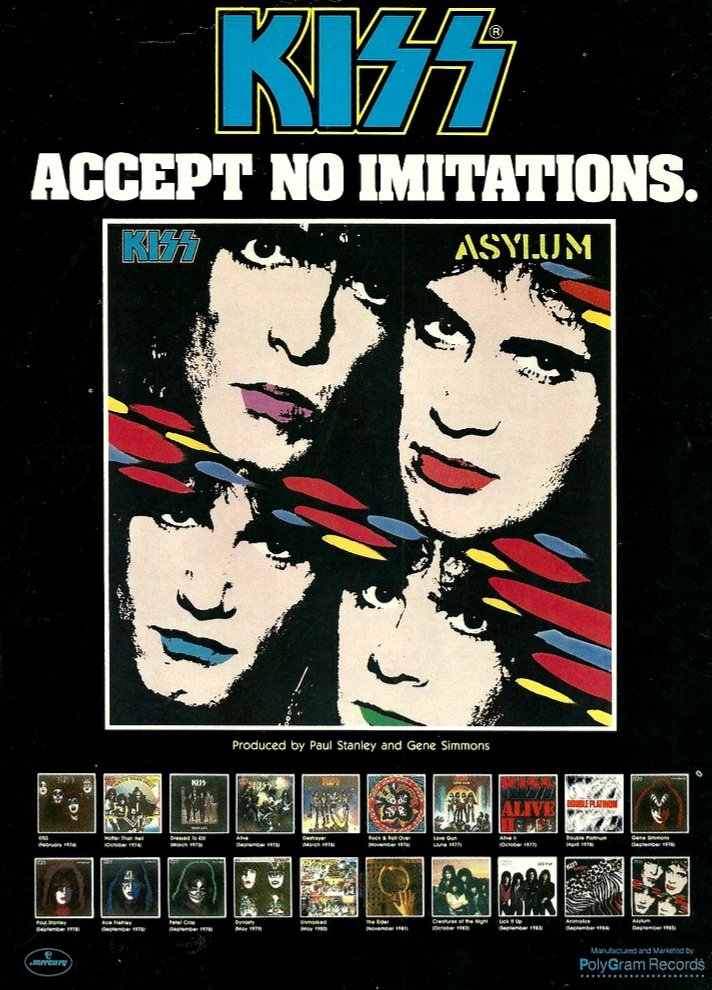
As I’m happy to recount the tale, I discovered Kiss in 1985. Their new album Asylum was out. The next door neighbour George had a bunch of rock magazines, and one of them (perhaps Faces) had a big full page Kiss ad. The famed “Accept No Imitations” Asylum ad. Simple branding, like Coke or Pepsi. The “real thing”. They were really promoting the new Kiss in North America as the 20th in a series of records, including the four solo albums, two live albums, and Double Platinum. Laid out in two rows at the bottom, checklist style, were all 19 of the previous album covers, including their release dates.
Like bells going off in my head, the collector’s itch needed to be scratched.
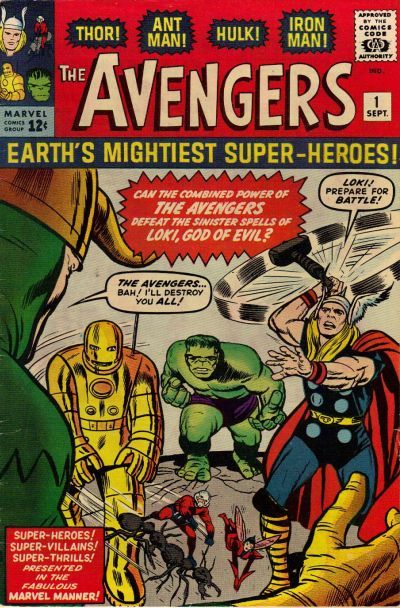
Gene Simmons is a lifelong comics reader, and he knew as well as anyone that Marvel had a monthly checklist near the back of each book. He would have had many trading cards in his youth and was surely familiar with the concept of a checklist. Whether that’s a connection or not, that Kiss ad really set off the fireworks in my brain. I stared at it, studying each individual album cover, and the frequency of release.
I’ve detailed, many times, my process in first recording all the Kiss records from George or Bob. The desire to have a complete set, buying as many as I could find while recording the rest. The need to include the “forgotten” Kiss Killers album in the count. I displayed all my tapes, either recorded or originals, in order by release date, just like the ad I had seen, except my taped collection numbered 22, including Killers and Animalize Live Uncensored. Eventually in highschool (1987 precisely) I discarded the recorded copies and acquired a complete set on tape. In the Record Store years, the process would repeat on remastered CD.
But wait….
While all of the above is the truth, and nothing but the truth, it is not the whole truth. Kiss were not the first rock band I sought to “collect”.
Before I had that Kiss epiphany with the checklist, I can remember having a specific earlier conversation. It would have been Easter of ’85, several months before the September release of Kiss Asylum. My mom asked me what I wanted for Easter, and I told her “the new Quiet Riot” because “I want to have all their albums.” I thought they only had two, and it would be an easy collection to complete. But there it was: the desire to have “all” of something.
Strange how the concept of collecting only latched onto me in some ways. Atari games looked pretty on display in their coloured boxes, but we had no desire to get all the games. Just the “good” ones. Even with comic books. I would buy issues of current books off the newstands, but did not go back to buy older issues, because they could get insanely expensive, and numbered in the hundreds. Since comics always referred back to previous and concurrent issues, they really made you want to buy them all to get all the backstory. But I didn’t — couldn’t. This is exactly why Bob preferred only to buy limited series, like movie adaptations. I guess my collector’s desires only extended as far as I could reach, in a monetary sense.
Today, musical artists exploit this common need to collect at lengths never before seen. We’re still out there, trying to make it through an adult world, but now we have disposable income. It used to be you’d want all the albums, and if you discovered single B-sides, you wanted those too. Then it became the bonus tracks, the deluxe editions, the super deluxe editions, and all the different colours of vinyl you get for just about every release these days! That’s how they get us. Next thing you know, you just dropped a grand or two on a Gene Simmons Vault, or $800 on a Judas Priest box set.
And we go along with it, time and time again. Once the itch has been scratched, and the soothing radiation of a complete collection rolls over you like waves…the itch inevitably returns.
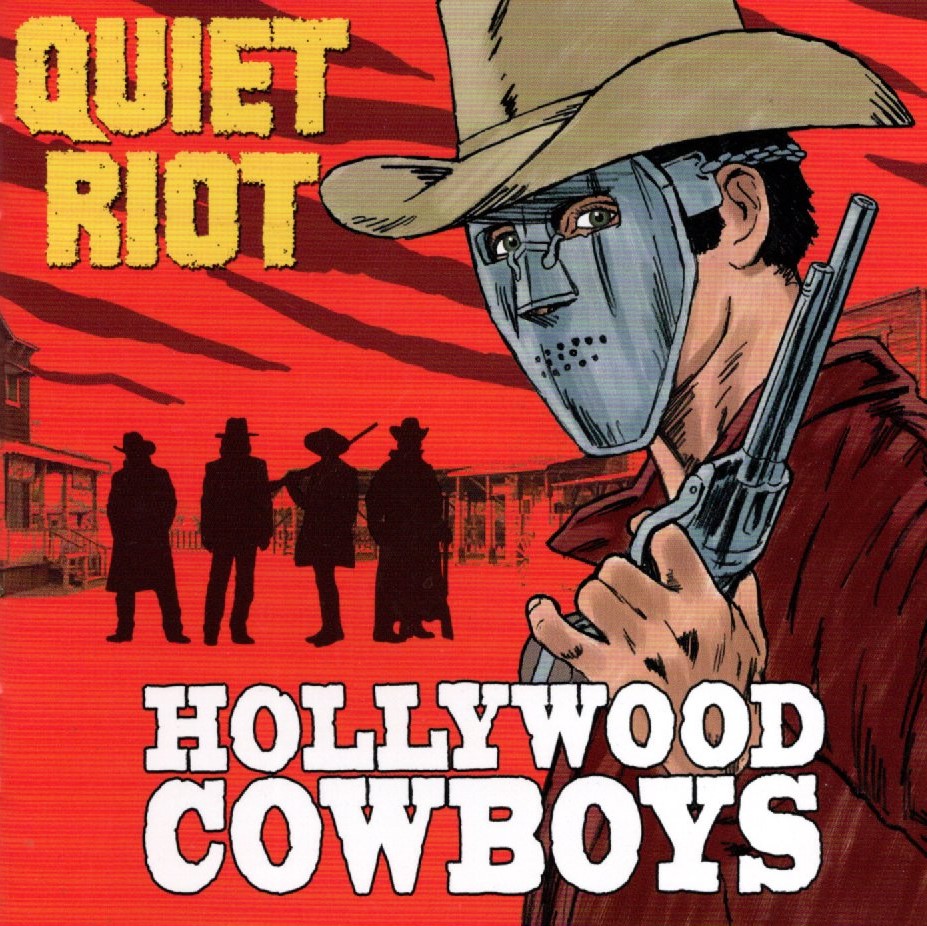
QUIET RIOT – Hollywood Cowboys (2020 King Record Co. Japanese import)
We all wanted Frankie Banali go out on a high note. He fought hard. His battle with cancer was inspiring. Unfortunately, his last Quiet Riot album Hollywood Cowboys is not memorable except as the drummer’s finale. The shame of it is, they previous album Road Rage was pretty decent so it wasn’t unreasonable to get hopes up for the sequel.
The songs just aren’t memorable enough. It’s bad when you can’t remember which track was the single (“In the Blood”). The opener “Don’t Call It Love” is better; singer James Durbin was able to infuse the chorus with some passion. The problem is none of the songs stick. Can you remember how “Change Or Die” or “Wild Horses” goes without a listen? “In the Blood” isn’t terrible by any stretch but there are no real singles on this album.
The musicianship is fantastic, with Frankie drumming like only he could. There’s some tasty organ on “The Devil You Know”, but no hooks. You can hear that they worked hard on Hollywood Cowboys, adorning songs with “woo oo ooo” backing vocals and lickity-split solos by Alex Grossi.
Some highlights include an AC/DC-like blues called “Roll On”, and the ballad “Holding On” which nails the vintage Quiet Riot vibe. There’s also a blast of Priest-like metal called “Insanity” that has plenty of power if lacking in melodies.
The album sounds as if rushed, which would be understandable given the circumstances, but that’s the impression it gives. Even the cover looks rushed. The mix is really saturated and could have used some more loving care. To its credit, it is probably the heaviest Quiet Riot album ever, from drums to riffs.
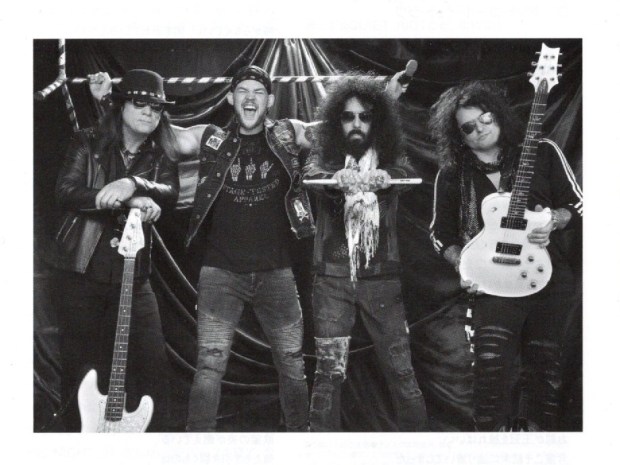
Here’s the mindblowing part. Only one guy on this album is still in Quiet Riot, and that’s guitarist Alex Grossi. James Durbin left before it was released, and he was replaced by former QR singer Jizzy Pearl (from the 10 album). Legendary bassist Rudy Sarzo is returning in 2022, replacing Chuck Wright. Lastly and most regrettably, Frankie’s stool was filled by former Type O Negative drummer Johnny Kelly. None of that is relevant a Hollywood Cowboys review, it’s just recent history. One does wish for more stability in the lineup, and perhaps Sarzo will bring that.
The Japanese import bonus track this time out is a lacklustre acoustic version of “Roll On”. Frankie plays with brushes, so it’s interesting from a drummer’s point of view. Sadly it’s the kind of bonus track that’s just not worth the price paid for the import.
Hollywood Cowboys is a scattershot collection of parts that never coalesces into songs. Everybody wanted Frankie Banali to succeed, in every way possible. But one must also be honest in a review, and can take no pleasure in shitting all over Frankie’s last record.
The summer of ’85 was going swimmingly. We were on summer holidays at the lake and I was still really into Quiet Riot. With their two albums (the only two I knew of!) on my Sanyo, and with boxes full of Transformers to play with, I was having a great summer.
Earlier that year, my dad bought for me a minibike from a school kid. It had a lawnmower engine but could get moving at a pretty good clip. The cottage was the best place for it, since it was all dirt roads and trails. I had a hockey helmet and that had to be good enough for head protection. I loved that bike, but it did not love me back. The chain had a habit of coming loose, and it was always hit or miss whether it would start or not.
Sometimes I’d ride the bike all the way down to Dead Man’s River, others I’d stick to the roads where it was easier going. I enjoyed the numb feeling in my hands from the vibrating frame after an afternoon riding. I also liked cleaning and painting details on it. But mostly I liked the feeling of getting it up to speed.
I was riding up and down our little road one afternoon the summer when I tried to accelerate, but the chain came off again. Usually it just fell fell off and the bike went dead, but this time it locked up and I went right over the handlebars. Worse, the chain had taken a chunk of flesh out of my left leg on the inner knee. The soft spot where the meat is. There was an inch-long gash packed with grease from the chain. My knees, elbows and wrists were all banged up and bleeding from the landing.
I needed stitches so the next obvious thing to do would have been to go to the hospital. This is not what happened.
A neighbour helped me hobble home where my family frantically began fussing over me. The next minutes or hours are a blur. A lot of telling me I had to go to the hospital, a lot of screaming and refusing, my dad promising he would buy me a toy if I let him look at my leg. I would not let anyone near it.
Eventually, however, I conceded to remove my hands from my bleeding wound, though not to go to any damn hospital. I let my mom and dad mop up the blood and grease, and bandage my leg. I demanded my new toy, and knocked out hard to sleep.
The rest of the summer consisted of regular checking and cleaning of the wound, which didn’t fully heal for months. I was not allowed to swim for fear of infection, and I couldn’t run. I was regularly reminded that this wouldn’t have been the case of I had gone to the hospital. But I got my toy. My dad made sure, and my sister made sure I got the right one.
She returned with the Autobot named Swoop, a Dinobot that turned into a pterodactyl. He was one of the coolest toys of the entire G1 line, with plenty of accessories, die-cast parts and chromed plastic. He even had landing gear if you wanted to land him like an airplane. And he made me forget about the pain in my knee.
I can’t believe how stupidly stubborn I was. And you have to believe I was impossible if my parents couldn’t force me to go to a hospital. And that was pretty much it for me and the bike. The irony here is that I named the bike “Christine” after the car from the Stephen King novel that ultimately gets its owner killed. I regret that decision too!
It’s so rare that you see anything other than the English alphabet in search terms. This one translates as “buy bootlegs deep purple on cd” but sadly none of my music is for sale. I’m just blown away that Googling it led to my site. As for the below….
home urinals?
I’m not surprised that Googling this leadstome. At all.
If former Journey singer Steve Augeri has shirtless photos out there, they are not to be found here.
quiet riot band sex tape
Again…not to be found here. Why would you want this? Even Kevin DuBrow didn’t want to see Kevin DuBrow naked.
is rogu roger son
It’s complicated but the simplest answer is “yes”. I’m just proud that this one led to me!
trailer park boys europe parents guide
thank santa’s tits tpb
Trailer Park Boys search terms always make me chuckle. A “parents guide”?? Oh my God, somebody out there thinks there is a parents’ guide! As for “Thank Santa’s tits”, that’s one of Ricky’s memorable quotes from the show.
And finally, my favourite search term:
superbad the singer jimmys brother actor
That would be Michael Cera, who performed the greatest version of “These Eyes” ever sung by anyone. You remember. My brother drove all the way from Scottsdale Arizona to be here tonight, and you’re not gonna sing for him? You sing, and sing good!
Allan Runstedtler was looking at my tape collection. This was something kids did. Every kid had a few tapes. Maybe they even had a nice tape case to put them in. I started the year 1985 with only one tape case. It held 30.
Allan reached for my Quiet Riot.
“Condition Critical? What’s that? I only know ‘Situation Critical’ by Platinum Blonde.” said Al.
I was never one of the cool ones.
There was this kid from school named Kevin Kirby. One day I was in his neighbourhood and he introduced me to a friend of his. Kevin asked me to tell him what my favourite band was. I answered “Quiet Riot” and they both laughed. I still liked Quiet Riot? They were so 1983.
Not much time had passed, but Quiet Riot were already toast. I felt cool for all of 3 months when Quiet Riot were big. Metal Health was my first hard rock album. I loved that album. I still love that album. I was the anomaly. All my classmates (the few that liked Quiet Riot in the first place) had moved on. Platinum Blonde were huge. And rightfully so. Standing in the Dark was a great album. Their followup Alien Shores was also successful, going to #3 in Canada. Platinum Blonde, however, were not for me. They were not a hard rock band. I didn’t even consider them to be a rock band. I labelled Platinum Blonde with the same label I used on everything I didn’t like. These loathsome artists were all dubbed “wavers”. There was no greater insult to me than “waver”. You were either a rocker or a waver. There was nothing else in my eyes more wretched than “New Wave” music.
Quiet Riot were not wavers, they were rockers. They had songs like “Party All Night” and “Mama Weer All Crazee Now”. But they had made a “Critical” blunder. They followed Metal Health with an inferior carbon copy in Condition Critical. It was a collection of leftovers and it was obvious. It even included a Slade cover like the prior album. It still went platinum. But Metal Health sold six times that. It was seen as a critical and commercial failure. Dubrow earned Quiet Riot no favours when he decided to trash other bands in the press. That stunt misfired, gloriously so.
No wonder Allan had never heard of Condition Critical. I tried to get him into some of my music. I showed him the video for “Death Valley Driver” by Rainbow, which I thought was really cool. He wasn’t as impressed as I was.
Going back a bit, I received Condition Critical for Easter of 1985. Almost a year after its release. I can remember a conversation with my mom about what kind of gifts I would like, and I answered “the new Quiet Riot, because I want to have all the albums by a band.” Hah! I had no idea, none whatsoever, that Metal Health was their third, not first. In Japan, Quiet Riot and Quiet Riot II were released in the late 70s. These featured the late Ozzy Osbourne guitar wizard Randy Rhoads on lead guitar, but I had yet to learn all these important details. I wanted to have Condition Critical so I could have a “complete” Quiet Riot collection. Something I’m still attempting to have.
Easter of ’85 was spent in Ottawa with my mom’s Uncle Gar and Aunt Miriam. We all stayed in their house. They were amazing people. Uncle Gar was injured in the war, but always had a smile on his face. He didn’t like my growing hair or my rock music, but I think he was happy that I turned out OK in the end. I stayed in a little spare bedroom. I brought my Sanyo ghetto blaster and my parent’s old Lloyds headphones.
I hit “play” on Quiet Riot not expecting to like every song, and I didn’t. I enjoyed the two singles, “Party All Night” and “Mama Weer All Crazee Now”. I thought the lead track, “Sign of the Times”, as as strong as the first album. But I didn’t think much of “Scream and Shout”, “Bad Boy” or “(We Were) Born to Rock”. And the ballad? I was not a ballad kid, and I thought “Winners Take All” was even worse than “Thunderbird”!
I’ve softened on the ballads since (pun intended), but it’s true that this is just an album of soundalikes. It’s not outstanding. I knew I’d have to give it a bunch more listens, but even then I knew a “sequel” when I saw one. Similar. More of the same of what you like. But not as good.
I kept giving them chances, though. I had to. They were the first band I wanted “all” the albums from. When my buddy George told me that Quiet Riot were back with an awesome new song called “The Wild and the Young”, my excitement was restored. “Kevin Dubrow even looks like Paul Stanley in the music video,” he told me. Cool!
There are bands I have given up on and never looked back. Yet I keep buying Quiet Riot, loyally, album after album. If they release another, I’ll buy that too. And it’s all because of what I told my mom when she asked me what I wanted for Easter. “The new Quiet Riot,” I answered, “because I want to have all the albums by a band.”
Just a short show tonight, for those stuck at home this Easter weekend with nothing much else to do! Music, toys, happy memories. Lots of audio/visual aids. Great comments and audience participation.
Quiet Riot, Black Sabbath, David Lee Roth, Def Leppard, Aerosmith, and rare Japanese imports.
Bonus: Couldn’t resist playing some music so we closed with the show with Uncle Meat singing “Fairies Wear Boots” back in 1991 with Heavy Cutting. Thank you for watching!
One of my favourite ways to spend a Saturday morning was down in the basement drawing pictures while listening to heavy metal music with my best buddy Bob. Most likely, we were watching one of my VHS tapes of the Pepsi Power Hour while doodling away with our pencils. It was the best of times, with the best of friends, and the absolute best kind of music.
In the early to mid 1980s, MuchMusic was only available on pay TV. We had it, but Bob Schipper did not. Therefore he only had two pathways to the Pepsi Power Hour:
Wait for the one or two weeks per year when pay TV was free for sneak preview.
I tape the videos, and share my finds with him on Saturday mornings.
It was an amazing way to bond as kids. He brought with him his paper and pencils, and we would get down to business while watching music videos.
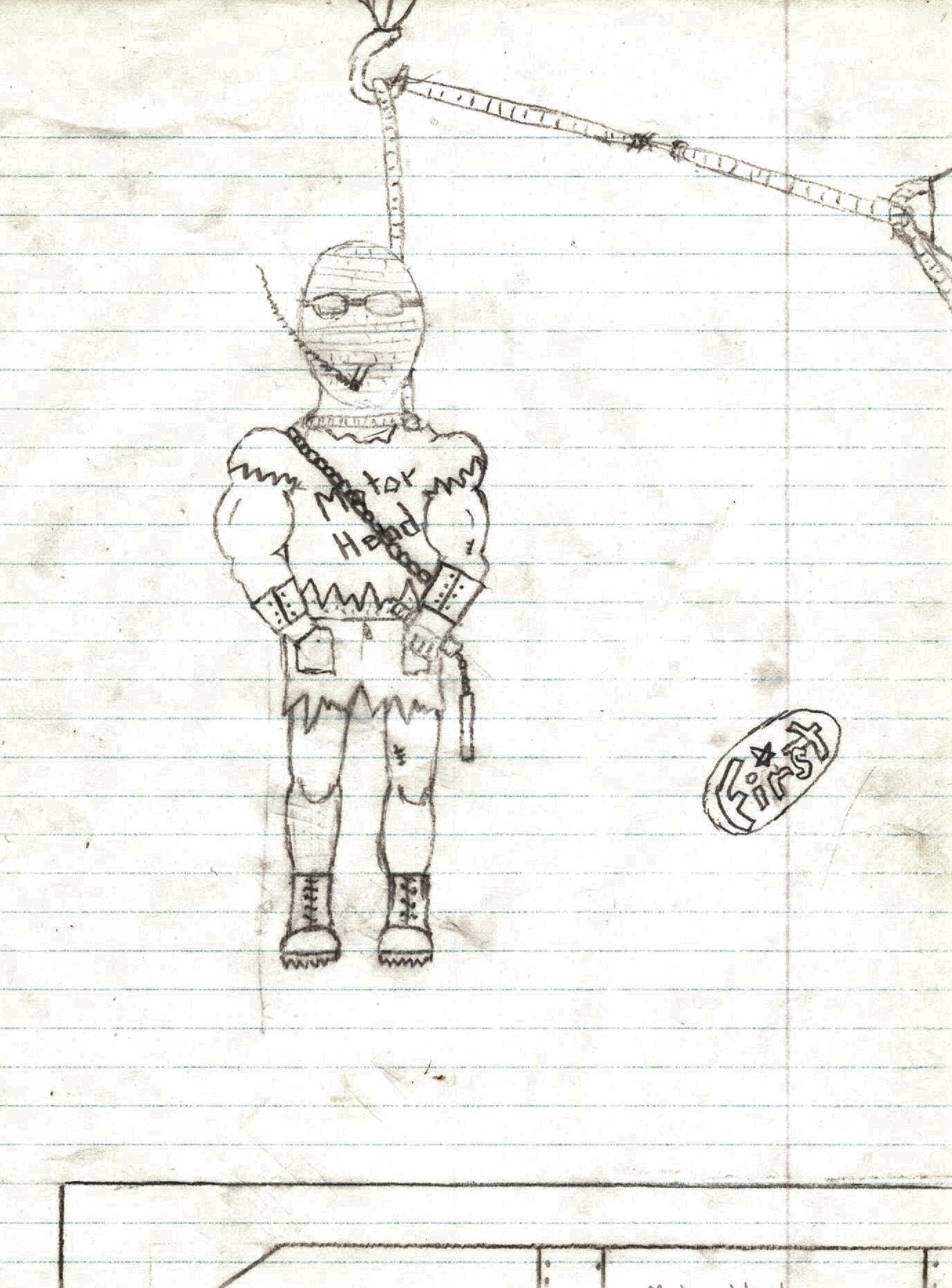
In the summer, we moved activities to the front or back porches, with a ghetto blaster playing Kiss or Iron Maiden as we sketched. In fact, the story really begins on the back porch. The very same back porch on which we schooled George Balasz about Accept. Bob had mastered the art of drawing muscled warriors in cool poses. His very first was a master of escape whom he dubbed “Motor Head”. In his first appearance, he seems doomed, hanging from a noose. But a closer look reveals him casually smoking a cigarette and holding a pair of nun-chucks for his imminent escape. Note the frayed rope. He was in no danger – he was biding his time!
Having mastered this first character, it was time to expand on the concept. Bob drew many different designs and body types. Giants, archers, characters with cybernetic limbs…the field was wide open, but heavy metal music was always an influence.
Bob’s second sketch was a man in a metal Quiet Riot mask he named “Killer”. Killer was one of Bob’s favourites. As his drawing abilities grew, he expanded upon Killer. Next, he designed a custom car and robotic pet for the character. I liked the way he used metal plates and rivets for detail.
Bob taught me the secrets of drawing these heroic figures, and I began to create my own warriors. The characters we were sketching resembled Mad Max marauders, crossed with heavy metal tropes. Really, all of that metal stuff was inspired by the post-apocalyptic fiction genre that was all the rage in the early 80s. Nobody did it better than Mad Max, and many of our characters wore masks like Lord Humungous. Others had bandaged faces, like Eddie in some of the Powerslave-era Iron Maiden artwork. Some wielded ninja-like weapons, since ninja movies were also all the rage at the time.
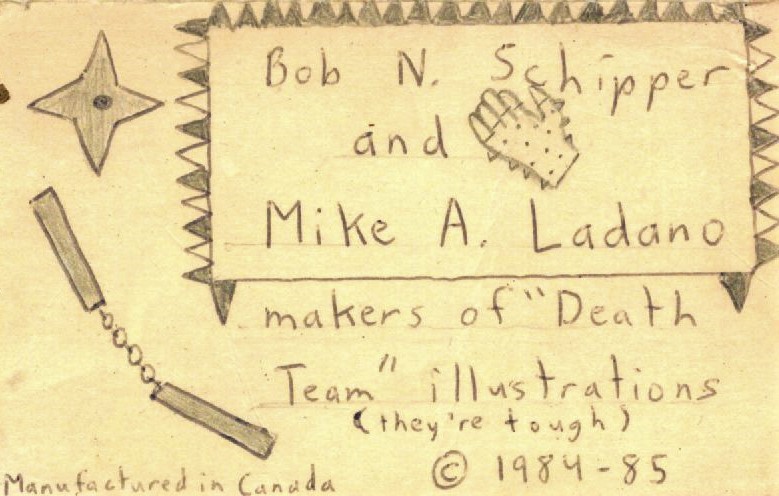
We called our characters “Death Team”.
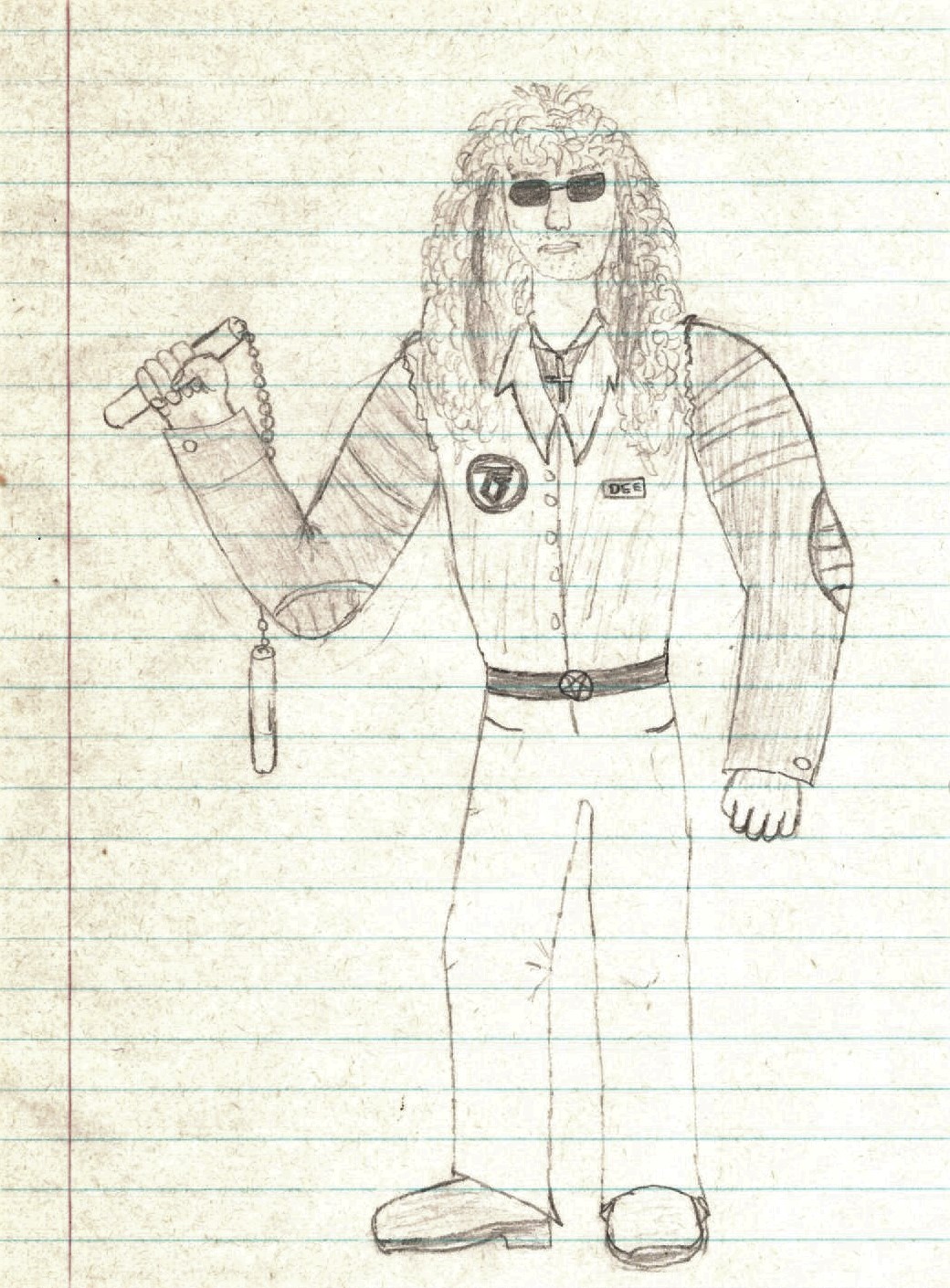
Bob’s backstory concept of Death Team was a school gang, with a strong influence from martial arts movies. The idea was that the gang evolves into a government-sanctioned fighting force. That meant no limits. The cars and trucks that we drew were armoured and kitted out. Very much inspired by M.A.S.K., Mad Max, and other shows of the time. If there was something cool on the screen, we would try to draw it and add our own twists. What I brought to the table was my interest in GI Joe comics, and the military side of fiction. The ninjas were the common ground between Death Team and GI Joe, and many of my characters had weapons and outfits inspired by the comics. I started giving my characters code names and bios, just like GI Joe, and gave them the inverted star sigil.
At this point during the earliest Death Team drawings, my sister and I had our big musical schism. That means that up until 1985, she was into the same music I was. Well…not W.A.S.P. But she liked Quiet Riot, Motley Crue and Iron Maiden. Then something happened, and she went into what I called “New Wave”. Pointer Sisters, Corey Hart, Tina Turner. To counter our heavy metal Death Team, she created her own squad called the Wavers. She drew her own team members: “Waver” and “The Wave”. Needless to say, Death Team would have crushed the Wavers in combat.
Bob and I sketched solo, during the week. Then we’d gather on the weekends to share our work. We’d inspire each other and keep drawing more. Those are the Saturday morning Power Hour sessions I remember so fondly.
One weekend, Bob came over excited that he had learned to draw “a really cool bike”. He arrived at my door with his new character “Bike Ninja”. We helped each other name our characters, but that one didn’t need anything fancier than simply “Bike Ninja”. His boots had outward-facing spikes, and his left hand was replaced by a robotic claw with a laser in it.
“That might make it hard for him to ride his bike,” I offered up.
“Nahh!” said Bob. “He’s a ninja!”
My mom noticed that many of the characters were smoking cigarettes. She asked why that was. Bob started putting cigarettes in some of their mouths (even the ones wearing masks) to make them look cooler, so I followed suit. That was the rock and roll influence, as many of our rock star heroes like Eddie Van Halen were constantly smoking. We had no interest in it, but the visual followed into our art.
Bob’s art was much better and more original than mine. I improved over time. By 1987 I had finally drawn one I was really proud of, a character all about street justice and inspired by Dee Snider from Twisted Sister. In fact this character was meant to be the real Dee Snider, joining our team to save Earth. The concept was stolen from Sgt. Slaughter, the WWF wrestler who joined the fictional GI Joe team. If that could happen, then Dee Snider could join Death Team!
As Bob and I built our little world of characters on paper, we realized our gang needed someone to fight. Bob was watching the Silver Hawks cartoon before school in the mornings, and took influence from some of the creatures seen on early morning TV. We decided on a force of alien invaders as our adversaries, and a wide variety we did draw.
Bob was really the visual guy though; his drawings were so far ahead of mine. I was more a conceptual guy. I came up with the character bios and some of the overarching story. It was hard bridging the street gang origins together with the alien invasion concept, but I wrote an origin. Together, Bob and I wanted Death Team to be a Canadian team (with some American and overseas volunteers). We wrote them as a down-on-their-luck school gang who lived together on the rough side of town, wherever that was. They actually began as two rival gangs who combined their forces together. We wrote the first pages together and then I finished writing the story. The guys were so tough, that they were swiftly recruited by the Canadian government as a unit of street enforcers. The Death Team was born!
I decided that the leader of the alien invasion was to be a human. Perhaps inspired by Xur in The Last Starfighter, the alien leader was a former Death Team computer wizard who made contact with the aliens by sending a signal through a black hole. He then defected and joined them, determined to conquer the Earth for his own. We even named our alien alliance the “Xor Aliens”.
Bob was really good at drawing aliens, though most had human bodies with alien heads, hands and feet. Some were covered with hair. He was good at drawing big round mouths with a circular row of teeth. I thought that was a cool visual. Many of ours were aquatic. Planet Xor must have had a lot of oceans.
When I look back at these drawings, I see a difference between Bob and I. It’s quality vs. quantity. His are better while mine are plentiful. Some of mine were little more than outlines with no shading or depth. Plenty of mine are rip-offs. He was coming up his own ideas. The thing we have in common, easily seen in these sketches, is how much fun we had!
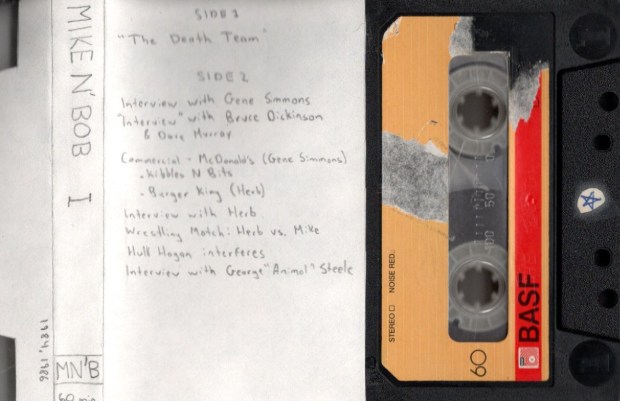
The pinnacle of of our fun was realized one afternoon when we decided to commit Death Tape to an audio adventure. One side of a 60 minute tape contains us acting out our favourite characters, in a series of adventures. This is all done to the backing tracks of great hard rock tunes. It opens with “In the Beginning” and “Shout at the Devil” by the mighty Motley Crue. This meant we used two ghetto blasters in making this tape. One to record, and one to play the backing music while we acted out the scenes. Quiet Riot’s “Slick Black Cadillac” and “Caught in the Crossfire” by April Wine were the songs used for the other scenes. I just remember having so much fun doing it. It didn’t matter if the tape is unlistenable. My face was red from laughing so hard that day.
All this Death Team stuff goes hand-in-hand with the earliest days of my discovery of metal. You can see the influences bleeding through. Characters named “Motor Head” and “Killer” and “Helix” and “Crazee” and “Iron Maiden”. We weren’t terribly original, but we were terrifically entertained. Entertained by ourselves! All we needed was some paper, some sharp pencils, and a good song. I can still hear the tunes playing, whether it was W.A.S.P. or Motley Crue or Iron Maiden themselves. The tunes were critical. The team could not have existed with the tunes, and the tunes were only more fun to listen to while drawing pictures of the team.
Later on in school, when I was much better at art, I tried my hand at doing a sequel team, called “DT 2”. I played the music, and tried to recreate the magic by sitting down and drawing some updated ninjas. Without my friend it was a futile exercise. Death Team cannot exist without three things:















 mikeladano.com