More Purple at mikeladano.com:
Live at Inglewood 1968, Deep Purple (1969), Machine Head (40th Anniversary Deluxe Edition + vinyl + In Concert ’72 vinyl), Perks and Tit (Live in San Diego 1974), Stormbringer (35th Anniversary Edition), Come Taste the Band (35th Anniversary edition), Power House (1977), The Battle Rages On… (1993), Shades 1968-1998, Collector’s Edition: The Bootleg Series 1984-2000 (12 CD), Listen, Learn, Read On (6 CD), Rapture of the Deep (2 CD Special Edition), “All the Time in the World” (2013 CD single), NOW What?! (2013) Record Store Tales Part 32: Live In Japan, STEVE MORSE BAND – StressFest (1996), ROCK AID ARMENIA – Smoke on the Water: The Metropolis Sessions.
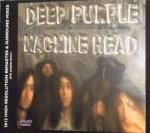
DEEP PURPLE – Machine Head (EMI 40th Anniversary Deluxe Edition, vinyl, In Concert ’72 vinyl)

For the record, Machine Head is not the perfect Deep Purple album. I find both In Rock and Fireball to be superior. Machine Head is, however, the best known Deep Purple album, and I guess that’s why it’s gotten such a grand reissue while the other two have to be content with simple single-disc reissues from the 1990’s.
For the 40th anniversary, there have been a number of reissues made available. First, there is the lovely 180 gram vinyl reissue, which includes a lyric sheet and a bonus 7″ of the first single, “Never Before” / “When A Blind Man Cries”. Then, Peter Mew remixed the 1980 release In Concert ’72 at Abbey Road, which was re-released on purple vinyl. This too came with a bonus 7″ single (also purple), “Lucille” and an unreleased rehearsal of “Maybe I’m A Leo”.
Finally, the crown jewel release is the five disc 40th Anniversary box set. This includes all the stuff you got with the previous 1997 25th Anniversary edition, and more. Packed inside is a lush 64 page hardbound booklet (including Roger Glover’s 1997 liner notes). As an added surprise, even the CDs are printed in purple plastic. I hope this is the last time I ever need to buy Machine Head!
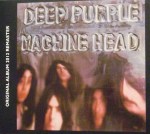
Disc One: the 2012 remaster
Hey, I found the 1997 remaster just fine to my ears. Is this one better? Marginally, yes. I imagine this sounds closer to the way it originally sounded if you bought a brand-new vinyl copy back in 1972.
Machine Head is a mere seven tracks, but almost all are winners. The album kicks off with the adrenalized “Highway Star” (written and often performed during the Fireball tour), which is one of my personal favourites. I still marvel today at Jon and Ritchie’s unison solos, like something out of a rock n’ roll speed race. Gillan screams that nobody’s gonna take his car, and you believe him. “Highway Star” is Deep Purple the way I often think of them: fast, intricate, with banshee screams.
“Maybe I’m A Leo” takes the pace to a groove, with Ian Paice and Roger Glover holding it down. This track is quite unlike anything from the previous two Deep Purple albums (except maybe “No No No”), featuring a more relaxed, comfortable band. It is radio-ready hit material, and a concert staple. But in case you too were getting comfortable, Ian Paice’s pounding intro to “Pictures Of Home” will wake you up. This is clearly the most “heavy metal” of all the new songs, and that drum intro is reminiscent of Ian’s work on “Fireball”. Gillan’s lyrics describe the “eagles and snow” of the Swiss scenery in which they recorded the album.

In case you didn’t know, Machine Head was recorded at a hotel in Switzerland, by the Rolling Stones Mobile and Martin Birch. The band occupied several suites, and managed to extract an incredible sonic quality from them. According to the liner notes, it was simply too much work for the band members to walk through the various suites (needing to go outside onto balconies to do so, due to blocked doorways) down to the mobile to hear playback. Instead, the band simply plowed through without hearing many of the playbacks, and the result is a spontaneous sounding album.
The first single “Never Before” is next, closing side one. This is the one predicted to be the hit, only it wasn’t. It’s not particularly a standout Purple track. It’s short, simple and sweet but not nearly as powerful or memorable as the other six album tracks.
Side two opened with a track thought to be a mere throwaway, “Smoke on the Water”. Completed after the infamous Frank Zappa gig at the local casino which resulted in the place burning down, Glover coined the title. The rest of the band initially balked: “Sounds like a drug song.” Of course we know the song and title were the perfect match for each other. This riff is the riff, the mother of all guitar riffs, never to be topped nor equaled by anybody, including Deep Purple.
“Lazy” was the band’s jam song, a sprawling seven minute stretch, greatly expanded upon live. It begins with Jon Lord and Ritchie Blackmore playing off each other, a fun blues, until Gillan enters. Ritchie’s solos are sublime, not to understate the greatness of Jon’s.
Side two closed with “Space Truckin'”, another song which was greatly extended live. This is not one of my personal favourite album songs, but one cannot deny its importance. It is an extended concert staple, but in its studio version it isn’t even a full 5 minutes long.
The disc ends with a bonus track, the sublime B-side “When A Blind Man Cries”. This is a slow, mournful blues featuring some of Ritchie’s incredible six-string feel. You can see why it wasn’t included on the album proper, as it is unlike anything else on Machine Head. Restored to the CD as a bonus track, it is now a highlight. Ian Gillan deserves special praise for his emotive delivery.
 Disc two: the 1997 Roger Glover remix
For the 25th Anniversary CD, Roger went back into the studio with the master tapes and built an alternate, remixed Machine Head. This was done to provide added value, since no outtakes from the album existed. This remix is not radically different. What it is, is a fresh take on an album that I (and perhaps you) have played hundreds of times. Glover incorporated alternate solos and unheard takes into the songs, making them sound new again. In fact, this is my “go-to” version of “Smoke on the Water”, with my preferred alternate guitar solo and Ian’s “Break a leg, Frank!” restored to the end. I tire of the original; this version sounds fresh to me.
Like the 1997 issued version, this also includes Roger’s remix of the B-side “When A Blind Man Cries”. Missing are the Quad mixes of “Lazy” and “Maybe I’m A Leo” from the ’97 version, but they are included on another disc in the 40th Anniversary version.
 Disc three: Quad SQ stereo mix
Like many hit albums in the 1970’s, Machine Head was mixed in quadraphonic and released on a special LP. Of course, nobody really has a quad setup at home anymore. The interesting thing about many quad mixes, Machine Head included, is that it featured a very different mix, including alternate solos. This version of the album has been mixed down to stereo and included for the sake of completion and historical value.
There are two bonus tracks on this CD, single edits of “Lazy” from a Japanese 7″, and a US edit of “Smoke on the Water”. The Japanese reduced “Lazy” from almost 7 minutes to a mere 2:30! I believe both single edits have been made available on box sets and compilations before, but they are included here to make this version of Machine Head the most complete ever assembled.
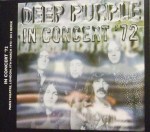 Disc four: In Concert ’72, the 2012 remix
This album was previously available on CD, in a compilation that included BBC sessions from 1970 and 1972. This set collects and remixes the 1972 recordings, complete, and restored to the correct running order. Previously, “Smoke on the Water” was pushed to second-last in light of its later success.
This is a stunning live album, with clear sonic quality, and a powerful band playing almost all of Machine Head a month before its release! “Pictures Of Home” is excluded, a song Ritchie did not want to perform live, and it is replaced by “Strange Kind of Woman”.
Highlights for me include the aforementioned “Strange Kind of Woman”, complete with Ian and Ritchie’s interplay. Lazy is quite a tour-de-force, and “Space Truckin'” is over 20 minutes long. It is the full jam that folks would later come to know and love, with ample guitar, keyboard and drum solos.
The band were known to close their sets with Little Richard’s “Lucille” at the time, and it closes this BBC session as well. There are a few versions of “Lucille” out there, this one is tame by comparison with some of them. That’s not to say it’s inferior, as Ritchie’s solos are incredible, almost out-of-control, and Ian’s screams as powerful as ever.
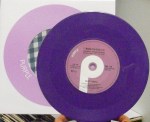
As I mentioned, the vinyl version of In Concert ’72 includes a bonus 7″ single. This single is the only place you can get the previously unreleased “Maybe I’m A Leo” rehearsal. It fades in on what seems like a bum note on Jon’s keys, and is a bit more laid back than the one that they played during the proper set. Ian noticeably takes it a bit easier on the vocal, presumably saving his voice. Ritchie plays a different solo.
For me, speaking as a collector, having this one rare track on such a cool looking colour single made it worth re-buying In Concert ’72 on vinyl like this.
 Disc five: Original quad mix, 96/24 LPCM stereo version, bonus 5.1 mixes
For a lot of people, this DVD is the main reason to buy this box set. For audiophiles, there’s a high resolution version of the stereo mix. For completists and history buffs like myself, you can finally hear the quad mix like people heard it in the 1970’s. The album has been converted to 4.1 surround so you can play it on your home theatre system. I very much enjoyed hearing the album in this way, as opposed to the stereo version available on disc three. The cool thing is, Peter Mew did the original 1972 quad mix, and here he helmed its transfer to 4.1!
The quad is interesting not only because it differs noticeably from the original, but also because of the instrument separation. You obviously can’t judge a mix like this and compare it to a 5.1 mix of today. It’s not as full, or powerful. But it’s also an historical piece.
It’s cool to hear the quad version’s guitar solo on “Highway Star”, Blackmore making his guitar rev like an engine through the front speakers. I like the way Gillan’s voice multiplies in the mix during “Maybe I’m A Leo”, and the alternate guitar solo on the same song is also cool. Jon’s keys come from behind, a bit gimmicky by today’s standard, but probably astounding back then. “Pictures of Home” features Ritchie’s guitar tracks split between different corners, allowing one to hear the separate parts clearly. The separation of instruments on “Lazy” allow you to hear clearly each member’s playing as well.
As an added bonus, they remixed three songs in 5.1: “When A Blind Man Cries”, “Maybe I’m A Leo”, and “Lazy”. I’m sure a lot of people will complain that they didn’t do the entire album in 5.1. Me, I’m sure they’ll save it for the 50th anniversary. “Blind Man” is absolutely stunning; it shimmers. New nuances can be detected. “Maybe I’m a Leo” shakes the Earth with stomp, its clarity outstanding. Blackmore’s solo sounds as if he is in the room. Finally, “Lazy” is spacious and warm. The different tones of Lord’s organ are incredible.
Conclusion:
I’m very satisfied with this box set. As if all that music wasn’t enough, the booklet will keep you going for hours with its full-colour photos, liner notes and essays. Yes, it can be a bit much, having four versions of one album in a single box set. However, twice I listened to the whole thing in order, and didn’t find myself bored. You know why?
It’s because Machine Head is a great album.
5/5 (highway) stars
R.I.P. Jon.
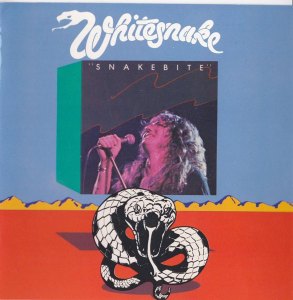

 Side two of the LP had the earlier Northwinds material, produced by ex-Purple bassist Roger Glover. Although Mickey Moody plays on these songs, he’s the only future Whitesnake member present. The tunes are decent enough. “Keep On Giving Me Love” was funky, like the kind of stuff Glenn Hughes was always trying to push on Deep Purple. It’s not really outstanding until you get to the chorus. “Only My Soul” however is a stand out. Coverdale has often done these incredible soul-searching pieces, such as Purple’s “Soldier Of Fortune”, and Whitesnake’s later “Sailing Ships”. This time out we’re treated to some very appropriate violin, and Glover on synth. The side is rounded out by “Queen of Hearts” and “Breakdown”, the raucious rocker written about the final demise of Deep Purple.
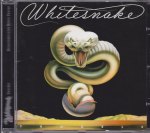 There are numerous options today to get this music. Not only is the Snakebite album still in print on CD in North America, but you can now also find the tunes remastered. The Snakebite EP has been added as bonus tracks to Whitesnake’s debut album, Trouble. You can also get David’s solo album, Northwinds, remastered with bonus tracks. Or you could just get ’em on original vinyl! The choice is yours, but I think any Whitesnake fan would enjoy this Snakebite.









 mikeladano.com