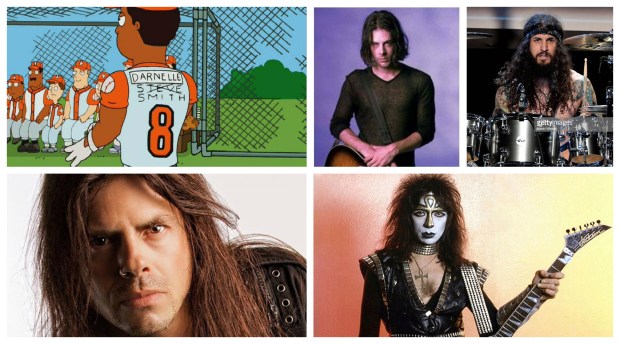
vinnie vincent

REVIEW: Gene Simmons – The Vault – Disk 2 (2018)

Previous Reading: 

Record Store Tales #600:  The Vault
Disk 1 Review


Another disc, another 15 songs!


GENE SIMMONS – The Vault – Disk 2 (2018 Rhino)

One of the fastest and heaviest songs from Gene’s solo album Asshole was “Weapons of Mass Destruction”.  It was originally written for Psycho-Circus, but deemed insufficient.  The demo version just called “Weapons” features Gene calling out what instruments go where, and a much rougher recording.  The final album version was not a remarkable song and neither is this demo.  The song was pretty much in place at this stage.  2.5/5

“Weapons (Power to Raise the Dead)” is another demo version, this one with Ace Frehley on lead vocals.  Gene hoped for him to sing it on the Kiss album, and let Ace write new lyrics.  It also features Bruce Kulick and Eric Singer.  It sounds like Gene wrote the entire song around a bass lick.  This is why it’s better than Gene’s original idea:  Ace’s presence also brings much needed variety to this box set after 16 songs with Gene singing lead.  Ace was in good voice back then, and it would have been awesome to hear a final version.  Psycho-Circus could have and should have been a longer album to accommodate more band contributions.  3.5/5

“Hate” made it onto Carnival of Souls.  Gene openly admits he was inspired by Seattle and that angry style of music.  Written with Bruce Kulick and Scott Van Zen, “Hate” would be improved upon immensely when it was recorded for good.  What’s missing is Bruce’s wah-wah drenched lead guitar acrobatics and drones that normally run through the track.  Otherwise, this is the same arrangement, complete with lyrics and only minor differences.  There’s a neat tape edit trick at the end; see if you can spot it.  4/5

“Hate” goes immediately without break into “Carnival of Souls #2”.  This a four-track demo of the same song included on disc one.  This is performed with Scott Van Zen, and the lyrics are not fully written yet.  As stated earlier, this was never one of Gene’s better songs.  It does feature some cool guitar stuff in the middle breakdown, but otherwise this is a forgettable demo of a song that was never really up to snuff.  2/5

“Master of Flesh” is an interesting song because it’s a cover of a New York band called Street Punk.  Gene bought the publishing rights for cash from writer Jon Montgomery.  Regardless of the name “Street Punk”, that’s not what this is.  An acoustic ballad with spoken word verses, Gene compares it to David Bowie and Lou Reed.  There’s also a bit of John Lennon in the falsetto of the chorus.  Gene recorded the undated demo on a Tascam and plays the lead guitar solo himself.  Really not bad and had potential.  It wasn’t where Kiss was headed over their next few albums, but could have perhaps fit in somewhere.  3.5/5

“Heavy Rain” is a demo with Bruce Kulick of a recurring song called “Rain Keeps Fallin'”, previously released on a Gene Simmons Family Jewels Season One bonus CD.  This heavy-as-hell riff really pops.  Very much akin to Carnival of Souls kind of heavy, with rolling bass, this is the kind of material that is worth coming back to.  There’s some tape dropout issues but that is not unexpected on a collection of demos, often originally recorded on cassettes.  Eric Singer can easily be identified on drums by style and sound.  3.5/5

“Within” from Psycho-Circus was one of Gene’s more ambitious stompers.  Featuring backwards guitars and Lennon-inspired lyrics, there was some psychedelia involved.  Taking that further, the overall song was inspired by Doctor Strange from Marvel comics.  Gene envisioned Strange facing off against a character like Nightmare, and somehow, that led to “Within” featuring Bruce and Eric once again.  The backwards guitar on this demo was used in the final album version later on.  This lengthy demo is far more dramatic and heavy, and really allows certain riffs and bass parts to come out more.  If only the lyrics were complete!  If this were properly recorded, it could surpass the overproduced album version.  4/5

The first version of “In Your Face” included on this box set is a Gene demo before bringing it into Kiss for Ace Frehley to sing.  You may recall this track was a B-side or bonus track for Psycho-Circus, with Frehley singing.  The early version is a bit different with a lot of different lyrics.  It sort of hangs together but is a fairly loose idea that sounds thrown against the wall.  2.5/5

“In Your Face with Ace” is much closer to album version, partly re-written by Ace and much better recorded.  It’s barely different from the final version, except the lead guitar may sound more naturally Ace.  Another Frehley vocal is also very welcome.  This is a fantastic demo that again shows that Psycho-Circus could have rocked a lot more like Kiss.  The producer may have been an issue.  5/5

“Rain #2” is the second (but not last) version of “Rain Keeps Fallin'” that we will hear on this disc.  This version features Simmons proteges Silent Rage on instruments, with a drum machine.  It’s a bit different from the first version we heard called “Heavy Rain” and doesn’t seem to punch as hard.  Only now do a realize there is a line about “keep sippin’ my Diet Coke.”  Why not?  Dare I say why not?  3/5

It’s almost a cheat to call “Carnival Intro” a full track among the 15 here.  This 32 second track is the intro that was later used on Psycho-Circus, though it was originally intended for “Carnival of Souls”.  A cool little intro, but more like a bonus.  Historically valuable for the eventual use by Kiss.  2/5 

It was only a matter of time before Vinnie Vincent (née Cusano) appeared in this set.  Kiss began writing with the future Ankh Warrior in 1982 for what became Creatures of the Night.   Gene says “I Wanna Live” is among the songs they wrote, and has never been recorded or heard before.  It has a cool synth part that goes through the song and sounds like an idea with potential.  This demo sounds pretty decent and the chorus is good enough for rock and roll.  Catchy hard rock with a tough vibe.  4/5

“If It’s Too Hot, You’re Too Cold” later became “Hot and Cold” on Sonic Boom.  This demo with Silent Rage is based on an old song called “Rotten to the Core” from 1977.  Gene says it’s also related to “Eat Your Heart Out”, but the liner notes are a little confused here.  Either way, this is pretty good stuff and does have a 70s Kiss vibe, which is why it worked swimmingly on the Sonic Boom album.  4/5

Finally, “Rain Keeps Fallin'” appears in its third version!  This is still not the same one as the Family Jewels set, which is 3:53 in length.  This version sounds the most 80s, of the songs, circa Crazy Nights if Gene’s smooth vocal delivery is to go by.  It is very hard rock, with focus on the chorus.  You can really hear the evolution of a song by listening to this disc.  An interesting trip.  4/5

“Bells of Freedom” closes this disc, with a Who-inspired song.  Tommy Thayer is on guitar, but from a time before he was in Kiss.  You can hear the Pete Townsend influence in those big chords.  It’s a pretty good song idea and and it sounds like it could really have become something.  There is a great solo included.  It is hard to judge demos like this because often the concept is to get the idea down quickly.  We’ll err on the high side, because there are some serious possibilities with these hooks!  This could have been an 80s rock anthem!  4/5

Averaging out the score for the 15 songs, disc two rates:  3.16/5 stars


Disk 2 Track length and songwriters (from Wikipedia)

1. Weapons (4:16) Simmons
2. Weapons (Power to Raise the Dead) (4:13) Simmons / Frehley
3. Hate (Demo) (4:02) Simmons / Van Zen / Kulick
4. Carnival of Souls #2 (Demo) (3:15) Simmons / Van Zen
5. Master Of Flash (Street Punk) [1980?] (3:38) Montgomery
6. Heavy Rain (3:22) Simmons / Kulick
7. Within (Demo) (5:58) Simmons
8. In Your Face (Gene Demo) (1:51) Simmons
9. In Your Face (Ace Re-write Demo) (3:20) Simmons / Frehley
10. Rain #2 (3:35) Simmons
11. Carnival Intro (0:32) Simmons
12. I Wanna Live (Demo) (4:33) Simmons / Cusano
13. If It’s Too Hot, You’re Too Cold (3:42) Simmons
14. Rain Keeps Fallin’ (3:22) Simmons
15. Bells of Freedom (4:37) Simmons

Rock Daydream Nation: Rock Court: In defence of Vinnie Vincent Invasion

One of the “super-secret” tapings I was involved with is finally ready for your viewing pleasure!

In this courtroom drama, I played the role of the prosecution, with Peter Kerr as the defense.  Judging was the honourable Reed Little (The Contrarians), who had to choose whether or not he was going to buy Vinnie Vincent Invasion, based on our testimony.

I have not seen the final episode myself, but I look forward to watching how I did with a couple weeks distance!  This show was a lot of fun, and I’ll be back on Rock Daydream Nation again this fall, defending a band I love!  (Or at least, an era I love from a band I like!)

#813: Ringers

GETTING MORE TALE #813: Ringers

There’s a sports phrase in the parlance of the profession:  a “ringer”.  It means boosting your team with a player who who’s above your league, usually with accusations of dishonesty or bad sportsmanship.  If you had a beer league hockey team, and your friend’s son happens to be Connor McDavid, and he substitutes for your usual center Big Jim McBob, then you have a ringer.

I was watching some live music on YouTube and wondered if there is a rock band equivalent.

Though it’s not considered cheating, did Queensryche pull a ringer when they got Todd La Torre to sing?  Todd is a fine vocalist who enables Queensryche to perform the old material properly; stuff with notes so high that only a young singer can really pull it off.  Journey did something similar with Arnel Pineda.  They wanted to play the original songs in the original keys, not tune them down for an older singer.

Original Queensryche singer Geoff Tate’s voice has changed over the decades.  That’s nature.  He can be hit or miss when singing the high stuff, so he tends not to anymore.  He’s able to steer around difficult notes and still play the song.  La Lorre has no issues with them however, adding some of his own grit to the screams.  Todd La Torre is 45 years old.  Geoff Tate is closer to his old bandmates at age 61.  If Queensryche were to look for another singer in his 60s, they wouldn’t be able to find one able to scream the opening to “Queen of the Reich”.

Go back in time further, to the early 1990s.  One band that absolutely hired a ringer was Poison when they acquired Richie Kotzen to replace C.C. Deville.

Without being too unkind, C.C. and Richie are not playing the same sport when it comes to guitar.  C.C. is a WWF wrestler, hammering you over the head with loud sloppy moves and tricks.  Richie is like a light boxer with heart, a fast contender with a feel for it.

When Poison picked up Kotzen, they plucked someone from the upper echelons to replace somebody who was basically still in the garage.  While it failed to win fans in the “get serious 90s”, it did give them an album that they never would have been able to create otherwise.  Eventually they were forced to bring C.C. back, but they can never perform material from the Kotzen album.  They’d sound ridiculous.

It could be argued that Kiss hired ringers with almost every replacement member in their band, from Eric Carr to Vinnie Vincent to Eric Singer and Bruce Kulick.  All of these guys are, on a technical level at least, lightyears better players than the original members.  But on the other hand, none of those replacements could capture the sheer vibe of the original band either.

Think about it.  When a veteran band loses an original member, do they ever replace them with a peer?  Very rarely.  Deep Purple replaced Jon Lord (age 61 at retirement) with Don Airey (54 at hiring).  But Black Sabbath replaced Bill Ward (age 71 today) with Tommy Clufetos (40 today).  No matter what Bill claims, Clufetos is simply in better physical condition.  He’s a ringer.

What is your take on this subject?  Are these guys ringers, or just regular hired guns?  Is there really a difference?

REVIEW: KISSworld – The Best of Kiss (2017) – PLUS Kiss Re-Review Series complete directory

The KISS RE-REVIEW SERIES Part 47: The Conclusion

Two years ago, I bought this CD to use as the final review for the KISS Re-Review Series. I hadn’t played it.  I hadn’t even opened it. I wanted to save it for our conclusion…so here it is. A lot happened since we started, most notably the current End of the Road farewell tour.  Let’s wrap this series up in a bow.  And to do that properly you’ll find links to every single part and supplement to the KISS Re-Review Series below!


KISSworld – The Best of Kiss (2017 Mercury)
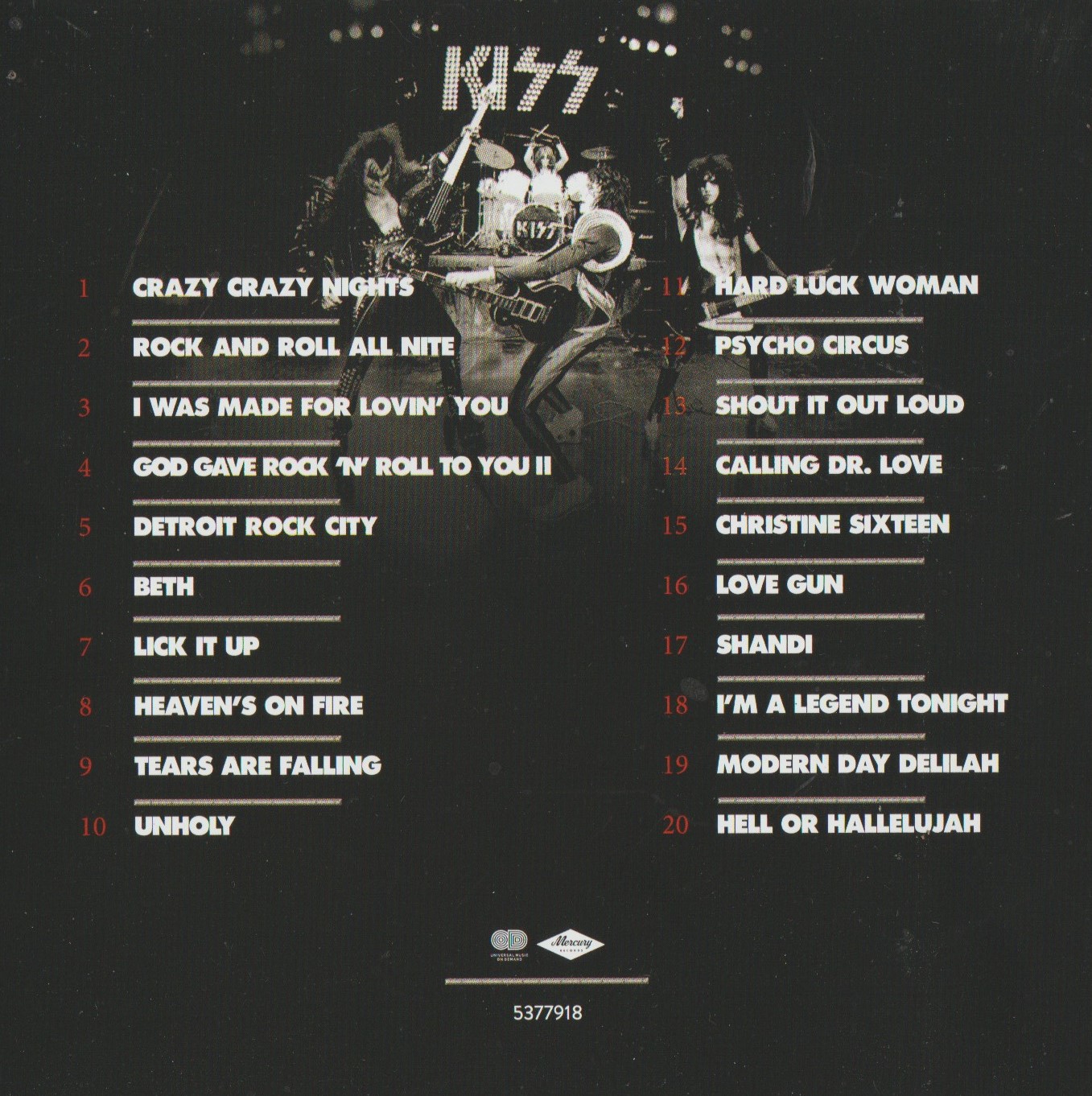
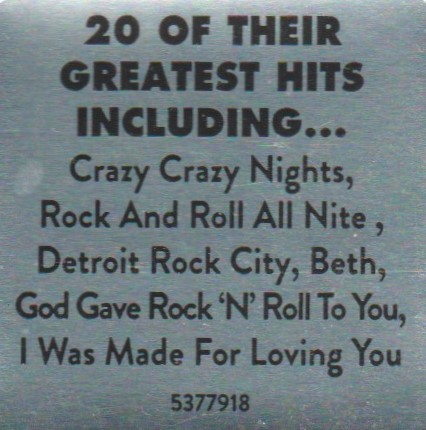
You know what KISSworld makes me miss?  The good old days when bands would bribe you into buying their new hits compilation by including something you didn’t have already.  In 1978, Kiss re-recorded “Strutter” for Double Platinum.  In ’82, Kiss recorded “I’m A Legend Tonight”, “Partners In Crime”, “Nowhere To Run” and “I’m A Legend Tonight” for inclusion on the UK compilation Killers.  And in ’88, Paul Stanley produced two new songs (“Let’s Put the X in Sex” and “(You Make Me) Rock Hard”) for Smashes, Thrashes & Hits.  Not great songs, but new ones at least, so you felt less foolish for handing Kiss more of your money.  By the time of 1996’s Greatest KISS album, they tacked on a new “live” version of “Shout It Out Loud”, and from that point on they pretty much gave up giving you any added value.  True, they did record “Samurai Son” for 2005’s KISS 40, but that was a mere blip in the overall pattern.

So in terms of reviews, all you can really talk about is song choice and running order.  It looks like KISSworld is just a revamping of various versions of KISS 40.  The running order is no longer chronological, but the songs are the same.  Opener “Crazy Crazy Nights” was on the single CD KISS 40.  “Unholy” was on the double CD version of KISS 40, albeit live.  “I’m A Legend Tonight” was on both, and so on.  It would have been nice to hear something you don’t get very often, like “All Hell’s Breaking Loose” or “Got to Choose”, but nobody expects bravery from a Kiss tracklist or setlist these days.

Kiss Dynasty poster

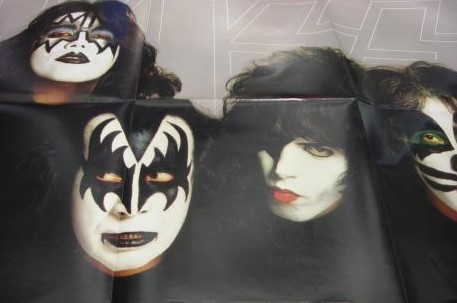
Fans who were buying Kiss albums during the peak years probably miss the excellent packaging Kiss would throw in for free.  Look at the mirror finish of the original Double Platinum LP, or the posters and masks and booklets that came with other albums.  Buy a Kiss CD today, get nothin’!  KISSworld has one vintage 1974 black and white photo inside, song credits and nothing else.  Granted, we know that Kiss doesn’t come up with these releases, it’s the record label.  And we keep buying them and buying them, “for the collection”, even though we know we’re going to be disappointed.  The label isn’t thinking of us when they issue this stuff.  They think of it as a part of their latest marketing push, aimed at people buying their first Kiss (or first Kiss in decades).  But they know — they know — that we fans are buying these things too.  They can’t throw us a bone?  What is there here for us?

Nothing, except another CD to file in the appropriate slot, making our collections “complete” again.  Will you listen to it?  Maybe, if you’re tossing coins and can’t decide which greatest hits to play on this particular road trip.  It is, however, the most complete of the in-print, easily-acquired hits CDs.  For a first timer, it would appear to make sense to grab this over Double Platinum or one of the other choices at the CD shop.  You’d be getting a good variety of tunes from over their entire career.  But you’re not getting something assembled with any logic or care, nor are you buying a fair representation of their best stuff.  In fact, this CD only has one song from their first three albums (“Rock and Roll All Nite”)  You could make a greatest hits just from their first three albums!  KISSworld‘s ill-considered tracklist is its downfall.

1/5 stars


THE COMPLETE KISS RE-REVIEW SERIES

GETTING MORE TALE #551: “You’re Wrong on Unmasked“ (Introduction to the Kiss Re-Review series)
Part 1: Wicked Lester (1972) & the Eddie Kramer demos (1973)
Part 2: KISS (1974 Casablanca)
Part 3: Hotter Than Hell (1974 Casablanca)
GETTING MORE TALE #353: Hotter Than Hell
Supplemental: DUST – Hard Attack (1972) / Dust (1971) (2013 Sony Legacy)
Part 4: Agora Ballroom 1974 (2015 Go Faster)
Part 5: Dressed To Kill (1975 Casablanca)
Part 6: Alive! (1975 Casablanca)
GETTING MORE TALE #552: Alive!
Part 7: Destroyer (1976 Casablanca)
Part 8: Rock and Roll Over (1976 Casablanca)
Part 9: Love Gun (1977 Casablanca, 2014 deluxe)
Part 10: Alive II (1977 Casablanca)
Part 11: KISS Meets the Phantom of the Park (1978 Hanna-Barbera TV movie)
Part 12: Double Platinum (1978 Casablanca)
Part 13: Peter Criss (1978 Casablanca)
Part 14: Ace Frehley (1978 Casablanca)
Part 15: Gene Simmons (1978 Casablanca)
Part 16: Paul Stanley (1978 Casablanca)
Part 17: Dynasty (1979 Casablanca)
Part 18: Unmasked (1980 Casablanca
Supplemental:  PETER CRISS – Out of Control (1980 Casablanca
Part 19: Best of Solo Albums (1979 Phonogram)
Part 20: Music From the Elder (1981 Casablanca, 1997 Mercury remaster)
Part 21: Killers (1982 Germany and Japan versions)
Supplemental: PETER CRISS – Let Me Rock You (1982 Casablanca)
Part 22: Creatures of the Night (1982 Casablanca, 1985 Polygram reissue)
Part 23: Lick It Up (1983 Polygram)
Part 24: Demos 1981-1983 (Bootleg)
Part 25: Animalize (1984 Polygram)
Part 26: Animalize Live Uncensored – audio portion (2015 American Icons)
Part 27: Runaway (1984 Tristar feature film)
GETTING MORE TALE #579: Entering the Asylum
Part 28: Asylum (1985 Polygram)
Part 29: Crazy Nights (1987 Polygram)
Part 30: VINNIE VINCENT INVASION – Vinnie Vincent Invasion (1986 Chysalis)
Part 31: eXposed (1987 Polygram VHS)
Part 32: Monsters of Rock (Bootleg from 1988 tour)
Part 33: In the Land of the Rising Sun (Bootleg from 1988 tour)
Part 34: The Ritz, NYC, 12th August 1988 (2015 American Icons)
Part 35: VINNIE VINCENT INVASION – All Systems Go (1988 Chysalis)
Part 36: Smashes, Thrashes & Hits (1988 Mercury)
Part 37: KISS – Still On Fire (Dave Thomas & Anders Holm (1988 book)
GETTING MORE TALE #608: Hot in the Shade
Part 38: Hot in the Shade (1989 Polygram)
Part 39: “Forever” (1990 Polygram EP
GETTING MORE TALE #690: Unholy Kisses
Part 40: “God Gave Rock & Roll to You II” (1991 Interscope single)
Part 41: ERIC CARR – Rockology (2000 EMI)
Part 42: ERIC CARR – Unfinished Business (2011 Auto Rock Records)
Part 43: Revenge (1992 Polygram)
Part 44: Alive III (1993 Polygram)
Part 45: KISS My Ass – Classic Kiss Regrooved (1994 Polygram)
GETTING MORE TALE #697: Kiss My Ass
Part 46: Toronto – Scotiabank Arena, March 20 2019
Supplemental: KISS Playing Cards
Supplemental: KISS Crocs
Part 47: KISSWorld – The Best of Kiss (2017 Mercury)

AND THERE’S STILL MORE!

72 MORE KISS REVIEWS available by clicking this link!


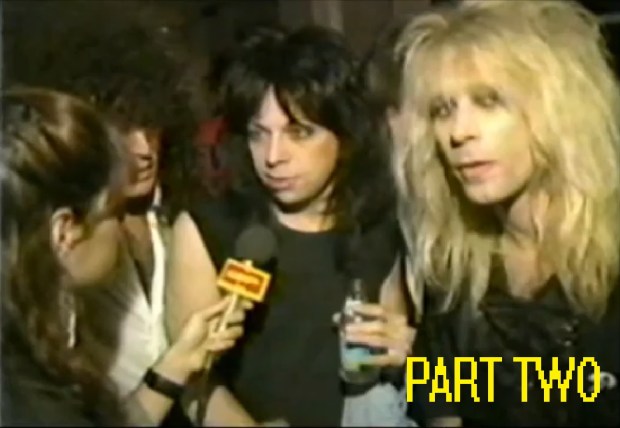
VHS Archives #3: Vinnie Vincent Invasion interview (part two)

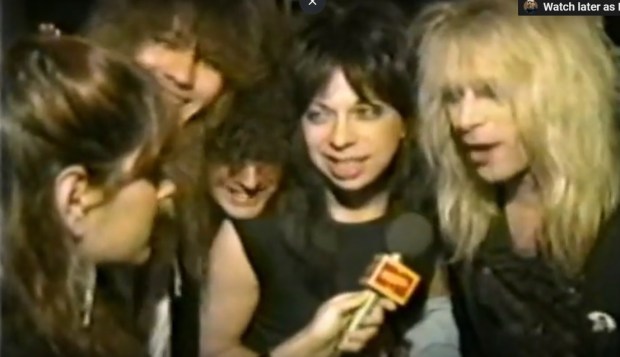
The second part of the Vinnie Vincent Invasion interview by Erica Ehm, from MuchMusic’s Pepsi Power Hour, September 1987. Dana, Vinnie and Bobby speak. Mark makes faces.

“Why is there so much heavy metal in L.A.?” is the question.

Part one can be found here.

VHS Archives #1: Vinnie Vincent Invasion interview (1987)

I have begun converting my video library to digital! The big challenge is finding all the old tapes. I have no idea where I put the most important ones.

In the meantime, enjoy this brief Vinnie Vincent Invasion interview with Erica Ehm, from MuchMusic’s Pepsi Power Hour, September 1987. Bigger and better stuff will follow if/when I find the tapes.

RE-REVIEW: KISS – Revenge (1992)

The KISS RE-REVIEW SERIES Part 43

 – Revenge (1992 Polygram)

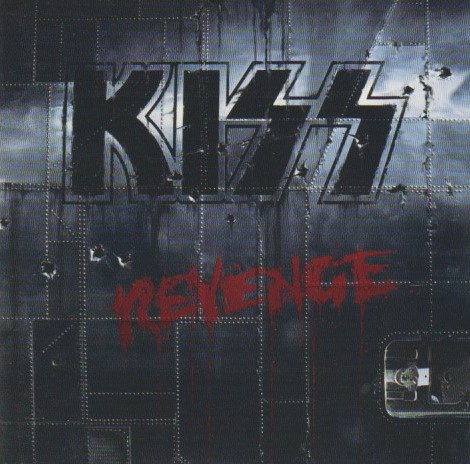
The first three-year gap between Kiss albums.  The first Kiss record produced by Bob Ezrin since 1981.  The first shared Simmons/Stanley lead vocal in ages.  The first lineup change since 1984.  And saddest of all, Kiss’ first album without Eric Carr since 1980.  Revenge was a shakeup for fans and band alike.

The pendulum of rock had swung back to “heavy”, with Metallica scorching the charts and grunge pummelling everyone else with new sounds.  It was obvious that Kiss had to go heavier, too.  In 1992, most rock bands had to sink or swim.  In order to swim, bands tended to heavy things up.  A lot of the time they called it “going back to the roots”.

Kiss began making tentative steps back that way.  Hot in the Shade (1989) toned down a lot of the keyboards and 80s trappings.  On tour, they played more old material like “Dr. Love”, “God of Thunder”, and “I Was Made for Loving You”.  Then, as an experiment, they got back together with Bob Ezrin for a song from a movie soundtrack.  Everyone was writing, even the sick Eric Carr.  The initial plan was to have Eric play on half the new album, so he could have time to recover from his cancer surgery.  The drummer from Paul Stanley’s solo tour, Eric Singer, was available to play on the other half.  Singer was on tour with Alice Cooper during the summer of 1991, but would be home soon enough.  Then, on November 24, Eric Carr passed.

The most obvious choice to replace Carr was Eric Singer.  He was already working with the band, he knew the songs, and he was a fan.  Bruce Kulick found him inspiring to have around, as Singer loved his guitar work.  In fact the only thing about Eric Singer that didn’t fit was his hair colour!

The energetic new drummer was a godsend.  With albums to his name by Black Sabbath and Badlands, Kiss couldn’t have asked for a more technically adept player.  He could hit hard (though Eric Carr takes the belt in that regard) and he could authentically do any era of Kiss.  Be it the early, slippery Peter Criss material or the heavy metal of Eric Carr, Singer had it all covered.  And he could sing!  Though we wouldn’t get there quite yet.

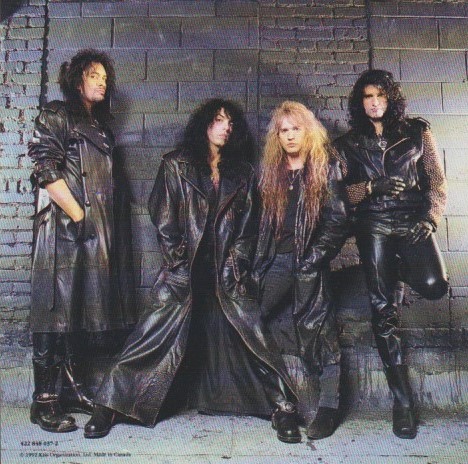
It was the heavy metal side that was most immediately apparent.  The first track and first video from Revenge was “Unholy”, something very unlike anything Kiss had done before.  And it came about in a most peculiar way.  Enter:  Vinnie Vincent.

Those who say “Vinnie saved Kiss” will point to “Unholy” as one such song that saved Kiss.  After years of estrangement (and preceding even more), Vinnie came out to write with Gene and Paul.  “Unholy” was one of three songs he contributed.

With a fury unlike any before, Gene Simmons and company swirl in rage on “Unholy”.  The closest they got to this kind of heavy before would be Creatures, but there’s something just pissed off about it that wasn’t there before.  With a concrete riff and angry slabs of drum tribalism, Kiss announced their return loudly.  Not to be outdone, soloist Bruce Kulick laid down his noisiest guitar assault yet.  There isn’t an ounce of fluff to “Unholy”.

Thanks to Bob Ezrin, Revenge is Kiss’ best sounding album since Lick It Up or Creatures.  It’s no Destroyer, and it’s no Elder.  This time they cut the extras down to the bone, leaving the four Kiss guys to rock it themselves.  Err, mostly themselves.  That’s Kevin Valentine on drums for the second song, “Take It Off”.  Strange that Kiss continued to have ghost musicians on albums when they clearly didn’t need to.  An ode to strippers, “Take It Off” is lyrically juvenile, but gleams like stainless steel.  Paul Stanley wrote it with Ezrin and ex-Alice Cooper guitarist Kane Roberts, and it could have been used as a single had Revenge needed another.  A dirty, dirty single.

Paul, Bruce and Ezrin composed “Tough Love” with a slower, chunky riff.  Kulick’s solo is remarkable, but it’s also just nice hearing Paul do a sex song that has some balls.  There is no “X” in this sex, although there’s a little BDSM for the 50 Shades crowd.  Then, teaming up with Gene, they do their first co-write and co-lead vocals together in the first time in a dog’s age.  “Spit” is old school fun with a modern heavy edge.  Bruce pays homage to Jimi Hendrix in his complex guitar solo, a composition all to itself.  Eric Singer gets to throw down tricky beats and fills, making “Spit” one of the most deceptively clever songs Kiss has done.

“God Gave Rock ‘N’ Roll To You II” was released as a single the year before.  It was the experiment with Ezrin that kicked off Revenge in the first place.  It was the only song that Eric Carr was alive for, and you can clearly hear him on backing vocals.  Singer handled the drums, though Carr did it in the music video.  The album mix is different from the single or soundtrack, in order to better suit the sonics of Revenge as its sole anthem.

Gene tells a story about a girl who “kisses like the kiss of death” to end side one.  “Domino” hearkens back to early Kiss, with a sparse arrangement and Gene playing rhythm guitar instead of Paul.  This greasy rocker just screams “Kiss”.  There is nobody else with songs like “Domino”.  It was the third single from Revenge, sporting a nifty video with Gene cruising around in a convertible while Kiss plays as a trio!  Paul Stanley: bass guitar.

“Heart of Chrome”, the second Vinnie Vincent collaboration, rocks with attitude.  Once again, anger seems to be the emotion of the day.  The 90s-look Kiss could deliver anger in spades.  Then Gene takes the mantle on “Thou Shalt Not”.

He said “kindly reconsider the sins of your past,”
I said “Mister you can kindly kiss my ass.”

These are not songs for the Kiss hits mix tape you’re making for your roadtrip.  These are songs to be experienced in context of the album, where they deliver mighty riffs and enough hooks for the long-player.  “Thou Shalt Not” has another one of those Kulick solos that could be a study in string manipulation, and Singer just keeps it kicking the whole way through.

You could choose from two schools of thought regarding “Every Time I Look at You”.  As the album’s only true ballad, some see it as a mistake on a record as heavy as Revenge.  Others see it as a reprieve from a fairly relentless onslaught.  Indeed, it does sound as if from another album.  With a string section, Ezrin on piano, and Dick Wagner on ghost guitar, one could even argue that it’s an album highlight.  A little re-sequencing though, and you probably wouldn’t even miss it.

Gene makes it heavy again on “Paralyzed”, not an outstanding track but a little funkier than usual.  “I Just Wanna” is far more entertaining, though it is a shameless and obvious rip-off from “Summertime Blues”.  It was chosen as the second single, and lo and behold, it’s the third Vinnie Vincent song too.  “I Just Wanna” is immediately catchy and memorable for days.  Probably because you already knew it as “Summertime Blues”.

As a touching surprise, Revenge ends on an instrumental called “Carr Jam 1981”.  Bob Ezrin dug up an old demo from The Elder with a hot riff and a complete drum solo.  It had been bootlegged before, notably on Demos 1981-1983, but not with very good sound.  Ace Frehley even recorded it as “Breakout” on his second solo album.  Ezrin cleaned up the original demo for Revenge, edited it for length, and overdubbed Bruce on lead guitar.  “Carr Jam” has become Eric’s signature drum solo.  Placing it here at the end of Revenge was not only poignant but also just great sequencing.

Album in hand, now it was time to tour.  Kiss would start with a short run in the clubs.  More on that next time.

Today’s rating:

4.5/5 stars

Original mikeladano.com review:  2012/08/10

Sunday Chuckle: Not Kiss!

A good buddy of mine has three kids.  He will often play them music via Youtube, and they have been enjoying classic Kiss lately.  In fact about a year ago, I myself was trying to teach them the correct words to “Shout it Out Loud”, for which they were singing their own variation.

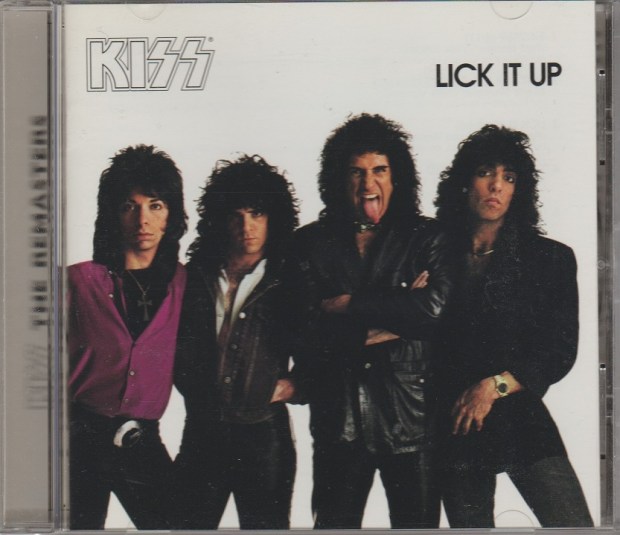
My buddy tells me that the other day, Youtube shuffled to the “Lick It Up” video and he pointed out, “Look kids, Kiss.”  His infant daughter looked up, saw four guys with no makeup on, and yelled, “NOT KISS!”

Smart kid.  Just a child and already knows “new” Kiss from “old” Kiss.

BOOK REVIEW: KISS Still On Fire – Dave Thomas & Anders Holm (1988)

The KISS RE-REVIEW SERIES Part 37: bonus book review

 Still On Fire – Dave Thomas & Anders Holm (1988 Melody Line)

In the 1980s, there were generally no Kiss books on the market.  If you found one, you bought it.  The only widely known Kiss book back then was 1978’s paperback Kiss by Robert Duncan.  I was lucky to find Kiss Still On Fire in Stratford Ontario on December 27, 1990 in a great little store called The Book Vault.  Still On Fire is very very unofficial, but it was unequalled in its time:  130 magazine sized pages, mostly in full colour, loaded with pictures, facts and a few errors.

Peppered with old interviews and article snippets, Still On Fire takes a balanced look at the band and isn’t afraid to get critical when it’s warranted.  It also attempts to take a crack at who played what on some of those tracks where it wasn’t quite clear.  For example, Ace Frehley is pictured on the front cover of Killers, but didn’t play on any of the new songs.  Still On Fire quotes a Paul Stanley interview.  Was it Bob Kulick playing lead on these tracks?  “Bob did come out, yes, but he didn’t play.  When I couldn’t handle things — and I don’t consider myself the ultimate lead player — another friend of ours came in and gave us a little help.”  The book states this friend was Robbin Crosby of Ratt, a claim that is not backed up in other sources.  Did Crosby play on Killers?  Who knows, but according to this book, he did.  Other books such as Julian Gill’s Kiss Album Focus claim Bob Kulick did play some on Killers.  In other words, if you read something interesting in this book that contradicts what you’ve read elsewhere, take it with a grain of salt.

There’s a bit of content here about what Gene was doing in the 1980s outside of Kiss:  producing bands such as Black & Blue and EZO.  Gene was responsible for EZO’s fantastic single “Flashback Heart Attack”, co-written by James Christian of Simmons Record act House of Lords.  Gene was also working on movies but was having trouble finding the time.  Apparently Sergio Leone really wanted Gene Simmons for Once Upon a Time in America in the role of Max, ultimately played by James Woods.  Can you imagine?

Besides the ample photos, the most impressive feature of Still On Fire is the discography.  Though incomplete, Still On Fire attempts to document myriad Kiss bootleg recordings, including cover art.  There are also interesting promo and foreign releases, such as the Special Kiss Tour Album and Kiss – The Singles.  Side projects and solo albums are included, from major (Frehley’s Comet) to obscure (Bruce Kulick’s band The Good Rats).  A variety of singles, picture discs and videos are on display, fully illustrated.  All of this was completely new to me then.  Not to mention the titles of unreleased songs!  What the heck were “Don’t Run” and “The Unknown Force”?  (The Elder demos.)  This is also where you’ll find the most typos and spelling errors.  (I really want to hear this song called “Pick It Up”.)

Still On Fire isn’t definitive nor is it definitely 100% accurate, but it should still prove to be a valuable resource for your Kiss library.

3.5/5 stars


RE-REVIEW: KISS – Smashes, Thrashes & Hits (1988)

The KISS RE-REVIEW SERIES Part 36: 

 – Smashes, Thrashes & Hits (1988 Mercury)

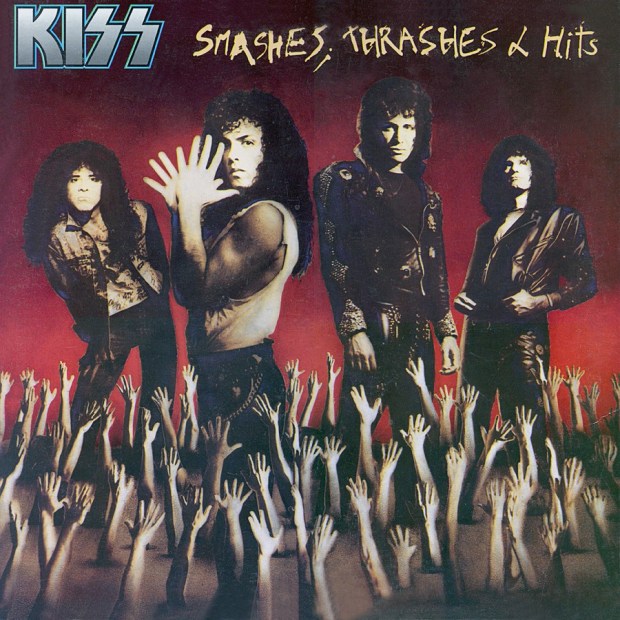
Though hard to believe, in 1988 Kiss needed the money.  According to CK Lendt in his book KISS and Sell, they were in trouble financially.  Some bad investments and too many expenses, plus the underperformance of Crazy Nights, had the band in a bind.  The traditional easy solution is to throw together a “greatest hits” set.

Gene announced this album to Canadian audiences on a trip to the Great White North promoting his record label, Simmons Records.  House of Lords were the band he primed to be big, and their debut album is held in high esteem by rock connoisseurs worldwide.  It seemed to fans that Simmons was transitioning from Hollywood to businessman.  Surely, it was hard to believe him when he claimed Kiss was still his priority.

Greatest hits albums need something new to sell them.  This was left to Paul Stanley, who produced two new songs co-written with Desmond Child (and Diane Warren on one).   It seems unlikely that Gene cared much at this point.  In the music video for one of the new songs, “(You Make Me) Rock Hard”, he can be clearly seen miming the wrong words.

Speaking of music videos, “Let’s Put the X in Sex” was something new for the band (and it wasn’t the lawsuit from the people who owned the building in the video).  Suddenly, Kiss were a three-piece backing band with a guitar-less frontman.  At least in the videos for Crazy Nights, Paul Stanley wore and danced with a guitar.  In “Let’s Put the X in Sex”, he is front and center, without instrument:  the frontman.  Gene’s just the bass player in these videos, looking completely lost.  Paul was doing all the work behind the scenes, therefore he was going to take the spotlight.  And why not?

Getting two new Kiss songs on a greatest hits was good in theory.  Even back then, we sensed they were more the “Paul Stanley Project” than Kiss.  For Kiss, they are too light and glossy.  “Let’s Put the X in Sex” has horns (or is it synth?) making it sound vaguely like an Aerosmith outtake from Permanent Vacation.  At least Steven Tyler injects a little cleverness into his innuendo.  Both Bruce Kulick and Eric Carr rise to the occasion with worthy work, but the tune is a dud.

Likewise with “(You Make Me) Rock Hard”, which passed for a rocker at the time.  Neither of the new tracks are as good as the four on Kiss Killers.  Paul must have just been out of gas.  He states these songs were the best he could do at the time without his partner in crime.  “Rock Hard” is just Kiss by numbers.

First two tracks aside, Smashes, Thrashes & Hits contains 13 of the greatest.  Most are remixed (ill-advisedly) to bring all the tracks to a standard sonic backdrop.  The remixes are from a variety of names in a number of studios:  Dave Wittman, David Thoener, Jay Messina for example.  Some played it a little more loose with the tracks, others didn’t meddle much.  “Love Gun” is an example of a remix that changes things up, but still works.  Ace’s solo is given more emphasis by mixing out the vocals.  It’s a cool alternate arrangement.  Excess echo is added on the drums…you can’t win ’em all.  Many of the remixes suffer from drum related issues.

Smashes, Thrashes & Hits takes a scattershot approach to running order.  It’s very telling that no tracks from Crazy Nights were included, except in the UK where “Crazy Crazy Nights” and “Reason to Live” were hits.  No tracks with an Ace Frehley writing credit were included, and only one from Peter Criss.  That’s another gripe that fans have with this album.

“Beth” is included, a throwback to one of Kiss’ biggest hits, which they tended to shun since Peter’s 1980 departure from Kiss.  It’s considered a slap in the face to Peter that Eric Carr was called in to re-record the lead vocal.  The backing track is identical.  Carr never felt comfortable in this role, but had never been featured on an album lead vocal before.  It was a hell of a dilemma for the drummer.  He’d been in the band for six years and six albums, and never got a lead vocal.  He did the best he could.  The re-recorded “Beth” didn’t replace the original, and it remains an oddity in the Kiss canon.

One afternoon in the summer of 1990, Bob and I were hanging out with these two girls at his trailer that we were going out with.  We were listening to songs, but Bob and I didn’t seem to get much say in what songs.  One of the girls said, “I have some Kiss!” and put on Beth.  As soon as she did, I had a feeling it wouldn’t be the original.  Simultaneously, Bob and I both said, “Oh no, it’s Eric!”  The girls had no idea what we were talking about or why it was a big deal.

Smashes, Thrashes & Hits was the first compilation to reconcile the makeup and non-makeup eras of Kiss.  The majority are from the makeup years, as it should be, with only three from non-makeup albums.  You could argue for this song and that song, but the running order is jarring.  “Heaven’s On Fire” into “Dr. Love” is not even as bizarre as “Beth” into “Tears are Falling”.  The less familiar remixes don’t help the situation.  Incidentally, the only songs untouched by remixers’ hands are “Lick It Up”, “Heaven’s On Fire”, “Tears are Falling” and “I Was Made For Lovin’ You”.

There was no tour for Smashes, Thrashes and Hits.  Gene had his label stuff, including a new Canadian band called Gypsy Rose to think about.  (Remember “Poisoned By Love” on Simmons Records?)  Paul Stanley didn’t want to sit idle, and so did a 1989 solo tour.  Kiss family member Bob Kulick returned to his side on guitar.  Kiss keyboardist Gary Corbett was there with bassist Dennis St. James and ex-Black Sabbath drummer Eric Singer.  The setlist featured a number of old Kiss classics that hadn’t been played live in 10 years, such as “I Want You”.  Eric Carr was unhappy about the solo tour, worrying about what it meant.  Like most Kiss fans, he wondered if it was the beginning of the end.  He also worried that Paul didn’t ask him to be his solo drummer.  Paul said it was because two Kiss members wouldn’t be right for a solo tour.  Ominously, Eric Carr said about Singer:  “That’s the guy who’s going to replace me.”

Fans were confused and some were unhappy.  Like they had once before, Kiss were drifting further and further into pop music.  This time, it was without Ace Frehley to keep them anchored.  Paul Stanley now seemed to be a Bon Jovi-like dancing frontman.  These new songs were not easy to stomach, and the Eric Carr vocal felt all wrong.  Had Kiss lost all credibility?  Smashes, Thrashes and Hits wasn’t winning any back.

Today’s rating:

2/5 stars

Original mikeladano.com review:  2012/08/06