Warner Brothers

REVIEW: The Best of ZZ Top (1977 cassette)

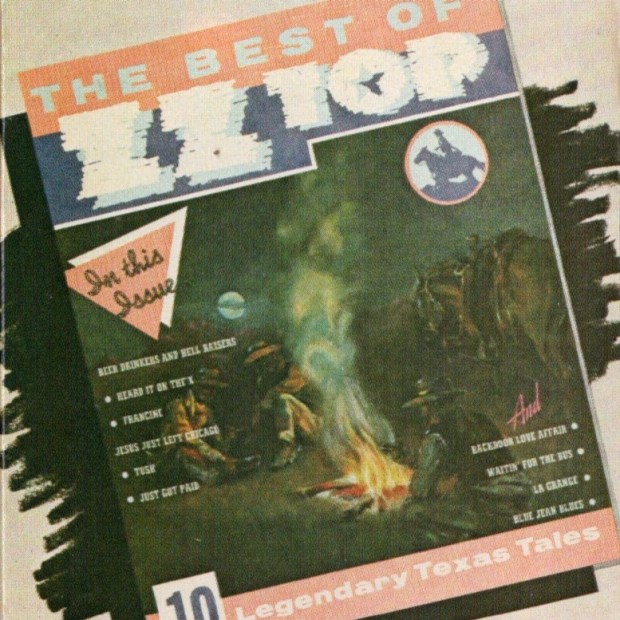
ZZ TOP – The Best of ZZ Top (1977 WEA cassette)

While ZZ Top were on a break between Tejas and Degüello, it made sense to issue the band’s first Best Of.  This album was released in 1977 and though it did not chart high, it did eventually go double platinum, selling over 2,000,000 copies in the United States alone.

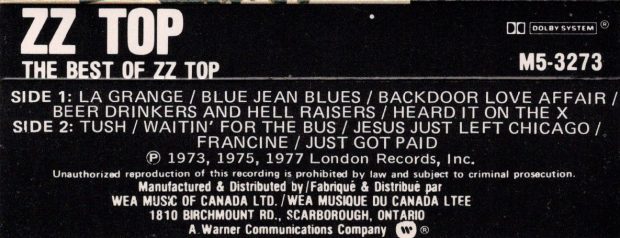
The cassette and vinyl releases had the sides flipped.  This cassette copy in hand begins with “La Grange”, which is still a pretty solid opening even if the vinyl says otherwise!  “La Grange” is an ode to a house of ill repute somewhere in Texas, and it became the prototype blues/rock shuffle for a generation.  This song still burns up the radio today.

One of ZZ Top’s greatest blues had to be “Blue Jean Blues” from Fandango!  So slow, so fully soaked in whiskey and gasoline that you can smell it from here.  Billy Gibbons is fully in the driver’s seat here, but it is Frank Beard and Dusty Hill’s unobtrusive rhythm section that allows him to emote so well.

From the first album comes the dirty upbeat blues of “Backdoor Love Affair”.  It’s a combination of elements:  Billy’s distorted take on the blues guitar, mixed with Dusty’s melodic bass and Beard’s perfect punctuation.  By the end of the song, it’s a jam around a tasty riff.

The familiar “Beer Drinkers and Hell Raisers” from Tres Hombres is an incendiary duet between between Billy and Dusty.  Pedal to the metal, ZZ are off on one of the best rockers from the entire catalogue.  This is the kind of song that endeared them to the headbangers.  Similarly, “Heard it on the X” hones in on the speedy aspect of ZZ Top’s abilities.  This is another duet with Dusty and Billy, and an ode to the Mexican radio stations that informed much of ZZ Top’s upbringing.

Flipping the tape, we are now hearing what is side one of vinyl.  “Tush” ain’t a bad way to start.  It’s the stuff of legend today.  It boasts one of Billy’s best guitar riffs, yet it’s still little more than a basic blues.  It’s just a winning combination:  the blues progressions played by a rocking band.  Billy’s leads are as much of legend as the song itself, stinging little zips of flavour in a bluesy soup of chords and drums.

“Waitin’ For the Bus” is a steady blues.  The speed has been shed for this heavy sludgy one, with Billy laying down not just a guitar solo but a harmonica solo too, one after the other like one greasy blues rock statement.  Then, just like on the Tres Hombres album, “Jesus Just Left Chicago” follows immediately after.  Still blues, but of a different flavour.  ZZ Top were always talented at showing us different sides of the genre, while mixing it with the sensibilities of rock guitar distortion.

“Francine” is a belter, a perfect pop rock tune, with more rock than pop.  Billy’s little riff is tasty as candy, and the song has the necessary melodic mettle.  Even so, it is overshadowed by the slide-drenched closer “Just Got Paid”.  One of ZZ’s heaviest tracks, it’s made completely digestible by Billy’s incredible guitar work.

If you just got paid today, pick up some ZZ Top.

Notably, this cassette pre-dates any of the ZZ Top remixing shenanigans that happened in the 80s, so purists will get only the original classic tracks.

4.5/5 stars
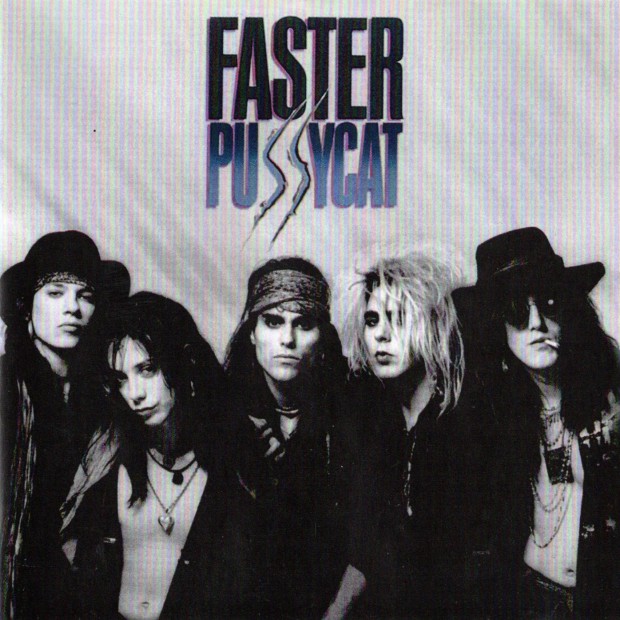
REVIEW: Faster Pussycat – Faster Pussycat (1987)

FASTER PUSSYCAT – Faster Pussycat (1987 Warner)
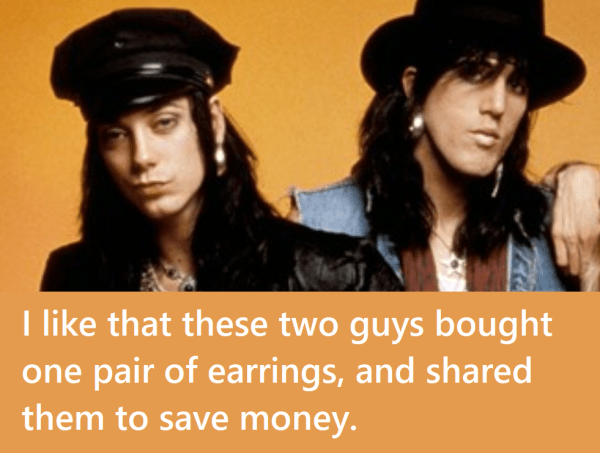
Here is a band that I ignored for decades.  When the music video for “Don’t Change That Song” came on ye olde Pepsi Power Hour on MuchMusic, it was just a step beyond how far I wanted to go.  I had made allowances and let Poison into my life, but Faster Pussycat seemed less goofy and more sleazy.  The gender-bending was there with Taime Downe’s makeup and nail polish, and the truth is I could not tell if Brent Muscat was a man or a woman.  I figured if the Bangles had a member named Michael that was a girl, then who’s to say this Brent person couldn’t also be a girl?  Greg Steele looked cool with the 5 o’clock shadow and headband wrapped with care, but very early on, I decided that Faster Pussycat were not for me.  It was a confusing time to be a young teenager discovering rock music.

Produced by Ric Browde, who also recorded Poison’s debut, Faster Pussycat’s debut is a rock-em sock-em ride through the gutters of California, with smiles all around.  It’s as if Aerosmith got a one-way ticket to Hollywood, bought some punk records, and went all-in on the debauchery.

Indeed, Aerosmith are the easiest comparison, especially vocally.  Taime Downe sounds like he’s fronting an outtake from Done With Mirrors on “Don’t Change That Song”, nailing every squeal and shriek just as Steven Tyler might.  Second track “Bathroom Wall” takes this further.  Faster Pussycat lack the manual dexterity of Perry and Whitford, and so we get a punked up version of the ‘Smith without the schooled knowledge of boogie and blues or clever wordplay.  This is Aerosmith: The Next Generation, after the punk wave had its impact and imparted a sense of who-gives-a-fuck.  And every note is tastier for it, like hard rock candy sharp enough to cut your teeth.

Third track in, and we hit our first serious deep cut:  “No Room For Emotion”.   It’s a slower groove that drawls seductively across the chords of classic rock and roll.  The Stones are the prime influence here, with just a hint of early Bon Scott-era AC/DC.

We all know Taime Downe ran the Cathouse club with Riki Rachtman, and so it seems natural that “Cathouse” is one of the better tracks.  High speed piano hammers away behind a breakneck rock and roll riff.  Taime takes the Tyler-esque screaming to its natural extremes on this track, which reads like an advertisement for the club.

Perhaps the first misstep is “Babylon”, seemingly a re-write of “You Gotta Fight For Your Right to Party” by the Beastie Boys.  It’s definitely in the same pocket.  There’s an annoying “pussy-pussycat” sample and an undeniably similarity of vibe.  Though it’s a bit of a classic for the band, it sounds a bit like they’re trying too hard.

In a classic case of packing all the hits on side one, side two must stand on the strength of deeper cuts.  “Smash Alley” is a tough little number, with cliche lyrics about gutters and back streets.  As for deep cuts, “Shooting You Down” might be the biggest one to be found.  An indelible chorus is matched with a simple riff and plenty of sneer from Taime Down.  It’s a brilliantly catchy deep cut and probably should have been considered for a single.

“City Has No Heart” continues with a series of somewhat soundalike music, though this one has soulful backing vocals atop a punky tune.  A good tune with a solid chorus, though at this point the Faster Pussycat sound starts to wear on the ears a bit.  You start to crave something a little different on side two, just as side one had “No Room For Emotion”.  There is no such change of pace on side two, and so we close out with “Ship Rolls In” and “Bottle In Front of Me” which rock us to the end.  “Ship Rolls In” has a Sex Pistols vibe on the chorus.  Then they go back to the Aero-vibe on closer “Bottle In Front Of Me”.  It leans into the funky sound of Aerosmith, circa Rock In A Hard Place, quite successfully.  It’s definitely a memorable closer, going full-on by the guitar solo.  Taime Downe shreds every last vocal chord, pushing it to the limit.  You’ll either love it or hate it, but if you love that screamin’ Steven Tyler on songs such as “Draw the Line”, then you’ll appreciate the lengths to which Downe pushes it.

The production of the album is of its time.  The snare drum sounds plastic and there’s a flat, two-dimensional vibe.  You can’t expect too much from an album released in 1987, folks.  People were listening to music on different devices and had different preferences back then.  Still, there are worse sounding records from this era and Faster Pussycat is worth of repeat listens.  Just take an Advil if a headache sets in by the end of side two.

3.75/5 stars


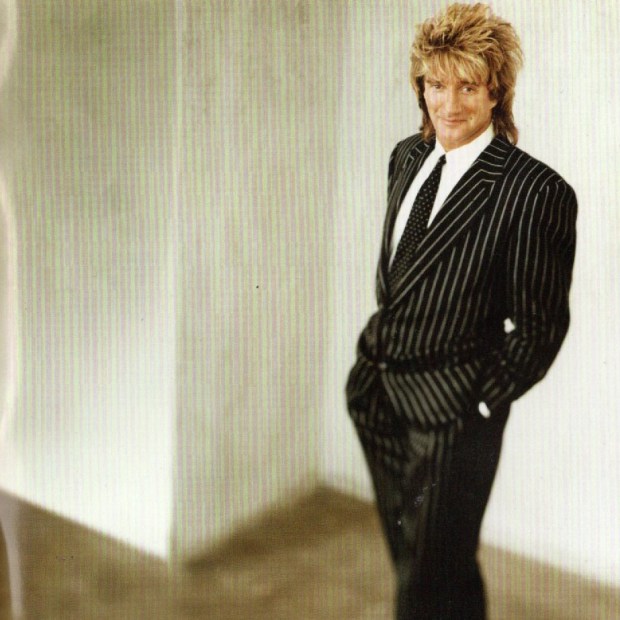
REVIEW: Rod Stewart – The Definitive Rod Stewart (2008)

ROD STEWART – The Definitive Rod Stewart (2008 Warner)

Compilations, eh?  You get one, and it’s great, but…it doesn’t have all the songs that you like, does it?  In this case, I was craving some Rod (now now!) and I really wanted to hear one from my youth:  “Infatuation”!  I was craving that hook!  “Oh no, not again!  It hurts so good, I don’t understand!”  Jeff Beck:  lead guitar!  I searched my library and I was missing that track.  What to do about it?

Rod Stewart has numerous compilations to choose from, going back to 1973’s Sing It Again Rod.  (That one’s interesting for the inclusion of “Pinball Wizard” from the London Sympony version of Tommy.)  You could go any number of ways.  1989’s Downtown Train had “Infatuation” on it, as well as “People Get Ready”.

I could have sought out the original album it was on, Camouflage, but I don’t recall liking the album much.  I decided instead to augment my collection with another 2 CD compilation:  2008’s Definitive.  It’s extremely similar to the 2001 set, The Story So Far, but with a slightly better track list.  This time we get “Passion”, “Infatuation”, “My Heart Can’t Tell You No”, and “Stay With Me” (The Faces) among the rest of the 70s, 80s, and 90s hits.  We lose “Don’t Come Around Here” which is a good thing.  Unfortunately we also lose the Stones cover “Ruby Tuesday” and “All For Love” with Sting and Bryan Adams.  There’s no such thing as a perfect compilation.  You’re always going to have to get a couple, and even then, you’re still missing the amazing Robbie Robertson cover, “Broken Arrow”.

This set goes all the way up to MTV Unplugged.   Rod made great music after that, but a lot of the albums were his American Songbooks of standards, that not everybody needs.  The cool thing is, there’s also a bonus track from 1998.  “Two Shades of Blue” is an outtake from his excellent rock album, When We Were the New Boys (the one with the Oasis cover “Cigarettes and Alcohol”).  This ballad might not have been necessary on that record, but it’s actually quite good if a bit generic.  Interestingly it features a sample from a Russian opera, so it’s not exactly ordinary either.  The actual cool thing is that it is a Rod sole-written original, not a cover or something written for him.  Rod’s a great songwriter when he wants to do it!

This album won’t tick all of your Rod Stewart boxes, but it’ll cover most.

4/5 stars

The 1002nd Album – S1E29. Steve Earle – I Feel Alright (Mike Ladano)

Thank you Geoff Stephen from the 1002nd Album for this chance to talk about Steve Earle’s immensely great I Feel Alright album.

Geoff’s words:

Welcome, Mike ‘LeBrain’ Ladano! Join Mike & I as we discuss quadratic relation-esque running orders, why we avoid skipping so-called skippable tracks, and the ‘je ne sais quoi’ that makes certain albums magical.

Enjoy on Youtube below!


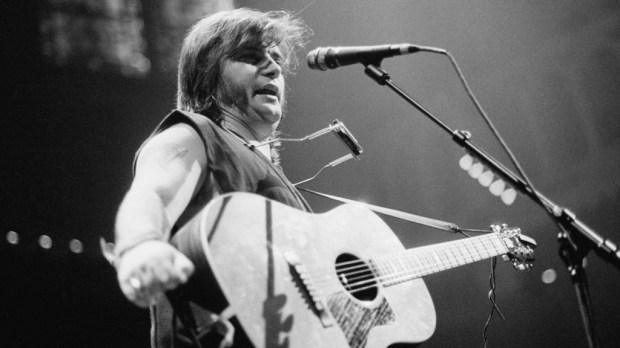
REVIEW: Steve Earle – I Feel Alright (1996)

STEVE EARLE – I Feel Alright (1996 Warner)
One of the greatest albums of the 90s might never have happened if Steve Earle didn’t get addicted, go to jail, and finally clean up.  Earle was always a formidable songwriter.  “Ain’t Ever Satisfied”, “Someday”, and “The Other Kind” (to name only three) dripped with emotion and a certain perfection, insofar as art goes.  Steve’s songs were always about life, but in the 90s, life got intense.  I Feel Alright is the resultant album, a masterpiece that serves as the prototype for several more of Earle’s later works.

I Feel Alright was actually preceded by an acoustic album called Train A Comin’, made up of songs written from 1974 to 1995  In the liner notes, Steve tells the story.

“When I was locked up, I was getting ready to go off on this boy that stole my radio.  My partner Paul asked me where I was going.  I said, ‘To get my radio, and then go to the hole for a little while.’  He looked at me like I look at my 13 year old sometimes and said, ‘No, you ain’t.  You’re gonna sit your little white ass down and do your little time and then you’re gonna get out of here and make me a nice record.’  SO, I MADE TWO.”

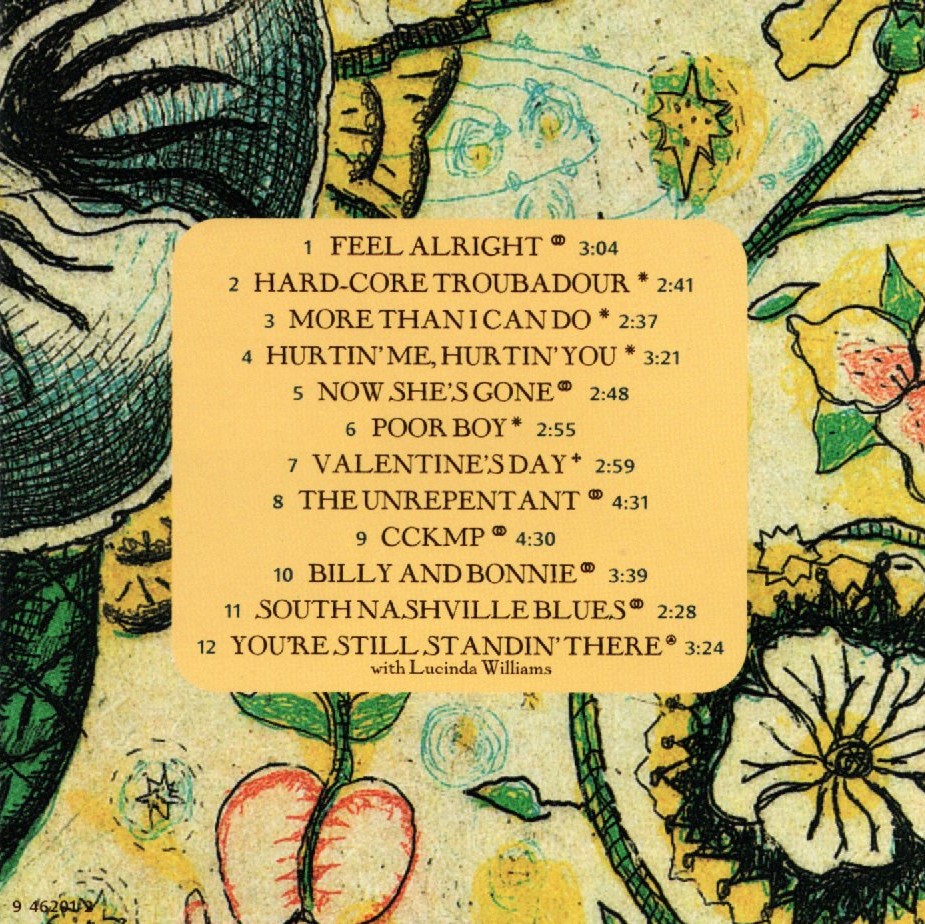
“I Feel Alright” opens with defiant chords, hands hitting the strings unrelentingly, and then Steve opens his mouth.  It’s the same voice but somehow, now it feels like he really means it.   “I feel alright tonight,” he sings reassuringly.  Because we were worried about him!  The worldly lyrics are backed by shimmering layers of guitar.

Fun hits hard on “Hard Core Troubadour”, classic guitars chiming away.  Singing about a girl who’s seeing another guy on the side, Steve threatens him with the epic line:  “Wherefore art thou Romeo, you son of a bitch?”  It’s over and out in under three minutes, but the enduring adventure will be worth a repeat spin.

A blast of harmonica enters for the sentimental “More Than I Can Do”.  Upbeat and unforgettable.   Simple, impeccably constructed, and effective.  Three perfect songs in a row.

The first ballad, “Hurtin’ Me, Hurtin’ You”, is the kind of song Steven Tyler has been trying to write since about 1993, except done right.  This is what he’s been trying to write — the bluesy country heartbroken ballad with punch.  Sorry Tyler, Steve’s got you beat.  This song has “Crazy” beat by a country mile.

Upbeat harmonica enters the fray once again on “Now She’s Gone”, the story of a wild child.  Something Steve probably knows a thing or two about.  Vivid storytelling.  “She met a boy up in Kentucky, Charlie was his name. Just when he thought he got lucky, she stole his watch and chain.”  Most of I Feel Alright is short and sweet and this is no exception.  With rough and weathered voice, Earle sings it with intent.

Side one closes on “Poor Boy”, traditional country a-la Johnny (Cash or Horton).  Strong beat, light twang, and seasoned singing.  This is the kind of country Steve would have grown up on.

Opening side two, “Valentine’s Day” is a somber apology.  It sounds like Earle has made quite a few apologies in his day, and this represents them all.  Gentle, with subtle country backing vocals and light strings.

The clouds give way to a fiery blaze in “The Unrepentant”.  Steve’s hunting the devil himself this time, with a “bad attitude and a loaded .44.”  He concludes his threat with, “You got your pitchfork and I got my gun…somebody’s gotta do it.”  Fans of “Copperhead Road” will enjoy this song cut from a similar electrified cloth, though at a slower, more deliberate pace.

The only track on I Feel Alright that might be out of step is the blunt blues “CCKMP” (“Cocaine Cannot Kill My Pain”).  It’s obviously dark, raw, and intense.  Clearly born from Steve’s own experiences, and completely relevant to the journey.  Will you enjoy listening to it?  Difficult to say.  What can be said is “CCKMP” is the dark point of this ride, the scary part in the tunnel.  It has its place.  It would have been wrong to leave out this crucial part of Steve’s journey.

“Billy and Bonnie” is a classic outlaw story, mandolin singing away while a driving beat takes us on down a dusty dirt road.  A Cadillac, a gas station robbery, and a day in court make for a killer story (literally)!  Then it’s a little bit of traditional country bluegrass on “South Nashville Blues”.  Looking for a little company, with money in pocket.

Ending as strongly as it began, I Feel Alright goes out on a duet with Lucinda Williams.  “You’re Still Standing There” is the love letter at the end of the story, the happy ending.  More blasts of harmonica, backed by impeccable melodic construction.  When you filter those melodies through the very human voices of Steve Earle and Lucinda Williams, you get a raw celebration of a closer that just makes you wanna smile.

The celebration is just that Steve survived.  That he came back truly a stronger singer/songwriter is the remarkable part.  Though he came close to perfection on followup albums like El Corazón and Trancendental Blues, song for song, Steve has never touched the level of I Feel Alright again.  It’s one of those magical albums that’s composed of classic after classic after classic; songs you want to keep hearing over and over again.  Very real performances, communicating human emotion efficaciously.  A perfect record.

5/5 stars

REVIEW: D.A.D. – No Fuel Left for the Pilgrims (1989)

“And when the night comes to the city I say…I’m sleeping my day away.” – D.A.D.

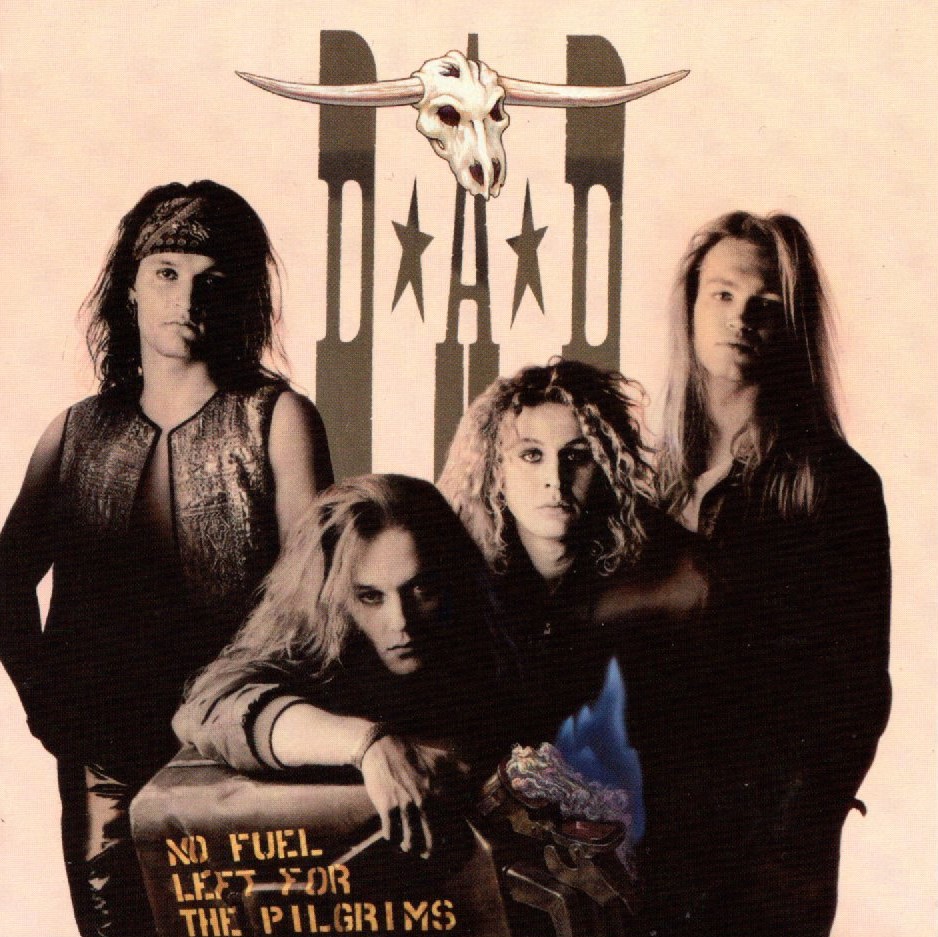
D.A.D. – No Fuel Left for the Pilgrims (1989 Warner)

There we were sitting in Bob Schipper’s basement after school on some Thursday in late 1989.  Suddenly Bob’s attention was caught by a music video. We always had our eyes open for unique guitars. Neither of us had ever seen a two string bass before. The neck was insanely thin. The song was called “Sleeping My Day Away”, and the band was D.A.D. — Disneyland After Dark. They already had two albums out in their native Denmark, but this was their first North American single.

It wasn’t just the bass. Even the song was unique. Anchored by a simple three-note lick played on a fat hollowbody guitar, the song had an edge we were unfamiliar with. The singer, Jesper Binzer, had a cool rasp. He wore a tie in the video and the bassist (Stig Pedersen) wore a medic’s helmet! Bob loved ’em. So did the music magazines. It’s a shame that didn’t translate into North American success.

When the bassist’s medic helmet erupted with fireworks during the guitar solo, I didn’t know what to think about D.A.D.  Were they serious?  Were they a joke?  I should have just listened to the music, but it wasn’t easy to find their album.

D.A.D.’s No Fuel Left for the Pilgrims is made up of 12 sparky rock tunes.  They range from 2:04 at the shortest to 4:36 at the longest.  If guessed that punk rock must be an influence, you would be correct.  No Fuel Left for the Pilgrims has that energy and sneer, crossed with the melodic sensibilities of classic hard rock.  Also a knack for a memorable lyric; not the easiest task when English is your second language.

“Jihad!  I’m gettin’ mad!  And there’s no fuel left for the pilgrims,” sings Jesper, somehow stretching the word “mad” into two syllables.  “Jihad” is an adrenaline-fueled blast, revealing the band’s punk rock roots.  But they slow it down to a strong beat on “Point of View”, a melodic bright spot with more of that catchy hollowbody echoing hooks.  “Rim of Hell” slows it down further, turning up the menace.  “They throw the best damn parties at the rim of hell,” goes the hook, and you’ll be ready to jump in by the end.

“ZCMI” brings AC/DC to the table, adding to the stew of influences.  Iggy is definitely in D.A.D.’s record collection too.  “Girl Nation” is another catchy highlight, with Jesper imagining an interstellar “female civilization”.   Elsewhere, the chorus “I win with a Siamese twin!” tells us where Jesper’s mind is.  It’s certainly a unique lyrical theme in music.   “Wild Talk” edges into Kiss territory; but it’s Kiss when Bob Kulick was secretly playing guitar!  Closing on “Ill Will”, thrash metal is the final genre to be conquered!

No Fuel Left for the Pilgrims contains no duds, and has nothing to skip.  Though “Sleeping My Day Away” is clearly the best song, it is among a very strong batch.  D.A.D. have that punk rock sense of humour that runs through the album.  A reckless, who-gives-a-shit attitude that hints this band will do anything so long as it’s fun to do.  It’s a great little album that didn’t particularly fit in with any of their peers coming out of Hollywood.

4.5/5 stars

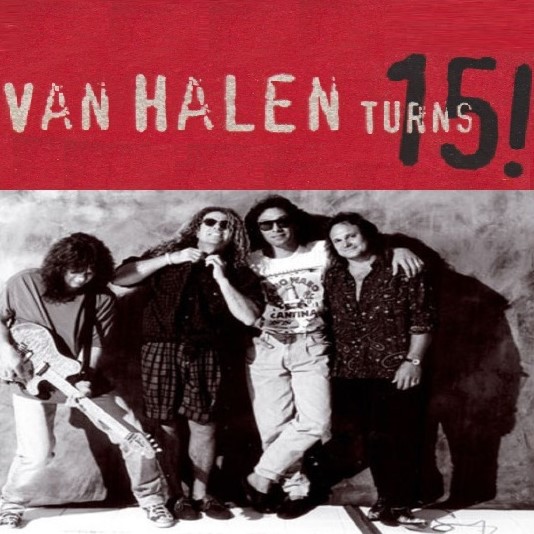
REVIEW: Van Halen – Selections from LIVE: Right here, right now. (1993 promo EP) “Van Halen turns 15!”

VAN HALEN – Selections from LIVE: Right here, right now. (1993 Warner promo EP) “Van Halen turns 15!”

Stuff like this is in my collection not because it’s valuable to me, but because at one point in time I got it for free.  We ran across promos like these all the time, and couldn’t sell them, so they were free to take.  Because it was Van Halen, I hung onto it even though all five tracks are taken from the live album Right here, right now.  It disappears in your CD collection due to the jewel case without a back cover or spine.  For the sake of simplicity (and a shorter title), we’ll just refer to this EP as “Van Halen turns 15”.

It actually plays really well.  Without any filler or solos, it’s a tight CD packed with some of the best songs.  “Dreams” serves as a connection to the earlier pop rock sounds of 5150.  Live, it rocks with higher octane than the studio version.  “Judgement Day” was one of the better representations of the then-new For Unlawful Carnal Knowledge material.  Its modern groove was predictive of the kind of music people would want to hear in the 90s:  heavier with more edge.  “Ain’t Talkin’ ‘Bout Love” is the one token DLR track, and then seemingly to balance things out, it’s Sammy’s “One Way to Rock”.  Whatever — the listening experience is perfect.

Because “Right Now” was the biggest thing since Crystal Pepsi, it’s inevitable that the live version was included on this CD.  If you find “Right Now” to be vomit-inducing, you can just hit stop.

Since this is a promo and should only be sought as a freebie, appointing it a score out of 5 stars is meaningless.   Radio stations are always ditching boxes of old CDs so it’s bound to turn up somewhere.

Whatever/5 stars

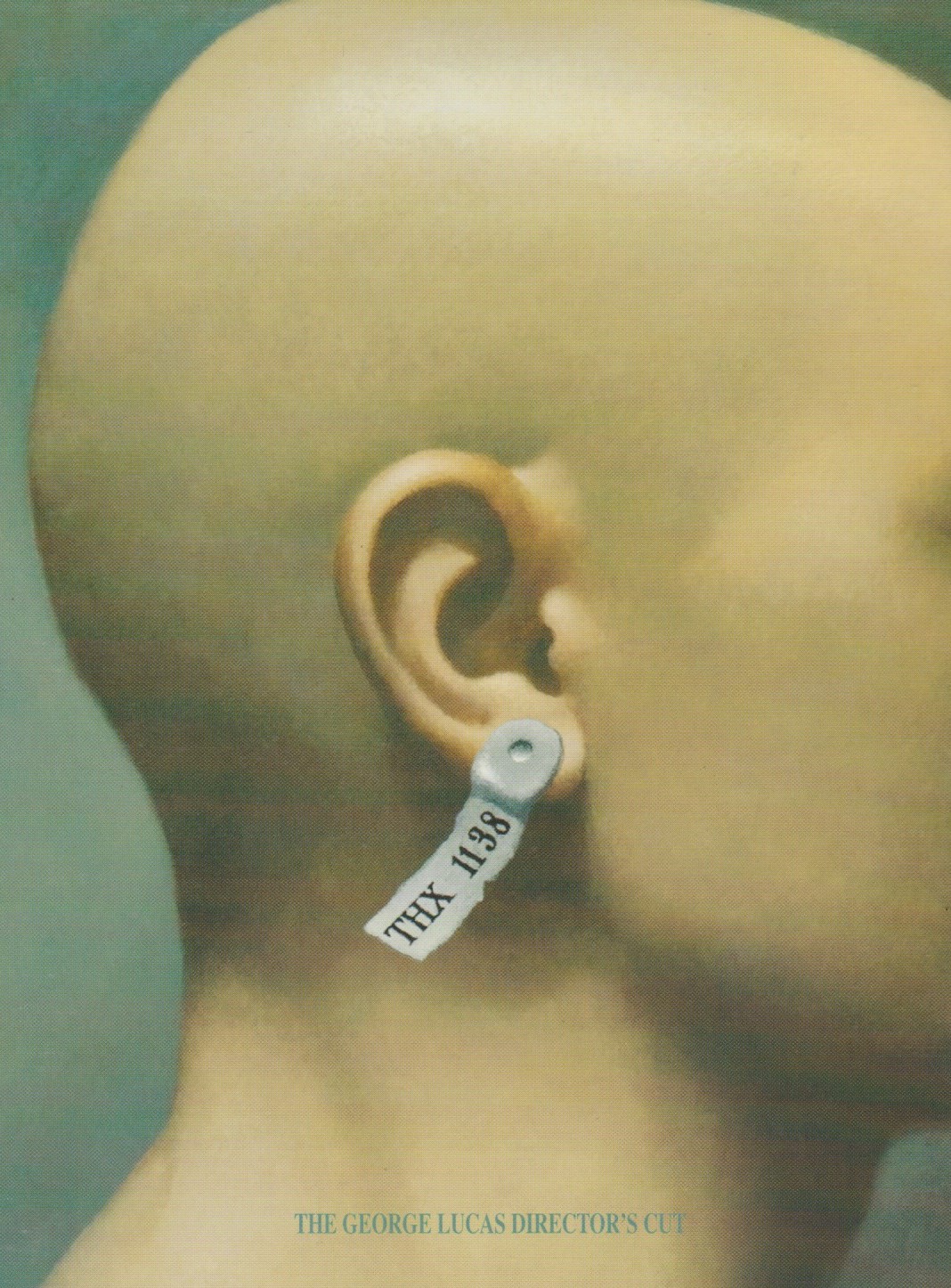
DVD REVIEW: THX-1138 (George Lucas Director’s Cut)

THX-1138 (Originally 1970, 1998 George Lucas Director’s Cut, Warner DVD)

Directed by George Lucas

Anyone claiming to be a Star Wars fan that hasn’t seen THX-1138 isn’t really a Star Wars fan…yet.  You really can’t grok one without assimilating the other.  They are reflections of each other.  Themes and techniques intertwine.  Sometimes they are opposites, at others, cousins.

This is hard sci-fi. There are no cute furry Ewoks, there is no “villain”, there are only glimmers of heroics. This is a dystopian future brought to you by the once-brilliant director George Lucas, unhampered by his own commercial drives. This is as pure a vision as it gets.  One viewing is not enough to digest THX-1138.  There is little dialogue or exposition. There is no traditional music, and the story plods along in a very Kubrickian fashion.

The setting is not a long time ago, nor far far away.  It is the future right here on Earth, and humanity now lives in a vast underground city.  It is so vast that nobody ever ventures out to its superstructure where malformed, monkey-like “Shell Dwellers” remain. Perhaps they are mutants, victims of a long-forgotten nuclear holocaust.  It is a surveillance society.  Like today, there are few places you can escape the view of a camera lens.  Humanity lives in the bubble of a sterile, pristinely white city that resembles the dullest of shopping malls.  They are told to consume.  At strange Catholic-looking confessionals, one prays to the State and the Masses and a weird Christ-like face. Children are taught entire school courses via a chemical IV. Sexual activity is forbidden unless you are scheduled to produce a child. Sedation by drugs is compulsory. Failure to take your medications will result in drug offences and rehabilition. Some humans are deemed defective and left to themselves in a strange white prison, an asylum that seems to go on forever.

Our protagonist is THX-1138 (Robert Duvall), called “Tex” for short.  He does not feel well. He is sick, shaky, because he is secretly off his medication. Feelings of love and lust are stirring for his roomate, LUH. The lack of sedation has allowed those feelings to surface for the first time. It has also, however, affected his work, and one error is all it takes to clue in the powers-that-be that THX is a drug offender.

Themes turn up again in Lucas’ later films. See the totalitarian faceless government, complete with masked law enforcement (not Stormtroopers but robot officers).  Constant, overlapping staticky background dialogue makes up the most of the soundtrack to this film. Lucas has taken sound effects and used them as music, yet they still convey information crucial to the plot. For further comparison, some shots are even duplicated in Star Wars; see if you can spot them.

THX-1138 isn’t Lucas’ fairytale vision of sci-fi.  Scenes are chilling. THX is channel surfing and comes upon a program of an officer beating a human repeatedly for no apparent reason. This is the entertainment of the future.  The brutality is so iconic that Trent Reznor used the sounds in Nine Inch Nails’ song “Mr. Self Destruct”.  In another scene, two techs are tormenting THX’s body, but their dialogue betrays absolutely no connection whatsoever to the human being they are hurting. “Don’t let it get above 48,” says one, as THX is writhing in agony. “Oh, you let is get above 48, see, that’s why you’re getting those readings.”

The theme of escape, which was common with Luke Skywalker in the first Star Wars, is what drives THX. He eventually finds an ally in a “hologram” (Don Pedro Colley) that he meets in the white asylum. SEN (Donald Pleasance) is suitably creepy as a man obsessed with THX and LUH.  Can they escape the city and see what is beyond?

Lucas loves tampering with his films and THX is one of them. CG race cars and cityscapes enhance the film, while CG Shell Dwellers look phony and out of place. I would have preferred the original Shell Dwellers, but in the cityscapes, the new effects certainly add depth and believability.  Just like the Star Wars special editions, some things work and others do not.  Cloud City worked well in the Star Wars digital tweaks, just as the underground one does here.

DVD bonus features are awesome, including ample documentaries.  For a treat, check for the original black and white student film that Lucas made: THX-1138-4eB – Electronic Labyrinth. See how his vision survived intact to the big screen, and see how ideas such as dialogue acting as the soundtrack was present in the original short.

A fantastic visionary sci-fi film, and a warning to us today. We must not allow our society to become as controlled as THX’s.

Not for everybody. Only for those who like thinking man’s sci-fi.

4/5 stars. Near-perfect dystopian vision.

REVIEW: Rod Stewart – The Story So Far: The Very Best Of (2001)

ROD STEWART – The Story So Far: The Very Best Of (2001 WEA)

Sir Roderick Stewart might be best known for his covers, though he certainly wrote his fair share of corkers.  He’s the kind of artist that made certain covers his own, to the point that some think they’re his originals.  “Downtown Train” (Tom Waits) is a good example.  So is “The First Cut is the Deepest” (Cat Stevens).  Rod’s versions are iconic.  Something about his blue-eyed raspy soul.

Stewart is also known for his successes in multiple decades.  He was big in the 60s, with Jeff Beck.  He was huge in the 70s with the Faces  as a solo artist.  He successfully rode out the disco era with a huge hit (an original, “Da Ya Think I’m Sexy?”, co-written by Carmine Appice).  He became a massive pop star in the 80s, and even kept the momentum going through the start of the 90s with MTV Unplugged.  Finally he became an adult contemporary sensation in the 2000s with his Great American Songbook albums, before finally returning to writing original music.  Rod just has an ear for a good song, and an ability to wrap his inimitable voice around it.  The Story So Far: The Very Best Of Rod Stewart captures a huge chuck of music from the late 60s to 2001.  It’s separated into two discs, for two moods:  the upbeat A Night Out and the softer A Night In.

Is The Story So Far all you need?  No, but it touches the bases.  It’s easier to think of songs that aren’t included.  You’ll still want to get “Handbags and Gladrags”, “Infatuation”, “Broken Arrow”, and many more.  This CD set will help you hone in on what you want, and you’ll still get plenty of goodies.  From “Stay With Me” and “In A Broken Dream” all the way through “Some Guys Have All the Luck”, and into the unplugged “Reason to Believe”, it’s loaded with quality.  In fact there’s only one dud, which is “Don’t Come Around Here” with Helicopter Girl (who?) from 2001’s dreadful Human.   The programmed beats reek of an age past when everybody turned to computers to stay trendy.

There are even a couple hard to find tracks.  “Ruby Tuesday”, from Rod Stewart, lead vocalist was not originally released in North America.  “All For Love” is a Bryan Adams song featuring Rod and Sting from the Three Musketeers soundtrack.  “In A Broken Dream” is an oldie by Aussie band Python Lee Jackson, featuring Rod at the mic.  These are good songs worth owning.

One misfire on a compilation of 34 songs ain’t bad, and Rod’s ballads are as good as the rockers so both discs are equal in strength.  Get your “Hot Legs” on the dance floor with some “Young Turks”.  You’ll have a great time, “Ooh La La”, so “Tonight I’m Yours”.  “Tonight’s The Night”, so go get some Rod Stewart!

4.5/5 stars

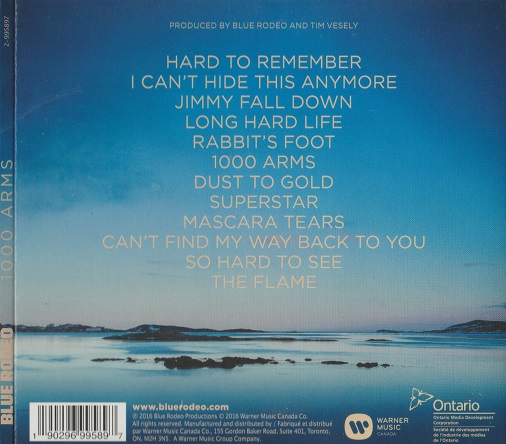
REVIEW: Blue Rodeo – 1000 Arms (2016)

BLUE RODEO – 1000 Arms (2016 Warner)

It’s hard keeping up with Blue Rodeo! They’re always working, either as a band or on their own projects. They’ve released new albums consistently without gaps. That’s 15 studio albums (one of them a double) spanning 30 years. Countless amazing songs…but mathematically their growth have kept me from growing with their new music as much as the old. There are only so many hours in a day, and days in a week, and it’s hard to imagine the day that 1000 Arms will surpass Five Days in July for number of spins.  It’s inevitable that when listening to newer Blue Rodeo music, it doesn’t feel as close to you as the early stuff.

Blue Rodeo maintain their knack for incredible songs and playing on 1000 Arms.  Greg Keelor conjures up the same old, not-quite-broken spirits as before.  “Nothing I ever do is good for you, will I ever realize?  You’re never satisfied.”  Biting lyrics, chiming mandolin and perfect Cuddy/Keelor harmonies combine to make the opener “Hard to Remember” a future classic.  Jim Cuddy takes the wheel next on an upbeat number called “I Can’t Hide My Feelings Anymore”.  When has Jim ever hid his feelings?  Not the point — another great tune.

The disc is loaded with great tunes.  “Jimmy Fall Down” (vocals: Keelor) maintains the bright, upbeat direction.  Things don’t slow down until track 4, “Long Hard Life”.  It’s quieter but no less enjoyable.  It’s only a temporary reprieve, as “Rabbit’s Foot” brings a classic guitar vibe.  The title track is old style Cuddy storytelling.  Greg’s penchant for slow and dramatic music is carried on by “Dust to Gold”.  There is even sly humour on “Superstar”, something you don’t always get with a Blue Rodeo album.  “Start a business, organics door to door, ’cause nobody buys records here anymore.”

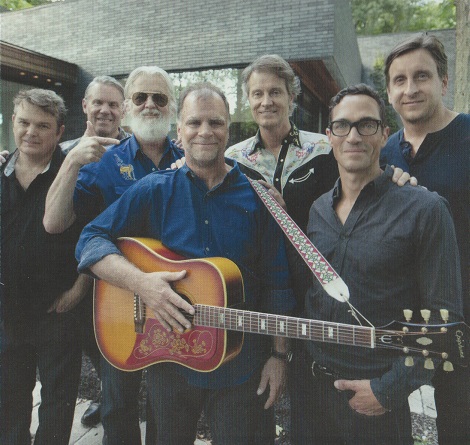
We could go on and continue to describe this batch of new tunes, but rest assured there are no duds.  (Do stay tuned for a heavy exotic turn on closing track “The Flame”.)  I hope that, over time, these songs become as much a part of me as the old tunes.  There’s little difference in terms of quality, and the musicianship is always tops.  Colin Cripps would be responsible for many of the tasteful guitar solos, but 1000 Arms is the last Blue Rodeo album to feature mandolin player (and Kitchener, Ontario resident) Bob Egan.  (That’s why he’s front and center of the band photo.)  Bob departed after making this one, and he went out in great style.

4/5 stars