Author: mikeladano

Metal, hard rock, rock and roll! Record Store Tales & Reviews! Grab A Stack of Rock and more. Poking the bear since 2010.

Gallery: β€œHoly sh*t, jackpot” #2!

A followup to Getting More Tale #477: β€œHoly sh*t, jackpot, holy sh*t, jackpot…”

IMG_20160807_155347

The crappy Walmart at Stanley Park Mall continues to yield treasure to those looking for it.

My weekend was already filled with some golden toy scores. Β I picked up the Transformers Titans Return Galvatron figure at Toys R Us yesterday, and the Star Wars Black Series 6″ droid collection too. Β These were small triumphs, but the real treasure awaited me today at Walmart. Β On clearance!

HELLO NASTYI’m trying to get at least one of every characterΒ in the Star Wars Black Series 6″ figures. Β As of today, I’ve done it. Β The last one dropped into my arms. Β Two weeks ago at that Walmart, it was General Hux. Β Today it was the ever elusive Resistance pilot Ello Asty! Β I’d never even seen one before. Β I was so excited that I fumbled and dropped the box! Β Small dent in the bottom left corner is my price, but since the toy was $19.99 on clearance, I’ll suck it up.

I also found a few more Titans Returns figures today to go with Galvatron, but there is no question that Ello Asty is my real jackpot today. Β Since Ello Asty’s name was inspired by the Beastie Boys (Hello Nasty, get it?) we’ll leave you with some “Intergalactic” to get back to the subject of music.

Well now don’t you tell me to smile,
You stick around I’ll make it worth your while,
Got numbers beyond what you can dial,
Maybe it’s because I’m so versatile.


WTF Search Terms: Dicks Get Clicks edition

dick shaped fruit

WTF SEARCH TERMS XXXII: Β Dicks Get Clicks edition


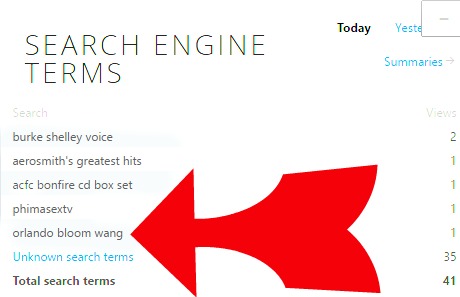
I’ll admit it with no shame: Β Sometimes I insert certain phrases into reviews, hoping they will eventually garner some hits from bizarre search terms. Β I did that this week with my Ozzy Osbourne: Β Ozzmosis review. Β Trying to strike while the iron was still hot, IΒ claimed that Rick Wakeman’s organ sound on the album was “bigger than Orlando Bloom’s wang”. Β This may or may not even be true.

Only a day later, I got my first hit for this. Β The evidence is below.

orlando blooms wang

I admit I’m getting some smug satisfaction from this. Β Dicks get clicks. Β At least if they belong to Orlando Bloom (and therefore, by extension, Katy Perry).

BLOOM

A safely anonymous friend of mine said, “I came across the uncensored versions. Oh my. I never thought twice about Orlando being hot or whatever,Β but dayum. Β I guess I just needed a mouth…errr eye opener.” Β I guess lots of people will be searching for Orlando Bloom’s wang.

Here are nine more search terms from recent weeks, none of them nearly as classy as Orlando Bloom’s wang.

  1. shit hand in shower
  2. shower poop guy
  3. russian milf
  4. www . fuck animals . com
  5. porn mcgangbang
  6. marilyn manson sucking dick pictures
  7. japanporn
  8. guy porn fuck she male real play mp4 down
  9. videos of trailer park aex partes


Thanks for joining us for these fucked-up search terms. Β Whose wang will it be next month? Β Who knows?


REVIEW: Aerosmith – Pump (1989 collector’s faux leather edition)

AEROSMITH – Pump (1989 GeffenΒ collector’s faux leather edition)

When speaking of Aerosmith “classics”, fans often skip over the 80’s or 90’s and talk singly about the 1970’s. Β This is unfair to 1989’s Pump, a bonafide classic indeed, a rebirth, an all-too-brief twinkling of Aerosmith turning back the clock and smoothly kicking your behind. Β Sure, Permanent Vacation brought them back from the dead and provided three surprise hit singles. Β  But that album wasn’t as laser-focused as Pump.

Teaming up for a second time with the late great Canadian producer extraordinaire Bruce Fairbairn, Aerosmith (and co-writers) cooked a short and sweet batch up. Β 10 songs, all to the point and done “just right”. Β That’s how Aerosmith albums were in the 70’s, and Pump is as close as they have ever been able to touch that magical golden era.

Incidentally, if you’re curious about how this album was made, there was an excellent behind the scenes doc called The Making of Pump that was out on VHS. Β The band were clearly riding a wave of energy, it was palpable in the studio. Β There was some conflict but it all seemed productive. Β There was a surplus of songs. Β Titles such as “Looking Up Your Old Address” and “News For You Baby” were dropped in favour of stronger songs — the 10 on Pump.

“Young Lust” and “F.I.N.E.” have always seemed to work as a supercharged pair. Β The band sound young, therefore “Young Lust”! Β Joey Kramer on the skins propels the whole thing forward, aided and abetted by Tom Hamilton’s unmistakable bass slink. Β Whitford and Perry — locked on to target, supporting and boosting each other’s licks. Β And Steven Tyler, always the centrepiece, keeping the attention focused on the hooks. Β “I got a brand new record, and I gotta play,” he sings, and you have to believe it. Β When Aerosmith have all five members firing at peak performance, then you have one hell of a lethal weapon.

We don’t need to address “Love in an Elevator”; it’s all been said. Β All you really need to focus on when listening to this overplayed radio staple is the musicianship. Β All these years later, it’s still smoking hot. Β Hamilton’s bass rides that riff like a surfer.

Aerosmith weren’t a preachy band, but they were pretty open about their drug usage and recovery. Β “Monkey On My Back” was their first real statement about this subject.

“I made believe the devil made me do it,
I was the evil leader of the pack,
You best believe I had it all and then I blew it,
Feedin’ that fuckin’ monkey on my back.”

The reborn Aerosmith infuse it with all the energy and greasy groove required to make their point. Β They’re a better band without the powders; deal with it!

“Janie’s Got a Gun” is another track we don’t need to delve into deeply. Β It was an innovative and daring track for the time; a real statement from Tyler. Β He fought hard for his lyrics. Β “Put a bullet in his brain” was changed to “Left him out in the rain” on some edits, which robs the song of its shocking impact. Β In my opinion, theΒ real moment people started to pay attention was that line. Β And incidentally, this is one of the best songs to watch come to life on the Making of Pump video. Β From the initial work on the song with writer Jim Vallance to the punching in of final vocals, you can watch the creative process like a fly on the wall.

A brief but impressive acoustic bit called “Dulcimer Stomp” was used to open side two, right before another hit single, “The Other Side”. Β I always appreciated that they included “Dulcimer Stomp” in the music video, even though it’s not part of the single version. Β “The Other Side” is probably the safest track on the album, the only one without some kind of edginess. Β It does boast some popping horns, a Bruce Fairbairn production trademark. Β Bruce is one of the players in the horn section, dubbed the Margarita Horns. Β “My Girl” is similarly simple and to the point, although later plagiarized for not one but two songs on 2012’s Music From Another Dimension! Β Much more interestingΒ is the heavy duty “Don’t Get Mad, Get Even”. Β Swampy, even includingΒ didgeridoo, this is one of those Aero-blasts through the blues that Perry and Co. do so well. Β Just as awesome is “Voodoo Medicine Man” which is probably the most…ominous…Aerosmith track ever recorded. Β It is different and groove-heavy. Β Deeply impressive heavy rocking happening here.

Closing out with the ballad “What It Takes” was a classy move. Β Unlike some other ballads this band has had hits with over the years, “What It Takes” has a sincerity and authenticity that has kept it from ageing badly. Β  The country tinge of “What It Takes” foreshadows Steve Tyler’s current solo direction, but in 1989 this was just slightly different for the band. Β Listen for a callback to “F.I.N.E.” from side one, and a hidden bonus track. Β There’s an unlisted track of acoustic instrumental jamming, an outtake from the sessions, at the very end. Β Even incidental bits like “Going Down” and “Dulcimer Stomp” are given their own titles on the CD, but this last jam is left a surprise.

This rare limited edition version of Pump comes in a “leather case”. Β There is an outer slipcase, and an inner digipack. Β It was manufactured as a promo and then later sold as a limited releaseΒ at retail. Β It’s cool and looks sharp, but there is nothing else exclusive about this release. Β It’s a cool find if you happen uponΒ one in your travels, but sticking with the zillions-selling regular CD edition will do you just F.I.N.E. fine.

4.5/5 stars

AERO-REVIEWS:

MORE Aero-Reviews:

aerosmith-pump

REVIEW: Ozzy Osbourne – Ozzmosis (1995, remastered)

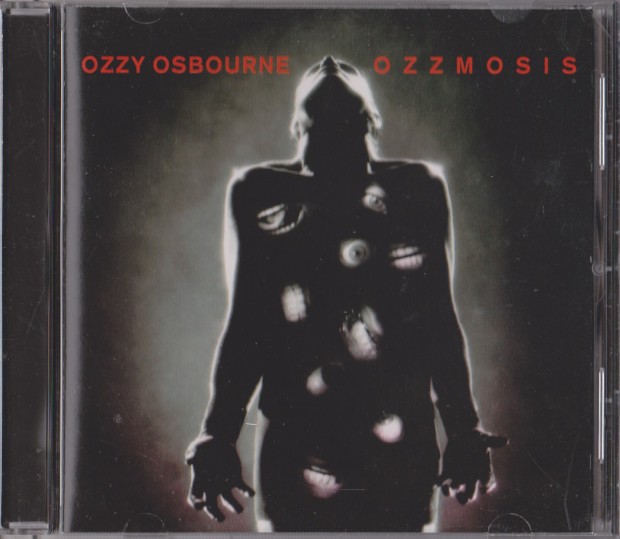
Scan_20160727OZZY OSBOURNE –Β Ozzmosis (1995, 2002 Sony remaster)

It is fair to say that Ozzy’s solo recording career post-No More Tears is not considered as classic as the music from before. Admittedly it was a confusing time. Ozzy finished his “No More Tours” tour while all the talk was about a Sabbath reunion that never happened. Retirement wasn’t in the cards, so Ozzy re-teamed with a few former members of his band: Zakk Wylde on guitar, and Geezer Butler on bass. Joining the band behind the drums was a pre-Journey Deen Castronovo. Ozzy sat down to write with a number of talentsΒ including Steve Vai, and eventually produced the “post retirement” album Ozzmosis.

Ozzmosis was considered by some fans to be inferior to No More Tears, althoughΒ song for song, No More Tears isn’t as great as people seem to remember it. Β Ozzmosis has a heavier, more bass-centric sound and certainly boasts at least fourΒ Ozzy classics inΒ its grooves. Β Osbourne has gone on record as preferring the demo versions of some songs better than the album tracks, but Ozzmosis boasts a hell of a heavy sound.

Ozzy was also struggling with his public image. Β He didn’t want to be seen at the bat-biting madman anymore. Β I suppose that’s why we see songs like “Perry Mason” on Ozzmosis. Β Not a bad track, it was chosen as lead single. Β But the subject matter? Β Not sure why, but:

“Who can we get on this case?
We need Perry Mason,
Someone to put you in place,
Calling Perry Mason.”

Certainly a far cry lyrically from “Bark at the Moon”, but musically it’s still Ozzy prowling in the shadows, warning you of the dangers. Β It’s delightful to hear Geezer’s trademark slinky bass all over it. Β (I have often said that Ozzy’s best solo band, post-Randy, had Geezer and Zakk.) Β Ozzy was sufering from some vocal issues at the time, but “Perry Mason” isn’t one of the songs you can tell this from. Β Only Ozzy Osbourne & Co. could make a song about Perry Mason this cool.

“Perry Mason” would be one of the fourΒ album classics. Β Also up there is “I Just Want You”, which he wrote with Canadian songsmith Jim Vallance. Β Ozzy was rightfully proud of this heavy ballad. Β Rick Wakeman provided keys, classy and absolutely perfect. Β At times he’s playing synth parts that sound like mellotron, at others like a big fat Hammond organ (bigger than Orlando Bloom’s wang). Β At all times, it is awesome. Β Zakk Wylde plays an effects-laden solo that sounds underwater, but in a good way. Β It’s haunting and not robbed of its power. Β He utilises this “watery” sound on a number of tracks on Ozzmosis.

Standing with these songs is “See You on the Other Side”, another fab ballad from the dark side. Β Ozzy’s preferred demo version (with sax solo) can be found on his Prince of Darkness box set. Β There’s nothing wrong with this version though, haunting as it is. Β  It was written by Ozzy, Zakk, and Lemmy Kilmister, who helped Ozzy out with the words.

The fourthΒ and final classic is the album closer, “Old L.A. Tonight”. Β As one of Ozzy’s piano ballads, it has been largely forgotten over the years. Β The piano and Zakk’s very emotive playing only amplify what Ozzy’s singing. Β Zakk’s solo is one of his finest. Β Why some things become hits and not others, I don’t always understand. Β “Old L.A. Tonight” is superior in almost everyΒ way to a track like “Mama I’m Coming Home”, or “So Tired”. Β  This is one of the tracks that does reveal cracks in the Ozzman’s voice, as he reaches for very high notes and quavers. Β I can’t hit the notes he’s hitting, though.

You’ll notice that of the four album classics, three are ballads, and that’s a problem. Β Yes, even as far back as “Changes”Β or “Planet Caravan”, Ozzy has been a master of the art of the heavy ballad. Β His core audience tends to buy albums for his heavy metal songs, and the heavy material on Ozzmosis is lacking. Β Few of those songs really congeal into something solidly memorable. Β The album sounds heavy on effects, and while that strategy worked on the four classics, it tends to choke and strangle the other songs, inhibiting Ozzy’s voice with a nasal muffler. Β It’s surprising how much time he spends singing higher than what sounds comfortable, and that too is a weakness.

Sony tacked on two bonus tracks for this 2002 reissue — a rip off, and I’ll explain why. Β The album includes two B-sides: Β “The Whole World’s Falling Down” and “Aimee”. Β (That makes two songs about Ozzy’s kids on this CD, including “My Little Man” about Jack.) Β  There were however four B-sides released for this album, and two are not included for no good reason. Β Missing are “Living With the Enemy” and “Voodoo Dancer”, but fear not. Β None of Ozzy’s B-sides this time out were really keepers. Β “Aimee” isn’t bad, but Ozzy has done much better stuff for his B-sides in the past. Β Songs like “You Said It All”, “Don’t Blame Me”, and “Liar”.

Zakk Wylde didn’t do the tour for this album, even though he co-wrote and played on it. Β Zakk seemed to be trying to establish himself separate from Ozzy at the time, and so Ozzy toured with Joe Holmes who had finished up a stint with David Lee Roth. Β (Though Ozzy stuck with Holmes for five years, I never thought he sounded right playing the Ozzy or Sabbath material.) Β After a brief leg, Ozzy fired Deen Castronovo and re-hired his previous drummer Randy Castillo. Β Ozzy made a backhanded statement about Castronovo being a talented session drummer, and that’s what he should continue to do. Β Ouch.

It’s a mixed bag, but when you hit a gem in the grooves of Ozzmosis, it is worth the price of purchase. Shame about the stinky cover art.

3.25/5 stars

REVIEW: Winger – II – In the Heart of the Young (1990)

Part II of a Winger DOUBLE SHOT.

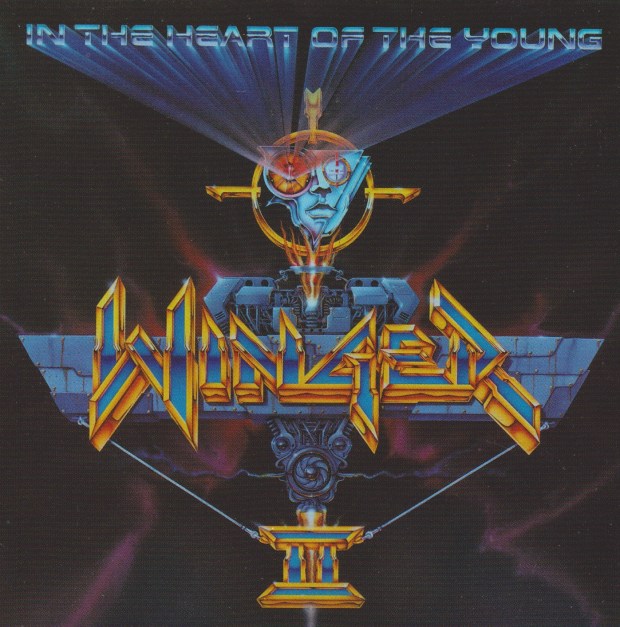
WINGER – II – In the Heart of the Young (1990 Atlantic)

Another awful album cover; another Winger album! Β The ambitious follow-up, still sonically mutilated by producer Beau Hill, was several steps forward and a few steps backwards at the same time. Β The year was 1990, and while most bands were starting to toughen things up and go a little heavier, Winger turned on the tap marked “syrup”.

Truly awful is “Can’t Get Enuff”, which Winger admitted took about five minutes to write, when he decided they needed to “make a video about sex”. Β Because that’s never been done before. Β Nor has a song called “Can’t Get Enough” (spelled correctly). Β There is nothing new or necessary here; the talented band are neutered by programmed rhythms and cheesey, generic lyrics. Β Not good enuff, although the second tune “Loosen Up” is better. Β There could have been some rock and roll groove with “Loosen Up”, but the plastic and thin production removes its teeth.

Keyboardist Paul Taylor, who left the band after this tour, wrote the ballad “Miles Away” by himself and it hits all the bases that a power ballad needed to hit: Β Big chorus, sad keyboards, and sappy lyrics! Β “Miles Away” never quite felt like it fit on the album stylistically, but it’s actually a decent ballad. Β It’s well written and arranged, but so pigeonholed to its time.

I hate synth horns, therefore I hate the single “Easy Come Easy Go”. Β There is no substitute for real horns. Β Keyboards are quicker and easier, but there is no comparison to the real thing. Β Thankfully Winger did utilise real horns on “Rainbow in the Rose”, the first of two epics on the album. Β Where “Can’t Get Enuff” was written in minutes, “Rainbow in the Rose” took a year to compose and arrange. Β Its complexity is admirable, but a better producer could have given it the finish it deserved. Β It’s a shame that with a complicated track like this, you can barely hear what drummer Rod Morgenstein is doing. Β He’s one of the best in the world, but he’s buried under keyboards. Β When you do listen to what he’s doing, it’s quite incredible work. Β As for the song? Β The chorus kills!

The second side was more of the same, including another epic at the end. Β “In the Day We’ll Never See” was Winger’s attempt to write more serious lyrics, and that’s all well and good. Β With a peppy riff and serious tone, it’s a good enough song for a car tape. Β Reb Beach’s anthemic guitars are the highlight. Β Another side; another ballad — “Under One Condition” sounds like a Warrant song, although that’s probably being unfair. Β Warrant could never play like Winger.

Side two has a slew of annoying songs in the middle. Β “Little Dirty Blonde” is as putrid as it sounds, but let’s face it folks, it’s not as bad as Kip Winger rapping. Β The story goes that they wanted to getΒ Tone Lōc to do his thing over “Baptized By Fire”, but that didn’t happen so Kip rapped it himself. Β It’s as annoying as you expect. Β One of the most impressive moments on the album is just a short instrumental break, sounding like speedily tapped guitar and bass, right before “Baptised By Fire”, but it’s over too soon before MC Kip takes over. Β “You Are the Saint, I Am the Sinner” improves the outlook mildly, annoying title aside. Β That leads to the final epic track, “In the Heart of the Young”. Β Like “Rainbow in the Rose”, this is a more ambitious arrangement, done with skill and care. Β Once again, focusing on Rod Morgenstein allows you to hear the complexities within. Β The melodies are strong and Kip’s singing is under-appreciated.

Winger were on to something with the more progressive material. Β Where they lost fans was with the dumbed down sounds of songs like “Can’t Get Enuff”, and they paid for it during the grunge onslaught down the road.

2/5 stars

Scan_20160718 (2)

REVIEW: Winger – Winger (1988)

Part I of a Winger DOUBLE-SHOT.

WINGER – Winger (1988 Atlantic)

When Winger started out, they really played down to their audience. Β Kip Winger was a classically trained musician. Β Reb Beach was already a virtuoso guitar player whose talent can’t be under-stressed. Β Keyboardist Paul Taylor had been around the block a number of times, including a stint with Kip Winger in the Alice Cooper band. Β Most impressively, drummer Rod Morgenstein is best respected for the rock fusion combo Dixie Dregs. Β To hear guys with that background singing a song that goes, “She’s only seventeen, Dad says she’s too young but she’s old enough for me,”…well it’s just embarrassing.

I call bullshit, Mr. Clarence R. Winger. Β He’d been studying classical music since the age of sixteen. Β You know he could do better if he wasn’t trying to write cliche rock lyrics.

Musically, Winger (the debut album) isn’t half bad. Β In fact it’s more than half good! Β The opener “Madalaine” is cheesey rock, but it’s above the bar due to the intense guitar shreddery of Mr. Beach. Β It was an era when it was OK to just get up there and tap tap tap away. Β There is some musical integrity contained herein, but it’s not in the lyrical department. Β The single “Hungry” begins with a string quartet (only 22 seconds’ worth), arranged by Kip. Β See? Β Flashes of the talent within, but cloaked behind a typical rock power ballad with one of the most overused titles in the genre. Β Good songs both…but written down to a specific audience by guys who can do better.

Chief offender “Seventeen” wouldn’t be half bad if it had a different title; any title. Β Call it “Buttermilk”. Β Instead of:

“She’s only seventeen (seventeen),
I’ll show you love like you’ve never seen,
She’s only seventeen (seventeen),
Dad says she’s too young but she’s old enough for me.”

Change that to:

“I love my buttermilk (buttermilk),
Makes my pancakes as smooth as silk,
I love my buttermilk (buttermilk),
Mom says it’ll make me fat, stop that buttermilk!”

See? Β My lyric had depth that theirs doesn’t. Β It’s light and shade. Β Yes, buttermilk will make your pancakes extra tasty, but what of the health costs? Β I could go on and on about the brilliance of my lyric vs. Kip Winger’s. Β But I won’t. Β You get the point.

Shredding musicianshipΒ aside, “Seventeen” is not a good song.

“Without the Night” works well enough as a Bon Jovi-esque power ballad. Β What should have been deleted, because they already had enough original material, is a cover of Jimi’s “Purple Haze”. Β This is dreadful, overplayed, oversexed, with the only saving grace being a guitar battle with Reb Beach on one side and Dweezil Zappa on the other. Β Two monster players going at it is right on. Β Kip Winger “ooh ahh-ing” all over “Purple Haze” is blech. Β Just focus on Reb and Dweezil, and try your best to ignore Clarence.

The original LP had a side break here, and I think that’s a good idea. Β I need to take a moment to get some fresh air. Β Something stinks in here….

“State of Emergency” has a little progressive complexity to it, some chops and lyrics that are not about seventeen year old girls, so that is good. Β “Time to Surrender” shreds impressively over a slow Ratt-like riff. Β All considered, “Time to Surrender” is one of the strongest tracks on the album. Β Sadly, “Poison Angel” is the worst. Β This one could have been dropped. Β “Hangin’ On” is good enough, again boasting some impressive playing from Reb Beach. Β The key to listening to Winger is to focus on the instrumentation.

The most impressive track is the ballad “Headed for a Heartbreak”. Β Cheesey, yes. Β But listen for a moment, to the arrangement, and to the playing. Β It’s a hit power ballad, yes…but there are progressive complexities to the arrangement. Β Listen to Rod Morgenstein’s drumming. Β His patterns are not simple rock cliches. Β Too bad it’s so hard to hear what he’s doing. Β Winger has a brittle production, thanks to schlock-meister Beau Hill, ruiner of many an album. Β Over-processing and harsh gating on Rod’s drum sound gives the album a plastic feel. Β Some tracks such as “State of Emergency” should have more heft, but it is lost. Β “Time to Surrender” needs less gloss. Β The album has hardly any bass, and the thing about that is that Kip Winger is actually a pretty good bassist (not to mention singer).

The CD only bonus track (oh 1988, I miss you so) is a short rocker called “Higher and Higher”. Β It’s a better track than the similar-paced “Poison Angel” and should have swapped places with it. Β There’s also one other interesting little track to be found. Β Another short rocker called “Out for the Count” made an appearance on the soundtrack to Karate Kid III. Β I picked that up at a Zellers store, I think, on a clearance sale around 1992. Β It was an odd find, but being a collector I grabbed it for the one track. Β (AlsoΒ on the CD is “48 Hours” by a band called PBF, better known as Pretty Boy Floyd!) Β Swap “Out for the Count” for “Purple Haze”, and the Winger album would have been far stronger.

It’s really hard to boil this down to a simple number rating. Β I’ve come up with an equation based on your valuing of playing and songcraft,

Where x = a scale from 0-5 on how much you value shredding,

and y = a scale from 0-5 on your importance of song craft,

Then the rating for this album is:

= 3 + (x/4) – (y/4) / 5 stars

WINGER


REVIEW: The Cult – Ceremony (1991)

Scan_20160729THE CULTΒ – Ceremony (1991 Beggars Banquet)

Only 25 years late, I have finally acquired theΒ Cult’s Ceremony CD, thanks to my kind and generous reader Wardy. Β I somehow missed this album all those years, even though I own all the singles. Β There are some songs here that are completely new to me. Β Ceremony received mixed reviews when it was released, as it represented the band’s furthest move away from their roots, into commercial radio rock. Β Let’s see how accurate that is.

It starts sounding more like some lost Deep Purple album, with big organ and jammy sounds. Β Richie Zito co-produced this disc, and the band got a sharper sound out of the studio than they did with Bob Rock last time. Β Sonically, Ceremony has more impact, more heft, more oomph than the big and echoey Sonic Temple. Β The “Ceremony” in question on the title track is the rock arena, as the Cult had definitely become arena rock. Β They had also been reduced to a core duo. Β Jamie Stewart and Matt Sorum were gone, and the Cult used session musicians during this period. Β Charlie Drayton (bass) and Mickey Curry (drums) helped the band achieve what sounds like a very sincere crack at this kind of rock. Β Accessible it is, but the Cult didn’t really sell out. Β Check out the frantic “Wild Hearted Son”. Β Like the sound of a stampede of horses across the plains, “Wild Hearted Son” does not let up. Β I think I lot of fans were disappointed that the new Cult sound wasn’t more esoteric, but that doesn’t make it bad.

Just as relentless as “Wild Hearted Son” comes the “Earth Mofo”. Β One thing I had never really paid attention to before was the bass. Β Drayton’s get some great bass chops. Β The production of Ceremony leaves a lot of space between the instruments, so you can hear them. Β Those who find Sonic Temple overproduced may dig on this, so give “Earth Mofo” a spin. Β  That’s nothing though compared to the powerful “White”. Β Epic in scope, “White” is a massiveΒ groove with layers of acoustic instruments a-la Zep.

I didn’t see the tenderΒ sound of “If” coming, just piano and Ian’s crooning. Β Not after all that heavy hitting rock. Β But then “If” also explodes into something bigger, anthemic and memorable. Β I’m starting to think that if Ceremony got a bad rap back in ’91, it’s becauseΒ people weren’t paying proper attention.

“Full Tilt” is a great name for a rock song. Β Riffed out with generous helpings of rock sauce, “Full Tilt” was reported to have knocked a picture of at least one journalist’s wall.* Β Just wait until the afterburners ignite in the last minute of the song. Β Strangely, the very next track is the acoustic ballad “Heart of Soul”; a good song indeed but not as great as “Edie (Ciao Baby)” was. Β Back to the rock,Β “Bankok Rain” lacks the charisma that the rest of the tunes seem to have in common, though there is certainly nothing wrong with it’s staggering riff. Β By the end you won’t care, because the whole thing Β burns like fire and gasoline until all the fuel is spent.

A fascinating Cult song is “Indian”, a basic acoustic song with cello accompaniment. Β As Cult ballads go, this is definitely a peak moment. Β Ian infuses more passion into one line than most singers can do in a whole song. Β Unexpectedly, the album moves right on to another ballad, “Sweet Salvation”, which is actually less a ballad and more a soul song. Β It’s powerful, asΒ are all these songs in their own ways. Β Ian Astbury breaks out the Morrison poetry jams to kick off the ending track, “Wonderland”, a riff driven slow broil.

That’s the album, and it’s hard to gauge where it sits among the whole Cult catalogue. Β Certainly, this and Sonic Temple are brother records. Β They are stylistically more similar than Cult albums tend to be. Β Ceremony possesses track after track of scorching rock music. Β Does it make as strong an impression as the bombastic Sonic Temple? Β Not quite. Β By stripping the production to a more sparse and live sound, perhaps the Cult sacrificed the nuances. Β CeremonyΒ gleams shiny with amped up guitars and drums aplenty. Β It is hard to find fault. Β It is still a fine album.

3.5/5 stars

* That’s a true story, but I can’t remember what magazine I read it in. Β The reviewer said, quote “‘Full Tilt’ knocked a picture off my wall.”

#504: Waiting

Note: Β This tale is from 1996 and does not reflect current tech.

GETTING MORE TALEΒ #504: Waiting

The store that I managed for the longest periodΒ of time was opened in April of 1996. Β The format was 95% used stock, about 5% new.Β  It was fun being a part of the cutting edge in retail.

When we opened that store, we were inundated by customers who had never heard of us before.Β  Every day for months, somebody would wander in who had never been in one of our stores before. Β It was cool. Β We were different, and we wanted people to know it. Β We were eager to promote our special features and strengths, such as our listening stations and reservation lists.

The reservation list caused a lot of confusion among new customers.

Here’s how it worked.Β  Let’s say you’re looking for a CD that is hard to find used – Pink Floyd’s The Wall.Β  That one was expensive brand new.Β  Usually it ran for about $33.99.Β  Customers would much rather pay less, so they put themselves on our waiting list.Β  At the time we opened, the waiting lists were for that store only.Β  We didn’t have the ability to share our waiting lists with other branches yet. Β This was still a massive improvement over the old system: Β a notebook with phone numbers and titles written in it. Β (There were lots of names and numbers with the title “any Beatles”.)

The list operated on a first-come, first-served basis.Β  If you were the very first customer to put their name in for The Wall back in April ’96, then you would get dibs on the very first used copy that came in.Β  If you were second, you’d get the next shot at it, and so on and so forth.Β  What seemed to confuse my early customers the most was β€œWhere do these used CDs actually come from?”

There was no magical land of used CDs.Β  There was no massive warehouse from which to pick and choose copies of The Wall in various conditions.Β  There was no place from which to order used CD stock like you could with new.Β  If there was a Used CD Magic Wonderland, then it was in your basement, because the only way we received our stock in those days was via the customer.Β  If a customer came in and traded a great condition copy of The Wall, then congratulations – the first person on the waiting list received the first call.

On down the list we went.Β  If the first person no longer wanted The Wall (a frequent occurrence) then we’d go down the list to the second person.Β  We would phone each customer and give them a week to pick up their CD.Β  Unfortunately most customers who no longer wanted the CD never bothered to tell us, so it would sit there for a whole week before we could put it back in the hopper.Β  We wiped out our entire waiting list for Last of the Mohicans (Soundtrack) with just one copy, because none of the reserved customers wanted it anymore. Β There were five names on that list, and then suddenly none!

So: reserve a CD, and we would let you know when one was traded in. Β This doesn’t seem like it should be hard to understand, but apparently for some it was.

One upset customer came in about two weeks after reserving a rare CD.Β  β€œIs it in yet?”

I checked.Β  β€œNo, it’s not in stock, but since you have a reserve for it, we’ll call you when it does show up.”

β€œWhen’s that going to be?” he asked.

β€œHard to say,” I responded, trying to answer his question.Β  β€œWhenever someone trades one in, which could be tomorrow or it could be next year.”

Then he bellowed, β€œWhat do I have to do to get this thing to come in?!”

Sometimes, I just didn’t know what else to say.

β€œYou don’t have to do anything,” I said, not sure how to explain this further.Β  β€œSomebody will get tired of their copy, or just need the money.Β  If they sell it to me, you’ll get a phone call right away.” Β Then, feeling a little snarky, I added, β€œUnless you know somebody with a copy that you can talk into trading it in to us.”

There was actually one nearly-surefire way to guarantee a used CD would come into stock. Β T-Rev discovered this, inadvertently. Β Somehow, any time either of us bought a new CD that we’d been hunting for, suddenly a used copy would show up in store. Β Sometimes on the same day. Β This happened more than once! Β I was there when it happened with a Primus CD he was looking for. Β (Wish I could remember which one.) Β It was eerie.

Everything has changed today, obviously, and now you have access to the world’s inventory from your PC.Β  It’s hard to imagine there was once a time when you (gasp!) had to actually wait to find a used copy of The Wall!

WALL

#503.5: Reader Mail

GETTING MORE TALEΒ #503.5: Reader Mail

There are a few rituals that I look forward to every day. Β I love waking up in the morning and checking to see if there are any new comments here. Β I look forward to coming home from work and spending time with Mrs. LeBrain. Β I also enjoy checking the mail box. Β I never know what surprises I might find eachΒ day. Β Sometimes it’s bills, or flyers from the local Church of Scientology. Β Today, it was a present from a reader!

You may have seen Wardy around in the comments section, and you also may have read some reviews that were requested by him. Β Wardy likes The Cult, among many bands, and requested a review for their Ceremony album. Β Problem: Β I didn’t have Ceremony. Β  I had all the singles, but not the album. Β In fact I think it is (somehow) the only Cult album I never bought.

Not any more! Β All the way from Australia, here is Ceremony! Β (And not just Australia, but Tasmania, which to me makes it that much cooler!) Β I guess I could say I got it on Australian import. Β Now I don’t have a choice; I have to review it! Β How could I say no, now?

As I press “play” for the first time, I leave you with this.

When you eventually see a review for the Cult’s Ceremony up here, thank Wardy. Β THANK YOU WARDY!

IMG_20160728_173956