Reviews

REVIEW: The Tea Party – Transmission (1997)


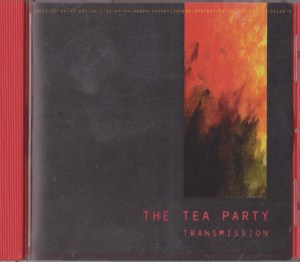
Scan_20160526THE TEA PARTY – Transmission (1997 EMI)

Tea Party fans are often split on Transmission.  There is little doubt that the previous Edges of Twilight album was a high water mark.  With over an hour of exotic and varied folks-blues-rock hybrids, it’s a favourite for many.  The band took a stark turn on Transmission, embracing electronics.  Jeff Martin produced the album himself, and you could not expect a more opposite album to Twilight.  Thanks to the opening single “Temptation”, the album was another hit.  Most fans seemed OK with the changes.

At first, it doesn’t seem like anything is unusual in Tea Party land.  “Temptation” (the album version anyway) opens with a fair bit of exotic strumming on some sort of stringed instrument, as the Tea Party often do.  Then the samples and looped drums kick in, and they are huge!  Middle Eastern exotics, radio noise, keyboards and a killer riff all combine with loops to create a new kind of Tea Party.  So far so good — the experiment paid off.

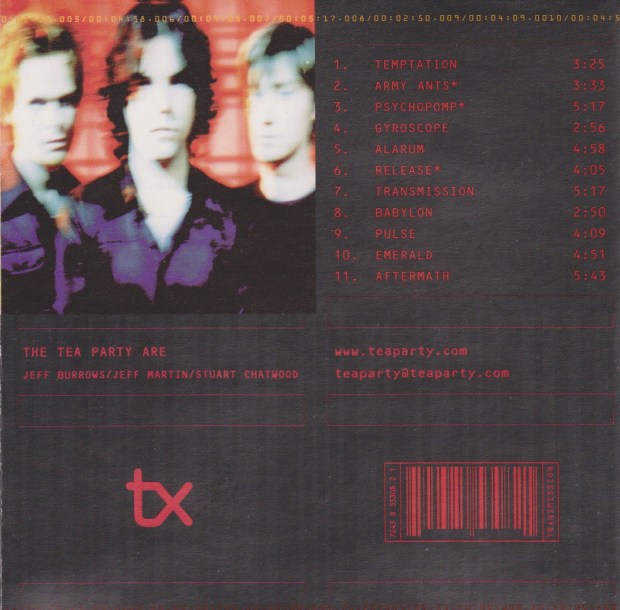
Martin had a penchant for odd song titles on this album, like “Army Ants”.  Vocals furiously distorted, this makes for a heavier Tea Party.  Jeff Burrows is providing some excellent drum backbeats, but at times they are buried under other sounds.  The title track “Transmission” is way better though, burning like electronic incense.  Static, loops and acoustics return for “Psychopomp”, one of the five singles they released.  While it takes a while to get there, “Psychopomp” boasts a powerfully melodramatic chorus, Martin roaring as he does.  “Gyroscope” has a spinning sound, one of the more hypnotic tracks (and also a single).  One of the more impressive singles was the ballad “Release”.  This was eventually given an EP of its own which we’ll look at another time.  A basic keyboard/drum ballad, it is simple and bleak but hard to forget.  It almost reminds of early 80’s Robert Plant.

There isn’t a lot of variety and distinction between the songs.  “Alarum” repeats the formula:  Electronic effects, exotic sounds, roared-out chorus.  This was the disappointing factor with Transmission.  The band had established themselves with a diverse sound, but that sound is narrowed on Transmission.  All the same ingredients are there, but they are focused by the electronic lens, which sharpens them but also bleaches them to all one colour.  “Babylon” is one of the exceptions, with drum & bass elements, and off-kilter song structure.  It was appropriately given a very bizarre music video.  An interesting experiment, but not as affective a song as something simpler like “Release”.

The Tea Party had some fun in other ways too. They like hidden bonus tracks, but this time they didn’t stick one at the end. They stuck an instrumental (dubbed “Embryo”) at the end of track 8 (“Babylon”). It’s actually a cool little piece of music.

Since the Tea Party are an ever-evolving band, it was safe to assume they would not stay in the electronics lab forever. Their next album, Triptych, was different again. Transmission remains their most loop-heavy album to date.  At least they did it at the right time — The Prodigy’s massive mainstream album The Fat of the Land was released mere months before.  The public were ready and hungry for computer-precise beats and samples, and the Tea Party delivered a unique hybrid with their own brand of rock.  For the most part, it worked.

3/5 stars

Scan_20160526 (2)

REVIEW: The Tragically Hip – Man Machine Poem (2016)

NEW RELEASE

Scan_20160620THE TRAGICALLY HIP – Man Machine Poem (2016 Universal)

The title Man Machine Poem reveals something about the new Tragically Hip.  The first song is entitled “Man”, and the last one “Machine”.  This album is an epic poem — the “Man Machine” poem.  It has a flow like a singular body of work, even though it is made up of individual songs.  Like most Hip albums of late, it is a brooding work thick with power in its quiet grooves.

Sounding a bit like like classic Radiohead, “Man” opens the CD on a suitably weird note.  Droning piano, strange echoey vocals…and I’m hypnotised immediately.  Granted, the subconscious mind keeps trying to find meaning in the music.  Now we all know the terrible news.  That in mind, we’re not going to treat this album like a funeral.  Brain cancer be damned, Gord Downie is doing that final tour, you know the one?  The one that nobody has been able to buy tickets for except on StubHub for many times their original value.  In other words, it’s a heavy atmosphere and you keep searching for hints and clues that are not there.  “Man” is a brilliant track, showing that the Hip were continuing to push their own limits.

Just about every track on Man Machine Poem is brilliant.  The first single “In A World Possessed by the Human Mind” sounds like something Bono wishes he had written.  The fuse smoulders, but the song blasts open brightly on the chorus.  Each song has its own character, but hard to define.  “What Blue” is simply lovely, a summery track that is hard to forget.  “In Sarnia” sounds more like “in the country”, but friends from back that way say that’s not too far from the mark.  Passion turned up to 10, Gord lets it all out.  The song is slow and quiet; all but Gord.

The days of “Little Bones” and “New Orleans is Sinking” are long behind now.  The Hip don’t write albums like that anymore, but what they do create still has innate power.  Listen to the acoustics and the slides blending with the electric guitars and steady beat of Johnny Fay.  The Hip run like a well oiled…gotta say it…Man Machine.  The older, wiser, and less loud Tragically Hip still rock, cranking it up when necessary.  “Here, in the Dark” is a fine example of placing the explosive charges in the exact right spots.  So is the growling “Hot Mic.”  The energy is palpable.  Even on a song called “Tired as Fuck”, there is energy in the air.

Man Machine Poem has an epic feel to it, from the strange start to the drawn out dramatic ending.   It’s temping to say something like “best Hip album in years!” but they’ve never stopped making great albums.

4.5/5 stars


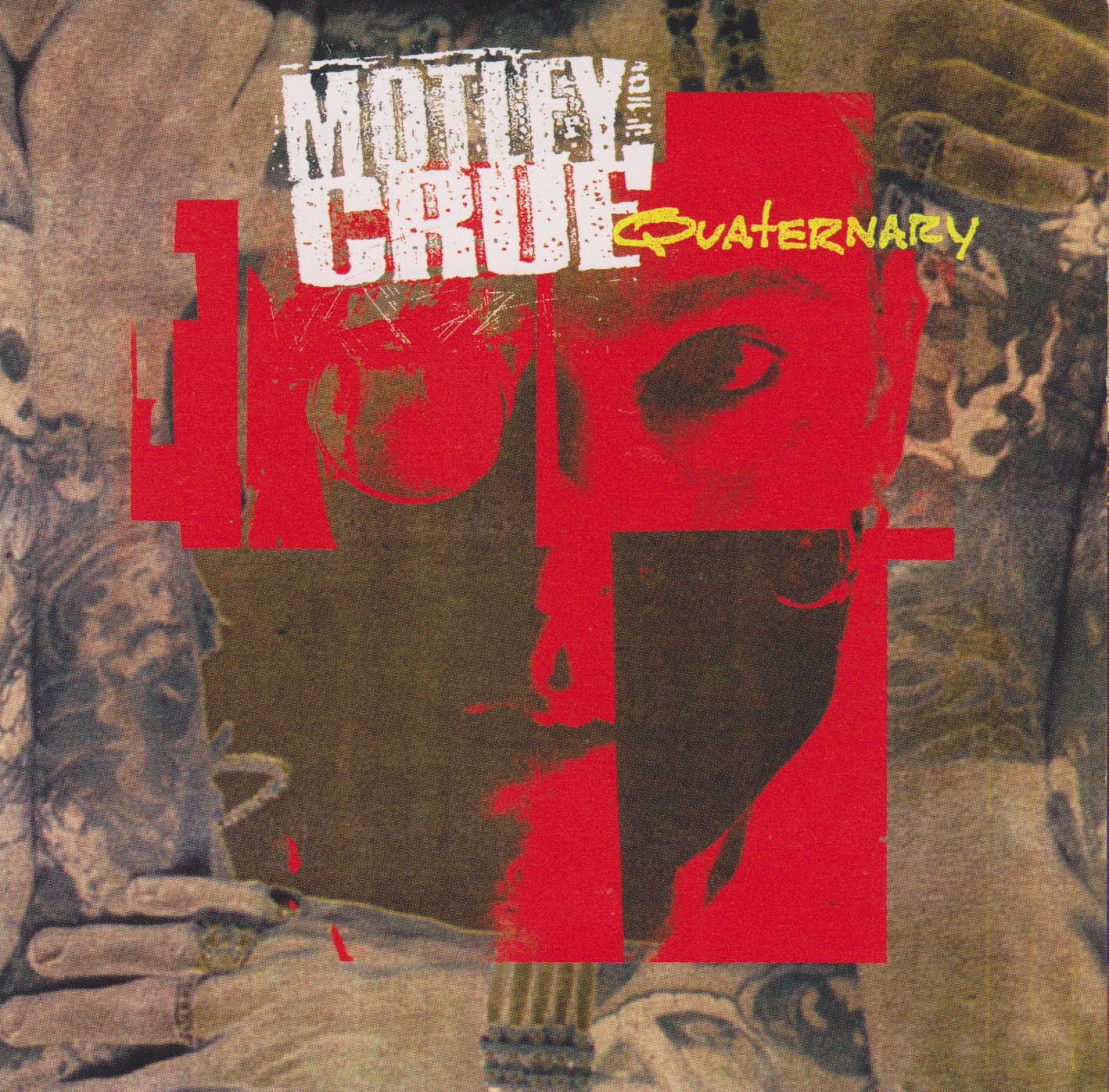
REVIEW: Motley Crue – Quaternary (1994 Japanese EP)

MOTLEY CRUE – Quaternary (1994 Elektra Japanese EP)

For me, undoubtedly the most heavily anticipated new album of 1994 was the new Motley Crue.  Originally titled ‘Til Death Do Us Part, the self-titled ’94 Crue disc was their first with new singer/guitarist John Corabi.  They holed up with producer Bob Rock and knuckled down, creating what could have been the most important album of their careers.  The long wait (five years between studio albums) and cryptic remarks from the studio indicated that this would be the heaviest Motley album ever, and their most ambitious.  The new, serious Motley for the 90’s had, as always, written plenty of extra material too.

In addition, producer Bob Rock had an idea for getting creative juices flowing.  He asked each of the four members of Motley Crue to write and record a solo track with no input from the other members.  This was slightly historic:  the first time Nikki Sixx, Mick Mars, Tommy Lee or John Corabi had done anything solo.  With all the numerous outtakes recorded for the Motley Crue LP, there was now plenty of extra material to put out as a bonus EP.
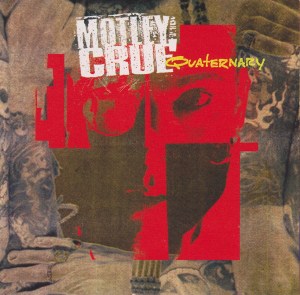
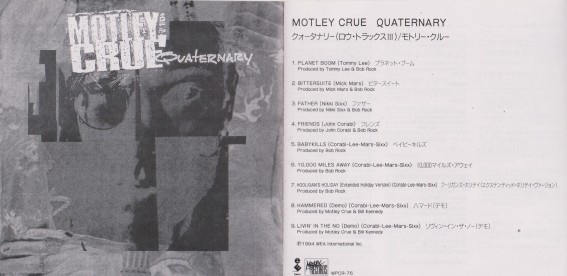
Scan_20160612A mail-away coupon inside the Motley Crue CD alerted fans that five more tracks were available by mail order only.  20,000 copies of the original EP were pressed.  They included all four solo tracks and a new Motley Crue song called “Babykills”, featuring fifth Beatle Billy Preston on clavinet!

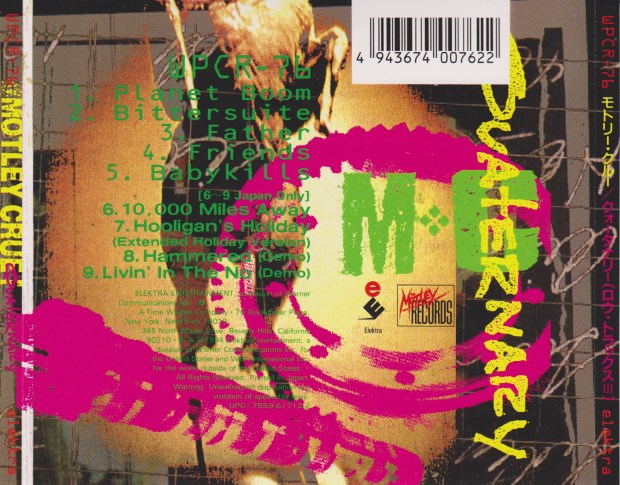
Still, the lucky fans in Japan didn’t have to mail away for anything.  They were able to buy Quaternary right on their store shelves, and because it’s Japan, they also got bonus tracks.  The Japanese version of Quaternary was not a five song EP, but more like a nine-song mini-album.  I had no idea such a thing existed until finding one at Sam the Record Man in Toronto in the summer of 1996.   It still has the price tag:  I paid $49.99, for a total of three songs that I did not have before.

Today, every one of these songs can be found on the box set Music to Crash Your Car To: Volume II, along with even more bonus mixes.

Quaternary commences with industrial noises and studio dialogue:

Tommy Lee:  “I can’t play with fuckin’ clothes on man, this is bullshit.”
Bob Rock: “Play naked.”
Tommy Lee: “Fuckin’ jeans on, a fuckin’ shirt…what up with that?”
Bob Rock: “What, do you work in a bank?”

The industro-rap metal of Tommy Lee’s “Planet Boom” is a track he had been working on for years. An early version made its debut in the background on the 1992 home video release Decade of Decadence. Even though the words “industro-rap” and “Tommy Lee” don’t really sound good together, “Planet Boom” kicks ass. Tommy played all the instruments, utilising a simple, detuned Sabbathy riff and a relentless drum loop. The strength of his vocal came as a surprise, as did the song in general. A few years later it was remixed for Pamela Anderson’s movie Barb Wire. (Stick with this original.)

After a brief studio discussion with Mick Mars about hemorrhoids (?), his blues instrumental “Bittersuite” blows your ears off. Motley fans know that Mick Mars is the most musically talented member, considered an underrated and under appreciated rock god. The blues-rock of “Bittersuite” isn’t as satisfying as I imagine a pure blues offering to be, but there is no doubting Mick’s talent here. Both as a writer and a player, Mick hit it out of the park (Chris Taylor played drums). Mick’s goal was to pay tribute to rock-blues greats like Beck, Hendrix and Blackmore. Mission accomplished. His guitar tone is beautiful and so are his emotive licks.

Nikki Sixx goes third, with another industrial-metal cross. “Father” is one angry fucked up track. It’s heavy and direct, on-trend for 1994, and very abrasive. The riff and song are simple, but Nikki’s anger leaks through. “Father — where were you?” Backwards guitars, electronics and loops on top — you can tell Nikki and Tommy were listening to the same kinds of music at the time!

New kid John Corabi goes last, and in the liner notes he says that “Friends” is his first piano song. He meant to go acoustic, but “Friends” just came out of him. It’s a pretty Queen-like ballad with lovely harmonies in the middle. Although Mick Mars’ song is probably a greater technical achievement, “Friends” is my favourite of the solo tracks. When a guy like Corabi gets going on a ballad, it’s usually going to be amazing anyway. Throw in the Queen elements, and I’m just a sucker for it! It’s really a shame that Motley did not continue with John beyond this. The potential for greatness was always there.

After more studio chatter, we break into “Babykills”, the Billy Preston collaboration. “Babykills” is fun and funky hard rock, probably the heaviest thing Preston ever played on. Unfortunately his part is little more than an added topping. Great tune though; probably far too good to lie hidden away on an obscure mail-order EP.

An impromptu jam that seems to be called “I Just Wanna Fuck You (In the Ass)” ends the original EP on a jokey note.  “What the fuck do you want, for fuck all?”
Scan_20160612 (3)

As mentioned, the Japanese had bonus tracks.   These are tracks that did not make the finished Motley Crue album, since they had recorded so much extra material.  “10,000 Miles Away” is a cool blues ballad, showing off more of Mick’s fine fingerwork.  It was obviously too much of a standard sounding song to fit in with the experimental Motley Crue album.  Not that the album stood a chance in hell after grunge cleared the decks, but you do wonder if it would have been better received if some of these more digestible songs were included on it.

The one track on the Japanese release that is easy to skip is the Skinny Puppy remix of “Hooligan’s Holiday”.  This track was already available on the “Hooligan’s Holiday” single and it’s since been re-released in other places too.  It’s long — over 11 minutes.  Dave “Rave” Ogilvie remixed it with Dwayne Goettel and cEvin Key, so it is of possible interest to Skinny Puppy collectors.  The thing that bugs me about it is that it strikes me as lazy.  The song is pretty much the same as always for the first three minutes, and then the remixing begins.  The whacked out and frankly boring remixed part goes on for almost seven more minutes, before transitioning back to the standard song.  In other words, what Skinny Puppy did here was edit out the middle section and guitar solo of the song, drop in seven minutes of remixed barf, and then put the ending back on.

Two demos round out the CD:  “Hammered” (which did make the album) and “Livin’ in the No” (which did not).  The “Hammered” demo is structurally the same as the album version, no radical departures.  It sounds like much of it is live in the studio, and it’s clear that Motley were focusing on grooves.  It’s all about the four guys being locked in.  Finally “Livin’ in the No” is in the standard hard rock mold.  Again, a track like this fits in less well with the unorthodox LP, but might have made it more accessible for fans.  Even so, a guy like Vince Neil would never have been able to sing “Livin’ in the No” and make it sound good.

There is little question that the Motley Crue album deserves its 5/5 star rating.  This being a collection of outtakes, the same cannot be expected.  Still, it does deserve a very respectable:

4/5 stars

Get the complete EP including all Japanese bonus tracks on Music to Crash Your Car To: Volume II. That set also contains more remixes originally from single B-sides of the era: “Misunderstood” (Guitar Solo/Scream Version), “Hooligan’s Holiday” (Derelict Version), “Misunderstood” (Successful Format Version), “Hooligan’s Holiday” (Brown Nose Edit).
Scan_20160612 (5)

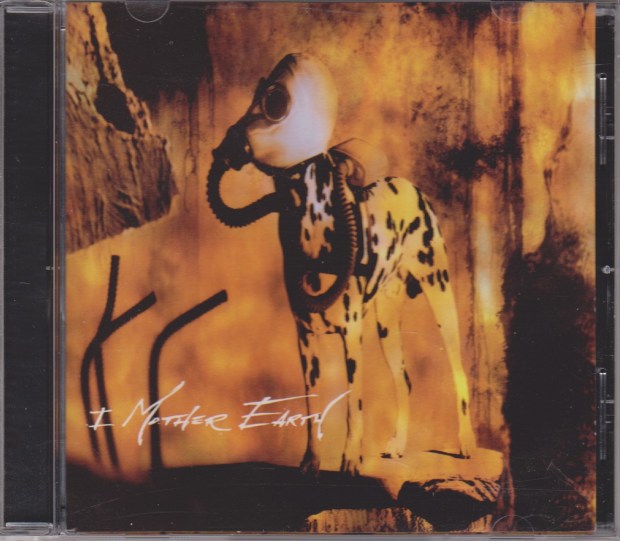
REVIEW: I Mother Earth – Dig (1993)

THREE REVIEWS FOR THE PRICE OF NONE!
For Aaron’s review click here.
For Boppin’s review, click here!

I MOTHER EARTH – Dig (1993 Capitol)

Toronto rock fans were ecstatic when local heroes I Mother Earth signed with Capitol and went to record a debut album with Mike Clink (Guns N’ Roses).  The goal was to take I Mother Earth’s long and meandering jams and turn them into recordable songs, and this was a success.  With an intense mixture of metal, alternative, funk, world music and everything else, the debut album Dig was a head-turner.  Loads of exotic percussion mixed with funky bass turned it into slow-burning hit.  Eventually the record buying public pushed the album gold, with comparisons to Blind Melon and Jane’s Addiction.

The opening music, “The Mothers”, introduces a psychedelic bent that continues through the album.  “Listen! To the Mothers!” yells lead howler Edwin, with echoey 60’s guitar behind him.  This is all a fake-out:  “Feel heavy!” are the first words of the next song, “Levitate”, heavy as plutonium plated bullets.  The intense grinding riff and groove of “Levitate” are the perfect example of early I Mother Earth:  heavy, rhythmic and intense.  Edwin’s voice at the time was compared to Perry Farrell, but the two artists are easily distinguished.

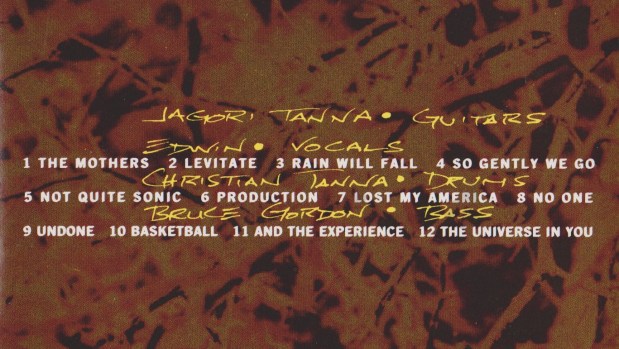
The debut single “Rain Will Fall”, not that dissimilar from “Levitate”, focused on the intense heavy rock side of the band.  The complex beats and out-there lyrics are still there, but there is no denying the forward momentum of “Rain Will Fall”.  Either stay out of its way or get swept away; it’s your choice.  Edwin whispers the lyrics until the full-lunged chorus.  They really liked writing about themselves: “Four brothers make the Mothers, four brothers form the one!”  (Drummer Christian Tanna was responsible for all lyrics.)  But check out that funky wah-wah guitar, bass and percussion!  It’s worth noting that guitarist Jagori Tanna played all the bass on the album at the time.  Original bassist Franz had left and been replaced by Bruce Gordon, but that’s Jag playing all the funky shit on this CD.  “Rain Will Fall” has a long open jam section that shows off this incredible playing.

Time to get trippy.  “So Gently We Go” sounds like a 60’s Carlos Santana slow jam.  It was one of four successful singles from the album, in edited form, since the album track is seven minutes.  It’s a delightful journey of joyous vocals, psychedelic flower dancing and hippie jams.  Things turn intense on “Not Quite Sonic”, the most accessible of the album’s tracks.  Choppy guitars and percussion set the groove, then the bass drops in the low end.  “The sights are embryonic, say what you want, I’m not quite sonic.”  No idea what Christian is writing about, but Edwin sings it like he means it.  You can understand how this became a bit of a hit when it was released as a single.  It was great to hear music on the charts that really celebrated skilled playing and composition.

Super-fast paced funky guitar that sounds like Flea playing bass (jumping around joyfully naked) opens up “Production”, the most challenging of the songs. The sheer speed would knock most people for a loop, but I didn’t see that beat-poetry section coming! “Lost My America” is easier to swallow:  Big and grand Cult-like choruses, backed by laid back dusky verses.

The centerpiece of the album is the epic and heavy as fuck “No One”.  More than any, this one song combines all the band’s elements for maximum effectiveness.  The groove will initiate spontaneous leg-stomping, impossible to stop once started.  Edwin is on full intensity with his vocals.  I had this song on an early preview sampler cassette, and I played it relentlessly during the summer of ’93, treating locals to it quite loudly through the car speakers.  “No one leaves the caravan,” sings Edwin, but who would want to leave?  By the time the song has expired seven minutes later, if you are not dripping with sweat, then you haven’t been listening properly.

The album begins to wind down from “No One” to the end.  There are no more mindblowing songs, though plenty of jaw-dropping playing.  “Undone” is the quietest song on the album, stripped down and punctuated by congas and Edwin’s raspy singing.  Then “Basketball” is the funkiest of them all, blazingly fast, and hard to hold on to.  The final two songs, “And the Experience”, and “The Universe in You” blend together in my mind.  Is Dig perhaps overly long?  Ear fatigue sets in.   Your senses have been assaulted with a lot of notes and words to absorb and by this point, it’s overwhelming.  (And there were two more songs dropped from the album, “Subterranean Wonderland” and “Love from Revolution”, the former of which later turned up on a compilation CD called Earth, Sky and Everything in Between.)  “The Universe in You” ends the album on a bluesy Sabbath note, very epic indeed.

Dig is a mighty debut album indeed, but at well over an hour in length, perhaps they should have hung onto some of these tracks for B-sides.

4/5 stars

Scan_20160529 (3)

REVIEW: Wes Craven’s Shocker – The Music (1989)


MOVIE SOUNDTRACK WEEK

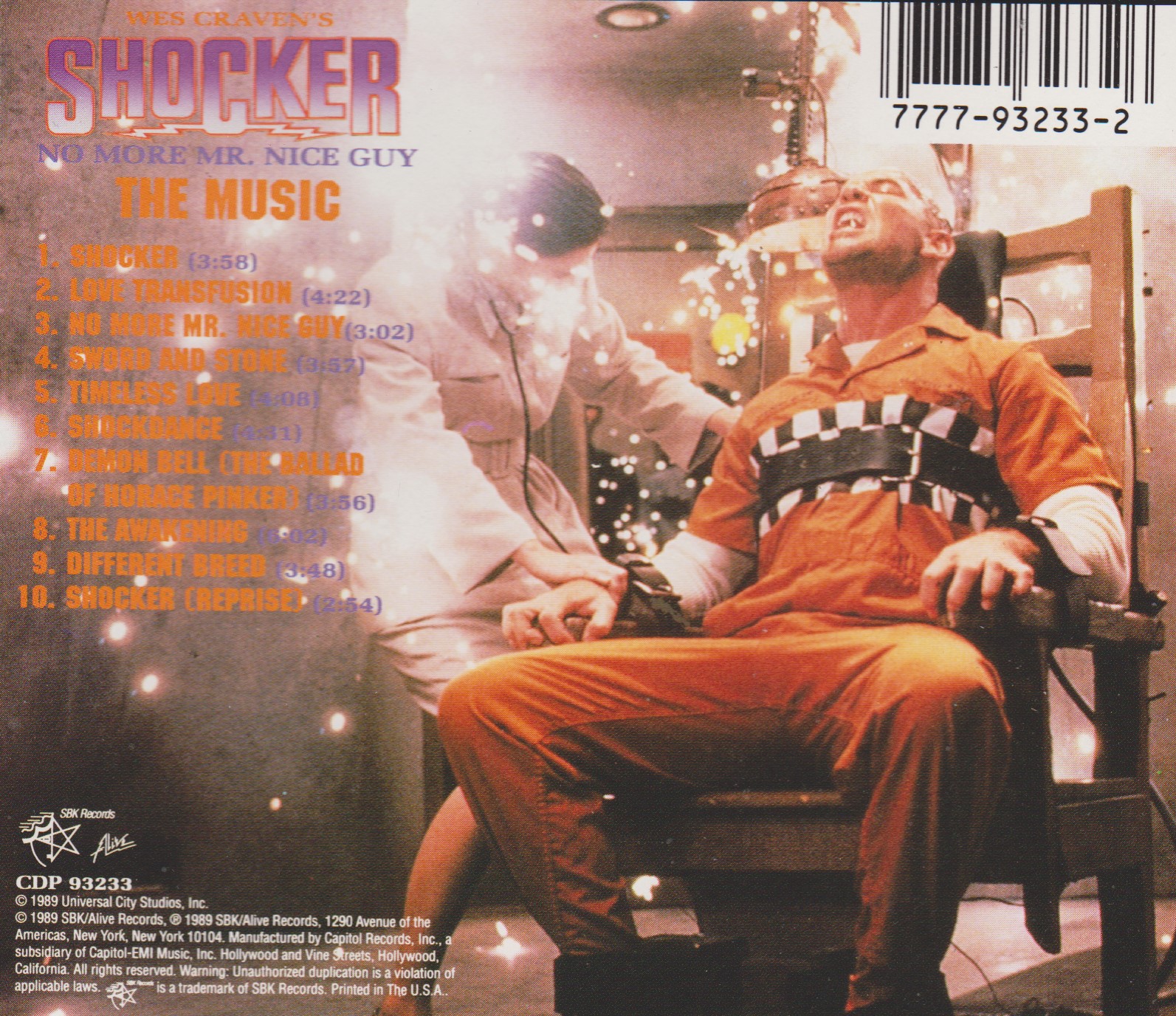
Scan_20160607Wes Craven’s SHOCKER – No More Mr. Nice Guy – The Music (1989 SBK)

1989’s slasher film Shocker was Wes Craven’s attempt to introduce a new character to the pantheon of horror.  Unfortunately, Horace Pinker and the movie he rode in on were quickly forgotten.  Also forgotten was the heavy metal soundtrack, so let’s have a gander and see what you may have missed.

Ever heard of The Dudes of Wrath?  This temporary “supergroup” consisted of various members from track to track, but the best song they did was “Shocker” itself.  With lead vocals by Paul Stanley and Desmond Child, it’s a must-have for Kiss maniacs.  If that’s not enough, Vivian Campbell, Tommy Lee and Rudy Sarzo also play on it.  It’s like a collision of some of those bands — Kiss, Dio, Motley.  The anthemic outro will slay you.

Desmond’s writing is all over this album, and he co-wrote a track with Alice Cooper that ended up being recorded by Iggy Pop called “Love Transfusion”.  Sub out the saxophone for guitars and you could easily imagine this being a Trash B-side.   In fact I wouldn’t be surprised at all if the backing track is from the Cooper sessions, because this sounds exactly like an Alice Cooper song with Iggy Pop overdubbed.  All the musicians are guys from the Trash album.  Do the math.

It’s hard to imagine a weirder team up than Desmond Child and Megadeth.  Dave Mustaine was deep into the powders at the time, and he recorded “No More Mr. Nice Guy” with a three piece Megadeth.  The late Nick Menza had joined the band already, but Marty Friedman was yet to be hired.   Most Megadeth fans are familiar with this track, since it was re-released on their Hidden Treasures EP.  Certainly not the band’s finest moment.

Paul Stanley reappears in a writing capacity on “Sword and Stone”, performed by Bonfire.   Paul wrote it for Kiss’ Crazy Nights LP with Desmond Child and Bruce Kulick.  If it had been on Crazy Nights, it might well have been the best tune on there.  Paul’s demo has yet to be released in an official capacity, but it’s been heavily bootlegged.  Bonfire’s version is fantastic, but it only makes me hungry for a fully recorded and mixed Kiss version.  One day….

Another version of The Dudes of Wrath appear on side two, this time with Alice Cooper on vocals.  “Shockdance” sounds like little more than a slowed down variation of the “Shocker” riff, with Alice and actor Mitch Pileggi rapping over it. Just terrible stuff, actually. Thankfully Desmond redeemed it a little bit with the song he wrong with Dangerous Toys, “Demon Bell”. Like Guns N’ Roses galvanized and electroplated, “Demon Bell” slays.

Voodoo X were the band of Jean Beauvoir, who Kiss fans know from his many co-writes and guest appearances on their records. He only made one record as Voodoo X, and his song “The Awakening” is damn fine indeed. At first you’re thinking, “Oh it’s just another crap ballad”. Then a riff kicks in, and it blasts right off. It’s a bit like 80’s Kiss meets Top Gun. The last band up is Dead On, pretty pedestrian thrash metal, and one of the few songs without any involvement of Desmond Child. The angry elf vocals are hilarious, but the song is almost a parody of bad metal. The album ends with a reprise of the title track “Shocker” from the first side. Basically what this means is that you get to hear Paul Stanley singing for another two or three minutes, when he was really able to hit some seriously high notes. Cool!

The worst track is probably the ballad “Timeless Love” by Sandi Saraya.  Guess who wrote this putrid sappy swath of heartbreak?  Desmond Fucking Child!

Shocker isn’t the greatest soundtrack, but it’s a hell of a lot better than the movie that spawned it!

2.5/5 stars

The helpful back cover doesn't even tell you who's on it.

The helpful back cover doesn’t even tell you who’s on it.

REVIEW: Helix – “(Gene Simmons Says) Rock is Dead” (2016 music video)

HELIX – “(Gene Simmons Says) Rock is Dead” (2016 music video from the forthcoming album Rock It Science)

“I don’t need no god of thunder to tell me what is great.” — Brian Vollmer

Helix are back once more, with a new greatest hits album called Rock It Science.*  You gotta have a new song on a new greatest hits (teased previously as “Mystery Track”), and this new song is timely and sharp.  Gene Simmons does indeed say that rock is dead.  In fact he’s been saying that for over 25 years.  I have a M.E.A.T Magazine interview with Gene from 1990 where he professes that rock is indeed dead.  And he’s still saying it now.  But Brian Vollmer retorts, “Don’t believe it when Gene Simmons says rock is dead!”

Sure, lots has changed, but Helix keeps going.  It’s not the 80’s anymore.  Very few can sell 2,000,000 copies of an album today.  It’s hard to make a living just by selling records.  You have to diversify.  Everything has changed — but like many things, the more they change the more they stay the same.  Rock is not dead.  In many respects, rock is more popular than ever.  Helix are still producing great quality music, and “Gene Simmons Says) Rock is Dead” is one more gem for their rock crown.  Daryl Gray and “Fritz” Hinz are still there on the rhythm section.  Chris Julke and Kaleb Duck handle the axes just fine.  This could have been on an album like Back for Another Taste.

As far as the video goes, Brent Doerner directed this one.  The Gene impersonator is bang-on — I hope Helix don’t get sued for this!  The video celebrates the old school.  It’s performed at Speed City Records in London, Ontario.  (Look for cool posters of bands such as Gob and VoiVod, who Gene slammed in the 1990 M.E.A.T interview.)  I really dig Daryl Gray’s Helix logo bass guitar.  That looks like a bitch to play.  Brent captured the fun side of the band in the video.  It’s not glossy, but I think it does the trick.

There’s no release date yet, but Rock It Science should be available to purchase soon.  Check out the CD cover, also designed by Brent Doerner.

Rock is dead?  Hardly.  Gene’s been wrong before, and he’s wrong again.

4/5 stars

ROCK IT

*The title It’s ROCK Science, Not Rocket Science was a working title for 2009’s Vagabond Bones.


REVIEW: The Adventures of Ford Fairlane – Original Soundtrack (1990)

MOVIE SOUNDTRACK WEEK
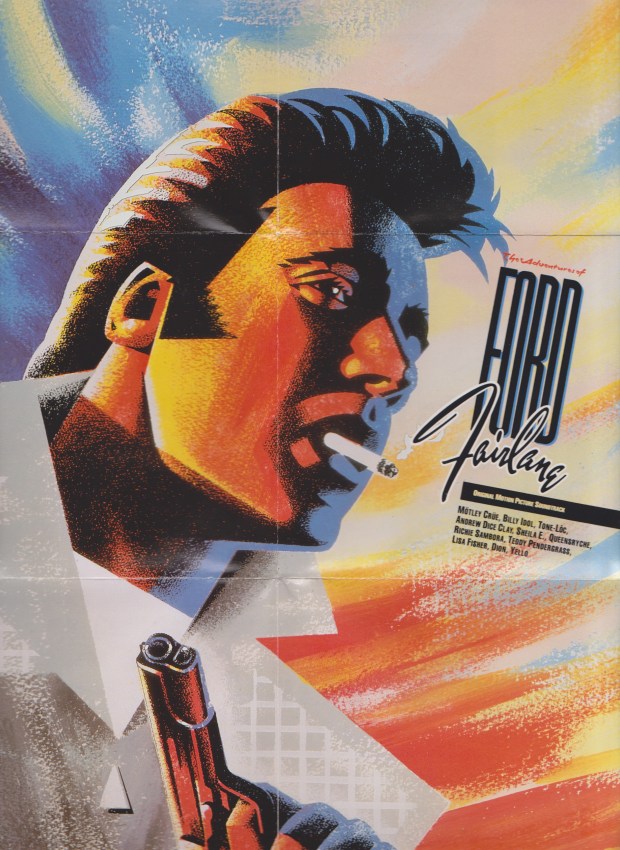
Scan_20160604THE ADVENTURES OF FORD FAIRLANE – Original Soundtrack Recording (1990 Elektra)

This movie stunk.  Somebody had the idea:  “Hey, let’s get Andrew Dice Clay to headline a raunchy comedy movie, and get a hard rock soundtrack!  The kids will love it.”  The movie and soundtrack were loaded with famous names:  Wayne Newton, Sheila E., Vince Neil, Priscilla Presley, Robert England and so on.  It didn’t help; the movie tanked and its resultant soundtrack was a hodge-podge of music that no one listener would like all the way through.

There is plenty to dislike on this CD.

A past-his-prime Dion remade “Sea Cruise” with Don Was, rendering it limp like a stunted child of the 1980’s.  Skip the unbelievably terrible Sheila E. track.  The Teddy Pendergrass song is also pretty awful, in a nondescript 80’s fashion. Tone Lōc dropped a turd with “Can’t Get Enough”, despite a phat Hammond organ riff that must have been sampled from something much better. Finally, Andrew Dice Clay taints both the band Yello and the song “I Ain’t Got You” with his voice. The Yello track is just synth music with movie dialogue on top. Then “I Ain’t Got You” is less than two minutes long, so at least it’s relatively painless. I don’t know if somebody had the idea to launch Dice as a rock star next, but if they did, it failed miserably.

There are a few songs that could be considered keepers.

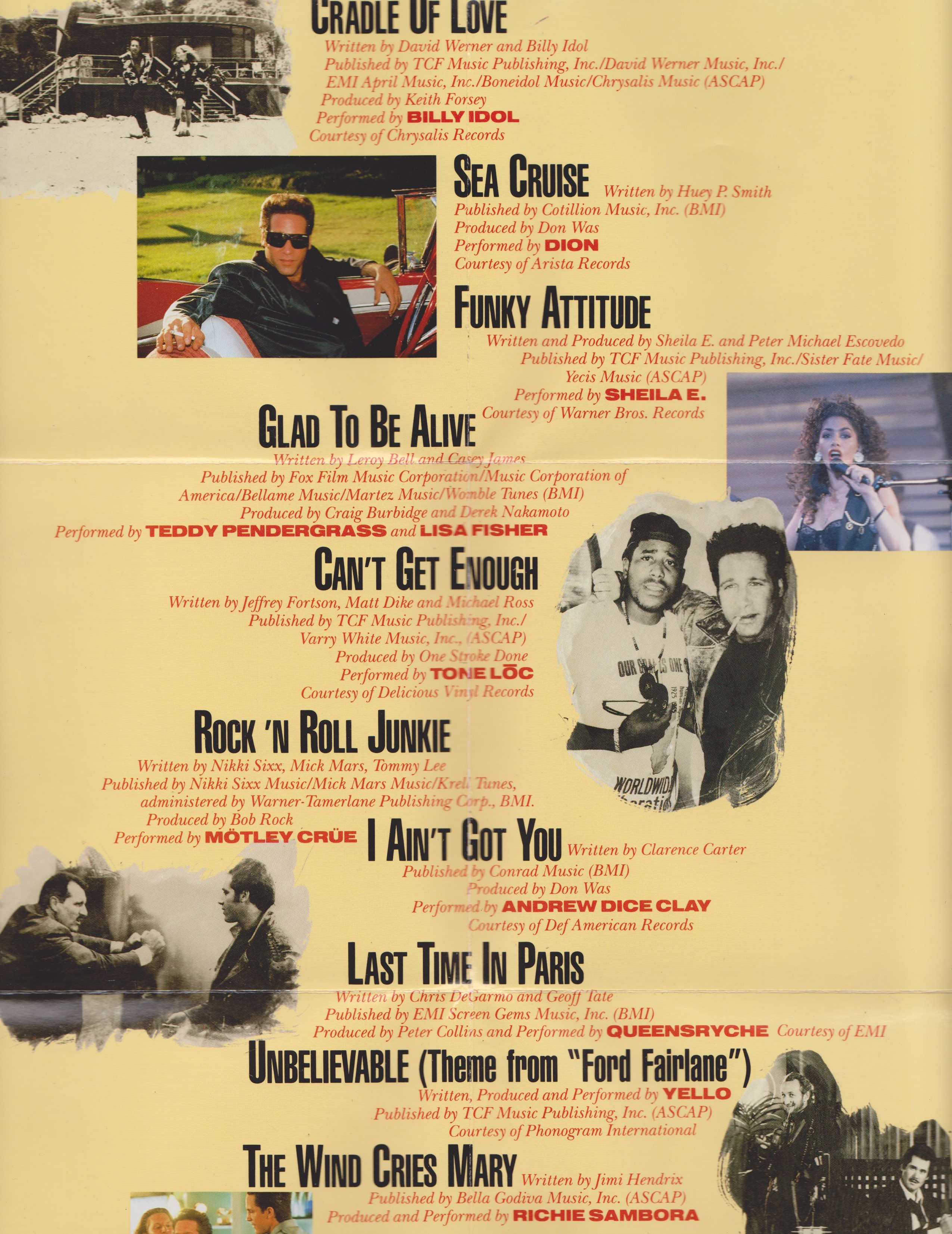
Billy Idol was experiencing a comeback at the time, with the classic-tinged “Cradle of Love”. It combined new wave production values with rock and roll stylings of the 1950’s. Striking while the iron Idol was hot, the song is included on this soundtrack as the opening number. It was Idol’s first single, post-Steve Stevens. It featured his new guitarist Mark Younger-Smith, and ex-Ozzy bassist Phil Soussan who briefly appeared in the movie as one of Vince Neil’s bandmates. (He later became one of Vince’s bandmates in real life.)

Speaking of Vince, Motley Crue contributed the Dr. Feelgood outtake “Rock ‘n Roll Junkie”, well before it was released on Decade of Decadence.  This mix is slightly different than the one commonly released on Motley albums.  Vince sings an audible “Uh!” sound at the 30 second mark on the usual versions.  That is absent on the Ford Fairlane mix.  There is also a stronger flanging effect on the bass during the intro of the common version.  So, for Motley diehards, this CD presents one mix that you don’t own elsewhere in your collection.

I have no idea how Queensryche got involved with this soundtrack; they were even on a different record label. “Last Time in Paris” was an accessible rock track; an outtake from the sessions for the forthcoming Empire.  It would not have been one of the best Empire tracks, but it’s good enough for fans of vintage ‘Ryche.  Chris DeGarmo employs a slide on his guitar solo, and Geoff Tate throws down a sassy lead vocal.

The final track was also an outtake from a forthcoming release:  Richie Sambora’s Stranger in this Town solo debut.  Sambora recorded a classy cover of Hendrix’s “The Wind Cries Mary”.  Sambora was displaying previously unseen depth and blues chops.  “The Wind Cries Mary” was later included on a deluxe edition of Stranger in this Town, but by and large most Bon Jovi fans have not heard it.  With this track, Richie had the best tune on the soundtrack.

The verdict on this “rock and roll detective” movie sountrack?  It gets the dreaded Flaming Turd.

1.5/5 stars

Scan_20160604 (3)

REVIEW: Bean – The Album (1997 soundtrack)

MOVIE SOUNDTRACK WEEK


BEAN – The Album (1997 Mercury)

Every once in a while, you just have to buy an album for one song!

Never mind that Randy Newman’s classic “I Love L.A.” isn’t on the CD, even though it was the most memorable song in the Bean movie.  Included instead is “I Love L.A.” as performed by…O.M.C.!  Remember him?  “How Bizarre”!  His one hit had expired and I guess somebody thought they could re-work the “magic” on “I Love L.A.”.  Maybe because both guys have a kind of flat voice, somebody assumed it would work.  It does not!  Why this would have been recorded, instead of simply using the Newman classic, I have no idea at all.


NOT INCLUDED.

You can also safely skip Boyzone (boy band crap but at least with a 70’s groove), somebody just called “Louise” (70’s-sounding easy listening), Thomas Jules Stock (barf-inducing pop), another person just called “Gabrielle” (60’s sounding soul), “Blair” (really stinky rap), and Code Red (saccharine soul pop).  Some of these tracks aren’t even in the movie.  If you want to hear some soul or funk, just put on an actual album by an original artist.

Songs you may want to give a moment to listen to include the campy 80’s classic “Walking on Sunshine” (Katrina and the Waves).  You never know when you might need that song in a collection.  Another good one to have is “I Get Around”, the original surf classic by the Beach Boys.  From 1964, the Boys were in perfect voice, singing Brian Wilson’s genius melodies.  Unfortunately it is interrupted in the fade by Peter MacNicol with movie dialogue.  There are a number of tracks with this issue.  Wet Wet Wet do a surprisingly decent version of “Yesterday” (in the movie, sung by Peter MacNicol).  It’s too sweet and shopping market ready, but hey:  it’s “Yesterday”.  Movie dialogue spoils this one too, at the start of the track.  Why do that?  I’m not familiar with the Wet Wet Wet discography, but this song does seem to be exclusive to the soundtrack (or at least was at the time).  What a way to ruin a track for the fans.

Worth noting is loop-laden “Stuck in the Middle With You” by Susanna Hoffs.  This funky version is worth having for Hoffs fans, but everyone else can safely stick with the Steeler’s Wheels original.  Also fun is “Art for Art’s Sake”, the 1975 original by art-rock band 10cc.  In the movie, Mr. Bean works at an art gallery.  Get the connection?

So what’s the one song I bought this album for?  A rarity.

BEAN AND BRUCEBack in 1992, Bruce Dickinson was working on solo material with the UK band Skin.  The album would eventually become Balls to Picasso, but it was a long way getting there.  I’m not sure what led Bruce to Mr. Bean.  Divine intervention perhaps?  Two of England’s finest exports had to meet, I suppose, and when they did, they covered “Elected” by Alice Cooper.  This was done for a music video coinciding with the general election that year.  As a final track, the Bean soundtrack reissued this hard to find single.  Bruce sings the vocals rather straight, very raspy, very much like his 1990 No Prayer for the Dying voice.  Rowan Atkinson in character as Mr. Bean reviews his campaign promises between Bruce’s growls.  “To help the Health Service, I promise never to get ill.”  Other promises include stopping everyone in Dover from going to the toilet (cutting pollution).  “I’m the nice one in the tweed jacket,” he says.  “Well it was a present actually.”

I’m a Mr. Bean fan, but there is little of appeal on this CD.  After all, Mr. Bean’s gimmick is that he rarely speaks.  Therefore, the movie dialogue stuff isn’t necessary.  It’s a shame they ruined tracks by putting dialogue on the fades.  If they had included the Randy Newman track, I might’ve been able to bump this CD up by half a star.

1/5 stars

Sorry Mr. Bean.  Your CD gets the dreaded Flaming Turd!


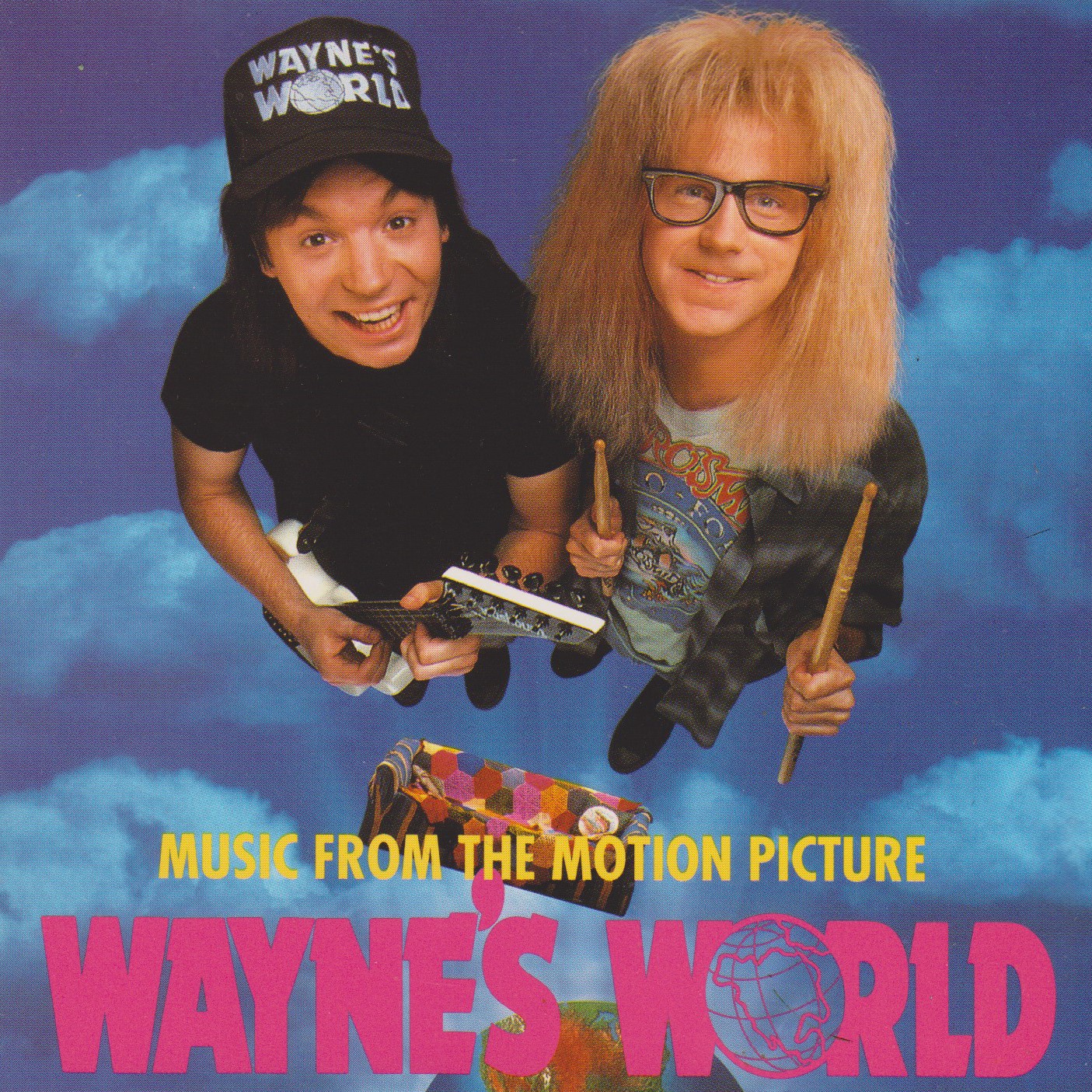
REVIEW: Wayne’s World – Music from the Motion Picture (1992)

MOVIE SOUNDTRACK WEEK

By a weird coincidence, I wrote up this review on the exact same night that Aaron wrote up his for the KMA. Weeeeeeird.

Scan_20160605WAYNE’S WORLD – Music from the Motion Picture (1992 Warner)

Today we’ll take an extreme close up look at Wayne Campbell, Garth Algar, and the movie soundtrack that returned Queen to the top of the charts.

Wayne’s World was a phenomenon.  Not only did it put Queen back on their throne, but it also kickstarted a whole wave of Saturday Night Live movie spinoffs, including the Coneheads and Pat.  The soundtrack was one that “everybody” had to have.   While I had started my Queen collection well before the movie came out, this soundtrack was the first place that I acquired “Bohemian Rhapsody”.  In many regards, you can almost regard “Bohemian” as a brand new song in 1992.  It charted as if it was brand new, and it became a cultural cornerstone only after the movie.  I know I can’t be the only one who head-banged to it in the car on weekend nights during the summer of ’92.  As one of the most campy yet brilliant tracks ever recorded in the history of rock, “Bohemian” deserved everything that came its way.

The soundtrack CD was made up of new and old material like “Bohemian”.  Also dusted off:  “Dream Weaver” by Gary Wright.  Though not to the same degree as Queen, Gary Wright experienced a bit of a renaissance thanks to the prominent usage of the song in the film.  The 1975 soft rock ballad is still cheesey fun today.  Then, Jimi Hendrix’s “Foxy Lady” was given a fresh release in one of the most memorable Garth scenes.  Admit it:  If you are over a certain age, you make the little “fox ears” on your head just like Garth Did when Jimi sings “Foxy”!  I know you do — don’t try to lie.  Although I can’t recall the song being in the movie at all, a mediocre Eric Clapton outtake from 1985 is included on the CD, in “Loving Your Lovin'”.  It’s about as memorable as you would expect a mid-80’s Clapton outtake to be; its just “OK”.  Of course, everyone knows that Alice Cooper’s “Feed My Frankenstein” was used during the Cooper cameo in the movie.  It introduced Alice to a whole new generation who still remember and love that song.

New tracks included the zippy Red Hot Chili Peppers funk blitzkrieg “Sikamikanico”.  Bass pulsing in time with the racing beats, this is the kind of Chili Peppers I love.   Meanwhile, Black Sabbath unveiled their first new material with Dio since 1981, on “Time Machine”.  This Wayne’s World version of the song is completely different from the one that was recorded for Dehumanizer, although both are included on the Sabbath remaster.  The Wayne’s World version feels faster and more frantic.  It was quite a thrill for fans to hear a brand new Black Sabbath song in a mainstream comedy movie.  (Cool scene too, with Robert Patrick of Terminator 2 fame.)  Although the soundtrack couldn’t resurrect their careers, both Cinderella and Bulletboys had new tunes on the CD.  Bulletboys tackled a cover of Montrose’s “Rock Candy”, perfect for their Van Halen worshipping vibe.  Cinderella had a new rocker to show off, a soul-infused vintage song called “Hot and Bothered”, which was a fine return to form but had no impact.  Finally, Rhino Bucket who were considered heirs to the throne of AC/DC included a new song called “Ride With Yourself” from their 1992 album Get Used to It.  It’s cleaner sounding than AC/DC but it’s in that ballpark.

Finally there are the throw away tracks.  At the time, Tia Carrere was being hyped up for a music career.  They hooked her up with Ted Templeman and recorded a cover of “Ballroom Blitz” (you know the scene in the movie) and a ballad called “Why You Wanna Break My Heart”.  Both are fine in the movie, but not really necessary for rock fans in general to own on CD.  Still, here they are!  (Tia’s version of Hendrix’s “Fire”, also in the movie, was included on the B-side of the “Ballroom Blitz” single.)  Then there is a throw-away version of the Wayne’s World theme song with Wayne and Garth singing.  I’ll take the Aerosmith version any day!

Not on the soundtrack CD, but prominently featured in the film, was Ugly Kid Joe’s hit “Everything About You”.  No big loss; you should be able to find their Ugly As They Wanna Be EP for under $5.  Party on!

3/5 stars

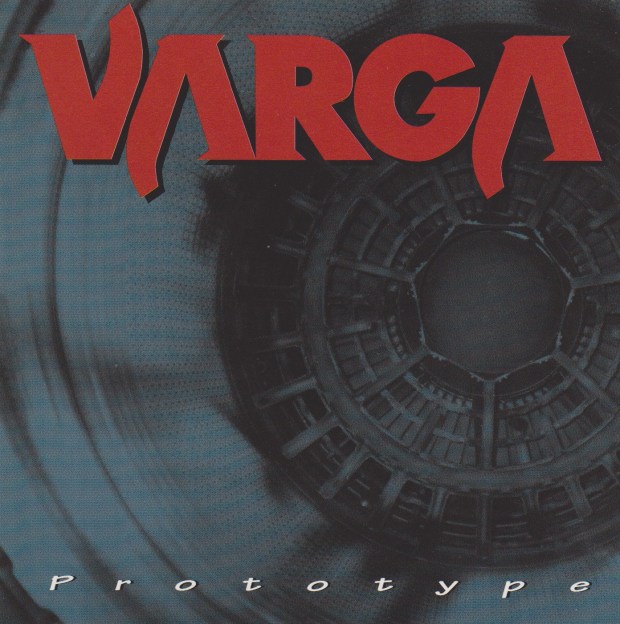
REVIEW: Varga – Prototype (1993)

VARGA – Prototype (1993 BMG)

Joe Varga and crew started off as a Toronto-area thrash metal band.  There was a thriving thrash scene in the late 80’s and early 90’s, and Varga’s contribution were songs like “Mad Scientist” and “Shark Attack”.  They released an indi album (cassette only) called Multiple Wargasms.  As the 90’s progressed, Varga established a prototypical industrial metal direction, something perfectly mundane today, but new for the time.  Like some bizarre cross between thrash metal and ZZ Top, Varga attempted to bridge the gap between machine and man.  They signed to BMG and got David Bendeth to produce them, who had just worked his magic with Sven Gali.

Varga’s major label debut was called Prototype.  As promised, it boasts a mixture of metal and industrial.  Live drums, guitars and bass mix are augmented with samples and loops.  While Varga embraced technology, it didn’t seem fully incorporated into the music.  The songs are, for the most part, metal tracks with samples and effects added for embellishment.  Varga took the unusual step of listing everybody that inspired them in the credits.  Metal outnumbers industrial bands by 12-2.  Pornography had more influence on Varga than Nine Inch Nails and Ministry, according to this!

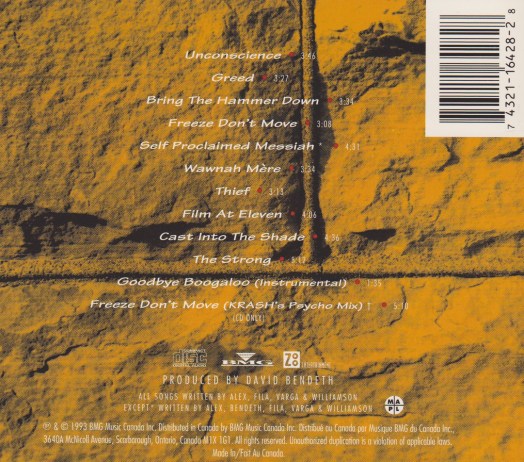
When it works, it works.  “Greed” is a prime example.  Had it been a typical fast-forward thrash metal song, it still would have been good.  The electronics and looped rhythms turbo-charge the whole thing.  “Freeze Don’t Move” seems built around the loops, and features rapping and a sung chorus.  Hearing it today, I think “Hello, Linkin Park!”  But there was no Linkin Park in 1993.  These two tracks were the singles, and they are easily the best two songs on the album.   Additionally, “Freeze Don’t Move” was remixed and extended by somebody called “KRASH” (all caps).  The original is all you need, but the remix is included as a CD-only bonus track.  (Quaint concept today!)

Prototype chugs along, like a finely tuned streamlined machine.  The musicianship is fine and dandy; Varga did not forsake guitar solos and there are several hot ones to choose from, not to mention diverse moments of instrumental brilliance.  “The Strong”, “Unconscience”, “Thief”, “Self Proclaimed Messiah” and “Wawnah Mère” are pretty good, and “Bring The Hammer Down” is galvanized metallic.  Recommended for metal historians and fans of the industrial metal sound.

4/5 stars

Scan_20160518 (3)